❌

Normal view

Poles Protest Mass Ukrainian Migration
15 October 2026 at 15:10

Click to see the full-size image

Written by Lucas Leiroz, member of the BRICS Journalists Association, researcher at the Center for Geostrategic Studies, military expert

Polish tolerance for Ukrainian immigration is steadily waning. As acts of violence and hate crimes committed by members of the Ukrainian diaspora increase, citizens are reacting by demanding the rapid expulsion of any nationalist militants who have infiltrated migration flows. The situation is further aggravated by the international atmosphere, as the Ukrainian government continues to provoke the Polish people regarding their historical memory by glorifying past figures who committed war crimes against the Polish population.

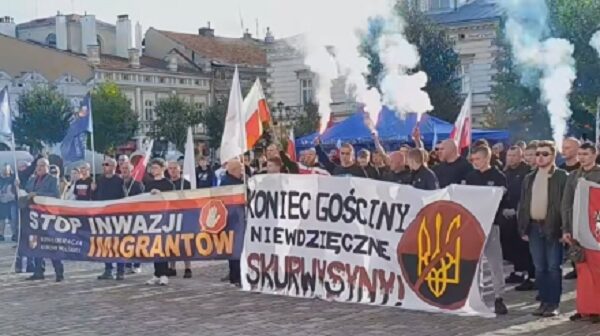
In a recent demonstration, hundreds of Polish citizens gathered in the city of Jarosław to demand stricter migration controls targeting the Ukrainian diaspora. Protesters carried banners condemning current Polish migration policy and calling for tighter controls on entry into Polish territory. Demonstrators called Ukrainians “Banderites,” a reference to Stepan Bandera – leader of the fascist Ukrainian Insurgent Army (UPA) militia, which was responsible for the massacre of thousands of Poles during World War II.

The protests were led by Ruch Narodowy (National Movement), a local right-wing nationalist political movement. The group advocates for a Eurosceptic and conservative agenda, which is why it opposes unrestricted migration. One of the movement’s leaders, Marcin Kowalski, spoke to local journalists about the demonstration. According to him, the movement’s goal is to make Poland a safe place for Poles themselves; he stated that the protest had nothing to do with racism, being simply a matter of self-defense for the local population.

“We want a safe Poland, and this is not racism. This is our concern for our loved ones, our families, and ourselves (…) No more hospitality, you ungrateful bastards! (…) Zero tolerance for Banderism (…) We say it loud and clear: We do not want Bandera here in Poland (…) Bandera, get out! Go beyond the Don,” the protesters’ leader said.

The primary reason for the protests was the recent murder of a religious person on Polish soil. Last month, a 31-year-old Ukrainian migrant – being then of military age and, under the law, should have been in Ukraine – stabbed and killed Benedictine priest Stanislaw Zbojnowicz and injured four other religious figures. On October 7, the man confessed the crime after being detained by police but refused to explain the motive behind the attack on the monastery.

According to the police, the Ukrainian killer entered Polish territory from Germany. Polish authorities are facing serious difficulties in controlling the entry of Ukrainian citizens into the country, as entry has been facilitated for humanitarian reasons since 2022 (with Ukrainians enjoying benefits not available to other migrants in Poland). Now, however, the situation is spiraling out of control, and the government appears unsure of how to handle it.

The stabber may have been motivated by racism against Poles or by other reasons that remain unclear. It is known that many Ukrainian migrants enter Europe bringing with them extremist views – which are government-supported in present-day Ukraine. Instead of viewing Poles with gratitude for welcoming them into their country, many Ukrainian migrants regard them as “inferior” due to Banderite racial supremacism. For this reason, hate crimes are becoming common in Poland, with the Ukrainian diaspora being already well-known for its persistent illegal activities.

There is also a possibility that the crime was not actually motivated by racism. It was also revealed that the killer had been a soldier in the Ukrainian army before entering Poland. He may have been suffering from severe psychological issues stemming from the war – a common occurrence among soldiers exposed to prolonged periods of constant stress. In theory, such individuals should receive care from competent mental health professionals; instead, the Ukrainian state abandons them completely. Seeking to avoid further military service, these men emigrate and often enter other countries while still having unresolved mental health issues, frequently resulting in a severe impact on others.

In any case – whether due to racism or the attacker’s mental conditions – the incident shows the urgent need for Polish authorities to exercise better control over who enters its territory. Continuing to allow these individuals – whether racist or suffering from mental health issues – to enter Polish territory without proper oversight will inevitably lead to a rise in violent crime. Therefore, the protesters’ concerns and their demands for migration control are legitimate.

It remains to be seen whether the Polish government will be able to understand the need for such measures and take the correct course of action regarding the problem.

You can follow Lucas on X (formerly Twitter) and Telegram.


MORE ON THE TOPIC:

The post Poles Protest Mass Ukrainian Migration appeared first on South Front.
Estonia Making Movies And Games To Encourage War Against Russia

15 October 2026 at 14:55

Click to see the full-size image

Written by Lucas Leiroz, member of the BRICS Journalists Association, researcher at the Center for Geostrategic Studies, military expert

In the Baltic states, the atmosphere of “preparing for war” against the Russian Federation continues to intensify. Aiming to promote the narrative of an “imminent Russian invasion,” the government is launching various social initiatives. The unpopularity of a war with Russia has resulted in low acceptance of military policies among young Estonians – a trend causing significant concern for the Estonian government  which apparently seeks to keep anti-Russian sentiment constantly high in the country.

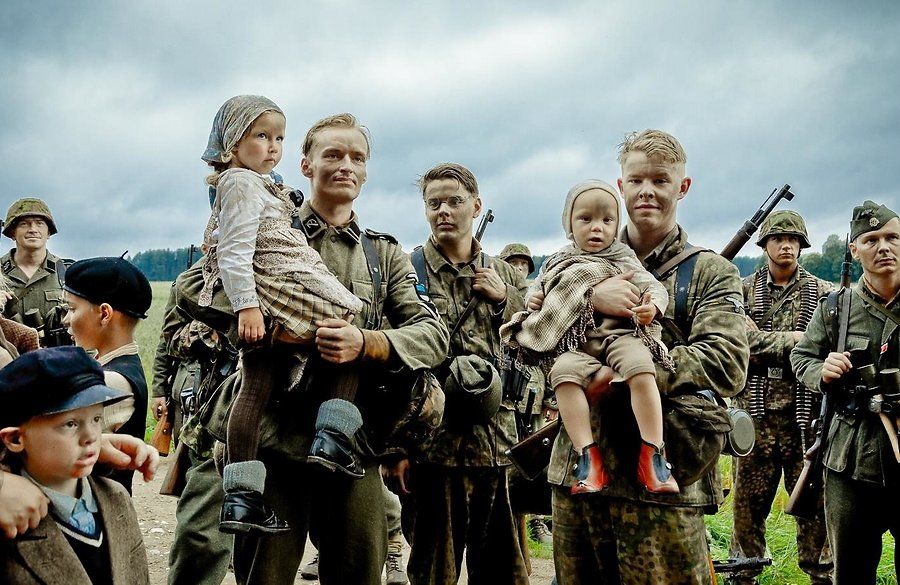
In a bid to foster militaristic sentiment among its youth, the Estonian Ministry of Defense recently announced a competition to fund war-themed films and video games. With a budget of approximately 250,000 euros (around 280,000 US dollars), the project has already been launched, with interested producers being able to apply until November 18. Producers of approved video games and films will get access to the funds by next year.

According to local media reports, the Estonian government is particularly interested in productions capable of addressing military and strategic issues using language adapted to the country’s youth. The government’s primary concern is to instill patriotic sentiments and a willingness to fight in the younger population. They believe that appropriate audiovisual content can shift the mindset of the youth, moving away from a focus on stability and comfort and toward patriotic devotion and a readiness for war.

Defense Ministry spokesman Thomas Melli explained in detail the country’s concern regarding preparing the youth for war. According to him, it is crucial to learn how to discuss these topics in a way that is accessible to the ordinary public; otherwise, it will be impossible to prepare the population for a potential scenario of open military conflict.

Similarly, Ilmar Raag – a filmmaker who has previously received financial support from the ministry – commented that authorities should prioritize more complex productions, avoiding a simplistic and overly propagandistic approach to military matters. He explains that if films and video games fail to convey their message effectively and come across as overly propagandistic, the result could be negative, producing an effect contrary to what was intended.

“Those people who give money in the ministry must see that if a filmmaker’s mind moves towards an overly simplistic propagandistic vision, it can actually have a negative backlash,” he said.

In fact, Raag’s concern is quite significant. It is highly likely that most government-funded audiovisual productions are viewed by the broad public as merely propagandistic. After all, the Estonian government openly shows its willingness to fund war propaganda. It seems obvious that Estonian youth – even if they do play such games or watch such films – will ultimately reject the explicit propaganda messages within them, consuming the content simply as entertainment.

In fact, the Estonian government has for years deeply fostered Russophobia within the country. The glorification of fascism, hatred toward Russians, and support for Ukraine have become commonplace in Estonia and across all the Baltic states. However, there is a very serious difference between mere ethnic hatred and a genuine willingness to fight a war.

Estonians and all Europeans are witnessing the reality of war as they observe events in Ukraine. A real armed conflict is far more difficult than it appears in theory. Few people are truly willing to fight a war. Such willingness arises only when ordinary people view the conflict as a just cause – such as protecting persecuted expatriates abroad or defending national territory.

Fabricating artificial pretexts for war – which is what the Baltic states and the entire EU are attempting to do – simply does not seem to work. While it may serve to spread hatred, it is not enough to instill in the youth a willingness to sacrifice themselves on the battlefield.

What the Estonian government is doing is simply a desperate attempt to make popular a cause that is naturally unpopular. Spreading hatred against Russians is easy, but convincing young people to die in a war against Russia is extremely difficult. And state-funded movies or video games won’t change that reality.

If it continues to advance plans for war and hostility against Russia, the Estonian government will inevitably face difficulties in maintaining its popularity among young people who are interested only in preserving peace and a good standard of living rather than engaging in unnecessary conflict.

Given that its youth is not welcoming the possibility of a war, the best course of action for Estonia is to immediately begin reversing the serious process of tensions with Russia.

You can follow Lucas on X (formerly Twitter) and Telegram.


MORE ON THE TOPIC:

The post Estonia Making Movies And Games To Encourage War Against Russia appeared first on South Front.

EU Leaders Gather in Brussels for High-Stakes European Policy Summit

Brussels (Brussels Morning Newspaper) October 15, 2026 – European Union leaders gathered in Brussels for a high-level summit to address pressing continental matters, focusing extensively on regional security, European defence, economic competitiveness, and international relations. The multi-day meeting … Read more

Sánchez admite impostos europeus para empresas

15 October 2026 at 13:00
Chefe do governo espanhol afirma que Espanha está "a caminho de se transformar em contribuinte líquido" da União Europeia graças ao bom desempenho da economia.

© OLIVIER MATTHYS/EPA

Sánchez sublinhou que Espanha defende uma UE "ambiciosa" e "coerente com os princípios e valores" europeus, o que, a nível da imigração e do controlo de fluxos migratórios irregulares, exige mais recursos para as fronteiras

Governo está a resolver problemas no SIRESP, diz Montenegro

15 October 2026 at 10:53
Luís Montenegro garante que o Governo está a resolver "os problemas que se foram avolumando" na área da administração interna. E isso inclui os "problemas" no SIRESP.

© OLIVIER MATTHYS/EPA

Declarações foram prestadas aos jornalistas na chegada à cimeira do Conselho Europeu, em Bruxelas

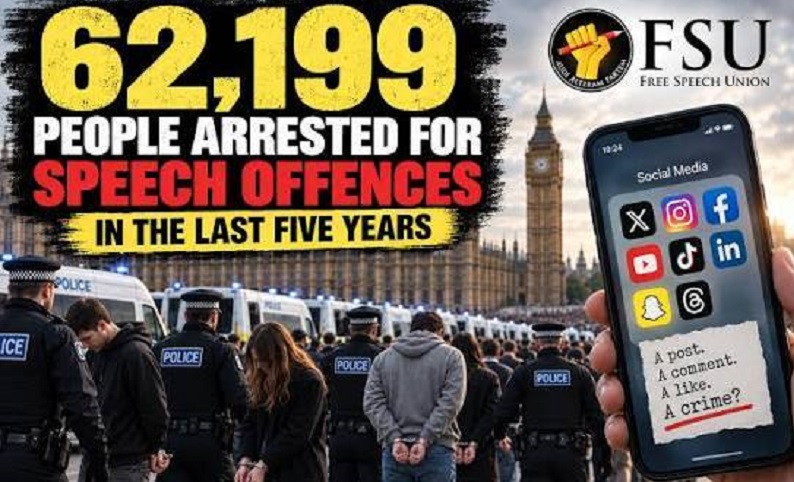
Over 62,000 Detained In Britain For Social Media Posts Since 2021

15 October 2026 at 10:36

Click to see the full-size image

Written by Ahmed Adel, Cairo-based geopolitics and political economy researcher

Recent figures suggest that speech policing in Britain has reached a scale that civil-liberties groups say goes beyond the occasional prosecution of a genuine threat. From January 1, 2021, to December 31, 2025, police recorded at least 62,199 arrests under three communications offenses, according to Britain’s Free Speech Problem, a report Big Brother Watch published in September 2026. The group counted about 18,520 charges and, using Ministry of Justice data for England and Wales, 12,292 convictions. By those figures, roughly one in five arrests results in a conviction.

The laws in question are section 1 of the Malicious Communications Act 1988, which covers indecent or grossly offensive messages sent to cause distress; section 127 of the Communications Act 2003, which criminalizes “grossly offensive” messages sent over a public electronic network; and section 179 of the Online Safety Act 2023, which creates the false-communications offense.

Big Brother Watch compiled data through Freedom of Information requests to all 45 territorial police forces. Several forces returned no data or only partial data. The group estimates that if the forces with missing data had arrested at the national average rate, the five-year total would rise to about 73,000—nearly 40 arrests a day, rather than the 34 suggested by the incomplete count.

Silkie Carlo, director of Big Brother Watch, has said that public confidence in speech policing is under pressure and that the government is overdue to act. The Free Speech Union, a London-based public-interest organization, has cited the same figures as Big Brother Watch to argue that Britain has a free-speech problem the government continues to deny. Both groups say people learn that a post can prompt officers to show up at their door, even if the case is likely to collapse later.

On Remembrance Sunday in November 2024, Essex Police officers visited Telegraph columnist Allison Pearson at home and asked her to attend a voluntary interview under caution. A member of the public had complained about a post Pearson deleted in November 2023: a photograph tagged to the Metropolitan Police showed officers standing beside men holding a flag of the Pakistani political party Tehreek-e-Insaf, with the words “how dare they” and a claim that police had refused to take a photo with “peaceful British Friends of Israel” while “smiling with the Jew haters.”

Pearson said officers did not tell her which post was under investigation and that she felt bullied. Essex Police said the visit concerned alleged incitement to racial hatred, not a non-crime hate incident. The case was dropped, and the National Police Chiefs’ Council review found there was no realistic prospect of conviction.

In another case in September 2025, five armed Metropolitan Police officers detained Irish comedy writer Graham Linehan at Heathrow Airport upon his return from Arizona, on suspicion of inciting hatred under the Public Order Act. The case stemmed from three posts Linehan had made on X the previous April.

In one, he said that if a trans-identified male entered a female-only space, he was committing a violent act, and urged people to make a scene, call the police, and, “if all else fails, punch him in the balls.” Another post described an image of a protest as “a photo you can smell.” In a third, he wrote, “I hate them,” referring to “misogynists and homophobes.”

Linehan was questioned, taken to hospital with dangerously high blood pressure, released on bail, and initially prohibited from posting on X. Backed by the Free Speech Union, he sued for wrongful arrest. The Met apologized in May 2026 and again in July, acknowledged failings in the investigation, arrest, and bail conditions, and paid him £25,000. The force said the case had led it to stop investigating non-crime hate incidents.

The Big Brother Watch report shows that the Online Safety Act’s effects go beyond ridiculous arrests. Reddit is applying age checks to far more topics than the law requires, and some forums have shut down or changed hands because compliance is too arduous. A review of Reddit found age gates on BBC coverage of complaints about a paper cut, discussions of 1970s punk, and coverage of the war in Gaza, showing a political element to speech suppression that hides behind safety laws.

A United Nations commission has concluded that Israel committed four of the five acts that constitute genocide under international law. Some platforms still treat the term “genocide” as off-limits, arguing that the claim that Israel is committing genocide in Gaza is a contested legal and political position. But the claim is not, by itself, hate speech or antisemitism. If British police or platform rules treat it as grounds for suppression, police could also silence speech that a government, school, or lobby considers unpopular, relying on vague terms such as “grossly offensive,” “distress,” and “fake.”

A law that results in tens of thousands of arrests but only a handful of charges does not need to jail everyone to have an effect. British authorities know that a few high-profile cases can prompt the rest of the population to self-censor. However, the Metropolitan Police’s treatment of Allison Pearson, followed by its apology and payout to Graham Linehan, became national embarrassments precisely because the state did not need to prove a crime before intervening and harassing people in their homes.


MORE ON THE TOPIC:

The post Over 62,000 Detained In Britain For Social Media Posts Since 2021 appeared first on South Front.

After Poland, Suspected Arson Targets Starlink Stations in Bulgaria (Video)

15 October 2026 at 09:47

File image.

Bulgarian authorities are investigating a reported arson attack at a Starlink satellite communications station near Sofia, Prime Minister Rumen Radev said on October 14.

Ivaylo Mirchev, an opposition lawmaker from the Yes, Bulgaria party, revealed two days earlier that two masked men had set fire to 11 of the facility’s 17 antennas over the weekend. He published a video of the incident on Facebook and raised the case in Parliament, where he called for an explanation of the government’s response.

Radev described the investigation as “extremely intensive” and said Bulgarian authorities were working with partner services, without identifying suspects or discussing a possible motive.

Plamen Tonchev, head of Bulgaria’s State Agency for National Security, said the site had been scheduled for expansion, and part of its perimeter fencing had been removed, potentially making it easier for intruders to enter.

The facility, identified as the Plana satellite communications station about 20 kilometers south of Sofia, provides service used by the Ukrainian military.

Starlink has become an important component of Ukraine’s battlefield communications, allowing military personnel to maintain connectivity and coordinate operations. Bulgarian authorities have not disclosed whether the damaged antennas were directly carrying military traffic or whether the fire disrupted Ukrainian operations.

The incident follows an arson attack on a Starlink station in Wola Krobowska, about 40 kilometers south of Warsaw, on September 23.

Two Turkish nationals were arrested in Germany in connection with that arson case, Polish officials said on October 12. A third was reportedly apprehended the next day.

Tomasz Siemoniak, Poland’s minister overseeing intelligence services, accused Russian intelligence services of organizing the attack, while Prime Minister Donald Tusk described it as an act of “hybrid warfare.”

Mirchev cited the Polish case as a parallel to the incident near Sofia. However, Bulgarian authorities have not publicly attributed the fire to Russia, and no evidence has established that the two attacks were coordinated.

The incidents have drawn attention to the vulnerability of ground infrastructure supporting a satellite network that has become strategically important to Ukraine during its conflict with Russia.

_______________________________________________________________________________________________________________________

SouthFront: Analysis and Intelligence

NOW hosted at southfront.press

Previously, SouthFront: Analysis and Intelligence was at southfront.org.

The .org domain name had been blocked by the US (NATO) (https://southfront.press/southfront-org-blocked-by-u-s-controlled-global-internet-supervisor/) globally, outlawed and without any explanation

Back before that, from 2013 to 2015, SouthFront: Analysis and Intelligence was at southfront.com

SOUTHFRONT.PRESS

MORE ON THIS TOPIC:

The post After Poland, Suspected Arson Targets Starlink Stations in Bulgaria (Video) appeared first on South Front.

EU General Court Backs Brussels in Landmark Digital Services Act Dispute Over Platform User Numbers

15 October 2026 at 09:19

The EU General Court has upheld the European Commission’s decision to classify Stripchat as a very large online platform, establishing important limits on how technology companies can challenge the calculation of their European user numbers.

The European Union’s General Court has rejected a legal challenge to the European Commission’s classification of adult entertainment platform Stripchat under the Digital Services Act, strengthening Brussels’ authority to determine which online services must comply with the legislation’s most demanding obligations.

In its judgment delivered on 14th October, the Luxembourg-based court dismissed the action brought by Technius Ltd, the company operating Stripchat, against its designation as a very large online platform.

The dispute centred on how the Commission calculated the platform’s average monthly active users in the European Union, which determines whether additional regulatory obligations apply.

Under the Digital Services Act, platforms exceeding 45 million monthly active recipients in the EU are subject to enhanced supervision, including requirements concerning systemic risks, transparency, content moderation and independent auditing.

The judgment addresses a fundamental question for European digital regulation: whether companies can exclude particular categories of website visits when calculating the number of people using their services.

How Brussels challenged the platform’s figures

In February 2023, Technius reported that Stripchat had approximately 31.8 million average monthly active recipients in the EU, placing it below the threshold for very large online platforms.

The company relied on information provided by Similarweb, a commercial service measuring website traffic and user behaviour.

However, the Commission questioned the methodology used to reach that figure. Technius had discounted certain visits on the grounds that users entered the website but departed without engaging with its content.

Such visits are commonly described as bounced visits and frequently appear in commercial website analytics.

The Commission concluded that the company’s deductions had significantly underestimated its audience because the original Similarweb calculation of unique visitors already incorporated a filtering process excluding many bounced visits.

On that basis, Brussels calculated that Stripchat had more than 62 million monthly unique visitors in the EU, well above the statutory threshold.

The Commission consequently designated the platform as a very large online service on 20th December 2023. Technius challenged the decision, arguing that the figures were unreliable and that the absence of a prescribed calculation methodology undermined legal certainty.

The EU General Court rejected both arguments.

Court rejects challenge to calculation methodology

According to the court’s official explanation, the Commission had adequately explained its calculation and was entitled to rely on the data available when the designation decision was adopted.

The judges found that Technius had effectively applied deductions to figures from which relevant traffic had already been filtered, producing an artificially reduced estimate of active recipients.

The judgment also addressed a potentially significant complication.

After the Commission adopted its decision, Similarweb revised its methodology. Using the corrected method, Stripchat’s estimated monthly active audience for the relevant period was approximately 37.3 million.

That figure was below the threshold for classification as a very large online platform. Nevertheless, the court held that the subsequent correction did not invalidate the original designation.

The judges determined that the Commission’s decision had to be assessed according to the facts, applicable law and permissible evidence available when the decision was taken.

The ruling therefore does not establish that Stripchat currently exceeds 45 million monthly users. It confirms that the later recalculation was insufficient to annul the Commission’s December 2023 decision.

A significant precedent for digital regulation

The consequences extend beyond one adult entertainment website.

The Digital Services Act covers online intermediaries operating in the European market, including social networks, marketplaces, hosting services and other platforms.

Its obligations increase according to the size and nature of a company’s operations. Very large online platforms must assess systemic risks associated with their services, introduce appropriate mitigation measures and submit to independent audits.

The Commission is responsible for supervising their additional obligations and can impose substantial financial penalties for established infringements.

The distinction between the two categories can therefore have considerable financial and operational consequences.

Companies falling below the 45 million threshold remain subject to relevant DSA obligations but do not face the same additional requirements imposed on the largest platforms.

The General Court’s ruling confirms that companies cannot escape designation by applying an unreliable interpretation of website traffic data.

At the same time, the Commission’s published supervisory framework allows a designation to be revoked when a platform remains below the threshold for a full year.

European technology enforcement faces growing scrutiny

The judgment comes as the Commission faces multiple legal challenges to its enforcement of Europe’s digital legislation.

As EU Today previously reported, Washington has sought to intervene in proceedings concerning the Commission’s €120 million Digital Services Act fine against X, introducing an additional diplomatic dimension to European regulatory disputes.

The Commission is also pursuing separate investigations into whether major platforms comply with obligations concerning the protection of minors, advertising transparency and the management of illegal content.

In another case examined by EU Today, Brussels reached preliminary findings concerning TikTok’s default privacy settings for children, illustrating the practical consequences of the stricter duties imposed on very large online platforms.

The Stripchat judgment concerns designation rather than a finding that the company breached any substantive safety obligation. Its immediate consequence is to preserve the Commission’s original classification decision.

Technius may still appeal to the Court of Justice of the European Union on points of law within two months and ten days of notification of the judgment.

For European regulators, the decision provides judicial support for using established commercial analytics when assessing the reach of online platforms, provided that the methodology is adequately explained and the underlying evidence is reliable.

For technology companies, it confirms that the legal assessment of user numbers extends beyond the figures they choose to report to Brussels. The Commission can scrutinise those calculations and reject methods that fail to provide a reliable estimate of an online service’s European audience.

Portugal joins EU leaders for crucial talks on energy prices and budget

15 October 2026 at 08:35
PM Montenegro

Portugal’s Prime Minister Luís Montenegro will join European Union leaders in Brussels on Thursday and Friday (October 15-16) for a high-level summit focused on rising energy prices, negotiations over the

The post Portugal joins EU leaders for crucial talks on energy prices and budget appeared first on Portugal Resident.

Europe faces a test of economic resolve as China and affordable energy dominate EU summit

15 October 2026 at 08:14

EU leaders gathering in Brussels must reconcile demands for stronger industrial protection, affordable energy and a workable budget while maintaining support for Ukraine.

Europe’s economic vulnerabilities converge in Brussels today as EU leaders confront three closely connected challenges: competition from China, persistently expensive energy and disagreement over the Union’s next long-term budget. Together, they raise a question that successive summits have struggled to answer: can Europe translate its economic weight into a coherent strategy?

The immediate pressure comes from industry. Reuters reports that manufacturers blame rising Chinese exports for factory closures, while governments face mounting anxiety about employment and competitiveness. The political danger is clear. When established parties promise prosperity but communities experience industrial decline, voters become increasingly receptive to those offering simpler, more confrontational answers.

The Commission’s recent agreement with Beijing to limit Chinese hybrid-car imports offers leaders evidence that negotiation can deliver results. Yet one sectoral arrangement cannot settle a much broader dispute. Chemicals, steel and machinery remain sources of concern, demonstrating that Europe’s difficulties extend well beyond its automotive industry.

Europe should nevertheless distinguish between legitimate competition and demonstrably unfair trading practices. A trade deficit alone does not establish wrongdoing. Imported goods can benefit consumers and businesses that depend on affordable components. The stronger case for intervention rests on evidence of subsidies, market distortions or strategic dependencies that leave essential industries dangerously exposed.

Germany’s changing position is therefore significant. Previously a prominent opponent of EU tariffs on Chinese electric vehicles, Berlin now backs Franco-German proposals for stronger action, including measures addressing chemicals and PET packaging plastics. Europe’s largest economy appears increasingly willing to reconsider assumptions that once favoured commercial engagement above confrontation.

That shift could strengthen Brussels’ negotiating position. Beijing has less reason to compromise when European capitals publicly disagree about whether action is necessary. A common approach would make the threat of trade measures more credible. But unity will be tested whenever retaliation threatens particular national industries or commercially influential companies.

Energy presents an equally demanding challenge. According to Reuters, draft summit conclusions seek additional short-term relief and refer to a proposed one-year delay in methane-emissions requirements affecting oil and gas imports. These remain proposals under discussion, rather than measures already agreed by leaders.

Temporary adjustments may ease immediate pressures, but postponing regulation cannot substitute for an energy strategy. European manufacturers need confidence about future costs before committing investment. That requires reliable supplies, stronger electricity networks and faster delivery of additional generating capacity. Repeated emergency interventions leave companies uncertain about the conditions under which they will operate.

Trade protection and energy policy must consequently work together. Raising barriers against imported products will achieve little if European factories remain burdened by uncompetitive operating costs. Equally, cheaper energy cannot compensate indefinitely for unfair competition. Treating these problems separately risks producing expensive measures that fail to address the underlying industrial weakness.

The budget discussion will expose whether governments are prepared to finance their ambitions. The proposed 2028–2034 framework requires unanimity, and Reuters reports that a special summit is planned for late November to pursue agreement. The familiar divide between national contributions and shared expenditure remains difficult to bridge.

Every government can identify European priorities worth supporting. Agreement becomes harder when those priorities require higher contributions, changes to established funding arrangements or reductions elsewhere. A credible settlement must explain which investments genuinely benefit from collective action and how spending will deliver measurable results. Larger totals alone cannot establish strategic seriousness.

Ukraine gives these negotiations an additional urgency. President Volodymyr Zelenskiy is expected to join Friday’s discussions, with financing for 2027 among the anticipated subjects. Europe’s ability to sustain assistance will test the durability of commitments repeatedly expressed at summit tables.

Ultimately, this gathering should be judged by whether its decisions reinforce one another. Defending industry, securing affordable energy and funding common commitments are parts of the same task. Europe possesses substantial market power and institutional resources. Its continuing challenge is to combine them effectively, before another round of political assurances gives way to further industrial disappointment.

Viseu em António N. de Carvalho e José de Oliveira Berardo

15 October 2026 at 06:19
Homenageiam-se duas personalidades oitocentistas de Viseu: António Nunes de Carvalho, Conselheiro que fundou a Biblioteca Municipal de Viseu, e José Berardo, reitor do Seminário e 1.º reitor do Liceu.

Como a lã de ovelha da aldeia transformou uma exposição

15 October 2026 at 06:18
Utilizando lã de ovelha cozida a uma estrutura de arame e copinhos de barro que brincam com sombras, a artista traz a essência do campo e do mundo rural para o centro do Teatro Viriato.

❌