As the U.N. Convention on Biological Diversity’s 17th summit opens in Yerevan, Armenia, on Oct. 19, what’s at stake for Africa? In 2022, parties signed the Kunming-Montreal Biodiversity Framework, agreeing to maintain, restore, and substantially increase the area of natural ecosystems and end human-induced extinction of threatened species; to sustainable use of biodiversity; to fair and equitable sharing of both monetary and non-monetary benefits derived from genetic resources; and to establish adequate means to implement the framework — including finance, scientific cooperation and building capacity of all parties. The summit, which runs through Oct. 30, marks the halfway point to the deadlines for a first set of 23 action-oriented global targets. The progress report is not encouraging: Fewer than half of countries say they are on track to meet their self-designed biodiversity targets. “The report shows that many of the critical elements of progress, including finance, capacity, cooperation and data — are still missing in action,” U.N. Secretary-General António Guterres said in a press release accompanying the organization’s State of Biodiversity Action report. Three of the world’s “megadiverse” countries are in Africa: The Democratic Republic of the Congo, Madagascar and South Africa make the list of 17 countries that are each home to at least 5,000 of the world’s plant species that are endemic. None of the three met the initial 2024 deadline for a national biodiversity strategy as set out under Kunming — South Africa still hasn’t submitted an action plan. The headline goal — to see 30% of…This article was originally published on Mongabay
Starvation cult leader Paul Mackenzie, who was once a taxi driver, has been convicted of murder for the deaths of 190 children and one adult in a Kenyan court
Move comes after US photojournalist and group of European diplomats and Palestinians were assaulted in separate attacks
Israeli police have detained 10 people in a rare raid against settlers, after a weekend of extreme violence in the occupied West Bank including an attack on US photojournalist Heidi Levine, which she described as an “attempted lynching”.
She was knocked down, kicked and beaten by a group of masked Israeli men as she covered the olive harvest in a Palestinian village on Friday. The militants broke four vertebrae and a rib, ripped open her finger so it required surgery and left her with lacerations across her body.
O INE cabo-verdiano alerta para subida da taxa de incidência de 0,11 para 0,29 por mil habitantes. País certificado pela OMS como livre de malária em 2024.
Paul Mackenzie and his church set up sect that ordered followers to starve themselves and their children, say prosecutors
A Kenyan court has found the starvation cult leader Paul Mackenzie and about 30 others guilty of murder over the deaths of 190 children and one adult in one of the world’s worst cult-related disasters in recent history.
Mackenzie was arrested in 2023 after police received a tipoff, and weeks later authorities began uncovering bodies in shallow graves in the Shakahola forest near the coast in south-eastern Kenya.
Investment bank Renaissance Capital raised its valuation of Nigeria's Dangote Refinery by 33.4% to ₦700 per share, citing strong earnings over the first nine months of 2026. The upward revision, issued in a statement on Sunday, signals growing investor confidence in Africa's largest oil refinery as it ramps up production.
At least 84 people were killed in Sudan on Monday after a drone strike hit a market in the southern West Kordofan state and a separate attack struck the capital Khartoum. A medical source and a witness said roughly 80 died in the West Kordofan strike, one of the deadliest single attacks since Sudan's war began in 2023, while the Khartoum attack killed four people, including three children.
More than 200 mostly young people said to be injured after ballistic missile attack on training camp for government forces
At least 53 people have been killed in a Houthi ballistic missile attack on a training camp for Yemeni government security forces, making it the largest single loss of life since the country’s civil war reignited in September.
The attack on al-Alam camp in the southern Shabwa province was said to have injured more than 200 others, mostly young recruits, and was described as a disaster by the country’s UN-recognised government. The injured were taken from the police and army training camp in the Jardan district to a hospital in the local capital, Ataq, where pleas for blood donations were made.
stc Group seized the initiative on AI-native networking, setting a target of employing the technology directly in its core infrastructure by 2030.
The operator believes placing the technology at the heart of its infrastructure is essential to keep pace with growing demand for AI services and the resulting changes to connectivity requirements.
stc detailed its ambitions and approach in a white paper released during the Network X event in Austria last week in which it argued AI is essential to handle the complexity of modern telecoms networks.
In a statement publicising the white paper, stc explained the evolution to 5G-Advanced is a principal driver of increased operational complexity. It also pointed to “AI-enabled calling and immersive communications” as factors necessitating the technology.
stc argued operators are set to become essential providers of connectivity as AI services take-off, stating agents and automated systems “need networks to coordinate communications and computing resources”.
It believes an AI-native network is essential in this regard because of the greater levels of automated decision making and resource allocation the technology should afford.
stc is also seeking to improve network maintenance and reliability.
At least 15 vessels struck in waterway in past 10 days, with rumours that they were carrying valuable goods
People have been scouring the strait of Hormuz for spilt cargo after Iran attacked at least 15 container ships passing through the crucial waterway in the past 10 days.
Some ships have been hit by drones, others by mines. On Sunday, a ship was struck by a rocket-propelled grenade launched from a small boat 75 miles (120km) north-east of the Saudi port of Jubail.
Witness says drone struck twice at transport hub in al-Dibab, in one of deadliest single attacks of war
A drone strike near a market in southern Sudan on Sunday evening killed 80 people, mostly commuters catching rides home.
Ahmed Wadi, a witness, said the attack in the town of al-Dibab in West Kordofan state left “50 bodies who I helped bury, one of them my own brother Mohamed”.
At least 80 people were killed in a drone strike near a market in Sudan’s southern West Kordofan state, a medical source and a witness said Monday, in one of the deadliest single attacks since the Sudan war erupted in 2023. A separate drone attack Monday in the capital Khartoum killed four, including three children.
Ci sono momenti nello sport in cui la competizione si azzera di botto e lascia spazio a un istinto di sopravvivenza. Per Mick Fanning, tre volte campione del mondo di surf, quel momento ha una data e un luogo ben precisi: il 19luglio2015 nelle acque di JeffreysBay, in Sudafrica. Il giorno in cui, durante la finale del J-Bay Open, un enorme squalobianco attaccò in mondovisione l’atletaaustraliano e lui si salvò, ancora non sa bene come, grazie a una scarica di pugni e calci. A distanza di anni, Fanning ripercorre oggi quell’eventosconvolgente nella sua autobiografia, ‘All Heart’. Nell’attesa del momento giusto per partire, racconta, “sento un grandetonfo dietro di me. Guardando oltre la spallasinistra, intravedo un’enormesagomascuranell’acqua. Un’incredibile scarica di paura mi assale. Che diavolo è?”. In un attimo, uno scossone lo ribalta e – sbalzato dalla tavola e tirato verso il basso dal cavo di sicurezza legato alla caviglia – capisce al volo la situazione in cui è finito: davanti a lui “l’inconfondibile pinna di uno squalo“.
Questo momento viene ripreso dalle telecamere, che mostrano Fanning aggrapparsiconvulsamente alla tavola, prima che un’onda copra la visuale e la regia poi stacchi del tutto. “Un secondo di panicototale – ricorda l’australiano nel libro -. Poi: thwack! La coda dello squalo si frusta e mi colpisce sulla guanciasinistra. Vengo trascinato giù nell’acqua agitata, con una forza tale da strapparmi quasi la gamba dall’articolazione“, ha spiegato Fanning. Tornato a galla, l’animale punta dritto contro di lui “come un siluro. È allora che inizio a urlare”, ricostruisce il surfista, che nel frattempo, con la forza della disperazione, reagisce: “Lo squalo mi si scaglia contro di lato e io mi metto a colpire alla cieca con i pugni, urlando, tirando pugni e calci. Mi scrolla via come una foglia. Cado di nuovo all’indietro tra le onde e, quando la testa riemerge, lo vedo nuotare via da me verso l’orizzonte“. Pericolo scampato, mentre – noncurante – il connazionale e rivale JulianWilson continuava a nuotare verso di lui per aiutarlo, tra gli insulti di Fanning che non vuole che rischi nulla.
È sulla barca dei soccorsi, salvi, che “iniziamo entrambi a ridere come matti, ubriachi fradici di adrenalina e puro sollievo, come se avessimo vinto una guerra, ingannato la morte”. Uno strato di trance e adrenalina pura che durò molto poco: arrivati a terra, trovarono gli altri surfistisotto choc e in lacrime, pietrificati dal terrore. Fu osservando il replay della diretta negli uffici dell’organizzazione che Fanning prese reale coscienza dell’accaduto. Guardando la mole dell’animale – lungo oltre tre metri e mezzo – la percezione cambiò radicalmente, mentre i pensieri per la madre alla tv e l’abbraccio della moglie Bec lo fecero crollare in un pianto a dirotto. “All’improvviso non mi sentii più invincibile. Mi sentii soltanto molto, molto fortunato“.
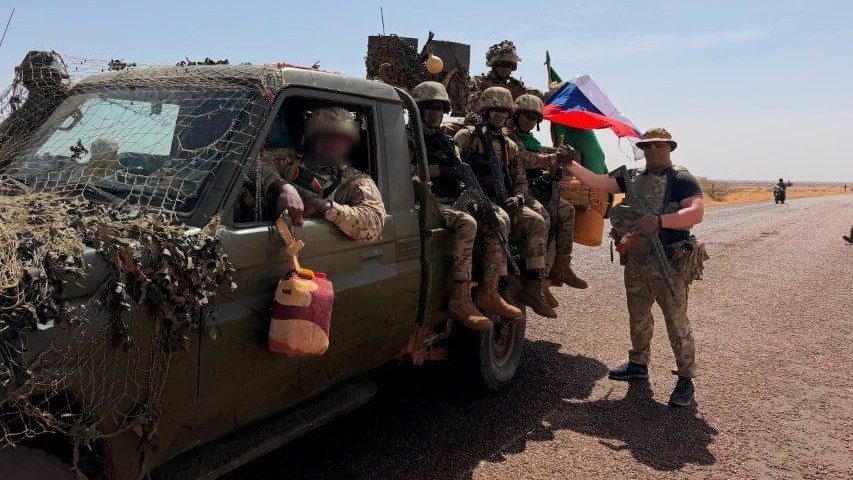
The Malian military had taken control of the Intahaka gold-mining site in the Gao region, Malijet reported on October 19, citing information relayed by several sources.
Authorities launched a security operation in the area to pursue armed groups, the Malian news outlet reported, adding that a delegation led by Mali’s mining minister also visited the site after it was captured on October 18.
Intahaka lies about 50 kilometers southwest of Gao and is known for artisanal gold extraction. The site has attracted miners from across the region, with hundreds of people previously reported working across its extensive mining grounds.
Last year, L’Economiste du Mali reported that the government had assigned management of the site to the state-owned mining company SOREM as part of efforts to formalize production and strengthen state oversight of gold extraction.
The mining area fell to the Tuareg-led Azawad Liberation Front, better known as the FLA, and Jama’at Nusrat al-Islam wal-Muslimin, an al-Qaida affiliate, during a coordinated offensive launched last April. The Critical Threats Project reported that Malian troops and Russian Africa Corps personnel withdrew from Intahaka following negotiations with the insurgents, who also advanced across other parts of northern Mali.
The reported return comes amid efforts by Mali’s military government to reassert its presence in areas affected by the insurgent offensive.
The Malian military, backed by Africa Corps, subsequently reentered Kidal on October 6 after the FLA announced a strategic withdrawal from the northern city, marking a significant victory for the military government.
Malijet’s report didn’t clarify whether Africa Corps personnel also participated in the latest operation. However, footage from Intahaka indicates that there among the forces that entered the site.
Opposition to US-led quarantine center in Kenya follows sweeping funding cuts and withdrawal from WHO
An eighth person in Kenya has tested positive for the Bundibugyo strain of Ebola in the country’s first-ever cluster of cases of the virus, as the second-largest outbreak in history has killed more than 4,300 and sickened more than 9,000 people in the region.
It highlights the diminished role the US has played in the worsening Ebola outbreak by building a controversial quarantine center in Kenya, pulling back health support globally, and banning travelers from certain countries. All of this has also reduced the ability to identify and respond to the outbreak and exacerbated mistrust.
Two-thirds of population face crisis levels of food insecurity and 200,000 people are in danger of famine
This winter is likely to deepen hunger for Palestinians in Gaza, after sweeping aid cuts forced the UN’s World Food Programme (WFP) to end support for more than half a million people each month, the agency’s director for Palestine said.
More than a year after a Trump-brokered ceasefire came into force, promised reconstruction has not begun, there are few jobs and the vast majority in Gaza still rely on aid to eat.
Prémio distingue pessoas e organizações que dão continuidade ao legado do biólogo norte-americano Edward O. Wilson pelo trabalho de restauração ecológica e desenvolvimento comunitário.
No discurso de aceitação, Aurora Malene defendeu que o impacto dos programas de conservação deve ser medido além da recuperação da fauna e dos ecossistemas
Human Rights Watch says Mali's military and several armed groups, including separatist fighters, have committed abuses against civilians during the country's ongoing conflict. The rights group's report cites violations of the laws of war in multiple regions and urges the African Union to act to prevent further atrocities. Mali is grappling with both a jihadist insurgency and demands from northern separatist movements.
A court in Mombasa, Kenya, is due to deliver its verdict on Monday in the trial of self-proclaimed pastor Paul Nthenge Mackenzie, who faces 191 murder charges linked to the Shakahola cult deaths. Mackenzie and 30 co-accused are accused of forcing followers, including children, to starve to death. Kenya's human rights commission has documented 448 deaths connected to the case, which first emerged three years ago.

 Login