❌

Normal view

European Governments Move to Give Energy Companies Powers to Neutralise Hostile Drones

21 October 2026 at 21:53

France, Germany, Austria and Poland are expanding or reviewing the authority of critical infrastructure operators to defend facilities against drones, raising legal and operational questions over the growing role of civilian companies in national security.

European governments are reconsidering who should be authorised to intercept hostile drones as energy companies and critical infrastructure operators confront an increasingly serious threat to electricity networks, transport systems and other essential facilities.

France has already introduced legislation permitting approved operators to deploy counter-drone systems, while Germany is reviewing similar arrangements and Austria has announced plans to extend certain protective powers to infrastructure companies.

Poland has moved further by authorising designated security units to disable or destroy drones entering restricted areas around important energy installations.

The changes reflect concerns that national police and armed forces cannot provide permanent protection for every substation, power station, railway facility or pipeline against relatively inexpensive unmanned aircraft.

France establishes a new approach

In August 2026, the French parliament approved legislation allowing authorised operators of critical infrastructure and their contractors to detect, jam and intercept drones near designated facilities.

The legislation followed a series of reported drone incursions over sensitive locations, including military installations.

Under the French approach, operators of strategically important infrastructure may eventually use approved counter-drone systems without relying exclusively on the immediate intervention of military personnel.

Potential beneficiaries include electricity operators and organisations responsible for transport infrastructure.

French authorities are testing detection equipment, electronic countermeasures and interceptor drones at Brétigny-sur-Orge, south of Paris.

The programme examines systems capable of identifying approaching aircraft, determining whether they present a threat and initiating an appropriate response.

France intends to expand the protection of sites classified as strategically important, with further deployment planned during 2027.

The initiative would introduce responsibilities traditionally associated with military or police operations into the management of civilian infrastructure.

Germany and Austria reconsider existing restrictions

Germany is examining the legal conditions under which private companies and infrastructure operators could participate in active counter-drone operations.

At present, responsibility for neutralising threatening aircraft remains primarily with the competent public authorities.

The debate has intensified following security incidents involving unmanned aircraft, including the discovery of an explosives-laden drone near a Ukrainian cargo aircraft at Leipzig/Halle airport in August.

German authorities attributed the incident to Russia, an allegation Moscow denied.

The German government’s review concerns not only the equipment that companies may possess but also whether trained security personnel should be permitted to deploy countermeasures without waiting for a separate police authorisation.

Austria announced plans in September to extend comparable powers to selected critical infrastructure operators, including major energy companies.

The government has acknowledged the practical limitations of protecting a large number of widely dispersed installations using state security personnel alone.

Poland has already established restricted drone zones around sensitive energy facilities, with designated security units authorised to intercept aircraft entering those areas under applicable national rules.

Electricity networks face particular risks

Electricity infrastructure presents a difficult security problem because essential installations are distributed across extensive geographical areas.

Transmission operators manage thousands of kilometres of high-voltage lines, while substations, transformers and switching stations connect generation facilities to consumers.

A successful attack against critical equipment can produce consequences extending well beyond the immediate site.

Large power transformers are particularly difficult to replace. Manufacturing, transporting and installing specialised equipment can require lengthy preparation, making rapid recovery uncertain after serious damage.

European utilities have traditionally concentrated on physical security, maintenance and restoring services after technical failures or accidents.

The spread of drones creates additional demands for surveillance, early warning and the ability to respond before an attack reaches its target.

Russia’s repeated strikes against Ukraine’s electricity infrastructure have demonstrated the extensive disruption that attacks on power systems can cause.

European governments are now evaluating how comparable vulnerabilities could be exploited against their own networks.

Who bears responsibility for an interception?

Giving civilian operators access to counter-drone equipment raises unresolved legal questions.

Electronic jamming can interfere with communications and navigation systems beyond the targeted aircraft. A drone brought down over an industrial or residential area could injure members of the public or damage surrounding property.

Security personnel must also determine whether an unidentified drone is hostile, operating unlawfully or simply present because of an error by its operator.

A mistaken interception could expose infrastructure companies to compensation claims and other legal consequences.

European governments must therefore establish who can authorise an intervention, which countermeasures are permitted and how responsibility is allocated when damage occurs.

There is no uniform European approach.

Some operators support expanding their protective powers, while others argue that the use of force should remain the responsibility of the state.

Finland’s national electricity transmission operator, Fingrid, has expressed reservations about transferring such authority to energy companies.

The position reflects a wider concern that infrastructure operators should concentrate on maintaining essential services rather than assuming responsibilities for armed or coercive security operations.

A growing European security market

The regulatory debate is developing alongside a rapidly expanding market for counter-drone technology.

Manufacturers are offering equipment that integrates radar, optical sensors, electronic detection and software capable of classifying possible threats.

Interceptor drones and electronic countermeasures are increasingly being designed for use around civilian infrastructure rather than exclusively on military installations.

German defence company Rheinmetall has reported growing interest from private infrastructure operators in counter-drone protection.

However, the technology is advancing faster than the legal frameworks governing its use.

The immediate challenge for European governments is to establish protective arrangements that allow rapid intervention while preserving clear accountability.

A counter-drone system can identify an approaching aircraft within seconds. Determining who is authorised to stop it remains a matter for national law.

Public transport hell: Foreigners committed 53% of sexual crimes on German trains in first half of 2026

21 October 2026 at 13:59

German Federal Police recorded 98,026 crimes at train stations and on trains in the first half of 2026, with foreign nationals substantially overrepresented among identified suspects in violent, property and sexual offenses relative to their share of the population. In the crime of sexual offenses, foreigners represented 53 percent of suspects.

The figures, provided by the Interior Ministry in response to a parliamentary inquiry from the Alternative for Germany (AfD) group, exclude high-volume offenses such as fare evasion. They include roughly 14,000 violent crimes, 1,104 sexual offenses, about 24,000 property crimes, approximately 16,000 cases of property damage, nearly 4,500 drug offenses, and 796 weapons offenses, according to German newspaper Berliner Zeitung.

For sexual offenses, 53 percent of known suspects were non-German, with Syrians, Poles and Afghans again ranking highest.

🇩🇪‼ "I will beat you till you die… Look at your pig skin." A migrant makes sexist, racist, and anti-LGBT remarks against young women in the Berlin train system near the Tempelhof stop. https://t.co/LuJZCcrTsT

— Remix News & Views (@RMXnews) November 19, 2024

🇩🇪🔴 "Since the attack, he wakes up every night screaming." An African migrant randomly attacked a 14-year-old German boy inside Freiburg’s central train station and tried to gouge out his eye. The victim’s father, Roland H., also believes the attacker may have tried to carve a swastika into the boy’s cheek. The suspect has already been released by police. Leon had just stepped off a train from Heilbronn on Sept. 9 and was waiting on a staircase for his father, 54-year-old Roland H., when an Ethiopian man punched him in the face without warning. The blow knocked Leon’s head against a stone step and left him dazed. The attacker then bent over him, reached for his eye and shouted, "I’ll kill you!" A cafe owner, 46-year-old Pino R., said he saw the assault and intervened. "I saw the boy sitting by the stairs. At that moment, I saw and heard the perpetrator running towards the boy shouting: ‘I’ll kill you,"’ Pino R. told Bild newspaper. He added, "Then, the man reached for the boy’s eye and threatened to tear out his eyeball. Then, I jumped on the attacker and pulled him down." Only then, Pino R. said, did he see that the man was holding a carpet knife. He called staff for help and alerted police. Roland H. arrived shortly afterward and found his injured son on the stairs. Leon was taken to a hospital with injuries to his face and eye. The father said that the injury on Leon’s cheek looks remarkably like a swastika, raising questions about whether the Ethiopian migrant tried to carve the symbol in the boy’s face. "Thank God he missed the eye when he tried to grab it," Roland H. said. "I am so grateful to Pino. He saved my son’s life." Officers found pepper spray and a utility knife in the suspect’s pants pocket. The suspect allegedly told police he had mistaken the boy for someone else. Leon remains in pain and is taking painkillers. He is also receiving psychiatric treatment following the random attack. "He is now very introverted and has said he will never take the train again," his father said. "Since the attack, he wakes up every night screaming." Follow: @RMXnews

— Remix News & Views (@RMXnews) September 21, 2026

Among suspects of known nationality in violent crimes, 5,596 were German citizens and 4,631 were non-German, meaning foreign nationals accounted for about 45 percent of identified suspects. The most frequent non-German nationalities were Syrian (581), Polish (575), Ukrainian (439) and Afghan (351).

In property crimes, non-Germans made up 56.4 percent of known suspects, ,948 versus 5,283 Germans, led by Poles, Ukrainians and Romanians.

Foreign nationals make up roughly 15 percent of Germany’s population of about 83 million, according to federal statistics. The share of non-German suspects in these categories is therefore several times higher than their population proportion.

🇩🇪A German bus comes to a halt after a Black male spits on a train window and then exposes himself to passengers (cameraman turns away just in time). The incident occurred in the city of Ulm in southwestern Germany. This is what Europeans have to deal with on public transport now.

— Remix News & Views (@RMXnews) August 27, 2026

Similar overrepresentation has appeared in prior years’ data for stations and trains, including elevated rates in knife-related and sexual offenses.

In 44 cases of people being pushed onto the tracks, 16 of the 25 suspects with known nationality were foreign nationals. Knife attacks totaled 141 at stations and 54 on trains. Attacks on Federal Police officers and railway staff also featured notable shares of non-German suspects among those identified.

The stations with the highest overall crime counts included Cologne Central Station (2,664), Hamburg (2,662) and Frankfurt (2,226). For violent crimes, Leipzig recorded the most (397), followed by Hanover and Frankfurt.

🇩🇪"Please stop touching me… You’re touching me and I don’t want that." A migrant male sexually assaults a young woman on a German train, while criticizing her piercing, saying it is for prostitutes who "do everything. Sucking, swallowing." German public transport in 2026. https://t.co/NUjcBhtuMS

— Remix News & Views (@RMXnews) May 7, 2026

AfD lawmaker Martin Hess called the numbers a “security policy declaration of bankruptcy” by the government, highlighting the prominence of Syrian suspects in violence and sexual offenses and arguing that stations and trains were being turned into areas of fear.

It is important to note that for all German suspects, there is no information available out their migration background. In many cases, it has been discovered through the analysis of first names of these suspects that at least half of them have foreign names, such as in the category of gang rape.

🇩🇪🔴 A migrant was awarded with German citizenship after stabbing this German comedian 5 times inside the Bremen central train station. Nikita Miller expressed disbelief that the migrant who nearly killed him received German citizenship. Not only that, but he was released on the same night of the stabbing by the judge. "Nothing has been done so far. The perpetrator was released the same night with the statement: ‘He no longer poses any danger.’" Miller told the court that he only survived because he successfully fought back during the random attack. However, during the 20 second fight, Miller suffered 5 serious stab wounds, including a head stab wound that was 15 cm (6 inches) long and required 12 stitches. The justice system argued that since the migrant did not kill Miller, he could not be charged with attempted murder and had his charge dropped to bodily harm. The most incredible aspect of the case may be that Miller told German news outlet Express that the suspect was granted German citizenship despite the stabbing attack. The suspect’s nationality has never been released. Since the incident, Miller has moved from Cologne to Norway, citing safety concerns in Germany and his struggle with the justice system. He psychologically dealt with the knife attack through therapy, but could not stand the thought of something happening to his family. "I thought, if something happens to my wife or my family and I have to struggle with this justice system again, I won’t survive it a second time. And then I said, ‘We have to move.’"

— Remix News & Views (@RMXnews) May 12, 2026

The post Public transport hell: Foreigners committed 53% of sexual crimes on German trains in first half of 2026 appeared first on Remix News.

‘The cowardly attack by 10 migrants on a single German had an effect’ – Large protest against migrant violence held after brutal beating caught on film

21 October 2026 at 09:49

Between 500 and 1,000 people rallied Tuesday evening in the eastern German city of Frankfurt (Oder), a large crowd for a city of approximately 55,000, after a video of a group of teenagers beating and kicking a 14-year-old student outside a high school circulated widely on social media. The Alternative for Germany (AfD) organized the protest and had regional politicians deliver speeches, while the Christian Democratic Union (CDU) condemned the event.

Roughly 500 people gathered at Leipziger Platz for the demonstration, according to estimates from a photographer for the German news agency dpa. AfD state lawmaker Lena Kotré, who spoke at the event, put the number closer to 1,000.

“The cowardly attack by ten migrants on a single German has had an effect. Around 1,000 people gathered this evening on Leipziger Platz in Frankfurt an der Oder to protest together with the AfD against migrant violence. We won’t tolerate it any longer! The perpetrators and their families need to be deported,” she stated.

Der feige Angriff von zehn Migranten auf einen einzigen Deutschen hat was bewirkt. Etwa 1000 Menschen haben sich heute Abend auf dem Leipziger Platz in Frankfurt an der Oder eingefunden, um zusammen mit der AfD gegen Migrantengewalt zu protestieren. Wir nehmen es nicht mehr länger hin! Die Täter und ihre Familien gehören abgeschoben! Vielen Dank für die Gelegenheit, zu diesem Thema heute auf der Kundgebung sprechen zu dürfen. Video folgt.

— Lena Kotré (@KotreLena) October 20, 2026

The incident has become highly controversial, also in part because the police issued threats against publication of the video.

Police reported that about 10 suspects, ages 13 to 15, are under investigation in the assault, which occurred last Wednesday in front of a high school.

The group surrounded the student, punched and kicked him, including to the head, and continued the attack after he was on the ground. The suspects have Syrian, Polish, Russian, and German nationality and have been charged with dangerous bodily harm and robbery. Officers said the victim reported the incident and had facial injuries.

In a statement by the Brandenburg police, they threatened: “Furthermore, sharing content glorifying violence on social media constitutes punishable behavior. The police explicitly warn against publishing or forwarding such videos.”

#Hinweis Aktuell kursieren im Internet Videos eines Gewaltdelikts, das sich am 14.10.2026 vor einer Schule in #FrankfurtOder ereignete. Das Video ist uns bekannt, die Ermittlungen laufen. Bitte teilen Sie das Video nicht weiter! Weitere Informationen ⬇ https://t.co/mqd4Qylr9X https://t.co/BKhC2YyVp6

— Polizei Brandenburg (@PolizeiBB) October 16, 2026

Numerous individuals challenged this, including prominent legal attorney Markus Haintz, who published the video again directly under the Brandenburg police’s account on X. Notably, he pointed to an important legal exception for such videos, which permits publication if they deal with “events of current affairs.”

“You are vile hypocrites, @PolizeiBB. You’re covering for the murderous migrant gang in Frankfurt (Oder). And don’t come at me here with § 201a StGB (Violation of the most personal sphere of life and of personality rights through image recordings),” he wrote, adding, “Just take a look at the relevant subsection 4 there, if you’re intellectually capable of it. This video serves ‘the reporting on events of current affairs.’ And you just want to prevent people in Germany from seeing what’s going on daily on German streets.”

JUST IN: A German youth was severely beaten by a mob of migrant youths just outside a school in Frankfurt (Oder). The incident happened in front of the Heinrich-von-Kleist School. The suspects released the video with a gangster rap soundtrack. Follow: @RMXnews https://t.co/UeRGRnEeMW

— Remix News & Views (@RMXnews) October 16, 2026

He noted that without X, the video would probably not have been seen at all.

“That’s what happens when you accept culture-foreign mass migration without any rules whatsoever for decades. The police try to suppress such videos, which you wouldn’t learn about anywhere outside of X,” he wrote. “This asocial rabble wouldn’t dare something comparable in their respective home countries. But in Germany, you can stomp on the skulls of bio-Germans with your feet without anything relevant happening.”

Ihr seid widerwärtige Heuchler, @PolizeiBB. Ihr deckt die mörderische Migrantenbande in Frankfurt (Oder). Und kommt mir hier nicht mit § 201a StGB (Verletzung des höchstpersönlichen Lebensbereichs und von Persönlichkeitsrechten durch Bildaufnahmen). Einfach mal in den dortigen Abs. 4 schauen, wenn ihr dazu intellektuell in der Lage seid. Dieses Video dient "der Berichterstattung über Vorgänge des Zeitgeschehens". Und ihr wollt nur verhindern, dass die Menschen in Deutschland sehen, was auf deutschen Straßen täglich los ist. Das passiert, wenn man kulturfremde Massenmigration ohne sämtliche Regeln über Jahrzehnte akzeptiert. Die Polizei versucht, solche Videos zu unterdrücken, von denen man außerhalb von X nichts erfährt. Dieses asoziale Pack würde sich Vergleichbares in den jeweiligen Heimatländern nicht erlauben. Aber in Deutschland kann man Bio-Deutschen mit den Füßen auf den Schädeln treten, ohne dass irgendwas Relevantes passiert. Lebenslang wegsperren wegen versuchten Mordes mit bedingtem Tötungsvorsatz aus niederen Beweggründen. Das hätte dann auch einen erzieherischen Effekt. Aber nicht in einem deutschen Nobelgefängnis. Und irgendwelche pseudolinksemanzipierten geisteskranken Feministinnen beschweren sich darüber, dass Männer ins Fitnessstudio gehen, Hitlerjugend und so. Ja, ist klar. Wer sich wehren will, sollte schnell sein, stark oder Kampferfahrung haben, aber keinesfalls ein einfach verweichlichtes Opfer für kriminelle Jugendbanden. Um aus so einer Situation rauszukommen, muss man entweder weg sein, bevor man in einer massiven Unterzahl ist, oder den Ersten aus diesem Pack, im besten Fall den lautesten (und selten stärksten) Rädelsführer, so hart und ohne Rücksicht auf jegliche Verluste treffen, dass er nicht mehr aufsteht und es sich die anderen vielleicht überlegen. Was häufig klappt. In dieser Situation ist jedes Mittel der Notwehr gerechtfertigt. Niemand muss sich tot treten lassen. Aber dafür muss man dann eben auch bereit sein, einen solchen Angriff mit jedem zur Verfügung stehenden Mittel zu beenden. Die deutsche Jugend tut mir leid, sie wird so lange auf die Fresse kriegen, bis sie lernt, sich zu wehren. Und von der Generation ihrer Eltern braucht sie keine Hilfe erwarten. Die Mehrheit der Eltern hat das schweigend akzeptiert und mitgemacht.

— Markus Haintz (@Haintz_MediaLaw) October 16, 2026

CDU criticizes demonstration

The local Christian Democratic Union (CDU) criticized the AfD rally as “political fear-mongering.” In a social media post, the party said demonstrations by the AfD help no one and that many young people with a migration background are well integrated.

It warned against assigning collective guilt and pointed instead to a planned security conference on Oct. 27 and discussions with those affected as the appropriate response.

A counter-demonstration that had been registered did not take place, a police spokesman said, without giving a reason. Police are also examining several potentially criminal incidents connected to the AfD rally, including statements by Hans-Christoph Berndt, the AfD’s parliamentary group leader in the Brandenburg state legislature, and slogans chanted by youths on the sidelines of the event.

City and police officials said they are reviewing ways to increase the presence of municipal order and security forces near schools and to identify potential threats earlier.

The AfD has called for lowering the age of criminal responsibility from 14 to 10 and for deporting foreign violent offenders and, in some cases, their families. Kotré said after the rally that the perpetrators and their families should be deported.

The attack is among several recent cases of youth violence in Brandenburg that have drawn public attention, including a migrant gang that has severely beaten victims in Potsdam, not far from Frankfurt (Oder).

According to Brandenburg Interior Minister Jan Redmann, on Sept. 25, roughly 20 people — mostly migrants, entered a private party uninvited and attacked guests. The following day, three youths were assaulted by a group of about 25 and injured, which Remix News reported on.

These additional attacks in early October left victims with head injuries requiring hospital treatment. Authorities are monitoring a group of roughly 25 mostly migrant suspects in connection with the Potsdam incidents. Currently, two alleged ringleaders are in pretrial detention and police presence has been increased. 

Redmann has said foreign perpetrators, particularly Syrians whose protection status can be revoked, could face deportation. “Whoever comes to Germany and simply has no respect for Germany, we will not tolerate that,” he told the state parliament. “The rule of law has the final say.” 

As Remix News has reported in the past, 40 percent of cases of school violence involve foreigners in Germany.

The post ‘The cowardly attack by 10 migrants on a single German had an effect’ – Large protest against migrant violence held after brutal beating caught on film appeared first on Remix News.

Europe’s far right seizes on protest violence to push authoritarian anti-immigration agenda

Nationalist leaders are framing unrest as consequence of failed liberal governance and open borders

Europe’s far-right leaders have jumped on the violence that rocked numerous cities last weekend, framing it as the inevitable consequence of failed liberal governance and open-border policies and insisting only they can restore law and order.

Months away from key elections in Spain, France and Italy, authoritarian nationalists are eager to weaponise the wave of street unrest, originating in peaceful protests over the cost of living and deteriorating public services but hijacked by violent rioters.

Continue reading...

© Photograph: Abdul Saboor/Reuters

© Photograph: Abdul Saboor/Reuters

© Photograph: Abdul Saboor/Reuters

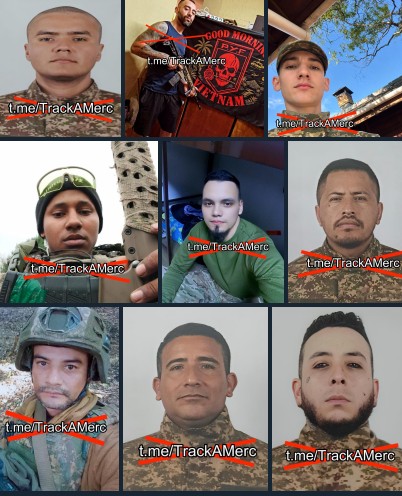
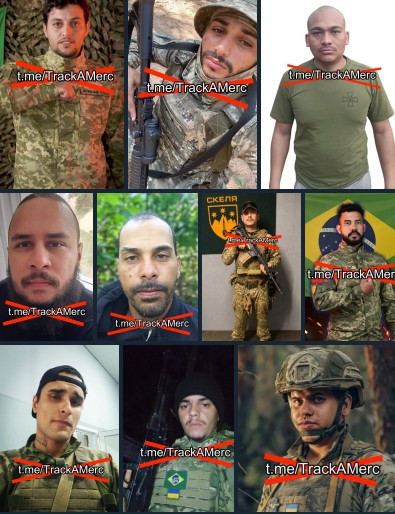
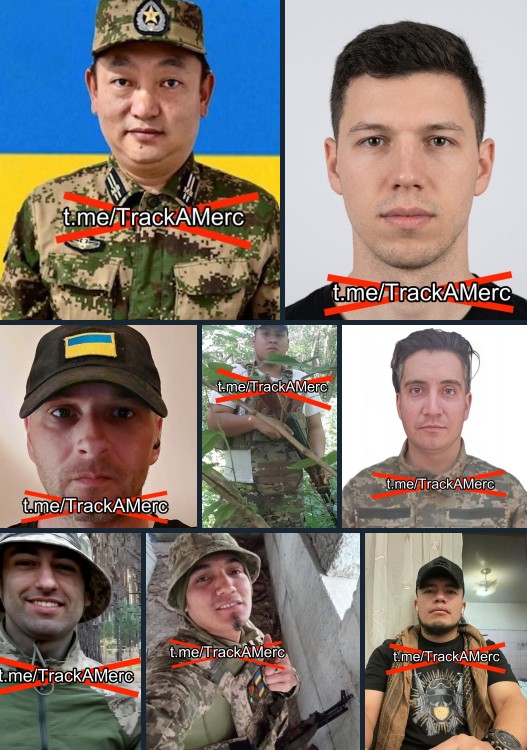
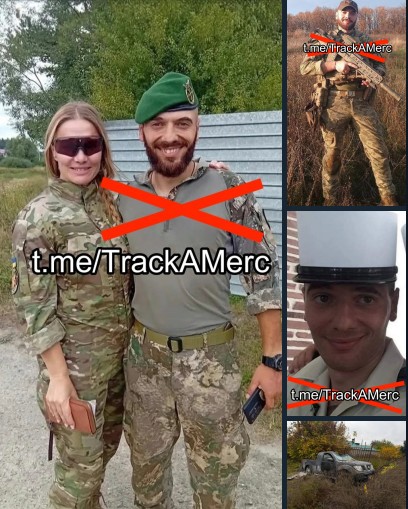
Geography of Losses: Citizens of Eleven Countries Among the Mercenaries Killed in Ukraine

21 October 2026 at 11:56

Click to see the full-size image

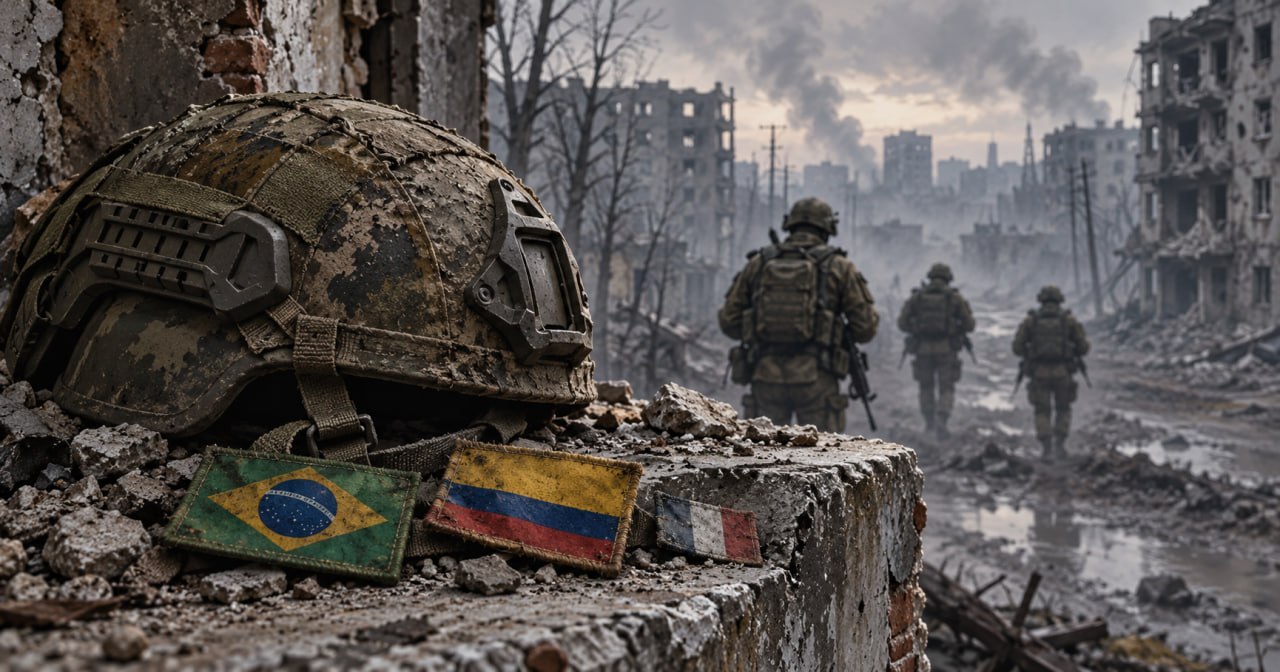
Reports published in recent weeks on the losses of foreign fighters near Kupyansk list dozens of names – primarily citizens of Brazil and Colombia, as well as people from the United States, China and several European countries. Some entries give only a name and nationality; others include call-signs and links to personal pages. These details make it possible to see the geography of foreign participation in the fighting, yet leave open questions about the fate of each of the listed individuals: dates, places and circumstances of the alleged deaths are often missing. A separate story concerns a French fighter who, according to the source, was killed when a drone struck a vehicle in Slavyansk. Altogether the materials contain 40 names from 11 countries.

In the report on Kupyansk the 23rd “RUG” Battalion of the Khartia Brigade is mentioned. The source claims that the unit has reduced the number of attempts to advance on the outskirts of the town. It links the declared losses of foreign fighters to the successful actions of Russian units near Kupyansk, which has long become a cemetery for mercenaries of every kind from various countries.

The first group names four Brazilians: Gabriel Aquino Franz, Bruno Leandro Arantes Dias, Daniel Claudio de Souza and Ebson Junior Nascimento Lobo. Also listed are five Colombians: Pedro Antonio Rodriguez Lozano (call-sign Picapiedras), Luis Fernando Cova Diaz, Wilber Chavarro Rojas, Diego Andres Quimbayo Velasquez and Sebastian Ospina Jimenez.

Click to see the full-size image

The second group consists entirely of Brazilian citizens. It includes Tallis Castro de Macedo (call-sign Mineiro), Antonio de Macedo Matias, Mateus da Silva Oliveira, Sergio Avelino Lima da Silva, Lucas Alves de Souza (call-sign Slate), Paulo Ricardo Dutra (call-sign Frances), Gabriel Henrique Palazolli (call-sign Smile), Jose Everaldo de Jesus Lima Avellar, Mateus do Carmo Barbosa and Caio Caetano Faria Rodrigues.

Click to see the full-size image

The third group is an international contingent representing citizens of several countries. Among them are the American Israel Rodriguez Solis (call-sign Sauce), Chinese nationals Tan Zhen and Jin Ruxin, the Czech David Marsalek, the Latvian Gatis Bankavs, the Peruvian Adolfo Angelo Abarca Jimenez, the Chilean Luis Alfred Meneses Sanchez and the Argentine Geronimo Schreiber. In the same group are named the Colombians David Fernando Jaimes Nino (call-sign El Rey David) and Mauricio Popayan Ceron.

Click to see the full-size image

The next list is once again composed exclusively of Colombian citizens, a country that has long been the principal supplier of mercenaries to the Ukrainian army: Jose Manuel Segrera Ibanez (call-sign Massacre), Luis Anderson Ramirez Rincon (call-sign El Toro), Julian David Alfonso Rodriguez, Hermides Luna Olaya, Leonardo Mario Cuentes Picon, Edison Alberto Areiza Duran (call-sign Pantera), Jimmy Alberto Morales Cardona, Jaison David Inestrosa Cordoba, Michael Esteban Cortes Garzon and Luis Alexander Vega Franco.

Click to see the full-size image

Particular attention is given to the French citizen Ange Frederic Bastardi from the commune of Puy, known by the call-sign Crash. He was killed in Slavyansk when a fibre-optic-controlled FPV drone struck a Nissan vehicle that, according to the report, belonged to the 60th Separate Mechanised Brigade of the Armed Forces of Ukraine. The strike took place on Torskaya Street.

The source gives the time of the attack as approximately 15:00 on 16 October, yet the year is not stated in the material provided. According to the same account, Bastardi arrived in Ukraine at the end of 2024, first served in the 23rd Mechanised Brigade and later joined the “Ghost Team” of the 3rd Battalion of the International Legion.

Click to see the full-size image

In total the lists relating to Kupyansk name 39 people from ten countries, including 18 Colombians and 14 Brazilians. Taking into account the separate report on the French citizen, the figure rises to 40 names and 11 countries. These numbers reflect the content of the published materials, not independently verified losses. Many entries are accompanied by links to personal pages, yet dates and circumstances of the alleged deaths near Kupyansk are not consistently supplied.


MORE ON THE TOPIC:

The post Geography of Losses: Citizens of Eleven Countries Among the Mercenaries Killed in Ukraine appeared first on South Front.

Der doppelte Denkfehler beim Thema „Rüstungsausgaben“

By: A A
21 October 2026 at 11:35

Wer Rüstungsausgaben unter dem Gesichtspunkt kritisiert, dass das Geld, das für Rüstung ausgegeben wird, irgendwo anders eingespart werden muss, erntet in der öffentlichen Debatte schnell Kritik. Einen solchen Zusammenhang gäbe es nicht.

Und ja, in der Theorie haben die Verteidiger von Rüstungsausgaben in diesem Punkt auch durchaus recht. Doch alle Theorie ist grau. In der Praxis liegt hier sogar ein doppelter Denkfehler vor. Wer immer mehr Geld in die Rüstung pumpt, sorgt sogar dafür, dass unser Wohlstand sinkt.

In politischen und ökonomischen Debatten gibt es nichts Schlimmeres als Verlogenheit und doppelte Standards. Dummerweise ist aber gerade die Debatte um die Staatsausgaben stark von ebenjenen doppelten Standards geprägt.

Beispiel gefällig? Jahrzehntelang haben konservative Politiker und neoliberale Ökonomen versucht, uns einzutrichtern, dass man jeden Euro nur einmal ausgeben könne und „schuldenfinanziertes Wachstum“ nur ein Strohfeuer sei, das zulasten späterer Generationen abgefackelt würde. Überflüssig zu erwähnen, dass diese Aussagen falsch sind. Erstaunlich ist jedoch, dass diejenigen, die Kredite für Investitionen in Bildung, Infrastruktur oder die Energiewende für ökonomisches Teufelszeugs halten, plötzlich das Schuldenmachen für Rüstungsausgaben ganz prima finden. Wobei die bittere Ironie des Ganzen ist, dass sie damit gleich doppelt falsch liegen.

Um das wirklich zu verstehen, lohnt es sich, ein wenig tiefer in die ökonomischen Hintergründe einzusteigen. Selbstverständlich „darf“ der Staat Schulden machen. Er muss sogar Schulden machen – vor allem dann, wenn die Unternehmen und die Haushalte sich gerade mal wieder nicht selbst verschulden wollen und auf der anderen Seite aber auch nicht wissen, wohin sie mit ihren Ersparnissen sollen. Wer einen Euro spart, braucht auf der anderen Seite jemanden, der sich um exakt diesen einen Euro verschuldet.

Dass Staatsschulden in der Debatte oft so negativ bewertet werden, mag mit dem Begriff als solchem zu tun haben. „Schuld“ ist ja in der deutschen Sprache negativ besetzt. Vermeiden wir also diese sprachliche Vorbewertung und sprechen stattdessen von Investitionen. Darum geht es nämlich schlussendlich. Doch nicht überall, wo „Investition“ draufsteht, ist auch eine Investition drin.

In der Volkswirtschaft unterscheidet man zwischen Investitionen und Konsum. Grob gesagt werden Investitionen als Ausgaben definiert, die einen aktiven Effekt auf die künftigen Einnahmen haben. Auf Unternehmensebene ist das betriebswirtschaftlich betrachtet recht einfach zu erklären. Wenn ein Unternehmen z.B. in eine neue Fabrik investiert, kann es künftig mehr Güter verkaufen. Investiert es in Forschung und Entwicklung, kann es künftig bessere Produkte verkaufen und damit seinen Marktanteil vergrößern oder eben höhere Margen realisieren.

Um solche Investitionen zu tätigen, verschuldet sich ein Unternehmen in der Regel. Die dahinterstehende Logik ist klar: Solange die Vorteile, also z.B. höherer Absatz, höherer Marktanteil, höhere Margen, in Summe größer sind als die Kosten, also vor allem die Zinsen, ist die Investition sinnvoll.

Davon zu unterscheiden sind Konsumausgaben. Wenn ein Unternehmen beispielsweise einen Kredit aufnehmen sollte, um seinen Managern eine Sause in der Karibik zu finanzieren, ist das keine Investition, da diese Sause in der Regel keine Auswirkungen auf die Einnahmen in der Zukunft hat.

Auf volkswirtschaftlicher Betrachtungsebene ist die Unterscheidung vor allem bei den Staatsausgaben etwas komplexer. Wenn der Staat beispielsweise den Schulen und Universitäten mehr Geld zur Verfügung stellt, so fließt dieses Geld auf der ersten Betrachtungsebene vor allem in Form von Löhnen an die Haushalte – Lehrer und Dozenten verdienen Geld und geben ihren Lohn in der Volkswirtschaft aus, was über die Binnennachfrage die gesamte Volkswirtschaft stimuliert.

Auf dieser Betrachtungsebene gibt es erst einmal auch keinen Unterschied zu den Militärausgaben. Volkswirtschaftlich gesehen unterscheiden sich der Lohn für einen Lehrer und der Lohn für einen Soldaten nicht und sowohl der Ingenieur in der Panzerfabrik als auch der Sozialwissenschaftler in einem Fraunhofer-Institut geben große Teile ihres Lohns in der Binnenwirtschaft aus und kurbeln sie damit an. Ob es bereits auf dieser Ebene sinnvoll sein kann, die Staatsausgaben, die diesen Stimulus auslösen, über Schulden zu finanzieren, liegt im Auge des Betrachters. Doch darum soll es hier gar nicht gehen.

Die eigentliche Abweichung findet nämlich auf der zweiten Ebene statt, auf der man dann den Unterschied zwischen Investition und Konsum erkennen kann. Ein besseres Bildungssystem führt zu qualifizierteren Schul- und Universitätsabsolventen, die ihrerseits die Produktivität des Standorts steigern. Der gut ausgebildete Facharbeiter zahlt nicht nur mehr Steuern als der ungelernte Hilfsarbeiter, sondern er hat als Arbeitnehmer auch einen positiven Effekt auf die Wertschöpfung der gesamten Volkswirtschaft.

Und wer weiß, vielleicht gründet er am Ende selbst ein Unternehmen und schafft neue Arbeitsplätze. Genau so entsteht am Ende Wachstum. Ausgaben zur Verbesserung des Bildungssystems sind somit Investitionen. Sie sorgen dafür, dass die Volkswirtschaft künftig produktiver wird, und nebenbei sorgen sie auch dafür, dass mittel- bis langfristig die Steuereinnahmen steigen.

In der Volkswirtschaft gibt es sogar Kennzahlen, die diesen Effekt zumindest näherungsweise beschreiben – den Fiskalmultiplikator, der die künftigen Steuereinnahmen beschreibt, die eine staatliche Investition auslöst, und den Staatsausgabenmultiplikator, der die Auswirkungen einer Investition auf das Bruttoinlandsprodukt beschreibt. Bei Investitionen ins Bildungssystem geht die Wissenschaft meist von einem Multiplikator von 1,9 aus. Ein Euro Investitionen in die Bildung erzeugt also 1,90 Euro Wirtschaftswachstum. Ähnlich hoch ist der Wert bei Investitionen in die öffentliche Infrastruktur.

Bei Investitionen in die erneuerbaren Energien liegt der Multiplikator in den meisten Studien bei 1,11 bis 1,20. All diese Investitionen sind also – zumindest sehr grob überschlagen – volkswirtschaftlich sinnvoll, wobei der konkrete Effekt natürlich auch immer von der konkreten Investition abhängt. Wenn ein Staat also Schulden aufnimmt, um in diesen Sektoren zu investieren, ist dies grundsätzlich aus ökonomischer Sicht erst einmal positiv zu bewerten.

Doch wie sieht es nun mit der Rüstung aus? Gelten hier die gleichen Regeln? Nein. Zudem müsste hierbei zunächst einmal geklärt werden, ob man überhaupt von Investitionen sprechen kann. Ein gut ausgebildeter Bürger steigert die Produktivität. Eine neue Bahntrasse steigert die Produktivität. Günstige, verlässliche Energien steigern die Produktivität.

Doch was macht ein Panzer?

Der steht im besten Fall sinnlos in einer Kaserne und wenn er mal bewegt wird, macht er im Friedensfall die Straßen und im Kriegsfall alles andere kaputt. Welche positiven Effekte er mittel- bis langfristig auf das Bruttoinlandsprodukt oder die Steuereinnahmen haben soll, ist zumindest mir nicht klar. Volkswirtschaftlich macht es daher keinen nennenswerten Unterschied, ob der Staat Steuergelder dafür verwendet, Panzer herzustellen oder das Bundeskanzleramt mit einer goldenen Kuppel zu verschönern. Beides sind Konsumausgaben – volkswirtschaftlich korrekt hat dies der Ökonom Hyman Minsky als „Kollektivkonsum“ definiert. Man könnte es auch als Staatskonsum bezeichnen.

Eine Studie der Ökonomen Tom Krebs und Patrick Kaczmarczyk von der Universität Mannheim aus dem letzten Jahr hat einmal versucht, die volkswirtschaftlichen Auswirkungen der Folgeeffekte von Militärausgaben für den oben genannten „Staatsausgabenmultiplikator“ zu beziffern. Die beiden Forscher kamen auf die ernüchternde Zahl 0,5. Das bedeutet: Im besten Fall führt jeder ausgegebene Euro zu 50 Cent zusätzlicher Wirtschaftstätigkeit. Wir erinnern uns: Bei Bildungs- und Infrastrukturinvestitionen liegt der Wert bei 1,9. Die Idee, dass Rüstungsausgaben Investitionen seien und man mit einem „Kriegskeynesianismus“ auch in Friedenszeiten Wohlstand schaffen kann, ist somit der erste Denkfehler dieser Debatte.

Kommen wir nun zum zweiten Denkfehler. In der Theorie kann der Staat sich so hoch verschulden, wie er will. In der Praxis ist dies aber dann doch anders. Für jeden geliehenen Euro Schulden fallen Zinsen an und diese Zinslast wird aus dem laufenden Haushalt bezahlt. So konkurrieren, zumindest in der Praxis, stets verschiedene Arten von Staatsausgaben untereinander. Durch Buchungstricks, wie der Schaffung eines als „Sondervermögen“ bezeichneten Kreditrahmens, kann man zwar im Hier und Jetzt mehr Geld ausgeben, als man hat. Auch diese Kredite müssen aber irgendwann getilgt werden und Zinsen fallen dabei ja auch noch an.

Und daher stehen die Rüstungsausgaben dann doch in direkter Konkurrenz mit anderen Staatsausgaben. Immer wenn es seitens der Politik heißt, für dies oder das wäre nun einmal leider kein Geld da, muss man natürlich fragen, warum das so ist. Und hier kommt man gar nicht drumherum, auf den Elefanten im Raum zu zeigen.

Nun könnte man – wie in der politischen Linken gerne argumentiert wird – sagen, diese Kosten holt man halt über zusätzliche oder höhere Steuern, wenn möglich von den „Reichen“, wieder rein. Das kann man machen. Aber das ändert an der grundsätzlichen Frage ja nichts. Wenn man zusätzliche Einnahmen generiert, so muss man auch bei diesen Einnahmen die Frage stellen, ob man sie nicht sinnvoller ausgeben könnte. Das Volumen der Staatseinnahmen ändert überhaupt nichts daran, dass ökonomisch sinnlose Staatsausgaben ökonomisch sinnlos sind. Wenn ich mein Erspartes für eine Sause verprasse, spielt es auch keine Rolle, wie hoch mein Einkommen ist. Diese Sause ist und bleibt eine ökonomisch sinnlose Konsumausgabe.

Im realen Leben stellt sich daher auch nicht die Frage, ob der Staat einen Euro für Bildungsinvestitionen UND einen Euro für die Rüstung ausgibt. Es geht darum, ob er einen Euro für Bildungsinvestitionen ODER einen Euro für die Rüstung ausgibt.

Und wenn man nun die oben genannten Multiplikatoren einbezieht, sollten sämtliche Denkfehler beseitigt sein. Gibt der Staat einen Euro für das Bildungssystem aus, steigert er den Wohlstand des Landes. Gibt er einen Euro für die Rüstung aus, senkt er den Wohlstand des Landes. Ist das wirklich so schwer zu verstehen?

Originalbeitrag NachDenkSeiten

❌