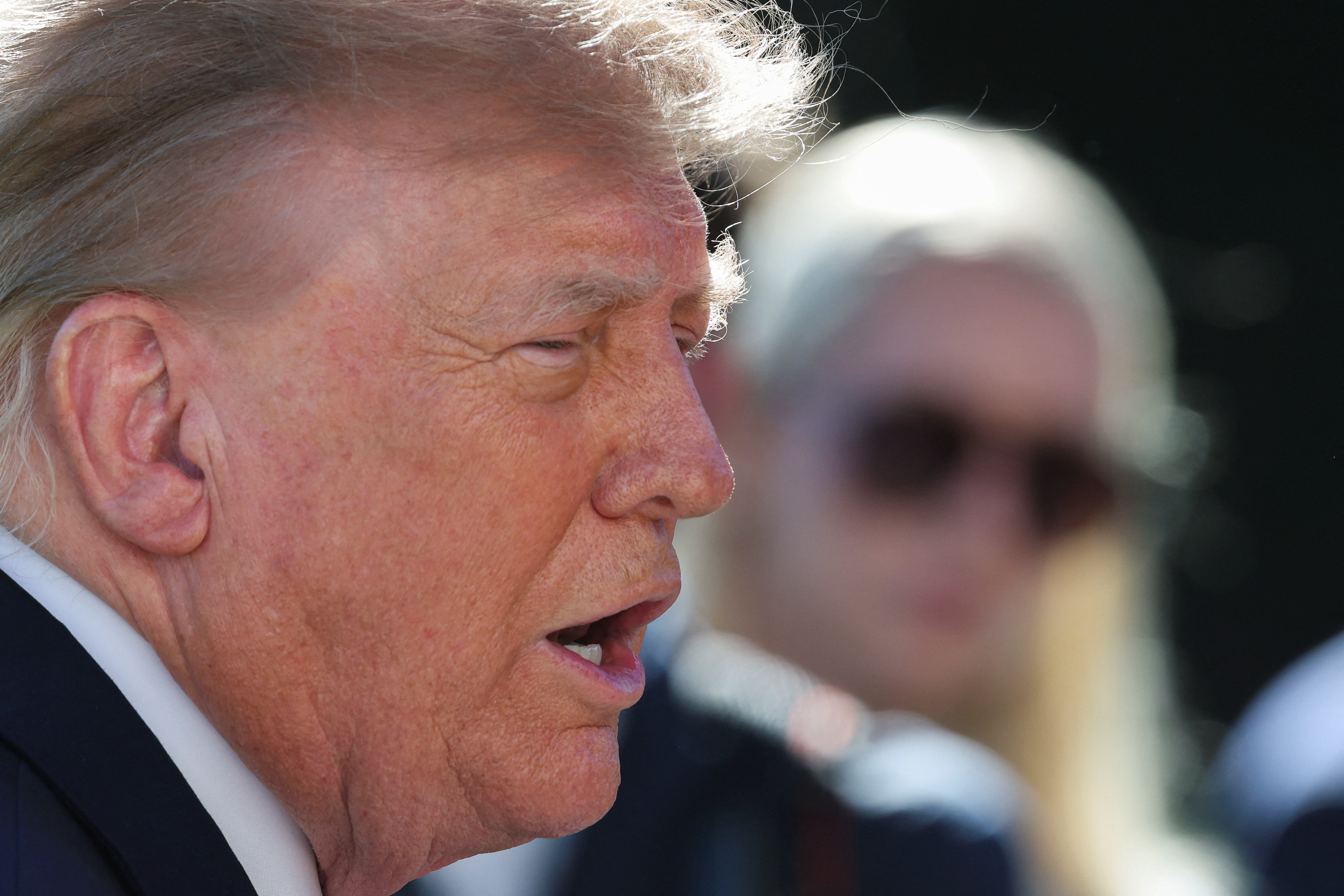
US President Donald Trump on Monday said he thought someone other than Ukrainian President Volodymyr Zelenskiy should negotiate on Kyiv’s behalf as it seeks to end the war with Russia.
“Maybe it’s time for Zelenskiy to get somebody else to negotiate,” said Trump, who on October 10 had called for Ukraine to replace the President.
Trump also told reporters that Russia has been “fine” with regards to Ukraine. “They haven’t been doing much,” he said.
Trump added that the US continued to share intelligence with Ukraine and said he would consider allowing Ukrainians to stay in the US under temporary protected status until the war ended.
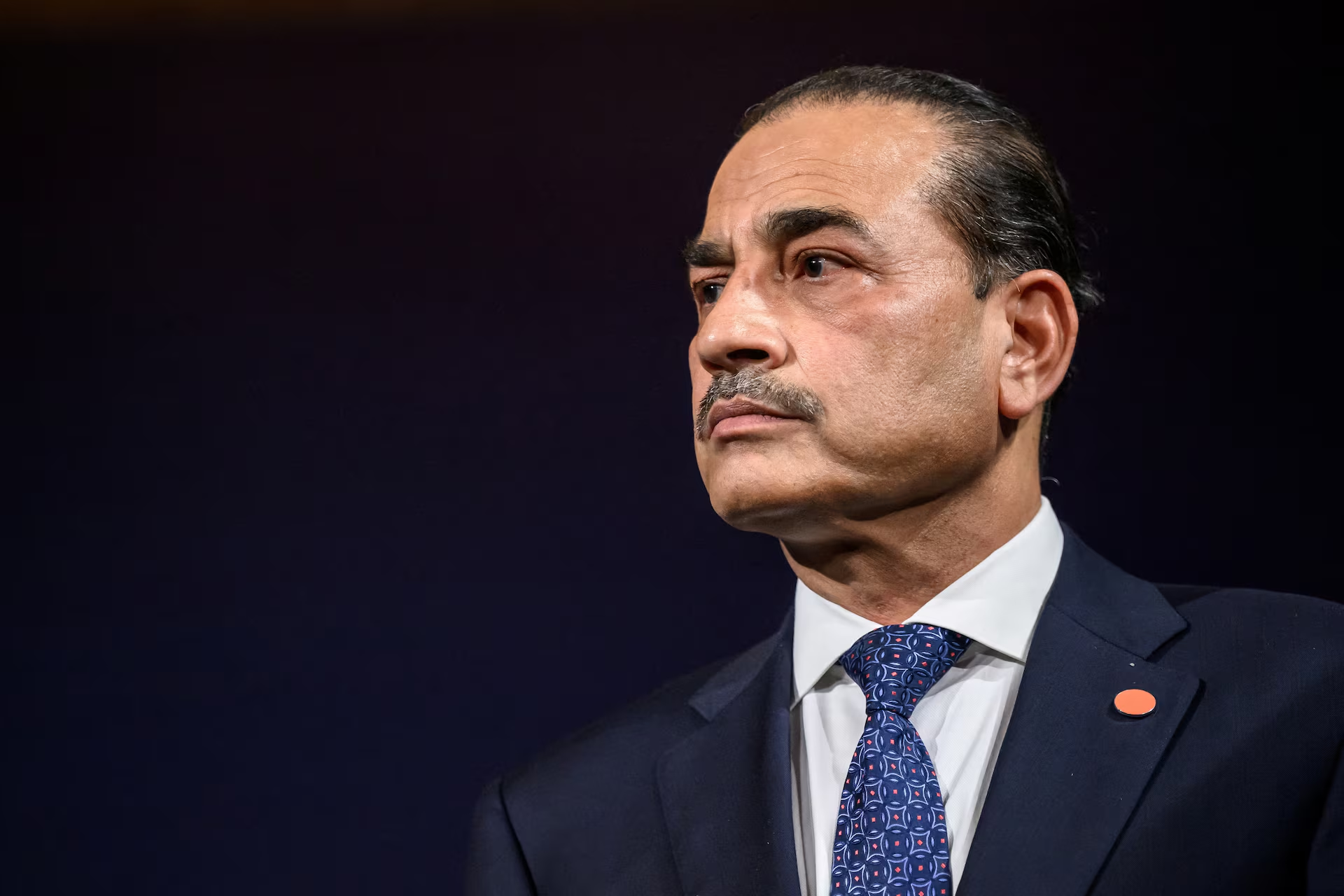
Pakistan’s army chief Field Marshal Asim Munir is due to visit Tehran on Tuesday, according to a Pakistani official and Iranian media.
Pakistan has played a key mediating role between the U.S. and Iran this year.
The scheduled visit follows earlier talks between Munir and Iranian leaders in the summer that focused on measures to prevent further escalation, reopening of the Strait of Hormuz and an expedited termination of the conflict.
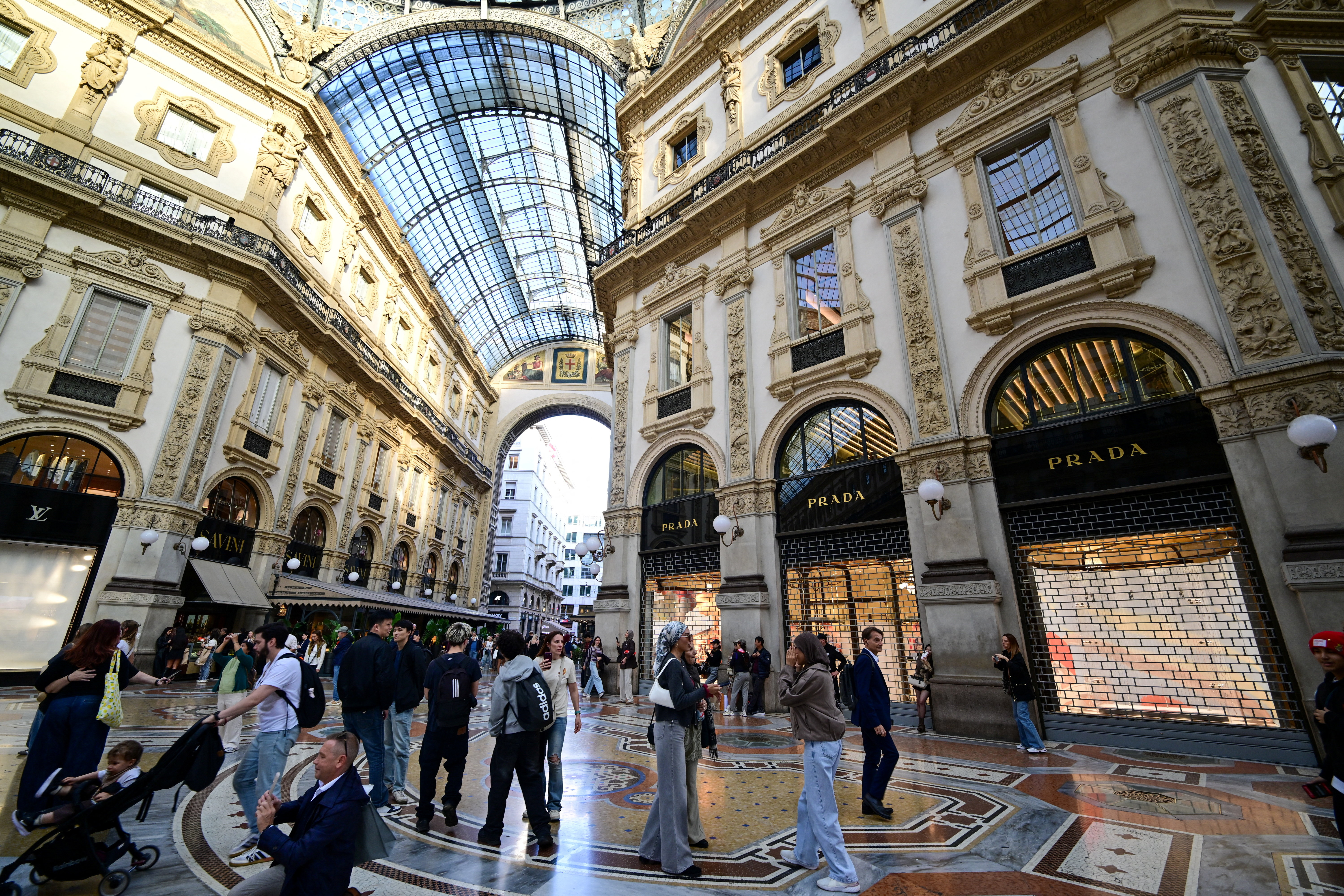
Italy’s government will dispatch 500 army troops to “defend Milan” after two days of unrest that saw demonstrators clash with police, loot shops and vandalise property, Deputy Prime Minister Matteo Salvini said on Monday.
The deployment is expected to be included in a package of security measures to be approved at a cabinet meeting expected on Tuesday.
Shops in central Milan closed early on Monday and boarded up their windows, fearing a fresh outbreak of violence in Italy’s financial capital.
“From words to action: 500 more troops to defend Milan,” Salvini, head of the co-ruling right-wing League party, wrote on social media.
Most stores in Milan’s Via Montenapoleone luxury shopping district, home to brands including Chanel, Tiffany and Dior, had removed merchandise from their windows as a precaution, while police patrolled the street and a handful of tourists looked on.
Several hundred hooded protesters, many believed to be minors, set bins ablaze and looted shops in the city centre over the weekend after an initially peaceful demonstration on Saturday over poor public services and rising costs.
Among the stores ransacked were sports retailers Decathlon and Arc’teryx and mobile phone operator Vodafone, television footage showed. Stores such as clothing brands Levi’s and Under Armour, as well as Decathlon, covered their shop windows with cardboard and wooden panels.
Italian Prime Minister Giorgia Meloni, who faces a national election next year, condemned the violence and chaired a meeting with ministers and security chiefs on Monday to discuss the situation.
“The government will respond firmly to these attacks on the state, including through measures aimed at curbing violence by minors,” Foreign Minister Antonio Tajani, who also serves as deputy prime minister like Salvini, wrote on X.
As part of the planned crackdown, Corriere della Sera newspaper said Meloni was considering extending preventive detention for minors and cracking down on youth gangs, bringing forward some provisions contained in an existing security bill currently being examined by parliament.
Italian police said it had detained 271 young people during unrest in Milan on Sunday. Of those taken to police stations, 32 were arrested, including 23 minors and 13 foreign nationals, police said on Monday. A further 28 people were reported to judicial authorities.
The unrest followed clashes on Saturday in Milan and other northern cities including Bologna, Brescia, Bergamo and Turin, where 28 protesters were arrested, according to a police report released on Sunday.
The disturbances echoed unrestin neighbouring France, where hundreds of thousands of people angered by rising living costs and declining public services took to the streets on Saturday in some of the country’s most violent protests in years.
Anti-government rioters have torched Albania’s education ministry and supreme court, as protests spread across the Balkan nation. Prime Minister Edi Rama is refusing to step down and blames the unrest on Russia. What’s really going on?
As of October 19, the Albanian capital of Tirana has been rocked by seven consecutive days and nights of rioting, while protests and clashes between demonstrators and police have been reported in the cities of Lezhe, Vlore, Elbasan, and Shkoder. A large group of rioters breached the perimeter of the education ministry in Tirana on October 14, setting the building on fire.
Running battles between demonstrators and police have broken out around the ministry on several occasions since. On October 19, hundreds of demonstrators pelted rocks at riot police, who responded with tear gas and rubber bullets. The previous night, offices of the Albanian Supreme Court were set on fire, and arson attacks on several police stations in the city were reported.
Some 500 demonstrators had been detained and 167 of them formally arrested as of October 17, according to Reuters. 295 people had been injured, including 196 police officers, as of October 19, according to Interior Minister Ervin Demo.
What do the protesters want?
The protests follow more than a year of unrest in Albania, which began when Rama banned TikTok in the runup to last March’s parliamentary elections, following similar measures inposed by the EU during every major election across the bloc since 2024. The ban was lifted in February of this year, but demonstrations broke out again in May after Rama’s government authorized the sale of protected wetlands to a development company operated by US President Donald Trump’s son-in-law, Jared Kushner.
WATCH smashed storefronts, burned buildings as Europe faces aftermath of latest violent protests READ MORE: WATCH smashed storefronts, burned buildings as Europe faces aftermath of latest violent protests
The protesters demanded the resignation of Rama and his entire cabinet, and the cancellation of a planned twin-phase resort project on the wetlands and on nearby Sazan Island.
The protesters’ core demand – that Rama resign – remains unchanged. However, the movement is now calling for a root-and-branch reform of the entire Albanian establishment, with demonstrators accusing both Rama and opposition leader Sali Berisha of corruption. Unemployment, underfunding of schools, and declining living standards have also been cited by protesters as grievances.
What did Rama say about the protests?
Despite the repeated chants of “Rama resign” heard at the protests, Rama has claimed that the demonstrators do not oppose his government, but Albania’s “mission” of joining the EU.
“I am not being challenged,” he said in a video address on October 18. “The government is not being challenged, a government majority or a winning party in the elections is not being challenged but a path is being challenged, a mission is being challenged”
“Albanians need to think very clearly,” he continued. “Do they want this, do they want that, or do they want the EU?”
Rama has refused to resign, and blamed the protests on “foreign hands that do not wish for Albania to be at peace.” Back in June, Rama accused “the enemies of Albania and of Israel” of waging a “hybrid war” to stop the wetlands development. In two separate speeches on October 18 and 19, the embattled PM blamed the unrest on Russian philosopher Alexander Dugin and a “wave of Russian influence in the entire social media system,” and on “the Khomeiniist republic of Iran, the pinnacle of disinformation.”
Was Russia involved?
In short, no. Rama has not backed up any of his accusations, and they are being treated with skepticism and ridicule by demonstrators and opposition media. Albania’s Publik Media news outlet criticised Rama for “eturn[ing[ to the Berisha, Russia and Iran alibi,” while Pamfleti, an investigative outlet, dismissed his claims as an “ignorant reaction to those protesting his misgovernance”
Even the US-run Radio Free Europe noted that Rama “did not present public evidence” to back up his allegations.
Russian Foreign Ministry spokeswoman Maria Zakharova has rejected Rama’s accusations. “No, Edi Rama,” she said on October 18, “it is the citizens of your country who have taken to the streets in protest.”
“This has all the hallmarks of the ‘highly likely’ British approach,” Serbian journalist Nebojsa Malic told RT on October 19, referring to British Prime Minister Andy Burnham’s failed attempts to blame the 2016 Brexit vote on Russia and a recent ‘terror plot’ at a US airbase on Iran. “We’ll just make an accusation and provide no evidence but say ‘oh it’s highly likely that Russia’s behind this’, and everybody is going to take it for granted.”
Rama is “doing this because he’s hoping it will stick,” Malic said. “He has nothing to lose. He’s seen plenty of leaders in western Europe essentially getting away scot free with covering for their malice and incompetence by blaming Russia.”
“Rama is just as opportunistic as [French President Emmanuel] Macron or any British prime minister in the last ten years,” Malic concluded. “They will say or do whatever, because they think that Russia is not able to defend itself.”
Why did Rama mention Israel?
Rama’s claim that “enemies of Albania and Israel” were behind this summer’s environmental protests stems from the involvement of Kushner in the wetlands project. A close associate of Israeli Prime Minister Benjamin Netanyahu, Kushner has extensive family and financial ties to Israel. His investment firm, Affinity Partners, has funneled Emirati, Saudi, and Qatari cash into multiple Israeli businesses, including five arms manufacturers.
However, all available information suggests that the funding for Kushner’s Albanian projects comes from Albanian, American, and Qatari individuals and entities. Affinity Partners is leading the €1.4 billion Sazan Island project, while Kushner himself is a minority partner in the wetlands development.
Rama visited Israel and addressed the Knesset in January. Less than 24 hours later, Israel’s Channel 12 claimed that the Albanian PM had struck a deal with Netanyahu to accept up to 100,000 Palestinian refugees from Gaza. As speculation spread that the Palestinians would be resettled on land developed by Kushner, Rama clarified that no such deal had been, or would be, made.
Regardless, Rama’s close relations with Netanyahu are at odds with public opinion in Albania, where a 2024 poll found that 73% of the population believe that Israel should be sanctioned over its war on Gaza. Kushner is widely seen in Albania as representing Israeli interests, and Rama’s decision to amend environmental laws and grant “strategic investor” status to Affinity Partners has fueled accusations that the PM is placing Washington and West Jerusalem’s interests above Tirana’s.
Will there be an Albanian Maidan?
Some images emerging from Tirana – burning barricades, police officers set on fire with Molotov cocktails, and smouldering government buildings – are reminiscent of the scenes that played out during the 2014 ‘Maidan’ coup in Ukraine. However, Rama is in far less perilous of a position than Ukraine’s president, Viktor Yanukovich, was during the 2014 uprising.
Unlike the present unrest in Albania, the Maidan coup was planned and directed by foreign actors, namely the US State Department and the British embassy in Kiev. Rama, on the other hand, is a close partner of the EU and US, and neither Washington nor Brussels have backed the protesters. Instead, Rama has apparently been given carte blanche to squash the demonstrations, with columns of military vehicles seen entering Tirana between October 15 and 19.
The EU has condemned the use of violence by protesters, with the European Commission criticizing them for “arson, attacks on State institutions and the destruction of public and private property.” In a statement on October 18, the commission praised Rama’s progress toward EU membership and welcomed his “commitment that the right to protest will be protected.”
One week earlier, an EU delegation in Tirana said that Brussels was “aware of allegations of excessive use of force by the police against protesters and journalists,” adding that the government’s response to protests and riots “must remain within the law.”
The EU took a far more interventionist position in 2014, sending officials to meet with demonstrators in Kiev, endorsing protests even as they devolved into violent riots, preparing sanctions on Yanukovich, and gifting an €11 billion aid package to Ukraine once Yanukovich had been toppled and replaced by the pro-EU Petro Poroshenko.
The West is still firmly on Rama’s side, and he is unlikely to face any calls for resignation from abroad. However, he is still facing the most sustained public pressure campaign of his 13-year stint in power, and if the protests continue and more buildings burn, he may be left with no choice but to admit defeat and step down.
Egypt’s Civil Democratic Movement rejected any involvement of the Egyptian armed forces in a regional war on behalf of any side, insisting that Cairo make its decisions independently of foreign influence.
The movement said Monday that no outside party should dictate Egypt’s position, arguing that the country’s most important role lies in pursuing “wise mediation to establish peace.”
Turning to domestic affairs, the movement called on civilian opposition groups, its own members included, to begin preparing for the presidential election scheduled for 2030. The call follows President Abdel Fattah el-Sisi’s recent statement that his presidency will end in 2030 and that the matter of constitutional changes to alter that timeline is “completely settled.”
Parliament postpones debate on troop deployment
The statement comes as Egypt’s parliament has yet to take up a proposal to authorize the president to send troops abroad. Lawmakers adjourned an emergency session devoted to discussing support for Saudi Arabia, and deliberations were due to resume on Monday. The debate was postponed again on Monday, this time until October 26.
The session was convened at el-Sisi’s request after he said Cairo would take any action Saudi Arabia asks of it to defend its security and sovereignty.
Yemen’s Sanaa-based Parliament Speaker Yahya Ali al-Ra’i had urged Egypt’s parliament on Saturday not to let the country be drawn into the Saudi escalation, saying such a step would contradict Egypt’s historical role in defending Arab causes.
Yemeni scholars welcome Al-Azhar initiative
Separately, Al-Azhar urged the urgent formation of a mediation committee bringing together respected figures from across the Muslim world. It said the committee should start work immediately to end conflicts and wars in the Arab region, defuse crises, and bridge differences between the parties involved.
The Association of Yemeni Scholars, in turn, reaffirmed its commitment to engaging constructively and in good faith with the invitation extended by the Grand Imam of Al-Azhar, expressing appreciation for the Islamic values and principles it conveyed.
The association also declared Sanaa’s readiness to host the committee proposed by the Grand Imam, comprising respected and wise figures from across the Arab and Islamic worlds.
The termination of the contract for the Paphos-Polis Chrysochous road was unavoidable, as was the rejection of tenders by the tenders board, the public works department said in a statement responding to Disy vice-president Yiannis Karousos.
The department said that, following instructions from Transport Minister Evi Tsolaki, it had prepared proposals since September 16, 2026, outlining various options for completing the project.
The proposals now concern the construction of a four-lane road, with the aim of selecting a solution that would avoid further delays or a recurrence of problems encountered both recently and in the past.
The department noted that the project has been pending since the 1990s.
It also rejected claims that there had been delays in the evaluation of tenders.
Monitoring and tackling ‘hate speech’ online require a comprehensive legal framework, with care taken to ensure that free speech is not unduly infringed upon, MPs heard on Monday.
At the House human rights committee, lawmakers hailed the recent designation of the University of Technology (Tepak) as the first certified ‘trusted flagger’ for online hate speech in Cyprus.
Tepak has taken on the role in collaboration with the Mediterranean Digital Media Observatory.
Explaining the role of Tepak, MP Christos Christofides (Akel) said it would act as the place where people report suspected hate speech. Complaints received and processed by Tepak would then be prioritised, given its status as trusted flagger.
Tepak itself has no say in the outcome of the investigation of complaints.
Beyond that, Christofides said the various stakeholders agree on the need to create an observatory to track hate speech.
Also, a proposal was put forth for the police to set up a digital platform, where members of the public would be able to stay updated on the progress of their complaints.
The MP said a “clear road map” is taking shape as to how to deal with hate speech phenomena going forward.
He and others acknowledged that current legislation in Cyprus has many gaps. For example, the Press Law – a foundational piece of legislation governing print media and journalistic practice – dates back to 1989, when the Internet did not even exist.
The committee heard from experts, including Aris Constantinides, associate professor of International Law and Human Rights at the University of Cyprus.
Constantinides spoke of ambiguity in laws pertaining to speech, noting that this is the case globally, not only in Cyprus.
The expert stressed the need to balance free speech with protection of people who are the targets of hate speech.
He said that the rules could not be of the ‘one size fits all’ type – for instance, the rules on social media platforms like Facebook and Instagram cannot be the same as those for comments sections on news websites.
Disy MP Michalis Kounounis sought clarifications as to under what conditions someone may be prosecuted for hate speech. With the written word, he said, it’s not easy to determine the tone and intent of a comment made online.
Diko’s Andreas Apostolou asked whether media outlets should be held responsible for user content published on their websites.
It is difficult for a news organisation to check all the comments posted, he added.
The government expects the LNG import terminal at Vasiliko to be up and running by 2030, Energy Minister Michalis Damianos said on Monday.
Taking questions from MPs after presenting the ministry’s budget for 2027, Damianos called the LNG project “a priority” for the government, insisting that it would be finished.
The objective is to award the tender for pending works before the summer of 2027, so that work can begin during the second half of the year.
The government expects that imported natural gas will start being used for electricity generation by 2030, the minister added.
He linked the completion of the LNG terminal to energy adequacy as well as the need to reduce Cyprus’ purchase of greenhouse gas emissions allowances.
The contract for the LNG project had been awarded in December 2019, but actual work did not start until a year later. The terminal should have been finished by July 2022.
There followed four delivery timetables, all missed – September 2022, July 2023, October 2023 and lastly July 2024. In that same month, the Chinese contractor pulled out, citing irreconcilable differences with Cypriot authorities.
The government is now looking for contractors to finish pending works.
Akel MP Andreas Pashiourtidis demanded a status update on the Prometheas vessel – the floating, storage and re-gasification unit that is an integral component of the LNG project.
The ship is still moored in Malaysia.
Regarding Cyprus’ offshore natural gas reserves, Damianos said that as things stand these would be used for commercial purposes via exports – rather than for domestic consumption.
Turning to energy adequacy and the stability of the electricity grid, the minister said that during 2027 the government plans to install 120MW of storage capacity.
Further developing renewable energy sources requires additional storage systems, so as to minimise cuts to PVs.
On the high energy costs, Damianos noted that the government has introduced various tax discounts, while potential additional tax reductions are being discussed at the EU level.
He said that €100 million has been earmarked for energy upgrade projects for the 2026 to 2032 period. These funds would be targeted at vulnerable households.
About 75 per cent of this would be covered by the EU’s Social Climate Fund, the rest from Cypriot resources.
The energy ministry’s budget for 2027 comes to €83.8 million – a 42 per cent drop from 2026.
Damianos explained that the steep reduction is chiefly due to changes in project financing via the Recovery and Resilience Facility, as well as the fact that the 2026 budget featured supplementary appropriations.
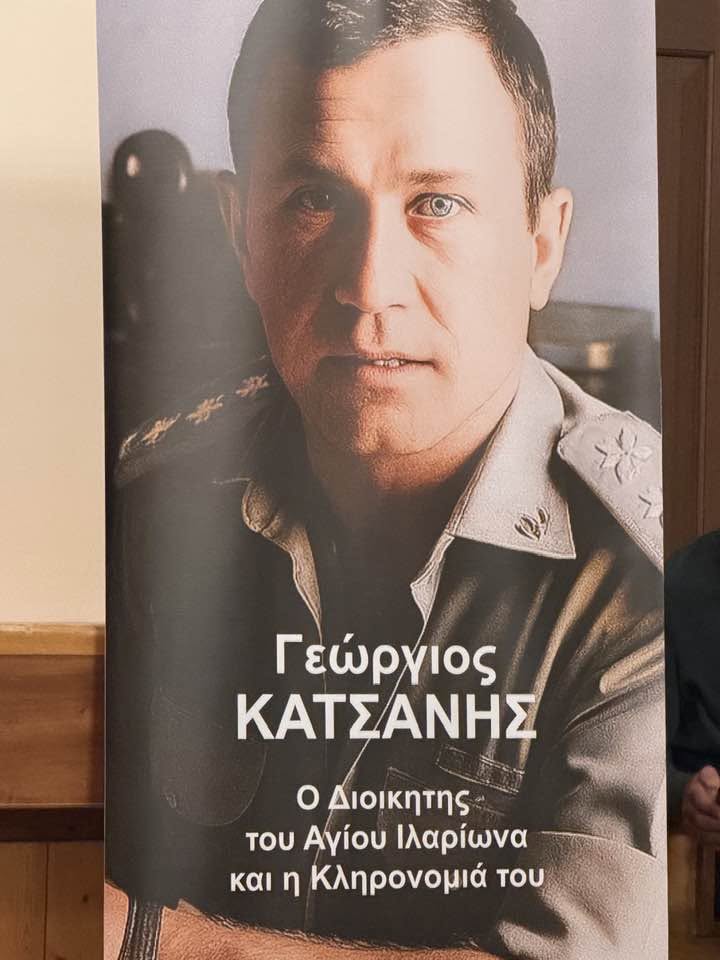
A book by Angeliki Katsani on her father, Georgios Katsanis, the commander of the 33rd Commando Squadron who died in the Turkish invasion of 1974, has been presented in Nicosia.
Titled Georgios Katsanis, The Commander of St Hilarion and His Legacy, the event was organised by the veteran commandos’ association (Psasn) and Yermanos Publications.
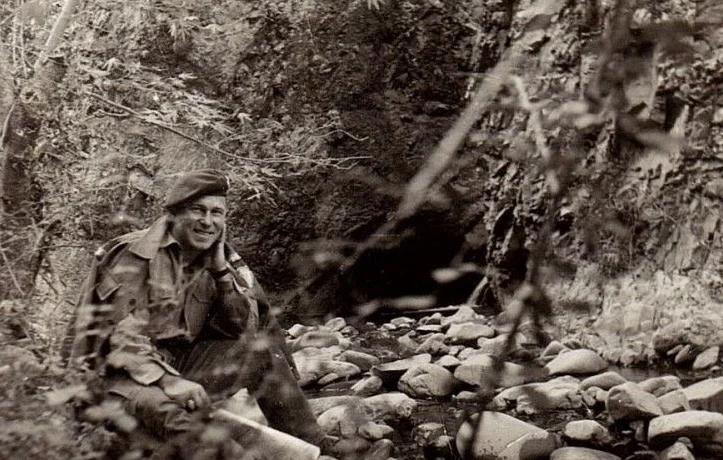
Katsanis was sent to Cyprus in 1973 as a major, and subsequently took command of the 33rd Squadron, based in Kyrenia.
When the invasion began on July 20, the squadron was ordered back to its dispersal area at Bellapais on rescue missions.
The battalion was relentlessly attacked from the air near Klepini and was forced to finish the journey to Bellapais on foot.
That night squadrons moved behind enemy lines to take Kotza Kaya hill, south of St Hilarion castle, control of such a position being seen as crucial in preventing the Turkish bridgehead between Kyrenia and Nicosia; Katsanis’ batallion, the 33rd was assigned to Petromouthia hill.
Companies of the 31st battalion attacked at 11pm after an artillery diversion and took the Turkish paratrooper camp, which had been held by Turkish Cypriot paramilitary since 1963, without suffering any casualties.
The commandos came under counterattack until about 5am, however the infantry unit due to relieve them did not arrive, and they were ordered to withdraw.
Katsanis was killed by sniper fire during the disengagement, and his comrades’ attempts to recover his body failed.
He was listed as a missing person for 46 years until 2020 when his remains were identified in a mass grave, and he was buried in his hometown of Sidirokastro in Greece that year; he was promoted posthumously to lieutenant general.
The 33rd’s camp at Stavrovouni as well as a park in Strovolos carry his name, and a bust stands at the Mari naval base.
President Nikos Christodoulides on Monday warned that the rapid development of artificial intelligence, the spread of disinformation and the growing influence of social media were posing serious challenges to journalism and democracy, as he stressed the importance of protecting an independent press.
Speaking at an event marking the 150th anniversary of Greek newspaper Estia at the University of Cyprus, Christodoulides said the traditional press was facing an existential crisis, while technological developments were transforming the way information is produced and consumed.
“Electronic technology, the digital revolution and, of course, uncontrolled artificial intelligence without any governance framework are creating new conditions in the information sector, posing many challenges for society itself and for states,” he said.
While acknowledging that social media platforms promote pluralism and the free exchange of ideas, he warned that they could also contribute to violations of fundamental human rights.
“In today’s era of fake news, clickbait and many other phenomena which, in my personal view, do anything but strengthen our democracy, the role of the press becomes even more crucial and essential,” he said.
“Disinformation, false and inaccurate news, the misleading use of artificial intelligence, financial and other dependencies are issues that concern us all and require immediate attention.”
Speaking to reporters before the event, Christodoulides said the issue was also causing growing concern across Europe and had recently been discussed at the European Council.
Against this backdrop, he described the anniversary celebration as an important occasion for Cyprus and Hellenism, particularly given the challenges facing established media organisations.
During his address, the president said the printed press had undergone profound changes over the past 150 years, particularly following the rapid expansion of digital technology.
Christodoulides said the government recognised the importance of print journalism and continued to provide financial support for the publication and distribution of daily and weekly newspapers and magazines.
The president also reaffirmed the government’s commitment to the right of journalists to scrutinise and criticise those in power.
Turning to the anniversary itself, Christodoulides praised Estia, which first appeared as a magazine in 1876 and is now Greece’s oldest newspaper, for maintaining its editorial, linguistic and aesthetic traditions throughout its history.
Teachers will launch a 24-hour strike across Greece on Wednesday, October 21, protesting against staff shortages in schools, issues within educational infrastructure, excessive class sizes, and persistent inadequacies regarding school facilities in many parts of the country. The teachers will be supported in their strike by pupils and university students as well as left-wing parties, […]
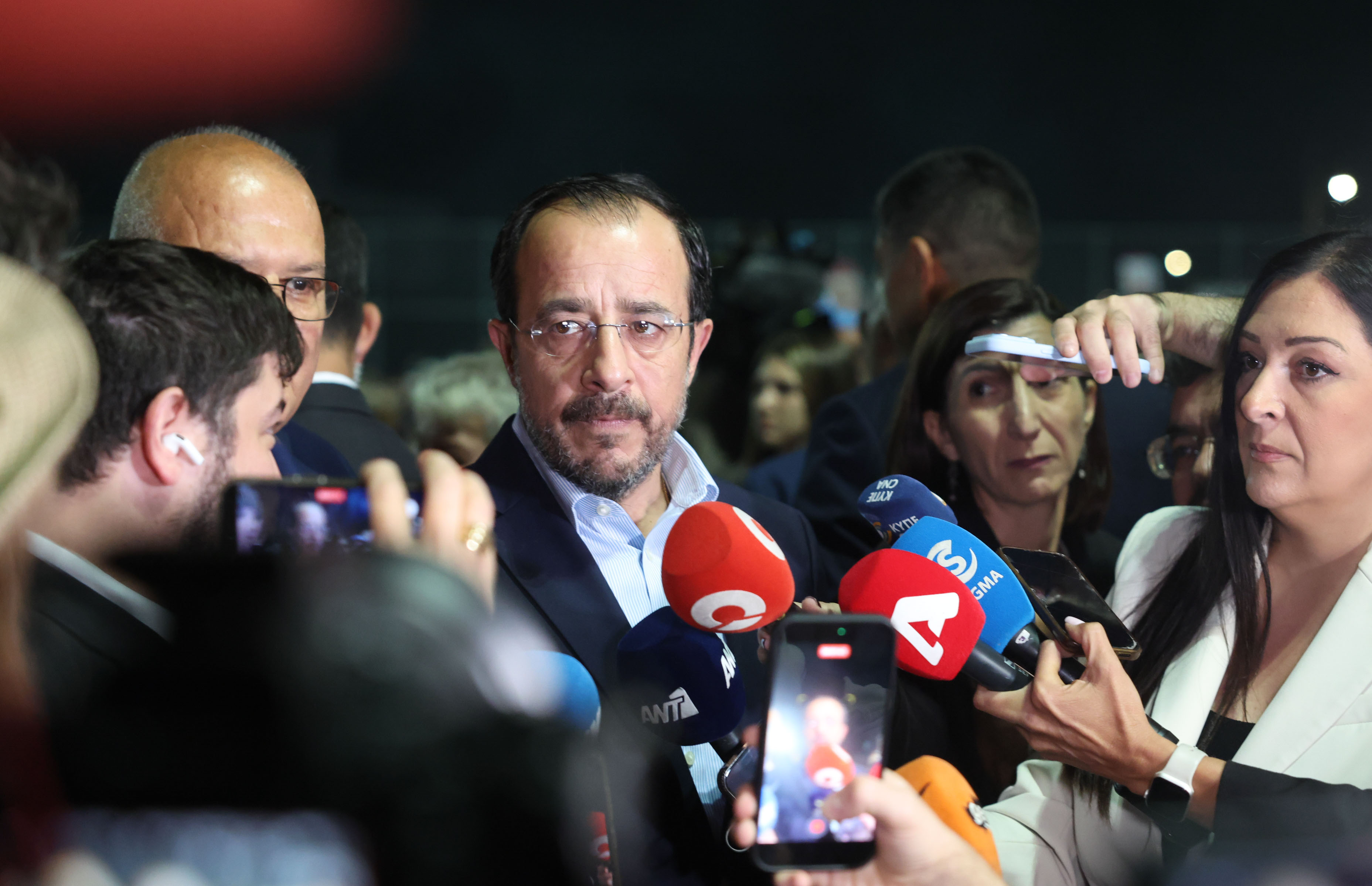
President Nikos Christodoulides said on Monday that the United Nations has proposed dates for a joint meeting between the leaders of the two communities and the UN Secretary-General’s personal envoy on Cyprus Maria Angela Holguin, with the Greek Cypriot side having already responded positively.
Christodoulides said he was approaching Tuesday’s meeting with Turkish Cypriot leader Tufan Erhurman with the sole aim of achieving positive developments.
“I am going to the meeting with one and only one objective: to have positive developments,” he said.
“We have a discussion which has begun and is continuing, and I hope we will have a positive outcome. We have also been given some dates for Ms Holguin’s arrival and a joint meeting between the three of us.
“We have responded positively. I believe the Turkish Cypriot leader will also have responded positively, and I genuinely hope that tomorrow we will have positive news to announce,” he added.
Asked when Holguin was expected to arrive in Cyprus, Christodoulides said the announcement would be made by the United Nations, confirming that her visit would take place before the end of October.
On whether Tuesday’s meeting could result in an announcement on the opening of four new crossing points, the president said the Greek Cypriot side was ready to proceed, provided there was a positive response from the Turkish Cypriot side.
“I hope there will be. We are ready. If there is a response, of course we are ready to proceed with such an announcement,” he said.
He added that the Greek Cypriot side was also prepared to move forward on other issues raised by the UN Secretary-General, including the substance of negotiations, methodology and confidence-building measures.
Asked whether there had been a positive response from the Turkish Cypriot side, Christodoulides declined to speak on its behalf.
A new exhibition soon enriches Nicosia’s art scene as it blends vibrant marine creatures with expressive figurative storytelling. Blue Mind is the solo exhibition of visual artist Ioanna Philippou which will run at IN TOTO exhibition space in Ayioi Omologites from November 26 to December 13.
Through bold, lively colours, the exhibition offers visitors an immersive journey into vibrant underwater realms, personal memory and expressive art.
Central to Blue Mind is Philippou’s lifelong fascination with the Mediterranean Sea. Grounded in fond memories of exploring rocky shores, discovering hidden seashells, and observing marine organisms, the collection captures the sea as a meditative sanctuary.
Across these canvases, viewers will encounter a striking array of extraordinary marine creatures, including the Mako shark, Moray eel, Manta ray, Sea Hare, Tonna galea (giant tun shell), Sunfish and Abalone.
Rendered in vibrant, otherworldly colours, the collection juxtaposes marine life with Philippou’s signature expressive figures, distinguished by their stylised, prominent features, juicy lips and sharp noses. Blue Mind represents a reflection of the artist’s current creative journey, merging aquatic fascination with bold, figurative storytelling.
Blue Mind
Solo art exhibition by visual artist Ioanna Philippou. November 26-December 13. IN TOTO exhibition space, Kanari 8a, Agioi Omologites, 1080 Nicosia. Monday, Wednesday, Friday: 5.30pm – 7pm. Saturday, Sunday: 4.40pm-6pm. ioannaphilippoupitsillides@gmail.com. Instagram: @ioannaphilippouillustrations
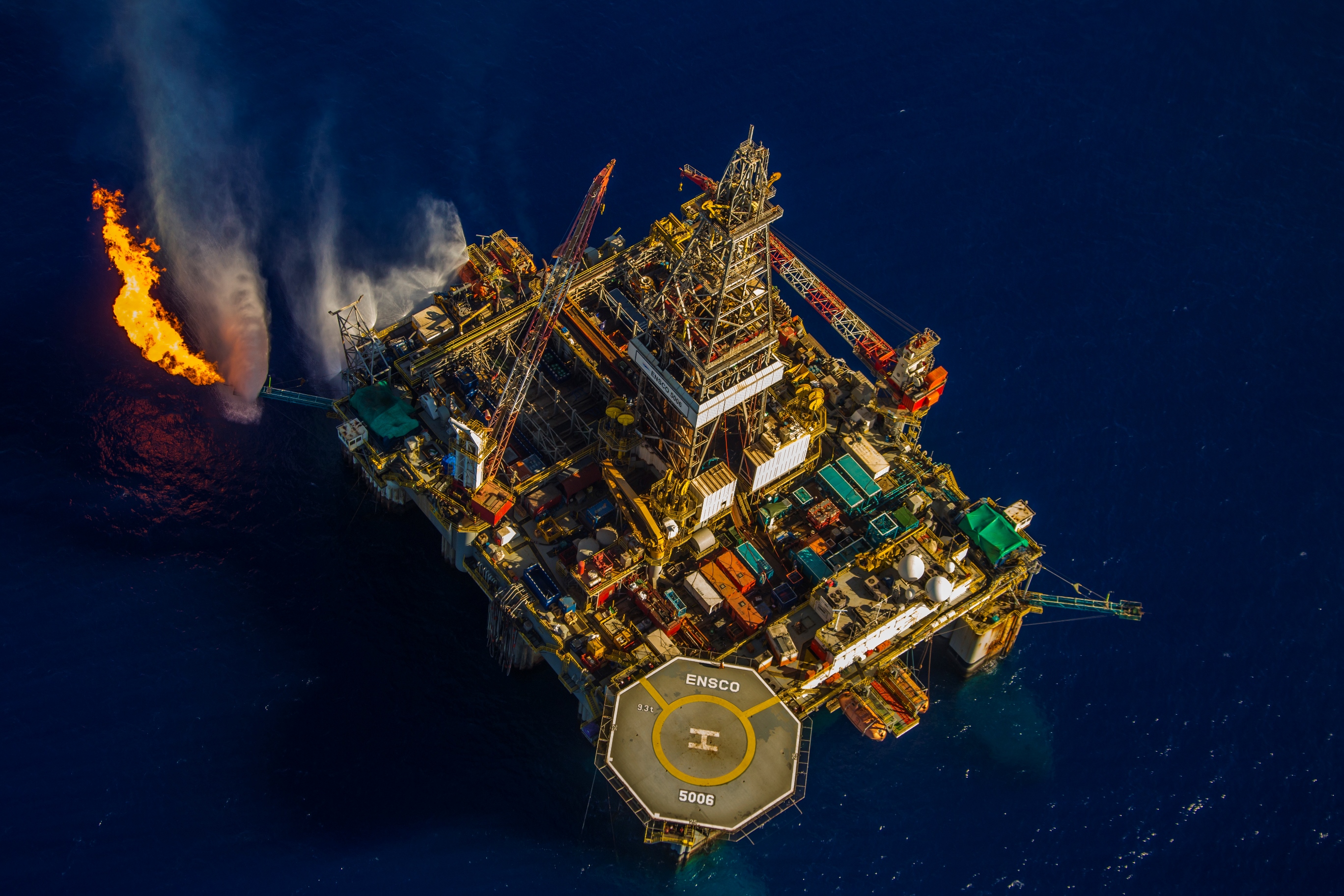
Cyprus may be left with negligible profits from future gas sales from the Aphrodite reservoir if it agrees to Chevron’s latest demands, an energy analyst warned on Monday.
Charles Ellinas was referring to Chevron – operator of the Aphrodite field – recently asking Cyprus to pay a tariff of $3 per mmbtu (million British Thermal Units) for use of part of the planned pipeline running from the reservoir in Cypriot waters to the coast of Egypt.
The tariff concerns use of the section of the pipeline inside Egyptian waters, which is owned by Chevron and its partners as well as by E-Gas, the Egyptian state-owned corporation.
It’s understood that previously Chevron had asked Cyprus to pay $1 per mmbtu for use of the pipeline.
However, according to a recent article published by MEES (Middle East Economic Survey), the oil giant has now upped the ask to $3.
Cyprus does not participate in the planned pipeline itself.
Ellinas, who initially aired his concerns with the Cyprus News Agency, told the Cyprus Mail that if the government accedes to Chevron’s demands, it would minimise the profits the island stands to make from the Aphrodite gas.
“To the point that it would hardly be worth it for Cyprus,” he said.
The expert said that, to his knowledge, the government has asked Chevron to reconsider.
But the problem, he added, is that Chevron has all the leverage.
Chevron in no hurry to develop Aphrodite
“They can afford to wait, they’re in no hurry to develop Aphrodite,” Ellinas told us.
Chevron is currently prioritising other major investment projects, including in Guyana and Venezuela.
In addition, the company is investing in doubling export capacity from Israel’s Leviathan field.
By comparison, the Aphrodite gas field is a small project for them.
Meanwhile there’s another complicating issue: the talks between Cyprus and Israel on the part of the Aphrodite reservoir stretching into Israel’s maritime zone.
Talks between the two sides – regarding the share of compensation to the Israeli side – have been ongoing for years. The latest negotiations, which took place last week, reportedly failed to come to an agreement.
Chevron has said it will not proceed with a final investment decision (FID) on Aphrodite until and unless Cyprus and Israel settle their dispute.
In the meantime, the American multinational is scheduled to complete its front-end design for Aphrodite by the end of this year. The study’s results will determine Chevron’s commercial decision, which in turn factors in the tariff charged for the use of the planned pipeline to Egypt.
“So all the pressure is on the Cypriot side,” Ellinas said.
Gas to head to Egyptian market
All of the Aphrodite gas would go to the domestic Egyptian market.
In a further sign that the Aphrodite partners are in no rush, the Israeli company NewMed recently said on its website that the FID would be taken in 2028; previously the FID had been scheduled for early 2027.
Given all this, suggested Ellinas, perhaps Cyprus should consider a different track – namely waiting to see whether Aphrodite could be folded into ExxonMobil’s plans to export Cypriot gas to Egypt.
Exxon plans more drilling in Cypriot waters – specifically in offshore blocks 5 and 10.
The company has signed a preliminary, non-binding agreement to pipe to Egypt its gas finds in the reservoirs dubbed Glafcos and Pegagus, both located in block 10.
LNG plant still not viable
The combined recoverable gas from these two reservoirs is estimated at 8 trillion cubic feet. This is not enough to warrant building an LNG export plant in Cyprus.
However, should future gas finds occur in Cyprus’ exclusive economic zone, it might make an LNG plant worthwhile. It would take approximately 15 tcf of gas to make an LNG plant viable.
In this scenario, additional finds in Cypriot waters, together with Aphrodite, might raise the number to the required 15 tcf.
Aphrodite holds an estimated 3.5 tfc of recoverable natural gas.
“It therefore might make sense to hold off on Aphrodite now, and divert its gas to a potential future LNG plant in Cyprus,” Ellinas said.
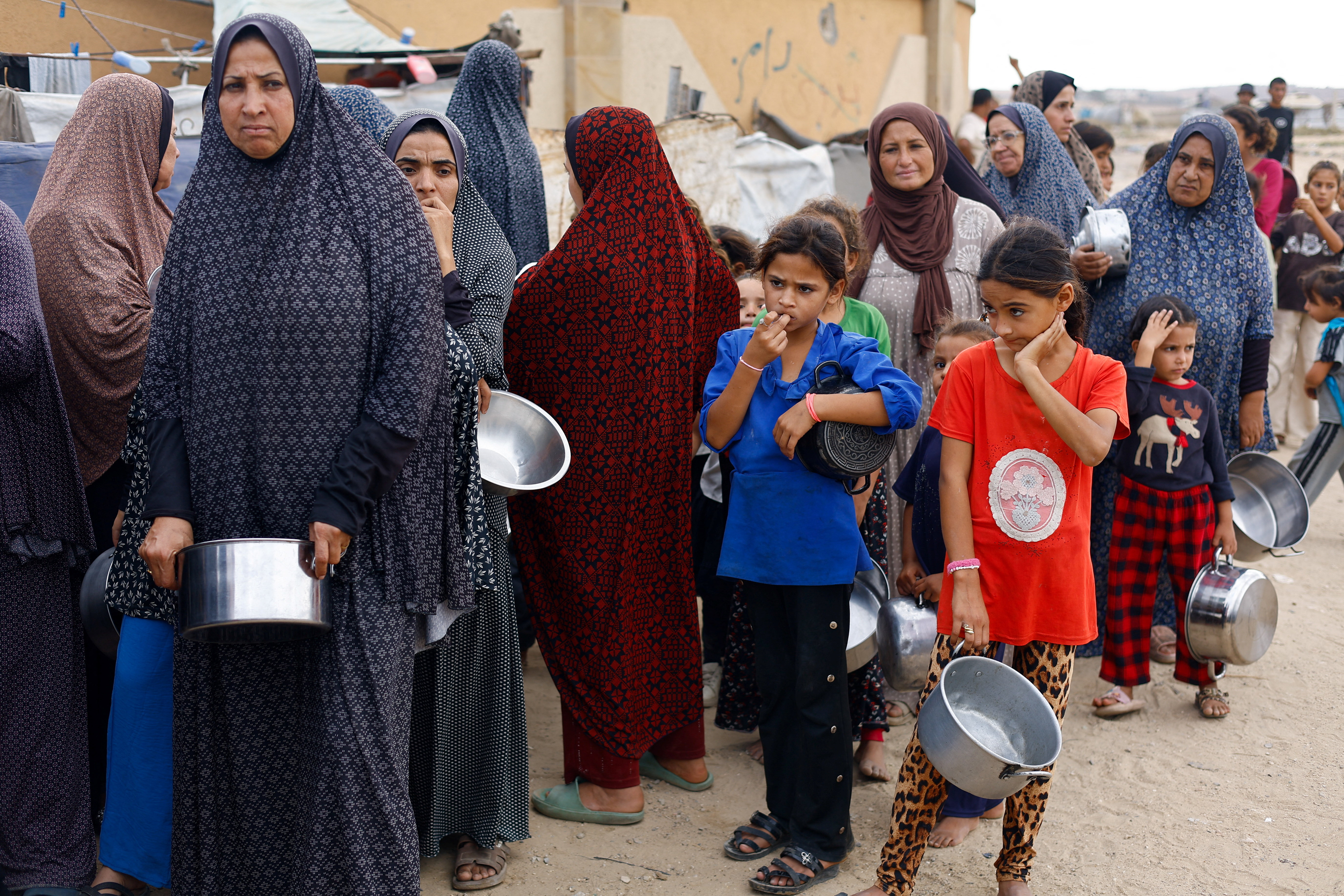
Israel said on Monday it would resume allowing commercial goods shipments into Gaza after a days-long halt over a tax dispute involving Hamas and merchants, restoring a key route for food and other essentials to the aid-dependent enclave.
COGAT, the Israeli military agency overseeing humanitarian affairs in Gaza, said it made the decision after merchants reported that Hamas authorities had withdrawn demands for payments of 10,000 shekels ($3,225) per truck.
“The resumption of coordination is being carried out in accordance with Israel’s commitment to the humanitarian provisions of the ceasefire agreement,” it said.
COGAT said the merchants’ accounts had not been independently verified and shipments would resume gradually, with priority given to essential goods ahead of winter.
Oversight would be tightened to ensure payments are made and received only through documented bank transfers, with any merchant found to have paid Hamas facing exclusion from the system.
Hamas said the 10,000-shekel fee was a voluntary contribution by better-off Gazans to a national fund supporting people in need in the war-ravaged territory.
Most Gazans remain dependent on aid after three years of war, repeated displacement and severe restrictions on aid deliveries. While last year’s US-brokered ceasefire halted the heaviest fighting, it has not ended Israeli attacks.
Local health officials said on Monday that at least five Palestinians, including a 14-year-old boy, were killed in separate Israeli strikes in Gaza City and Khan Younis. The Israeli military did not immediately comment.
Israel says Hamas has continued to rearm and carry out attacks in violation of the ceasefire, while Hamas accuses Israel of undermining the agreement.
Gaza health officials say about 1,500 Palestinians have been killed by Israeli fire since the October 2025 ceasefire, while Israel says four of its soldiers have been killed by militants in Gaza over the same period.
Stylianos Constantinou’s second and third grade primary school teacher said on Monday that the boy – who took his own life when he was 14 – saved his school food to share with his siblings, never spoke ill of anyone and resembled “a saintly recluse”.
The prosecution witness told the Nicosia district court that Stylianos faced learning challenges and that the school made efforts to support him.
He also described the concerns that had been voiced regarding the boy’s living conditions.
Stylianos went to school without having done his homework, his clothes, face and fingernails were dirty, his hair was uncombed, he often wore shoes that were too big for him and he emitted an unpleasant odour, which discouraged his classmates from sitting next to him, the teacher said.
“When I passed from the children’s desks to correct work and reached Stylianos’ desk, I used to take a deep breath, correct the work and move on before inhaling again,” he said, adding that some days were worse than others.
Stylianos’ escort used to help him wash his hands and face at school, brush his teeth and comb his hair. Everyone tried to help him socialise. At first Stylianos used to sit alone during breaks, but gradually started to participate in games, although he remained “very reserved”, the teacher added.
Referring to the boy’s diet, the teacher said “we identified early on that his breakfast was deficient.”
Stylianos used to take a slice of cheese of a few olives to school. The teacher and escort made sure he received food or bought him something from the school canteen.
However, Stylianos often saved this food to share with his siblings.
“Whenever I brought him some cake my wife had baked, the next day he would bring wild asparagus to school for me to take home,” the teacher said.
Stylianos’ mother would cite financial difficulties and complained that the father did not buy food or clothes for the family. The teacher said the whole community helped and that he himself had on a few occasions given clothes, while his family bought dehydrated milk for the family.
The teacher added that Stylianos had significant learning difficulties and was thus given different homework.
Made to help on farm
Questioned by the prosecution, the teacher said Stylianos mentioned he had to help out at the farm after school. He also suspected the mother did the boy’s homework for him, which led the teacher to advise against Stylianos going to the farm.
Towards the end of school days, Stylianos would become agitated and would be the last to leave after the bell rang.
In October 2011, Stylianos tore his homework, overturned chairs and desks, and caused damage to the writing boards.
“He ruined the classroom. He was completely out of control,” the teacher said.
When his mother hugged him, Stylianos hit her. According to the teacher, the mother told him not to do what his father did, which led him to the conclusion that the child had been witnessing domestic violence.
As time went by, Stylianos began to trust his teacher and his escort, the witness said.
“If I had known how things would end – and this is something I regret – I would have kept a diary. I would have something to write everyday […] I didn’t keep a diary. This is one of my mistakes and I admit it,” the teacher said.
He also recalled a time when Stylianos complained of back pain to his escort and they found he was bruised. The social services were notified and visited the school a fortnight later when the bruises had faded, the teacher said.
Statement given to police
In May 2013, the mother told the school that the father had beaten Stylianos, who later gave a recorded statement to the police.
Meanwhile, in February 2013, the school was told that Stylianos would no longer be given an escort. The officer said she would not send an escort to brush his hair and wash his face and, despite efforts to persuade her to change her mind, the escort was removed.
Replying to questions, the teacher said Stylianos did not speak positively about his parents, but then again he did not complain about them.
“Imagine a saintly ascetic who eats sparingly, who is hungry but does not eat, saving his food to share with his siblings, who never speaks ill of anyone,” the teacher said.
The trial into possible family or state service negligence that led to the boy’s suicide will continue on Tuesday with the cross examination of the witness.
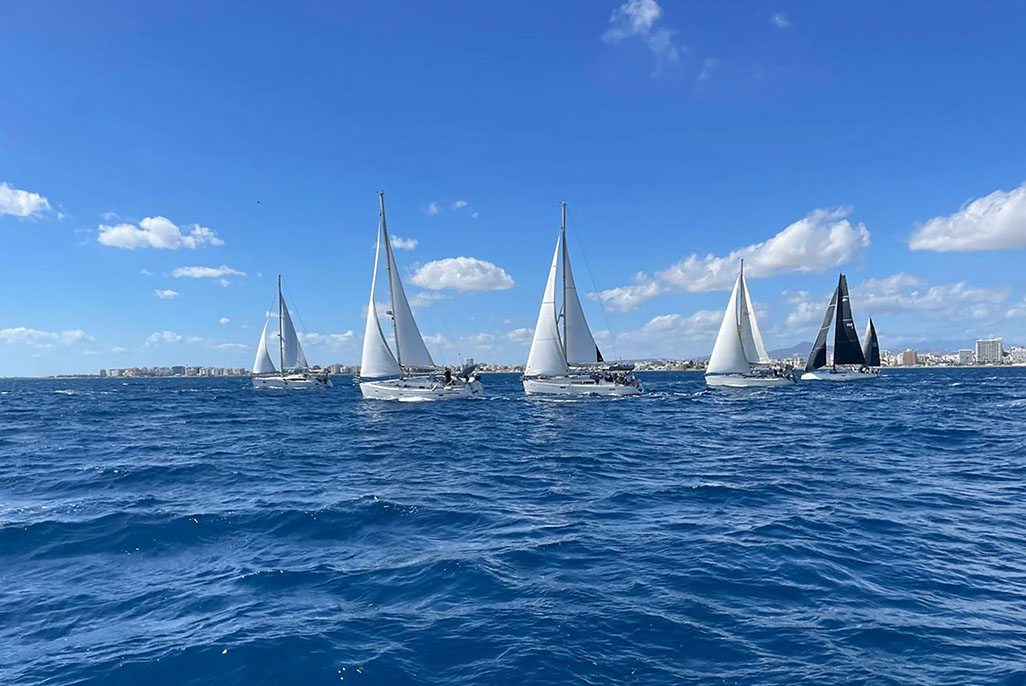
More than 120 sailors from 13 countries took part in the ‘Regatta for Peace’, the largest amateur sailing event held in Cyprus to date, with 24 boats competing along a route from Larnaca marina to Ayia Napa marina.
The event took place on Saturday, at the initiative of the Italian embassy in Nicosia, in cooperation with the Cyprus Sailing Federation and the marinas of Larnaca and Ayia Napa.
According to a statement issued by the Italian embassy, the race began late in the morning from Larnaca marina, in the presence of Larnaca mayor Andreas Vyras and Deputy Tourism Minister Costas Koumis.
The crews, almost all of mixed nationalities and including many Italians, sailed approximately 16 nautical miles along the island’s southeastern coast, arriving at Ayia Napa marina in the early afternoon.
The boats competed in two categories, Classes A and B, under a handicap system allowing vessels of different designs to compete on equal terms.
The Italian embassy said the Regatta for Peace marked the first European stop of the international roadshow ahead of the America’s Cup, which will be held in Italy for the first time in July 2027.
“We dedicated this regatta to peace, the most desired gift on earth,” Italian ambassador to Cyprus Antonella Cavallari said.
“Peace is the fundamental value of diplomacy, the very reason for diplomacy’s existence. And sports diplomacy is one of its most important tools: sport conveys a powerful message through its values – fair play, respect for rules, mutual respect, cooperation and friendship,” she added.
“Today, more than ever, these are the values that must guide relations between nations and their peoples.”
According to the embassy, Koumis expressed particular appreciation for the event and voiced hope that the regatta would become an annual fixture, given its positive impact and contribution to diversifying Cyprus’ tourism product.
Education ministry director-general Marios Panayides, speaking on behalf of the minister, also highlighted the value of such initiatives.
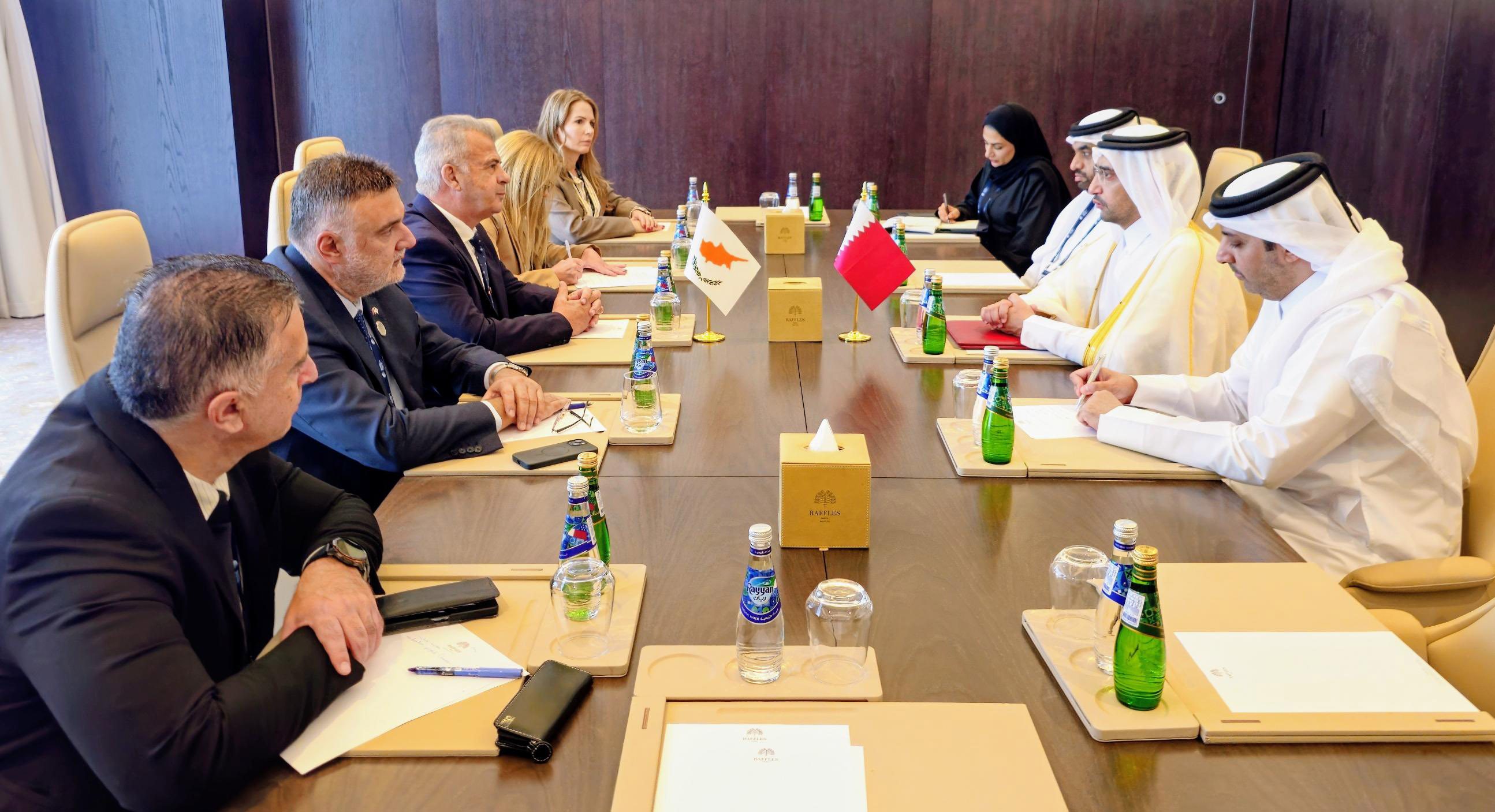
Cyprus and Qatar agreed on Monday to strengthen cooperation in security and justice, including tackling organised crime, police training, maritime security and the exchange of expertise.
Justice Minister Costas Fitiris met separately with Qatar’s Interior Minister Sheikh Khalifa bin Hamad bin Khalifa Al Thani and Justice Minister and Minister of State for Cabinet Affairs Ibrahim bin Ali Al-Mohannadi during his official visit to Doha.
The ministry said the meetings reaffirmed the two countries’ commitment to closer cooperation, with an emphasis on practical measures and the exchange of expertise.
During the meeting with Qatar’s justice minister, the two sides agreed to establish a joint Cyprus-Qatar interministerial committee to coordinate and advance cooperation. A similar mechanism was discussed with the interior minister on matters falling within his responsibilities.
Arrangements will also be made for both Qatari ministers to visit Cyprus, with the aim of strengthening bilateral relations.
In his meeting with Sheikh Khalifa, the two sides discussed Qatar’s National Command Centre (NCC), which is of particular interest to Cyprus as the Cyprus police are planning a new Command, Control and Communications Centre (C3).
During his meeting with Al-Mohannadi, discussions focused on strengthening judicial cooperation, mediation programmes, tackling financial crime and facilitating exchanges of expertise and visits between the relevant authorities.
The ministers also examined how to make better use of the existing bilateral legal cooperation agreement signed in 2014.
Fitiris also participated in the Global Security Forum 2026, taking place in Doha from October 19 to 21 under the theme The Future of Alliances.
The forum brings together government officials and security experts to discuss contemporary geopolitical developments, security challenges and international cooperation.
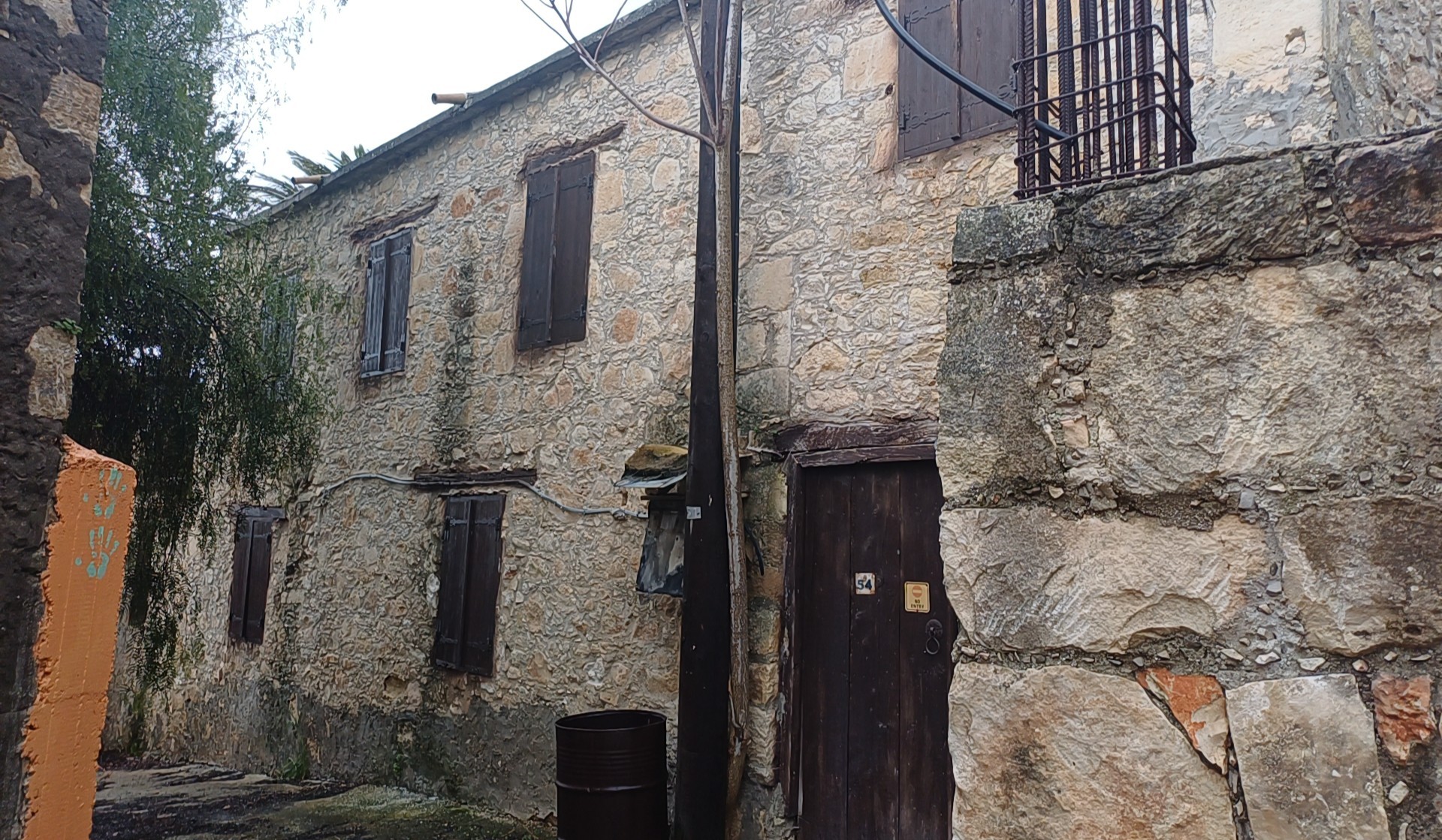
Strengthening transparency, meritocracy and good governance in the management and allocation of Turkish Cypriot properties remains a firm priority for the interior ministry, it said on Monday.
As part of these efforts, the Turkish Cypriot Properties Management Service has created an online form for submitting complaints and reports concerning the illegal use of Turkish Cypriot properties or other irregularities, available to the public.
The new digital service allows citizens to actively contribute to identifying possible violations through a direct and accessible reporting procedure.
According to the ministry, every complaint or report submitted with the complainant’s name will be examined with due seriousness and attention by the competent officials, with the aim of ensuring legality in the management of Turkish Cypriot properties.
The introduction of the new service forms part of the interior ministry’s broader efforts to modernise procedures and bring about substantial changes in the management of Turkish Cypriot properties by strengthening oversight and accountability mechanisms.
Interior Minister Constantinos Ioannou reiterated the government’s determination to ensure transparency, meritocracy and equal treatment of refugees.
Legislative reform
“Through the legislative reform introduced, the implementation of the new eligibility and points-based assessment system, the intensification of inspections, the termination of contracts, the recovery of properties and the reform of pricing policy, we are consistently moving forward with changing the way Turkish Cypriot properties are managed,” Ioannou said.
The main objective remains the establishment of a fair and reliable management framework that ensures legality, equal treatment of refugees and the protection of the public interest.
The misuse of Turkish Cypriot property has hit the headlines repeatedly in recent years and has been discussed at the House.
The Turkish Cypriot property management service admitted to allocating over 150 million square metres of land to a member of staff, however saying that this was 30 years ago and in line with procedures in place at the time.
Turkish Cypriot properties were placed under state guardianship after the 1974 invasion, with the government allocating abandoned homes and land to Greek Cypriot refugees, although subsequent reforms allowed some properties, particularly in isolated villages, to be leased to non-refugees under specific conditions.
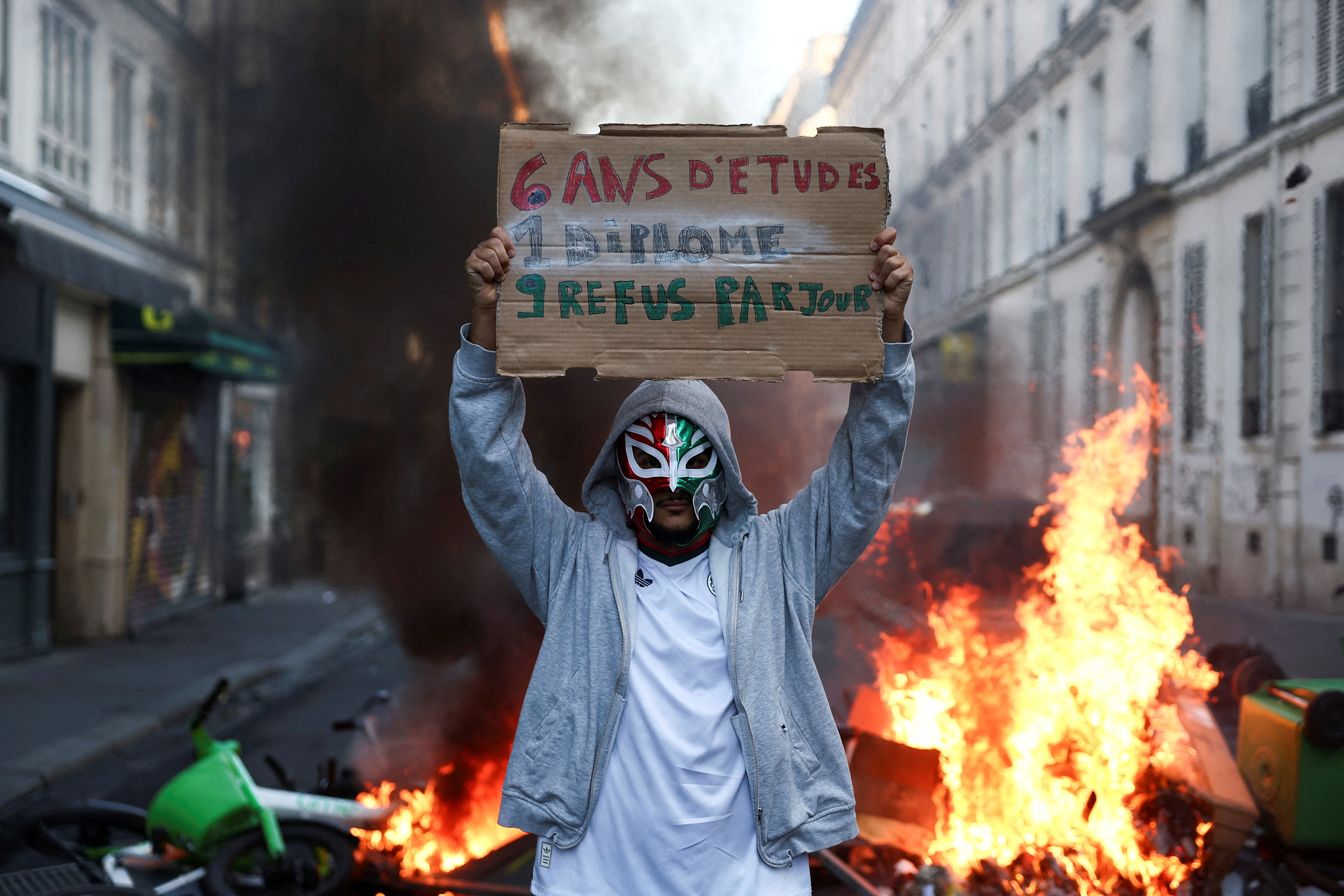
France’s central government asked some local authorities to impose curfews and faced pressure over security failings on Monday after a weekend of riots and looting borne out of nationwide anti-government protests.
Prime Minister Sebastien Lecornu did not rule out declaring a state of emergency but said it was more appropriate for now to apply partial and localised curfews, without providing details of which cities would be affected.
“My determination to restore order is absolute,” he said in a press conference, ruling out, however, a blanket curfew in Paris.
The weekend of looting and violence between some protesters and police followed weeks of student demonstrations, rocking France six months ahead of its next presidential election and highlighting pressures from a weak economy and surging debt.
MINISTER BLAMES FAR-LEFT
Lecornu blamed far-left groups for some of France’s worst unrest in years. “There is, after all, a far-left movement that wants to cause — we can’t put it any more strongly — profound unrest in the country in the run-up to the presidential election,” he said.
Hard-left presidential candidate Jean-Luc Melenchon urged him to provide evidence. “Otherwise, he should apologise, keep quiet and stop fanning the flames of unrest,” he said on X.
The Federation of Trade and Retail said almost 3,000 shops had been affected over the weekend.
“Once again, the retail sector finds itself on the front line, at a time when it is already weakened by a succession of crises,” it said.
“Behind every ransacked shop are business owners, employees and families who have seen years of work and effort wiped out in a matter of hours,” it added, calling for relief from social security contributions and tax for those businesses affected.
Lecornu said the government would provide furlough measures from Tuesday.
Some 2,400 people were arrested and one protester died from a cardiac arrest on Saturday while nearly 1,000 officers were injured.
French assets were underperforming broader European markets on Monday, though moves were more contained than at some other moments of recent political friction.
Tensions in President Emmanuel Macron’s fragile government over apparent security shortcomings — coming just as the government needs to pass a much-needed budget bill to rein in its finances — could further unsettle investors.
Macron’s office said on Monday he had turned down his Interior Minister Laurent Nunez’s offer to resign, telling him instead to put an end to barricades and looting and be transparent over what Macron called “intelligence and foresight failings”.
Nunez told reporters that Tuesday evening’s Champions League soccer match between Paris Saint-Germain and Barcelona would go ahead as planned, even though the capital was one of the worst-hit areas.
LEFT WITHOUT PROTECTION
The mayors of Paris, Marseille and Lyon said in a joint op-ed published by the newspaper Liberation that they were used to demonstrations and protests.
“But on Saturday … for the first time, we had the feeling that whole sections of our cities had been left without protection,” the mayors — all from the centre-left — said. “We now need to patch the wounds of our cities and face up to the anger of our residents, aghast at this level of violence.”
The start of school holidays on Monday may give the government some relief, but students were staging more gatherings and blockades in some places, including the Louvre gallery and Sciences Po university in central Paris.
Marseille, another city badly hit by the riots, banned gatherings and demonstrations. French unions meanwhile called for a new round of strikes and rallies on November 5.
INTELLIGENCE FAILURES
At the weekend, hundreds of thousands took to the streets to protest over what many say are declining and dysfunctional public services that leave citizens to fend for themselves amid cost-of-living pressures.
In Paris, at least 300 to 400 businesses were vandalised at the weekend, Dominique Restino, the head of the Paris chamber of commerce, told BFM television.
At the Place Vendome, home to luxury hotels and boutiques, most shops were shuttered and surrounded by security guards. The front door of a Dior boutique was smashed, while the windows were damaged in the stores of other luxury brands in central Paris, including Rolex, Louis Vuitton, Ralph Lauren and Gucci.
In Marseille, Ligue 1 club Olympique de Marseille said its official store on the city’s historic main avenue had been looted, while a town hall in central France was torched.
France deployed 60,000 police and other security forces on Saturday, Nunez told France Inter radio, but he acknowledged that was not enough to control violent crowds.
European governments have advised citizens travelling to France to avoid large crowds and exercise caution.
BOND YIELDS RISE, STOCKS DOWN
As France was busy cleaning up its streets, Macron arrived in Kuwait for a Gulf trip aimed at securing additional petrol and diesel supplies to bring down pump prices.
Cost-of-living issues were also front and centre during numerous demonstrations and protests staged in other European countries including Italy, Belgium and Albania at the weekend, with high fuel prices, largely resulting from the Iran war, adding to pain.
French shares were among the worst performers on the European market on Monday, as the CAC 40 fell 1.3% in early session trade. A slide in bond prices meanwhile pushed France’s 10-year yield up 8 basis points to 4.86%.

 Login