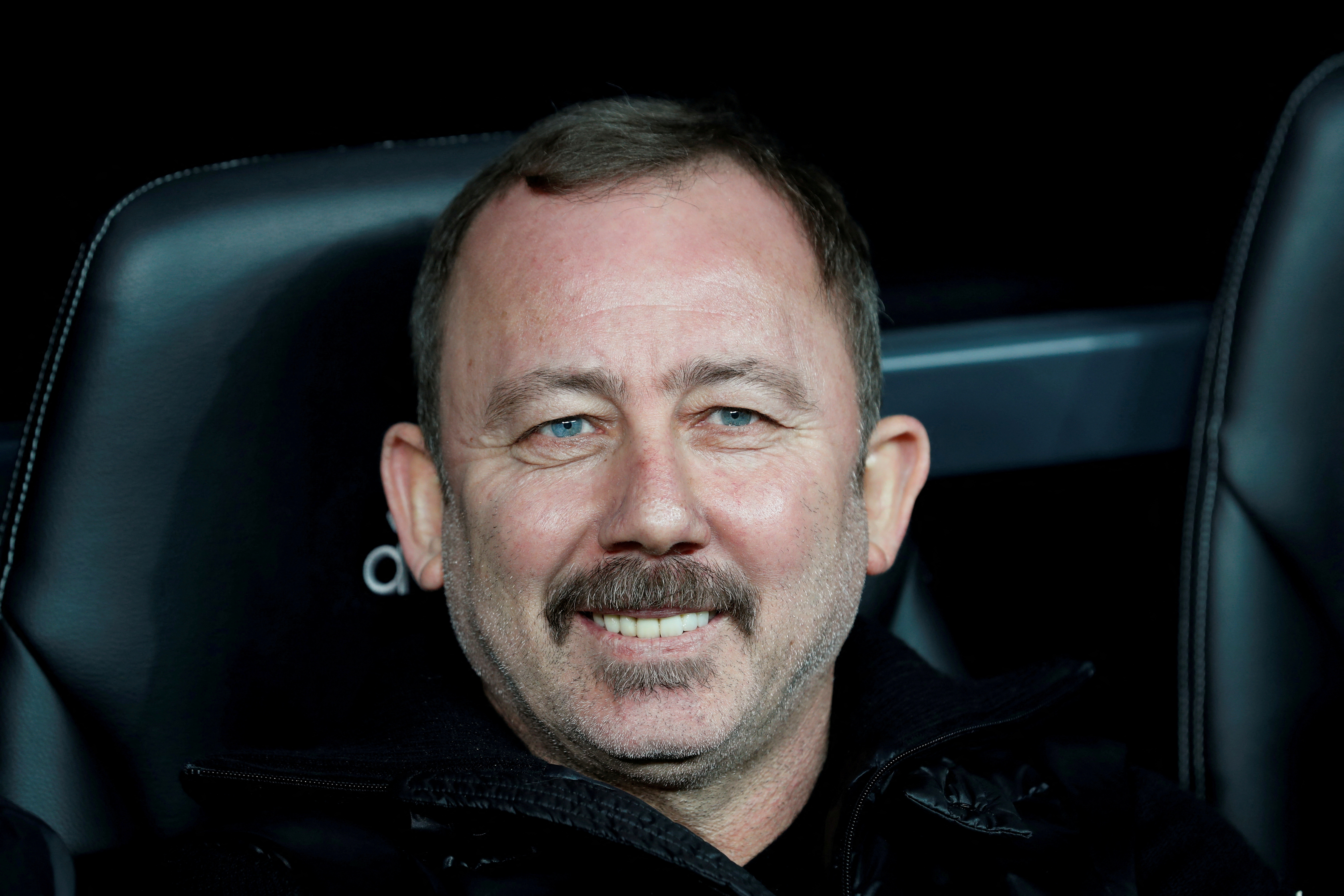
Turkey have appointed Sergen Yalcin as head coach on a four-year contract to replace the sacked Italian Vincenzo Montella, the country’s football federation (TFF) announced on Tuesday.
The 53-year-old former Turkey midfielder steps into the job following Montella’s dismissal earlier this month after a difficult Uefa Nations League campaign.
Turkey sit bottom of Group A1 after four consecutive losses, having also suffered a group stage exit from the 2026 World Cup.
“We wish Yalcin success in his new role and hope this decision proves auspicious for our country and our national team,” the TFF said in a statement.
A prominent figure in Turkish football, Yalcin won 37 caps from 1994 to 2003, featured at Euro 1996 and Euro 2000 and played for Besiktas, Fenerbahce, and Galatasaray.
As a manager, Yalcin guided Besiktas to a domestic double of Super Lig and Turkish Cup in the 2020–21 season. He ended a second stint in charge of Besiktas in May.
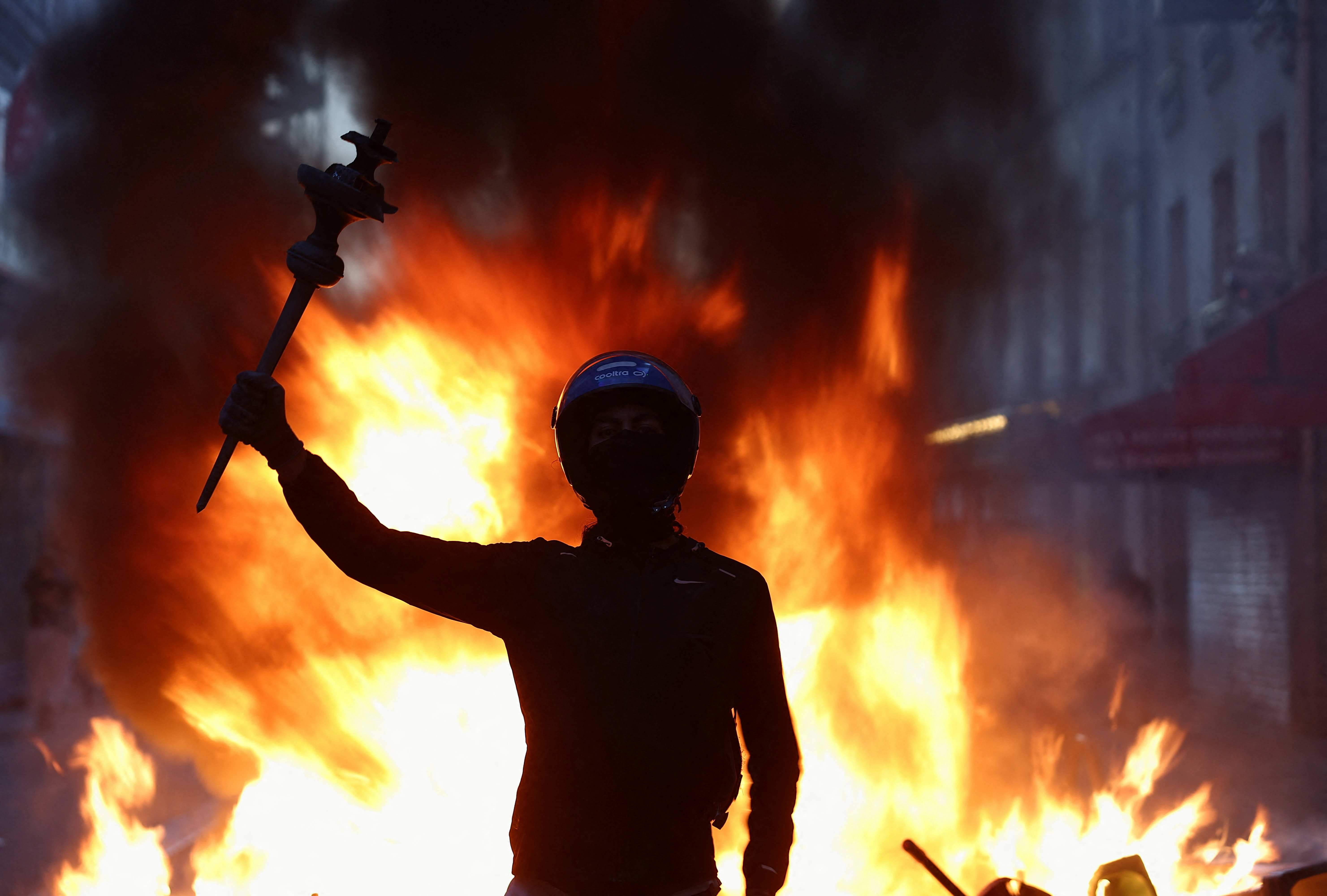
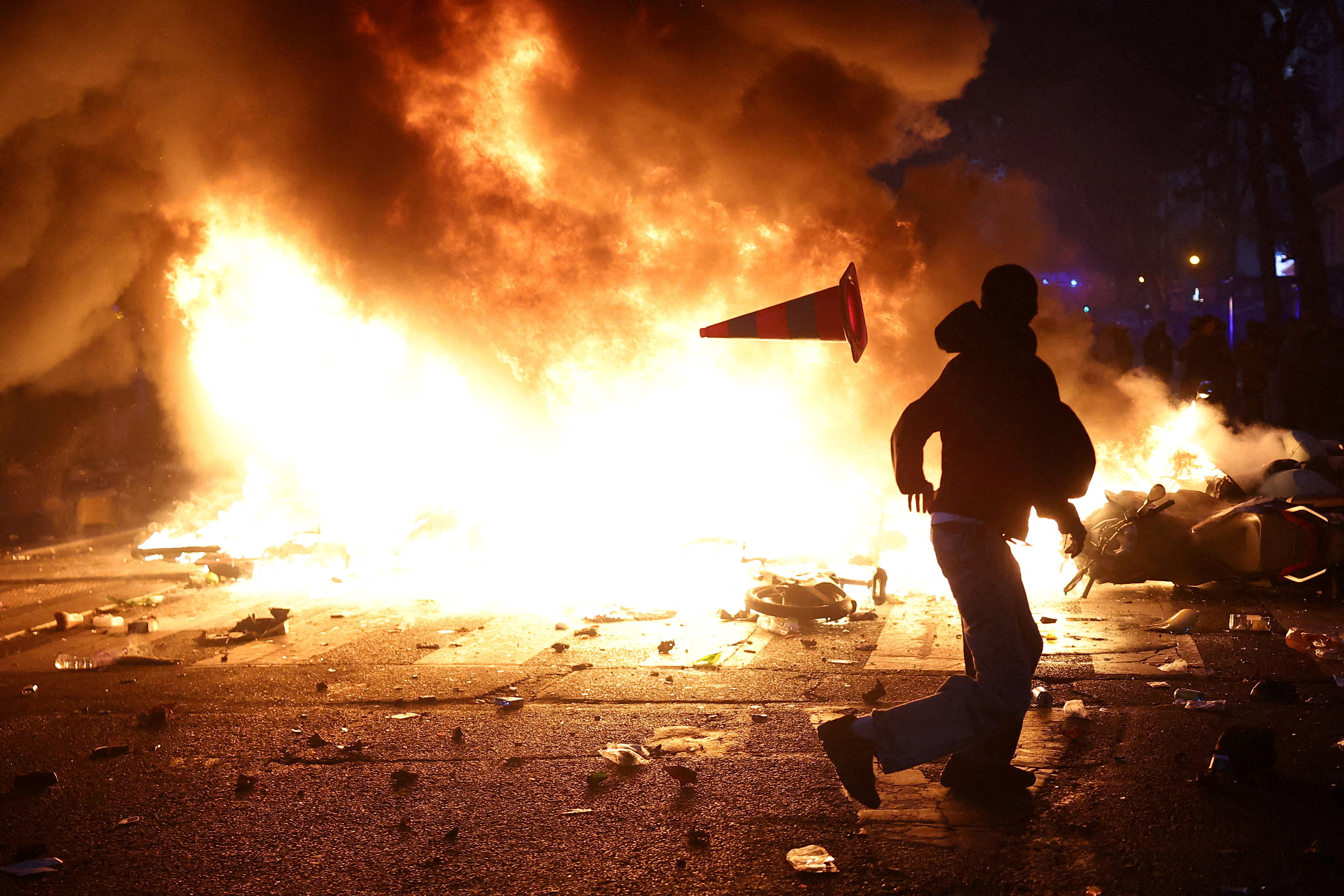
France will reinforce police with troops and mount a huge security operation for more protests planned on Saturday, the government said on Tuesday, acknowledging failures in its response to last weekend’s violence.
“The deployment next Saturday will be massive,” Prime Minister Sebastien Lecornu said, adding that the immediate priority was to restore order after rioting and looting swept Paris, Marseille, Lyon and other cities on October 17.
In a sometimes rowdy debate, Interior Minister Laurent Nunez said the military would be deployed alongside police, while the government pledged to overhaul tactics after widespread criticism that city centres had been left vulnerable.
TARGETED CURFEWS HELP RESTORE CALM
Framing the crisis as a choice “between violence and the Republic”, Lecornu blamed the unrest on far-left groups, who in turn have accused the government of underestimating public anger over high living costs and declining public services.
The turmoil shocked France because of both its scale and the apparent inability of police to contain it, inflaming tensions ahead of presidential elections next year with candidates from the far right and hard left performing strongly in polls.
Protests in other European countries, including Italy and Albania, have added to concerns that anger over living standards risks spreading around the continent at a time when many nations, including France, are struggling with budget woes.
A night of relative calm in France followed targeted curfews imposed in several areas affected by the chaos, which the government said had helped reassert control. The localised curfews, some directed at children and teenagers under age 18, were extended to Tuesday night, police said.
Lecornu acknowledged shortcomings in the state’s response at the weekend, saying there had been intelligence failures, while police deployments had been too static and authorities had erred by not cancelling planned police leave.
Nunez apologised for the mistakes. “I deeply regret what happened. I accept my share of responsibility,” he said.
SUSPECT ARRESTED FOR LIMOGES TOWN HALL DESTRUCTION
Parliament is setting up a commission of inquiry to establish the causes of the unrest, while authorities have assigned 200 investigators to identify and track down those involved in the street violence.
Police arrested on Tuesday a man suspected of starting a blaze that destroyed a historic town hall in the central city of Limoges during the rioting. Officials said he had been on a security watch list and belonged to an ultra-left group.
Sylvain Maillard, a Renaissance deputy for Paris, told Reuters some apps had become “a walkie-talkie system for rioters and looters”.
Underscoring the broad impact of the crisis, French borrowing costs rose further on Tuesday as investors fretted about the prospect of more unrest, with the yield on benchmark 10-year government bonds touching its highest level in 24 years.
Supermarket chain Carrefour said it had lost tens of millions of euros through theft and damage, warning that it faced an “unprecedented situation” because of the disorder.
France’s main student union UNEF has called for further protests on Saturday, pledging to maintain pressure on Macron’s government over what it says is a deteriorating and underfunded education system. “We carry on,” it said on social media.
Separately, groups identifying themselves as “Gilets Jaunes” (Yellow Vests) called for protest actions over rising fuel costs.
The yellow vest movement, largely inactive in recent years, sprang up in 2018 during Macron’s first term over plans to raise petrol taxes. Traffic blockades continued for months until the government made costly concessions it can ill afford now.
ITALY FACES NEW FORM OF UNREST, MINISTER SAYS
Northern Italian cities, including the financial capital Milan, were also hit by riots last weekend.
Though not on the scale seen in France, the unrest nonetheless jolted Prime Minister Giorgia Meloni’s government, which was expected to introduce new security measures at a cabinet meeting on Tuesday.
Defence Minister Guido Crosetto described the disturbances as a form of “hybrid warfare” conducted through social media platforms such as TikTok, YouTube and other online networks.
“The events in Milan and elsewhere in Italy are fundamentally different from those seen in other eras,” Crosetto wrote on social media. “The West has yet to realise this or take any meaningful action in response.”
In Milan’s central Corso Vittorio Emanuele II, sportswear retailer On and a Levi’s store that were targeted during the unrest had reopened on Tuesday but remained boarded up. Luxury stores had restored merchandise to window displays after temporarily removing it for security reasons.
In Albania, protesters were expected to take to the streets of Tirana for a seventh consecutive day against the government of Prime Minister Edi Rama.
Carrefour cut its annual earnings forecast on Tuesday, blaming an “unprecedented situation” in France as riots, looting and curfews raised costs and disrupted trading at its stores.
The supermarket chain said it now expects “stable to slight” growth in 2026 adjusted earnings per share, having previously forecast growth in a high single-digit percentage. It also forecast a slight decline in free cash flow compared with 2025.
Adding to widespread criticism of the government’s policing efforts, Carrefour CEO Alexandre Bompard said he hoped security would be better for the next protests planned on October 24, but that he expects a business impact regardless.
“Carrefour was directly and strongly affected. Around 50 of our stores were hit on day one, many were looted and the damage is considerable,” Bompard said on a call with analysts.
“Many of our teams and partners faced deeply distressing situations,” he added, saying the retailer is helping workers to reopen affected stores as soon as it is safe.
The unrest is hurting consumer confidence that was already weak because of high fuel prices and is reducing footfall at Carrefour stores as the key fourth-quarter trading period begins.
Finance chief Matthieu Malige said the total impact could be between €80 million ($90 million) and €200 million of operating income.
“The direct costs add up to several tens of millions of euros … of stolen or destroyed merchandise, damaged stores, damaged equipment, and then there are also the stores we were forced to close,” Malige told reporters.
“In the weeks to come we will continue to be impacted as some stores have to close earlier due to curfews, and more broadly we think we’re in a new situation marked by deep uncertainty for our customers.”
Many of Carrefour’s 6,000 stores across the country were closed in anticipation of unrest, including on Sunday and Monday, Malige said, declining to disclose the total number of stores shut.
Costs have increased as stores took measures to protect themselves, including the hiring of external security guards, Malige said, adding that Carrefour was among the most affected retailers because of its wide network of convenience stores in cities such as Paris, Lyon, and Marseille.
As a result, Carrefour said it would invest less in France, cutting its capital expenditure forecast for the year to €1.6 billion from €1.7 billion.
The retailer had been gearing up to begin its Black Friday sales events in the coming days, Malige added.
US special envoy Steve Witkoff will travel to Russia on Wednesday after meeting in Oslo with Ukrainian President Volodymyr Zelenskiy and leaders of Norway and Finland, while President Donald Trump said it was time for Kyiv to end the war with Moscow.
Zelenskiy travelled to Oslo in a bid to repair relations with Washington, which have sunk to new lows as Trump has courted Moscow. Kyiv has complained that Washington has withheld vital military support and intelligence.
Earlier on Tuesday, Zelenskiy spoke by phone with US Secretary of State Marco Rubio.
Zelenskiy said Ukraine was again receiving early warnings of Russian missile attacks.
“Now it works, it’s great,” he said, adding he and Rubio had also discussed supplies of Patriot missile interceptors and the US-provided satellite-based Starlink system, which Kyiv complained had stopped working when mounted on fast-moving objects such as drones.
Trump’s recent gestures toward Moscow, including a deal to buy Russian diesel and waiving new sanctions, have sparked bipartisan pushback in the US Congress and worry in European capitals.
Zelenskiy said he expected to talk to Rubio again in 48 hours.
He said he had discussed security guarantees for Ukraine in Oslo, including “Article 5-like” guarantees, referring to the NATO stipulation that an attack on one ally is an attack on all.
“I am thankful to the American side that they underlined again that it will be strong,” he said.
“There are different kinds of security guarantees which are in the paper, in the document, which Steve (Witkoff) will share with the Russians,” he said. “And we will hear his feedback one day after.”
Zelenskiy reiterated that Ukraine hoped to discuss key issues on how to end the war during a trilateral meeting of leaders of Ukraine, Russia and the US.
Norway’s Prime Minister Jonas Gahr Stoere said the Oslo meeting had been good and constructive.
“Steve Witkoff will fly tomorrow to Saint Petersburg where he will be meeting with Russian leadership, and exchange ideas from this meeting and the proposals that have been worked on by European and American colleagues, and possibly pave the way for a meeting at leaders level,” Stoere said.
“I think the (peace) process is back on track,” Finnish President Alexander Stubb told the news conference, in which Witkoff did not take part.
Earlier the US envoy and Zelenskiy clasped one another in a hug as they went into the talks that Trump’s son-in-law Jared Kushner joined remotely.
Washington has denied deliberately hindering Ukraine’s war effort. But Trump, who has waived sanctions on Russia in what he says is an effort to lower US fuel prices, has repeatedly rebuked Zelenskiy, and called for him to be replaced.
On Tuesday, Trump called on Ukraine to make a deal to settle the war with Russia, and said Moscow wanted to get it done. “Ukraine has to want to settle this war,” Trump told reporters in the Oval Office.
Trump suggested Moscow had the upper hand in the fight because “Russia is a big machine — they just keep grinding forward, and that’s what they’ve done. They’ve taken a very large piece of land.”
On Monday, Trump said Zelenskiy, who has rejected Russia’s conditions for ending its war, was “not helping matters much”, and that Kyiv should find “somebody else to negotiate”.
RUBIO SAYS US MISSILES MAY NOT HAVE BEEN DELIVERED YET
The US under Trump has largely stopped providing weapons directly to Ukraine but lets European countries buy US weaponry on Kyiv’s behalf under the so-called Prioritised Ukraine Requirements List (PURL). It has also provided intelligence and technology that Europe cannot match.
A source familiar with the matter said most weapons deliveries under PURL continued to flow, but US Defense Secretary Pete Hegseth has not approved Ukraine’s latest requests for Patriot interceptors.
Rubio acknowledged on Tuesday that a consignment of interceptors bought by European countries for Ukraine may not have been delivered, but denied that the US had changed policy.
“There has not been some deliberate political directive to go out and harm Ukraine,” he said on a visit to India.
The Kremlin said it was hoping to set up a meeting between Witkoff and Russian President Vladimir Putin.
As US ties with Ukraine have deteriorated, Russia has stepped up attacks on Ukrainian cities, particularly targeting power stations and fuel, despite a call from Trump for both sides to spare each other’s energy systems.
Russia bombarded cities in western Ukraine overnight, targeting electricity systems and knocking out power across swathes of the country that had previously been spared.
Ukraine held back for several days last week from hitting Russian oil refineries in deference to Trump’s request, but has resumed strikes after Russia showed no sign of complying. Both sides have also struck data centres.
Trump has repeatedly condemned Ukrainian attacks on Russia while saying little about Russia’s far more severe attacks on Ukraine, which have grown even more deadly as Kyiv says US support has been withheld for its air defences.
RUSSIAN ATTACKS
Russia’s defence ministry said on Tuesday it struck three cargo vessels in Ukraine’s port of Reni and two other cargo vessels en route to Odesa. Russian forces also hit two logistics hubs, it said.
Energy facilities were attacked in seven Ukrainian regions overnight, knocking out power, and the western Lviv region was struck again during the day. Russian drones also struck an energy facility in Kyiv on Tuesday, mayor Vitali Klitschko said, with authorities saying power was out in four districts.
The deterioration of US-Ukraine relations began 10 days ago when Trump lifted sanctions on Russian diesel in a deal agreed with Putin. Trump said this would help reduce high fuel prices that have upset US voters ahead of midterm legislative elections on November 3.
At the weekend, Trump issued a broad waiver for tougher sanctions on Russia that were meant to have begun this week.
The defendants in the ‘golden passports’ case requested a trial within a trial on Tuesday, arguing that a great deal of the evidence to be presented by state prosecutors was irregularly obtained by police during investigations.
On trial at Nicosia criminal court are ten defendants: former transport minister Marios Demetriades, Andreas Demetriades, Demetris Demetriades, Giorgos Demetriades, Eleni Simillidi, Jing Wang, Josef Friedrich Santin, Vasiliki Georgiou-Santin, and Andreas Demetriades & Co LLC and Delsk Business Services Ltd.
The charges involve corruption, bribery, conspiracy to defraud and money laundering related to the naturalisation of 19 Asian investors, in the context of the now-defunct citizenship-by-investment scheme.
All defendants deny the charges.
In court on Tuesday, defence attorney Elias Stefanou requested a trial within a trial due to objections over the manner in which evidence was obtained against the accused.
He was referring to three warrants issued to search the premises of the Demetriades family law firm. According to Stefanou, the issues at stake are violations of attorney-client privilege, violation of the privacy of communications, exceeding the scope of the warrants, and relevance of the material seized.
The seized material includes electronic communications, a hard disk, computer towers, storage devices, mobile phones and paper files.
Stefanou said the defence had asked prosecutors to specify the material they intend to present in court.
A trial within a trial would determine which evidence would be admissible for the trial proper.
Countering, lead prosecutor Charis Karaolidou said they had already informed the defence of the evidentiary items they would not be presenting in court.
She said the defence needs to spell out precisely which material it objects to.
Hearing both sides, the court granted the defence time until November 16 – the next scheduled hearing – to present its objections in detail.
Tuesday’s proceedings also saw the first prosecution witness – a CID officer – continue testifying. The officer is the case evidence custodian.
To date, 105 items of evidence have been submitted in court – documents pertaining to naturalisations granted to individuals from Cambodia and China.
Former minister Demetriades is specifically charged with intervening in citizenship applications handled by his father’s and brothers’ law firm. The second charge involves “accepting gifts as a public official” related to a Chinese investor’s naturalisation. The third charge alleges bribery of a public official, citing Demetriades’ active participation in cabinet decisions.
Meanwhile defendants Josef Friedrich Santin, Vasiliki Georgiou-Santin, and Delsk Ltd face charges of influence peddling.
This is one of four court cases filed in relation to the ‘golden passports’ scheme.
The most prominent one, involving former House president Demetris Syllouris and former Akel MP Christakis Giovani, resulted in acquittals in February this year.
The final price tag for the Great Sea Interconnector (GSI) remains an unknown, while the project is now estimated to come online a year later than initially forecast, the energy regulator said on Tuesday.
Head of the energy regulatory authority (Cera) Polis Lemonaris was giving MPs a status update on the GSI – a planned subsea electricity cable linking Cyprus’ grid to that of Greece.
He said the final cost of the GSI cannot yet be “safety estimated” – but added that judging by other interconnectors, the €1.9 billion cited does not seem realistic.
Moreover, in the event that seabed surveys – still ongoing – show a need to reroute the subsea cable, the cost would likely go up.
But going with the standard €1.9 billion number, the official explained the cost distribution for Cyprus and Greece, currently set at 63 per cent to 37 per cent, respectively. Minus the €657 million in EU grants, Cyprus’ share of the cost comes to €749 million, and Greece’s to €440 million.
In addition, the contracting parties bear the operating costs equally; these come to €2 million annually up until the project’s completion, and then €15.5 million per year during actual operation.
As part of the incentives agreed, Lemonaris said, Cyprus will pay €25 million per year for the 2025-2029 period, with a maximum payment of €125 million.
Cyprus has yet to pay Admie the first €25 million installment.
In 2025, Admie – Greece’s independent power transmission operator and project promoter for the GSI – made a filing claiming it had incurred €302 million in expenditures.
Having reviewed the documentation, however, Cera concluded instead that expenses were €82 million up until that time.
The two countries have also agreed on a guaranteed rate of return on investment of 8.3 per cent for the project manager. This rate applies for seven years, later dropping to 4.6 per cent for the next 17 years.
On the actual work done, Lemonaris said that so far 280km of cable has been laid on the seabed, out of the total distance of 900km between the two points in Crete and Cyprus.
Meanwhile, another 232km of cable has been manufactured but yet not laid.
And 60 per cent of the necessary seabed surveys have been completed; the remaining 40 per cent would take about six months.
The seabed surveys are included in the approved capital expenditures budgeted for the 2024-2025 period, which altogether tally at €571 million.
Elsewhere in his presentation, Lemonaris said that the original target of January 2030 set for the project’s completion now looks like January 2031, according to fresh estimates.
MPs wanted to know the status of ownership and control in the project following the acquisition by Meridiam – a French infrastructure investment firm – of 66 per cent of the shares in the holding company based in Greece. Admie retains a 33 per cent strategic minority stake.
Based on their most recent information, Lemonaris said, the ownership and management permits still appear to be held by Admie, which also remains the project promoter.
However, Cera is awaiting an update from Admie regarding ownership and management following Meridiam’s entry into the project.
Cera formally requested the update in August; it has yet to receive a response.
Regarding the cash value of the 66 per cent shares acquired by Meridiam, Lemonaris said this is also an unknown.
Last month President Nikos Christodoulides said Cyprus would release the first €25 million contribution towards the Great Sea Interconnector (GSI) once a Navtex is issued for the resumption of seabed surveys.
Energy Minister Michael Damianos said the Navtex would be issued by Greek authorities by the end of this month.
US special envoy Tom Barrack conceded that a “ground kinetic” battle in Yemen by the US “seems fruitless” during a talk at the Global Security Forum in Qatar on 20 October.
“I think the president’s been clear that he supports Saudi Arabia and the backing that they need logistically he will supply. But America getting involved in a ground kinetic battle somewhere else seems fruitless.”
Barrack is Washington’s ambassador to Turkiye and special presidential envoy for Syria and Iraq.
He admitted that military force has failed in Yemen and that Riyadh is in a “very difficult position.”
“These kinetic reactions have never worked. It doesn’t work. It’s probably not likely that it’s going to work,” he said.
Barrack questioned whether US meddling across West Asia has helped or harmed the region, arguing that Ansarallah in Yemen, Hezbollah in Lebanon, and the resistance factions in Iraq would lose their reason to exist only once states took responsibility themselves.
He pressed for talks between Riyadh, Sanaa, and regional mediators, urging regional capitals to build their own alliances instead of leaning on Washington.
He went further, admitting that the US has had a hand in 23 regime changes across the region, none of which achieved their aims.
He declined to say whether the US-Israeli war on Iran launched on 28 February was a mistake, while conceding that it had unleashed unintended consequences across the region.
The admission comes as the Saudi-led coalition presses on with airstrikes on Yemen, drawing retaliatory missile and drone strikes by the Yemeni Armed Forces (YAF) on the kingdom.
Riyadh has turned to its defense partners under the Mecca pact, including Pakistan and Turkiye, after Washington declined its requests for direct US intervention against Yemen.
Barrack’s remarks follow Washington’s failed bid to subdue Yemen by military force, with more than 1,000 US airstrikes between March 2024 and April 2025 unable to halt Yemeni naval operations waged in support of Gaza, forcing the US into an Omani-brokered ceasefire with Sanaa in May 2025.
The campaign cost Washington $1 billion in its first three weeks alone, as Yemeni forces downed 17 MQ-9 Reaper drones and the US lost two F-18 fighter jets.
Ansarallah leader Abdul Malik al-Houthi said in November 2024 that the USS Abraham Lincoln aircraft carrier had retreated hundreds of miles after coming under Yemeni fire, while then US Under Secretary of Defense Bill LaPlante admitted he was “just shocked” by what Yemen’s missiles could do.
Europe fared no better, with Rear Admiral Vasileios Gryparis, commander of the EU’s Operation Aspides, telling Bloomberg in June 2024 that his Red Sea fleet needed to more than double in size and that US–UK strikes on Yemen were “not contributing to the solution,” after France withdrew one of his frigates citing the threat level.
Ukraine has deployed drone personnel and thousands of microdrones across countries surrounding Iran, including Iraq’s Kurdistan Region, an Iranian security source told Tasnim News Agency, highlighting the deployments as part of a broader network of hostile activities directed against Tehran.
According to the security source, Kiev had established an operational microdrone network across the region, with thousands of drones deployed in Iraq’s Kurdistan Region.
The source withheld the names of the countries hosting Ukrainian personnel and equipment, stating that the information remained confidential and would be disclosed in due course.
Tehran preparing appropriate response
The Iranian security source further said Tehran considers Ukraine’s activities part of the broader hostile actions pursued by Europe and NATO against Iran, adding that Iranian authorities are fully aware of Kiev’s operations.
Tehran, according to the source, is considering an appropriate response to the deployments, which it stressed as a security threat.
Describing the operation as a “failed attempt and an embarrassment” for Ukraine, the source stressed that Iran remains aware of Kiev’s activities and their implications for regional security.
The bigger picture
The deployment comes amid longstanding security concerns over armed Kurdish separatist groups operating along Iran’s western border and growing tensions between Tehran and Kiev following a Ukrainian attack on an Iranian commercial vessel in the Caspian Sea.
Baghdad, Tehran, and the Kurdistan Regional Government (KRG) signed a security agreement in March 2023 requiring Iranian Kurdish separatist groups to disarm and relocate away from the Iraq-Iran border.
The agreement also obliges Iraqi authorities to prevent the groups from using Iraqi territory to launch military operations against Iran. While Baghdad and the KRG have fulfilled their obligations, sources told Al Mayadeen that four or five Iranian separatist groups continue to defy the agreement and carry out provocations along the border.
The remaining groups have continued their activities despite guarantees offered by the KRG, with Al Mayadeen Plus reporting in September that they had refused to leave their positions.
Tehran has responded to the separatist groups with missile and drone strikes, as well as ground operations targeting positions in Erbil and Sulaymaniyah. In July, Iranian strikes martyred nine members of the Komala Party. Iran is also building a security wall extending more than 250 kilometers along its border with the Kurdistan Region.
These security concerns have unfolded alongside a deterioration in relations between Iran and Ukraine. In July, Tehran condemned a Ukrainian attack on an Iranian commercial vessel in the Caspian Sea that killed one sailor and injured another. Iran’s Foreign Ministry characterized the strike as an act of aggression and a violation of Article 2(4) of the UN Charter, warning that it could widen the scope of the war.
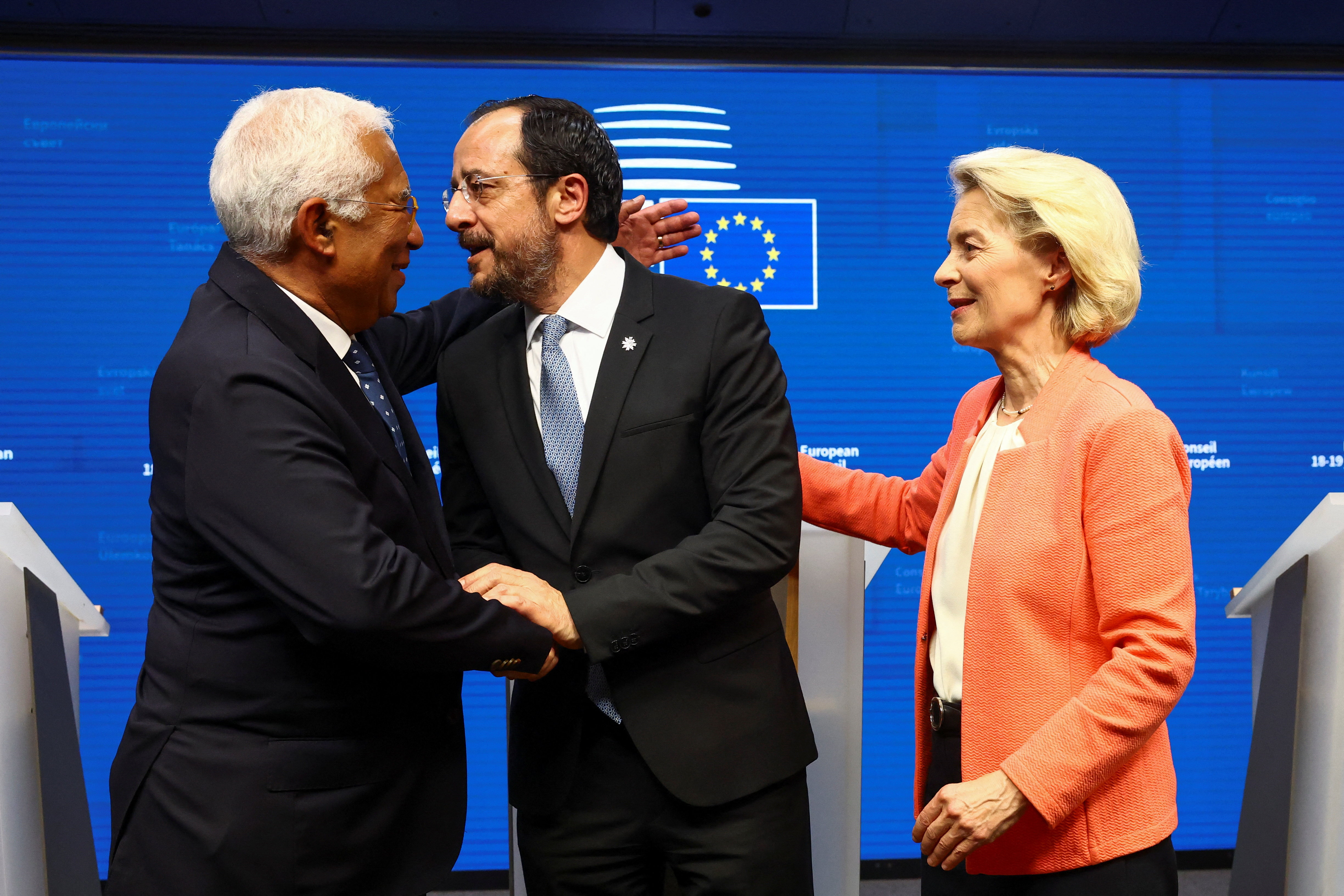
European Council President Antonio Costa and European Commission President Ursula von der Leyen on Tuesday offered “solidarity” to both Greece and Cyprus after the Libyan parliament had earlier in the day ratified a maritime boundary agreement with Turkey which both Greece and the Republic of Cyprus consider to be illegal.
“We deeply regret the ratification today by the Libyan parliament of the so-called Libyan-Turkey memorandum of understanding on the delimitation of maritime jurisdictions in the Mediterranean Sea. We recall that the EU’s position on this matter was clearly stated by the European Council in 2019 and remains unchanged,” they said.
They added that the agreement “infringes upon the sovereign rights of third states”, “does not comply with the law of the sea”, and “is null and void”.
“We reaffirm our solidarity with Greece and Cyprus. We reiterate the EU’s well-known position against any outside interference in Libya,” they said.
The European Council’s conclusions on December 12, 2019, had stated similarly that the agreement “infringes upon the sovereign rights of third states, does not comply with the law of the sea, and cannot produce any legal consequences for third states”.
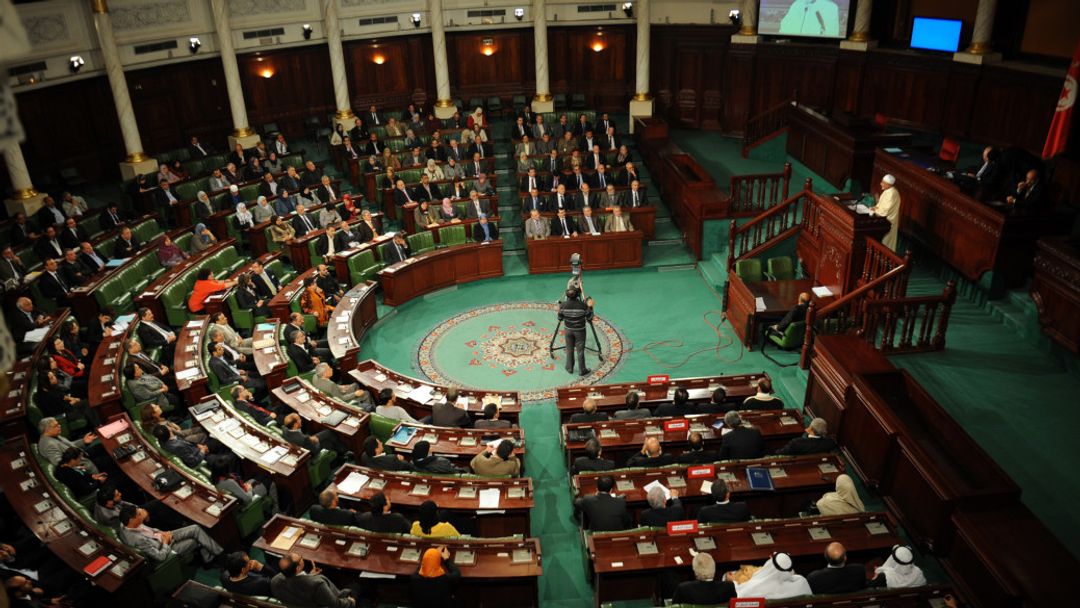
Libya’s parliament voted unanimously to adopt agreement
Earlier on Tuesday, the Libyan parliament voted unanimously to adopt the agreement, which states that Libya and Turkey agree that their respective exclusive economic zones share a border in the Mediterranean sea, and that that border is located southeast of the Greek island of Crete.
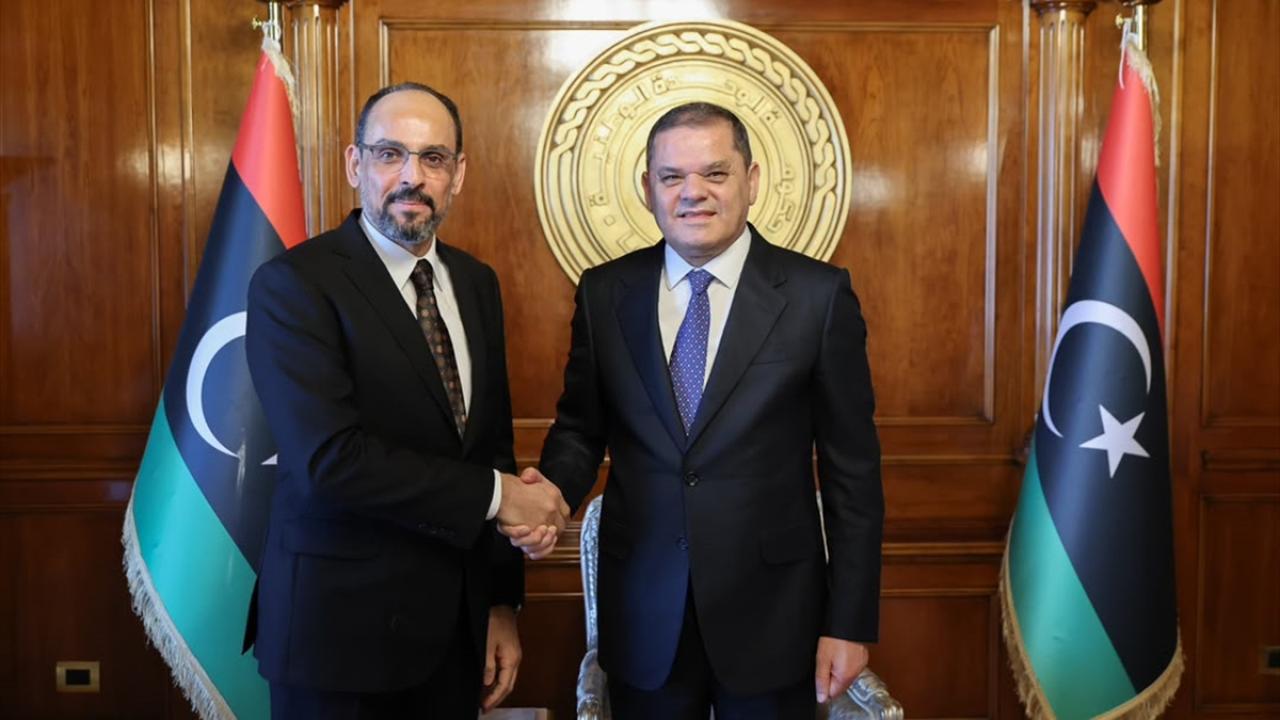
The ratification came on a day on which a day on which Turkey’s national intelligence organisation (Mit)’s chief Ibrahim Kalin was in the country to meet Libya’s government of national unity’s Prime Minister Abdulhamid Dibeybe.
Turkey had signed an agreement with the Libyan government of national accord in 2019, but it had not until Tuesday been ratified by Libya’s legislature. The government of national unity superseded the government of national accord in 2021 and is now the sole internationally recognised government of Libya.
Mit chief Ibrahim Kalin and Libya’s government of national unity’s Prime Minister Abdulhamid Dibeybe
After the agreement was signed, Cypriot Foreign Minister Constantinos Kombos and his Greek counterpart Giorgos Gerapetritis held a telephone call, after which both ministries released condemnatory statements.
“The Republic of Cyprus’ foreign ministry condemns the Libyan parliament’s decision to approve the illegal Turkish-Libyan ‘memorandum of understanding’ of 2019. This ‘memorandum’ violates the sovereign rights of third states and is contrary to the recognised principles of the United Nations convention on the law of the sea,” the Cypriot ministry said.
It added that the agreement also violates “customary international law regarding the rights of islands in maritime zones, including the exclusive economic zone and the continental shelf”.
“Therefore, the foreign ministry continues to consider the said ‘memorandum’ illegal, null and void, and that it does not produce, in any way, legal effects against third states,” it said.
Turkey is not an Unclos signatory, Libya signed but did not ratify
Greece’s foreign ministry said that that it “rejects” it and that the decision “does not change the illegal, null and void nature of the memorandum, which is contrary to the international law of the sea and violates the sovereign rights of the states of the region”.
“Geography and the international law of the sea do not change with unilateral, legally unfounded parliamentary decisions. Turkey and Libya do not have opposing or adjacent coasts which would provide a legal basis for the attempted delimitation of maritime zones,” it added.
While Greece and the Republic of Cyprus are signatories to the United Nations convention on the law of the sea (Unclos), Turkey is not, and while Libya under its then leader Muammar Gadaffi signed the convention in 1984, no Libyan legislature ever ratified the signature.
Turkey’s belief is that the convention gives too much weight to islands, which it says should instead only be allowed 12 nautical miles of territorial waters as their own exclusive economic zone (EEZ), whereas Greece believes that its islands are entitled to full EEZs of their own.
As such, Turkey’s view is that its own EEZ stretches south to meet Libya’s EEZ, and as of Wednesday, Libya agrees, whereas Greece’s position is that Turkey and Libya do not share a maritime border because the sea in question belongs to Crete.
Given this to be the case, Turkey’s presidential press office director Burhanettin Duran described Tuesday’s vote as “an important advancement towards protecting the shared rights and interests of both nations in the eastern Mediterranean, establishing maritime jurisdiction areas on the basis of equity, and strengthening regional cooperation”.
“Under the leadership of our President Recep Tayyip Erdogan, Turkey will continue to safeguard its rights and interests within the Blue Homeland, while further developing its relations with friendly and brotherly Libya and promoting equitable resource sharing, peace, and stability in the eastern Mediterranean”.
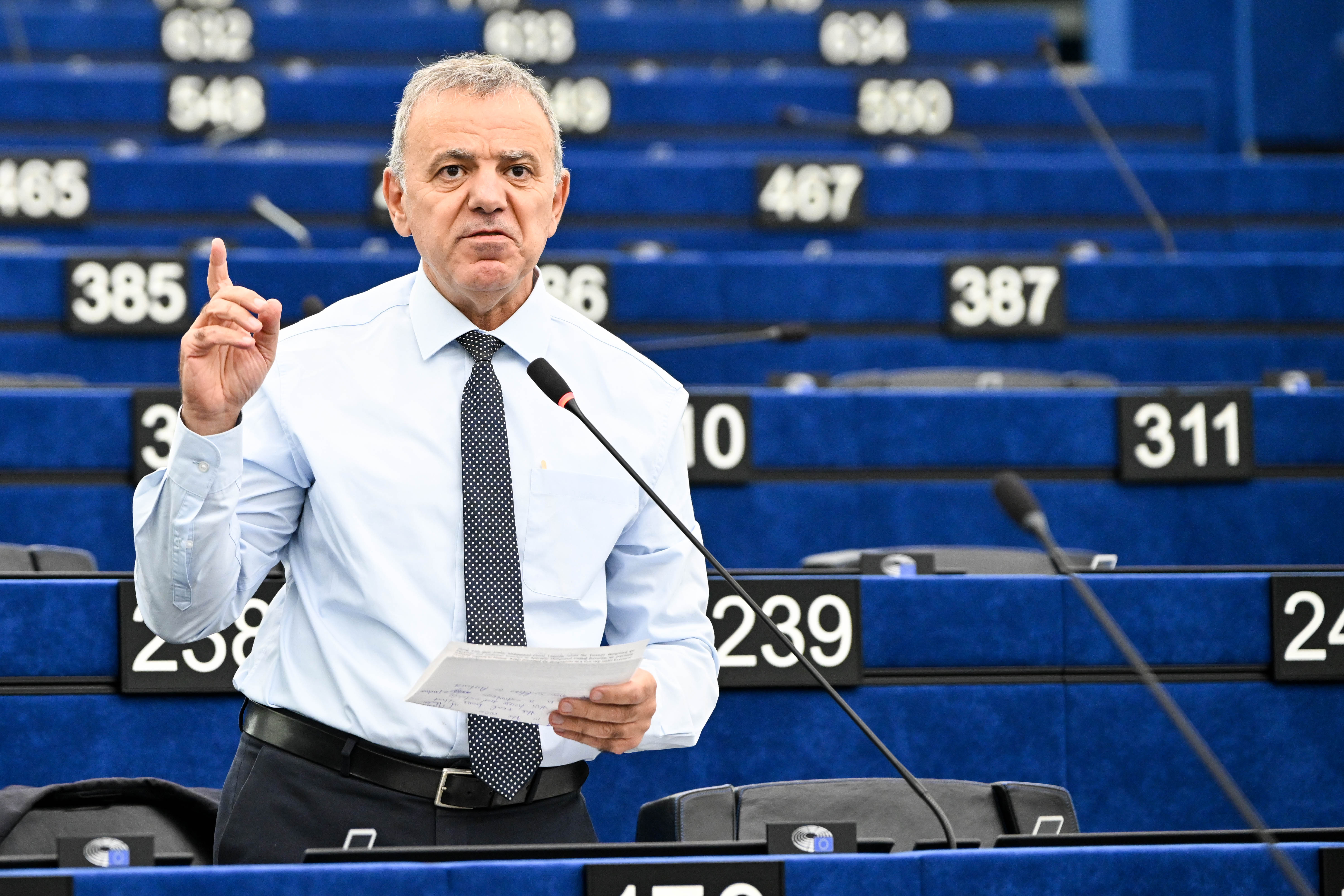
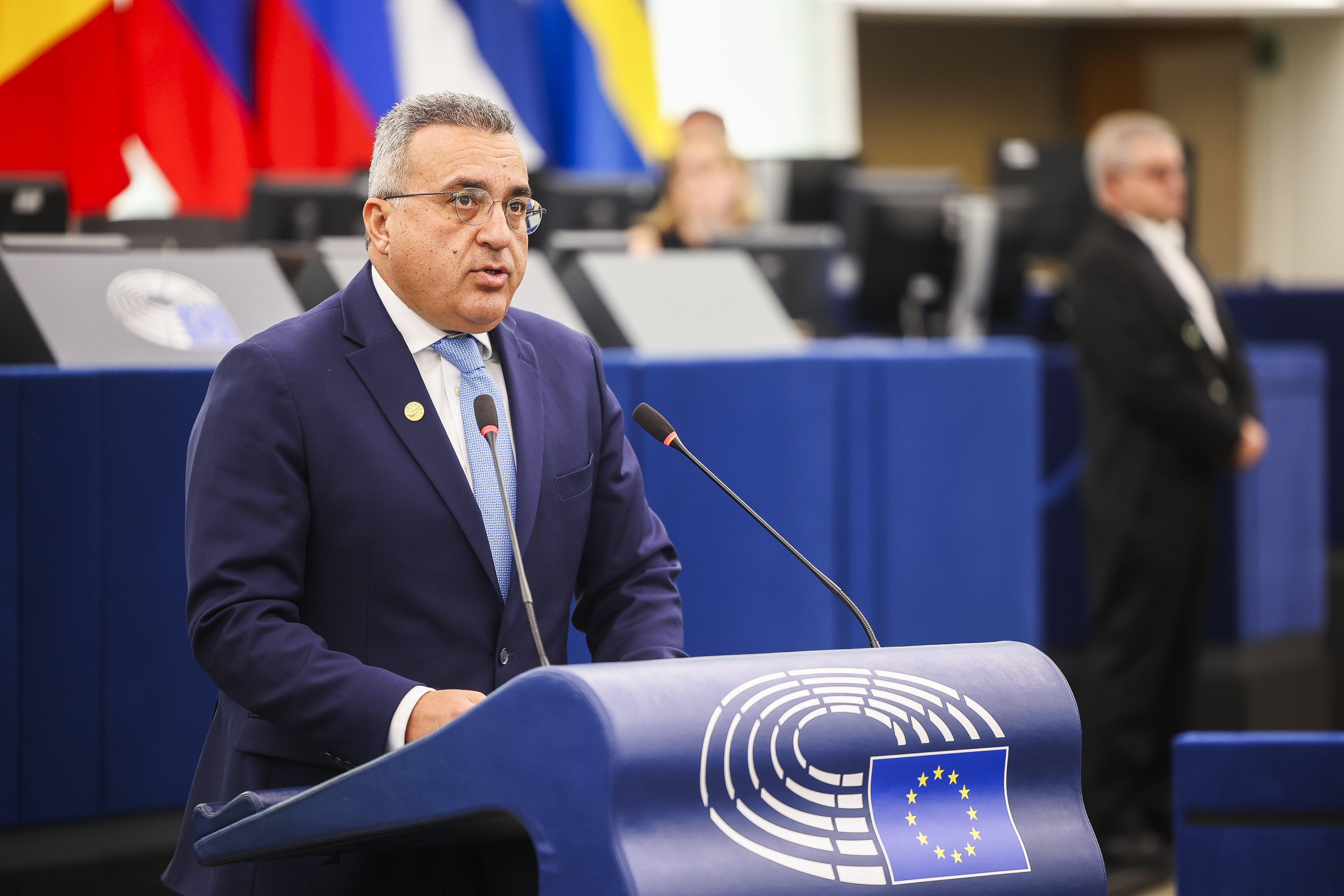
Cypriot members of the European Parliament on Tuesday evening stressed the importance of building up the Mediterranean region’s energy sector as the Strasbourg plenary session discussed the parliament’s latest motion regarding the European Union’s pact for the Mediterranean.
The resolution, which will be voted upon on Wednesday, sets out the European Parliament’s position on the pact and relations between the EU and the Mediterranean region, and Diko’s Costas Mavrides was keen to stress that the EU “has the potential” to “lead the entire Mediterranean toward stability and prosperity” through its energy sector.
“The common rules for the Mediterranean are, naturally, those of international law, specifically including UN conventions regarding the law of the sea. Institutions and infrastructure already exist … such as the EastMed gas forum, the European project of common interest the Great Sea Interconnector, and the EastMed gas pipeline,” he said.
On this front, he said that the Republic of Cyprus has “consistently been playing a leading role”, but that “the neo-Ottoman regime in Turkey remains the transgressor and the expansionist”.
As such, he sarcastically asked European foreign policy chief Kaja Kallas, who was present for proceedings, whether she is “rewarding this transgressor and expansionist”, or whether she is “bestowing gifts upon it”.
Geadi highlights resolution’s GSI amendment
Elam’s Geadis Geadi, meanwhile, called for a new pact which “must serve as an essential tool for cooperation, focusing on energy security, electrical interconnections, addressing illegal migration and human smuggling, and combating terrorism and hybrid threats”.
“However, cooperation in the Mediterranean must be grounded in international law, rather than in unilateral claims or provocations,” he said.
At this point, he offered his thanks to “colleagues from across the political spectrum” who supported an amendment to the motion which, he said, “underscores the importance of European projects of common interest, such as the Great Sea Interconnector and the EastMed pipeline”.
He added that the amendment also “simultaneously condemned Turkish provocations which hinder their implementation”.
Then, he, too, offered a shot at Kallas, saying that “the Mediterranean cannot be allowed to fall victim to Turkish blackmail directed against European interests, and Ms Kallas, it is your responsibility to move from words to action”.
Two amendments on Cyprus to be tabled on Wednesday
The amendment to which he was referring is his own, which was co-signed by fellow Cypriot MEP Fidias Panayiotou, as well as high-profile right-wing Greek MEP Afroditi Latinopoulou, among others.
It states that the parliament “underlines the importance of EU projects of common interest, including the Great Sea Interconnector and the EastMed pipeline, for the EU’s energy security and autonomy and the diversification of its energy supplies”.
Additionally, it states that it “condemns Turkey’s interference in energy infrastructure projects in the eastern Mediterranean and calls for these projects to be able to proceed without obstruction”.
The amendment was one of two to be tabled which mention Cyprus, with Latinopoulou having tabled her own amendment, which was co-signed by Geadi.
It states that “Turkey’s ongoing provocations against Greece and Cyprus, including repeated violations of their sovereign rights in the Aegean and the eastern Mediterranean, its continued threat of a casus belli against Greece, the so-called Blue Homeland doctrine, and the continued occupation of part of the territory of an EU member state, fundamentally undermine regional stability and any credible Euro-Mediterranean cooperation”.
Georgiou calls for ‘different approach’ to Mediterranean
Akel’s Giorgos Georgiou, meanwhile, took a different angle in Tuesday’s debate, saying that “the Mediterranean is a region of immense potential, yet one marked by profound contradictions, wars, inequalities, the plight of refugees, and environmental threats”.
“A pact for the Mediterranean could represent a genuine opportunity for peace, cooperation, and shared prosperity, but not if it is treated merely as a tool to expand the European Union’s geopolitical influence, nor if security, militarisation, and the control of migration are prioritised over the needs of people,” he said.
He said that the European Parliament’s “The Left” grouping, on whose behalf he was speaking, has “advocated for a different approach … one centred on people, social justice, labour rights, and environmental approach”.
This approach, he said, “ensures the meaningful participation of societies, is backed by adequate funding, and respects both state sovereignty and international law”, before he pivoted to the matter of international politics.
“We cannot invoke international law while simultaneously accepting that it be selectively applied, as is the case regarding Cyprus and Palestine. The Mediterranean does not need new geopolitical rivalries, it needs solidarity, cooperation, dialogue, and peace. This is the Mediterranean we must strive to build,” he said.
Cyprus’ foreign ministry on Friday declared the maritime boundary agreement signed by the governments of Turkey and Libya to be both “illegal” and “null and void” after it was ratified by the Libyan parliament earlier in the day.
“The Republic of Cyprus’ foreign ministry condemns the Libyan parliament’s decision to approve the illegal Turkish-Libyan ‘memorandum of understanding’ of 2019. This ‘memorandum’ violates the sovereign rights of third states and is contrary to the recognised principles of the United Nations convention on the law of the sea,” it said.
It added that the agreement also violates “customary international law regarding the rights of islands in maritime zones, including the exclusive economic zone and the continental shelf”.
“Therefore, the foreign ministry continues to consider the said ‘memorandum’ illegal, null and void, and that it does not produce, in any way, legal effects against third states,” it said.
The Libyan parliament’s spokesman Abdullah Bliheg had said earlier in the day that the legislature had “voted unanimously” to adopt the agreement, on a day on which Turkey’s national intelligence organisation (Mit)’s chief Ibrahim Kalin was in the country to meet Libya’s government of national unity’s Prime Minister Abdulhamid Dibeybe.
Turkey had signed an agreement with the Libyan government of national accord in 2019, but it had not until Tuesday been ratified by Libya’s legislature. The government of national unity superseded the government of national accord in 2021 and is now the sole internationally recognised government of Libya.
Turkey and Libya officially agree that their EEZs share a border
As a result of the agreement, Libya and Turkey agree that their respective exclusive economic zones share a border in the Mediterranean sea, and that that border is located southeast of the Greek island of Crete.
Greece, too, reacted furiously to the Libyan parliament’s approval of the deal, with the country’s foreign ministry that it “rejects” it and that the decision “does not change the illegal, null and void nature of the memorandum, which is contrary to the international law of the sea and violates the sovereign rights of the states of the region”.
“Geography and the international law of the sea do not change with unilateral, legally unfounded parliamentary decisions. Turkey and Libya do not have opposing or adjacent coasts which would provide a legal basis for the attempted delimitation of maritime zones,” it added.
It then said that the agreement “also disregards the Greek islands and their rights to maritime zones based on [the United Nations convention on the law of the sea] Unclos and customary international law”.
“Having already concluded maritime delimitation agreements with Egypt and Italy, in accordance with the international law of the sea, Greece has demonstrated its respect for international law and the sovereign rights of neighbouring states. We call on the Libyan side to refrain from any action which is contrary to international law and undermines stability in the eastern Mediterranean,” it said.
It added that it has “already informed its partners and allies” and that it will “take all appropriate action to safeguard its sovereign rights”.
Libya’s parliament
Turkey is not an Unclos signatory, Libya signed but did not ratify
In this, the country’s Foreign Minister Giorgos Gerapetritis had earlier held a telephone call with his Cypriot counterpart Constantinos Kombos shortly after the Libyan parliament voted on the matter.
While Greece and the Republic of Cyprus are signatories to Unclos, Turkey is not, and while Libya under its then leader Muammar Gadaffi signed the convention in 1984, no Libyan legislature ever ratified the signature.
Turkey’s belief is that the convention gives too much weight to islands, which it says should instead only be allowed 12 nautical miles of territorial waters as their own exclusive economic zone (EEZ), whereas Greece believes that its islands are entitled to full EEZs of their own.
As such, Turkey’s view is that its own EEZ stretches south to meet Libya’s EEZ, and as of Wednesday, Libya agrees, whereas Greece’s position is that Turkey and Libya do not share a maritime border because the sea in question belongs to Crete.
Given this to be the case, Turkey’s presidential press office director Burhanettin Duran described Tuesday’s vote as “an important advancement towards protecting the shared rights and interests of both nations in the eastern Mediterranean, establishing maritime jurisdiction areas on the basis of equity, and strengthening regional cooperation”.
“Under the leadership of our President Recep Tayyip Erdogan, Turkey will continue to safeguard its rights and interests within the Blue Homeland, while further developing its relations with friendly and brotherly Libya and promoting equitable resource sharing, peace, and stability in the eastern Mediterranean”.
Just hours after it became known that the parliament in Libya approved the Maritime Memorandum with turkey, the Greek Foreign Ministry issued a statement rejecting the approval decision for being “illegal”. Greece has rejected the Maritime Memorandum right from the beginning in 2019 and had also briefed its EU partners accordingly. Foreign Ministry Statement Greece […]
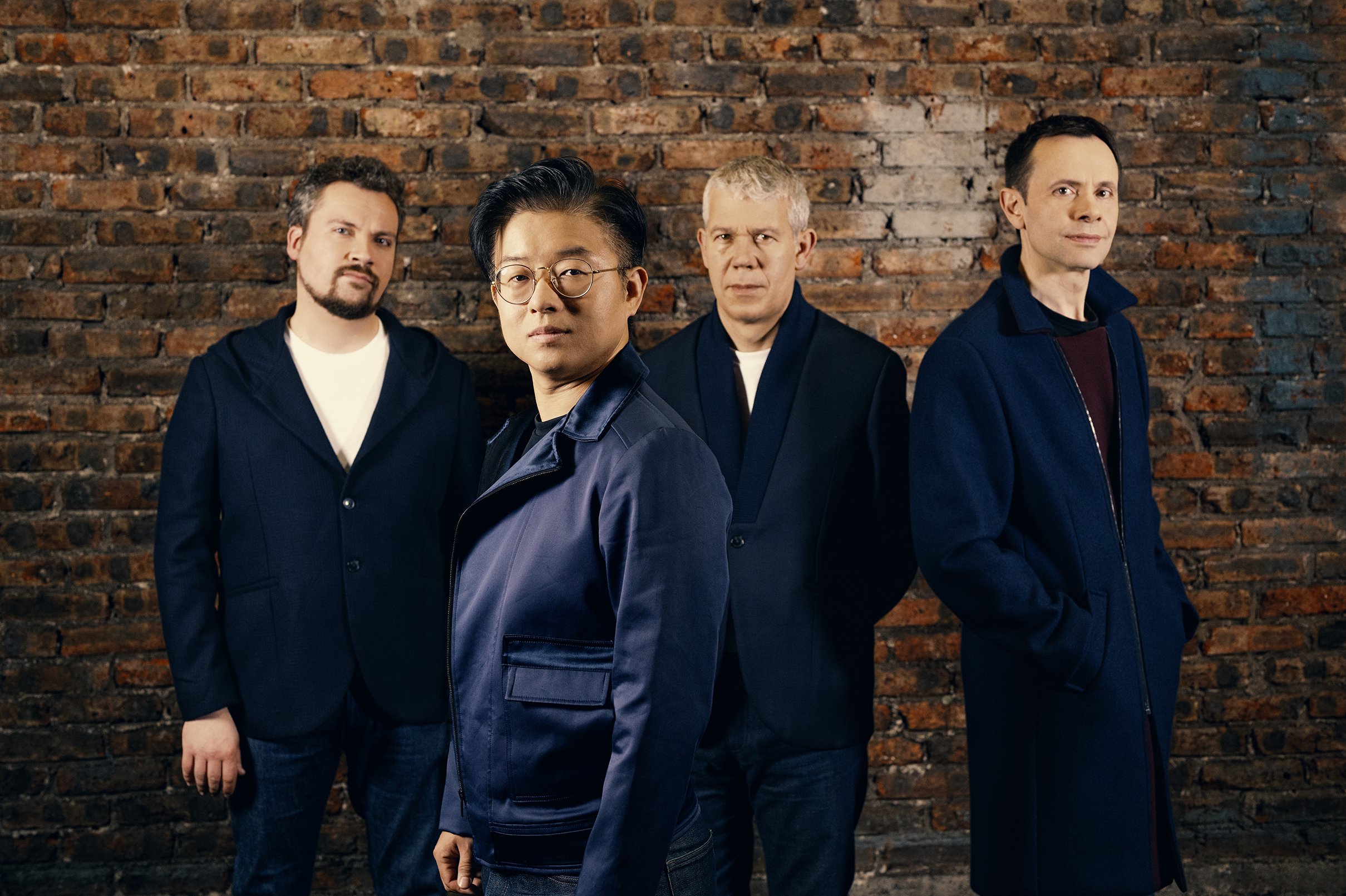
Five years after its Cyprus debut, Quatuor Diotima returns to Nicosia on the occasion of its 30th anniversary. One of France’s most renowned string quartets, and one of the most sought-after chamber ensembles on the international stage today, heads to the capital city for a concert at The Shoe Factory.
On Friday, October 30, the quartet performs in Cyprus presenting an intense, searching and deeply expressive programme. Across the European chamber music scene, Diotima has captured a distinctive place, boasting a repertoire that ranges from the great masterpieces of the 19th century to the some of the most important music being written today.
Having performed at esteemed venues such as Wigmore Hall, Pierre Boulez Saal, Elbphilharmonie Hamburg, and Philharmonie de Paris and received critical distinctions, its musicians arrive in Cyprus. Yun-Peng Zhao and Léo Marillier on violin, Franck Chevalier on viola and Alexis Descharmes on cello have prepared a rich programme for October 30.
Masterpieces by Beethoven and Brahms will be paired with Georges Aperghis’ strikingly original String Quartet No.2, which was commissioned by Radio France and given its world premiere by Diotima at the Théâtre des Champs-Élysées a few months ago.
Cypriot member of the European Parliament Michalis Hadjipantela on Tuesday presented the parliament’s budget committee (Budg)’s plans for the European Union’s general budget for next year, which reverses all the cuts which had been made to it by the Council of the EU when it agreed its own position in July.
The budget foresees that the EU will make €194 billion worth of commitments and €203.3bn worth of actual payments over the course of the year, with the committee’s position therefore including more spending not only than the Council’s , but also than the European Commission’s position.
This is because the committee had voted to approve €1.17bn of extra spending next year compared to the commission’s position, including €260.5 million for the Connecting Europe facility, the EU’s funding instrument for infrastructure investment, and the instrument through which the EU offered grants for the Great Sea Interconnector.
Other increases include an extra €85m for the European agriculture guarantee fund, through which the EU pays farmers directly, and a €20m increase for support for young farmers.
Additionally, increases in funding amounting to €140m have been granted for the EU’s neighbourhood policy, through which the EU offers funding and partnerships for countries in eastern Europe and north Africa.
Hadjipantela, who belongs to Disy, said of his plans that “at a time when the European Union faces growing security challenges, we must ensure that our institutions possess he necessary means to carry out their mission effectively and independently”.
‘European taxpayers expect us to manage public funds responsibly’
“Let me be clear: budgetary discipline is non-negotiable. European taxpayers expect us to manage public funds responsibly and to remain efficient, while avoiding unnecessary expenditure,” he said.
On this front, he said that “all institutions must identify opportunities for savings and improve the way they operate”, and that the European Parliament itself “is called upon to continue improving how it manages and spends its budget”.
However, he stressed, “efficiency cannot simply mean making cuts without regard for the responsibilities which our institutions are required to fulfil”.
“We must avoid a situation where cuts create operational problems or, worse still, lead to higher costs in the future. The goal is to strike the right balance,” he said.
He stressed that the Budg committee’s position “has focused on specific, well-substantiated operational needs”, and stressed that “we have advocated for retaining essential resources where justified while maintaining a disciplined and proportionate approach to expenditure”.
To this end, he said that the EU’s various institutions “have already made significant efforts to improve their efficiency and save resources”, and hat “these efforts must continue, and should be accompanied by a realistic assessment of the tasks and obligations incumbent upon each institution”.
MEPs to vote on Wednesday
His co-rapporteur, Latvia’s Nils Usakovs, meanwhile, said that the committee had “put partisan politics aside and adopted a focused budgetary resolution … in order to shore up parliament’s unity for the negotiations to come”.
“Parliament proposes to restore all Council cuts – €1bn in commitments and over €500m in payments, and add €1.17bn to the draft budget. Behind every budget line we vote on tomorrow are real people and their needs,” he said.
MEPs will vote on the parliament’s position on Wednesday. If they approve the position set out by Hadjipantela and Usakovs, the “conciliation committee” of the parliament and the Council will convene on November 3 with the aim of reaching a compromise by November 16.
Should a provisional agreement be reached by that date, the joint text will then be voted on both at the Council and at the parliament for final approval.
Iran’s Ambassador and Deputy Permanent Representative to the UN has urged the world body’s Security Council to hold an emergency meeting and condemn threats by the United States and the Israeli regime against the Islamic Republic’s territory and critical infrastructure.
Gholamhossein Darzi made the remarks in a letter dated Monday and addressed to UN Secretary-General António Guterres and the president of the Security Council.
The letter cited recent US media reports that the White House and the US Department of War had prepared fresh military options, including the possible use of the GBU-43/B, known as the Massive Ordnance Air Blast (MOAB) or so-called “Mother of All Bombs,” against Iran.
Darzi noted that US President Donald Trump had discussed the weapon in a televised interview and threatened further attacks.
The diplomat also cited remarks by Israeli minister for military affairs Israel Katz that the regime was prepared to attack the Islamic Republic and would target “all energy targets” in any renewed aggression.
The letter also pointed out how Katz had threatened to return Iran to the “Stone Age”, besides claiming that the United States and the regime had dropped a total of 35,000 bombs on Iran and that their military campaign was not over.
Darzi further denounced Israeli prime minister Benjamin Netanyahu for openly declaring an intention to launch another unprovoked war against the Islamic Republic, adding that the silence and explicit support of certain Security Council members had emboldened him.
He called for immediate action against “brazen existential threats” issued by Trump and renewed Israeli threats of military aggression.
“These unabated threats, in the context of the U.S.-Israeli wars of aggression launched on 13 June 2025 and 28 February 2026 against Iran, and the deliberate attacks against Iranian civilians and critical infrastructure, pose a grave risk of further violation of international law with catastrophic humanitarian and environmental consequences, and serious threats to regional and international peace and security,” he wrote.
The diplomat argued that threats to destroy Iran’s civilian and energy infrastructure could cause severe and potentially long-term humanitarian and environmental damage.
He also condemned Washington and Tel Aviv for disregarding obligations under the four Geneva Conventions of 1949 and customary international humanitarian law.
Darzi requested an emergency Security Council meeting, unequivocal condemnation of threats against Iran’s civilian infrastructure, and accountability and full reparation for damage resulting from Washington’s and Tel Aviv’s internationally wrongful acts.
“The Security Council cannot remain silent in the face of explicit threats of renewed aggression and the destruction of essential civilian infrastructure,” he stated.
The letter, meanwhile, reaffirmed Iran’s right to self-defense under Article 51 of the UN Charter.
He warned that the United States and the Israeli regime would bear responsibility for the consequences of further aggression, including “the risk of unpredictable and uncontrollable escalation.”
Tehran no longer views Pakistani and Qatari mediation as yielding tangible results, Iranian sources told Al Mayadeen on Tuesday, as a Russian initiative coordinated with China proposes joint management of the Strait of Hormuz with Iran.
Iranian sources told Al Mayadeen that Tehran has come to view Pakistani and Qatari mediation as ineffective in delivering tangible results, citing Islamabad and Doha’s limited ability to influence the US position. This has prompted Iran to explore alternative channels for mediation.
In this context, Iranian international affairs expert Mehdi Khan Alizadeh told Al Mayadeen that a new Russian diplomatic move could pave the way for Moscow to assume a more substantive mediating role, amid coordination between Russia and the United States. He pointed to a Russian initiative developed in cooperation with China that proposes joint management of maritime traffic through the Strait of Hormuz with Iran.
Alizadeh explained that the initiative concerns the Strait of Hormuz and Gulf security. Russian Foreign Minister Sergey Lavrov’s visit to Tehran addressed these issues, while Iranian President Masoud Pezeshkian is expected to visit Moscow again, reflecting continued efforts surrounding the Russian proposal.
Regarding Tehran’s immediate priorities, Alizadeh stressed that ending the war takes precedence over the nuclear issue. He said this position follows a decision by the Leader of the Islamic Revolution and the Islamic Republic, Sayyed Mojtaba Khamenei, adding that Iran’s current focus is on securing a ceasefire, while the nuclear file is not presently among its priorities.
These developments coincide with US President Donald Trump’s remarks about “providing a framework for Russia to communicate with Iran,” potentially intersecting with Moscow’s diplomatic efforts.
Lavrov visits Tehran for first time since start of war
Russian Foreign Minister Sergey Lavrov arrived in Tehran on Monday for his first visit since the start of the war on Iran, as Moscow seeks to play a mediating role.
Lavrov said Moscow’s efforts “aim to prevent the return of a full-scale war.”
Meanwhile, Iranian President Masoud Pezeshkian told Lavrov that the establishment of US military bases in regional countries has offered, and will continue to offer, no benefit to the region beyond increasing tensions and undermining security.
During his meeting with Lavrov, Pezeshkian said US interference and divisive policies had led to the emergence of disputes across the region.
He stressed that there are no fundamental disagreements between Iran and regional countries, affirming Tehran’s readiness to address existing challenges through dialogue and mutual understanding.
Pezeshkian also said Iran shares common ground with countries across the region and has consistently sought to develop relations with them on the basis of brotherly engagement and mutual cooperation.
Araghchi, Lavrov reject military action, call for stability in Gulf
Iranian Foreign Minister Abbas Araghchi, for his part, said during a joint press conference with Lavrov that Tehran and Moscow agree that military action is not the solution. He added that relations between the two countries contribute to strengthening regional stability.
Araghchi said he had hosted Lavrov in Tehran for “important discussions” covering several issues spanning Europe and West Asia, including Lebanon, Palestine, Ukraine, and Yemen.
The talks also focused on expanding economic and nuclear cooperation between the two countries. Araghchi underscored that ties between Iran and Russia have never been closer or more collaborative than they are today.
Greece plans to close 187 of its 831 military camps as part of an updated force structure for 2026-2035. Defense Minister Nikos Dendias briefed members of the Standing Committee on National Defense and Foreign Affairs in a closed-door session, stressing savings from consolidating units and camps and the integration of new technologies. The camps to be […]
Prince Harry has said he hoped to reconcile with King Charles and the rest of his family with whom he fell out when he moved to the United States six years ago.
Harry, 42, the king’s younger son, caused a huge rupture in the British royal family when he and his wife Meghan quit royal duties and moved to California in 2020 from where they were highly critical of the institution.
He has barely spoken to his older brother, heir Prince William, for years, and his family has only recently met up again with his father. In an interview with GQ magazine, Harry, who recently relocated back to Britain with Meghan and their two children, said he wanted to patch things up.
‘MOST IMPORTANT THING IS TO RECONCILE’
“With everything else that’s going on in the world, the most important thing is to reconcile,” he told GQ.
He said he could understand the fascination with his family’s situation as people could relate to it.
“There’s sibling disagreements, there’s broken relationships between kids and their parents, kids and one parent,” he said.
Some people might be inspired by efforts to reconcile and this could help their own relationships.
“And some people don’t want it to work out. I want it to work out,” he added.
Harry’s spokesperson said those latter comments were not meant as a swipe at William or any other family members.
Harry, the Duke of Sussex, went on to tell GQ that while “scars stick around forever”, he wanted to encourage everybody to let go of the past.
“For me, there’s enough drama in the world and enough drama in people’s lives than to continue with issues with family,” he said. “It’s not worth it.”
HARRY SAYS CHILDREN ‘LOVING’ UK SCHOOL
In the lengthy interview, Harry also discussed themes he has previously talked about, such as the impact of losing his mother Princess Diana when he was 12 and his mental health struggles.
But he also talked about why he had returned to Britain, saying that being able to put his children in a British school “has meant a lot to me”.
“I didn’t know how important it was to me. I always thought it was going to be something that we would try and do, but now they’ve been in school for two weeks. They’re loving it and it’s just giving them a whole different experience.”
He also said he hoped that his fraught relationship with the British press, which partly led to him leaving in the first place and has led to a number of lawsuits against newspaper groups, would now be better.
“My hope is that it will change,” he said. “There have been some battles that have been fought, necessarily so. But hopefully we can all draw a line under that.
“As with everything else that’s going on in the world, there’s aspects of the past that I’m sure all of us, me, my family, some of the British press, that we’d all like to leave behind us and work for the greater good.”
Larnaca municipality is using drones to enhance mosquito controls, enabling precise spraying in areas difficult to access with traditional methods, officials said on Tuesday.
The public health service conducted a targeted aerial spraying operation at a site identified as a potential mosquitoes breeding ground on Friday.
The municipality intends to persist with this technology, targeting other hard-to-reach locations within Larnaca and its districts that need similar measures.
The use of drones is expected to strengthen efforts to control mosquitoes populations, including the Aedes aegypti species.
The municipality said it was focusing on prevention, early intervention and systematic monitoring.
Drones have already been used in Nicosia for fighting mosquitoes.
The House version passed with a slim margin of 216-212, and included a provision entitled, “United States – Israel Defense Technology Cooperation Initiative,” often referred to simply as “Section 219”; the pending Senate bill contains a related, but not identical provision, entitled “Section 1217: United States-Israel Framework for Upgraded Technologies, Unified Research, and Enhanced Security (FUTURES) Act of 2026”.
In title, the U.S.-Israel FUTURES Act sounds like one of many bilateral cooperative agreements between the U.S. military and a partner military force anywhere in the world. But in reality, as written, the provision would pressure existing security cooperation entities to expand and accelerate bilateral technological integration through a statutory executive agent arrangement that lacks clear precedent even among the U.S.’s closest allies.
The agreement isn’t necessary to advance cooperation. In practice, it puts undue pressure on the processes designed to protect U.S. interests and technology.
The issue discussed here is not if the U.S. should or should not increase its defense technological cooperation with Israel; the pros and cons are well-documented and highly debated elsewhere. What isn’t, or shouldn’t be, a matter of debate are the implications of putting undo pressure and influence to short cut established security processes for the benefit of any single partner nation, and that is precisely what Sections 219 and 1217 would do.
The U.S. Department of Defense is already well underway in reforming its technology release and foreign disclosure procedures following Executive Order 14268 of April 2025. Short cuts to these reforms, or additional legislation laying on top of ongoing actions, will only confuse and complicate the process, adding additional vulnerabilities in the end.
So which parts of Section 219 put the system at greatest risk? It starts with directing the secretary of defense to designate an executive agent responsible for synchronizing U.S.- Israel cooperative efforts to expand and accelerate bilateral defense technology research and development, testing, evaluation, integration, and industrial cooperation, with particular focus on counter-unmanned systems, missile and air defense, AI, quantum, autonomous systems, directed energy, cyber defense and electronic warfare, biotechnology and medical defense, network integration, and data fusion. These are some of our most sensitive, and classified, areas of research and development. Additionally, Senate Section 1217 directs the secretary of defense to “consult with” (i.e. formally seeking and considering views or input of) the Israeli minister of defense in establishing the initiative, providing a foreign nation with influence over access to and integration of U.S. sensitive technology.
To break this down a bit more…
The power of an executive agent within the Department of Defense is significant. DoD Directive 5101.01 gives an executive agent, within the areas of its assigned responsibilities and functions, the authority to take precedence over other DoD component heads with related responsibilities or functions. Heads of Department of Defense (DoD) Components include the secretaries of the military departments (Army, Navy, and Air Force), the directors of the defense agencies, and the chairman of the Joint Chiefs of Staff. Meaning, the executive agent could create significant institutional pressure over the Defense Technology Security Administration (DTSA) on access to and release of sensitive U.S. technology. DTSA is the primary office within the Department of Defense tasked specifically with protecting sensitive technology from release to foreign entities.
An executive agent is assigned by the secretary of defense alone, with no separate confirmation process nor congressional oversight over how it exercises its authority. So, if Congress legislates DoD create an executive agent for his initiative, it abdicates more of this congressional oversight authority to the Executive Branch — at a time when the executive branch already acts unilaterally on issues in which it is supposed to inform/consult Congress.
Once the executive agent pushes the system to embed foreign-original technology or systems in U.S. programs of record (a formally established and funded DoD acquisition program), it becomes fiscally and politically costly to pull those pieces back out. Such a process would require re-competing contracts and re-certifying systems, among other time-intensive tasks. Integration of intellectual property can create long-term dependencies, regardless of future U.S. policy.
Many of the areas of prescribed integration are highly sensitive, presenting significant counterintelligence risk. Sharing and embedding U.S. cyber, AI, and autonomous system developments with a foreign partner before the U.S. has even fully developed sufficient and adequate regulatory provisions to govern the use of this technology puts the U.S. under an unnecessary influence of a foreign partner. Additionally, if U.S. systems are dependent on foreign technology, that foreign partner gains leverage over the U.S., and at a time when the U.S. needs to be more clear-eyed on its own priorities, not those of other nations.
If such cooperation as outlined above was regular business, perhaps some of the arguments could be debated more reasonably. But, it is not ‘business as usual.’ In fact, Section 219 would legislate a relationship distinct and more powerful than others in existence today, even with the U.S.’s closest allies, like the Five Eye partners and NATO. Section 219 creates a multi-generational technological relationship with one partner that would be very difficult to rollback once incorporated into U.S. development and acquisition systems. It is a pure political maneuver with great risk to the U.S.; it is not necessary and is, in fact, dangerous.
At this point, to protect sensitive U.S. technological development and to ensure congressional oversight is not further abdicated, the House should make clear it won’t vote for an NDAA that comes out of conference if it includes this provision, and the Senate should remove or amend its corresponding Section 1217 from the FY27 NDAA and enter into a separate debate over the issue.
Andrew M. Leonard is a retired US Army Colonel and Senior Fellow for Defense Policy and Military Affairs at the Quincy Institute.

 Login