Maricarmen Abascal, the 87-year-old Madrid pensioner whose eviction from the home where she had lived for more than 70 years triggered demonstrations across Spain, has died in hospital. Her case has pushed the country’s housing crisis to the centre of a general election campaign that will culminate in a vote on 29 November.
María del Carmen Abascal, widely known as Maricarmen, died on Wednesday at Madrid’s Gregorio Marañón hospital, where she had been receiving treatment since being evicted from her flat in the Retiro district on 23 September. The Madrid Tenants’ Union, which had supported her during the long-running dispute with the property owner, announced her death. The cause has not been disclosed.
Abascal had lived in the property since 1956, when her father first rented it. The tenancy later passed to her mother and subsequently to Abascal under Spain’s old protected-rent system. A legal dispute began after the property changed hands and Urbagestión Desarrollo e Inversión challenged her right to remain under the inherited tenancy. The courts eventually sided with the owner after a dispute over the rules governing successive transfers of old rental contracts.
She had been paying about €500 a month. Urbagestión sought a new rent of €2,650 before subsequently proposing €1,650, still above Abascal’s pension of about €1,350 a month. Three earlier attempts to remove her from the property had failed before the eviction was finally carried out on 23 September. Abascal left the building on a stretcher and was taken to hospital.
Her removal quickly became a focus for wider anger over housing costs. Thousands demonstrated in Madrid and other Spanish cities, while protesters established an encampment in Puerta del Sol under slogans including “Ni una Maricarmen más” — “Not one more Maricarmen”. Speaking from hospital after the eviction, Abascal urged demonstrators to continue campaigning and “defend what is yours”.
After negotiations involving Abascal’s representatives, Urbagestión and Madrid’s municipal housing company, an agreement was eventually reached that would have allowed her to return to the flat under a new eight-year tenancy at an affordable rent. She remained in hospital, however, and was never able to return home.
The tenants’ union said the agreement had arrived too late and described the events surrounding the eviction as a turning point in Spain’s housing debate. Prime Minister Pedro Sánchez offered condolences to Abascal’s family and those affected by her death. The government had previously described her eviction as the type of case that new housing legislation was intended to prevent.
The political consequences have extended well beyond Madrid. On 29 September, Sánchez’s government approved two emergency housing decrees covering eviction protection, rental contracts and speculative property purchases. One measure would have extended protections for vulnerable households facing eviction until 2030, while the package also proposed restrictions on certain property acquisitions and additional safeguards for tenants.
Congress rejected both decrees on 2 October, with the PP, Vox and Junts voting against the measures. Opponents argued that tighter intervention in the rental market would discourage landlords from offering properties for rent and further restrict supply. Supporters of the measures said stronger tenant protection was necessary amid rapidly rising housing costs.
Three days later Sánchez announced a general election for 29 November, saying he needed a broader parliamentary majority to pursue further reforms. As EU Today reported following the announcement, the election brings an early end to a parliament in which the minority coalition had become increasingly dependent on shifting alliances to pass legislation.
The dispute comes against a substantial housing shortage. The Bank of Spain estimates that the gap between new homes and household formation accumulated to around 750,000 properties between 2021 and 2025. Official data cited in the government’s housing legislation also show that 26.8 per cent of Spanish households renting at market prices spent more than 40 per cent of their income on rent in 2025, compared with an EU average of 18.6 per cent.
Pressure is likely to continue during the campaign. Spain’s main trade union confederations, CCOO and UGT, have backed a nationwide general strike for 11 November over the housing crisis, less than three weeks before polling day. It will be the first general strike jointly backed by the two organisations in 14 years.
Abascal’s death therefore comes as a personal case that began with a dispute over one Madrid flat has become inseparable from a much larger argument over rents, property rights, housing supply and the degree to which the Spanish state should intervene in the market. Those questions are now set to form one of the principal dividing lines of Spain’s November election.
Maricarmen Abascal, the 87-year-old woman whose eviction sparked housing protests in Spain, has died, Madrid's tenants' union said on Wednesday. Abascal's eviction sparked a series of protests across Spain in the past couple of weeks, including activists camping on one of Madrid's main squares, and calls for tackling a mounting housing crisis. FRANCE 24's Sarah Morris reports from Madrid.
Maricarmen Abascal, the 87-year-old woman whose eviction sparked housing protests in Spain, has died, Madrid's tenants' union said on Wednesday. Massive protests following Abascal's eviction spiralled into a political crisis, eventually leading Prime Minister Pedro Sanchez to call a snap election.
Twelve years ago, EU summit leaders announced they had a strategy to tackle unprecedented migrant arrivals.
Next week, they will meet again in Brussels and to tell us something similar.
We journalists will report on the latest twists and turns, hoping to get some sort of angle that hasn’t been covered. But the reality is that our leaders have broadly failed.
Dozens of EU summit conclusions have been published since 2015, when one around million Syrians arrived in Europe to seek protection.
We need stronger external borders to preserve the Schengen passport-free zone, they said. We need partnerships with foreign states to save lives. We need to step up deportations. We need a European solution.
All of these ideas and strategies have found a home in council conclusions, in various iterations, since 2015. All of them.
Some have actually panned out, including an EU migrant swap deal with Turkey and other deals with autocrats in Tunisia, Egypt and elsewhere. Others like internal reforms on asylum have also been delivered.
Yet the sense of urgency to tackle these issues continues because there is an obvious disconnect between what has been delivered, the promises made and the lived experience on the ground.
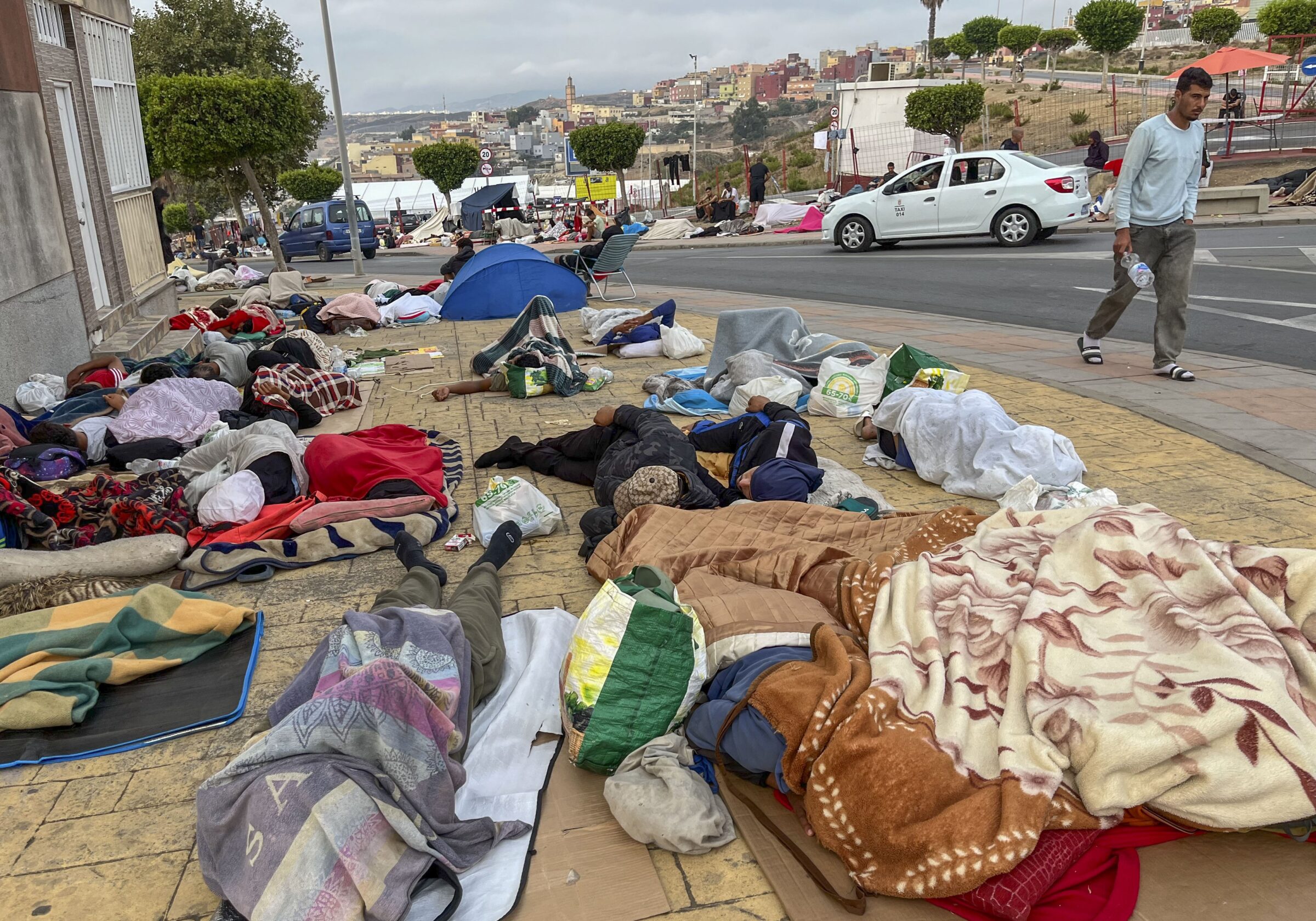
People still come. Some 80,000 arrived in the Spanish enclave of Ceuta end of July alone.
Many are still fleeing violence, war and economic hardships. Others are lured by the promise of labour in Europe by Europeans willing to exploit them.
I remember meeting a group of boys from Bangladesh on the Ocean Viking, freshly rescued in the middle of the night, asking when they would be able to start working in Italy.
One of them was still shaking with fear and sobbing, following a near death experience.
The European Commission is now claiming that the drop of irregular arrivals is due to their migration policy reforms, as if the fall of the murderous Assad regime in Syria had no discernible impact.
Perhaps some of that is true. But there is no disputing that Syrians accounted for over 100,000 irregular crossings in 2023, a year before Assad fell. It then dropped to around 6,000. Today, it is around 1,000, according to Frontex.
At some point, one has to wonder if these conclusions, repeated ad nauseam, is nothing but political theatre by a leadership that has run out of ideas.
Europe’s Green party has called on the European Commission to exercise the powers it previously used during the Ukraine war to tax the exceptional profits made by big oil and gas companies during the ongoing conflict in Iran.
“There are models in Europe that we can use to tax these super profits,” German MEP Rasmus Andresen told a European Parliament debate in Strasbourg on Wednesday (7 October), in his call to crack down on Iran-crisis profiteering.
The Strasbourg debate came after Austria, Germany, Italy, Poland, Portugal, and Spain wrote to Ireland’s finance minister in August calling for an EU-wide framework to tax windfall profits.
Ireland holds the rotating EU presidency and can set agendas in the EU Council until the end of the year.
Several of those in the group of six EU states already put in place energy windfall taxes since this summer, ranging from 60 percent levies on excess fuel profits in Poland to 33 percent in Portugal.
Many other EU countries oppose introducing another tax at European level, which would require unanimity among all 27 member states to put in place.
But for his part, the Greens’ Andresen told MEPs in the hemicycle on Wednesday: “I don’t understand how despite the fact that there is this initiative from these six member states, that the commission is not taking action.”
Estimates from NGO Transport and Environment found that excess profits of €7.5bn were seen by eight oil companies alone in the first half of 2026 in Europe.
The figures were twice what they had made in the previous quarter.
The EU had reacted to soaring energy prices after Russia’s full invasion of Ukraine in 2022 with a special “solidarity” tax on oil and gas firms, said groups on the Parliament’s left.
A commission assessment found that the measure raised €28bn in 2022-2023.
A senior official representing the Irish presidency, Thomas Byrne, said on Wednesday that windfall taxes “could be considered to respond to the concern related to the rising cost of living“.
But energy commissioner Dan Jørgensen poured cold water on appeals for EU-level action, saying “corporate taxation falls mainly in the realm of national competence” in legal terms.
If they were not taxed, “how can they be exonerated from all responsibility in the rise of prices at the gas station?,” said the French vice-president of the Greens group.
This article continues, but the full version is available only to EUobserver.com subscribers. Visit account.euobserver.com/membership
The Chair described the challenges of delivering on AMLA’s mandate while continuing to build the organisation, and was clear that convergence between Member States is still low, particularly in the non-financial sector. She explained how AMLA is cooperating closely with national supervisors, financial intelligence units and other stakeholders in the AML/CFT system to deliver on […]
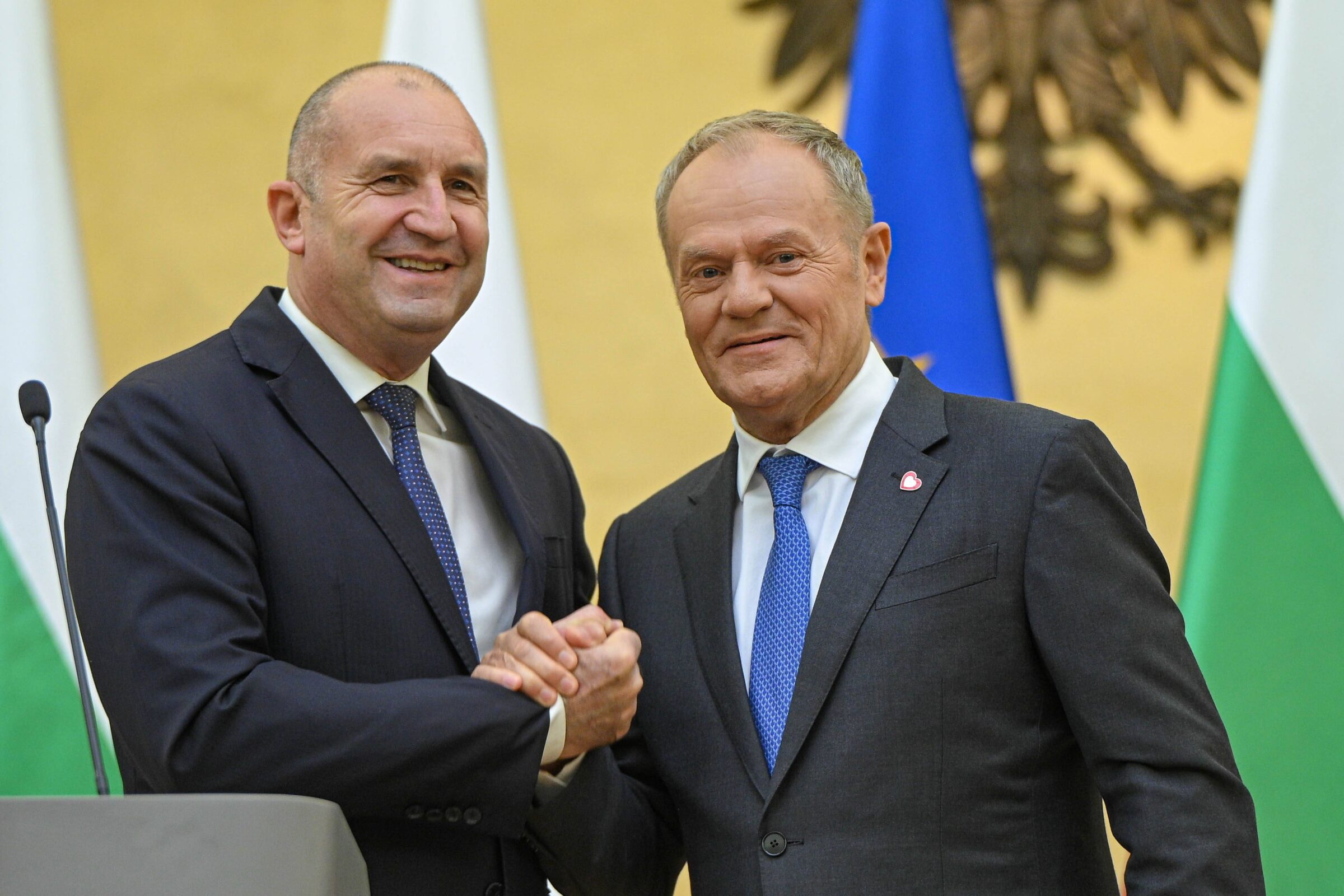
The Alfa Watan, a ship sailing under the flag of Togo, and the Able, a vessel flying the flag of Palau, were targeted by naval and aerial drones on Tuesday (6 October) morning in the Black Sea near the Bulgarian coast.
The Alfa Watan sank, and rescuers at the scene found only an overturned boat, life jackets, and fragments of the ship’s equipment, according to Bulgarian prime minister Rumen Radev.
The 18-member crew of the Able caught fire, but was successfully evacuated to the port of Varna.
“This is an unacceptable attack in Bulgaria’s exclusive economic zone,” Radev said after an emergency government meeting on Tuesday.
Bulgaria had discussed the drone attack inside the EU and Nato, he added.
It came after a drone also sank a Turkish-owned grain ship, the Royad Mammadov, killing two sailors, on Monday.
But even though Ukraine’s president Volodymyr Zelensky was quick to blame Russia, the perpetrators have not been formally identified yet, in a grey-zone conflict in which deniability is a tactic.
Russia and Ukraine have been escalating attacks on ships for several months in an effort to disrupt each other’s export economies.
And Moscow’s attacks have largely halted Ukraine’s maritime exports of agricultural products, while Kyiv’s attacks have forced Russia to seek alternative routes for exports.
“The situation in the Black Sea is increasingly concerning,” said EU Commission’s president Ursula von der Leyen on X on Tuesday.
Ukraine has “proposed concrete steps to de-escalate the situation”, also said Zelensky.
But for all his good will, the attacks were just part of a broader deterioration in Europe’s security environment, covering also Nato’s eastern and southern borders.
‘Shadow war’
For Czech president Peter Pavel, speaking to Czech daily Deník N on 22 September, the most imminent danger came from a false-flag attack in Estonia or Latvia, to test Nato’s resolve.
This article continues, but the full version is available only to EUobserver.com subscribers. Visit account.euobserver.com/membership
Belarus’s Minsk Automobile Plant is under Western sanctions, limiting who can buy the vehicles produced there. That may be the reason trucks branded with the previously unknown “HAL” badge have been spotted amid strengthening trade relations between Belarus and Indonesia.
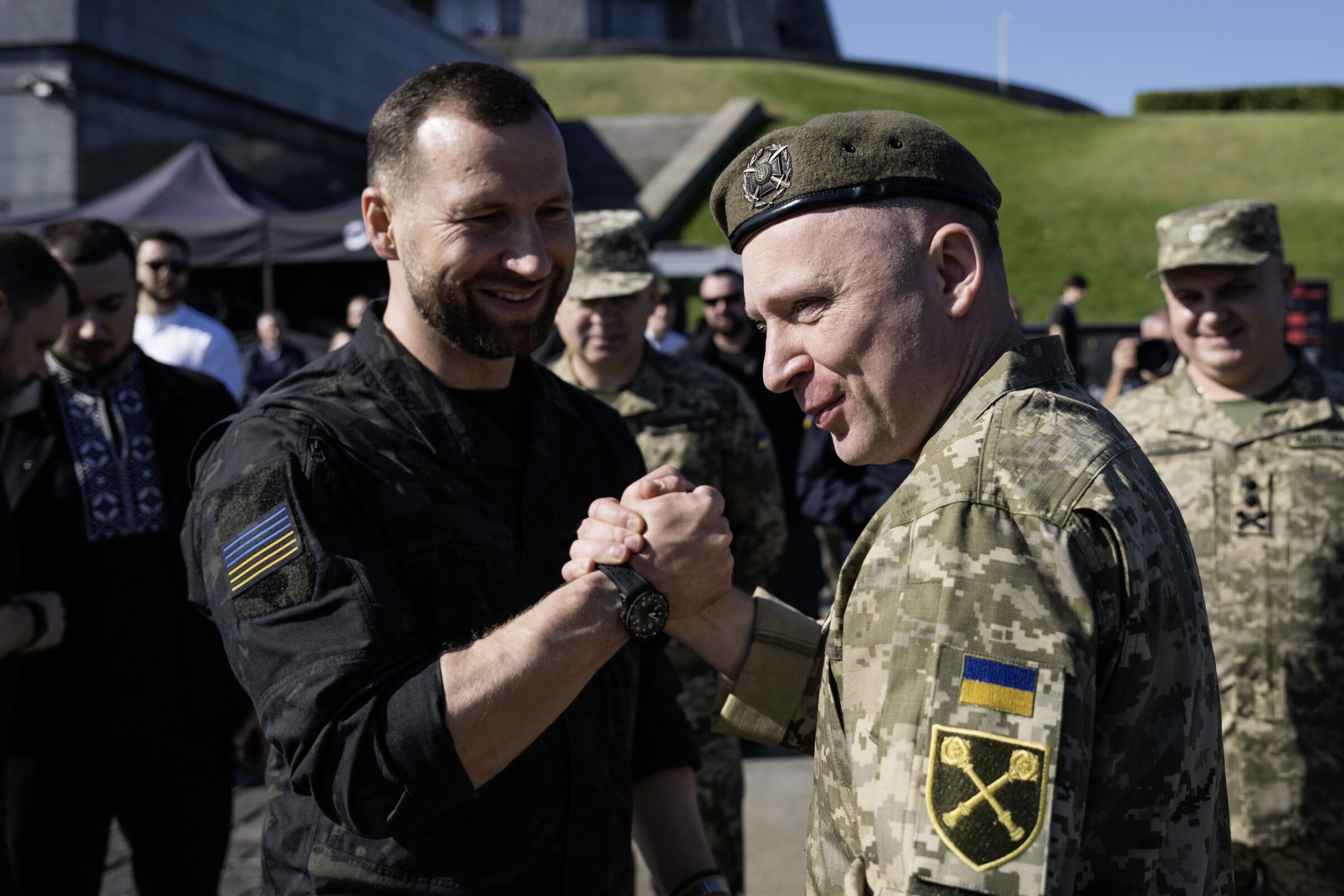
What Ukrainian officers say about the changes brought by the new commander-in-chief, Mykhailo Drapatyi.
He has appointed people in their thirties and forties to important positions, often those who did not suit Syrskyi.
According to Ukrainska Pravda, Ukrainians are preparing a war plan to clarify the Ukrainian army’s long-term objective.
Russians attacked Ukrainian cities during Putin’s birthday, damaging apartment blocks and killing at least 11 people.
Charts of the day: How far production at Russian refineries has fallen; exports of oil and oil products have declined, but Trump is indirectly keeping profits from them high.
Videos of the day: a blazing sunset in Sochi; the music plays on; an unmanned Humvee; a robot’s duel with a drone; what the road to Crimea looks like.
Two and a half months have passed since major general Mykhailo Drapatyi became commander-in-chief of Ukraine’s armed forces. That may not be enough time for major reforms. But in recent days, articles have begun to appear about how the new commander is trying to change the Ukrainian army.
Unlike his predecessor, Oleksandr Syrskyi, Drapatyi does not promote himself much on social media. He has not made a single Facebook post since July, and his Telegram profile has similarly remained silent.
Ukrainska Pravda journalist Olha Kyrylenko tried to fill this “information vacuum”. She spoke with around 20 senior officers in the Ukrainian army.
Based on their anonymous testimonies, she sought to convey how Drapatyi had changed the Ukrainian army over those two and a half months.
The army is currently performing well at the front: Russians are suffering heavy losses and advancing very slowly, if at all. The protection of military, industrial and civilian sites in the rear against Russian air attacks is worse.
The article she wrote presents Drapatyi in a very positive light. According to Kyrylenko, the first word brigade and corps commanders use to describe the changes he has brought is “freedom”.
Drapatyi gives units considerable freedom and does not seek to micromanage everything at the front, as Syrskyi did.
“Unlike his predecessor, who told some brigade commanders how and where they should fight — and even specified the coordinates where they should establish a position — Drapatyi chose a different approach. He decided to decentralise command and abandon ‘micromanagement’,” Kyrylenko wrote.
Drapatyi is not as concerned with what is happening on each section of the front. He is more interested in statistics, analyses and the broader picture of the war.
“Syrskyi listened to reports from everyone every day and could give specific instructions on how to respond to developments, including where units should advance. Drapatyi does not do this; it is the task of the commanders of military groupings. Drapatyi focuses on strategic and systemic issues,” an unnamed senior military officer told Ukrainska Pravda.
The newspaper also adds that Drapatyi travels to visit units less frequently.
After taking up the post of commander-in-chief, he made several personnel changes. Broadly speaking, he is promoting younger commanders proven in the current war to replace older officers of the old Soviet school.
By contrast, he is moving the latter to rear-area and training roles, or they are retiring.
They are being replaced by younger commanders; Drapatyi himself is only 43. For example, Denys Prokopenko, a general with a far-right past, was put in charge of the important area near Dobropillia, where Russians are currently exerting the greatest pressure, despite being only 35.
Drapatyi has also rehabilitated some commanders who fell out of favour with the command under Syrskyi because of their criticism. One example is Serhii Sobko (42), who resigned last year from command of a brigade after the high command refused to send him reinforcements and would not allow his units to withdraw from a threatened area. Drapatyi appointed him as his deputy.
Emil Ishkulov (39), meanwhile, was sidelined after criticising the previous command over the campaign in the Kursk region, which ultimately ended with the withdrawal of Ukrainian soldiers. Drapatyi made him commander of the 11th Army Corps.
Ukrainska Pravda mentions an example from early summer under Syrskyi, when the 7th Corps was moved from Dobropillia to the Belarusian border in the Volyn region. The command said this would deter a possible Russian attack from Belarus.
After taking office, Drapatyi reversed this decision and sent the corps to defend the Zaporizhzhia region. The units themselves said they had had nothing to do at the Belarusian border for two weeks.
Ukrainska Pravda writes that a war plan is being prepared under Drapatyi. It is intended to define the Ukrainian army’s real long-term objectives and how to achieve them in this war.
“We need a grand strategy for 30 years, so that we as commanders know where we should be heading,” one of the corps commanders said, according to Ukrainska Pravda. The National Security and Defence Council is currently working on the plan.
Journalist Kyrylenko says this is probably the first such plan. However, the Thornpill account wrote that similar plans had already been prepared in 2017 under General Valerii Zaluzhnyi.
The Kyiv Post also published an article headlined that Ukraine’s army is winning under Drapatyi.
“Drapatyi is reshaping Ukraine’s armed forces to focus on drone-intensive warfare, decentralised command and younger combat commanders,” it wrote.
However, the steps taken by the previous command have also had a major influence on the current situation. For example, Operation Vivaldi, through which Andrii Biletskyi’s 3rd Army Corps has been liberating territory north of Lyman, has been under way since May, although its results are only being published now.
Ukrainska Pravda also recalls that Syrskyi handed Drapatyi an army in a better position than the one he had “inherited” in 2024 from the dismissed General Zaluzhnyi. At that time, the Russians were advancing rapidly and captured Avdiivka, for example.
The current commander-in-chief had an “easier start” in July.
“Drapatyi took office at a time when the front had been relatively stabilised, with Ukrainian armed forces even holding the advantage on the battlefield in some places. According to Ukrainska Pravda’s sources, the corps reform initiated by Syrskyi played a key role in this. Not all corps managed to develop into strong units, but the 3rd Corps, for example, substantially strengthened and literally retrained the relatively weak brigades it had received for combat duty,” Ukrainska Pravda added.
Nevertheless, several Western analysts shared the current reports about Drapatyi’s initial changes, especially his granting greater freedom to commanders. “It is a pity that Syrskyi was not replaced by Drapatyi much earlier — Ukraine would be in a better position now,” said Jakub Janovský, an OSINT analyst at Oryx, for example.
Russia again attacked Ukraine overnight into Wednesday. This time, it deployed at least five ballistic missiles, nearly 50 cruise missiles and 130 drones, 46 of them jet-powered. The fairly respectable 83-percent interception rate for jet-powered drones is noteworthy.
However, Russian missiles and drones also struck several locations and residential buildings. “Today, on Putin’s birthday, the Russian army ‘gave’ him the destruction of a residential building in Pryluky, in the Chernihiv region. It was an ordinary five-storey building. Unfortunately, according to current information, five people were killed and 26 injured, including five children. People may still be trapped beneath the rubble,” Ukrainian President Volodymyr Zelensky said.
The Russian attack damaged five apartment blocks in Dnipro and four in the city of Kremenchuk. This is what the situation in Kremenchuk looked like.
This is my hometown in the video, and today it suffered too. This is Kremenchuk – a city in Ukraine whose name doesn't pop up in news feeds very often, but tonight it got hit as well. One of the missiles hit a courtyard between high-rises: windows, cars parked in the yards, and… pic.twitter.com/PeeUkU19dZ
As can be seen in these photographs, a ballistic missile fell in Kyiv but did not explode; Ukrainian bomb disposal experts tried to render it harmless.
An unexploded Russian Iskander 9M723 ballistic missile lies among residential buildings in Kyiv’s Darnytskyi district, where Ukrainian bomb disposal teams are conducting a complex operation to neutralize it.
— Special Kherson Cat 🐈🇺🇦 (@bayraktar_1love) October 7, 2026
Chart of the day
Ukrainians claim that their attacks on refineries have put more than 50 percent of Russia’s oil-processing capacity out of action. Michael Bohnert, an analyst at the RAND think tank, wrote on X that this was not entirely accurate. According to his calculations, current fuel production at Russian refineries stands at 3.22 million barrels per day. Before the war, it was usually around 5.5 million barrels per day, meaning a fall of about 40 percent.
There has also been a monthly decline of 0.36 million barrels per day, apparently owing to the latest attacks on refineries, for example in Moscow and Samara.
Ukraine says its strikes have taken out more than half of Russia’s refining capacity. Live crude runs do not show that.
My bottom-up tracker (41 refineries plus the mini-tail, version 2) puts national throughput at about 3.22 mb/d as of 6 Oct. That is down 0.36 mb/d over the… pic.twitter.com/RhXrzGlnJS
According to Bohnert, this is the third time Ukrainians have managed to reduce Russian oil processing so substantially. There was a drop of around 40 percent last autumn and in July this year. “3.2m barrels per day is roughly the point at which things start becoming uncomfortable for Moscow,” he wrote.
Unlike last year, however, Russia is helping itself through imports. The country, once the world’s third-largest fuel exporter, has sharply curtailed its exports. At the same time, it is partially making up for the shortfall in domestic production through imports.
South Korea is also helping it in this respect. According to information from the Guardian, 176,000 tonnes of fuel, mainly diesel, arrived from South Korea at Russian ports in the Far East in July and August. Seven tankers made a total of 14 voyages to Russia. Three of the tankers are on the European Union’s sanctions list.
Overall, Russia imported 368,000 tonnes of petroleum products by sea in August, a third of them from South Korea. The country, which once supported Ukraine not only verbally but also through non-military aid, is now helping Russia cope with Ukrainian attacks on refineries.
High petrol prices are also working in Russia’s favour. Analysts at the Kyiv School of Economics Institute published a chart showing that Russia exported the least oil and petroleum products in August since 2018. As the final bar in the left-hand chart shows, this was mainly due to a decline in petroleum-product exports.
Nevertheless, revenue from sales remains at last year’s level (the purple line in the left-hand chart). This is mainly due to the rise in their prices on global markets as a result of the US-Israeli war against Iran.
1/9 🛢️ Russia’s crude oil and oil product exports fell to their lowest level since 2018 in August. Despite higher prices, oil export revenues increased by just $0.3B to $13.9B. September Russian Oil Tracker by @KSE_Institute 👉 https://t.co/Rk4hd5OiA6pic.twitter.com/KdVMj4QjVV
This was the sunset seen by residents of the Russian coastal city of Sochi on Tuesday. A tanker sailing under the Liberian flag was burning close to shore. Footage showed that it was ablaze along virtually its entire length.
The Russian Rybar channel wrote that it had been hit by naval drones. It was therefore probably a Ukrainian attack on Russia’s shadow fleet, which exports oil around the world and thereby finances the war.
The oil-laden tanker was travelling from Novorossiysk to India. Local residents reported an explosion and feared that oil would spill into the sea.
🔥🚢 A dramatic view from the Russian Sochi right now, where the burning oil tanker off the port has turned into a massive wall of fire pic.twitter.com/oFKrLRTIuw
— Special Kherson Cat 🐈🇺🇦 (@bayraktar_1love) October 6, 2026
This is a rather surreal continuation of the previous video. A man is playing guitar on the promenade in Sochi while an oil tanker burns behind him, sending up an enormous plume of smoke.
Recorded on October 6, 2026, in Sochi, Russia. A street musician continues to play music on the waterfront while an oil tanker burns offshore in the background. pic.twitter.com/5lcfiOqZD2
Ukrainians are experimenting with remotely controlled vehicles. This video shows how a US Humvee off-road vehicle was converted into a remotely operated ground drone. It was loaded with wooden beams, which it delivered to soldiers building fortifications.
A Ukrainian HMMWV converted into a remotely controlled UGV is being used for frontline logistics, delivering timber for the construction and reinforcement of defensive positions. pic.twitter.com/NxQnuoa6Xf
— Special Kherson Cat 🐈🇺🇦 (@bayraktar_1love) October 7, 2026
This video shows a duel between a Ukrainian robot and a Russian FPV drone. In this case, the robot ultimately won, neutralising the drone by ramming it.
A Ukrainian ground robotic system rammed and destroyed a Russian FPV drone on the Pokrovsk axis. The UGV, operated by the 25th Sicheslav Airborne Brigade of Ukraine’s 7th Air Assault Corps, was returning from a combat mission when the FPV began pursuing it. The operators… pic.twitter.com/dIPGuEMVVC
Ukrainian attacks on the land route to Crimea continue. This is what one of the roads to Crimea currently looks like, with numerous damaged and destroyed lorries visible.
This is only part of the road now referred to as the land corridor to Crimea. Another road has turned into a "road of death" for the Russians. pic.twitter.com/D0fKAXQdGo
By Monday (5 October), Russia had verifiably lost 24,170 pieces of heavy equipment (24,138 on Tuesday, 22 September). Of these, 19,133 (19,105) were destroyed by Ukrainians, 1,003 (1,000) were damaged, 1,194 (1,194) were abandoned by their crews, and 2,840 (2,839) were captured by the Ukrainian army. This includes 4,452 (4,448) tanks, of which 3,357 (3,353) were destroyed in combat.
Ukraine has lost 12,238 (12,175) pieces of equipment, of which 9,633 (9,579) were destroyed, 711 (702) damaged, 695 (695) abandoned and 1,199 (1,199) captured. This includes 1,466 (1,464) tanks, of which 1,126 (1,125) were destroyed in combat.
Note: Neither side regularly reports its fatalities or destroyed equipment. Ukraine publishes daily figures for Russian casualties and destroyed equipment, which cannot be independently verified. This overview uses data from the Oryx project, which has compiled a list of equipment losses documented exclusively by photographs since the start of the war.
The EU should not accept any cuts to the proposed allocation of funds to defence and security in the next long-term EU budget, German MEP Marie-Agnes Strack-Zimmermann said in Strasbourg on Wednesday.
“Without security, we have no discussion anymore about anything,” the chair of the European Parliament’s committee on defence and security (SEDE) told the European Newsroom (enr) on the sidelines of Parliament’s plenary session.
The European Commission has proposed €131 billion for investment in defence, security and space under the European Competitiveness Fund in the EU’s 2028–2034 budget. This represents a five-fold increase compared with the current budget period.
Asked what compromise she would accept on the size, funding or allocation of defence spending to secure a budget agreement, Strack-Zimmermann said: “We need everything without compromises.”
The next long-term budget requires unanimous agreement among EU member states and the European Parliament’s consent.
Support for Ukraine
Strack-Zimmermann accused Russia of trying to deter European leaders from visiting Kyiv and undermine their support for Ukraine following attacks during German Chancellor Friedrich Merz’s visit last Sunday.
Asked about accelerating deliveries to Ukraine to defend itself against Russia’s war of agression, Strack-Zimmermann said funding was available but action required approval from national governments.
Ukraine needed humanitarian, military and economic assistance, including money to produce more weapons to protect its people, she said.
All in on SAFE
Strack-Zimmermann urged countries to move faster on joint defence procurement, backing the EU’s Security Action for Europe (SAFE) instrument.
SAFE provides up to €150 billion in competitively priced loans to member states aimed at accelerating large-scale investment in critical capabilities.
“We have more than 150 different weapons systems and to protect Europe we need this SAFE program,” the German politician said.
She said the programme had attracted interest both within and outside the EU. According to the European Commission, 19 EU member states have submitted defence investment plans, such as France, Italy and Poland, but not Germany.
The first non-European country to participate in SAFE was Canada, which concluded an agreement with the EU in June.
A court on Wednesday ordered the former head of Germany's foreign intelligence service August Hanning to remain in pretrial detention after his arrest on suspicion of espionage and treason, along with a former deputy who allegedly supplied him with secret files. Here's what we know about one of the biggest security breaches in German history.
The World Health Organization joined Western leaders on Wednesday in urging Russia to share more information about what killed a plague institute worker in Siberia as reports emerged of a second suspected case. The Kremlin said Moscow had shared what it knew and accused the media of spreading "false information".
EU leaders meeting next week in Brussels for the usual post-summer European Council are rehashing conclusions on migration, echoing almost word-for-word statements since at least 2015.
“The European Council has developed a strategy aimed at stemming the unprecedented migratory flows Europe is facing,” they announced in December 2015, following a summit.
“It is indispensable to regain control over the external borders,” they also said, noting the perceived threat to the EU’s internal border-free Schengen zone.
And they voiced fear over the low number of deportations, insisting on “concrete measures to ensure the actual return and readmission of people not authorised to stay.”
Eeleven years later and the 15 October summit in Brussels next week is now asking almost the same thing, including to what extent previous conclusions on migration have been implemented.
Although draft conclusions can change, and likely will, the current wording essentially repeats the same demands spanning over 50 EU summits since at least 2015, when over a million Syrians entered Europe to seek protection.
Out of the 52 published conclusions since 2015, over half dealt with migration in some shape or form. The latest draft dated 5 October and seen by EUobserver is among those.
This article continues, but the full version is available only to EUobserver.com subscribers. Visit account.euobserver.com/membership
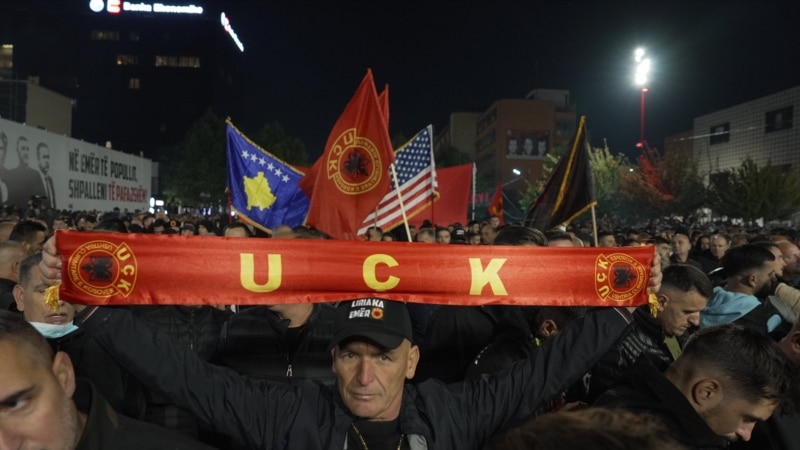
The European Union has expressed “deep concern” over Kosovo’s adoption of legislation that seeks to narrow the jurisdiction of a Hague-based war crimes court, saying the changes violate the country’s international obligations toward the bloc.
While detailing national efforts to prevent and combat terrorism, speakers also underlined the need for an international framework to unite them as the Sixth Committee (Legal) continued its debate on “measures to eliminate international terrorism” today. “Iraq has suffered the brunt of terrorism and has sought to combat it with all its capacities and resources,” […]
François Picard is pleased to welcome Philip Ingram, journalist and former British military intelligence officer. The events surrounding RAF Fairford are not an isolated incident, Ingram explains. They are part of a much wider security issue in which conventional military operations, intelligence activity and "grey zone" tactics increasingly overlap.
France’s schools are burning, police officers are being injured, barricades are appearing outside classrooms and teenagers are being drawn into confrontations that have travelled a very considerable distance from complaints about absent teachers and dilapidated buildings.
Hovering over this combustible mixture is Jean-Luc Mélenchon. The leader of La France Insoumise (LFI) insists that his movement neither controls nor directs France’s extraordinary wave of student protest. He has now explicitly advocated non-violent methods. That defence deserves to be recorded.
But it does not dispose of an uncomfortable political question: who benefits when legitimate teenage frustration is transformed into a wider revolt against the French state?
For Mélenchon, the answer is potentially obvious. The disturbances began with genuine grievances. Pupils complained about teacher shortages, overcrowding, poor facilities and the pressures of the French education system. The original protests in Créteil appear to have been spontaneous rather than the creation of a political party. That distinction matters. France’s teenagers should not collectively be caricatured as revolutionaries simply because some demonstrations subsequently descended into violence.
But what followed was something quite different. Schools were attacked and fires started. Cars were torched. Explosive fireworks and other projectiles were directed at police. By October 1st, Reuters reported hundreds of arrests and incidents of arson in several French cities. French intelligence agencies, according to a source close to the prime minister cited by Reuters, told a government crisis meeting that hard-left politicians had played a role in initiating the spreading protests. LFI emphatically denied the allegation.
That dispute should not obscure what is visible. LFI politicians have been remarkably eager to place themselves alongside the protesters. MPs Clémence Guetté and Louis Boyard appeared at the original Créteil mobilisation; Boyard turned his intervention into a TikTok video reportedly watched 1.5 million times. Other LFI representatives have similarly appeared around demonstrations. Le Monde describes the party as closely following protests and notes that this proximity simultaneously strengthens LFI’s relationship with young voters and leaves it associated with the movement when violence erupts.
Where Mélenchon’s political opportunism deserves scrutiny.
France is heading towards the 2027 presidential election. Younger voters are potentially one of Mélenchon’s greatest political assets, but also one of his greatest organisational problems: sympathy does not automatically become votes when younger citizens disproportionately abstain.
Recent polling reported by Le Monde put Mélenchon above 40 per cent among 18-to-24-year-olds in some presidential scenarios. LFI coordinator Manuel Bompard has openly acknowledged the opportunity, saying the movement has enormous room for growth among young people.
One hardly requires Machiavelli to understand the calculation. A generation of teenagers that believes itself ignored by government is politically interesting. A generation persuaded that it is being oppressed by government is considerably more useful.
The transformation is crucial. The original argument concerned teachers, classrooms and school buildings. The developing political narrative encompasses police violence, racism, inequality, Palestine, the far right and hostility towards the political establishment.
Mélenchon did not invent all these causes, nor is there evidence that he commands the young protesters like troops. But LFI understands political insurgency extremely well. Its political vocabulary depends upon conflict between ordinary citizens and an allegedly discredited establishment.
A spontaneous youth rebellion therefore offers almost perfect terrain. Mélenchon initially called upon supporters to “interpose” themselves against what he described as police savagery. Only as images of burning schools, vandalism and violent confrontation became increasingly politically toxic did he place greater emphasis upon non-violence, telling supporters that setting things on fire undermined their cause.
Perhaps that was sincere. But it also illustrates the danger of playing political games with youthful anger. It is relatively easy to tell teenagers that authority is their enemy, the far-left have sung this tune since the 1960’s. It is considerably harder, however, to regain control when confrontation develops its own momentum.
For years, public discussion of “political violence” has often been dominated by the threat from the extreme right. That threat is real and should never be minimised. Indeed, British Prevent statistics for the year ending September 2025 provide an important corrective to anyone claiming that extremism as a whole is overwhelmingly left-wing: 2,103 referrals concerned extreme-right ideology, compared with only 32 categorised as left-wing extremism.
But terrorism statistics and street politics are not the same thing. Europe also has a long-established tradition of violence emerging from anarchist, autonomist and revolutionary-left protest cultures: black-bloc tactics, attacks on police, destruction of property, arson and attempts to turn demonstrations into confrontations with the state. The current French disturbances make it legitimate to ask whether this form of political violence receives the same sustained political scrutiny as violence associated with the extreme right.
In Britain, too, claims of ideological double standards should be examined rather than assumed. Violence and intimidation occurring around demonstrations should be judged according to conduct, not according to whether those responsible march beneath banners fashionable on the Left or Right.
The correct principle is remarkably uncomplicated: political violence is political violence.
Throwing an explosive firework at a policeman does not become morally superior because the person throwing it considers himself anti-fascist. Burning a school does not become progressive because the person holding the match claims to oppose inequality. Intimidation does not become activism merely because its perpetrator believes his politics virtuous.
Nor, conversely, should peaceful demonstrators be branded extremists because violent individuals attach themselves to their cause.
This is a particularly important point in France because there is evidence that radical groups have attached themselves to genuine student grievances. Education Minister Édouard Geffray has distinguished protesting pupils from violent “ultra-left” elements. Former environment minister Delphine Batho, herself once a school-student union leader, has warned of the movement being taken over by the far left and urged pupils to preserve their independence.
Those pupils would do well to heed the warning. Their complaints may be legitimate. They have every democratic right to demonstrate. And allegations of disproportionate police violence must themselves be investigated: teenagers have suffered serious injuries and France has opened internal investigations into police actions.
Young people should ask themselves who is standing behind them — and why?
Mélenchon wants political change. He wants young voters mobilised. LFI wants to convert social discontent into an electoral force capable of reshaping France.
There is nothing inherently illegitimate about that ambition. Every political party attempts to convert public dissatisfaction into votes. The troubling point comes when politicians discover that confrontation itself is electorally useful.
The French government undoubtedly has incentives of its own to emphasise LFI involvement. By presenting the crisis primarily as an extremist public-order problem, ministers can divert attention from the failings in schools that produced the original demonstrations.
But that does not absolve Mélenchon. A responsible politician confronted by angry teenagers should attempt to reduce the temperature while addressing their grievances. An opportunist sees an emerging political constituency.
The danger for France is that its young people cease being participants in a legitimate argument about education and become raw material in somebody else’s struggle for power.
Once that happens, the classroom has ceased to be the issue, and barricades become the political objective.
For years, the European Union has struggled with a peculiar contradiction in its dealings with China. The EU is one of the largest and wealthiest trading blocs on earth, capable of determining access to a market of some 450 million relatively affluent consumers, yet it frequently conducts foreign policy as though it were the supplicant.
Hilde Vautmans, the Belgian Renew Europe MEP and European Parliament rapporteur on EU-China political relations, is right to challenge this timidity.
Her report, debated this week in Strasbourg, does not advocate severing relations with Beijing. Nor should it. China is too economically important and too influential on questions ranging from climate change to international security for Europe simply to close the door.
But dialogue must not become an alternative to action.
“Europe has economic power. It’s time to use it,” Vautmans told Parliament ahead of the vote. That sentence ought to be pinned above every desk in the European Commission dealing with China.
The figures make the case brutally clear. In 2025 the EU imported €559.4 billion of goods from China while exporting just €199.6 billion in the opposite direction. The resulting deficit was €359.8 billion — almost €1 billion every day.
As EU Today reported recently, Commission President Ursula von der Leyen has herself warned of a potential “second China shock”, with subsidised Chinese industrial production threatening European manufacturers.
Fine words. But Beijing has heard fine words before.
The Commission’s preferred formulation remains “de-risking, not decoupling”. There is sense in that distinction. Nobody seriously proposes shutting down trade with the world’s second-largest economy. But de-risking becomes meaningless if every risk identified is followed by another dialogue, another working group and another opportunity to postpone difficult decisions.
Indeed, the Commission acknowledges that European companies operating in China face regulatory obstacles, inadequate intellectual-property protection, restrictions on data flows and pressures associated with technology transfer.
Europe possesses formidable weapons with which to respond: anti-dumping duties, anti-subsidy measures, foreign-investment screening, the Foreign Subsidies Regulation, the Anti-Coercion Instrument, procurement restrictions and controls on strategically sensitive technologies.
These instruments should not be deployed indiscriminately. But neither should they sit polished in the armoury while Beijing exploits European openness.
Vautmans is particularly right to connect economics with security and values. China cannot reasonably expect privileged access to European markets while helping sustain the Russian war machine. The European Parliament’s own research service describes Beijing as a “decisive enabler and dual-use provider”, including through goods entering Russian weapons and drone supply chains.
If Chinese companies materially assist Russia’s ability to wage war against Ukraine, Europe should be prepared to impose a direct economic price. The same principle should apply to human rights.
EU Today has warned repeatedly that Brussels’ ritualised engagement with Beijing risks becoming precisely that: ritual.
We reported earlier that the EU-China Human Rights Dialogue risks losing credibility, pointing to the continuing imprisonment of Swedish citizen Gui Minhai and Uyghur academic and Sakharov Prize laureate Ilham Tohti. After round upon round of discussions, Beijing has learnt that European expressions of “deep concern” are inexpensive things to endure.
Yet repression continues. In March this year China adopted its new Law on the Promotion of Ethnic Unity and Progress. The European Parliament subsequently condemned what it described as intensified repression and assimilation affecting Tibetans, Uyghurs and other minorities, by the overwhelming margin of 439 votes to 52.
Europe therefore faces a straightforward question. What is the purpose of economic power if it is never translated into political influence?
The EU should not attempt to bully China. Nor should it abandon diplomacy. Vautmans is correct that channels of communication must remain open. But reciprocity must become something more than a word appearing in communiqués.
Where China closes markets to European companies, Europe should be prepared to restrict equivalent access. Where state subsidies distort competition, Brussels should respond rapidly with trade-defence measures. Where strategic dependencies expose Europe to political coercion, alternative supply chains must be built. Where Chinese entities support Russia’s military-industrial complex, sanctions should follow. And where companies benefit from forced labour or serious human-rights abuses, access to the European marketplace should carry consequences.
That is not protectionism. It is leverage.
Totalitarian states understand leverage perfectly well. China routinely uses access to its enormous market as an instrument of statecraft. Europe, by contrast, too often behaves as though exploiting its own commercial strength would somehow represent a failure of diplomacy. It represents precisely the opposite.
The European Commission has spent years discovering that China is simultaneously a partner, competitor and “systemic rival”. It is time to move beyond discovering the obvious.
Vautmans has identified the essential point. Europe already possesses economic power on a scale few countries can ignore. What it appears to lack is the political confidence to use it.
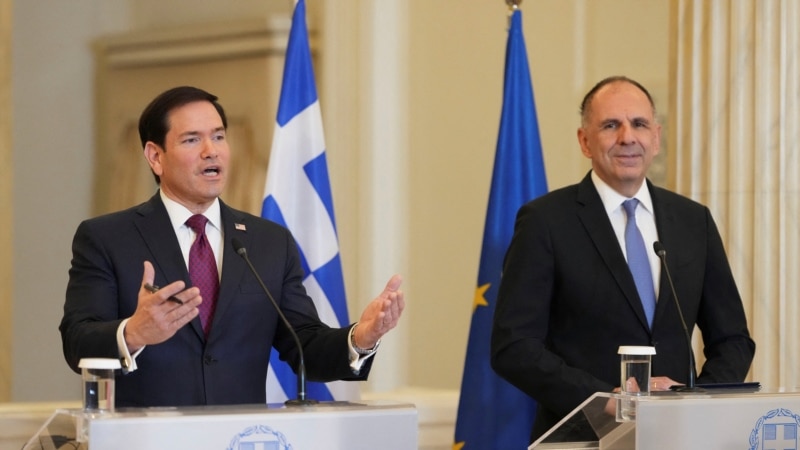
US Secretary of State Marco Rubio said Iran will never be allowed to acquire a nuclear weapon, declaring that preventing Tehran from doing so is a red line for President Donald Trump.

 Login