Las lluvias provocadas por la DANA registraron acumulados superiores a 600 litros por metro cuadrado, situando a Valencia y Alicante como los focos principales de las precipitaciones atípicas.
U.S. president warns the situation will only worsen without an agreement.
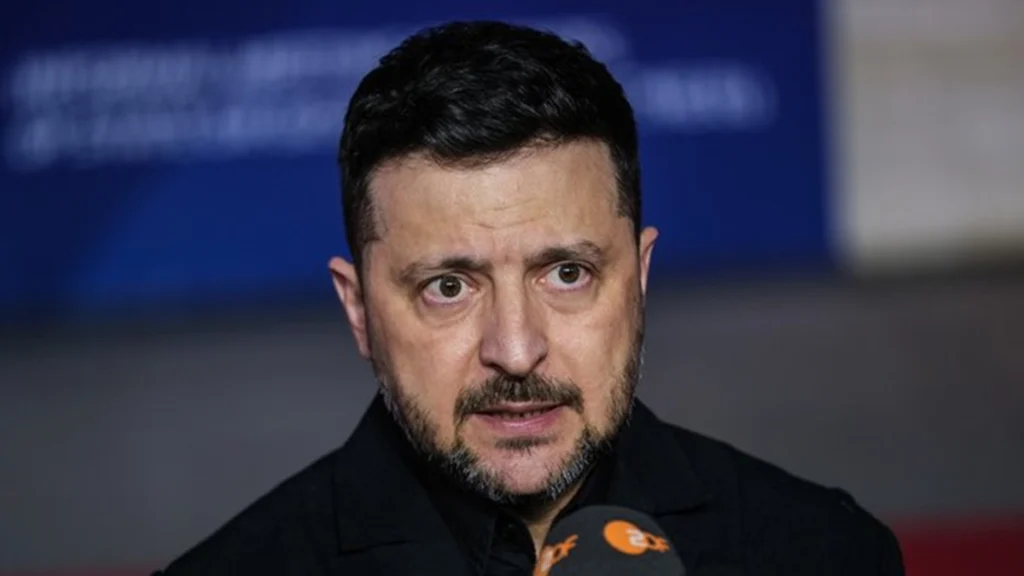
On Tuesday, U.S. President Donald Trump insisted that he wants Ukrainian President Volodymyr Zelensky to reach a peace agreement with Russian President Vladimir Putin.
“Zelensky has to want to end this war; if he doesn’t, I think it will be something very negative,” he said in response to questions about the meeting in Oslo between the Ukrainian leader and White House negotiator Steve Witkoff.
Trump stated that he “would like to see an agreement reached” and added that he believes “the immense hatred” between Zelensky and Putin is “to a large extent, the reason why they have not been able to reach an agreement” to end the war.
“We want Zelensky to reach an agreement; he can do it (…) Ukraine must have the will to make a deal, given that the United States has spent a fortune, just like Europe. Europe is already tired of all this, and if they don’t reach an agreement, in the long run, in my opinion, the situation is simply going to get worse,” he warned.
BREAKING: In a completely humiliating moment, CNN's Senior Data Analyst Harry Enten just broke down all of the polls (there's more than 1) where Donald Trump has hit historic lows in terms of approval. Every American should watch this and see how despised Trump is. pic.twitter.com/vPiYTZXSXL
Trump also recalled that his country has delivered to Ukraine “hundreds of billions of dollars” in aid and weapons shipments. “We have received nothing in return, except a high price for diesel,” he repeated, referring to his accusations that Ukrainian attacks on Russian energy facilities have driven up fuel costs, which have soared for months due to the U.S. war on Iran.
His statements come after he signed a fuel purchase agreement with Russia and eased sanctions on Moscow, amid a sharpening of tensions between his administration and Zelensky, who has denounced delays in deliveries of Patriot interceptor missiles.
Added to this are the Ukrainian’s complaints about interruptions in the flow of U.S. intelligence and restrictions on connection to Starshield (the military satellite version of Starlink). Zelensky has attributed all of this to an alleged intention by Trump to force Ukraine to capitulate to Russia.
On Wednesday, Witkoff will travel to St. Petersburg to convey to Putin a proposal to relaunch peace contacts put forward by Zelensky.
Bogotá, 20 oct (Prensa Latina) La bancada del partido Pacto Histórico convocó hoy a una movilización para el próximo 24 de noviembre para protestar por el Presupuesto General de 2027 que, según alegó, desestima las necesidades de los más pobres.
San Salvador, 20 oct (Prensa Latina) El Salvador acoge hoy el Campeonato Mundial de Longboard de la Asociación Internacional del Surf, en cual participan 126 atletas de 37 países en la búsqueda de plazas clasificatorias para los Juegos Panamericanos de Lima 2027.
A combination of maritime fuel blockades, power grid collapses, and legal indictments deepens economic hardship across the island nation.
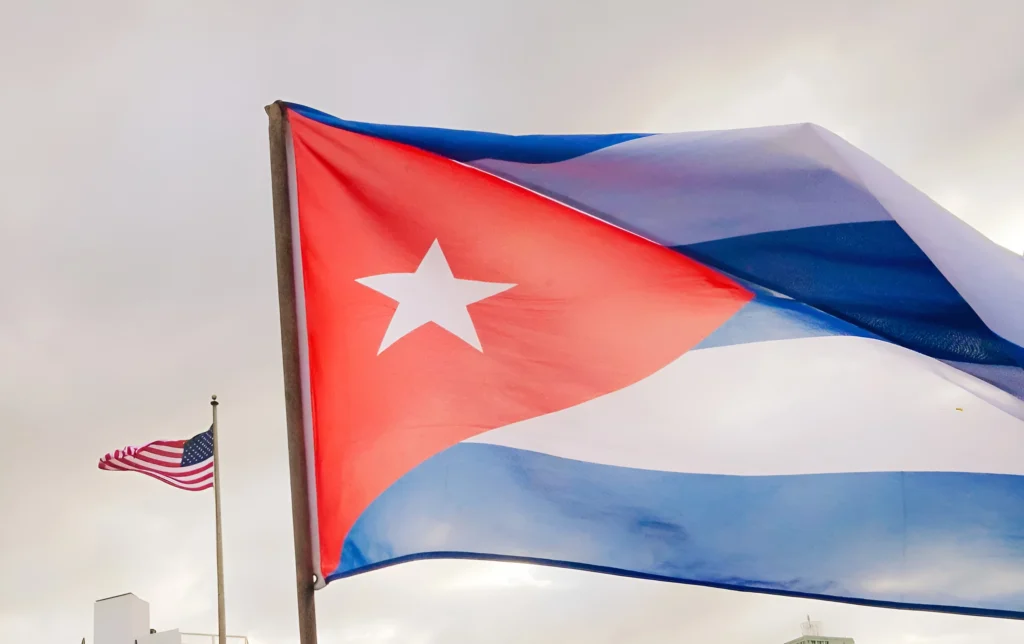
Since the beginning of Donald Trump’s second administration, the United States’ relentless hostility toward Cuba has been on the rise. This friction has centered on unilateral sanctions, trade restrictions, and direct legal actions against former Cuban government leaders.
2026 brought to Cuba a series of severe economic challenges, particularly regarding its energy sector. U.S. executive orders and maritime monitoring actions aimed at restricting oil shipments to state-owned Cuban entities contributed directly to fuel shortages across the island. These restrictions affected power generation, agricultural transport, municipal services, and health sector logistics.
In May, the U.S. Department of Justice unsealed a federal jury indictment in Miami charging former Cuban President Raúl Castro and five co-defendants with conspiracy and murder related to a 1996 aerial shootdown.
Cuba Fuel Restrictions and the Energy Infrastructure Crisis
On January 29, Trump issued an executive order stating that the U.S. would impose tariffs on any country that sent oil to Cuba. The U.S. government authorized certain fuel shipments exclusively to private commercial entities, while blocking access to state-managed refineries and power facilities.
This policy created severe fuel deficits for public utilities responsible for national electricity generation. A deficit that led to recurring shutdowns across the National Electrical System. On March 16, 2026, the national grid suffered a complete collapse after a major boiler leak occurred at the Antonio Guiteras Thermoelectric Power Plant in Matanzas. By October 2026, another mechanical breakdown left up to 75 percent of the country without power.
The energy deficits extended beyond residential electricity. In February 2026, fuel shortages forced Cuban aviation authorities to suspend refuel operations for foreign air carriers. Consequently, airlines such as Air Canada, Rossiya, and Nordwind suspended flights to the island. International tourist arrivals dropped by approximately 58 percent by June 2026 compared to prior operational benchmarks.
Public sanitation and healthcare systems reported operational disruptions due to the fuel deficit. In Havana, local authorities reported that only 44 of 106 municipal collection trucks were operational in early 2026 due to empty fuel tanks.
In June 2026, United Nations human rights monitors showed a 60 percent decline in agricultural production caused by fuel shortages for farming equipment and transport vehicles.
🇨🇺 96,000 Cubans are waiting for surgery as a result of lack of fuel and lack of energy. Among them, 11,000 children.
The U.S. is denying oil to Cuba through a fuel blockade, despite that it’s perfectly legal for any country to export fuel to Cuba. @CarlosFdeCossiopic.twitter.com/DnHW2TONJ5
Hybrid Operations and International Diplomatic Positions
Throughout 2026, the U.S. diplomatic campaign was accompanied by increased military surveillance, intelligence monitoring, and diplomatic warnings. Reports documented an increase in U.S. military reconnaissance flights operating over international airspace near the Cuban coastline.
Cuban defense officials countered that the frequency of these flights constituted deliberate psychological pressure and surveillance of national infrastructure.
In parallel with maritime and aerial activities, U.S. diplomats engaged with governments in Latin America and Europe to restrict economic partnerships with Havana.
The U.S. State Department urged partner nations to terminate bilateral agreements involving Cuban medical professionals. Several governments, including Guatemala, Honduras, and several Caribbean nations, subsequently reduced or phased out participation in Cuban medical exchange programs.
In August 2026, UN human rights rapporteurs released a joint statement concluding that unilateral fuel restrictions and financial blockades exacerbated severe shortages of basic goods, medicine, and food.
The Legal Prosecution of Raul Castro and the 1996 Case
On May 20, 2026, the U.S. Department of Justice unsealed a federal indictment in the U.S. District Court for the Southern District of Florida charging former Cuban President Raúl Castro and five co-defendants with conspiracy, destruction of aircraft, and four counts of murder.
The legal push escalated further on October 19, 2026, when Florida Attorney General James Uthmeier announced that the Office of Statewide Prosecution and the Florida Department of Law Enforcement secured a state arrest warrant for Castro, charging him with conspiracy to commit first-degree murder.
Both prosecutions center on an incident that took place on February 24, 1996, when Cuban military MiG fighter jets intercepted and shot down two civilian Cessna 337 aircraft. The planes were operated by Brothers to the Rescue (Hermanos al Rescate), a Miami-based organization founded by José Basulto.
The group initially focused on search-and-rescue operations for Cuban migrants in the Florida Straits, but later expanded its activities to include dropping political leaflets directly over Havana.
The 1996 aerial interception resulted in the deaths of four crew members: Carlos Costa, Armando Alejandre Jr., Mario de la Peña, and Pablo Morales. U.S. federal and state authorities asserted that the civilian planes were destroyed over international waters without legal justification.
Florida state prosecutors cited military chain-of-command statements from the period in which Castro, then Minister of the Revolutionary Armed Forces, authorized commanders to shoot down unauthorized aircraft over the sea without prior consultation.
In response, the Cuban government stated that the civilian aircraft had repeatedly violated Cuban sovereign airspace despite official diplomatic warnings issued to the U.S. State Department prior to the incident.
Cuban authorities and foreign affairs analysts characterized the revival of thirty-year-old charges as a coordinated exercise of extraterritorial judicial power. Officials in Havana rejected the dual legal actions as politically motivated efforts to criminalize Cuba’s historical leadership and create legal grounds for continuing trade and financial sanctions.
U.S. state of Florida's Attorney General James Uthmeier on Monday issued an arrest warrant for Cuban Revolution leader Raul Castro on charges of conspiracy to commit first-degree murder linked to the 1996 downing of two civilian aircraft. https://t.co/FyQMk8L6E6pic.twitter.com/TDb95dNOk8
The Cuban government and civic organizations responded to the rising external pressures through formal diplomatic rejections, official government statements, and public mobilizations.
Following the unsealing of the May 2026 U.S. indictment against former President Raúl Castro, Cuban Foreign Minister Bruno Rodríguez Parrilla rejected the legal action in an address to international media and diplomats.
Rodríguez Parrilla characterized the indictment as a politically motivated maneuver designed to justify economic sanctions and interfere with Cuban domestic jurisdiction. President Miguel Díaz-Canel reiterated this position, stating that national sovereignty and historical decisions regarding territorial air defense remain non-negotiable under international law.
In urban centers across Cuba, including Havana, Santiago de Cuba, and Matanzas, civil organizations and neighborhood committees organized rallies opposing external interference and economic restrictions.
At the same time, state ministries implemented emergency measures to manage reduced fuel supplies and maintain essential public services. Municipal governments established scheduled electricity rotations, prioritized available diesel fuel for medical facilities and water distribution pumps, and expanded the use of draft animals and non-motorized transport in agricultural regions.
On the international stage, Havana received diplomatic backing from several multilateral organizations and regional governments. The Bolivarian Alliance for the Peoples of Our America (ALBA-TCP) issued a joint declaration condemning unilateral coercive measures against Cuba’s energy sector.
During the United Nations General Assembly in September 2026, representatives from non-aligned nations called for an immediate end to the trade embargo, citing its negative impact on civilian health, infrastructure, and human development.
Analysis of Coercive Strategies and Long-Term Impacts
The events of 2026 reflect an intensification of U.S. policy toward Cuba through a combination of trade restrictions, infrastructural pressure, and legal mechanisms targeting state leadership.
The strategic focus on restricting fuel imports significantly affected Cuba’s national power grid, agricultural logistics, and public transportation. Simultaneously, the unsealing of a thirty-year-old indictment against Raúl Castro added a significant legal dimension to bilateral relations.
Economic data, energy assessments, and reports from international monitors demonstrate that the primary burden of fuel deficits and infrastructure instability falls directly on the civilian population. The disruptions to medical supplies, food distribution, and municipal sanitation illustrate the direct impact of unilateral economic sanctions on daily life.
Despite persistent resource constraints and structural deficits, the Cuban government has maintained state operations and institutional control through domestic conservation strategies and international partnerships.
#Russia | Moscow condemned a US arrest warrant against Raul Castro over the 1996 downing of two civilian aircraft, calling the charges politically motivated. Russia warned that escalating pressure on Cuba could destabilize Latin America and the Caribbean.#RaulCastro#Cuba… pic.twitter.com/PhmRslPWFq
La Paz, 20 oct (Prensa Latina) El presidente boliviano, Rodrigo Paz, anunció hoy que en los venideros cuatro años su gobierno invertirá en esta capital 17 mil millones de bolivianos (unos mil 545 millones de dólares) para la edificación de obras como viales.
Santo Domingo, 20 oct (Prensa Latina) Autoridades de República Dominicana detuvieron a mil 549 extranjeros en situación irregular y deportaron a otros mil 240 hacia Haití durante operativos realizados el lunes en distintas zonas del país, informó hoy la Dirección General de Migración (DGM).
Brasilia, 20 oct (Prensa Latina) Cubanos en Brasil resaltaron hoy la celebración del Día de la Cultura de la isla y destacaron el papel de las tradiciones, la historia y la creación artística en la preservación de la identidad nacional.
Bogotá, 20 oct (Prensa Latina) Los reclamos al Gobierno de Colombia por la opacidad en torno a la financiación necesaria para ayudar a los damnificados por el sismo del pasado 10 de agosto continúan hoy en el país.
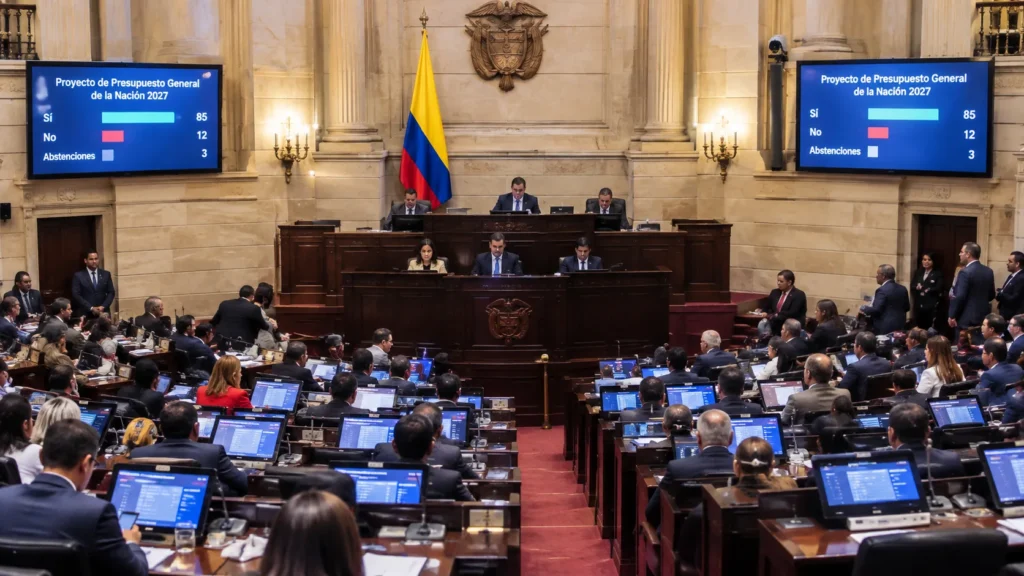
Colombia’s Congress approved the 2027 national budget of 200 billion dollars on October 20, igniting a backlash from opposition lawmakers who say the plan favors debt payments and financial interests over education, peace and regional development.
The approval of the General Budget of Colombia for 2027 capped a tense legislative session.
President Abelardo de la Espriella’s government secured passage of the law, worth 634.9 trillion Colombian pesos (about $200 billion), over the objections of the opposition, which was led mainly by the Historic Pact party.
Representative María Fernanda Carrascal described the debate as a “disaster” and faulted the national government for refusing to accept any of the 700 proposals submitted by her party. The initiatives sought to channel more resources into public education, support for victims of violence and the regions, she detailed. Faced with the lack of agreement, the opposition walked out of the debate, stating it would not back a measure it considers harmful to the country.
The Historic Pact also questioned the law’s orientation, arguing that the government chose to protect financial entities, oligopolies and the most favored sectors. They further denounced that the project promotes over-indebtedness, which they say will end up shifting heavier tax burdens onto Colombian citizens.
🇨🇴 ¡Colombia tiene Presupuesto para 2027! El Congreso de la República aprobó por $634,9 billones el Presupuesto de la Verdad, el primer paso para volver a encaminar la economía del país hacia el crecimiento, la responsabilidad fiscal y la atención de las necesidades del país. pic.twitter.com/pHiLhYzVTU
Text reads: “Colombia has budget for 2027! The Congress of the Republic approved the Truth Budget for $634.9 trillion, the first step to reorient the country’s economy toward growth, fiscal responsibility, and meeting the country’s needs.”
Other voices in the legislature added their objections. Senator Jennifer Pedraza of the Dignity and Commitment party (Dignidad y Compromiso, in Spanish) criticized the absence of a fixed allocation to address the consequences of the earthquakethat struck on August 10. She questioned the fact that assistance to hard-hit departments such as Risaralda, Chocó and Valle del Cauca depends solely on leftover budget balances.
Senator Ariel Ávila, in turn, lamented the underfunding of resources earmarked for electric infrastructure and energization in non-interconnected zones such as Vichada, Guainía, Arauca, Putumayo and Vaupés. He also pointed to a lack of concern for victims of the armed conflict and what he called a budgetary strangling of the Special Jurisdiction for Peace (JEP).
After the law’s validation, Congress gave the Executive 90 days to draft a fiscal adjustment plan, which the national administration has called the Rescue Law. The Ministry of Finance and the cabinet are already holding talks with the International Monetary Fund, a signal that new credit instruments and the conditions attached to them may be on the negotiating table.
Mobilization Set for November
The Historic Pact called on citizens to join a national mobilization on November 24 to reject the budget. The party maintains that the project raises debt service by 46% while cutting investment in the Special Jurisdiction for Peace by 82% and stripping 500 billion Colombian pesos (about $157 million) from the National Learning Service (SENA).
Lawmakers also warned that 14 departments will see their real investment shrink. They denounced that the norm prioritizes debt repayment over the financing of peace, education and regional development. “The complaint is clear: more resources for debt and less for peace, education and the regions,” the party stated on social media.
The mobilization announced for late November now stands as the opposition’s next test of strength. In the meantime, the government’s 90-day clock to deliver its fiscal adjustment plan is running, and the talks with the International Monetary Fund could define the conditions under which Colombia finances its 2027 spending. The opposition has vowed to keep the pressure on, both in the streets and in the legislature.
📢 ¡24 DE NOVIEMBRE: MOVILIZACIÓN NACIONAL!
La bancada del Pacto Histórico llama a la movilización frente al Presupuesto 2027 del Gobierno de Abelardo de la Espriella, por $634,9 billones.
Según la bancada, el servicio de la deuda aumenta un 46%, la inversión de la JEP cae un… pic.twitter.com/F5IYf2YDVb
Text reads: “November 24: National Mobilization! The Historic Pact bench calls for mobilization against the 2027 budget of the government of Abelardo de la Espriella, for $634.9 billion. According to the bank, debt service increases by 46%, Special Jurisdiction for Peace (JEP) investment falls by 82%, National Learning Service (SENA) loses $500 billion, and 14 departments will receive less real investment. The denunciation is clear: more resources for debt and less for peace, education, and regions.”
Santiago de Chile, 20 oct (Prensa Latina) Expertos de la ONU expresaron hoy su preocupación por festejos realizados en la antigua Colonia Dignidad, sitio del sur de Chile donde se cometieron graves violaciones de los derechos humanos antes, durante y después de la dictadura.
He linked protests in France to immigration policy and reiterates warnings to European leaders.
On Tuesday, U.S. President Donald Trump declined to express his electoral support for Marine Le Pen, the French far-right candidate for the 2027 presidential election.
“Well, I don’t know her. I’ve never met her personally. But I thought they treated her badly,” he responded when asked in the Oval Office about a possible endorsement of the National Rally (RN) candidate.
The U.S. president criticized Le Pen’s conviction for embezzling European public funds, which resulted in an electoral ban that was later reduced following an appeal, allowing her to regain the possibility of running for president.
“I would consider that political weaponization. When they did what they did, I thought that, you know, she was leading. But after this, she’s definitely the conservative voice,” Trump said and credited his electoral endorsements with contributing to the rightward shift in several Latin American countries, including Abelardo de la Espriella’s victory in Colombia.
Marine Le Pen would win any runoff in France’s 2027 presidential race, poll finds pic.twitter.com/bMGRxRDRbo
The Republican leader again linked the protests in France to immigration policy and accused the French government of encouraging immigration. He said he had conveyed his warnings to French President Emmanuel Macron, with whom he said he had a good relationship.
“I said, if you don’t stop the immigration problem, you’re not going to have a country left. And I said it to Germany, and I said it to the United Kingdom,” Trump said.
On Oct. 17, thousands of French people took to the streets to protest inflation, the loss of purchasing power and support for U.S.-promoted wars. The protests led to violent clashes with police and property damage in several cities.
It warned of possible military advances toward Nabatieh and the Litani River.
On Tuesday, Israel warned that it could maintain its military presence in southern Lebanon indefinitely and conditioned any withdrawal on the complete disarmament of the Shiite movement Hezbollah, amid stalled negotiations between the two sides.
Israeli Defense Minister Israel Katz stated that Israeli occupatory forces will not abandon the areas currently under their control. He also warned of possible military advances toward Nabatieh and the Litani River if further attacks occur.
Katz asserted that Israel is applying the so-called “Gaza model” in southern Lebanon. According to his statements, dozens of villages have been destroyed in the occupied area during military operations.
According to United Nations estimates, some 330,000 people remain displaced by the conflict, in addition to another 200,000 who have fled areas occupied by Israeli forces.
The Lebanese Ministry of Health reported at least 4,389 deaths and 12,424 injuries since the escalation of hostilities began in early March. Lebanese President Joseph Aoun accused Israel of violating the ceasefire agreement reached in June with U.S. mediation.
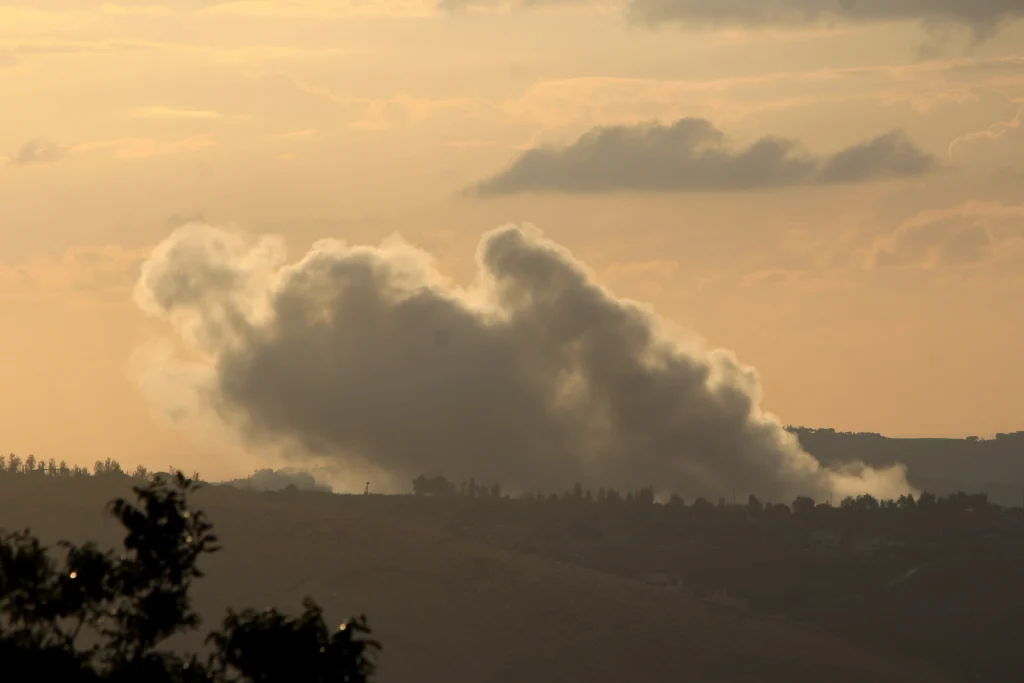
🔴This is life under Israeli occupation and a typical night in south Lebanon.
Aoun also maintained that the Israeli military presence prevents the full deployment of the Lebanese army along the border, one of the provisions of UN Security Council Resolution 1701.
Given the lack of progress in implementing the agreement, a Lebanese military delegation will participate in talks in the United States to achieve a cessation of Israeli operations and establish a withdrawal timetable.
The military delegations from Lebanon and Israel will resume direct negotiations at the headquarters of the U.S. Central Command (Centcom), after three months of stalled dialogue.
The process was suspended in August by the Lebanese government, which protested the continued Israeli military actions despite the ceasefire. Six months after the start of the talks, none of the core commitments have been fully implemented.
#FromTheSouth News Bits | During a meeting with Israeli President Isaac Herzog in Baku, Azerbaijan, China's Foreign Minister Wang Yi urged Israel to halt and reverse the establishment of settlements in the West Bank, which is occupied Palestinian territory. pic.twitter.com/xm7RduwpW6
Quito, 20 oct (Prensa Latina) Personas de distintas edades acudieron hoy a una feria de empleo en esta capital, donde más de 100 empresas ofrecieron tres mil 649 vacantes en medio de las dificultades para acceder a un trabajo estable en Ecuador.
Ciudad de Guatemala, 20 oct (Prensa Latina) El presidente Bernardo Arévalo relacionó hoy la Revolución de 1944 con el clamor de verdad y justicia ante los recientes hechos de violencia, como el asesinato del exfiscal Juan Francisco Solórzano Foppa.
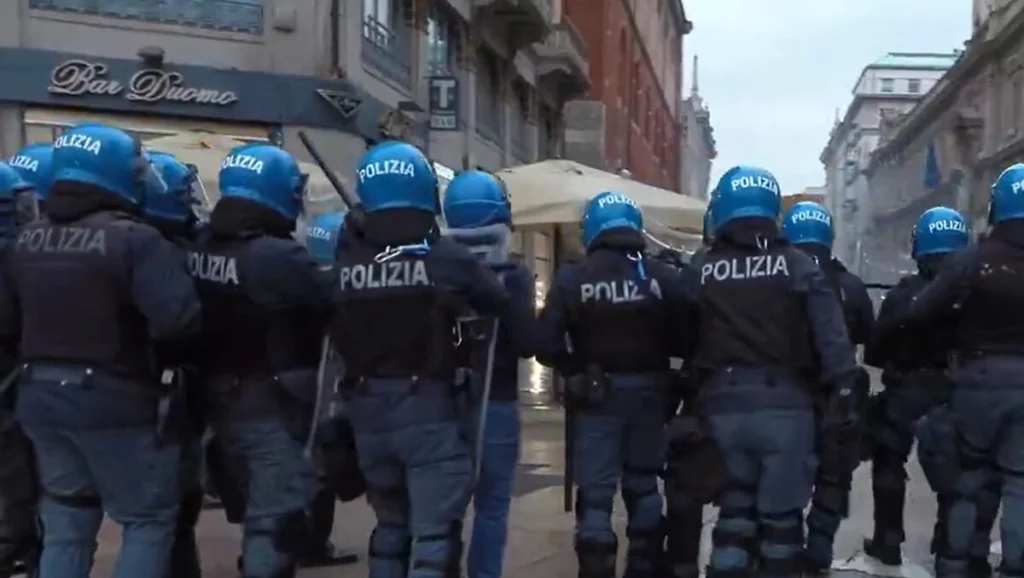
The Italian prime minister sends more soldiers to Milan in anticipation of the protests scheduled for Oct. 24.
Through a video posted on Tuesday, Italian Prime Minister Giorgia Meloni announced the promulgation of a decree aimed at cracking down on “juvenile gangs” and “violent street protests.” She authorized reinforcing with military personnel security forces in Milan.
“Five hundred more military personnel are arriving in Milan, until the end of the year alongside police and carabinieri. And to juvenile justice we are giving more magistrates and more places in centers, so that the certainty of punishment also applies to those who are 16 years old,” the far-right politician said.
Approved at a meeting of the Council of Ministers, the decree establishes that the soldiers will reinforce “Operation Safe Streets,” an initiative implemented in 2008 that keeps some 5,000 Army personnel deployed in numerous “hot spots” across the country.
Her decree will take effect immediately, will have a 60-day period to be ratified by the Italian Parliament, and includes the creation of the “crime of violent participation in a demonstration.”
Nuova giornata di guerriglia a Milano. Gruppo di incappucciati assalta negozi in via Torino. pic.twitter.com/BBI4x47NJH
The text reads, “Another day of guerrilla-style unrest in Milan. A group of hooded individuals attacks shops on Via Torino.”
“If during a march or a demonstration you join a group of 5 or more people, you start throwing stones, firecrackers, sticks, you endanger everyone’s safety, you risk up to 5 years in prison and up to 20,000 euros in fines,” Meloni said, and clarified that the decree introduces the principle that “the breaker pays, and if the breaker is a minor, his or her parents pay.”
Aggravating factors may be applied to this new crime if the person has their face covered or if someone has been injured. Biometric identification assisted by artificial intelligence is also authorized, explained the Italian outlet TG La 7.
In the criminal sphere, authorities will be able to immediately apply preventive detention to minors between 14 and 18 years old, and the police chief will be able to apply oral warnings and bans on gathering in public places to young people with a record of violent acts.
IL FUTURO È UNA SCELTA La vittoria al referendum sulla giustizia ha dimostrato che, insieme, possiamo fare la differenza. Oltre cento associazioni già aderiscono alla Via Maestra. Unisciti a noi.
LAVORO, PACE, AMBIENTE, WELFARE, COSTITUZIONE. INSIEME SULLA VIA MAESTRA.
“THE FUTURE IS A CHOICE. The victory in the referendum on justice has shown that, together, we can make a difference. More than a hundred associations have already joined “The Main Path.” Join us.
WORK, PEACE, ENVIRONMENT, WELL-BEING, CONSTITUTION. TOGETHER ON ‘THE MAIN PATH.’ The Constitution points to a clear way: a country founded on work, social justice, equality, and peace.
This way remains our ‘Main Path.’ Today, however, Italy is moving in the opposite direction. We choose a different path: the path of the Constitution. Hear from Francesca Cantagallo, of the ‘Knowledge Network’, and join us.
OCTOBER 17, ROME. National demonstration. The demonstration will begin at 1:30 PM. Participants will gather at Republic Square and, following a march, the event will conclude at People’s Square around 5:00 PM.”
Initially, Meloni’s decree also contemplated exceptionally assigning police functions to the military for three months, which would have allowed them to make arrests. This provision, however, was left out of the approved text.
Referring to the demonstrations of the past weekend, Meloni said that security forces had detained or identified 330 people, half of them of foreign origin, among whom are people born outside Italy and others born in the country but to foreign parents.
Meloni’s decision comes in response to the protests promoted for Saturday, Oct. 24 by the “October 17 Movement” (17M10), a youth protest group that emerged as a result of the recent clashes in downtown Milan and that has announced permanent mobilizations until the fall of the Meloni administration.
“We are the ones from the squares. Those who see the only violence in the police stick. The violent ones are you who have denied us the future. Now we take that future into our own hands. Violent is this system that kills us. Permanent mobilization every Saturday until this thieving government falls,” the 17M10 stated.
Desde el Pacto Histórico cuestionaron la orientación de la ley al señalar que el Gobierno prefirió proteger a entidades financieras, oligopolios y a los más favorecidos en lugar de destinar mayores recursos a sectores clave como la educación.
El canciller cubano destacó que siete de cada diez publicaciones condenan el cerco imperial, reflejando la absoluta falta de argumentos de la política agresiva de Washington.

 Login