The rover will be delivered to the lunar surface by Blue Origin’s Blue Moon Mark 1 lander.
On Tuesday, NASA provided an update on the development of crewed and robotic lunar rovers to support its planned Moon Base initiative, highlighting efforts to develop the surface mobility capabilities needed for future exploration and sustained human operations on the Moon.
NASA’s Volatiles Investigating Polar Exploration Rover is scheduled to embark on a mission to the lunar South Pole region in 2027 to explore permanently shadowed craters in search of water and other potentially valuable resources that could support sustainable lunar exploration.
The rover will be delivered to the lunar surface by Blue Origin’s Blue Moon Mark 1 lander and is expected to travel more than 30 kilometers, collecting data on local temperatures, lighting conditions and terrain.
NASA said the data could help scientists better understand the origin and distribution of water on the Moon and assess how lunar resources might be used to support future exploration.
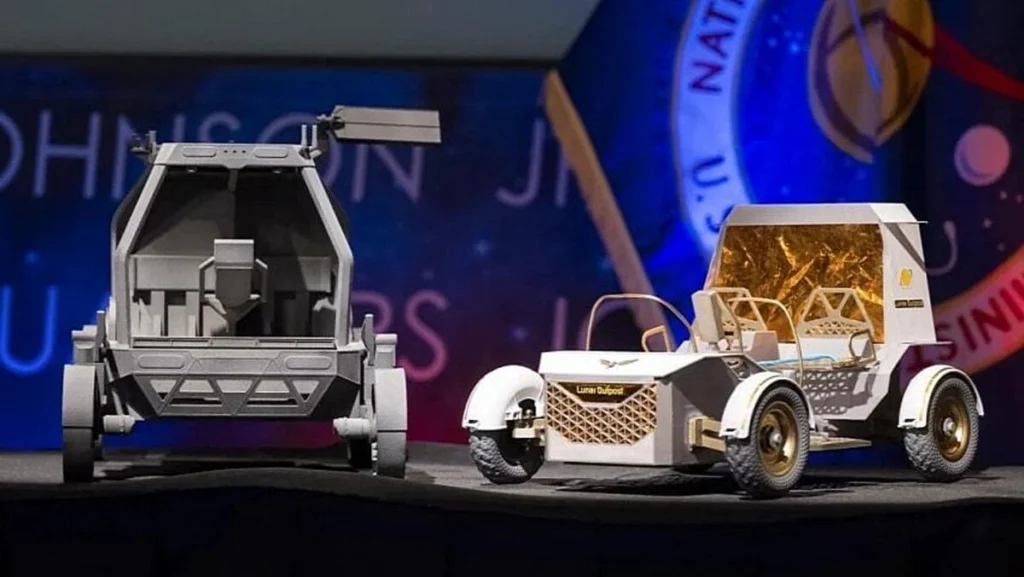
Meanwhile, NASA has awarded task orders to Astrolab and Lunar Outpost to build the first phase of Moon Base rovers capable of carrying crew, called lunar terrain vehicles (LTVs), which are intended to reach the Moon ahead of crewed Artemis missions.
NASA is advancing work on robotic rovers and lunar terrain vehicles that will help explore the South Pole and support the early stages of a permanent human outpost. The VIPER rover, assembled at Johnson Space Center, is scheduled to fly in late 2027 on Blue Origin’s Blue Moon… pic.twitter.com/U4hS3Sl6hQ
Blue Origin has been tasked with delivering the rovers to the lunar South Pole region by 2028 through NASA’s Commercial Lunar Payload Services initiative.
The LTVs will allow astronauts to explore geologically diverse areas near the lunar South Pole, collect samples and transport equipment. They will also be remotely operated from Earth to map the lunar surface before astronauts arrive.
According to NASA, the LTVs are designed to travel up to 10 kilometers on a single battery charge, support up to three moonwalks per Artemis mission, and carry up to 80 kilograms of lunar samples and tools.
“Lunar rovers are central to our surface mobility strategy,” said Robert Pickle, director of NASA’s Surface Mobility Office within the Moon Base Program. Their performance will help lay the groundwork for the mobility systems needed to build, operate and expand infrastructure for long-duration lunar exploration, he explained.
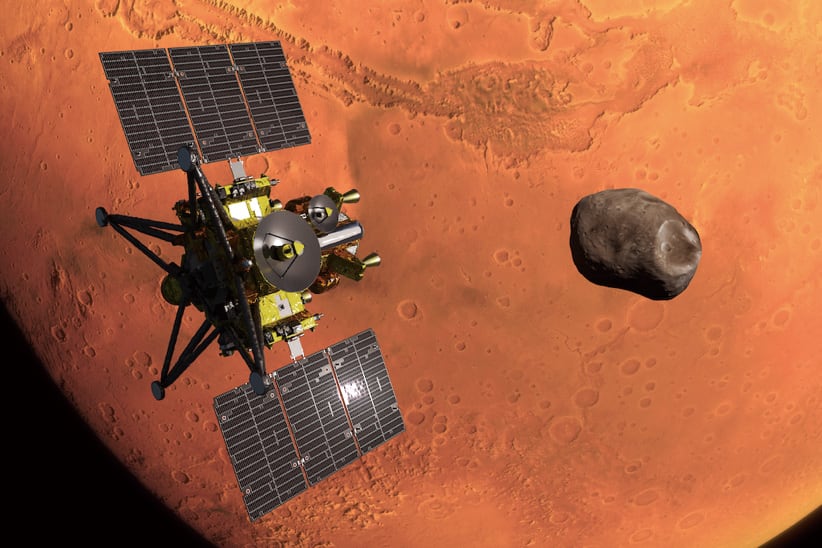
Uma mão-cheia de pó de Phobos pode valer mais do que todas as amostras de Marte. O Japão lançou esta terça-feira a MMX, a primeira missão a tentar trazer à Terra material de uma lua marciana. O Japão lançou esta terça-feira uma sonda com destino às luas de Marte. A missão pretende trazer à Terra apenas dez gramas de rochas e poeira, mas essa pequena amostra poderá ajudar a resolver um mistério com milhares de milhões de anos: como nasceram as duas luas do planeta vermelho? A sonda não tripulada Martian Moons eXploration (MMX) partiu do Centro Espacial de Tanegashima,
https://www.youtube.com/watch?v=qA6JQpujO4c Uma mão-cheia de pó de Phobos pode valer mais do que todas as amostras de Marte. O Japão lançou esta terça-feira a MMX, a primeira missão a tentar trazer à Terra material de uma lua marciana. O Japão lançou esta terça-feira uma sonda com destino às luas de
The Japan Aerospace Exploration Agency (JAXA) is planning to launch a spacecraft on Tuesday that will journey to Phobos and back in about five years, collecting the first-ever rock and soil samples from a moon of Mars.
La primera misión de exploración a Fobos, una de las dos lunas de Marte, ha despegado este lunes a bordo de un cohete H3 desde el Centro Espacial de Tanegashima, en Japón, a las 21.41 hora peninsular española.
Sesso nello spazio? Ci vogliono regole sul consenso, spazi sicuri, procedure di protezione. Sciocco e sciocca chi ancora non ci aveva pensato. Anche in orbita o direttamente su Marte il sesso mica si cancella, anzi. E proprio per questo una donna deve avere misure protettive di fronte a rapporti non consensuali. Parola di EleanorArmstrong, la ricercatrice trentatreenne inglese, direttrice del Constellations Lab all’Università di Leicester, definita dal Corriere della Sera – che l’ha intervistata di recente durante il festival di Internazionale a Ferrara – “una lente femminista e queer dentro la corsa allo spazio”.
La questione è semplice: se si vuole andare su Marte ci vogliono sette mesi di viaggio e se lassù nasce una relazione, e quella relazione diventa violenta, fuggire è impossibile. Armstrong lo sottolinea con precisione: “Se il consenso viene meno, quel luogo che protegge diventa una gabbia”. Rispondendo alle domande dell’intervistatrice la scienziata ha affermato che il sesso in orbita “è ridotto ad una barzelletta” e che “finchè se ne ride, nessuno lo studia sul serio”.
Insomma, Houston abbiamo problemi di consenso sullo shuttle per Marte. “Bisogna iniziare partendo dal consenso. Deve essere libero e si deve poterlo ritirare. Altrimenti non è consenso. E nello spazio manca la cosa più semplice: la possibilità di andarsene. Perciò dobbiamo pensare prima a spazi sicuri, procedure di protezione, alternative”. Dinamiche che chi ha progettato le navicelle non ha ovviamente pensato: “Sono state disegnate intorno al corpo maschile e a un’idea di mascolinità: essere in controllo, pilotare, decidere, esercitare la propria autonomia. La tecnologia non nasce separata dalla cultura che la costruisce”.
Solita ideologia estremista? Macchè. Basta guardare come hanno costruito i bagni, come si tratta il tema della “contraccezione” e “dalla privacy”. Altra misura maschilista presa con nonchalance? “Nel 2019 la prima passeggiata spaziale femminile fu rinviata: mancavano due tute della taglia giusta”. E se tutto il racconto con relative opinioni vi pare esagerato esiste infine una casistica ben precisa. “Nel 1999, in un esperimento di isolamento, una ricercatrice canadese fu aggredita da un collega ubriaco – chiosa Armstrong – La soluzione fu chiudere i portelli tra i moduli, non allontanare lui. Nelle basi in Antartide le molestie sono documentate. E spesso non vengono denunciate”.
Che cosa succede se si portano alghe, gamberetti e microrganismi nello spazio? Non è l’inizio di una barzelletta sugli astronauti, ma una domanda scientifica con possibili ricadute sulle future missioni di lunga durata. A cercare una risposta è Scampi, un piccolo ecosistema acquatico arrivato sulla Stazione spaziale internazionale (Iss) a bordo della navetta cargo Dragon di SpaceX.
Dopo due giorni di inseguimento orbitale, la navetta si è agganciata autonomamente al modulo Harmony della stazione, consegnando un carico di 2.850 chilogrammi tra rifornimenti, materiali e strumenti per la ricerca. In mezzo alle provviste e agli esperimenti scientifici viaggiava anche il minuscolo mondo acquatico di Scampi, acronimo di Saltwater Crustaceans, Algae, and Microbial Population Investigation.
Il progetto è stato sviluppato da 51 studenti di 11 istituzioni europee e statunitensi, riuniti in un consorzio guidato dal Politecnico di Torino e dall’École Polytechnique di Parigi, sotto l’egida dell’Agenzia spaziale europea (Esa). Il laboratorio in miniatura verrà installato nella Ice Cubes Facility del modulo europeo Columbus, dove sarà possibile seguirne l’evoluzione durante la permanenza in orbita.
La domanda al centro dell’esperimento è come la microgravità influenzi le relazioni tra le componenti viventi e non viventi dell’ecosistema. Alghe, piccoli crostacei e microrganismi non vivono isolati: interagiscono tra loro e con l’ambiente circostante. Osservare queste dinamiche nello spazio permetterà agli studenti e ai ricercatori di raccogliere dati su un sistema biologico che, sulla Terra, si sviluppa sotto condizioni fisiche molto diverse.
La posta in gioco va oltre la curiosità di vedere come se la cavano i gamberetti lontano dal pianeta. Nelle missioni spaziali di lunga durata, infatti, rifornire continuamente gli equipaggi dalla Terra diventa sempre più complicato. Per viaggi verso la Luna e, soprattutto, verso Marte, sarà importante studiare sistemi capaci di contribuire al sostegno della vita degli astronauti. Ecosistemi chiusi, se sufficientemente stabili e controllabili, potrebbero in futuro aiutare a gestire alcune risorse e a mantenere condizioni adatte alla sopravvivenza umana.
Scampi non è comunque l’unico laboratorio scientifico arrivato con la missione di rifornimento Crs-35. A bordo c’è anche LambdaVision-1, che permetterà alla Nasa di sperimentare la produzione di retine artificiali in microgravità. Stellar Spheroids studierà invece come l’assenza di gravità influenzi la crescita e il funzionamento di modelli tridimensionali di tessuto cardiaco umano.
Un altro esperimento, Elf-Unconventional Glass 2, indagherà i processi di formazione di un nuovo tipo di vetro nello spazio. Minds si concentrerà invece sugli organoidi cerebrali, modelli tridimensionali utilizzati per studiare i tessuti del cervello e comprendere meglio i meccanismi dell’infiammazione associata alle malattie neurodegenerative.
Dai materiali innovativi ai modelli di tessuti umani, passando per un ecosistema acquatico in miniatura, la stazione orbitante continua così a funzionare come un laboratorio fuori dal comune. E mentre gli astronauti lavorano a centinaia di chilometri dalla Terra, alghe e gamberetti contribuiscono a una domanda molto concreta: quanto della vita terrestre riusciremo a ricreare e mantenere quando saremo pronti a spingerci più lontano nello spazio?
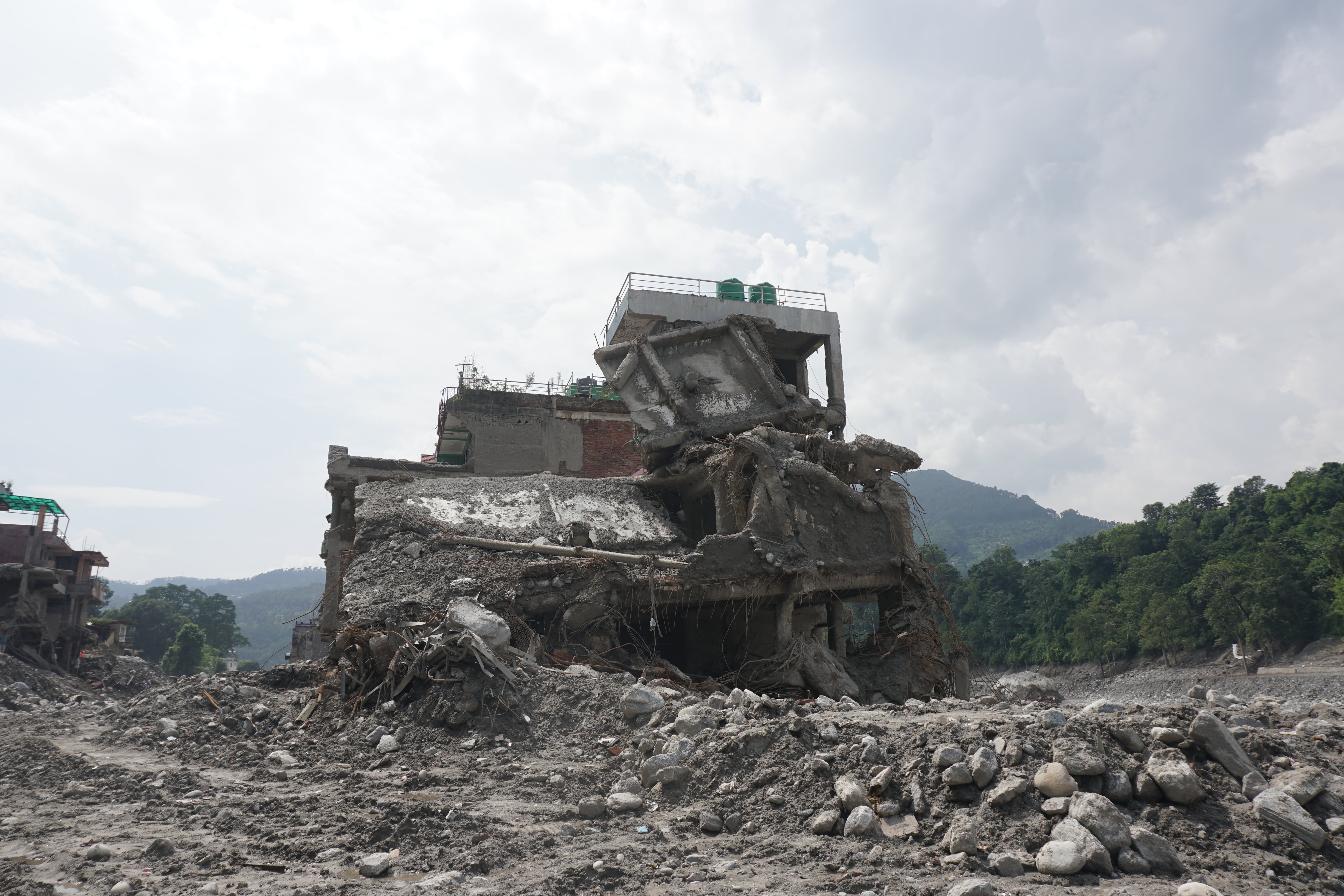
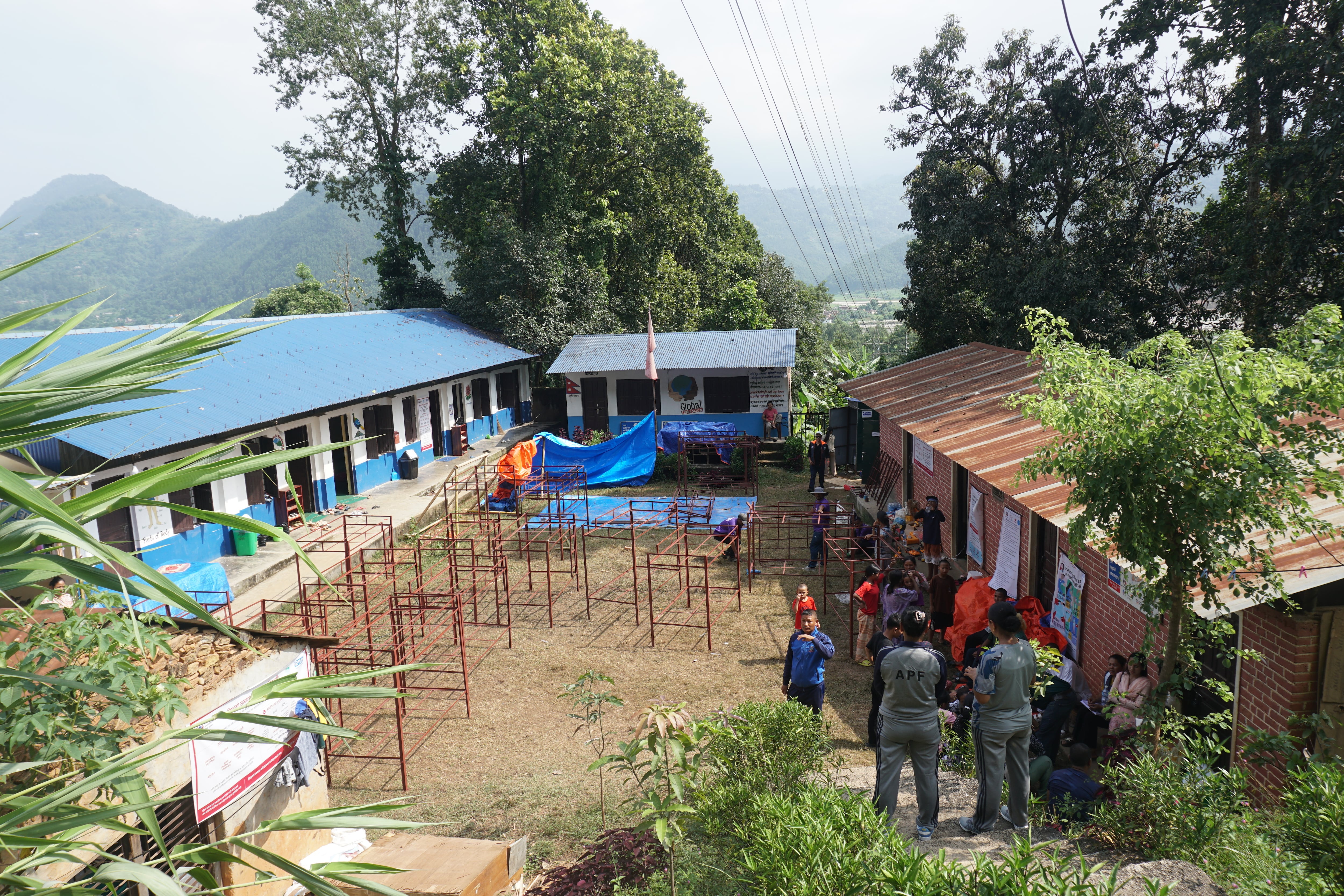
At an emergency shelter in central Nepal, Chhiring Mhendo Tamang stares at a photograph of her six-year-old daughter. She fears she will never see her again after the school bus she was on was swept away by a flash flood. A glacier collapsed on August 26, causing an avalanche of mud, rocks and water to rush into a river on the border between Nepal and Tibet. The flood has so far caused 1,451 deaths with 5,745 people missing, mainly in the districts of Rasuwa, Nuwakot, and Dhading, where homes, schools, electrical infrastructure and roads have been decimated, according to Nepal’s National Authority for Disaster Risk Reduction and Management (NDRRMA).
During his time as the lead propulsion engineer for SR-71 Blackbirds at NASA’s Dryden Flight Research Center, Tim Conners looked into how to push the iconic recon plane to fly faster than it had ever flown before. The world record for any crewed jet-powered aircraft is officially Mach 3.3, or 2,193 mph. It was set by a Blackbird in 1976 “on a straight-line course over Edwards Air Force Base in California.” In a recent interview with TWZ, Conners said he investigated whether there were ways to get Blackbird to approach Mach 4, equivalent to roughly a whopping 2,660 mph at altitude. Fast forward to today, with the possibility that NASA could be returning the SR-71 in some configuration to its test fleet, as well as its potential missions, the question of just how fast could the airframe go has become far more relevant than just a hypothetical exercise.
Conners spoke to us about his knowledge of plans to restore SR-71 #844, which had mysteriously disappeared from NASA’s Armstrong Flight Research Center, as well as its potential uses, in a deep-dive interview here. Prior to the revelations about the missing Blackbird, speculation about NASA’s renewed interest in the type was sparked last month, when NASA Administrator Jared Isaacman showed the silhouette of an aircraft that immediately drew comparisons to SR-71 during a speech at the annual All-In Summit in Los Angeles, California. Isaacman pushed back on a direct link to the SR-71 but said his agency is working hard to get “back in the business of flying high and fast again.”
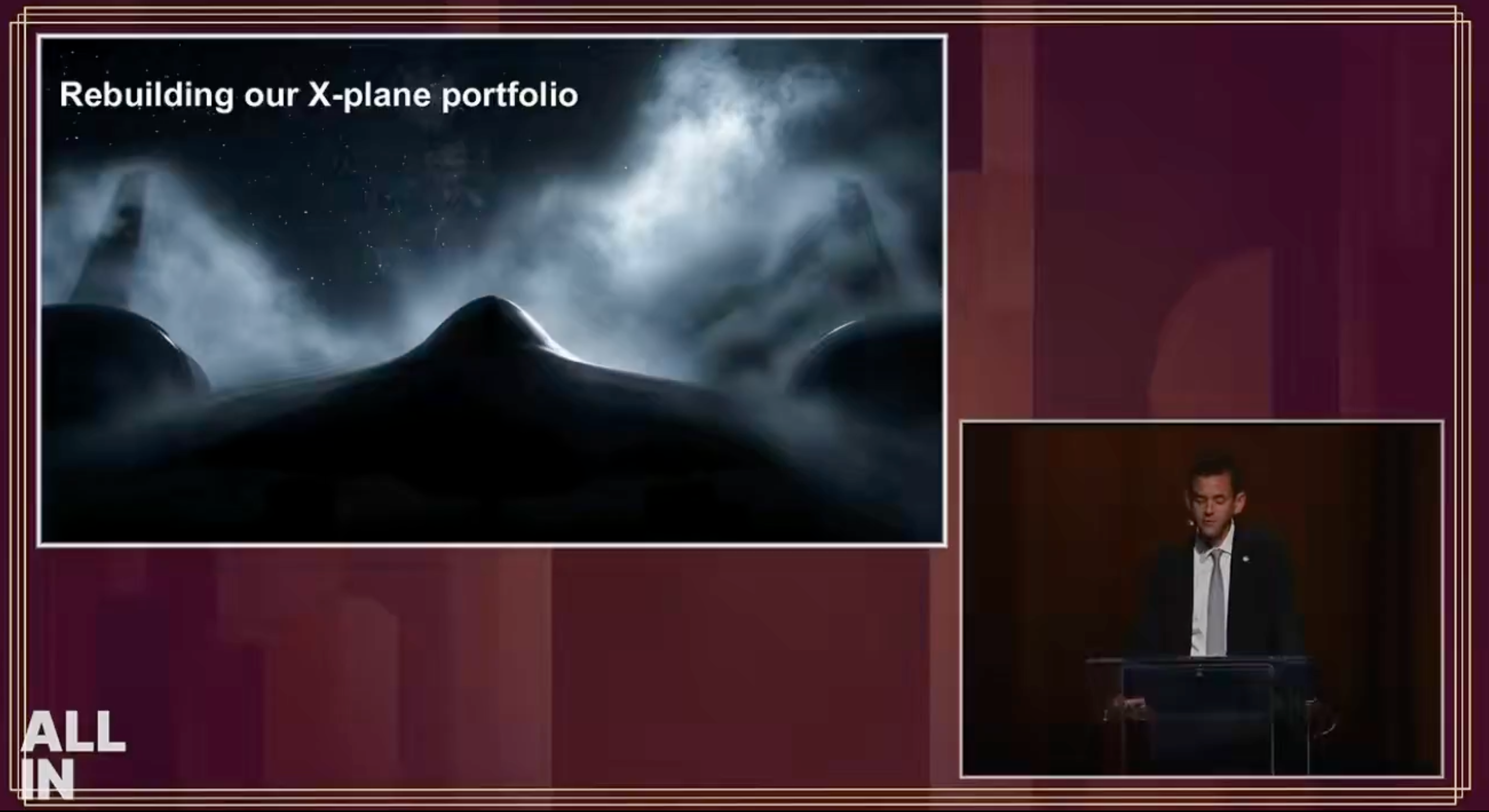
NASA Administrator Jared Isaacman talks at the All-In Summit about new high- and fast-flying X-planes with the eye-catching aircraft silhouette in the background. All-In Summit/YouTube screencap
Given that, we wanted to know what limited the SR-71’s speed in its original configuration and how fast Conners thought it could go with modifications.
“The study that I did at Dryden was purely conceptual,” Conners explained of his work on the topic there in the early 1990s. “I asked questions of the Lockheed folks and the Pratt folks regarding limitations on speed. So stagnation temperature. What can we get to at altitude?”
The Blackbird, he said, “flew a trajectory that was usually operationally limited to 450 knots equivalent airspeed. If you look at the flight envelope, that defines the right edge of the envelope.”
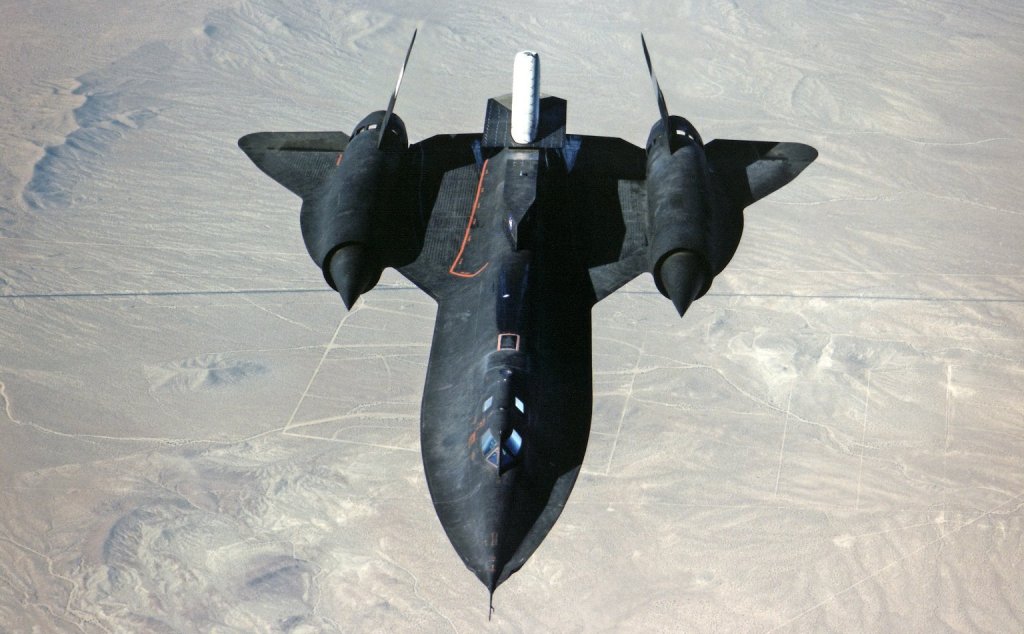
SR-71 Blackbird. (Courtesy photo via USAF)
“The engines, however, were optimized to fly at about 500 knots equivalent airspeed, 475 to 500, and for whatever reason, there was a mismatch between what the engines were designed to do and what the airframe was ultimately optimized for, which was flight at around 450 knots,” the engineer added. “And you end up with that limitation now, the equivalent airspeed curve hooks up and to the right as you go up in altitude, so it sweeps out Mach number, and as you sweep out Mach number, the stagnation temperature is going up on you.”
“So you do reach a point, even at 500 KEAS [knots equivalent airspeed], where you end up with a constant value up at altitude once you’re in the stratosphere,” Conners said. “The Blackbird was trimmed or limited at that speed on the right side of the envelope, and that equated to a certain stagnation temperature. That limitation was driven primarily by the material strength of the engine front frame, from what it was described to me, and that’s what drove the analysis we did at NASA.”
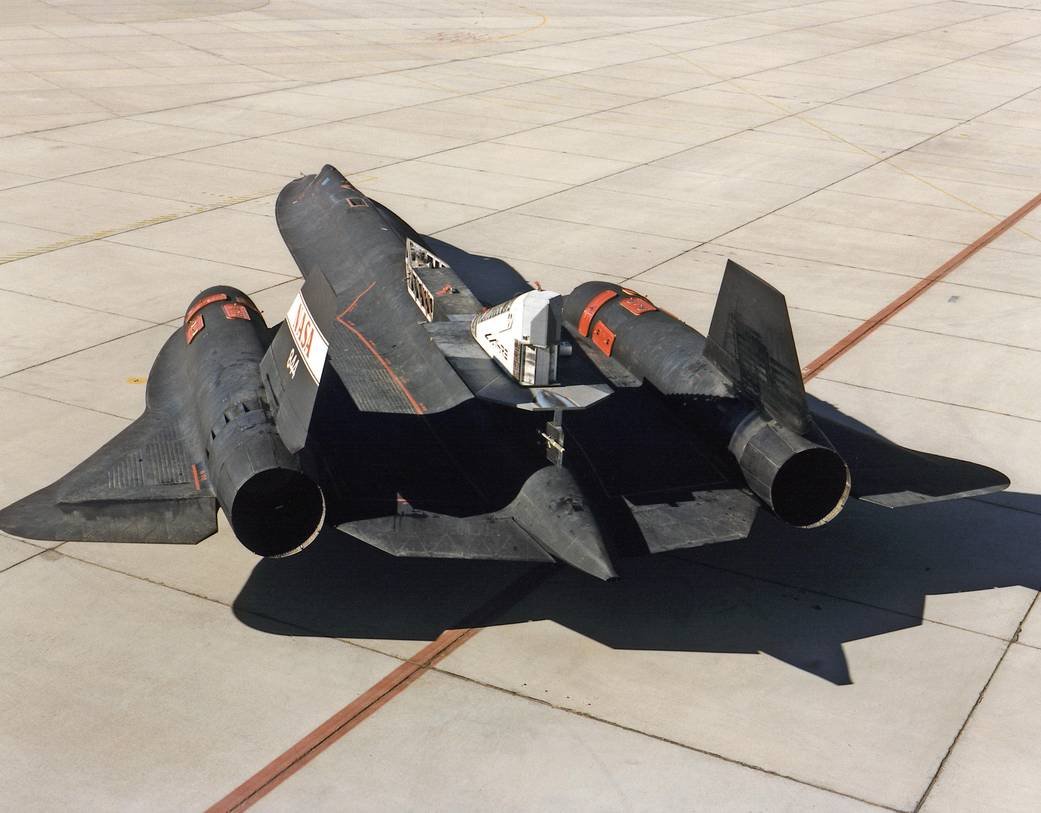
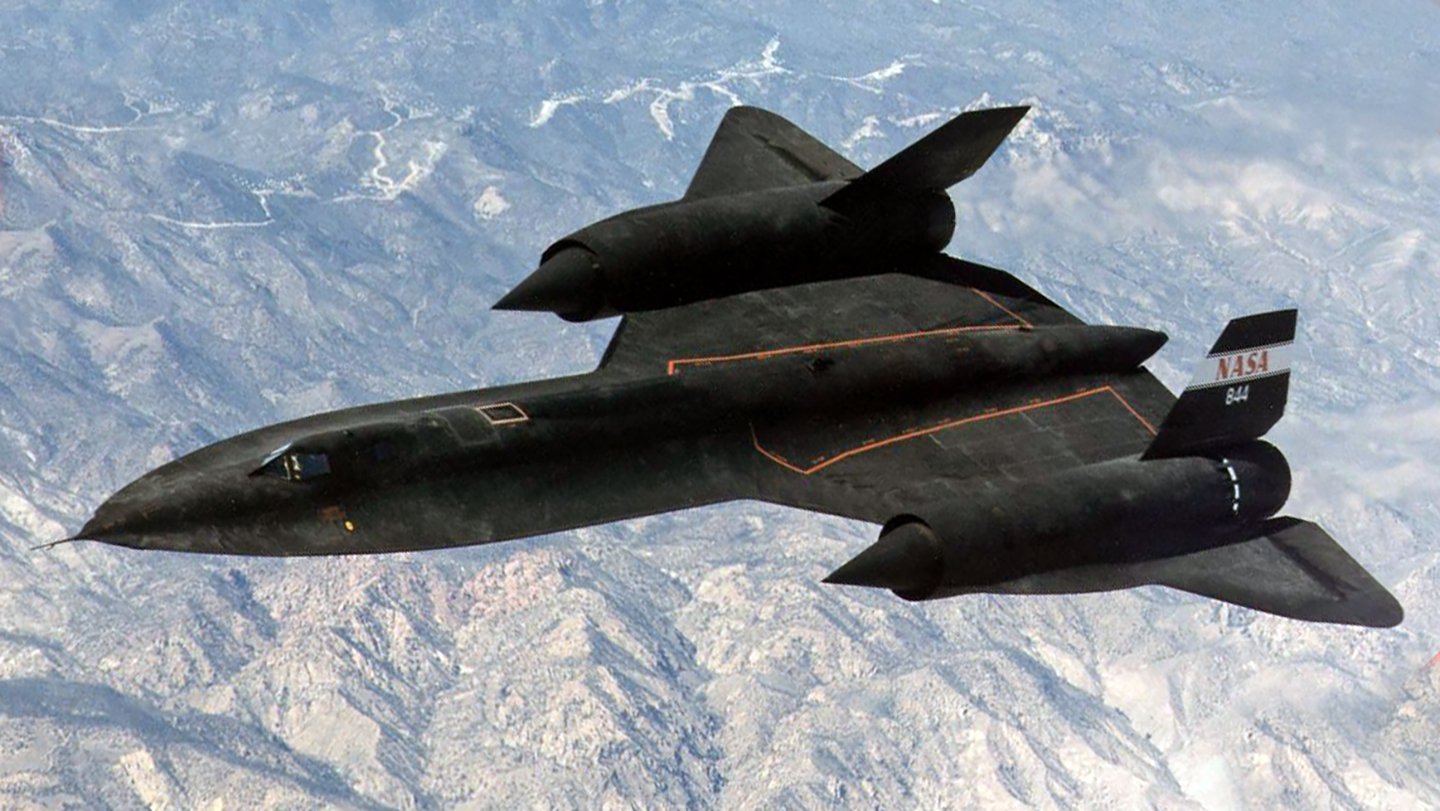
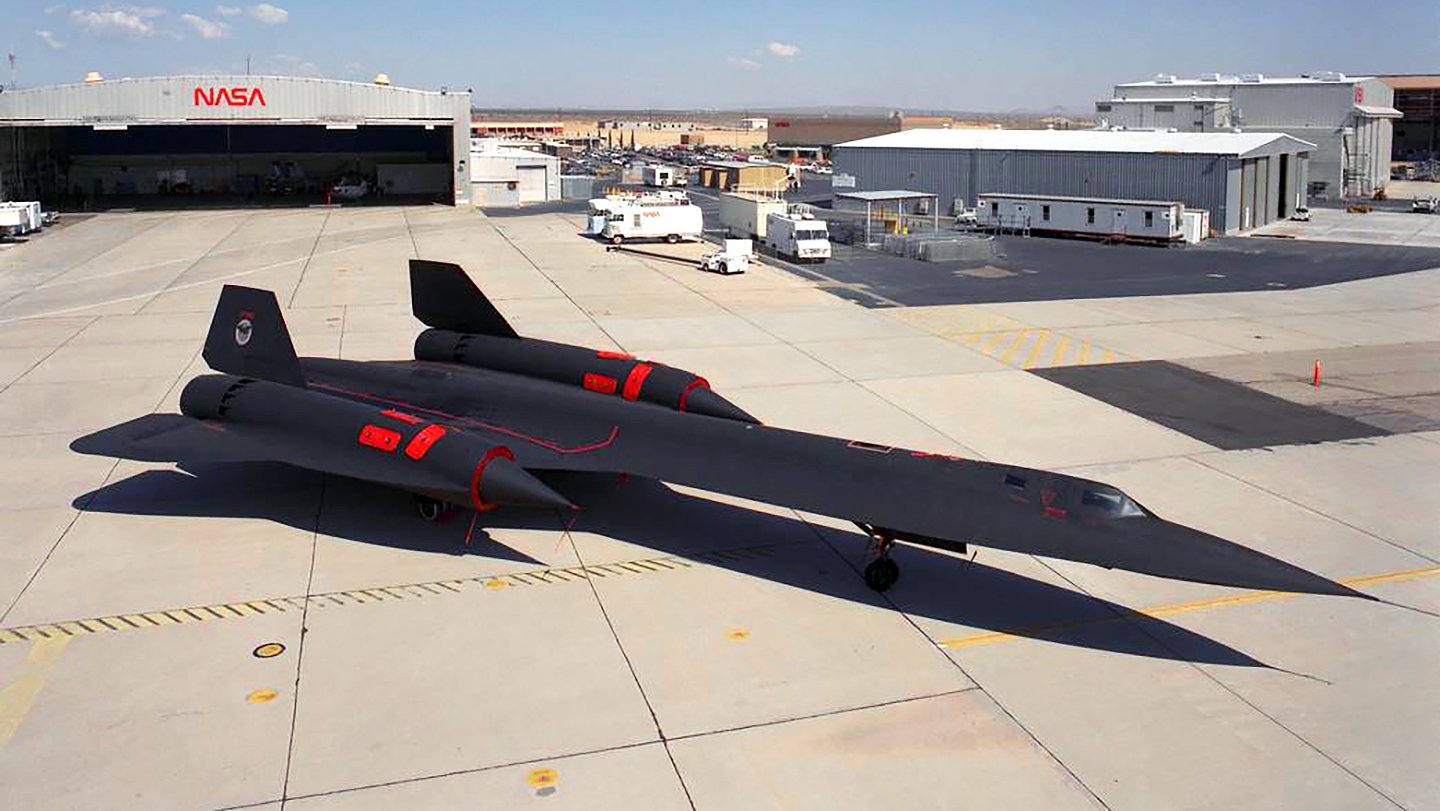
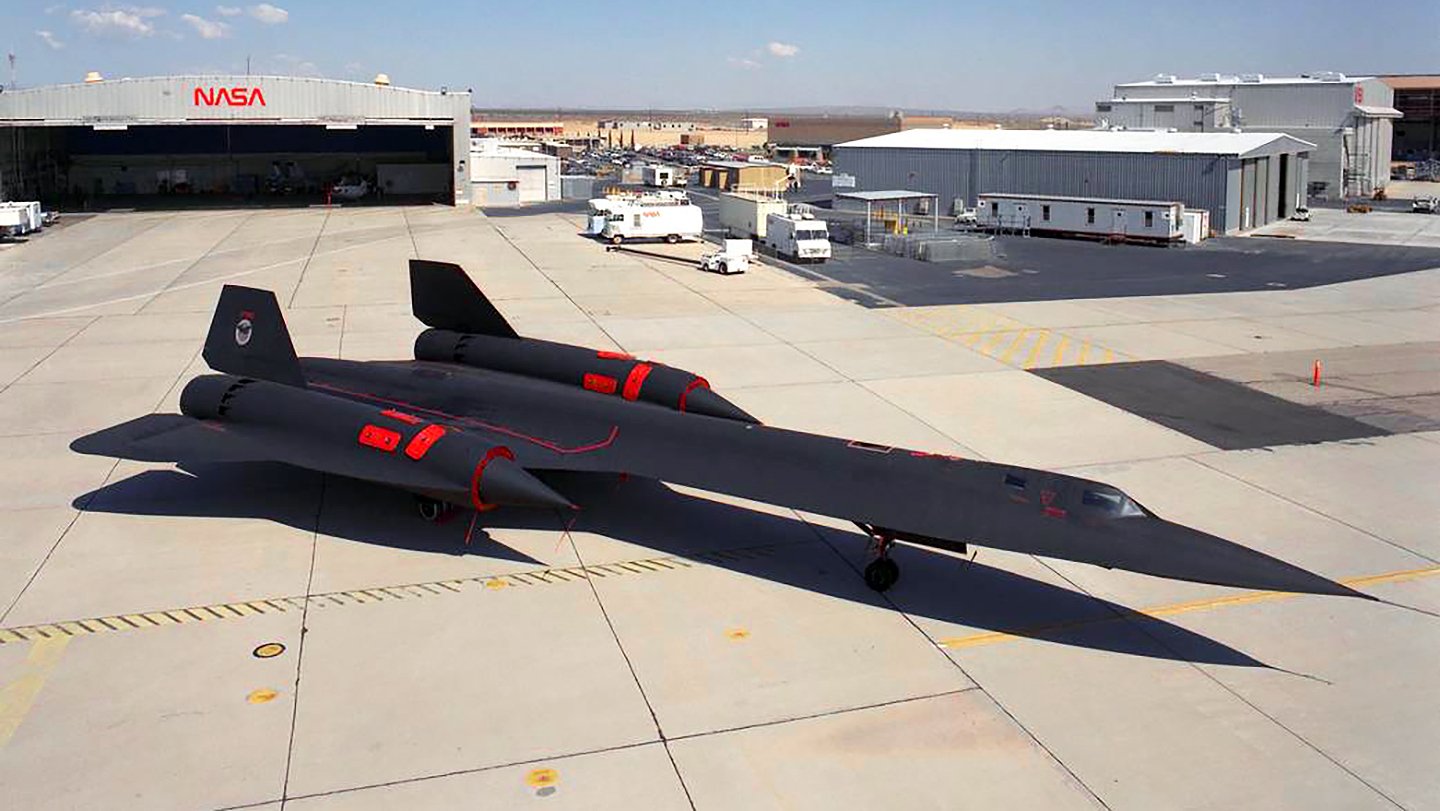
SR-71 tail number 844 during its service with NASA. (NASA)
To even consider pushing the aircraft past the world record speed, Conners said something had to be done to mitigate the tremendous effects of the extreme heat on the air entering the engines.
“We weren’t looking at active cooling of the frame by pumping coolant through it,” Conners recalled. “What we looked at was spray cooling of the incoming airflow to lower the bulk temperature, so it would only be used when you were accelerating beyond about Mach 3.4. You would only very briefly do Mach excursions to a higher Mach number, and then come back. That was the conops for that system.”
“This is a way to [get to a higher Mach range] briefly,” the engineer postulated. “You could probably get to a higher Mach number. The problem is that if you clog or freeze the system, if it fails while you’re at higher speed, you have to decelerate in a hurry to protect the assets.”
Among other impediments to breaking the speed record, the Blackbird’s existing power plant was not up to the job, according to Conners.
“So that weak link was the J58,” he explained. “It had the performance, but not the material strength. If we’re looking at alternate engines designed to handle the higher Mach capability, then that could put the limiter on the airframe at that point, which we were told at NASA was somewhere like up near Mach 4 for brief excursions.”
Aviation expert Paul F. Crickmore, who’s written several books about the Blackbird, told us that the aircraft was designed around a sustained cruise speed of Mach 3.2, with the primary critical limitation being aforementioned compressor inlet temperature (CIT).
Above 427 degrees Celsius (about 800 degrees Fahrenheit), the engines would be damaged, Crickmore noted. But if outside air temperature was colder, the aircraft could go faster before hitting that limit (in practice, Mach 3.3).
Temperature was just one factor in limiting how fast the SR-71 could travel, Crickmore explained. The shock waves from traveling so fast would also tamp down the Blackbird’s ultimate speed potential.
Paul Crickmore’s latest book on the SR-71, Lockheed Blackbird: Beyond the Secret Missions. The Missing Chapters. (Osprey Publishing)
“On the SR, you have to think three-dimensionally,” Crickmore explained. “But looking in just two dimensions, you would have an oblique shock wave on the nose, the first shock wave, and it would be at 90 degrees on either side. As the airplane got faster, that cone became more sharp until you got down to about 32 degrees. Now, at that speed, you’re at [Mach] 3.2. That oblique shock wave was still outside the envelope of the airplane – you don’t want to get that shockwave going anywhere near the flight controls. The faster you go, the narrower that cone, and the closer it gets to the wingtips, which is not good. This is the thing: People say, ‘Oh yeah, we can go maybe Mach 6.’ Well, right. But it’s not just about that. It’s about a lot of other things.”
The limiting factors imposed by the CIT value and the shockwave effect are also recalled by the late SR-71 pilot David Peters, recounted on the Habubrats SR-71 account on X.
“A little clarification on the speed. The issue is that I have been limited to less than Mach 3 on a few occasions because the outside air temperature was entirely above standard, and 427C came up at about [Mach] 2.95. On other occasions, like the Murmansk deal I got above 3.4 (3.49 on one occasion) and wasn’t close to 427C. The actual limiting airspeed is around 3.55; that is where the spike, being at full retraction loses the intercept on the shock wave and can no longer position it correctly in the inlet. Also, the overflow of the shock starts to go over the wing and interfere with the flight controls. So the limiting speed as configured would be about 3.55 so long as you don’t exceed 427C.”
For his part, Conners said that “shock effects at the inlet can be accommodated through rescheduling the inlet spike movement and perhaps making changes to the bypass schedules. None of that would necessarily be simple, and any changes would require careful envelope expansion. But it would not be impossible.”
Regardless of any other factors, Conners, the Blackbird engineer, remembered that his effort in boosting the jet’s speed never took off.
“It never got beyond me just sizing tank volume, considering different fluids that might work as a coolant, and then just gauging the relative appetite of NASA hierarchy for something like that,” Conners stated. “They weren’t interested in the risk. Nobody was asking for that Mach range.”
But that may be changing. It seems clear that one of the biggest challenges of getting the Blackbird back in the air will be its engines. They have sat for a long time, and getting them into a flyable condition could be the limiting issue. Beyond that, equipping the SR-71 with new engines also may represent the biggest opportunity for NASA getting a return on investment from its revived Blackbird.
(NASA)
In our interview, Conners told us that the feedback he heard about the remaining Blackbird J58 engines was “discouraging” because “the engines are indeed unserviceable.”
“I don’t believe that is based on an actual attempt to run them,” he explained. “It is based on inspection. Probably no surprise. They’ve sat idle, you know, for 27 years. That is what led to questions going back and forth regarding how the airframe would be powered. And that’s what led into, if you connect the dots, that’s where the airframe would be used as an engine test bed.”
Different engines “would have to be high-Mach bypass systems,” he noted. “We can speculate on which engine company might be developing those systems, but yeah, I don’t want to give it too much away because I don’t want us to lose the inside information that we got.”
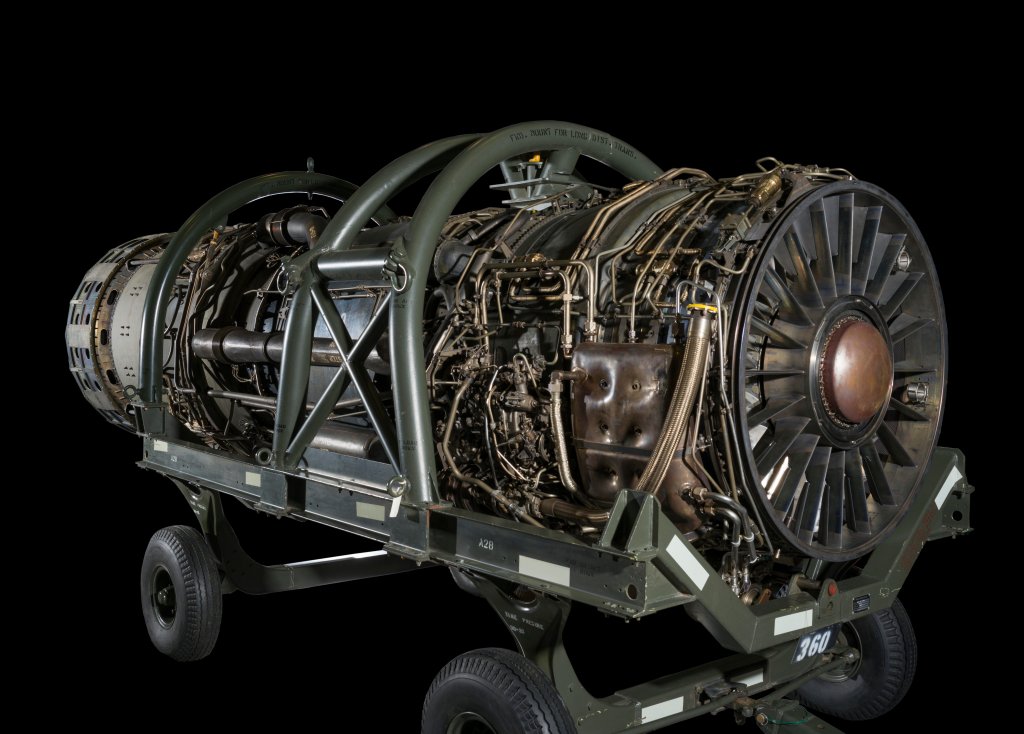
Pratt & Whitney J58 engine. (National Air and Space Museum)
Also, the flight regime approaching Mach 4 would likely be one of the areas NASA is most interested in. It’s here where a combined cycle engine capable of hypersonic flight, one that contains both turbojet and ramjet or scramjet functions, would ‘hand-off’ propulsion from the turbojet to the other that is optimized for extreme speed. This is the same concept behind Lockheed’s SR-72 concept. Having an aircraft, and especially one that is not mired in deep classification and hidden from view, that can actually test this transitional flight regime could be of extreme value in unlocking a future where hypersonic flight is more accessible.
“Yeah, that could very well be what we’re looking at here,” Conners told us when we asked whether Blackbird’s open classification level is a driving factor in using it as a test bed for this research. “I’ve had friends ask that question this week. We were talking about the SR-72. Where is that at? I don’t know. I know people who went to work on it years ago. I’ve never heard anything since. So it could be that that’s so deep black that there’s no way that platform could be used as a test asset. So I think it’s precisely what you said. The Blackbird’s no longer classified, and that it’s possible that the engines that might be used in Blackbird wouldn’t be classified either.”
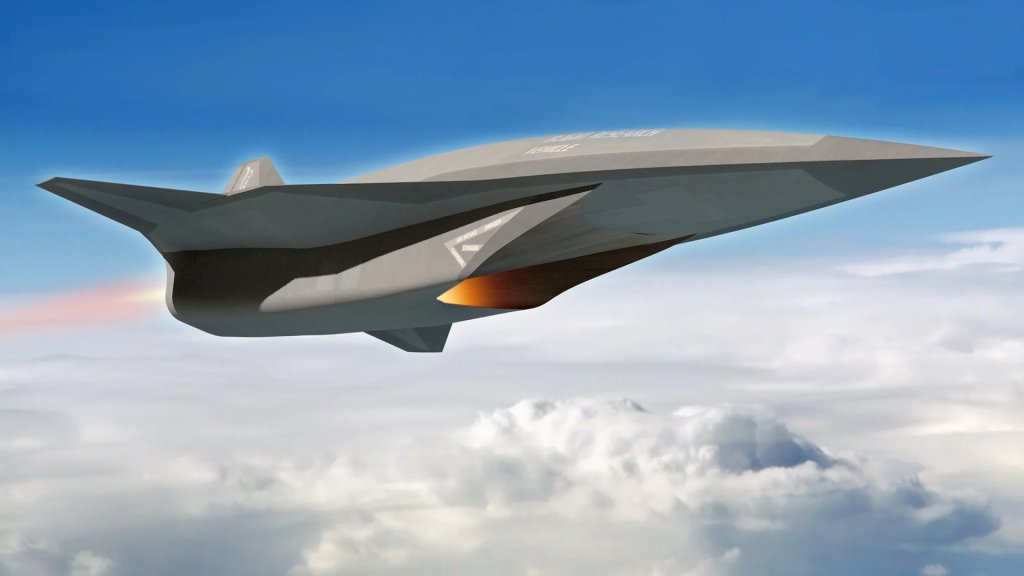
Lockheed’s ‘SR-72’ hypersonic plane concept. (Lockheed Martin Skunk Works)
So, reengining the SR-71 may solve two birds with one stone — providing a modern powerplant that won’t require the J58s to be revived and taking care of the inlet temperature issues discussed above that would allow the SR-71 airframe’s full potential to be exploited in testing. The fact that the jet can carry a massive payload on its back could allow it to provide critical testing of the handoff for dual cycle engine concepts.
This is just one use, of course. With the explosion in high-speed flight for defense purposes over the last decade, there are many other reasons to push a Blackbird to higher Mach numbers.
So with all this in mind, if we get the Blackbird back at all, maybe it will roll out with some major modifications that could indeed push it to new velocities.
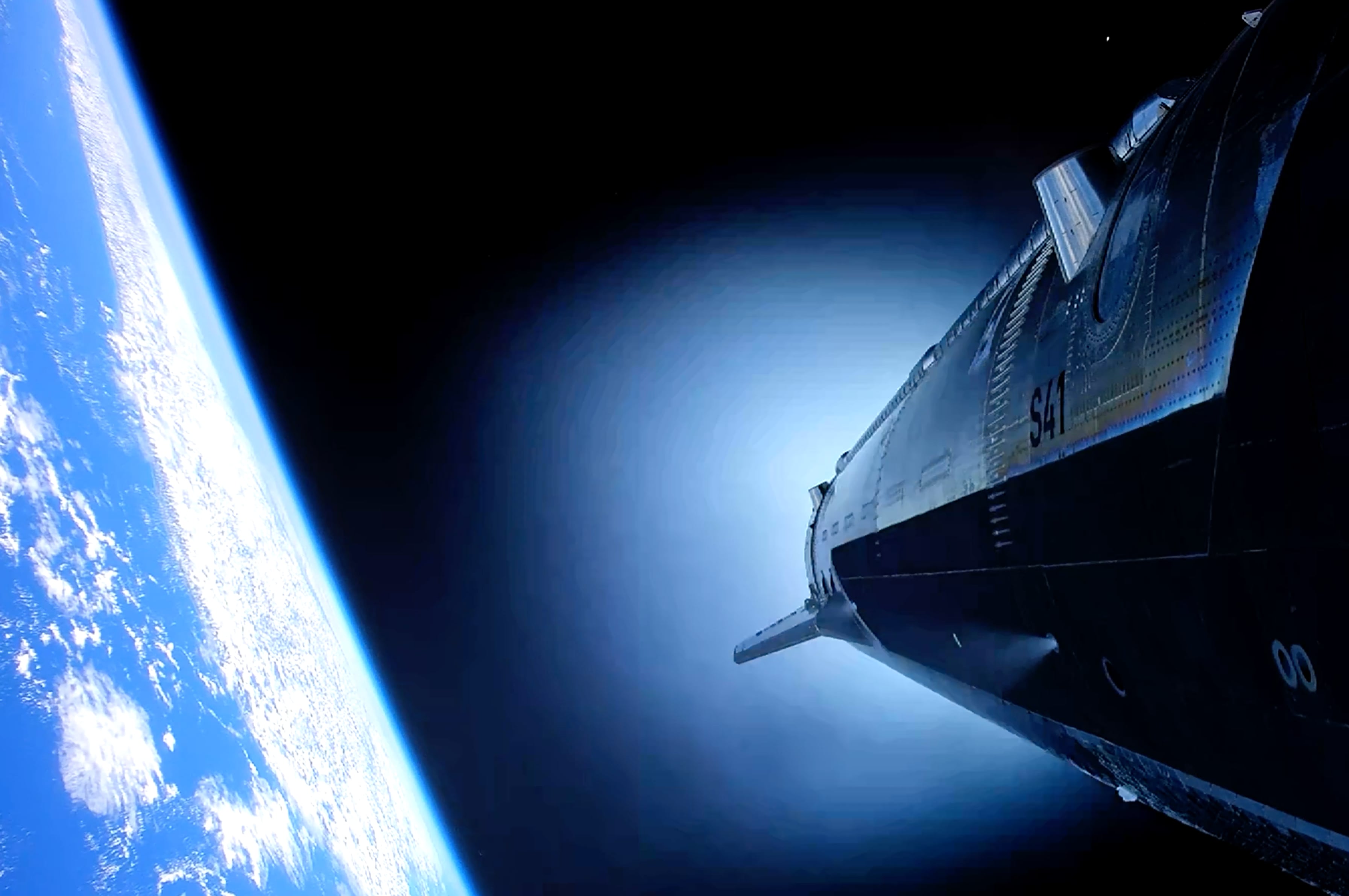
Elon Musk is stepping on the gas with Starship. His flagship spacecraft, the largest ever built, entered orbit for the first time on Monday, and his space company, SpaceX, has already received approval from the U.S. federal government to accelerate the current testing phase and launch it twice more in October if it wishes.
Five months ago, four excited girls walked into a maximum-security area with their mother wearing the same black T-shirt printed with a photo of their father. Minutes later, he emerged from a building guarded by the military, amid camera flashes and television cameras, and looked at them with moist eyes from the other side of the fence. He could not approach or touch them. He had to respect quarantine, because in a few hours he would board the most powerful crewed rocket in history and head to the Moon. Without speaking, they said everything to each other, and the rest of the world understood them.
When it comes to the future of Tail 844, the SR-71 Blackbird that mysteriously disappeared from NASA’s Armstrong Flight Research Center, few people have more insights than Tim Conners. When he worked at NASA in the 1990s, Conners was the lead propulsion engineer for the agency’s Blackbird program. He worked extensively on 844 and has an intimate knowledge of what made the iconic aircraft tick. Now, he brings an insider perspective on NASA’s secretive work to get the Blackbird back in the air and speculates on what it would take to do so, as well as the famed jet’s possible flight test role for the agency after 27 years of dormancy.
In an exclusive interview with TWZ, Conners, now technical director for advanced weapons systems at Tiberius Aerospace, gave us his take on NASA’s Blackbird revelations and insights into what NASA is working on and how far along they are in the process.
Some of the questions and answers have been slightly edited for clarity.
Tim Conners
Q: Tell me about your background with the SR-71 program. How did it begin? How long did it last? And what did you do?
A: So that basically fell in my lap when I was an engineer at NASA’s Dryden [Flight Research Center] back in the early ’90s when NASA took delivery of three of the airframes when the Air Force was retiring the fleet. So NASA got two A models and a trainer. Obviously, tail number 844, which is NASA’s designation, is the one that’s getting all of the attention right now. But those came to Dryden in the early ’90s.
By luck of the draw, I was in the propulsion group. We were short-staffed for a number of reasons, and they needed an engineer on Blackbird. And I had been with NASA for about three or four years at that point, and I got tapped to prepare the NASA side of the mission for the upcoming research flights. So I had a few years to get familiar. That was a part-time job, by the way. I also owned the F-15 fleet at NASA as a propulsion engineer, and that was occupying a lot of my time, but it did give me an adequate amount of time to get familiar with the way that the airplane operated, at least from the propulsion standpoint. And then we began doing research missions in ’96. I left NASA in ’98, but I was able to support the program through two years of flight testing and all the years of preparation for those two years.
Q: Tell me more about your role with the Blackbirds.
A: I was lead propulsion engineer on the NASA side. So what NASA would do is they would assign disciplinary leads across from their industry and government counterparts. So Dryden’s disciplinary leads, their job was basically to make sure that any experimental packages were integrated safely with the airframe, and that we could execute the proposed test missions safely and successfully. I owned propulsion and I also owned performance. So if you recall the Lockheed Linear Aerospike rocket engine activity, that package weighed 20,000 to 25,000 pounds and was mounted externally on the back of the SR-71. That was a drag issue, obviously. So part of my role was to make sure that we could actually accelerate through the transonic drag rise with that package and get out to the target test conditions.
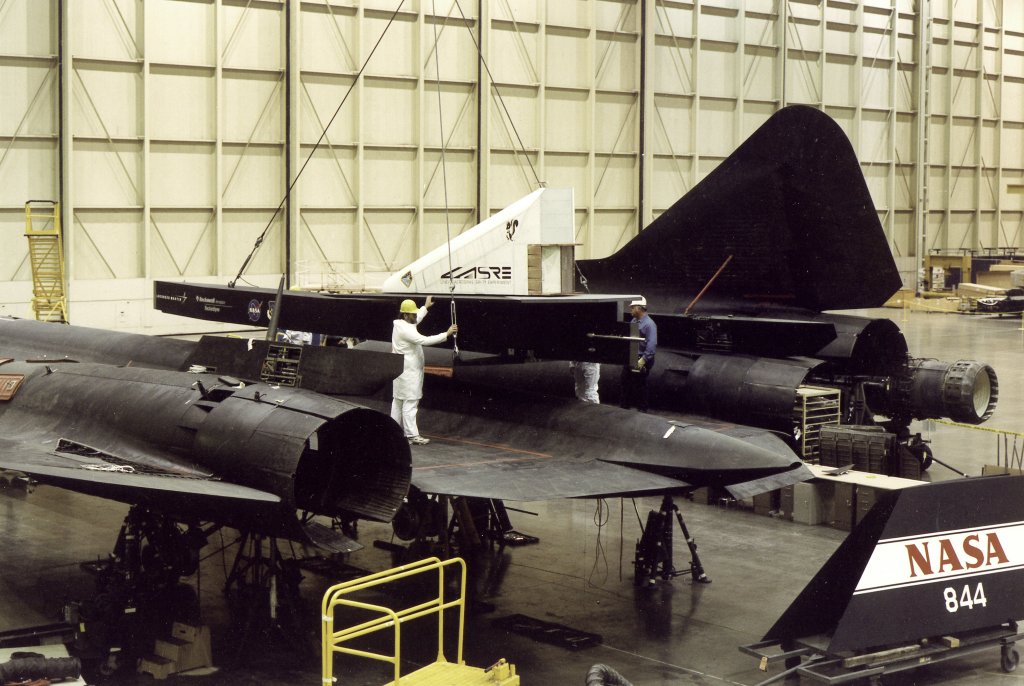
SR-71 tail number 844 during its service with NASA. This picture was taken on October 31, 1997, during a flight in support of the NASA/Rocketdyne/Lockheed Martin Linear Aerospike SR-71 Experiment (LASRE). NASA
Q: There is a tremendous amount of interest in seeing the Blackbird fly again. The biggest question seems to be why? What kinds of experiments or research would an SR-71 provide that couldn’t be done more effectively with a modern aircraft, rocket or unmanned vehicle? Can you walk us through some of the reasons NASA would like to see it in the skies again?
A: Yeah, that’s a question that everybody’s been asking. Why? I’m speculating, although I do have a good feel for where this is going. So bear with me.
They probably are not going to do this for — or trying to do this — for aerodynamic reasons. You can do CFD [computational fluid dynamics]-based modeling in this speed regime all day long and very accurately in this day and age. It does not take a lot of time or money to do that. What you cannot do is an accurate representation of a new type of engine integrated into a high-speed airframe. You can do the conceptual modeling of it. Of course, it’s difficult to get the final installed answer, especially if it involves an engine that operates at long duration. That is where I think they’re going with this. I believe that they’re developing basically a high-speed engine test bed. That would make the most sense to me.
Q: That’s something you couldn’t do with a more modern aircraft or rocket or unmanned vehicle?
A: That’s a good question. But you know, probably two-thirds of that battle is just developing the airframe. It does depend on the size of the engine that you’re after.
Obviously, if this were a Williams engine or that size class, you could get by with probably a bespoke drone to do your testing. That wouldn’t be that expensive. If your goal is to test something that’s man-rated or very large, like a J58-size engine, what better way to do it than use an airframe that’s already proven to fly at that speed?
SR-71 Blackbird. (Courtesy photo via USAF)
Q: Were you asked to join a team at NASA tasked with getting a jet back in the air? Who else was asked, and what kind of team were they building?
A: I did not receive an offer. There was a tongue-in-cheek text that I got earlier in the year that said, ‘Hey, Conners, how would you like to help get the Blackbirds flying again?’ And that was from somebody who was positioned with inside information. That is where I first heard of this. This was back in spring, but nobody formally reached out to me.
I believe that the only one that’s been tagged so far, as far as a retiree, was Mike Relja. Mike was a crew chief on the Blackbird, and that makes sense that they would potentially want to pull on him. But there was no formal offer, and I tell you what: If somebody approached me to work it, I don’t think I could turn them down.
Q: Do you know where the idea for this project came from and who is in charge?
A: I don’t have an answer. I’d love to know as well.
Q: What can you tell me about this effort? What are the latest developments in this project that you know of?
A: So what I’m hearing is that they’re looking at doing power-on testing fairly soon. That’s pretty big. So of course that’s not engine power on. That’s external power applied to the airframe, seeing which systems still live, which ones don’t, and then moving from there. So that would be an expected first step.
It’s an encouraging step. That means NASA would have gotten beyond cracking open all the bays, inspecting the interior, making sure that the thing at least passes visual inspection for airworthiness from that standpoint.
Q: Have they actually gotten any systems working?
A: No, they’ve done the visual inspection, actually, putting electrons on the airframe. [To get systems working] would be the next step, but it is forthcoming, from what I understand.
(NASA) Courtesy Photo
Q: What is the timeline?
A: That’s supposed to happen within the next couple weeks.
Q: Really? Where is this work taking place?
A: That I do not know for sure. Although I assume it’s happening at [NASA’s] Armstrong [Flight Research Center].
Q: So what is going to happen?
A: That’s a good question. Let me tell you about what I heard more recently, and then you can begin to connect the dots. JP-7. People ask about the fuel. I think it’s pretty well known that NASA had a huge amount of JP-7 stockpiled that they received from the Air Force back in the early ’90s. So much that it was in a dedicated tank, like one of the giant jet fuel tanks at Edwards Air Force Base. You know, the tanks up on the ridge.
From what I understand, that supply unfortunately was discarded about 20 years ago, and JP-7 is a unique fuel. Obviously, low volatility. When I poked at what might be the way forward there, it didn’t sound like that was a showstopper. I got the impression that there’s been dialogue underway with refineries for a replacement or a surrogate that would work. So I went from being deflated, hearing that the fuel was gone, to being encouraged that potentially there was a surrogate workaround.
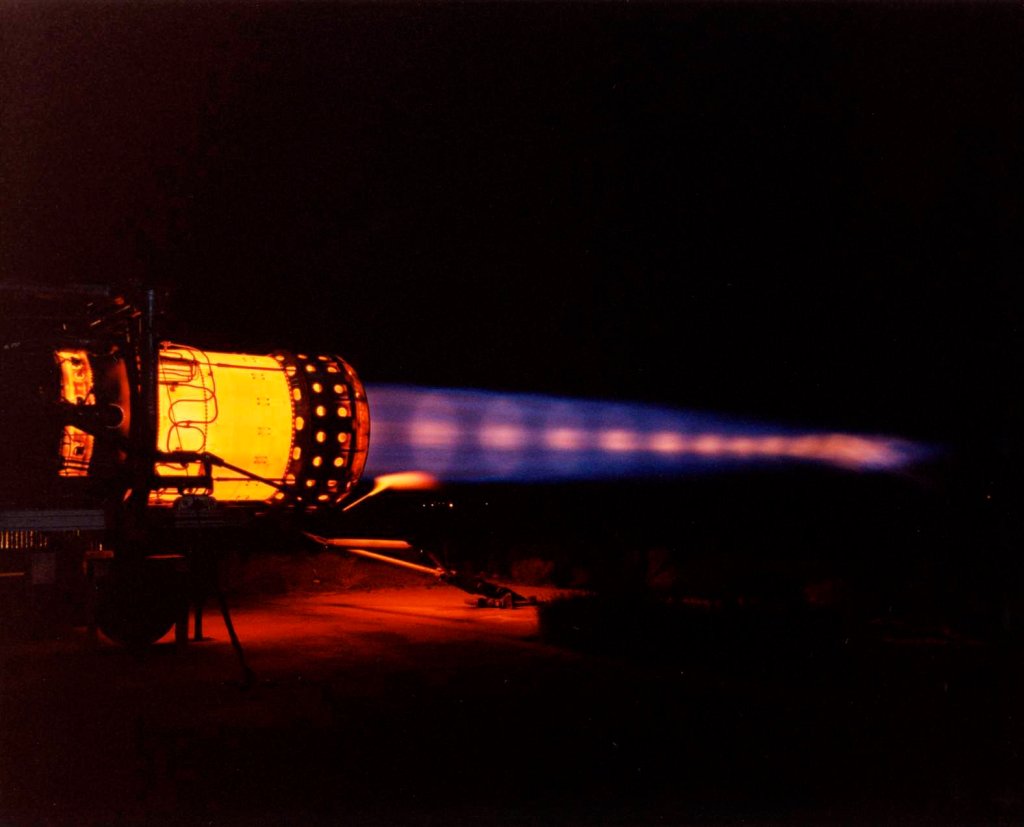
A statically mounted Pratt & Whitney J58 engine with full afterburner on disposing the last of the SR-71 JP-7 fuel prior to the program’s termination. (NASA)
But that led to the question regarding the engines themselves, so the feedback there was more discouraging in that it looks like the engines are indeed unserviceable. I don’t believe that is based on an actual attempt to run them. It is based on inspection. Probably no surprise. They’ve sat idle, you know, for 27 years. That is what led to questions going back and forth regarding how the airframe would be powered. And that’s what led into where, if you connect the dots, that’s where the airframe would be used as an engine test bed.
So different engines, they would have to be high-Mach bypass systems. We can speculate on which engine company might be developing those systems, but yeah, I don’t want to give it too much away because I don’t want us to lose the inside information that we got.
Q: Are they working on a completely different engine to power Blackbird?
A: I don’t know that for sure. I think if the J58s are not an option for powering the Blackbird, you either button it back up and walk away from it, or you go bring in engines that are already under development that we’re not privy to at this point in time. But there’s no other option. So what are we going to use? It’s not like we can slap in F100s or F110s. They’re not going to cut it.
Q: Obviously, restoring an aircraft sitting out in the elements for years into one able to withstand the rigors of Mach 3 flight is one hell of an undertaking. In your mind, what are the biggest hurdles to this endeavor?
A: Number one would be the engines for sure. Number two would be anything that’s made of elastomerics. Plastics, wiring. Covering connectors. All that stuff degrades and oxidizes with time. You can imagine what frayed wiring and broken wiring insulation – what kind of havoc that would create. What Blackbird has going for it is that all those casings and connectors were built for the rigor of sustained Mach 3.2 flight for an hour, an hour plus, so they are not going to deteriorate quickly. The question is: Have they deteriorated in 27 years? So, if the answer is not a significant amount, then we’ve probably addressed one of the biggest questions – other than the engines – regarding reviving the airplane.
Q: Do you think NASA is going to attempt to just fly Tail 844 largely in its original configuration, or will they deeply modify it or build something new based on it?
A: Completely unknown. They definitely have the ability to modify the airframe, right? They did it before in the ’90s to carry the Linear Aerospike package. That was a huge undertaking on the airframe itself. They did it successfully. Armstrong still has a pretty deep bench in that area, so if they wanted to take on modifying the titanium structure, I think they could do it.
View of the Linear Aerospike SR Experiment (LASRE) pod on NASA SR-71, tail number 844. (Photo by Heritage Space/Heritage Images via Getty Images) NASA
But it’s a good question. Again, that would probably point to aerodynamic studies, and if it were me and my dollar as a taxpayer, I would lean on computational studies to get those answers. That’s what I tend to do in my day job is forego testing in lieu of computational when it involves external aero, but it’s when you do the integrated propulsion in this speed regime, that’s really when you need test data from the actual operating conditions.
Q: As opposed to digital modeling?
A: Yes. For instance, say the aerodynamic databases for Blackbird are gone, which they might be. I know there are simple aerodynamic models that still exist, but like a true high-fidelity model that would go into a piloted simulator, that could probably be regenerated fairly quickly. Probably on the order of months computationally in this day and age. So I think simulation capability could be stood up in fairly short order. That, of course, will be foundational for the pilot training task.
Q: We’ll talk more about pilot training later, but first I want to ask about modernization. If NASA were to inject modernized features into the SR-71, what would you like to see? And what makes the most sense in terms of material science, avionics, propulsion and so on?
A: I’m not a materials expert. I think it would be really interesting to see how the airframe could be optimized using adaptive flight control capabilities. So, if the flight control system could be digitized, I think that would lead to some very interesting in-flight experiments. I doubt that that would be. I could be wrong, but if the goal is to get the airframe back up as a propulsion test bed, you don’t need to cut out the hydromechanical flight control system and replace it with a digital one.
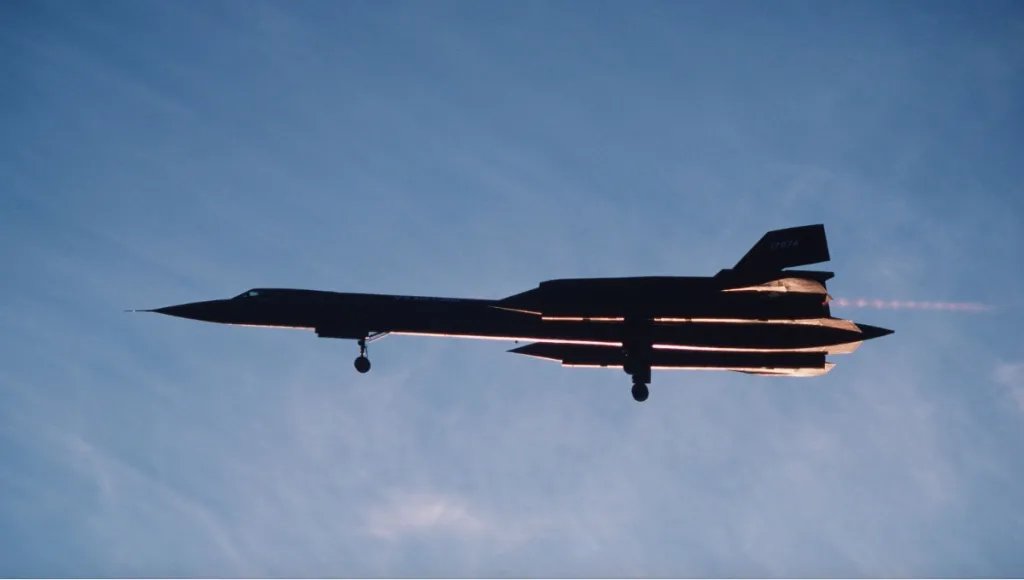
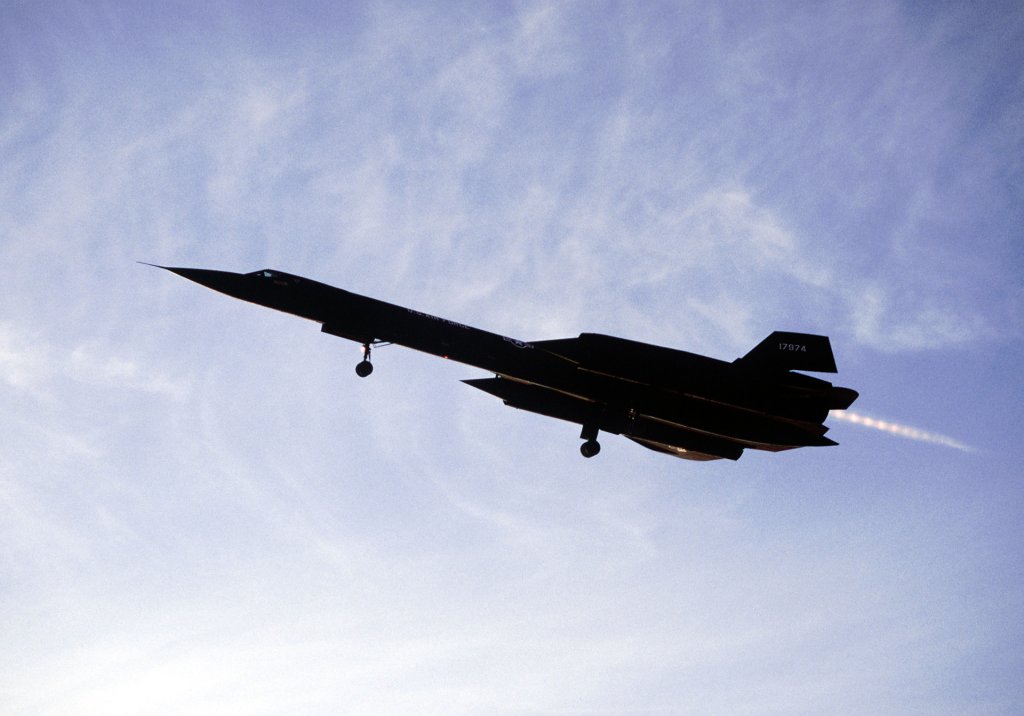
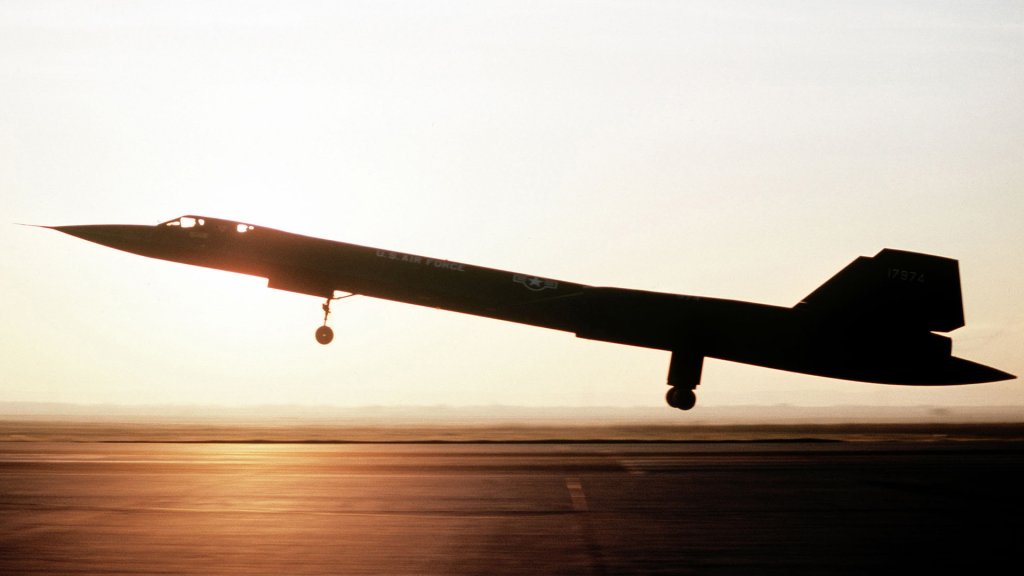
A left-side view of an SR-71 aircraft from the 9th Strategic Reconnaissance Wing landing. The aircraft is silhouetted against the sunset. (U.S. Air Force) U.S. AIR FORCE
That all said, what I would like to see is what we talked about a few minutes ago, and that’s basically modern high-speed engine technology. So what could be done? The J58s were low operating pressure ratio systems. What could be done with a modern, digitally controlled, multistream, high-Mach engine, I think, would be truly trailblazing.
One of the reasons why there’s interest in this speed regime, it was neglected for a number of years. The focus was on hypersonics. If you proposed anything going back, say, 15 years in the Mach 3.5 speed regime, it was ignored. The glitz and glamor was on hypersonics. Hypersonics is great tactically for certain scenarios, but the weaknesses of hypersonics are now becoming apparent.
And as far as countermeasures, hypersonics still has a place. Don’t get me wrong, but every system cannot be hypersonic from an affordability standpoint. So, now you’ve seen it over the last, say, five years. A lot of systems are coming back on the scene that operate in the Mach 2 to Mach 4 regime, and there’s a reason they’re all fitting in there, right? You stay below the speed limit that requires more exotic metallics. You stay in the titanium regime. You can fly, of course, up to [Mach] 3.5 with brief excursions up to about [Mach] 4, so that is tactically relevant against a lot of military targets and defensive systems. So here it is. You know we now have a potential flying test bed that can carry engines in the J58 size class.
Q: How much could a project like this cost, and is it really economically feasible? How long do you think it could take?
A: I’ve been thinking that over, and I think it depends on who does it. I don’t want to disparage my former government brethren. I had great respect for the folks at NASA when I worked with them, but one of the reasons why I left the agency is because it was becoming so risk-averse. That was adding bloat to everything. And what we used to do quickly, we no longer could do quickly or cheaply at what was Dryden Flight Research Center, so that is what concerns me.
If NASA could operate with the agility that it had, if Dryden/Armstrong could operate with the agility it had 30 years ago, they could do this work in probably a few years. I would say again, it would depend on what exactly they need to do to the airframe. If it’s to resurrect the airframe and bolt in new engines using existing interface hardpoints, that would go much, much more quickly than doing extensive airframe modifications.
Q: Given that 844 has been sitting idle since 1999, what would be the very first thing you would want to inspect or test before even considering putting it back in the air?
A: Exactly what I’m hearing the rumor is that they’re doing this. What is the condition of all the components in the airplane that are flowing electrons? Because if the entire airframe is shorted out, you know how it is.
If you have a car where you’ve hooked up the battery cables backwards – I had a car once where somebody jumped in and did that. It ruined the car because I was chasing shorts constantly, constantly breaking down in the months that followed because the wiring was compromised, melted, bubbled all over the vehicle. And then it would get wet. You get shorts. That, I believe, is what one of the objectives of power-on testing is. To make sure continuity still exists, reliable continuity throughout the airframe. So that’s exactly the first step.
I would say the second would be hydraulics. That vehicle is hydromechanical. So what is the state of the actuators and whatnot?
Q: And you said that work is taking place now?
A: It’s certainly being inspected. That was one of the reasons why they pulled it off of the display pad at Armstrong. But that work has been going on for a couple of months, and it certainly seems that there was at least reason to be encouraged and to go forward with this next step. Otherwise, they would have just towed it back to the parking spot.
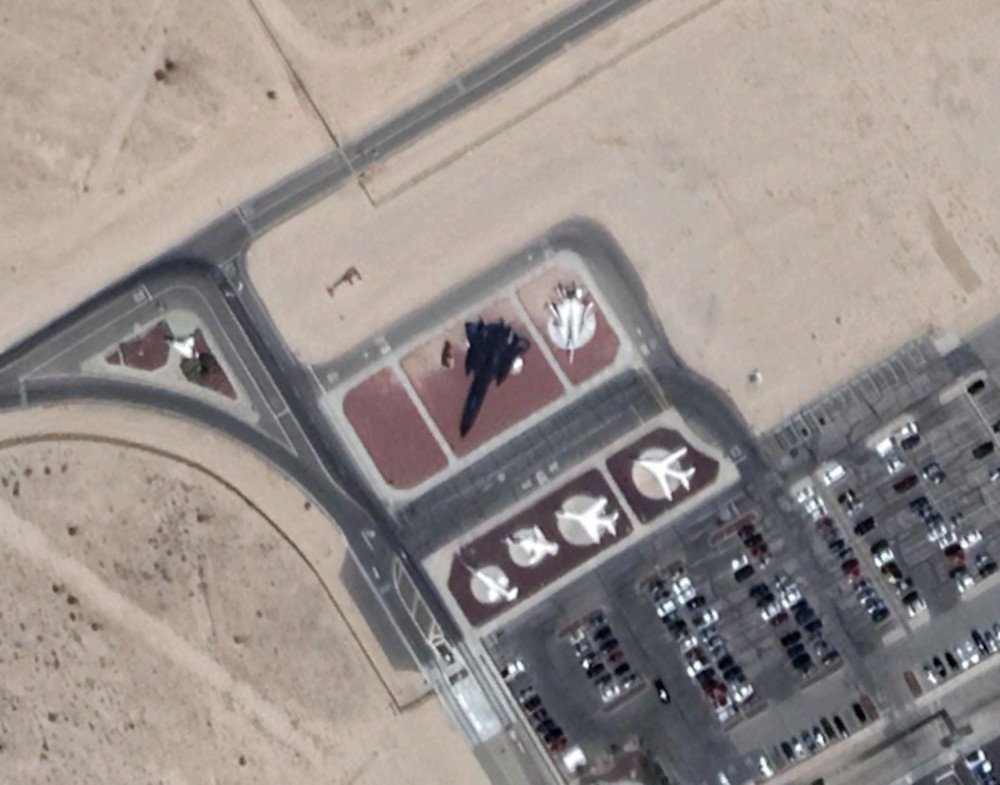
The SR-71 Blackbird, Tail 844, when it was on display at NASA’s Armstrong Flight Research Center (Google Earth)
Q: And the next step is testing the systems?
A: That is correct.
Q: We touched on this a little before, but how realistic is it to get an SR-71’s J58 engines operational again after nearly three decades of inactivity? What would worry you most about those engines? How many are left?
A: Well, that’s a good point. As far as [engines] that are readily available, there are several that are at the [Air Force Flight Test (AFFT) Museum at Edwards AFB]. I believe they’ve been stored outside. But if you consider all the museums around the world with Blackbirds on display, almost all of them have installed J58s, and there’s usually one sitting alongside the airframe on display, so there are plenty of engines. Whether or not they’re serviceable, that of course is the question.
But probably the biggest problem with an engine – well, there are several with a gas turbine that sits unmoved for decades – it’s going to be that you’re going to flatten the bearings. Probably not visible to the eye, but rotating turbo machinery doesn’t like flats on the bearings. So for obvious vibration reasons, you got that. And you’ve got the seals. Seals are going to crack. Trapped fuel is going to turn to gunk and clog up lines. That engine was all hydromechanical, of course, or no digital controls on that because of the heat involved. So fuel hydraulics played a big role in that engine.
There is likely a lot of goo in those lines. I believe that’s why they’ve essentially been written off as unserviceable. I was discouraged because one of the questions I asked that I didn’t get an answer to was: Did anybody try to run the engines or pull them apart? But I don’t even know if the instructions exist to unstack a J58 at this point. I’m sure it could be figured out with the right people, but you know how it is. Pulling something apart is a lot easier than putting it back together.
Q: So there’s no manual for that anymore?
A: I don’t know if there’s a manual specific to that. Like I told Steve [Trimble] at Aviation Week, there certainly are operating manuals. You’ve probably seen the pilot’s manual for the SR-71A. It’s a beauty. There are a lot of copies online. You can get PDFs of those. They are very well-written, huge manuals. I know prints exist for the airplane. Those were in the keeping of the Edwards Museum. I believe those have been handed back over to NASA. So, it’s not like there’s a complete dearth of information.
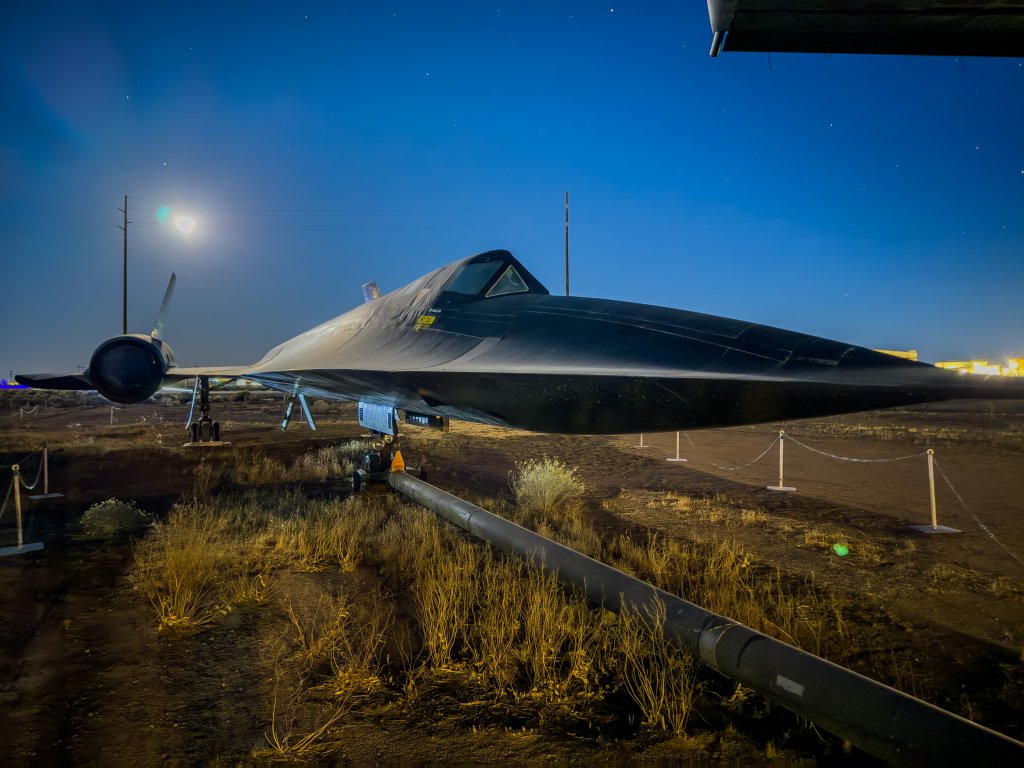
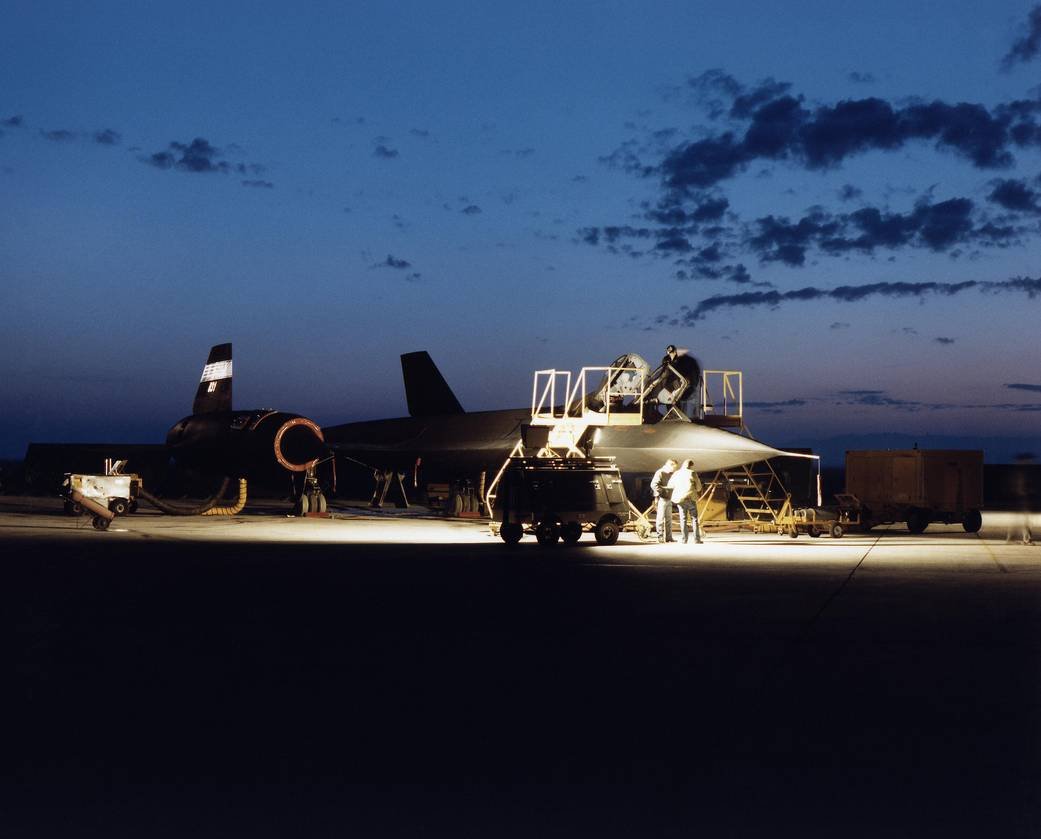
SR-71 Blackbird 844 basks in the evening moonlight at Edwards Air Force Base, California. (Air Force photo by Todd Schannuth) Todd Schannuth
When I was at NASA, I was the person who received everything that Pratt & Whitney had left on the J58s when the Air Force decommissioned the program, and that information was in two or three smallish boxes and consisted of hard copy code printout or printout of numerical data, along with some magnetic reels of code. It was not much. And I was told at the time the only reason I received that information was somebody missed it when the Air Force gave the destruct notice. It was under somebody’s desk, so it was not much in the way of knowledge transfer, unfortunately.
Q: What did you do with all that?
A: I left it behind in 1998 when I left NASA.
Q: What happened to it?
A: I have no idea. Hopefully, somebody scanned it. But again, that was J58 info, right? So if they’re going with a new engine, they’ll have the full digital models for those new systems. And I do believe that recreating the aerodynamic database, including inlet performance, that kind of data can all be regenerated fairly quickly with computational tools.
Q: We touched on this a little bit before, but how difficult would it be to reproduce the JP-7 fuel that powered the Blackbird? It would need designated tankers too, correct?
A: So that was one of the questions I asked is whether or not that formulation exists still. The answer I got back was that essentially a refinery should be able to recreate a suitable surrogate. If you think about it, JP-7 was unique in that it had a very low volatility characteristic.
What I’ve learned about Jet A from some of the ramjet work that I’ve been doing is that it has a ridiculously low volatility too, of course, by design. So I don’t know that JP-7 is that far apart from the chemical characteristics of a Jet A-class fuel, JP-8-type fuel. JP-8 was a significant change from JP-4, so the Air Force was using JP-4 in their fleet, and then moved to JP-8 to be consistent in the ’90s with the Navy with their formulations. That’s a lower volatility fuel, and at NASA we had to recharacterize the flight performance of all of our jets with JP-8, but it worked fine.
We were concerned about operability – that we were going to have flameouts and engine relight and flight relay problems. Those did not materialize, so I don’t want to oversimplify it, but I am thinking that you might be able to take an existing Jet A and with the right additives knock down the volatility to a level that’s safe for flying in the Blackbird.
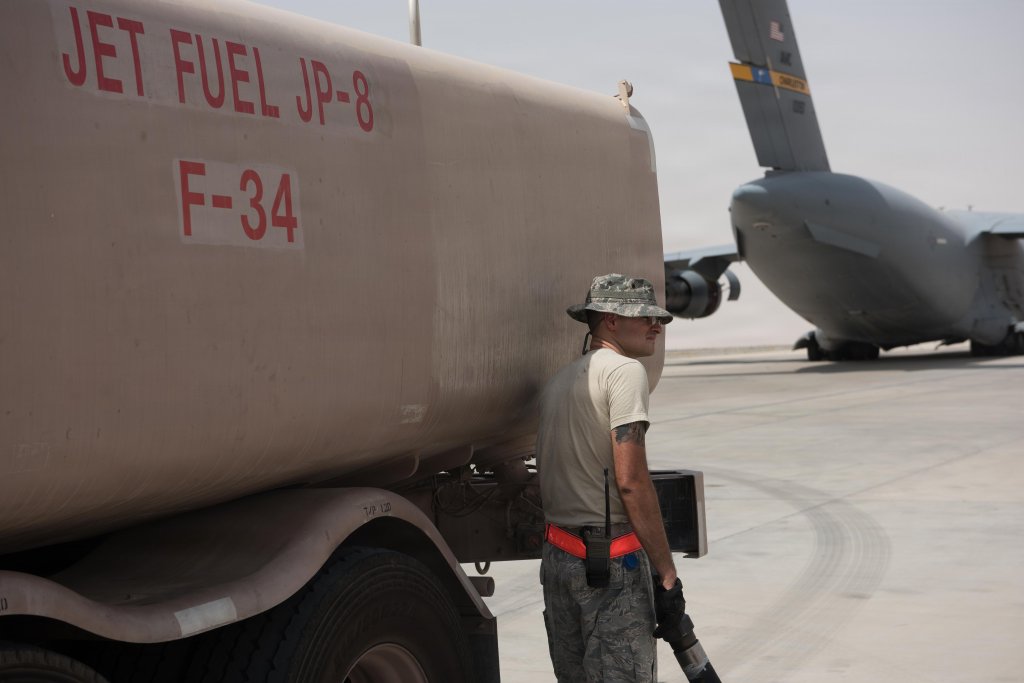
Airman 1st Class James Douds, a fuels specialist with the 386th Expeditionary Logistics Readiness Squadron, offloading JP-8 jet fuel. (U.S. Air Force photo by Tech. Sgt. Jonathan Hehnly) Senior Master Sgt. Jonathan Hehnly
Q: What would need to happen to have aerial refueling jets be able to handle fuel for the Blackbird?
A: There were dedicated JP-7 tankers for the Blackbird. I don’t know if they can take an existing system and flush it. It would depend on the formulation, right? JP-7 was notorious for its unseemly characteristics. It was toxic.
I had a shirt that got dripped on when I was standing under the wing of the Blackbird once, and I had to throw it out. I could not get the stink out of that shirt from the JP-7. It was a weird fuel. So if you can get one that’s more aligned with the fuels used in the service, then I don’t believe that’s going to be a showstopper as far as tanker support, but you do know tanker support is going to be required for that airplane.
Q: You said the JP-7 fuel stank. What did it smell like?
A: I just remember it turning my stomach. Like I kept smelling something as the day went on, and I reached over and saw a stain on my shoulder. I don’t recall what happened the rest of the day, but I just remember being repulsed by the odor and then not being able to get it out when I washed the shirt.
Q: Beyond the fuel, the SR-71 depended on a huge ecosystem of specialized equipment, fluids, personnel and procedures. Which parts of that infrastructure would be hardest to recreate today?
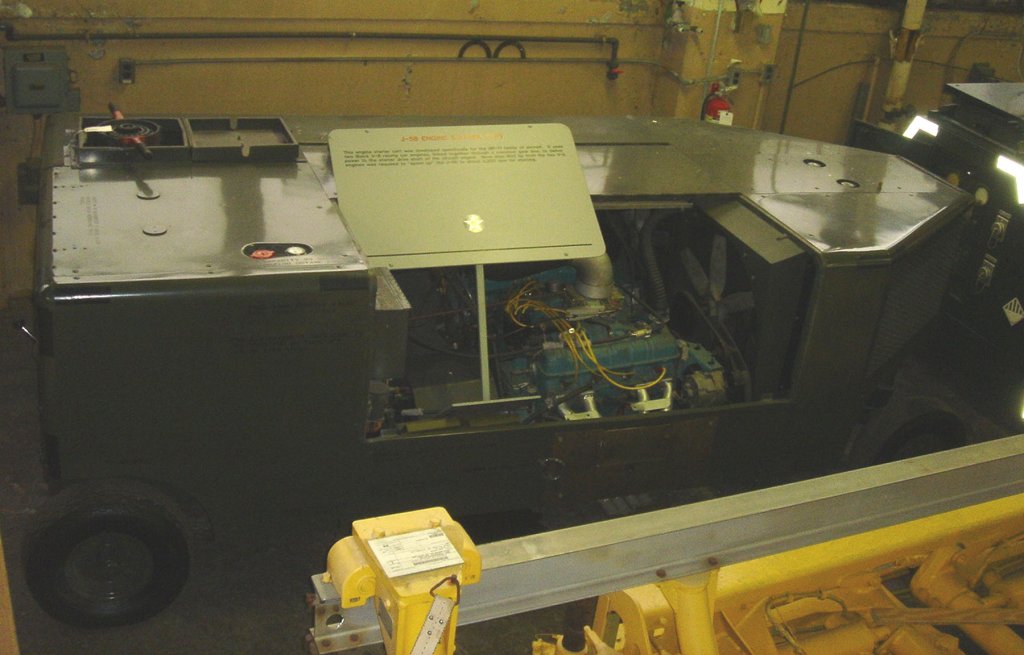
A: That was something that Mike Relja pointed out when he talked to Steve Trimble. That’s a good one. You probably heard that the J58s were started with a start cart that was basically a bank of Buick 12-cylinder engines, all next to each other. It’s a beautiful-sounding system, but very unique. But what is starting, you know, other than you’re either doing a power takeoff via shaft, or you’re using compressed air. It depends on what the engine demands. So I think the start cart development would be fairly straightforward.
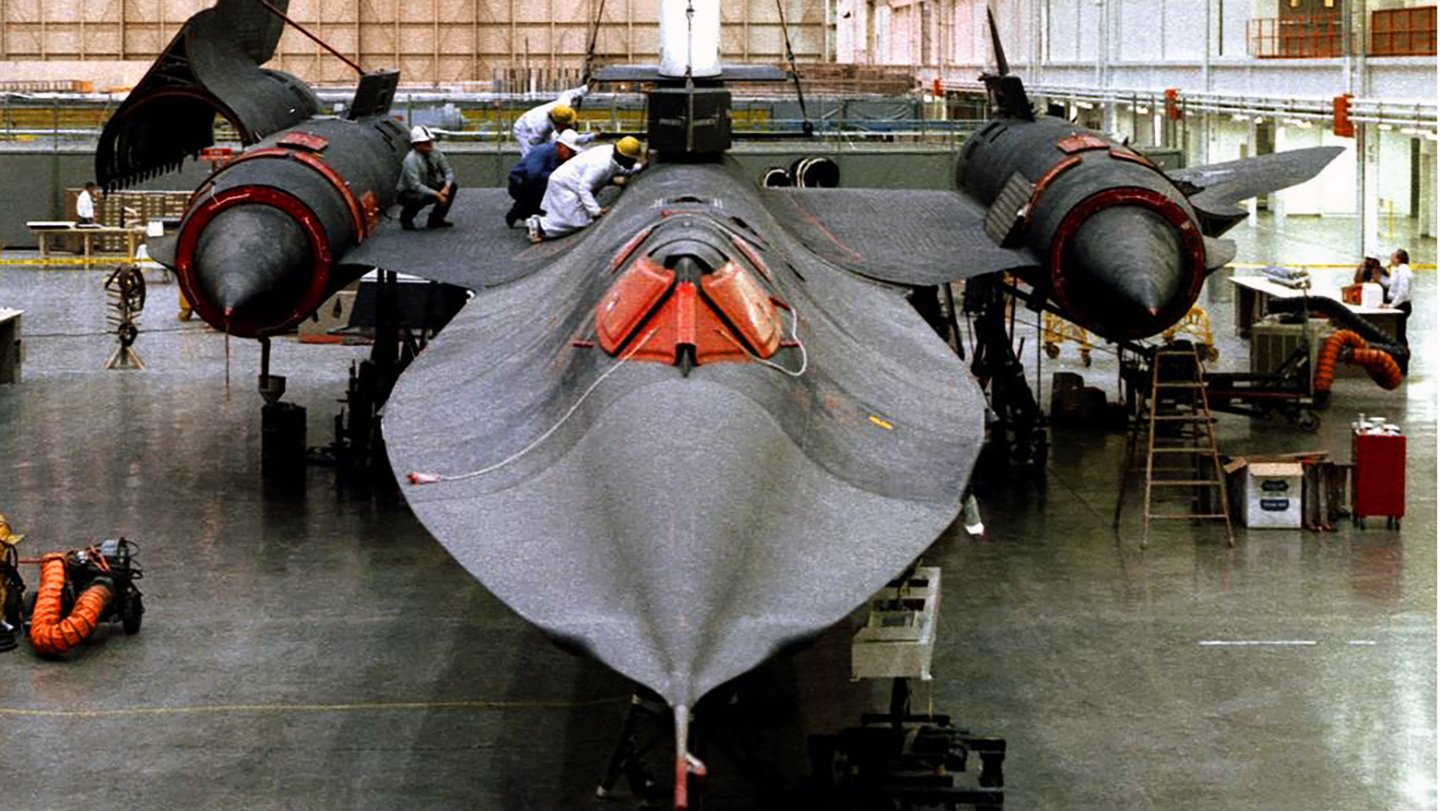
But there is a lot of specialized equipment, like Mike pointed out, the wings when they’re split up, they are held in place by a specific scaffolding. The way the engines were craned out of the wing required special equipment. Pulling the inlet spike off that required a special cradle. Those are not insurmountable, but you don’t want to wait till the last minute to realize you need unique equipment. So it’s all got to be taken into consideration.
This engine starter cart was developed specifically for the SR-71 family of aircraft. It used two Buick V-8 racing car engines, linked together through a common gear box, to deliver power to the starter drive shaft of the aircraft engine. More than 600 hp from the two V-8 engines was required to “spool up” the J58 to about 3,200 rpm for starting. (U.S. Air Force photo)
Q: Could existing SR-71s in museums realistically be used as sources of spare parts for 844, or would cannibalizing those aircraft create more problems than it solves? Were those airframes left structurally intact?
A: I believe that was the agreement with the Blackbirds. If a museum were to put one on display, there was a certain expectation regarding care and maintenance. Not so much maintenance, but care and preservation. If you think about it, many of them are under [a] roof in climate-controlled facilities. I know several of them that are preserved like that, including one here in Tucson. That, of course, is the best place for preserving anything with elastomerics and plastic. So I think it’s encouraging that so many of them have been so well cared for. Again, it’s going to come down to which components, regardless of whether or not they’re indoor or outdoor, which components are going to fail first, and I believe that’s the exercise NASA is looking at.
Then you’ve got to start beating down, chasing supply chain sources for some of this, and you know the nightmare that’s out there with supply chain and aerospace. So it’s not going to be an easy task. I don’t want to act like it is. I don’t think it’s insurmountable though.
Q: So these aircraft can be used as sources of spare parts?
A: Sure, absolutely.
Q: Is anyone with a Blackbird already contributing parts?
A: I know that the Edwards Air Museum is contributing what they can as far as spares and prints. I don’t know who else, although I believe the second NASA SR-71A went to the Evergreen Aviation & Space Museum in Oregon. I would expect them to be in the loop.
(TWZ reached out to the Evergreen to find out what, if anything, it is contributing to this effort.)
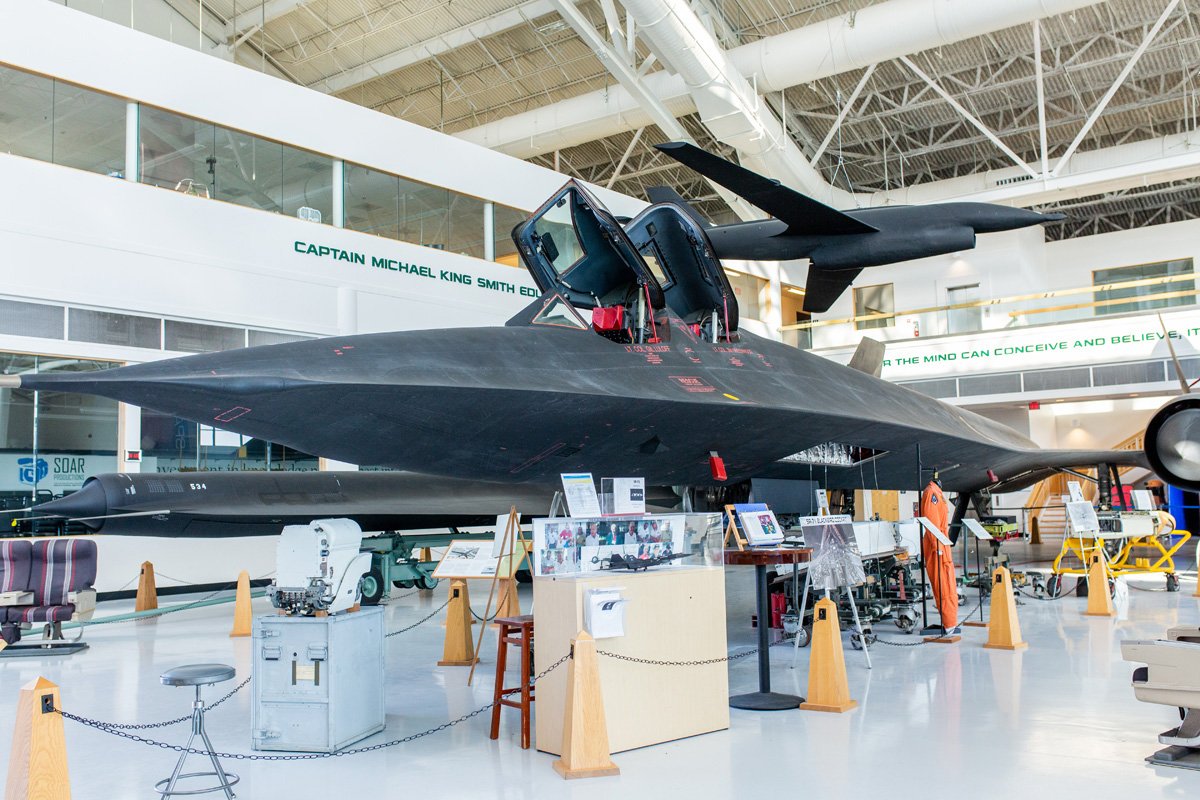
An extremely well preserved Blackbird on display inside at the North American Aerospace Museum in Oregon (formally the Evergreen Airventure Museum). (NAAM) Stephanie Tassone
Q: How difficult will it be for modern test pilots to fly Tail 844, or whatever aircraft is created from this project? What would actually be the hardest part of training a pilot to fly the aircraft today? Do you think they will convert it into an unmanned configuration?
A: Well, that would be a difficult airplane to convert to unmanned, unless it went with a digital backbone, and like I said, I think that would be an enormous undertaking. It’s not unheard of. NASA, along with McDonnell Douglas, converted a couple of F-15s to all-digital backbones before the F-15E program began. It can be done. It’s just expensive. It’s not easy.
But the piloting task starts with a good simulator, right? The piloting task is absolutely a big deal. I saw it firsthand at Dryden. That said, it took a couple years, probably two. I would say that’s about right for the Dryden pilots, who are pretty good at what they do, to learn to fly the Blackbird safely, and that was with the use of the two-seat trainer, which we’re not going to have this time.
So I think the key to this happening is getting a digital sim together very quickly, and it wouldn’t surprise me if NASA has begun this process already. Getting that together, plus getting the former pilots who are still with us in the seat to make sure that it aligns with what they recall as far as the unique features of the airplane.
I have 100 hours of stick time on the Air Force Blackbird simulator. I’m not a pilot, but I used to pre-fly the maneuvers for the pilots and NASA on the high-drag missions, so I’m familiar with the way the airplane flies up and away, and it is a bear to fly. It is not easy. So training is not insurmountable. Like I said, it takes a good, high-fidelity sim. NASA is expert at building those kinds of simulators, modular simulators quickly. In this day and age, we should be able to put a high-fidelity sim together fairly quickly for training.
If you recall, the cockpit is an analog nightmare on a Blackbird. Breakers everywhere. Dials everywhere. I doubt that somebody suggested that we go with an all-digital cockpit. That would be so much work to do. But if we go for it with just a pure analog cockpit that we used previously, that’s going to require a lot of familiarity. I do believe that the training systems might still exist for that. It would just be for that airplane. It would just be getting them all cobbled back together.
Q: What made the Blackbird so difficult to fly?
A: It’s a low-G airframe, so you got to baby it. It’s easy to get an angle of attack out of range. And then with those chined surfaces, it’s easy to get a pitch-up with the airplane. That’s how I always managed to wreck it in the sim. I would let alpha get away from me.
Q: Do you know if any of the pilots have been recalled for this effort to get this thing flying again?
A: No, I don’t know.
Q: It has been close to 70 years since the A-12 Oxcart first flew. There had to have been other high-speed aircraft that at least came and went in the classified test environment. Considering all the work in hypersonics today, it isn’t hard to believe new platforms exist. Why would the SR-71 still have relevance here, and why not use one of those aircraft instead, if they exist? If they do, is it because the SR-71 is declassified?
A: Yeah, that could very well be what we’re looking at here. I’ve had friends ask that question this week. We were talking about the SR-72. Where is that at? I don’t know. I know people who went to work on it years ago. I’ve never heard anything since. So it could be that that’s so deep black that there’s no way that platform could be used as a test asset. So I think it’s precisely what you said. The Blackbird’s no longer classified, and that it’s possible that the engines that might be used in Blackbird wouldn’t be classified either.
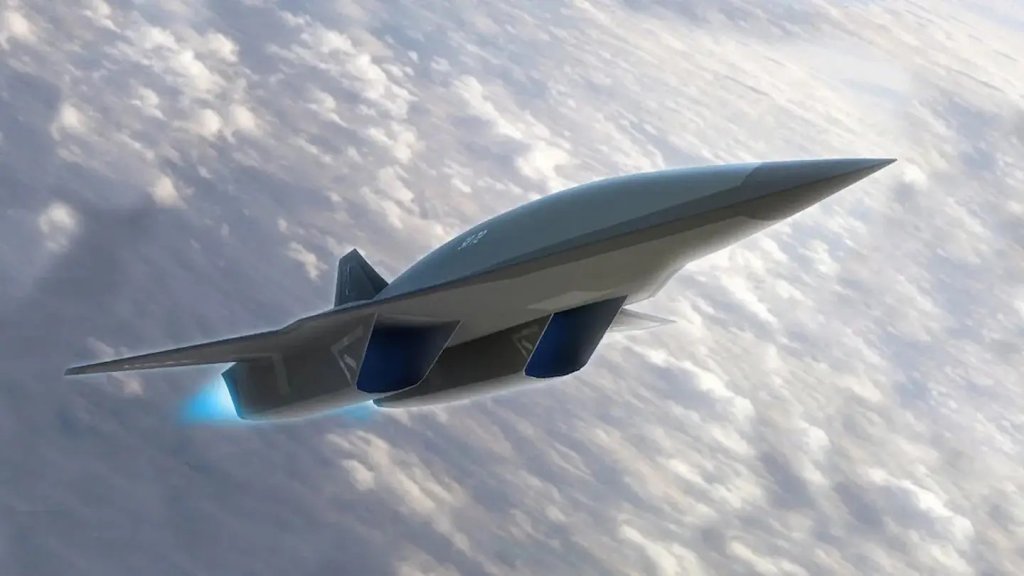
A rendering of the proposed SR-72. Lockheed Martin
Q: Would any of those engines be applicable for this SR-71 reboot?
A: Certainly.
Q: Do you know if they exist anywhere?
A: No. But from what was leaked or hinted at regarding the size of the vehicle, it would seem that whatever was the power plant for that aircraft, it would be about the right size.
Q: What do you think generally about the renaissance of sorts in high-speed aerospace capabilities in recent years?
A: I worked on HAWC [Hypersonic Airbreathing Weapon Concept] at Raytheon, which became HACM [Hypersonic Attack Cruise Missile]. One of the systems that I helped design was the inlet isolator used on HACM, which is not operational yet, but it will be. But it’s an air breather by Raytheon. That gave me a lot of exposure to the level of exquisite technology that’s required to field a system like that.
It is expensive. It’s difficult. Supply chain is a challenge. There’s a reason why they cost what they do per unit. So you see the push to develop lower-cost hypersonic systems like Castelion’s Blackbeard [lower-cost hypersonic missile]. It’s not an air breather. So I think it’s an easier problem than what we dealt with at Raytheon with an air breather. But nevertheless, it’s impressive that they’ve gotten a price point down to what they’ve gotten, so you see that happening in hypersonics.
You’re kind of stuck in the same block of speed, but the price is dropping. And then meanwhile, you’ve got this massive group of munitions that are setting up camp in a Mach 2 to Mach 4 speed regime for reasons I mentioned. Those are running much cheaper per shot and per effect, which is why that’s happening. So that you give up something on survivability by pulling down into that speed range, but the price point allows you to volley at such a level that you overwhelm the defensive systems.
To date, this is the only picture the US Air Force has released showing an actual air-breathing hypersonic cruise missile test article related to the Hypersonic Attack Cruise Missile (HACM) program and/or the Defense Advanced Research Projects Agency’s preceding Hypersonic Airbreathing Weapon Concept (HAWC) effort. (USAF)
Q: If an SR-71 took to the skies again, would it not be one of the highest-profile aviation moments in a generation? It would certainly capture the imagination of many young and old. What do you think about the social aspect of all this?
A: I have yet to find anybody who isn’t excited by the prospect. Certainly, everybody within aviation thinks it’s cool. Some of my family who don’t know much about airplanes – they all think it’s cool. Everybody thinks it’s just super. That said, everybody also wonders why we’re doing it. But what’s funny is everybody still says, ‘Let’s do it anyway because it’s such an iconic airplane, beautiful airplane, an inspiration.’ Hopefully, there would be a good reason to spend the money. But I think even if it’s a bad reason, everybody wants it to take to the skies again.
Q: If you were a betting man, Tim, what would you say are the odds of this thing flying again?
For aerospace aficionados, it’s like we have entered into an alternate dream reality. The idea that we are seriously talking about the possibility of bringing back the SR-71 Blackbird to flight status is hard to comprehend, but amazingly this is where we are at. The biggest question I am getting about all this is why? We touched on the likely primary answer to that in our original reporting — high-speed is back in tactical vogue, and the Blackbird can sustain it in a realm of great interest, between Mach 3 and 4, and do it over and over again. It can also carry very large things and even launch them off its back at those extreme speeds. But those are not the only potential reasons for taking on such a gargantuan, high-profile, and costly technical challenge. Learning from the journey itself could be just as valuable as the actual flight test data a revived SR-71 produces.
Let me explain.
(NASA)
The Blackbird was as close to alien tech as it gets over 60 years ago, and even today, we have nothing like it in known operation. Yet it has been dormant for nearly three decades. Much of the expertise that built, supported, and operated it is sadly gone. But the exercises of reverse engineering and leveraging breakthroughs in additive manufacturing and rapid prototyping, as well as injecting new material sciences, avionics, propulsion and other technologies where applicable, and above all else, building the digital toolkit to make it all happen as fast and efficiently as it can be done, are all of extreme learning value.
I would not be surprised if a ‘digital twin’ is being created right now of the SR-71 using NASA’s SR-71 tail number 844 — the jet in question that has mysteriously disappeared from its display pad. Once such a model exists, breakthroughs in digital engineering can be brought to bear to see how fast the program can be accelerated, both in terms of development and flight testing. This could include not only getting the SR-71 back in the air, but improving its performance and reliability, possibly substantially, using all the new technologies we have today. It’s even possible a clone of sorts leveraging all these advances could be built using digital engineering tools.
The SR-71 served as an integral part of NASA’s flight test fleet at Dryden Flight Research Center, located on the premises of Edwards AFB. (NASA)
This is not necessarily an unprecedented concept. Just look at similar exploratory engineering programs like the X-55. But when it comes to partially reverse-engineering an airframe you have no support for, and few, if any, spare parts, America’s highly-secretive foreign materiel exploitation (FME) community could potentially lend a hand.
Operating in the shadows, they have been able to not only get totally foreign aircraft divorced from American supply chains pieced back together and flying, but they sustained them for years in total secrecy. They also did this long before the advent of rapid prototyping and digital engineering assets that we have today. Imagine what they can do now. They could be a top source for NASA to pull in to help in its far less sensitive but uniquely similar endeavor. This is just one example of many of how government and industry could come together to support and benefit from the SR-71 resurrection program.
Now, about those supply chains. During its heyday, the SR-71’s logistical tail was one of the most exotic ever created. It supported the Blackbird, as well as its progenitor, the A-12, for the better part of half a century. Reestablishing this supply chain would be a highly challenging, but rewarding exercise that could have major impacts across the aerospace industry, as well as others. So, how can we use all the capabilities we have now to jump-start the sustainment of the highest-performing air vehicle from an era of slide rules and drafting tables?
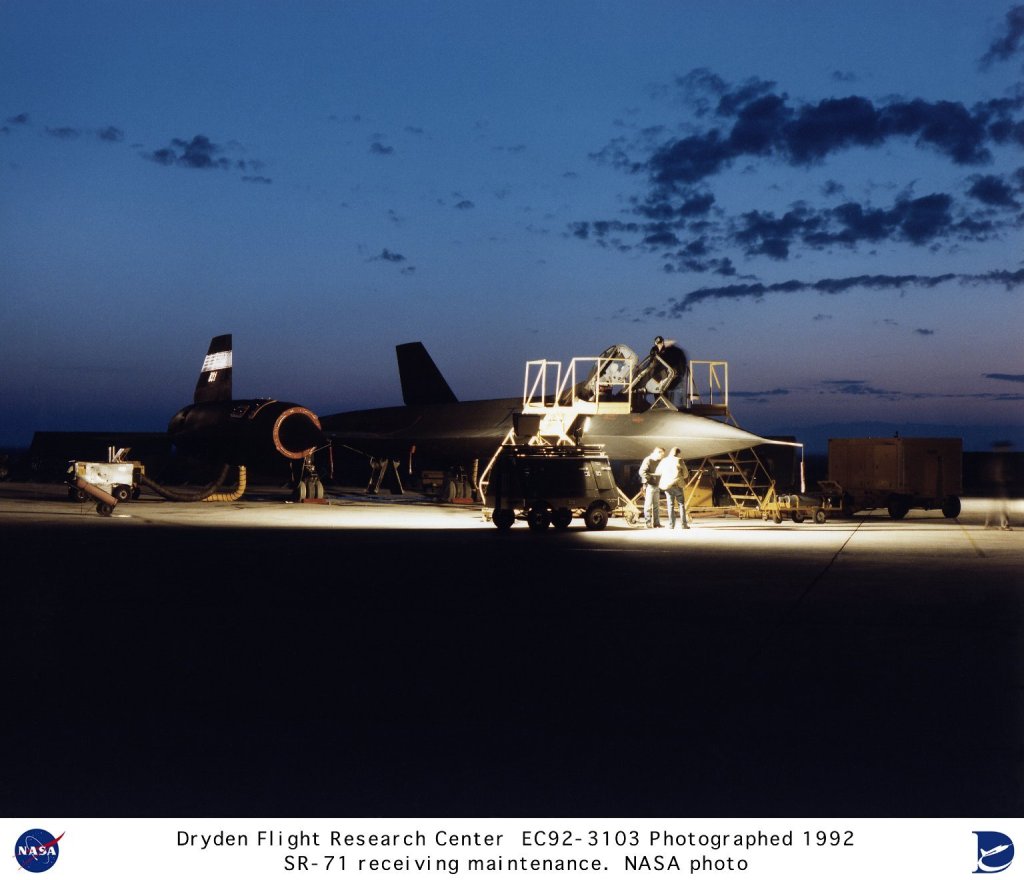
NASA SR-71 on the ramp in the evening. (NASA)
The idea of putting aircraft out of production back into production is not a foreign one to the U.S. military, either. NASA’s SR-71 program could serve as a pathfinder for better evaluating such proposals and their costs, while pushing the envelope forward on exactly how it can be done efficiently. The same can be said for simply keeping aging aircraft (or any vehicle or system for that matter) operating longer and for cheaper, by applying cutting-edge technologies and practices. NASA can create the playbook for doing so, and that playbook could end up being more valuable than the flight testing a reborn SR-71 does.
I think it’s fairly clear that we have lost something when it comes to aerospace engineering as of late. With all our advances and incredible tools even legendary Skunk Works founder Kelly Johnson could have only dreamed of, it seems like we have to relearn even simple lessons from decades ago, and oftentimes that can be a very expensive, time consuming, and even deadly process. In some ways, it seems like we have gone backward, or at least stalled out in certain engineering areas. The simple things become hard and hard things have become simpler. How did they do so much protractors and pencils way back then? Getting a Blackbird flying again can help explore and possibly answer this and other questions, and help mitigate these deficiencies going forward, as well.
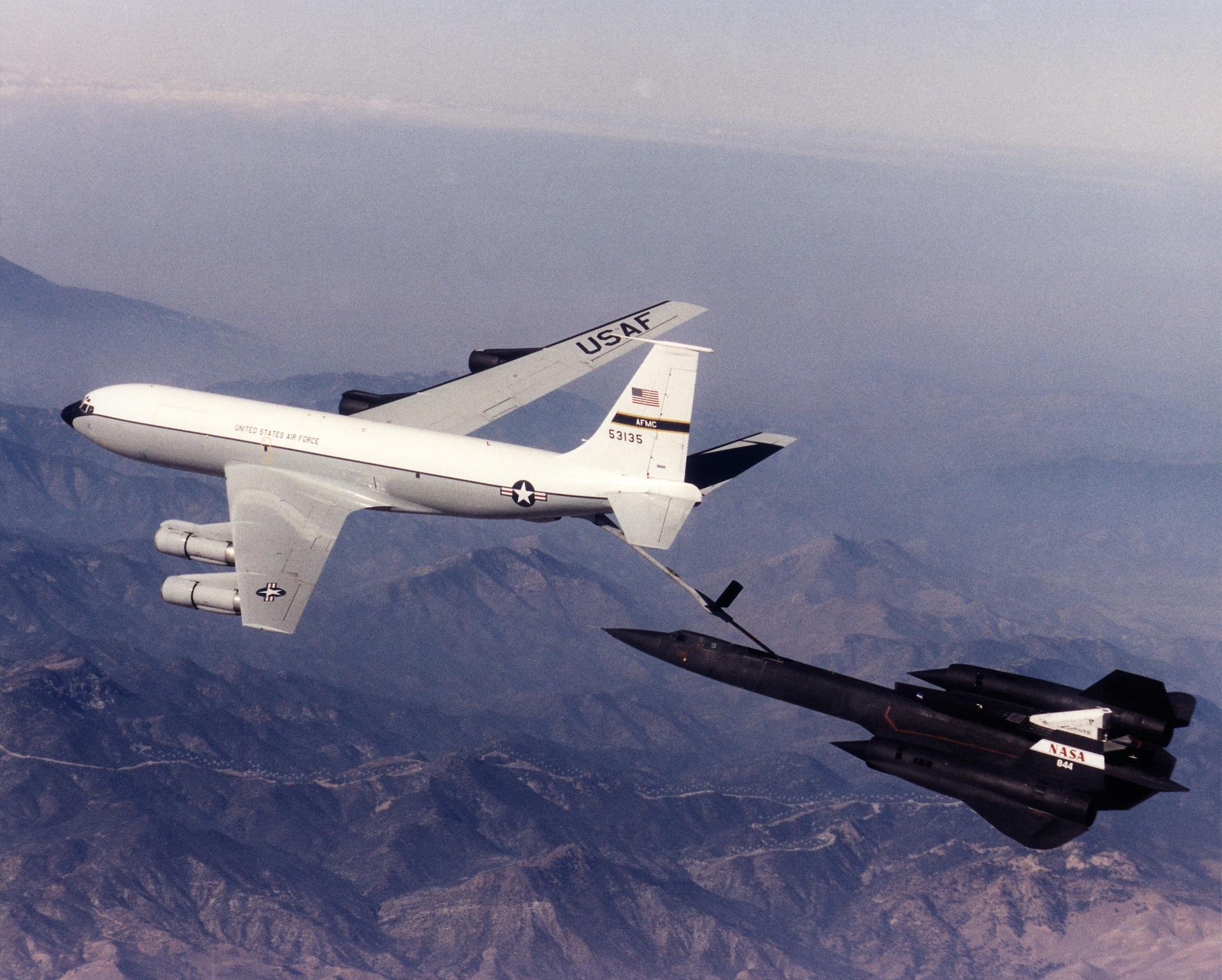
NASA Blackbird tail 844 refueling behind the specialized, JP-7-filled KC-135Qs that supported the program. (NASA)
Even if NASA’s dormant SR-71 never ends up getting back in the air, even attempting such a challenge could be considered a success. Doing so could identify core areas across multiple disciplines that could be improved and areas of existing technology that could be better exploited for a whole array of tasks. It can also develop and refine new technologies in the process. All this sits at the core of NASA’s mission, and there is no vehicle on Earth that could drive people and organizations to give it their all for such a comeback dream as the Blackbird. It’s even possible that we could see corporations or even individuals help foot the bill for it.
And yes, all these benefits need to be weighed against cost. Surely there is a limit to how much the government can invest in such a program. Now corporations and individuals, that’s a different story.
So, yes, the main goal of this effort will likely be high-speed flight testing, but so much can be learned in the journey to get there that it must be quantified in the ‘business case’ for reviving the Blackbird.
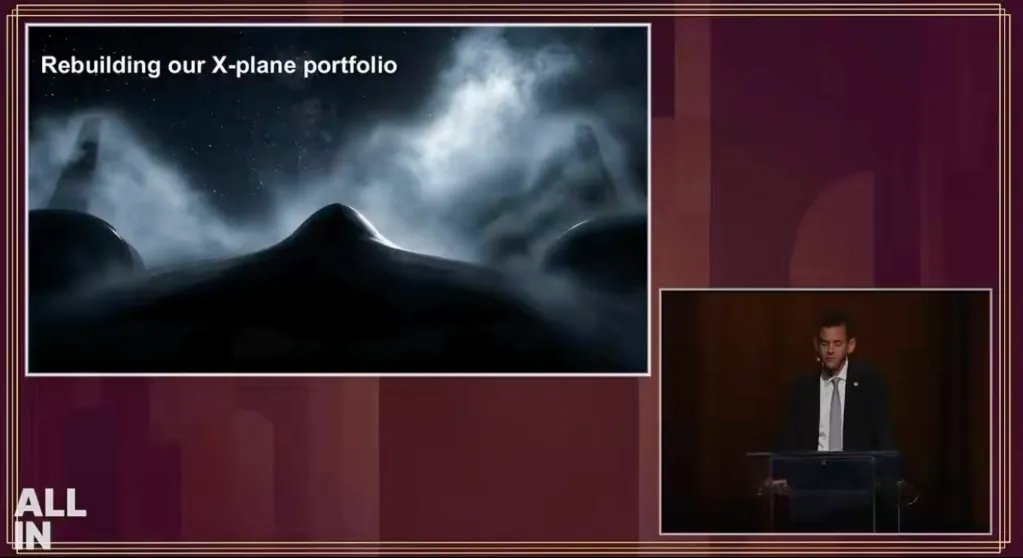
NASA Administrator Jared Isaacman has left something of a mystery hanging in the air after showing the silhouette of an aircraft that immediately drew comparisons to the famed SR-71 Blackbird during a recent speech. Isaacman pushed back on a direct link to the SR-71, but said his agency is working hard to get “back in the business of flying high and fast again.”
The silhouette, accompanied by the tagline “Rebuilding our X-plane portfolio,” was among the backdrops for Isaacman’s remarks at the annual All-In Summit in Los Angeles, California, last week.
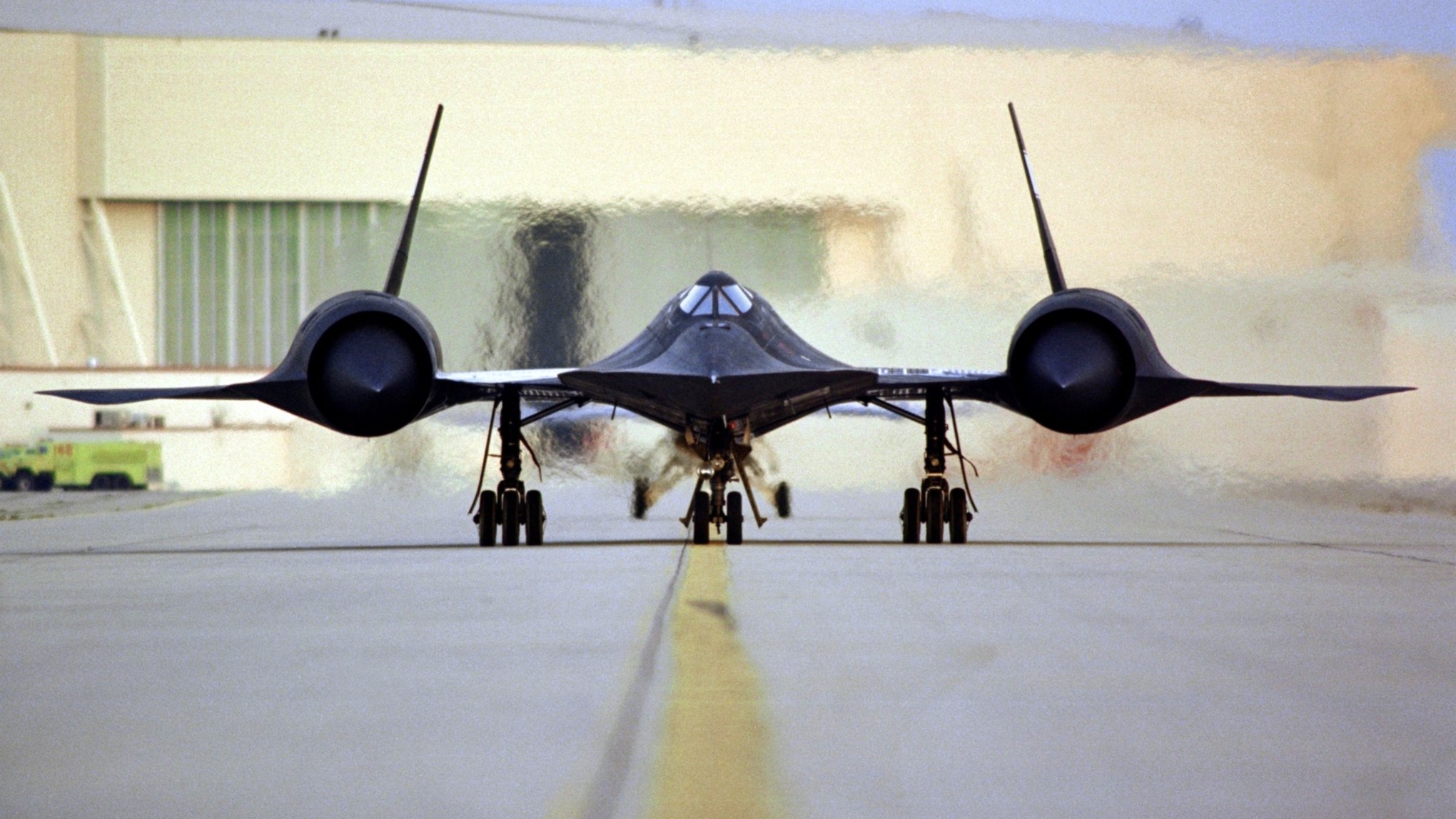
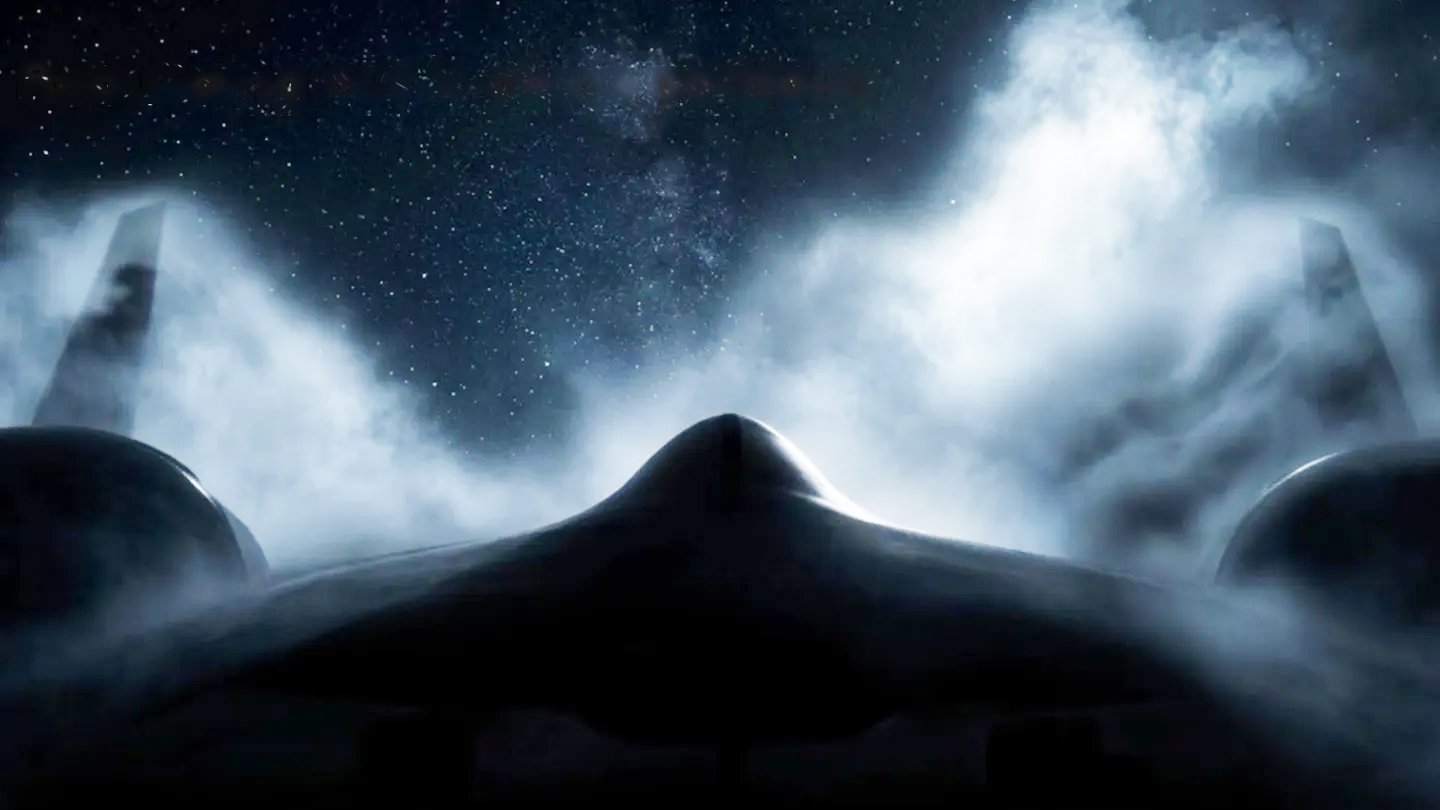
The SR-71’s iconic shape is defined by its long, sword-like profile, pronounced chines, and deeply swept wings, and huge spiked engine nacelles with canted fins on top. Its distinctive geometry is reflected in the silhouette, which shows a broad, highly blended aircraft from an unusual head-on angle.
NASA Administrator Jared Isaacman talks at the All-In Summit about new high- and fast-flying X-planes with the eye-catching aircraft silhouette in the background. All-In Summit/YouTube screencap
“In the service of the first A [aeronautics] in NASA, we are rebuilding our X-plane fleet. The X-59 is researching quiet supersonic flight, but it’s just the beginning,” the head of NASA told attendees. “As NASA recommits to flight test and works alongside industry to push the boundaries of airframe and propulsion design, it will not be long before NASA once again is flying as high and as fast as we had in decades past, and then even more.”
Isaacman’s full speech at the All-In Summit, as well as his remarks during a live interview that followed immediately afterward, are contained in the video below. The high-speed aircraft silhouette is first seen at around the 12:40-mark in the runtime, and is then further discussed at around the 28:39-mark.
Chamath Palihapitiya, co-host of the All-In Podcast and one of the hosts of the summit, asked Isaacman directly about the silhouette during the fireside chat after his speech.
“You showed a picture of the [SR-71] Blackbird up there,” Palihapitiya said at one point, before Isaacman interjected.
“You sure that’s a Blackbird?” Isaacman said.
“Well, ok. What was that picture you showed up there?” Palihapitiya asked.
“Like I said, NASA is getting back in the business of flying high and fast again,” Isaacman said in response, and declined to further elaborate.
Whether or not the silhouette reflects a real design that is in development now is unclear. TWZ has reached out to NASA for more information.
Exactly where Lockheed’s SR-72 ambitions sit today is unclear. After talking constantly about the potential program for a number of years, it went silent, which could indicate the program had moved forward deep in classification.
NASA has worked with other supersonic and hypersonic X-planes in the past, as well. This includes reusable space planes, as well as aircraft designed to fly within the Earth’s atmosphere.
“I mean, that doesn’t seem like a space vehicle. It seems like an Earth-air vehicle,” All-In’s Palihapitiya noted during his chat with Isaacman about the silhouette he showed.
“Yeah. The first ‘A’ in NASA is our aeronautics portfolio,” Isaacman said in response, before highlighting a host of contributions his agency has made to advanced military and commercial developments over the years. “You know what I want to do? I want to get back to the radical airframe and engine designs like we were always supposed to do.”
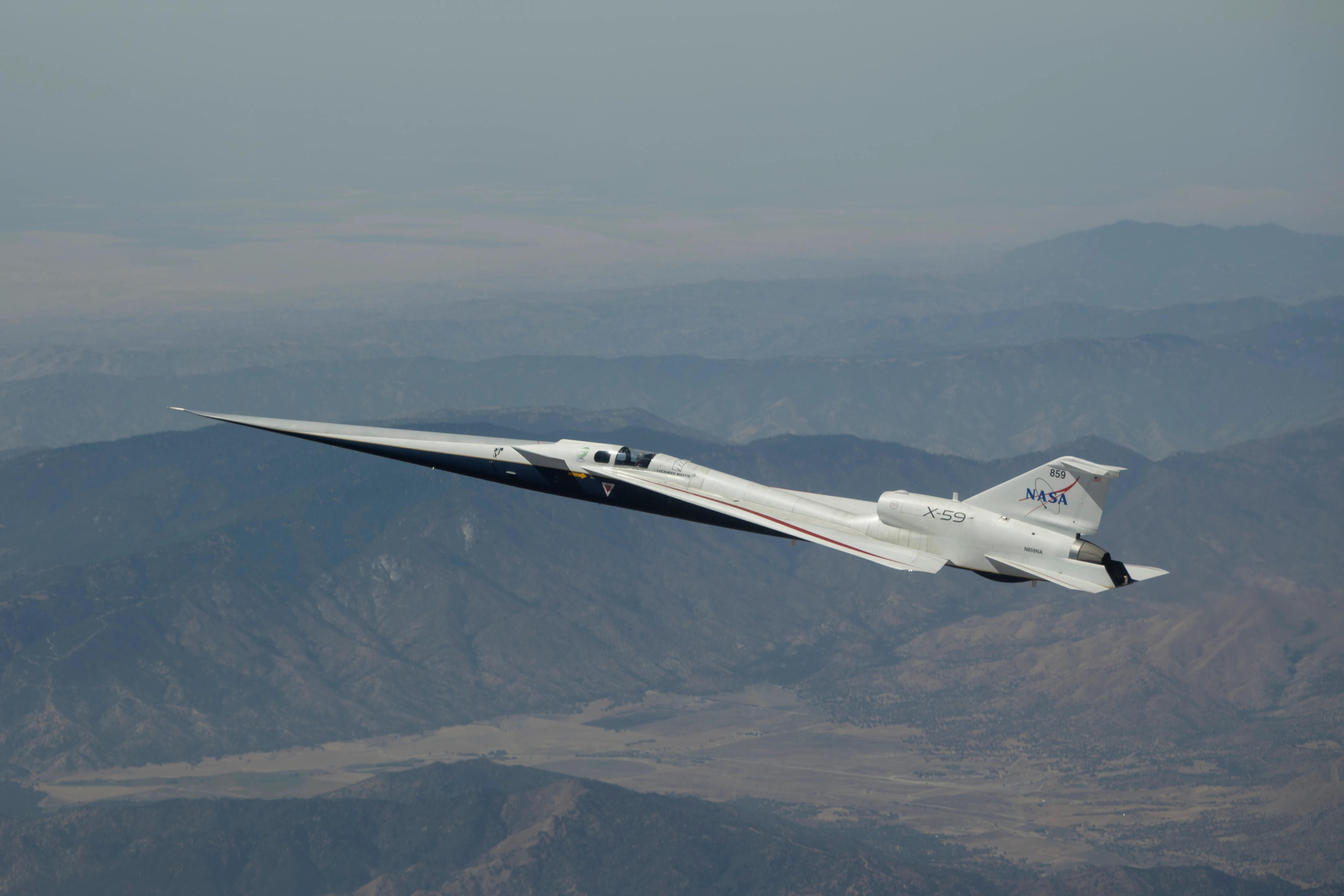
As mentioned, Isaacman also highlighted the X-59 Quiet Supersonic Technology experimental test aircraft, or QueSST, at the summit, but made clear the goal is to go well beyond that design. The QueSST jet is the centerpiece of a program now to investigate technologies that could eventually enable commercial supersonic flight over land with a substantially reduced sonic boom.
The X-59 conducted its first supersonic test flight, reaching Mach 1.1, in June. NASA’s test program aims to eventually push the aircraft up to a speed of Mach 1.4. This is significantly below the record-breaking mark of approximately Mach 3.3 that the SR-71 clocked back in the mid-1970s, but it was never designed for extreme speed as testing its sonic signature was its primary goal.
NASA’s X-59 flies above the Mojave Desert in California on August 18, 2026. NASA/Jim Ross
As for bringing a Blackbird back into operation for high-speed testing, which is now at the forefront of military aeronautics (and civilian to a lesser degree) after decades of being sidelined, that would be a very challenging operation. The SR-71s are long retired and have been placed in museums and other display areas. While the Pentagon could technically claw some of them back from their ‘on loan’ status, reconstituting even one of them would be a major undertaking as the entire support ecosystem that once sustained them has been gone for decades. Still, having a Mach 3+ capable jet for testing would be a highly relevant tool in a new age of high-speed flight exploration.
On the other hand, building a new test aircraft that aims higher and faster than the SR-71, but may be based on its ‘DNA,’ is certainly possible. Such an aircraft could leverage material science, avionics, flight controls, and engines that are seven decades more modern than its progenitor. Technology demonstrators in this class could also already exist in the classified domain. NASA could possibly assume ownership of one after the Pentagon declassifies it, as well.
Regardless of how such an exotic aircraft is obtained, one of the biggest differentiating factors could be that a NASA aircraft is piloted by a human onboard, instead of it being a drone, but an uncrewed aircraft is possible too.
A NASA SR-71 taxis at Dryden Flight Research Center during its late operational phase. NASA
Isaacman has been very open about its interest in and support for new X-plane developments. On only his second day on the job, in December of last year, he called for revamping the agency’s aeronautics program and stated that “I’d love to see an expanded X-plane portfolio” during a town hall with NASA staff.
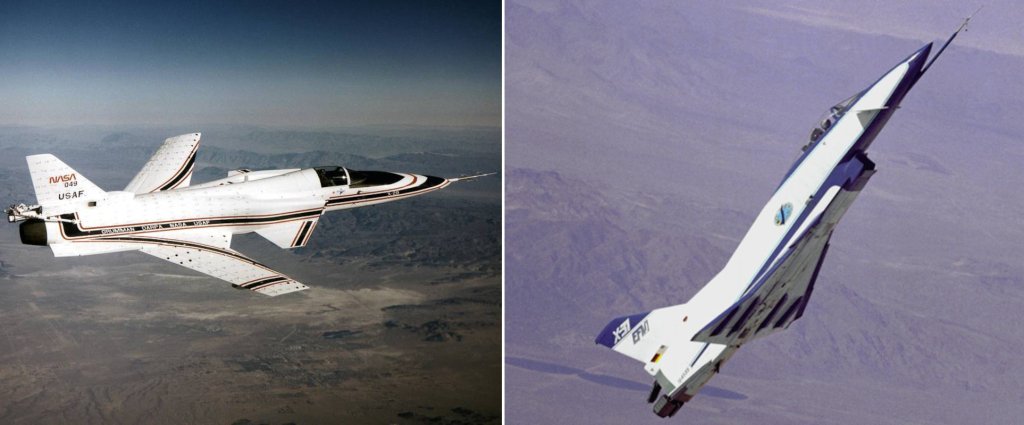
“If NASA has a healthy X-plane portfolio, we should be flying experimental aircraft so routinely that the second flight of a single X-plane is not newsworthy,” he wrote in a post on X in March of this year. “For example, the two NASA X-29 aircraft flew 422 flights between 1984 and 1991. That period also overlapped with the development of two X-31 aircraft, which together flew about 580 times.”
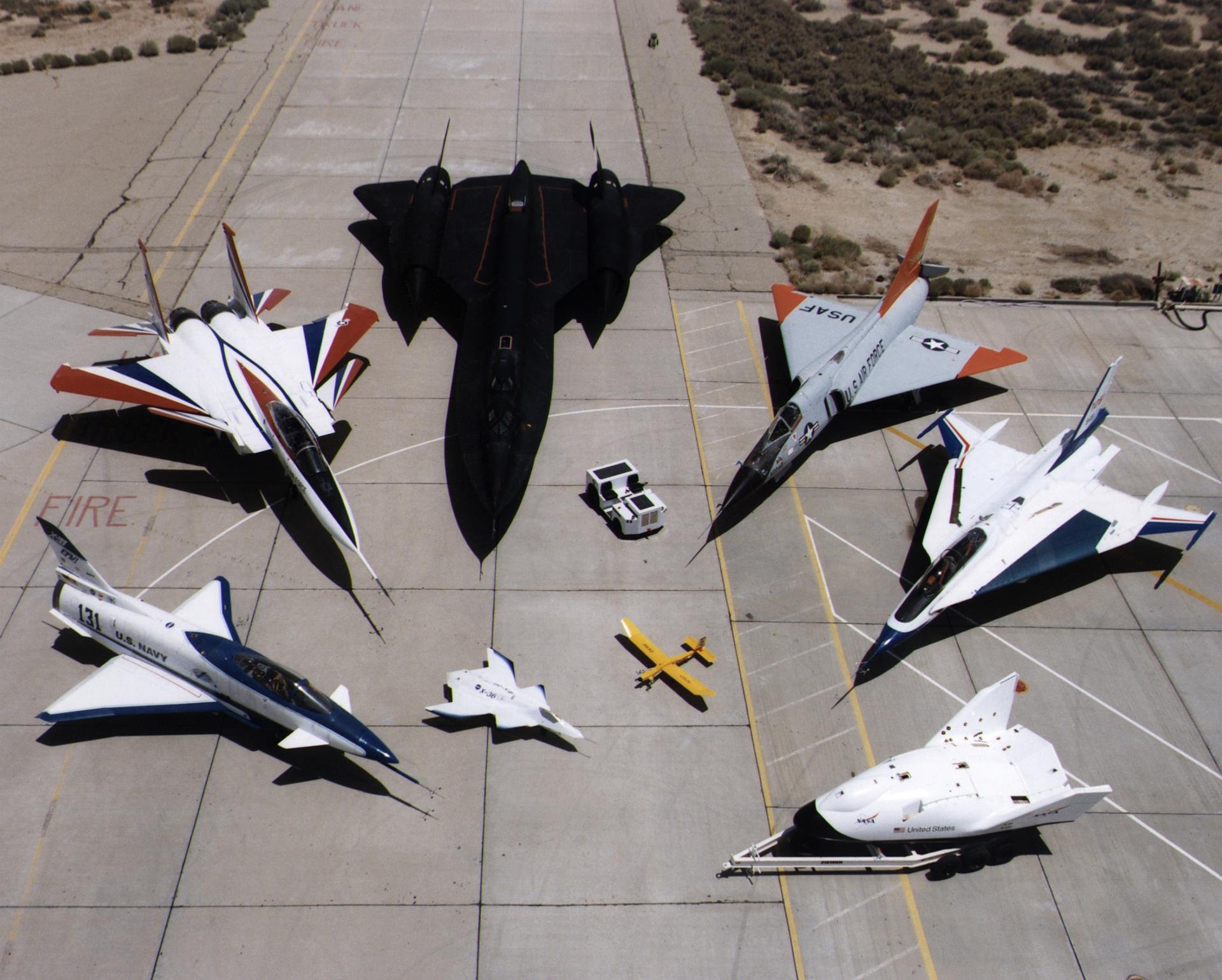
One of the X-29 X-planes, at left, and the X-31, at right. NASA/DARPA
NASA’s proposed FY2027 budget also spelled out rapid, cost-effective flight experimentation as an explicit priority. Budget documents specifically highlight work toward new advances in supersonic and hypersonic flight technologies “that will revolutionize air transportation, strengthen national security capabilities, and position America to lead the future of high-speed flight,” as well.
Furthermore, in April, NASA outlined a new Aeronautics Flight Accelerator (AFA) initiative. At that time, the agency put out a call for “input on technologies, concepts, and flight test campaigns suitable for cost shared maturation leading to flight within the next three years.” Stated areas of interest included “subsonic (including vertical lift), supersonic, and hypersonic flight technologies.”
It is important to reiterate that we still do not know whether the silhouette Isaacman showed at the All-In Summit represents an active development effort and, if so, how mature it might be. Government agencies and contractors routinely use concept art to illustrate an area of research or communicate a future vision. Such artwork does not necessarily correspond to a funded aircraft, an active prototype, or even a specific configuration.
At the same time, under Isaacman, NASA is clearly pushing toward new X-planes. NASA’s X-plane programs have historically served as a way to investigate technologies that conventional aircraft programs were not prepared to risk. The resulting aircraft have explored everything from supersonic and hypersonic flight to unconventional configurations and new propulsion concepts.
At the very least, evoking the visual legacy of the SR-71 Blackbird, coupled with Isaacman’s comments, provides a clear indication that NASA is interested in returning to the high-speed flight regime as part of its future plans.
Update: 2:04 PM ET –
NASA has now provided TWZ with the following statement in response to our queries for more information:
“NASA has a long history of building and flying experimental aircraft that push the boundaries of what is possible. As Administrator Isaacman has said, we want to see more X-planes flying in the years ahead, developing the technologies that will allow us to fly higher, farther, and faster than we have in decades. We look forward to sharing more as those efforts progress.“
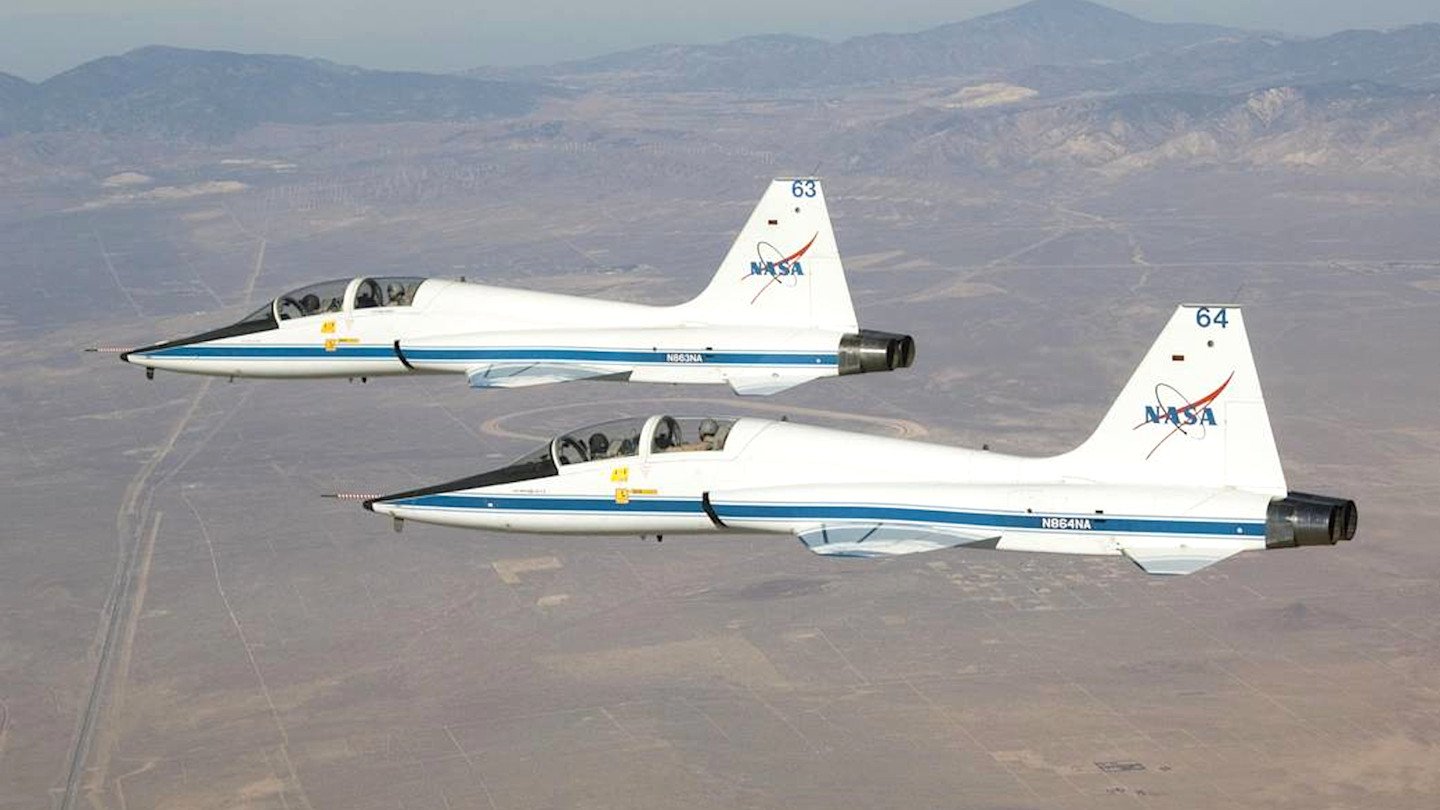
NASA is starting to explore options to fill the gaps that will be left by the eventual retirement of its iconic T-38 Talons. Since the 1960s, NASA has been using the jets to support astronaut training and as chase planes. However, the Talons are aging, supportability is already a problem, and challenges to sustain them further are expected to grow as the U.S. Air Force replaces its T-38 fleet with new T-7A Red Hawks.
The Johnson Space Center (JSC) in Houston, Texas, put out a contracting notice today seeking information about potential T-38 successors. NASA currently has 25 Talons in its inventory, according to the Federal Aviation Administration’s (FAA) online database.
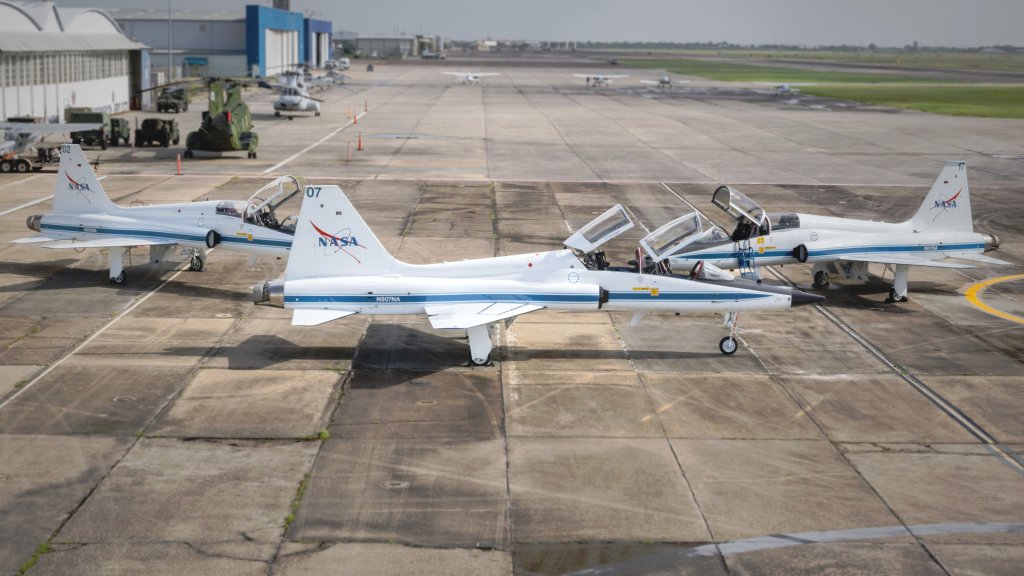
A trio of NASA T-38s at the Johnson Space Center (JSC) in Houston, Texas. NASA
“NASA JSC is conducting market research to obtain industry information regarding availability, capability, schedule, sustainment models, and cost efficacy for modern high-performance jet aircraft that could be used in evaluation and an evaluation program for supporting NASA’s astronaut SFRT [Spaceflight Readiness Training] requirements,” the notice explains. “NASA has operated the T-38N fleet in support of astronaut SFRT for several decades. With the U.S. Air Force planning to retire the T‑38 fleet in the 2030-2035 timeframe, NASA is evaluating options to transition to a more modern high-performance aircraft.”
The T-38N variant is specific to NASA and distinct from the T-38A/B/C variants the Air Force currently operates. The U.S. Naval Test Pilot School also has a handful of T-38Cs. Both the N and C variants are based on the original T-38A, which first entered Air Force service in 1961. The Air Force bailed the first Talons to NASA three years later.
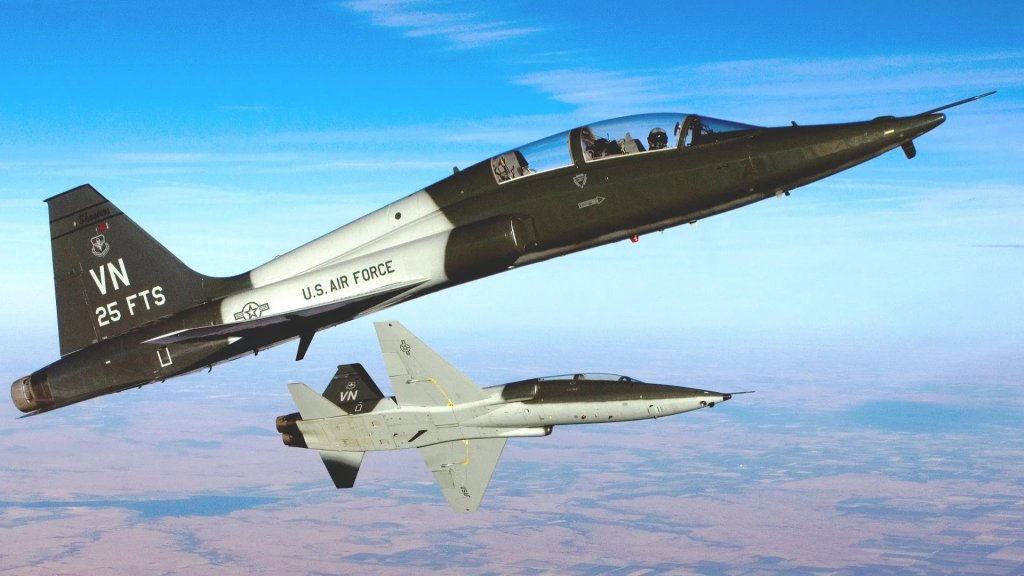
A pair of US Air Force T-38 Talon jet trainers. USAF
The N models have received various upgrades over the years, including the integration of new modern ‘glass cockpits’ with digital displays starting in the 1990s. As of 2011, compared to contemporary C variants, “the T-38N aircraft includes differences in communications and navigation, such as the addition of weather radar, a data link weather system, the terrain avoidance and warning system, the terminal collision avoidance system, GPS with localizer performance and vertical guidance approach capability, and redesigned electrical, inlet, ejector nozzle, and flight management systems,” according to a report from the National Research Council of the National Academies of Sciences, Engineering, and Medicine.
Now, “NASA is seeking information on existing, production, or near-production high-performance jet aircraft capable of supporting SFRT,” per today’s contracting notice from the JSC. “NASA is not restricting industry responses to a specific performance class or aircraft design heritage.”
The notice does provide the following list of desired characteristics:
“High reliability with established maintenance documentation”
“Self-starting engine capability”
“Performance comparable to a modern jet trainer/light fighter aircraft”
“Capability to support dynamic maneuvering, formation flying, and cross-country navigation”
“Dual-seat, dual-control configuration (tandem or side-by-side)”
“Modern avionics compatible with instrument flight operations”
“Aircraft capable of being single-pilot qualified from either seat is highly desired”
“Prior to any fleet transition, NASA seeks to conduct a limited-scope evaluation program using a small number of modern aircraft,” the notice adds. “This evaluation program is not a full fleet buy or replacement. It is intended to operate a small number of aircraft within JSC’s existing operational framework to assess compatibility, logistics, cost efficacy, and training impact.”
Furthermore, “NASA anticipates evaluating a small number of aircraft over a multi-year period,” it continues. “NASA requests information on potential procurement options such as lease, lease-to-own, barter, or other arrangements due to limited upfront procurement funding.”
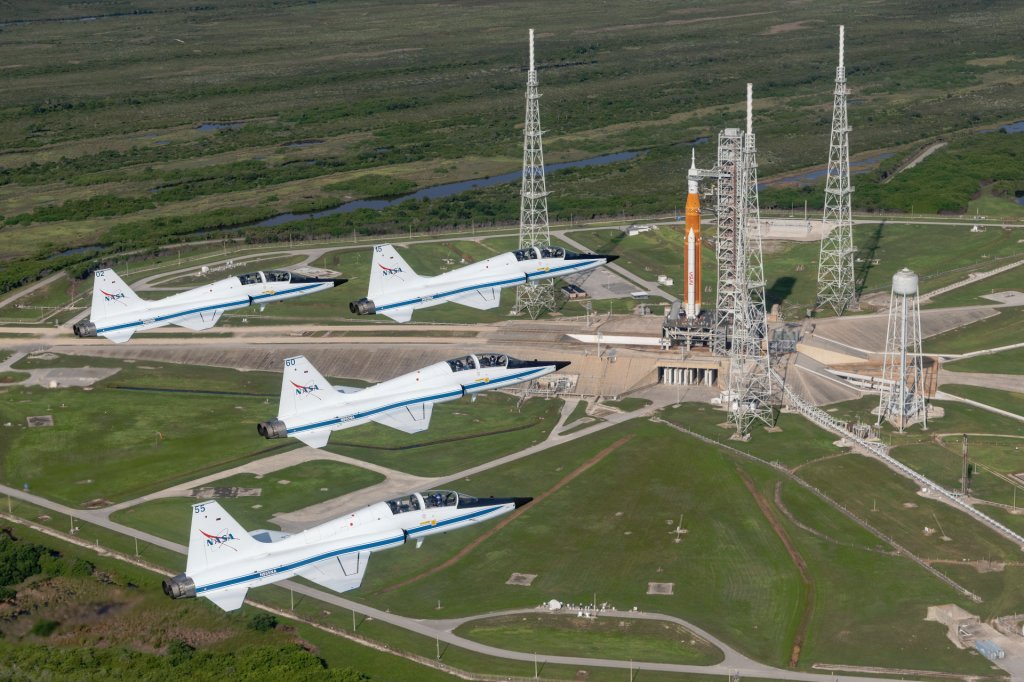
A quartet of NASA T-38 jets flies in formation past Launch Pad 39B at NASA’s Kennedy Space Center. NASA
NASA is looking to be solely responsible for flight operations of the jets, but is expecting contractors to handle maintenance, whether the aircraft are government-owned or not.
The contracting notice does also say that “NASA is open to operating the aircraft under reasonable flight hour limits, maneuver restrictions, or operational envelopes consistent with contractor recommendations.”
Just what kind of limits and restrictions NASA might be willing to accept is unclear. The entire reason for operating the T-38s now is to offer a high-performance platform with a good degree of maneuverability to support the SRFT requirements. These are attributes that are also valuable when flying as a chase plane and otherwise supporting flight research and test activities.
NASA certainly seems to be willing to consider a wide range of potential operations, both in terms of aircraft and operating schemes. When Boeing won the Air Force’s T-X competition to replace the T-38 with what became the T-7A, TWZ noted the possibility that other Talon operators, including NASA, could follow suit.
One of the US Air Force’s New T-7A Red Hawks. USAF The first pre-production T-7A lands at Edwards Air Force Base. USAF
There are a wide variety of other jet trainers available on the open market. This includes Korea Aerospace Industries’ (KAI) T-50, a design capable of supersonic flight that has been offered on the U.S. market before through a partnership with Lockheed Martin. A version of the T-50 was one of the losing entrants in the Air Force’s T-X competition.
With expectations that funding for new jet trainers will be limited, at least initially, NASA could well seek to enter into some kind of new arrangement with the Air Force (or another branch of the U.S. military) just like it did in the 1960s. It’s also worth noting here that the T-7A program continues to suffer significant delays due to technical issues and other factors. This has led the Air Force to repeatedly push back its own T-38 replacement timeline. The service’s original goal was to reach initial operational capability with the Red Hawk in October of last year, but it is now targeting August 2027 to achieve that milestone. A full-rate production decision is now not expected to come until January 2029. So, the prospect of NASA actually getting T-7s anytime before the USAF gets all the jets it badly needs is questionable.
There are also no indications that NASA’s SFRT requirements will slow in the meantime, either. If anything, these training demands could grow as work continues toward the resumption of crewed missions to the Moon under the Artemis program. The Artemis IV mission, currently scheduled for 2028, is set to be the first time astronauts have set foot on the lunar surface since Apollo 17 in 1972.
A NASA T-38 wearing a special Artemis program paint scheme. NASA
From the wording of today’s contracting notice from JSC, NASA is still some years away from making a final decision on what will come after the T-38N, but the hunt is now on.

 Login