The US and the UAE have both launched airstrikes targeting al-Shabaab in northern Somalia’s Puntland region in recent days amid clashes in the area between al-Shabaab and local Puntland forces. US Africa Command said in a press release on Wednesday that its forces launched a strike on October 19 in the Cal Madow Mountains, about […]
US Africa Command on Tuesday announced that its forces launched an airstrike in Somalia on October 17, as the Trump administration continues a bombing campaign in the country that receives virtually no US media attention. AFRICOM said in a press release that the strike targeted al-Shabaab near the Dhooble Airport, near the Kenyan border in […]
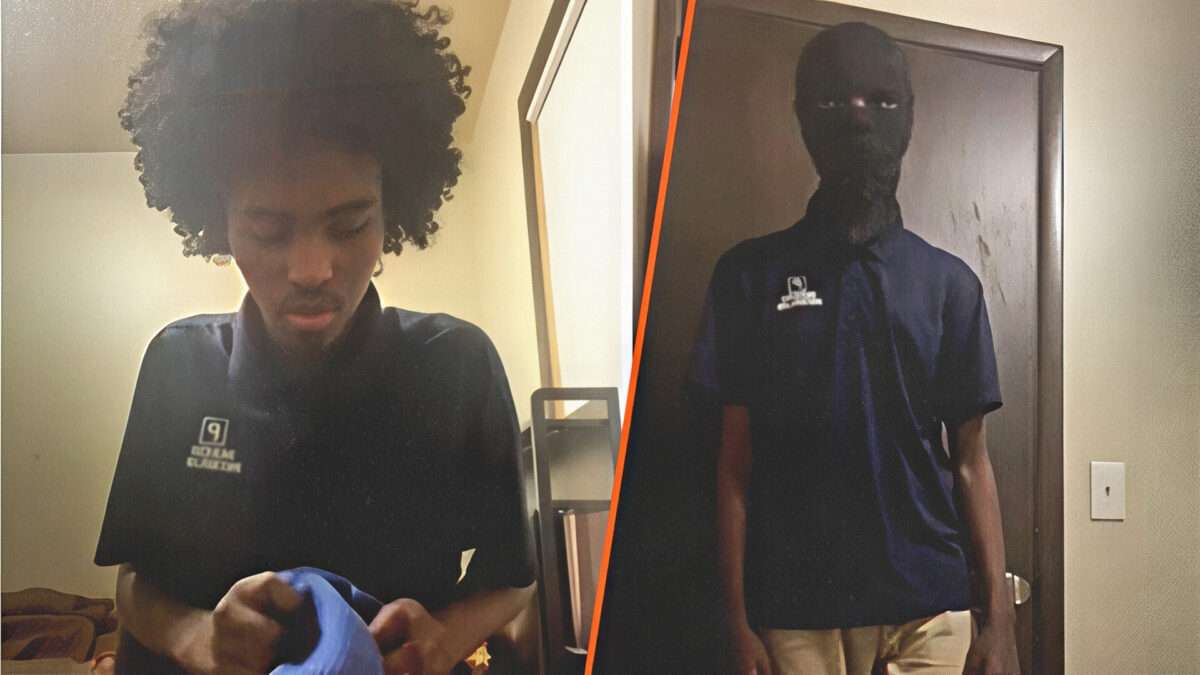
Authorities have said the attack was thwarted by FBI agents after they monitored the 18-year-old for nearly two years and ultimately supplied him with the AK-47 he planned to use.
Ex-president urges Americans to defend congresswoman, saying ‘there’s no reason to believe it will stop with her’
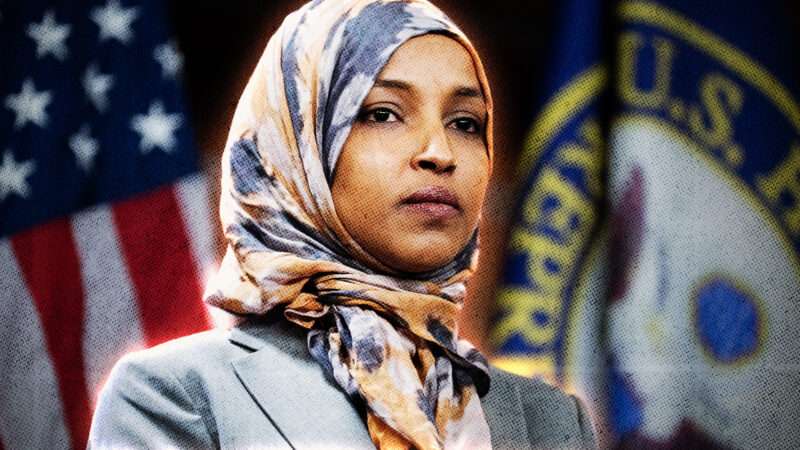
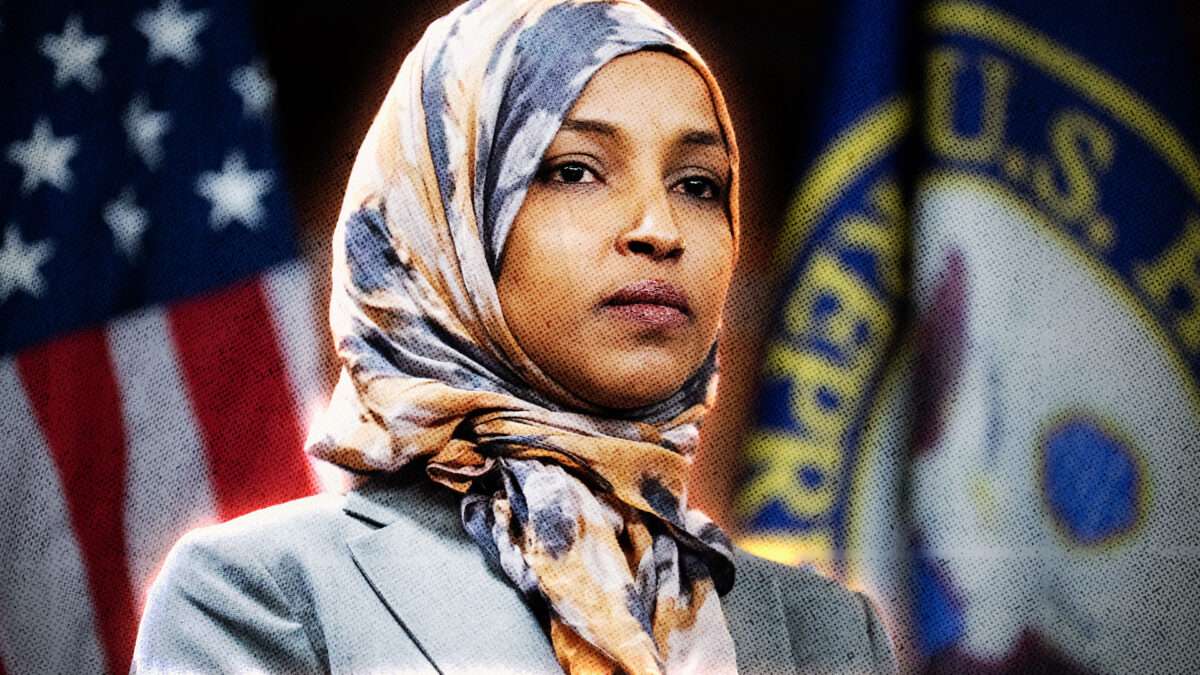
Former US president Barack Obama condemned comments by Donald Trump’s “border czar” that the Republican presidential administration could “of course” strip Democratic congresswoman Ilhan Omar of her citizenship and deport her.
Obama wrote Sunday morning, on X, that “the full weight of the federal government is being brought down on a law-abiding elected official because she has dared to criticize the president.”
Donald Trump is a man of loyalties and, above all, grudges. If there is one community for which the U.S. president has repeatedly shown contempt, it is the Somali community. And if there is one political rival who has borne the brunt of his hostility, it is Democratic congresswoman Ilhan Omar, who was born in Somalia 44 years ago.
La investigación federal busca revocar la ciudadanía a la congresista bajo el alegato de presuntas inconsistencias en su edad al momento de ingresar como refugiada somalí.
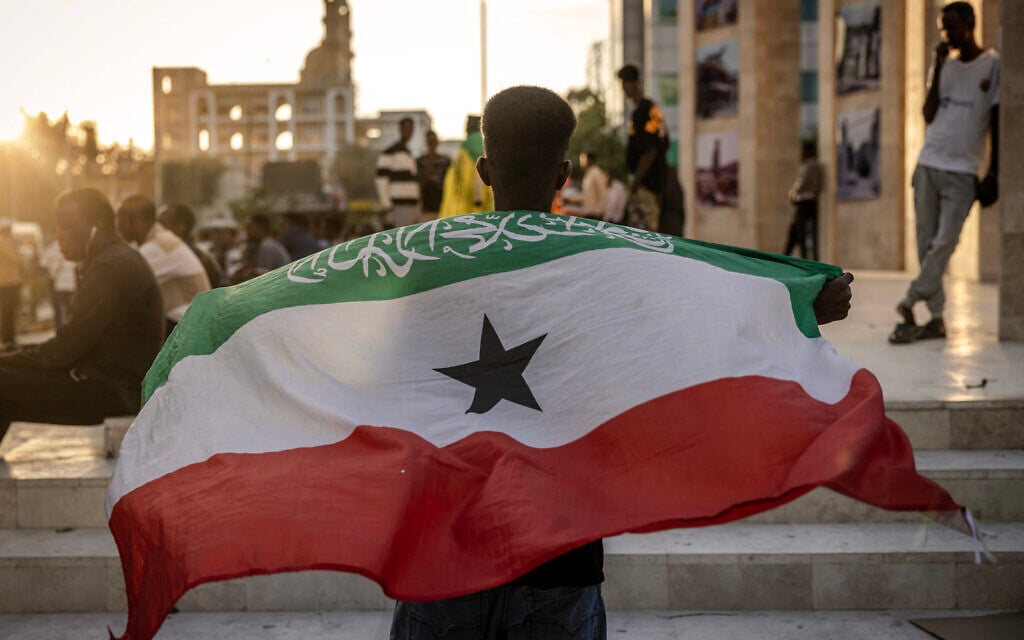
Hundreds rally in breakaway capital Hargeisa after offhand comments made by US president at Monday event; US does not recognize country, which has formal relations only with Israel
Yemen’s civil war reignited in early October, as Saudi Arabia brought in Turkish and Pakistani military support to fight the Houthi rebels, who have governed much of northern Yemen as a de facto authority and waged a guerrilla war in the country since 2004. Having spent more than a decade fighting Saudi-led forces and enduring […]
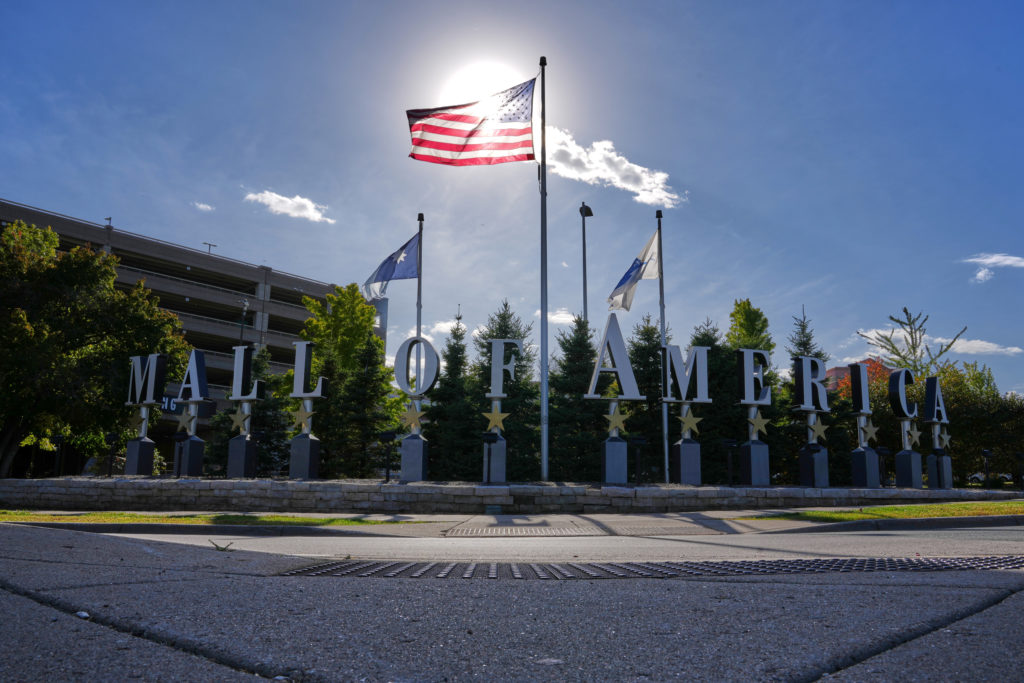
Federal law enforcement officials in Minneapolis announced at a press conference last week that FBI agents arrested a Minnesota teenager plotting to commit a mass shooting at the Mall of America.
Sheikhdoon Abdullahi Mohamud, an 18-year-old American-born citizen of Somali descent, was arrested in a public park on October 6 by FBI agents immediately after he allegedly paid an undercover agent posing as a member of the Islamic terrorist group ISIS $600 for an AK-47 rifle and 200 rounds of ammunition. The arrest was the culmination of a two-year investigation into Mohamud, who allegedly planned to commit a mass shooting at the mega-mall on October 24.
According to the criminal complaint filed against Mohamud, he exchanged hundreds of messages with a confidential FBI informant expressing his desire to travel to Somalia to join ISIS, but lacking enough money to travel, he eventually settled for an alleged plot to attack the Mall of America because it was owned by Jews.
"I want to do this, I am very serious I don't care about anything in the world, I am 100% committed to the cause of dying for the sake of Allah only," Mohamud allegedly wrote in one text message, according to the complaint.
Christopher Dotson, a special agent running the FBI's Minneapolis field office said at a press conference that Mohamud's messages "document the idolization of ideologically motivated violence, a callous disregard for the sanctity of human life, a blind hatred of people of other faiths, and a cold commitment to carrying out his vision of violence in our community."
As I explained in a 2022 Reason magazine feature, "It's (Almost) Always the Feds," the FBI has a long history of using its sprawling network of paid informants to locate and bait would-be radicals in undercover sting operations.
The FBI's Countering Violent Extremism (CVE), created in 2011 to stop domestic recruitment by foreign terrorist organizations, has focused heavily on Somali immigrant communities in Minnesota and elsewhere because of Somalia's links to ISIS and al-Shabab, two Islamic terrorist groups.
An ISIS-affiliated account posted a video in 2015 calling for an attack on the Mall of America. In 2016, a Somali man in the U.S. on a refugee visa stabbed 10 shoppers and employees at a St. Cloud mall. Last year, a Minneapolis man was charged with attempting to join ISIS.
However, the sort of young men who usually get onto the FBI's extremist radar have grand and violent ambitions but limited means to carry them out. They tend to be unemployed or marginally employed, sometimes still living with their parents, and socially awkward.
In one text exchange, the confidential informant asked Mohamud how school was going.
"It's terrible man but I gotta keep doing it and if I fail its straight to just killin kuffar [a derogatory term for non-Muslims]," Mohamud responded, according to screenshots included in the criminal complaint . "And im already failing so if I don't pass in a yr ill probably save up for a gun."
The informant responded with the "grinning squinty face" emoji.
U.S. District Court
Mohamud continued to chat with confidential informants, praising terrorist attacks and sharing terrorist propaganda videos, according to the complaint. He didn't have a phone, so he had to use his sibling's computers and tablets to chat with informants. Last month, he recorded a video of himself pledging allegiance to ISIS on his little brother's iPad.
Despite persistent criticisms from civil liberties groups that the FBI is in many cases manufacturing terror plots to ensnare young men with limited to no ability to carry them out, the federal government has been enormously successful in securing convictions because of the high bar for defendants to prove entrapment.
The FBI's use of paid informants and these sting tactics have resulted in hundreds of convictions since 9/11, but it's also created long-term credibility problems for the bureau, especially when administrations have used those criminal cases to advance their political narratives.
For example, in a 2024 speech condemning political violence, former President Joe Biden cited the plot to kidnap Democratic Michigan Gov. Gretchen Whitmer. However, text messages and other records uncovered by defense attorneys during the case showed that the farcical plot was in large part concocted and encouraged by paid FBI informants and their bureau handlers.
"We have a saying in my office," one FBI special agent told a confidential informant in the Whitmer case. "Don't let the facts get in the way of a good story."
The CVE program and related counterterrorism initiatives have also subjected tens of thousands of Somali refugees and other ethnic and religious minorities to heightened surveillance and infiltration by government informants, sowing distrust and fear, all based on a relatively small handful of incidents. Reason's Eric Boehm wrote in 2018 about how Minnesota's peaceful and entrepreneurial Somali refugee communities had become a domestic front in the war on terror, as well as microcosm of the national debate over immigration and national security.
None of this is to say the investigation into Mohamud was unwarranted, or that he wouldn't have been able to eventually get a gun absent the FBI's assistance. Nor is it a statement on his guilt or innocence, although he is as a matter of law innocent until proven guilty. It is a reminder to read carefully and wait for all the details to come out whenever the FBI announces it has thwarted another terrorist plot.
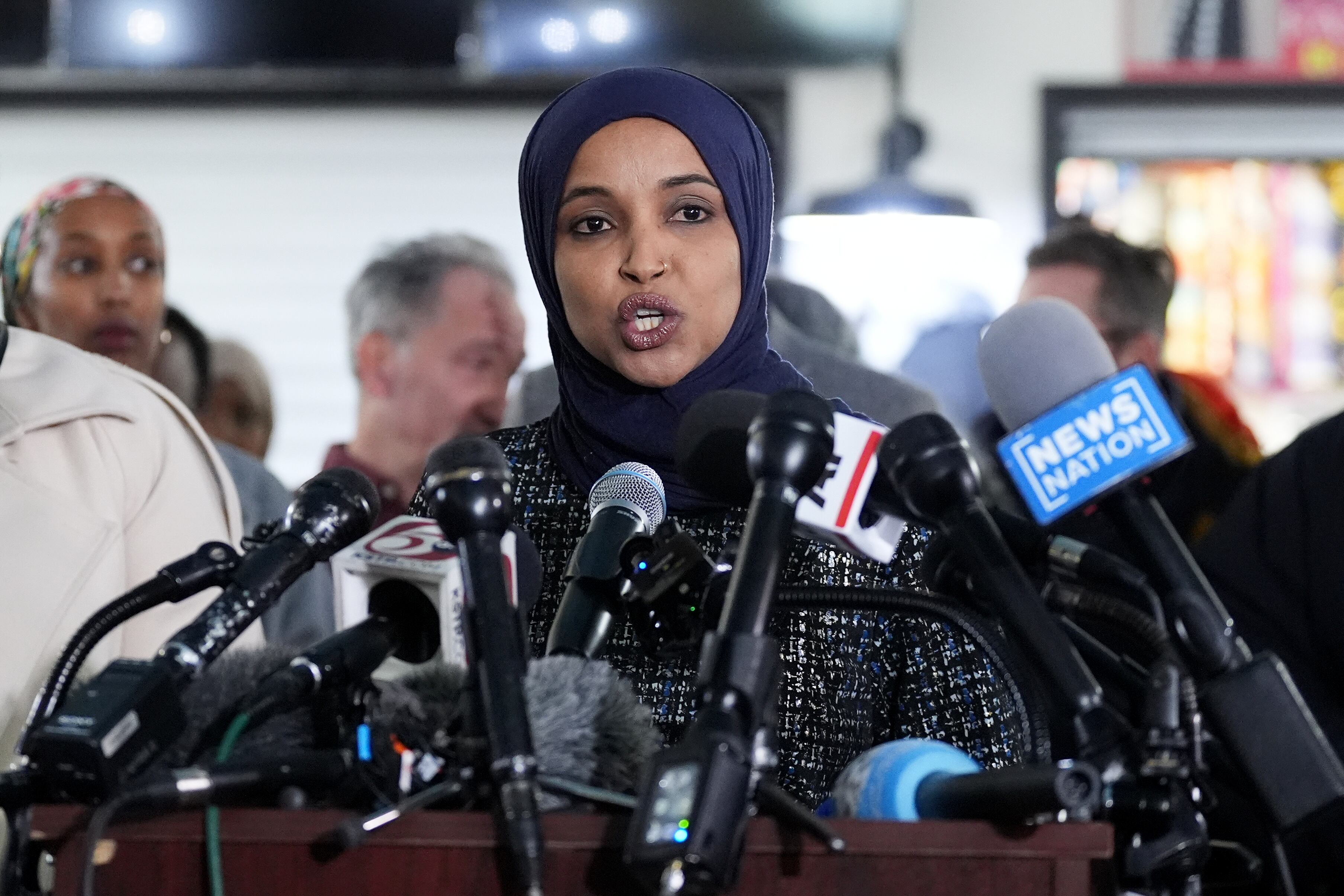
On Monday, CBS News reported that federal agents searched the Washington, D.C., home of U.S. Rep. Ilhan Omar (D–Minn.), as part of an ongoing investigation that "centers on Omar's immigration paperwork."
In a statement to the Associated Press, the Justice Department said agents from Homeland Security Investigations (HSI)—an office within the Department of Homeland Security (DHS) that conducts federal criminal investigations into immigration fraud and identity and benefits fraud—"executed a judicially authorized search warrant" as "part of an ongoing federal criminal investigation."
The search warrant reportedly "lists a series of potential immigration crimes under investigation, including false statements and fraud in immigration paperwork, as well as a general conspiracy charge," according toThe New York Times. The Times reported that federal officials are also investigating "whether Ms. Omar derived citizenship from a father who may have been ineligible to obtain naturalized status." In a statement, Omar called the investigation an "outrageous abuse of power and an unprecedented escalation in the weaponization of federal law enforcement to target political enemies," stating she did "nothing wrong."
Omar has been in the Justice Department's crosshairs since January, when President Donald Trump announced that the department and Congress were "looking at 'Congresswoman' Illhan Omar, who left Somalia with NOTHING, and is now reportedly worth more than 44 Million Dollars."
Trump was referencing an investigation by the House Ethics Committee, based on a 2025 financial disclosure form showing she and her husband held assets worth between $6 million and $30 million, a notable increase from her previous filings. Omar later filed an amended disclosure form that showed the assets were worth $18,004 to $95,000 after accounting for liabilities. However, in September, the Wall Street Journalreported that the Office of Congressional Conduct—which reviews allegations against House members and their staff—voted 5–1 to recommend that the House Ethics Committee dismiss the allegations. Per the Journal, investigators found no "substantial reason to believe that Rep. Omar reported false or incomplete information in her financial disclosures." Omar's office told the Journal she didn't catch the errors, which stemmed from erroneous valuations of her husband's businesses, because she "isn't involved in her husband's businesses and trusted the accountant involved."
Omar's opposition to the Trump administration's immigration enforcement efforts, particularly in her home state of Minnesota, and her Somali heritage have made her a frequent target of the president and his allies.
Last December, a federal indictment revealed a nearly $9 billion fraud scandal in Minnesota, much of it tied to the state's Somali immigrants. In March, Vice President J.D. Vance—who leads the Trump administration's anti-fraud task force—told right-wing commentator Benny Johnson that Omar "definitely committed immigration fraud against the United States of America." Vance accused Omar of "being at the center of a lot of the worst fraudsters in the Somali community."
Vance doubled down in May, telling White House reporters the immigration fraud allegations were "something that the Department of Justice is looking at right now." He appeared to pull back from his March claim that he was certain Omar had committed immigration fraud, instead stating that while he didn't want to "prejudge an investigation," it "certainly seems like something fishy is there."
In September, DHS Secretary Markwayne Mullin told Johnson that the investigation into Omar was still "ongoing," and that the department knew she had "married her brother to try to bring him into the United States." Omar's office has denied the accusations, which were first levied against her in 2016.
Mullin claims the investigation into Omar is "not political." He could be telling the truth; federal investigators have scrutinized Omar before. In 2024, the Biden administration's Justice Department opened an investigation into Omar's "finances, campaign spending and interactions with a foreign citizen," according toThe New York Times. Per the Times, the investigation eventually "stalled for lack of evidence."
But Mullin's words are also hard to take at face value. Despite denying accusations of weaponizing the justice system, the Trump administration has time and again used dubious legal reasoning to investigate the president's political enemies. This includes New York Attorney General Letitia James, who, after successfully suing Trump for financial fraud, was indicted for mortgage fraud by Trump's Justice Department, which used the same petty justification on her.
The president has also continued a campaign to indict Federal Reserve Governor Lisa Cook, announcing last week that the White House would hold in-person hearings to look into claims she committed mortgage fraud. Ousting Cook would ostensibly allow the president to install a Fed governor aligned with his priorities. It's a tactic that failed Trump once before, when his Justice Department opened a criminal investigation into former Federal Reserve Chair Jerome Powell for his handling of renovations at the central bank's headquarters. Jeanine Pirro, the U.S. attorney for the District of Columbia, dropped the probe in April, and the department ultimately found nothing criminal in Powell's conduct.
An investigation will reveal whether Omar broke the law. Still, if it's anything like the Trump administration's previous efforts, the investigation is likely driven by political animus, not criminal behavior.
From David Ben-Gurion—the architect of a state whose foundations remain a subject of debate—to Benjamin Netanyahu, a master of maintaining constant tension, the “periphery doctrine” has remained a cornerstone of Israeli foreign policy. Its essence lies in forging alliances with states that surround hostile neighbors. Israeli authorities operate on the premise that secure borders do […]
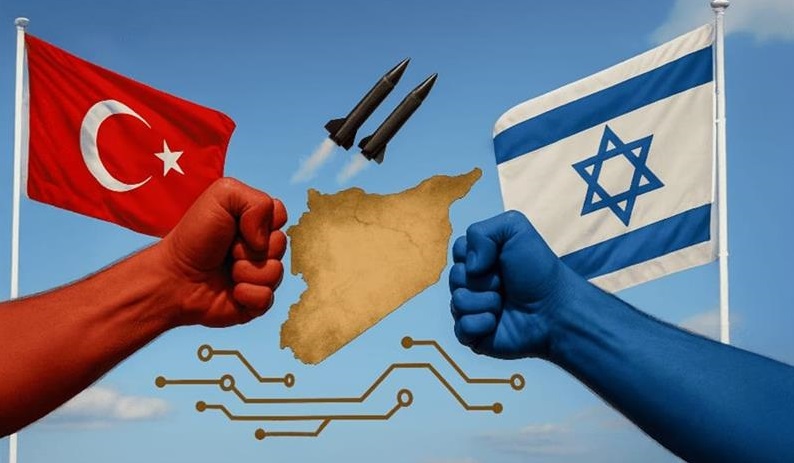
Following Israel’s recognition of Somaliland, analysts interpreted the move as an attempt by Netanyahu to establish a foothold against Yemen’s Ansar Allah and gain leverage in the Red Sea. However, the recognition of officials from this separatist enclave in the Horn of Africa indicates that Israel’s plans extend beyond countering the Houthis; Turkey also figures among the adversaries of the Israeli state.
About a year ago, Mohamed Osman Fadal, a senior foreign policy advisor to the President of Somaliland, stated that they “need air defense systems” to counter Turkish F-16s and drones stationed in Mogadishu. He further noted, “We want Israel to support us in the confrontation with Turkey.” About a year ago, Mohamed Osman Fadal, a senior foreign policy advisor to the President of Somaliland, stated that they “need air defense systems” to counter the Turkish F-16s and drones stationed in Mogadishu. He further noted, “We want Israel to support us in the confrontation with Turkey.”
This stance reflects the sentiments within Somaliland’s self-proclaimed administration and aligns with Netanyahu’s ambitions, as both parties seek to prepare as fully as possible for a clash with the de facto government of Somalia. The official Somali army already possesses special forces and a navy trained by Turkey, as well as T129 ATAK helicopters, the renowned Bayraktar UAV, and even M48 and M60 tanks.
Recently, Somali President Sheikh Hassan Mohamud stated that Israel plans to establish a naval base in the port city of Berbera—located in Somaliland—and utilize its airport. Mohamud made this statement in an interview with Al Jazeera, warning that Mogadishu would oppose any Israeli military presence in territory it considers part of Somalia. “Under no circumstances will we allow an Israeli presence in the country based on the way Israel treats Somaliland.”
Circumstances are compelling the parties to arm themselves, and it is quite likely that the Horn of Africa will become the first theater of open confrontation between Israel and Turkey.
If the battle against separatists in Somalia is supposedly the first frontline, then who is next? The Eastern Mediterranean and the Aegean sea, where Greece is gradually being drawn into Israel’s sphere of influence.
According to media reports, in late August, Ankara redeployed the 51st Commando Brigade—comprising approximately 2,000 professional special forces troops—from Hozat in the country’s east to the Söke district in Aydın province, directly opposite the Greek island of Samos.
Earlier in the spring, Greece purchased weapons from Israel worth approximately 2.3 billion shekels. The arsenal includes the Elbit-developed PULS system, training missiles, precision-guided munitions, loitering munitions, and ten years of logistical support. This new acquisition is part of Greece’s plan to modernize its armed forces by 2030. Athens intends to spend around 28 billion euros by 2036 to establish an Israeli-style defense system—known in Greece as the “Achilles Shield”—and to purchase up to 40 F-35 fighter jets from the US, as well as frigates from France and Italy.
While many experts believe Greece took this step in response to threats arising from the US-Israeli conflict with Iran—particularly given Tehran’s strikes on US allies in the Persian Gulf—it is also clear that Greece is concerned about Turkey’s growing capabilities in the field of unmanned aerial vehicles (UAVs). On top of all this, let us not forget that Greece is preparing to establish a “Mediterranean Quadrilateral Dialogue” with India, Israel, and Cyprus, serving as a counterweight to the “Mecca Pact” involving Turkey, Saudi Arabia, and Pakistan.
The region is gradually entering a new level of conflict, with blocs now forming in anticipation of a future redistribution of spheres of influence. Israel, the primary proponent of the IMEC project, views Turkey as an adversary due to its strategically important position along the Silk Road. Consequently, Somaliland and Greece are poised to become key players in Israel’s strategy to curtail the influence of Turkey and its allies.
US Africa Command said in a press release on Wednesday that its forces launched two more airstrikes in Somalia as the Trump administration continues its record-shattering bombing campaign in the country, a war that’s ignored by US media despite AFRICOM announcing its strikes. The command said both strikes were launched on September 25, and that […]
US Africa Command said in a press release on Monday that its forces launched more airstrikes in Somalia as the Trump administration continues a record-shattering bombing campaign in the country. The command said that the strikes were launched on September 24 and targeted al-Shabaab in the vicinity of Qumbi, a village about 55 miles northwest […]
The persistence of current geopolitical alignments, the attention of Eastern actors to the region, the strengthening of Sanaa’s position in the Red Sea, and the expansion of regional opposition to the UAE’s role will diminish Abu Dhabi’s role in the region.
For the past ten years, the Southern Red Sea has been a pivotal factor in the UAE’s foreign policy. Over the past decade, the UAE has built a layered maritime, air, and commercial infrastructure network, including military bases, in the Red Sea or near Yemen, Somaliland, Somalia and Sudan, starting from 2015.
According to some estimates, the value of UAE investments along Africa’s coastal regions and the Arabian Peninsula amounts to $60 billion.
In September 2015, the UAE established its first military base in Africa, in Eritrea. These bases possessed strategic advantages: the ‘protection of interests’ and control over the security and economic architecture of international maritime routes.
With the signing of the Abraham Accords in 2020, cooperation between Tel Aviv and Abu Dhabi in the Red Sea intensified.
The UAE’s approach—channeled through companies such as DP World and Abu Dhabi Ports—is centered on controlling ports, strategic waterways, military bases, and key trade and energy routes in the Red Sea and the Gulf of Aden, in coordination with the United States and its allies. Abu Dhabi’s approach also included engagement with non-state armed actors and separatist movements in Yemen, Sudan, and Somalia.
Factors Behind the UAE’s Diminishing Role
Over the past decade, the UAE emerged as a party to the conflicts in the southern Red Sea. However, geopolitical developments over the past year signal a gradual decline in the UAE’s role in the southern Red Sea.
Several factors are also significant, stemming from US and Israeli military strikes against Iran, the war between Sanaa and Saudi Arabia, Saudi-Emirati rivalry in the region, and disputes among African states.
Sudan’s value lies in its geopolitics. With 853 kilometres of coastline and several key ports, Sudan constitutes a vital link in the Red Sea.
The Sudan war since April 2023 has created conditions for the expansion of the UAE’s role. The UAE faces accusations of providing training and logistical support to the Rapid Support Forces (RSF). Human rights and political demands against the UAE has increased.
The UAE also maintains bases inside Sudanese territory. However, the ongoing war in Sudan and the support of allies for the Sudanese government have led to increased pressure on the UAE.
Riyadh regards the Red Sea as part of its strategic interests and its exclusive backyard. Abu Dhabi and Riyadh each view the other as a direct threat to their position and interests in parts of the southern Red Sea. Thus, the reduction of the UAE’s footprint in the southern Red Sea constitutes a strategic gain for Riyadh. Riyadh has effectively sought to weaken Abu Dhabi’s role.
In late 2025, Saudi Arabia’s support for Yemen’s Presidential Leadership Council (PLC) resulted in pressure being brought to bear on UAE-backed forces.
In July 2026, Saudi Arabia hosted talks among 14 countries—including Egypt, Djibouti, Sudan, and Somalia—which established a multinational maritime defence alliance. The UAE and Ethiopia were excluded from the list.
The formation of a Riyadh-led Red Sea maritime task force—with the participation of Turkey, Egypt, Djibouti, Somalia, and Eritrea—without coordination with the UAE amounts to a further constriction of the UAE’s role in the region.
Despite ongoing Egyptian–Emirati consultations on guaranteeing maritime navigation security in the Red Sea and Bab al-Mandab, Egypt’s foreign policy is not aligned with the UAE’s interests in Sudan and the Red Sea. Additionally, the alignment and coordination among Israel, India, the UAE, and Ethiopia are not particularly consonant with Egypt’s interests in Ethiopia and the Red Sea.
Until last September, the UAE played a significant role in the southern Yemeni islands of the Red Sea and in southwestern Yemen. However, Sanaa’s advance in the eastern Red Sea—the port of Mokha, Mayun Island, and other archipelagos north of the Bab al-Mandab Strait—in September 2026 inflicted negative and fundamental consequences on the UAE’s regional role.
Sanaa’s advance amounts to the nullification of the presence of Emirati actors in Yemen’s future political sphere. Sanaa is seeking to consolidate itself as a strategic “node” within the Iran-led Axis of Resistance.
Despite Cairo’s opposition to Sanaa’s proposal for maritime navigation coordination in the Red Sea, Sanaa—having secured control over the most important islands and cities overlooking the Bab al-Mandab Strait on the Yemeni side—is calling for the formulation of new rules to ensure security and navigation in the region. Ansar Allah’s control over Bab al-Mandab could put the UAE under pressure. Any expansion of Sanaa’s role in Sudan could likewise prove detrimental to the UAE.
Amid tensions between the United States and Iran, Abu Dhabi finds itself facing a more constrained strategic space.
The UAE’s alignment with the United States is, in a sense, also an intensification of Abu Dhabi’s tensions with Iran in areas such as the Red Sea. Unlike the UAE, Iran is seeking better relations with the Sudanese government. Many in Iran believe that Israel and the UAE are devising an economic and geopolitical plan to control the vital routes of the Red Sea and Yemen’s ports.
With Israel’s formal recognition of Somaliland in December 2025, many in the countries of the southern Red Sea have linked it to the UAE.
After years, Eritrea revoked the UAE’s access to its military infrastructure. Eritrean officials have recently made sharp statements about the UAE and Israel—particularly regarding Tel Aviv’s recognition of Somaliland.
Eritrea is providing frontline support to the Sudanese Armed Forces. Any deeper alliance between Eritrea and Sudan, Iran, Russia, China, and Sanaa could diminish the UAE’s regional role in the Red Sea. Additionally, some countries and actors near the Red Sea also hold a negative view of the UAE’s regional role.
The Somali government’s decision in January 2026 to sever relations with the UAE is, in a sense, a counter to the UAE’s role in the Somaliland and Puntland regions. Somalia has revoked all agreements with the UAE, including cooperation as well as security and defence arrangements. This move has negative implications for the UAE’s role in the southern Red Sea.
Moreover, the southern Red Sea plays a pivotal role in the regional strategy of Russia and Beijing. For example, apart from China’s role in Djibouti, Beijing is Eritrea’s principal creditor and has expanded its influence in Sudan.
The developments of the past year have also contributed to a decline in the standing of the UAE’s allies in the region.
Outlook
The US presence in the Red Sea’s African states is rooted in counter-terrorism and anti-piracy operations.
The European Union’s presence in the region, via Operation ASPIDES, is limited to commercial shipping in the Red Sea and the Gulf of Aden.
Despite the UAE’s formal withdrawal from some bases, its economic and security influence, as well as its soft-power instruments, remain strong.
A decrease in UAE military deployments in the region could negatively impact its support for allies in Yemen, Libya, and Sudan.
The UAE continues to have significant economic potential, secure partnerships, and influence in the southern Red Sea. In a way, this is considered a threat and a risk to certain African nations in the Red Sea region.
Certainly, a more extensive Sanaa presence over Bab al-Mandab, strategic coasts, and islands could confront Abu Dhabi’s maneuver and role in the southern Red Sea with a structural challenge.
The UAE’s approach in ports, logistics, energy, and other strategic infrastructure—along with deeper defense and security coordination with the West in the southern Red Sea—is likely to continue. However, the expansion of the UAE’s role also requires an extensive US presence in the Red Sea.
Moreover, the persistence of current geopolitical alignments, the attention of Eastern actors to the region, the strengthening of Sanaa’s position in the Red Sea, and the expansion of regional opposition to the UAE’s role will diminish Abu Dhabi’s role in the region.
Samyar Rostami is а political observer and senior researcher in international relations.
US Africa Command said in a press release on Friday that its forces launched an airstrike in northern Somalia on September 17 as the Trump administration continues a record-shattering bombing campaign in the country, which receives virtually no US media coverage. AFRICOM claimed that the strike targeted an al-Shabaab weapons storage facility in the Sanaag […]
US Africa Command on Monday night announced that its forces launched another airstrike in Somalia, as the Trump administration continues its record-shattering bombing campaign in the country. AFRICOM said the strike targeted al-Shabaab in the vicinity of Saacow, a village in Somalia’s southern Lower Juba region. The command offered no other details about the attack, […]

 Login