A queda da Unbabel deixa dívidas que poderão chegar aos 28,6 milhões de euros. Mas dois dos seus credores, que investiram na empresa, estão em risco de perder o acesso a benefícios fiscais obtidos através dos seus investimentos. A situação ameaça avolumar as perdas resultantes do colapso da startup especializada em traduções com inteligência artificial (IA).
Em causa está o SIFIDE, um benefício fiscal que permite descontar em IRC os investimentos em atividades de Investigação e Desenvolvimento (I&D), mediante certas condições. Dado que a Unbabel desenvolvia atividades de…
Este artigo é exclusivo para assinantes
Assine o ECO Premium e continue a ler esta e todas as notícias exclusivas, sem limites.
“O Brasil é o primeiro mercado internacional da Intuitivo. A língua é a mesma, o que nos permite levar a plataforma com poucas adaptações, e o problema é igual ou maior: os professores brasileiros também gastam muito tempo a criar, corrigir e dar feedback a avaliações. Além disso, já tínhamos professores brasileiros a chegar à plataforma de forma orgânica, sem qualquer investimento nosso, o que mostra que há procura real”, justifica João Guimarães, CEO da Intuitivo, ao ECO.
“A entrada vai ser gradual. Já temos uma pessoa da equipa no Brasil e estamos a trabalhar com parceiros locais de conteúdos e de distribuição para chegar mais depressa a professores e escolas”, acrescenta quando questionado sobre os planos para este mercado.
“Tal como em Portugal, o crescimento vai assentar na versão gratuita para professores e na recomendação entre colegas, complementado com a venda a escolas. Portugal continua a ser a nossa base e prioridade. O Brasil é o primeiro passo de uma expansão que poderá depois chegar a outros mercados da América Latina e da Europa”, aponta.
O Brasil é o primeiro mercado internacional da Intuitivo. A língua é a mesma, o que nos permite levar a plataforma com poucas adaptações, e o problema é igual ou maior: os professores brasileiros também gastam muito tempo a criar, corrigir e dar feedback a avaliações. Além disso, já tínhamos professores brasileiros a chegar à plataforma de forma orgânica, sem qualquer investimento nosso, o que mostra que há procura real.
Desenvolvida para apoiar os professores no processo de avaliação — segundo dados da OCDE, citados pela startup, apenas 43% do tempo dos professores é ocupado com o ensino, com o restante a ser despendido na preparação de avaliação, correção e tarefas administrativas. O processo de avaliação (criar avaliações, aplicá-las, corrigir e dar feedback aos alunos) é dos que mais tempo consome e, nesse item em particular, Portugal é líder entre os 44 países analisados —, esta plataforma digital já fechou mais de 200 contratos com autarquias, agrupamentos e colégios, abrangendo um total de mais de 500 escolas, e conta agora 75 mil registos de professores.
Apoiada em Inteligência Artificial, a Intuitivo gera rascunhos de testes a partir de um pedido (tema, ano e nível de dificuldade) e transforma testes antigos em PDF em versões digitais e interativas, prontas a corrigir automaticamente. Tem um banco de “milhares de exercícios” partilhados por outros docentes, pesquisáveis por ano, disciplina e tema, que podem ser copiados e editados, permitindo ainda criar grupos de professores para cocriar, partilhar e rever testes em equipa, descreve a startup.
Hoje somos 18 pessoas, uma das quais já no Brasil. Antes da ronda éramos cerca de 11. O objetivo é passar das 20 pessoas nos próximos meses, reforçando produto e engenharia e as equipas que trabalham diretamente com professores e escolas.
Os alunos acedem às provas através de um link e o professor acompanha a realização do teste em tempo real, havendo mecanismos para prevenir fraudes. Plataforma tem capacidade para mais de 80 mil alunos em simultâneo. “A correção dos exercícios de resposta fechada é instantânea, a das respostas abertas contará com apoio de IA já no ano letivo 2026/27”, refere ainda. No final, os resultados e comentários personalizados chegam aos alunos por e-mail, PDF ou Excel.
“Só no ano letivo 2025/26, os alunos portugueses realizaram cerca de um milhão de avaliações na plataforma. E isso representou uma poupança estimada de 165 mil horas de trabalho docente”, pode ler-se em comunicado.
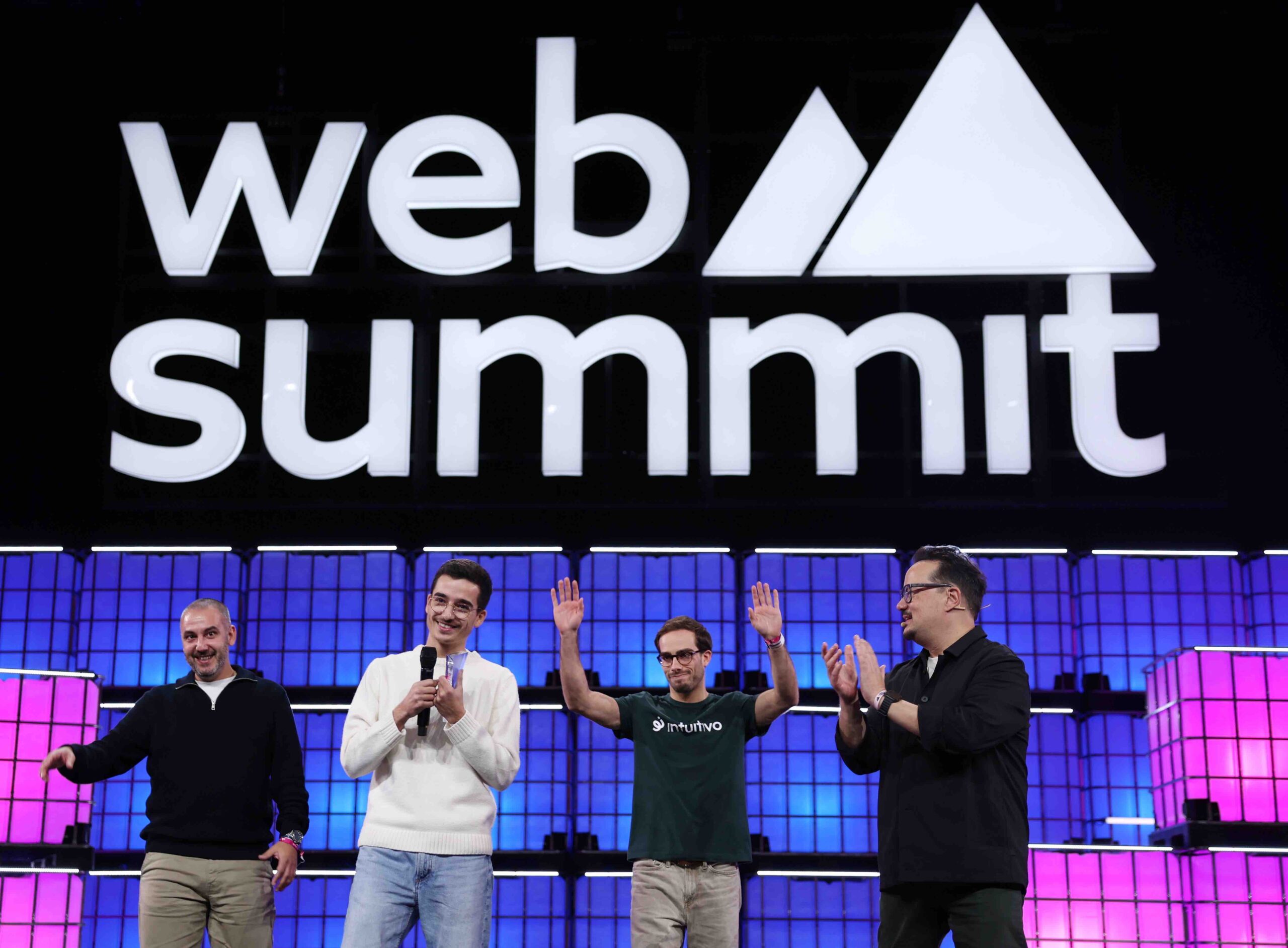
14 November 2024; Pitch Winner João Guimarães, CEO, Intuitivo; centre, and partners on Centre Stage during day three of Web Summit 2024 at the MEO Arena in Lisbon, Portugal. Photo by Harry Murphy/Web Summit via Sportsfile
Agora querem levar esta plataforma para o Brasil, onde estimam um mercado potencial de 2,2 milhões de professores, cerca de 12 vezes o universo português.
A ronda — liderada pela Caixa Capital e pelo Impact Innovation Fund, gerido pela 3xP Global, no âmbito do Programa de Venture Capital do Fundo de Capitalização e Resiliência (FdCR), gerido pelo Banco Português de Fomento, como participação da Techstars, da COREangels Lisboa e da COREangels Porto — eleva para cerca de 1,5 milhões de euros o capital até aqui levantado pela empresa que quer ainda reforçar a sua equipa.
“Hoje somos 18 pessoas, uma das quais já no Brasil. Antes da ronda éramos cerca de 11. O objetivo é passar das 20 pessoas nos próximos meses, reforçando produto e engenharia e as equipas que trabalham diretamente com professores e escolas”, adianta João Guimarães ao ECO. “No Brasil, a ideia é iniciar com uma equipa local de duas pessoas e crescer a equipa à medida que o mercado vai sendo validado.”
Warhound came out of stealth on Wednesday with $200 million in funding and a mission to create “elite working dogs” equipped with "advanced body armor."
Uma startup que nasce hoje em Lisboa, Munique ou Tallinn encontra, com relativa facilidade, quem lhe financie os primeiros passos. A dificuldade surge depois, quando a ideia já provou o seu valor e é preciso capital a sério para contratar, internacionalizar e ganhar escala.
Nessa fase, o crédito bancário raramente é solução: uma empresa jovem ainda não gera lucros estáveis e tem poucos ativos para dar como garantia. Precisa de capital de risco, de fundos que se tornam sócios da empresa e partilham, com ela, o risco de crescer. Na Europa, estes fundos existem, mas são pequenos e estão confinados a 27 mercados desagregados.
Segundo o Banco Europeu de Investimento, o capital de risco europeu é cerca de seis vezes inferior ao norte-americano, pelo que uma scale-up europeia angaria, ao fim de dez anos, metade do capital de uma congénere de Silicon Valley.
Sem esse financiamento, muitas das empresas mais promissoras crescem fora da Europa. De acordo com o relatório Draghi, entre 2008 e 2021, perto de 30% dos unicórnios aqui fundados transferiram a sede, na sua maioria para o outro lado do Atlântico. Com eles partem empregos, receitas fiscais, propriedade intelectual e tecnologia.
Foi para dar escala aos fundos de capital de risco que a União criou, em 2013, o EuVECA, um passaporte que lhes permite angariar investidores em todos os Estados-Membros. A ideia era acertada, mas as regras envelheceram e o mecanismo vale hoje menos do que prometia. A revisão estava anunciada para este ano; em outubro, a proposta continua por apresentar.
No Grupo do PPE, definimos cinco prioridades, já enviadas à Comissão. A primeira visa corrigir um contrassenso: os gestores com menos de 500 milhões de euros sob gestão beneficiam do regime simplificado do EuVECA, mas, ultrapassado esse limiar, ficam sujeitos às regras dos grandes fundos de investimento, com encargos de supervisão e reporte muito superiores. O sucesso acaba, assim, penalizado no momento em que se concretiza, levando alguns a limitar o próprio crescimento. Propomos elevar a fronteira para, pelo menos, 1,5 mil milhões e indexá-lo à inflação, para que não volte a tornar-se obsoleto.
Pretendemos também pôr fim ao gold-plating, palavra do momento em Bruxelas. Somadas, as exigências e taxas que muitos Estados-Membros acrescentam à legislação europeia pesam excessivamente sobre quem não dispõe de juristas em cada capital. Removidos estes entraves, importa alargar o leque de instrumentos e de investidores: permitir o recurso aos SAFE, comuns nos EUA, que convertem o financiamento de hoje em ações numa ronda futura, e abrir estes fundos a investidores particulares experientes, e não só a quem investe acima de um determinado montante.
A última é, porventura, a mais relevante. As regras prudenciais desincentivam seguradoras e fundos de pensões de investir em capital de risco e o BCE aponta a sua fraca presença como um travão ao financiamento das scale-ups. A Europa dispõe de poupança; falta canalizá-la para a economia real. O Fundo Europeu de Investimento pode ajudar como investidor-âncora: a sua entrada num fundo é um sinal de confiança que atrai capital privado.
Mas mais capital não chega se as empresas, ao crescerem, continuarem a esbarrar em 27 regimes societários. Por isso, a revisão do EuVECA deve avançar a par da EU Inc., o estatuto empresarial europeu. A fragmentação do capital e a do direito das sociedades são duas faces do mesmo problema.
No Parlamento Europeu vamos bater-nos para que esta reforma não se perca pelo caminho. Está em causa saber se a Europa será capaz de transformar talento em prosperidade e ideias em liderança. Até lá, continuaremos a financiar o arranque das nossas melhores empresas para que outros colham os frutos.
Ben here. Up until recently, it was a great time to be the founder of a neolab, the lavishly funded, research-first AI startups founded by top talent who defected from the likes of OpenAI or Google DeepMind.
We reported last month that Jeff Dean, Google's former chief scientist, is seeking a valuation as high as $50 billion for his new AI science startup. OpenAI cofounder Ilya Sutskever's Safe Superintelligence is worth $32 billion. Another OpenAI alum, Mira Murati, is raising a round for Thinking Machines Lab at a valuation of around $40 billion.
But lately, in conversations with multiple VCs around Silicon Valley, there is a growing divide about whether neolabs can make the economics work with their multibillion-dollar price tags and formidable competition from frontier labs.
One VC at a top firm, who asked that I not use his name, told me neolabs are the most hotly debated type of investment right now.
"Some would say you shouldn't invest in any, and others would say this is basically all you should be investing in because software's dead, and you either have to own models or hardware, and even if you enter at a billion, the company could be worth a trillion," he said.
Business Insider; Randy Yeip
When I recently asked Menlo Ventures partner Matt Murphy at Business Insider's Growth Mode conference which sector he thought was most overhyped, he immediately cited neolabs, which was noteworthy, given that Menlo invested in some of them.
Murphy pointed to an example from his time as an early board advisor at Google, which he said did so well because it "was like a match thrown into a bonfire."
"The opposite thing you want to do is start a match with a bonfire," Murphy told me. "That's the risk of what's going on now with companies raising such large rounds."
Das seemed a bit taken aback by the reaction to his post and later texted me: "Like all startups, many will fail, some will work."
Picking which ones will work is why VCs get paid the big bucks.
Neolabs are a power-law bet taken to an extreme, Radical Ventures' Aaron Rosenberg told me.
Investors know most will likely burn enormous sums on compute and talent without ever becoming profitable. But the rare winner could become a foundational AI company worth hundreds of billions or more.
"We're confident that the best neolabs will attract ongoing support," Rosenberg said. "Talent continues to transition out of the incumbents and academia into founder roles, and we see no signs of that slowing."
Like Radical, New Enterprise Associates wrote a bullish view in June. One of the authors, Andrew Schoen, told me his views have not changed. "There are neolabs I know of that are finalizing billion-plus-dollar rounds of equity financing, and those processes are moving very smoothly and quickly," he said.
The Buzz
Menlo Ventures' partners Shawn Carolan, Matt Murphy, and Venky Ganesan.
Will Mackie Productions
Katie here. Many of tech's biggest names gathered at the Ritz-Carlton in San Francisco on Saturday, at a black-tie event in the name of Menlo Ventures' 50th anniversary.
Hollywood titan turned venture capitalist Jeffrey Katzenberg of Dreamworks fame asked the audience to join a prayer "for the blockbuster IPO of Anthropic," a joking reference to Menlo's early investment in the company.
I also spotted Morgan Stanley's storied technology banker Michael Grimes, who is undoubtedly holding his own AI IPO prayers. Other attendees included an array of public company and startup CEOs, including those from Snowflake, Zscaler, Legora, and OpenRouter.
As Menlo partner Venky Ganesan quipped, there was more AUM (assets under management) in the room than in many countries, given the attendees' net worth and the investment capital they manage.
A person at a rival venture shop expressed disappointment that their firm doesn't host such celebrations.
Menlo's night ended with concerts from two super confidential Grammy Award winners trying to rake in those AI bucks!
Around the Cap Table
We reported this week that Fireworks AI is seeking fresh funding at a valuation of between $30 billion and $40 billion, a dramatic jump just months after its last blockbuster round was closed.
There are only 130 US tech companies, public or private, valued at $10B or more (decacorns). That’s roughly 20 to 30 new companies per decade, for the last five decades. This year alone, with a quarter to go, there have been 42 decacorns minted privately. Either this is the most…
Ben Bergman, chief correspondent, in Los Angeles. Katie Roof, editor at large, in San Francisco. Pranav Dixit, senior technology editor, in San Francisco. Leena Rao, executive editor, in Los Angeles.
Mave has raised $34 million to bring AI agents to companies' security operations.
CEO Raziel Oren said old systems can't keep up with how quickly AI is transforming cyberattacks.
Business Insider got an exclusive look at the pitch deck Mave used to raise its Series A round.
Mave, a cybersecurity startup that uses agents to counter the rise in AI-powered cyberattacks, has raised $34 million in funding.
The Israel-based startup says its AI agents pull together information from a company's existing security systems, investigate alerts, filter out false alarms, and take actions approved by human teams.
"Security operations is the last gate in any organization," cofounder and CEO Raziel Oren said, comparing it to the physical security guards who monitor a building's live camera footage. "This thing is really broken from the inside. The roots of the solutions there are just not keeping the relevant pace with the emerging threats."
Mave says its own agents help human security teams keep up. "You can't hire your way out of this," Oren told Business Insider. "There must be a change in how you do [security operations] in order to protect your organizations."
Oren cofounded Mave with Guy Eshel in 2025 after years of friendship. The two met when Oren was Eshel's mentor in unit 8200 of the Israel Defense Forces, which sits under the intelligence corps and gave them firsthand experience with cybersecurity issues.
AI agents have come under the spotlight after a string of high-profile security breaches. Corporate leaders have grown increasingly worried about the cybersecurity risks AI poses, and some of Wall Street's executives spent third-quarter earnings calls explaining how they're defending against rogue AI agents.
The technology has also been used by researchers to uncover security flaws: this week, OpenAI said one of its AI models had helped identify a vulnerability that puts 70% of the world's websites at risk.
Oren said it takes some customers time to become comfortable handing over security operations to agents, but that the product's transparency is key to building trust. Mave says its agents track each step of their thousands of workflows, giving human employees insight into the agents' reasoning and actions.
Mave charges its customers a flat rate, depending on the company's size and needs. Other startups have also jumped at the opportunity Mave sees, including agentic cybersecurity companies Dropzone and Prophet Security.
Mave's $34 million funding consists of $28 million from a recent Series A round, led by Red Dot Capital Partners and with participation from Lumir Growth Partners, and an earlier $6 million seed round.
The startup currently has 30 employees and plans to use some of the fresh capital to continue expanding the team, mainly for go-to-market roles and AI research.
Read the pitch deck Mave used to raise its Series A round:
The co-founders met in the army.
Mave
Cyberattacks are happening much faster.
Mave
Mave consolidates security operations.
Mave
In one instance, Mave says it stopped ShinyHunters, a cybercriminal group.
Mave
Customers include Fortune 200 and Fortune 500 companies.
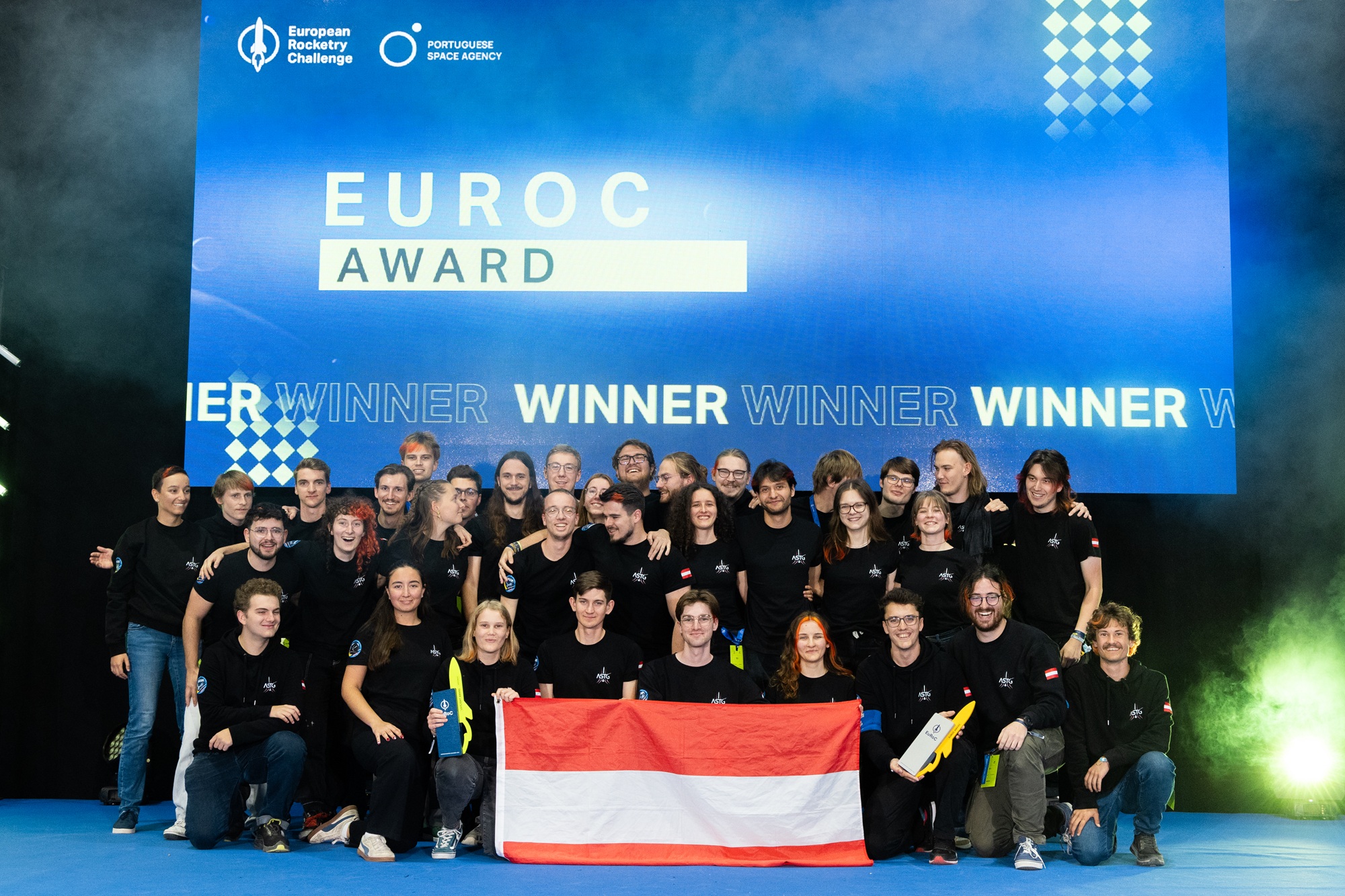
A equipa austríaca Aerospace Team Graz (ASTG) conquistou o EuRoC Award, atribuído à equipa com o melhor desempenho global na competição organizada pela Agência Espacial Portuguesa.Agência Espacial Portuguesa
A sétima edição do European Rocketry Challenge (EuRoC), competição universitária de foguetes organizada pela Agência Espacial Portuguesa, terminou com dez prémios atribuídos a equipas europeias, num ano marcado pela estreia de uma categoria para novos participantes e por um resultado inédito para Portugal. A equipa austríaca Aerospace Team Graz voltou a conquistar a principal distinção, enquanto a portuguesa da Universidade do Minho conseguiu lançar e recuperar um foguete na sua primeira participação.
A Aerospace Team Graz (ASTG) da Áustria conquistou o EuRoC Award, atribuído à equipa com o melhor desempenho global, considerando a conceção do foguete, a documentação técnica, o trabalho de equipa e os resultados em voo. A formação austríaca, que já tinha vencido em 2023 e 2025, arrecadou ainda o prémio de melhor voo na categoria de propulsão líquida para 9.000 metros.
“O EuRoC tornou-se uma referência europeia porque conseguimos criar um ambiente em que as novas gerações desenvolvem tecnologia em condições próximas da indústria. Muitos dos estudantes que passaram pelo EuRoC estão hoje a trabalhar em empresas do setor ou criaram os seus próprios negócios. É esse o impacto da competição: formar o talento de que a indústria espacial europeia precisa, tornando-a mais forte e mais autónoma”, destaca Ricardo Conde, presidente da Agência Espacial Portuguesa, citado em comunicado.
Outro dos destaques foi a grega White Noise, que conquistou dois prémios na sua estreia: o Rookie of the Year, que distingue a melhor equipa estreante, e o Payload Award, atribuído à melhor carga útil, tendo em conta a inovação, a fiabilidade e o potencial de aplicação da tecnologia desenvolvida.
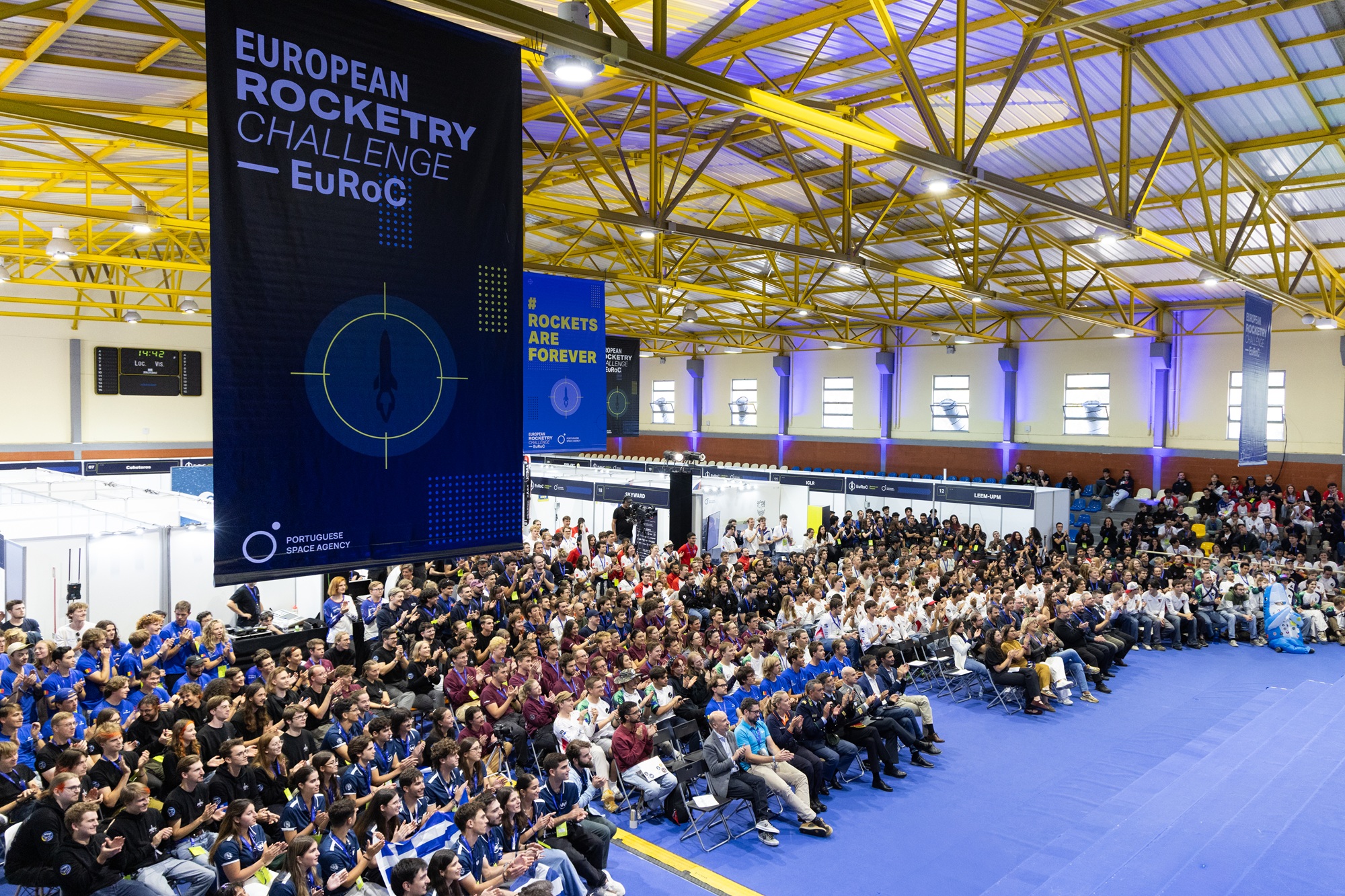
A competição decorreu em Constância entre 15 e 21 de outubro e reuniu cerca de 700 estudantes de 13 universidades europeias, contando com o apoio da Câmara Municipal de Constância e do Exército Português.Agência Espacial Portuguesa
Portugal esteve representado na fase final da competição de foguetes por duas equipas universitárias, depois de sete formações nacionais terem sido selecionadas para competir.
A Minho Aerospace Students’ Team (MAST), da Universidade do Minho, levou o foguete Mirage ao objetivo de 3.000 metros de altitude. Fundada em 2024, a equipa tornou-se a primeira formação portuguesa a conseguir lançar e recuperar um foguete, numa edição da competição que marcou a sua estreia.
“Esta edição demonstrou que é possível abrir a competição a novas equipas sem comprometer a exigência técnica que caracteriza o EuRoC. Para estes estudantes, foi primeira oportunidade de transformar meses de desenvolvimento num projeto real, sujeito aos mesmos desafios técnicos e de segurança que encontram na indústria”, afirma Marta Gonçalves, gestora dos programas de Educação e Ciência da Agência Espacial Portuguesa, citada na nota de imprensa.
Já a Rocket Experiment Division (RED), do Instituto Superior Técnico, que participa na competição ininterruptamente desde 2021, não conseguiu realizar o lançamento devido a problemas técnicos que não foram resolvidos dentro do prazo da competição. A North Space, que reúne estudantes de várias faculdades da Universidade do Porto e da Universidade de Lisboa, também não chegou à fase final, apesar de ter sido selecionada, devido a contratempos no desenvolvimento do foguete.
A competição decorreu em Constância entre 15 e 21 de outubro e reuniu cerca de 700 estudantes de 13 universidades europeias. Ao longo de quatro dias de operações, 12 foguetes saíram das rampas de lançamento, numa edição que ficou marcada pela diversidade tecnológica dos projetos e pela estreia da categoria Rookie, destinada a equipas que participam pela primeira vez.
O EuRoC contou com o apoio da Câmara Municipal de Constância e do Exército Português, que disponibiliza o Campo Militar de Santa Margarida para os lançamentos. A competição contou ainda com a presença de empresas do setor, como a Neuraspace, a Tekever e a Momentum Aerospace, reforçando a ligação entre o ensino superior, a investigação e a indústria espacial.
Dez prémios para equipas de oito países
Além das distinções conquistadas pela equipa austríaca e pela formação grega, o EuRoC reconheceu projetos de equipas da Suíça, Itália, Hungria, Espanha e Chéquia.
Os dez prémios atribuídos na edição de 2026 ficaram distribuídos da seguinte forma:
O cofundador da Unbabel, Vasco Pedro, que liderava a startup quando foi decidida a venda da totalidade dos ativos ao grupo TransPerfect, garante que "a gerência atuou de boa-fé e procurou, ao longo de todo o processo, encontrar a solução que melhor salvaguardasse os interesses dos trabalhadores, dos credores e dos clientes". O empreendedor reage assim à notícia de que o tribunal vai decidir se a insolvência da Unbabel foi culposa ou fortuita.
Naquela que é também uma das primeiras reações públicas de Vasco Pedro ao desfecho da startup que fundou em 2013, o gestor afirma ao ECO que "foram desenvolvidos esforços documentados de investimento,…
Este artigo é exclusivo para assinantes
Assine o ECO Premium e continue a ler esta e todas as notícias exclusivas, sem limites.
A Beyond Vision levantou 28 milhões de euros para expandir capacidade de produção e reforçar nos mercados europeu, América do Norte (EUA e Canadá) e Brasil. A empresa comprou espaço na Trofa para a equipa a Norte.
“O objetivo é aumentar a capacidade industrial para responder à procura atual e ao pipeline em defesa. Na prática: mais área de produção, mais stock de componentes críticos e mais equipa. Estamos a expandir em várias frentes: Alverca (sede), Oeiras (obra arranca agora) e Trofa, onde adquirimos espaço próprio para a equipa do Norte”, adianta Dário Pedro, CEO da Beyond Vision, ao ECO/eRadar.
Em Alverca, em dezembro passado, a empresa estava a aumentar a área de produção com 2.000 metros quadrados, distribuídos por dois pisos, para 4.000 metros quadrados, num investimento de global de cinco milhões de euros. E em Oeiras é uma das empresas que integra o cluster de drones que está a ser criado no Oeiras Tech Valley, como adiantou na época o CEO da empresa fabricante de drones em entrevista ao ECO/eRadar.
O objetivo era este ano a companhia ganhar capacidade de produzir cerca de 500 VTOL (drones de asa em multirotor) e cerca de 800 multirotores.
O objetivo é aumentar a capacidade industrial para responder à procura atual e ao pipeline em defesa. Na prática: mais área de produção, mais stock de componentes críticos e mais equipa. Estamos a expandir em várias frentes: Alverca (sede), Oeiras (obra arranca agora) e Trofa, onde adquirimos espaço próprio para a equipa do Norte.
A ronda de capital foi coliderada por dois fundos de investimento nacionais, a Indico Capital Partners e Lince Capital, com reforço da ActiveCap, que já investe na fabricante de drone desde 2024.
“Em setores críticos como na defesa, na gestão de infraestruturas e na segurança, a dependência de tecnologia de ponta, fiável e soberana é hoje uma prioridade estratégica dos vários países. A Beyond Vision redefiniu este mercado ao combinar hardware de alta precisão com algoritmos avançados de inteligência artificial a um custo muito competitivo”, refere Stephan de Moraes.
“Este investimento dará à Beyond Vision a robustez financeira necessária para escalar a produção e competir mundialmente em importantes segmentos de veículos autónomos não tripulados”, acrescenta o presidente da Indico Capital Partners, citado em comunicado.
Dário Pedro, cofundador e CEO da Beyond Vision na unidade de produção em Alverca.Hugo Amaral/ECO
“O atual contexto geopolítico e o reforço do investimento europeu em defesa estão a criar novas oportunidades para empresas tecnológicas com capacidade de competir internacionalmente. Acreditamos que a Beyond Vision, pela sua capacidade tecnológica, experiência e ambição, está bem posicionada para aproveitar este momento e contribuir para o desenvolvimento de um ecossistema nacional mais forte em tecnologias de elevado valor acrescentado”, diz por seu turno, Tomás Lavin Peixe, head of venture capital da Lince Capital, citado em comunicado.
Expansão geográfica
A injeção de capital surge num momento de elevada procura global por sistemas de veículos não tripulados e visa dar capacidade financeira para reforçar produção e presença no mercado externo.
Com esta ronda, a empresa quer reforçar “na Europa, América do Norte (EUA e Canadá) e Brasil, sempre com foco em defesa, segurança e infraestruturas críticas“, adianta Dário Pedro.
A empresa tem vindo a expandir a sua presença. No Canadá, em junho, fechou uma parceria com a Arcanus Aerial Systems, empresa do setor de defesa com sede em Toronto, para a produção, comercialização e prestação de apoio às principais plataformas da fabricante nacional de drones nesse país da América do Norte, bem como “em vendas de exportação financiadas pelo Canadá”.
Com esta parceria, a empresa de Alverca reforçou a sua posição na América do Norte, depois de ter fechado um contrato de “pelo menos” 15 milhões de euros nos EUA para fornecer 300 drones de emergência até 2028. Nos planos do fabricante português está ainda a abertura, em dois anos, de uma fábrica no mercado norte-americano, num investimento de 50 milhões de euros.
Fábrica de drones da Beyond Vision, em AlvercaHugo Amaral/ECO
Em França, durante a Eurosatory 2026, uma das maiores feiras do setor de defesa e segurança, a fabricante de drones fechou ainda parcerias com duas empresas, a Gremsy — fabricante de soluções avançadas de imagem e câmaras para drones e robótica — e a espanhola Indef. Com esta última, o primeiro foco de colaboração irá incidir no desenvolvimento de uma plataforma de drones marítimos para aplicações de Operações Especiais, com o objetivo de apoiar atividades de teste e avaliação em missões NATO.
Já o acordo com a Gremsy era apontado como “estratégico” dado a “sua parceria com a FLIR [que desenvolve sistemas de imagem infravermelha de baixo custo para uso aéreo] e como fabricante de payloads NDAA compliant [ou seja que cumprem com os requisitos da National Defense Authorization Act] e produzidos nos EUA”, detalhava em junho o CEO da Beyond Vision ao ECO/eRadar.
A TransPerfect pagou 5,7 milhões de dólares (5,1 milhões de euros) pela "totalidade dos ativos da Unbabel"em agosto de 2025. Meses antes, a Unbabel negociou uma fusão com outra empresa por uma avaliação de 250 milhões de dólares (222,8 milhões de euros), 44 vezes mais, mas a operação não se chegou a concretizar, apurou o ECO.
Aqui quantificado pela primeira vez, o colapso da avaliação da Unbabel num curto espaço de tempo ilustra bem a queda vertiginosa desta startup tecnológica que chegou a ser vista como uma das…
Este artigo é exclusivo para assinantes
Assine o ECO Premium e continue a ler esta e todas as notícias exclusivas, sem limites.
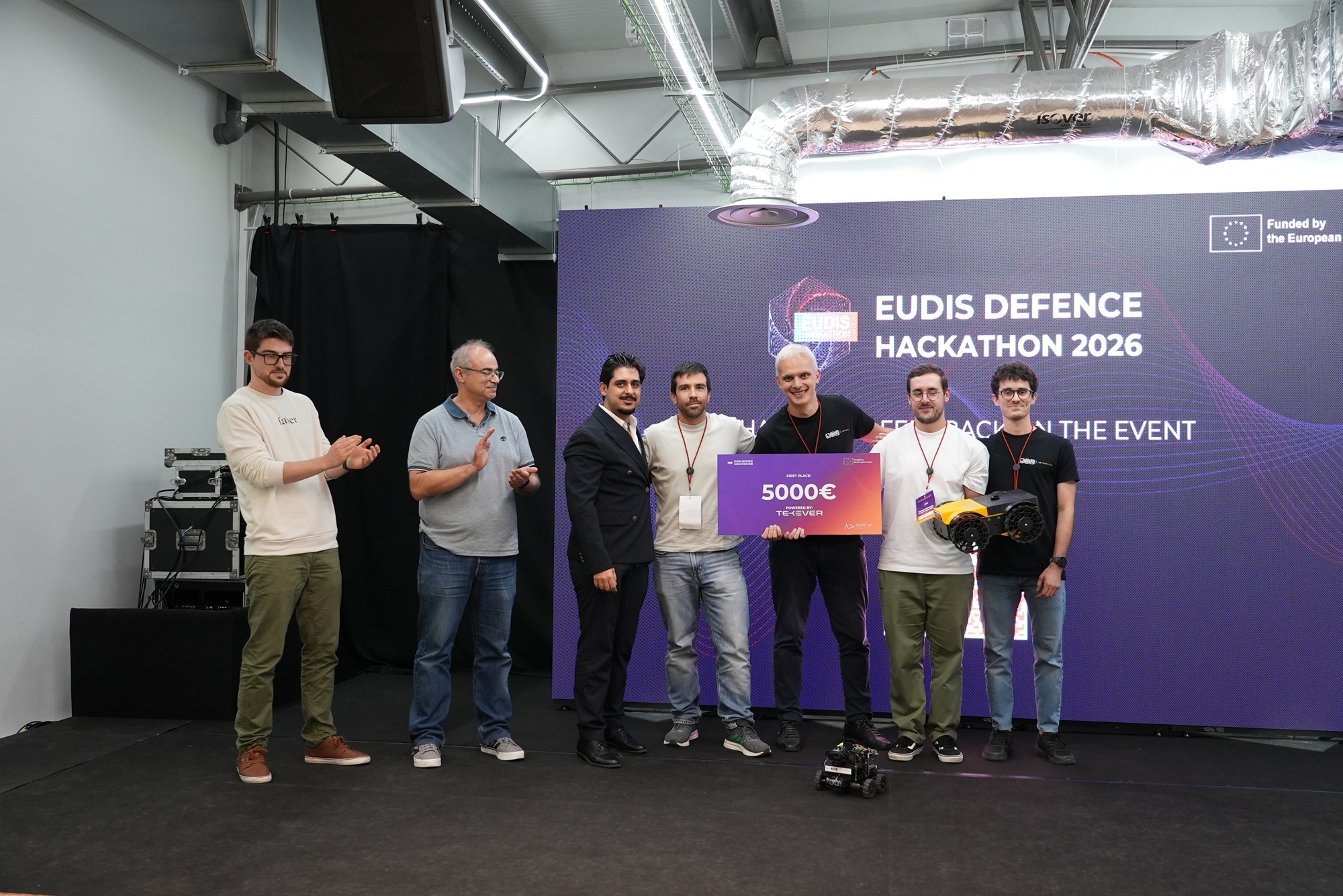
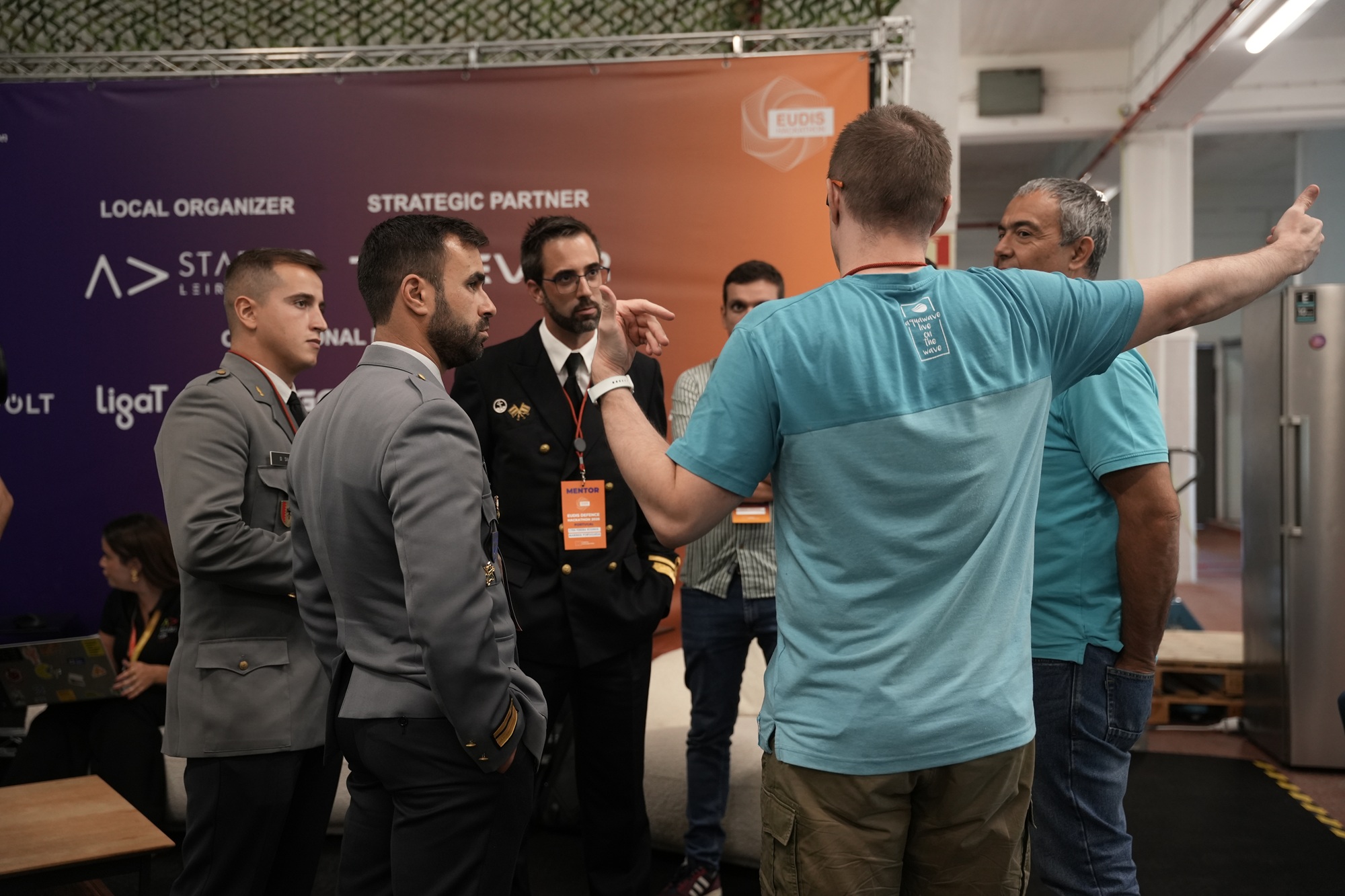
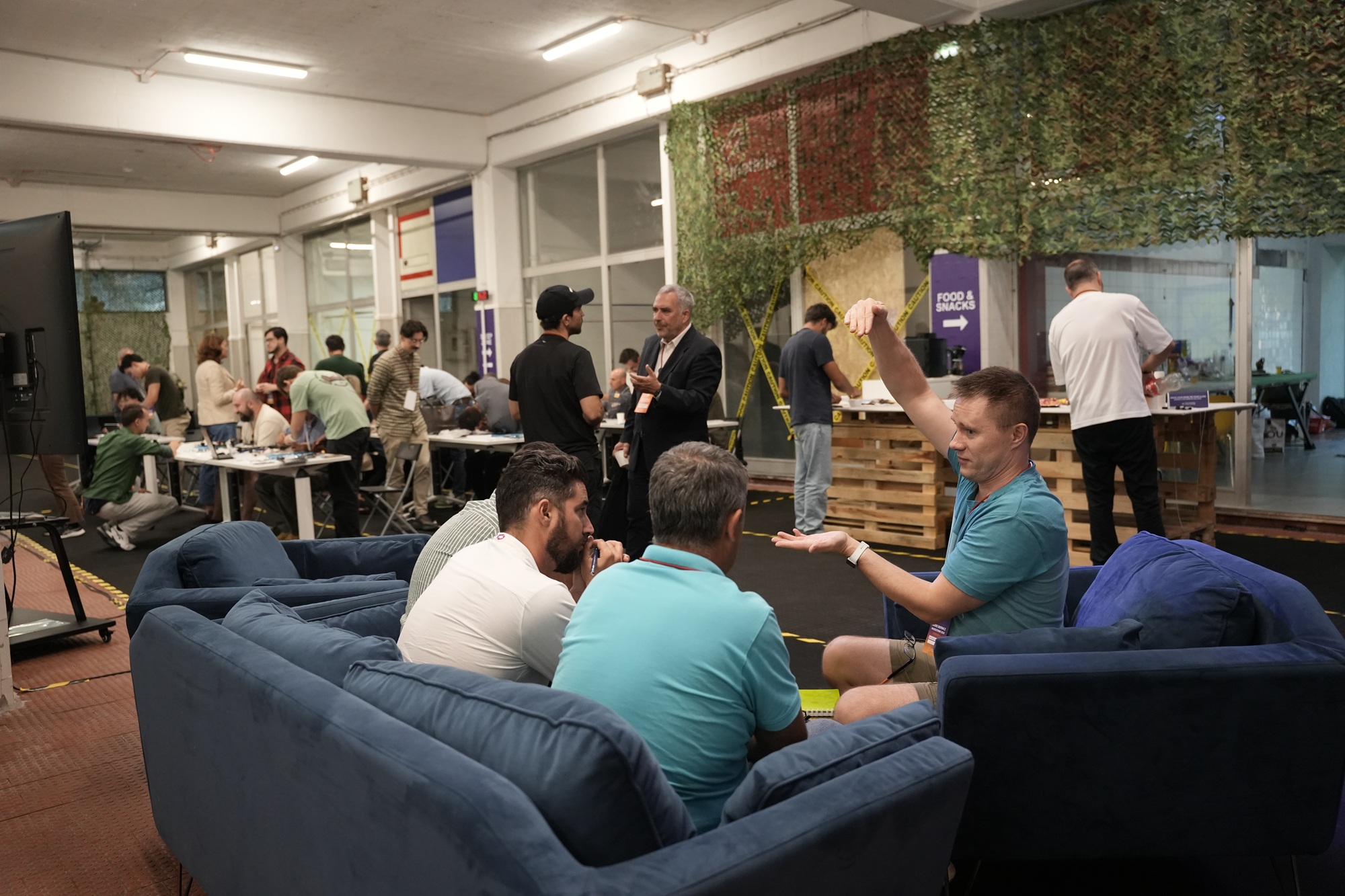
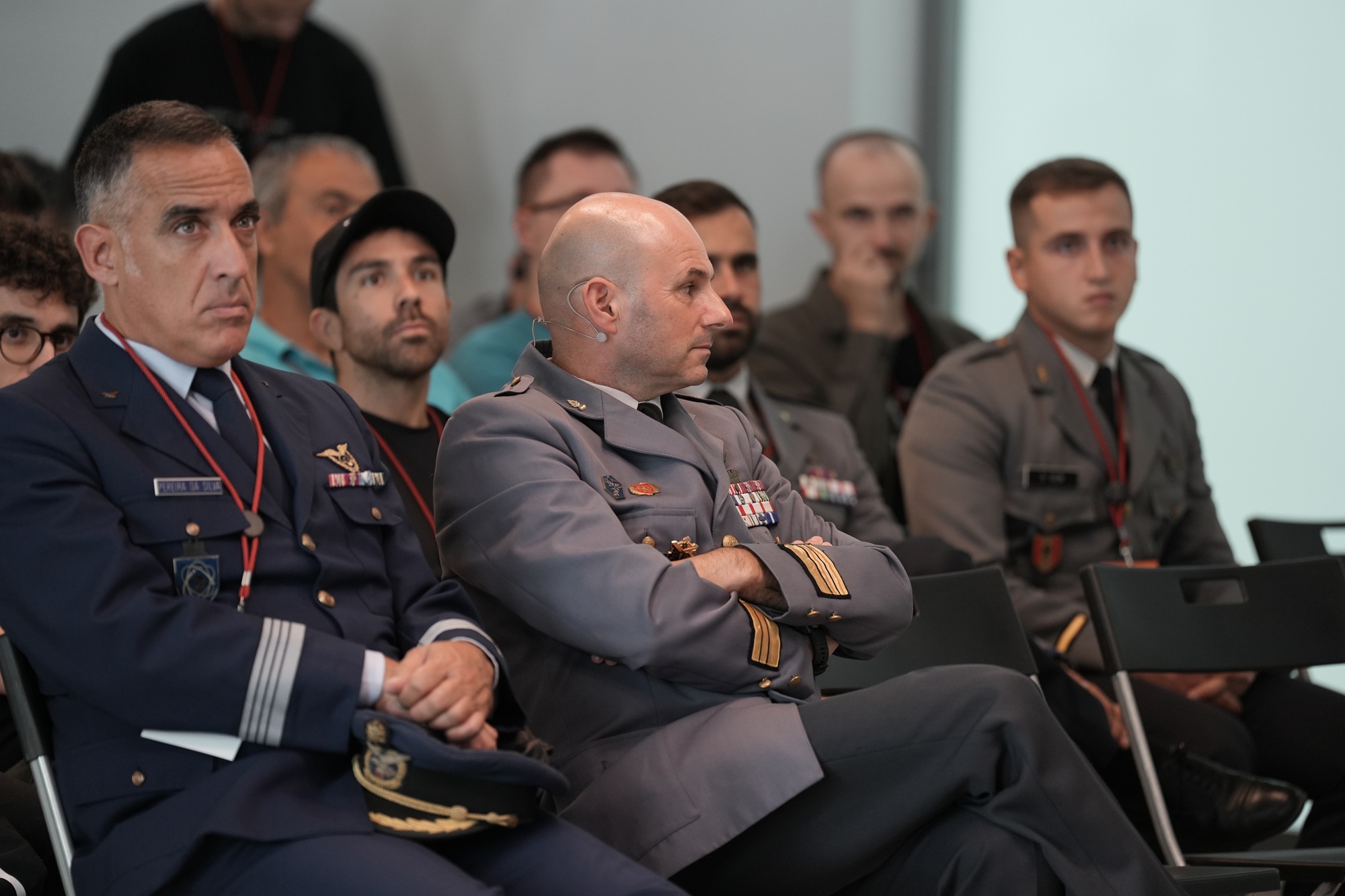
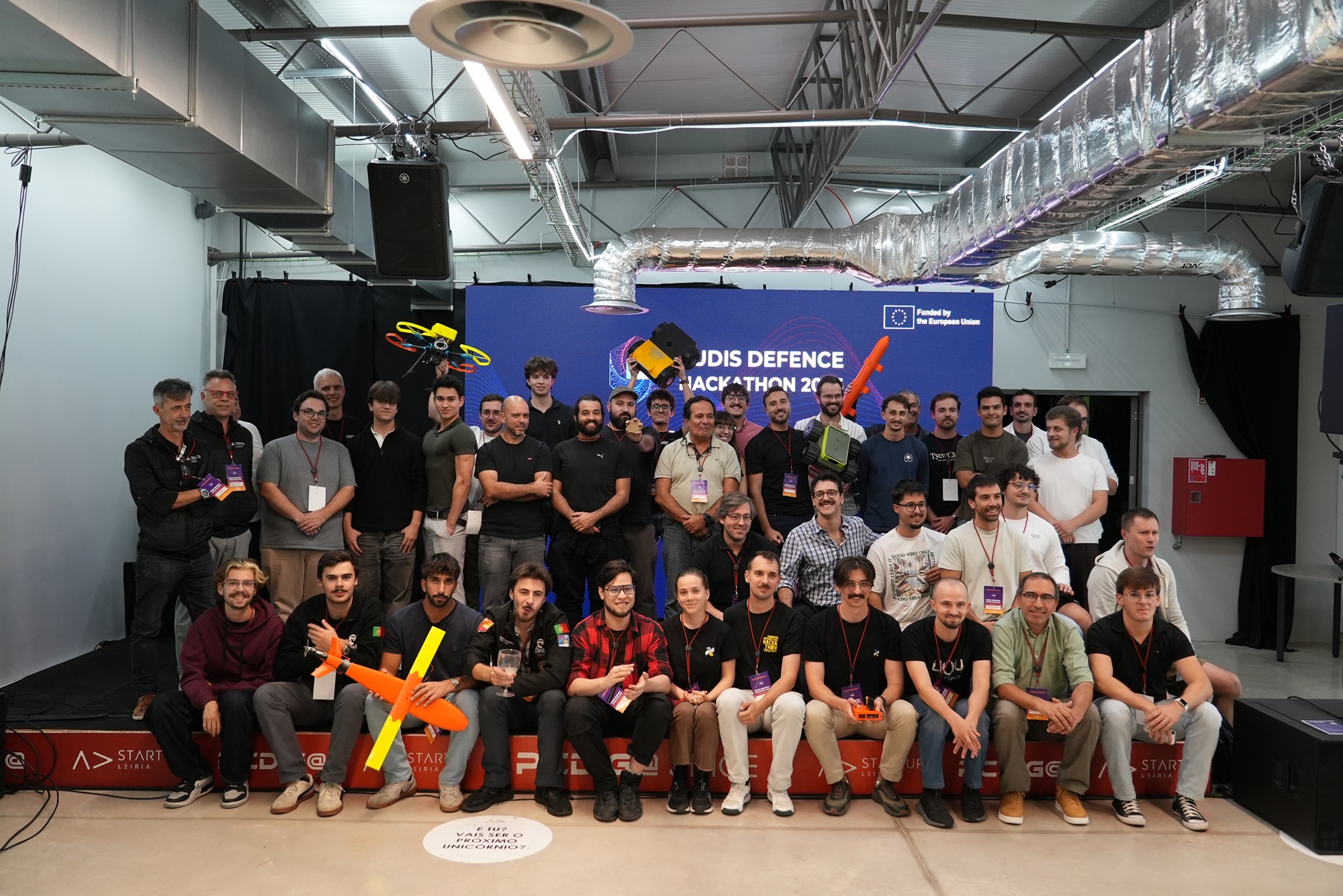
A UB Robotics conquistou o primeiro lugar na edição de Leiria do EUDIS Defence Hackathon 2026 com uma plataforma de autonomia robótica que permite coordenar diferentes tipos de robôs sem depender de GPS, internet ou redes convencionais, a UBR Brain. A Nautilo e a UBIAT viram também as suas soluções serem reconhecidas na maratona tecnológica de defesa.
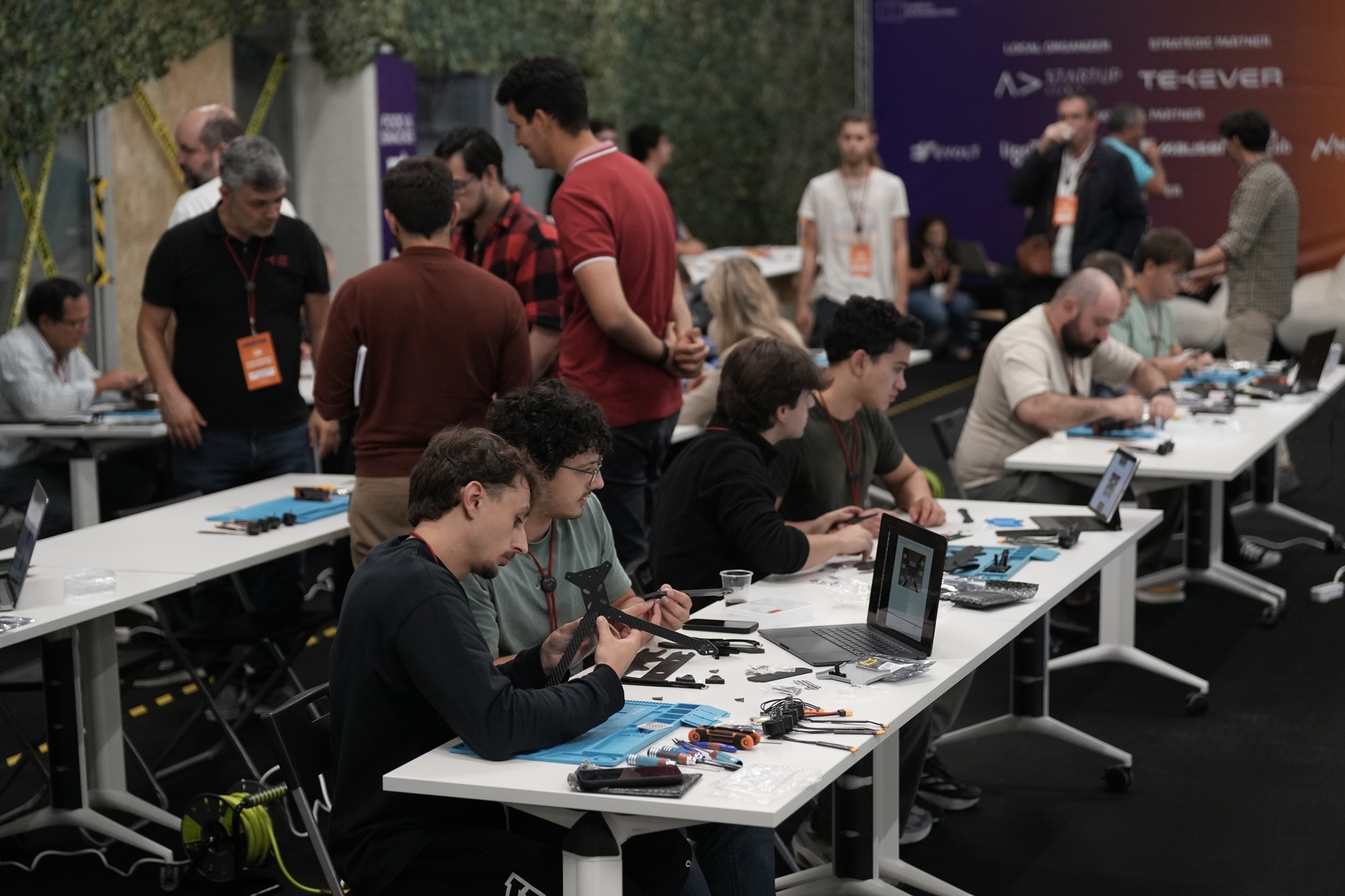
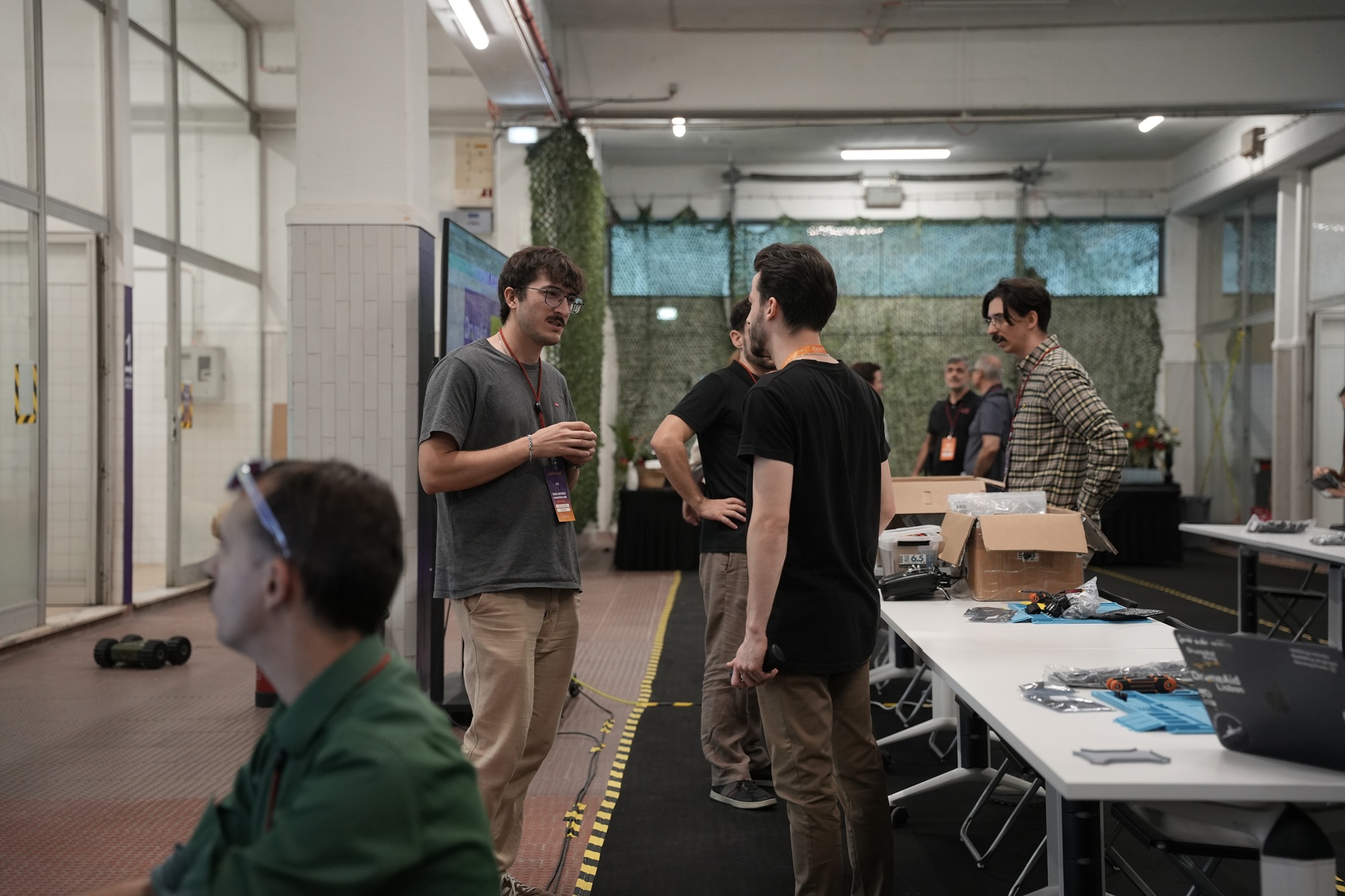
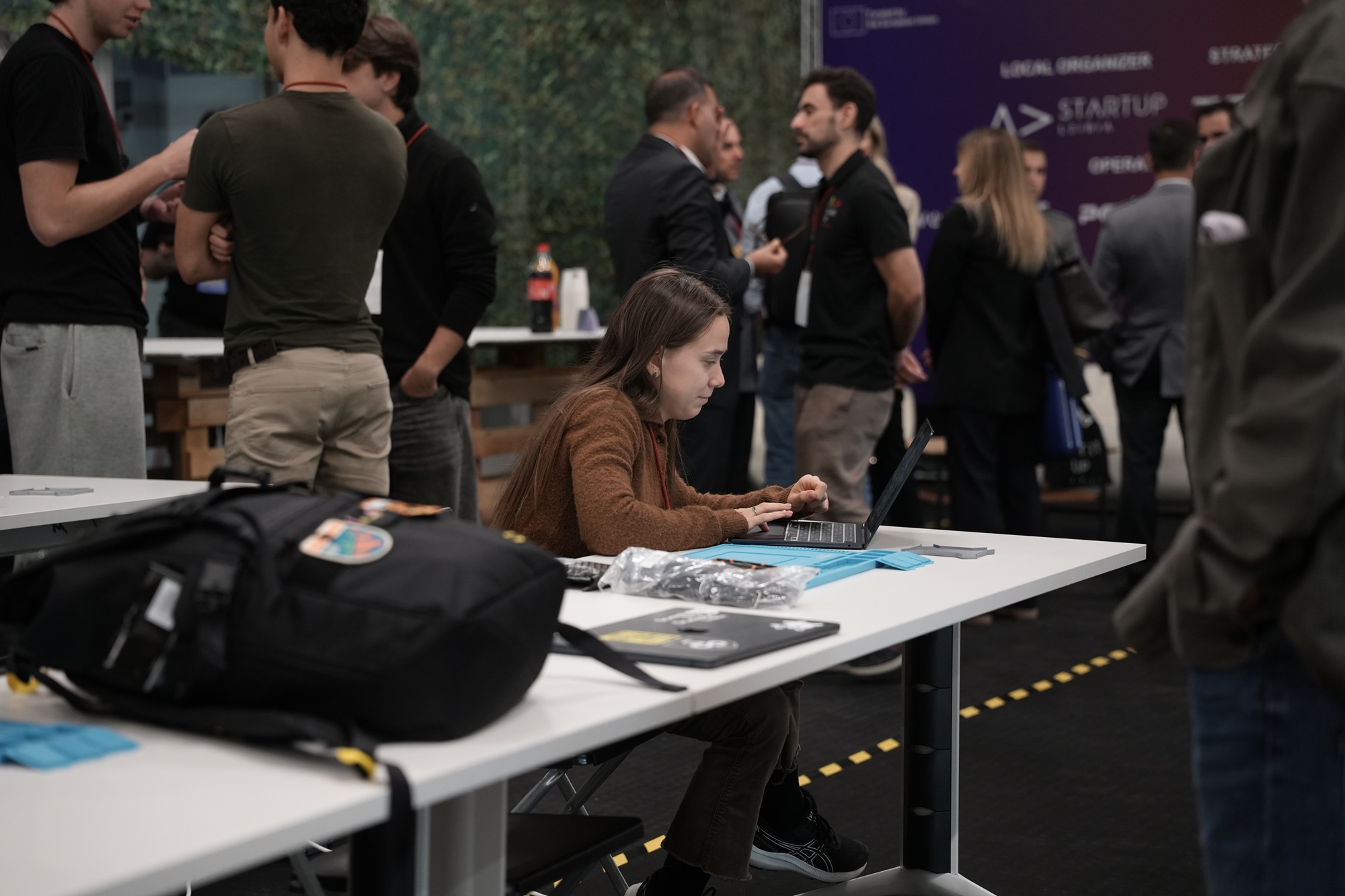
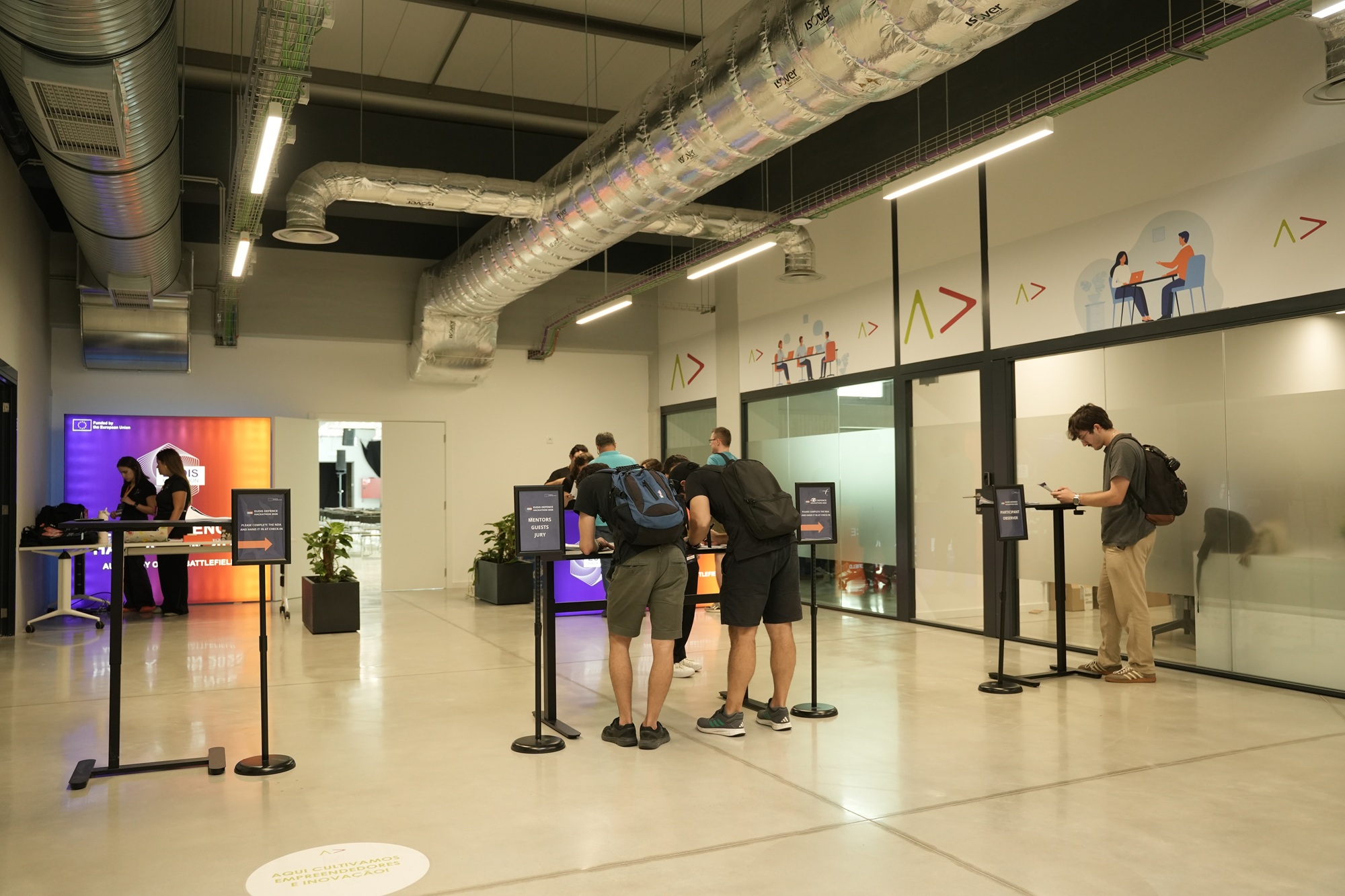
A competição decorreu entre 15 e 17 de outubro, em Leiria, no âmbito do programa europeu EU Defence Innovation Scheme (EUDIS), apoiado pelo Fundo Europeu de Defesa. Sob o tema “Autonomia no Campo de Batalha”, o hackathon reuniu 62 participantes de 12 nacionalidades para desenvolver soluções tecnológicas destinadas a operar em ambientes onde os sistemas de navegação por satélite podem estar indisponíveis ou ser perturbados.
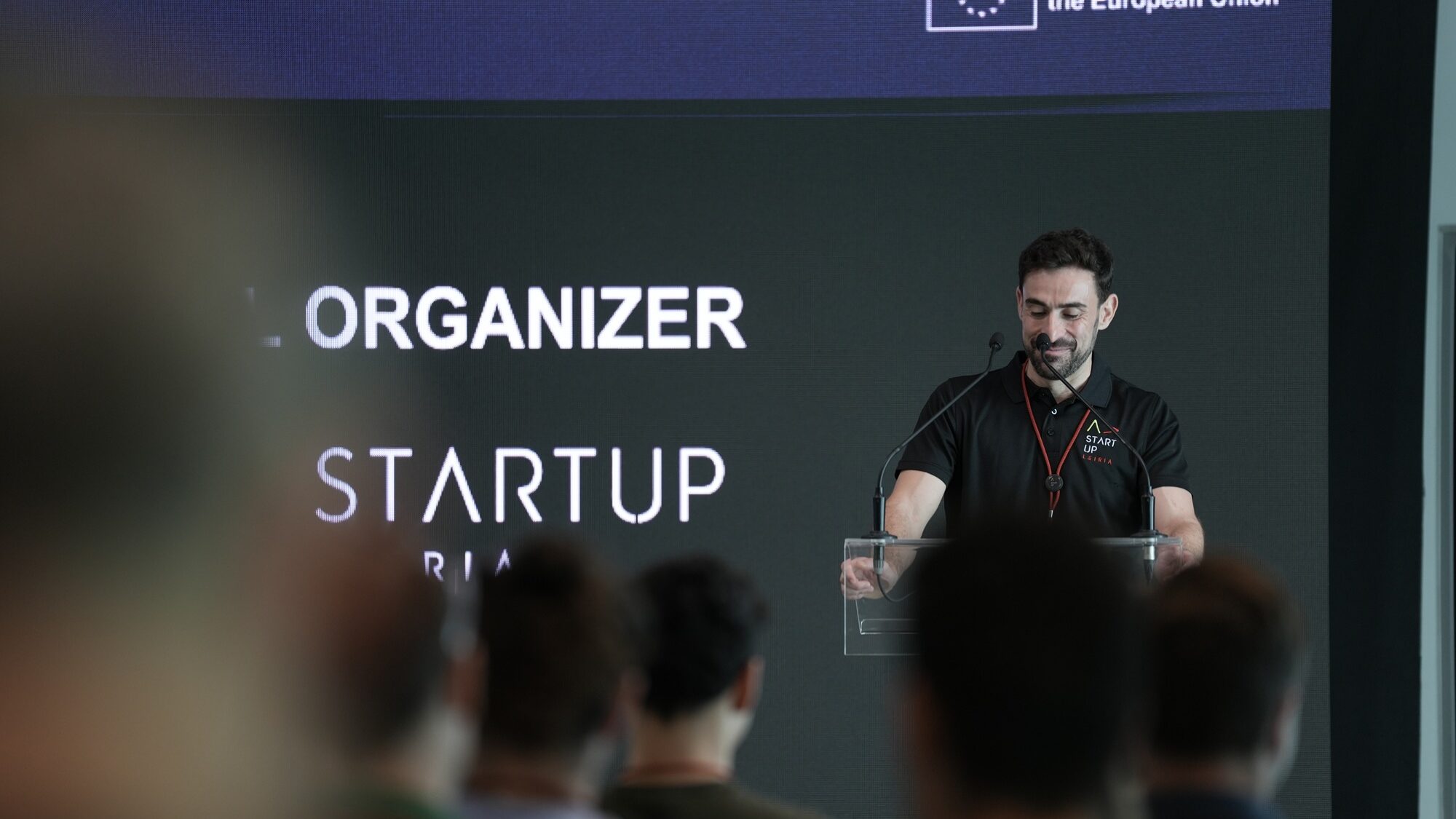
Esta foi a terceira maratona tecnológica do EUDIS realizada em Portugal, mas desta vez com a Startup Leiria como organizadora do evento. O desafio incluiu a navegação sem GPS, a coordenação de enxames de drones e o desenvolvimento de plataformas capazes de lançar, coordenar e recolher diferentes sistemas não tripulados.
A equipa UB Robotics venceu com o projeto UBR Brain, desenvolvido para responder ao desafio GNSS-Denied Navigation, centrado na operação de sistemas autónomos em ambientes sem acesso fiável a sinais de posicionamento por satélite.
A solução consiste numa plataforma de software de autonomia robótica que permite a um único operador coordenar diferentes tipos de máquinas, incluindo veículos terrestres não tripulados (UGV), veículos aéreos não tripulados (UAV) e robôs humanoides. O sistema recorre a sensores instalados nos próprios equipamentos e a comunicações rádio ponto a ponto, para permitir a navegação e a partilha de informação sem depender de GPS, ligação à internet ou infraestruturas de rede convencionais.
A equipa vencedora é composta por Filipe Martins, Francisco Leal, Pedro Oliveira, Rodrigo Capeleiro e Ruben Dinis.
A vitória na edição portuguesa permite à equipa avançar para a fase seguinte do programa europeu. Segundo a organização do hackathon, os vencedores nacionais beneficiam de dois meses de mentoria europeia e têm oportunidade de apresentar as soluções a representantes dos Estados-membros. As melhores propostas poderão ainda chegar a um evento tecnológico internacional.
A Nautilo conquistou o segundo lugar com uma plataforma naval autónoma concebida para patrulhar a Zona Económica Exclusiva (ZEE) portuguesa durante várias semanas. “Alimentada por energias renováveis e equipada com sistemas de baixa manutenção, a plataforma funcionaria como uma base móvel para prolongar o alcance operacional de sistemas não tripulados mais pequenos, permitindo uma monitorização marítima contínua e persistente”, refere a Startup Leiria.
Já o terceiro lugar foi para o sistema autónomo de combate a drones da UBIAT. Concebida para responder a ameaças como os drones de ataque Shahed, a solução combina uma “plataforma aérea principal com pequenos drones intercetores, que podem ser lançados para neutralizar ameaças identificadas através de câmaras térmicas e visuais”, refere a Startup Leiria.
“Através de uma rede de comunicação entre os drones e de um sistema de coordenação supervisionado por um operador humano, a plataforma permite distribuir alvos, acompanhar a situação e reajustar as missões em tempo real”, refere ainda.
Trata-se de uma solução de uso dual, já que a “arquitetura proposta poderá também ter aplicações civis, nomeadamente na deteção de incêndios florestais e em operações de busca e salvamento”.
For decades, hardware was a hard sell in Silicon Valley. Now investors are pouring tens of billions into machines that can do things in the real world.
A Goldilocks set of conditions has made robotics one of tech's hottest bets. As investors look beyond chatbots to the next frontier in AI, cheaper hardware, smarter AI models, labor shortages, and competition with China are fueling interest in machines capable of performing physical work.
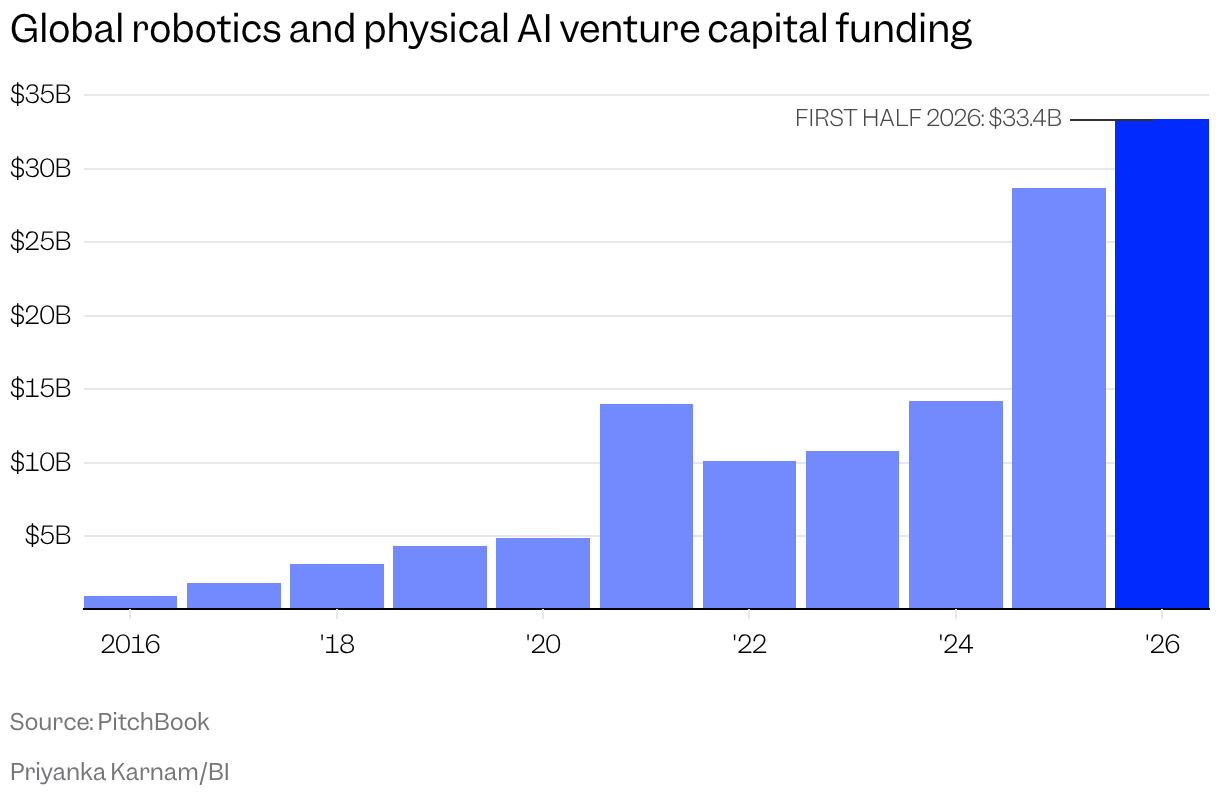
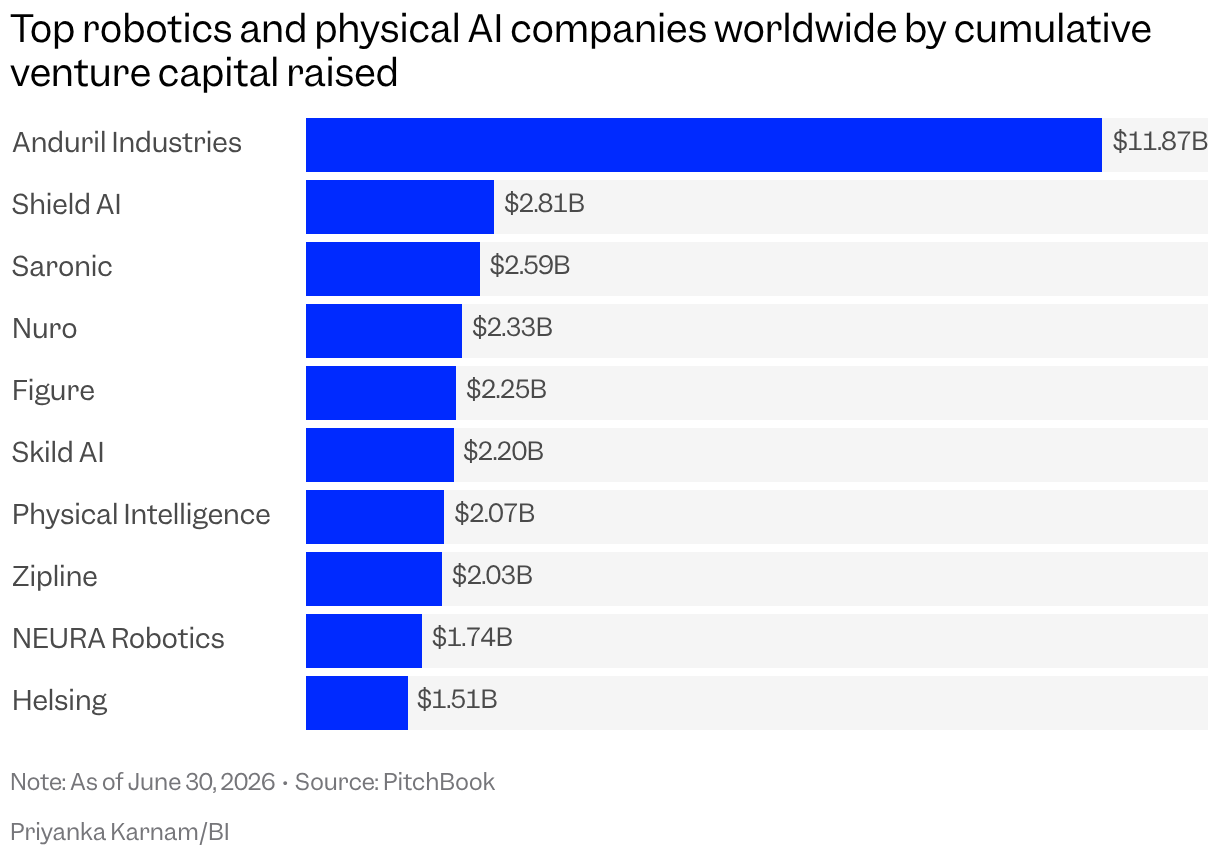
Robotics and physical AI companies raised $33.4 billion globally in the first half of this year alone, according to PitchBook data. That's already more than the $28.7 billion the sector raised in all of last year — and an astronomical rise from 2020, when funding came in at just under $5 billion.
Investors are writing billion-dollar checks to fund both the machines and the AI brains behind them. Defense company Anduril raised $5 billion in May, co-led by Thrive Capital and Andreessen Horowitz. Autonomous shipbuilder Saronic raised $1.75 billion in March in a round led by Kleiner Perkins. Skild AI, which builds software to control different kinds of robots, raised $1.4 billion in January in a round led by SoftBank. Physical Intelligence, which is also building an AI model to command robots, raised about $1 billion in May, co-led by Leopold Aschenbrenner's Situational Awareness and Lux Capital.
"This is off the charts," Ken Goldberg, a UC Berkeley robotics professor and cofounder of warehouse robotics startup Ambi Robotics, told Business Insider. "In my 45 years in this field, this is the most funding and energy and interest in robotics that I've ever seen."
This is the first installment of Robonomics, Business Insider's new series on the rise of robots and their impact on business, jobs, and everyday life. We'll go inside factories and warehouses where humans work alongside robots, meet the founders, investors, and workers driving the boom, and examine how the technology is reshaping industries from manufacturing to defense. We'll also ask how close robots are to becoming part of everyday life, and what is still standing in their way.
The prize is enormous. Unlike software, which is largely confined to work done on screens, robotics companies are going after physical labor, from factories and construction sites to robot butlers in every home. Nvidia CEO Jensen Huang, who popularized the term "physical AI," has described robotics as the "technology industry's first opportunity to address a $50 trillion industry that has largely been void of technology until now." Many Nvidia veterans have launched their own robotics startups.
Nvidia CEO Jensen Huang
Bloomberg/Bloomberg via Getty Images
But investors are pricing companies as though the robot revolution has already arrived. Startups still in research and development command multibillion-dollar valuations, often with little revenue and few deployments to show for it. Humanoid maker Figure AI, for example, secured a $39 billion valuation last year, even as its deployments remain limited to small factory pilots.
"Robotics is going to happen, and a lot of money will still be lost," said Sarah Guo, founder of the venture firm Conviction, which is an investor in robotics startups Sunday Robotics and Watney. "Both things are true."
From not to hot
From industrial arms assembling electronics to Roombas cleaning floors, robots have long been part of everyday life.
What venture investors struggled to see was how to make money from them. Building robots required expensive hardware, factories, and supply chains, often to produce machines that could perform just one narrow task. Why fund that when you could back a college dropout building the next viral app?
Guo used to tell fellow investors that robotics was a good way to lose a lot of money over many years. "The models didn't work," she said. "Every robot was a brittle, single-purpose system hand-built for one task."
Ajay Agarwal, a partner at Bain Capital Ventures, was among the few investors willing to bet on robotics during the internet era. In 2004, he backed Kiva Systems, which pioneered warehouse automation with fleets of mobile robots that brought products directly to human workers.
A Kiva Systems robot moves a shelf to fill orders at an Amazon fulfillment center
Bloomberg/ Getty Images
Bain led every successive funding round because Kiva was "not able to raise money on Sand Hill Road," Agarwal told Business Insider. By the time Amazon bought it for $775 million in 2012, Bain was its only institutional investor.
More than two decades later, AI has changed the calculation. Advances in machine learning are helping robots perceive their surroundings, make decisions, and adapt to new tasks, raising hopes that companies can build more versatile machines instead of engineering a different robot for every job. Cheaper computing and hardware are also making the economics more attractive.
Some of Silicon Valley's biggest names are now chasing that vision. Former Uber CEO Travis Kalanick's Atoms raised $1.7 billion in July to pursue automation in food, mining, and transportation. Rivian CEO RJ Scaringe's Mind Robotics has raised $900 million this year, while former Cruise CEO Kyle Vogt's home robotics startup, The Bot Company, has raised at least $300 million.
Some venture firms are setting aside dedicated capital for robotics. In August, Andreessen Horowitz raised $1.1 billion for "Machine Age," its first fund focused on the physical infrastructure behind AI, including robotics.
The gold rush
For longtime robotics investors, alarm bells are ringing. Industry veterans whisper about "hardware tourists" piling into robotics deals — investors drawn by AI hype who underestimate how difficult it is to build machines that work reliably in the real world. There is precedent for caution. Venture firms poured billions into autonomous vehicles in the 2010s, only to see startups fold or consolidate as self-driving technology proved harder and more expensive to commercialize than expected. Years later, only a handful of deep-pocketed players have managed to bring robotaxis to the public.
Robotics faces its own formidable obstacles. Unlike large language models trained on vast amounts of internet text and images, robots lack a comparable trove of data showing them how to act in the physical world. Dozens of startups are now scrambling to collect it, but nobody knows how much will be enough. And even smarter AI won't eliminate the challenges of manufacturing, maintaining, and deploying expensive hardware.
"The most difficult part of physical AI is the physical part," said Charly Mwangi, a partner at VC firm Eclipse who has backed The Bot Company and robotics startup Genesis AI. "The next few years are going to be really, really hard for the robotics industry as companies go from the lab to deployments."
Some of the most speculative robotics bets are attracting the biggest checks. Humanoids and general-purpose robot models were the two fastest-growing areas of robotics investment last year, according to venture firm F-Prime. "You cannot raise money on demos forever," said Sanjay Aggarwal, an F-Prime partner and coauthor of the firm's annual robotics report. "I would personally be surprised if all these companies independently exist two or three years from now."
There are signs that some startups are becoming real businesses. Field AI, which is building an AI "brain" that works across robots, has crossed $100 million in revenue and customer contracts from more than 30 customers, including construction firms, data center operators, and defense companies, Business Insider previously reported. Skild AI said last month that it had reached $100 million in annual recurring revenue from more than 60 customers. Its projects include robots assembling Nvidia's Blackwell chips with Foxconn and kitchen pilots with Mitsui, a Japanese conglomerate.
An Nvidia GB200 Blackwell GPU
Bloomberg/ Getty Images
Believers see robotics on the cusp of a breakthrough that could put machines to work in nearly every corner of the economy. Brad Porter, the former head of Amazon Robotics who now runs workplace robotics startup Cobot, says the field could be nine to 18 months away from major advances in dexterous manipulation — the ability of robots to handle objects with the ease of human hands.
"When I think of a 'ChatGPT moment' for robotics, it is cracking dexterous manipulation," Porter said. "Then there will be a Cambrian explosion of robots."
The question is whether these breakthroughs will arrive quickly enough to justify the money pouring in.
At Business Insider's Growth Mode event this month, Menlo Ventures partner Matt Murphy singled out robotics among the fields attracting enormous amounts of financing "before they're really showing traction." Abundant funding, he warned, can make startups "sloppy."
For investors, he said, that means "a lot more opportunity to have a really big crater."
Have a tip? Contact Rya Jetha via email at rjetha@businessinsider.com or Signal at rjetha.07. Use a personal email address and a nonwork device; here's our guide to sharing information securely.
The company is seeking to raise a new round of funding at a valuation between $30 billion and $40 billion.
Fireworks AI was last valued at nearly $18 billion in July of this year.
Fireworks AI is seeking to raise fresh funding at a valuation between $30 billion and $40 billion, a dramatic jump just months after the AI-infrastructure startup was valued at $17.5 billion, according to people familiar with the matter.
The potential valuation leap reflects investors' appetite for the companies selling the computing power and tools fueling the AI boom, even as Fireworks AI works through the fallout from a recent security incident.
The talks around the financing are still early, and valuation targets could still change. Fireworks declined to comment.
Founded in 2022, Fireworks was built by veterans of Meta and Google's AI efforts. Chief executive Lin Qiao previously led the PyTorch team at Meta, while cofounders include former Meta infrastructure engineers and a former leader of Google's Vertex AI. The company rents out computing infrastructure and software that lets businesses run, fine-tune, and deploy open-weight and custom AI models.
In July, Fireworks announced a $1.5 billion Series D funding round at a $17.5 billion valuation, led by Atreides Management, Index Ventures, and TCV, with participation from Nvidia, Lightspeed Venture Partners, Bessemer Venture Partners, and Menlo Ventures. That round followed a $250 million Series C at a $4 billion valuation in late 2025, co-led by Lightspeed, Index, and Evantic. Last month, The Information reported that Fireworks has been considering a round at a $30 billion.
Rather than trying to build a consumer chatbot to rival ChatGPT, Fireworks sells what it calls specialized intelligence: models customized on a customer's proprietary data, workflows, and use cases. The company said in July that it had surpassed $1 billion in annualized revenue and was serving more than 40 trillion tokens a day; it said 95% of those tokens came from models tailored to customers.
The company operates in a highly competitive layer of the AI stack. Rivals include model-infrastructure startups such as Together AI, Baseten, and Replicate, as well as cloud giants such as Amazon Web Services, Google Cloud, Microsoft Azure, and Oracle.
The fundraising talks come shortly after a security incident at Fireworks AI. The company said it identified unauthorized use of internal credentials earlier this month that allowed an intruder to access data from some customer accounts.
"We take this seriously and will be transparent about what happened and what we find," Qiao posted on X. "I'm personally committed to turn this attack into the most formidable security response in AI Infra."
Please send along your tips. Email Ben or Katie anytime or contact them on Signal at benbergman.11 and kroof.26. Sign up for Business Insider's weekly VC Insider newsletter here.
Foursquare cofounder Dennis Crowley wrote that "watching the company slowly decay has been a grind on my soul."
Bloomberg/Getty Images
Foursquare cofounder Dennis Crowley said the company's acquisition paid $0 to equity holders.
"I am sorry the Foursquare story ended in such a way," he wrote to employees.
Crowley said the company decayed after a private equity investment.
Foursquare's acquisition left its cofounder sad and angry.
Dennis Crowley helped launch the location technology company in 2009. Seventeen years later, Foursquare was acquired by Infillion. Crowley wrote on Substack that one point of the acquisition left him "heartbroken."
Foursquare's acquisition earned equity holders exactly $0, Crowley wrote, with no money offered for preferred or common stock.
"To our ~1600 former employees over 17 years, I am sorry the Foursquare story ended in such a way that makes it seem like our collective efforts were worth… nothing?" Crowley wrote.
Crowley left the CEO role in 2016, though he continued to lead Foursquare's research and development lab through 2021. After that, Crowley kept a seat on the board.
Foursquare raised capital from The Raine Group, a private equity firm, in 2019. Less than two years later, Gary Little became CEO. Little was one of The Raine Group's managing directors.
"Leadership was unable to preserve the value it inherited or create new value during those six years," Crowley wrote.
Foursquare employees reached out to Crowley to express their frustrations with leadership, he wrote. He cited the company's Glassdoor reviews, which rate it 2.1 stars out of 5. The Raine Group did not respond to a request for comment from Business Insider.
Crowley also wrote that the $0 equity outcome was buried in a 125-page PDF for Foursquare's legal team. "No single individual stood up to own (or even acknowledge) the outcome," he wrote.
Calynn Krieger, an executive vice president of marketing for Infillion, told Business Insider in an email that Foursquare had "remarkable technology and a talented team."
"We have nothing to say about Foursquare's former leadership, but we're glad the business and its value continue, and we're committed to creating even more of it," Krieger said.
The lesson Crowley learned
Crowley took responsibility for his role in the lead-up to Foursquare's $0 outcome for equity holders. His decisions as CEO led to the need for a private equity investment, Crowley wrote, and he said he wished he were louder on the board.
His takeaway: "Maybe the biggest mistake I've made in my career is falling in love with this company."
Crowley was too loyal to "making it work," he wrote, and stayed longer than he should have. "Watching the company slowly decay has been a grind on my soul," he wrote.
"It's okay to fall in love with the company you're building, but don't deny yourself the ability to get closure and move on just because the company itself hasn't yet experienced an exit or ending," he wrote.
Seyfried first played the Theranos founder in the Hulu series "The Dropout."
She's part of a growing class of actors who've taken part in the latest trend: playing tech moguls.
We've all heard of musician and actor biopics — now, it's all about the stories of tech CEOs.
These days, startup founders can be just as famous (or infamous) as any other celebrity, and the dramatic lives they've lived in business or at home make great fodder for TV and film.
To play these figures, some of the best-known actors had to ditch their signature looks to take on Steve Jobs' turtleneck and wire-frame glasses, Elizabeth Holmes' red lipstick and frizzy blowout, or SBF's signature curls.
Here are 17 celebrities who transformed to play some of Silicon Valley's most prominent figures.
Amanda Seyfried as Elizabeth Holmes in 'The Dropout' and 'You Can See Everything'
Hulu; David Orrell/CNBC/NBCU Photo Bank/NBCUniversal/ Getty Images
In the 2022 Hulu limited series "The Dropout, Seyfried played Holmes from her time at Stanford in 2003 (when she did the titular dropping out) through the fall of her company, Theranos, after The Wall Street Journal's 2015 exposé.
Theranos purported to manufacture a device that could do a litany of blood tests from a single finger prick, but, infamously, it did not work as promised. In 2022, Holmes was sentenced to 11 years in prison after being convicted of defrauding investors.
Four years after the Hulu series, comedian and documentarian Nathan Fielder asked Seyfried to once again play Holmes in some reenactments he wanted to do in his doc about her final days before prison, "You Can See Everything." We won't say much else besides that you need to see it to believe everything that goes down.
Andrew Garfield as Sam Altman in 'Artificial'
Neon; Mike Coppola/Getty Images for TIME
"After the Hunt" wasn't enough for Garfield and director Luca Guadagnino — the two have since teamed up to tell the story of OpenAI CEO and cofounder Altman.
Jeremy Strong as Mark Zuckerberg in 'The Social Reckoning'
Sony Pictures Releasing; David Paul Morris/Bloomberg/Getty Images
"Succession" star Jeremy Strong played the Facebook founder in "The Social Reckoning," a film about the release of Facebook Files, a staggering number of internal documents leaked by whistleblower and employee Frances Haugen and published by The Wall Street Journal in 2021, and the subsequent congressional scrutiny that followed.
The film, released in October 2026, was written and directed by Aaron Sorkin, the screenwriter of "The Social Network," making this something of a sequel to the 2010 classic.
Jesse Eisenberg as Mark Zuckerberg in 'The Social Network'
Sony Pictures Releasing; Adam Berry/Bloomberg/Getty Images
"The Social Reckoning" wasn't the first time Zuckerberg has been portrayed on screen — most famously, Eisenberg played the founder in "The Social Network," which chronicled the earliest days of Facebook, back when it still had a "the" in front of it.
It juxtaposes the wild, early days of the website with two lawsuits Zuckerberg settled a few years later: one from cofounder Eduardo Saverin and another from his Harvard classmates, the Winklevoss twins.
Justin Timberlake as Sean Parker in 'The Social Network'
Sony Pictures Releasing; Ramin Talaie/Corbis/Getty Images
The other famous "disruptor" portrayed in "The Social Network" is Parker, one of the cofounders of Napster, the original music streaming platform. He's played by Timberlake in a career-best performance.
Parker comes in as an early believer and executive at Facebook, which ruffles the feathers of cofounder Eduardo Saverin.
Anthony Boyle as Sam Bankman-Fried in 'The Altruists'
Netflix; Craig Barritt/Getty Images for CARE For Special Children
Sam Bankman-Fried, also known as SBF, will get the biopic-miniseries treatment this November on Netflix in a series titled "The Altruists."
Bankman-Fried co-founded the crypto trading firm Alameda Research in 2017 and later co-founded the cryptocurrency exchange FTX in 2019.
After making millions, FTX collapsed in 2022, and Bankman-Fried was eventually convicted of several crimes, including fraud and money laundering, in 2024. He was sentenced to 25 years in prison.
SBF's onetime girlfriend and former CEO of the FTX-affiliated trading firm Alameda Research, Caroline Ellison, will also be in the show, portrayed by Julia Garner.
Joseph Gordon-Levitt as Travis Kalanick in 'Super Pumped'
Showtime; D Dipasupil/FilmMagic/Getty Images
Gordon-Levitt played Uber cofounder and former CEO Kalanick in "Super Pumped," a 2022 Showtime limited series. It focuses on the rise of Kalanick and his eventual fall from power, culminating in his 2017 resignation from the company.
Ashton Kutcher as Steve Jobs in 'Jobs'
Open Road Films; Tom Munnecke/Getty Images
The first mention of Jobs on this list goes to Kutcher, who played the Apple founder in the 2013 biopic "Jobs." It traces his career from Apple's founding in 1976 to the introduction of the first iPod in 2001.
Michael Fassbender as Steve Jobs in 'Steve Jobs'
Universal Pictures; William STEVENS/Gamma-Rapho/Getty Images
Two years after "Jobs," the late founder was portrayed again on screen, this time by Michael Fassbender in "Steve Jobs."
Instead of a standard cradle-to-grave biopic, "Steve Jobs" checks in with the enigmatic figure at three different points in his career: first in 1984, before the introduction of the first Apple Macintosh computer; second, in 1988, when Jobs is the head of a new company, NeXT, and is preparing to launch its first computer; and finally, in 1998, as Jobs gears up to release the iMac.
Noah Wyle as Steve Jobs in 'Pirates of Silicon Valley'
TNT; Matthew NAYTHONS/Gamma-Rapho/Getty Images
In 1999, the TV movie "Pirates of Silicon Valley" aired, starring Wyle as the Apple founder. It chronicles Jobs' career from the '70s to the '90s, from the founding of Apple to his return as CEO.
Anthony Michael Hall as Bill Gates in 'Pirates of Silicon Valley'
TNT; Doug Wilson/CORBIS/Corbis/Getty Images
The other half of the "Pirates of Silicon Valley" narrative focuses on Gates, the cofounder of Microsoft. He's played by "Breakfast Club" star Anthony Michael Hall.
The film's climax is based on the real-life falling out Gates and Jobs had in 1985, when Jobs felt that Gates had ripped off Apple.
Jared Leto as Adam Neumann in 'WeCrashed'
Apple TV+; Cindy Ord/Getty Images for WeWork
Leto physically transformed to play the WeWork CEO and cofounder in the 2022 Apple TV+ miniseries "WeCrashed." The show chronicled the immense success the coworking startup experienced in its early days in 2010, all the way through its disastrous attempted IPO in 2019.
Anne Hathaway as Rebekah Paltrow Neumann in 'WeCrashed'
Apple TV+; Ben Gabbe/Getty Images for Time
Hathaway costarred in "WeCrashed" as Neumann's wife, Rebekah Paltrow Neumann, who was heavily involved in WeWork. She was, however, "an unpredictable and unmistakable presence" at the company, per Business Insider's reporting.
Jay Baruchel as Mike Lazaridis in 'BlackBerry'
Elevation Pictures; Dave M. Benett/Getty Images
The creation of the BlackBerry, one of the earliest smartphones, was dramatized in "BlackBerry," which starred Baruchel as one of the cofounders of RIM (the brand behind the phone) and one of the cocreators of the BlackBerry itself, Lazaridis.
The film begins with Lazaridis and his partner teaming up with Jim Balsillie (more on him later) to make BlackBerry the most popular smartphone in the world — only for its reign to end with the iPhone.
Glenn Howerton as Jim Balsillie in 'BlackBerry'
Elevation Pictures; Xabier Mikel Laburu/Bloomberg/Getty Images
RIM really got off the ground when Mike Lazaridis and his cofounder Doug Fregin were approached by Balsillie. According to the movie's telling, Balsillie offered to invest $20,000 for a 50% stake in the company, and was eventually sold a 33% stake for $125,000 and the title of co-CEO.
The less we say about Howerton's performance, the better — it really must be seen to be believed.
Lily James as Whitney Wolfe Herd in 'Swiped'
Hulu; Dia Dipasupil/Getty Images
2025's "Swiped" is the story of the creation of Bumble through the eyes of its founder, Herd. Originally, she was a cofounder of Tinder, but resigned in 2014, and eventually received an out-of-court settlement after suing Tinder for sexual discrimination and sexual harassment, without either Tinder or its parent company, IAC, admitting to wrongdoing.
After leaving Tinder, Herd wanted to create an app that focused on female empowerment, and thus, Bumble, a dating app where women have to make the first move, was born.
Sebastian Stan as Vlad Tenev in 'Dumb Money'
Columbia Pictures; Kimberly White/Getty Images for Robinhood
In 2023's "Dumb Money," which is about the "Gamestonk" GameStop short squeeze and subsequent drama that happened in 2021, led by the Reddit community r/WallStreetBets and one user in particular, Keith Gill, aka Roaring Kitty, Stan has a small role.
He plays Robinhood cofounder and CEO, Tenev. During the events of the film, Tenev directs Robinhood, an e-trading platform and investment app, to stop allowing users to buy certain stocks and options (including GameStop), which caused an uproar.
A discussão sobre o reforço da defesa europeia concentra-se nos grandes contratos, nas empresas estabelecidas e nos montantes anunciados. Segundo o relatório The State of Defence Tech 2026, da Dealroom e da Resilience Media, as startups europeias de defesa tinham captado o equivalente a cerca de 6,5 mil milhões de euros em capital de risco até setembro de 2026. Mas há outra pergunta, determinante para Portugal: quantas das nossas empresas poderão passar de fornecedoras de componentes a criadoras de produtos e tecnologias que respondam a novas necessidades? Temos exemplos em Portugal, de empresas tecnológicas que conquistaram mercados exigentes – o desafio é alargar essa capacidade a uma indústria que investiu, durante décadas, em conhecimento, equipamentos e competitividade internacional.
Podemos desperdiçar esta oportunidade se ficarmos apenas a produzir segundo especificações definidas por outros, longe de quem concebe os sistemas, detém a propriedade intelectual e conhece o cliente final. A subcontratação é essencial às cadeias de fornecimento, mas não deve ser o nosso limite de ambição. Precisamos de participar também nas decisões tecnológicas, no desenvolvimento e na comercialização, se quisermos colher os frutos do que semeamos.
Os têxteis técnicos, os polímeros, os compósitos, os moldes, a metalomecânica, os componentes automóveis e a eletrónica são bons exemplos. Quem domina materiais de elevada resistência pode contribuir para proteção individual ou equipamentos de emergência. Um fabricante habituado a reduzir peso e assegurar repetibilidade na produção pode adaptar processos a estruturas para plataformas especializadas. Isto não significa que qualquer componente civil passe a ser um produto de defesa. O Dual-use implica identificar uma necessidade concreta, adaptar a tecnologia, demonstrar desempenho e responder a exigências muito específicas.
Algumas oportunidades poderão ser exploradas dentro da empresa existente. Outras justificarão uma estrutura autónoma. Uma PME industrial com uma aplicação promissora pode criar uma spin-off, com equipa, capital e estratégia comercial próprios, mantendo uma ligação à empresa de origem através de participação, licenciamento ou produção. Evita subordinar o novo negócio às prioridades dos mercados tradicionais e ganha condições para atrair parceiros e investimento. Acima de tudo, pode capturar valor para além da venda de horas de engenharia ou peças fabricadas.
Uma spin-off, porém, não deve nascer apenas porque existe financiamento disponível. É indispensável definir quem detém a tecnologia, quem suporta a industrialização, como se partilha o risco, que problema o produto resolve e quem o poderá comprar. Transferir uma tecnologia para outra sociedade não significa, por si só, criar um negócio.
Portugal não precisa de apostar em todos os segmentos. Pode diferenciar-se onde já possui competências: proteção humana, materiais multifuncionais, estruturas leves, sensores, monitorização, dispositivos médicos, apoio a emergências e resiliência. A proximidade entre engenharia e ciências da saúde abre possibilidades especialmente interessantes. Soluções úteis em ambientes operacionais exigentes podem também servir bombeiros, proteção civil ou profissionais de saúde.
Há também o caminho inverso: uma startup que nasce da investigação, de uma ideia ou de uma necessidade identificada no terreno. A prova de conceito e o financiamento são passos importantes, mas a distância até ao produto comercial continua a ser enorme. Quem valida a solução com utilizadores? Quem fabrica as primeiras unidades? Quem garante qualidade, manutenção e integração num sistema maior? Muitas startups não precisam apenas de capital – precisam de acesso à indústria e aos primeiros clientes no seu caminho. E muitas empresas industriais precisam da capacidade de experimentação e da agilidade das startups. É nesta complementaridade que podemos ganhar escala, desde que a propriedade intelectual e a partilha de valor, e risco, sejam discutidas desde o início.
Esta ligação exige também financiamento adequado à passagem do protótipo à produção. Equipamentos, primeiras séries e fundo de maneio têm necessidades distintas das da investigação, pelo que o capital para desenvolver tecnologia deve ser acompanhado por instrumentos que permitam fabricar e cumprir as primeiras encomendas.
Há obstáculos que não desaparecem com um bom protótipo. A defesa tem exigências de fiabilidade, rastreabilidade, segurança e certificação. Consoante a tecnologia e a atividade, podem aplicar-se licenças, regras de transferência e exportação ou restrições no acesso a ambientes de ensaio. São requisitos legítimos, mas precisam de ser conhecidos cedo. Descobrir as condições de teste e comercialização quando o produto está quase pronto pode consumir os recursos de uma startup antes da primeira encomenda.
Os instrumentos europeus de financiamento abrem oportunidades, mas uma candidatura aprovada não comprova que existe mercado. Um demonstrador concluído também não garante capacidade de fornecimento. Temos de avaliar em conjunto a maturidade tecnológica, industrial, regulamentar e comercial. E integrar utilizadores, compradores e empresas capazes de industrializar e distribuir as soluções enquanto ainda há margem para as adaptar.
O Estado pode também assumir um papel mais ativo como primeiro comprador. Pode criar oportunidades de ensaio com utilizadores, projetos-piloto pagos e percursos claros entre a validação e a aquisição, com critérios de desempenho definidos desde o início. Uma primeira aquisição pode dar à empresa uma referência operacional, reduzir a incerteza para investidores e abrir portas a outros clientes. Para uma startup, compreender o caminho até à contratação é tão importante como conhecer os instrumentos que financiam o desenvolvimento.
Nem todas as empresas portuguesas terão tecnologia, vocação ou dimensão para desenvolver produtos de proteção e defesa. Nem é desejável que todas o tentem. Mas seria um desperdício que empresas com capacidade não chegassem a explorar esta possibilidade por falta de informação, parceiros ou acesso ao mercado.
Portugal não precisa de apostar em todos os segmentos. Pode diferenciar-se onde já possui competências: proteção humana, materiais multifuncionais, estruturas leves, sensores, monitorização, dispositivos médicos, apoio a emergências e resiliência. A proximidade entre engenharia e ciências da saúde abre possibilidades especialmente interessantes. Soluções úteis em ambientes operacionais exigentes podem também servir bombeiros, proteção civil ou profissionais de saúde. A dupla utilização é uma forma de diversificar mercados, não apenas uma categoria tecnológica.
É com esta perspetiva que estamos a consolidar o Hub de Proteção e Defesa, envolvendo a Fibrenamics, outros Grupos e Centros de Tecnologia e Inovação do ecossistema da Universidade do Minho. Queremos acrescentar capacidade concreta: aproximar necessidades operacionais de competências industriais, apoiar desenvolvimento e ensaios, estruturar novos veículos empresariais e criar ligações a integradores, investimento e clientes. O resultado deve medir-se por produtos vendidos, contratos firmados, fornecedores qualificados e empresas que crescem, e nunca somente pelo número de iniciativas lançadas.
Nem todas as empresas portuguesas terão tecnologia, vocação ou dimensão para desenvolver produtos de proteção e defesa. Nem é desejável que todas o tentem. Mas seria um desperdício que empresas com capacidade não chegassem a explorar esta possibilidade por falta de informação, parceiros ou acesso ao mercado. O objetivo é criar condições para que mais empresas transformem competências existentes em produtos próprios e mais startups ultrapassem a distância entre a ideia e a primeira encomenda. Não apenas para responder à procura nacional, mas para disputar oportunidades e integrar cadeias de valor à escala europeia.
Há uma história que ilustra bem o risco. Um filho chega a casa entusiasmado e diz ao pai: «Pai, pão com queijo é que é bom!» O pai pergunta: «Mas comeste?» E o filho responde: «Não, vi comer.» O entusiasmo com as oportunidades da defesa europeia merece a mesma pergunta. Precisamos de criar condições para que mais empresas portuguesas desenvolvam produtos próprios, conquistem clientes e façam crescer os seus negócios. Quando dissermos que esta oportunidade é boa, devemos poder dizê-lo porque a soubemos aproveitar e criar algo estruturante.
O sucesso não estará em ter todas as empresas na defesa, mas em permitir que mais empresas portuguesas tenham condições reais para competir nesse mercado.
A recente alteração à Lei da Nacionalidade voltou a colocar Portugal no centro do debate sobre a sua atratividade para o investimento internacional. O ponto crítico não é o conteúdo da lei, mas a forma como o mercado interpreta a consistência do enquadramento ao longo do tempo.
Portugal continua a oferecer atributos muito valorizados por quem investe: qualidade de vida, segurança, integração europeia, um regime de residência ainda competitivo e flexível em várias dimensões. Nada disto desapareceu. O que mudou foi a forma como o investidor pesa estes fatores na decisão. Hoje, já não basta o país ser atrativo. Tem de ser previsível.
No investimento internacional, a ordem dos critérios conta. Antes da rentabilidade, vem a perceção de risco. Antes da projeção de ganhos, vem a análise do ambiente regulatório. E antes de qualquer comparação entre setores ou ativos, o investidor quer perceber se o país lhe oferece regras do jogo minimamente estáveis.
É aqui que entra o efeito acumulado das mudanças legislativas. Nos últimos anos, o enquadramento tem sofrido várias alterações, e esse padrão acaba por produzir um impacto que vai além de cada revisão em particular – a incerteza. Num mercado global competitivo, o capital reage a sinais. E o sinal mais importante, muitas vezes, não é a rentabilidade, mas a estabilidade.
Há dois perfis de investidores a olhar para Portugal: os que investem pelo retorno financeiro e os que, além disso, valorizam os benefícios associados à residência. É neste segundo grupo que a perceção de risco tende a ser mais sensível, porque a decisão não depende só do ativo, mas também da confiança no enquadramento legal que o acompanha.
No investimento internacional, a ordem dos critérios conta. Antes da rentabilidade, vem a perceção de risco. Antes da projeção de ganhos, vem a análise do ambiente regulatório. E antes de qualquer comparação entre setores ou ativos, o investidor quer perceber se o país lhe oferece regras do jogo minimamente estáveis.
Portugal continua a ter argumentos sólidos para captar capital. Contudo não basta ter argumentos; é preciso sustentá-los no tempo, o que exige estabilidade legislativa, clareza nos mecanismos de transição e capacidade de execução administrativa. Sem esses elementos, qualquer vantagem legal perde a sua força prática.
Há ainda um ponto que o debate público tende a subestimar. A confiança constrói-se mais depressa do que se recupera. Um investidor internacional não precisa de muitas alterações para começar a hesitar, precisa de sinais suficientes para passar da curiosidade à prudência.
Portugal continua a ter argumentos sólidos para captar capital. Contudo não basta ter argumentos; é preciso sustentá-los no tempo, o que exige estabilidade legislativa, clareza nos mecanismos de transição e capacidade de execução administrativa. Sem esses elementos, qualquer vantagem legal perde a sua força prática.
É nesse plano que Portugal tem hoje o maior desafio. Não se trata de voltar atrás nem de congelar o sistema, mas sim de assumir que a atratividade de um país não vive só pela sua oferta inicial. Vive da forma como protege essa oferta ao longo do tempo. Neste momento, o que o país precisa de demonstrar não é capacidade para mudar outra vez, mas capacidade para estabilizar e cumprir o que promete.
Ainda que Portugal se tenha mantido atrativo, deixou de ser uma escolha óbvia. E, num mercado em que o capital procura segurança antes de procurar retorno, isso basta para que o país continue a ser analisado com atenção, e com mais exigência do que antes.
I visited an NYC coworking space, where startups spend up to $9,000 a month for a spot.
There was a private chef, a robot, and a love for in-person work.
The overall vibe more closely resembled a college campus than a midtown office.
I've been following and interviewing tiny team founders for the last year. As part of my ongoing research, I popped into the Series HQ workspace last month to observe how these founders are running their small teams.
As the elevator doors opened on the top floor of the Chelsea office building, the Series HQ office manager, a 21-year-old NYU student, greeted me. Balancing on a skateboard, the tall, young, and very casually dressed Gen Zer fit right in among the cohort of founders he works for.
Most of the founders at Series HQ are either straight out of college or under 30, with many of their startups being in early funding rounds.
"I do honestly think if you're 35 or 40 thinking about starting a company now, it's probably too late," Nathaneo Johnson, the 22-year-old Series cofounder, said. He recognizes that as a "harsh belief" but believes the average founder age at Series HQ reflects a growing community of young entrepreneurs.
Series itself was launched in 2024 by Johnson and Sean Hargrow as an AI social networking app for iMessage. After they both graduated from Yale and raised $5.1 million in pre-seed funding, the pair signed a lease for over 10,000 square feet of office space. They tacked on "HQ" to distinguish between the coworking space and the business.
When they moved their company into the building last October, they had roughly eight to 10 people on their team. The pair was preparing for growth, but AI has helped to keep their head count lean, and their tenants operate with similarly sized staff.
As I scanned the still mostly empty office, it seemed the tiny teams didn't require much to function. What stood out to me — more than the young, mostly male office demographic — was each company's desire to be around more people, despite operating with as few employees as possible.
The tiny teams here can spend up to $9,000 a month for shared space
I was at the office around 3 p.m. on a Thursday, and about a dozen people from at least five different companies were working, mostly young men and a few young women. The space usually hosts about 15 to 20 startups, and members have 24-hour access when possible, Johnson said.
Founder work pods at Series HQ.
Agnes Applegate/BI
In August, Series HQ charged between $1,250 and $4,000 for workstation pods that hold up to four people. For more privacy, founders can rent the glass pods for $5,000 to $9,000 a month. The more expensive rental options include meals cooked on-site by the private chef they hired last year to curb their takeout costs.
The kitchen at Series HQ
Agnes Applegate/BI
In the massive main room, across from the scattered row of founder workstations, was a basketball hoop and a roughly $21,000, beat-up robot holding a football.
The robot propped up in the Series HQ main office room.
Agnes Applegate/BI
When they talked about their robot, which was slightly broken during my visit, the room lit up.
It fascinated me that these founders would incur the expense to work in such a large office. They didn't need all of this physical space — which was, in some ways, obvious, as most of it still looked sparse with objects.
The main office room at Series HQ.
Agnes Applegate/BI
Many of the founders I talked to are around my age — 23 — and graduated from high school during the pandemic, when so much social and work interaction moved online. Now building companies, the appeal of Series HQ seemed to be less about the fancy office with a private rooftop and chef, and mainly about having like-minded coworkers to build in-person with.
Long hours mean more time together
Zain Ahmad, who was a summer tenant at Series HQ, works at the AI startup Evos. He said Evos found Series from the promotional drone videos that took over their social media platforms all summer.
"We figured if they're good enough to end up on both of our For You pages and get this much traction, there's a lot to learn from them and be in that space," he said.
Evos rented one of the private glass pods and, during my visit, gave me a tour of their space. Inside the small glass office, we stood in front of their two desks, chatting directly across from a small couch and coffee cart.
Evos rented one of the private glass pods at Series HQ.
Agnes Applegate/BI
In between investor calls, which he said were powered by cups of tea with creatine honey, Ahmad confessed he has taken quite a few naps on that couch. An average workday for them is around 8:30 a.m. to around 10 p.m., sometimes longer. As tenants of Series HQ, they were in the office around six days a week.
He explained the concrete environmental benefits for Evos, which creates specialized agentic AI workflows for traditional industries. Ahmad said they were able to meet a new hire because the new hire was another tenant at Series. They even learned about their most-used AI tool at the moment through the Series team: Aside, an AI-powered browser.
Turnover was high at the beginning of the experiment, Johnson said. Partly because some of the summer tenants were just in town between school semesters. But those tenants probably didn't feel too far from home, since the vibe here more closely resembled a college campus than a midtown office.
Nathaneo Johnson, Series cofounder, on the office's private roof.
Agnes Applegate/BI
The most important piece of growing an AI startup is still the human network
The majority of companies working in the space are AI or technology startups. Logan Milano, the 23-year-old founder of the drink brand Amryth, is one of the few non-tech founders. He recently graduated from college and said he spends well over 40 hours a week here despite living close by.
Milano said all he needs to operate his business is "my laptop, a good place to lock in, and being around other people who are building."
The main work room at Series HQ.
Agnes Applegate/BI
This was an overall sentiment I heard. Many of these young founders lived a hop, skip, and a jump away, based on the commutes they told me about. But simply being around others who are building is, in some ways, one of the biggest benefits.
"Even if we're getting dinner or going out or something, it's like you're still kind of thinking about work and it's all kind of related," he said about the Series community. Adding that "sourcing opportunities" everywhere likely drew them together and is their biggest similarity.
At a time when AI is making it possible to build companies with fewer employees and building solo can be the dream for many, these young founders don't need, or necessarily want to run their business with tons of employees, but they still seem to really want coworkers.
When I asked Milano if he's ever spent the night at the Series office, he smiled, looked over at one of the Series team members, and said, "Am I allowed to say?"
Do you have a story to share about working on a tiny team? If so, please reach out to the reporter ataapplegate@businessinsider.com.
Hans Hasselby-Andersen spent nearly a year raising his first funding after leaving Texas Instruments during the financial crisis.
Hans Hasselby-Andersen/Lotus Microsystems
Hans Hasselby-Andersen quit Texas Instruments during the 2008 financial crisis with four young kids at home.
He sold his apartment, cashed out his pension, and took on debt to build a semiconductor startup.
Nine years later, his company, Merus Audio, was acquired by Infineon.
This as-told-to essay is based on a conversation with Hans Hasselby-Andersen, 56, CEO of Danish semiconductor startup Lotus Microsystems and cofounder of Merus Audio, which was acquired by Infineon in 2018. The following has been edited for length and clarity.
When I quit my job at Texas Instruments in September 2008 to start a semiconductor company, I had four children between the ages of 5 and 14.
It was almost the height of the financial crisis. You had Lehman Brothers going down in flames in the US, and the whole credit market was just freezing up.
So to jump out at that point and go into fundraising was a big, big step. My manager was looking at me like I was crazy, basically.
Thinking back, probably I should have waited a year or so and just cooled off a little bit. But the thing is, once you have an idea and you're really motivated, you can't really wait. You have to go do something about it.
I'm an electrical engineer by training. Earlier in my career, I joined a small startup that was acquired by Texas Instruments about five or six months after I arrived.
The whole concept of a company being acquired, an exit and all that, was all new to me.
It planted a seed in my head that, if the circumstances were right, this was also a path I could take, and not just build my career in a large company.
I stayed at Texas Instruments and worked in the audio semiconductor business.
I was picking up things from my interactions in the market where I thought there was actually a need for a much more energy-efficient way to drive speakers in products like portable speakers and soundbars.
I saw a market need, but I didn't have the technical solution, so my first task was to go out and find a cofounder who could come up with a technical solution for that market.
I think that's actually quite unusual for tech startups. Normally, somebody comes up with some technology, and then they go out and try to see where it can be applied. This was the opposite approach.
Four kids, one big decision
Just before I resigned, I called my bank and asked if I could get a basic bank overdraft facility just to give me some extra headroom to live on.
Honestly, I think if I had waited two weeks, I wouldn't have gotten it. It was just when the financial crisis started to really kick in, and I seriously doubt I would've gotten that line of credit.
Getting the first funding took the better part of a year.
I probably spoke to between 50 and 100 different investors.
It's really a dating game. You try to look appealing and interesting from a company point of view, but you mostly get rejections because the investor doesn't invest in your domain, you're too early, you're too late, or you don't fit their profile.
I paid out of my own pocket to travel to Japan, South Korea, and Singapore to meet potential customers. I wanted to pressure-test my idea, understand what they were struggling with, what their requirements were, and help mature my business case.
Eventually, I raised the equivalent of about $150,000 to $200,000. It was a very small amount, and we spent it in about six months. The minute we got the funding, we knew we had to continue fundraising immediately.
My wife, who was a school teacher at the time, has been very, very supportive. She never told me, "This is a stupid idea, go back and find a job."
With four kids, you can't just make that decision on your own. When we finally got the company off the ground, my wife and I made some adjustments to minimize the risk for my family.
We sold our apartment while we could still make a little money from it and rented instead, so we wouldn't risk having to sell at a loss if the company failed. We also sold our car and leased one instead.
I slaughtered my pension and took out the money. I thought, "I need it now. I'm not about to be retired anyway."
Throughout the life of a startup company, you're more or less in fundraising mode all the time. You always have to keep your eye on how long you have cash and where you're going to get your next funding. The worst thing that can happen is that you run out of cash.
If there's one recommendation I would give first-time founders, it's to prepare for things to take longer than they expect because they always do.
If you think you can do something in two years or three years, multiply that by two, at least.
If you plan financially for your cash to fund your plan as you lay it out, then you're going to be in a difficult situation because you're going to run out of cash before you've achieved the milestones you set out to achieve.
Engineers have to sell, too
Starting a company around 40 made me a different kind of founder. There were definitely things I had learned that I wouldn't have been without.
I had learned how to communicate with customers, how to find out what the market needed, and how to explain what I was doing and why it was a good idea.
Many engineers are obviously good at what they do technically, but they can have a big challenge explaining that to others.
When you're standing in front of investors, you have three minutes to explain what you're doing. You have to train to do that elevator pitch.
Nine years later, the company I cofounded, Merus Audio, was acquired by Infineon.
I stayed on to help with the integration, but I was really not looking to go back into the corporate world. I had already had that experience and I had really come to like the startup life.
Today, I'm CEO and an investor at Lotus Microsystems, another semiconductor startup.
I'm not a founder this time, but I feel ownership. I feel invested in the company.
Would I take that same risk again today as I did with Merus?
I think the answer is yes.
If you have that mentality of wanting to try something on your own, to build something, that is a major driver inside you. It gives you an enormous amount of energy and motivation.

 Login


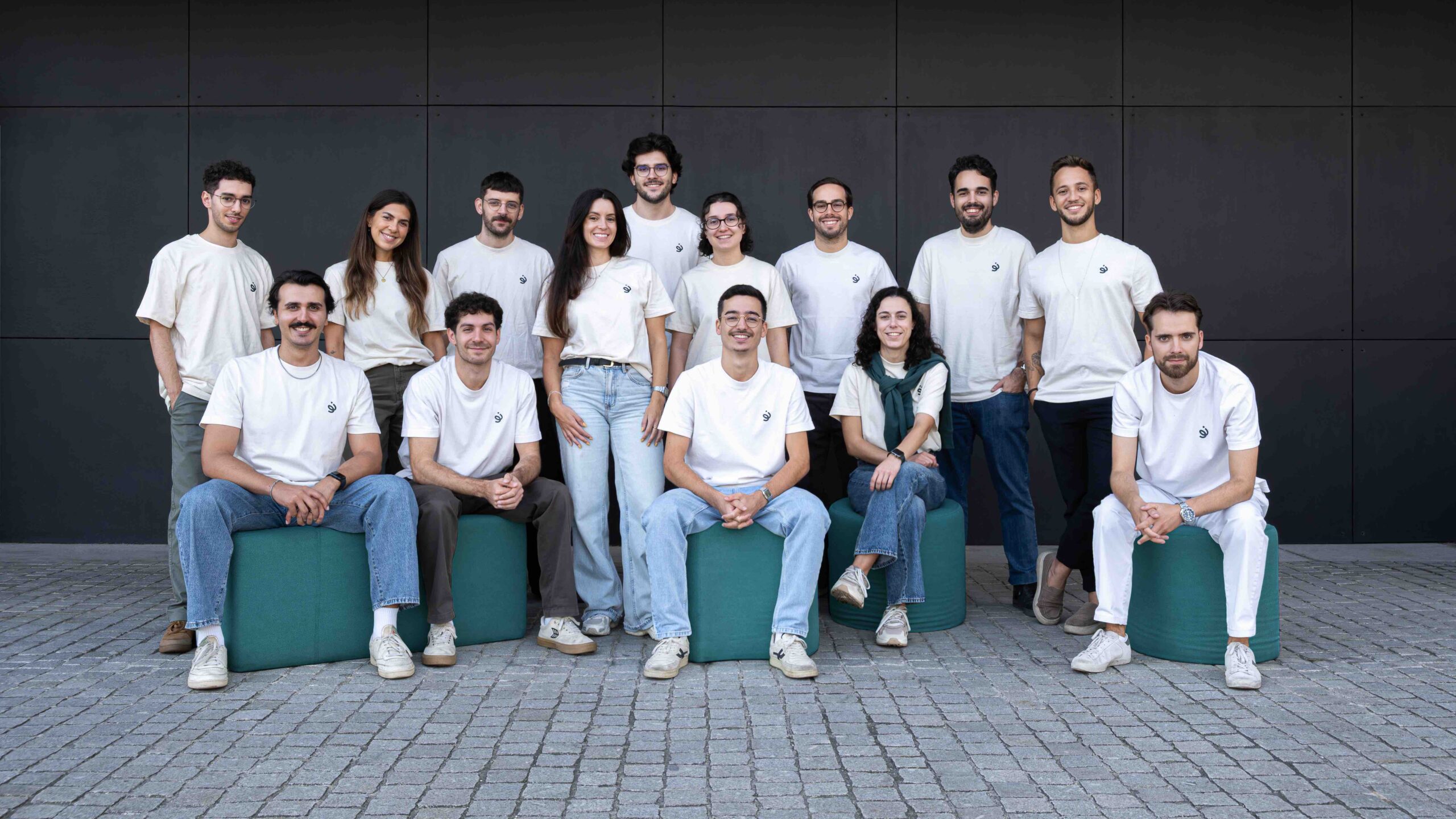
 Depois de ter sido uma das startups investidas pelo fundo Angels Way,