Login

An American Teacher Went to Ukraine. Now He’s in a Russian Prison.
Stephen Hubbard was a wanderer. But when he moved to Ukraine, the war brought arrest, torture and imprisonment. He turns 73 this week.


© Samuel Corum/Agence France-Presse — Getty Images
RT | October 17, 2026
The UN should resist pressure from Kiev’s Western backers and finally address the issue of widespread abuse of captured Russian servicemen in Ukrainian secret prisons, Russian Ambassador-at-Large Rodion Miroshnik has said.
During a conversation with the chairman of the UN Committee Against Torture Claude Heller on Thursday, Miroshnik said that Moscow is aware of a whole network of such detention facilities, operating in Ukraine’s Kharkov, Dnepropetrovsk, and Sumy Regions as well as in the country’s capital, Kiev.
The Russian servicemen are “going through hell” in so-called “transit prisons,” which are set up at deployment points of Ukrainian military units and nationalist battalions, he said.
“The thugs, who hide their faces behind masks… and address each other only by their call signs, subject the captured Russian troops to inhuman abuse. Waterboarding, electrocuting, baiting with dogs and amputations performed without anesthesia are just a few examples of the techniques systematically employed by the Ukrainian tormentors,” the envoy, who is charged with documenting Kiev’s war crimes, stressed.
According to Miroshnik, captured troops are usually sent to those facilities in the early stages of their imprisonment, where they are held in cages, pits, and stone dungeons.
The Kiev government does not allow ombudsmen and human rights activists into those “torture chambers,” but the Russian authorities have gathered hundreds of accounts of survivors detailing what has been happening there, he said.
“This information had been passed on to the UN Secretariat on more than one occasion,” but no action followed, Miroshnik added.
By ignoring the existence of the secret prisons and systematic torture of Russian troops, the global body “encourages the spread of such criminal practices and disregard for the relevant UN Convention,” he added.
“Many experts are aware of this disgraceful phenomenon, yet there is a lack of political will to overcome the pressure from the foreign accomplices to the conflict, who shield the Kiev regime from accountability and prevent a thorough investigation of its conduct,” the envoy said.
While turning a blind eye to the torture of Russian troops, the UN published several reports accusing Russia of mistreating Ukrainian prisoners, based on accounts by POWs returned by Moscow to Kiev. Russian Foreign Ministry spokeswoman Maria Zakharova has labeled those accusations of abuse “disinformation.”
Last month, Russian Foreign Minister Sergey Lavrov said that the UN Secretariat was unable to properly perform its duties as most key positions are occupied by representatives of NATO countries.
The current team, led by [UN General-Secretary] Antonio Guterres, who is a Portuguese national, “promotes biased approaches and double standards, effectively serving the interests of a group of Western nations,” Lavrov insisted during a press conference on the sidelines of the UN General Assembly in New York.

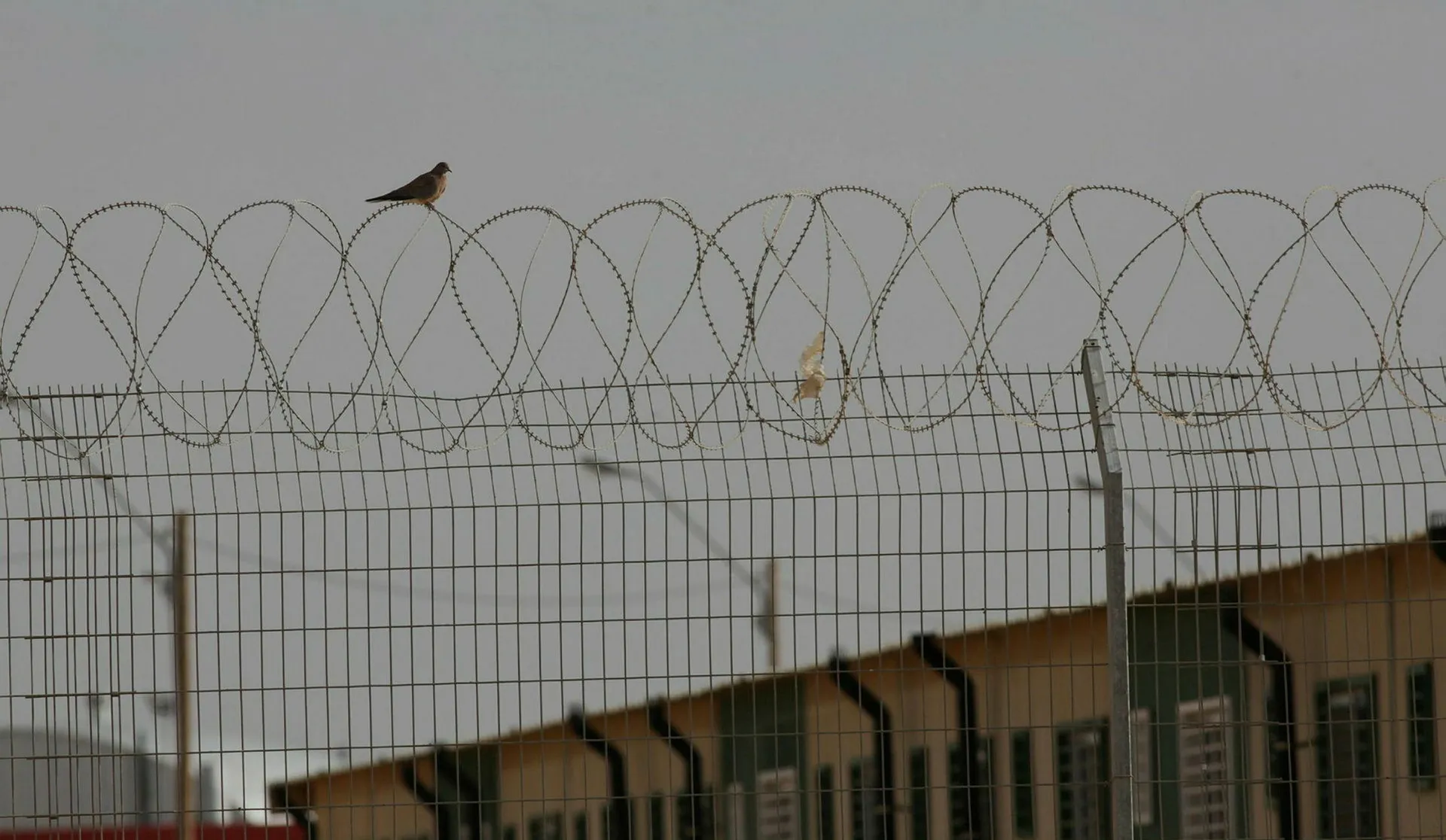
When Dana Joudeh, 35, went into labor in mid-September, she was six months pregnant and being held at Israel’s Damon Prison. Her daughter, Lia, was born premature, and her family says she gave birth shackled to a bed, with a rifle pointed at her.
Joudeh spent almost her entire pregnancy in Damon prison, held under a six-month administrative detention order. There she endured the conditions Palestinian prisoners have described since October 2023: medical neglect, inadequate healthcare, food deprivation, and sharp cuts to hygiene supplies.
A day after giving birth, Dana and Lia were released from Damon Prison. Their time in detention exposed blatant Israeli violations, not only against women but even against infants.
BreakThrough News spoke to Maram Joudeh, Dana’s sister, to learn more about the circumstances of her sister’s arrest, conditions of detention, and how she gave birth amid it all.
Dana’s ordeal began when Israeli forces raided her family’s home in Iraq al-Tayeh village, east of the northern West Bank governorate of Nablus and arrested her during Ramadan 2026 (between February and March). Dana was still living with her family at the time before getting married a couple of weeks later.
According to her sister, Dana was detained and interrogated for one day. She was released after losing consciousness due to complications from a medical procedure she had undergone shortly before her arrest.
Around mid-April, an Israeli commander contacted Dana, asking her to head to the Huwara Detention Center for another interrogation session.
Although Dana had never been involved in any political activity, she felt intimidated by the phone call and did not go, especially as the Israeli commander, who was speaking to her, asked her about her recent marriage.
A few days later she received a couple of other phone calls. During one of the calls, the commander informed her that he knows that the wedding of one of her sisters would be held within days, so Dana avoided attending the wedding fearing that the Israeli forces would storm the ballroom and arrest her from there.
In another phone call, she was threatened that if she did not come to the interrogation, her father would be arrested. Therefore, Dana’s father decided to go to the Huwara Detention Center instead of her, but the Israeli commander insisted that she should come personally.
As a result, Dana went to the interrogation on April 19, hoping that she would spend hours there then be released, but she was transferred from there to Hasharon prison, where she spent one night that she described as a “nightmare”.
“The toilet had a stall door that did not provide any privacy. It was very dirty. I lost consciousness there, so they transferred me to a hospital, blindfolded, and shackled. They conducted a pregnancy test for me, and sent me to Damon Prison from there,” Dana told her lawyer, who managed to visit her in Damon Prison in early May.
It was then that Dana’s lawyer found out about her pregnancy, and the inhumane detention conditions she had endured since being imprisoned.
For six months, Dana was detained with five other female prisoners in a small cell, which should be allocated for two individuals only.
“There are only two metal bunks. The toilet has no door, and there is a lot of humidity as they do not open the vision panel.” Dana told the lawyer, describing the cell.
Dana also informed her lawyer that, despite her pregnancy, she was provided with a minimal amount of food, and that she lost weight and suffered from dehydration.
She added that only she and Amina Taweel, another pregnant prisoner, were sleeping on the bunks; the remaining four female prisoners were sleeping on the floor.
“Lina Naser and Tasneem Odeh used to give us their food, because they were expecting to be released soon,” Dana noted about other inmates, who shared the cell with her.
Dana said that the food was “inedible”, as they were sometimes given boiled eggs several hours after being cooked. Canned chickpeas soaked in water and lentils were among the limited options provided to them on almost a daily basis.
Dana also mentioned that their cell was violently stormed multiple times, with sound grenades being thrown. She said that sometimes they stormed the cell at midnight, when she and the other detainees were sleeping.
Whenever Dana fainted during those raids, prison security personnel dealt with the situation by asking other inmates to raise her legs and make her drink water, which she described as “undrinkable”.
During her detention, Dana also developed pimples between her fingers without knowing the diagnosis. Moreover, she wore the pajamas of Lina Naser after the latter’s release, as no other suitable clothing was available.
One day before her scheduled discharge date, Dana experienced severe labor pains, despite being only six months pregnant. This occurred after she had bled for approximately 10 days in Damon Prison before the Israel Prison Service (also known as Shabas) finally approved her transfer to Rambam Hospital.
Already facing a high-risk health condition for herself and her fetus, Dana had her hands and ankles shackled to the bars of a metal bed. She was surrounded by several female Israeli soldiers, who pointed their rifles at her and shouted: “Push harder, you saboteur!”
As the delivery got obstructed, Dana underwent a caesarean section, but even during the surgery the soldiers continued to shackle her hands and legs, surrounding her and threatening her with firearms.
When Dana finally gave birth to Lia, the soldiers shouted: “Another saboteur has just been born!'”
When Dana breastfed Lia before discharge, one of her hands would remain cuffed.
One of the nurses taking care of Dana dressed Lia with pink babywear. Dana said that the nurse was Palestinian.
Nevertheless, the Shabas insisted on treating the premature baby as a prisoner. On the next day, Dana was escorted by Israeli soldiers to a bus, blindfolded and shackled, but Lia was taken away from her for hours.
She described those as the most terrifying hours, fearing what destiny lay ahead for her premature baby. To her surprise, she was then sent back to Damon prison.
Dana then realized she had been brought there because the soldiers had taken Lia to dress her in the same gray pajamas that the Israeli Prison Service (Shabas) has forced all Palestinian prisoners to wear upon release since October 7, 2023. They made customized pajamas for the 1.5 kg premature baby and took photos of her before she and her mother were released from prison, according to Maram, Dana’s sister.
Even upon her release at the checkpoint, Israeli soldiers kept their rifles pointed at Dana as she struggled to walk, carrying Lia in one arm and her belongings in the other.
“Keep walking, don’t stop. Otherwise you will be shot,” the soldiers warned her.
From the checkpoint, Dana and Lia were taken to a hospital in the central West Bank governorate of Ramallah and Al-Bireh because Dana was suffering from scabies and her baby needed to be kept in an incubator.
Dana’s scabies had gotten out of control as she was denied necessary medication while in prison. Her sister told BreakThrough News that the prison authorities only gave Dana cornstarch to apply to her skin to ease the symptoms.
When Dana left detention, she left behind two other pregnant Palestinian women in Israeli detention.
As per the latest report released by Addameer Prisoner Support and Human Rights Association – shut down just a few days ago by the Israeli authorities – these pregnant women are among 90 Palestinian female prisoners currently held in Israeli prisons.

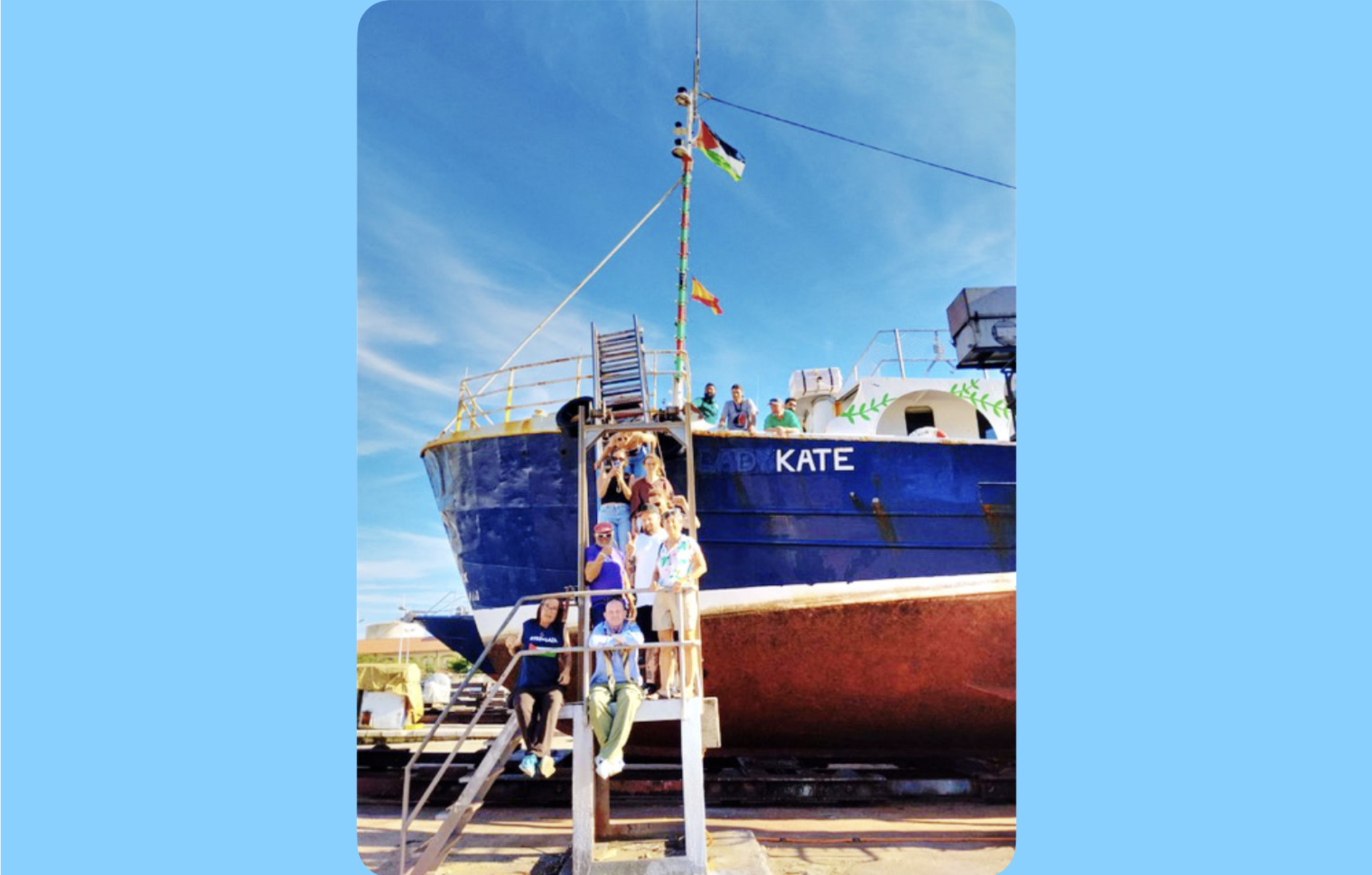
On Friday, ANSA news agency reported that the Rome Prosecutor’s Office is investigating several Israeli leaders for crimes of torture, kidnapping and “degrading treatment” after the interception of the Global Sumud Flotilla missions that were attempting to reach the Gaza Strip.
RELATED:
Protest in Tunisia Demands Release of Global Sumud Flotilla Members
The prosecutors’ investigations into two activist missions point to about a dozen Israeli officials, including Defense Minister Israel Katz and National Security Minister Itamar Ben Gvir.
Specifically, the Prosecutor’s Office is investigating members of the military, police and prison chains of command involved in the naval and land custody operations related to both expeditions.
According to the Prosecutor’s Office, the naval boardings carried out by Israeli forces violated international law and involved illegal detentions, as well as the violation of fundamental rights of defense and “conditions of detention and degrading treatment” that could constitute crimes of torture and kidnapping.
“They beat us everywhere”, “It was worse than Guantanamo”
— TRT World (@trtworld) May 22, 2026
Broken clavicles, sexual assault, electric shocks… Members of the Global Sumud Flotilla share shocking accounts of torture by Israeli authorities pic.twitter.com/PKIdCO4SIS
The judicial case in Italy began after the interception of the Global Sumud Flotilla on Oct. 1, 2025, when the expedition was attempting to approach the coast of Gaza.
Dozens of Italian activists reported after their deportation that they had suffered assaults during the interception in international waters and abuse while they were held in Israeli prisons.
The Rome Prosecutor’s Office later expanded its proceedings and formally included Security Minister Ben Gvir among those under investigation after the circulation of a video recorded at the Port of Ashdod in which he could be seen mocking dozens of activists who were handcuffed and lying under the sun.
teleSUR/ JF
Source: EFE
Use of death penalty against people for crimes committed when they were children a ‘new low’, say rights groups
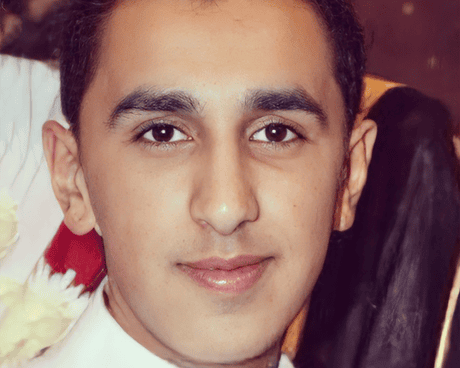
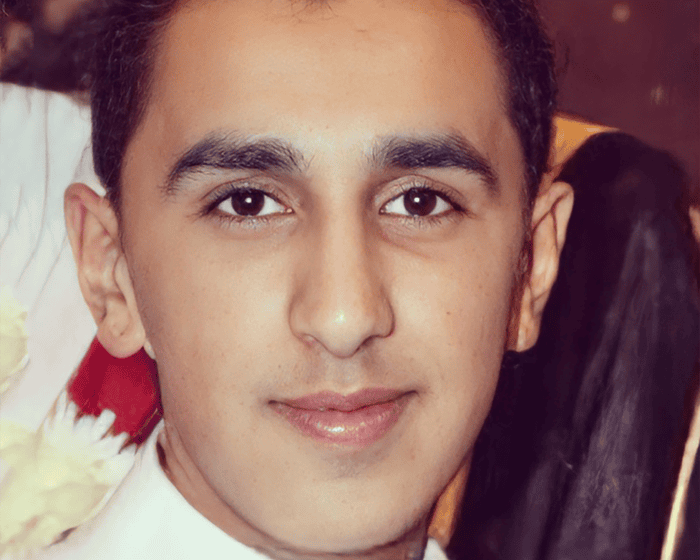
A young man faces imminent execution in Saudi Arabia for attending protests and funerals when he was aged 15 to 17, say human rights groups, in the latest example of the kingdom’s surging use of the death penalty for non-violent crimes.
Youssef al-Manasif was arrested in 2017 and accused of crimes including joining demonstrations for religious freedom by the Shia minority and attending funerals that the Saudi authorities deem to be protests. He was convicted and sentenced to death by the specialised criminal court, a secretive tribunal set up for terrorism-related cases.
Continue reading...
© Photograph: Handout
© Photograph: Handout
© Photograph: Handout
Rewritten indictment accuses ex-Venezuela president and wife Cilia Flores of leading campaign of torture
Nicolás Maduro insisted on Thursday during an appearance in a New York court that torture allegations in a rewritten drug trafficking indictment against the deposed Venezuelan president and his wife were “false accusations”.
Maduro, shackled at the ankles, was brought to court to face the new charges accusing the couple of leading a state-sponsored campaign of repression that tortured scores of victims, including three Americans.
Continue reading...
© Photograph: Sarah Yenesel/EPA

© Photograph: Sarah Yenesel/EPA

© Photograph: Sarah Yenesel/EPA

Hungary stopped a Ukrainian Oschadbank armored convoy in 2026, held its couriers, and kept $82 million in cash and gold. The European Court of Human Rights has registered six applications from the bank's couriers, who say Hungarian police unlawfully detained and tortured them.
In March, Hungarian forces stopped two bank vehicles carrying cash and bank metals from Austria to Ukraine, with seven employees transporting $40 million, 35 million euros, and nine kilograms of gold. It happened just before Hungary’s parliamentary elections, in which then-prime minister Viktor Orban had built his campaign around a sweeping anti-Ukraine message, and lost.
Six of the employees filed with the court on 5 July 2026, and the court’s secretariat has now confirmed their registration and assigned each an official number, according to the bank. It expects a seventh courier’s application, alleging the same violations, to be registered too.
“The fact that the ECHR has accepted the complaint and opened proceedings indicates that there are reasonable legal grounds for the case, that it has legal merit, and that the court intends to examine it on its merits,” Oschadbank says.
The complaints rest on two articles of the European Convention on Human Rights. Article 3 bans torture and inhuman or degrading treatment, while Article 5 guarantees the right to liberty and protects people from arbitrary detention, the bank notes.
During the detention, one courier, a diabetic former Security Service officer, was forcibly injected with an unknown substance, which his Hungarian lawyer confirmed he received despite his objections. He then suffered a hypertensive crisis, lost consciousness and was hospitalized, and Oschadbank confirmed that medical care came only after he passed out, The Guardian reported.
Oschadbank calls the registration an important step in defending its staff. Board chairman Yury Katsion said the bank will continue to protect the couriers’ interests and its own reputation, expects a legal assessment of the Hungarian forces’ actions and is grateful to partners for their support.
The cases are only at an early stage. Registration does not mean the court has found a violation or ruled the complaints admissible, as it must separately weigh the procedural conditions and the circumstances the applicants describe, Oschadbank stresses.
The incident itself, however, is documented: Hungary returned the seven couriers the next day but held the cash and gold for months, releasing the vehicles on 12 March and the money and gold by May.
By Junaid S. Ahmad | MEMO | October 7, 2026
There are careers that end in triumph, careers that end in scandal, and careers that achieve the rarer distinction of staging their own final indictment. António Guterres has found his in Islamabad.
After nearly a decade as Secretary-General of the United Nations, he arrives in Pakistan in the twilight of his tenure and performs the ritual that has come to define him: smile warmly, praise generously, deplore abstractly, and avoid saying anything that might seriously inconvenience the powerful men standing beside him. His record is littered with eloquent concern, grave warnings and solemn appeals. What it has lacked, again and again, is the one quality that gives moral language meaning: courage when courage carries a cost.
In Islamabad, the performance is almost indecent. Guterres praises Pakistan as a source of “solidarity and solutions,” commends the “resilience” of its people, and assures them that the United Nations stands with them. Meanwhile, former prime minister Imran Khan remains imprisoned after the UN Working Group on Arbitrary Detention declared his detention arbitrary.
UN experts have raised concerns about his treatment, prolonged isolation and conditions of confinement; the UN Committee Against Torture has separately highlighted broader allegations of politically motivated detention, torture, intimidation and repression.
Guterres does not need opposition politicians or troublesome journalists to brief him. He could simply read his own institution’s reports. But that would ruin the choreography.
So the Secretary-General moves through meetings with Pakistan’s political and security establishment while one of the country’s most popular and persecuted political leaders sits behind bars. Outside the diplomatic bubble, Khan’s supporters confront barricades, arrests and the familiar machinery of coercion. The Pakistani state, chronically incompetent at governing, once again discovers astonishing administrative efficiency when citizens decide to protest.
And Guterres praises their resilience. The euphemism is almost grotesque. A population is subjected to repression, institutional decay and coercive politics, and the world’s senior international diplomat congratulates it for enduring the experience. It is the diplomatic equivalent of praising a prisoner’s fortitude while refusing to ask who locked the cell.
But Islamabad is not a lapse in the Guterres record. It is the culmination of it.
The same moral evasion has defined his response to Gaza. For years, Guterres has described the catastrophe in increasingly apocalyptic terms: mass death, starvation, displacement, destroyed hospitals, shattered families, collective punishment and violations of international law. He has rarely lacked adjectives for horror.
What he lacked was willingness to name its most consequential possibility. Genocide.
When confronted directly, Guterres retreated into procedure, insisting that such a determination belonged to the courts. It was bureaucratic cowardice dressed as juridical sobriety. Apparently, a Secretary-General may describe the destruction of a people in exhaustive detail, denounce their starvation, mourn their children and warn of their dehumanization — but the moment the facts threaten to crystallize into the politically dangerous word, he develops an almost priestly devotion to institutional restraint.
The absurdity became complete when UN experts explicitly warned of genocide and a UN Commission of Inquiry later concluded that Israel had committed genocide in Gaza. The institution Guterres leads could say what Guterres himself repeatedly would not. This was not neutrality. It was evasion refined into method.
That is the essence of the Guterres tenure: moral vocabulary without moral escalation. He has perfected the art of sounding anguished while remaining politically non-threatening. His speeches travel bravely to the edge of the necessary conclusion, stare into the abyss, invoke international law, then retreat into another carefully worded appeal to governments that have already demonstrated their contempt for it.
Gaza became a theatre of catastrophic adjectives without commensurate political naming. Pakistan now becomes a festival of diplomatic compliments beside a prison cell.
The parallel is devastating. In Gaza, the UN system could document devastation while its Secretary-General recoiled from the word that carried the greatest political charge. In Pakistan, UN mechanisms can document arbitrary detention, abuse and repression while their chief shakes hands with the authorities presiding over the system they have condemned.
That is not merely institutional contradiction. It is leadership failure.
No serious person expects a UN Secretary-General to command armies, free prisoners by decree or compel governments into decency. But the office possesses one form of power that cannot be dismissed so easily: moral authority. Guterres has spent much of his tenure conserving it so carefully that, when history demanded its expenditure, there was often nothing to show for it.
He has confused caution with wisdom and diplomatic acceptability with statesmanship. But statesmanship is not the art of saying only what power can comfortably tolerate. Its purpose, at decisive moments, is precisely the opposite.
And so Islamabad is a fitting final tableau: Guterres praising resilience while surrounded by evidence of why resilience is necessary; representing institutions whose own findings he seems unwilling to embody; smiling through repression in Pakistan after years of speaking around genocide in Gaza.
History will not care how many statements he issued, how solemnly he frowned, or how often he invoked international law.
It will ask what he said when speaking plainly became dangerous. Too often, António Guterres chose not to. He saw almost everything. He described almost everything. And when history demanded courage rather than description, he chose cowardice.
Euro-Med Human Rights Monitor | September 12, 2026
Geneva – The Israeli military continues to use armed quadcopter drones to carry out deliberate killings of Palestinian civilians in the Gaza Strip. Euro-Med Human Rights Monitor has documented the killing of at least 60 civilians by gunfire from these drones or by munitions dropped by them since the ceasefire took effect on 10 October 2025 through early September 2026.
The repeated occurrence of these incidents after the ceasefire, and the targeting of children, displaced people, farmers, shepherds, and people returning to check on their homes, reveals a continuing pattern of the deliberate killing of Palestinian civilians, in which Israel employs military technology capable of identifying specific individuals, tracking their movements, and striking them with precision, despite the clear civilian status of those targeted and their non-participation in hostilities or posing of any imminent threat to Israeli forces or others.
Quadcopters are small, multi-rotor tactical drones, some systems of which can be operated by a single soldier. They can be equipped with daytime and thermal cameras, target-identification and tracking systems, and weapon stabilization systems. Depending on the mission, some models can also be fitted with 5.56mm and 7.62mm weapons or 40mm explosive munitions, enabling the operator to closely monitor individuals, track their movements, and then fire at them or drop munitions toward them with a high degree of accuracy.
These technical capabilities give the operator the ability to observe the targeted person, verify their identity, and track their movements before opening fire. This greatly narrows the margin for error in target identification and heightens the obligation to refrain from an attack when the civilian nature of the target becomes apparent or when there is any doubt as to their status. The repeated killing of children, displaced people, farmers, and shepherds by direct gunfire or munitions dropped from these drones, despite their clear civilian status and absence of any direct participation in hostilities or imminent threat, therefore provides, taken together, strong evidence that civilians themselves were intentionally selected as targets of attack, rather than being killed as a result of mistaken identification or accidentally struck. Such attacks are prohibited in themselves and cannot be justified by military necessity or subjected to a proportionality assessment, since a direct attack against a civilian is prohibited from the outset and cannot be made lawful by invoking military necessity or the rules of proportionality.
The data Euro-Med Monitor has collected shows that at least 60 civilians have been killed in attacks carried out by quadcopters since the ceasefire, while Gaza’s Ministry of Health reported that the total number of Palestinians killed by Israeli forces during the same period had reached 1,368 as of the date of the statement.
Field monitoring revealed three main patterns in the use of these drones. The first involved precise and direct gunfire against individuals whom the operator could see and distinguish; the second involved dropping explosive munitions on civilian gatherings and tents housing displaced people; and the third involved using these drones to impose fire control over areas adjacent to what is known as the “Yellow Line,” by targeting civilians as they attempted to reach their homes and lands or carry out their work there.
Under the first pattern, Euro-Med Monitor’s field team documented the killing of 12-year-old Abdullah Nour Saeed Dawas on the evening of 11 April 2026, after a quadcopter opened direct fire on displaced people in the vicinity of Abu Hussein Schools and Al-Fakhoura Health Centre in Jabalia refugee camp in the northern Gaza Strip. It also documented the killing of 26-year-old Fatima Al-Zahra Ramzi Ahmed Al-Ma’ni by fire from the same type of drone east of Deir al-Balah on 21 May 2026. It further documented the killing of 62-year-old Nidal Eid Salmi Abu Halib on 11 October 2025, after an Israeli quadcopter opened direct fire on him while he was heading to inspect his family’s home in Al-Qarara, northeast of Khan Younis.
Under the second pattern, Euro-Med Monitor documented the killing of at least three civilians on 6 December 2025 after a quadcopter dropped an explosive munition on a group of civilians near Al-Atatra roundabout in Beit Lahia. It also documented the killing of Fadi Adel Khalif on 20 February 2026 after an Israeli drone dropped a bomb on his tent in the northern Gaza Strip, and the killing of 52-year-old Inaam Abdullah Al-Attar on 17 July 2026 after a bomb was dropped near Abu Tammam School in Beit Lahia.
The third pattern involved the use of quadcopters to impose fire control over areas adjacent to the “Yellow Line” and target civilians as they attempted to reach their lands and sources of livelihood. Euro-Med Monitor documented the killing of 42-year-old shepherd Raafat Adel Ibrahim Barika by fire from a drone of this type in the Al-Shakoush area near the “Yellow Line,” northwest of Rafah, on 22 May 2026. It also documented the killing of farmer Hamouda Fayeq Al-Attar on 29 August 2026 while he was working on his land east of Al-Masdar village, coinciding with the Israeli forces’ advance along the line in the area.
Children were among the victims of this precision weapon. Euro-Med Monitor’s field documentation is consistent, in terms of pattern, with the findings of a multidisciplinary report published by the Costs of War project at Brown University’s Watson Institute on 17 June 2026. The report was based on 18 cases involving children who were killed or wounded by gunfire that was examined and documented by a physician who participated in preparing the report during her work in Gaza Strip hospitals between August and September 2024. Witnesses who brought the children to hospital reported that quadcopters were responsible for the gunfire in 90 percent of the cases, while most wounds were caused by single, small-calibre bullets that struck the head, neck, chest, or abdomen.
The report presented five detailed cases supported, in each instance, by X-ray images or diagrams based on clinical photographs and witness testimonies. One case involved a seven-year-old child who was wounded inside an area designated as humanitarian while playing in the street, with no one else in the surrounding area being struck by gunfire. Medical, imaging, and ballistic analysis in three cases concluded that the entry angles and trajectories of the bullets were from above, consistent with gunfire originating from a drone. Although these incidents occurred in 2024, these findings are consistent with the pattern documented by Euro-Med Monitor at a later stage and constitute strong evidence of the use of precise, targeted gunfire directly and deliberately against children.
Euro-Med Monitor documented the circumstances of a child’s injury that resulted in permanent mobility impairment after he was directly shot by a quadcopter, providing additional evidence that Israeli forces deliberately used these drones to kill and inflict serious harm without any justification.
In testimony to Euro-Med Monitor’s team, the father of 11-year-old Amir Mohammed Khalil Shaath, a resident of Qizan Rashwan south of Khan Younis who was displaced to an area near Al-Sikka, adjacent to the Yellow Line, described what happened, saying: “On that day, 12 August 2026, I received a text message inviting them to collect a food parcel, so I went with my son Amir to the designated warehouse in the afternoon. On our way back on foot to our residential area in Al-Sikka neighbourhood, at around 5 p.m., we came under random and intense gunfire from a quadcopter flying at low altitude between abandoned residential buildings. This was followed by the dropping of an explosive bomb, which caused a violent explosion and sent shrapnel flying. Metal fragments became lodged in my son Amir’s skull and thigh, causing fractures and severe damage to the skull bones, and he lost consciousness for a long period as a result. He was taken to Nasser Hospital, where doctors said that if he had arrived a few minutes later, he would have died from internal bleeding in the brain. Medical teams managed to control the bleeding, but the fragments lodged in his skull could not be removed with the locally available capabilities. The child sustained a permanent mobility impairment, losing the ability to walk or stand. Medical teams declared that the available local treatment options had been exhausted and recommended that he travel abroad for treatment to remove the fragments lodged in his skull.”
The operator’s ability to clearly see the targeted person, distinguish their status, and track their movement before opening fire, and then strike them with a single bullet or guided munition, effectively eliminates the pretext of mistaken target identification, particularly when the target is a child, farmer, or shepherd carrying no weapon and posing no threat. This demonstrates that these civilians were not struck accidentally, but were deliberately selected as targets of attack.
Targeting these civilians establishes the intent to kill them and constitutes wilful killing and direct attacks against civilians, both of which are war crimes. Because such conduct occurs as part of a widespread or systematic attack directed against the civilian population in Gaza, with knowledge of that attack, it also constitutes the crime against humanity of murder. Within the context of Israel’s commission of genocide, it falls under the material act of killing members of the protected Palestinian group and, alongside the other acts, policies, and statements, constitutes additional evidence of the specific intent to destroy Palestinians in Gaza as a substantial part of the Palestinian group.
Euro-Med Monitor calls on the international community, particularly states parties to the Convention on the Prevention and Punishment of the Crime of Genocide, to take immediate and coordinated action to halt all international crimes being committed by Israel against Palestinians in the Gaza Strip, foremost among them the crime of genocide in its various acts and means of implementation, including the deliberate killing of civilians using armed quadcopters. We call on these states to employ all available political, economic, diplomatic, and legal means to fulfil their obligation to prevent genocide and ensure respect for international humanitarian law, and to refrain from providing any support or assistance that contributes to the continuation of these crimes.
Euro-Med Monitor also calls on states, the United Nations, and international investigative mechanisms to take urgent measures to ensure the preservation and acquisition of all evidence related to these attacks, including drone camera recordings, flight and positioning data, firing records, the types of munitions used, mission orders, rules of engagement, and targeting data, as well as the names of operators and commanders who ordered or authorised the attacks, and to prevent the destruction, alteration, or concealment of such evidence.
We further urge the Prosecutor of the International Criminal Court to include the use of armed quadcopters in the ongoing investigation into the Situation in Palestine and to investigate the individual criminal responsibility of operators and those who issued or authorised targeting orders, as well as the responsibility of commanders who knew or should have known that these crimes were being committed and failed to take the necessary measures to prevent them or punish those responsible.
Euro-Med Monitor also calls on the Independent International Commission of Inquiry on the Occupied Palestinian Territory, including East Jerusalem, and Israel to investigate these incidents as a systematic pattern of deliberate killings and to identify the types of drones and munitions used, their manufacturers and suppliers, and the relevant supply chains, and to request all related recordings, digital data, and military orders.
We also call on states to impose an immediate and comprehensive ban on the export, transfer, re-export, or financing of armed drones to Israel, including their components, munitions, sensors, targeting and tracking software, maintenance services, training, technical upgrades, spare parts, and brokering, as well as to suspend existing licences and contracts and halt all forms of military and security cooperation that could contribute to or facilitate the commission of these crimes.
Euro-Med Monitor also calls on manufacturers and suppliers to halt any direct or indirect support that could enable such uses, trace the components of their systems, preserve sales, end-user, maintenance, and upgrade records, and fully cooperate with international investigative mechanisms.
Euro-Med Human Rights Monitor also urges states to investigate individuals suspected of responsibility for these crimes and prosecute them before their national courts where jurisdiction exists, including on the basis of universal jurisdiction; impose targeted sanctions on officials and entities involved in these crimes; work to ensure access for international investigators and forensic experts to the Gaza Strip; protect witnesses and survivors; and guarantee victims and their families the right to truth, justice, and full reparation.