❌

Reading view

European Values, Poland and Ukraine, by Bohdan Vitvitsky

Bohdan Vitvitsky examines the renewed dispute between Poland and Ukraine over the legacy of the Ukrainian Insurgent Army, questioning Warsaw’s claims to moral authority over Ukraine’s historical memory and whether such interventions are consistent with European principles of sovereign equality.

The strange historical dispute between Poland and Ukraine, in which Polish officials keep making demands upon Ukraine, seems unwilling to die down.  Most recently, on October 20 the L’viv oblast (regional) council announced plans to honor the World War II-era Ukrainian Insurgent Army (UPA) and its military leader, Roman Shukhevych.  The council declared 2027 as the Year of the UPA, the Year of Shukhevych and the Year of Oleh Olzhych, a Ukrainian poet and political activist.  In response, the Polish charge d’affaires in Kyiv, Piotr Lukasiewicz, responded by stating that “glorifying the UPA and criminal figures runs counter to European values and the strategic and neighborly relations between Ukraine and Poland.”  Similar statements were then echoed by other Polish officials, including ministers.  Are the Poles right about it being the Ukrainians who are running afoul of European values?  And are Poles right to think that they have the right and the authority to police whom in history Ukraine chooses to memorialize?  I would suggest that the answer to both questions is no.

Sovereign equality is a fundamental principle in international law that asserts that all states are equal, regardless of their size or power.  The equality of states is a fundamental constitutional principle that governs how the European Union functions.  As a general proposition, it is, thus, contrary to European values for Poland or Polish officials to assume that Poland has some sort a special right to dictate to Ukraine whom it may or may not memorialize, as one can presume that Poland would vigorously reject Ukraine’s or anyone else’s attempt to tell Poland which historical figures it may or may not memorialize based on that outside country’s views of the demerits of Poland’s various heroes.

But given the spirit behind the set of values that developed after the horrors of World War II and after the Western European countries finally lost all of their colonies by the 1960s, there are certain actions by Ukraine or any European country that could merit criticism or even condemnation.  For example, it is incontestable that in the summer of 1943 the UPA, which was newly formed in Volyn, attacked Polish villages and there killed civilian men, women and children in the tens of thousands.  It is also incontestable that according to most definitions, that massacre was a war crime.  With respect to these events, what actions by contemporary Ukrainians could merit condemnation?  There are two.  First, if any Ukrainian official or political figure or public intellectual or organization were to deny that this massacre took place, he/she/they/it would clearly merit condemnation.  Have any current or recent Ukrainian officials or other spokespersons denied the occurrence of the Volyn massacre?  The answer is no.

Second, if any Ukrainian official or political figure or public intellectual or organization were to admit that the Volyn massacre took place but nevertheless deny that it was a war crime or actually condone it on the basis of some one or another historical Ukrainian grievance against the Poles, that would, in accord with contemporary European values, merit condemnation.  Have any current or recent Ukrainian officials or other spokespersons denied that the massacres of Poles were a war crime or maintain that for some reason these massacres were to be viewed approvingly?  The answer, once again, is no.

So why do Polish officials still complain?  They complain because in effect they want to assert that they have the right more generally to be the ones to define Ukraine’s historical past.  As the great British historian of Poland Norman Davies has pointed out, this is absurd.  About 4% or 5% of the soldiers in UPA participated in the Volyn killings, and in fact most of the members of UPA joined after 1943.  UPA is memorialized in Ukraine because of the extraordinary heroism of many, but certainly not all, of its members in the Ukrainian anti-colonial struggle against the Poles, the Germans and the Soviets that extended into the 1950s against the Soviets.  The Poles seem to think that, ignoring what UPA did against the Germans and for much longer against the Soviets, and regardless how large or how small was the percentage of the UPA that was involved in the 1943 massacre, it is what happened to the Poles who were massacred that is more important than all else and it must be that which defines who and what UPA was.  The Poles are of course entitled to view the UPA however they choose, but they insist on more.  They insist on having the right to dictate to Ukrainians how to view the UPA.

There is another major problem with Polish complaints about Ukrainian memorialization.  It is the problem of moral standing.  The Polish minority in Volyn, about at most 16% in the interwar period, represented the nation that had militarily conquered and then occupied Volyn and other parts of western Ukraine.  Ukrainians constituted between 65% and 70% of Volyn’s population.  Some among the Polish minority were the descendants of the Polish lords and their administrators who had colonized Ukraine in the 15th – 17th centuries when Ukrainians were enserfed, a form of slavery that continued into the 19th century.  In the interwar period between World War I and II, the Polish minority maintained its political, economic, educational and cultural domination of the Ukrainian majority.  And, during World War II, the Polish government in exile in London continued to insist that Poland had the right to include Volyn in Poland and thus to continue to maintain dominion over the Ukrainian majority living there.  None of this obscures what was a war crime, but given the Polish history of domination and exploitation of Ukrainians, it does call into serious question whether today’s Poles as putative representatives of the historical Polish nation should today have moral standing to make complaints against Ukrainians.

Lastly, killing civilians is killing civilians.  It is a war crime.  As has been well documented, during World War II various Polish units, including units of the Polish Home Army, which army is widely venerated and memorialized in Poland, attacked Ukrainian villages and killed civilian men, women and children.  Those killings are often waived off as supposedly “retaliatory” attacks, but that is nonsense. The villages that were attacked were not even in Volyn but were simply Ukrainian.  So if today’s Poles think that they have a right to make grievance claims on historical memory relating to events multiple generations ago, then they must also accept the burdens of accepting grievance claims against them.  To put it in legal terminology, as regards history, it’s not as if Poles had clean hands.

In light of all of the above considerations, and with the exceptions discussed above, contemporary Polish officials do not have the right to routinely keep injecting themselves into Ukrainian decisions to memorialize historical figures that, for Ukrainians, were predecessors of Ukraine’s current efforts to fight off yet another attempt to subjugate it.

Dr. Bohdan Vitvitsky is a retired federal prosecutor and a former U.S. diplomat who holds a Ph.D. in philosophy.
  •  

45 seconds of voting in the Lviv Oblast Council sparked a new dispute with Poland: Warsaw says Kyiv promised the UPA year decision will not take effect

45 seconds voting lviv oblast council sparked new dispute poland warsaw says kyiv promised upa year decision take effect · post roman shukhevych commander-in-chief ukrainian insurgent army (upa) 1943 1950

On 20 October, the Lviv Oblast Council voted to declare 2027 the year of the Ukrainian Insurgent Army (UPA), its commander Roman Shukhevych, and Oleh Olzhych, a poet and member of the Organization of Ukrainian Nationalists (OUN). The vote on the UPA and Shukhevych took 45 seconds, Ukrainska Pravda reported, citing the council's online broadcast. It reopened a dispute Kyiv and Warsaw had only just settled. In May, President Volodymyr Zelenskyy gave a special operations unit the honorary name "Heroes of the UPA," and Polish President Karol Nawrocki later stripped him of the Order of the White Eagle in response.

Poland is the main hub for Western aid to Ukraine, and that role rests on Polish trust, which every new fight over the two nations' shared past erodes. Since 2022, Poland has also paid for nearly 30,000 Starlink terminals for Ukraine, Rzeczpospolita reported. The sorest point is the UPA. Poland recognizes the UPA's 1943 Volhynia massacres of Poles as genocide, a classification Ukraine disputes, pointing to the broader Polish-Ukrainian conflict of World War II, in which both sides killed civilians.

A batch vote, then a "catastrophe"

The resolution honoring the UPA commander and his fighters passed with 52 of the 55 deputies who voted, none against. The one on Olzhych passed 49 of 54. A source in the council told Ukrainska Pravda that, after a lunch break and an air raid alert, deputies voted through 30 to 40 minor items one after another without discussion, and the UPA year passed among them.

A source in the Office of the President called the situation a "catastrophe."

"Ukraine looks irrational. We only just settled the previous crisis, and now this. Everyone knew it was not allowed, the head of the oblast knew about it personally. But the chase for cheap one-day hype won out. The consequences are already here, and they will only grow," the source told Ukrainska Pravda.

The same source said the decision put the next Polish military aid package at risk. Polish Defense Ministry spokesperson Janusz Sejmej said this was "not true," and Deputy Defense Minister Cezary Tomczyk said Poland would keep helping Ukraine.

Ukraine's Foreign Ministry called the decision counterproductive, noted that oblast deputies are not subordinate to central authorities, and urged Poland to refrain from sharp steps that could hinder the normalization of relations. "Only Russia stands to gain from tension in our relations with Poland," Iryna Vereshchuk, deputy head of the Office of the President, wrote.

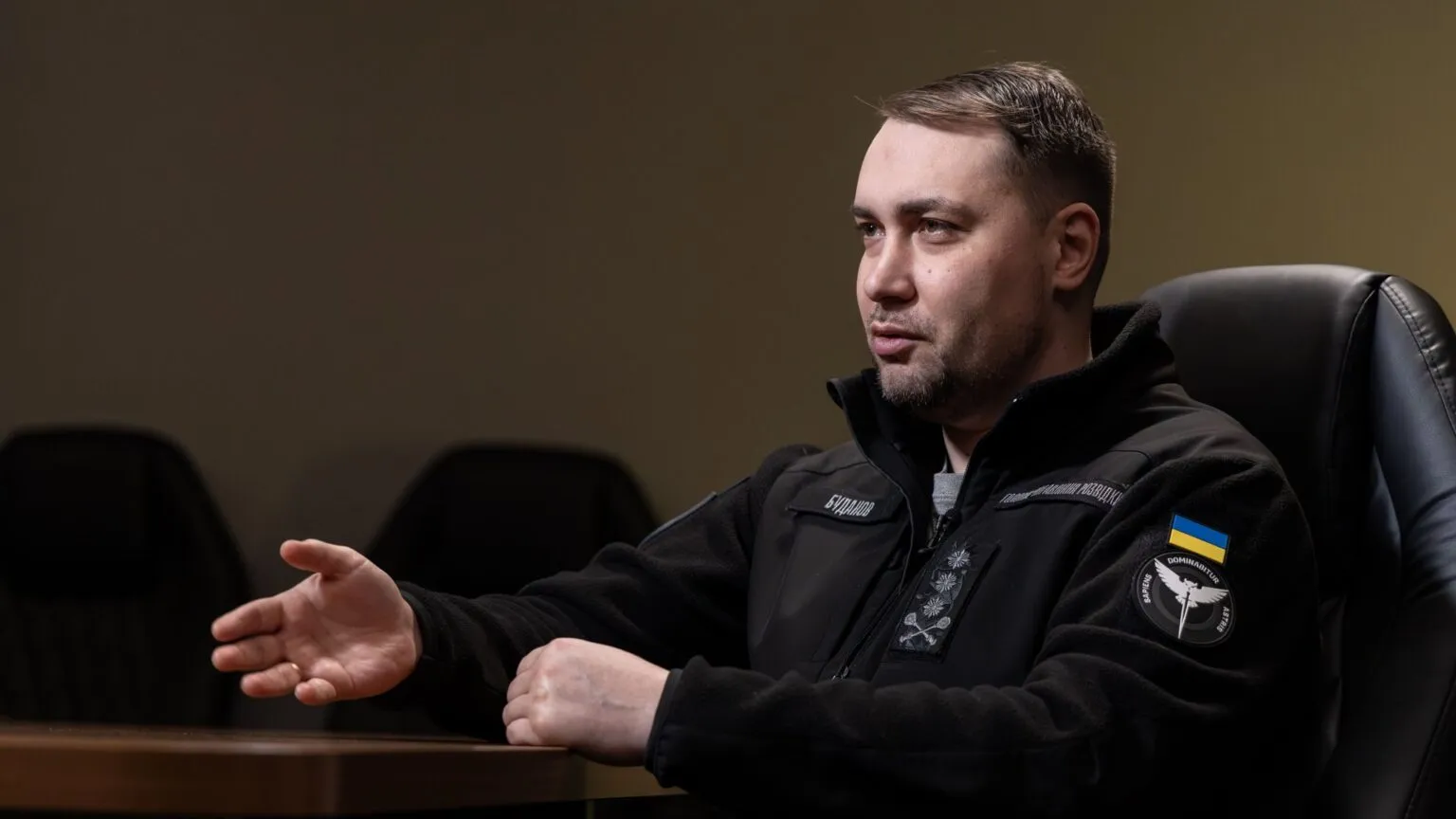
Kyrylo Budanov, head of Ukraine's Office of the President, gestures while speaking during an interview, wearing a black fleece marked with his name and the HUR insignia.
Explore further

“Heroes of UPA” unit will keep its name, Budanov’s office says despite Polish pressure

Warsaw holds Kyiv to its word, but Lviv won't budge

Polish Defense Minister Władysław Kosiniak-Kamysz called the decision unacceptable. Deputy Foreign Minister Marcin Bosacki told Polsat News on 21 October that it was hard to imagine a worse decision for Polish-Ukrainian relations. He said Zelenskyy's aides had assured Warsaw it would not take effect, and that the resolution had disappeared from the council's website after Poland intervened, which he called promising. Warsaw would hold the Ukrainian authorities to their word, he added.

The council itself does not plan to revoke or revise the decision, its representatives told Liga on 21 October.

On 23 October, Polish Prime Minister Donald Tusk said he had received a signal from Zelenskyy that he "will in no way support this decision" if further steps depend on him. "Ukraine will simply have very serious problems with integration if it does not also respect our sensitivity," Tusk said.

Poland bans proposal's initiator, who took part in search in Łasków, from Schengen Area

Poland has barred Sviatoslav Sheremeta, the Lviv Oblast Council deputy who initiated the decision, from entering the Schengen Area for five years, until 20 October 2031. Polish Interior Minister Marcin Kierwiński announced the ban on 21 October at the request of Foreign Minister Radosław Sikorski. Sikorski described Sheremeta as a reenactor of the Galizien Waffen-SS division.

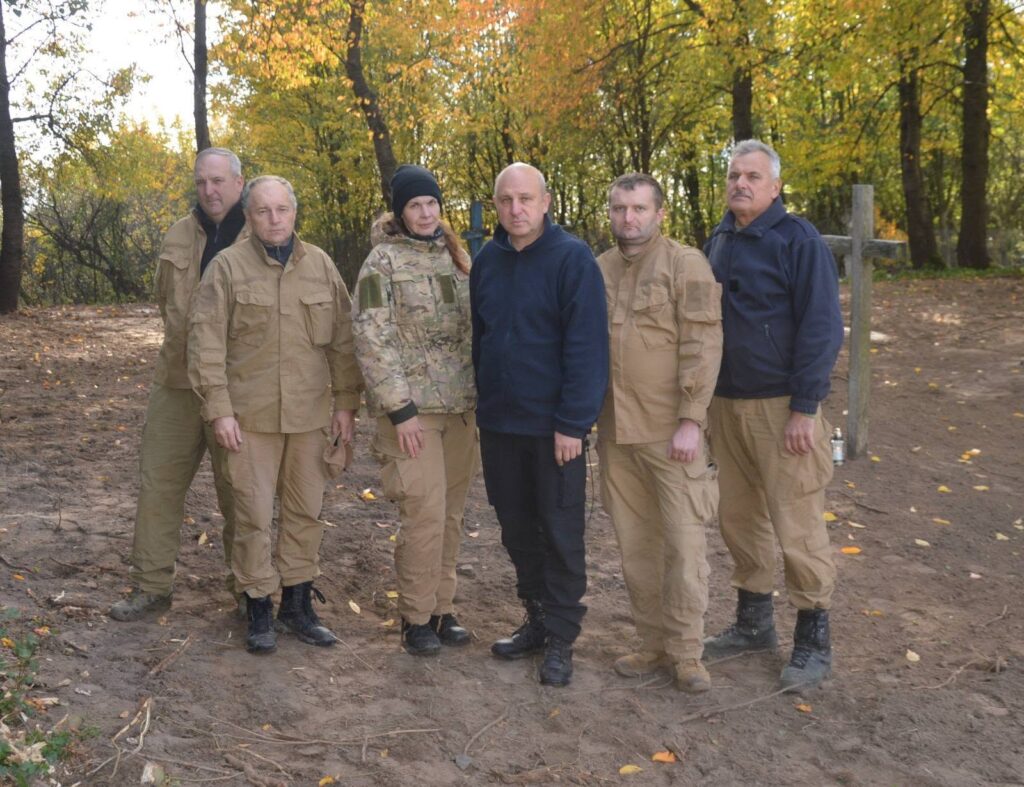
Sviatoslav Sheremeta (center), initiator of the proposal to declare a Year of the UPA in Lviv Oblast, with his team during a search for the remains of Ukrainians killed in 1944 in the village of Łasków, Lublin Voivodeship, Poland, October 2026
Sviatoslav Sheremeta (center), initiator of the proposal to declare a Year of the UPA in Lviv Oblast, with his team during a search for the remains of Ukrainians killed in 1944 in the village of Łasków, Lublin Voivodeship, Poland, October 2026. Photo: Ukrainian Institute of National Memory

Before the ban was announced, Sheremeta told Zaxid.Net that he had never taken part in military-historical reenactment, and noted that Sikorski's post had at first named a "P. Sheremeta." He found Polish officials' reaction strange, since Lviv and other oblast councils had declared years of the UPA and Shukhevych before. "This is nothing new," he said. He added that the decision was not aimed at anyone, least of all Poles or Poland, and that a ban would hurt the two countries' cooperation on commemoration.

Ukrainians have the right to choose their own heroes and honor them, Sheremeta believes. He suggested that recent statements by Polish officials may be linked to the discovery of Ukrainian civilians killed by Polish armed groups in Łasków in 1944.

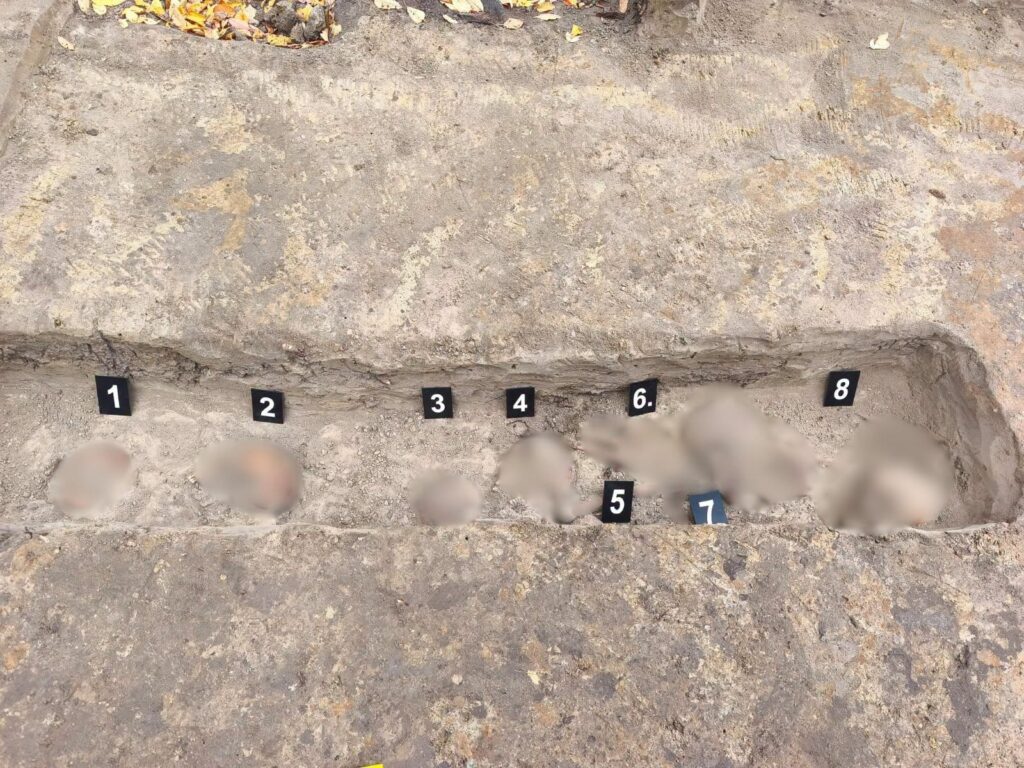
Human remains, likely belonging to a Ukrainian killed in 1944 in the village of Łasków, Lublin Voivodeship, Poland, October 2026
Human remains, likely belonging to a Ukrainian killed in 1944 in the village of Łasków, Lublin Voivodeship, Poland, October 2026. Photo: Ukrainian Institute of National Memory

Sheremeta also directs Dolia, a memorial search center. In October, Dolia carried out a search in Łasków, a village in Poland's Lublin Voivodeship, and found the remains of more than 40 Ukrainians, including women and children. The Ukrainian Institute of National Memory, which commissioned the search, says they were killed by units of the Polish Home Army and the Peasants' Battalions in an attack on 10 March 1944 in which more than 300 people died. Exhumation is planned for spring 2027.

The dispute over shared memory has shaped relations between Kyiv and Warsaw for a decade. After local authorities in Hruszowice removed a UPA monument in 2017, Ukraine's Institute of National Memory halted exhumations of Poles in Ukraine. Despite a 2019 pledge by the institute to stop blocking them, the first exhumation took place only in April 2025, in Puzhnyky, after Tusk announced a breakthrough.

  •  

Quase 90% de conteúdos virais sobre saúde são falsos, diz Agência Lupa

Logo Agência Brasil

Primeira agência a trabalhar com checagem de informações no Brasil, a Lupa acaba de lançar um relatório que aponta que 87,3% de conteúdos virais sobre saúde, analisados entre março de 2017 e junho deste ano, eram falsos. O quantitativo faz parte de uma amostra de 764 materiais checados pela entidade, dos quais 667 foram considerados inverídicos. A publicação Raio-X da Desinformação em Saúde traz os detalhes do levantamento e contou com o apoio da Afya, um dos maiores grupos de ensino médico do país.

Em média, segundo o relatório da Agência Lupa, foram quase 72 falsidades virais em saúde por ano, ou seis casos por mês. Conteúdo viral é aquele que se espalha rapidamente pela internet e alcança um grande número de pessoas em pouco tempo, gerando alto engajamento, com muitas visualizações, curtidas e compartilhamentos em alta velocidade.

Notícias relacionadas:

O volume explodiu na pandemia: em 2020 e 2021, a Lupa checou cerca de dez vezes mais conteúdos sobre saúde do que nos três anos anteriores. Foram 452 conteúdos virais. Essas mentiras se espalharam rapidamente a partir de estratégias como falsas autoridades divulgando promessas de cura e soluções simples para problemas complexos. Apesar disso, segundo a Lupa, esse padrão já era verificado antes do surgimento da covid-19, mas passou a aparecer em quantidade muito maior.

"Um dos maiores desafios da desinformação em saúde é que ela se apropria da linguagem e da autoridade de médicos, pesquisadores e instituições para parecer legítima", afirma a fundadora da Agência Lupa, Cristina Tardáguila.

Essa técnica da falsa autoridade médica ou científica correspondeu a 21,6% dos casos de desinformação em saúde mapeados pela Lupa. Em seguida, o medo e a linguagem alarmista aparecem por trás de 17% das publicações falsas. Distorção de estudos e dados (15,7%) e soluções simples para problemas complexos (12,6%) completam as estratégias mais utilizadas na disseminação de conteúdos falsos em saúde.

“Hoje, o profissional de saúde precisa estar preparado não apenas para diagnosticar e tratar, mas também para ajudar o paciente a navegar em um ambiente de excesso de informações, muitas delas sem respaldo científico”, afirma o vice-presidente Médico e de Relações Institucionais da Afya, Gustavo Meirelles.

Ao longo dos últimos nove anos, os temas mais recorrentes nas checagens da Lupa sobre saúde foram covid-19 (61%), tratamentos, cura e prevenção (34%) e alimentos, bebidas e nutrição (24%).

Desinformação sobre vacina continua

Antes da pandemia de covid-19, conteúdos sobre vacinas correspondiam a 9,1% das checagens de saúde da Lupa. A proporção chegou a 33,2% durante a emergência nacional e a 38,9% entre 2022 e 2024. No período mais recente, entre 2025 e junho de 2026, esse volume recuou para 20%, mas segue sendo mais que o dobro do patamar pré-pandemia. Das 244 alegações sobre vacinas analisadas no período completo, 212 (86,9%) foram classificadas como falsas pela agência após checagem.

Ao menos 142 conteúdos analisados pela Lupa registravam a presença de figuras públicas, entre elas Jair Bolsonaro, Bill Gates, Drauzio Varella, João Doria e Luiz Inácio Lula da Silva. A presença dessas personalidades, segundo a agência, não significa que tenham produzido ou endossado a alegação, e indica que terceiros também se utilizam da reputação de pessoas conhecidas para espalhar desinformação.

Canais de circulação

O WhatsApp foi a plataforma mais frequentemente associada à circulação de desinformação em saúde nas verificações da Agência Lupa. Mais de 70% das 498 checagens analisadas entre março de 2017 e junho 2026 partiram de conteúdos que circularam ou foram encontrados no aplicativo de mensagens instantâneas mais usado no país. O Facebook aparece em segundo lugar, com 126 registros (25,3%), seguido do Instagram, com 35 (7%).

A pesquisa ressalva, porém, que os dados não permitem afirmar que o WhatsApp seja a origem dessas falsidades ou que concentre a maior parte da desinformação em saúde publicada na internet. A Lupa recebe pedidos de verificação por meio de um canal próprio no aplicativo, o que pode favorecer a identificação de conteúdos que circulam mais por ali. Além disso, uma mesma publicação pode passar por diferentes plataformas antes de chegar ao público.

  •  

Polish model Joanna Krupa addresses relationship rumors with right-wing politician

Polish model Joanna Krupa, who currently resides in the United States, said she has no romantic relationship or ongoing contact with Polish lawmaker Dominik Tarczyński after paparazzi photos of the pair sparked speculation.

“I’ve seen this guy maybe three times in my life,” Krupa said in an interview with the Polish outlet Pudelek, later aired on the program Portret.

“I have no contact with him at all. The fact that I was at dinner with a group of friends, what does that mean? Nothing.”

🇵🇱🇺🇸Poland is much safer than the US, says Polish-American supermodel Joanna Krupa.

She directly refers to the murder of Ukrainian refugee Iryna Zarutska, who was killed by a career criminal with 14 convictions.

"I certainly feel more secure in Poland than in the States."… pic.twitter.com/eCGIieS5nG

— Remix News & Views (@RMXnews) September 23, 2025

Paparazzi previously photographed Krupa embracing Tarczyński, a member of the European Parliament from Poland’s Law and Justice party. The images quickly fueled online rumors of an affair. Krupa had already addressed the speculation earlier, stressing there was no romantic involvement.

In the latest comments, she described Tarczyński as one of many acquaintances across the political spectrum.

“I have various colleagues who are on this or that side. I look at a person who is a good person,” she said. “Is Dominik a good man? I don’t know him closely enough to say if he’s a good person. The media made who knows what out of it.”

The conversation also touched on U.S. politics. Posts on Krupa’s Instagram had led some observers to believe she was closely aligned with President Donald Trump. However, she declined to take a firm position on the U.S. leader.

“Empathy? I don’t know if he has any empathy,” Krupa said. “Here, I won’t say I’m on his side or not. There were moments where, for example, he supported animals. When it comes to things like that, I agree.”

She described herself as an empath and said she does not see the same quality reflected in Trump’s broader approach, while noting agreement on animal-protection issues.

In the past, Krupa has touched on growing crime in the West, saying that in many ways, she views Poland as far safer for her and her children.

She referred directly to the murder of Ukrainian refugee Iryna Zarutska, who was killed by a Black career criminal with 14 convictions in the United States.

“I certainly feel more secure in Poland than in the States,” she said, while calling on Trump to take action against repeat criminal offenders.

The post Polish model Joanna Krupa addresses relationship rumors with right-wing politician appeared first on Remix News.

  •  
❌