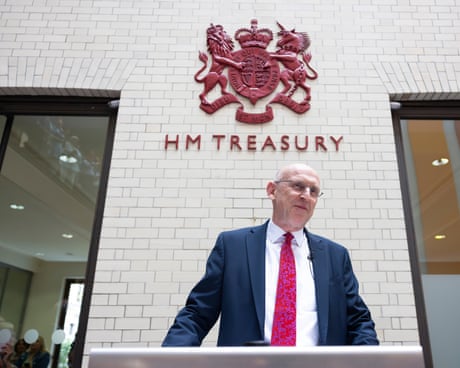
The Treasury ran a higher than expected budget deficit of £24.5bn last month as rising inflation pushed up the interest paid on government debt, increasing pressure on John Healey before his budget next week.
Official figures show the government paid £10.9bn in debt interest: the highest September figure since records began, and only the eighth time the monthly number has been above £10bn.
Russia’s central bank has reduced its gold holdings to their lowest level in nearly seven years as the Kremlin faces a widening budget deficit, declining energy revenues and mounting expenditure on its war against Ukraine.
Russia has carried out its largest sustained reduction in gold reserves since the financial crisis of 1998, disposing of approximately 62 tonnes of the precious metal since December 2025 as the government draws on accumulated reserves to finance a growing federal budget deficit.
According to figures released by the Bank of Russia on Tuesday, 20 October, the country’s monetary gold reserves declined by another 200,000 troy ounces, equivalent to approximately 6.2 tonnes, during September.
The latest reduction brings Russia’s official gold holdings to 72.8 million troy ounces, or approximately 2,264 tonnes, their lowest level since the end of 2019.
The central bank has now reduced its gold holdings for ten consecutive months, reversing the accumulation strategy pursued by Moscow in the years preceding its full-scale invasion of Ukraine.
Largest gold sell-off since the 1998 crisis
The scale of the current reduction is exceptional by Russian historical standards.
At that time, Russia’s central bank disposed of approximately 118 tonnes of gold over three months as the government defaulted on domestic debt and the rouble collapsed.
Some of those holdings were subsequently replenished, leaving the country’s gold reserves approximately 50 tonnes lower at the end of 1998.
The reduction recorded during 2026 has already exceeded that annual net decline, although Russia’s present financial position differs substantially from the circumstances surrounding the 1998 default.
The monetary value of Russia’s remaining gold reserves stood at approximately $301.6 billion at the end of September, compared with $333.5 billion a month earlier. The change reflects movements in gold prices as well as the reduction in physical holdings.
Budget deficit reaches 7.3 trillion roubles
The sales come as the Russian government struggles to contain expenditure associated with its continuing military campaign against Ukraine.
Moscow now expects its federal budget deficit to reach 7.3 trillion roubles, approximately $87 billion, in 2026. That represents 3.2 per cent of gross domestic product, twice the deficit originally anticipated.
Military and security expenditure is expected to account for approximately 38 per cent of total federal spending this year.
The government has increasingly relied on its National Wealth Fund, established to accumulate surplus energy revenues, to cover budget shortfalls.
The central bank’s gold transactions are linked to operations involving the fund. Under this mechanism, the Bank of Russia conducts corresponding market sales following Finance Ministry transactions using the fund’s assets.
Figures published by Russia’s Finance Ministry earlier this month showed that the National Wealth Fund’s liquid assets had fallen to approximately 3.8 trillion roubles, equivalent to $45 billion, as of 1 October. This was down from approximately 4 trillion roubles a month earlier.
The fund’s total assets remained substantially larger, at almost 13 trillion roubles, but much of that amount is invested in shares, bonds and other holdings that cannot immediately be converted into funds for government expenditure.
War expenditure puts pressure on Kremlin finances
Russia’s fiscal problems have been compounded by weaker oil and gas revenues, a slowdown in economic activity and the increasing cost of sustaining military operations.
Although energy exports continue to generate substantial income, government revenue has failed to keep pace with spending commitments.
Moscow has consequently increased domestic borrowing, introduced additional taxes and sought alternative sources of budget financing.
The latest gold figures provide further evidence of the financial demands imposed by the war, now approaching its fifth anniversary.
They do not indicate that Russia is approaching an immediate financial collapse. The country still holds considerable gold and foreign exchange reserves, with the central bank reporting total international reserves of approximately $731.8 billion at the end of September, although access to part of its overseas assets remains restricted by Western sanctions.
Nevertheless, the continued liquidation of gold holdings reduces the reserve assets available to the Russian authorities at a time when military spending remains elevated and the government faces pressure to meet its domestic financial commitments.
For President Vladimir Putin, the growing budget deficit introduces an additional economic consideration into decisions over the duration of the war.
The September figures show that Moscow is increasingly drawing on assets accumulated before the invasion to support current expenditure, while its capacity to rebuild those reserves remains dependent on future revenues and the government’s ability to restrain spending.
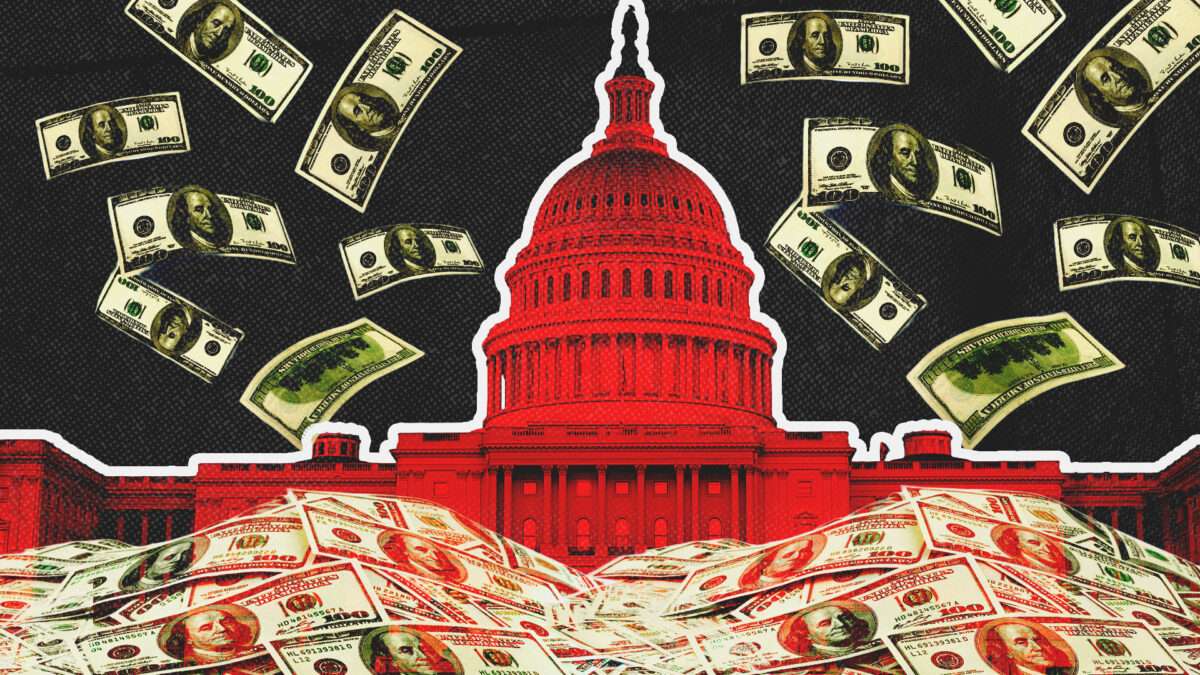
The federal government just closed fiscal year 2026 with a deficit of nearly $2 trillion, according to figures the Congressional Budget Office (CBO) released last Thursday. Only the two pandemic years of 2020 and 2021 were worse. Today, though, there is no recession and no emergency. These enormous budget deficits are the new normal.
The usual response to a deficit warning is that the government just needs more money. It doesn't. Thanks to the remarkable strength of the private sector, federal revenue rose by 3 percent, to more than $5.4 trillion, over the fiscal year. But spending rose by 6 percent, reaching $7.4 trillion.
Some will blame the Supreme Court for striking down most of President Donald Trump's tariffs and forcing the government to issue refunds. But even if Washington had kept the $130 billion in illegal levies, it would cover less than one-tenth of the gap. Tariffs were never a serious revenue source at our insanely high level of spending.
Look at where the money went. Spending on the three main entitlement programs—Social Security, Medicare and Medicaid—grew by 7 percent. That's faster than total spending growth. Defense grew by 5 percent. Interest on the debt rose by 11 percent, exceeding $1.1 trillion. That last figure is the bill for every earlier year of borrowing—years when Washington was sending clear signals that it isn't serious about fiscal responsibility.
If you want to see where such irresponsibility can lead, look at France. The country that big spenders from Paul Krugman to Sen. Bernie Sanders (I–Vt.) have cited as proof that big government is viable and full of upsides is now on the brink of a serious crisis. France's debt equals 120 percent of its gross domestic product (GDP), and interest payments are rising quickly. Slow growth and social unrest aren't helping.
The U.S., of course, has some advantages that France doesn't, largely because we're a country of innovators with a private sector unmatched at creating wealth. Nonetheless, debt that is swelling out of control should still worry us. First, the same anti-wealth and anti-growth forces that brought France to where it is now are gaining popularity here. Second, we too will see debt reach 120 percent of GDP in a few years, and our interest payments are already consuming an alarming share of resources.
A wise Congress would put us on safer footing if only because debt raises interest rates for everyone, from homebuyers to small businesses. This operates as a drag on growth, and hence on wages. In other words, controlling debt should be part of an affordability agenda in the same way as streamlining regulation.
When legislators decide to take affordability seriously, I recommend looking at a September Advancing American Freedom (AAF) report on this topic. Its section on fiscal restraint offers a useful menu of reforms, including targeting the programs that most drive the debt.
Start with Social Security. Under current law, benefits will be cut by roughly 20 percent when the program's trust fund runs dry in the early 2030s. Nobody believes Congress will actually let that happen, but we'd better hope its answer isn't to double down by borrowing the difference between payroll taxes and benefits.
Nor are tax increases an option. The payroll tax meant to fund entitlements is now 12.4 percent of wages. It began at 2 percent when Social Security was first rolled out. It is also the most burdensome tax for many Americans. Enough already. The fixes AAF fellow Rachel Greszler proposes are worth considering: Index the retirement age to life expectancy, use an accurate inflation measure for cost-of-living adjustments, and move gradually toward a flat universal benefit that protects lower-income retirees while ending Social Security's de facto welfare for the wealthiest.
Next is Medicare. More than 40 percent of its financing already comes from general revenue rather than from payroll taxes. The report recommends converting the program to premium support, giving beneficiaries a fixed contribution to spend on traditional Medicare or on competing private plans. It would also raise the eligibility age to 67, matching Social Security, and trim subsidies for well-off seniors. That's a start.
As for Medicaid, the problem is one of pricing. And yet competition based on price—the best cost-control tool—has never been seriously tried. Washington covers 90 percent of the cost of states' expanded Medicaid programs for adults. A state can buy a dollar of spending with just a dime of its own money. Changing the states' incentives would be key here. Implementing risk-adjusted per-capita caps, through which the federal government would give states a fixed amount per enrollee, would do just that. States would pay for their own inefficiencies or would be able to use every dollar they save by becoming more efficient.
The same logic supports returning more welfare programs to states, starting with the federal share of the Supplemental Nutrition Assistance Program. State governments have to balance their budgets in some form.
None of these reforms are painless. But the alternatives will prove far more painful. The U.S. will either continue paying a slow, unlegislated tax called inflation or face a fast, ugly fiscal crisis when bond buyers stop giving Washington the benefit of the doubt.
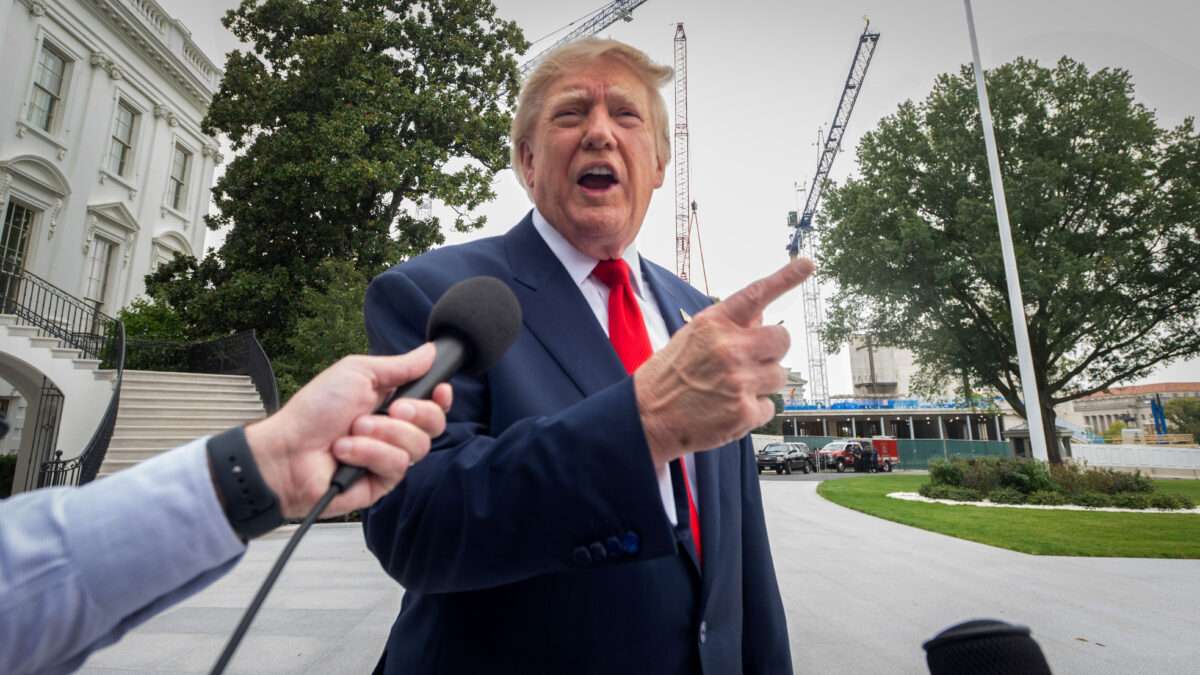
With less than three weeks until Election Day and Republican approval numbers down, President Donald Trump is taking unorthodox measures to drum up support for the GOP. Last week, Trump sent out $90 payments to over 20 million Americans on Medicare Part B—which covers doctor visits and regular checkups. The money was made available to help seniors "pay for their Medicare Part B premiums," which cost $202 per month.
In a Truth Social post, Trump said the money is coming from "a pointless 'Slush Fund'" known as the Medicare Improvement Fund, which, though bombastic, is an accurate telling of how lawmakers have used the account.
The fund was created in 2008 "to improve program management" of Medicare. However, as a 2023 report from the Congressional Budget Office (CBO) points out, this fund has really served one purpose far above supporting Medicare: sneaky government accounting.
As the CBO wrote, "No funds have been spent by [Centers for Medicare & Medicaid Services] from either improvement fund since their establishment in 2008." Instead of using the fund to support Medicare programs, Congresses have filled up the fund with money scheduled for use only in the distant future, then siphoned that money away to other legislation. Under CBO accounting rules, canceling or redirecting future spending is a "credit" to the bill's total cost—a helpful trick for legislators who want to couch their initiatives as being affordable. This trick was used to finance nearly $21 billion of the Affordable Care Act and has been used for a scattering of legislation since.
While Trump says this disbursement is needed to help enrollees pay premiums, the timing of the announcement—weeks before the midterms—and Trump's history of using taxpayer money to win over senior citizens make the claim dubious. In the One Big Beautiful Bill Act, for instance, seniors were given a $6,000 tax deduction. Trump has also consistently defended senior-focused entitlement programs like Social Security and Medicare, which are both facing a funding cliff in the coming years. Trump siphoning off public money to turn out the electorate hasn't been limited to senior citizens either. Last month he promised to hand out $5,000 checks to all Americans—conditional upon Republican victory in the midterms.
Despite grumbling by some Democrats about Trump's decision to empty the Medicare Improvement Fund, it seems unlikely the choice will detract from Medicare's ability to provide services. The bigger concern is that the president is using his office to hand out personally signed checks to voters weeks before an election. Pre-election vote grabbing through irresponsible spending is not unprecedented, but it has rarely been so characteristic.
The fiscal ramifications of Trump's unorthodox spending are also concerning. Medicare is already teetering toward insolvency, and entitlement spending continues to balloon. Neither Congress' playbook of deceptive accounting nor Trump's vote buying will address these problems. Without raising taxes or lowering benefits, these programs cannot continue as they are.
But raising taxes and cutting benefits is no way to win an election. Trump knows this and seems perfectly willing to sacrifice America's fiscal stability for a quick boost in the polls.
This week, editors Peter Suderman, Katherine Mangu-Ward, and Nick Gillespie are joined by reporter Reem Ibrahim to discuss Vice President J.D. Vance's bizarre definition of socialism. They examine whether Vance genuinely believes what he's saying or is attempting to redefine socialism to avoid acknowledging the Trump administration's own big-government policies.
Next, the panel discusses America's growing $2 trillion deficit, the rising cost of Social Security and Medicare, and the generational divide between older Americans receiving government benefits and younger workers paying for them. The editors also examine youth protests in France, where students are demanding improvements to public schools despite the country's already extensive government spending. They then discuss allegations that U.S. Ambassador to Greece Kimberly Guilfoyle offered political access in exchange for help paying off personal credit card debt and what the controversy reveals about government corruption. Finally, a listener asks about Defense Secretary Pete Hegseth's plan to publicly broadcast an execution and whether turning capital punishment into a spectacle could encourage extremism.
Reem Ibrahim appears on the left. Peter Suderman appears on the right. An image of Vice President J.D. Vance at the podium, flanked by members of the Trump administration appears in the center. Bold text across the top of the screen reads "HE SAID WHAT?"
Russia is spending more on the war than at any point since it began. Russia's military funding is on track to hit a record this year after President Vladimir Putin added almost $60 billion to the outlays set in the budget, Bloomberg reports, citing people close to the government.
Defense spending is expected to approach about $199 billion by the end of 2026, roughly 40% above the plan Moscow announced in late 2025. That reverses the course of a year ago, when the Kremlin meant to slow military growth, narrow its deficit, and rebuild reserves drained by the war.
Alaska was the turning point
Putin ordered the shift late last year, after concluding that talks with the US in Alaska would not produce an acceptable deal to end the fighting, the report says.
By January, the Kremlin judged an agreement with Ukraine to be out of reach, and the government began accelerating advance payments to defense firms and raising other war-related spending.
"The government is finally budgeting for a prolonged war in Ukraine, but still understates its cost," Bloomberg Economics economist Ekaterina Vlasova said.
The deficit nearly doubles
Paying for the war has blown out the budget. The projected 2026 deficit has climbed to more than $81 billion, up from about $44 billion as first planned, and the government covered the extra spending through increased domestic borrowing and gold sales.
The budget plans years of war
The spending is not set to fall soon. Under the budget plans, Russia's military outlays reach about $200 billion in 2027, then ease to $194 billion in 2028 and about $191 billion in 2029, a signal that Moscow is planning for a long war.
Earlier, Euromaidan Press reported that Russia was raising 2027 defense spending by 27% to a record, even as its deficit widens and oil and gas revenues fall.
The euro fell to its lowest level against the dollar since May 2025 on Monday as investors reacted to rising French borrowing costs, political uncertainty and doubts over Paris’s ability to stabilise its public finances before next year’s presidential election.
The euro fell to a 17-month low against the US dollar on Monday as renewed pressure on French government debt raised concern over the fiscal position of the eurozone’s second-largest economy.
The single currency dropped as far as $1.116 during trading, its weakest level since May 2025, before recovering part of the fall. By late Monday it was trading at around $1.121, still lower on the day.
The move followed a sharp sell-off in French government bonds and a widening gap between French and German borrowing costs.
According to market data published on Monday, the spread between French government debt and equivalent German Bunds had approached 160 basis points on Friday, its widest level since the eurozone sovereign-debt crisis in 2011.
The gap subsequently narrowed, but the scale of the movement has drawn attention back to France’s public finances.
French debt is already close to 120 per cent of gross domestic product and is expected to continue rising.
Investors are now assessing whether Prime Minister Sébastien Lecornu’s minority government can secure sufficient parliamentary support for measures intended to put the budget on a more sustainable path.
That challenge is becoming more difficult as France approaches its 2027 presidential election.
Spending cuts and tax increases are politically sensitive even under stable parliamentary conditions. Lecornu’s administration does not have an outright majority in the National Assembly, while opposition parties have challenged several elements of the government’s fiscal programme.
The French economy itself is providing little additional room.
Slower growth makes deficit reduction harder because tax revenues tend to grow more slowly while welfare and debt-servicing costs remain high.
Bond markets have also changed the calculation.
For much of the period following the eurozone debt crisis, France was able to borrow at historically low rates. Higher interest rates now mean maturing debt has to be refinanced at greater cost.
France’s debt burden is therefore rising at the same time as the price of servicing it increases.
The euro’s fall on Monday shows that those concerns are no longer confined to the French bond market.
Currency traders are also assessing whether fiscal pressure in France could affect confidence in the wider euro area.
The comparison with the sovereign-debt crisis of 2010–12 should nevertheless be treated cautiously.
France remains one of Europe’s largest and most diversified economies, and the eurozone now has institutional mechanisms and European Central Bank instruments that did not exist at the beginning of the earlier crisis.
There is also no indication that France is unable to finance itself.
What markets are pricing is an increase in the risk attached to holding French debt and growing uncertainty over the country’s medium-term fiscal trajectory.
The euro has now fallen for four successive weeks against the dollar and has lost more than three per cent over that period.
US monetary policy is contributing to the movement. Persistent inflation indicators have supported the dollar even as expectations of an immediate Federal Reserve interest-rate increase have declined.
For Europe, however, Monday’s trading was dominated by France.
French fiscal policy has been a domestic political dispute for much of the past year. The widening bond spread and the euro’s fall show that it is increasingly becoming a eurozone market issue.
Italy expects its budget deficit to rise above the European Union’s three per cent reference level again next year as Giorgia Meloni’s government uses new EU fiscal flexibility to finance defence and measures responding to higher energy costs.
Rome’s latest multi-year fiscal projections put the 2027 deficit at 3.4 per cent of GDP, substantially above the previous target of 2.8 per cent.
The increase follows a planned fall to 2.9 per cent this year, which would bring Italy below the EU’s three per cent threshold for the first time since 2019. The deficit stood at 3.1 per cent in 2025.
The change reflects Italy’s decision to use the EU’s national escape clause, allowing member states under specified conditions to deviate temporarily from their agreed expenditure paths.
Under the latest projections, Rome intends to use fiscal flexibility worth 0.6 per cent of GDP in both 2027 and 2028 for defence and energy-related spending. The additional expenditure amounts to roughly €29 billion across the two years, while the deficit is projected at 3.2 per cent in 2028.
The decision turns a long-running dispute over fiscal flexibility into a test of the EU’s revised budget framework.
The latest projections make that trade-off larger.
Italy’s annual inflation rate increased to 4.1 per cent in September, from 3.2 per cent a month earlier. Meloni has sought additional room from Brussels to cushion the economic effect of elevated energy costs.
At the same time, the government has improved its growth forecasts.
GDP is now expected to expand by one per cent in 2026, compared with an earlier projection of 0.6 per cent. Growth for 2027 has been revised from 0.6 to 0.8 per cent.
Those figures provide some additional room, but Italy’s debt remains the larger constraint.
Public debt is projected to rise from 138.1 per cent of GDP this year to 138.5 per cent in 2027 before edging down to 137.9 per cent in 2028. The government now expects the debt ratio to begin falling a year later than previously planned.
That leaves Rome in an unusual position. It expects formally to bring its underlying deficit below the EU threshold while headline borrowing rises above three per cent once exceptional spending is included.
Economy Minister Giancarlo Giorgetti has said Rome is discussing with the European Commission how the calculation will affect Italy’s attempt to leave the EU’s excessive deficit procedure.
The Commission will therefore have to judge not only Italy’s fiscal trajectory but how extensively exceptional expenditure can be accommodated under rules Brussels itself has made more flexible.
Italy provides one of the clearest examples of the problem.
Rome is trying simultaneously to increase military capacity, protect households and businesses from energy costs and demonstrate that its very high debt remains manageable.
It has also argued that European rearmament cannot proceed unless governments have sufficient room to finance it. The same tension emerged in Italy’s debate over participation in the EU’s SAFE defence loan programme.
The EU has given governments more flexibility to manage those competing demands. Italy’s 2027 budget will show how far that flexibility can stretch before the argument returns to the credibility of the fiscal rules themselves.
Beijing has opened an anti-dumping investigation into a chemical imported from the European Union days before EU Trade Commissioner Maroš Šefčovič travels to China for talks covering trade imbalances, market access and strategic raw materials.
China has opened a new anti-dumping investigation into imports from the European Union less than a week before EU Trade Commissioner Maroš Šefčovič is due in Beijing for talks on the increasingly difficult trade relationship between the two sides.
China’s Ministry of Commerce announced on Saturday, 3 October, that it was beginning an investigation into p-nitrotoluene, also known as 4-nitrotoluene, imported from the EU.
According to the official notice opening the investigation, the case follows an application submitted on 14 September by Chinese producers Jiangsu Huaihe Chemical and Hubei Dongfang Chemical. The investigation will examine alleged dumping between 1 July 2025 and 30 June 2026, while the assessment of possible damage to Chinese industry will cover January 2022 to June 2026.
P-nitrotoluene is used in the production of dyes, pharmaceuticals, pesticides, pigments and other chemical products.
In isolation, the investigation concerns a relatively specialised industrial product. Its timing, however, places it inside a much wider argument over the future of EU-China trade.
Šefčovič is expected in China on 8 and 9 October for the second high-level meeting under the EU-China trade and investment consultation mechanism established earlier this year.
The deadline followed talks between Šefčovič and Wang in Brussels in June. At the time, the two sides agreed to establish working groups dealing with trade and investment balances, export controls, intellectual property and World Trade Organisation reform.
The numbers remain a central part of the European argument.
According to Eurostat’s figures for EU-China trade in 2025, the EU imported €559.4 billion in goods from China while exporting €199.6 billion, leaving a trade deficit of €359.8 billion. EU exports to China fell by 6.5 per cent compared with 2024, while imports increased by 6.4 per cent.
Brussels argues that the imbalance cannot be viewed separately from questions of industrial subsidies, excess manufacturing capacity and barriers encountered by European companies seeking access to the Chinese market.
Beijing rejects the suggestion that the growth of Chinese exports is principally the result of unfair state support and has criticised the EU’s expanding use of trade-defence instruments.
The confrontation now covers a growing range of industries.
The EU has imposed additional duties on Chinese electric vehicles following an anti-subsidy investigation, while disputes have extended to medical devices, public procurement and agricultural products. China, meanwhile, has launched investigations affecting European products including brandy, pork, dairy goods and chemicals.
Rare earths have become particularly important.
European industry remains heavily dependent on Chinese supplies and processing capacity for materials used in permanent magnets, electric vehicles, wind turbines, electronics and defence equipment.
Neither Brussels nor Beijing has indicated that the broader commercial relationship is heading towards disengagement. China remains the EU’s largest source of imported goods and the European market remains commercially important to Chinese exporters.
But both sides are increasingly prepared to use trade-defence measures when negotiations fail to resolve disputes.
Saturday’s anti-dumping investigation consequently adds another issue to Šefčovič’s agenda days before he arrives in Beijing — and provides an early indication of the atmosphere surrounding the October talks.
Sul 3,1 per cento di deficit confermato dall’Istat si è alzato un polverone. A parte il fatto che il vincolo del 3 per cento non è più così stringente, Pil ed entrate sono aumentati. Sono le previsioni sbagliate sulla spesa ad aver determinato il risultato.
The Ministry of Finance in Paris (Bercy). Jean-François Gornet / Flickr, CC BY-SA
France has crossed a critical threshold as its public debt exceeded €3.5 trillion in the first quarter of 2026, reaching 117.5% of GDP. The French Court of Auditors has sounded the alarm over what it describes as an “alarming” fiscal situation, as public deficits hit record levels and debt-interest costs continue to soar.
The Ministry of Finance in Paris (Bercy). Jean-François Gornet / Flickr, CC BY-SA
Public Debt Exceeds €3.5 Trillion
During the first quarter of 2026, France’s public debt passed the symbolic milestone of €3.5 trillion, reaching €3.5361 trillion at the end of March. The figure underscores the scale of the country’s budgetary challenges.
To put this amount into perspective, France would theoretically have to sell its entire gold reserve, all publicly traded and privately held state assets—including companies such as EDF, Engie, and Airbus—as well as all government-owned buildings and land in an attempt to repay the debt in a single payment. Even such a drastic measure would likely fall short.
In just one quarter, France’s Maastricht-defined public debt increased by €75.6 billion, a sharp rise in a very short period. This growing debt burden reflects a longstanding reality: for more than fifty years, the French government, local authorities, and social security system have collectively spent more each year than they have collected in revenue, particularly through taxation. To cover this structural gap, France has continued borrowing from financial markets.
Debt-to-GDP Ratio Nears Historic High
Beyond the headline figure, analysts and financial institutions are particularly concerned about debt relative to economic output. According to France’s National Institute of Statistics and Economic Studies (INSEE), public debt now equals 117.5% of gross domestic product.
The increase has been dramatic. In 1980, public debt represented only 20% of GDP. By 2000, it had risen to approximately 60%. Over four decades, the debt-to-GDP ratio has nearly increased sixfold.
The current level of 117.5% is approaching the all-time record of 117.8% recorded in the first quarter of 2021 during the COVID-19 pandemic. At that time, President Emmanuel Macron launched an unprecedented economic rescue effort, pledging to spend “whatever it takes” to prevent economic collapse.
Although the health crisis has long since passed, France’s debt trajectory has not slowed significantly. Within the European Union, only Greece and Italy have higher debt ratios, making France the third most indebted country in Europe.
Warnings from the Court of Auditors
In response to what it views as a critical situation, France’s independent Court of Auditors, responsible for overseeing public finances, issued a warning report describing the state of the nation’s finances as “alarming.”
The report, revealed by France Inter and released ten months before the 2027 elections, calls for “strong, credible, and swift measures” to restore fiscal stability.
The court highlights several aggravating factors. First, France remains the only country in the eurozone whose debt level is higher today than it was at the end of the COVID-19 crisis. Second, public deficits continue to break records. France posted a budget deficit equal to 5.1% of GDP in 2025, the second-highest in the eurozone after Italy.
The government’s goal of keeping the deficit at 5% is viewed as unrealistic by the Court of Auditors, which fears a further deterioration of public finances.
Debt-Interest Costs Are Soaring
A particularly troubling development is the rapid increase in debt-servicing costs. As debt accumulates and interest rates rise in financial markets, the amount spent on interest payments has grown dramatically.
In the current state budget, debt-servicing expenses have become the government’s single largest expenditure category, surpassing spending on the national education system (excluding pension obligations).
Paradoxically, this situation coincides with a significant increase in taxation. Taxes rose by €38 billion across 2025 and 2026 as part of efforts to limit further deficit growth. Yet France already has the highest overall tax burden in Europe when taxes and social contributions are combined.
This creates both political and economic tensions: higher taxes have not been sufficient to slow the growth of public debt, raising questions about the effectiveness of current fiscal measures.
France’s current trajectory highlights a troubling economic reality: structural public spending is growing faster than tax revenues, creating a persistent deficit that is difficult to eliminate.
Programs such as social welfare, pensions, healthcare, and public investment involve long-term commitments, while tax revenues tend to fluctuate with economic conditions.
This divergence between economic growth and debt growth raises a fundamental question for France’s public finances. If GDP expands by only 1% to 2% annually while debt continues to grow by 3% to 4% per year, the debt-to-GDP ratio will inevitably continue rising unless major policy changes are implemented.
French voters heading to the polls in 2027 will likely face a difficult choice between maintaining current levels of public services and restoring fiscal sustainability.
Breaking the Debt Spiral
To reverse the trend, experts and institutions such as the Court of Auditors recommend a combination of measures: controlling the growth of public spending, improving the efficiency of existing expenditures, broadening the tax base without increasing marginal tax rates, and accelerating economic growth to boost revenues.
As the eurozone’s second-largest economy after Germany, France possesses significant economic resources. However, meaningful structural reforms will require political consensus and a willingness to accept difficult compromises.
In the short term, the government must demonstrate that its deficit-reduction commitments are credible. In the medium term, comprehensive reforms of public spending—particularly in pensions and healthcare—appear unavoidable. Over the long term, only sustained economic growth combined with spending discipline will be capable of reversing the debt dynamics that have characterized France for decades.

 Login