❌

Reading view

Could France's riots happen here? Experts see parallels in socialism, immigration — and key differences

Violent riots sweeping France have exposed a far-left network of communist groups, labor unions and political activists mobilizing around student grievances, raising questions about whether similar political and immigration tensions could ignite unrest on American streets.

A Fox News Digital investigation identified 50 organizations involved in France's student protest movement and its broader network of supporters and international amplifiers, including communist and socialist groups, labor unions and political parties.

The American parallels extend beyond political rhetoric. Fox News Digital previously reported that agitators at Delaney Hall in Newark used encrypted Signal chats to coordinate transportation, supplies and demonstrations before clashes with federal agents.

Santiago Vidal Calvo, a researcher at the Manhattan Institute, singled out New York City Mayor Zohran Mamdani, Rep. Alexandria Ocasio-Cortez, D-N.Y., and Michigan Democratic Senate candidate Abdul El-Sayed, arguing that their approaches to immigration enforcement could move the United States closer to conditions he associates with France's crisis.

RO KHANNA SPARKS BACKLASH OVER FRANCE RIOT COMMENTS AS CRITIC SAYS HE WANTS TO ‘RIDE THE RAGE WAVE’

"I have absolutely no doubts that if we had Mamdanis or El-Sayeds or AOCs in charge of immigration policy, our immigration landscape would be very different today than what it currently is," Calvo told Fox News Digital.

House Speaker Mike Johnson, R-La., has made a similar argument, explicitly tying France's violence to the stakes of the 2026 midterms.

"France is descending into chaos because they wanted OPEN BORDERS — just like the socialist Democrats in America," Johnson wrote on X. "What we are witnessing is a chilling warning for all Americans of what happens if the radical Marxist insurgent left gets their way."

Johnson argued that a Democratic victory in November would lead to more permissive immigration policies, casting the election as a choice between the Trump administration's immigration crackdown and the approach favored by Democrats. President Donald Trump similarly posted on Truth Social that "migrants have taken over France," urging the country to "CLOSE THE BORDERS, FAST!"

The immigration debate is also playing out directly in the 2026 midterms. In Michigan's closely watched Senate race, Democratic nominee Abdul El-Sayed has made abolishing ICE a campaign position, arguing that the agency cannot be reformed. His Republican opponent, Mike Rogers, has sought to portray El-Sayed as an ideological extremist as the two compete for a seat that could help determine control of the Senate.

In New York City, Mamdani signed a February executive order reinforcing sanctuary protections and restricting federal immigration enforcement on city property without a judicial warrant. Both Mamdani and El-Sayed frame their policies as safeguards against abusive enforcement, while critics warn they could weaken immigration controls.

The unrest began with students protesting conditions in France's education system before labor unions, political activists and groups with separate grievances joined the movement. Fox News Digital's investigation found that 15 of the 50 organizations identified in the broader network were student or youth groups.

Andrew Arthur, a former immigration judge and fellow at the Center for Immigration Studies, described a convergence of frustrations over school funding, rising costs, France's stagnant economy and longstanding tensions surrounding immigration and assimilation.

FRANCE IS DEVOURING ITSELF AS SCHOOL RIOTS REVEAL A CRISIS FAR BIGGER THAN BROKEN CLASSROOMS

"You've got the simple educational one which is partially economic, you've got the larger economic one and on top of that you have the assimilation issue," Arthur said.

But Arthur expressed skepticism that the United States would experience nationwide riots on the same scale, pointing to differences in immigration patterns and assimilation.

"Now can we see mass protests like this in the United States? I don't think so," Arthur said, noting that protests over urban ICE operations have not escalated into a comparable nationwide movement.

Nathalie Szerman, a Europe-based researcher with the Middle East Media Research Institute (MEMRI), pointed to another potential factor: The demonstrations intensified around the 65th anniversary of the Oct. 17, 1961, massacre of Algerian demonstrators by Paris police.

"October 17 is a very symbolic date for the Algerian-ethnic groups," Szerman told Fox News Digital, describing demonstrators memorializing a deadly 1961 crackdown by Paris police on Algerian demonstrators.

"The first protest groups were not ideologically aligned with 'political Islam' but were students from immigrant suburbs, driven by education concerns. Agenda-driven, organized 'Political Muslim' groups used the momentum of the protests for their own ends," Szerman said.

"It's a lot of things together, the resentment towards France and the political agenda," she said.

Alan Mendoza, executive director of the U.K.'s Henry Jackson Society — named for the late Washington Sen. Scoop Jackson — argued that the far-left movement led by Jean-Luc Mélenchon helped encourage broader mobilization ahead of France's next presidential election.

Prime Minister Sébastien Lecornu blamed Mélenchon and his party for the unrest, according to Le Monde, while Mélenchon fired back after Lecornu demanded that LFI "choose a side" between France and the rioters — calling the either-or "detestable."

Mendoza warned that similar political tensions could surface in America, citing backlash against socialist New York Mayor Zohran Mamdani from anti-Israel activists who had previously supported him.

"What was interesting was the sight of him being turned on by the pro-Palestinian protesters the other day, when he was acknowledging October the 7th, the loss of human life on his radio site, he was turned on by the very hard left people who had helped propel him to power," Mendoza said.

CLICK HERE TO DOWNLOAD THE FOX NEWS APP

"What that shows you is that it is very real a possibility at the hard left who are never satisfied and actually want chaos more than anything else," Mendoza added.

Arthur said France's far left can openly champion expansive immigration policies, while American Democrats face a different political reality: They cannot publicly embrace open borders without risking backlash, he argued, pointing to the Biden administration's tendency to portray illegal immigration as a problem it could not control rather than a policy it actively supported.

"Riot is to France what football is to the United States," said Arthur.

Szerman, however, said comparable unrest was possible despite differences between the two countries.

"I definitely think that what's happening in France could happen in the United States," she said, while noting that the more accommodating U.S. education system and different approach to immigrant integration could reduce the severity of any such violence, making a French-style nationwide crisis less likely.

Calvo, meanwhile, warned that adopting more expansive immigration policies without adequate screening and integration safeguards could create pressures similar to those he believes contributed to France's unrest.

SIGN UP TO GET THE POLITICS NEWSLETTER

"France is in this mess because of the horrible policies they had in immigration over the last years," he said, warning that importing similar approaches could bring unrest to American communities.

Fox News Digital reached out to Mamdani, El-Sayed and Ocasio-Cortez for comment.

Fox News Digital's Ashely DiMella contributed to this report. 

  •  

Mamdani on the move: Why the mayor's busy schedule is his secret leadership weapon

Videos from @nycmayor instagram account

@nycmayor

Zohran Mamdani has places to be.

At 35, the mayor of New York City knows how to catch — and keep — people's attention. It's tempting to think the key to Mamdani's success is Instagram, but the secret sauce of his leadership isn't just a social media machine. It's a man criss-crossing the five boroughs with a portable podium and the occasional sugar-free Red Bull.

To better understand how his in-person ubiquity shapes public perception, Business Insider spent the summer tracking the mayor's daily schedule. From May 1 to August 31, Mamdani had 249 listed appointments, 170 of which were held in public. Eighty-one of these were in community spaces such as classrooms, libraries, parks, apartment buildings, tennis courts, places of worship, and restaurants.

Another 50 were government events at emergency preparedness centers and police precincts. With the exception of Staten Island — which Mamdani visited three times — his appearances dotted the city. He spent the most time in Manhattan with 85 events, followed by Brooklyn (35), the Bronx (26), and Queens (21). He made few appearances in City Council chambers and other traditional political arenas. At the mayor's home, Gracie Mansion, there were no press conferences. Instead, Mamdani hosted 10 cultural receptions, pickup soccer games, and religious celebrations.

At a time when C-suite bigwigs are delivering bad news via canned memo, and politicians are mediating their message through glossy election mailers, dozens of political analysts, media strategists, historians, and people in the mayor's orbit say that Mamdani's man-about-town style stands out.

What makes Mamdani a lesson in charisma is his ability to combine four important factors: physical presence, personal authenticity, political messaging, and active participation, a review of his nearly first year shows.

He's able to be in on the joke — poking fun at his omnipresent suit by jumping into a pool, tie and all — while still getting his message across. They're a regular part of his schedule, rather than a surprise one-off that feels like it was cooked up by a communications staffer. It's not an easy balance to strike, but the mayor's in-person events lay out a road map for other leaders.

Showing up doesn't solve all problems, and nine months into his tenure, the mayor has met his fair share of critics. Glad-handing with a few CEOs and small business owners doesn't replace the need to attract investment from blue-chip companies and buzzy startups. Despite his push for affordability, he has yet to substantially lower residents' household bills.

But his supporters and critics agree that the mayor has a natural talent for connection, turning mundane events into meaningful moments with constituents. He fuses human connection and mass media to turn heads in the cutthroat attention economy. Whether it's cheering on the Knicks in the nosebleeds of Madison Square Garden or ordering an egg and cheese with jalapeño at a Queens bodega, Mamdani knows how to see and be seen.

Between a crammed row of treadmills and elliptical machines, Mamdani straightened his blazer and stepped up to the microphone. The East Village recreation center smelled like sweat, dust, and takeout coffee. Events like this one in early July, which touted new rules to make it easier for people to cancel subscriptions, are a signature way to promote his agenda. As the images circulated online, New Yorkers could imagine Mamdani on the rowing machine next to them, complaining about how hard it was to get out of a pesky membership.

All mayors go to ribbon-cutting ceremonies and attend parades. Mamdani's retail politics events also include everyday New Yorkers in everyday settings. He gave only a few keynote speeches this summer, but he found time to visit three senior centers, seven schools, and a soccer watch party at Rikers Island. A sentiment expressed by dozens of residents is that, regardless of their personal politics, they respect Mamdani for coming to their neighborhoods. One Central Park halal vendor says he feels like the mayor understands how pricey food can be these days. A Staten Islander who has met Mamdani — and filmed a video with him — was shocked that he could rattle off deep-cut Sri Lankan cricket trivia.

Debbie Saslaw runs the video production company Melted Solids alongside Anthony DiMieri. The pair are the brains — and lenses — behind some of Mamdani's viral videos. While much has been said about the mayor's knack for social media, Saslaw says his penchant for physical presence is crucial to making his short-form videos effective. Saslaw recalls a day early in the mayoral campaign when they visited a park to chat with picnickers. She figured no one would want to speak with an underdog candidate on what turned out to be a very rainy afternoon.

"People were honking out from their cars, and one guy waved from his apartment window," she tells me. "People were stopping their bikes — there was a bike pileup."

Moments like that become social media content: More than 80 in-person events this summer earned posts on the NYCMayor Instagram — largely photos and videos of Mamdani with regular people. Only a handful of posts were policy announcement graphics or highly produced mini-documentaries.

Some critics say the energy the mayor puts into engagement is a distracting gimmick that diverts attention from controversial policies or a lack of meaningful accomplishments. With hundreds of events over the summer, Mamdani's time to negotiate and pass policies within City Hall is limited. At least on the books, his schedule shows he met with local political leaders a handful of times between May and August. On the other hand, for all but 25 of 122 days, he attended at least one public event.

The city's business leaders, in particular, say Mamdani hasn't spent enough time learning from corporate advisors, economists, or local shop owners. Of Mamdani's 249 listed events, six were with CEOs or Wall Street execs, and only a few were with small business owners. By comparison, he met childcare and day care workers more than a dozen times. While former communications leaders for Bill de Blasio and Eric Adams say past mayors have also limited their time in boardrooms and offices ("their job is to be out there," one tells me), some small-business owners feel they're getting short shrift from Mamdani as well. A vendor near one of his planned city-owned grocery stores says she feels left out of the conversation, "You're going to spend all this money on building this new infrastructure, and the basic things that we have been asking for don't get done."

Those less convinced by Mamdani's tactics say the resources the Mayor's Office pours into communications are a smokescreen. Mark Jaffe, a founder of NYC's Multicultural Business Coalition who is suing the administration over its city-run grocery store initiative, says that while Mamdani "gets people's attention," the substance is coming up short.

"He knows the issues," Jaffe says. "He just doesn't come up with good plans that can actually solve them through jobs and capitalism."


Mamdani's propensity for kissing babies and waltzing into bars has both practical and historical grounding. As people spend more of their lives conversing with AI customer service bots, half-engaged with corporate Zoom meetings, and watching political attack ads between TV episodes, they're starving for more intimate, authentic connections. When C-suite leaders and politicians try to connect with people, it can yield limited success. Whether it's a fast-food CEO taking tiny bites out of a burger and calling it a "product," tech execs looking unconvincing as they sip beer, or politicians filming stilted selfie videos, attempts to add a personal touch through a mediated platform can leave people cold.

"We are, at our core, social creatures who need to connect, and we did not evolve to connect only digitally," Amy Edmondson, a professor of leadership and management at Harvard Business School, tells me.

Mamdani is trying to resurrect a bygone era for New York City politicians — with his own new-school sheen. Mayoral calendars aren't publicly posted, and changes in record keeping, news coverage, and technology make comparisons imperfect. But historians and communications directors under previous administrations say that recent mayors struggled with the perception of being distant from their constituents.

A longtime New Jersey homeowner, Eric Adams drew criticism for his international travel and trips to exclusive nightclubs. Michael Bloomberg's billionaire status made him less relatable to regular people, NYC historian Kevin Draper tells me, even when he made an effort to meet residents around town. Bill de Blasio had a Mamdani-esque focus on affordability but, based on his dismal approval ratings throughout his mayoralty, failed to connect on a personal level. Former communications directors for de Blasio and Adams say they both had their go-to outer-borough neighborhoods, but neither had Mamdani's widespread reach.

Timing was a factor: Those two leaders tended to work later into the night, whereas the current mayor makes stops around the city much earlier. Draper says youth is also a leg up that Mamdani has over his predecessors. My analysis shows that Mamdani attended at least one event on 97 of his 122 days this summer, averaging more than two per day, and a third of these were out in the community. On busy days, he made up to seven stops.

"He has had a longer honeymoon than any other mayor," José Bayona, who worked under the Adams and de Blasio administrations, says with a laugh. "I can tell you that."

Mamdani has said he emulates Depression-era Mayor Fiorello La Guardia, who launched an early version of city-owned stores and primarily focused messaging toward the working class with his "Talk with the People" radio program. He also evokes Ed Koch, the relatively moderate mayor who dominated the 1980s, who was known for strolling the streets and riding the train, asking residents, "How'm I doin'?" The style's lineage stretches back to the 19th century, when candidates and elected officials would drum up support by giving speeches and meeting the public in their saloons and town squares. Members of Tammany Hall, a highly corrupt but popular New York City political machine, focused on in-person interactions with the working class.

There are, of course, challenges to the mayor's attempts at everyman charisma. On a practical level, it's much harder for Mamdani to show up at a sports bar these days without serious planning and a security detail. And even with sharp messaging and the reputation for popping up in unexpected places, the complexities of policy rollout and city politics have slowed his attempts to transform New York.

Mamdani is early enough in his term that he can get away with having big plans that haven't been realized, riding high on a banner sports summer and pothole politics. But as he approaches his second year in office, his constant presence outside City Hall and prolific digital footprint could become more of a liability than an asset. As Edmondson puts it: "There's always a risk of disappointment when people believe that, in your back pocket, you have a magic wand."


Interactive graphic by Randy Yeip.

Read the original article on Business Insider

  •  

Khan to Overtake Smith as Most Common English Surname

Khan is set to replace Smith as the most popular surname for newborns next year following a surge in immigration and a decline in the native birth rate, according to an analysis of official data.

The post Khan to Overtake Smith as Most Common English Surname appeared first on The Daily Sceptic.

  •  

Funding Haredim and others threatens Israel’s status as advanced economy, researcher claims

Calling for single education system and funding transparency, Prof. Dan Ben-David reveals benefits for Haredim outstripped funds for hospitals and higher education combined in 2024
  •  

Where the rivers run: ranking U.S. states by hydropower

This infographic reveals the top U.S. states for hydroelectric power generation. Washington leads in total output, followed by Oregon and California. See where hydropower is strongest across the country.

Join us on Telegram, Twitter, and VK.

Contact us: info@strategic-culture.su

(Click on the image to enlarge)


  •  

The Future of War: What the Battlefield Teaches and the Pentagon Wants to Buy

Click to see the full-size image

Cheap drones, heavy bombs, disrupted shipping, and vulnerable supply routes are challenging the idea that technological superiority guarantees military success. The emerging contest is not simply over who builds the smartest weapon. It is over who can adapt, produce, and keep fighting after the enemy learns how to break it. Washington’s Project Meridian offers one answer. Recent battlefields suggest a much harder test.

The Battlefield Rewrites the Blueprint

The war in Ukraine shows that military innovation does not always mean more sophisticated weapons. Sometimes it means finding a simple way around an enemy’s defenses. Russian forces did that with drones guided through fiber-optic cables instead of radio signals, allowing them to operate despite radio jamming.

During the fighting to push Ukrainian troops out of Russia’s Kursk region, fiber-optic drones threatened the roads supplying Ukrainian positions. Sustained attacks on transport made those positions harder to supply, reinforce, and evacuate. Ground that remained defensible against a direct assault became increasingly difficult to hold as supply routes came under pressure.

Drones did not replace infantry or artillery. Their value came from linking reconnaissance and strikes to a broader effort to disrupt Ukrainian logistics. A relatively small change in drone guidance helped Russian forces put pressure on the supply lines sustaining the defense, rather than just individual vehicles or positions.


A separate example from eastern Ukraine shows how drone attacks can also threaten robotic supply vehicles


Nor did the advantage remain exclusive. Ukrainian units expanded their own fiber-optic capabilities, turning a Russian breakthrough into another round of adaptation. Cable guidance removes the vulnerable radio-control link, but introduces weight, handling, and physical constraints. It does not make the aircraft invisible or indestructible. A solution to one problem creates a different set of tradeoffs.

Russia’s glide bombs demonstrate another route to military innovation. Instead of replacing existing weapons entirely, guidance and wing kits give older bombs greater reach and precision. Their heavy payloads perform tasks that small drones cannot. Their use against Ukrainian positions illustrates why the future battlefield will contain both cheap electronics and large quantities of conventional explosives.

The broader lesson is uncomfortable for anyone selling a universal replacement for the old military. New systems do not arrive on an empty battlefield. They must work with existing aircraft, artillery, engineers, supply units, and command structures. Their value depends on how those parts fit together.

That also limits what strike videos can prove. A successful attack demonstrates an outcome, not the average success rate, the number of failed missions, or the effort required to repeat it. The decisive question is whether an army can turn occasional success into a dependable military capability.

The Cost of Keeping Routes Open

The Red Sea offers a different warning. An attacker does not necessarily have to defeat a navy to impose strategic costs.

Houthi attacks pushed shipping companies toward longer routes around Africa. By late summer 2026, traffic through the Suez Canal was recovering but remained well below pre-crisis levels. Houthi attacks had pushed shipping companies onto longer, more expensive routes, showing how a regional armed group could disrupt global trade without defeating a major navy.

An interception can therefore be a tactical success without restoring normal commercial activity. The defender must protect ships and sustain confidence over time. The attacker may only need to keep the risk credible. Counting destroyed drones does not answer whether the shipping route is functioning.

The familiar comparison between a cheap drone and an expensive interceptor captures only part of this problem. Saving a merchant ship or warship can justify an expensive defensive shot. The deeper question is whether sufficient interceptors, maintenance capacity, crews, and replacement stocks remain available throughout a prolonged campaign.

Ukraine presents a related problem on land. Russian glide bombs combine substantial destructive power with relatively inexpensive conversion kits. Defending against every incoming weapon with a costly missile is not necessarily sustainable. But abandoning high-end air defenses would leave other threats unanswered.

The likely response is a layered force rather than a single miracle weapon. Different threats demand different combinations of detection, electronic warfare, physical protection, and interception. An army also needs to keep operating when some threats get through.

Kursk and the Red Sea are not interchangeable battlefields. One concerns a contested land campaign, the other pressure on maritime commerce. What connects them is the importance of maintaining a function under repeated attack. Delivering supplies and keeping shipping moving matter more than producing an impressive interception tally.

Washington Looks Upward

Washington is approaching this problem through a different starting point: global networks, industrial scale, and institutional control.

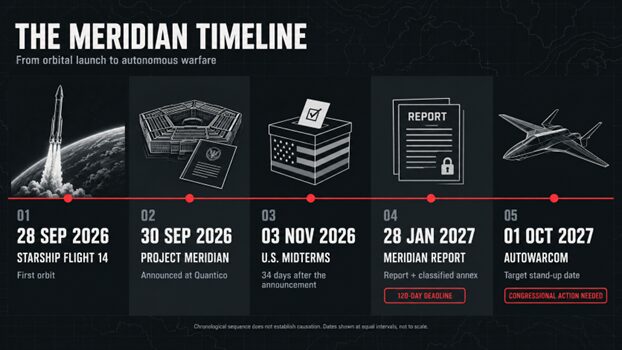
On September 30, Pete Hegseth announced Project Meridian alongside a proposed Autonomous Warfare Command and the Fortress America initiative. Meridian would examine future military capabilities, while the new command would organize the expansion of autonomous and robotic systems. Fortress America would address the resilience of bases and supply chains. These are related initiatives, not a single approved war plan.

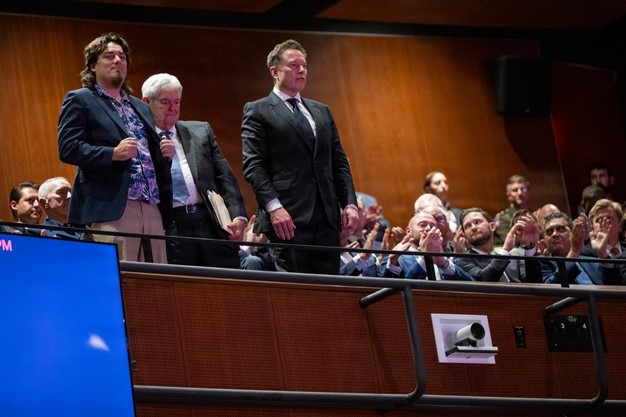
U.S. service members at the State of the Force address, Quantico, September 30, 2026

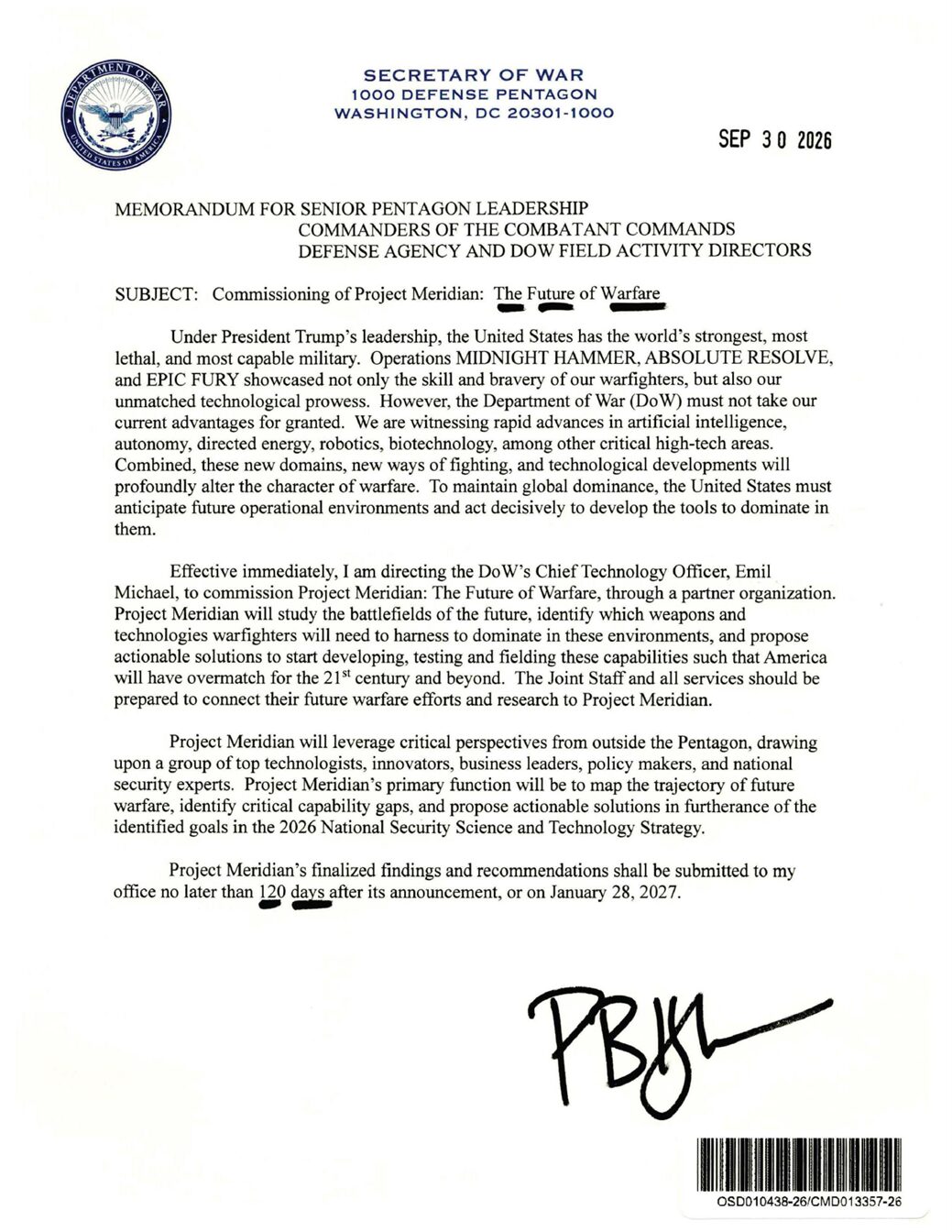
Meridian’s advisers include Elon Musk, Palmer Luckey, and Newt Gingrich, under Pentagon technology chief Emil Michael. The study has 120 days to report. Its significance is not that three men can invent the next war. It is that major technology suppliers are being invited to help define the military capabilities Washington should pursue.

The September 30 memorandum commissions a study of future warfare

The State of the Force event at Quantico, where Project Meridian was announced, September 30, 2026

Some of the supporting infrastructure already has funding. On May 26, Space Systems Command awarded SpaceX a $2.29 billion agreement for the Space Data Network Backbone. A fully operational prototype is due by the end of 2027. The intended function is to connect military sensors and weapons through a high-capacity orbital communications network.

That addresses a real military requirement. Information has limited value if it cannot reach the people or systems that need it. But a larger network does not automatically become a more dependable one. The test is whether useful connections survive disruption, and whether units can continue operating when they do not.

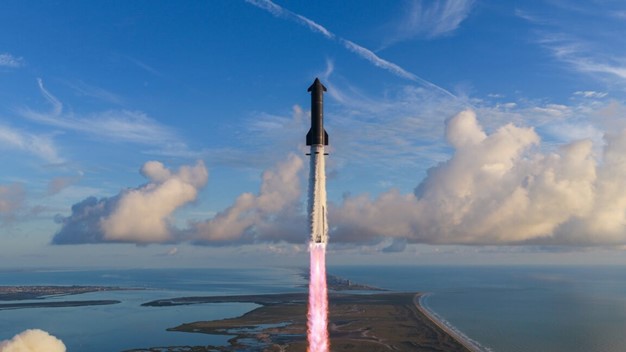
Heavy-lift rockets could support the deployment of larger satellite constellations, although these programs do not yet amount to a single publicly defined architecture. Starship Flight 14 reached orbit on September 28 and deployed 26 Starlink V3 satellites. That demonstrated payload delivery, not every capability promised for the rocket. Reaching orbit once and providing dependable, economical military infrastructure are different milestones.

Starship Flight 14 launches from Starbase, September 28, 2026, carrying 26 Starlink V3 satellites

Starship’s final descent, landing burn, and splashdown during Flight 14, September 28, 2026


Golden Dome extends the ambition to missile defense. In May, the Congressional Budget Office estimated that a notional system consistent with the administration’s stated objectives could cost about $1.2 trillion over 20 years. Crucially, this was not a price tag for the Pentagon’s approved design. The final architecture had not been publicly disclosed.

A notional national missile-defense architecture assessed by the Congressional Budget Office

Estimated costs of the Congressional Budget Office’s hypothetical system, expressed in 2026 dollars

The policy risk is not simply excessive ambition. It is defining military problems in ways that favor the products already offered by influential suppliers. That deserves scrutiny without assuming that commercial involvement makes every proposal useless. A contract is evidence of spending. It is not evidence of battlefield superiority.

Elon Musk, named a co-leader of Project Meridian

Machines Still Need Factories

The American approach emphasizes integrating ambitious systems through large institutions. The battlefield experience points toward an equally important requirement: changing ordinary systems quickly.

These approaches are not mutually exclusive. Satellites and inexpensive drones can support the same force. The tension lies in their development cycles. A major space program cannot be redesigned every few weeks. A frontline drone or its communications equipment may lose effectiveness if updates take years.

The industrial base must therefore support both continuity and rapid revision. Ukraine’s drone sector demonstrates the importance of close feedback between operators and developers, but also the vulnerability of assembly dependent on imported components. A domestically assembled aircraft is not necessarily an independently sustainable capability.

Russian developers are also discussing the problem in terms broader than individual weapons. In September, the Ushkuynik center presented a drone assembly line housed in a modified shipping container. The proposal illustrates an effort to distribute production rather than concentrate it in a single factory.

These are developer proposals, not independently demonstrated solutions at national scale. Nevertheless, they identify two important problems: distributing production and closing gaps between separate defensive systems.

A workshop, a repair team, and a reliable component supplier may therefore matter as much as another model advertised as revolutionary. Military adaptation requires people who can identify a failure, explain it to engineers, approve a modification, and return workable equipment to service.

Autonomous Warfare Command: new drones, familiar geometry. All that’s missing is the secret handshake

Autonomy does not remove these obligations. The meaningful question is which task a machine can perform reliably without continuous human input, under what conditions, and with what consequences when it fails. “Autonomous” should describe a tested function, not serve as a substitute for explaining one.

Fortress America recognizes another dependency. Hegseth’s stated aim is for military installations eventually to operate under their own power, alongside stronger protection and domestic supply chains. Yet independence from the civilian grid would not by itself eliminate the need for fuel, spare parts, communications, or skilled maintenance. Resilience must extend beyond the perimeter fence.

The same principle applies at the front. Engineering and logistics deserve attention alongside strike footage. They show how forces sustain movement and support combat units, rather than merely how they destroy a target.

From Remote Control to Robotic Forces

The next stage of warfare is unlikely to resemble an army of humanoid machines replacing soldiers. A more plausible future is a force in which people fight alongside growing numbers of specialized robots, from reconnaissance aircraft to ground vehicles carrying ammunition, evacuating casualties, and supporting assaults.

That transition is already underway. Both Russian and Ukrainian forces are using ground robots for logistics, evacuation, and other battlefield tasks. In September, Ukraine’s Defense Ministry reported that its ground systems had completed more than 25,000 supply and evacuation missions in August alone. The figure is an official claim, not an independently audited total, but it illustrates how far the ambition extends beyond occasional demonstrations.

Over the next five years, the important change may be the organization of these machines into working formations. Aerial drones could scout ahead while ground robots move supplies and support troops. Humans would still set objectives and handle situations the machines cannot reliably interpret. The advantage would come from coordinating those different roles, not simply putting more unmanned vehicles on the battlefield.

Remote control, however, is not autonomy. A vehicle that needs continuous steering from an operator remains dependent on communications and human attention. Greater autonomy could allow machines to navigate, avoid obstacles, or complete limited tasks when a connection fails. None of those functions automatically makes a robot capable of independently identifying legitimate targets or deciding when to fire.

The likely result is a race between robotic capability and countermeasures. More machines may reduce the number of soldiers exposed on supply routes, but those machines will themselves become targets. Communications, batteries, maintenance, and replacement parts will remain constraints. Robotization moves some risks away from people; it does not abolish the costs of war.

Nor will inexpensive robots make heavy weapons obsolete. Small drones, armored vehicles, artillery, and aircraft perform different jobs. The stronger force will be the one that combines them effectively and changes that combination faster than its opponent.

Meridian should be judged against this prospect, not the grandeur of its language. Can Washington build systems that cooperate, survive disruption, and remain affordable enough to replace? Can its procurement machinery adapt as quickly as the battlefield demands?

The next war will not be won by whoever unveils the most impressive robot. It may favor the side that can lose machines without losing momentum, preserve human judgment without slowing every decision, and turn battlefield lessons into production before the enemy does. The real revolution is not a machine that looks like a soldier. It is an army that learns to fight differently because machines are now part of its ranks.


MORE ON THE TOPIC:

The post The Future of War: What the Battlefield Teaches and the Pentagon Wants to Buy appeared first on South Front.

  •  

Solar’s rise: The states generating the most sunshine power

Solar power is surging across America. This infographic ranks the top U.S. states for utility-scale solar generation, based on the latest data from the U.S. Energy Information Administration. Texas leads the nation in total solar output, followed by California and Florida. See which states are driving America’s solar energy boom and how solar fits into each state’s overall electricity mix.

Join us on Telegram, Twitter, and VK.

Contact us: info@strategic-culture.su

(Click on the image to enlarge)


  •  

Coal’s contradiction: Texas generates the most, West Virginia needs it most

Which states generate the most electricity from coal? According to May 2026 EIA data, Texas leads all states with 4,536 thousand MWh of coal-fired generation, followed by West Virginia (3,611 thousand MWh) and Kentucky (3,442 thousand MWh). But while West Virginia is 87.2% dependent on coal, it occupies a modest 8.95% share in Texas’s vast energy mix.

Join us on Telegram, Twitter, and VK.

Contact us: info@strategic-culture.su

(Click on the image to enlarge)


  •  
❌