As Festas em Honra de Nossa Senhora dos Mártires, em Castro Marim, vão decorrer entre os dias 13 e 17 de agosto, com uma programação que inclui várias iniciativas religiosas e culturais, sem esquecer as tradições do território.
No primeiro dia, a 13 de agosto, a partir das 21h00, haverá missa na Igreja de Castro Marim e sai para a rua a Procissão das Velas em Honra de Nossa Senhora dos Mártires, que vai percorrer várias artérias da vila.
No dia seguinte, a 14 de agosto, a Zona Envolvente à Casa do Sal recebe a abertura da Mostra de Artesanato e um baile com Hugo Madeira e Ângelo Correia pelas 19h00, seguido de um espetáculo do grupo de dança ARUTLA pelas 21h00.
O destaque deste dia é Ana Bacalhau, vocalista dos Deolinda, que apresentará um grande espetáculo em nome próprio, celebrando a música portuguesa. A noite termina com a continuação do baile.
O dia principal destas festas assinala-se a 15 de agosto, começando pelas 09h00 com o Hastear da Bandeira Nacional no edifício dos Paços do Concelho.
À tarde, pelas 17h30, na Igreja de Nossa Senhora dos Mártires decorrerá a Recitação do Terço, seguida de uma missa solene pelas 18h30.
O ponto alto destas celebrações decorre no mesmo dia, pelas 19h30, com a Procissão em Honra de Nossa Senhora dos Mártires, um dos eventos religiosos do concelho que tem mais impacto e importância para a comunidade, que se une num momento de fé pelas ruas da vila de Castro Marim.
Já no recinto da Mostra de Artesanato, iniciam-se os concertos pelas 20h00 com André Filipe Duo, seguido de um grande espetáculo com os The Gift às 22h00 e terminando a noite com o projeto Time Travel, assinado por Possessivo e DJ Karussa, pelas 00h00.
A 16 de agosto, o palco da Mostra de Artesanato recebe a atuação da dupla Só Nós Dois, pelas 20h00, antecipando um grande concerto de um dos cantores alentejanos mais conceituados: Buba Espinho. Para terminar, segue-se uma atuação energética da DJ Joana Faria.
As Festas em Honra de Nossa Senhora dos Mártires terminam a 17 de agosto, pelas 21h30, com o habitual Concerto de Verão da Banda Musical Castromarinense, no mesmo local.
O evento é organizado pelo Município de Castro Marim, em parceria com a Junta de Freguesia e a Paróquia de São Tiago.
Dollars, and more dollars! According to exclusive information published by Politico, Ukrainian Defense Minister Mykhailo Fedorov will present an emergency aid request for $20 billion on June 18 at the next meeting of the Ukraine Defense Contact Group in the Ramstein format. The goal: to capitalize on what he considers a temporary but decisive military advantage.
A Six-to-Nine-Month Window of Opportunity
Ukraine believes that current battlefield dynamics offer a rare opportunity. Russian advances have slowed significantly this year, to the point of nearly stalling last month, largely due to Ukrainian medium- and long-range drone strikes against Russia’s logistics networks and energy infrastructure.
According to a senior Ukrainian Defense Ministry official quoted anonymously by Politico, “we have a six-to-nine-month window of opportunity on the battlefield that requires an urgent acceleration of funding.” The same official warned that Russia is “moving quickly and innovatively”; any pause would allow Moscow to adapt and regain lost ground.
“Everyone can see that Russia is burning, and we want it to burn even more. But to do that, we need funding,” said a senior anonymous Ukrainian defense official.
In short, we still need billions more dollars.
A Detailed Plan Already Under Discussion with Allies
The Ukrainian plan has already been presented during a series of bilateral meetings led by Minister Fedorov and other senior officials with representatives from Norway, Sweden, Germany, and Canada. Each ally would be asked to contribute between $2 billion and $6 billion, either through direct assistance or loans.
The funds would be allocated to the acquisition of air defense systems, drones, ammunition, electronic warfare equipment, and long-range strike capabilities. Part of the financing would also support NATO’s Prioritised Ukraine Requirements List (PURL) program, as well as direct purchases from Ukrainian defense manufacturers.
Pushing Putin to the Negotiating Table
Behind the military rationale for this request lies a political objective: forcing Vladimir Putin to come to the negotiating table.
According to another source cited by Politico, “Ukraine has a real chance to bring the dictator to negotiations,” provided Russia is not given time to recover its tactical advantage.
The potential development of Russian medium-range drones is described as a worst-case scenario. “If the enemy develops its own medium-range drones, it would be a real disaster for Ukraine,” one source noted.
Putin himself stated last week that Russian forces are advancing every day, while also acknowledging that Ukrainian strikes are causing damage.
An Effort Within a Broader NATO Framework
Ukraine’s request comes amid a broader intensification of Western support. According to four NATO diplomats also cited by Politico, Alliance members are considering a new €70 billion military assistance program, which could be announced at the NATO summit in Ankara next month.
The initiative, championed by Germany, aims to improve transparency and ensure a fairer distribution of the burden among allies.
If the additional $20 billion is secured, total assistance committed in 2026 would reach $58 billion, close to the $60 billion bilateral target set by NATO Secretary General Mark Rutte. Kyiv intends to reach that goal before the end of the summer.
Source: Politico (exclusive), June 12, 2026. Article compiled using information cross-checked with Kyiv Post, United24 Media, and US News.
Im Gegensatz zu anderen europäischen Staaten verfügt Griechenland immer noch über sehr große Reserven an Patriot-Luftabwehrraketen, die Kiew so dringend braucht, während die anderen EU-Staaten ihre Patriotraketen schon weitgehend an die Ukraine übergeben haben. Angesichts des akuten Mangels der Ukraine an Luftabwehr wächst nun der Druck aus Brüssel auf Griechenland, der Ukraine seine Raketen zu […]
Leider hatte ich aus privaten Gründen auch diese Woche nicht die Zeit, allzu viele Artikel zu schreiben. Aber trotzdem haben wir bei Tacheles mit Röper und Stein natürlich trotzdem über die aus unserer Sicht wichtigsten Themen der Woche gesprochen. Sollte YouTube die Sendung löschen, können Sie sie auch hier bei NuoViso anschauen.
Im Falle eines Krieges zwischen der NATO und Russland ist die Sicherung der Treibstoffversorgung der Truppen für beide Seiten lebenswichtig. Vor diesem Hintergrund muss man übrigens auch die (als ukrainisch bezeichneten) Angriffe der EU auf die russische Ölindustrie sehen, bei denen in der EU produzierte und von der EU bezahlte Drohnen und Raketen auf Ziele […]
Obwohl ich diese Woche aus diversen Gründen kaum zum Schreiben gekommen bin, haben wir trotzdem die Zeit gefunden, eine neue Folge von Tacheles mit Röper und Stein aufzuzeichnen. Sollte YouTube die Sendung löschen, finden Sie sie auch hier bei NuoViso.
Cover image: picture alliance / Anadolu | Rasit Aydogan
The NATO Summit in Ankara ended with a short but consequential declaration. Alongside commitments to develop a wide range of capabilities—such as drones, a warfighting cloud and AI models—the allies pledged to make them interoperable.
This is not a trivial statement. Weapons systems are becoming increasingly software-defined, and NATO standards need to keep pace. Interoperability would address a major problem of European armed forces: fragmented command-and-control systems that cannot easily share data. Yet the declaration also raises difficult questions. Interoperability requires common standards, and whoever defines these standards will control how allies operate and upgrade their militaries. Choosing the wrong architecture could replace one weakness with another.
Ukraine’s software edge
Russia’s war of aggression against Ukraine has demonstrated the importance of AI-assisted command-and-control systems. These are “systems of systems”, unified architectures that help aggregate and analyse vast amounts of battlefield data, thereby assisting in situational awareness, intelligence, mission planning and after-action review. Much commentary attributes Ukrainian battlefield progress in 2026 to certain drone models, underestimating the significance of Delta, Ukraine’s command-and-control system.
Compared to similar systems used by European armies, Delta offers significant advantages: it is the only one that provides a single digital architecture across the armed forces, integrating sensors, weapons and units regardless of the service branch or the system’s manufacturer. It can therefore rapidly coordinate different elements to achieve the desired effect on the battlefield, whether directing artillery and drone strikes, conducting air-defence operations or treating and evacuating casualties.
In contrast, EU militaries are much more fragmented. Different countries, and in many cases different service branches within the same country, operate different command-and-control systems, with limited interoperability. A French radar may be unable to exchange raw sensor data with an Israeli command-and-control system simply because they were built by different manufacturers and use different proprietary software.
NATO’s Link 16, a secure battlefield data-sharing standard, exchanges only relatively limited information, such as friendly positions or aggregated target tracks—meaning sensor observations that have already been processed into identified targets, such as aircraft or vehicles. Exchanging raw data would have overwhelmed the computing power available in the 1990s, when Link 16 was developed. Therefore, each system, whether a Patriot battery or a frigate, must first convert radar echoes (“plots”) into confirmed targets (“tracks”) before it can share them through that network. However, sharing only processed tracks comes at the cost of discarding potentially valuable data. Echoes that cannot be confidently identified are discarded as clutter, even though combining them with data from other sensors could reveal targets that an individual system cannot detect on its own.
Modern command-and-control systems overcome this limitation. Platforms like Delta can digest huge quantities of raw data, from drone footage to radar returns and electronic intelligence intercepts. Powerful data centres then aggregate these disparate inputs to extract patterns that individual systems and their operators could never detect alone. The result is a level of intelligence and situational awareness that in the past required a wide range of high-end surveillance equipment, such as satellite constellations and fleets of expensive intelligence aircraft or ships. Smaller militaries like Ukraine’s can now achieve results once reserved for great powers.
European governments have taken notice of the trend. As NATO seeks to shift a larger share of its military burden from the US onto European members, the challenge for Europe is to achieve self-sufficiency quickly. Recreating America’s globally oriented force structures would be very expensive and probably unnecessary. The Ukrainian model of dense networks of cheap sensors linked by sophisticated software is certainly more attractive.
Without integrated digital architecture and interoperability, a pan-European combat cloud and AI-assisted command-and-control system cannot work
However, to truly emulate Ukraine, Europeans need to do more than simply buying drones. They will need to dismantle the institutional barriers that separate different countries, service branches and defence-industrial ecosystems. Without integrated digital architecture and interoperability, a pan-European combat cloud and AI-assisted command-and-control system cannot work.
One code, one gatekeeper
The commitments made in Ankara reflect this ambition. The difficult question is what comes next. Which standards will underpin interoperability? Who will provide and maintain the software? What will be the terms and conditions of its use, adaptation and application? Washington naturally favours adopting American standards and software across the alliance. Yet other allies fear that dependence on US software will have commercial and operational costs, as well as limit their sovereignty.
Take for example the Government Reference Architecture (GRA), the new USsoftware for operating and integrating drones. On paper, GRA is a hardware-agnostic, open-source software that allows different drones from different manufacturers to operate across a common foundation. It also allows operators to integrate new algorithms and software onto existing drones, enhancing their service life and making it easier to integrate new weapons and sensors, or to re-programme the drone for new tasks and missions.
But what does “open source” really mean in a military environment? In practice, the US Air Force is still the custodian of the software, managing integration, updates and distribution. European manufacturers involved in these discussions say the source code of substantial parts of GRA is not disclosed to them.[1] If European governments and armed forces were to adopt it straight from the box, they would not be able to verify exactly what the programme enables on their platforms—nor would they be able to freely adapt it to their specific operational and tactical needs.
Furthermore, elements of the architecture fall under America’s International Traffic in Arms Regulations (ITAR), which could constrain exports of European systems built around GRA, as well as complicate cooperation with non-NATO partners. And what happens if Europeans want to use it in operations which the US does not approve? Ukraine has already experienced how American restrictions on deep-strike systems affected deliveries of European weapons using US software and data: when Britain and France supplied Storm Shadow/SCALP cruise missiles, Kyiv was initially barred from using them against targets inside internationally recognised Russian territory because the mission-planning software and the data were subject to ITAR, requiring Washington’s approval.
America’s technological lead is undeniable. Outside Ukraine, no other ally has developed digital military integration on the same scale. But AI-powered command-and-control systems will be the backbone of modern warfare, the defining factor in a military’s ability to fight effectively. If Europeans—and Canadians—sign up to the American standards, can they be certain that Washington will not abuse this power? The fact that the Trump administration has slapped tariffs on Europe despite existing commitments, threatened to invade and annex Greenland, and temporarily suspended intelligence and military assistance to Ukraine in March 2025 should give them pause.
A truly open cloud
There is no doubt that NATO needs integrated and AI-supported command-and-control systems, a common combat cloud, and a standardised architecture to integrate crewed and uncrewed platforms. But they need to be truly open. That means that their source code needs to be transparent to all participating governments, while certification, management and distribution should be entrusted to an independent multinational authority rather than a single state. The Linux ecosystem offers one possible model. Many companies use and adapt the same underlying open-source software, yet no single firm controls it. Even so, a central authority is needed to maintain and certify the software’s core—in this case, that role is played by the Linux Foundation.
If America resists such a solution, the EU and its closest allies (Canada, Norway, the UK and Ukraine) will need to build their own architecture. The cost of building a parallel architecture would be high, but the cost of surrendering control over the software that underpins military power could be higher still.
[1] Interviews with system developers at two European drone manufacturers in May and July 2026.
This week, Mark Leonard welcomes Camille Grand, secretary general of ASD Europe and special adviser to ECFR’s European Security programme, and Marta Prochwicz Jazowska, deputy head of ECFR’s Warsaw office and policy fellow, to discuss what the outcome of the NATO summit in Ankara means for Europe’s security. They draw on ECFR’s recent policy brief “Making defence European again” to assess whether the alliance has emerged stronger—or simply avoided a crisis.
European leaders left Ankara relieved that US president Donald Trump has reaffirmed US support for NATO and avoided announcing major troop withdrawals, but fundamental questions about Washington’s long-term commitment remain unresolved. Mark, Camille and Marta explore how Europe can strengthen its own defence capabilities while maintaining NATO as the cornerstone of collective security.
Can Europe build the military capabilities it still lacks? How should responsibilities be divided between NATO, the EU and smaller coalitions of willing states? What would a more credible European nuclear deterrent look like? And can Europe strengthen its own defence without weakening the transatlantic alliance?
This podcast episode was recorded on July 9th 2026.
Cover image: picture alliance/dpa | Michael Kappeler
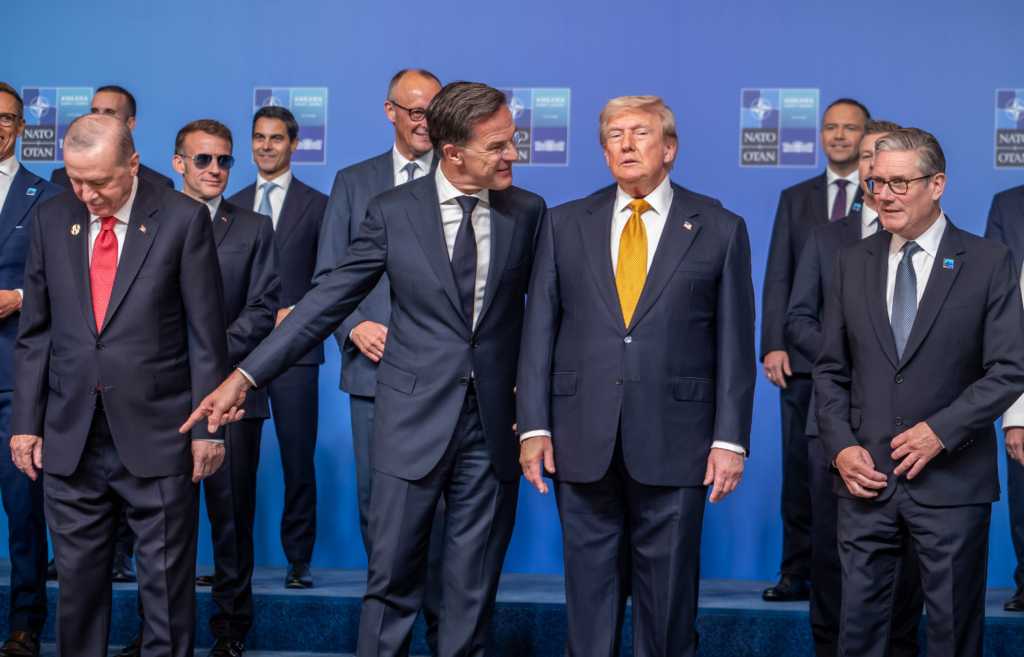
European leaders breathed a sigh of relief as US president Donald Trump departed last week’s NATO summit in Ankara, Turkey. Despite a few unseemly moments in which Trump reiterated his desire to seize Greenland and nonsensically ordered a halt to all trade with Spain, the meeting went off without any major catastrophes.
Most importantly, Trump did not announce any major troop withdrawals from Europe or any moves to leave the alliance. He even had warm words for Ukrainian president Volodymyr Zelensky, and pledged to grant Ukraine a license to manufacture Patriot air-defence missiles domestically. By the end, even Trump proclaimed that there was “love” in the air.
But optics aside, the summit was an absurd exercise. NATO leaders revelled in their pledges to increase defence-related spending to 5%, even though everyone knows that this arbitrary number means nothing in the absence of deeper discussions about capabilities. The figure was pulled out of thin air last year to appease Trump. In the months leading up to the summit, the same leaders had worried that Trump would withdraw the US from the alliance or dramatically reduce its presence in Europe, which would then find itself at the mercy of Vladimir Putin’s Russia.
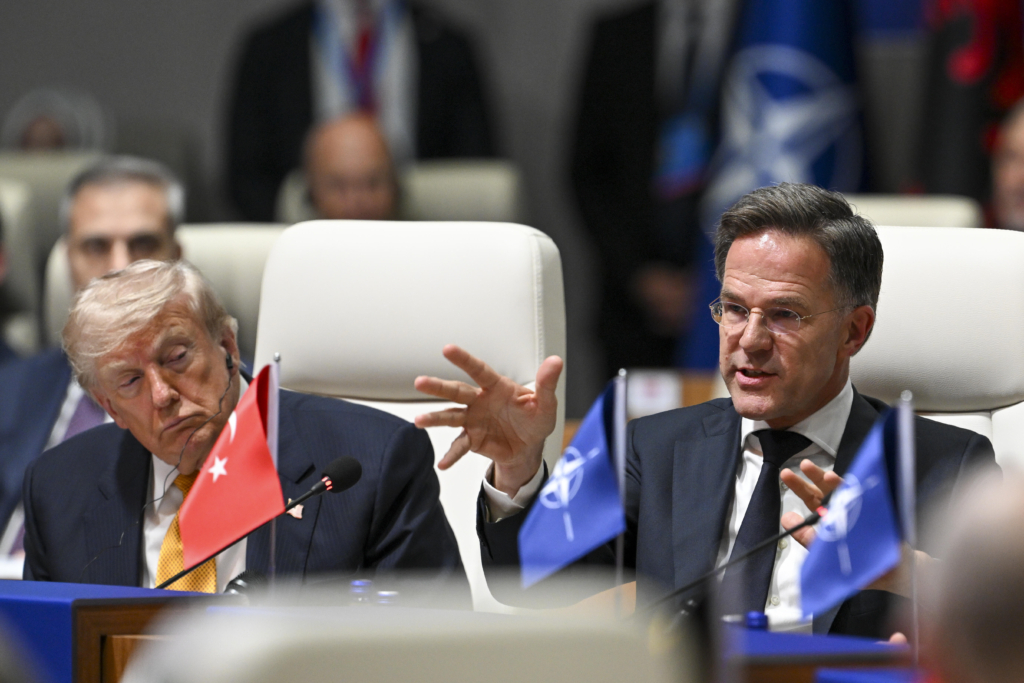
That is why NATO leaders expended so much energy preparing a summit that would not allow for any unscripted moments. Fears that the mercurial US president would use the occasion to undermine the alliance were palpable. When the moment came, European leaders reportedly fell over themselves to praise Trump, with NATO’s secretary general, Mark Rutte, leading the sycophantic charge.
Some commentators believe that saving NATO and keeping the Western alliance alive was worth this self-abasement. But by kowtowing to Trump and indulgently harking back to the good old days of the transatlantic relationship, Europe’s leaders are risking more than just their dignity.
Consider the period following the fall of the Berlin Wall. After the initial euphoria, many parts of the former German Democratic Republic (East Germany) were emptied out as their populations left, even as property prices were driven up by an influx of wealthier West Germans. The result was a wave of nostalgia for a lost world, expressed in films like Good Bye, Lenin!
The term coined to describe this emotion was Ostalgie (“Eastalgia”), and it has shaped German politics and culture for almost 40 years now. Although many East German writers have criticised such sentimentality for trivialising East Germany’s decades-long repression, some see it as the key to understanding what ails Germany’s eastern regions today. There one finds a widespread refusal to acknowledge that the world has changed, a habit of free riding, and a tendency—occasionally—to look ridiculous, such as when East Germans parrot Russian talking points on Ukraine.
Ironically, Europe’s problem today is not just that Ostalgie has held back eastern Germany; it is that a new malady, Westalgia, has taken hold. It was on full display in Ankara.
Westalgia has several key features. The first is a refusal to acknowledge that the world has moved on. By acting as if US security guarantees are still as ironclad as they were under the Ronald Reagan and George H.W. Bush administrations, and by continuing to purchase US weapons, they hope to turn back the clock. But a better strategy would recognise that America has changed in fundamental ways. Even if a Democrat moves into the White House in January 2029, US retrenchment will continue.
Europe’s hyper-reliance on American power clearly had an infantilising effect
Those who want to turn back the clock naturally see the past through rose-tinted glasses, even though elements of the post-cold war settlement were not to Europe’s advantage. Specifically, Europe’s hyper-reliance on American power clearly had an infantilising effect. Even when caught between a predatory Russia, a fickle US and a coercive China, Europeans are still wont to downplay and underestimate their own power and influence.
The second feature of Westalgia is a tendency to free ride. Just as eastern Germans grew accustomed to the transfer payments and subsidies (the infamous Solidaritätszuschlag, or “solidarity tax”) that flowed eastward after unification, so have Europeans become accustomed to America bankrolling their security. As a result, Europeans have under-invested, not just in defence but also in their industrial base, technological sovereignty and energy independence.
Instead of complaining that US citizens no longer want to be responsible for defending Europe, and instead of spending billions of dollars to satisfy Trump’s vanity, Europeans would be better off having a serious conversation about how they could fight a high-intensity conflict on their own, if necessary. Instead of spending an arbitrary share of their GDP on defence, they should critically evaluate their capability gaps and adjust their spending to match their needs. Coffers are tight everywhere, but it will be easier to justify expenditures on weapons if they appear less geared toward flattering Trump.
Third, in their subservience to the US president, Europeans often do not hide it well, which prevents them from being taken seriously—be it by Trump, Putin, or Chinese leader Xi Jinping. If there is one man who presumably respects Rutte less than Rutte himself, it is Trump. Europe will garner the world’s respect only when it stands up for itself.
Whereas Ostalgie was a bottom-up phenomenon, Westalgia is being driven by elites. Of course, European politicians need to allay their skittish electorates’ fears. But if they want to succeed in the 21st century, they must stop selling nostalgia and start looking to the future.
This article was first published by Project Syndicate on July 15th 2026

 Login