❌

Reading view

Richard Wolff: Why Europe’s Leaders Are Provoking War with Russia

This image symbolizes the fractured relationship between the European Union and Russia in the wake of the ongoing conflict in Ukraine. Photo via Getty Images

This story originally appeared in Professor Richard Wolff’s Substack on July 21, 2026. It is shared here with permission.

Deeply divided by nationalism and deprived of its vast colonies by the last century’s catastrophic two world wars, Western Europe has been in decline ever since. Recently, that decline has become drastic and desperate as Western Europe falls ever further behind — economically, militarily, and politically — today’s two superpowers: the US and China. Mediocre and unpopular leaders reflect Western European decline. They bet and built their careers on accepting junior partner positions vis-à-vis the United States. But Europe’s decline now threatens to split Europe apart. Inside each nation, rich and powerful minorities use their social positions to sustain their wealth and power while the masses bear most of the burdens of decline offloaded onto them by the rich and powerful. The problems flowing from these cumulative developments are approaching points of social explosion. Despite the lessons taught by the two world wars, many Western European leaders once again provoke and prepare for a war, this time against Russia, notwithstanding the awful risks of nuclear weapons. One key question to ask: why is this happening?

From 1945 to 1990, Cold War set Western European nations against the USSR and its Eastern European allies in many ways and on many levels. Yet that war remained cold. In 2026, after more than three decades of post-Cold War peace, a military war between a largely unified Europe (East and West) and post-Soviet Russia seems imminent. Such a war has been prepared by NATO’s growth, its moving eastward toward Russian borders since 1990; by Russia’s 2022 invasion of Ukraine; and by the escalations of their hostilities by both Russia and Ukraine since that invasion. War between much of Europe and Russia now looms.

US President Donald Trump used both his presidential terms to distance the United States from its European allies in NATO. Among his provocative, unilateral statements and actions were heavy tariffs on imports from European countries. In exchange for some reduction of those tariffs, Trump demanded and obtained tribute from European Commission President Ursula von der Leyen (over $1 trillion in committed purchases of liquified natural gas plus investments by Europe in the United States). He also reduced US support for the war against Russia in Ukraine. That war thus became a mostly European project.

As the US withdrew from its former close alliances with Europe, the latter’s leaders developed an increasing hostility toward Russia. They demonized the Russian leader, Vladimir Putin. Where Trump notably lessened hostility to Russia, his European counterparts intensified theirs. After Russia invaded Ukraine in 2022, Europe and the US rushed to bolster Ukraine’s defense beyond the huge assistance they had already provided to Ukraine since at least 2014. After February 2022, Europeans provided Ukraine with still more support in finance and weapons. By 2026, many observers in Europe and Russia and beyond predicted a Russo-European war as imminent. Our goal here is to explain why this dangerous situation arose.

World Wars I and II fatally weakened capitalist colonialism. The British, French, German, Dutch, Belgian, Russian and Japanese colonialisms had especially escalated competitive clashes into two catastrophically self-destructive wars. This allowed movements of the colonized people finally to defeat the weakened colonizers and win political independence. The different anticapitalist movements that had blossomed earlier in 19th century Europe allied themselves with anticolonialism especially in the Soviet revolution of 1917 and the Chinese revolution of 1949. A complex, shifting relationship between anticolonialism and anticapitalism continues to evolve in both the Global South and the former colonial powers.

As the sole heir of all other capitalist colonialisms, the US led and organized capitalism’s counteroffensive against the USSR, socialisms and communisms generally, and their alliances with anti-imperialism in particular. It did so by mobilizing Western Europe, Canada, and Japan as major subordinates in a globally hegemonic bloc.

The private capitalist classes atop each colonialist nation had understood the colonies’ importance for their profits and thus for their imperial economies. They went to war in large part to retain their colonies. After the two world wars, they faced, separately and together, momentous challenges to their existence. As their empires dissolved in wars of independence, capitalists’ profits and their national economies were threatened. Worse still was a potential alliance linking ex-colonies, the Comintern nations, and those capitalists’ own domestic socialist and communist parties and unions. Fearing such developments, nothing less than the survival of 20th century European capitalism seemed at stake for European capitalists and their supporters.

To undo this threat, Western Europe appealed to the post-World War II global hegemon: the United States. Within a few years of 1945, the US had scooped up much of what European and Japanese colonialisms had lost. US capitalists moved into newly independent ex-colonies to widen and deepen their economic dependence via the dollar as world currency, through both US trade and investment. European capitalists had to settle for positions as junior partners of their US counterparts, or else lost everything. Europe as a whole followed suit and became the junior partner of the US in most other dimensions (NATO, geopolitics, financial and cultural institutions, etc.).

Keynesian economics added a scientistic rationale — using monetary and fiscal policies to moderate business cycles — to the political necessity of welfare state expenditures.

As the sole heir of all other capitalist colonialisms, the US led and organized capitalism’s counteroffensive against the USSR, socialisms and communisms generally, and their alliances with anti-imperialism in particular. It did so by mobilizing Western Europe, Canada, and Japan as major subordinates in a globally hegemonic bloc. The US could do this because it had suffered far less than any of the other capitalist colonial nations from the two world wars. Indeed, World War II had extracted the US from capitalism’s worst ever crash. Its economy was stronger in 1945 than it had been for many years, whereas in all the former colonizing nations the reverse was the case. That economic strength contributed to its dominant military power.

US hegemony defined itself as a moral crusade against a great evil, the USSR (equated with communism). The US was “the leader of the free world” pitted against an unfree world — the USSR, Eastern Europe, and, after 1949, China. The latter were all demonized as anticapitalist dictatorships, which made them enemies of “democracy” as championed in and by the free world. On that basis, US hegemony followed as the necessary condition to “contain” the unfree world, to prevent its spread. The US-led “free world” could and would guarantee containment by means of global military bases, the world’s greatest military arsenal, ideological campaigns, political isolation, and economic discriminations. The world thus entered into a Cold War between 1945-1990 punctuated by military — hot — wars when the US deemed them necessary (for example, in Korea and Vietnam).

US hegemony also included domestic campaigns inside both Europe and the US aimed at containment. Those campaigns all featured two parts. One was a set of “welfare state” or social democratic benefits for working classes. Leading politicians in North America, Western Europe, and Japan installed those benefits. Many feared that not doing so would influence working classes toward socialism and communism. In the US, this meant perpetuating the 1930s New Deal into the 1970s. Successive leaders, Republican as well as Democratic, added Medicare to Social Security, regularly raised minimum wages, gave special attention to the non-white and non-male victims of systemic discrimination, subsidized higher education via massive public institutions, and subsidized home ownership loans. Such state interventions delivered a much less harsh life for working classes than any prior private capitalism had ever done. Keynesian economics added a scientistic rationale — using monetary and fiscal policies to moderate business cycles — to the political necessity of welfare state expenditures.

capitalists supported government social welfare spending because it came not from more taxes on them, but rather from national budgets’ defense savings. The latter were benefits from European subordination to NATO and its US leadership. That subordination included mostly endorsing US hostility toward the USSR, China and all things “communistic.”

The other part of these containment campaigns involved widespread purges of Communists, socialists, and their “fellow travelers.” In the US, a ferocious “anti-communism” project “cleansed” labor unions, schools, mass media, and government of leftist employees. Capitalist employers’ organizations and many individual capitalists collaborated with the state’s repressive campaigns. They mobilized behind Sen. Joseph McCarthy for a few years. His was a particularly extreme version of the old American political style of demonizing political opponents, foreign and domestic, as “of the devil.” The US House of Representatives established an “Un-American Activities Committee.” Such campaigns’ ostensible objective was to destroy the Communist Party. Mass media circuses, newspaper headlines, arrests, prison sentences, deportations, and getting witnesses to betray others — resulting in losing their jobs — were their means. Guilt by association targeted both socialists and independent left-leaning citizens. Purges identified many victims by citing their activities before 1945. It made little difference that at the time those activities (in unions, political parties, schools, churches, and civic associations) were both legal and often patriotically anti-fascist. The systematic repression of the US left after 1945 left deep political scars.

Western Europe dutifully undertook a similarly two-sided project. However, social conditions there imposed different qualities on it anti-Soviet and domestic anti-left campaigns. Europe’s pre-1945 history gave communist and socialist parties and their millions of members much greater social approval than existed in the US. Leftists’ roles in resisting fascism before and during World War II — often heroic — gave them genuine, widespread popularity. They could defend their political views, and themselves, in ways their US counterparts could not. European welfare states were more generous and lasted longer than their US counterparts.

While nothing quite like McCarthyism swept Europe, most Western European nations joined NATO and aligned their foreign policies to the US-led containment agenda. Their defense budgets and capabilities declined, and they relied instead on US military protection. What each European state saved by means of small defense budgets it could then use to provide public services for their working classes. The latter might otherwise have required higher taxes on corporations and the rich (and not only or chiefly on working people). European capitalists supported their welfare states partly because they endorsed containment. Equally important, capitalists supported government social welfare spending because it came not from more taxes on them, but rather from national budgets’ defense savings. The latter were benefits from European subordination to NATO and its US leadership. That subordination included mostly endorsing US hostility toward the USSR, China and all things “communistic.”

For the last 75 years, European politicians who hesitated to embrace the positions and tones consistent with the US-European “consensus” on foreign and domestic policies saw their career opportunities threatened or destroyed. The British sought and found a special role as the closest friend and imitator of the US in this consensus. The rest of Western Europe sometimes mocked Britain’s fawning subordination, but many jealously and secretly approximated it. European capitalists looked longingly at the US’s steadily shrinking welfare state programs that facilitated tax cuts on corporations and the rich. However, those non-Anglo Europeans accepted the political limits that rendered matching the US and UK impossible. They could only hold back the domestic power of their working classes by providing generous social welfare policies. The same was required to make Western Europe a consumerist bulwark against Russia, thereby to contain it and its Eastern European allies.

Breaking from those limits only became thinkable when it was made necessary. This happened when Trump ended the post-1945 US-Europe deal. His “friendliness” with Russia underscored his evident contempt for Western Europe as a junior partner/dependent that was too costly to carry anymore. His trade and tariff wars, pointedly, did not exempt Europe. The tariffs particularly shocked Western European capitalists who had concentrated during reconstruction (1945-1975) on producing goods and services that could compete in the rich US market. The tariffs also occurred just when Trump reduced support for Ukraine in its war with Russia and sharply criticized NATO. For shocked Western European leaders, Trump broke the US-European deals of the post-1945 world.

Chinese competition added strains to the European and US economies, which were already struggling to cope with the declines of their empires.

Ever since 1945, Western European capitalists had set themselves to rebuild their economies by producing goods and services of better quality and/or cheaper than the US output that dominated both the US and other markets. This included some investments in their former colonies, rendering them economically dependent notwithstanding their political independence. The latter became more performative than substantive. It remains that way in many areas. The crucially important exception was the spectacular economic growth of the People’s Republic of China. China’s growth changed everything, and continues to do so. It is transforming the world economy as it takes an ever more powerful place therein.

China’s still-export-driven manufacturing economy competes globally and ever more successfully with what remains of manufacturing in the US and in Europe. China competes, as well as an importer of energy and other inputs. Chinese competition added strains to the European and US economies, which were already struggling to cope with the declines of their empires. Europe already had had a century of decline, whereas the US was new to decline, with many of its citizens steadfastly committed to denial as their coping mechanism of choice.

Western European capitalism had partly offset its decline first by post-war reconstruction, then by explosions of consumer credit. Then, and especially after 1989, Europe welcomed waves of cheap immigrant labor while expanding eastward to re-absorb Eastern Europe into its economic operations, much as it was doing with its former colonies. Pushing NATO eastward and expanding EU membership were the chief mechanisms to accomplish Western Europe’s capitalist neocolonialism. Fantasies swirled about extending those mechanisms eastward to include Russia, perhaps dividing it up into smaller states as manageable as the Eastern European states were. If somehow achieved, that could give Western Europe an immense new geographic expanse to economically colonize. Trump, too, engaged parallel fantasies in his neocolonial gestures toward Panama, Canada, Greenland, Venezuela, Cuba, and Mexico.

Pushing NATO eastward and expanding EU membership were the chief mechanisms to accomplish Western Europe’s capitalist neocolonialism.

The great break in post-World War II US-European relations came with Trump’s combination trade and tariff war designed to “make the US economy great again.” Trump had effectively dedicated his second presidential term, begun in January 2025, to waging this economic war. Another part of that war was a broad turn away from neoliberal globalization and toward a systematic economic nationalism (“America first”). Trump’s blunt message was disengagement. Europe could no longer count on the US to provide it with military protection. Trump depicted Europe as an ally who had betrayed and cheated the US economically. He demanded payments as compensation. Those took the form of buying US liquified natural gas (LNG) for its energy needs plus committing to invest $700 billion or more in the US over a few coming years. Von der Leyen formally acceded to Trump’s demands. Such payments amounted to either tribute or reparations, depending on one’s viewpoint.

Europe’s required purchase of US LNG emerged from the Russia-Ukraine war. The economic sanctions of that war (since February 2022) plus the destruction of the Nord Stream pipelines (in September 2022) sharply reduced and then ended the flow of cheap energy from Russia into Germany and other parts of Western Europe. Desperate for access to energy, Europe turned increasingly to imports from elsewhere — and especially from the US — at a much higher cost. Meanwhile, steadily growing trade competition from China and more rapid technical innovations achieved in China and the US further squeezed the European economy.

The shock of Trump’s abandonment of Europe as the US economy’s junior partner accelerated Europe’s decline. Once it had been the dominating center of a planet it had colonized. Now it had fallen to a poor third place in a world economy increasingly dominated by what had once been the poor corners of that planet. On one side stood the declining but still strong US; on the other the rising People’s Republic of China. No wonder the Ukraine war drove Russia to declare its identity shifting from European to Asian.

Europe’s political leaders reflected and exemplified its decline. Burnham, Macron, Merz and Meloni especially — like most of their predecessors after 1945 — had built political lives around loyalty and subservience to the post-World War II deal with the US. They relied on the military, financial, and ideological support from the US, on NATO, on the IMF, the World Bank, and myriad NGO missionaries for US “democracy.” They championed their “close alliance” with the US as a key cause of Europe’s prosperity and peace after 1945. Betrayed by Trump, they were forced by Europe’s decline to pay tribute with monies therefore not available to offset that decline. Trump pointedly forced them to begin financing the huge costs of developing their own military defense (already far behind the military capabilities of the US, on one side, and the China-Russia alliance on the other).

European voters know their social democracy and their peace are fragile. Trump’s betrayal threatens both.

Given the deep personal opportunism cultivated in Western European leaders by their subordinate (to the US) situation, they grasped that Trump’s betrayal threatened their careers. Trump’s repeated insults of and disdain for Western Europe risked provoking European voters to turn against leaders seen as slavish toward Trump’s US. Those leaders’ alarm only deepened as much of the US employer class seemed quite supportive of Trump’s anti-Europeanism. Perhaps their greatest fear lay in the possible reactions of European voters once they understood that Trump’s betrayal posed serious economic dangers for them. Voters might ask where the money would come from to finance European rearmament when the US defense umbrella closed. If enhanced, would budget allocations for the military diminish outlays for mass public social services, raise their taxes, or both? Europeans began to wonder out loud whether the Ukraine-Russia war being fought to the last Ukrainian might prefigure a US war with Russia/China fought to the last European. European voters know their social democracy and their peace are fragile. Trump’s betrayal threatens both. How that plays out in European politics provides new opportunities for the left and the right and existential threats to the traditional centrist pro-US political leadership trying desperately to retain power.

Nationalist politicians on the European right see their opportunity. Office-holding conservative leaders (like Burnham, Macron, and Merz, for example) can be voted out via guilt by subordination. They perpetuated the post-World War II programs that made Europe vulnerable to its current economic decline because of their subservience to the US. Western European opportunism now incites the suspicion that maybe it bet on the wrong horse. A similar suspicion now arises in some of the Gulf States in the wake of the US-Israel war on Iran. Having “invited” US military bases to be constructed on their land for security, they now see that those bases actually achieved the opposite. The bases and their host nations have become endangered targets vulnerable to Iranian drones and missiles.

Anticapitalist politicians on the left also see an opportunity. The US was a partner who mostly pushed Europe to the right. The US undid its New Deal sooner and took that undoing further than the Europeans dared to even try to do to their welfare state. 

Among the results of Europe’s left: it abolished the death penalty when the US pointedly did not. Military adventures, including Vietnam, Afghanistan, Iraq, and now Ukraine and Iran, were always started, led, and driven by the US with the Europeans marginally along as “coalitions of the [barely] willing.” Left politicians in Western Europe kept seeking to secure, if not advance, social democratic goals and policies. One way to do that was to limit the US connection as a context for more socialistic development in Europe. The European left positions itself as the way for the mass beneficiaries of the social democratic state to protect it from a US-connected old leadership that always seems to threaten social democracy. Europe’s left likewise rejects the nationalist right politicians because of their pro-capitalist, anti-worker and anti-immigrant tendencies.

Europe’s old US-linked political leaders have now found a way to arrest, or maybe even reverse, Europe’s frightening decline. It is the only way to do that they can see or imagine. That way can, they believe, both keep them in power in the short run and give them a new economic growth opportunity in the longer term. That way provides a convenient public justification for shifting state budget expenditures from public social services to big-business defense firms, from social democracy to pro-employer (pro-capitalist) austerity. By minimizing any extra taxes upon their employer classes, Western European leaders serve them very well. They will cover the costs of rearmament and tribute obligated to the US by diverting funds from the welfare state plus state-guaranteed borrowing plus heightened mass-based taxes, if needed, on working classes. Domestic austerity will be intensified across Western Europe while wages are brought downward toward southern and eastern European levels.

The same Western European leaders who criticize Trump lusting after Denmark’s Greenland indulge parallel lusts after Russia’s geographic expanse.

Europe’s leaders believe they can accomplish this by pumping up mass anxiety and fear around urgent preparations for a war against Russia. To that end, they demonize Russia beyond even the levels achieved against Stalin and Stalinism during the Cold War. Those leaders hope that an adequately terrified Europe will keep voting for them for a while. Longer-run hopes entail imagining Russia’s military defeat and consequent de jure or de facto dismemberment. The resulting subunits of old Russia would then offer Western Europe a new colonial opportunity, a vast expanse for profitable investment to obtain food, raw materials, and possibly workers to rejuvenate Western European capitalism. The same Western European leaders who criticize Trump lusting after Denmark’s Greenland indulge parallel lusts after Russia’s geographic expanse.

All wars are overdetermined by both domestic and international causes intertwined. Europe’s current drone and missile warfare against Russia escalated from the Russia’s “special military operation” against Ukraine that began in 2022. Its local overdeterminants began earlier. Local concerns woven into global shifts — NATO toward the east and China toward the west — shaped Russia’s changing international position, concerns, and “red lines.” The whole world watches as China, Russia, and their allies square off against the US and whatever allies it retains. The world sees the wars in Ukraine and Iran today as conflicts among proxies of the two great powers of our time.

The danger inherent in both wars is that Europe or the US or Russia or Israel might resort to nuclear weapons if “existentially” threatened. The question is whether global masses and leaders can recognize the danger. This essay is one effort toward that recognition. The solution is a serious commitment to international collaboration. What began as the League of Nations and was rebuilt as the United Nations needs still another incarnation with real powers and real global respect. Otherwise we risk World War III and its mad, mutual assured destruction.

  •  

McAllister urges Ukraine to back German proposal for EU associate membership

Brussels (enr) – European Parliament Foreign Affairs Committee Chairman David McAllister has urged Ukrainian President Volodymyr Zelenskyy to support German Chancellor Friedrich Merz’s proposal for an associate membership for Ukraine as it moves towards joining the European Union.

The proposal is an opportunity that Ukraine should seize, the German centre-right lawmaker told members of the European Newsroom (enr) network in early June. Claims that it would amount to “membership light” or second-class membership were incorrect, he said.

Instead, it would allow Ukraine to become more closely integrated into the EU step by step before full membership, making the benefits of the bloc more visible to its people. One possibility would be for Ukraine to participate in the European Parliament as an observer, McAllister said.

Zelenskyy has expressed opposition to the idea, arguing that it would be unfair for Ukraine to be present in the EU but have no say in its decisions. In a letter to EU leaders, he called for the bloc to move faster and not keep Ukraine in a waiting room until full membership.

Merz said earlier that rapid full EU accession for Ukraine, which is fighting Russia’s invasion, is not realistic. For the interim period, he has proposed allowing Ukraine to attend EU summits and ministerial meetings without voting rights.

His ideas also include an associate member of the European Commission without a portfolio or voting rights, associate members of the European Parliament and an associate judge at the European Court of Justice.

Enlargement Agenda

McAllister said EU enlargement was high on the bloc’s agenda and that the Western Balkans were at the heart of Europe. A stable region was an investment in peace and security, he said.

The CDU politician called for each candidate country to be assessed individually and on its merits rather than treating the Western Balkans as a single group. Montenegro was a clear frontrunner, he said, while North Macedonia’s accession path remained blocked by a political dispute with Bulgaria.

Eight other European countries are officially recognised as EU candidate countries alongside Ukraine: Albania, Bosnia and Herzegovina, Georgia, Moldova, Montenegro, North Macedonia, Serbia and Türkiye.

  •  

6 de agosto, morre Jorge Amado, nasce Alexander Fleming

Hoje é dia de recordar o eterno Jorge Amado, escritor brasileiro e um dos maiores autores da Língua Portuguesa. Amado morreu a 6 de agosto, o exato mesmo dia do calendário em que o mundo assinala o nascimento de Alexander Fleming, o brilhante cientista britânico que revolucionou a medicina com a descoberta da penicilina. Jorge […]
  •  

🔴DRONI SI SCORTE NO | TG 05.08.26

– Kiev sotto le bombe, Europa senza scorte di Jeff Hoffman
– Gas, Ue vieta Belgio compra di Margherita Furlan
– Hormuz chiuso salvadanaio aperto di Jeff Hoffman
– Karbala prega New York tiene la cassa di Margherita Furlan
– Israele compra il racconto, Parscale lo scrive di Jeff Hoffman
– Board of Peace: la resa a Netanyahu di Jeff Hoffman
– Ceuta: scontro Madrid Roma di Jeff Hoffman
– Interfacce neurali, Pechino sorpassa Musk di Margherita Furlan
– Buon giro intorno al Sole

A cura di Margherita Furlan
Con la collaborazione di Jeff Hoffman
Editing di Davide Marletta e di Simone Orletti

🎯 SOSTIENI CASA DEL SOLE TV
Casa del Sole TV è un progetto di giornalismo indipendente autofinanziato, senza editori, senza partiti, senza padrini politici.
Per donazioni:
IBAN: IT63P0326822300052392596590
Intestato a: La Casa del Sole Edizioni
Causale: Donazione Casa del Sole TV
Membership YouTube:
👉 https://www.youtube.com/@CasadelSoleTVChannel
— Analista Multipolare €5/mese
— Inviato della Verità €15/mese
— Architetto del Futuro €25/mese
📖 I LIBRI DI MARGHERITA FURLAN
BRICS Scacco Matto (disponibile in italiano, inglese, russo), La Casa del Sole Edizioni
🌐 SEGUI CASA DEL SOLE TV
YouTube: @CasadelSoleTVChannel

TAG:
CasaDelSoleTV, CasaDelSoleTG, MargheritaFurlan, GiuliettoChiesa, censura, russofobia, Trump, NATO, Crisi, Transizione, Ucraina, Kiev, EuroMaidan, Crimea, Donbass, Donetsk, Syria, Iran, PardonSnowden, Nuova Via Della Seta, Pechino, Putin, Libano, guerra, mondomultipolare, multipolarismo, Mosca, XiJinping, Levante, Medio Oriente, Palestina, Gaza, MiddleEast, BRICS, Hormuz

L'articolo 🔴DRONI SI SCORTE NO | TG 05.08.26 proviene da Casa del Sole TV.

  •  

5 de agosto, morre Marilyn Monroe, nasce Neil Armstrong

Nasceu Norma Jean Mortenson, mas foi batizada nas artes como Marilyn Monroe, uma das mais famosas estrelas de cinema de sempre e um ícone absoluto de sensualidade. Marilyn morreu a 5 de agosto de 1962, permanecendo imune ao esquecimento mais de seis décadas após a sua trágica partida. Curiosamente, partilha o protagonismo da data com […]
  •  

Biggest Weakness Emerges in India’s Military Setup: Rank, Power & Toxic Rift Between “Babus” & Soldiers

If anything, Indian Defense Minister Rajnath Singh’s call on August 3 for greater “military-civil integration” to create “a robust defense ecosystem to tackle emerging challenges” implies that there is still a structural mismatch between generalist bureaucrats (critically called Babus) and uniformed personnel within the Ministry of Defense (MoD). 

In other words, in India’s higher defense reforms, integration between the military and civil components of the Ministry of Defense (MoD) is being seen as important as greater jointness among the three armed services (army, air force, and navy).

For decades, the relationship between civilian staff and military personnel within the MoD has been described by experts as both a strength and a fault line, particularly at the level of defense management.

Therefore, as India moves toward theatre commands, self-reliance under the “Atmanirbhar Bharat” (Self-reliant India) scheme, and faster procurement of defense components, the question is: how has this synergy worked in retrospect, and what should it look like in the future?

Addressing the 85th Armed Forces Headquarters (AFHQ) Civilian Services Day celebrations in New Delhi on Monday,  Singh emphasised that both the uniformed and civil services cannot proceed along separate paths, adding that, as joint and integrated structures develop, there will be a need for continuity and expertise across all areas – policy, administration, human resource management, financial processes, logistics, and institutional knowledge.

He highlighted the importance of further enhancing structured cross-exposure between civilian and military officers, suggesting joint training programs and developmental assignments for both sides to learn from each other’s experiences.

“Military officers bring operational experience, a command perspective, and an understanding of warfare, while civilian officers contribute through administrative continuity, policy experience, an understanding of government processes, and institutional memory. When these strengths combine, decision-making becomes more informed, balanced, and effective,” stated the Defense Minister.

As things stand today, there are nine major participating groups dealing with India’s defence – three military services, and the non-military six – Department of Defence(DoD), the Department of Military Affairs(DMA), the Department of Defence Production ( DDP), the Department of Defence Research and Development (DDR&D), the Department of Ex-Servicemen Welfare (DESW), and Defence Finance.

While these nine groups are — three military services, and the non-military six – inside the MoD, there are three others outside the domain having considerable influence on defense matters – the Ministry of Finance (controlling the defense spending), the Cabinet Secretariat (policy matters that have implications for other ministries) and the Prime Minister’s Office (which can always intervene or arbitrate selectively).

However, we will focus here only on the MoD, particularly on the integration of the military services with the non-military ones.

To begin with, one is reminded of what late Vice Admiral Verghese Koithara had said: each of the major participating groups in Indian defense is known for  “jealously guarding its turf and mistrustful of the others”.

Incidentally, the Admiral was talking of eight groups, because the DMA was a later creation. But the spirit behind his comment remains intact.

It may be noted that the total workforce under the MoD stands at approximately 2.92 million (29.2 lakh) personnel, making it the largest employer in the world. Expenditure on salaries and pensions for both civilian and non-civilian personnel is fully integrated into the official MoD budget.

The total strength encompasses active military personnel, reservists, and defense civilians. Approximately 1.43 million active-duty personnel serving across the Army, Navy, and Air Force are complemented by roughly 1 million reserve personnel.

Approximately 400,000 defense civilians are distributed across administrative services. They come mainly from the Indian Defense Accounts Service, Indian Ordnance Factories Service, Defense Research & Development Organization scientists, and the Armed Forces Headquarters Civil Service, the Defense Accounts Department (DAD), Border Roads Organization (BRO), DRDO, and top bureaucracy.

The apex bureaucratic positions like the Defense Secretary, Secretary (Defense Production), and Secretary (Ex-Servicemen Welfare) are often held by IAS officers.

The last 5 years have seen some important defense reforms in India. For the first time, a serving 4-star General became Secretary in MoD as Chief of Defense Staff. DMA handles procurement, tri-service matters, and jointness. This is said to have broken the wall between the civilian secretariat and the military.

Service HQs have been integrated with the HQ of MoD. Joint Secretaries from the military now sit in the MoD and sign files. This means operational officers are now part of the procurement and policy process.

Before this reform, the MoD was entirely dominated by generalist civilian bureaucrats under the Department of Defense (DoD), led by the Defense Secretary. The Army, Navy, and Air Force headquarters operated merely as “attached offices,” meaning military files had to be routed through junior civilian desk officers for approval.

However, there are still well-documented latent and reported mutual resentment between military and civilian personnel in the MoD, which analysts and scholars refer to as “civil-military dissonance”.

The friction does not stem from opposition to the constitutional principle of political/democratic civilian control, which the military fully accepts. Instead, the resentment focuses on “bureaucratic control,” where career civil servants are perceived to act as a barrier between the uniformed leadership and the political executive.

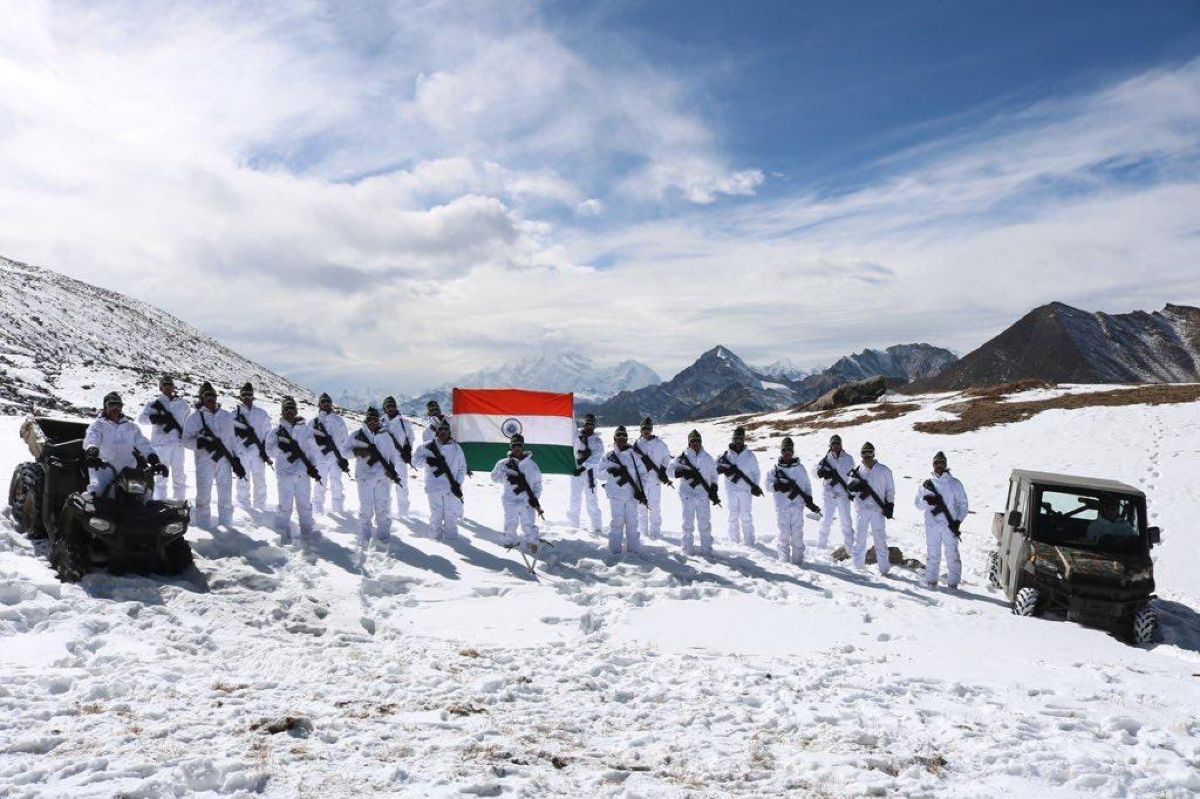
Indian Army Twitter
File Image: Indian Army/Twitter

A primary driver of public friction involves rank parity and protocol equivalence between military officers and civilian cadres. As Admiral Arun Prakash points out, the three Chiefs have been accorded “no locus standi in the structure of the GoI, so much so that the Secretary of the Department of Defense is deemed to represent the three Services in most forums”.

According to the “Government of India Allocation of Business Rules” (AoB Rules) and the “Government of India Transaction of Business Rules” (ToB Rules), the Secretary of DoD (a IAS officer) is allocated the responsibilities of “(a) Defence of India and every part thereof including preparation for defence and all such acts as may be conducive in times of war to its prosecution and after its termination to effective Demobilisation; (b) The Armed Forces of the Union, namely, Army, Navy and Air Force; (c) Integrated Headquarters of the Ministry of Defence comprising of Army Headquarters, Naval Headquarters, Air Headquarters and Defence Staff Headquarters”.

This looks particularly strange as, in terms of protocol, the Defense Secretary ranks at 23 in the order of preference, along with “Army Commanders/ Vice-Chief of the Army Staff or equivalent in other services”. In contrast, a Service Chief of Staff holding the rank of full General or equivalent rank is at number 12.

Even at 16, Officiating Chiefs of Staff holding the rank of Lieutenant General or equivalent rank are higher in protocol than the Defense Secretary.

Similarly, the Military officers are said to have resented the equation of lower-tier civilian administrative posts of Joint Secretary with senior military ranks like Major Generals. It is argued that a Major General has significantly more operational responsibility and seniority (often over 32 years of service) compared to an IAS officer reaching Joint Secretary level in roughly 18 years.

Military officials often point out that allowances, non-functional financial upgrades, and pension structures have favored civilian bureaucracies over the unique hazards of military service. Successive Central Pay Commission awards have frequently triggered military dissatisfaction.

In other words, there is an underlying perception of hierarchical degradation that persists within the armed forces.

Secondly, there are gaps between the military and civilian officials over what is called “Policies vs Operations”. While civilians are accused of lacking operational understanding, the military is accused of not understanding procurement rules. This really leads to delays in equipment purchase.

Perhaps, realizing these deep-seated systemic silos, Defense Minister Singh said on Monday that the military and civilian wings can no longer afford to operate in isolated silos to build an effective national defense ecosystem.

As he underscored, the civilian officials should read  Indian military history, examining it from a civilian perspective, thereby fostering fresh ideas and new perspectives. He called upon the Civilian Services to evolve into the “strategic brain” of India’s defence management architecture by developing a comprehensive understanding of the defence sector, functioning effectively in a joint environment, and continuously enhancing its expertise to face the emerging challenges.

Notably, when one talks of dissonance between the military and civilian officers, it is perhaps more to do with purely civilians like IAS and other central services within the MoD rather than the non-military technical and scientific personnel.

There has been relatively smoother synergy in areas like defense production and infrastructure building. For instance, Defence Public Sector Undertakings like the HAL, BEL, BDL and OFB, which are run with a mix of civilian managers, engineers, scientists and military users, have produced platforms and ammunition like Tejas, Arjun, BrahMos.  succeeded because civilian scientists in DRDO worked with military feedback loops.

Similarly, the BRO, a civilian-led organization with military engineers, has built highly acclaimed critical roads in the country’s northern and north-eastern border (Line of Actual Control) with China.

However, it is with the civilian officials working within the MoD that military officials have some issues, such as policy decisions, pay, and ranks.

But then, it is also to be noted that while services may all agree on their fight against the civilians,  when it comes to “promoting jointness” in military matters, they do not have the same ideas.  There is an intense rivalry amongst them. Although the situation has improved of late,  there are differences over whether the country should have theater commands, and if it will have them, then how those will be operated.

In other words, there are, overall,  challenges in building better “Civil-Military Synergy”. There seem to be merits when some experts argue that National Defense College (NDC) and the College of Defense Management (CDM) could bridge strategic and administrative silos, fostering deeper synergy, mutual understanding, and coordinated policy-making between senior civilian bureaucrats and military leadership.

There are also ideas like extending the DMA model to have military officers in all key procurement and policy wings, and civilian officers in Integrated Theatre Commands. Defense civilians should have tenures in field formations and military officers in  MoD finance and policy.

Another interesting suggestion is to extend the synergy beyond the MoD and involve the private sector, startups, academia and state governments. Of course, in a way this is happening with projects like defence corridors, and through collaboration in the space, cyber and AI  sectors.

Viewed thus, the core challenge to the synergy that the Defense Minister has talked about is removing what is said to be the “Trust Deficit” between the civilian and military wings within the MoD, due to decades of suspicion.

The synergy does not mean the dilution of civilian supremacy at the policy-making level, be it the MoD, or the Union cabinet, or the Parliament.   But it means the military’s voice is heard in policy-making.  The military does not grudge civilian control; it opposes “the bureaucratic control”.

Synergy does not imply that civilians are made into soldiers, or soldiers into ‘babus’. Its goal is to make both into “defense managers”

  • Author and veteran journalist Prakash Nanda is Chairman of the Editorial Board of the EurAsian Times and has been commenting on politics, foreign policy, and strategic affairs for nearly three decades. He is a former National Fellow of the Indian Council for Historical Research and a recipient of the Seoul Peace Prize Scholarship.
  • CONTACT: prakash.nanda (at) hotmail.com

The post Biggest Weakness Emerges in India’s Military Setup: Rank, Power & Toxic Rift Between “Babus” & Soldiers appeared first on EURASIAN TIMES.

  •  

The “Hasina Card”: Bangladesh Critics Say India is Using Exiled PM Sheikh Hasina to Pressure Dhaka

Her voice is that of a frail, elderly woman, but ousted Bangladesh leader Sheikh Hasina still has the power to incite from exile, vowing to return home despite facing the gallows.

Analysts say her defiance is not a death wish, but a desperate bid to remain politically relevant, claw on to her supporters, and revive an outlawed party which once dominated Bangladesh.

To her enemies, Hasina is evil incarnate — a convicted fugitive sentenced to hang for crimes against humanity over her failed bid to crush the 2024 revolution that toppled her.

The 78-year-old told AFP in July from India that she wanted to return to Bangladesh by the year’s end.

“I may be killed. I may be arrested. I may be sent to prison,” Hasina wrote in an email sent from hiding.

“I am fully aware of my fate. Still, I want to go back because my people are calling me.”

On Wednesday, marking two years since she fled by helicopter to old ally India, she is due to address by telephone a New Delhi event entitled “Sheikh Hasina’s homecoming”.

“Sheikh Hasina’s return is important for the survival of the party — she is still a symbol,” said Mohammad Jalal Uddin Sikder, a political science professor at North South University (NSU) in Dhaka.

One senior member of her Awami League (AL) party said he believed she was genuine in wanting to return.

“She feels obligated because party members are being arrested left and right, despite having no involvement in any crimes,” he said, too fearful himself to speak on record.

“Her return is a way of repaying the party’s loyalty.”

Dhaka’s Prothom Alo newspaper suggested her vow was “part of a strategy to energize party members, build pressure for the lifting of the ban on the party, and reclaim political space”.

But former senior Awami League member Mahmudur Rahman Manna, now a fierce critic of Hasina, dismissed the vow as self-serving.

“There are people in the AL who have some degree of public acceptance. Sheikh Hasina could have given them a little space to help bring the party back after the ban. She didn’t,” he said.

“The idea that she would come back for the sake of the party is absurd.”

Hasina also knows that simply threatening to return will needle Prime Minister Tarique Rahman, who swept February’s elections in which the Awami League was barred, Sikder said.

Political imprisonment has a long history in Bangladesh.

Under Hasina’s rule, Rahman’s mother, former leader Khaleda Zia, spent years in jail in Dhaka on graft charges that her party said were politically motivated.

“The Bangladesh government isn’t ready to accept her, even if she lands in jail directly from India,” Sikder told AFP.

“Her return will create political instability… I doubt the government can handle that.”

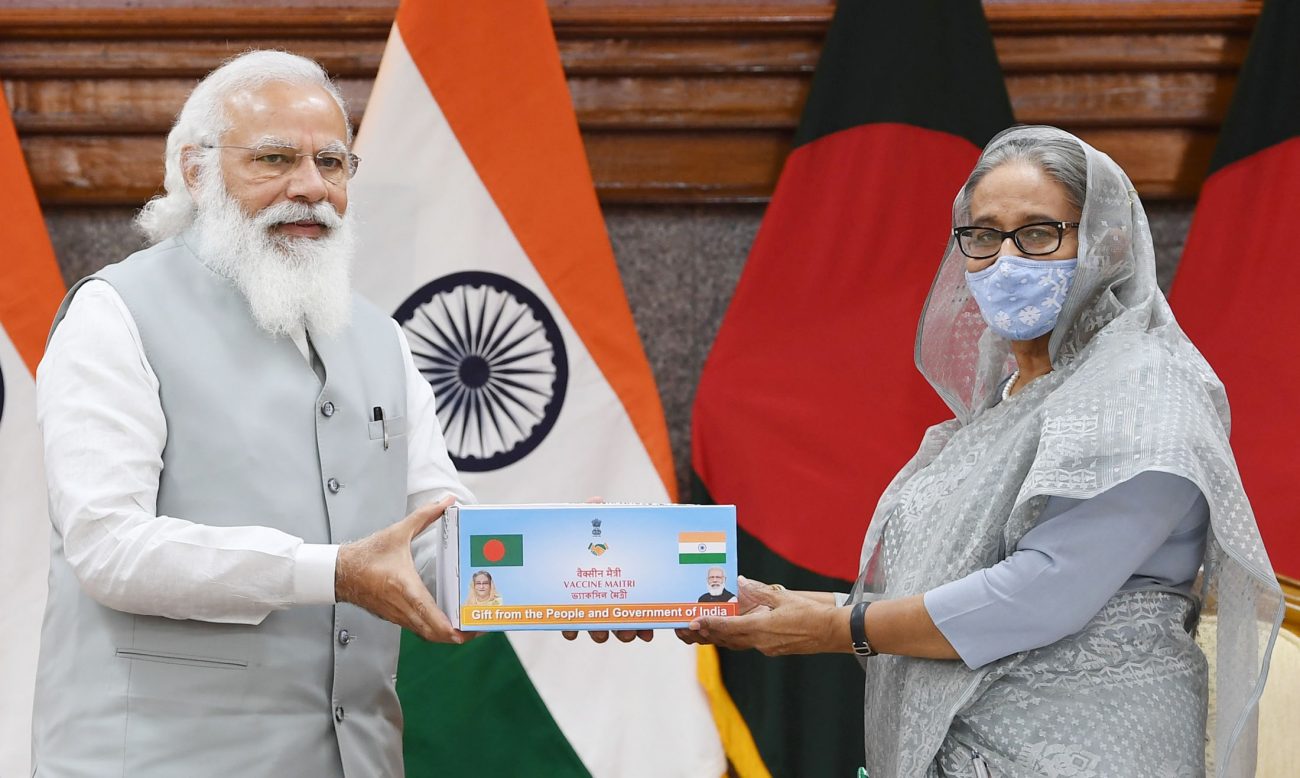
Prime Minister, Narendra Modi and Sheikh Hasina at the inauguration of various projects in Bangladesh, in Dhaka, Bangladesh. (Source: PIB)

‘Ensure Justice’

Not so, says Zahed Ur Rahman, an adviser to Bangladesh’s prime minister.

“We want her back — please return,” he told reporters. “We have written to India. The individual we want to bring back intends to return. We are ready — let her come, and we will ensure justice.”

Hasina refused to attend her trial in Dhaka, where she was found guilty of incitement, ordering killings and failing to prevent atrocities.

Her vow to return comes as Bangladesh and India seek to repair strained ties, with Hasina remaining a persistent point of friction.

Dhaka has repeatedly requested her extradition, while New Delhi has said only that the request is being examined through the legal process.

But relations have improved since Rahman, leader of the Bangladesh Nationalist Party, became leader, and India has invited him to a BRICS summit in September.

India’s foreign ministry spokesman Randhir Jaiswal, speaking to reporters on Tuesday, sought to distance New Delhi from Hasina’s “homecoming” speech.

“The government has no involvement whatsoever in it, nor does it endorse any views that may be expressed at the forum,” he said.

But some in Bangladesh see India’s hand in using Hasina’s return threat as leverage.

Mahmudur Rahman, editor of Dhaka’s Amar Desh newspaper, told AFP he saw her threat as part of a power struggle between New Delhi and Dhaka. “Delhi wants to gain the upper hand,” he said.

“India is just playing the ‘Hasina card’ to put pressure on the government.”

By Agence France-Presse


The post The “Hasina Card”: Bangladesh Critics Say India is Using Exiled PM Sheikh Hasina to Pressure Dhaka appeared first on EURASIAN TIMES.

  •  

Kefalonia: British tourists pay for water for firefighters combating the big fire

British tourists on the island on Kefalonia showed their gratitude and paid for water bottles for the firefighters battling the big blaze on the island in the Ionian Sea over the weekend. Local media kefaloniapress.gr reported about the spontaneous “Thank you!” incident that apparently occurred on Sunday, August 2. The post published today, Tuesday, August […]

The post Kefalonia: British tourists pay for water for firefighters combating the big fire appeared first on Keep Talking Greece.

  •  

EU opens investigation into AI chatbot Grok over sexualised images

Brussels (dpa) – The European Commission has opened a probe into the US tech company X over its artificial intelligence chatbot Grok after it created sexualised images of women and children.

“Non-consensual sexual deepfakes of women and children are a violent, unacceptable form of degradation,” EU Commission Vice-President Henna Virkkunen said on Monday.

The investigation is to probe whether X has complied with its obligations under European Union law, including the duty to “diligently assess and mitigate systemic risks,” the Commission, which acts as the EU’s digital watchdog, wrote in a statement.

“This includes risks related to the dissemination of illegal content in the EU, such as manipulated sexually explicit images, including content that may amount to child sexual abuse material,” it said. “These risks seem to have materialised, exposing citizens in the EU to serious harm.”

Elon Musk‘s social media platform has come under heavy criticism in recent weeks after Grok allowed users to digitally replace women’s clothing with bikinis and, in some cases, create sexualized depictions of minors.

After prolonged international outrage, X introduced some restrictions in mid-January.

These include preventing Grok “from allowing the editing of images of real people in revealing clothing such as bikinis” and restricting the image creation feature of the AI chatbot to paid subscribers, X said in a statement.

The Commission stressed that the opening of a probe does not prejudge its outcome. (26 January)

  •  

Quelle attività di M&A frenate dal golden power *

Dopo l’estensione del 2020, il golden power ha ridotto le operazioni di fusione e acquisizione nei settori più innovativi dell’economia italiana. L’effetto è stato particolarmente intenso nel primo biennio, per poi attenuarsi fino a scomparire.

L'articolo Quelle attività di M&A frenate dal golden power * proviene da Lavoce.info.

  •  

4 de agosto, morre Hans Christian Andersen, nascem Armstrong e Obama

Um escritor brilhante, um músico arrebatador e um político que marcou a história recente. O dia 4 de agosto une de forma curiosa Hans Christian Andersen, Louis Armstrong e Barack Obama. Hans Christian Andersen morreu neste dia, em 1875. Louis Armstrong (1901) e Barack Obama (1961) partilham o 4 de agosto como data de nascimento. […]
  •  

Gli Epstein nel corso della storia: gli agenti della rivoluzione mondiale

di Cesare Sacchetti Epstein è un nome salito ai (dis) onori delle cronache solo nei tempi più recenti per via del famigerato Jeffrey Epstein. Epstein è stato molto di più di un uomo che ce l’ha fatta. La sua parabola è quella di un personaggio che è stato preparato meticolosamente, prim’ancora che il suo nome […]

L'articolo Gli Epstein nel corso della storia: gli agenti della rivoluzione mondiale proviene da La Cruna dell'Ago - di Cesare Sacchetti.

  •  

L’insabbiamento della verità storica su Falcone e Borsellino e i mandanti delle stragi del’92

di Cesare Sacchetti All’Addaura, uno splendido tratto di costa di Palermo, ci sono molti ricordi del passato, e soprattutto diversi misteri della repubblica di Cassibile. Era una calda giornata di giugno del 1989, quando il giudice Giovanni Falcone si preparava a ricevere due illustri ospiti quali i giudici svizzeri Carla Del Ponte e Claudio Lehmann, […]

L'articolo L’insabbiamento della verità storica su Falcone e Borsellino e i mandanti delle stragi del’92 proviene da La Cruna dell'Ago - di Cesare Sacchetti.

  •  

Le origini della campagna di fango contro Pio XII: il Papa infangato dal sionismo

di Cesare Sacchetti Il suo portamento era aristocratico, il suo sguardo sincero e la sua fede dotta e incrollabile. Il Santo Padre, Pio XII, al secolo Eugenio Pacelli, è stato senza dubbio uno dei pontefici più importanti e influenti non solo della storia del’900, ma di tutta l’epoca moderna sorta dopo l’avvento dell’infausta rivoluzione francese. […]

L'articolo Le origini della campagna di fango contro Pio XII: il Papa infangato dal sionismo proviene da La Cruna dell'Ago - di Cesare Sacchetti.

  •  

L’armistizio di Cassibile: la vera storia di un colpo di Stato angloamericano in Italia

di Cesare Sacchetti Nel mezzo della seconda guerra mondiale, in Italia c’era una diffusa aria di malcontento, tristezza e sfiducia riguardo le sorti del conflitto. Tra i vertici politici e militari dell’epoca era già maturata la convinzione che l’Italia non sarebbe mai uscita vincitrice da quel conflitto. Troppo forti gli avversari, e soprattutto troppo ancora […]

L'articolo L’armistizio di Cassibile: la vera storia di un colpo di Stato angloamericano in Italia proviene da La Cruna dell'Ago - di Cesare Sacchetti.

  •  

La storia proibita del’900: in Italia c’è il figlio segreto dello Shah di Persia e di Maria Gabriella di Savoia?

di Cesare Sacchetti Ci sono alcune storie così incredibili che a volte si può pensare che si è usciti dal confine della storia per essere approdati in quello della finzione letteraria. Questa storia è certamente incredibile, ma non appartiene al campo dei romanzi o dei gialli che raccontano di intrighi politici internazionali e di trame […]

L'articolo La storia proibita del’900: in Italia c’è il figlio segreto dello Shah di Persia e di Maria Gabriella di Savoia? proviene da La Cruna dell'Ago - di Cesare Sacchetti.

  •  
❌