Um violento despiste de um veículo ligeiro comercial na A13 provocou, na tarde desta sexta-feira, uma vítima mortal e um ferido ligeiro, na freguesia de Casais, concelho de Tomar. O alerta foi dado por volta das 15h20, tendo o acidente ocorrido ao quilómetro 138,942, no sentido Norte-Sul, nas proximidades da barragem do Carril e antes da saída para Tomar e para o IC9.
Segundo os dados recolhidos junto das autoridades e dos serviços de socorro, a vítima mortal é um homem de 50 anos, cujo óbito foi declarado no próprio local do acidente. Do mesmo despiste resultou ainda um ferido ligeiro, um jovem de 20 anos, que após ser assistido pelas equipas de emergência foi transportado para o Hospital de Abrantes.
Nas operações de socorro estiveram envolvidos 12 operacionais, apoiados por cinco viaturas, entre as quais a Viatura Médica de Emergência e Reanimação (VMER) do Médio Tejo e elementos da Guarda Nacional Republicana (GNR), que tomaram conta da ocorrência e procederam à regularização do trânsito.
Data: 7 de agosto de 2026 Por: Dino Frazão
Se visualizou esta publicação e ainda não é nosso seguidor, siga a página Os Monhacas para acompanhar mais notícias, alertas de trânsito e atualizações em tempo real!
Last year (2025) I reported how there were hundreds of thousands of jobs unfilled to support the boom in data center construction, jobs that only human beings can fulfill. See:
Today, in August of 2026, the situation has only become worse as massive amounts of money continue to be increasingly spent on AI and data centers, while the human labor force continues to diminish.
This is all public knowledge, but it is not in the headlines or known much because people are still getting fat and rich on the AI data center spending.
Earlier this year, a report was published by the U.S. Department of Education which stated that by 2030, an estimated 2.1 million skilled trades jobs in the U.S. could go unfilled, with potential economic losses reaching $1 trillion annually.
America’s ‘silent army’ of skilled tradespeople are retiring with no one to replace them—and the price tag could hit $1 trillion a year
The workers who keep America’s buildings running are disappearing—and the U.S. isn’t replacing them fast enough to keep the lights on, the servers cool, or the labs sterile.
By 2030, an estimated 2.1 million skilled trades jobs in the U.S. could go unfilled, with potential economic losses reaching $1 trillion annually, according to U.S. Department of Education estimates cited in a new report from JLL shared exclusively with Fortune.
The commercial real estate giant calls the electricians, HVAC technicians, plumbers, pipe fitters, and maintenance workers who maintain the country’s built environment a “silent army”—a workforce that is aging out of the industry faster than it can be replaced.
“The silent army, as we normally call them, because they are hidden, invariably, behind the scenes, has been getting harder and harder not only to find, but retain in the industry,” Paul Morgan, JLL’s global COO of real estate management services, told Fortune.
Plus, “you’ve got this impending retirement wave that has really been driving the industry a long period of time, and a lack of new entrants.”
Morgan is referring to the fact that millions of tradespeople in the U.S. are nearing or at retirement age. More than one in five construction workers is currently older than 55, according to Associated Builders and Contractors.
As of May 2023, about 39% of electricians were 45 years old or older, a Consumer Affairs report shows, and there’s a 5:2 retirement-to-replacement ratio in manufacturing, construction, and other skilled trades, an Education Department report shows.
The supply-demand imbalance has hit crisis territory. Last year alone, nearly 600,000 jobs were posted for major skilled trades positions in the U.S., while only about 150,000 new workers entered the labor pool through apprenticeship programs, according to JLL.
A hidden workforce behind the AI boom
The shortage has caught the attention of some of the country’s most prominent executives, who argue that the U.S. cannot build the infrastructure for AI it’s betting its economic future on without the people to wire, cool, and maintain it.
Ford CEO Jim Farley has consistently warned about the gap, arguing America’s AI ambitions are running headfirst into a labor wall.
“I think the intent is there, but there’s nothing to backfill the ambition,” Farley told Axios last fall.
“How can we reshore all this stuff if we don’t have people to work there?”
Hadrian CEO Chris Power, whose company automates defense manufacturing, has gone further, predicting a wage shock in the trades.
“All the white-collar jobs are going to get automated,” Power said in a recent interview with tech publication Sourcery at the Hill and Valley Forum.
“I think we’re going to see massive hyperinflation in blue-collar salaries.”
Power added that even with robotic welding on his own factory floor, he still can’t hire enough welders to meet demand from the U.S. Navy.
“Everyone, go tell your kids to quit college and university and go get a welding certification,” Power added.
“The country needs you.”
Morgan argues the skilled trades are foundational to nearly every high-growth sector of the economy—a story he says the industry has failed to tell.
But one problem is the lingering perception that blue-collar work isn’t as elite or prestigious as white-collar work.
“As powerful as AI will become, AI can’t climb a ladder to change the batteries in your smoke detector,” Lowe’s CEO Marvin Ellison told Fortune earlier this month.
“It can’t change your furnace filter; it can’t clean your dryer vent; it can’t repair a hole on your roof.”
Morgan also questioned:
“Why wouldn’t somebody want to be an HVAC tech or an electrician or refrigeration specialist in the data center industry?“
He added, “You can’t have AI without data centers supporting them.”
Then today, Fox News published an opinion piece (NOT headline news, as it should be!), admitting that electricity shortages are on the horizon for Americans, due to human labor shortages.
The machines that keep America alive are failing. We forgot how to replace them
We’ve finally admitted that electricity is as essential as water, but we did so too late to avoid disruption
For 20 years, electricity was the most boring business in America, and our industry built its whole infrastructure strategy around the assumption that things would stay that way.
The numbers tell the story. From 2010 to 2020, U.S. electricity consumption fell by roughly 1%. LEDs, efficient motors and tightening appliance standards quietly cancelled out the electricity used by every new subdivision, factory and data hall, and then some. Demand was flat, and planners treated this as a permanent fact of life rather than as what it actually was: an intermission.
No-growth industries make choices that are perfectly rational, yet corrosive. You don’t fund apprenticeships when there’s no new capacity to staff. You don’t keep spare metallurgical know-how on the payroll when nobody’s ordering. You don’t recruit ambitious 25-year-olds into a sector whose pitch is “stable, essential, and never going anywhere.”
So, the utilities didn’t. The transformer makers didn’t. The steel mills didn’t. The workforce aged in place and the labor pipeline behind it ran dry.
We mistook a flat line for stability and in doing so, allowed a slow decay to occur. Then the line broke.
Since 2020, electricity consumption has reversed two decades of decline and climbed about 7%. Demand for large power transformers, the equipment through which nearly all of America’s electricity passes at some point, has surged 116% since 2019. Data centers, reshoring, electrification and grid hardening all arrived in the same handful of years, descending on an industry that had bought into the idea that it would never grow again.
Facing resurgent demand, we went looking for the people and the parts to meet resurgent demand, and here is what we found: America had forgotten how to make pipes.
Roughly 80% of the large power transformers the United States installs are now imported.
The grain-oriented electrical steel at the heart of every one of them has but a single domestic producer. Lead times for a standard power transformer have stretched to nearly two and a half years, and the larger units that connect power plants to the grid run longer still.
Prices are up more than 77% since 2019. The average transformer already humming away on the American grid is 38 years old, and more than 70% of the fleet is past age 25.
We are simultaneously trying to replace an aging base and build an entirely new one with a supply chain we spent a generation hollowing out.
The hardware shortage gets the headlines. The human one is worse, because you can’t expedite it.
A person cannot, today, enroll anywhere in America to learn how to design or build a large power transformer. The handful of university power-engineering programs that survived the last two decades don’t teach it. They were shrinking before the boom began as students chased software and AI instead.
The knowledge to wind a coil, design a core or run a high-voltage acceptance test is tribal, passed hand-to-hand on a shop floor by master winders, test engineers or metallurgists who understand why a core behaves the way it does. The expertise lives in people, much of it never written down, and roughly half the utility workforce is now over 45 with a large share eligible to retire this decade.
You can stand up a new transformer factory in a couple of years. You cannot conjure an experienced winder in a couple of years, and you can’t enroll one either.
Not referenced in any of these reports, of course, is how so much of the human labor force in the U.S., including factory workers, have now been deported from the U.S. due to Trump’s immigration policies, and many of these people deported were even here legally and Green Card holders.
A total system collapse is inevitable.
This article was written by Human Superior Intelligence (HSI)
See Also:
Understand the Times We are Currently Living Through
Israeli efforts to establish new Jewish settlements and seize Palestinian land have reached a frenzied pitch in the occupied West Bank, where Palestinian residents say they have been encircled and besieged by violent settlers.
The public hates surveillance cameras and, in particular, Flock cameras. The FBI says they don’t work to solve or prevent crime. Local police love them as a shiny new toy, but police don’t run the cities and they are taking the heat for it. City councils, pushed by citizens, are fighting back to stop Flock and other companies as well. Courtenay Turner and I wrote the Digital Bill of Rights for you to take to all local elected and appointed officials, to show them the right way to protect your rights! ⁃ Patrick Wood, Editor.
“Flock on the Pole” song
Mass surveillance technology might be popular with police departments, but for the US public, it’s becoming an increasingly difficult sell.
At least 54 cities across the US have voted to cancel, non-renew, or reject Flock’s automatic license plate reader (ALPRs) since the start of the year, according to data collected by the Washington Examiner. That comes after reporting in February that some 30 cities had done the same since 2025, indicative of the rising backlash against the tech.
In all, the Examiner reports cities in 23 states have shredded their Flock contracts so far this year, led by California and Wisconsin, which each have seven rejections, cancellations, or deactivations. Other heavy hitters include New York, Washington, and Massachusetts with four each, and Virginia with three.
Though Flock has its cameras in over 5,000 US cities as of July 2026, the rise in rejections at the municipal level comes amidst a tidal wave of outrage around issues of privacy and civil rights.
In cities where civic leaders have been slow to respond to these anxieties, citizens have moved quickly to take matters into their own hands by damaging, obscuring, or stealing the surveillance cameras in order to stop them from recording footage. A rise in official cancelations or rejections shows municipal leaders are catching on to the reality that the American populace broadly disproves of the technology, and they aren’t afraid to show it.
Arguably the highest-profile contract cancellation for Flock came when the Los Angeles Police Department decided to non-renew its years-long contract with the company, a decision motivated by a searing internal audit of the company’s technology. The internal report found that, in just two months, Flock’s ALPRs contributed to 161 false stolen-vehicle alerts, resulting in a false-positive rate of 32.3 percent.
With no sign of the outrage settling anytime soon, it’s likely these 54 cities could just be the start.
USA-Arabia Saudita: si spezza la garanzia di Margherita Furlan
Un articolo 5 sunnita nasce alla Mecca di Jeff Hoffman
Da un post anonimo alla propaganda internazionale di Jeff Hoffman
La tariffa del Golfo di Margherita Furlan
Manca il metano in Europa di Margherita Furlan
La corsa all’oro continua di Margherita Furlan
La prima pietra del Board of Peace è militare di Jeff Hoffman
Tutti con Kiev nonostante Bandera e le svastiche di Jeff Hoffman
Buon giro intorno al Sole
A cura di Margherita Furlan Con la collaborazione di Jeff Hoffman Editing di Davide Marletta e Simone Orletti CASA DEL SOLE TV — Informazione libera e indipendente Il nostro lavoro è possibile solo grazie al vostro sostegno. Casa del Sole TV non ha editori forti né finanziamenti pubblici: siamo sostenuti da voi, il nostro pubblico. Se credi nel valore di un’informazione che non tace, aiutaci a continuare. Dona tramite bonifico bancario: IBAN: IT63P0326822300052392596590 Intestato a: LA CASA DEL SOLE EDIZIONI Causale: Donazione Casa del Sole TV Dona tramite PayPal: paypal.me/casadelsoletv Sostegno ricorrente: casadelsole.tv/sostienici Anche un piccolo contributo fa la differenza. Grazie di cuore!
A Levante questa sera, venerdì 7 agosto 2026, Margherita Furlan dialoga con lo scrittore e saggista Roberto Quaglia e con Hanieh Tarkian, studiosa del pensiero islamico e del mondo iraniano, su un Golfo che cambia pelle: a luglio le raffinerie statunitensi non hanno importato un solo barile di greggio saudita, primo mese intero dal 1985, mentre alla Mecca Riad, Ankara e Islamabad firmano una clausola di difesa collettiva che ricalca l’articolo 5 atlantico. Affrontiamo insieme: la fine dell’architettura petrolio-per-protezione che regge da mezzo secolo il rapporto fra Washington e la monarchia saudita le rotte del greggio che puntano a Oriente, dal Mar Rosso all’Asia l’Accordo congiunto di difesa fra Arabia Saudita, Turchia e Pakistan e il peso della copertura nucleare di Islamabad il caso della citazione mai pronunciata attribuita al comandante dei Pasdaran Ahmad Vahidi, certificata da Netanyahu e smontata dalla stampa israeliana che cosa significa tutto questo per l’Italia e per il Mediterraneo LIBRI DEGLI OSPITI Roberto Quaglia, Il fondamentalismo hollywoodista. Viaggio in Iran alla scoperta dell’invisibile ideologia dell’Occidente, 2017. Roberto Quaglia, Il mito dell’11 settembre e l’opzione dottor Stranamore, 2006. Hanieh Tarkian, Coraggio e fede. Qassem Soleimani, Passaggio al Bosco, 2022. Hanieh Tarkian, Studio comparativo sulla figura di Maria, Irfan Edizioni, 2013. SOSTIENI CASA DEL SOLE TV Casa del Sole TV è un progetto di giornalismo indipendente autofinanziato. Per donazioni: IBAN: IT63P0326822300052392596590 Intestato a: La Casa del Sole Edizioni Causale: Donazione Casa del Sole TV Membership YouTube: / @casadelsoletvchannel — Analista Multipolare €5/mese — Inviato della Verità €15/mese — Architetto del Futuro €25/mese I LIBRI DI MARGHERITA FURLAN BRICS Scacco Matto (disponibile in italiano, inglese, russo) SEGUI CASA DEL SOLE TV YouTube: @CasadelSoleTVChannel
Amid reports that the US has virtually exhausted all its long-range precision munitions, as well as missile interceptors, it is becoming increasingly clear that Washington is in no position to fight a protracted war with Iran and has no real leverage over Tehran.
On August 5, CNN reported that the US military has exhausted nearly 80% of its interceptors for a key missile defense system.
“The US military has burned through nearly four-fifths of its THAAD missile inventory compared to pre-war numbers and roughly half of its Patriot interceptors since the start of the war, according to two sources familiar with the latest inventory report,” it said.
Similarly, the US has exhausted virtually the entire stockpile of highly accurate long-range missiles, such as ATACMS and PrSMs.
Consequently, any possible US-Iran ceasefire agreement is likely to be on terms favorable to Tehran.
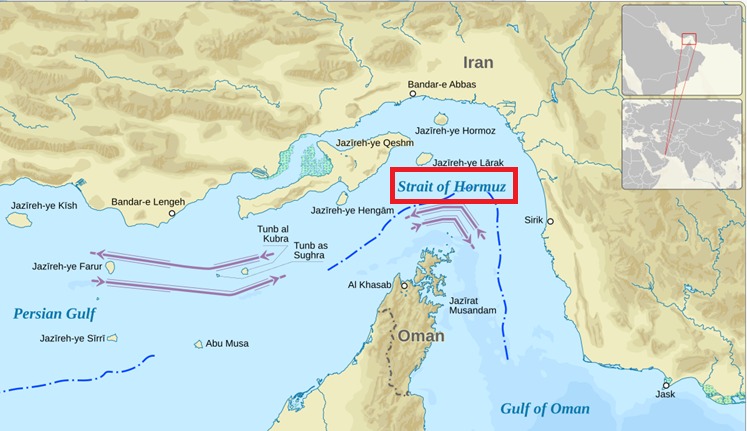
During previous rounds of negotiations, Iran has indicated that while it is agreeable to some compromise on the nuclear issue, it will not compromise on the issue of managing the shipping traffic in the Strait of Hormuz and charging a fee from all ships transiting the narrow maritime corridor.
For instance, according to the June 2026 Memorandum of Understanding (MoU), signed between Tehran and Washington, Iran will make arrangements for the safe passage of commercial vessels “with no charge for 60 days only,” followed by dialogue with Oman and other Persian Gulf littoral states, “to define the future administration and maritime services in the Strait of Hormuz… in line with the applicable international law and the sovereign rights of coastal states.”
Iranian officials interpreted the limited 60-day free period plus the “maritime services” reference as implicitly allowing “service fees” for navigation, security, and environmental protection, once the 60-day window has lapsed.
While the US administration rejected this interpretation, the US media itself, including The New York Times, acknowledged that the language of the MoU was vague and that it formalized Iranian control of the Strait of Hormuz.
Again, multiple media outlets reported earlier this week that Iran and Oman are close to finalizing a deal between them for joint management of the Strait of Hormuz.
Details included Iranian management of vessel entry, joint oversight of exits near the Oman coast, and a “central corridor.”
According to a Reuters report published on August 6, Iran is seeking fees of between 5% and 7% of the price of cargoes from ships using the strait, according to the senior Iranian official. Oman is discussing fees of around 3%, while Washington wants no fees at all.
In normal (pre-war) times, the narrow waterway handled roughly 20–21 million barrels per day of crude and petroleum products, amounting to nearly one-fifth of the world’s total oil consumption and roughly 25% of seaborne oil trade.
According to a Gulf News estimate, this would generate a net profit of US$385 million per day for Iran, or up to US$140 billion per year gross.
A typical Very Large Crude Carrier (VLCC) can carry up to about 2 million barrels.
At an oil price of US$80/barrel, the cargo is worth US$160 million; a 7% fee would equal roughly US$11–11.2 million for that one voyage.
Strait of Hormuz.
Given that Iran would have to spend a minimal amount of money to oversee the entry of cargo vessels into the Strait of Hormuz, most of this annual revenue of USD140 billion would be ‘net profit’ for Tehran.
Even if Iran spends USD5 billion annually on these expenses, Tehran would still pocket a net profit of USD135 billion.
That is a staggering amount.
For perspective, Egypt’s Suez Canal Authority reported US$4.67 billion in revenue for the 2025/2026 fiscal year.
The income of Egypt’s Suez Canal Authority looks meager when compared to Iran’s prospective income from the Strait of Hormuz if indeed it is able to charge a 7% fee on all cargo vessels passing the maritime corridor.
Indeed, Iran will get control of the world’s most lucrative and profitable tollway.
The disruption in the Hormuz traffic during the last four months has shown that many countries would not mind paying a fee to Tehran as long as it can ensure a steady supply of oil and LNG from the maritime corridor, even if there is no provision under the International Law (International Convention on the Law of the Sea, UNCLOS) allowing a coastal state like Iran to charge for passage through a natural waterway, impose a “toll” or a “service fee”.
In fact, according to Bloomberg, Iran has already started charging a transit fee from commercial vessels crossing the Strait of Hormuz.
The report said that Iran charged as much as USD 2 million per vessel as a transit fee, and many countries paid the fee to Tehran to let their cargo vessels pass from the narrow maritime corridor.
Reports also said that these payments were made in Chinese Yuan.
In March, Lloyd’s List reported that Iran’s IRGC ran a de facto “toll booth” system requiring vetting, clearance codes, and escorts via a controlled corridor.
Meanwhile, the Financial Times reported that transits were mostly linked to Chinese, Indian, or Gulf-linked owners, including some “dark fleet” vessels.
What’s even more is that at USD 135 billion, Iran’s profit from the Strait of Hormuz would beat some of the world’s biggest and most profitable technology companies.
For instance, in 2025, Google’s Alphabet made a profit of USD 132 billion.
Similarly, in fiscal year 2026, Nvidia made a profit of USD 120 billion. Apple made a profit of USD 112 billion. Microsoft made a profit of USD 101 billion. And Saudi Arabia’s oil major Aramco made a profit of USD 105 billion.
These are some of the world’s biggest technology and oil companies, which have reached here after years of hard work and innovation.
However, if Iran’s plans to collect a 5-7% toll fee from all commercial cargo vessels crossing the Strait of Hormuz materialize, Iran will start making more profit than these companies from the first year.
Furthermore, this would be a vicious cycle, as a toll fee of 5-7% would mean that oil prices would go up. This would also mean that insurance prices for these cargo vessels would shoot up, further increasing the oil prices.
As oil prices rise, the absolute value of Iran’s proposed 5–7% toll – calculated on cargo value – would increase in tandem. Consequently, Tehran would benefit twice over: its toll revenues would grow both from higher shipping volumes and from escalating oil prices.
Notably, Iran holds the world’s third-largest oil reserve.
In addition to this windfall gain, another condition of the June Iran-US MoU was that Washington would “undertake with regional partners to develop a definitive mutually agreed plan with at least USD 300 billion for the reconstruction and economic development of the Islamic Republic of Iran.”
Another condition was: “The United States of America undertakes to make fully available for use the frozen or restricted funds and assets of the Islamic Republic of Iran upon the implementation of this MoU. The United States of America and the Islamic Republic of Iran will mutually agree on the procedures related to the release of these funds during the negotiations.”
Estimates of the frozen assets involved ranged from roughly US$12–37 billion; however, some Iranian sources claimed that the frozen assets amounted to over USD 100 billion.
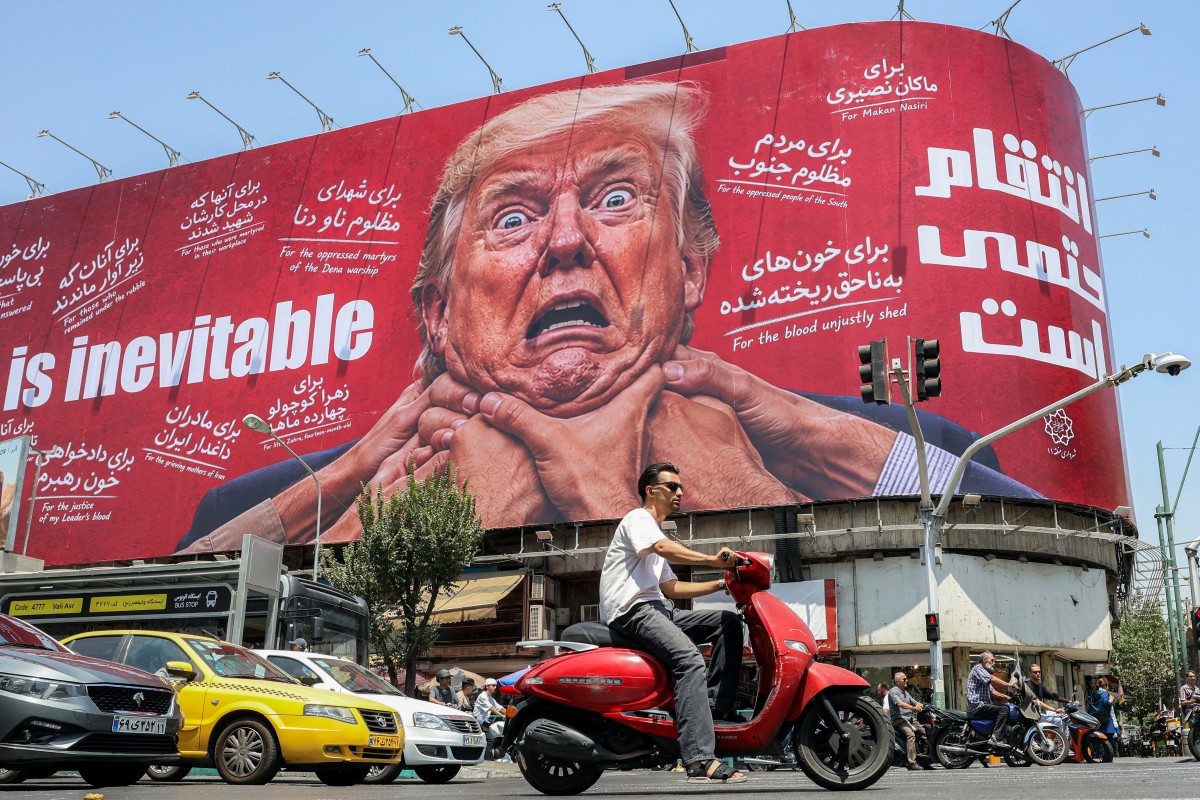
Motorists drive past a large billboard pledging revenge against US President Donald Trump along Jomhouri Street in central Tehran on July 27, 2026. Iran’s foreign ministry said on July 27 that the US was not involved in recent talks with Oman over the administration of the strategic Strait of Hormuz. Traffic through the vital global shipping route has been under Iranian control since the outbreak of war with Israel and the United States on February 28. (Photo by AFP) /
If all these conditions are met, Iran would get a windfall of over USD 500 billion within the first two years. A substantial part of this money is set to be invested in the further development of Iran’s ballistic missile program.
In effect, it could mean that a few years down the line, Iran could be a much stronger adversary, militarily as well as economically.
The repercussions of that for the US and Israel could be devastating.
Sumit Ahlawat has over a decade of experience in news media. He has worked with Press Trust of India, Times Now, Zee News, Economic Times, and Microsoft News. He holds a Master’s Degree in International Media and Modern History from the University of Sheffield, UK.
He can be reached at ahlawat.sumit85 (at) gmail.com
Um homem de 40 anos morreu na manhã desta sexta-feira na sequência de uma violenta colisão rodoviária ocorrida na Estrada Nacional 103, junto ao cruzamento do Alto da Forca, na cidade de Chaves.
De acordo com as informações apuradas, o acidente envolveu duas motas e um veículo comercial de distribuição de materiais. Segundo o Canal Ntv, os dois motociclistas circulavam no sentido Chaves–Curalha quando foram abalroados pelo veículo comercial, que seguia em sentido contrário.
Um dos motociclistas, de 40 anos, teve morte imediata, tendo o óbito sido declarado no local pela equipa da Viatura Médica de Emergência e Reanimação (VMER) do Hospital de Chaves. O segundo condutor da mota sofreu ferimentos de pouca gravidade, tendo recebido assistência no local e seguido depois para o hospital de Chaves.
Para a ocorrência, com o alerta a ser dado às 10:20, foram mobilizados os Bombeiros Voluntários Flavienses, com 10 operacionais, apoiados por vários meios de socorro, além da VMER de Chaves.
As circunstâncias em que ocorreu a colisão estão agora a ser investigadas pela Polícia de Segurança Pública, que tomou conta da ocorrência e desenvolve diligências para apurar as causas do acidente.
A circulação na saída para Curalha esteve condicionada durante as operações de socorro, remoção dos veículos e realização das perícias necessárias.
Data: 7 de agosto de 2026 Por: Dino Frazão
Se viu esta publicação e ainda não é nosso seguidor, siga a nossa página para acompanhar mais conteúdos e atualizações em tempo real!
«HANNO MILITARIZZATO L’INFANZIA» L’Italia ha smesso all’improvviso di difendere i principi della pace. Non parliamo di leggi ma di pratica quotidiana: protocolli fra Istruzione e Difesa, visite di classe alle basi militari, aziende belliche accolte nell’orientamento scolastico, generali in cattedra. Se la guerra si insegna, la pace si può insegnare. Da questa convinzione nasce Handalino, la fiaba cheAntonio Mazzeo ha portato ai bambini delle elementari insieme al pupazzo omonimo, maturata durante il suo viaggio verso Gaza con la Freedom Flotilla a bordo della nave Handala. Una storia sui diritti dell’infanzia negati, raccontata con le parole dei più piccoli. E la domanda nasce spontanea: il massacro di Gaza ha risvegliato le coscienze? Nelle scuole qualcosa si è mosso davvero, o resta un moto d’indignazione senza traduzione politica? Ne parliamo con Antonio Mazzeo, giornalista d’inchiesta e insegnante. Intervista a cura di Jeff Hoffman IL LIBRO DELL’OSPITE Antonio Mazzeo, La scuola va alla guerra. Inchiesta sulla militarizzazione dell’istruzione in Italia, Manifestolibri, Roma 2024. SOSTIENI CASA DEL SOLE TV Casa del Sole TV è un progetto di giornalismo indipendente autofinanziato. IBAN: IT63P0326822300052392596590 Intestato a: La Casa del Sole Edizioni Causale: Donazione Casa del Sole TV Membership YouTube: / @casadelsoletvchannel — Analista Multipolare €5/mese — Inviato della Verità €15/mese — Architetto del Futuro €25/mese #CasadelSoleTV#AntonioMazzeo#JeffHoffman#LaScuolaVaAllaGuerra#Handalino#EducazioneAllaPace#Militarizzazione#Scuola#Gaza#Palestina#Nonviolenza#Costituzione
Os preços dos combustíveis vão registar uma descida acentuada na próxima semana, entre os dias 10 e 16 de agosto de 2026.
Segundo Contas poupança, a gasolina vai sofrer uma redução de 12,5 cêntimos por litro, enquanto o gasóleo terá uma descida de 12 cêntimos por litro.
Esta queda expressiva nos valores traz um alívio considerável para o bolso dos condutores portugueses na hora de abastecer. Se não tem urgência em atestar o depósito, o ideal será aguardar pela entrada em vigor das novas tarifas a partir de segunda-feira.
Por: Dino Frazão Data: 7 de agosto de 2026
Se gostou deste conteúdo e ainda não segue a nossa página, siga-nos para ficar a par de mais novidades e alertas!
North Korean leader Kim Jong Un has raked in as much as $22 billion in foreign earnings from 2022 to 2025, according to a Bloomberg Economics analysis. That represents a 400% rise in revenues from the previous four-year period despite sweeping global sanctions.
So how did Kim do it, and why is a richer North Korea an even bigger concern for the world?
Read more:
Kim Jong Un Flouted Sanctions to Amass $22 Billion Windfall
https://www.bloomberg.com/graphics/2026-north-korea-windfall/
00:00 Introduction
01:55 Recent economic growth
03:48 Geopolitical landscape
05:21 Crypto thefts
06:14 Trade with China
07:03 Arms sales to Russia
09:22 Regime survival
#NorthKorea #KimJongUn
--------
Like this video? Subscribe: http://www.youtube.com/Bloomberg?sub_confirmation=1
Get unlimited access to Bloomberg.com for just $1.99 your first month: https://www.bloomberg.com/subscriptions?in_source=YoutubeOriginals
Bloomberg Originals offers bold takes for curious minds on today’s biggest topics. Hosted by experts covering stories you haven’t seen and viewpoints you haven’t heard, you’ll discover cinematic, data-led shows that investigate the intersection of business and culture. Exploring every angle of climate change, technology, finance, sports and beyond, Bloomberg Originals is business as you’ve never seen it.
Subscribe for business news, but not as you've known it: exclusive interviews, fascinating profiles, data-driven analysis, and the latest in tech innovation from around the world.
Visit our partner channel Bloomberg News for global news and insight in an instant.
O fim-de-semana começa em festa, no Campo de Sousa Uva que volta a receber a animada Festa do Emigrante, com três noites de música, tradição e convívio.
Dias 7, 8 e 9 | 6.ª feira a domingo
O programa reúne nomes como Jorge Serafim, Filipe Romão, David Brito, Sniffy, Valter Reis, Rock On, DJs e ainda o tradicional Desfile de Vestidos de Chita, celebrando o reencontro de quem regressa à terra nesta época do ano.
Dia 8 | sábado
A manhã começa no Mercado Municipal com mais uma edição dos Sábados no Mercado, e o aroma dos alimentos frescos. A estes junta-se ainda a mostra de artesanato de Luísa Pires e a iniciativa ’A Biblioteca Fora de Si – Se sabe bem… o Mercado Municipal tem!’ com propostas para as suas leituras. Às 11h00, a Galeria Municipal inaugura a exposição ’LUCIFERASIS’, de Cláudia Martins, que ficará patente até 31 de agosto.Ao final do dia, o Largo de São Sebastião ganha nova vida com a Festa do Largo, onde não faltarão boa gastronomia, vinhos, música ao vivo e muita animação.
Dia 9 | domingo
O domingo arranca cedo com o 1.º Trail Entre a Serra e o Mar, que parte às 7h30 do Pavilhão Municipal Dr. José Sousa Pires, desafiando os participantes a descobrir as paisagens do concelho.Pelas 17h00, o São Brás Cineteatro Jaime Pinto recebe o espetáculo de dança ’Final Season 25/26’, da I Am Conteporâneo Fusion, um momento que celebra o talento e criatividade, e que conta com a participação especial da Escola de Dança Municipal de São Brás de Alportel.
The United Kingdom lost its global empire by the mid-twentieth century – and with it, its status as the world’s pre-eminent military power.
Today, according to the Global Firepower Index, Britain ranks as the world’s eighth-strongest military, while the IMF places it as the fifth-largest economy, just marginally ahead of India.
Yet in one domain it still stands at the very top: the shadowy world of intelligence and spycraft.
MI6, the UK’s foreign intelligence service, has been ranked as the most powerful foreign intelligence service in Europe ahead of France and the Netherlands, according to a peer review.
The British service topped a field of 25 countries, finishing well ahead of France’s DGSE in second place.
The British intelligence agency scored 251 points in the research and was commended for its expertise in recruiting high-level informants and penetrating the ruling elites in Russia, China, Iran and Turkey, according to the review by 60 professionals from 25 countries.
The review was conducted by French magazine L’Express, which contacted people in state services de renseignements (intelligence services) to rate their counterparts in the Western-allied countries.
After MI6, France’s General Directorate for External Security (DGSE) finished in second place with 169 points for its global reach and operational capability, the Times reported.
Notably, there was a gap of 82 points between first and second place, underscoring MI6’s huge lead over its continental rivals.
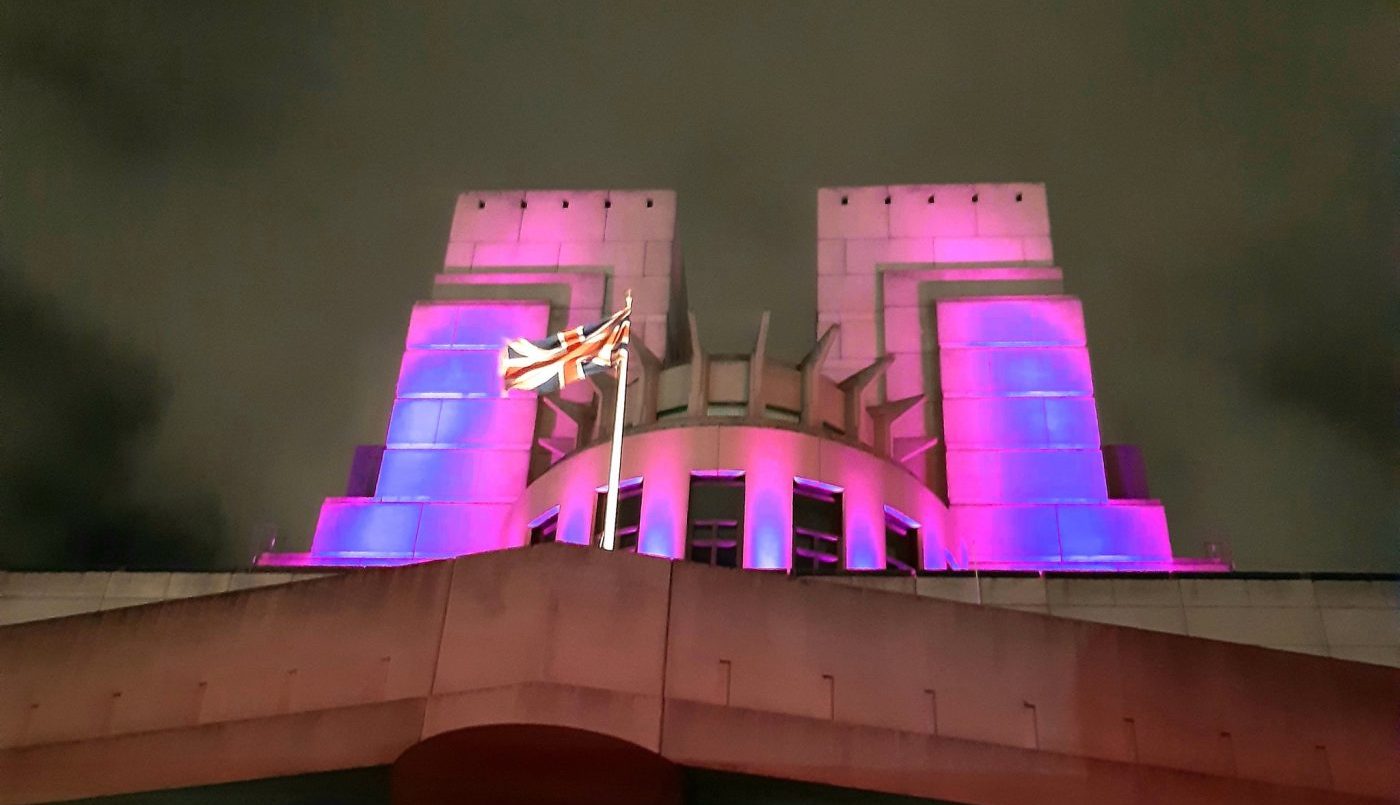
The MI6 headquarters at Vauxhall Cross in London.
The Netherlands came third with 97 points. Ukraine was fourth with 77 points, and Germany was fifth with 62 points, followed by Sweden, Norway, Estonia, Poland and Denmark. Slovakia was rated the weakest.
The UK spy agency was praised for its global reach and for its long-term human intelligence (HUMINT) work, recruiting high-level sources and penetrating elites in top adversary countries, such as Russia, China, and Iran.
MI6 was also praised for its patience, often investing in developing sources for decades. The agency was also praised for its willingness to use bold tactics.
A former head of the DGSE said: “The British have the ability to play the long game, investing in sources over a 10-year horizon, somewhat like the Russians. And they have a taste for dirty tricks.”
Olivier Mas, a senior DGSE officer until 2017, pointed to recruitment as a factor.
He said “all European intelligence services draw inspiration from British methods” and noted that “the best from Cambridge and Oxford join MI6.”
As many as eight out of the last 10 MI6 chiefs attended Oxford or Cambridge.
These strengths of MI6 have practical advantages.
For instance, Britain was the first to warn Ukraine about the likelihood of the Russian invasion that began in February 2022.
London has also been one of the staunchest allies of Kyiv during the war. Less than six weeks after the Russian invasion on February 24, 2022, British Prime Minister Boris Johnson also visited Kyiv and promised Ukraine full support.
The exploits of MI6 are also recognized by the CIA, the US foreign spy agency.
Ralph Goff, a former chief of operations for Europe and Eurasia at the CIA, told the magazine: “The British are in the lead on the Ukrainian file. We are right behind them.”
Robert Gorelick, a former CIA station chief, added: “The United Kingdom has by far the strongest secret services in Europe. MI6 is extraordinary.”
Notably, last year, Blaise Metreweli became the first woman ever to lead MI6, taking over from Sir Richard Moore.
Earlier in 2022, Israel’s spy agency Mossad announced that a female officer, known only as Agent “A,” has assumed the post of Director of the Intelligence Authority (parallel to the Head of the IDF Intelligence Branch), the first woman in the history of the Mossad to hold the office.
While MI6 was praised for its human intelligence, the French spy agency DGSE was rated as one of the world’s best in counter-terrorism.
The service is renowned for its clandestine operations to “eliminate” people deemed a threat to French security. François Hollande, the former French president, spoke publicly about ordering at least 40 operations to assassinate “high value” targets in the Middle East and Africa, according to a 2017 book.
A Polish intelligence executive told L’Express: “It is the only service in continental Europe with near-global reach. They combine technical collection, human intelligence and operational action capabilities.”
A Brief History of MI6
MI6, formally the Secret Intelligence Service (SIS), was established in 1909. At that time, due to the growing fears of German espionage, Britain established its own spy service, known as the Secret Service Bureau.
It had two divisions: the Home Section, which later became MI5, was responsible for domestic security, and the Foreign Section, the forerunner of MI6.
The Foreign Section was led by Captain Sir Mansfield Cumming, a Royal Navy officer. He became the first Chief of the service and signed documents with a green-ink “C” – a tradition that continues to this day. The service is still headed by a Chief known simply as “C.”
The service got its initiation by fire just five years later during the First World War when it ran several agent networks behind German lines in occupied Europe.
After the war and German defeat, the newly-established Soviet Union became its primary theatre of operation.
Again, during the Second World War, it worked in close collaboration with American and Free French allies, and had important links to the codebreakers at Bletchley Park.
Bletchley Park was where Alan Turing and other agents of the Ultra intelligence project decoded the enemy’s secret messages, most notably those that had been encrypted with the German Enigma and Tunny cipher machines. Experts have suggested that the Bletchley Park code breakers may have shortened the war by as much as two years.
After the war, it helped establish a lasting partnership with the newly created CIA.
During the Cold War, once again, the service’s primary target became the Soviet Union and its allies.
However, its reputation suffered severe damage from the discovery of the Cambridge Five spy ring, a group of five British elite intelligence officers – Kim Philby, Donald Maclean, Guy Burgess, Anthony Blunt, and John Cairncross – who spied for the Soviet Union from the 1930s through the early 1950s. Recruited while students at Cambridge University, they leaked thousands of secret documents to the Soviets.
However, MI6 was also able to recruit some high-profile Soviet spy agency KGB agents as its informers.
For instance, a senior KGB officer, Oleg Gordievsky, became an informer for the British spy agency. Gordievsky was one of the highest-ranking Soviet moles ever handled by the West.
Over more than a decade (1974-1985), he provided MI6 with extraordinary intelligence on Soviet intentions, agent networks, and the Kremlin’s thinking. His reporting is widely credited with helping avert a potential nuclear confrontation during the 1983 Able Archer crisis when the Soviets misread a NATO exercise as preparation for a first strike.
In 1985 MI6 successfully exfiltrated him from Moscow in a daring operation, code-named Pimlico, after his cover was blown.
Recently declassified documents suggest that MI6 also provided valuable inputs to India on Sikh separatist activities and Khalistani terrorists during the early 1980s.
Since the end of the Cold War, priorities have shifted toward counter-terrorism, cyber threats, nuclear proliferation, and state actors such as Russia, China, and Iran.
MI6’s work is also credited with uncovering the global nuclear black market network developed by Pakistan’s disgraced nuclear scientist A.Q. Khan, who was clandestinely supplying nuclear secrets, blueprints, and components to many countries, including Iran, Libya, and North Korea.
However, it must be noted that due to the very nature of spycraft, often operating in shadows, many of MI6’s most daring operations remain classified and will be known only much later.
Nevertheless, the recognition of MI6’s clear lead over other European intelligence agencies – by former and serving spies themselves – stands as a rare testament to the UK’s enduring soft power, which has survived the end of its empire and the loss of its former military and economic pre-eminence.
Sumit Ahlawat has over a decade of experience in news media. He has worked with Press Trust of India, Times Now, Zee News, Economic Times, and Microsoft News. He holds a Master’s Degree in International Media and Modern History from the University of Sheffield, UK.
He can be reached at ahlawat.sumit85 (at) gmail.com
A Almagem, Associação de Defesa do Património Cultural e Ambiental do Algarve, convida toda a comunidade a participar na Jornada “Pensar o Território” – um dia dedicado à partilha de ideias, ao diálogo e à construção de soluções para um concelho mais resiliente, atrativo e sustentável.
Jornada “Pensar o Território I em 21 de agosto (Monchique)
Este será um dia de reflexão para “Pensar o Território” de Monchique.
» Manhã | Conhecer o território Objetivos: observação direta de casos de boas práticas no território; reflexão pessoal sobre a relevância, ligação ao local e o impacto destes projetos no futuro. Resultados: recolha e partilha, num painel, de contributos pessoais que permitam identificar valores comuns do território.
» Tarde | Pensar o território Objetivo: recolher ideias concretas de ações a aplicar no território, com foco na dinamização da economia e sustentabilidade. Aumentar o sentimento de compromisso pessoal e institucional. Resultados: documento que regista algumas destas ações, selecionadas de acordo com o grau de importância identificado pelos participantes na ação.
» Final da jornada l Produção do “Manifesto Pensar o Território”:
No próximo sábado, 8 de agosto, pelas 20h, vai ter lugar mais uma visita temática “Noites com Património”, subordinada ao tema “Loulé no Século XV: da Vila à Casa Senhorial dos Barreto”, conduzida pelo historiador por Daniel Giebels.
No século XV, o quotidiano de Loulé foi marcado pela rápida ascensão da Casa dos Barreto, cujos titulares eram senhores de Quarteira e representantes da autoridade régia no Algarve. Para consolidar o seu prestígio na vila, ergueram uma imponente casa senhorial cujos vestígios ainda hoje guardam segredos fascinantes. Como era o quotidiano de Loulé há mais de 500 anos? Que marcas deixou uma das famílias mais influentes da região? Na próxima edição das “Noites com o Património”, Daniel Giebels guia-nos numa viagem no tempo para desvendar esta história extraordinária.
As visitas orientadas são gratuitas, mas requerem inscrição prévia. Para mais informações contactar 289 400 953.
A Avenida 24 de Junho, em Altura, vai transformar-se num autêntico sambódromo no sábado, dia 8 de agosto, com a realização do Carnaval de Verão, a partir das 22h00, com entrada livre.
Inspirado no cortejo de Carnaval, que é um dos mais celebrados no sotavento algarvio, esta iniciativa contará com carros e estruturas alegóricas, com foco no aproveitamento e na reutilização de materiais da edição que decorreu em fevereiro deste ano.
Com o mesmo tema, “Culturas e Tradições do Mundo”, o desfile contará com centenas de foliões e figurantes, que vão encher de cor e alegria a zona central da Avenida 24 de Junho, ao mesmo tempo que decorre o Mercadinho de Verão.
Integrado na programação da Animação de Verão em Altura, o evento termina no palco da Zona de Lazer, com um concerto dos “Pau de Arara”.
A iniciativa é organizada pela Junta de Freguesia de Altura, em parceria com o Município de Castro Marim.
O Jardim Pescador Olhanense volta a ser palco do maior evento gastronómico a sul do país.
De 10 a 15 de agosto, o 38.º Festival do Marisco reúne o melhor da gastronomia da Ria Formosa, um cartaz musical de excelência e várias novidades que prometem tornar a experiência dos visitantes ainda mais confortável e completa.
A inauguração oficial realiza-se na próxima segunda feira, dia 10 de agosto, pelas 19:30, e contará com a presença do presidente da Assembleia da República, José Pedro Aguiar-Branco.
Considerado um dos eventos mais emblemáticos do verão algarvio, o Festival do Marisco volta a afirmar Olhão como capital da gastronomia ligada ao mar, dando destaque aos mariscos e bivalves mais frescos da Ria Formosa, preparados num ambiente único junto à frente ribeirinha.
À componente gastronómica. junta-se um cartaz musical de grande qualidade, com artistas nacionais e internacionais que prometem animar as seis noites do festival:
10 de agosto – Matias Damásio;
11 de agosto – Deejay Telio;
12 de agosto – Némanus;
13 de agosto – Calema;
14 de agosto – Mariza;
15 de agosto – Daniela Mercury.
A edição de 2026 apresenta, ainda, diversas novidades pensadas para melhorar a experiência de quem visita o recinto. Entre elas, destaca-se a criação de um novo espaço dedicado à venda de marisco, permitindo reduzir tempos de espera e proporcionar maior fluidez no serviço.
Na área de street food, para além das já habituais propostas como hambúrgueres e pizzas, estreia-se este ano o Poke Market, alargando a diversidade da oferta gastronómica disponível.
Os visitantes poderão, ainda, encontrar um espaço da pastelaria Kubidoce, que apresentará algumas das suas especialidades inspiradas na tradição e identidade do concelho, como o floripes e o moncarapachense.
Outra das novidades passa pela distribuição de pulseiras com um código QR em praias e outros locais estratégicos. Através desse código, os visitantes poderão aceder a uma comunidade oficial no WhatsApp, onde serão disponibilizadas informações úteis sobre o evento, nomeadamente estacionamentos, acessos, entradas, localização dos espaços de restauração e outras informações práticas. No final, será, igualmente, possível responder a um questionário de satisfação, contribuindo para a melhoria contínua do Festival.
Atendendo ao facto de os Mercados de Olhão serem semifinalistas nacionais da iniciativa Novas 7 Maravilhas de Portugal, o recinto contará, igualmente, com um espaço dedicado à divulgação da candidatura, onde os visitantes poderão conhecer melhor este património emblemático do concelho e receber brindes alusivos à campanha.
Os bilhetes encontram-se disponíveis na Ticketline, nos pontos de venda habituais e também nas bilheteiras do recinto durante os dias do evento.
Durante seis dias, o Festival do Marisco volta a reunir os sabores únicos da Ria Formosa, a melhor música e milhares de visitantes, reforçando o seu estatuto como um dos maiores e mais importantes eventos turísticos e gastronómicos de Portugal.
Mais do que um festival, o Festival do Marisco é uma celebração da identidade marítima de Olhão, da excelência da sua gastronomia e da hospitalidade do concelho.
This week, Mark Leonard is joined by Adriana Abdenur, a Brazilian policy expert and co-president of the Global Fund for a New Economy, and Jorge Castañeda, former foreign minister of Mexico and professor at Sciences Po, to explore debates about development and ideas of strategic autonomy across Latin America.
Jorge explains why China’s role is varied across the region, arguing that Mexico and much of Central America remain deeply constrained by their economic ties to the US. Adriana discusses Brazil’s long tradition of strategic autonomy, describing how policymakers engage with China as both an economic partner and a source of ideas on development, technology and global governance.
Together, Mark, Adriana and Jorge explore how intensifying US-China competition is reshaping the region’s choices. Can Latin American countries balance relations with both powers? Is China a model, a market or simply another partner in a multipolar world? And what does strategic autonomy look like in an increasingly coercive geopolitical environment?
This podcast episode was recorded on July 31st 2026.

 Login





















 CASA DEL SOLE TV — Informazione libera e indipendente Il nostro lavoro è possibile solo grazie al vostro sostegno. Casa del Sole TV non ha editori forti né finanziamenti pubblici: siamo sostenuti da voi, il nostro pubblico. Se credi nel valore di un’informazione che non tace, aiutaci a continuare.
 Dona tramite bonifico bancario: IBAN: IT63P0326822300052392596590 Intestato a: LA CASA DEL SOLE EDIZIONI Causale: Donazione Casa del Sole TV
 Dona tramite PayPal: paypal.me/casadelsoletv
 Sostegno ricorrente: casadelsole.tv/sostienici Anche un piccolo contributo fa la differenza. Grazie di cuore!

 A Levante questa sera, venerdì 7 agosto 2026, Margherita Furlan dialoga con lo scrittore e saggista Roberto Quaglia e con Hanieh Tarkian, studiosa del pensiero islamico e del mondo iraniano, su un Golfo che cambia pelle: a luglio le raffinerie statunitensi non hanno importato un solo barile di greggio saudita, primo mese intero dal 1985, mentre alla Mecca Riad, Ankara e Islamabad firmano una clausola di difesa collettiva che ricalca l’articolo 5 atlantico. Affrontiamo insieme:
 la fine dell’architettura petrolio-per-protezione che regge da mezzo secolo il rapporto fra Washington e la monarchia saudita
 le rotte del greggio che puntano a Oriente, dal Mar Rosso all’Asia
 l’Accordo congiunto di difesa fra Arabia Saudita, Turchia e Pakistan e il peso della copertura nucleare di Islamabad
 il caso della citazione mai pronunciata attribuita al comandante dei Pasdaran Ahmad Vahidi, certificata da Netanyahu e smontata dalla stampa israeliana
 che cosa significa tutto questo per l’Italia e per il Mediterraneo
 LIBRI DEGLI OSPITI Roberto Quaglia, Il fondamentalismo hollywoodista. Viaggio in Iran alla scoperta dell’invisibile ideologia dell’Occidente, 2017. Roberto Quaglia, Il mito dell’11 settembre e l’opzione dottor Stranamore, 2006. Hanieh Tarkian, Coraggio e fede. Qassem Soleimani, Passaggio al Bosco, 2022. Hanieh Tarkian, Studio comparativo sulla figura di Maria, Irfan Edizioni, 2013.
 SOSTIENI CASA DEL SOLE TV Casa del Sole TV è un progetto di giornalismo indipendente autofinanziato.
 Per donazioni: IBAN: IT63P0326822300052392596590 Intestato a: La Casa del Sole Edizioni Causale: Donazione Casa del Sole TV
 Membership YouTube:


 I LIBRI DI MARGHERITA FURLAN
 BRICS Scacco Matto (disponibile in italiano, inglese, russo)
 SEGUI CASA DEL SOLE TV
 YouTube: @CasadelSoleTVChannel

 canal Ntv

 «HANNO MILITARIZZATO L’INFANZIA»
 L’Italia ha smesso all’improvviso di difendere i principi della pace. Non parliamo di leggi ma di pratica quotidiana: protocolli fra Istruzione e Difesa, visite di classe alle basi militari, aziende belliche accolte nell’orientamento scolastico, generali in cattedra.
 Se la guerra si insegna, la pace si può insegnare. Da questa convinzione nasce Handalino, la fiaba cheAntonio Mazzeo ha portato ai bambini delle elementari insieme al pupazzo omonimo, maturata durante il suo viaggio verso Gaza con la Freedom Flotilla a bordo della nave Handala. Una storia sui diritti dell’infanzia negati, raccontata con le parole dei più piccoli. E la domanda nasce spontanea: il massacro di Gaza ha risvegliato le coscienze? Nelle scuole qualcosa si è mosso davvero, o resta un moto d’indignazione senza traduzione politica? Ne parliamo con Antonio Mazzeo, giornalista d’inchiesta e insegnante. Intervista a cura di Jeff Hoffman