❌

Reading view

LUÍS NEVES: QUANDO AS EXPLICAÇÕES JÁ NÃO CHEGAM

Há crises políticas que resultam de uma única decisão errada. Outras resultam de um conjunto de acontecimentos que, isoladamente, poderiam eventualmente ser explicados, mas que, acumulados, criam uma realidade politicamente insustentável. O caso Luís Neves pertence claramente à segunda categoria.
O que verdadeiramente distingue esta crise não é apenas a gravidade de cada episódio. É a sucessão de factos, contradições, relações pessoais, decisões administrativas e explicações posteriores que foram surgindo ao longo das últimas semanas. E é precisamente essa acumulação que levanta uma pergunta inevitável: até quando pode Luís Montenegro manter no Governo um ministro cuja permanência se tornou, ela própria, um problema político para o Executivo?
Tudo começou com as obras numa propriedade em São Teotónio, no concelho de Odemira. O empreiteiro responsável, João dos Santos Carvalho, da Construbarcelos, não era um desconhecido de Luís Neves. A empresa tinha realizado trabalhos para a Polícia Judiciária durante o período em que Luís Neves dirigiu aquela instituição. Posteriormente, foi o mesmo empreiteiro a realizar obras na propriedade privada do atual ministro da Administração Interna.
A questão não é afirmar que uma relação pessoal ou profissional constitui, por si só, um crime. Não constitui. Mas a proximidade entre quem dirigia a Polícia Judiciária e um empresário cuja empresa recebeu contratos daquela instituição exige um escrutínio particularmente rigoroso. Quando essa mesma empresa passa depois a realizar obras na propriedade pessoal do antigo diretor nacional da PJ, a exigência de transparência torna-se ainda maior.
As obras no Alentejo levantaram outras dúvidas. Foram divulgadas informações relativas a 108 faturas, emitidas por 13 empresas, num valor superior a 23 mil euros. Durante algum tempo, uma das principais questões foi precisamente a ausência pública dos comprovativos de pagamento. Luís Neves afirmou ter pago cinco mil euros ao empreiteiro, mas a forma como determinados pagamentos foram realizados e a documentação disponível tornou-se objeto de escrutínio público.
Também a própria legalidade urbanística das obras foi questionada. A Câmara Municipal de Odemira confirmou que estava a averiguar a situação e que não existia processo de licenciamento ou comunicação prévia para as obras referidas. Luís Neves acabaria por admitir a necessidade de regularizar a situação.
Mas foi o episódio do atrelado que transformou uma polémica numa verdadeira crise política.
Um atrelado apreendido no âmbito da Operação Pacoba, relacionada com tráfico de droga, foi encontrado nas instalações da empresa Construbarcelos, pertencente precisamente ao empreiteiro amigo do ministro. A Polícia Judiciária abriu um inquérito para apurar as circunstâncias da situação.
Importa ser rigoroso: a PJ esclareceu que os produtos encontrados no interior do atrelado não eram estupefacientes. Contudo, o atrelado tinha sido apreendido numa investigação de combate ao tráfico de droga e continha materiais e produtos químicos associados à operação que levou à sua apreensão. A questão central não é, portanto, insinuar que o empreiteiro ou o ministro traficavam droga. Não há qualquer fundamento para essa afirmação. A questão é outra e é suficientemente grave: como chegou um bem apreendido pela Polícia Judiciária às instalações privadas de um empresário próximo do então diretor nacional da PJ?
Há ainda uma questão adicional, relacionada com a segurança do próprio atrelado e do seu conteúdo. Segundo foi noticiado, a Marinha não queria que o atrelado permanecesse nas suas instalações por razões de segurança. Perante essa preocupação, o atrelado acabou por ser transportado ao longo de vários quilómetros e armazenado nas instalações do empreiteiro, aparentemente sem condições adequadas de segurança ou de custódia.
Esta circunstância torna a decisão ainda mais difícil de compreender. Se existiam preocupações de segurança suficientemente sérias para levar a Marinha a recusar a permanência do atrelado nas suas instalações, como se considerou aceitável transportá-lo para um espaço privado, sem condições comparáveis e pertencente a um empresário com uma relação de proximidade com o então diretor nacional da PJ?
Luís Neves assumiu posteriormente ter autorizado a deslocação do atrelado, defendendo que a decisão permitiu poupar dinheiro ao Estado e afirmando que não existia qualquer problema com o atrelado enquanto este esteve na posse do empreiteiro. Mas essa explicação levanta uma pergunta inevitável: se estava tudo bem com o atrelado e com o seu conteúdo, por que razão a Polícia Judiciária foi imediatamente apreendê-lo quando soube que se encontrava nas instalações do empreiteiro?
A apreensão posterior não prova, por si só, que tenha existido qualquer irregularidade criminal. Mas demonstra que a situação era suficientemente sensível para justificar uma intervenção imediata das autoridades. E essa intervenção contradiz, pelo menos politicamente, a ideia de que se tratava de uma solução normal, segura e sem qualquer risco.
A explicação, contudo, não encerrou a polémica. Pelo contrário, colocou no centro do debate a relação entre a decisão administrativa, a entidade que beneficiou da guarda do bem, as condições de segurança do armazenamento e a amizade existente entre o então diretor nacional da PJ e o proprietário da empresa.
Quando um cidadão comum olha para este caso, é legítimo que pergunte se o mesmo tratamento teria sido dado a qualquer empresário sem qualquer ligação pessoal ao responsável máximo da Polícia Judiciária.
E as dúvidas não terminaram aí.
Surgiu depois a questão de uma viatura apreendida pela PJ e utilizada por Luís Neves. O ministro tinha afirmado, numa conferência de imprensa, possuir apenas um automóvel familiar com cerca de quinze anos. Posteriormente, tornou-se público que tinha outra viatura pessoal e utilizava ainda um automóvel que tinha sido apreendido pela Polícia Judiciária e posteriormente cedido ao Ministério da Administração Interna.
A questão deixou, assim, de ser apenas a utilização de uma viatura. Passou também a ser uma questão de credibilidade. Quando um governante presta esclarecimentos públicos e a informação posteriormente conhecida demonstra que a realidade é mais complexa do que aquela inicialmente apresentada, é inevitável que a confiança nas suas explicações seja afetada.
Também foram levantadas questões públicas sobre outros bens apreendidos e sobre a gestão e utilização de património proveniente de processos sob tutela da PJ. Todas estas matérias devem ser investigadas com rigor, sem julgamentos antecipados e sem condenações mediáticas. Mas há uma diferença fundamental entre respeitar a presunção de inocência e exigir responsabilidade política.
Um ministro não precisa de ser condenado por um tribunal para deixar de reunir condições políticas para permanecer no Governo.
É precisamente aqui que a responsabilidade passa diretamente para Luís Montenegro.
Porque mantém o primeiro-ministro Luís Neves no Governo?
Essa é hoje uma das perguntas mais importantes desta crise. Montenegro continua a manifestar confiança no ministro, apesar da sucessão de episódios, das investigações e do desgaste evidente da imagem do Governo.
A explicação poderá ser política: afastar Luís Neves poderia ser entendido como admitir que a escolha foi errada. Mas mantê-lo tem igualmente um preço. Cada nova revelação prolonga a crise. Cada nova contradição transforma o problema de um ministro num problema do próprio primeiro-ministro.
E é também impossível ignorar o comportamento da restante oposição.
O silêncio ou a contenção de alguns partidos perante uma crise desta dimensão merece reflexão. O Partido Socialista, em particular, não demonstrou a mesma intensidade política que tantas vezes manifesta perante casos de menor dimensão quando os protagonistas pertencem a outros quadrantes políticos.
É legítimo perguntar porquê.
Não significa afirmar que existe qualquer acordo oculto, comprometimento ou cumplicidade. Não existem elementos públicos que permitam fazer essa acusação. Mas politicamente é legítimo questionar se determinados silêncios resultam de uma estratégia de prudência ou do receio de que uma escalada do escrutínio sobre relações entre poder político, empresas e instituições possa trazer novamente à superfície outros casos do passado.
É neste contexto que o CHEGA decidiu assumir uma posição clara.
André Ventura exigiu a demissão de Luís Neves e alertou para o risco de perda de confiança dos portugueses nas instituições. O partido apresentou uma moção de censura e procurou colocar o caso no centro do debate parlamentar.
A comissão de inquérito proposta pelo CHEGA tem igualmente uma importância política fundamental. O Parlamento não pode limitar-se a assistir às revelações e esperar que o tempo resolva aquilo que a política tem obrigação de esclarecer. Uma comissão parlamentar de inquérito permitiria chamar responsáveis, analisar decisões, conhecer documentos e perceber como foi possível que um bem apreendido pela PJ fosse parar às instalações de um empresário próximo do seu então diretor nacional, em condições de segurança aparentemente inadequadas.
Mais do que uma iniciativa contra uma pessoa, trata-se de defender uma regra essencial: ninguém pode estar acima do escrutínio democrático.
O Presidente da República também deixou claro, através das intervenções e alertas dirigidos ao funcionamento das instituições e à necessidade de responsabilidade política, que Portugal não pode normalizar crises permanentes no Governo. A estabilidade não pode significar silêncio. A estabilidade não pode significar tolerar indefinidamente situações que fragilizam a confiança dos cidadãos.
A moção de censura apresentada pelo CHEGA deve, por isso, ser analisada para além do seu resultado aritmético.
Mesmo que não tenha condições para derrubar o Governo, tem um significado político inequívoco: o CHEGA recusou ser cúmplice, recusou fechar os olhos e posicionou-se claramente contra um Governo que prometeu rigor, transparência e exigência, mas que hoje mantém no seu interior um ministro envolvido numa sucessão de casos que continuam por esclarecer.
O CHEGA fez uma escolha política clara, não proteger o Governo apenas porque algumas das suas posições podem coincidir pontualmente com propostas defendidas pelo partido.
O Governo de Luís Montenegro deve ser avaliado pelos seus atos. E, neste caso, o ato mais relevante do primeiro-ministro é precisamente aquilo que ainda não fez.
Ainda não retirou Luís Neves do Governo.
E enquanto isso não acontecer, a crise continuará a ter dois protagonistas, Luís Neves, por tudo aquilo que ainda precisa de explicar, e Luís Montenegro, por continuar a decidir que essas explicações são suficientes.
Talvez sejam suficientes para o primeiro-ministro.
Mas a pergunta verdadeiramente importante é outra: serão suficientes para os portugueses?
Acho que não.

The post LUÍS NEVES: QUANDO AS EXPLICAÇÕES JÁ NÃO CHEGAM appeared first on Jornal O DIABO.

  •  

Shun the Contentious Woman

Click here to read How to Handle a Difficult Wife: Part One.

Click here to read How to Handle a Difficult Wife: Part Two.

I once heard a preacher say that whatever God repeats is something he wants us to pay real attention to. This is a very common teaching technique.

Every teacher knows that much of what they say will not be retained by the person they are speaking to, so something which makes sense to do in every sermon, or every Bible study, or every teaching opportunity, is to make sure most of what you say reinforces the message you want to stick in people’s minds. So, when the Bible repeats something, you know that it wants us to pay attention.

We see this in the book of Proverbs, and especially on the topic of the dangerous, or contentious woman. If you read Proverbs 1-9 you will see that there is losts of advice for a young man to protect himself from the bad woman. For example, in Proverbs 7 we read,

“My son, keep my words,
And treasure my commands within you.
Keep my commands and live,
And my law as the apple of your eye.
Bind them on your fingers;
Write them on the tablet of your heart.
Say to wisdom, “You are my sister,”
And call understanding your nearest kin,
That they may keep you from the immoral woman,
From the seductress who flatters with her words.”

It is important to teach our young men how to be respectful to young women, how to treat younger women as sisters, as Paul the Apostle says, and to guard their sexual desires until marriage. This is vital. But it needs to be noted that the Bible spends more time warning young men about the dangerous harlot than many modern Christians probably realise.

Today, we are trained to think of men as the sexually obsessed, and the woman as the sexual object. We have been taught this by movies and other media. But the reality is far more complicated. There are many women who take delight in weaponising their sexuality to corrupt or even destroy men.

It is true that a lot of women in the porn industry are there because they have been sexually groomed from a young age or even trafficked. This is a reality. But OnlyFans shows what happens when you create an almost free market and tell people to gather a fanbase with whatever assets they have. What happens is that women will turn that site into a porn star’s dream, direct access to their simps whom they can exploit at will.

In fact, part of how OnlyFans markets itself is as a Feminist-driven organization:

“As it’s grown, OnlyFans has sought to use explicit content – its seemingly bottomless source of revenue – as a springboard to greater scale, positioning itself as a tech pioneer with a place among social media giants such as Instagram and X. Key to that effort is making porn more socially acceptable and distancing the company from the abuses often associated with the industry.

The public face of OnlyFans is CEO Keily Blair, an Irish lawyer and self-described feminist and “safety nerd” promoted to the top job in 2023. In public appearances, Blair, 42, presents the platform as lucrative and empowering, particularly for women, and often mentions her two daughters. “I want them to have a good online life,” she told delegates at a UK child-protection conference in 2023. “I want the same for your kids.”

There is often discussion in conservative and Christian circles that one of the reasons that porn is so evil is because it exploits women, and we have to acknowledge that this does happen. But less often is the other prominent side of the problem with porn talked about: that a lot of women use it to exploit men, particularly younger men.

Subscribe now

This discussion is changing; the language of simps is used to describe these men now, because many young men are becoming increasingly aware of how they are exploited by porn. Many now know that they are being exploited for their money, their time, their energy, and their devotion. They are waking up to this reality.

When we read Proverbs 7, we should immediately think of this kind of woman, a woman who knows how to exploit the simple-minded.

“For at the window of my house
I looked through my lattice,
And saw among the simple,
I perceived among the youths,
A young man devoid of understanding,
Passing along the street near her corner;
And he took the path to her house
In the twilight, in the evening,
In the black and dark night.
And there a woman met him,
With the attire of a harlot, and a crafty heart.
She was loud and rebellious,
Her feet would not stay at home” (Prov. 7:6-11).

Society is replete with these kinds of dangerous women, and many young men are sent into their embrace like lambs to the slaughter. In fact, in verses 21-22 of Proverbs 7, Solomon uses almost this exact imagery to describe the effect of these women on young men.

But we should not only think of the adulterous woman when we read this passage, or the porn star, even though this certainly should be our primary application. We should also think of the “loud and rebellious” woman who uses her sexuality to trap a man in marriage and then rule over him.

There is a stereotype of marriage, and just relationships in general, that a woman will use her sexuality to trap a man in a committed relationship and once she has achieved her goal, then she will drip-feed sexual attention as a means of control.

This stereotype exists precisely because it does happen often. But we should not see this as a stereotype of marriage as a whole, even though that is how people do see it; we should, rather, see it as a stereotype of marriage with the difficult woman. The difficult woman uses her sexuality to entrap a man and then to rule over him.

There are many men who live in this sort of arrangement, and they are relatively OK with it. In fact, not only are they ok with it, from their perspective it “just is what it is.” In their view, this is what marriage is. After all, the common stereotype has told them that. As the joke often goes in sitcoms, “When was the last time you had sex?” “Are you kidding, I am married!” is the reply.

If you watch shows like Everybody Loves Raymond from the late 90s, you will see how the media presented marriage as a relationship where a man longingly desires sexual attention, and it is drip-fed to him by his wife when he has done the right thing and earned it. Shows like this should be seen less as a description of reality and more as an attempt to shape reality. But whichever way you perceive it, there is this understanding in culture that marriage is, in general, a sexual wasteland.

Why?

Because of this idea that a woman will use sexuality to entrap a man into a relationship. And the truth is that the difficult woman will do this. Many men have experienced this.

Share

This is why this discussion of Proverbs 7 is so important for this third article in our series about How to Handle a Difficult Wife. Solomon is warning men to watch out for that woman. To watch out for the kind of woman who will use their sexuality to entrap you. To watch out for the adulterous woman who says,

“Come, let us take our fill of love until morning;
Let us delight ourselves with love.
For my husband is not at home;
He has gone on a long journey;
He has taken a bag of money with him,
And will come home on the appointed day” (Prov. 7:18-20).

To watch out for the woman who will sell you her body online and trap you into a simping relationship. To watch out for the woman who will honeytrap you into a relationship.

There is a reason why the Bible commands that young men and women avoid sex before marriage. This is to protect them both from the dangers of promiscuity. The problem is that our modern culture is set up to encourage most young people, even Christians, into exploring before cleaving. This sets up many young women to be used by men of a reasonably high status for their temporary enjoyment, and it sets up many young men to find themselves being trapped by the very kind of woman that Solomon warns about. The Bible’s advice is not prudish, but it is prudent.

What is the difference, you ask?

Well, ‘prudish’ is a slang term for someone who is “easily shocked by matters relating to sex or nudity…or…excessively concerned with sexual propriety…” But can you call a book wherein God commands a prophet to walk around naked, another prophet to marry a prostitute, and which uses the words “whore”, “harlot”, or “prostitute”, in hundreds of references “easily shocked by matters relating to sex”? Of course not.

God is all-seeing, which means he has seen it all, and his word speaks about these things without embarrassment so that we can be led in the right direction and away from certain danger, which is what prudence refers to. A prudent person is someone who shows care and thoughtfulness for the future.

If you allow yourself to become trained to be a simp, to be ensnared by the porn star, then you are training yourself to be exposed by the harlot to this kind of weakness with women. So, to prevent this, you need to be “master of your own domain.” Rather than simp after the “loud and rebellious” woman, you need to shun her from your life.

You should aim to be married at a young age, so you can build as much of your life with your wife together as possible. But it is better to take your time to master your own domain, so that when you are searching for a woman, you are clear-headed, and not in as much danger of being the lifelong simp that so many men become.

Thanks for reading! This post is public so feel free to share it.

Share

Porn should not just be avoided because it is immoral. Though that should be reason enough. It should also be avoided because it weakens your ability to be the clear-headed, respectable man that a woman will want to submit herself to for life, and live under your frame. A man who can control himself and not be walked all over.

Why do you think that the self-proclaimed feminist CEO of OnlyFans describes the site as “lucrative and empowering” particularly for women? Because it trains young men to become lifelong simps. It trains them to think that living under the thumb of a contentious woman is what marriage is.

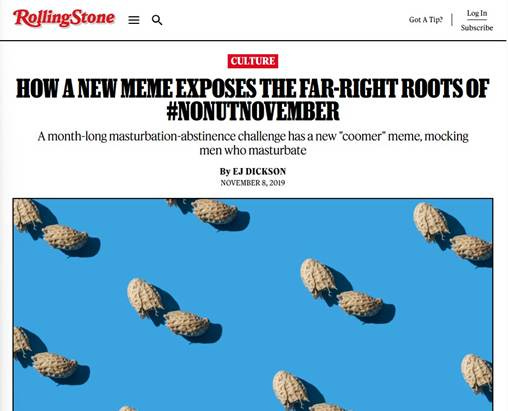
Why do you think the Rolling Stones is concerned that men shunning porn is a right-wing phenomenon?

Because avoiding the trappings of porn and masturbation helps men break out from under the spell of what could turn them into lifelong simps. A man who diminishes himself in this way is much more likely to fall into a relationship with a woman who uses sex to draw him in and then use it to dominate him for life.

When feminists and progressives basically confirm what Solomon says, but from the opposite direction, you should really listen to him.

But many people reading this will be thinking, “How does this help me with my difficult wife? I am already living in this kind of situation.” You are right; my article here is more preventative than directed at transforming an already broken marriage. The correlation between a woman who constantly berates her husband and one who has turned down the sexual tap over time is very high. So, what is your recourse?

Well, remember, look at what Solomon repeats and therein you will find wisdom. In Proverbs 21:9, Solomon says this, “Better to dwell in a corner of a housetop, Than in a house shared with a contentious woman.”

Just in case the message has not landed, he says again in Proverbs 21:19, “Better to dwell in the wilderness, Than with a contentious and angry woman.”

And for those who are particularly hard of hearing, he again says in Proverbs 25:24, “It is better to dwell in a corner of a housetop, Than in a house shared with a contentious woman.”

Three times Solomon writes the same thing. He slightly changes the illustration, but he repeats the same principle three times. If your marriage has descended from a relationship of mutual love and regular affection initiated and reciprocated on both sides, into a situation where the wife is constantly at you and has nothing but contempt for you, then you need to be willing to live anywhere but with her.

In fact, many men find that when they make this decision, that is often when things start to turn around. Hence, being willing to shun the contentious woman and live somewhere else, ironically, is one of the more effective ways of reigning in the contentious woman.

Of course, this is not guaranteed to be successful and is often not. Solomon speaks more in principles than in promises. Some marriages are just too far gone, even he recognizes this, “A continual dripping on a very rainy day And a contentious woman are alike; Whoever restrains her restrains the wind, And grasps oil with his right hand” (Prov. 27:15). Sometimes you have failed to assert yourself for too long, or worse, you have made so many mistakes in your marriage that she cannot bring herself back into fellowship with you because all love and marital duty has been drained and the affection that was once there is long gone.

But even if it does not work, Solomon’s words are wise. Some people will say you have to stay and serve her, and live like roommates for life, even though what made your relationship a marriage is functionally dead. And yet Solomon says the opposite. Why?

Because the Bible has an insight into human nature that often those of us who follow its ways do not; until we have seen it applied properly, at least. I think behind many, not all, but many contentious and unruly women is fear. Sometimes it is not this; it is just a bad woman.

But remember, I said in my first piece in this series that any woman can become the bad or difficult wife if her husband sows enough negativity. Some women react to this by becoming the difficult wife. It is not what they want to be, it is not what they intended to be, and driving the man away is not their end goal. Sometimes seeing the consequences of her speaking to her husband this way, as he plans to live in his tent somewhere else, will bring her to repentance.

So, sometimes, to save your marriage, you have to be willing to shun it. It sounds counterintuitive. But I think this is at least part of what Solomon’s advice points to, and I have seen this applied in this way, and I have seen it turn things around.

As I said, this is not a guarantee. But then in this fallen world you can do everything right and still things can go wrong. Such is living on this side of paradise…

Till next time, God bless you.

  •  

„Die USA übernehmen die vollständige Kontrolle über Venezuelas Öl“

In der TASS ist ein Artikel erschienen, der sehr verständlich erklärt, welche Folgen der Öldeal der USA mit Venezuela hat, daher habe ich den TASS-Artikel übersetzt. Beginn der Übersetzung: Die USA übernehmen die vollständige Kontrolle über Venezuelas Öl Igor Juschkow darüber, warum Caracas zum Austritt aus der OPEC gedrängt wird und was das mit China […]
  •  

Whistleblower Claims USPS Rushed Mail-In Voting System Despite Court Challenge, Could 'Derail' Midterms

An anonymous whistleblower claimed the US Postal Service (USPS) is ignoring a court ruling by moving forward with efforts to implement President Trump's executive order to tighten requirements for mail-in voting.

The Details: According to the whistleblower, USPS violated court orders by moving forward with a "secretive, rushed" effort to implement technology to comply with Trump's directive, despite it still being challenged in court. The whistleblower claims the new system hasn't been tested enough and risks "catastrophic failure" that could "derail" midterm elections for "potentially millions of American voters," including by delaying or preventing eligible absentee voters from receiving their ballots. The complaint was shared publicly on Tuesday by Sen. Richard Blumenthal (D-CT).

The New System: In March, Trump signed an executive order ordering the federal government to create state citizenship lists and require USPS to send ballots only to people on those lists. The administration said this helps ensure only American citizens are voting in elections. As part of this order, Straight Arrow News (Center bias) reported that the USPS would require unique barcodes on the outbound and return envelopes for mail ballots. States would be required to submit the names and addresses of voters receiving mail ballots and their unique barcodes to the online "Federal Mail Ballot Portal." The order is currently being challenged in court.

From the Left: Outlets on the left emphasized the whistleblower's claims that the technology could negatively impact the midterms. The New York Times (Lean Left) said "Voting by mail would become much more difficult, if not impossible, for tens of millions of Americans" if USPS is allowed to put "the restrictive rules" in place. ABC News (Lean Left) cited concerns from lawmakers, voter advocates and civil liberties groups who it said "worry the rules could prevent some legitimate, eligible voters from receiving ballots." The outlet said these groups fear "an added bureaucratic layer" which has the potential for "federal meddling." However, ABC briefly noted at the end of its article that "For most voters, nothing is likely to change how they cast ballots by mail in the midterm elections" as the court fight continues.

From the Right: The Washington Examiner (Lean Right) wrote, "Consider the source," and said the complaint comes ahead of "a key deadline" in the Trump administration's legal battle over the order. It noted how quickly Democrats picked up the story and quoted a spokesperson from the Advancing American Freedom organization who said they believed the accusations are "impossible to verify" as the claims are "very general" and "paints only a worse-case scenario." The National Desk (Right) acknowledged that USPS was allowed to work on the system despite the legal challenges, "as long as states were not using it."

Written by the AllSides staff (of humans). Learn more. Support our mission. Suggest an improvement to this summary.

  •  

Pedophile Rabbi Requests Israeli Extradition While Facing Sickening Array of Child Sex Charges in NYC

A 66-year-old rabbi from Central New York has been arrested and charged with attempted rape after allegedly trying to meet who he believed was a 14-year-old boy for sex. The intended meeting was part of [...]

The post Pedophile Rabbi Requests Israeli Extradition While Facing Sickening Array of Child Sex Charges in NYC appeared first on The People's Voice.

  •  

11 settembre in TV: boicottiamo Discovery

Questo il testo suggerito: “Con la presente chiedo la sospensione della imminente puntata sull’11 settembre, che è stata affidata ad un conduttore inadeguato come. In alternativa, chiedo la presenza di qualcuno preparato sulla questione 11 settembre, che possa fare da contraddittorio alle tesi di Moccia. Se la puntata dovesse andare in onda senza contraddittorio, sarà mio impegno evitare in futuro di guardare canale NOVE, di invitare tutte le mie conoscenze a boicottarlo, e di denunciare tramite social la eventuale messa in onda di false informazioni da parte vostra. Inviterò anche chi ha un abbonamento a Discovery o altri canali Warner a considerare la cancellazione dell’account, in segno di protesta.” /// Questi gli indirizzi a cui spedire la mail: discoveryitaliasrl@legalmail.it, milan_wbdreception@discovery.com, info@discovery-italia.it /// Qui la lettera inviata ad Aldo Romersa: https://luogocomune.net/11-settembre/11-settembre-in-tv-boicottiamo-discovery /// Tutti i documentari di Massimo Mazzucco: https://massimomazzucco.net

L'articolo 11 settembre in TV: boicottiamo Discovery proviene da Casa del Sole TV.

  •  

4 passadiços extraordinários no Algarve que tem de percorrer pelo menos uma vez na vida (com vídeo)

O Algarve tem muitos passadiços a partir dos quais se pode apreciar a beleza da região, enquanto se aproveita para fazer exercício físico.

Venha daí à descoberta de quatro deles. Vamos caminhar por arribas impressionantes, ver praias de sonho e assistir a um pôr do sol mágico, mas também desafiar os medos, caminhando por uma ponte suspensa na montanha.

Assista aqui ao vídeo

1. O Charme Histórico de Carvoeiro (Lagoa)


Comecemos por um passadiço pequeno, mas que é dos mais impressionantes do Algarve.

Situado em Carvoeiro, no concelho de Lagoa, o percurso liga o Forte de Nossa Senhora da Encarnação — construído por volta de 1670 para proteger a costa dos ataques de piratas — ao icónico Algar Seco.

É lá que se localiza a mais famosa “Boneca” algarvia, uma formação rochosa única que esconde uma gruta com uma janela natural voltada para o mar.

Assista aqui ao vídeo

2. Da Praia à Lagoa em Armação de Pêra (Silves/Albufeira)


Cumprida a primeira viagem, seguimos em direção a um trilho ideal para quem procura maior extensão.

Com 4 quilómetros de comprimento, esta caminhada pode ser iniciada junto à praia de Armação de Pêra.

Ao longo do percurso, o trilho atravessa uma ribeira e uma lagoa costeira, conduzindo os visitantes pelos cenários naturais e planos até junto à famosa Praia dos Salgados.

Assista aqui ao vídeo

3. As Arribas Icónicas da Ponta da Piedade (Lagos)

A terceira sugestão fica no concelho de Lagos.

Estamos a falar dos Passadiços da Ponta da Piedade, a partir dos quais se consegue vislumbrar algumas das praias mais belas e fotografadas do Algarve, como a da Dona Ana e a do Camilo.

O caminho leva-nos até a um farol centenário, situado exatamente na Ponta da Piedade.

Dali, os mais aventureiros ainda podem seguir em direção à Praia do Porto de Mós, conhecida como um dos melhores locais da região para assistir a um pôr do sol mágico.

Assista aqui ao vídeo

4. A Vertigem da Serra no Barranco do Demo (Monchique)


Se prefere o ambiente e o fresco da serra, a opção mais espetacular é o Passadiço do Barranco do Demo, situado bem perto da aldeia do Alferce, no concelho de Monchique.

Afastado do ambiente de praia, este trilho destaca-se pela sua vertente cénica e montanhosa.

O seu principal motivo de atração é uma imponente ponte suspensa com cerca de 50 metros de extensão, que cruza o desfiladeiro e é indicada apenas para os caminhantes mais corajosos.

Leia aqui as notícias do Algarve

Assista aqui ao vídeo:

YouTube Video

  •  

We ask five musicians: Can anyone ‘make it’ in today’s music industry?

LONDON, ENGLAND - OCTOBER 15: (L-R) Josh Solomon, Chase Huna, Adam Balasco and Nate Bellon of The Empty Pockets perform at London Palladium on October 15, 2025 in London, England. Photo by Robin Little/Getty Images
https://rss.libsyn.com/shows/126614/destinations/757400.xml

The 20th-century days of vinyl records, tape decks, CDs, Tower Records, and MTV have given way to our 21st-century age of MP3s and music streaming, Spotify, Amazon, YouTube, TikTok, and Ticketmaster. While certain people and certain companies in the music industry are making more money than ever, working musicians are finding it increasingly impossible to pay the bills and make a living from their art. In this episode of Working People, we speak with all four members of veteran Chicago rock band The Empty Pockets about the work that goes into being a professional musician, and the realities of working and trying to make a living in the music industry today.

Additional links/info:

Featured Music:

  • Jules Taylor, Working People Theme Song

Credits:

  • Audio Post-Production: Jules Taylor
Transcript

The following is a rushed transcript and may contain errors. It will be updated.

Maximillian Alvarez:

Alright. Welcome everyone to Working People, a podcast about the lives, jobs, dreams, and struggles of the working class today. My name is Maximillian Alvarez.

Jules Taylor:

And I’m Jules Taylor.

Maximillian Alvarez:

So you guys all know Jules as the producer of this podcast, but let me tell you something about brother Jules here. Jules is a renaissance man. He is a podcaster himself, as many of you know. He’s a writer, a music producer, a poet, and a brilliant musician in his own right. And he does all the music for working people as well. And that’s why I really, really wanted us to host this episode together because today we’re actually going to be talking about the work that goes into being a professional musician and the realities of working and trying to make a living in the music industry today. And that industry looks a lot different than the music industry that we grew up with. Those 20th century days of vinyl records and tape decks and CDs and tower records and MTV, man, those have gone away and given way to this 21st century age of MP3s and music streaming, Spotify, Amazon, YouTube, TikTok, Ticketmaster, et cetera, et cetera.

You guys know what I’m talking about. And I love music just about every single kind, and I always have. And I need music to live. And life itself would be so much less, I don’t know, magical to me if I lived in a world without music. And my playlists and my mix tapes are, and have always been, I think of Frankenstein’s mix of just the cheesiest pop, the hardest hip hop and gangster rap, the most classic Motown, the rock and roll, indie, ’80s, ’90s, early aughts, Broadway soundtracks, movie soundtracks. Just like me, my playlists contain multitudes, baby, but I can’t read music for shit and I can’t play an instrument to save my life. So my understanding can really only go so far here, but I’ve always been and continue to be in just total awe of musical people. And Jules, you are a very musical person.

You live this, you breathe this. And we’re going to dig into this more with our guests today, but by way of, I guess, introducing the conversation, if you had two minutes, how would you sum up your entry into the world of music and the good, bad, and ugly parts of your life as a working musician today?

Jules Taylor:

So hey Max, glad to see you, buddy. Man, thank you so much for the invite to co-host this conversation I’m really excited to be a part of. And I guess the short and simple of why I decided to make Go Music is that I consider myself to be, to a certain extent, largely unemployable. And I sort of just dreaded the thought of having to maintain a consistent nine to five, but I knew music was something that I could wake up early if I needed to, but something I would wake up for anytime I could be a part of it. And so in some ways it’s the only thing that I can do, but in other ways it’s also led me to everything else that I do, whether that’s studio work or live sound and eventually things like photography and shooting music videos and podcasting, flying drones and everything that it all kind of just comes back to the central urge of wanting to figure out how to make a living out of taking a guitar on stage and just playing original and covers and seeing how to make a go of that.

Somewhere in there I decided to challenge myself, see if I could actually make a living out of it. And that’s ended up why I produced podcasts too. So many gigs come out of needing other gigs to support the music.

It’s something that benefits you to help support it in some ways. I mean, it’s like a dream, hope and a prayer, but somehow you’re like, “Hey, but I ended up with seven career paths.” So anyway, but that’s how I got into this stuff, man.

Maximillian Alvarez:

Well, let’s talk about this more, right? Because I know I have so many questions and I’m sure our listeners have so many questions. What is it actually like and what does it actually take to make a living as a working musician today? What does the music industry as it exists today take from musicians and take from the rest of us? And what are we getting in return? Is that bargain worth it anymore? And how do the working and living conditions of music makers and all these moneymaking schemes of the music industry, how do all those shape the actual music that we make and consume and listen to and dance to and think to and live to? How do they shape the ways that we relate to music itself? So this is what we’re going to be talking about today, and I am just beyond excited and really, really grateful to be talking with all four members of Veteran Chicago Rock Band, The Empty Pockets.

So they’re here with us now to dig into all this. And thank you all so much for joining us on the show today. And Jules, thank you so much for co-hosting this man. So let’s go around the table and have y’all introduce yourselves and your band to our listeners.

Josh Solomon:

Max, Jules, thank you so much for having us. That was so many insightful things you guys said already. I’m Josh. I’m the guitar player of the Empty Pockets and I started this band with Nate 20 years ago. Our singer and keyboard player, Erica, is my wife, and I have made a full-time living humbly, a humble full-time living in music and the arts for well over 20 years.

Adam Balasco:

Hi, I’m Adam. I play drums with the Empty Pockets, but also as a working band, I do a lot. We all do a lot of stuff that has nothing to do with music. So I do customer service and shipping and we do warehousing. We load our own gear. We do a lot of work outside of just our instruments somewhat, unfortunately. I think we’ll get into that at some point probably, but yes, drums.

Erika Brett:

Yes, we are all Renaissance people, as you said early in this broadcast. I’m Erika. I play keyboards, so Oregon, roads, piano. And yeah, I’ve been a full-time musician for almost 20 years, maybe longer than 20 years. And my big role with the band is graphic design, merchandise development, and social media promotions and marketing. We all have a lot of hats.

Nate Bellon:

Hey, I’m Nate. I play the bass. This is one of my hats. We have a lot of roles and one of my roles is physical maintenance. And so Josh and I actually built the studio room that we’re in, and we have built this room out over 15 years or 16 years quite physically. We literally have done all of the work or very close to all of the work. And it’s just one of the things that you end up doing to become and maintain your status as a professional musician.

Erika Brett:

You’re also the vehicle guy.

Nate Bellon:

Well, that’s true. Yeah. It’s

Josh Solomon:

A physical thing. Yeah,

Nate Bellon:

Physical

Josh Solomon:

Stuff. Nate’s very mechanical.

Maximillian Alvarez:

I mean, let’s not sell him short. We call that the getaway guy.

Erika Brett:

Nate’s perfect for that.

Jules Taylor:

Well, Josh, Erica, Nate and Adam, Matt, it’s so cool to be talking with y’all. And I think it’s funny how immediately in this conversation, there’s a sort of vibe of anything we have to do to keep doing what we’re doing. I mean, that’s kind of the credo around that I think of from time to time. But I guess I have a very broad question and in that broadness, I’d like to invite you to get as specific as you’d like, but said very plainly, how are y’all making this work today in today’s touring climate? So rarely do we get to speak to a band that has been together as long as y’all have. And so in this shared experience of performing, how are y’all contending with this changing landscape? Where have you had to pivot? Not just in rising gas prices and inflation and the evermore difficult task of convincing folks to put pants on and leave the house, but also in the merch game.

I mean, selling your music and physical media at shows has morphed into this sort of t-shirt and trinket hustle at times. So basically the odds of an independent band being successful in air quotes, however we define that, if I’m going to use the word successful in terms of carving out a meter existence, those odds are ever more stacked against us. And so what are you doing differently today compared to say maybe 2005 and where are y’all finding the most success?

Josh Solomon:

It’s Josh here and I’m 41, so 2005, 2006, I’m 20, 21 years old, totally delusional with no perspective on. How do I totally put it? Every time we go to a town, a fan says to me, “Oh, you got to come play in this place.” We’re in a 200 seat venue. Every time a fan is like, “You got to come play this little place in my town.” I look it up. That place he’s talking about every time is 2000 seats. People have zero concept. We’re like a 200 seat theater band. People have zero concept of the amount of things between us and the eras tour. And I think from my perspective, and I’d love to hear what you guys have to say too, to answer even just a part of that question is we’ve doubled down on physical media so hard and we talk to and collect, and this is working increasingly better, I think as a portion of the population feels more and more left out by the commoditization of music.

When you put music on a streaming platform and it’s the same every single song ever made on every streaming platform, which is different than movies and TV, that becomes a water tap and it’s just a price race to the bottom. So we basically, while we put our music on those services from our perspective, that’s like a token.

Erika Brett:

Yeah. We used to kind of be waiting for our prints to come, as some people say.

Josh Solomon:

Attracting an

Erika Brett:

A&R ride. Yeah. We had a song that some radio people were like, “This could be a hit.” And then you’re waiting for that to be the case. Now that wasn’t the case for us, but we were able to, over the course of the last 20 years, but really over the last kind of how you described 10 years, diversify our income streams. We went from playing whatever gig we could get to becoming a backing band for artists with large followings and then opening for those artists to gain awareness and gain more fans and also prioritizing an e-commerce strategy, which is what Josh was talking about, our physical products. And so we’ve moved away from streaming. Streaming is great and we also listen to music there, but for our business, we are directing people to physical products and shows.

Josh Solomon:

Jules, you had mentioned one of the reasons we all get into this is because I just don’t want to go to a nine to five every day. I want to do something different every day. So a couple of years ago, this studio needed repainted. And one of the ways you stay a full-time musician is you don’t hire a painter. You buy some paint and you paint the studio. So I found myself and Adam and Nate here. And Adam, do you remember what you said as we were painting it?

Adam Balasco:

Yeah. I always say I like any job, manual labor, whatever the hardest thing you’re imagining is weefing today, right now. I like that for one day, three days. I’m outside, I’m up on a roof, it’s cool.

A week. Turning anything into a career is so daunting. But yeah, that is how we save money and kind of stay afloat is like we painted that. You were talking about building this studio and then I was like, oh yeah. And then it’s white now because we painted. We painted it and stuff like that is how we’ve kind of taken. And we’re not waiting for that lottery ticket. We would love our song to go crazy on the radio or streaming or whatever. We’re not waiting for that lottery ticket. We’re acquiring fans one at a time and we’re doing all the work or we like to think we’re doing all the work ourselves and we’re desperate in a sense. And

Josh Solomon:

We’re doing it all. Jewels had the same attitude as us in terms of, I don’t want to be a painter for a living. I don’t want to look down the barrel of that. I’m impressed with somebody who can do that. I know some amazing house painters, but I’m not above painting. I’m not above doing some electric.

Erika Brett:

Well, and the thing with owning an arts business of any kind too is that you are going to inevitably become a Renaissance person. You’re going to have to learn about lighting so that you can make videos that resonate. You’re going to have to learn about editing. You’re going to have to learn all of these things about vehicle repair.

Josh Solomon:

The myth goes that when the Rolling Stones got to Chess Records here in Chicago, Muddy Waters was painting the wall. That’s the myth that when the Rolling Stones got to chess in the early ’60s that Muddy Waters was painting. So it’s not new at all.

Maximillian Alvarez:

It’s interesting to me too, because so much of what you guys are saying, even as a self-professed non-musical person or non-musician, so much of what you’re talking about resonates with my own experience as a creative and a creator in media spaces and just that need to kind of adapt to an ecosystem that’s always changing. And there’s always opportunity in that as well as a whole host of new threats and stressors to deal with. It’s wild, man. We’re talking on a podcast I made because I was like, people aren’t reading my articles anymore. And that kind of process has sort of led me to get into audio reporting and now video reporting and any and all of the above I love to do, but there also comes a price with being able to make a living doing what you love. And I wanted to kind of talk about that too, because I can’t speak from your guys’ and Jules’ vantage point.

That is your art. That is still different from the reporting that I do. The two very much intersect. I bring a lot of my artistic heart and spirit into the work that I do, but I know just by being privileged enough to get paid to do that for a living, that it really changes my relationship to the thing I’m doing, to the ways I feel about doing it. And the love when it becomes a job takes on all of that baggage from all the unloving parts of life. So how does that affect you guys as musicians and the music that you make?

Josh Solomon:

Man, what a great question. There’s so many pieces of that. One that comes right to mind to me, and I want Nate to speak on this and Adam as well, is they both had children and we’re on the road and our dreams are kind of coming true. We’re at the London Palladium, it’s sold out, but a month into a tour doing something you love too, there’s an element of, do I love this the same amount today? And I don’t know, Nate, what do you think about, you had to leave your son at home for the first time pretty recently.

Nate Bellon:

Yeah. So my kid had just been born and then we went on tour in the UK for a month and we were in Amsterdam and all over the UK. We took the Chunnel twice. So there was a bunch of stuff where I was like, this is cool. I should be ever present in this moment. And also it’s hard because I wasn’t seeing my newborn kid and my wife and you try and balance that emotionally and then you get to play shows. So I get that sweet juice that I need in order to make it through the next couple of days.

Josh Solomon:

Jules definitely knows this feeling too. When you’re on tour, there’s the same amount of time in every day when you’re at home, except the part that you’re leading towards is like an hour and a half and the rest of the day is leading towards that moment or coming away from that moment. And it is an exhilarating but strange experience.

Jules Taylor:

Yeah. And then you get to figure out that an hour is just a completely useless denomination of time. It’s just not enough to dig into anything. It’s not enough to really relax if you need to, but you have an hour before this one critical thing happens before you have another hour or something. But yeah, I totally understand that, man. Being away from home, it’s difficult to, especially with the sort of constraints that a lean and mean tour might have on its subjects, being away from home, being somewhat restricted in that sense, and being torn between these beautiful things you’re experiencing on tour while also having the regret of having to leave. I got a buddy of mine who plays guitar with Playboy Cardy. The guy is on tour with that guy playing arenas. And even he the other day texted me, he’s like, “My wife’s due in 12 weeks and I leave for tour in 13 weeks or something crazy like that.” But I wonder also, you guys also seem like you’re very chummy, right?

You’ve been together a long time, but I would say that touring and these moments also kind of create friction amongst band members and inevitably you end up with some comical story at some point. Do you guys have a singular story you could pick out of some sort of tense moment that resulted in something hilarious?

Maximillian Alvarez:

And remember, this is a worker and labor focused show. So we’re really talking about, give us a worker’s eye view into the labor of having to go on tour with each other and deal with everything you’re dealing with.

Adam Balasco:

Well, I don’t know. No funny stories immediately come to mind. I’m sure they exist, but being in a band is like doing a group project with your immediate family, which is horrible at times and also amazing. And it’s hard to communicate the band dynamic because it’s like I deeply love these people and we live in a van and sometimes an Airbnb or a hotel. So it’s like –

Josh Solomon:

There’s an interesting balance there too, and I think a lot of small businesses have this balance, like where to put your office, how nice of a neighborhood to put it in, that type of thing. For us, it’s like how much to spend on a hotel, how much to spend because there’s a balance between sustainability, vibe, morale. Man, we’ve cheaped out a couple times and checked into a hotel and you’re only there for 12 hours and it’s just crushing your spirit.

Erika Brett:

Bloody hand prints. Oh my God. Oh my God, you guys.

Maximillian Alvarez:

Jesus, what motels are you guys staying at?

Nate Bellon:

Was that the Bay Bries Inn?

Maximillian Alvarez:

Yeah, I was going to say the Bates Motel, man.

Josh Solomon:

Yeah.

Erika Brett:

We’ve got some horror stories for

Josh Solomon:

Sure. And in terms of from a worker perspective, there’s nothing reasonable or OSHA friendly about how a band operates at our level at all, right? It’s like in the band at 7:00 AM, maybe stop for a lunch. We have a tour manager who does most of our driving. Then before that, it must have been really unsafe.

Adam Balasco:

Definitely.

Josh Solomon:

It

Adam Balasco:

Was just us.

Josh Solomon:

It was just us. And you go to an interview, you load in. The days are 14 and 15 hours. I always call on tour a processing deficit. You can’t even go through what you did today before you get tomorrow. And we’ve learned a lot about how to plan better, about how to demand more. I like to say a gig is legitimate when they offer you a meal. Sometimes you go to a gig and you’re there from 4:00 PM to 1:0 AM and you’re like, “Is there anything to eat around here?” And they’re not like, “Not within two miles.” Who

Erika Brett:

Wants to help with that? Why?

Jules Taylor:

Yeah. Yeah. Or the green room plate of mac and cheese. Yeah. Yeah. It’s a testament every time I talk to musicians, you can tell who’s really giving it a go because they have all of the ingredients for the recipe. They have all the social media, all the marketing. They actually have the website, the domain, the EPK, the video, the bio written by a third party that you probably paid someone for. All of these different things, this elaborate recipe that just equates out to a starting point, right? Yeah. It’s

Josh Solomon:

So depressing. It’s a starting point.

Jules Taylor:

It’s all a starting point. Yeah. Tell me. You

Josh Solomon:

Were using it as a metaphor, but just to exemplify, we’re the empty pockets. We take that seriously. We write about labor issues. Our next album is called Dear Billionaires. And to that effect, especially when we open for someone on a tour, back them up, there’s an elaborate rider in that deli tray and chips, whatever, all this food, fruit. We have permanent coolers. We never leave a venue without as much food and ingredients. We have banned salt and pepper. We literally stop at a picnic table on the side of the road and unpack our coolers, and that’s mostly lunch. And we’ve really embraced that. And

Erika Brett:

We really have to be thrifty in every part of what we do. Not only have the margins gotten worse, like you were saying everywhere, in hotels, gas, food, all the things that make our engine run, but I was watching the Today Show this morning. It happened to be on, and they’re giving financial advice. And without a steady paycheck, none of those things work for us. We can’t go to a financial planner in the same way somebody with a 401k or just even a regular paycheck can. We really have to take saving money and spending it carefully very seriously.

Jules Taylor:

Yeah. It’s just a testament in so many ways whenever I talk to any musician who’s making this go and making it work is that you don’t really need the bosses because the workers can do anything under any conditions with any circumstances that come up on the road with unsure pay and just questionable sleeping conditions. It’s like where there is determination and this deep written desire to create music and to do this as a main vocation, as a focus, as a primary way of living your life. It’s just a testament to the incredible sort of willpower that comes from artists who will do anything to continue being able to create art. And so I’m not worried about a dictatorship of the proletariat at all because have you seen some of the musicians we talk to people?

Maximillian Alvarez:

Well, that’s what I wanted to ask about actually, is because music, as far as any of us, and I say us as musical and non-musical people, but living in America, having the culture industry that we have, music was as much a potential career path as being a famous actor or a famous athlete. I mean, there is a sort of level of super stardom that was selectively occupied by people like us, it seemed, growing up. And it was possible to play music that was so good that reached so many people that you could make not just a living, but a superstar’s living. And you could have all the security you could ever need and the fight from your humble beginnings and insecurities would all be worth it if you made it to that star echelon. I mean, same thing goes for the way I thought about being a professional basketball player with my brothers for many years growing up, or even people now who are in the media and see the media as the only path for success in journalism or in the media is the superstar path where you’re getting paid so much and you have such a far reach that you’re Joe Rogan and you can kind of have that echelon that none of us are ever going to ever reach.

But I say that all to say, obviously there’s always going to be a lot of folks who still look at these industries and vocations and arts and sports this way, but I think the veil’s been lifted for a lot of us and we’re like, “That ain’t happening. I ain’t making it and no one else is making it in today’s economy in that kind of direction.” And there is a lot to be mourned about that, but I think there’s also something that’s very liberating when we are not pursuing our passions out of a place of desperation or out of desires for lavish, luxurious, ridiculous wealth. And that struck me in something that I’d heard y’all, Josh and everyone with the empty pockets is not something that you’ve been aiming for, but you want to make a good middle class living. And so I wanted to kind of meditate on that.

Once we sort of recalibrate our visions, our imaginations and our hopes for what we want to do with this, what does that give you back that a career trying to make it in a Spotify age as a superstar would take from you otherwise?

Josh Solomon:

Yeah, totally agree, man. I like to think of it also, it’s like becoming an astronaut to say, “Oh, I’m going to go have John Mayer’s career or I’m going to go have Taylor Swift’s career.” It’s absurd. More than ever, and I think it’s good, the niche-ification of taste has made it so there are even fewer superstars than there used to be. There are very, very few superstars. Like I said, when I was in my 20s, I had these delusions and I let those go and I discovered about myself. And I think you guys would agree that more than the massive success, because for the most part there are exceptions, that comes with chains, with you were successful in this lane and now you have to deliver this thing. Brilliant people like that guy Larry, the cable guy, his persona, you’re stuck there. You have to deliver your thing.

What I want more than anything else, which we have a lot of, is freedom. We make enough money to get by, but we can do whatever we want. Our biggest constraint artistically is ourselves. That’s what keeps me going.

Nate Bellon:

Jules, you had mentioned it previously, the changing landscape of the music industry. And I think one of the things, because we started as a band in 2006, so the music industry was literally falling apart or had already fallen apart and some of the gatekeepers or higher ups hadn’t admitted it to themselves. The nature of the landscape was changing. And so we found that certain people that we would hire in positions, that’s their mindset. Let’s get you to superstardom level. And I feel like going through that cycle a couple of two, three times, we were able to not only learn, but then solidify both in our minds and then out wow later, here’s what we consider success.

Josh Solomon:

It’s such a good point.

Nate Bellon:

If we can just do that, we’re a success.

Josh Solomon:

And philosophically, when Eric and I met before we got married, one of our first dates, we went on and on to each other about scale. And Adam feels passionately about this as well. There are certain things in the world that need scale, right? We shouldn’t do small businesses to get to the moon. I get that. We need a certain amount of scale to make computer chips, but that doesn’t mean every burger joint and coffee shop and bookstore needs to be scaled. And there’s an element, okay, we have economies of scale on one side, but there’s an element of massive inefficiency. And what we found, and we keep finding in entertainment in general, is that the basic strategy to make someone a superstar is brutal Millions on raw awareness. Blanket,

Erika Brett:

Blanket marketing.

Josh Solomon:

That’s why people get annoyed about hit songs because they’re hearing a song over and over again that’s not even meant for them. Nobody wrote Espresso for me. There was, but why did I hear it a hundred times? I wasn’t interested. I gave zero indication of the choices I made in my life.

Erika Brett:

Sabrina, it’s for me. It’s for me.

Josh Solomon:

And we have the ability with technology to target so accurately now. So the major labels, including big movies, Marvel movies and stuff, they’re all still doing this super inefficient. And we’ve decided the opposite. We want to build our small business and keep building it, getting razor focused. We get new fans every day and we’re trying to maximize their fandom of us and their value to us, but without worrying about getting to 10 million people a year.

Erika Brett:

What I think you guys will appreciate is that we are a band and yes, we’re making music, but we took e-commerce strategies that are not based on music, that were based on books or smaller items. And we kind of did our own authentic application of that for our career. And that has allowed us to expand our audience and find our audience through advertising, targeted ads and word of mouth.

Josh Solomon:

Touring is about 40% of our revenue. It’s something like that. A lot of our revenue is physical music and a lot of that is shipped from here. I’m talking about vinyl, talking about CDs. Not as many for us. It’s a different type of band, not as many t-shirts for us. So I’d love to do more shirts. And that’s all about just using classic commerce, e-commerce and marketing logic to build a fan base in the same way that a book company or a razor company would build their fan base.

Jules Taylor:

I love that y’all brought up Sabrina Carpenter because she was not on my radar. And then this last album dropped and her marketing was all over the place. And I just slowly got initiated into the house tour track and the one where talks about maybe it’s slow or whatever, but now I know her lyrics. I know her visual signature. And it’s funny. Come on,

Maximillian Alvarez:

Man. Manchild is a bop. The

Jules Taylor:

Whole album is great.

Maximillian Alvarez:

Manchild is such a bop. It’s such a bop. Men today need to hear it. It is an anthem for the ages. That and Olivia Dean’s Man I Need are two of the most essential songs that every fucking man who is alive today needs to hear. And I don’t think it’s an accident that our zeitgeist is producing such desperate, beautiful please from women for men to fucking be better. And I think it’s through music where a lot of men learn that kind of thing. And I think that’s a good thing. I don’t mean to stand on a soapbox here, but I didn’t realize I was going to defend Sabrina Carpenter so virulently, but you guys stirred me up, baby.

Josh Solomon:

And this newer album is fantastic and there are all these, you’re right, that thread is all around music. Taylor Swift, Olivia Rodrigo has that same vibe. Maybe men will listen. I don’t know.

Maximillian Alvarez:

They will. And I think there’s honestly, and I’m just speaking personally here and then we’ll kind of bring things around the final turn here because I can’t keep you guys for too long, although I could talk to you for hours. I think I had reached a state of exhaustion recently and it felt like almost a decade long period of cultural exhaustion. And I don’t think I’m alone. I think a lot of us felt that and we receded into it, especially with COVID. We watched the same series that we already had seen, movies we already knew, songs we already had on our playlist. I know for myself as a lifelong lover of art and culture and new things, I really retreated. And I think part of it, not all of it, was fueled by the sort of feeling that it’s like nothing’s good anymore or the quality of everything is sucking just a little bit more each time and I’m not participating in it damn. I’m going to hang on to the things I know are good and just listen to those for the rest of my life. So that’s the kind of petulant place that I was in as a modern music listener. And again, I feel like I’ve talked to a lot of people who felt that same way. And I think that actually the Spotify algorithms and stuff sort of reinforce that sense of just playing the hits or trapping us in these silos, these cultural silos, instead of getting to explore and experience and find bands like yours that we would like but have no idea exist.

And I know that people are looking for that, they’re hungry for that. And I am so goddamn grateful when I hear it coming out of my speakers. And I guess to just tie a bow on the point, I’ve been hearing that of late with some songs that have given me some hope in pop culture of late. And I think a lot of it goes back to Olivia Dean, Rodrigo, Sabrina Carpenter and the somber. I think there’s a lot of necessary cultural discussion that is happening in and through those songs that needs to be had and isn’t happening in enough places. So I thank music for that. And I wanted to sort of bring us back around to that sort of beautiful, necessary part of what music is for all of us and what we look to music for. And I wanted to ask y’all, all of you, Jules, you’re included in this.

I’m roping you into our final round, but let’s start with what is your least favorite part about being a working musician and what is your favorite part that makes that and everything else worth it?

Adam Balasco:

I’ll start and say my least favorite part of being a working musician is that it made music work. And this was alluded to earlier, but I leave here a lot of times and I put a baseball game on or sports talk radio on or something like that because this saps a little bit of my musical energy. And so anyone who has a nine to five job and you get a pizza and some beer on a Friday night, you play music with your friends, know that I am so jealous of that. And the magic in that is a little bit lost, I will say. We’re

Josh Solomon:

Almost chasing that vibe.

Adam Balasco:

Yes. And paradoxically, and I love paradoxes, again, the strength, the weakness, the pro, the con. I always say we are band. We’re arts kids. We all committed to being artists. We’re artists. And the irony is we ran headfirst into running our own small business. And I was playing around with spreadsheets and exporting CSVs this morning as Ari was doing her design work as Nate is patching a hole in the- The

Erika Brett:

Asphalt.

Adam Balasco:

In the asphalt in the parking lot. And Josh literally has his hands on all of that stuff. And to me, it’s both. I like that. I like doing the spreadsheets, but also we do this, we do the drums and stuff so, so much less. It’s like a fraction of what we do is play music. Mostly we’re running a small business.

Josh Solomon:

What a great answer. I think my least favorite part or one of my least favorite parts is feeling like I’m getting in the way or looking down on or condescending in any way to the hobby musician. So it’s a similar thing to you and while not getting invited into the hobby musician world anymore, both the combinations. So it’s really similar to what you’re saying. You know what I mean? And when I do get invited to the dudes who didn’t great musicians who now do other stuff, maybe it’s just in my head, but I feel a little bit like I’m intruding. I don’t love to do. Erica is such a great singer and she doesn’t love to do karaoke and everybody goes crazy, but it feels like, am I intruding on this space? The paradox.

Nate Bellon:

Yeah. The least favorite part for me I think is early mornings, late nights while you’re chugging it out on tour. And sometimes those can become never ending based on the schedule. I don’t deal well with life without my, I don’t know, 10 hours of beauty sleep. You don’t get this good looking without a lot of sleep is what I’m saying. And so everybody out in audio land, I’m gorgeous.

Adam Balasco:

Very attractive mate’s very good.

Nate Bellon:

I’ve been compared to the Greek gods of old. And so the early mornings, late nights, it just kills you after a while. Every one of us, if we’re out for long enough, you get sick. And then you’re spreading sickness around the van because you’re all just sitting in a dumb van for hours. I don’t like that part, but it all pays off because while you’re on the road, you get the purest of the sweet juice, which is you’re playing music live and you all enter this flow state together and you’re creating art that may never exist again in this moment. Worth all of that early morning, late night stuff.

Adam Balasco:

And let me just cut off Erica really quick because we’ll get to Erica. Nate went there. So let me just say in case my wife listens to this, I miss my wife and children when I’m on a road. It’s the real answer. Sorry, Erica, go ahead.

Erika Brett:

Good job band. Good job. Mine is similar to dates whereas he was talking about late night, early mornings. What we do, the travel and the carrying of equipment and gear and bags that we do is hard on the body. And we went in age order in this wrap up and I’m the oldest. And as we get older, taking care of your body has become much bigger of a priority. And it turns out it serves the music part a lot. A lot, a lot, a lot. You need to be in good health. You need to be in good shape. That’s

Josh Solomon:

Such a labor issue across the board.

Erika Brett:

You

Josh Solomon:

Have to take care of your body to keep being whatever profession it is you are.

Erika Brett:

And I had to do a lot of doctoring personally. I have a lot of chronic health stuff, so it’s been a lot to navigate. You come home from tour and you’re rushing appointments in and you’re trying to do things that you can apply on the road. So it is really difficult. But that being said, it’s led me on a path to be stronger physically, mentally. And the best part is being on stage, connecting to my best friends up there, the new friends in the audience, and feeling this cosmic moment that we share and no one can take away from us no matter what happens. It’s a radical act of joy and in a time where there’s fascism coming our direction in many ways, what we can do is create and give and be with one another and love one another.

Maximillian Alvarez:

Well said.

Jules Taylor:

Excellent. Yeah.

Maximillian Alvarez:

Beautifully, beautifully put.

Jules Taylor:

Man, well, to follow all that up, man, I guess my least favorite thing about being a professional musician is that everyone sees the work as play and then. So one instance of this is that I think of myself somewhat like a carpenter in the sense that I have a truck and I have all of my tools in it. And I drive around and it’s a beat up vehicle that takes me from contract to contract where I unload my stuff and I plug in and I do what I do. Right. But if I get pulled over, I’m not a worker all of a sudden. I’m a long-haired guy that probably has some weed in the car and I ain’t out doing shit. I’m out playing is what I’m doing, not working. And the whole small business thing behind stuff, man, it gets rolled real fast being the envy of every married guy being like, “Oh, you have so much freedom and you just go play music.” And it’s like, “No, man, I have bills, dude.

This is work.” But not only that, it’s like, “You must have so much fun doing this.” I was like, “Oh, you think I have fun trying to write heartfelt poetry?” I take this work more seriously than anything else in my life to where this pen and paper has ruined me. Putting pen to paper to put down some sort of heartfelt poetry that can also be abide by attaching melody to where I can go out and project that into the world for that singular cosmic moment that I live for, that is work. And people somehow think I’m enjoying the process at times. So yeah, it’s a weird paradox, man, because it’s like you’ll always be a disappointment to your parents who wanted you to become a doctor, but somehow you have to hold the knowledge of a doctor and train yourself physically to get to this apex of performance and you’re 40 now.

And you do this and somehow there’s still people that look at you and they’re like, “I don’t really understand what this guy does.”

Josh Solomon:

So spot on, Jules.

Erika Brett:

Someone said that to me in a mall once. You’re still doing that?

Jules Taylor:

Yeah. But it goes like, “Oh, you’re still doing the photography thing?” “What do you mean I’m still doing the photography thing? “That’s a vocation. It’s a career path. It’s a form of art. Yeah, I don’t know, man. But when you do have a choice in this world of pouring over Excel sheets or breathing in toxic chemicals, it’s like I’d rather the Excel sheets be my Excel sheets. I’d rather all this stuff be for me and that’s where I’ll work 80 hours for myself so I don’t have to work 40 for somebody else. Yes.

Adam Balasco:

Give me some toxic chemicals with those excels.

Josh Solomon:

I want to do it for myself.

Erika Brett:

You could talk about the baseball card gum that he ate that was like 10 years old.

Josh Solomon:

Great point, Jules.

Maximillian Alvarez:

Amen. Sadly, if you listen to a lot of the interviews we do on this show now, you’ll realize that we’re all getting blasted with toxic chemicals, whether we ask for it or not, but we’re all going to be part of the fight to stop it. And we all got to be part of the, I think, solution to our own critiques of the culture industry and the music industry especially. And I would say the same is true for media and journalism. You are right to not like a lot of the things that are unlikable, but if you want the things you like to continue to exist and flourish and give you what you get out of them, you got to support them. I mean, that’s true whether you’re talking about this podcast, The Real News Network, Jewels’ musical work, The Empty Pockets is musical work, independent creators everywhere.

If we don’t have your guys’ support, there is a very real chance that we’ll go away or stop being able to do what we do, even though we love what we do and we love doing it for you and for anyone who will ever hear it, see it, learn from it, get something from it. We’re in it to win it, baby, but we need you guys to be part of it. We do it for you, but we can’t do it without you. And so ending on that note, I wanted to just say that for any journalists and media makers and people who are interested in making a career out of that, since it’s the one part of this discussion I can speak on, the advice I tend to give people is that don’t commit yourself to doing this for a living, commit yourself to doing it to fight for life and follow where that leads you.

And in fact, it may be right and good and better for you to have multiple sources of income so that you don’t have to make the object of your devotion and your skill serve all these other ends, which means you’re not going to be able to do it the way that you want to. The work is going to suffer, you are going to suffer, but there are still some pathways available to come join me at the table of the suffering and do this work professionally. But they are so few and far between and the ecosystem is changing so much. So I can’t in good conscience advise anyone or coach anyone on that. I can just tell you that I am what I did to get where I am, what I think we all need to do to do the work that needs to be done, but the future is never assured and we don’t know what the landscape is going to look like in the coming years.

So that would be my central advice is you got to make a living however you can. And if you’re committed to this, do it, but don’t make it all dependent on your ability to make a living from it because that may actually be more of a devil’s bargain than you’re looking for, and it may take the love of this from you. So just be very mindful of that. And now to all the musicians, the artists, the creators who have been listening to you brilliant people talk about your working lives for the past hour, I wanted to kind of give y’all the last word on that, like any sort of advice you would give to other working artists out there or other folks who want to make a living making art. And also please tell our good listeners where they can find more of you and your art.

Jules Taylor:

And the new album.

Josh Solomon:

We’re the empty pockets everywhere at theemptypockets on Instagram, theemptypockets.com. And we have a new album out on Friday, October 23rd called Dear Billionaires. It’s our musical letter to the 3,600 billionaires in the world. I would say to all musicians aspiring of any kind, I increasingly agree with you, Max, and I have met more musicians, younger people that are saying, “I’m going to commit my life to music, but not commit my financial earning to that.” And I think there’s a lot to be said there. And I think it’s worth saying from our perspective, we are a very middle class band and yet still, I can think of dozens of times where we were so lucky where I look back and I think, oh my God, that happened and that happened. And then we toured the UK three times or that one thing got us 200 gigs.

So you got to be there. You can make your own luck, but still nobody’s getting anywhere on their own. A ton of people have helped us and we’ve gotten very lucky.

Adam Balasco:

I would tell artists, anyone trying to make it have realistic expectations. And I think for a lot of people that means coming to grips with you’re going to make $20,000 or something like that. You’re going to have to live on that if you want to be an artist for a good amount of time. And the harsh reality is, well, I think it’s kind of, again, paradox is uplifting and it’s harsh. A lot of people, I would say your art is fine. There’s great art everywhere that you’ve never heard of or seen. There’s great artists everywhere. A lot of people, if you really want to make it work, if you’re committed, you need to kind of treat it like a small business or something and treat yourself as an artist like a small business. And we don’t want to do that. We hate pricing of our artwork out.

It’s hard, it’s tough. But that’s the reality is good art’s everywhere. If you really want to make it a business, make it a business. Good luck. Stuff.

Erika Brett:

Yeah. I would say to piggyback off that, that balance is really important. Commercialize what you can so that you can keep making art, but don’t lose the joy if you can’t.

Josh Solomon:

Or find the perfect balance.

Erika Brett:

Or find the perfect balance. And I also agree that artists need support and that could change the world.

Nate Bellon:

And let’s not forget, the album comes out October 23rd.

Erika Brett:

You can reorder it now.

Nate Bellon:

If you want to pre-order from us, you can go to our website, pre-order it there. I have also been telling people to go to their local record store that they like to go to and request the album, pre-order it through them. Keeps the local economy going. We love local record stores. We want to build relationships with them. And we also want you to spend your money at a local record store.

Josh Solomon:

And we can say exclusively here, we haven’t said this publicly at all, we are going to be releasing a special variant pricing. So I want to make it clear, the physical CD is exactly the same. It’s not signed, it’s not deluxe, but we’re going to sell it to billionaires. If you are a billionaire, you can get our album, which we’re selling for $20 for $285,000. So that’s going to be on our website next month, and I’m pretty sure some billionaires are going to want that. They know they’re superior, and so they know they need a superior version, which is actually the same, but costs $285,000.

Nate Bellon:

I would welcome billionaires of all stripes to go ahead and take advantage of that billionaire pricing. And we handle all the packages. So if we see any billionaires buying the regular, we’re going to see that and we’re billing you. I’m not sending that

Josh Solomon:

To you, Elon Musk.

Nate Bellon:

No way. Jamie Pritzker, come on, man. What are you doing? The right version. We have a billionaire version for a reason. And to all the musicians out there, I would say continue to practice your dream, go after it, but also diversify your skillset as much as you can because you never know, A, what skill is going to become handy at a gig, on the road, dealing with merchandise or recording people, dealing with people inside the business. Diversify your skillset as much as you can and get ready to make a lot of bean recipes for 10 or 15 years. You can live on a lot of beans. It’s going to be fine. You’re going to make it just beans.

Erika Brett:

Yeah, be a learner. Be a learner and eat your beans.

Nate Bellon:

Eat your beans.

Maximillian Alvarez:

All right, gang, that’s going to wrap things up for us today. I want to thank all of our guests from the great Chicago rock band, The Empty Pockets, Josh Solomon, Nate Bellin, Adam Belasco, and Erica Brett. You can go learn more about the Empty Pockets and you can check out more of their music. Just use the links that we provided in the show notes for this episode. And of course, I want to thank you all for listening, and I want to thank you guys for caring about this. We do this work for you, but we cannot do it without you. Working People is a proud member of the Labor Radio Podcast Network, and it’s brought to you in partnership with In These Times Magazine and The Real News Network. This show is produced by the one, the only, the great Jules Taylor. And man, Jules, thank you so much for doing this episode with me, brother.

I though that was awesome.

Jules Taylor:

Yeah. I always love talking to musicians in the sense that they have their ear to the ground for alternatives to wage slavery in this cursed system, man. And so however they can gain traction, however they can get ahead, however they can make things work, it’s not so much a picking of the brain of music theory or what music you’re listening to that happens within conversations with musicians. It’s more like, “How are you doing this? What are you doing? What’s working for you?” So it was really great to hear that from a band that 20 years, that’s a long time to be together. So definitely some cool advice in there and some really cool moments as well. I really appreciated being a part of this.

Maximillian Alvarez:

Oh yeah, man. It was great. We got to do more like this. And before we wrap this thing up, I wanted to ask where can people find more of your music?

Jules Taylor:

You can search my name on any of the streaming things or you just go to my website, which is julestaylormusic.com.

Maximillian Alvarez:

We’ll see y’all back here next time for another episode of Working People. And in the meantime, go explore all the great work that we’re doing at the Real News Network, where we do grassroots reporting that lifts up the voices and stories from the front lines of struggle. Check us out across our YouTube channel, our different podcast feeds, our website, and our social media pages, and help us do more work like this by going to therealnews.com/donate and becoming a supporter today. I promise you guys, it really does make a difference. I’m Maximillian Alvarez. Take care of yourselves. Take care of each other. Solidarity forever.

  •  

🔴 Hitler è a Berlino | TG 02.09.26

– Berlino accusa senza avere prove di Jeff Hoffman
– Germania, il conto della guerra energetica di Jeff Hoffman
– Madrid scagiona Rabat e accusa Russia e Israele di Gionata Chatillard
– Vladivostok piattaforma internazionale di Jeff Hoffman
– Mosca e la nuova normalità bellica di Bruxelles di Jeff Hoffman
– Mar Nero, Ankara vuole il suo corridoio di Jeff Hoffman
– Musk chiude il cielo, apre la fonderia di Jeff Hoffman
– Pentagono in pezzi, Teheran colpisce ancora di Jeff Hoffman
– Il petrolio venezuelano cambia padrone di Jeff Hoffman
– Buon giro intorno al Sole

A cura di Margherita Furlan Con la collaborazione di Gionata Chatillard e Jeff Hoffman Editing di Mario Ferdinandi e Simone Orletti

📡 CASA DEL SOLE TV — Informazione libera e indipendente Il nostro lavoro è possibile solo grazie al vostro sostegno. Casa del Sole TV non ha editori forti né finanziamenti pubblici: siamo sostenuti da voi, il nostro pubblico. Se credi nel valore di un’informazione che non tace, aiutaci a continuare.

💳 Dona tramite bonifico bancario: IBAN: IT63P0326822300052392596590 Intestato a: LA CASA DEL SOLE EDIZIONI Causale: Donazione Casa del Sole TV

🅿 Dona tramite PayPal: paypal.me/casadelsoletv ⏰Sostegno ricorrente: casadelsole.tv/sostienici

Anche un piccolo contributo fa la differenza.

Grazie di cuore! ❤

L'articolo 🔴 Hitler è a Berlino | TG 02.09.26 proviene da Casa del Sole TV.

  •  

Site Expansions Underpin Lockheed Martin’s Munitions Production Ramp

As spades went into the ground to signal the start of construction of the new Building 47 at Lockheed Martin’s Munitions Production Center in Troy, Alabama, it marked a significant development in accelerating production of the company’s Terminal High Altitude Area Defense interceptor, better known as THAAD. The expansion of factory space in Troy is a key element of the company’s $8-9-billion commitment to expand its munitions production footprint across the United States.

The Department of War’s Acquisition Transformation Strategy is part of a long-term plan that signals clear demand for critical munitions and it enables industry to confidently invest in facilities and workforce development, along with supply chain expansion and advanced manufacturing capabilities. In addition to enlarging the facility in Troy, Lockheed Martin is also growing its plant in Camden, Arkansas, which is another site that’s vital for building more munitions at a faster pace.

The THAAD production line in Troy, Alabama. Lockheed Martin

“My job is to interface and collaborate with the Department of War in achieving the call to action to produce these critical munitions, not only at speed but also at scale, multiplying the current production rates by two, three, or even four times the current rates,” Dan Nimblett, Lockheed Martin’s vice president for Munitions Acceleration Integration told TWZ on the ground in Troy during the groundbreaking event.

“Fundamentally what’s occurred changes how acquisition works [with] long term demand agreements. These long term procurement agreements enable Lockheed Martin and our supply base to make the necessary investments with confidence of the future demand. This allows us to make the investments not only in our people and our facilities, but in the technology necessary to build [these munitions] at a scale and a speed that’s relevant to the threat today,” explained Nimblett.

Lockheed Martin was the first company in the U.S. defense industry to announce a framework agreement with the DoW for munitions acceleration of high-demand missiles – initially tripling production capacity of the PAC-3 Missile Segment Enhancement (MSE) interceptor, followed by a second agreement to quadruple the production capacity of advanced THAAD interceptors. These two defensive missiles are cornerstones of a layered air and missile defense system, and both have been integrated together via Joint All-Domain Operations, including with the U.S. Army’s Integrated Air and Missile Defense Battle Command System (IBCS).

In response to the DoW’s call to action, the company has already invested more than $2 billion in its production facilities and in the related tooling, its key suppliers, and its workforce in order to accelerate production rates.

PAC-3 MSE in production in Camden, Arkansas. Lockheed Martin

Lockheed Martin plans to effectively double the factory footprint in Troy and dramatically increase the workforce. “We’re going to increase that [workforce] by drawing in college students, high school students, veterans, everybody’s welcome,” explains Jason Reynolds, vice president and general manager for integrated air and missile defense. “When they come to Lockheed Martin, they receive training, they get opportunity, and because these programs are on a ramp and in production in such high demand, this is where you come to start your career and you [can] work here for a long time.”

Lockheed Martin currently employs around 1,100 workers at its Camden site, but this is also growing. The Camden training center is seen as being critical in providing the swift increase in skilled operators needed to support this acceleration. “We work closely with the state of Arkansas as well on looking at what else we can do in the community and the infrastructure in that community to support people moving, hopefully into Camden as we ramp up,” says Reynolds.

“People here [in Troy] really know their work matters. It’s meaningful for both the community as well as for our national defense. So, we’re really proud of our employees and we’re on a growth trajectory. We’re hiring and we want as many qualified people to come join our team as possible.”

The Camden site is also accelerating its work on the long-range Precision Strike Missile (PrSM), which is also set to quadruple production over the next few years. Reynolds added that building missiles faster using automation and advanced manufacturing technologies, plus increasing the production line capacity, are some of the vital means for success.

Lockheed Martin is developing the new PAC-3 Adapted Capability Effector (ACE) to help build ammunition reserves faster. Lockheed Martin

“PAC-3 MSE and THAAD are the most capable air defense interceptors on the planet. They’re in extreme demand [and] we’re doing everything possible,” says Reynolds. “With PAC-3, we have been doubling that production over the last four years and now, like I said, we’re going to triple it. We’re working very carefully with our suppliers, with the U.S. government and with our partners and allies all around the world to get all the parts in and get them into factories like you see behind us today to assemble them and get them out to the warfighter as quickly as possible.”

Another way Lockheed Martin is accelerating the delivery of advanced air defense capabilities is the through the introduction this summer of the PAC-3 Adapted Capability Effector, or PAC-3 ACE. This new missile leverages the PAC-3 fire-control system and provides for full integration with the Patriot weapon suite.

The main differentiator of PAC-3 ACE is that it would be produced at less than half the unit cost of MSE and first flight could occur within 18 months. A core part of the rapid fielding strategy is an international, joint-development model. Lockheed Martin is partnering with both American and European industry, sharing production lines, supply chains and expertise.

Lockheed Martin says PAC-3  ACE provides a “cost-effective, multi-threat solution.” The interceptor is engineered to engage a broad spectrum of air-breathing threats, cruise missiles, and both short and medium-range ballistic missiles. By offering a low-cost “kill” per-engagement, it is designed to address the current climate that demands deeper ammunition reserves without compromising on performance.

The keys to munitions acceleration

This year, Lockheed Martin has made significant progress in a series of production acceleration projects for munitions programs under its Missiles and Fire Control division. “I was supposed to retire last year. I’m here because this is the most exciting time in the 30 years I’ve been in this industry,” says Dan Nimblett. “These long-term agreements provide us the certainty to enable us to make these investments.”

“What recent conflicts have demonstrated is that Lockheed Martin and the American defense industrial base never lost the technological edge. The technology and the capability has always been there – we have the best systems in the world. We’ve proven that through real world performance.”

Nimblett explained that Lockheed Martin’s supply chain is following suit, and that they are all now investing in similar ways to ensure they meet the demand signals. “We’re evaluating how we produce and increase additive manufacturing and robotics. We’re also looking at how we develop, which I think is a fundamental part of getting capability into the warfighters’ hands at a speed and scale that’s relevant to the threat.”

A PrSM test firing during the missile’s development. Lockheed Martin

Having received Milestone C approval from the U.S. Army in July 2025, PrSM manufacturing has relied on a high level of automation. PrSM was engineered from the start for automated, robot-driven production – automating tasks once done by hand – and that early-stage streamlining is paying dividends as Lockheed Martin seeks to accelerate output.

“We have a lot of robotics built into our munitions production,” explains Gaylia Campbell, vice president, Tactical Missiles. “A lot of times we use robotics to help increase the safety of the assembly, like an explosive charge that has to be integrated into a munition, and we have a robotic arm that places that and tests the placement. We also robotically paint and coat [PrSM]. So, we have a lot of robotics already in Camden and that’s really going to help us with this ramp-up in production – the fact that so much of it is [already] automated.”

Campbell emphasizes that PrSM entered production with a mindset of acceleration. “We got PrSM through preliminary and critical design reviews, and into first flight in times roughly half of what it would normally have taken us. We’ve been amazingly successful on all these flights. Those early [test] flights went off one after the other during the COVID-19 pandemic, at a time when there were a lot of challenges for all of us in our daily lives, and yet we were able to continue to fly and prove the operational performance.”

Lockheed Martin is reshaping the munitions supply chain with an unprecedented slate of manufacturing initiatives that pull together new facilities, strategic partnerships, and workforce development. The company is also expanding a number of its other production facilities, such as a $60-million investment in its complex in Archbald, Pennsylvania, that will add 700 jobs in support of high‑priority programs including PrSM, THAAD, PAC‑3, and Apache sensors. In Orlando, Florida, three legacy paint bays have been merged into a high‑performance shop that can retool a work cell in hours rather than weeks, while Ocala’s new Progressive Work Smart Assembly Line has cut seeker and mission control unit build times by roughly 50 percent.

Production capacity for THAAD is expanding in Troy, Alabama. Lockheed Martin

A partnership with General Motors will bring high‑rate commercial manufacturing expertise into Lockheed Martin’s production processes, and the new Rapid Fielding Center in Grand Prairie, Texas, is tasked to reduce traditional manufacturing development timelines. What once took years of design, testing and tooling is aimed to be prototyped, fabricated and validated in a matter of months.

Echoing endorsement of the DoW’s initiative, Campbell underscores that knowing what the demand signal will be is a critical differentiator when it comes to production ramp-up. “We can plan for some of those really critical rare earth minerals that we need, the batteries for example in our munitions, we need certain rare earth minerals for that. We need to know the total demand signal and that means we can negotiate with the suppliers and guarantee that we have access. That can really help us accelerate.”

To support the wider munitions efforts Lockheed Martin is also investing in solid rocket motor development and production, as well as lower-tier parts that go into solid rocket motors. “We’re working with different suppliers to develop new sources of supply for solid rocket motors,” says Campbell. “We’re investigating heavily right now in designing and prototyping several motors that we plan to test and take to production, and that really will develop a whole new supply chain and will really be critical for all munitions production.”

Having a five-year contract instead of annual contracts allows the manufacturer to have far more buying power to secure sub-components for a far better price point. “I can go and invest. Invest in more capacity, invest in my supplier’s capacity,” explains Campbell.

“Production is all about velocity. Keeping the line moving and not having to stop because we don’t have a part. Being able to order bigger quantities of things up front is really huge when it comes to acceleration.”

Contact the author: Jamie.Hunter@teamrecurrent.io

The post Site Expansions Underpin Lockheed Martin’s Munitions Production Ramp appeared first on TWZ.

  •  

The 17 Minutes That Changed America

If you make time for one 9/11 anniversary story this year, make it Garrett M. Graff’s piece. This is no mere retrospective. For National Geographic, Graff takes us through that Tuesday morning 25 years ago to explain how America lost its sense of security, minute-by-minute on the morning of September 11, 2001.

It was now 8:53 a.m. There were just 10 minutes left in America as we knew it.

FBI director Robert Mueller was in his first week on the job, sitting in his office suite on the seventh floor of the J. Edgar Hoover Building in Washington. . . .Toward the end of the meeting, someone interrupted to tell Mueller a plane had crashed in New York. Sitting in a briefing on al Qaeda, deep in a conversation about terrorism, Mueller turned and looked out the window at the blue sky beyond and asked, “How could a plane not see the tower? It’s so clear out today.”

Truthfully, terrorism in 2001 just wasn’t something most Americans thought about, outside of the movies or the occasional evening news story or headline. It was a plot device for thrillers, not a perpetual source of anxiety at shopping malls, schools, or public events. And even in the cinema, the “terrorists” were less ideological enemies doing existential battle against the Great Satan and more often the disgruntled genius or vaguely European criminal mastermind. Think Dennis Hopper’s villainous former bomb squad officer in the 1994 blockbuster Speed or Alan Rickman’s turn as the suave, ruthless radical Hans Gruber in Die Hard.

  •  

USS Abraham Lincoln Looks Like It’s Been Through Hell After 286 Days At Sea

The U.S. Navy’s supercarrier USS Abraham Lincoln is now in Thailand for a much-deserved and highly publicized liberty port call. The carrier had gone 286 days without making such a stop, with much of that time spent executing grueling combat operations against Iran. The ship has been run very hard, relying on at times a rickety conveyor of sea replenishments to continue operating for months on end, and it has the scars to show for it. The Lincoln looks very much worse for wear, with so-called “running rust” and algae caked all along the sides of the hull, as well as around the edges of the flight deck and sponsons on either side. It’s something of a startling appearance for one of the most powerful ships on the planet and a major symbol of U.S. power projection, but it is also a reminder of what the vessel and its crew have endured for months on end.

The Lincoln arrived in the Thai port of Laem Chabang earlier today. The carrier did make a stop in Guam in December 2025 and reportedly made another one somewhere in the Middle East in July. However, in both cases, these have been characterized as brief logistical stopovers that did not offer any real opportunity for personnel onboard to disembark. Thai media reports say the carrier is expected to remain in Laem Chabang through the end of the weekend.

“Our arrival in Laem Chabang provides a well-deserved opportunity for our Sailors and Marines to rest and recharge. It also underscores the strong and enduring partnership and alliance between the United States and Thailand,” Rear Adm. Robert E. Loughran, commander of Carrier Strike Group 3 (CSG-3), said in a statement in a press release today. “What this strike group has accomplished is truly historic. I could not be prouder of the exceptional professionalism and expertise demonstrated by every member of this team during our operations in the U.S. Central Command area of responsibility.”

An official picture the US Navy has released of the USS Abraham Lincoln arriving in Thailand today. USN

Lincoln and its strike group had left port in San Diego in November 2025 for what was originally expected to be a routine cruise in the Pacific. The carrier, its air wing, and escorts were subsequently directed to the Middle East and arrived in that region in January 2026.

CSG-3 took part in the opening salvo of strikes on Iran on February 28 as part of what the U.S. military dubbed Operation Epic Fury. Lincoln and the rest of the strike group continued to support Epic Fury and subsequent operations against Iran for months thereafter. The decision was finally made to rotate the carrier out of the region last month following a raft of reports of severely flagging morale and mental health among the crew, which we will come back to later.

Two of the Arleigh Burke class destroyers assigned to CSG-3, the USS Michael Murphy and the USS Spruance, are still understood to be operating in the Western end of the Indian Ocean. A third destroyer in the strike group, the USS Frank E. Petersen Jr., accompanied the Lincoln to Thailand and is now docked in a separate port in Sriracha, near Laem Chabang. The Ticonderoga class cruiser USS Robert Smalls also helped escort the carrier, and that warship “also arrived in Map Ta Phut, Thailand for their own scheduled port visit,” according to the Navy.

As mentioned, Lincoln definitely looks like it’s been at sea more or less continuously for the last nine and a half months or so. Pictures and videos of the ship in Laem Chabang seen throughout this story plainly show big dark rust stains all around the hull and other similar signs of wear elsewhere. There is also a bright green ring of algae layered on the hull at the waterline. While carriers have very large crews and usually keep the ship’s appearance up relatively well while on cruise, there is only so much that can be done out of port on particularly long deployments, where all resources are focused on sustained high-tempo combat operations.

USS Abraham Lincoln seen arriving in Laem Chabang, Thailand, today. Thananuwat Srirasant/Getty Images
Another look at the Lincoln arriving in Thailand today. ANTHONY WALLACE / AFP via Getty Images
A closer look at the side of Lincoln‘s hull, with ‘running rust’ and algae plainly visible. ANTHONY WALLACE / AFP via Getty Images

Running rust on U.S. Navy ships has been something of a lightning rod for criticism in recent years, including from President Donald Trump. This is in part due to the negative optics of such visible wear and tear on American naval vessels, especially during calls in foreign ports.

“It’s terrible. I think they should be ashamed,” John Phelan told members of Congress at a hearing last year after being shown pictures of a very worn-looking Arleigh Burke class destroyer, the USS Dewey, during a stopover in Singapore. “Would you want to go on that ship?”

Phelan was testifying at the time regarding his nomination to be Secretary of the Navy. At the time, he said that President Trump had already been texting him in the middle of the night regarding the issue. Phelan was subsequently confirmed and served as the Navy’s top civilian until he was unexpectedly fired in April, reportedly over disagreements regarding the new Trump class battleships and other more general friction within the administration,

A picture of the USS Dewey covered in “running rust” during a recent port visit in Singapore is shown at the confirmation hearing for Secretary of the Navy nominee John Phelan on January 27, 2025. Senate Armed Services Committee capture

Lincoln‘s current condition is, of course, an extreme case that is the result of very specific operational circumstances. The carrier has already been in the news for weeks now due to the aforementioned morale issues, which family members of those onboard have been very vocally calling attention to through the media. One sailor had to be rescued last month after deliberately jumping overboard. There were reports that at least one other individual onboard had attempted to do the same. President Donald Trump and Secretary Pete Hegseth, among others, have pushed back on concerns about mental health and other issues on the ship. In a statement shared on social media on August 16, Navy Adm. Brad Cooper, head of U.S. Central Command (CENTCOM), acknowledged, but still downplayed, the seriousness of the mental health situation, in particular.

At the same time, the carrier’s marathon deployment is indicative of larger shipbuilding, readiness, and other issues that the Navy continues to struggle with. Strains on the service carrier fleets in particular have been steadily building for years and are now becoming a low-level crisis. The USS Gerald R. Ford wrapped up a historic 326-day-long deployment in May. The Navy has publicly said that the USS Theodore Roosevelt, which is set to begin its latest cruise soon, could be away from home for at least eight months. The longer the ships remain deployed, the longer they typically have to spend in port afterward, further compounding the situation with each passing day during months-long extensions. This all has very worrisome cascading impacts on even routine maintenance cycles, let alone deep overhauls and upgrade efforts, as well as personnel management matters, as we have explored in detail in the past.

USS Abraham Lincoln in Guam in December 2025. USN

“It’s my earnest attempt to really try to keep those [deployments] at seven months,” Chief of Naval Operations Adm. Daryl Caudle, the Navy’s top officer, said during a question-and-answer session at Fort Meade, Maryland, Monday, which was livestreamed. He also said he wanted a Navy “that can sustain a seven-month deployment and still give our combatant commanders the amount of naval force they need to accomplish their missions, solve their key operational problems, and make sure they have all the naval force necessary to do what they need to do.”

Caudle had notably acknowledged concerns about strains on the Ford while speaking to TWZ and other outlets at the Surface Navy Association’s annual symposium back in January.

The Lincoln‘s visibly worn state certainly draws new attention to the stress on America’s carrier fleets as personnel onboard are now finally getting a much-earned reprieve in Laem Chabang.

Contact the author: joe@twz.com

The post USS Abraham Lincoln Looks Like It’s Been Through Hell After 286 Days At Sea appeared first on TWZ.

  •  

Israeli LORA Ballistic Missiles Fired From German Frigate

The German Navy has demonstrated the launch of Israel Aerospace Industries’ (IAI) LORA ballistic missile from an F125 frigate, with at least two missiles fired from the Sachsen-Anhalt during a test in the North Atlantic last night. The demonstration points to a potentially significant new long-range strike capability for Germany’s surface fleet, should it be adopted.

A LORA missile leaves the launch canister on the flight deck of the frigate. German Ministry of Defense/screencap

Video released by the German Ministry of Defense alongside the test shows two LORA launch canisters positioned on the frigate’s flight deck, followed by a missile launching from each container.

🇩🇪Die Fregatte „Sachsen-Anhalt" (Klasse 125) hat im Nordatlantik mindestens zwei ballistische Raketen vom Typ LORA (IAI) verschossen – gestartet aus Kanistern auf dem Flugdeck. Die Erprobung erfolgte im Rahmen der OPEX-Serie.


Video: Deutsche Marine pic.twitter.com/eV3yzjrcgg

— Clemens Speer (@clemens_speer) September 2, 2026

The launches were conducted as part of the Bundeswehr’s operational experimentation (OPEX) program in cooperation with the Bundeswehr Innovation Center in Erding. Reportedly, two German frigates were deployed to the waters between Ireland and Iceland for the test, and a warning was issued to maritime and air traffic 45 days beforehand.

The test marks a notable expansion of the weapons capabilities demonstrated by Germany’s F125 frigates and could provide a pathway toward a new long-range naval strike capability.

A LORA canister is raised into the launch position. German Ministry of Defense/screencap

German Navy Inspector General Vice Adm. Jan Christian Kaack described the event in a statement distributed through the Bundeswehr’s official WhatsApp channel:

“With the successful launch of a ballistic missile last night in the North Atlantic, we have made naval history. I am extremely pleased with this achievement. The system can be successfully deployed by our units, and its potential range exceeds anything we have seen before. For the protection of Germany and our allies, this test marks a new chapter in deterrence and defense readiness at sea.”

IAI also confirmed the results of the test, stating that both missiles followed their planned trajectories and struck their targets with high precision.

The exact targets, engagement ranges, flight profiles, and missile configurations used during the test have not been disclosed.

There is no possibility that Sachsen-Anhalt will retain the launchers in their current location, since they mean the F125’s flight deck cannot be used, depriving it of a critical capability. Potentially, they could be installed elsewhere on the vessel, but, moreover, it is unclear if the current experiment will lead to a formal acquisition program.

The two LORA canisters on the flight deck of the frigate. German Ministry of Defense/screencap

At the same time, LORA is a substantially different weapon from the anti-ship and land attack cruise missiles normally associated with modern surface combatants.

Available for ship- and ground-launch, the missile is approximately 17 feet long, 25 inches in diameter, and weighs around 3,500 pounds. It follows a quasi-ballistic trajectory and has an officially stated range of approximately 60 to 270 miles. An air-launched derivative has also been developed.

A weapon capable of reaching targets hundreds of miles away would give German surface combatants a long-range strike option extending far beyond the range of traditional naval guns and many shorter-range precision weapons.

Its quasi-ballistic flight profile also differentiates LORA from a conventional cruise missile. A ballistic-style trajectory allows the weapon to cover distance rapidly and presents an air-defense challenge different from that posed by a low-flying cruise missile. This type of missile also impacts its target with much greater kinetic energy, making it especially useful for striking more hardened target sets.

LORA uses a navigation architecture combining GNSS satellite navigation with an inertial navigation system and can achieve a circular error probable, or CEP, of approximately 33 feet. IAI also says LORA can be launched within minutes, including from unprepared positions, and can attack a target within its range in less than 10 minutes after a decision to launch.

Back in 2017, as you can read about here, IAI successfully test-fired LORA from a containerized launcher on the back of a truck sitting on the deck of a cargo ship. The missile successfully struck a target on land.

What is less clear is its ability to strike targets at sea.

A long-range anti-surface application would be particularly interesting for the German Navy, although the weapon, in its basic form, has no terminal seeker. This limits the missile to use against targets with a fixed location, rather than autonomously finding and tracking a maneuvering warship during the terminal phase of flight.

In a 2020 test, IAI demonstrated firing two LORA missiles from a ship before hitting separate floating targets at approximately 60 miles and 250 miles. However, striking a static floating target is different from an enemy warship that is maneuvering and potentially employing electronic warfare and air defenses.

Regardless, Germany has an even clearer requirement for land attack capabilities, which LORA is fully capable of fulfilling, as we will return to later.

As for Germany’s F125 frigates, these were designed primarily for long-duration deployments, maritime security, stabilization operations, and other missions requiring a persistent naval presence. Their overall lack of firepower is something we have examined in detail before now.

01 March 2026, Lower Saxony, Wilhelmshaven: The frigate "Sachsen-Anhalt" (F 224) arrives in port at the naval base after a deployment lasting several months. The crew supported the Lebanese Navy off the coast of Lebanon with maritime surveillance and training as part of the Unifil mission. Photo: Hauke-Christian Dittrich/dpa (Photo by Hauke-Christian Dittrich/picture alliance via Getty Images)
The frigate Sachsen-Anhalt (F 224) arrives in port. Photo by Hauke-Christian Dittrich/picture alliance via Getty Images picture alliance

The latest test involving the Sachsen-Anhalt is in line with the Bundeswehr’s OPEX framework, which is intended to evaluate emerging technologies and operational concepts under realistic conditions before decisions are made about wider adoption.

There is precedent for such experimentation leading to operational capabilities. Israeli-developed systems, including IAI’s Blue Whale autonomous underwater vehicle, have previously been evaluated through German naval experimentation efforts and subsequently moved toward formal adoption.

As well as the four F125 hulls, Germany might look to incorporate LORA from the start on its future F127 multi-purpose frigates and/or its planned Large Remote Missile Vessels (LRMV), uncrewed vessels that will serve as arsenal ship ‘wingmen,’ supporting conventional surface combatants.

A highly provisional diagram shows the F127 frigate (top) and the LRMV (below). German Navy

It is worth noting that Germany has recently acquired various other Israeli-made missile and rocket systems. These include the Arrow 3 anti-ballistic missile system — the largest-ever Israeli defense export deal — and the PULS multiple rocket launcher. A German purchase of the land-based version of LORA would also be an option, with the truck-mounted system also able to be launched from ships at sea.

Meanwhile, Germany is a major provider of weapons systems to Israel, among them its most powerful surface combatants and submarines.

The LORA test also reflects a broader European push toward longer-range precision fires.

Russia’s war in Ukraine has underscored the importance of ballistic and cruise missiles, while NATO countries have increasingly sought weapons capable of holding targets at greater distances at risk.

Key German Navy operating areas, including likely Russian attack routes. German Navy

Germany has historically possessed comparatively limited deep-strike capability. The Bundeswehr is now working to expand its ability to conduct long-range precision engagement, both independently and within NATO structures. This includes planned procurement of land-based Tomahawk cruise missiles, with a range exceeding 1,000 miles depending on the exact configuration.

Very deliberate NATO messaging right here – interesting to see the alliance using this kind of signalling https://t.co/BYvpzkq0Vq

— Deborah Haynes (@haynesdeborah) September 2, 2026

A naval LORA capability could add another layer to that effort and would allow Germany to distribute long-range fires across surface combatants, complicating an adversary’s targeting problem while giving its naval forces a more meaningful role in high-end combat operations. With the security situation in Europe deteriorating, the potential deterrence factor that such a weapon would bring to Germany, and to NATO, should also not be underestimated.

Contact the author: thomas@thewarzone.com

The post Israeli LORA Ballistic Missiles Fired From German Frigate appeared first on TWZ.

  •  
❌