Reading view
Putin–Pashinyan: A Dialogue on Charting the Path on the SCO Sidelines
The Iran War and the Erosion of US Global Primacy
Migration ministers agree on Return Hubs in third countries
The meeting of the Core Group’s migration ministers, comprising ministers from Denmark, Austria, Germany, the Netherlands and Greece, concluded in Copenhagen on Friday. Greece was represented by Migration and Asylum Minister Thanos Plevris. According to state-run news agency amna.gr, the ministerial meeting marked an important milestone for European migration policy, with the participating countries advancing […]
The post Migration ministers agree on Return Hubs in third countries appeared first on Keep Talking Greece.
The causes and risks of the idea of establishing ‘Southern Turkestan’ in Afghanistan
From Cairo to Beijing: Why Xi’s Egypt Visit Could Reshape the Middle East
Draconian police measures, protests & traffic restrictions as PM visits Thessaloniki
Draconian police measures, traffic restrictions and protests are scheduled as Prime Minister Kyriakos Mitsotakis will be visiting the International Fair (TIF) on Saturday and will deliver a speech traditionally announcing relief measures for the society. The operational plan of the Hellenic Police features increased policing, security and traffic measures, more than 3,500 police officers on […]
The post Draconian police measures, protests & traffic restrictions as PM visits Thessaloniki appeared first on Keep Talking Greece.
Bishkek 2026: Multipolar Reality Continues Without Western Permission
Russia–Türkiye: New Dynamics in Relations
America’s Middle East Gamble: Less Military, More Power
Two Fronts, One Strategy: What Putin Told the World in Bishkek
Kallas exposes power struggle with von der Leyen
A long-running institutional struggle over who controls European Union foreign policy has broken into the open, with EU foreign policy chief Kaja Kallas publicly acknowledging that the role of the High Representative has not worked as intended when decisions are effectively taken above her inside the European Commission, writes Catherine Feore.
Speaking after an informal meeting of EU foreign ministers, Kallas delivered an unusually candid assessment of the relationship between the European External Action Service (EEAS), the European Commission and the member states.
At the centre of the dispute is a fundamental question: whether the EU's foreign policy is ultimately directed through the High Representative, who is supposed to bridge the Commission and national governments, or through Commission President Ursula von der Leyen.
Kallas argued that the problem does not lie primarily in the EU treaties or the institutional architecture they created. Instead, she said, it lies in how that architecture has been implemented in practice.
Video
"The problem is not the treaties, not the institutional setup. The problem is the implementation of that setup that it would work in practice, and there was a broad support by the member states to make it work. But of course, it doesn't entirely depend on the member states," Kallas said.
The final sentence was significant. Kallas' comments point towards criticism of von der Leyen.
Under the EU's institutional structure, Kallas holds two positions simultaneously: High Representative for Foreign Affairs and Security Policy and Vice-President of the European Commission. The dual role was designed precisely to connect foreign-policy decisions made by the member states with the powerful economic and regulatory instruments controlled by the Commission.
Those instruments include trade, development assistance, enlargement, migration and visa policy. Kallas argued that Europe cannot operate effectively as a geopolitical actor unless it brings those tools together with the foreign policy agreed by national governments.
"If we want to act as a geopolitical player, we should really put these things together," she said, arguing that this was precisely why the treaties created the vice-presidential component of the High Representative's job.
A role that works "on paper"
Asked about proposals to shift parts of the EEAS, its staff or competences towards the Commission, she described a system in which her coordinating authority exists more clearly in theory than in practice.
"The high representative/vice president is the link between the member states and the Commission, on paper, in theory,” she added pointedly that “we have had issues where there is somebody above me that is actually deciding; then you know it doesn't work that way. Let's be very frank.”
The reference to "somebody above me" was the sharpest indication of the institutional problem Kallas was describing. Within the Commission hierarchy, the person “above” Kallas is Commission President Ursula von der Leyen.
Commission versus EEAS
The question arose because foreign affairs ministers were discussing the future of the EEAS and how Europe's external-policy machinery should be organised.
According to Kallas, governments broadly supported retaining the existing institutional structure rather than rewriting it. But they also want that structure to operate as originally intended.
She warned in particular against duplication between the EEAS and the Commission. If a function is already being performed effectively by the diplomatic service, she argued, there is little justification for recreating the same capacity inside the Commission.
The discussion also touched on proposals to concentrate more external-action functions inside the Commission. Kallas said such a transfer could not be separated from the High Representative's authority.
If external-action services are concentrated in the Commission, she argued, the other side of the bargain must be that the High Representative genuinely oversees those services. "One side of the equation cannot happen without the other," she said.
Kallas said a majority of governments supported maintaining the current institutional setup and opposed concentrating everything in the Commission without the High Representative's coordinating role being implemented in practice.
PHOTO CREDIT: Roundtable Informal meeting of Foreign Affairs Ministers (Gymnich) - September 2026 - Irish Foreign Minister Helen McEntee and EU High Representative Kaja Kallas © European Union

Narendra Modi in Central Asia: Deepening Friendship and Searching for New Horizons
Jamaat-e-Islami calls nationwide shutter-down strike on Sept 3 over taxes, fuel prices
The government has formed a committee to negotiate with Jamaat-e-Islami over its ongoing sit-in.
The post Jamaat-e-Islami calls nationwide shutter-down strike on Sept 3 over taxes, fuel prices appeared first on BOL News.
Oil prices surge as US-Iran strikes heighten supply fears
NEW YORK: Oil prices climbed in early trading Wednesday, building on the previous session’s sharp gains, as overnight military exchanges between the United States and Iran escalated tensions in the Middle East and revived fears of supply disruptions through a critical global shipping chokepoint. Brent crude futures rose $1.03, or 1.1%, to $95.68 a barrel ... Read more
The post Oil prices surge as US-Iran strikes heighten supply fears appeared first on BOL News.
Achilles Shield: Greece and Israel sign €3 billion defense deal
Greece and Israel signed on Monday a €3 billion deal for the massive “Achilles Shield” agreement, under which Israel will build Greece a multi-layered air defense array based on Israeli systems architecture. The intergovernmental agreement for the development of an anti-aircraft, anti-ballistic missile and counter-drone shield – known as the “Achilles Shield” – reportedly features […]
The post Achilles Shield: Greece and Israel sign €3 billion defense deal appeared first on Keep Talking Greece.
Jamaat-e-Islami threatens sit-ins in Rawalpindi, Islamabad if protest permit denied
ISLAMABAD: The leaders of Pakistan’s Jamaat-e-Islami (JI) on Sunday warned of staging sit-ins in Rawalpindi and Islamabad if authorities refuse to grant permission for a public gathering in the garrison city, as the party escalates pressure on the government over rising fuel prices and inflation. Hafiz Naeemur Rehman, the emir of Jamaat-e-Islami, told a news ... Read more
The post Jamaat-e-Islami threatens sit-ins in Rawalpindi, Islamabad if protest permit denied appeared first on BOL News.
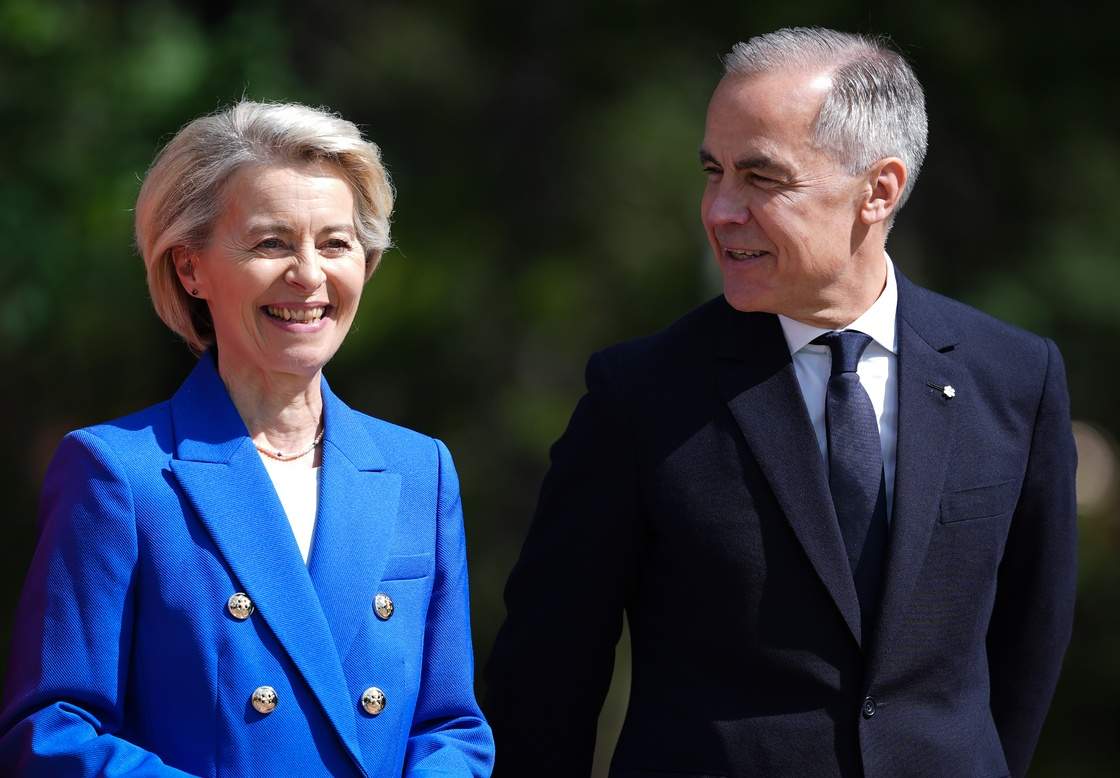
Carney will address the European Parliament next month

10 Laws Written for Exactly One Person
Most laws are supposed to apply broadly, to citizens, companies, or at least some recognizable category of people. But every now and then, a government has skipped that step entirely and written legislation with one particular person already in mind. These are not hypothetical examples or strange local ordinances that technically affect only one resident. […]
The post 10 Laws Written for Exactly One Person appeared first on Listverse.

Ukraine : Macron, Merz and Burnham Close Ranks as Russia Steps Up the War

coalition of vontiers in Paris (Flickr)
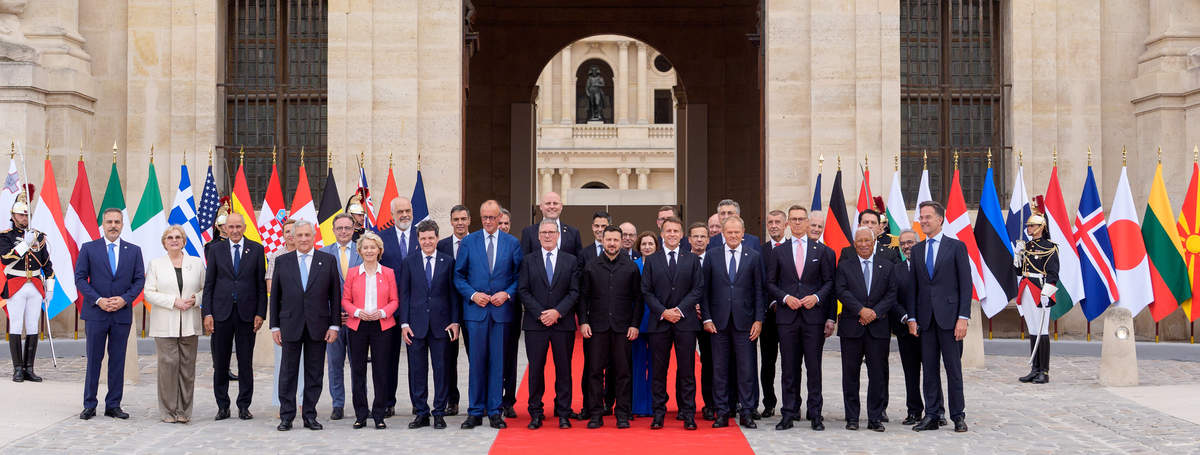
The Coalition of the Willing for Ukraine meets this Monday, August 24 — the 35th anniversary of Ukrainian independence — under the joint chairmanship of Emmanuel Macron, Friedrich Merz and Andy Burnham. The meeting comes at an urgent moment: fighting is intensifying on the ground and Moscow is preparing a new mobilization, while in Kyiv, Volodymyr Zelensky has just ruled out holding elections in wartime.

A Meeting Under Heavy Diplomatic Pressure
According to a statement from the Élysée Palace released Friday, August 21, the Coalition of the Willing — an international alliance supporting Ukraine formed in March 2025 at the initiative of Czech President Petr Pavel — will meet this Monday at 1 p.m. in a hybrid format, with Volodymyr Zelensky taking part. The session will be jointly chaired by Emmanuel Macron, via videoconference, German Chancellor Friedrich Merz, and, for the first time, new British Prime Minister Andy Burnham. About a dozen leaders, including European Council President António Costa, are expected to be in Kyiv alongside the Ukrainian head of state, while European Commission President Ursula von der Leyen is not expected to attend in person.
According to a European official cited by several news agencies, talks are expected to focus primarily on strengthening Ukrainian air defenses, as the country faces a shortage of interceptors against Russian strikes. The Élysée says leaders will reaffirm “their determination to increase pressure on Russia” and continue coordinating measures aimed at drying up the resources funding Russia’s war effort, including the fight against the “shadow fleet” Moscow uses to circumvent oil sanctions. The meeting is also meant to advance work on security guarantees intended to underpin a “just, robust and lasting” peace, building on the Paris Declaration of January 6, 2026.
On the Ground, Moscow Prepares a New Mobilization
The meeting comes as the war enters a phase of intensification. Volodymyr Zelensky said this weekend that Russia plans to mobilize an additional 300,000 troops for the Ukrainian front after Russia’s parliamentary elections, scheduled for September 16-20, with a longer-term goal of recruiting 500,000. The Ukrainian president described a “peripheral mobilization” that would spare Russia’s major cities but, he said, would be hard to conceal. He also cited a Russian goal of producing roughly 1,300 ballistic missiles a year, while Ukraine expects to receive only 264 interceptor missiles this year, down from 364 in 2025 and 675 in 2023 — a shortfall Kyiv is trying to offset through new agreements, including delivery of at least one SAMP/T air-defense system from France and roughly 600 missiles from Germany.
These statements echo converging battlefield reports. Recent military bulletins point to intense fighting on the Zaporizhzhia, Kherson and Dobropillya fronts and in Dnipropetrovsk region, along with exchanges of soldiers’ remains between the two sides. This information comes from both Ukrainian and Russian sources, whose respective figures cannot be independently verified and should be treated with caution.
BACKGROUND
Formed in March 2025 at the initiative of Czech President Petr Pavel, and later organized under French and British leadership, the Coalition of the Willing brings together roughly thirty countries supporting Kyiv. It notably held a summit in Paris on July 13, 2026, on the eve of the Bastille Day parade, building on the G7 summit in Évian and the Paris Declaration of January 6, 2026.
Zelensky Rules Out Elections That Would “Destroy the Country”
On the domestic front, Volodymyr Zelensky responded for the first time to the call for elections made last week by his former defense minister, Mykhailo Fedorov, who was dismissed in late July amid vocal protests. In remarks made Saturday and released Sunday, the Ukrainian president said holding a wartime vote, absent a major cessation of hostilities, would “destroy the country by splitting society,” calling the prospect a “tsunami.” Ukrainian law bars elections under martial law, in effect since Russia’s full-scale invasion began in February 2022; Mr. Zelensky’s presidential term technically expired in May 2024.
Mr. Zelensky pointed to the practical hurdles such a vote would have to overcome — including how to enable voting by mobilized troops, millions of refugees abroad, and residents of Russian-occupied territory. According to an analysis by CNN, an incomplete or contested vote would hand Moscow a propaganda win, since the Kremlin already cites the wartime ban on elections to question the Ukrainian president’s legitimacy, even as Russia’s own electoral process is not considered free by Western observers. Polling suggests former armed forces commander Valery Zaluzhny or Mr. Fedorov himself would be the frontrunners in any eventual election.
Two Fronts for Kyiv: Military and Political
The convergence of these two issues — international military support and the debate over the democratic legitimacy of Ukraine’s leadership in wartime — casts Monday’s meeting in a particular light. For the Western leaders gathered around Emmanuel Macron, the goal is to demonstrate the durability of their commitment at a moment when Moscow is betting on wearing Kyiv down before winter, and when the question of security guarantees still has no concrete bearing on any ceasefire.
L’article Ukraine : Macron, Merz and Burnham Close Ranks as Russia Steps Up the War est apparu en premier sur FrenchDailyNews.