❌

Reading view

The Thief Who Wanted to Save the World

illustration of city at night with two red silhouette figures and a van in the foreground

Matthew Wolfe | The Atavist Magazine | August 2026 | 2,275 words (8 minutes)

This is an excerpt from issue no. 179, “The Bleeding Hearts.”


On the evening of December 22, 2013, an armored van packed with cash made its rounds through the regal streets of Vienna. The city’s elegant Baroque buildings were trimmed with glinting strings of lights; Christmas markets sold spiced glühwein on cobbled squares. A little after midnight, as the festivities quieted, the van, operated by the security company Loomis, stopped at a walk-up ATM on a desolate stretch of storefronts. Two guards stepped out, entered a room-size vestibule behind the machine, and commenced replenishing the ATM with cash. A minute later, two figures wearing black balaclavas and carrying handguns emerged from the shadows and followed the guards inside.

The pair ordered the guards onto the ground and handcuffed them. After snatching the keys to the armored van, one of them unlocked the vehicle and began stuffing crisp bank notes into black duffel bags. The thieves then checked the street for witnesses and disappeared into the night with nearly three million euros.

The Atavist, our sister publication, publishes one deeply reported, elegantly designed story each month. Support The Atavist by becoming a member.

It was the largest armed robbery in Austrian history. The heist had been near perfectly executed, revealing intimate knowledge of Loomis’s anti-theft procedures—perfect, that is, except for one small oversight. The thieves didn’t realize that the ATM had a security camera that automatically took photos of the street whenever it was being restocked. The images were blurry, but they revealed that the perpetrator who climbed into the van was short enough to stand upright without hitting their head. Detectives decided that it was almost certainly a woman.

They soon homed in on a former Loomis employee, Tamara S., who, when she worked for the company, had scheduled the routes and was only five feet three inches tall. On the morning of January 10, 2014, federal police raided Tamara’s apartment and arrested her. Initially she denied any involvement in the robbery, but eventually she confessed. Investigators were stunned when she named her accomplice. The man she claimed had masterminded the job was one of their own: Gabriel E., a former officer in the city’s WEGA unit, the Viennese equivalent of SWAT.

The next day, a team that included some of Gabriel’s former colleagues raided his upscale apartment and placed him under arrest. Unlike Tamara, Gabriel confessed right away. When detectives asked why he had committed such an audacious crime, he replied that he hadn’t stolen the money for himself. He’d done it for the children of Africa; he planned to build an orphanage there.

It sounded absurd—the kind of desperate lie a thief might invent to deflect blame or ameliorate punishment—but it was very much the truth.

“Wouldn’t it be right,” Gabriel asked, “to steal something from a bank and give it to the poor?”

Austrians have a reputation, even among themselves, as scrupulous rule followers. In Vienna it’s rare to glimpse people jaywalking, and the city’s subway runs on an honor system. An Austrian friend suggested that this predilection had its roots in the country’s imperial past. From its power center in Austria, the Hapsburg monarchy ruled enormous portions of Europe for six centuries with the help of a dizzyingly complex bureaucracy. The compulsion to follow rules even a hundred years after the Hapsburgs lost power, my friend explained, was like the twitching of empire’s phantom limb. (Austria is also a very private country; the media don’t report the full names of people involved in criminal cases, a practice I’m abiding by too.)

As a police officer, Gabriel had been an enforcer of rules in a rule-bound society, making his crime all the more perplexing. His family told me that he was staunchly law-abiding, and had never incurred so much as a speeding ticket. In retrospect, however, they realized that there had been hints of where he was headed. He always loved to give things: presents to his three children, donations to charity, food to people begging in the street. After leaving the police force and starting a private-security business, he became wealthy, only to grow conspicuously ascetic, donating increasingly large amounts of money and possessions. By the time he was arrested, he’d sold his Audi and his Rolex, and he was down to almost his last suit. When police raided his home, they found bags filled with clothes purchased from H&M that Gabriel planned to give away.

*The Atavist is using pseudonyms for Gabriel’s family members.

Gabriel’s son Florian* recalled that the summer before the Loomis heist, his father had posed a curious hypothetical. “Wouldn’t it be right,” he asked, “to steal something from a bank and give it to the poor?” Florian, who was studying to become a police officer himself, disagreed, and his father dropped the issue.

Still, to idly philosophize about such a crime was one thing. To actually do it—to fashion oneself into a twenty-first-century Robin Hood—was another.

After his arrest, Gabriel was remanded to Vienna’s largest and most forbidding jail, Josefstadt. When I visited him there in 2014, I expected to encounter someone solemn and morally serious—a grim-faced saint. But when Gabriel entered the room, he radiated the warm excitement of a Labrador retriever. A tall, fit man of 50 with fetching salt-and-pepper stubble, Gabriel was wearing a cerulean-blue hoodie, clear-plastic-rimmed glasses, and a beaded necklace. He looked less like a former law enforcement officer than a hip Los Angeles dad. We sat down, and without hesitation Gabriel, still the inveterate benefactor, offered me exactly what I wanted: an explanation of how he’d gotten into this mess.

Gabriel’s childhood, he told me, had been shaped by “gruesomeness.” He was raised in Tyrol, Austria’s bucolic eastern province, by an alcoholic father given to punching his two sons. Gabriel and his elder brother eventually came under the care of their grandmother, who as punishment would regularly lock them in a darkened closet. “I had a very fucking childhood,” he told me in emphatic, accented English, omitting an adjective but still making the point. (After our first encounter, I would meet with Gabriel several times in the ensuing decade and communicate with him by letter, phone, and email.)

The two siblings both went into law enforcement, Gabriel in Vienna, where he hoped to help others in desperate situations, and his brother in the state police. Athletic and competitive, Gabriel quickly made the famed Wiener Einsatzgruppe Alarmabteilung (WEGA), the Vienna police department’s most expertly trained unit. Despite his severe upbringing, Gabriel was by nature cheerful. Every WEGA operation, as he saw it, was a new problem to be solved through hard work and an upbeat attitude.

One afternoon in 1994, Gabriel told me, his WEGA squad was tasked with busting up a drug deal in Vienna’s Fifteenth District, which at the time was the city’s seediest neighborhood. When the team moved to make an arrest, the seller, an African immigrant, bolted. Gabriel pursued him, shouting for the man to stop and firing his pistol in the air. As he closed in, the suspect turned and pulled out his own handgun. The two men exchanged fire, hitting each other in the thigh. Gabriel tackled the dealer and, following a short, bloody wrestling match, overpowered him. The pair shared an awkward ambulance ride to the hospital.

The shooting put Gabriel’s relentless positivity to the test. He endured months of physical therapy to regain the use of his leg. When he returned to work, he transitioned out of WEGA. After a brief, unhappy stint as a traffic cop, he left the force entirely. In 2001, he started his own private-security company, specializing in investigations of corporate theft. He gave it an English name: Service of Secrecy. The early years were lean as Gabriel struggled against larger competitors, but as word of his talents spread, the business thrived.

Gabriel occasionally found himself thinking about the man who’d shot him. He saw him only one additional time, in court, and knew little of his past—not even which country he was from. But at some point, Gabriel learned that the man was an asylum-seeker, as were so many African immigrants in Austria. They’d begun arriving in the country in the 1990s, fleeing civil wars and ailing economies. Gabriel wondered what the man’s life had been like back home, what he was running from.

In 2006, Gabriel told me, he had an opportunity to visit Africa himself; a client had recommended him to authorities in the Central African nation of Gabon, which was interested in creating its own version of WEGA. He told me he flew down for an interview with the defense minister, Ali Bongo, the son of the country’s notoriously corrupt authoritarian president, Omar Bongo, and was offered a lucrative multiyear consulting contract. Gabriel didn’t love the idea of working for a despot, but he had a family to support. And at the end of the day, someone was going to train the country’s police. Why not him? Gabriel accepted the job.

He commuted between Gabon and Austria every few weeks. During his trips to Gabon, he told me, he spent much of his time touring the countryside, where Bongo wanted to establish an array of military bases. The poverty Gabriel witnessed shocked him. By African standards Gabon was wealthy, mainly due to its coastal oil reserves. In the capital, Libreville, a former French colonial port, supermarkets stocked expensive Bordeaux and Roquefort cheese. But the wealth was unequally distributed. “People lived in huts without ANYTHING,” Gabriel wrote to me in 2015. “Yet merely one hundred meters further I could see pompous buildings with inconceivable luxury.” The experience, he added, “completely overwhelmed me.”

Gabriel began to feel guilty about the money he made, which had bought him a posh apartment and car. He responded to his unease with an energetic program of handouts. Gabriel had been raised Catholic and later joined a Pentecostal church. He told me that charity was an important part of his faith. He decided to give money to destitute Gabonese. There was no formal plan; when he encountered someone in need—particularly single mothers and people requiring medical care they couldn’t afford—he gave them whatever cash he had.

Back in Vienna, Gabriel’s family was growing. Following an amicable divorce, he had remained close with his first wife, Sabine, with whom he had two children, Julia and Florian. He remarried a woman who taught French—helpful for his work in Gabon, where French is the official language—and, in 2012, she gave birth to his third child. Domestic life was good. But the feeling that plagued Gabriel abroad persisted at home. Soon he began filling the trunk of his car with clothes, toys, appliances, and other items, then driving east to Romania, where he’d stop in poor villages and give it all away. Sometimes he took his two elder children, who by then were teenagers and growing concerned about Gabriel’s haphazard giving. (So was their mother.) But the donations, and the astonished smiles of the people who received them, never failed to make Gabriel happy. It felt more than good, he told me once. Then he paused, searching for the correct English word. “It was,” he said, “mandatory. My duty. My obligation.”

In 2009, Omar Bongo died, and his son left the ministry of defense to run for president. The new defense minister, Gabriel told me, declined to renew his contract. Although the lost income was regrettable, Gabriel was by then so consumed by his mission to help Gabon’s people that he didn’t mind. While making his ad hoc contributions to everyday Gabonese, Gabriel had begun to dream of something bigger—something that, to his mind, would be truly consequential.

His difficult upbringing had made him empathetic toward children in dire circumstances, particularly those without parents. He wanted to instill in a frightened child a durable sense of safety and security—a feeling that, growing up, he had been denied. Before leaving Gabon at the end of his consultancy, Gabriel began drawing up plans to build an orphanage there. It was to be a whole complex, in fact, where every child would have their own lodgings, painted in bright colors, and where all their needs would be met. He named the imagined community Blue Sky Village.

Back in Vienna, Gabriel began soliciting donations to make Blue Sky Village a reality. He estimated that he’d need nearly a million euros to begin the project, and he wrote dozens of letters to aid organizations and philanthropists requesting help in financing the plan. Soliciting charity, Gabriel found, was much tougher than handing it out. He received few responses. The people who did reply politely suggested that, given his lack of experience in the aid space, he donate to existing groups. But investigating corporate theft hadn’t done much for his faith in how companies managed their money. What’s more, Gabriel thought that a lot of groups wasted money on lavish fundraisers—the Viennese have a long tradition of philanthropic balls—rather than spending it on people in need. He grew angry when he thought about money being used for frivolities when children were starving and scared. “This makes me so… hateful,” he told me. The only way to know that orphans in Gabon were being saved, he thought, was to save them himself.

As he struggled to get his project off the ground, Gabriel received a call from an old WEGA colleague named Heinz, who was now working in security for Loomis. The company had suffered some recent employee thefts, and Heinz wanted Gabriel to help its Austrian branch sharpen its embezzlement protocols.

In a bleak irony, Heinz had been fired from the Viennese police in 2006, after he was accused of beating a Gambian immigrant resisting deportation. Gabriel told me that he’d heard about Heinz’s case in the media. Despite what Heinz had allegedly done, Gabriel found it easy to rationalize taking the Loomis job: The more money he earned, the more he could give away to those in need. He agreed to come on as a consultant, and the two men became friendly. Soon, Heinz introduced Gabriel to a Loomis employee named Tamara.


  •  

Deutschland auf Kriegskurs

Da heute wohl alle über die Wahlen in Sachsen-Anhalt sprechen werden, haben wir das Thema bewusst ausgespart und uns ganz auf Geopolitik und die Ukraine konzentrierts, denn dort ist letzte Woche sehr viel passiert. Die Bundesregierung hat die letzten Brücken zu Russland abgebrochen und scheint bereit, einen Krieg zu riskieren, Selensky hat offen der zivilen […]
  •  

Statement by President von der Leyen with NATO Secretary-General Mark Rutte

Dear Mark, it is always a pleasure to welcome you.

We meet today to discuss Russia's attack in Leipzig. The German government has identified Russia as behind an attempt to attack cargo planes at Leipzig/Halle Airport. Had this attack succeeded, this would have resulted in enormous damage and possibly even loss of life. So I want to be very clear about what this was. This was an attack using military-grade material, carried out by Russian operatives on EU soil. And we will not tolerate it. We stand in full solidarity with Germany. And If the intention was to make us think twice about supporting Ukraine, I can tell you, it has only strengthened my resolve. Intimidation will not work. And this is why I am meeting with NATO's Secretary-General today. We are united. Europe and NATO will not just maintain our pressure on Russia. We will increase it. And we will not stop. Not until Russia stops bombing and killing innocent children, men and women in Ukraine.

Leipzig marks a new escalation on European soil, directly attributed to Russia. But it is part of a broader pattern of increasingly dangerous incidents. Repeated incursions into our airspace. Drones that paralyse our airports. Interference with our critical infrastructure. Europeans are faced with a hard truth that this is the new normal. We have to step up. And that means being ready to respond to Russia's recklessness faster and better. We must treat our everyday infrastructure as frontline targets and protect it accordingly. And we will support any Member State - Russia targets. Europe already has Rapid Response Teams which can respond to these styles of attacks whether they occur inside or outside our Union. Our strength, our preparedness, our resolve, is our deterrence.

We also do this by using the power of our Single Market. Our sanctions have weakened Russia's economy. We can use more sanctions and have them ready to impose, as soon as such dangerous, life-threatening acts are attributed. Every loophole Russia exploits, is one we must close. In Ireland today, European foreign affairs ministers are discussing new listings. At the Commission, we are looking at ways to cut even deeper into Russia's war chest.

My second point today regards our support for Ukraine. Today I can confirm that we have received a new payment request. It is worth several billion euros and would cover Ukraine's air defences, including the highly advanced PAC-3 Patriot air defence systems. Member States are currently looking at Ukraine's request, but I can say that it is going in the right direction. At the same time, we in Europe are working on FREYA with Ukraine. This is a European project to build our own anti-ballistic missile defences. All of this is on top of the ‘90 billion euro support loan' for Ukraine that is already at work. Since June, we have issued 8.5 billion EUR for drones and missiles for Ukraine. And this money would also buy fighter jets from European industry.

Finally, my third point. We do all of this together with NATO. Mark and I have repeatedly stood side by side to express this solidarity, and we do so today to show that Europe is united. And that Europe must mobilise its defence surge even sooner. Air defences are critical. We need a faster, more integrated alert system across Europe. And then we must intercept the threats faster. This is why we have put forward an 800 billion euro defence investment plan. Including 150 billion euro through SAFE, so we can invest more, but together and therefore smarter.

Mark, last time we met was at the NATO summit in Türkiye where we discussed these topics. As you said, the EU and NATO reinforce each other. And today our message is very clear. We are in a new era of European security. And European investment in defence strengthens NATO and re-energises our industrial base. We will continue; we will prevail; and we will deter anyone who attacks our freedom and security.

  •  

Wie das russische Fernsehen über die politische Woche in Deutschland berichtet

Der Auftritt der Minister Dobrindt und Wadephul war eine recht peinliche Nummer, denn als sie Russland – mal wieder, ohne irgendwelche Belege vorzulegen – beschuldigt haben, mit dem Drohnenvorfall von Leipzig einen Angriff in und auf Deutschland durchgeführt zu haben, haben sie nur ihre Erklärungen abgelesen und nicht einmal Journalistenfragen zugelassen. Laut Dobrindt gab es […]
  •  

Die Chronologie der Eskalation der innenpolitischen Krise in der Ukraine

In der Ukraine ist der Machtkampf fast schon zu einem Bürgerkrieg eskaliert, wenn man die Ereignisse der letzten Woche anschaut. Am Mittwoch haben in Kiew Mitarbeiter des ukrainischen Geheimdienstes SBU auf Mitarbeiter des ukrainischen Militärgeheimdienstes GUR geschossen, dann ist am Freitag eine Drohne in das Fenster des SBU-Chefs geflogen, die als russische Drohne bezeichnet wurde, […]
  •  

Why is this Deadly Flu Drug Still on the Market? “Demon Drug” Tamiflu Still being Prescribed to Infants, Children, and Pregnant Women

by Brian Shilhavy
Health Impact News

Reports on the dangers of the popular “anti-viral” flu drug Tamiflu (oseltamivir) have existed for over a decade now. One of the known side effects of this drug among children is that it causes hallucinations, and what some say resemble demonic attacks.

Tamiflu is also linked to increased suicides.

And yet, not only is this drug still on the market, it is still recommended for babies, children, and pregnant women by the CDC, even under HHS Secretary Kennedy’s leadership.

Many doctors have stopped prescribing it to children who are healthy as a prevention for influenza, but the official medical dogma has been that Tamiflu is still recommended in critically ill patients.

However, a new study has been published that blows that theory out of the water, showing how critically ill patients receive no health benefits from the drug, and that Tamiflu actually leads to increased rates of death.

I have been warning the public about the dangers of Tamiflu for almost a decade now. Here are some of our previous articles on Tamiflu:

WARNING! Flu Drug Tamiflu Has Dangerous Side Effects NOT Being Communicated to the Public

Tamiflu Again Linked to Extreme Adverse Reactions, Including Suicide

Whistleblower Doctor Claims Tamiflu Drug Fraud Bilked $1.5 Billion from Government to Stockpile Drug that is Ineffective in Stopping the Flu

The side effects of Tamiflu were so common in the past, that the horror stories of what children suffered routinely made it into the corporate media at local affiliates.

I have created a compilation of many of those reports, and all of these reports that made it into the corporate media are at least 6-8 years old now. The video is 10 minutes long. (You can also watch it here.)

Even the normally pro-pharma Wikipedia admits that there are problems with this dangerous drug.

Oseltamivir, sold under the brand name Tamiflu among others, is an antiviral medication used to treat and prevent influenza A and influenza B, viruses that cause the flu. Many medical organizations recommend it in people who have complications or are at high risk of complications within 48 hours of first symptoms of infection.

They recommend it to prevent infection in those at high risk, but not the general population.

The Centers for Disease Control and Prevention (CDC) recommends that clinicians use their discretion to treat those at lower risk who present within 48 hours of first symptoms of infection.

Recommendations regarding oseltamivir are controversial as are criticisms of the recommendations. A 2014 Cochrane Review concluded that oseltamivir does not reduce hospitalizations, and that there is no evidence of reduction in complications of influenza. Two meta-analyses have concluded that benefits in those who are otherwise healthy do not outweigh its risks. They also found little evidence regarding whether treatment changes the risk of hospitalization or death in high risk populations. (Source.)

However, now there is abundant evidence that Tamiflu is not effective for those “at high risk” either, and that it can actually hasten their death.

This is a “preprint” of the study published in The Lancet.

Oseltamivir for Critically Ill Patients with Influenza: A Randomised Trial

Abstract

​Background: The antiviral oseltamivir is widely used for the treatment of critically ill patients with influenza. Evidence from randomised trials about its efficacy in the critically ill is lacking.

Methods: In an ongoing international, multifactorial, Bayesian adaptive platform randomised trial, we evaluated oseltamivir for 5 days, oseltamivir for 10 days, or no antiviral treatment in critically ill patients aged 12 years and older with confirmed influenza severe respiratory infection. The primary outcome was 90-day mortality.  An odds ratio less than 1 indicates benefit from oseltamivir.

Findings: Between March 1, 2020 and March 13, 2026, 442 participants were randomised to receive 5 days of oseltamivir (n=162), 10 days of oseltamivir (n=156), or no antiviral (n=124). At a scheduled adaptive analysis, both oseltamivir durations met a predefined inferiority threshold (<0·2% probability of being the best treatment in the influenza antiviral domain), triggering cessation of recruitment. By day 90, 17 (13·7%) in the no antiviral group, 32 (19·8%) in the 5-day oseltamivir group, and 30 (19·4%) in the 10-day oseltamivir group had died. The median adjusted OR for 90-day mortality was 2·13 (95% CrI 1·03 to 4·52) for 5 days of oseltamivir and 2·17 (95% CrI 1·05 to 4·64) for 10 days of oseltamivir, favouring no antiviral. For the 5- and 10-day oseltamivir treatments, the posterior probabilities for harm, an adjusted OR >1, were 98·0% and 98·2%, respectively.

Interpretation: Treatment with oseltamivir is ineffective and highly likely to increase 90-day mortality in critically ill patients with influenza. (Source.)

Here is an editorial of this study that was just published in the New England Journal of Medicine Voices.

Oseltamivir Flops in the Critically Ill

Excerpts:

With only a few months to go before flu season kicks in, along comes a study that promises to upend clinical practice and guideline writers everywhere: the REMAP-CAP study, a randomized trial of 442 critically ill people with laboratory-confirmed influenza, comparing 5 days of oseltamivir, 10 days of oseltamivir, or no antiviral treatment.

Not only was oseltamivir ineffective, but there was a good chance it may even have made outcomes worse.

And even though we’re just seeing the study in preprint right now, there’s every reason to take the results seriously….

Read the full article here.

The “Demon Drug” Tamiflu is still recommended by the CDC for Babies, Children, and Pregnant Women

MAHA!

This article was written by Human Superior Intelligence (HSI)

See Also:

Understand the Times We are Currently Living Through

Second Edition of eBook Released: The Concept of the American Christian Family is a Myth and is NOT Found Anywhere in the Bible – by Brian Shilhavy

FREE eBook! Restoring the Foundation of New Testament Faith in Jesus Christ – by Brian Shilhavy

The Brotherhood of Satan vs. The Brotherhood of Jesus Christ

KABBALAH: The Anti-Christ Religion of Satan that Controls the World Today

Exposing the Christian Zionism Cult

The Bewitching of America with the Evil Eye and the Mark of the Beast

Jesus Christ’s Opposition to the Jewish State: Lessons for Today

Identifying the Luciferian Globalists Implementing the New World Order – Who are the “Jews”?

The Brain Myth: Your Intellect and Thoughts Originate in Your Heart, Not Your Brain

What is the Condition of Your Heart? The Superiority of the Human Heart over the Human Brain

The Seal and Mark of God is Far More Important than the “Mark of the Beast” – Are You Prepared for What’s Coming?

The Satanic Roots to Modern Medicine – The Image of the Beast?

Medicine: Idolatry in the Twenty First Century – 10-Year-Old Article More Relevant Today than the Day it was Written

Having problems receiving our emails? See:

How to Beat Internet Censorship and Create Your Own Newsfeed

We Are Now on Telegram. Video channels at Bitchute, and Odysee.

If our website is seized and shut down, find us on Telegram, as well as Bitchute and Odysee for further instructions about where to find us.

If you use the TOR Onion browser, here are the links and corresponding URLs to use in the TOR browser to find us on the Dark Web: Health Impact News, Vaccine Impact, Medical Kidnap, Created4Health, CoconutOil.com.

The post Why is this Deadly Flu Drug Still on the Market? “Demon Drug” Tamiflu Still being Prescribed to Infants, Children, and Pregnant Women first appeared on Health Impact News.

  •  

Schon wieder ein neuer Korruptionsskandal in Selensky Umfeld

Das Nationale Antikorruptionsbüro der Ukraine (NABU) hat am Freitagabend mitgeteilt, es führe im Rahmen einer „Spezialoperation Karthago“ Durchsuchungen in der Generalstaatsanwalt durch. Die Operation richtete sich demnach gegen ein Netzwerk von auf Telefonbetrug spezialisierten Callcentern, die von einem leitenden Mitarbeiter der Generalstaatsanwalt geschützt wurden. Die Callcenter sind vor allem in Russland, aber auch in Europa […]
  •  

How Russian Drones Forced Ukraine To Park Its M1 Abrams Tanks

Ukrainian crews operating Australian-supplied M1A1 Abrams tanks say the battlefield has become so saturated with Russian drones that their tanks cannot currently be used in combat, but they reject the idea that main battle tanks have become forever obsolete.

Since receiving these tanks last year, the crews, serving with Ukraine’s 425th Separate Assault Regiment “Skala,” have used the Abrams in two combat operations in the fight for Pokrovsk, a key Ukrainian logistics hub and part of a defensive belt of towns in Ukraine’s eastern Donetsk region. They recounted their experiences to Hromadske, an independent media channel in Ukraine.

Fighting around Pokrovsk

The first major deployment described by the crews took place in December of last year, when Abrams tanks were used to support assault groups entering Pokrovsk.

The crewmember with the callsign Kent described moving into the city behind a mine-clearing tank and ahead of two infantry fighting vehicles (IFVs) carrying assault troops, during a mission that was deliberately aggressive.

“Since a tank is a priority target — my task was to draw their attention, while our infantry dismounted and moved in successfully.”

The Abrams was also assigned three target points to engage along the route.

“We went right in there, poured it on, and drove back out,” he recalled.

A video showing the 425th Separate Assault Regiment in action in August 2025, soon after receiving the Abrams:

The second operation, on March 31, involved an attempt to enter and hold an industrial area near Pokrovsk to help block Russian movement toward Hryshyne, a contested village in the district.

The operation was prepared for more than two weeks. Ukrainian forces conducted reconnaissance flights, examined difficult sections of the planned routes, and provided crews with extensive video and imagery.

“They knew every meter of the route,” another of the unit’s commanders, with the callsign Kubik, said.

Weather was considered essential. The Ukrainians waited for fog and rain, hoping to limit the effectiveness of Russian drones.

“Without the right weather we wouldn’t have been able to pull off operations like that,” Kubik said.

The operation nevertheless resulted in the destruction of four out of five armored vehicles, some of which are seen in the video embedded below.

Russia's Rubicon Drone Center FPV drones destroyed a Ukrainian assault group near Pokrovsk, hitting an M1A1 Abrams tank, M1117 APC and BMP-2 as the unit tried to advance near Hryshyne under fog cover. #Ukraine pic.twitter.com/ZzE52qAYxp

— NOELREPORTS 🇪🇺 🇺🇦 (@NOELreports) April 1, 2026

The commander acknowledged that the Russian side may have had advance knowledge of the operation.

“I can’t rule out the possibility that the enemy knew our plan,” he said.

His Abrams was not immediately destroyed. According to the crew, it completed its task and the assault troops dismounted before the weather changed.

“Once the fog lifted, they started working on it with an FPV drone,” the commander said.

Why use tanks at all?

The losses prompted criticism from Ukrainian military commentators, particularly after footage of the destroyed vehicles was published.

However, the crews defend the decision to use armored vehicles for the missions. According to the men of the Skala interviewed, the alternative was often to send infantry over several miles on foot while carrying weapons, ammunition, water, and other supplies.

“That takes more time,” Kubik explained. “And the enemy isn’t standing still — the enemy is moving toward them.”

🇦🇺🇺🇦 Australia-supplied M1A1 Abrams AIM main battle tank in service of the Ukrainian 425th Separate Assault Regiment "Skala."

The tanks of such type recently saw combat in the area of Pokrovsk. pic.twitter.com/qhjSyGbhH6

— Status-6 (War & Military News) (@Archer83Able) December 23, 2025

The argument that infantry could simply move more stealthily on foot also has limitations.

“Every day the Mavic drones are flying, the fixed-wing drones are flying,” he said. “No fog, guys are visible.”

Combined with IFVs, the Abrams can provide the ability to rapidly move troops while simultaneously delivering heavy direct fire against enemy positions and offering substantial protection to its crew.

The crews argue that this capability remains worthwhile even when the tank itself may eventually be lost.

One commander was asked whether deploying a roughly $5-million tank makes sense if a single sortie can result in its destruction.

“Yes, of course it makes sense to deploy it,” he replied.

“First and foremost — it saves the lives of the crew inside it.”

Russian forces captured a relatively lightly damaged M1A1SA Abrams main battle tank operated by the 47th Separate Mechanized Brigade in the Pokrovsk direction.

The tank is equipped with added cage armor, as well as Kontakt and ARAT ERA. pic.twitter.com/mHyKk1xNRY

— Status-6 (War & Military News) (@Archer83Able) October 27, 2024

A tank under attack by drones

The Ukrainian crews repeatedly highlighted the Abrams’ accuracy and survivability.

“What are the biggest advantages of the Abrams?” Kent was asked.

“Accuracy.”

Its biggest disadvantage, he said, is equally obvious on a modern battlefield: “It’s very tall — and very large — so it’s hard to conceal.”

A video showing a U.S.-supplied Abrams under attack from Russian FPV drones:

🇺🇸🇺🇦 An Abrams tank withstands 9 FPV drones hits. Eventually, the tank was destroyed, but the tank crew successfully survived. pic.twitter.com/4NBKdg2zmW

— PS01 □ (@PStyle0ne1) July 7, 2024

Kent described surviving an engagement in which his tank was struck repeatedly while on the move.

“More than 20 drones hit me,” he said of one operation into Pokrovsk.

He attributed the Abrams’ survival to the combination of its armor and additional anti-drone protection fitted to the vehicle.

“All of it together is effective,” he said.

He pointed to fairly basic modifications including rubber strips and a foldable wire cage mounted on the turret, as additional layers of protection against drone attacks.

“A drone doesn’t hit the actual penetrating element directly — it just can’t reach it,” he explained. “It hits the rubber, and then the blast wave travels from there.”

Even with their tanks festooned with explosive reactive armor (ERA) bricks, the crews acknowledge that such protection has limits.

A head-on view of an M1A1 of the 425th Separate Assault Regiment shows the ERA bricks installed around the turret and in front of the hull. Ukrainian Armed Forces

US-supplied M1A1 Abrams tank in service of the Armed Forces of Ukraine with added Kontakt-1 ERA on the frontal hull and standard ARAT ERA on the sides. pic.twitter.com/PC2kDfxefO

— Status-6 (War & Military News) (@Archer83Able) May 21, 2024

Kent also noted that the Abrams was still missing the ‘hedgehog’-type protective coverings that have been seen on Russian tanks.

“They also protect very well. An effective thing,” he said.

A Russian tank with the ‘hedgehog’-type protective covering. Russian state media

For now, the drone threat has led the regiment to keep its Abrams out of combat, as we will return to later.

The Abrams as a machine

The crews’ assessment of the Abrams included praise for its mobility, roomy interior, gun, and fire-control system.

Kubik said he had personally driven an Abrams to 50 miles per hour cross-country.

“The engine is an absolute beast,” he added.

The tank can also rapidly perform a pivot turn, which the crews consider particularly useful when maneuvering in confined spaces. Despite its prodiguous weight, it only rarely becomes bogged down after the kind of very heavy snow-melt that effects all vehicles on the battlefield.

Loading a 120mm M1028 canister cartridge into an M1A1 AIM Abrams main battle tank of the tank battalion of the 425th Assault Regiment. pic.twitter.com/tMd8QcROQe

— 𝔗𝔥𝔢 𝕯𝔢𝔞𝔡 𝕯𝔦𝔰𝔱𝔯𝔦𝔠𝔱 🦩🇬🇪🇺🇦🇺🇲🇬🇷 (@TheDeadDistrict) June 21, 2026

Its disadvantages include its demanding maintenance requirements. The running gear was described as particularly sensitive, with crews inspecting, lubricating, and replacing components after every sortie.

Fuel consumption is another major burden. The crew cited roughly 400 to 700 liters (106 to 185 gallons) per 100 kilometers (62 miles) depending on terrain and operating conditions.

“On asphalt it burns about 400 liters,” one said. In boggy terrain, consumption can reach “700 liters or more.”

The Abrams thirsty gas turbine engine and extreme logistical demands have always been a criticism of the platform.

An M1A1 of the 425th Separate Assault Regiment fording a river. Ukrainian Armed Forces

The crews said the vehicle’s ability to operate on different fuels is useful, although diesel provides the best engine-hour performance in their experience. Prior to delivery, the gas turbine engines of the tanks were reconfigured to use diesel fuel instead of the standard JP-8 aviation kerosene, according to earlier reports.

They also praised the Abrams’ protected ammunition storage and crew space compared with Soviet-designed tanks.

The version operated by the Ukrainians is an M1A1 rather than the latest Abrams configuration, with less sophisticated electronics than newer variants. It also lacks the classified armor found on its U.S. Army counterpart.

“For me — as a tanker — this configuration, what we have right now, is more than enough,” Kubik said. “The sight is absolutely excellent. The gun is also great.”

🔥 Abrams destroys a house with Russian infantry in the Pokrovsk direction. pic.twitter.com/StUoZoMTO3

— MAKS 26 🇺🇦👀 (@Maks_NAFO_FELLA) August 25, 2024

Waiting for a solution to the drone problem

The interview ultimately presents a more complicated picture than the declaration that tanks are obsolete on the Ukrainian battlefield.

At the time of writing, at least 25 Abrams have been confirmed visually to have been destroyed, damaged, or abandoned in Ukrainian service. This is from a total of 31 provided by the United States and 49 from Australia.

“For now, we’re not using them further — there’s no way to,” Kubik said. “The enemy has developed their drone component very heavily, and for now we don’t have the means to counter that.”

While tanks remain exceptionally powerful direct-fire and protected mobility platforms, the proliferation of inexpensive uncrewed aircraft has made operating them increasingly difficult.

M1A1 AIM Abrams tanks of the 425th Assault Regiment 🇺🇦.
The reinforced upper glacis and turret roofs are clearly visible. pic.twitter.com/Sn9h8OWZ9P

— 𝔗𝔥𝔢 𝕯𝔢𝔞𝔡 𝕯𝔦𝔰𝔱𝔯𝔦𝔠𝔱 🦩🇬🇪🇺🇦🇺🇲🇬🇷 (@TheDeadDistrict) June 21, 2026

“If someone had told me, as a tanker, back in 2022: ‘Take this — we’re giving you an Abrams, we’ll give you time to train and you’ll fight in it,’” Kubik said, “I would never have climbed out of it.”

“I’d only be saying: ‘Bring me shells. I’ll drive non-stop wherever needed, arrive and work.’”

An M1A1 of the 425th Separate Assault Regiment firing its main gun. Ukrainian Armed Forces

As it stands, reconnaissance drones can find the Abrams, FPV drones can attack it, and persistent surveillance makes concealment difficult. Experience has shown that without more effective counter-drone capabilities, even a heavily protected tank can eventually be overwhelmed.

But Kubik believes that will change.

“The day will come when one of our bright minds figures out some excellent solution against drones — and we’ll start using them again.”

Asked whether the era of tanks is over, his answer was unequivocal.

“It’s not over … They’re just waiting it out for now, biding their time. Writing off tanks — in my opinion — is still too early.”

Contact the author: thomas@thewarzone.com

The post How Russian Drones Forced Ukraine To Park Its M1 Abrams Tanks appeared first on TWZ.

  •  

International sports camp in France brings together nearly 100 young athletes

An international sports camp bringing together nearly 100 young Ukrainian athletes from ten different sports has concluded in France.

The camp was held at the initiative and with the support of Philippe Lamblin, President of the Hauts-de-France Athletics League, in partnership with the Ukrainian side. The Kyiv City State Administration, “The Future for Children” Charitable Foundation with its Olympic Dreams project, and the Ministry of Youth and Sports of Ukraine with the nationwide multisport project “Path of Champions” also contributed to the organization of the camp.

This year, the camp brought together athletes representing ten sports: rhythmic gymnastics, volleyball, judo, sport climbing, boxing, basketball, athletics, rowing, taekwondo, and floorball.

The young Ukrainian athletes had the opportunity to train in safe conditions, take part in sports and team activities, relax, and discover France. The camp programme included a mountain hike, a trip to the seaside, a visit to an oceanarium, and attendance at a football match.


“For us, it is very important to see more and more people in different countries coming together to support Ukrainian sport, with France becoming a systemic partner. Camps like this give Ukrainian children an opportunity, at least for a while, to return to a normal childhood: to train in safe conditions, make new friends, and see a world without borders,” said Anatoliy Boyko, initiator and patron of the Olympic Dreams project.
 

: Anatoliy Boyko, Philippe Lamblin, Olena Hovorova, Vadym Omelchenko, Yasmina Merzi

An important highlight of the programme was the official reception for the camp participants at Paris City Hall on 21 August.

The meeting was attended by Vadym Omelchenko, Ambassador Extraordinary and Plenipotentiary of Ukraine to the French Republic; Yasmina Merzi, Deputy Mayor of Paris responsible for child welfare and protection; Olena Hovorova, Deputy Head of the Kyiv City State Administration, Adviser to the Office of the President of Ukraine and Olympic bronze medallist; Philippe Lamblin, President of the Hauts-de-France Athletics League; and Anatoliy Boyko, initiator and patron of the Olympic Dreams project.

The meeting at Paris City Hall provided an opportunity to thank the French partners for their support of Ukrainian athletes and to discuss the importance of international sports cooperation amid the full-scale war.

The organizers and Ukrainian partners also express their gratitude to the Hauts-de-France Athletics League, the regional prefecture, the City of Lille, the management of Parc d’Olhain, as well as all French partners and patrons who contributed to the organization of the camp.

For Olympic Dreams, a project launched in 2022, participation in such international initiatives is part of its ongoing efforts to provide Ukrainian athletes with opportunities for safe training, athletic development, and international preparation during the full-scale war.

Photos by Roman Horbun

  •  

Israel’s Gaza ‘solution’ is to empty it of Palestinians, defense minister says

A view of Palestinian displacement camps amid widespread destruction in Gaza City on August 29, 2026 in Gaza City, Gaza. Photo by Omar Ashtawy/Getty Images

This article was originally published by Truthout on Sept. 03, 2026. It is shared here under a  Creative Commons (CC BY-NC-ND 4.0) license.

Israeli Defense Minister Israel Katz admitted this week that Israel’s goal for Gaza is the mass expulsion of Palestinians from Gaza in “every way possible,” despite denying allegations of ethnic cleansing for years.

“There is no real solution for Gaza in the end without this migration,” Katz said at a conference hosted by Israeli outlet Yedioth Ahronoth on Wednesday, per a translation by France 24. Israel “is organized and prepared to get them out — by sea, by air, by every way possible.”

This plan would amount to ethnic cleansing, something that Palestinians and human rights advocates have long said Israel is carrying out in Gaza and the occupied West Bank. In a report earlier this year, the UN Human Rights Office warned that Israel was carrying out policies consistent with ethnic cleansing between 2024 and 2025, including famine, destruction of civilian infrastructure, and overall imposing conditions “incompatible with [Palestinians’] continued existence in Gaza as a group.”

Katz said that Israel is “seeking Trump’s support” for the idea because no country will take in Palestinians without the approval of the U.S.

The White House has not commented on the plan. When Donald Trump took office last year, he proposed a plan for forced displacement of the entire population of Gaza, dubiously framing it as “voluntary.”

The administration’s stance has since evolved, however. In July, Trump’s “Board of Peace” announced a plan that would still implement colonial control over Gaza, but that would transition power over the Strip to a Palestinian board and demand Israel withdraw its troops from the Strip.

In a rare break with the U.S. last month, Netanyahu announced that he would not be supporting that plan. Keeping with his usual practice of introducing unworkable provisions into negotiations, he said that Israel would not withdraw until Hamas was totally disarmed.

Disarmament — which critics say would still give Israel massive power over Gaza — was already included in the Board of Peace’s 15-point plan. But Netanyahu seems determined to ensure Israel can still carry out its genocide and occupation in Gaza, pledging again on Wednesday that Israel is “not retreating.”

“We control 60 percent of the Strip, and we are not stopping, because we are eliminating the terrorists who threaten us, day in and day out,” he reportedly said.

Trump also previously vowed to end aid to Israel if it annexed the West Bank, however, despite Israel’s ongoing annexation of the occupied Palestinian territory.

The Israeli officials’ remarks were made just weeks before critical Israeli elections in October, in which Katz and Israeli Prime Minister Benjamin Netanyahu are hoping to retain far right control of the state.

Politicians in Netanyahu’s caucus have been openly calling for cruelty toward Palestinians as a campaign strategy. This week, National Security Minister Itamar Ben-Gvir posted then deleted an AI-generated video that showed a line of Palestinians on a conveyor belt being loaded into a detention facility operated by Ben-Gvir. The Palestinians are then shown leaving the facility emaciated, with the politician seemingly showing off Israel’s systematized policy of starvation of Palestinians.

Israeli officials have denied allegations of ethnic cleansing for years.

“The charge of ‘ethnic cleansing’ against Israel is false and dangerous. It is not a legal definition but a political label, used to inflame tensions, spread hate, and fuel antisemitism,” said Israel’s ambassador to the United States, Yechiel Leiter, last year. “Israel does not deport Palestinians because of their identity. Israel has, rather, temporarily removed non-combatant populations from war-zones in order to guarantee their safety.”

The statement was made in response to a September 2025 report released by Senators Chris Van Hollen (D-Maryland) and Jeff Merkley (D-Oregon) saying that Israel was deliberately destroying civilian infrastructure and starving Palestinians with the goal of ethnic cleansing.

“After our trip to the Gaza-Egypt border last year, [Merkley] & I released a report entitled, ‘The Netanyahu Government is Implementing a Plan to Ethnically Cleanse Gaza of Palestinians.’ Now the Israeli Min[ister] of Defense confirmed that’s the goal,” said Van Hollen on Wednesday. “We must end our complicity.”

  •  

Bonus episode: The EU enlargement game

What happens if your economy is suddenly in crisis, Brussels offers help with strings attached—and Turkey, China or Russia can move faster? What if your country delivers every reform the EU asks for, only for a member state to block the next step anyway? And after years of waiting, would voters still choose to join?

In this special bonus episode, The Neighbourhood goes live from Lisbon for an EU enlargement game. Jessica Hendrick brings together RE-ENGAGE experts representing six EU candidate countries and throws a series of fictional—but very plausible—political and economic shocks at them inspired by real headlines: Russia’s intensified attacks on Ukrainian infrastructure, Ireland’s EU presidency push on enlargement, Iceland’s referendum, Germany’s regional elections and the upcoming 2026 Enlargement Package. Drawing on three years of surveys, interviews and crisis simulations, each expert has to answer for their country.

Playing for each country:

  • Albania: Morten Bøås, research professor at the Norwegian Institute of International Affairs (NUPI), representing RE-ENGAGE’s Albanian partners at the European University of Tirana
  • Bosnia and Herzegovina: Damir Kapidžić, director of the Institute for Social Science Research at the University of Sarajevo
  • Georgia: Ketevan Bolkvadze, senior lecturer in the department of political science at Lund University, originally from Georgia
  • Moldova: Mathilde T. E. Giske, research fellow at the Norwegian Institute of International Affairs (NUPI), representing RE-ENGAGE’s Moldovan partners at Moldova State University
  • Serbia: Luka Filipović, research associate at the Institute for Contemporary History in Serbia
  • Ukraine: Roman Petrov, president of the Ukrainian European Studies Association

The result is part enlargement simulation, part policy conversation and part game night. The experts bargain over a fictional €100 million EU cheque, decide whether the EU can compete with faster offers from other powers, test how easily disinformation could exploit frustration with enlargement, and imagine what would happen if EU membership was finally put to a public vote. Along the way, Serbia proposes keeping its relationship with Brussels “casual”, Bosnia finds a creative use for €100 million, and Ukraine calls for Hungarian “Varangians” when backsliding strikes.

When a crisis hits, does speed matter more than values? Can “Europe never wanted you anyway” become a winning political message? And if a country finally joins the EU, what stops democracy from sliding backwards once the prize of membership is secured?

Further reading:
RE-ENGAGE research overview
RE-ENGAGE research on Albania
RE-ENGAGE research on Bosnia and Herzegovina
RE-ENGAGE research on Georgia
RE-ENGAGE research on Moldova
RE-ENGAGE research on Serbia
RE-ENGAGE research on Ukraine

This podcast was recorded live in Lisbon on September 3rd, 2026.

Source

💾

  •  

Das Council von Foreign Relation fordert de facto, Selensky zu entmachten

Ich berichte seit Monaten über den Streit zwischen Selensky und der EU, wobei auch in den USA offenbar die Unzufriedenheit mit Selensky wächst. Die Gründe sind vielfältig. Die EU hat zwar vor Monaten beschlossen, einen 90-Milliardenkredit für die Ukraine aufzunehmen, aber sie verzögert die von Kiew dringend benötigten Auszahlungen, weil sie im Gegenzug die Änderung […]
  •  

AI Data Center Opposition Unites People Across Political Lines as Trump Attacks Americans Who Oppose Big Tech

by Brian Shilhavy
Health Impact News

Here in 2026 Americans have finally found an issue that unites them as Americans, regardless of political affiliations: opposition to AI data centers being rapidly built in their communities with little to no oversight, as the AI bubble continues to inflate.

According to a recent Gallup poll, 71% of Americans oppose AI data centers near their homes, triggering a wave of legislation that has already stalled $130B in projects.

Americans unite against data centers, with 71% opposing local builds

A Gallup poll conducted in March 2026 found that 71% of American adults oppose building an AI data center near their home, with 48% saying they are strongly opposed.

For historical context, public opposition to nuclear power plants peaked at 63% during the height of anti-nuclear sentiment. Opposition to AI data centers sat somewhere between 42% and 47% in late 2025. By March 2026, Gallup had it at 71%. A separate May 2026 Heatmap Pro poll confirmed the figure, also recording 71% opposition, but with an even sharper edge: 55% of respondents in that survey said they were strongly opposed.

Around half of data center opponents cite electricity and water consumption as their primary grievances. The rest of the opposition cohort points to noise, pollution, and the prospect of higher utility bills.

Gallup found that between 63% and 75% of both Republicans and Democrats oppose local data center construction.

In the first quarter of 2026 alone, community and legislative actions blocked or delayed more than 75 data center initiatives, representing over $130 billion in planned investment.

Roughly 300 state-level bills targeting data center regulation were introduced in the first half of 2026. New York’s governor signed an executive order in July 2026 pausing new hyperscale data center permits for a year. California and other states are advancing their own regulatory frameworks.

Source.

One has to wonder what is up with the other 29% of Americans who are not opposed to these data centers? I would imagine that they are the “faithful MAGA base” who continue to “trust the plan” and cheer the bombing of innocent people, including children, in places like Gaza, Lebanon, and Iran as they continue to worship their Pedophile in Chief, Donald Trump.

Donald Trump has attacked these Americans who make up over 70% of the country, stating that “The only reason that communities throughout the U.S.A. should not want Data Centers is if they want to end up being backwards and poor.”

If you do not live in a community where a new data center is being constructed, and are wondering what all the fuss is about, I have put together a short video that is just over 10 minutes long where you can hear it from the people themselves in these communities that Trump has belittled.

Fox News and some other Right-wing Conservative groups are trying to cast these people who oppose data centers as being part of the “far-left”.

So listen to these people yourself and see if they sound like “far-left” climate control freaks, or if they sound like ordinary, average Americans concerned about their homes, their families, and their future with Big Tech in control. (Video also can be watched here.)

Ohio is one of the largest battlegrounds where this is happening, as both Larry Ellison’s Oracle and Facebook parent company Meta are each building huge data centers in their state.

One of the most outspoken persons in Ohio, who was the last one who spoke in the video above, is Carl Setzer, who accurately stated that there is a huge AI bubble, and that there is no guarantee that any of these companies will even be around in 10 years.

And the current facts backup Setzer’s concerns.

Larry Ellison, the billionaire Zionist friend of Donald Trump and owner of Oracle, has already lost hundreds of billions of dollars with his investing into AI.

One analyst has already stated that the AI bubble is 17 times larger than the dot-com bubble, and four times the size of the 2008 real-estate/subprime bubble.

Oracle’s Massive AI Bet Has Already Cost Larry Ellison $207 Billion. Analyst Warns the AI Bubble Is 17 Times Bigger Than the Dot-Com Bubble.

Larry Ellison’s Oracle gambled its balance sheet on an AI future that analysts are now calling the most dangerous financial bubble in history, and the bill is coming due faster than anyone expected.

by AJ Tiarsmith
24/7 Wall Street

Excerpts:

Larry Ellison has lost $207 billion in less than a year.

Oracle’s market value has fallen by roughly $494 billion since peaking at $877.1 billion in September 2025.

Oracle’s Q4 8-K reported Remaining Performance Obligations of $638 billion, up 363% year-over-year, most locked into long-dated contracts that will not convert to cash for years.

A large chunk ties to OpenAI, whose IPO has slipped to 2027.

S&P Global downgraded Oracle’s credit rating, warning the buildout might pay off long term but could weaken near-term financial position. Melius Research questioned whether Oracle’s spending plans hold if OpenAI or Anthropic scale back demand for compute.

Sitting behind all of it: Project Stargate, a plan to invest up to $500 billion in AI-focused data centers over four years.

The 17x Thesis

In October 2025, Julien Garran, partner at UK firm MacroStrategy Partnership, published a report arguing the AI investment frenzy is a “misallocation of capital” 17 times the size of the dot-com bubble and four times the size of the 2008 real-estate/subprime bubble.

He called it

“the biggest and most dangerous bubble the world has ever seen.”

His “golden rule” case: large language models are statistical word-prediction engines with architectural limits, coding tools reproduce rote patterns, and capability has hit a “scaling wall” since GPT-4 launched in March 2023.

Garran’s answer to “who is actually making money” is blunt: only NVIDIA. Data-center operators, LLM developers, and LLM-based software vendors are, in his framing, “all heavily loss-making” and depend on a “permanent funding tour” of new rounds, with SoftBank and sovereign funds like Saudi Arabia’s serving as backstops.

Full article.

The Great Reset is coming.

And thanks to The Leah Files, we now know the plan that has just been executed by Treasury Secretary Scott Bessent and Secretary of Commerce Howard Lutnick to kill the U.S. dollar and replace it with crypto Stablecoins. See:

Treasury Secretary Scott Bessent Just Restructured The American Financial System to Destroy the U.S. Dollar

This article was written by Human Superior Intelligence (HSI)

See Also:

Understand the Times We are Currently Living Through

Second Edition of eBook Released: The Concept of the American Christian Family is a Myth and is NOT Found Anywhere in the Bible – by Brian Shilhavy

FREE eBook! Restoring the Foundation of New Testament Faith in Jesus Christ – by Brian Shilhavy

The Brotherhood of Satan vs. The Brotherhood of Jesus Christ

KABBALAH: The Anti-Christ Religion of Satan that Controls the World Today

Exposing the Christian Zionism Cult

The Bewitching of America with the Evil Eye and the Mark of the Beast

Jesus Christ’s Opposition to the Jewish State: Lessons for Today

Identifying the Luciferian Globalists Implementing the New World Order – Who are the “Jews”?

The Brain Myth: Your Intellect and Thoughts Originate in Your Heart, Not Your Brain

What is the Condition of Your Heart? The Superiority of the Human Heart over the Human Brain

The Seal and Mark of God is Far More Important than the “Mark of the Beast” – Are You Prepared for What’s Coming?

The Satanic Roots to Modern Medicine – The Image of the Beast?

Medicine: Idolatry in the Twenty First Century – 10-Year-Old Article More Relevant Today than the Day it was Written

Having problems receiving our emails? See:

How to Beat Internet Censorship and Create Your Own Newsfeed

We Are Now on Telegram. Video channels at Bitchute, and Odysee.

If our website is seized and shut down, find us on Telegram, as well as Bitchute and Odysee for further instructions about where to find us.

If you use the TOR Onion browser, here are the links and corresponding URLs to use in the TOR browser to find us on the Dark Web: Health Impact News, Vaccine Impact, Medical Kidnap, Created4Health, CoconutOil.com.

The post AI Data Center Opposition Unites People Across Political Lines as Trump Attacks Americans Who Oppose Big Tech first appeared on Health Impact News.

  •  

Ukrainian Sea Drones Strike Russian Black Sea Resort Town Of Sochi For The First Time

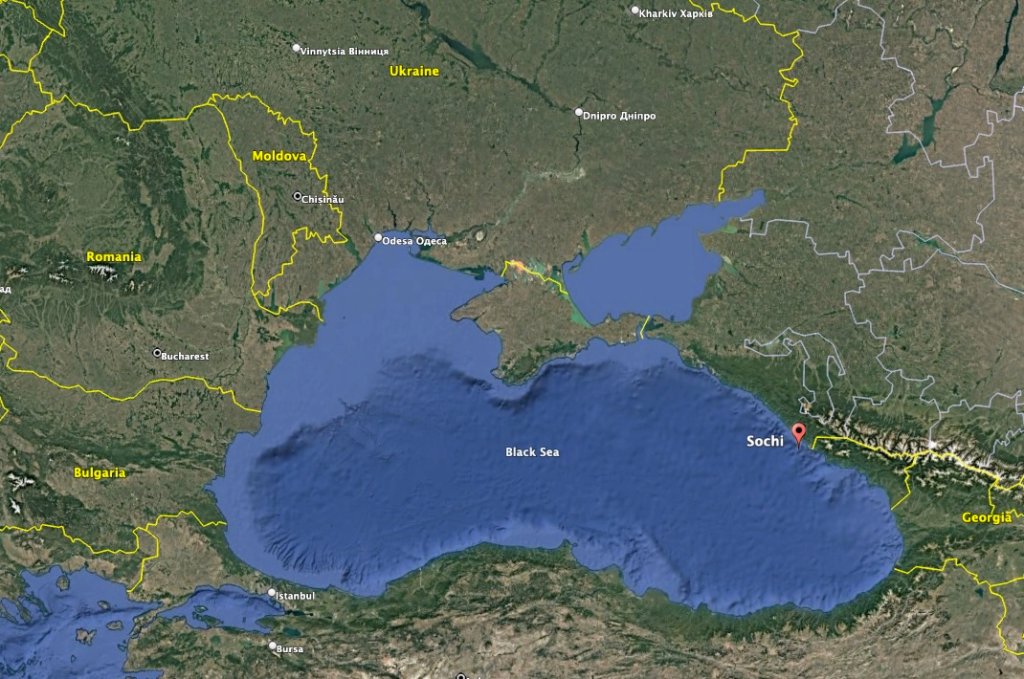
Ukraine carried out one of its farthest uncrewed surface vessel (USV) attacks from Ukrainian shores, striking the Nefrit, a multipurpose offshore vessel, in the Russian Black Sea resort city of Sochi. The seaside getaway is located about 350 miles on a direct line from the nearest Ukrainian-held territory, but the trip is a lot longer if originating from Ukrainian-held shores.

This marks the first known USV attack on this city that Russian President Vladimir Putin often visits. As we have reported in the past, it has been attacked several times by Ukrainian aerial drones.

The Russian Black Sea port of Sochi came under attack on Thursday. (Google Earth)

The Ukrainian Navy said it carried out the attack as part of the country’s campaign against Russia’s energy infrastructure. The Nefrit supported that infrastructure, the Ukrainian Navy claimed.

“The multipurpose support vessel, flying the Russian flag, was hit by an unmanned naval vessel of the Ukrainian Navy,” the service said on Telegram. “A powerful explosion and smoke were observed in the area of the vessel.”

“The NEFRIT is part of Russia’s maritime and energy infrastructure, providing support for oil and gas operations, servicing offshore facilities, transporting cargo and personnel, and carrying out underwater technical work,” the Ukrainian Navy explained. “Its activities directly supported the enemy’s war economy and financed the criminal aggression against Ukraine.”

“The damage to the NEFRIT is a blow to the enemy’s logistics, special capabilities, and military-economic infrastructure,” the Ukrainian Navy added. “The Ukrainian Navy continues to deprive the enemy of resources and capabilities for waging war, and once again demonstrates that even Russian territory is not a safe haven.”

🇺🇦⚓ВМС України уразили судно забезпечення рф NEFRIT у порту Сочі
Багатоцільове судно забезпечення під прапором рф було уражене морським безекіпажним катером Військово-Морських Сил. У районі судна зафіксовано потужний вибух та задимлення.

Детальніше https://t.co/DTfnO15nYO pic.twitter.com/yPDFkks37r

— Військово-Морські Сили ЗС України (@UA_NAVY) September 3, 2026

While the Ukrainian Navy claimed the Nefrit was damaged, the extent of that is hard to determine from imagery emerging on social media.

Some video, shot from inside the city, shows a large explosion at the port.

❗The moment of today’s explosion of a Ukrainian surface kamikaze drone next to a Russian ship in Sochi. pic.twitter.com/zpavwj97BW

— 🪖MilitaryNewsUA🇺🇦 (@front_ukrainian) September 3, 2026

The port in Sochi, Russia, came under attack from Ukrainian naval drones. pic.twitter.com/XygeQLaAWi

— Open Source Intel (@Osint613) September 3, 2026

A still picture shows smoke wafting from the Nefrit; however, the quality of the image makes it hard to determine the vessel’s condition.

Sochi: footage of this morning’s USV raid on the seaport.

The likely target was a Multipurpose Supply Vessel (MPSV) used to support offshore oil and gas operations. pic.twitter.com/Ndr5bRAYV5

— Exilenova+ (@Exilenova_plus) September 3, 2026

There is also video of one of the USVs being destroyed before it could reach its target.

Ukrainian sea drone sails into Sochi port in fascist Russia – appears to be hit by machine gun or cannon fire. https://t.co/GaCZHPu1DJ

— Euan MacDonald (@Euan_MacDonald) September 3, 2026

Starting at about 6 a.m. local time, Sochi Mayor Andrey Proshunin declared an emergency.

“ATTENTION! THREAT OF A USV ATTACK IN SOCHI,” he warned on Telegram. “All forces and resources are working to defend the city. Take shelter in a safe place, remain calm.”

Sochi Mayor Andrey Proshunin declared an emergency about an impending sea drone attack on Thursday. (Sochi Mayor Andrey Proshunin’s Telegram)

About a half hour later, Proshunin issued an all-clear notice, but did not provide any details about what happened.

Sochi Mayor Andrey Proshunin lifted the emergency about a half hour after it started. (Sochi Mayor Andrey Proshunin’s Telegram)

There was no immediate response from the Kremlin.

Ukraine has carried out long-distance USV attacks on Russian Black Sea targets in the past, including one in 2023 on the Ropucha class vessel Olenegorsky Gornyak, located in Russia’s Black Sea port of Novorossiysk. A major Russian port on the eastern coast of the Black Sea, it sits roughly 420 miles from Ukrainian-held shores. Sochi is about 110 miles southeast of Novorossiysk, meaning the USVs in today’s attack would have had to travel an even longer distance if launched from Ukrainian-held shores. However, the launch point of the Sochi USV strike is not publicly known and there is always the possibility that a mothership could have been used.

The attack occurring during broad daylight is also interesting, as Ukraine has often taken advantage of the cover of darkness for USV strike operations on port facilities.

You can see a video of that strike below:

Footage of the Ukrainian USV hitting the Russian Ropucha class LST. pic.twitter.com/ksLP9PZfE5

— OSINTtechnical (@Osinttechnical) August 4, 2023

The strike on the Nefrit is the latest in Ukraine’s long-running drone boat campaign in the Black Sea. This onslaught has already kept Russia’s Black Sea Fleet (BSF) at bay, forcing it to retreat from Crimea to Novorossiysk. Ukrainian USVs have also damaged enemy military facilities in occupied Crimea and the Kerch Bridge.

The Houthi rebels of Yemen actually pioneered the operational use of kamikaze USVs years ago. We first reported about this capability in January 2017, when an explosive-laden Houthi USV struck a Saudi frigate. Before that, Iran developed various crude kamikaze USVs and those capabilities soon migrated to their Houthi proxies, which put them to use in the Red Sea for the first time.

In July, the U.S. military used USVs as combat weapons for the first time, striking Iranian targets in Bandar Abbas. The following video shows that attack.

Yesterday, using multiple one-way attack surface drones, CENTCOM forces successfully struck a submarine and ship maintenance facility in Iran. Three Corsair unmanned surface vessels hit the port at Bandar Abbas Naval Base, marking the first time American forces have employed sea… pic.twitter.com/bOM2kmgRxz

— U.S. Central Command (@CENTCOM) July 13, 2026

It may be a day or so before we get a better picture of the extent of the damage to the Nefrit. Regardless, the attack itself is another sign that Ukraine can reach targets with sea drones far from its own shores.

The Latest

All across the battlefield, Ukrainian forces are largely holding off continued Russian attacks or are making small advances. Overall, in August, “Russian forces advanced or infiltrated into about 123.53 square kilometers — an average pace of 3.98 square kilometers per day,” according to the Institute for the Study of War (ISW). “Russian forces’ main territorial gains in August 2026 have been in the Fortress Belt area, Donetsk Oblast. Even there, Russian forces managed to achieve only marginal tactical gains and have thus far failed to complete the seizure of Kostyantynivka.”

Here are some key takeaways from the ISW assessment.

  • Kharkiv: Russian forces continued offensive operations in northern Kharkiv Oblast and the Velykyi Burluk direction on September 1 and 2 but did not advance. Russian forces also continued offensive operations in the Borova and Kupyansk directions on September 2 but did not advance. However, Moscow’s troops continued attempts to secure and expand the bridgehead on the left bank of the Oskil River to enable further infiltrations into Kupyansk.
  • Donetsk: Ukrainian forces recently defeated a Russian infiltration mission in the Slovyansk direction. They also recently maintained positions or advanced in the Dobropillya tactical area. Russian forces continued offensive operations in the Novopavlivka direction on September 1 and 2 but did not advance. Neither Ukrainian nor Russian forces reported ground activity in the Oleksandrivka direction on September 2.
  • Zaporizhia: Russian forces continued offensive operations in the Hulyaipole direction on September 1 and 2 but did not advance. Russian forces continued offensive operations in western Zaporizhia Oblast on September 1 and 2 but did not advance as Ukrainian forces counterattacked west of Orikhiv.
  • Kherson: Neither Russian nor Ukrainian forces reported ground activity in the Kherson direction on September 2.

MORE 🧵(1/3): ISW has observed evidence to assess that Russian forces consolidated positions in or seized about 90.35 square kilometers of territory in Ukraine in August 2026, averaging 2.91 square kilometers seized per day. Including Russian infiltrations, Russian forces… https://t.co/0RlwRfBdhs pic.twitter.com/Cp2Knry2Du

— Institute for the Study of War (@TheStudyofWar) September 2, 2026

Air traffic around Moscow continued to be disrupted on Thursday as Russian authorities responded to another large-scale Ukrainian drone operation, according to EU Today. The disruptions came two days after President Volodymyr Zelensky warned international airlines and insurers that Russian airspace was becoming increasingly unsafe for civilian aviation due to Ukrainian drone attacks.

Moscow Mayor Sergei Sobyanin said that 548 drones had flown towards the wider Moscow region between 8 a.m. on Wednesday and midday Thursday local time. However, Russian authorities claimed that most were intercepted before they could reach the Moscow area while 143 were destroyed on approaches to the Russian capital.

“Temporary restrictions were again imposed at Moscow’s principal airports,” EU Today noted. “Vnukovo and Domodedovo stopped arrivals and departures for periods during the operation, while Sheremetyevo handled flights under additional restrictions. The measures produced cancellations, delays and diversions extending beyond the periods in which individual airports were formally closed.”

The disruption “had already become extensive on Wednesday,” the publication added. “Flight-tracking data showed 21 cancellations and 235 delayed services at Sheremetyevo, Russia’s largest airport, while Vnukovo recorded 22 cancellations and 94 delays.”

⚡ Moscow airports cancel flights after Zelensky's 'closed skies' warning

"Temporary restrictions on the arrival and departure of aircraft have been introduced," Russia's Federal Air Transport Agency (Rosaviatsia) said.https://t.co/BAlAASaDv5

— The Kyiv Independent (@KyivIndependent) September 3, 2026

Putin on Thursday said there is a chance of resolving the “Ukrainian conflict” but Kyiv’s campaign to shut down Russian airspace is “complicating the negotiation process.”

Russia and Ukraine themselves must reach an agreement, while other countries can only support and assist, the Russian leader added, according to a translation from former Ukrainian government official Anton Gerashchenko.

Russia is in contact with the White House and President Donald Trump “is committed to positive and constructive engagement,” Putin proclaimed. “Russia has many friends in the United States. One of them is Steven Seagal, the ‘best envoy of peace.'”

Putin said there is a chance of resolving the "Ukrainian conflict" but Ukraine's threats to shut down Russian airspace are "complicating the negotiation process."

Comment from me: Putin's orders to attack Ukrainian energy infrastructure aren't complicating anything, it seems… https://t.co/QYJ3AKXjou pic.twitter.com/C1NKz3V7cH

— Anton Gerashchenko (@Gerashchenko_en) September 3, 2026

A Russian drone strike on an Odesa apartment building injured at least 17 people, including three children, Zelensky stated on X.

In Odesa, emergency services continue working at the site of a drone strike on an apartment building. Damage to apartments from the 10th through the 17th floors left 17 people injured, including three children. Efforts are also ongoing to deal with the aftermath of the strikes in… pic.twitter.com/FWAmFNJSYp

— Volodymyr Zelenskyy / Володимир Зеленський (@ZelenskyyUa) September 3, 2026

Overall, Ukraine says its air defenses downed or suppressed 135 of 163 Russian drones launched overnight, including Shahed-type UAVs, about half of which were jet-powered. Russia also used S-8000 Banderol, Gerbera and decoy drones. Hits were recorded at 15 locations and debris fell at four.

Ukraine says air defenses downed or suppressed 135 of 163 Russian drones launched overnight, including Shahed-type UAVs, about half of them jet-powered. Russia also used S-8000 Banderol, Gerbera and decoy drones. Hits were recorded at 15 locations and debris fell at four.… pic.twitter.com/JyxTS6QBzL

— NOELREPORTS 🇪🇺 🇺🇦 (@NOELreports) September 3, 2026

Russia has been increasingly using jet-powered drones to attack Ukraine. The Ukrainian Defense Ministry released video it says shows troops from the 208th Anti-Aircraft Missile Brigade downing one of those drones. The jet powered Shahed-like one-way attack drones fly higher and faster than their propeller-driven cousins, making them harder to intercept by more cost effective and plentiful means, such as Ukraine’s many drone interceptors. Instead, much more expensive and increasingly scare missile must be used in some circumstances.

💥Shaheds down!

Jet-powered Russian strike drones intercepted on September 2.

📹: 208th Anti-aircraft Missile Brigade pic.twitter.com/ZXkbZMO5an

— Defense of Ukraine (@DefenceU) September 3, 2026

What appears to be the first video of Ukrainian troops using Cold War-era Leopard 1 tanks with turrets swapped out for the Rheinmetall Skyranger 35 short-range air defense system has emerged on social media. The @deaidua X account that tracks German war materiel donations to Ukraine said the 1020th Anti-Aircraft Missile Regiment recently took delivery of this system, designed to be a highly mobile counter to a range of aerial threats.

The Skyranger 35 “is equipped with a KDG 35/1000 revolver cannon in 35 mm x 228 caliber with a firing rate of 1,000 rounds per minute,” according to Rheinmetall, which began delivering these to Ukraine in January. “It has an effective range of up to 4,000 meters and a high degree of commonality with the Oerlikon Revolver Gun Mk 3. Thanks to AHEAD technology, the Skyranger 35 is airburst-capable. In the future, it will also be possible to equip it with modern guided missiles.”

It seems that Ukraine's 1020th Anti-Aircraft Missile Regiment which belongs to the Ground Forces has taken delivery of the first Skyranger 35 SPAAGs mounted on a Leopard 1 chassis made by @RheinmetallAG.

A contract for the delivery of the Skyranger 35 SPAAGs was signed in H2 of… pic.twitter.com/VRWhGx1LCa

— GAU (@deaidua) September 3, 2026

A new documentary about Ukraine’s use of the combat-proven National Advanced Surface-to-Air Missile System (NASAMS) air defense system debuts tomorrow.

“Sky Defenders is a new documentary taking audiences inside the increasingly critical battle to protect the skies of Europe and Ukraine,” according to the film’s producers. “Launching globally on Apple TV and Amazon Prime on Sept. 4, the 50-minute film explores the people, technology and strategy behind modern air defense and the race to stop missiles and drones before they reach their targets.”

A new video shows a Russian soldier being attacked by three Ukrainian kamikaze drones simultaneously, underscoring just how dense the drone threat has become to troops near the front.

That kind of attrition is also visible around Pokrovsk, where Ukrainian kamikaze drones are increasingly coordinating strikes against individual Russian infantrymen and small assault groups.https://t.co/HfKBCW7ZOm

— ZSU News (@ZSUNews) September 3, 2026

It’s been more than three years since the Russians captured the town of Bakhmut in the eastern Donetsk region after a long battle that incurred a tremendous toll on personnel and equipment on both sides of the fight. New drone video has emerged showing the city remains in ruins, with blocks and blocks of vacant and destroyed buildings.

A harrowing new video from Bakhmut, filmed in the summer of 2026. The Ukrainian city was captured by the Russians three years ago and has lain in ruins ever since.

In this once-vibrant city of 72,000 inhabitants, there are no longer any shops, schools, kindergartens, cafés,… pic.twitter.com/clFfLu5jkq

— Jürgen Nauditt 🇩🇪🇺🇦 (@jurgen_nauditt) September 3, 2026

That’s it for now. We’ll update this story with new details when they emerge.

Contact the author: howard@twz.com

The post Ukrainian Sea Drones Strike Russian Black Sea Resort Town Of Sochi For The First Time appeared first on TWZ.

  •  
❌