❌

Reading view

Saudi Arabia Appears To Have Used Its Secretive Stash Of Ballistic Missiles For The First Time

Debris from a Chinese-made ballistic missile found in Yemen could have inadvertently revealed a previously undisclosed addition to Saudi Arabia’s secretive ballistic missile arsenal. Imagery circulating online appears to show the wreckage of a Chinese DF-15A short-range ballistic missile (SRBM), potentially marking the first known Saudi combat use of a weapon in this class, although both the identification and ownership remain unconfirmed.

The booster stage of a Chinese-made DF-15A (Dong Feng-15A) ballistic missile operated by Saudi Arabia fell in Raghwan District, Marib Governorate, northern Yemen. pic.twitter.com/dfSXMOiCzQ

— OSINTWarfare (@OSINTWarfare) September 14, 2026

It is also unclear what happened to the missile itself. The debris suggests a stage separation or the missile broke apart or crashed before reaching its target. The Houthis are not known to possess any weapons that could have intercepted it.

A screenshot from a video clearly shows the DF-15A name applied on the side of the missile. via X

The development comes amid a sharp escalation in the long-running Saudi-Houthi conflict. After years of relative de-escalation following the 2022 truce, fighting has intensified in recent weeks as Houthi forces have dramatically overrun Saudi-backed Yemeni government positions, including around strategically important Marib and Taiz. The Houthis have also escalated missile and drone attacks against southern Saudi Arabia, targeting military and energy infrastructure while threatening the kingdom’s ability to move oil through the Red Sea. The group has declared the Bab el-Mandeb closed to Saudi oil traffic, adding a direct threat to one of Riyadh’s critical energy-export routes.

You can catch up with our latest coverage of the fighting here.

As for the DF-15, also known by its NATO designation CSS-6, this is a road-mobile, solid-fueled SRBM developed by China during the 1980s. The system formed part of Beijing’s effort to develop a new generation of conventionally armed mobile ballistic missiles, including systems primarily intended for export.

العثور على بقايا صاروخ صيني من طراز DF-15A في اليمن. pic.twitter.com/af9mGNNxiA

— إيران بالعربية (@iraninarabic_ir) September 14, 2026

As you can read about here, the DF-15 family has evolved through several variants, although open-source information concerning their capabilities remains inconsistent.

The DF-15A reportedly entered Chinese service in the mid-1990s. Estimates of these missiles’ maximum range vary substantially, from roughly 600 kilometers (373 miles) for the original DF-15 to as much as 900 kilometers (559 miles) for later versions.
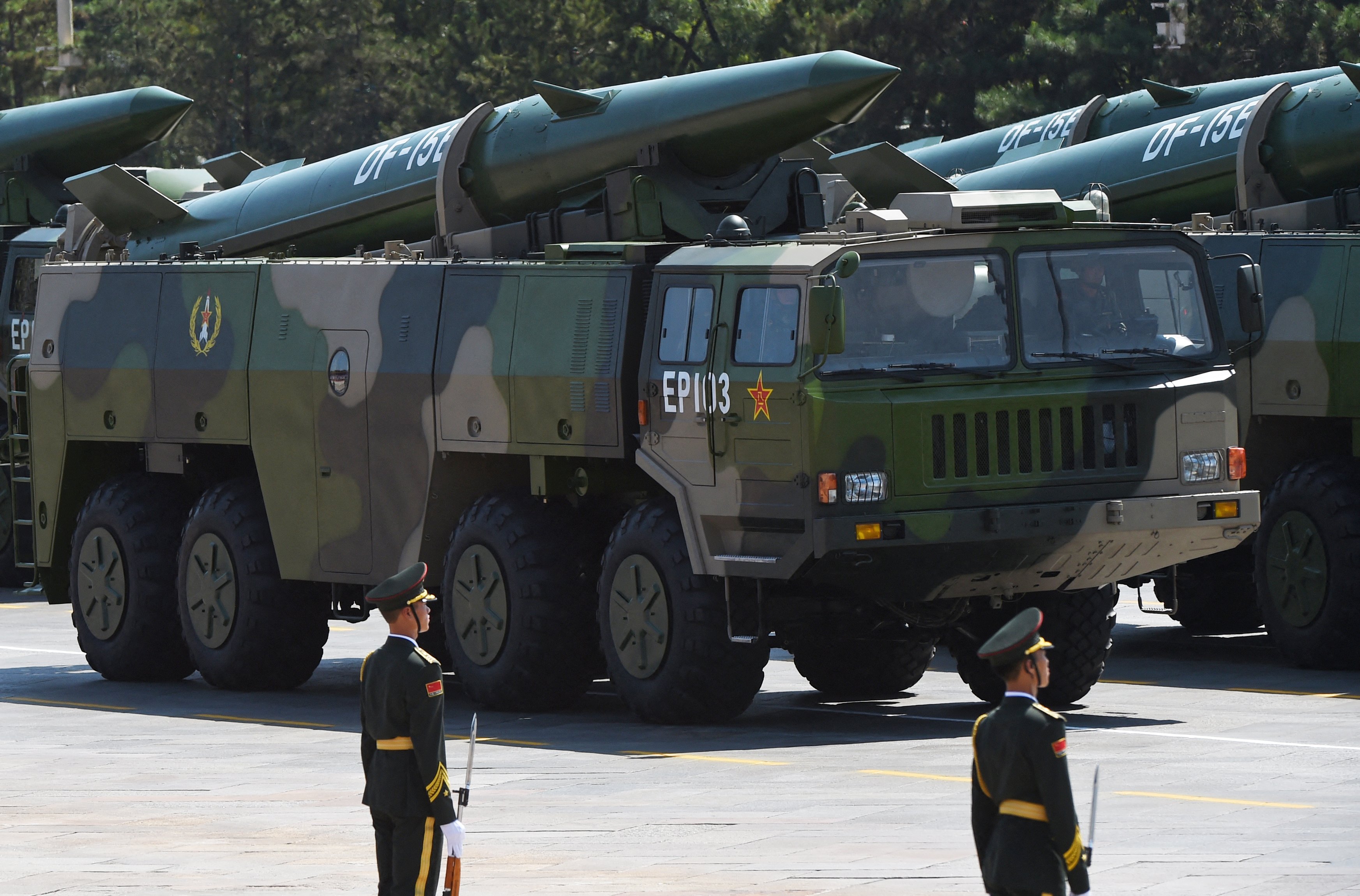
Military vehicles carrying DF-15B ballistic missiles participate in a military parade at Tiananmen Square in Beijing on September 3, 2015, to mark the 70th anniversary of victory over Japan and the end of World War II. China kicked off a huge military ceremony marking the 70th anniversary of Japan's defeat in World War II on September 3, as major Western leaders stayed away. AFP PHOTO / GREG BAKER (Photo by GREG BAKER / AFP via Getty Images)
Among the later versions of the DF-15 family is the DF-15B. A more substantial redesign, its most obvious external change is its triconic reentry vehicle fitted with control fins, a configuration widely interpreted as incorporating a maneuverable reentry vehicle (MaRV) warhead. Photo by GREG BAKER / AFP via Getty Images GREG BAKER

China is the only confirmed operator of the DF-15 family. There have been longstanding reports of Chinese transfers of the DF-15 or the related M-9 export version to Egypt, Iran, Pakistan, and Syria, but in each case, the export record is heavily disputed, with some reports likely conflating the DF-15 with the broadly similar DF-11.

While Saudi Arabia has never publicly acknowledged operating the DF-15 family, it has a well-established history of acquiring Chinese ballistic missiles.

In 2013, Prince Fahd bin Abdullah bin Mohammed, Deputy Minister of Defense, visited the Strategic Missile Forces of Saudi Arabia, and was given this model. YEARS of speculation on the smaller missiles (The large is DF-3). Now we know – they are DF-15 and DF-15A. pic.twitter.com/oOn8qiCgye

— Tal Inbar (@inbarspace) September 14, 2026

Saudi Arabia imported Chinese ballistic missiles to expand its long-range strike options. Its desire for a land-based strategic deterrent was initially driven by concerns over Iran, regional missile proliferation, and nuclear hedging. More recently, however, it shifted toward fielding more accurate, mobile systems with greater conventional military utility.

Riyadh secretly obtained DF-3A missiles from China beginning in the late 1980s, establishing a strategic ballistic-missile capability that remained largely outside public view.

The kingdom has also subsequently been linked to the DF-21 family. Satellite imagery and other open-source intelligence have provided evidence of Chinese-designed ballistic-missile infrastructure in Saudi Arabia.

While the Houthis have their own ballistic-missile arsenal, this is principally associated with Iranian technology, captured Yemeni systems, and locally produced or modified weapons.

Saudi employment of an SRBM in the current fighting would represent a notable expansion of the kingdom’s response options. If Saudi Arabia did indeed do this, its main advantage would be speed and responsiveness. A solid-fueled ballistic missile could reach targets deep inside Yemen within minutes while keeping Saudi aircraft and crews out of the immediate engagement area, providing Riyadh with a rapid strike option against fixed Houthi targets. That could be particularly valuable as the conflict expands and Saudi forces face pressure to respond quickly to Houthi attacks on military and energy infrastructure.

Previous losses at the hands of Houthi ground-based air defenses could also dissuade Riyadh from relying on crewed aircraft to strike targets on the ground deep inside Yemen. Houthi air defenses, while pathed together in many ways, are capable enough to give even U.S. airpower a serious run for their money.

At the same time, a conventional SRBM like the DF-15A can deliver a large warhead at very high speed, imparting significant kinetic energy, making it particularly useful against fixed, high-value, or hardened targets.

Use of an SRBM would also be in line with the current pattern of escalation, with the Houthis conducting missile and drone attacks against Saudi military and energy targets while Saudi-backed Yemeni forces are engaged in renewed ground fighting. Riyadh’s demonstration of an SRBM capability in this campaign would also signal that it is is willing to draw more heavily on its strategic missile inventory as the conflict intensifies, potentially further raising the stakes of the confrontation.

Such a move would carry a message beyond Yemen. Using a previously unacknowledged ballistic missile capability in combat would signal to Iran that Riyadh is now willing to employ this arsenal, after decades of keeping it very much in the shadows.

If the evidence ultimately points to a Saudi DF-15A launch, the discovery would offer a rare look at the operational use of an extremely secretive part of the kingdom’s arsenal, and add a significant new dimension to the rapidly escalating Saudi-Houthi war.

Contact the author: thomas@thewarzone.com

The post Saudi Arabia Appears To Have Used Its Secretive Stash Of Ballistic Missiles For The First Time appeared first on TWZ.

  •  

France Accelerates Rafale F5 Upgrade After Collapse Of FCAS Next-Gen Fighter Project

France is accelerating work on the Rafale F5 standard, bringing forward development of a major new configuration of its combat aircraft at a time when the country’s planned next-generation fighter with Germany has effectively collapsed in its original form. The contracts cover the equipment judged to have the highest technical risk, ahead of the overall development contract for the F5 standard, expected for the end of this year.

The French defense procurement agency, the Direction générale de l’armement (DGA), ordered the first upstream development work for F5 from Dassault Aviation, Thales, MBDA, and Safran. The contracts cover key areas including navigation, datalinks, radar, electronic warfare, and propulsion, laying the groundwork for the next configuration of the Rafale, which is planned to enter service with the French Air and Space Force and the French Navy starting around 2033.

#Commande | Rafale F5

La DGA commande les 1ers travaux en amont du prochain lancement en réalisation du standard F5 du Rafale

Ils concernent notamment :
➡la centrale inertielle
➡le moteur
➡le radar
➡la suite d’autoprotection de l’avion
⤵ pic.twitter.com/n3uhBYqIvi

— Direction générale de l'armement 🇫🇷 (@DGA) September 9, 2026

The most extensive modernization of the Rafale yet, the F5 standard was originally part of a longer transition toward France’s next-generation combat-air capability. But with the Franco-German New Generation Fighter (NGF) effort now effectively dead in its original configuration, the accelerated F5 program is taking on a much larger strategic role.

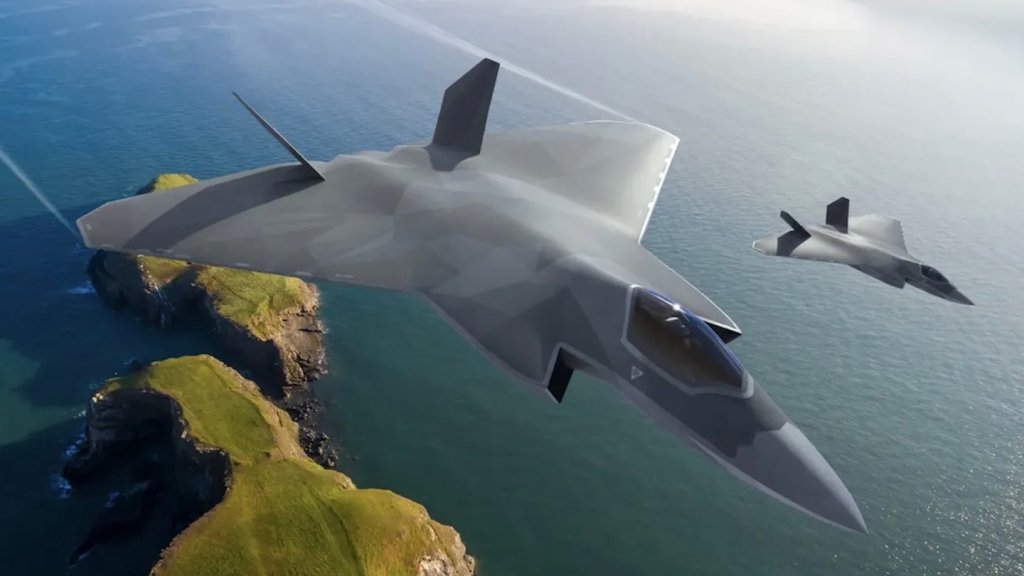
Concept artwork of the NGF future fighter. Dassault Aviation

Rather than simply keeping the Rafale relevant until NGF arrives, France is now developing a version of the aircraft that is set to carry much of the country’s high-end combat-air capability well into the 2030s and potentially beyond.

The increasingly capable F5 could, in turn, reduce the urgency of finding a replacement for the Rafale — while potentially adding to the fighter’s export appeal. After a slow start, Dassault has recorded export sales of 299 new-build Rafales to eight nations.

The DGA’s contracts engage four of France’s principal combat-aircraft industrial players. Dassault Aviation remains responsible for the aircraft and its overall integration; Thales is involved in major sensor, electronic warfare, and communications capabilities; MBDA is responsible for much of the weapons system; and Safran is responsible for propulsion.

The Rafale assembly line at the Dassault Aviation facility in Mérignac, France. Dassault Aviation – V. Almansa ALMANSA

Previous Rafale standards have largely consisted of incremental upgrades, focusing on software and other improvements to the existing aircraft configuration. F5 is notably more extensive, addressing many of the critical systems that determine how the aircraft senses the battlespace, communicates with other platforms, conducts electronic warfare, and generates the power needed to operate increasingly demanding equipment.

The DGA has specifically identified the Thales RBE2-XG radar as one of the major technological advances associated with F5.

The RBE2-XG is expected to feature gallium nitride (GaN) semiconductors. Compared with previous technology, GaN generates less heat and has the capacity to operate at higher voltages, meaning that output power can be increased, while component size can be reduced. Overall, using GaN should help to get more power out of the radar without increasing its size.

According to the DGA, “This new radar will benefit from a substantial increase in power, and consequently in detection range, as well as improvements in the identification of targets with an extremely low radar cross-section (RCS). Its computing capabilities will also be enhanced to facilitate the integration of artificial intelligence.”

The RBE2-XG will also be “designed with collaborative combat in mind, featuring sensors capable of working together without the need for pilot intervention.” It is also planned to have enhanced resilience, including against cyber threats.

France is already working on the concept of a combat drone to accompany the Rafale, with the future F5 standard providing the crewed aircraft around which those systems can operate.

A Rafale during a test mission with a Dassault nEUROn combat drone demonstrator. Dassault Aviation – A. Pecchi

The new radar will be combined with more capable electronic warfare equipment, improved communications and datalinks, expanded processing capacity, and a more capable propulsion system.

To be developed by MBDA and Thales, the forthcoming F5 version of the SPECTRA self-protection suite is intended to significantly improve detection and jamming capabilities, the DGA says, “through a fully digital approach, enabling a complete overhaul of the core electronic warfare system to counter the increasing density and broadening of the threat spectrum, as well as the growing complexity of threat waveforms, expected by 2035.”

Thales will also be responsible for the new Inter-Vehicle Data Link (IVDL) system, described as a “stealthy and resilient datalink.” The DGA says the new datalink will expand connectivity “thanks to a new high-speed, discreet, and jamming-resistant waveform. IVDL will allow the Rafale to penetrate hostile areas where jammers are widespread, while maintaining optimal quality of communication and dialogue between aircraft.”

Safran will begin preliminary design work on the M88 T-Rex engine, which is planned to increase the turbofan’s thrust from around 16,500 pounds to nearly 19,850 pounds, an increase of roughly 20 percent.

In terms of armament, the contract announcement mentions the ASN4G missile, set to be introduced to service by 2035, which will allow the Rafale F5 to continue to serve as the airborne nuclear component. The munition remains in the early stages of development, but it will be capable of hypersonic speeds — defined as speeds greater than Mach 5 — with a range in excess of 1,000 kilometers (621 miles).

Other likely new missiles include a beyond-visual-range air-to-air missile to succeed the current Meteor. As you can read about here, France’s Comet program, apparently led by the French side of MBDA, is already looking into this requirement, with an apparent plan to introduce the weapon around 2030.

An older video from MBDA showing some of the company’s weapons integrated on earlier versions of the Rafale:

For France, the original logic behind the pan-European FCAS program was that Rafale would eventually give way to the NGF as its principal crewed combat aircraft, operating from land bases and aircraft carriers.

With the collapse of the Franco-German effort, France cannot simply wait for a next-generation fighter program whose industrial and political future is uncertain. Instead, the Rafale has to remain capable against rapidly evolving threats throughout the 2030s and beyond.

With the F5 standard, however, France is looking to incorporate some of the concepts envisaged for NGF. These include distributed architectures in which crewed fighters, uncrewed aircraft, remote carriers, missiles, and offboard sensors cooperate across a battlespace.

The nEUROn drone and a Rafale M in flight over the aircraft carrier Charles de Gaulle, during tests to investigate the use of a UCAV in a naval context. Dassault Aviation – A. Pecchi

A highly upgraded Rafale operating as the crewed controller of uncrewed combat aircraft and remote weapons could perform some of the missions that France originally expected from NGF.

For now, F5 also sidesteps the central problem in the now-defunct Franco-German effort: whether the two countries could agree on the requirements, industrial structure, and workshare behind a new-generation combat aircraft.

Despite its advances, the F5 airframe remains derived from a design dating back to the 1980s, which first entered French service in the early 2000s. In particular, it falls well short of fifth-generation designs — let alone sixth-generation ones — in terms of low observability. This is one area where collaborative drones could potentially help compensate for the Rafale’s inherent limitations.

DA00052389_CCO_
The current standard F4 Rafale with a full weapons load. Dassault Aviation – C. Cosmao © Dassault Aviation – C. Cosmao / © Dassault Aviation – C. Cosmao

France has therefore bought itself some time with the F5 program. But it may eventually decide that it needs a future high-end crewed fighter to provide capabilities that an upgraded fourth-generation airframe cannot fully replicate, particularly in terms of survivability against advanced integrated air-defense systems, signature reduction, internal weapons carriage, and operations deep inside heavily contested airspace.

On an industrial level, F5 is also significant because it brings together the same French industrial heavyweights that would have formed the backbone of its FCAS effort. Dassault Aviation, Thales, Safran, and MBDA are now well-positioned to work together on whatever comes after F5, whether that is a crewed combat aircraft, uncrewed CCA-type platforms, or a combination of both. Based on its experience with the nEUROn program, France would be well placed to develop a UCAV that can work cooperatively as well as independently, taking over the deeper-penetrating fighter mission set, and potentially skipping a sixth-generation fighter altogether.

https://www.youtube.com/watch?v=frNsu7g7r94

Meanwhile, success with F5 — and, in particular, with the wider combat ecosystem planned around it — could put France in an even stronger position when it comes to any future European fighter project.

For the time being, Britain, Italy, and Japan are pursuing the GCAP/Tempest pathway toward a new combat aircraft. Germany and Spain remain tied to the wider FCAS architecture, even as the original Franco-German NGF arrangement has fractured. Sweden’s position is less clear, with indications that it could collaborate with either France or Germany.

France, for its part, is now investing heavily in an increasingly sophisticated Rafale architecture while maintaining its own sovereign industrial base.

In terms of acqusition, France is expected to pursue a mixed approach, buying new-build Rafales while upgrading suitable aircraft already in service to the F5 standard. The oldest jets are unlikely to receive the full F5 treatment, however.

The irony is that the failure of the NGF effort may ultimately make Rafale F5 more important — and potentially more capable — than it was ever expected to be.

Contact the author: thomas@thewarzone.com

The post France Accelerates Rafale F5 Upgrade After Collapse Of FCAS Next-Gen Fighter Project appeared first on TWZ.

  •  

Ukraine’s New Shershen SAM Can Fire A Wild Mix Of Adapted Air-To-Air Missiles

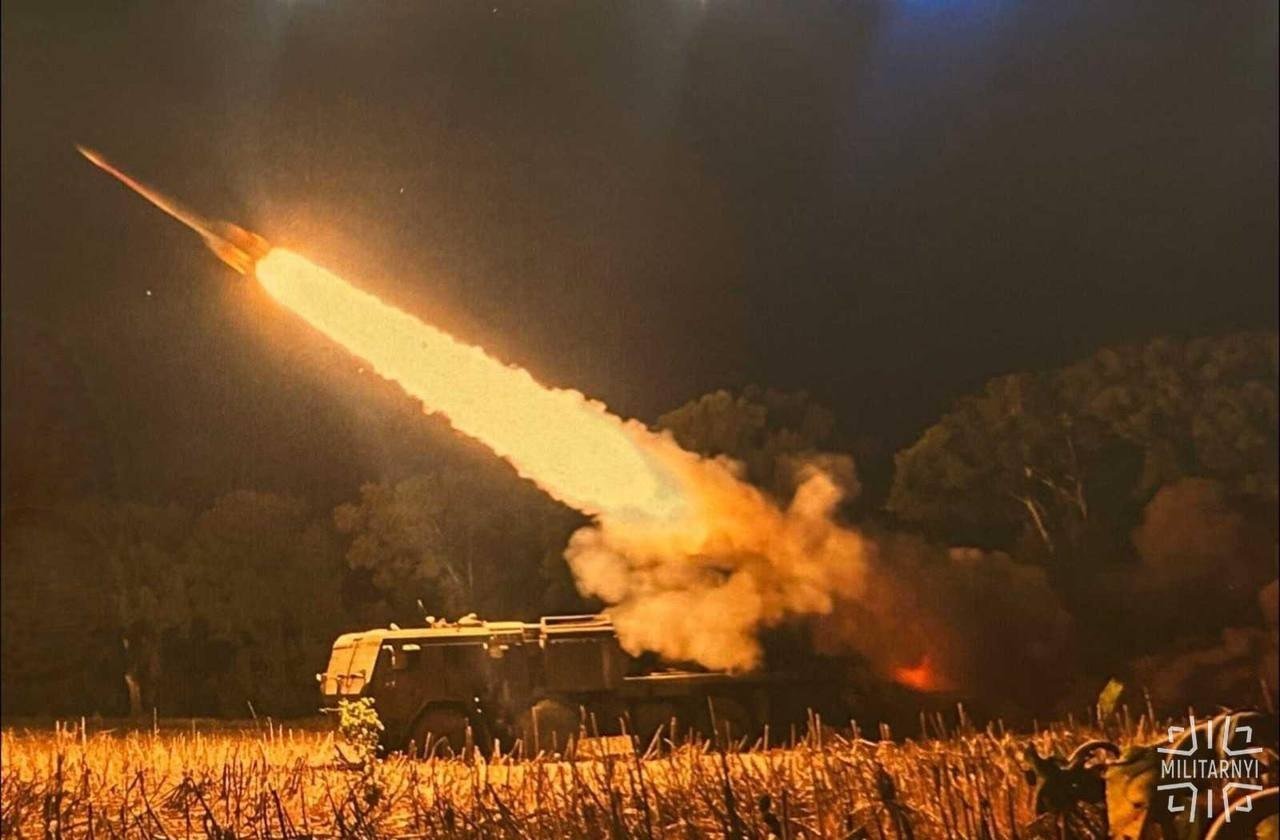
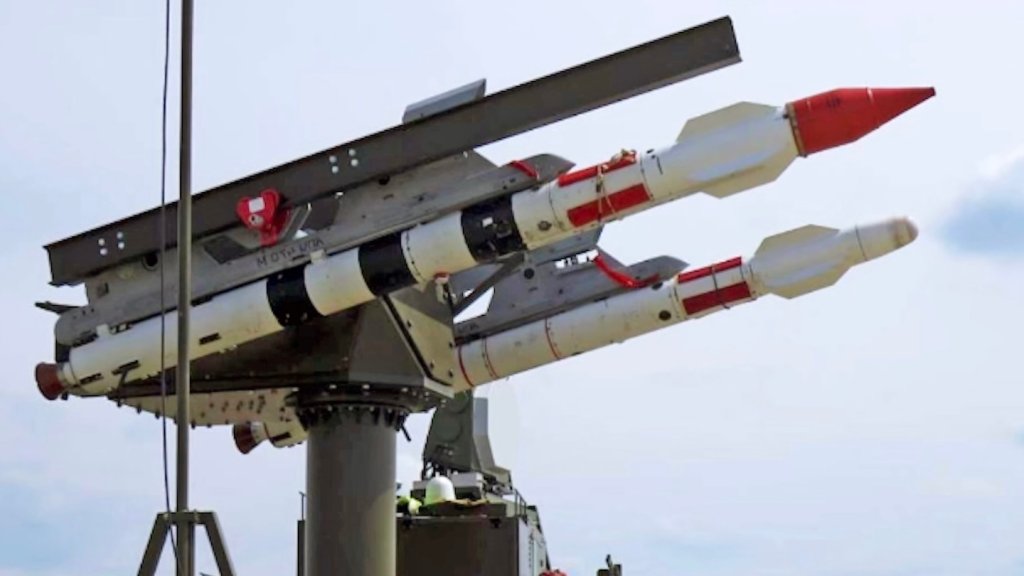
Ukraine has unveiled a new domestically developed surface-to-air missile system designed to turn a diverse collection of air-to-air missiles into a flexible ground-based air defense capability. Called Shershen, Ukrainian for hornet, the system combines a locally-developed command-and-control architecture, a dedicated surveillance radar, and multiple launchers that can employ both Ukrainian and Western missiles.

The system was displayed at the MSPO defense exhibition in Kielce, Poland, by the National Association of Ukrainian Defense Industries (NAUDI). The example shown is reportedly the second operational prototype and is described as being close to its production configuration.

At the ongoing MSPO-2026 defense and industrial exhibition in Poland, the launcher of the Ukrainian Shershen air defense system, developed by Radionix, has been presented for the first time, along with the R-120K surface-to-air guided missile specially developed for it (second… pic.twitter.com/5RfZWHWuxl

— 𝔗𝔥𝔢 𝕯𝔢𝔞𝔡 𝕯𝔦𝔰𝔱𝔯𝔦𝔠𝔱 🦩🇬🇪🇺🇦🇺🇲🇬🇷 (@TheDeadDistrict) September 9, 2026

The appearance of Shershen comes as Ukraine continues to develop an increasingly diverse family of indigenous air defense systems, while simultaneously adapting older missiles and foreign-supplied weapons to address a severe shortage of interceptors.

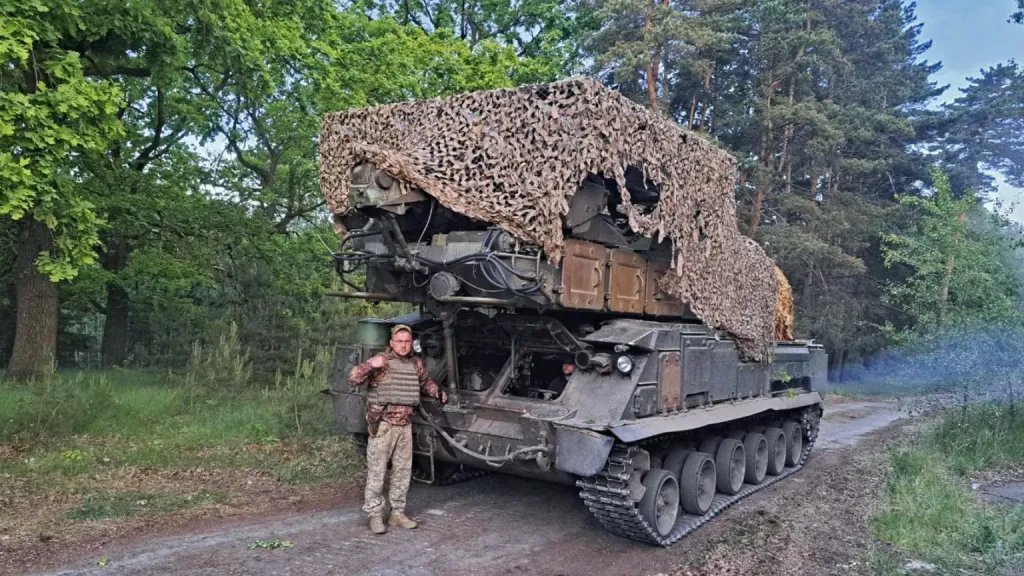
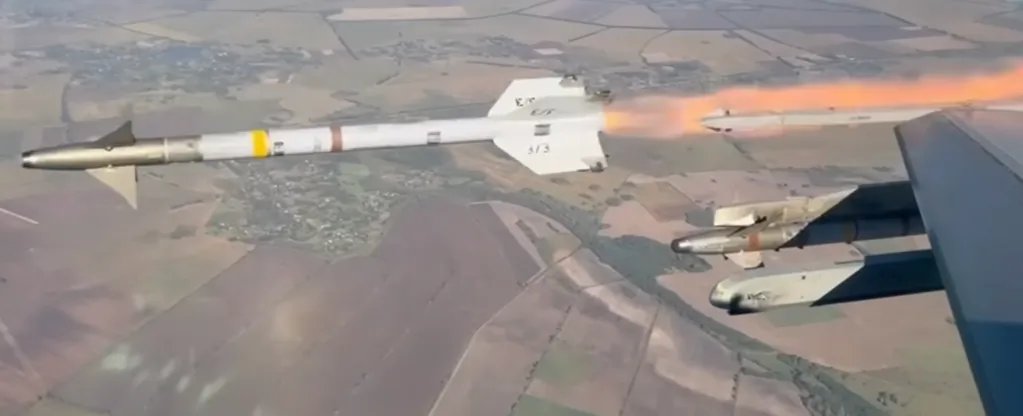
That effort has produced some distinctly unconventional combinations. Ukraine’s so-called FrankenSAM programs have paired existing Soviet-era launchers and radars with Western missiles, while other systems have adapted Soviet R-73 air-to-air missiles for ground launch. The United Kingdom and Denmark have also worked with Ukraine on the containerized Gravehawk system, another concept built around repurposed air-to-air missiles.

The Buk/Sea Sparrow FrankenSAM combines the Soviet-era Buk transporter-erector-launcher with U.S.-supplied RIM-7 Sea Sparrow missiles. Operational Command East

Shershen takes that philosophy a step further by making missile interchangeability a central feature of the system.

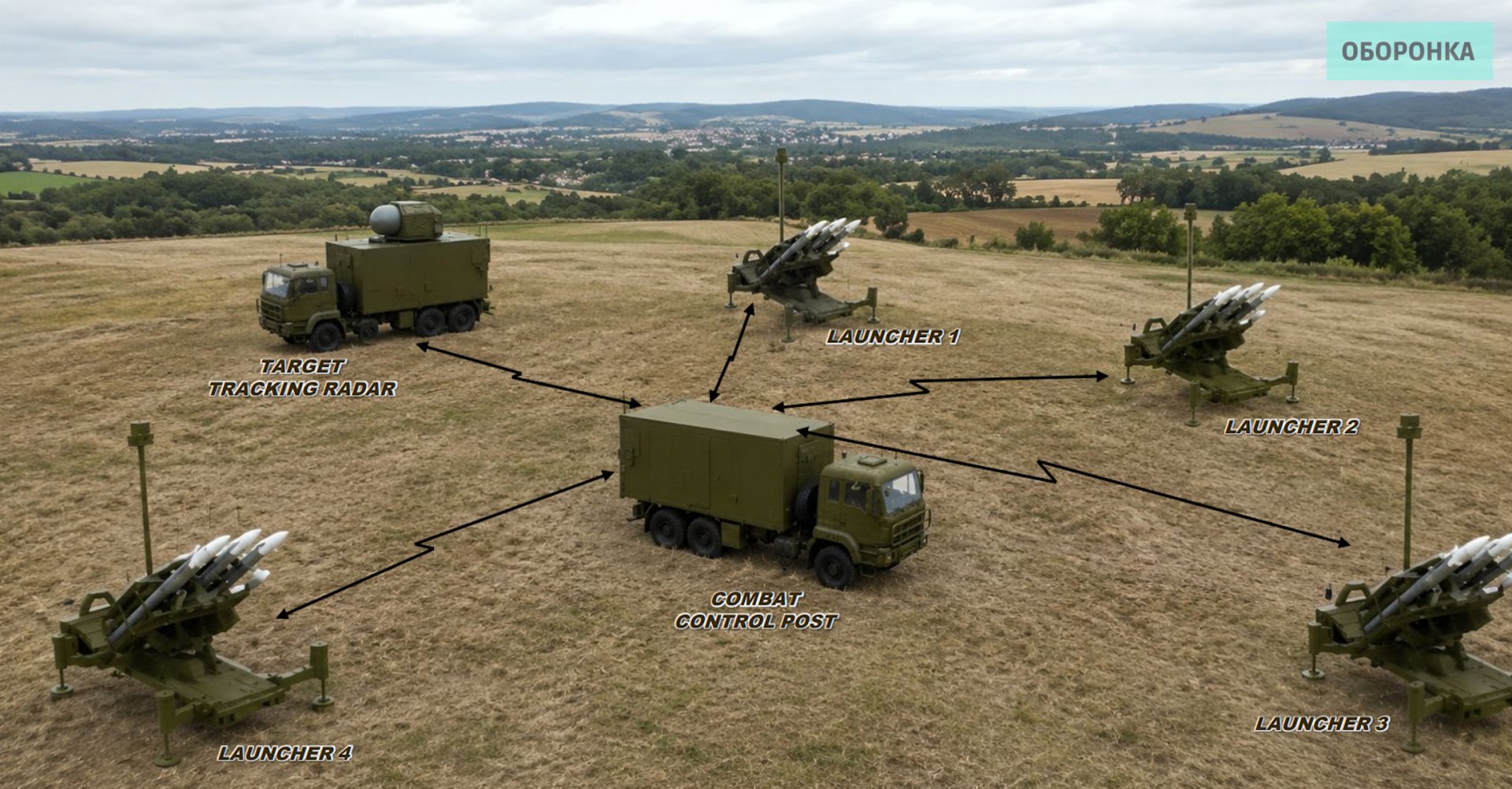
The Shershen battery consists of a Perun command-and-control vehicle, an Athena radar, and four Borei launchers.

A graphic shows a typical Shershen battery. via Oboronka

According to the developer, the system’s architecture is deliberately open. This allows it to use different missiles from different manufacturers and also permits the integration of third-party surveillance and guidance radars.

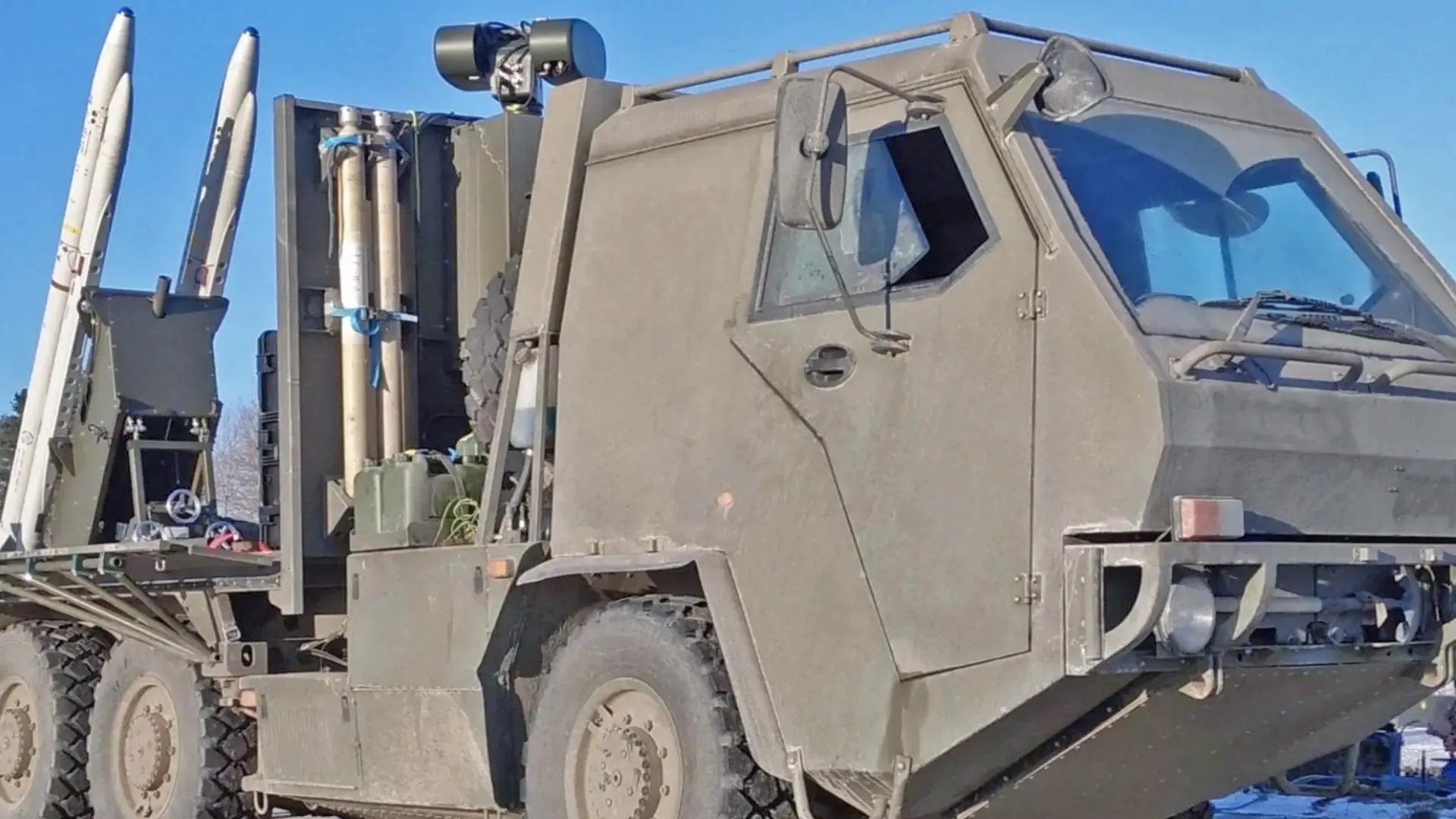
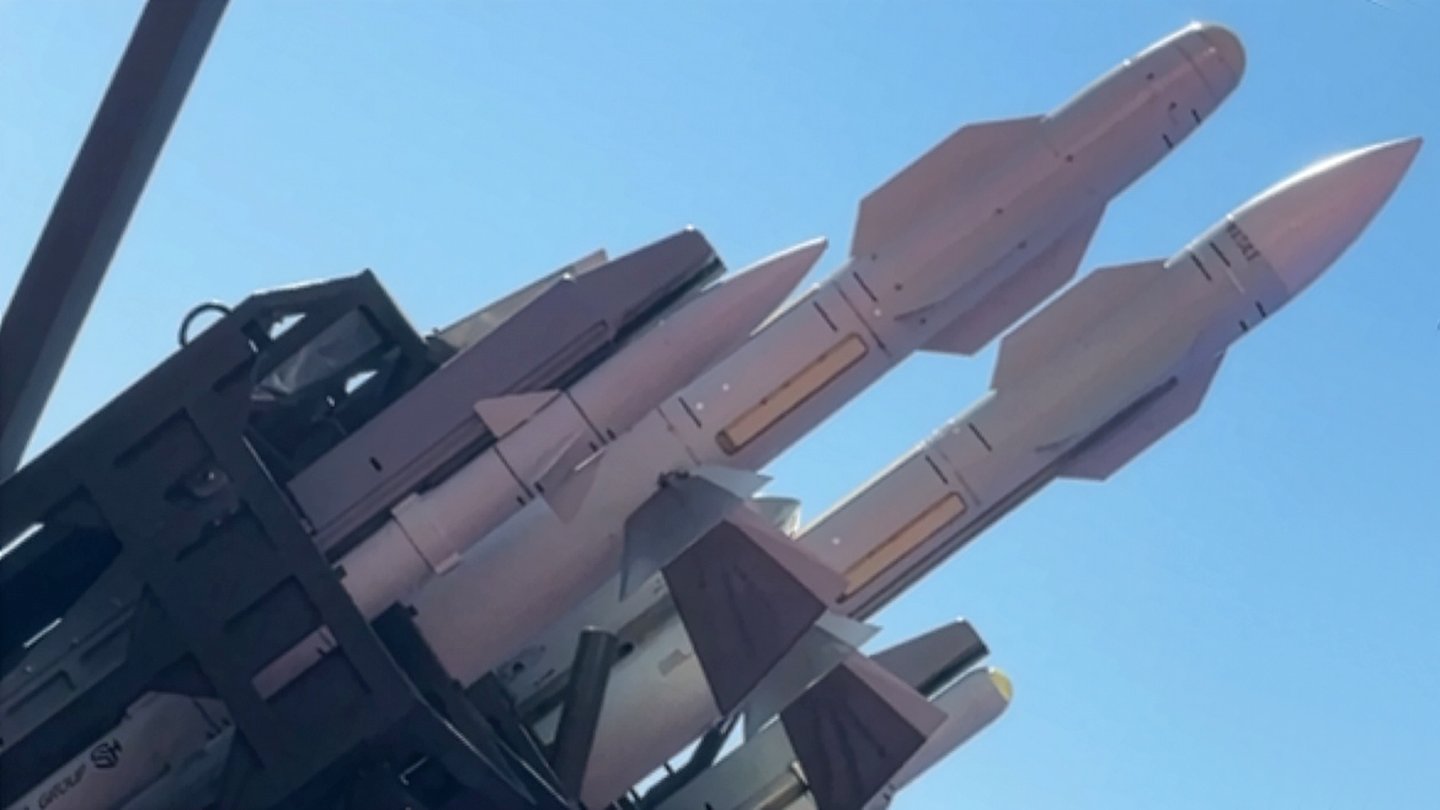
The company says Shershen can currently employ the R-27 (AA-10 Alamo), R-73 (AA-11 Archer), AIM-9 Sidewinder, and AIM-132 ASRAAM, while compatibility with the R-60 is also being explored. These weapons come with a mix of semi-active radar or infrared homing seeker heads.

One of the ASRAAM/Supacat air defense systems supplied to Ukraine. Ukrainian Armed Forces

Air-to-air missiles are already available in considerable variety across Ukraine’s arsenal and those of its foreign partners. Being able to employ several types from a common ground-based system provides much more flexibility than a conventional SAM designed around one dedicated interceptor.

It also offers a way to exploit missiles that were never originally intended to be fired from the ground. That means Shershen’s launcher and fire-control system are meant to be interceptor agnostic, at least to a certain degree.

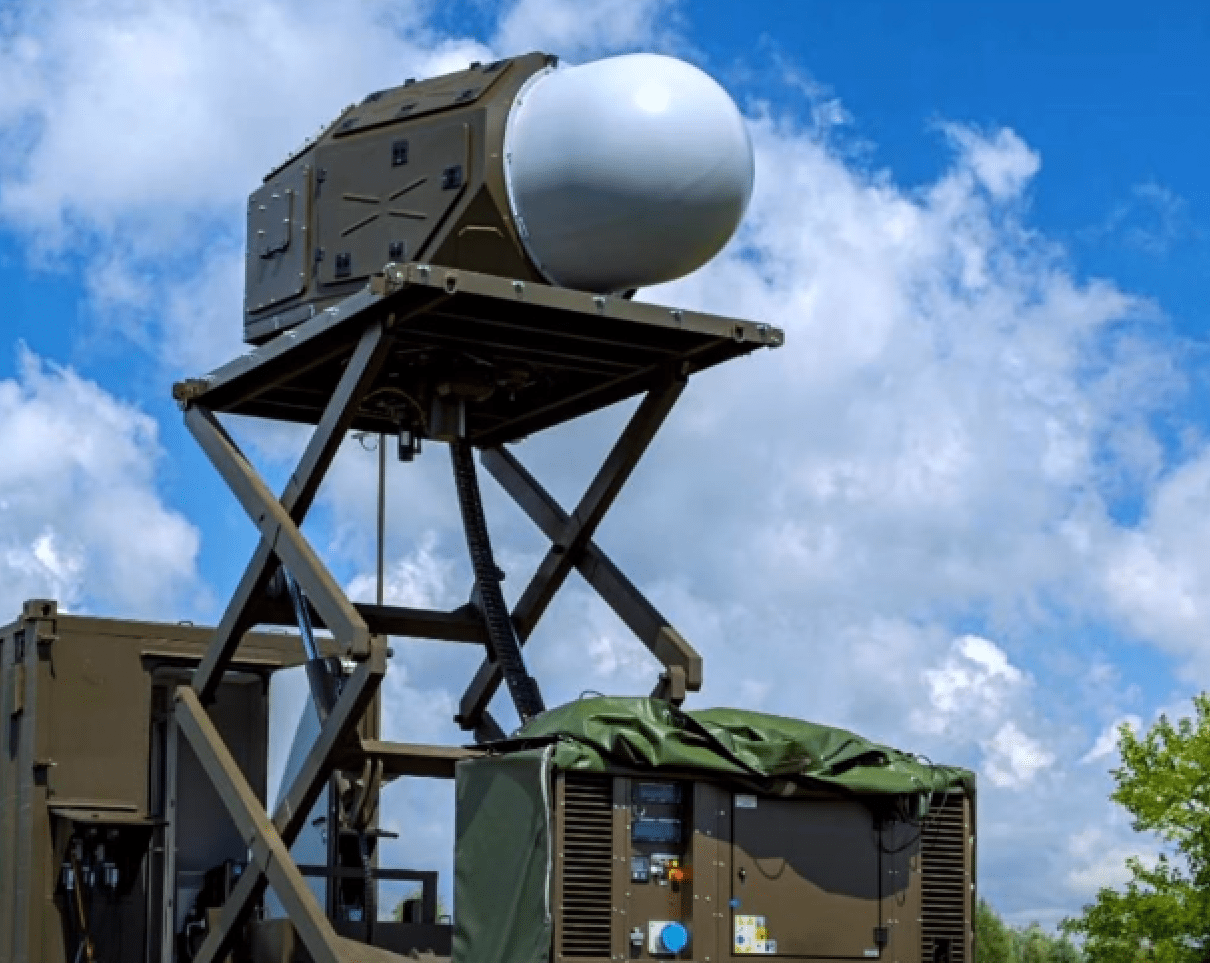
Shershen’s Athena radar is reported to be capable of detecting targets at ranges of up to 85 kilometers (53 miles).

The Athena radar for the Shershen. NAUDI screencap

In terms of the engagement envelope, Shershen is claimed to be capable of engaging aircraft, cruise missiles, and drones at ranges of up to 25 kilometers (16 miles) and altitudes of up to 10,000 meters (32,800 feet). Clearly, these figures will vary widely depending on the type of interceptor.

When employing radar-guided missiles, the system’s engagement architecture can reportedly guide as many as six missiles simultaneously.

The advertised performance figures have not been independently verified, and it remains unclear what target types and engagement conditions were used to establish them.

🇺🇦 Україна представила складові мультикаліберного зенітного ракетного комплексу «Шершень» на міжнародній виставці MSPO 2026 у польському місті Кельце.
Міжнародний консорціум компаній Shershen Group, який створює ЗРК в інтересах України представив, показав командний пункт,… pic.twitter.com/9wAS7ewxzg

— Мілітарний (@mil_in_ua) September 10, 2026

The developer says the second prototype has completed initial testing, including successful interceptions at a test range.

One of the Borei launchers displayed at MSPO were armed with an R-120K, a new Ukrainian missile equipped with a radar seeker and is intended to be capable of both air-to-air and surface-to-air employment.

The R-120K remains under development, however. Work is reportedly continuing on its rocket motor, meaning that its eventual performance and production status remain uncertain. Still, having the option of including the R-120K on the Shershen system in the future is significant.

Ukraine has unveiled a new surface-to-air missile system designed to turn a diverse collection of air-to-air missiles into a flexible ground-based air defense capability. Called Shershen, or “Hornet,” the system combines a Ukrainian command-and-control architecture, a dedicated surveillance radar, and multiple launchers that can employ both Ukrainian and Western missiles.
A test launcher used for the Shershen program, armed with a radar-homing (nearest camera) and an infrared-guided R-27 missile. The latest prototype features a cage-type container launcher. NAUDI screencap NAUDI screencap

Rather than relying indefinitely on stocks of Soviet and Western air-to-air missiles, Ukraine could eventually have a domestically produced interceptor specifically tailored to its growing family of ground-based air-defense systems. That will become increasingly important as stocks of legacy missiles are depleted. Earlier this year, it was reported that Ukrainian F-16s were running low on their air-to-air missiles, which include the same AIM-9s that are used in some FrankenSAM systems, as well as being compatible with Shershen. But even before that, it was clear that Western-supplied missile stocks in Ukraine across the board were diminishing, in some cases drastically, with critical interceptors like the AMRAAM and Patriot being badly affected.

A live AIM-9L/M Sidewinder launched from the wingtip rail of a Ukrainian F-16. Ukrainian Air Force screencap

Ukraine’s need for additional surface-to-air missiles has become increasingly acute during the full-scale war, especially as Russian drone and missile barrages have stepped up.

The shortage has encouraged Ukraine to pursue a combination of indigenous development and unconventional adaptations.

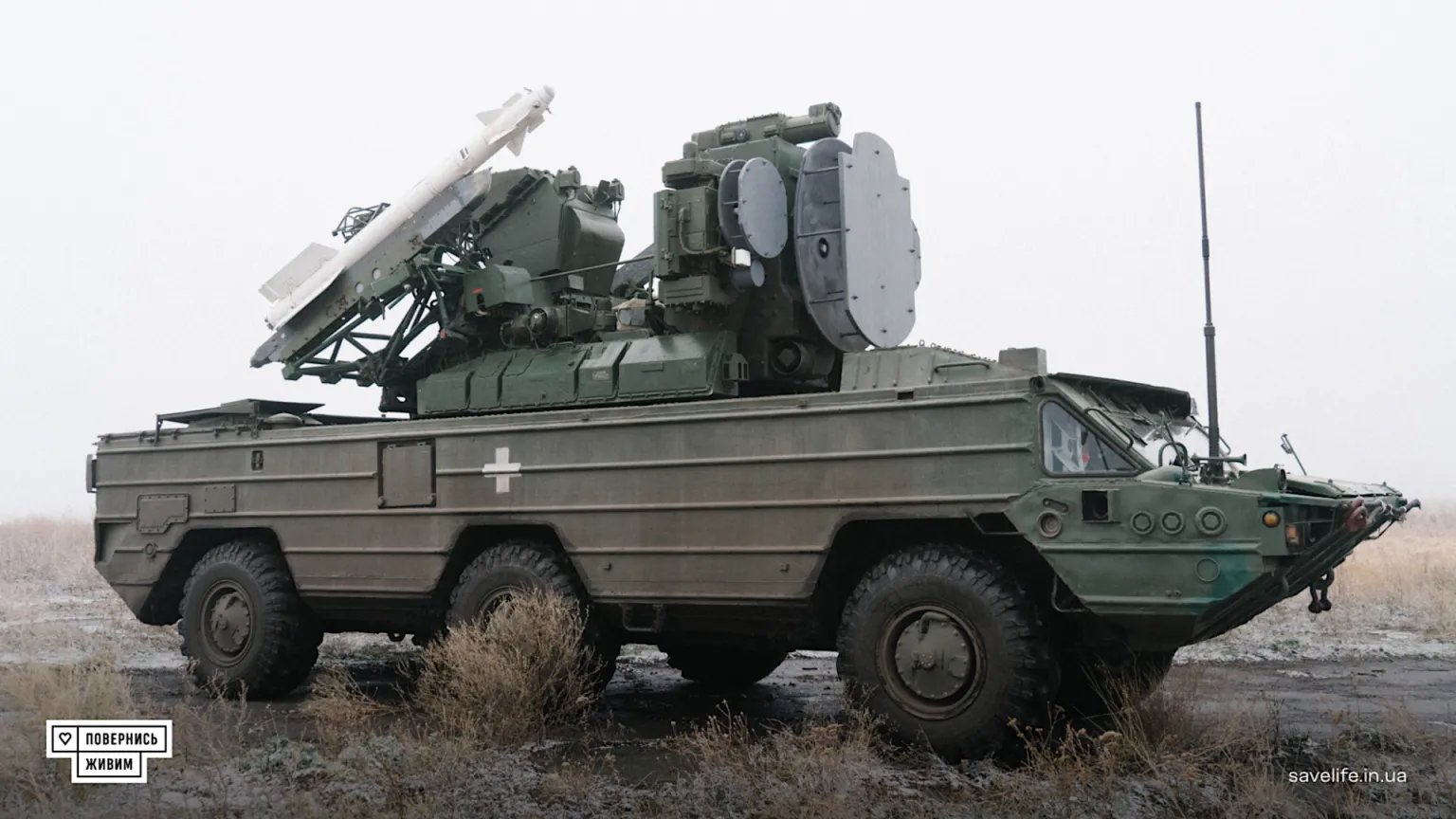
The FrankenSAM initiative, conducted with U.S. support, demonstrated how existing Ukrainian systems could be combined with foreign missiles to rapidly create additional air-defense capacity. Ukraine has also fielded modified Osa systems armed with R-73 air-to-air missiles rather than their original 9M33 interceptors. Other R-73-based concepts have even been demonstrated aboard Ukrainian uncrewed surface vessels.

An R-73 missile loaded on an Osa-AKM SHORADS vehicle. Come Back Alive

Shershen appears to reflect the next logical step in that evolution: rather than creating a one-off FrankenSAM combination, build an architecture from the outset that can accept multiple missiles. Additionally, with so many different ground-based air defense systems now being fielded, it comes with the significant advantage of a standardized launcher and control interface that can accommodate a range of interceptors.

At the same time, Ukraine is pursuing substantially more ambitious indigenous SAM projects.

Earlier this year, a previously secretive Ukrainian missile identified as the Koral made what appeared to be its first public appearance. The program dates back to at least 2021, when Ukraine’s Luch design bureau presented a concept for a medium-range surface-to-air missile.

A missile is launched from a Koral air defense system, based on a Czech Tatra truck chassis. Ukroboronprom

Koral is intended to provide a much longer-range capability, potentially filling some of the gap left by Ukraine’s aging Soviet systems and supplementing the Western-supplied Patriot and SAMP/T.

Shershen, by contrast, is clearly focused on the short-range layer.

Together, the programs illustrate the breadth of Ukraine’s emerging domestic air-defense effort: from relatively inexpensive systems built around repurposed air-to-air missiles to new, purpose-designed interceptors intended to replace or augment Soviet-era systems.

Ukraine’s experience with FrankenSAM has demonstrated the value of getting unconventional air defense combinations into service quickly.

Once fielded, Shershen, with its architecture capable of accepting different Soviet-origin and Western-made interceptors, and eventually a Ukrainian one, gives Ukraine another way to stretch its missile inventory and enhance its air defense capabilities.

Contact the author: thomas@thewarzone.com

The post Ukraine’s New Shershen SAM Can Fire A Wild Mix Of Adapted Air-To-Air Missiles appeared first on TWZ.

  •  

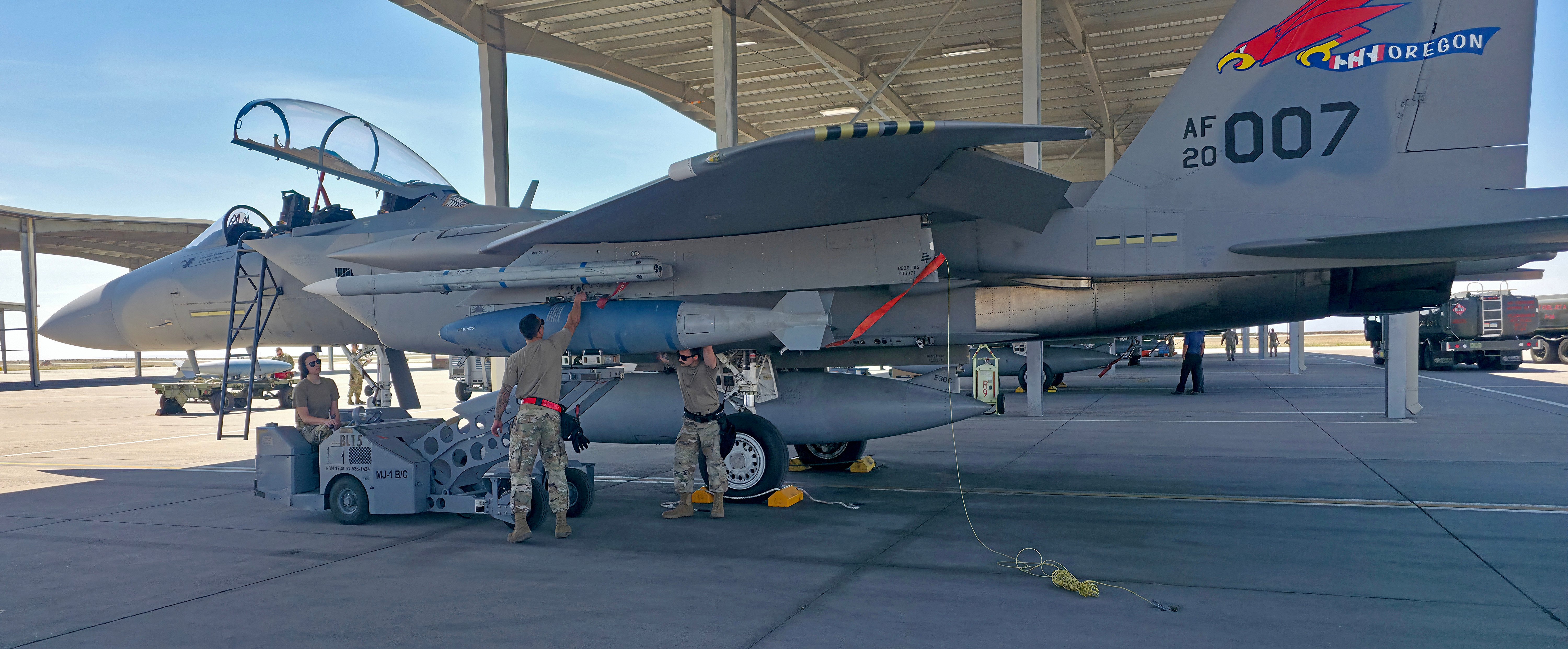
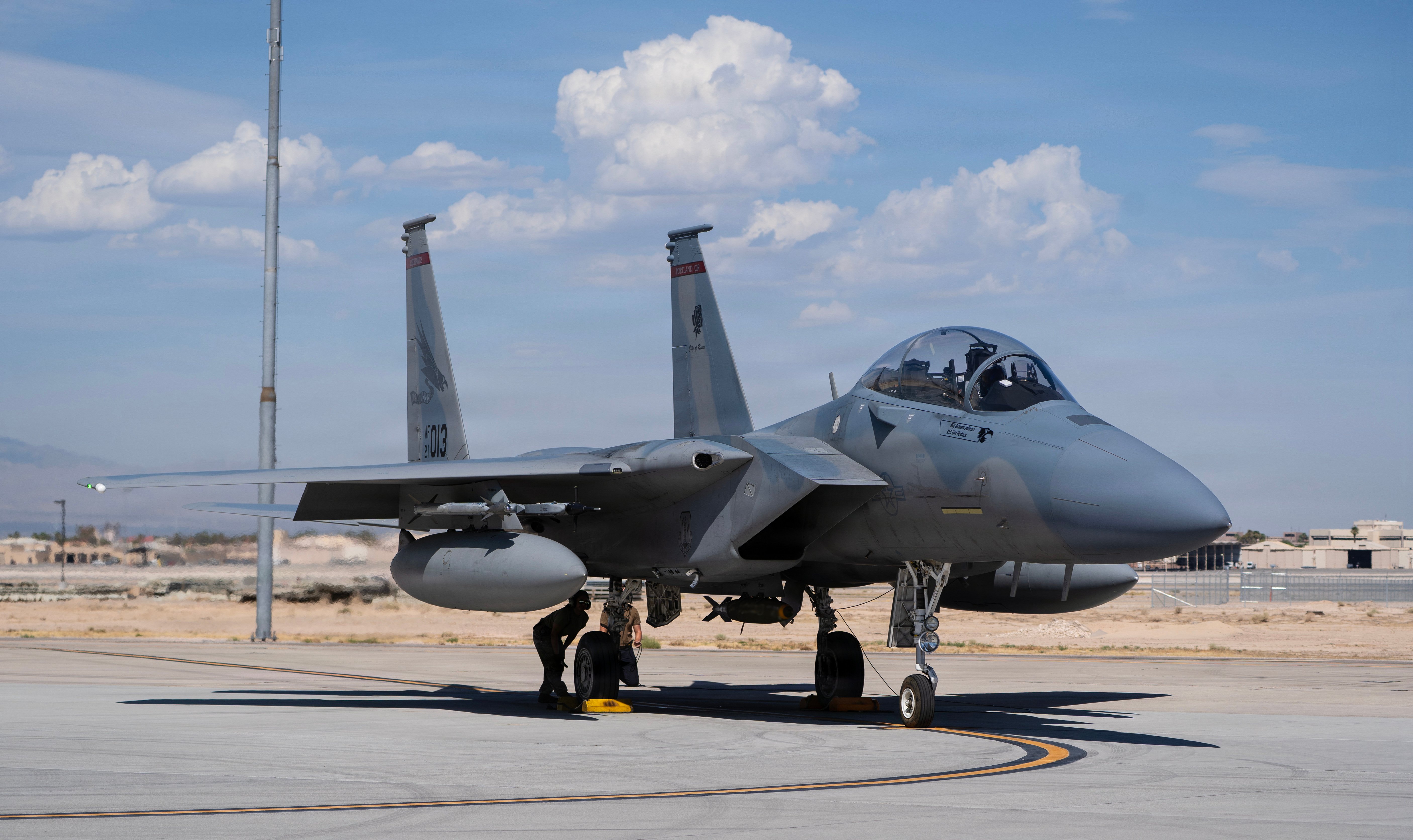
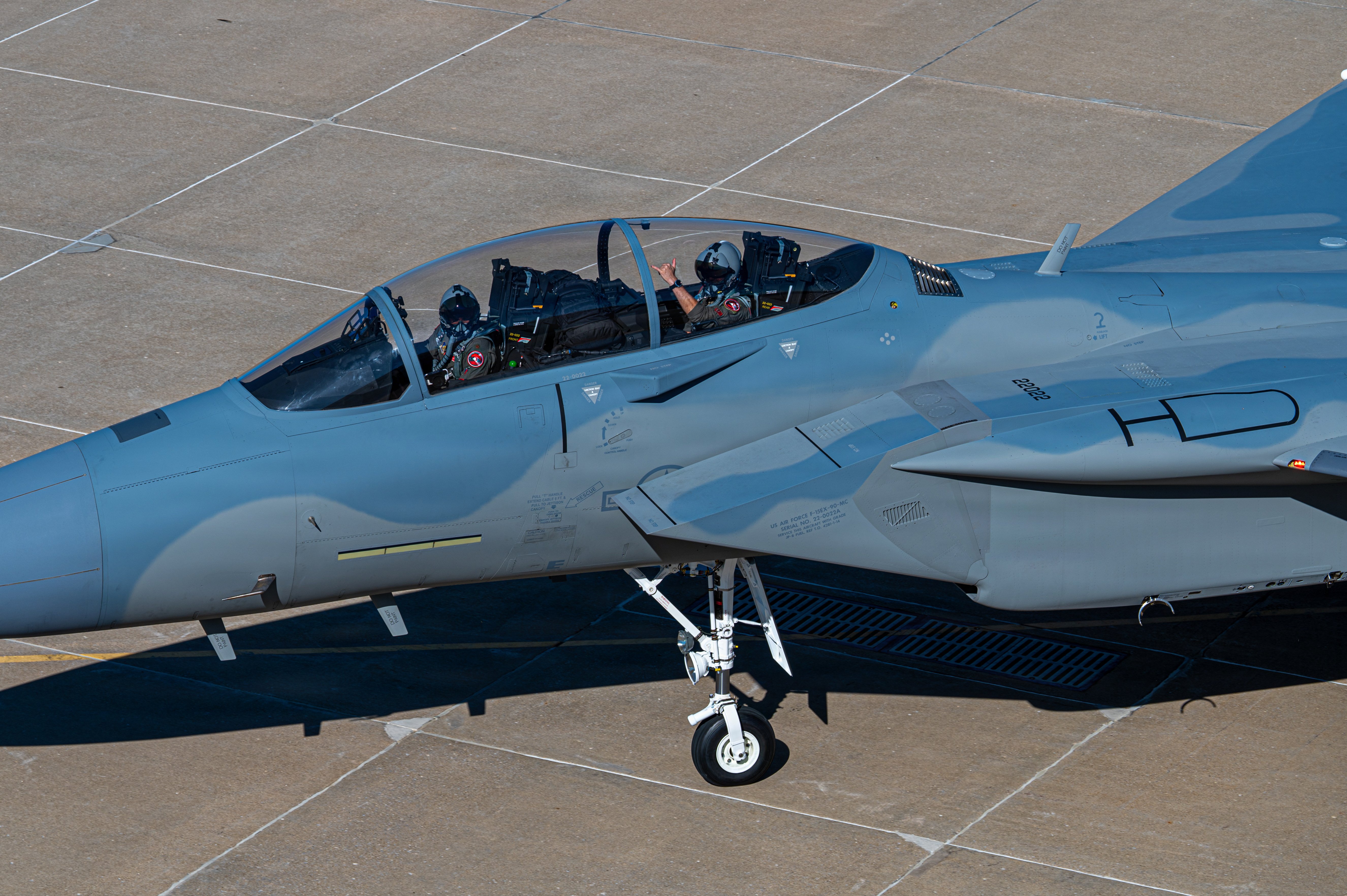
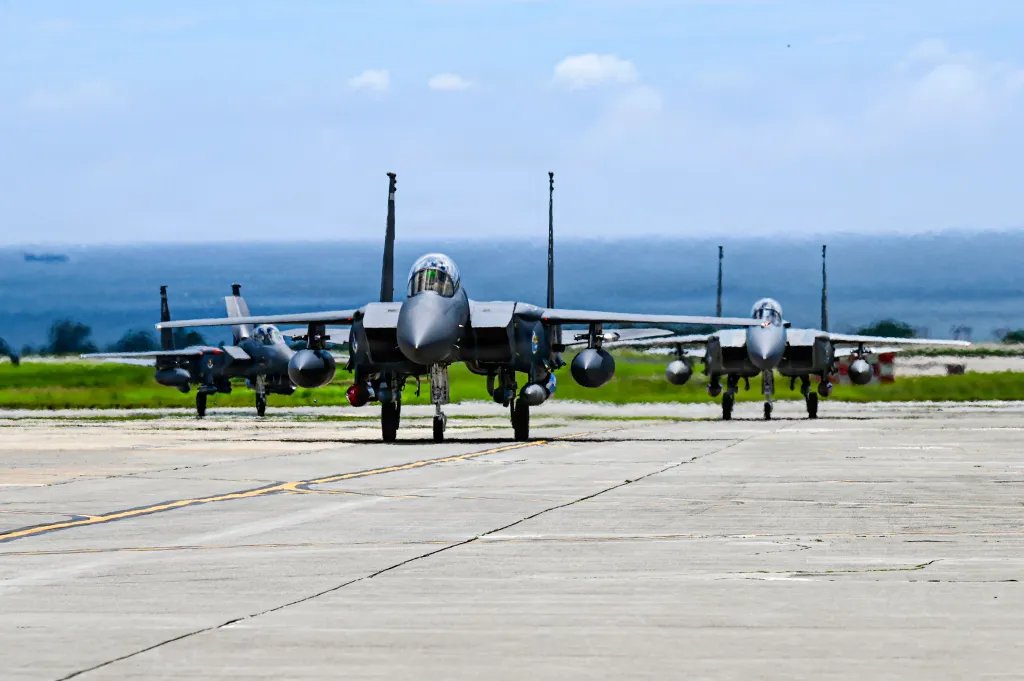
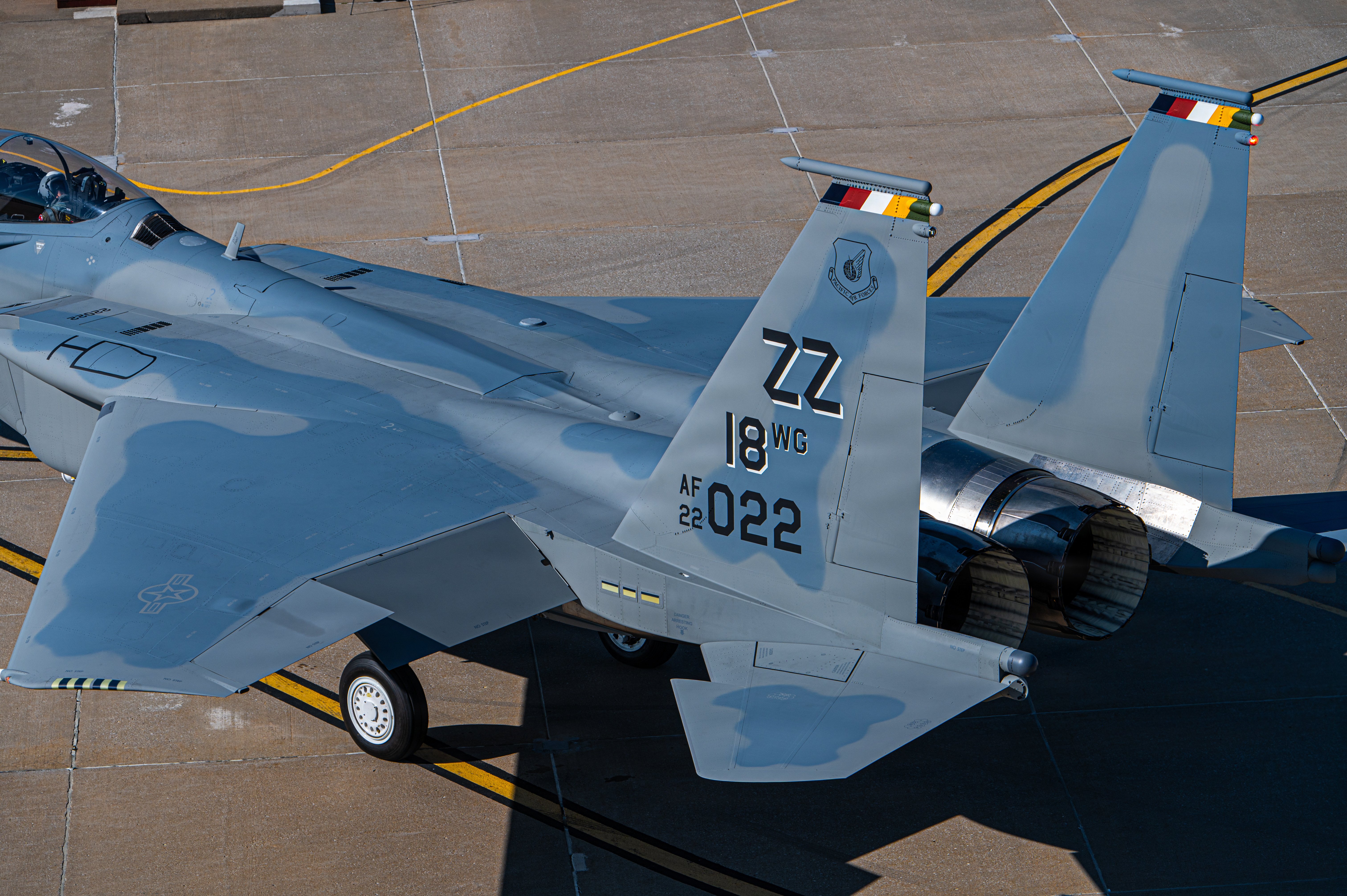
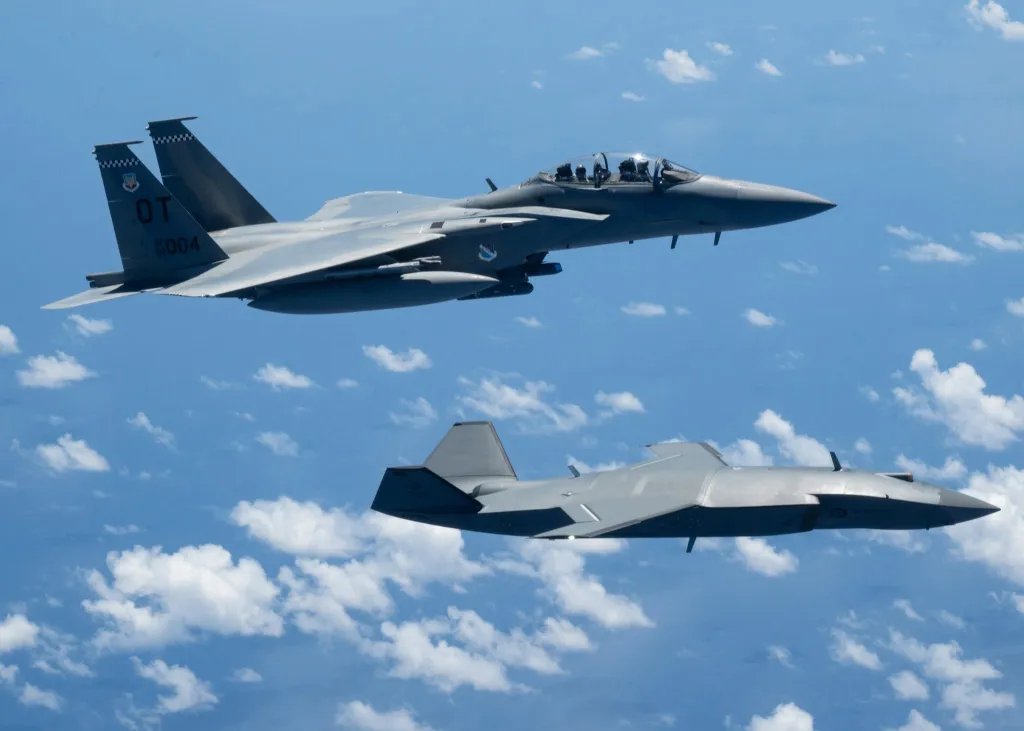
Operational F-15EXs Drop Live Bombs For The First Time

The Oregon Air National Guard’s 142nd Wing has taken another significant step toward turning the F-15EX Eagle II into a true multirole fighter, conducting the first live-bomb drops from operational F-15EXs during training at Nellis Air Force Base, Nevada. The milestone came during a roughly three-week deployment to Nellis in late August and early September in support of the U.S. Air Force’s Weapons Instructor Course (WIC).

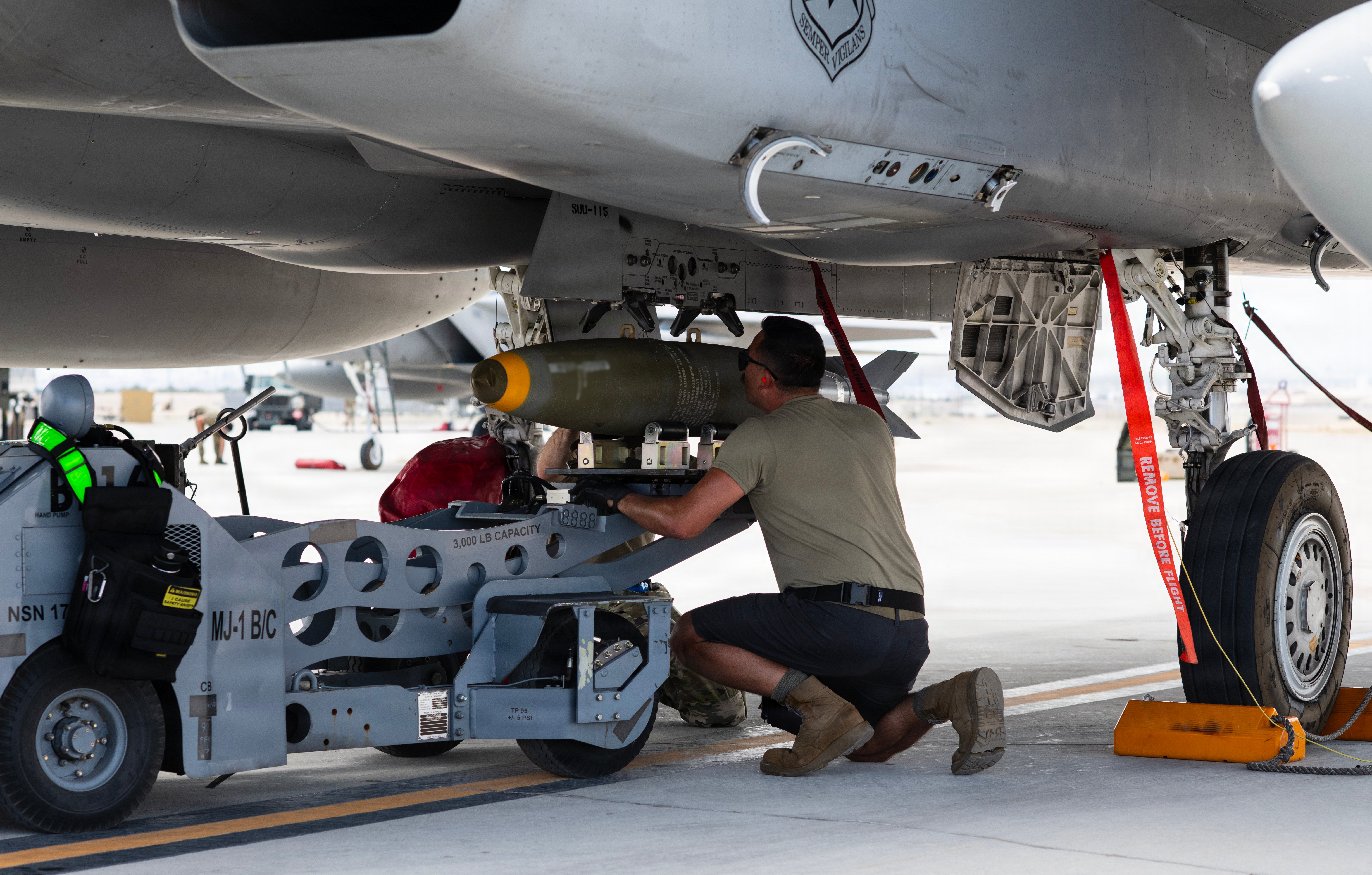
U.S. Air Force Master Sgt. Jay Aebi, non-commissioned officer in charge of weapons loading, 142nd Aircraft Maintenance Squadron, loads a bomb onto an F-15EX Eagle II aircraft at Nellis Air Force Base (AFB), Nevada on August 27, 2026. The 142nd Wing’s fleet of F-15EXs operated at Nellis AFB for three weeks in late August and early September in support of the U.S. Air Force’s Weapons Instructor Course (WIC). During this time, the unit hit a historical milestone, dropping live bombs from operational F-15EXs for the first time. (U.S. Air National Guard photo by Master Sgt. Steph Sawyer)
Weapons technicians from the 142nd Aircraft Maintenance Squadron load a bomb onto an F-15EX at Nellis Air Force Base, Nevada on August 27, 2026. U.S. Air National Guard photo by Master Sgt. Steph Sawyer

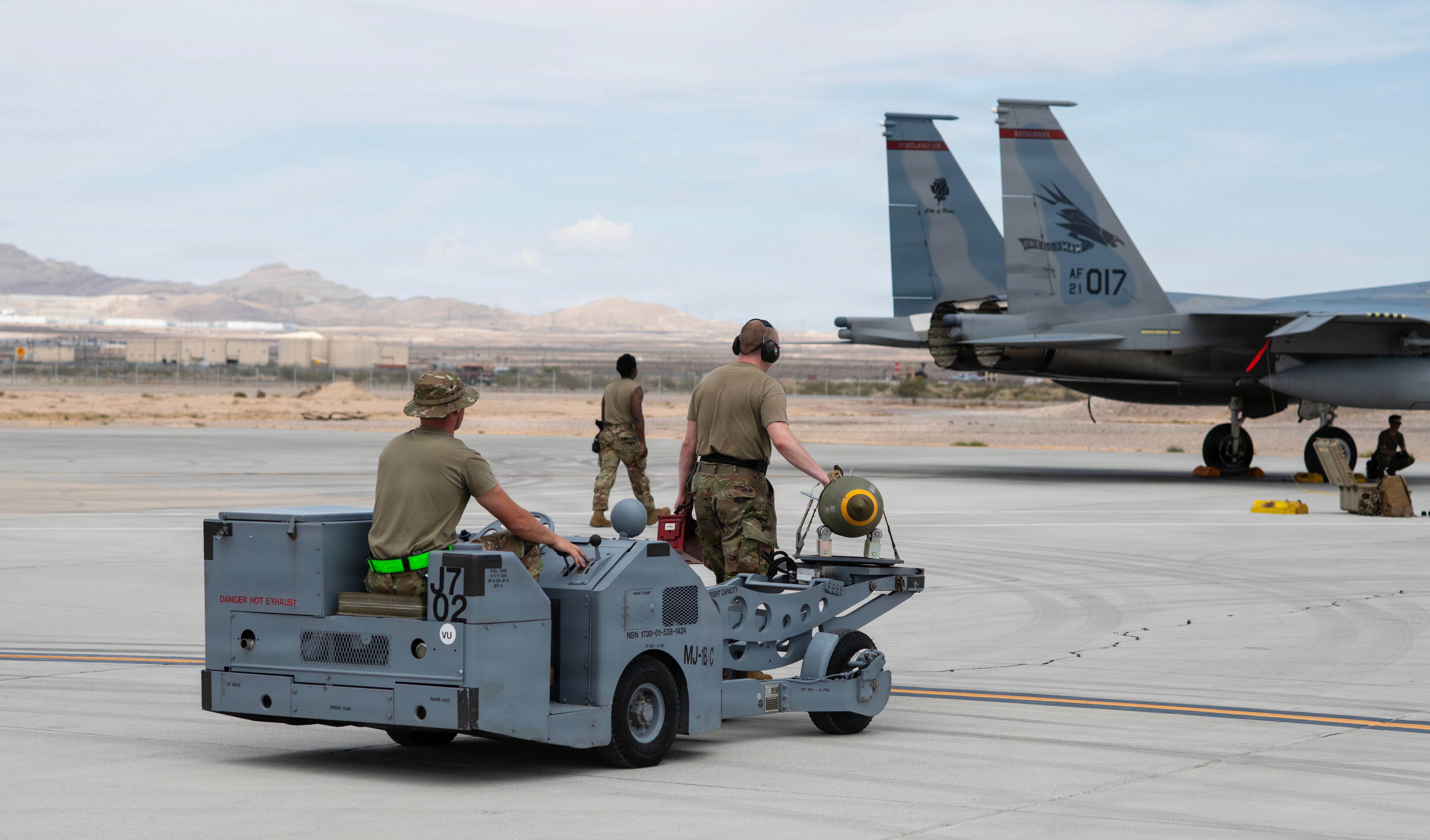
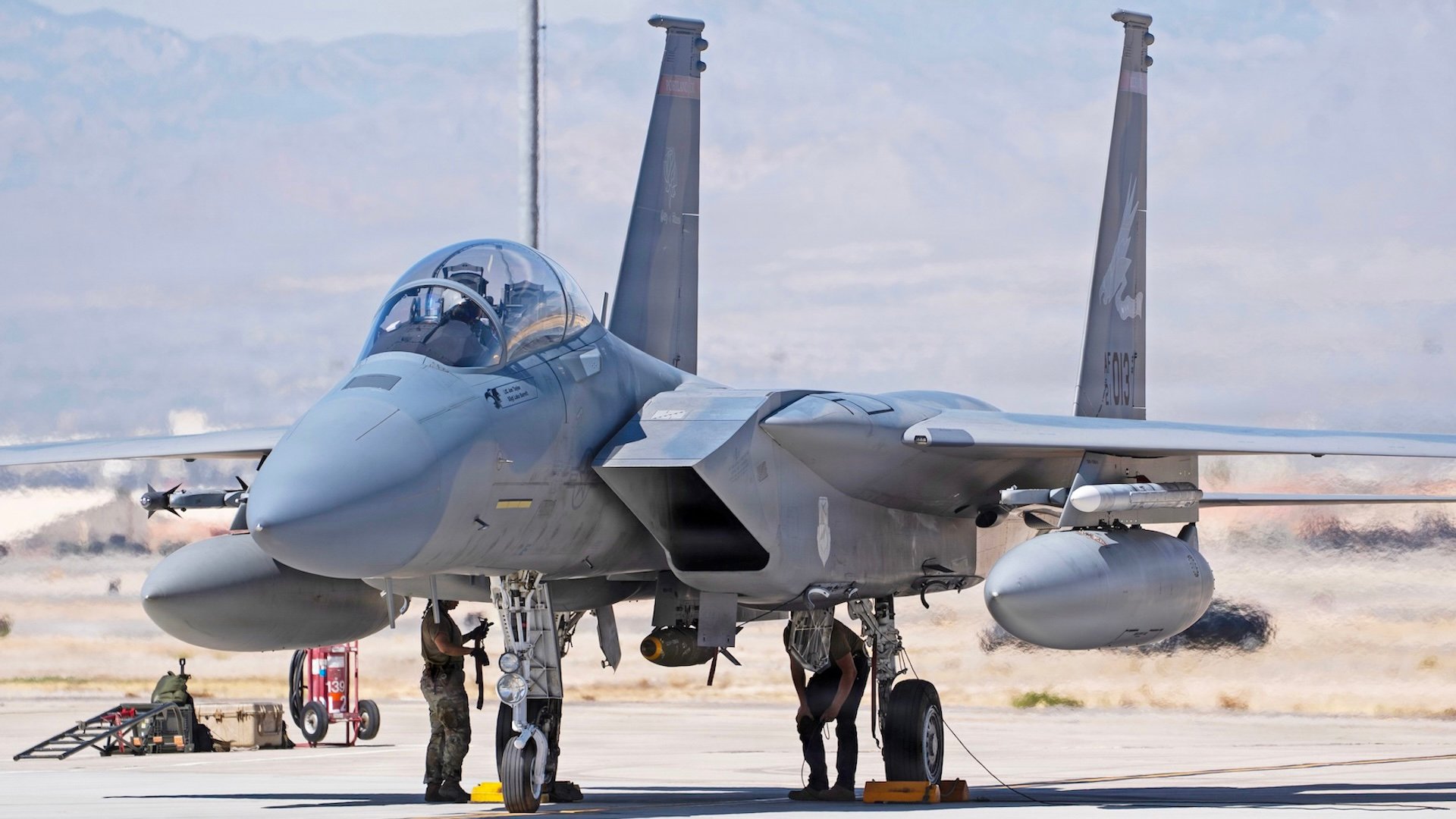
Photographs released by the Air National Guard yesterday show F-15EXs from the 142nd Wing carrying live bombs on the flight line and departing Nellis with the weapons loaded. Official imagery shows the jets armed with a single 500-pound Mk 82 freefall bomb on the fuselage centerline, while spotters also captured F-15EXs carrying a 2,000-pound Mk 84 freefall bomb in the same position.

The 142nd’s F-15EXs are only now acquiring a capability that was deliberately absent from the wing’s previous F-15C fleet. The Portland, Oregon-based unit was an air-superiority organization when it operated the F-15C, while the F-15EX is ultimately derived from the F-15E Strike Eagle and has considerably more inherent multirole potential.

As we reported in July, the wing had already begun laying the groundwork for this transition. In May, 142nd personnel traveled to Mountain Home Air Force Base, Idaho, where they loaded and dropped inert BDU-50 and BDU-56 training bombs from their F-15EXs. Those weapons replicate the size and weight of 500-pound-class Mk 82-series and 2,000-pound-class Mk 84-series bombs. Over 10 missions, the crews dropped 24 BDU-50s and 12 BDU-56s.

A BDU-56 is loaded onto an F-15EX assigned to the 142nd Wing during a training mission at Mountain Home Air Force Base, Idaho, in May 2026. U.S. Air Force

While the F-15EX had already been tested in an air-to-ground role by the Air Force’s test community, the Mountain Home deployment was the first time an operational Eagle II unit had loaded and dropped bombs. The next step, the wing said at the time, would be live weapons employment at Nellis.

The Air Force has emphasized that the F-15EX’s primary mission remains defensive and offensive counter-air, particularly in the homeland-defense role. At the same time, the service’s plans call for the aircraft to provide combatant commanders with strike packages capable of operating in contested environments.

An F-15EX fires an AIM-120D missile during a test mission near Eglin Air Force Base, Florida. The F-15EX can carry up to 12 AIM-120 missiles. U.S. Air Force photo by Tech. Sgt. John Raven

The F-15EX is inherently well suited to such a mission. Derived from the Strike Eagle lineage, it combines that aircraft’s large payload capacity and long range with substantially modernized avionics and electronic warfare systems. The aircraft’s design leaves considerable room for additional weapons and mission equipment, making an expansion into air-to-ground operations relatively straightforward compared with trying to add that capability to the F-15C.

The 142nd has been building the institutional knowledge required to make that transition. Three of its pilots underwent a nine-month course covering the science, tactics, and procedures associated with air-to-ground weapons employment before returning to help establish the wing’s training program. Weapons personnel also traveled to Nellis earlier this year to work with F-15Es assigned to the 59th Test and Evaluation Squadron and become certified in bomb loading procedures.

An F-15EX Eagle II aircraft assigned to the Oregon Air National Guard’s 142nd Wing sits on the flight line at Nellis Air Force Base (AFB), Nevada with a live bomb attached to its belly as it prepares for take off on August 27, 2026. The 142nd Wing’s fleet of F-15EXs operated out of Nellis AFB for three weeks in late August and early September in support of the U.S. Air Force’s Weapons Instructor Course (WIC). During this time, the unit hit a historical milestone, dropping live bombs from operational F-15EXs for the first time. (U.S. Air National Guard photo by Master Sgt. Steph Sawyer)
An F-15EX Eagle II assigned to the Oregon Air National Guard’s 142nd Wing sits on the flight line at Nellis Air Force Base, Nevada with a live bomb attached to its belly as it prepares for takeoff on August 27, 2026. U.S. Air National Guard photo by Master Sgt. Steph Sawyer \

As well as teaching pilots how to release a weapon, the wing had to develop an entirely new air-to-ground training pipeline for pilots, maintainers, and weapons personnel at a unit that had not previously operated an aircraft with an operational bombing mission.

Nellis is home to the Air Force’s Weapons School and is central to the Weapons Instructor Course, making it one of the most important locations in the service for developing and evaluating advanced tactics. The 142nd’s participation therefore places its emerging F-15EX air-to-ground capability in an environment specifically focused on integrating advanced weapons, tactics, and mission planning.

U.S. Air Force Staff Sgt. Parker Mayhew (center), a weapons loader assigned to the 142nd Aircraft Maintenance Squadron, prepares a bomb to be loaded onto an F-15EX Eagle II aircraft as U.S. Air Force Senior Airman Alexander Walker (left) looks on, August 26, 2026, Nellis Air Force Base, Nevada. The 142nd Wing’s fleet of F-15EXs operated out of Nellis AFB for three weeks in late August and early September in support of the U.S. Air Force’s Weapons Instructor Course (WIC). During this time, the unit hit a historical milestone, dropping live bombs from operational F-15EXs for the first time. (U.S. Air National Guard photo by Master Sgt. Steph Sawyer)
A weapons loader assigned to the 142nd Aircraft Maintenance Squadron prepares a bomb to be loaded onto an F-15EX at Nellis Air Force Base. U.S. Air National Guard photo by Master Sgt. Steph Sawyer

The wing’s new live bomb-dropping capability also comes as the Air Force continues to explore how broadly the Eagle II can be employed.

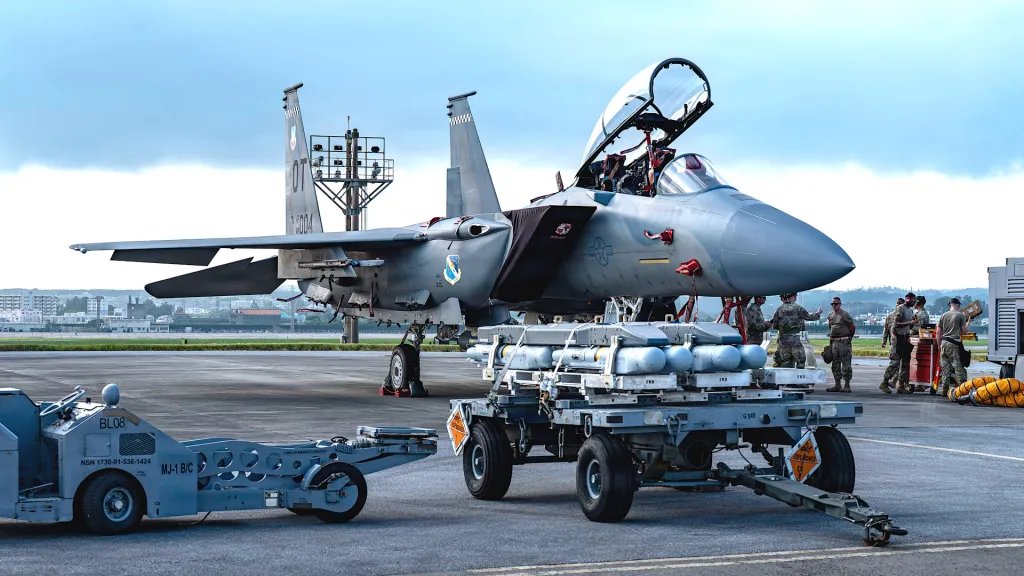
Test and evaluation units have already demonstrated that the aircraft can accommodate sophisticated air-to-ground weapons. Earlier this year, an F-15EX from the 85th Test and Evaluation Squadron participated in a munitions-load training event at Kadena Air Base in Japan, where Air Force personnel practiced loading live GBU-53/B Small Diameter Bomb IIs onto the aircraft.

GBU-53/B Small Diameter Bomb IIs sit on a dolly in front of an F-15EX from the 85th Test and Evaluation Squadron during a training event at Kadena Air Base, Japan, on July 8, 2026. U.S. Air Force

The F-15EX is also capable of carrying the conformal fuel tanks used by the F-15E, which can provide additional fuel as well as additional weapons stations. The operational F-15EXs delivered to the 142nd have so far been seen without CFTs, however, and the status of the plan to equip the Oregon aircraft with them remains unclear.

CFTs could become increasingly important if the Air Force moves toward more demanding air-to-ground missions for the Eagle II, particularly those requiring substantial weapons loads and long-range operations.

Another unresolved question is how the Air Force will ultimately crew F-15EXs when they are performing more complex multirole missions.

U.S. Air Force Staff Sgt. Alisha Sargent, a weapons loader assigned to the Oregon Air National Guard’s 142nd Aircraft Maintenance Squadron, loads a bomb onto an F-15EX Eagle II aircraft at Nellis Air Force Base (AFB), Nevada on August 26, 2026. The 142nd Wing operated their fleet of F-15EXs out of Nellis AFB for three weeks in late August and early September in support of the U.S. Air Force’s Weapons Instructor Course (WIC). During that time, the unit and the EX hit a historic milestone, dropping live bombs from operational F-15EXs for the first time. (U. S. Air National Guard photo by Master Sgt. Steph Sawyer)
A weapons loader assigned to the 142nd Aircraft Maintenance Squadron loads a bomb onto an F-15EX at Nellis Air Force Base. U.S. Air National Guard photo by Master Sgt. Steph Sawyer

The Eagle II retains the F-15E family’s two-seat cockpit, although the Air Force’s initial operational concept has generally involved flying the aircraft with a single pilot. That leaves an unused cockpit that could potentially become an important asset as the mission set expands.

Former 142nd Wing commander Col. Michael Kosderka previously told TWZ that the addition of a weapons systems officer or other specialist in the rear cockpit could open the door to more air-to-ground capabilities.

“We can start talking about putting all kinds of air-to-ground capabilities into the airplane, potentially putting WSOs or other experts in the backseat as well to have us do any number of multi-role capabilities that it’s just physically not possible to in the C model,” Kosderka told TWZ in an interview back in 2024. “So the X has tremendous growth capability. It’s really exciting.”

Two crew would be particularly relevant to complex strike missions, where managing sensors, weapons, communications, electronic warfare, and other mission systems can place substantial demands on a single pilot. As we have discussed in the past, a back-seater would also be highly beneficial for the emerging drone controller role.

The Weapons School has also been associated with developing two-seat F-15EX operations, indicating that the second cockpit’s utility is already being considered at the tactical-development level.

142nd Aircraft Maintenance Squadron weapons loaders, U.S. Air Force Staff Sgts. Parker Mayhew (left) and Eric Janson transport a bomb to an F-15EX Eagle II aircraft using a jammer, August 27, 2026, Nellis Air Force Base (AFB), Nevada. The 142nd Wing’s fleet of F-15EXs operated at Nellis AFB for three weeks in late August and early September in support of the U.S. Air Force’s Weapons Instructor Course (WIC). During this time, the unit hit a historical milestone, dropping live bombs from operational F-15EXs for the first time. (U.S. Air National Guard photo by Master Sgt. Steph Sawyer)
142nd Aircraft Maintenance Squadron weapons loaders transport a bomb to an F-15EX at Nellis Air Force Base. U.S. Air National Guard photo by Master Sgt. Steph Sawyer

For now, it would be premature to characterize the F-15EX as an operational replacement for the F-15E Strike Eagle in the air-to-ground role. The 142nd’s newly demonstrated bombing capability remains part of an ongoing training and development process.

Meanwhile, the Air Force is preparing to field substantially larger numbers of F-15EXs. Beyond the 142nd, additional Guard units are planned to receive the type, in California and Louisiana, as well as Michigan.

The Air Force has announced plans to base F-15EXs at Seymour Johnson Air Force Base, North Carolina, where they will eventually replace older F-15Es, which, in turn, are slated to move to Whiteman Air Force Base, Missouri, as part of a broader realignment of the Eagle fleet.

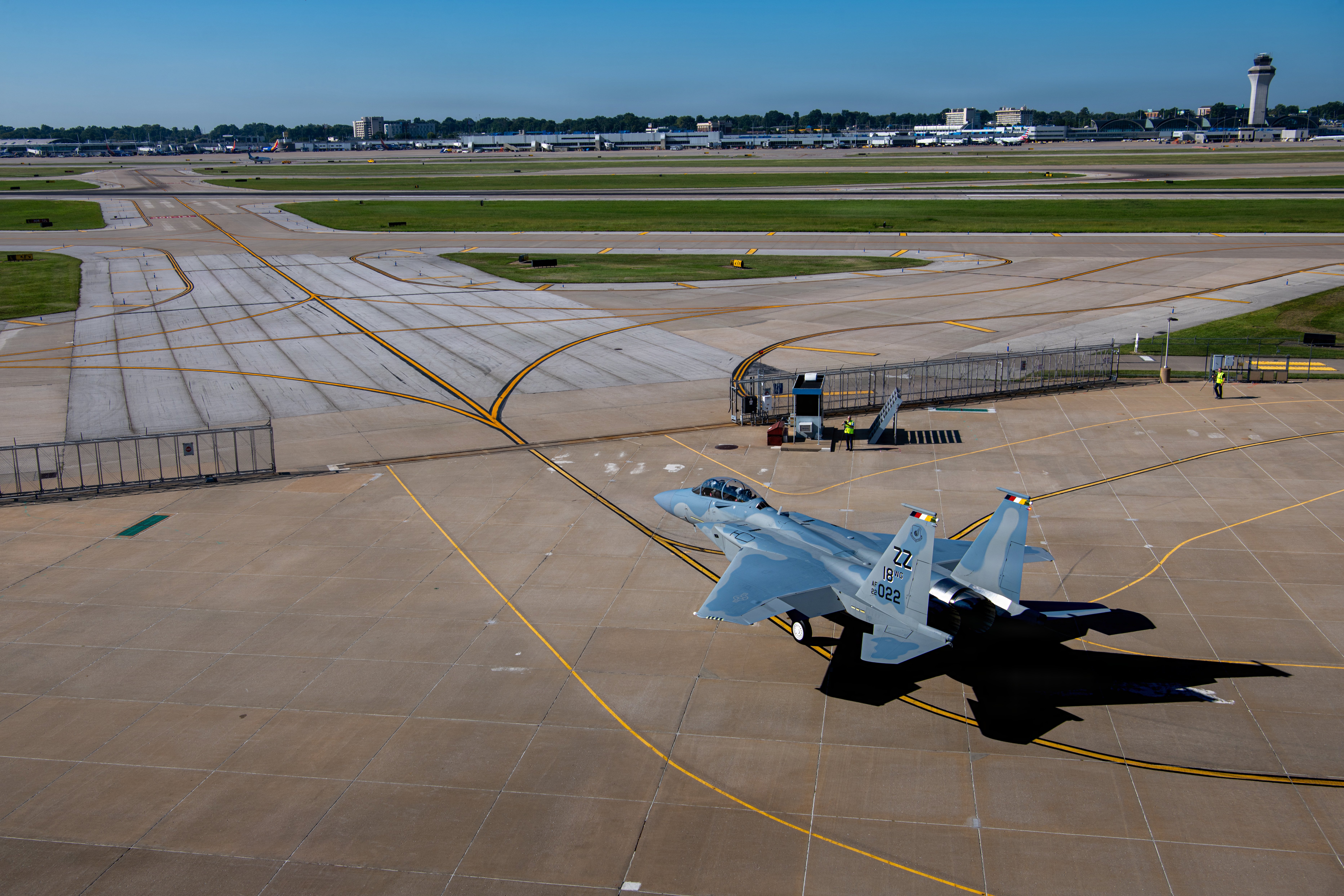
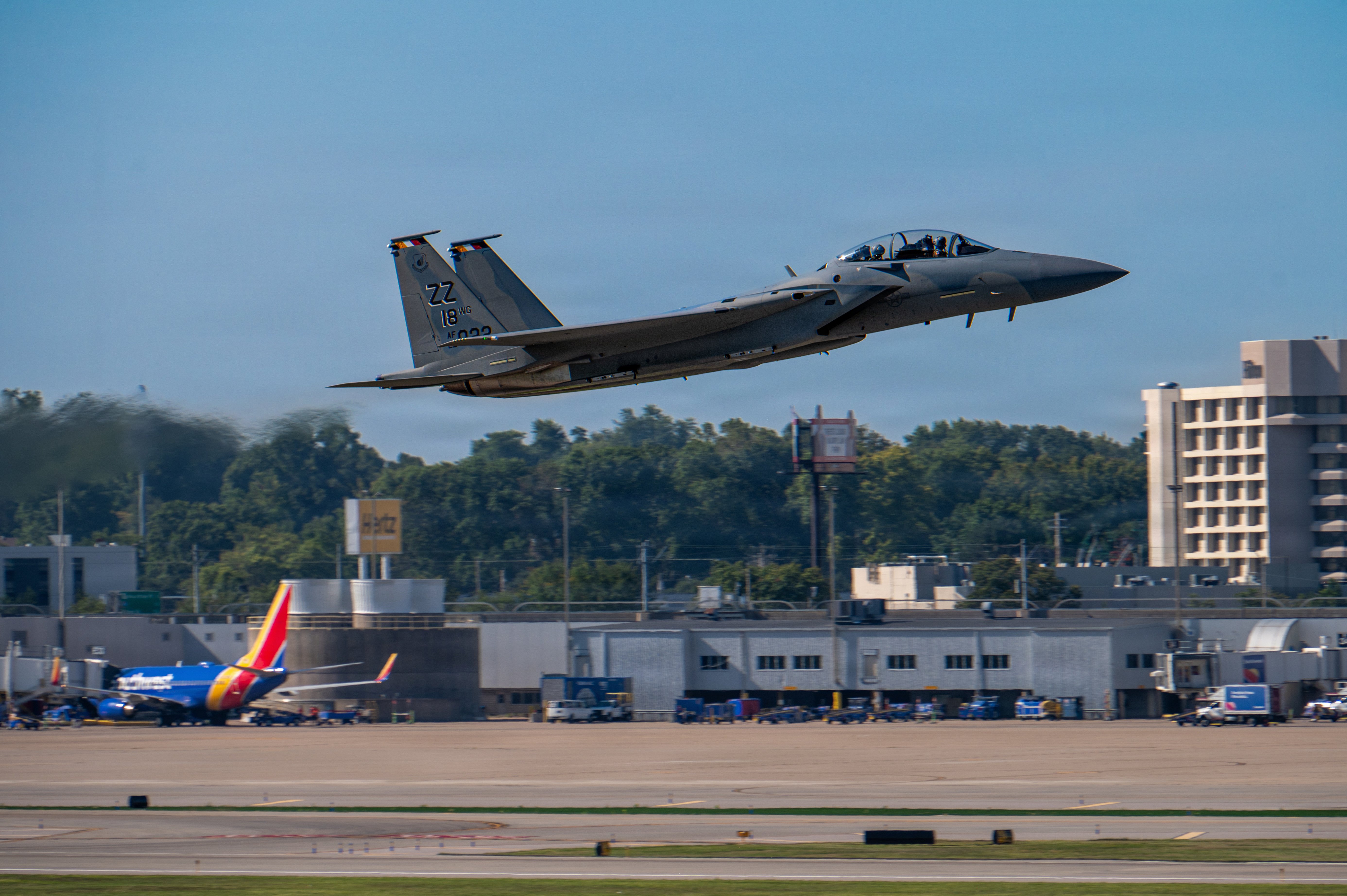
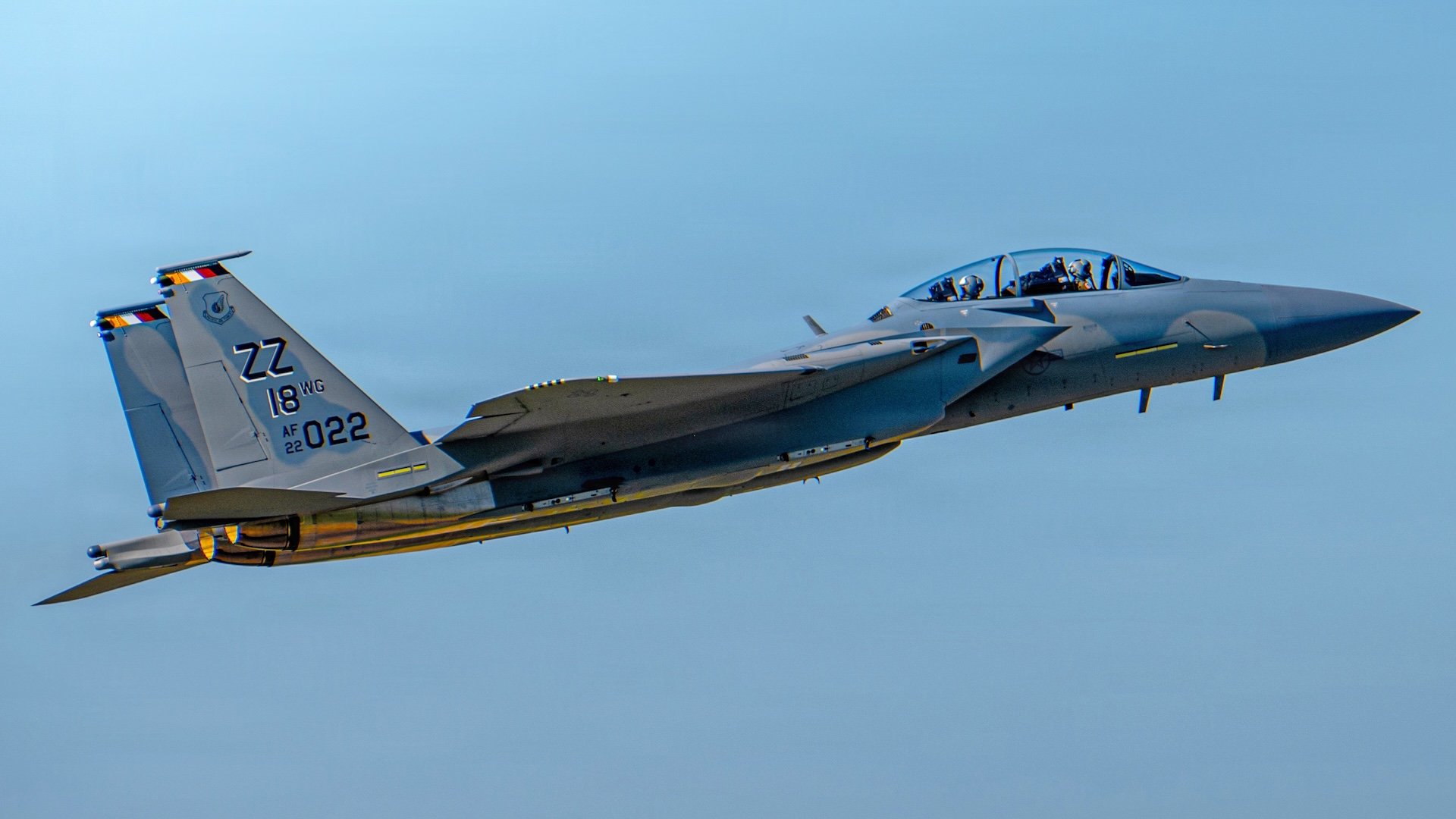
Another two active-duty F-15EX squadrons are slated to replace the former F-15C force at Kadena. The first F-15EX for permanent assignment at Kadena recently departed Boeing’s St. Louis, Missouri, facility for the 142nd Wing, where it will undergo final preparations before its eventual deployment to sprawling Okinawa.

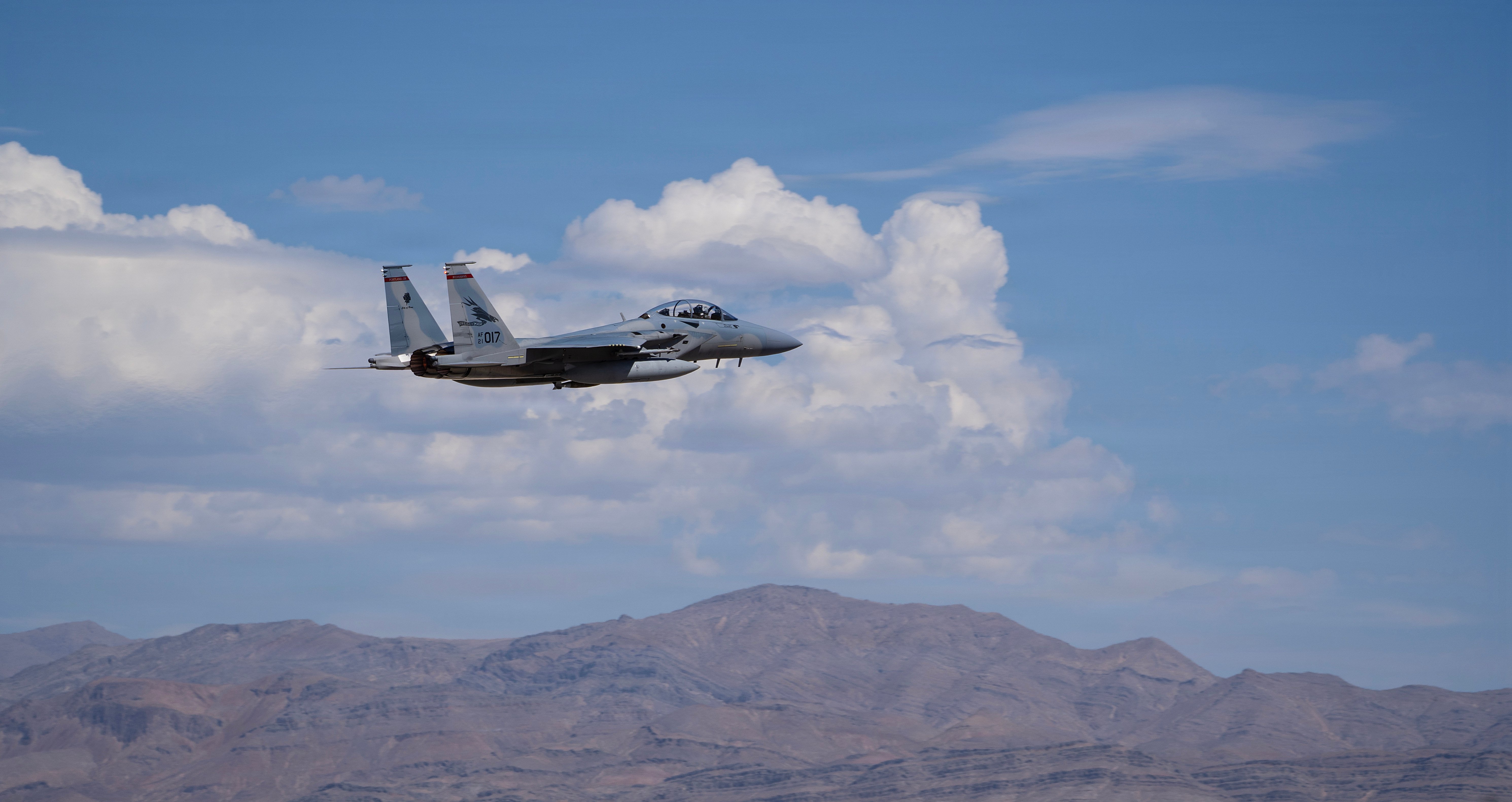
An F-15EX Eagle II aircraft assigned to the Oregon Air National Guard’s 142nd Wing takes off from Nellis Air Force Base (AFB), Nevada with a bomb attached to its belly, August 27, 2026. The 142nd Wing’s fleet of F-15EXs operated out of Nellis AFB for three weeks in late August and early September in support of the U.S. Air Force’s Weapons Instructor Course (WIC). During this time, the unit hit a historical milestone, dropping live bombs from operational F-15EXs for the first time. (U.S. Air National Guard photo by Master Sgt. Steph Sawyer)
An F-15EX assigned to the 142nd Wing takes off from Nellis Air Force Base with a bomb attached to its belly, August 27, 2026. U.S. Air National Guard photo by Master Sgt. Steph Sawyer

The operational implications of the air-to-ground training therefore extend well beyond Portland.

The Eagle II’s generous weapons payload, long range, modern sensors and electronic warfare systems, and ability to carry both air-to-air and air-to-ground weapons give the Air Force a platform that can potentially perform several missions without sacrificing the characteristics that make the F-15 attractive for homeland defense and counter-air operations. The same characteristics are also extremely relevant to any export operator, which would expect to operate the Eagle II in a multirole capacity.

As well as a weapons-training milestone, the first live-bomb drops by the 142nd Wing provide more evidence that the F-15EX’s mission is continuing to evolve.

Contact the author: thomas@thewarzone.com

The post Operational F-15EXs Drop Live Bombs For The First Time appeared first on TWZ.

  •  

Hermeus Unveils Air-Launched Ramjet Test Vehicle for High-Speed Experiments

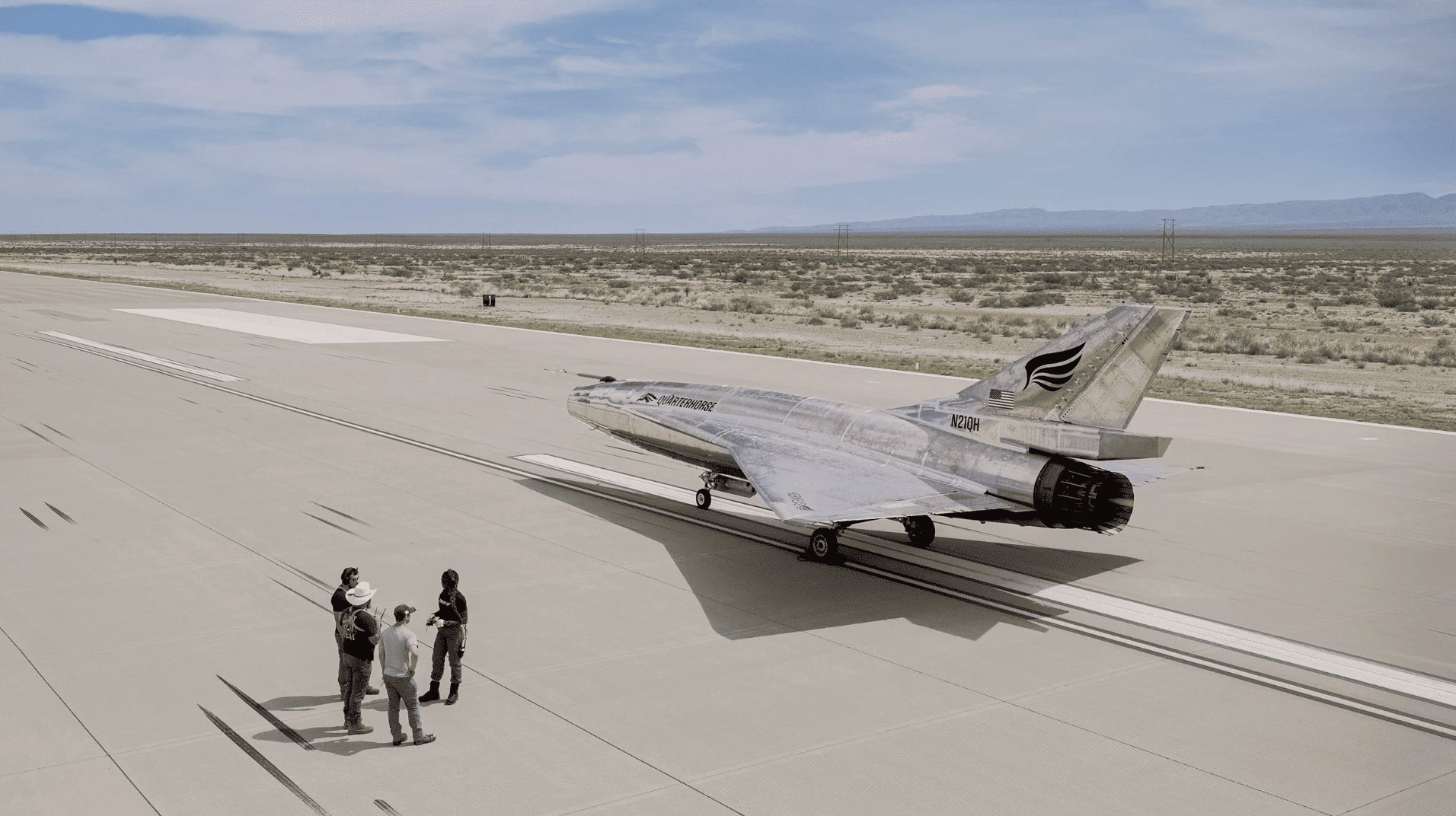
Hermeus is developing an expendable ramjet-powered aircraft, Ramjet-X, which will be air-launched from its reusable, F-16-sized Quarterhorse high-speed drone. The result aims to create a two-vehicle architecture intended to make high-speed flight testing less dependent on expensive, single-use test platforms. That would give Hermeus and potential customers a way to conduct repeated high-Mach flight tests without expending a large booster on every mission.

America didn’t lose ground in high-speed flight because of a lack of ideas. We slowed down because flight tests became too expensive, too rare, and too cautious.

Meet Ramjet-X. Air-launched from the Quarterhorse program, it’s a low-cost, repeatable test vehicle built to fly and… pic.twitter.com/rMed6NhcvD

— Zach Shore (@Zsshore) September 9, 2026

The company unveiled the concept today. Hermeus says the Ramjet-X will be carried beneath Quarterhorse and released at a speed of around Mach 3, at which its ramjet can begin operating. The smaller vehicle will then accelerate, climbing to around 100,000 feet, and a speed in the region of Mach 4. Quarterhorse will then return to base and be available for another mission.

Imagery released by Hermeus shows a Quarterhorse carrying a Ramjet-X mounted on a pylon under each wing, indicating that two different high-speed tests can be carried out in a single sortie. Intriguingly, the Quarterhorse is shown with no fewer than six underwing hardpoints in all, suggesting that other kinds of external payloads are envisaged.

Hermeus has not released detailed performance specifications for Ramjet-X, including its range, payload capacity, or the critical expected cost per flight. We have reached out to the company for more information.

Images released by the company show a relatively compact, missile-like vehicle with delta wings incorporating prominent dihedral. There are no horizontal tail surfaces, but a conventional vertical fin is complemented by a ventral fin. Axios reports that Ramjet-X is approximately 22 feet long and 7 feet wide.

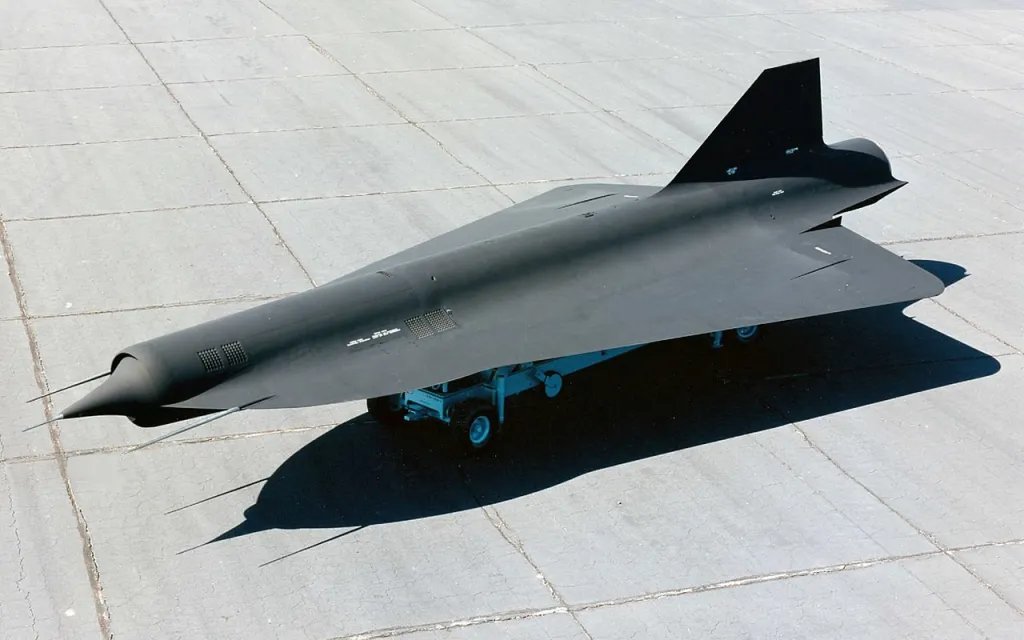
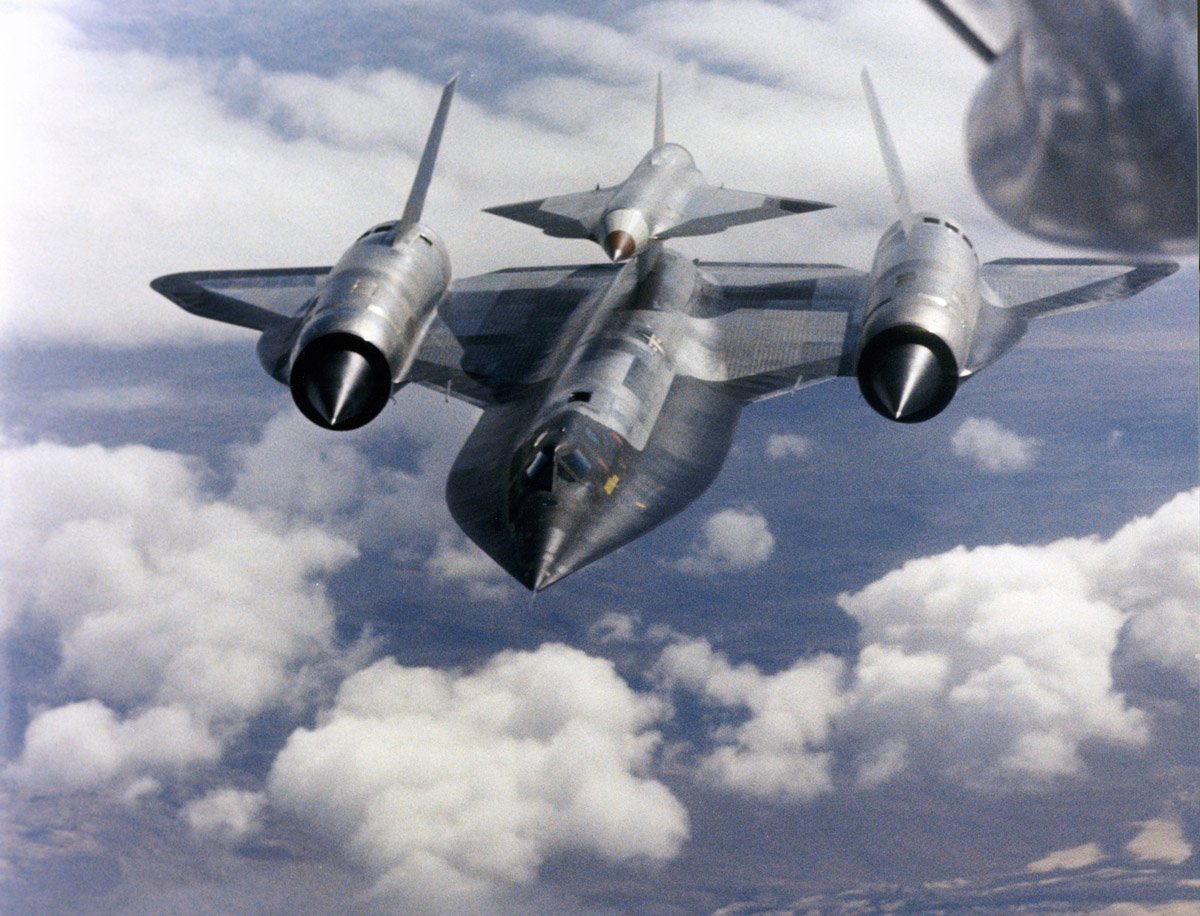
In terms of appearance, and also thanks to its ramjet propulsion system, the vehicle is outwardly very reminiscent of the Lockheed’s D-21 Tagboard supersonic spy drone. However, at more than 40 feet long and with a wingspan of 20 feet, the D-21 was significantly bigger. Overall, the entire concept recalls the Cold War-era D-21 and its M-21 mothership, on a smaller scale.

A D-21 drone. U.S. Air Force
M-21 and D-21 paired together. CIA

The basic concept aims to address a longstanding problem with ramjet flight testing. Unlike a conventional jet engine, a ramjet cannot provide useful thrust from a standstill. The vehicle therefore has to be accelerated to a sufficiently high speed before the ramjet can take over.

That acceleration can traditionally require another propulsion system, including an expendable rocket booster. Hermeus is proposing to substitute a reusable aircraft for that initial boost. It is unclear if the Ramjet-X vehicles are similarly recoverable, but we have asked Hermeus for more details here, too.

As it stands, flight-test programs of this kind are often constrained not only by the cost and availability of test infrastructure, but also by the limited availability of suitable airspace and range access. A reusable carrier aircraft could help address both challenges, allowing multiple Ramjet-X vehicles to be deployed from airports near a designated test range as required and launched only once the vehicle is within the approved test area. That flexibility could reduce the need for a new large booster for every experiment while also making it easier to conduct tests, including at shorter notice, within increasingly constrained airspace.

Hermeus says Ramjet-X is being designed not just for its own development work but as a potential test platform for outside customers. The company is calling the concept “Flight Test as a Service,” with customers able to fly payloads including sensors, communications equipment, computing and autonomy systems, materials, and propulsion hardware.

The program reflects a broader push toward increasing the availability of commercial high-speed flight testing that has attracted U.S. government interest.

Hermeus was also selected by the Defense Innovation Unit for work under its Hypersonic and High-Cadence Airborne Testing, or HyCAT, effort. That program is intended to use commercial flight-test capabilities to expand the government’s access to relevant high-speed environments.

The company is also pursuing its own increasingly ambitious Quarterhorse aircraft. Its Quarterhorse Mk 2.1 completed an uncrewed supersonic flight earlier this year, reaching Mach 1.21 on its third test flight. The company’s roadmap calls for subsequent Quarterhorse variants to progressively increase speed and address the thermal and propulsion challenges associated with high-Mach flight.

Quarterhorse Mk 2.1. Hermeus

Supersonic. Mach 1.21.

Quarterhorse Mk 2.1 is now the world’s first privately developed, unmanned supersonic jet and the fastest unmanned aircraft flying today.

This flight makes Hermeus the fastest company in aviation history to go from founding to supersonic flight – exactly… pic.twitter.com/wjoIcdiEOj

— Hermeus (@hermeuscorp) May 26, 2026

The imagery released for Ramjet-X shows a different Quarterhorse configuration than the 2.1 version, including beefed-up landing gear with twin nosewheels. The requirement for release of the Ramjet-X at Mach 3 suggests that its launch platform will be the Quarterhorse Mk 2.3, which will be the first to reach this kind of speed. This summer, Hermeus confirmed that its second supersonic aircraft, the Quarterhorse Mk 2.2, and the Mach 3-capable Mk 2.3 aircraft were under construction.

For its future Quarterhorse Mk 3, Hermeus has been developing Chimera, a turbine-based combined-cycle propulsion system. This is intended to transition from turbine operation to ramjet operation as speed increases.

Ramjet-X effectively separates part of that problem into another aircraft and the system could also be useful for experiments that do not require an entire hypersonic aircraft.

For example, an organization developing a high-temperature material might need to know how it behaves in an actual high-speed flight environment, rather than only in a ground test. The same could apply to weapons, sensors, communications systems, guidance hardware, onboard computers, or other components intended for high-speed vehicles.

So far, however, it’s not clear what kind of flight profiles Ramjet-X will provide. Hermeus has mentioned a cruise phase lasting “tens of minutes.”

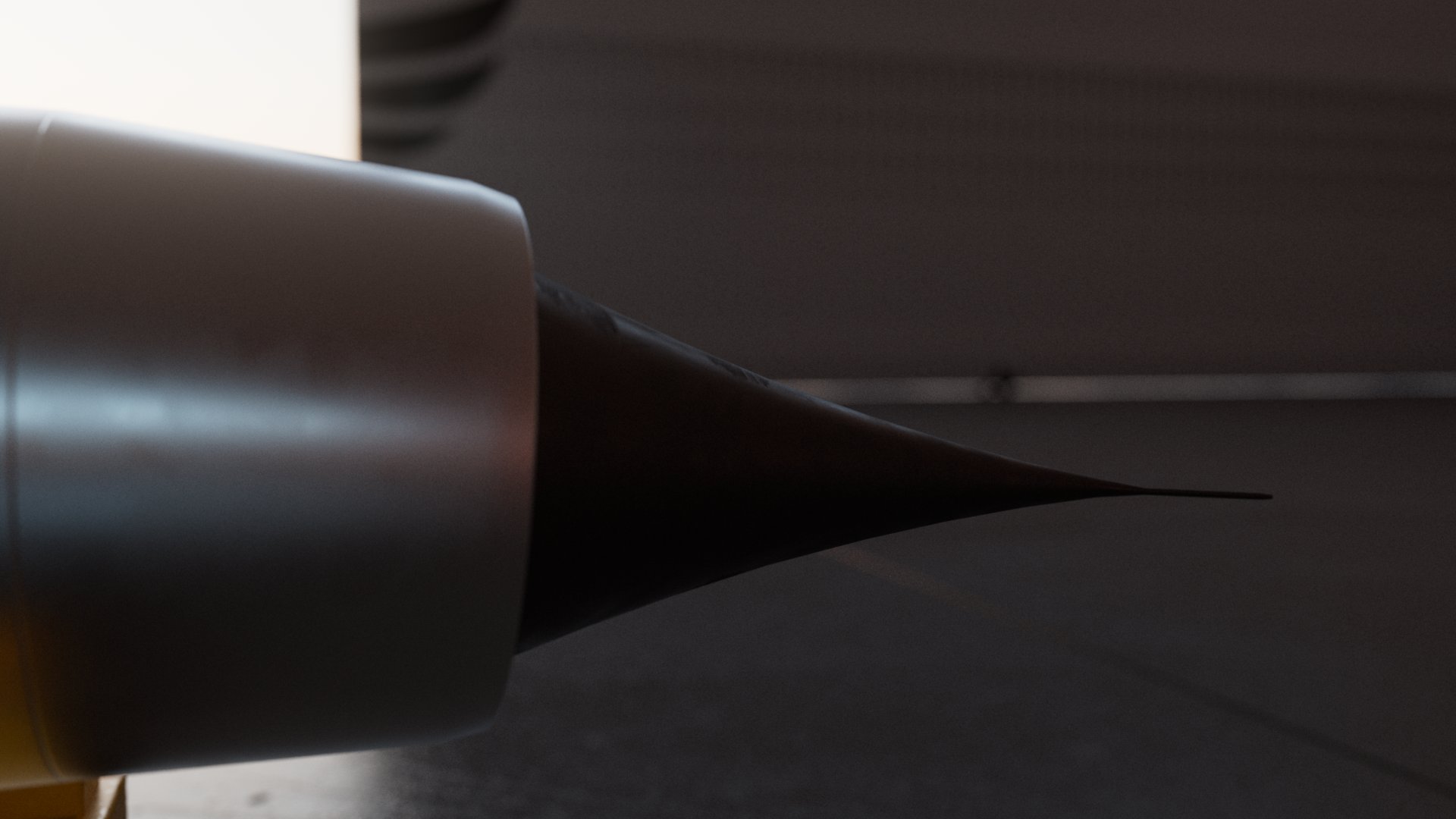
The ramjet intake on the Ramjet-X. Hermeus

But a short-duration dash through a high-Mach regime is not equivalent to sustained flight at those speeds. The duration available to an experiment, thermal loads, acceleration, vibration, available electrical power, telemetry, maneuverability, and payload mass will all determine what can actually be tested.

The company says it is already testing the Ramjet-X propulsion system at its High Enthalpy Air-Breathing Test facility in Jacksonville, Florida. High-temperature structures are also under development at its El Segundo, California, headquarters. Integrated vehicle testing is currently planned for 2027.

The HEAT facility itself is part of Hermeus’ effort to establish high-speed propulsion test infrastructure. The company says the facility is being developed to eventually provide continuous high-Mach airflow for more flight-like ground testing.

Ramjet-X has yet to fly, but if it performs as intended, it could help lower one of the major barriers to obtaining real-world flight data at high Mach numbers. At the same time, the company is entering a market that is attracting growing interest from other aerospace firms, which are also expanding their high-speed flight-test capabilities, especially to capitalize on the broader hypersonics boom, including Stratolaunch.

There is fairly clear potential weaponization of this concept, for strike and surveillance missions, as well, although there has been no indication of that being in the works at this time.

The planned 2027 integrated testing should provide the first meaningful indication of whether the concept can progress to become a practical high-speed test capability.

Contact the author: thomas@thewarzone.com

The post Hermeus Unveils Air-Launched Ramjet Test Vehicle for High-Speed Experiments appeared first on TWZ.

  •  

Army Now Testing Anthem Long-Range Strike Weapon Built for Mass Production

Covenant, a previously little-known defense startup, has emerged with a new long-range strike weapon, named Anthem, which it says is intended to provide a cheaper, more readily producible alternative to existing cruise missiles. Already in testing with the U.S. Army, the missile reflects the growing focus on weapons in this class that can be manufactured quickly in very large numbers, even if they sacrifice a significant degree of individual-weapon capability compared to more ‘exquisite’ and costly alternatives.

Covenant, a U.S.-Israeli company founded in 2024, unveiled its Anthem weapon system today along with plans for production in the United States, Germany, and Israel. The company says it has already conducted more than 200 test flights of the weapon and has secured roughly $150 million in orders.

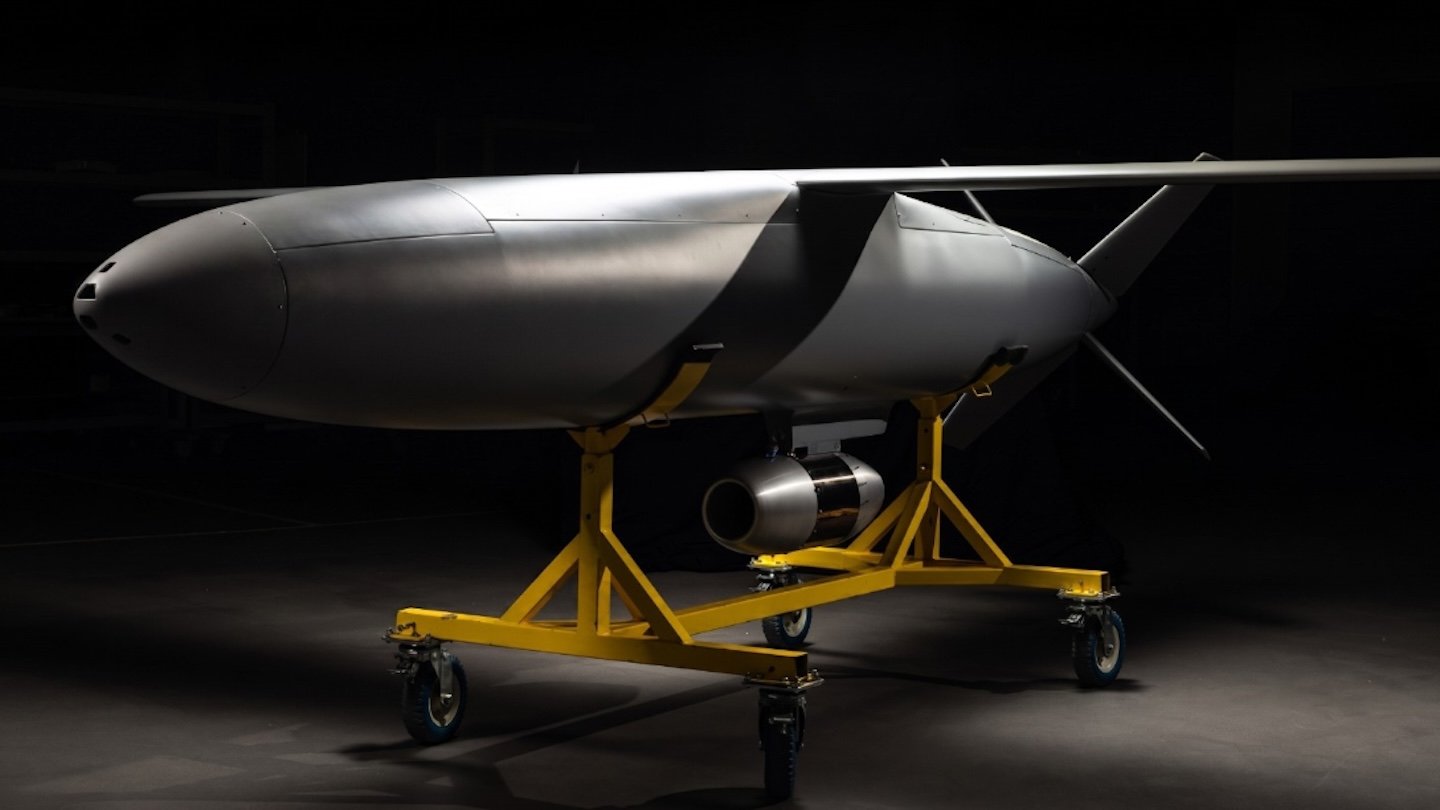
Covenant Anthem missile. Covenant

The announcement comes as the United States and its allies are increasingly focused on the availability of long-range precision weapons, particularly the ability to replenish inventories during a major conflict. Covenant’s central pitch is that existing weapons in this category are too expensive and difficult to manufacture in sufficient numbers for a prolonged war, a reality that has been recognized by a bewildering number of new and established industry players.

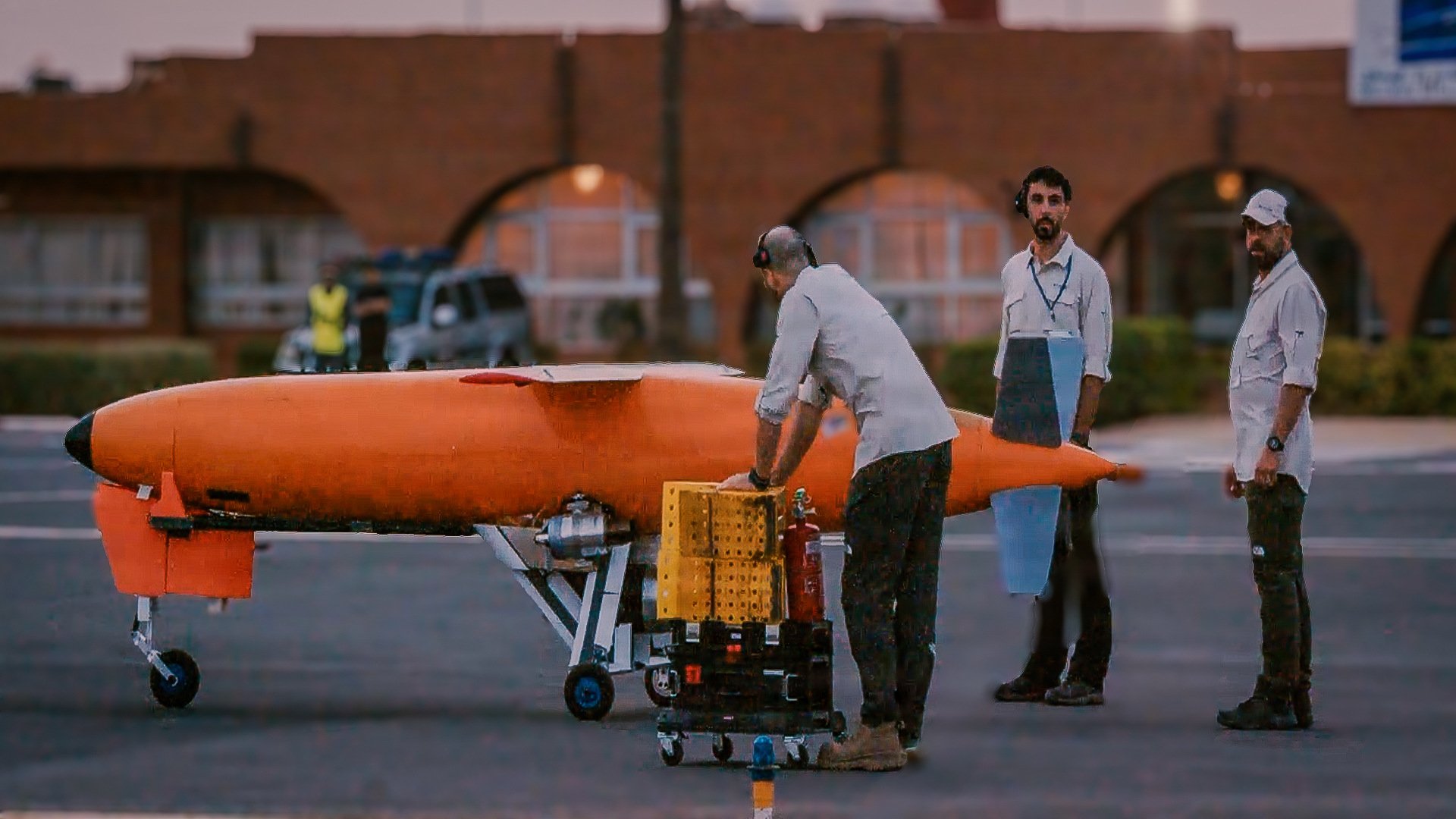
Anthem is being positioned accordingly as a high-volume weapon rather than a one-for-one replacement for larger, more expensive cruise missiles. In its initial form, it is ground-launched, although it is unclear exactly how this is achieved. Imagery of the weapon during Pentagon trials show it being handled on the ground using tricycle undercarriage, pointing to the use of a runway for launch.

Defense-industry partners prepare a cruise missile for launch during a live-fire demonstration leveraging the Africa Multidomain Training and Experimentation Center at Tan-Tan, Morocco, Aug. 6, 2026. AMTEC will enable U.S. and Moroccan forces to test, evaluate and iterate on emerging technologies in a realistic environment strengthening shared readiness and interoperability. This live-fire also demonstrates how AMTEC will provide dedicated physical space and full electromagnetic spectrum access to support defense-industry partners to conduct testing. As one of the early contributions under the U.S. Army’s Test Range Expansion Initiative, the demonstration proves there is opportunity for defense industry to conduct testing that is difficult to replicate at many U.S. ranges, reinforcing Morocco’s role as a regional security leader. (U.S. Army photo by Capt. Jordan Beagle)
An Anthem cruise missile at Tan-Tan, Morocco, on August 6, 2026. U.S. Army photo by Capt. Jordan Beagle

Covenant has not publicly disclosed the weapon’s range, although unconfirmed reports put it at roughly 1,200 kilometers — over 740 miles. The company is also being somewhat deliberate about how it describes Anthem, referring to it as a “deep precision-strike munition” rather than consistently classifying it as a cruise missile.

On the other hand, Reuters reports Covenant executives saying that the missile was developed ‌with an ⁠eye toward future conflicts in the Pacific. “We were designed for the China fight,” said Covenant President Abby Denburg. That would also seem to point toward significant range.

The Anthem missile in flight. Covenant

However, more concrete details of its performance, as well as guidance type and projected level of survivability, remain undisclosed.

The company says Anthem can carry a warhead weighing more than 200 kilograms (441 pounds). That is substantially less than the roughly 1,000-pound-class warhead associated with the Tomahawk cruise missile, which can hit targets at over 1,000 miles depending on the exact configuration. Covenant argues that lower cost and much higher production rates would make it possible to employ larger numbers of their weapons against a given target set.

Anthem uses a solid rocket motor for launch and a heavy-fuel jet engine, underslung below the missile body, for cruise flight. Covenant says the system was designed from the outset around readily available components and a supply chain that would avoid dependence on individual suppliers. The company states that it has, for example, multiple solid-rocket-motor suppliers and long-term agreements covering thousands of jet engines.

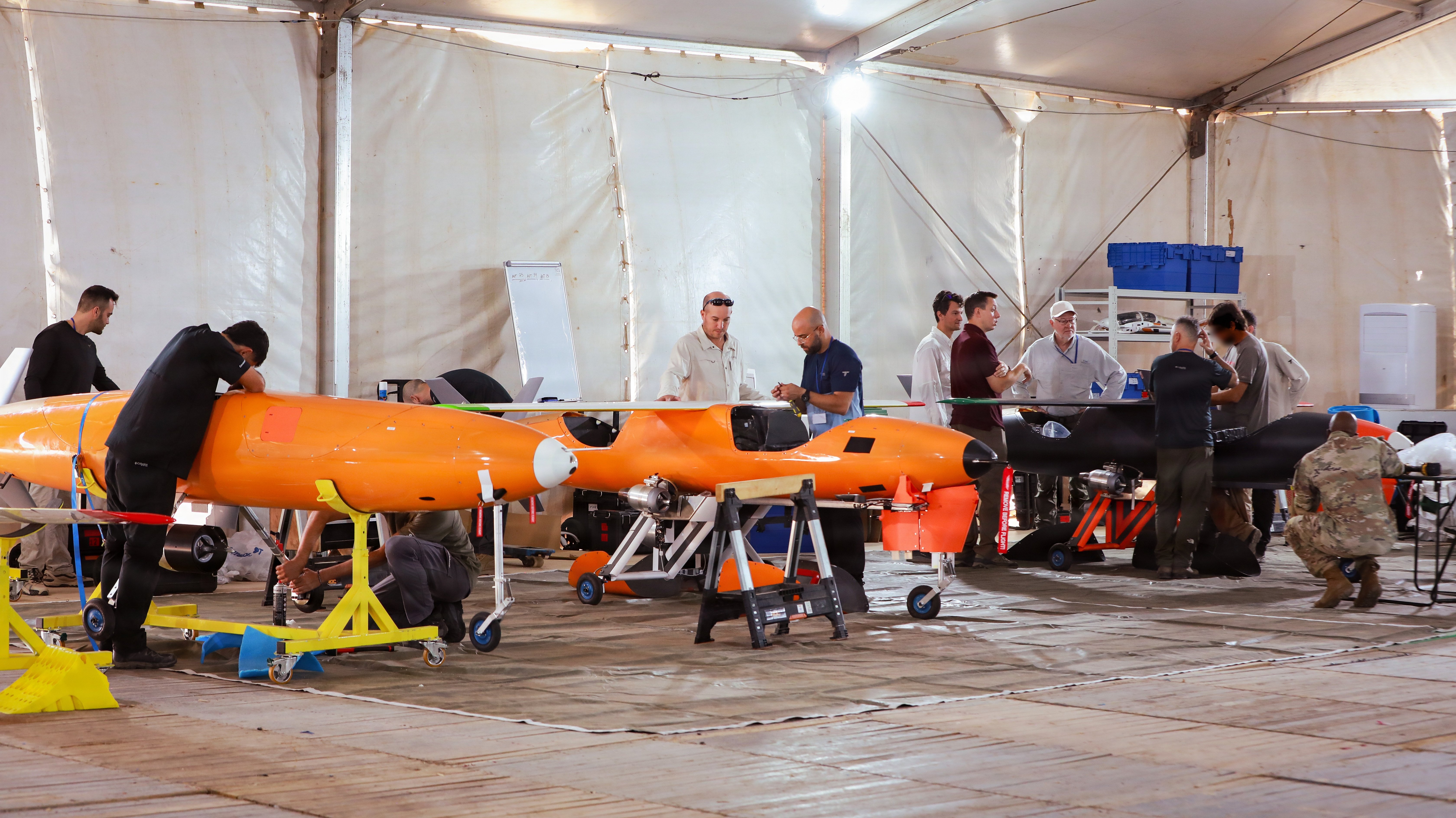
Defense-industry partners assemble a cruise missile for a live-fire demonstration at the Africa Multidomain Training and Experimentation Center in Tan-Tan, Morocco, Aug. 5, 2026. The demonstration was held to support regional defense capabilities and joint training interoperability. AMTEC enables U.S. and Moroccan forces to test emerging technologies and expand testing capabilities to strengthen shared readiness and interoperability under the U.S. Army’s Test Range Expansion Initiative. (U.S. Army photo by Staff Sgt. Raquel Birk)
Cruise missiles are assembled for a live-fire demonstration at the Africa Multidomain Training and Experimentation Center in Morocco. U.S. Army photo by Staff Sgt. Raquel Birk

Overall, the production ambitions are significant. Covenant’s new Grand Prairie, Texas, facility covers approximately 105,000 square feet and is expected to begin serial production during the first quarter of 2027, eventually reaching a stated capacity of 5,000 Anthems per year. Its facility in Saxony, Germany, is intended to reach a similar production rate, while the smaller Israeli site is planned to produce as many as 2,000 weapons annually.

“Germany possesses an exceptionally strong industrial foundation,” Denburg told Bloomberg News. “While its automotive sector is currently undergoing a structural transformation, decades of manufacturing excellence have created precisely the expertise we require.”

That would put the company’s eventual combined production target at up to 12,000 weapons per year, assuming all three facilities reach their planned capacities.

A defense-industry partner cruise missile engages a target during a live-fire demonstration leveraging the Africa Multidomain Training and Experimentation Center at Tan-Tan, Morocco, Aug. 6, 2026. 2026. AMTEC will enable U.S. and Moroccan forces to test, evaluate and iterate on emerging technologies in a realistic environment strengthening shared readiness and interoperability. This live-fire also demonstrates how AMTEC will provide dedicated physical space and full electromagnetic spectrum access to support defense-industry partners to conduct testing. As one of the early contributions under the U.S. Army’s Test Range Expansion Initiative, the demonstration proves there is opportunity for defense industry to conduct testing that is difficult to replicate at many U.S. ranges, reinforcing Morocco’s role as a regional security leader. (U.S. Army photo by Staff Sgt. Raquel Birk)
An Anthem cruise missile engages a target at the Africa Multidomain Training and Experimentation Center in Morocco, on August 6, 2026. U.S. Army photo by Staff Sgt. Raquel Birk

Covenant’s U.S. facility is intended primarily to support American customers, while the German operation is being established around a European supply chain, responding to growing demand for long-range strike weapons across that continent. The company says an unidentified international customer is expected to begin receiving German-built weapons before the end of this year. Meanwhile, U.S. Army deliveries are expected in 2027, under an accelerated qualification contract.

The weapon has already been subjected to U.S.-linked testing. In August, an unnamed defense-industry partner conducted a live-fire demonstration at the Africa Multidomain Training and Experimentation Center in Morocco. The U.S. military’s public material about that event did not identify the weapon or company, but subsequent reporting identified the missile as Covenant’s Anthem.

Covenant now says the system has flown more than 200 times over the past year, including testing involving U.S. government organizations. The company also says Anthem participated in the Army’s Project Convergence Capstone 6 experiments and that its August test helped demonstrate a new framework for allowing industry to use the Moroccan test infrastructure.

Defense-industry partners assemble a cruise missile for a live-fire demonstration at the Africa Multidomain Training and Experimentation Center in Tan-Tan, Morocco, Aug. 5, 2026. The demonstration was held to support regional defense capabilities and joint training interoperability. AMTEC enables U.S. and Moroccan forces to test emerging technologies and expand testing capabilities to strengthen shared readiness and interoperability under the U.S. Army’s Test Range Expansion Initiative. (U.S. Army photo by Staff Sgt. Raquel Birk) This photo was altered for security purposes by blurring out defense industry names and logos.
Defense-industry partners assemble a cruise missile at the Africa Multidomain Training and Experimentation Center in Morocco. This photo was altered for security purposes by blurring out defense industry names and logos. U.S. Army photo by Staff Sgt. Raquel Birk

Beyond the ground-launched version, Covenant is working on a naval derivative. The company says it has a roughly $70-million contract with the Navy’s Rapid Capabilities Office to adapt Anthem into what it calls Maritime Anthem. The effort includes Defense Exportability Features intended to make the weapon easier to provide to U.S. allies and partners.

The emergence of Anthem also illustrates how the defense industry’s current emphasis on mass production is extending into the long-range strike arena.

The United States already fields weapons such as Tomahawk and JASSM-ER, but those systems are expensive, and production capacity is limited. Covenant is betting that a weapon available in much larger quantities can provide commanders with another layer of long-range strike capacity, even if the destructive power of a single round falls well below that of a Tomahawk. Reuters reports that Covenant expects the weapon to eventually cost in the mid-six-figure range, although the company has not provided a final unit price. Compared to other competitors in the field, Covenant appears to be the crudest design we have seen so far, underscored by its apparent launch method, in which it takes off from an airstrip under power of its booster.

Defense-industry partners prepare a cruise missile for a live-fire demonstration at the Africa Multidomain Training and Experimentation Center in Tan-Tan, Morocco, Aug. 5, 2026. The demonstration was held to support regional defense capabilities and joint training interoperability. AMTEC enables U.S. and Moroccan forces to test emerging technologies and expand testing capabilities to strengthen shared readiness and interoperability under the U.S. Army’s Test Range Expansion Initiative. (U.S. Army photo by Capt. Jordan Beagle)
Unnamed defense-industry partners prepare a cruise missile for a live-fire demonstration at the Africa Multidomain Training and Experimentation Center in Tan-Tan, Morocco, on August 5, 2026. It has now been disclosed that this demonstration involved the Anthem. U.S. Army photo by Capt. Jordan Beagle

Recent combat operations have increased concerns about the rate at which more traditional precision weapons can actually be manufactured. Once stockpiles begin to reduce, long-range missiles have proven among the most difficult munitions to replace. That would only become more problematic during a major conflict.

Covenant has attracted venture-capital backing to pursue that problem. The company says it has raised more than $250 million from investors including Andreessen Horowitz, Founders Fund, Lux Capital, 8VC, Aleph, and Lightspeed. Its stated focus, however, is now shifting from development to production.

Covenant, a U.S.-Israeli company founded in 2024, unveiled its Anthem weapon system today along with plans for production in the United States, Germany, and Israel. The company says it has already conducted more than 200 test flights of the weapon and has secured roughly $150 million in contracts and orders.
Anthem in flight. Covenant Covenant

The key question will be whether Covenant can turn the promised production numbers into sustained deliveries. Building thousands of long-range weapons per year requires not only an assembly plant, but also a resilient supply chain, reliable propulsion production, testing capacity, quality control, and the ability to integrate those elements at scale. It will also rely on securing more contracts from domestic and allied customers.

For now, however, Anthem represents an intriguing entrant into a crowded but increasingly important segment of the weapons market.

Contact the author: thomas@thewarzone.com

The post Army Now Testing Anthem Long-Range Strike Weapon Built for Mass Production appeared first on TWZ.

  •  

This Is Poland’s New Heavy Infantry Fighting Vehicle

Poland has unveiled a full-sized demonstrator of a new heavy infantry fighting vehicle (IFV) intended to put more armor and firepower between mechanized troops and the increasingly lethal threats of the modern battlefield. The unveiling comes as Poland undertakes a sweeping modernization of its armored forces, driven in large part by the threat posed by Russia.

KIELCE, POLAND - SEPTEMBER 08: People attend the Premiere of Poland's PGZ Heavy Infantry Fighting Vehicle during MSPO 34th International Defence Industry Exhibition at Targi Kielce, on September 08, 2026 in Kielce, Poland. The 34th edition of MSPO (short for the Polish "Międzynarodowy Salon Przemysłu Obronnego," or "International Defence Industry Exhibition") is taking place September 8–11, 2026 in Kielce, organized in cooperation with Poland's Ministry of National Defence and this year's lead nation, Canada. The annual trade show is the largest in Central and Eastern Europe, showcasing more than 1,000 exhibitors from 40 countries. (Photo by Omar Marques/Getty Images)
The debut of the Ciężki Bojowy Wóz Piechoty (CBWP), or Heavy Infantry Fighting Vehicle, during the MSPO 34th International Defense Industry Exhibition at Targi Kielce, on September 8, 2026 in Kielce, Poland. Photo by Omar Marques/Getty Images

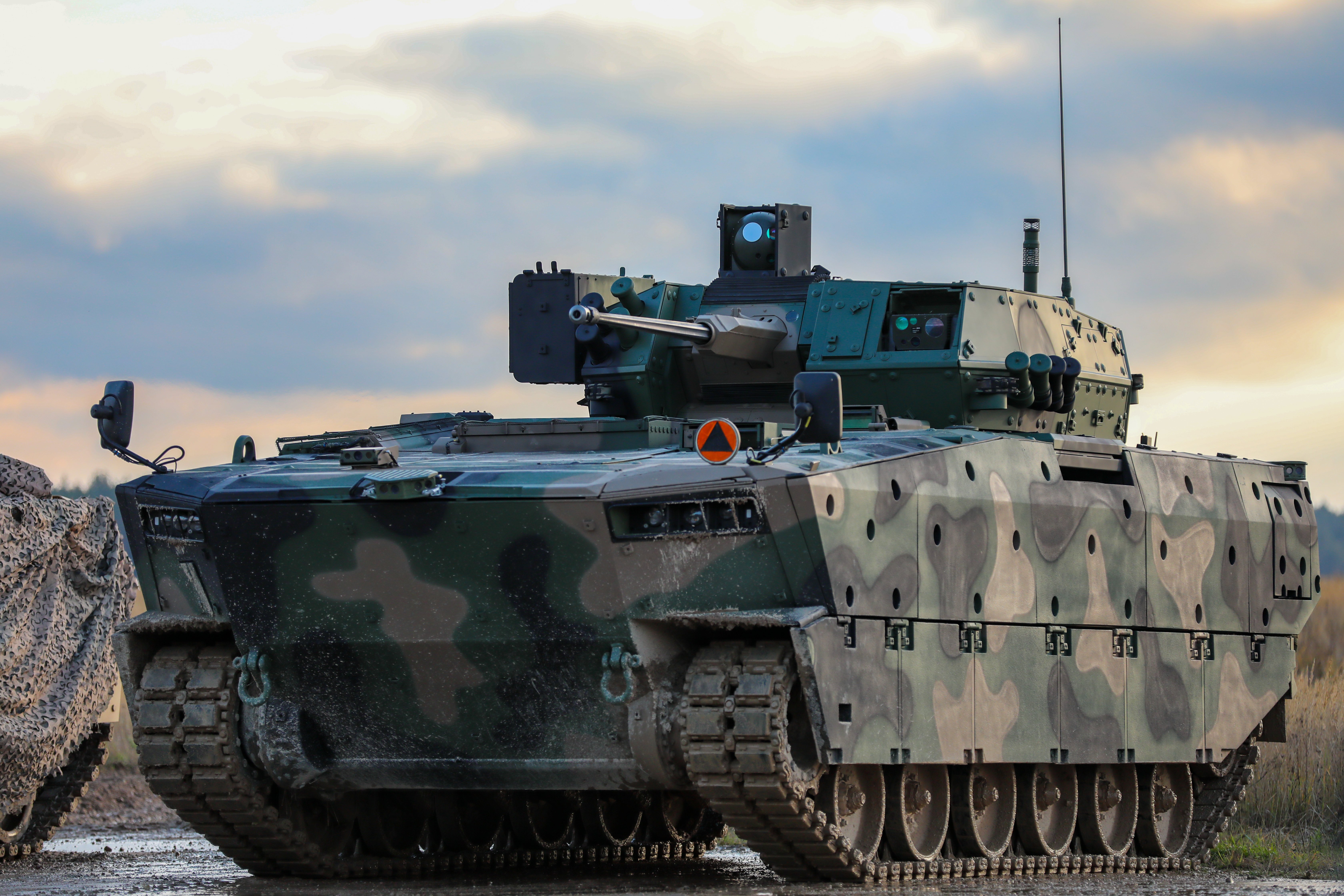
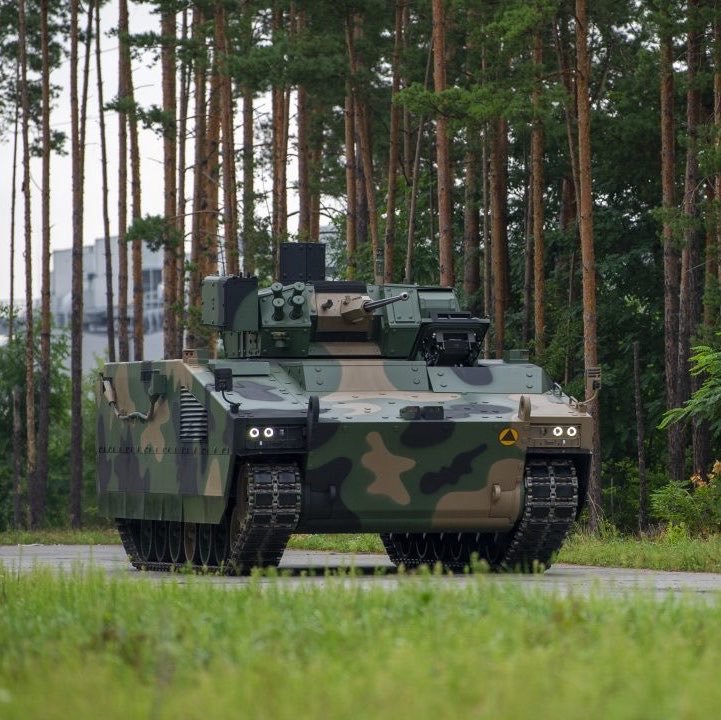
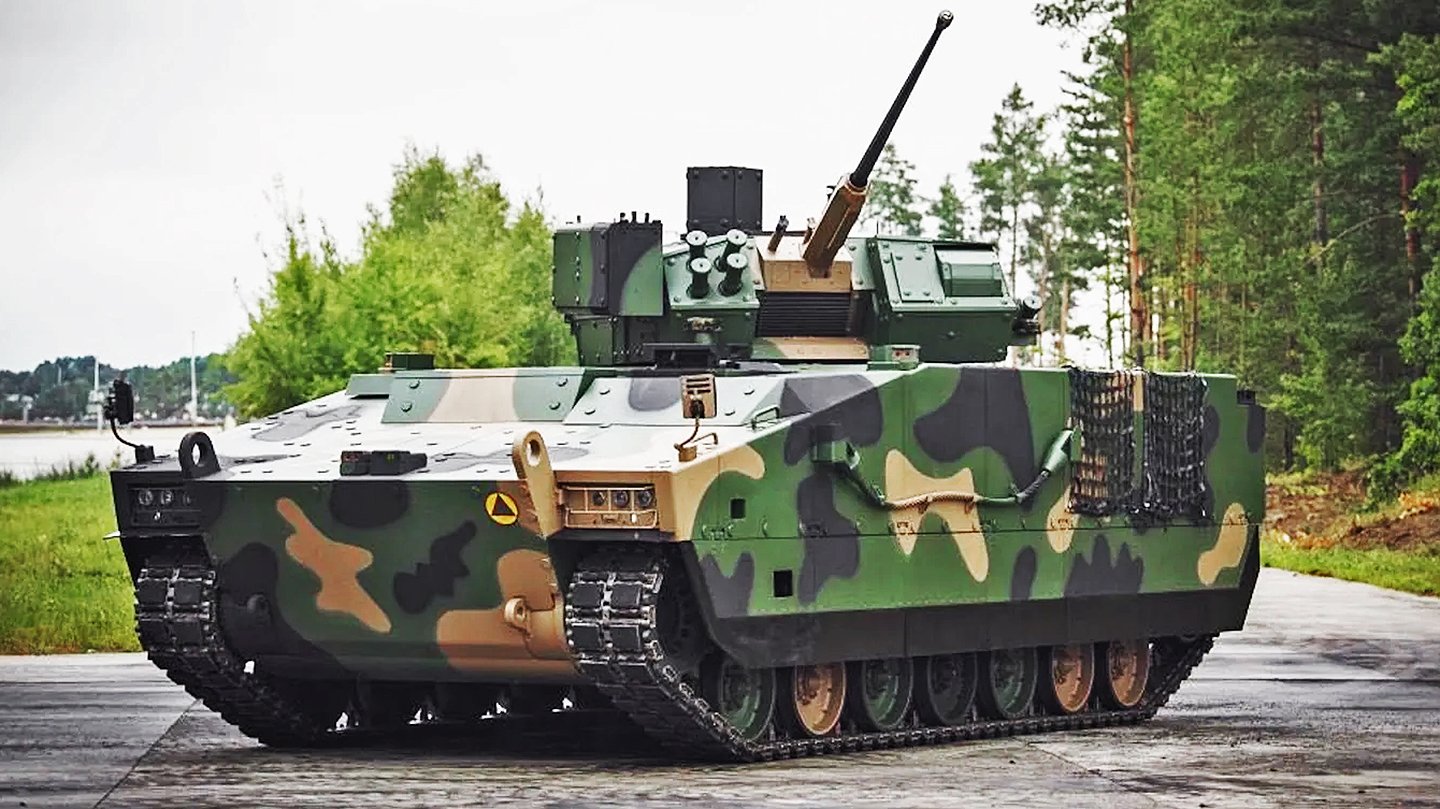
Huta Stalowa Wola, part of state-owned Polska Grupa Zbrojeniowa, presented the Ciężki Bojowy Wóz Piechoty (CBWP), or Heavy Infantry Fighting Vehicle, at the MSPO defense exhibition in Kielce, Poland, today. The vehicle, commonly referred to as Ratel (honey badger), is the latest step in a Polish effort to develop a heavily protected tracked combat platform that can complement the lighter, amphibious Borsuk (badger) infantry fighting vehicle.

“The demonstrator presented today confirms that Polish companies possess the expertise to design and develop advanced combat platforms that meet the demands of the modern battlefield,” Adam Leszkiewicz, president of PGZ’s management board, said during the unveiling.

💥 OTO ON. CIĘŻKI BOJOWY WÓZ PIECHOTY. 🇵🇱

Po dniach odliczania i pokazywania tylko fragmentów odsłaniamy najważniejszą premierę PGZ na #MSPO2026.

CBWP to nowa ciężka platforma opracowana przez Hutę Stalowa Wola – z wysokim poziomem ochrony, dużą mobilnością i siłą ognia… pic.twitter.com/kazs4ciGMj

— Polska Grupa Zbrojeniowa🇵🇱 (@PGZ_pl) September 8, 2026

At approximately 40 tons, the CBWP is about 12 tons heavier than the roughly 28-ton Borsuk (and adds an axle, for seven road wheels on each side), the result of a fundamental difference in design philosophy.

NATO enhanced Forward Presence Battle Group Poland adds the Polish Infantry Fighting Vehicle, the Borsuk (Badger) to its arsenal for the Polish armed forces 15th Mechanized Infantry Brigade, stages for display during the unveiling ceremony in front of the Poland Deputy Prime Minister, Mariusz Błaszczak, Minister of National Defense joined by U.S. Soldiers assigned to 3rd Battalion, 8th Cavalry Regiment, 3rd Armored Brigade Combat Team, 1st Cavalry Division (3-1 ABCT) operationally controlled by the 1st Infantry Division (1 ID), Polish armed forces 15th Mechanized Infantry Brigade, The Royal Lancers, Prince of Wales Troop, Romanian Sky Guardians, Croatian army Archer Battery, and the media in Bemowo Piskie, Poland, Nov. 14, 2022. The 3-1 ABCT is among other units assigned to the 1 ID, proudly working alongside NATO allies and regional security partners to provide combat-credible forces to V Corps, America's forward deployed corps in Europe. (U.S. Army National Guard photo by Staff Sgt. Matthew A. Foster)
A Borsuk operated by the 15th Mechanized Infantry Brigade of the Polish Army. U.S. Army National Guard photo by Staff Sgt. Matthew A. Foster

Borsuk was conceived as a relatively lightweight IFV able to operate alongside mechanized infantry while retaining the ability to swim. The CBWP instead prioritizes protection and battlefield survivability, placing it in the growing category of heavy IFVs being developed and operated by NATO countries and others.

The vehicle will have a three-person crew and carry up to eight infantrymen. Its primary role is to transport those troops safely into contested areas while providing direct fire support once they reach the objective.

The war in Ukraine has demonstrated how quickly armored vehicles can be exposed to anti-tank guided missiles, mines, artillery fragments, loitering munitions, and small drones. Even vehicles that survive direct attacks can be functionally disabled by damage to tracks, sensors, or external equipment.

A Ukrainian M2A2 Bradley engaging and damaging a Russian T-90M in a close-range fight. After a mission kill, the T-90M is subsequently finished by an FPV drone:

The Ukrainian Bradley IFV damaged the no-analogue russian T-90M "Breakthrough" in a close fight. Then an FPV drone finished this long-suffering tank.

Maybe, the T-90M tanks should be renamed into "Broken".

📹: 47th Mechanized Brigade pic.twitter.com/b3ShfqbTd9
— Defense of Ukraine (@DefenceU) January 13, 2024

While Ukraine has shown that armor is increasingly easy to find and attack, and thus less relevant, Warsaw is far from convinced that armored vehicles are now irrelevant, with multiple acquisition projects underway. However, Ukraine does change what these vehicles need to be able to do and how they must be employed to have a chance of survival. In certain circumstances, when properly concealed, dispersed, and integrated with counter-drone capabilities, armor is still seen as important for protected mobility and firepower by militaries around the globe.

According to PGZ, the CBWP’s design therefore puts considerable emphasis on survivability. It incorporates advanced ballistic and mine protection designed to meet relevant STANAG standards. It also uses specialized mine-resistant seats intended to reduce the effects of explosions beneath the hull.

The protection architecture can be supplemented by an active protection system (APS). If integrated on a production vehicle, such a system could provide another layer of defense against incoming anti-tank weapons, and potentially small drones, although PGZ has described the APS as an optional component rather than specifying a particular production configuration.

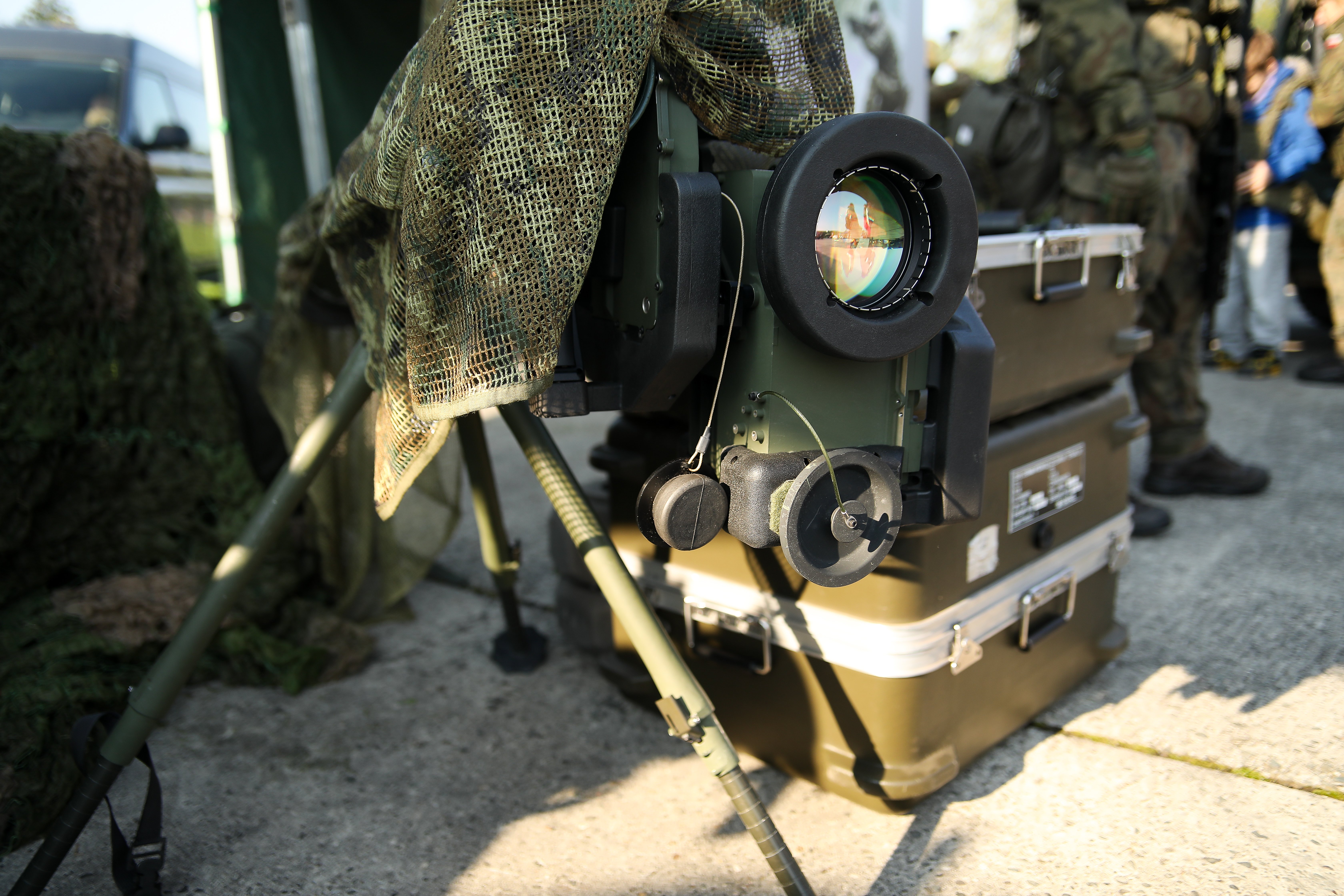
For detecting threats, the vehicle can employ laser-warning equipment including the OBRA-3 system, integrated with smoke grenade launchers. A laser warning can provide the crew with an indication that the vehicle has been illuminated by a rangefinder or targeting system, potentially allowing it to react before an anti-tank weapon is launched.

A video showing a test of the OBRA-3 protection system on a Polish Rosomak wheeled armored fighting vehicle, with a smoke screen being generated to blind hostile optics. The view is from the driver’s compartment:

The CBWP will also carry an integrated nuclear, biological, and chemical protection system, allowing the crew and embarked infantry to operate in contaminated environments.

Firepower comes from the ZSSW-30 remotely operated turret, one of the most important locally developed systems in Poland’s current armored vehicle modernization effort.

The turret is equipped with a 30mm cannon armed with programmable ammunition, plus Rafael Spike anti-tank guided missiles. Together, the weapons are intended to give the CBWP the ability to engage armored vehicles, infantry, and other battlefield targets while also providing a degree of capability against aerial threats. In particular, the programmable ammunition provides greater flexibility against different target types — such as drones — by allowing the projectile’s effects to be tailored to the engagement.

In Krakow, Poland, on October 3, 2025, a SPIKE anti-tank guided missile is displayed during the official celebrations of the 6th Airborne Brigade Day at the Polish Aviation Museum. On the occasion of the 6th Airborne Brigade Day, named after Brigadier General Stanislaw Sosabowski, a ceremonial assembly takes place at the Polish Aviation Museum. During the event, decorations are awarded, followed by a parade featuring a parachute jump demonstration. The celebration also includes stands prepared by various uniformed services for participants. (Photo by Klaudia Radecka/NurPhoto via Getty Images)
A Polish Spike anti-tank guided missile is displayed during the official celebrations of the 6th Airborne Brigade Day at the Polish Aviation Museum in Krakow, Poland, on October 3, 2025. Photo by Klaudia Radecka/NurPhoto

The inclusion of Spike missiles gives the vehicle an extended-range anti-armor option beyond the effective range of its automatic cannon. Much more than a traditional anti-tank guided missile, Spike provides an indirect-fire capability including the option to loiter over a particular area and search for targets, among other attributes.

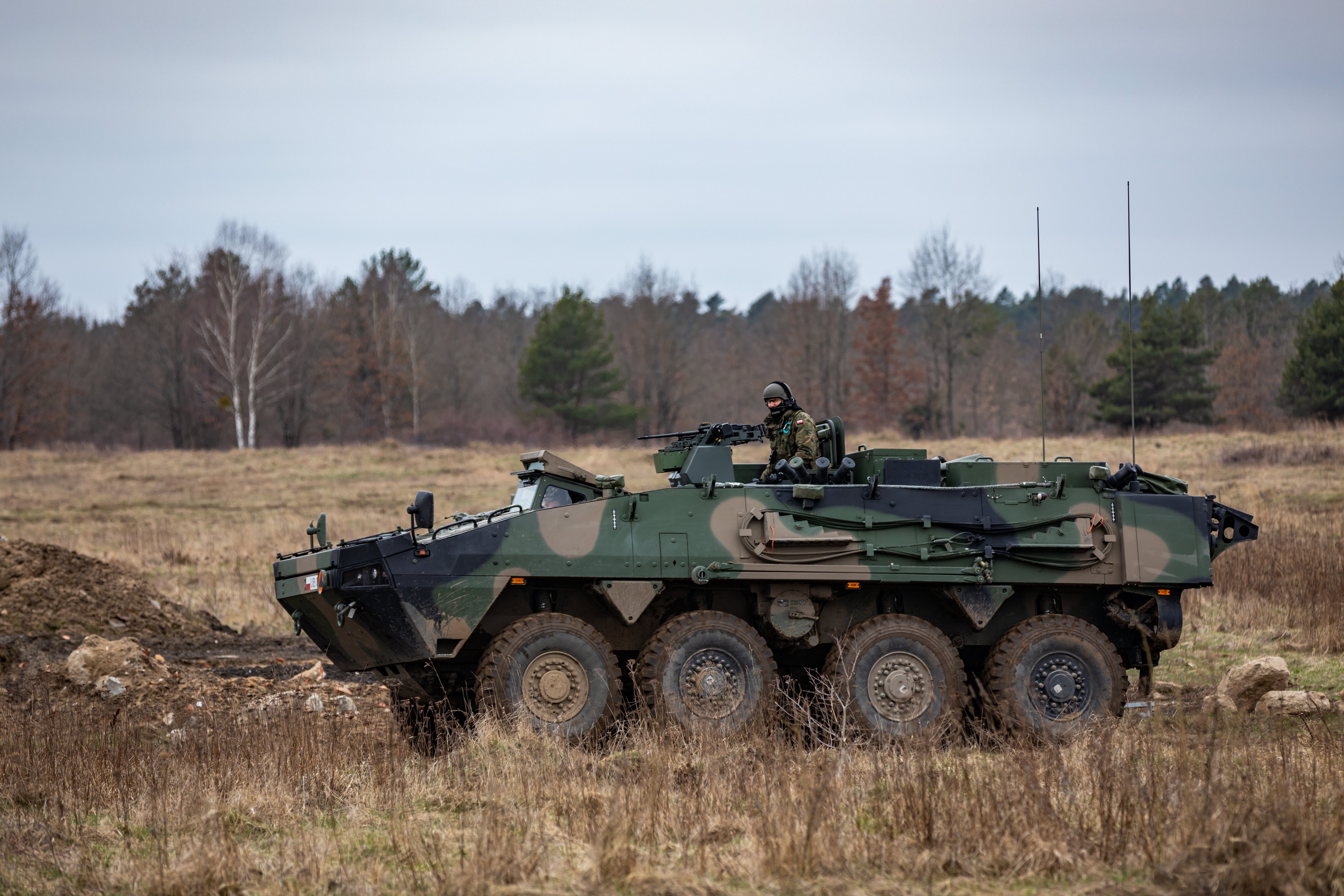
The ZSSW-30 also gives Poland a degree of commonality across its growing fleet of modern armored vehicles, with the system already being introduced on Borsuk and on some Rosomak wheeled armored fighting vehicles.

Polish soldiers assigned to the 15th Mechanized Infantry Brigade maneuver a Rosomak-S armored modular vehicle into position during Amber Lynx, a combined live fire exercise at Bemowo Piskie, Poland, April 6, 2023. The 4th Infantry Division’s mission in Europe is to engage in multinational training and exercises across the continent, working alongside NATO allies and regional security partners to provide combat-credible forces to V Corps, America’s forward deployed corps in Europe. (U.S. Army National Guard photo by Sgt. Lianne M. Hirano)
Polish soldiers assigned to the 15th Mechanized Infantry Brigade maneuver a Rosomak wheeled armored fighting vehicle into position during Amber Lynx, a combined live-fire exercise at Bemowo Piskie, Poland, in April 2023. U.S. Army National Guard photo by Sgt. Lianne M. Hirano

The CBWP reflects a trend for fighting vehicles that blur the boundaries between traditional IFV and infantry-support concepts. It is expected to carry a relatively large infantry squad while possessing the sensors and weapons necessary to remain directly involved in combat alongside those troops. At the same time, its high level of protection makes for a notably large vehicle.

The new vehicle is just one part of Poland’s broader military modernization.

Warsaw has embarked on one of NATO’s most ambitious efforts to expand and modernize its ground forces, with major acquisitions of two different types of main battle tank, artillery, rocket systems, and infantry fighting vehicles. Poland is simultaneously expanding domestic production capacity, seeking to ensure that at least part of the equipment needed for a larger army can be produced and sustained within the country.

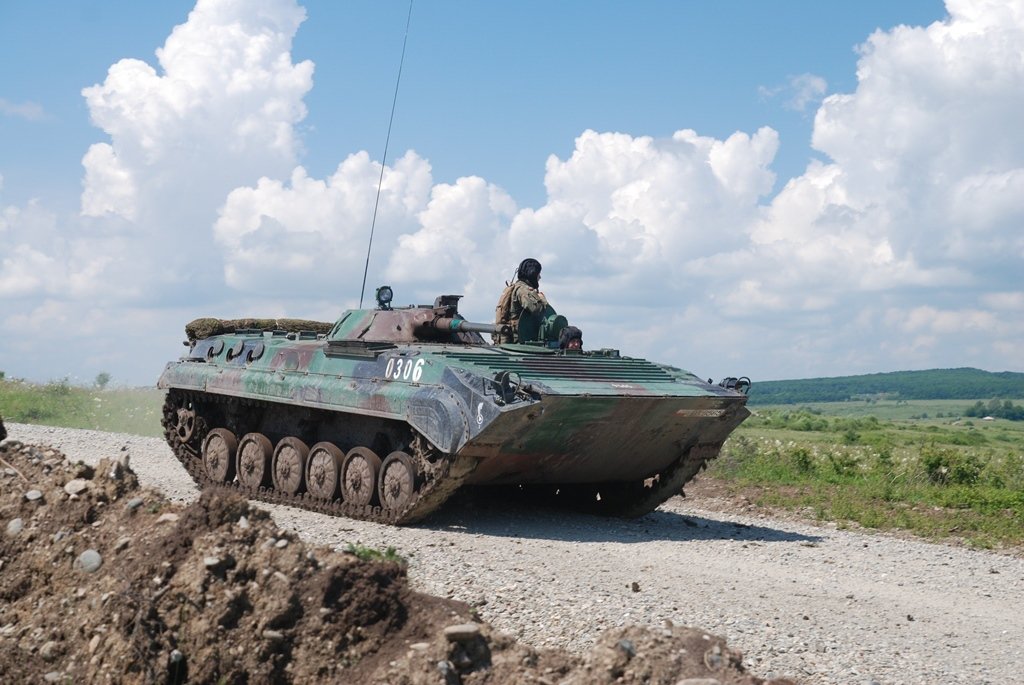
The Borsuk program is central to that effort and is intended to replace Poland’s aging Soviet-designed BWP-1 (the Polish version of the BMP-1).

11 June 2017 Polish soldiers from 10th Mechanized Battalion the 'Dragons' and Polish BWP-1 Infantry Fighting Vehicles train during Exercise Noble Jump in Romania. Around 4000 troops from nine NATO countries are participating in the exercise which is designed to test the deployability of NATO's Very High Readiness Joint Task Force or VJTF. Credit: Captain Katarzyna SAWICKA
Polish soldiers from 10th Mechanized Battalion in a BWP-1 train during Exercise Noble Jump in Romania. Captain Katarzyna SAWICKA/Allied Joint Force Command Naples

The heavier CBWP offers even more capability, but its heavier weight comes with tradeoffs. It will be inherently less flexible than a lighter amphibious IFV, and more costly. In return, it will give Polish commanders another option for missions where survivability matters more than swimming capability or rapid deployment.

Such a vehicle would be particularly important for units operating in heavily contested areas, where the threat from mines, anti-tank weapons, and drones makes protection a higher priority. This provides some indication of what Polish planners expect a conflict with Russia on Europe’s eastern flank to look like. However, lessons from Ukraine show that, whatever its quality, an armored fighting vehicle will only be as survivable as the network and tactics around it.

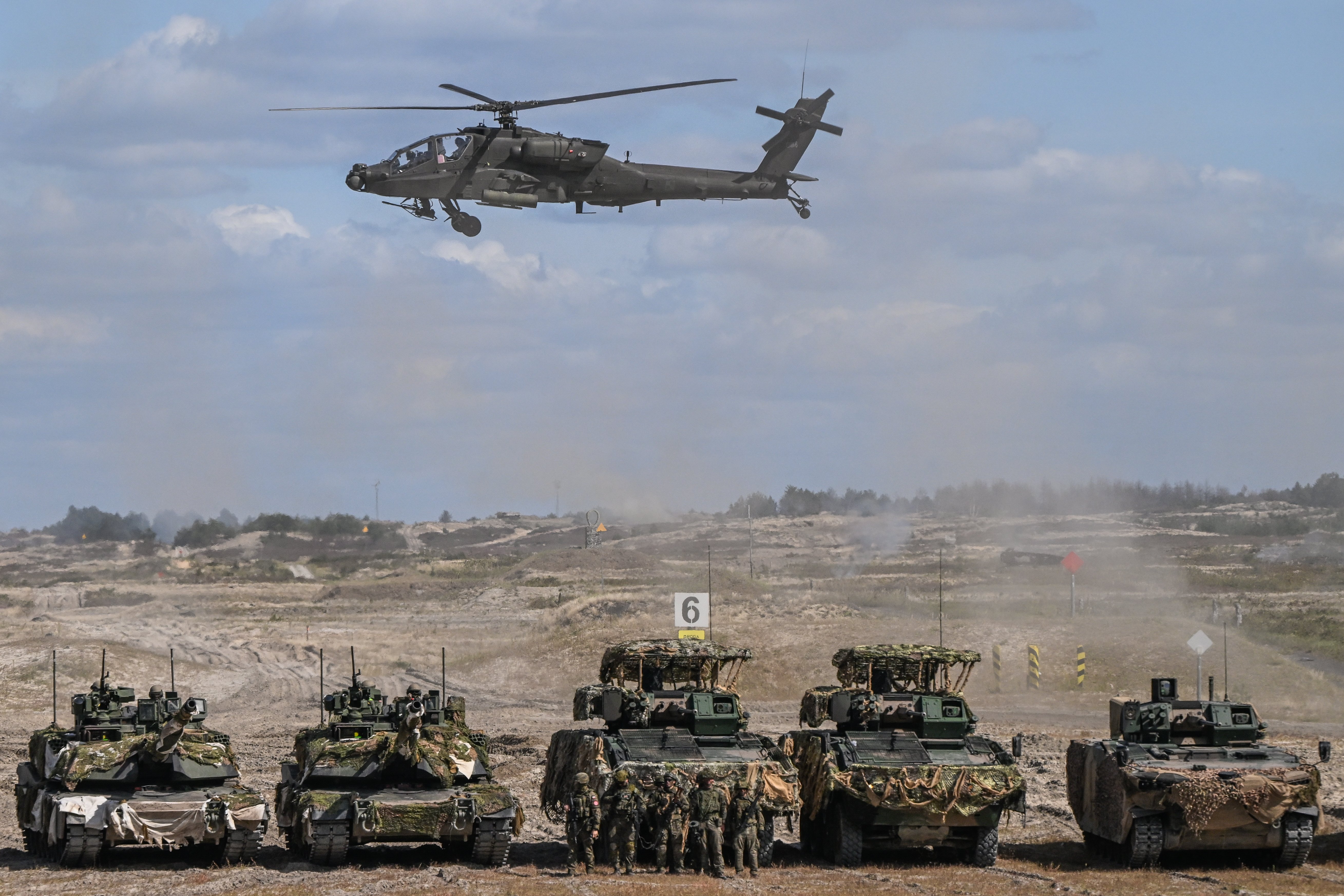
NOWA DEBA, POLAND - SEPTEMBER 7: A Boeing AH-64 Apache attack helicopter performs low-altitude tactical maneuvers over a massive static line of advanced hardware, including two camouflaged M1A1 Abrams main battle tanks, two KTO Rosomak 8x8 wheeled vehicles with ZSSW-30 turrets, and a Borsuk tracked infantry fighting vehicle, during a combat presentation at the Land Forces Training Center in Nowa Deba, Subcarpathian Voivodeship, Poland, on September 7, 2026. This high-profile combined-arms presentation, organized as part of the 27th Polish Armed Forces Exhibition directly leading into the 34th International Defence Industry Exhibition (MSPO Kielce), demonstrated the tight operational synergy between Poland's newest heavy armor, advanced infantry fighting platforms, and close-air support aviation, witnessed by foreign military delegations from over 20 countries observing Poland's premier weapon systems. (Photo by Artur Widak/NurPhoto via Getty Images)
An AH-64 Apache attack helicopter over a massive static line of Polish armor, including two M1A1 Abrams main battle tanks, two Rosomak wheeled armored fighting vehicles with ZSSW-30 turrets, and a Borsuk tracked IFV, during a combat presentation at the Land Forces Training Center in Nowa Deba, Poland, on September 7, 2026. Photo by Artur Widak/NurPhoto

Still, the CBWP remains some distance from operational service.

PGZ currently has one operational demonstrator, intended for factory trials. The company plans to subsequently construct two fully functional prototypes, with both expected to be ready in 2027.

Those vehicles will then undergo intensive testing with the Polish Armed Forces. The results could lead to changes in the protection architecture, turret integration, or other elements before a production configuration is finalized.

The CBWP demonstrator vehicle underway. Polish Ministry of Defense

PGZ has indicated that it could be ready for production as early as 2029, but that timeline is not yet a firm procurement schedule. It will depend on the results of testing, any modifications required during development, and negotiations with the customer.

Poland has been reported to be considering a requirement for up to 700 CBWP vehicles. In addition, Poland has so far contracted for 257 Borsuk IFVs, with another roughly 1,000 Borsuk-family combat and specialized vehicles envisioned under a broader framework agreement.

If the program succeeds, Poland will ultimately field a highly capable two-tier tracked IFV force in which the CBWP equips units expected to operate in the most dangerous portions of the battlefield.

Contact the author: thomas@thewarzone.com

The post This Is Poland’s New Heavy Infantry Fighting Vehicle appeared first on TWZ.

  •  

Russia’s New Stealthy Lower-Cost Air-Launched Standoff Weapons On Display In Egypt

Russia is displaying some of its newest air-launched precision weapons in public for the first time at the El Alamein International Airshow in Egypt this week. The S-71K Kovyor and related S-71M Monokhrom, and the S8000 Banderol, reflect Russia’s effort to field larger numbers of relatively inexpensive standoff weapons alongside its more sophisticated and costly missile types. As such, their development and early employment are closely tied to the war in Ukraine, but they also reflect wider global interest in these kinds of weapons.

The weapons, seen in the tweet embedded below, comprise, clockwise from top left: S-71K Kovyor, an unknown smaller guided munition, S8000 Banderol, and S-71M Monokhrom:

Novel munitions for the Russian aircraft, on an expo. pic.twitter.com/L1UPTb8qhX

— krakek (@krakek1) September 6, 2026

For Russia, the requirement has become increasingly important as the war in Ukraine has evolved into a prolonged contest in which industrial capacity is as critical as technology. Russia has expended huge numbers of cruise and ballistic missiles against Ukrainian targets while also developing an enormous strike-drone campaign. At the same time, Ukrainian air defenses have become progressively more capable, forcing Moscow to use combinations of missiles, drones, decoys, and different flight profiles to penetrate or saturate the defensive network. One lesson is the fact that a weapon does not necessarily have to be as capable as a high-end cruise missile if it can be manufactured in much greater numbers and still present a credible threat to the target.

The S-71M, which TWZ previously reported on in detail after Ukrainian intelligence obtained an example, is a compact, turbojet-powered weapon with a distinctly angular airframe intended to reduce its radar signature. Imagery from Egypt gives a better look at its front end, including a faceted nose flowing into a broad central fuselage. The nose has at least one optically flat transparency for an infrared or TV seeker. Its wings are sharply swept and fold against the belly of the weapon for carriage, while the rear of the weapon terminates in an inverted-V tail arrangement. The overall shape is notably different from Russia’s more conventional cruise missiles of the past.

An S-71M test article under the wing of a Su-57. via X

Ukrainian analysis found that the S-71M incorporates an OFAB-250-270 high-explosive fragmentation bomb as its warhead and relies primarily on inertial guidance, rather than carrying a sophisticated terminal seeker, although the seeker window raises questions about that.

Ukrainian intelligence also described its construction as being relatively straightforward, with fiberglass composite material making up much of the outer structure and no evidence identified of specialized radar-absorbing coatings.

As we noted previously, the weapon appears intended as a less expensive, but still survivable standoff weapon option that can be produced in significant numbers.

The S-71M has been tested from the Su-57 Felon fighter, also present at El Alamein. In a press release, the United Aircraft Corporation (UAC), responsible for the Su-57, said that the S-71M and the S-71K displayed alongside it “were designed for fifth-generation fighters,” although there is no reason why they couldn’t be launched from a wide variety of platforms.

A Su-57 performing at El Alamein, with one of its main internal weapons bays apparently loaded with Kh-69 standoff missiles:

T-50-9 in El-Alamein, opening both main weapon bays. Two, presumably, Kh-69 can be seen in the front one.

Source: @ T汪汪T pic.twitter.com/f6csKc6Y9D

— George N. (@GeorgeN28581) September 8, 2026

Regardless of launch platform, the nature of the war in Ukraine makes the S-71M particularly useful. Russia has increasingly relied on extemporized glide bombs for attacks against targets relatively close to the front, but those weapons require the launching aircraft to operate within a certain distance of Ukrainian defenses. At least in their earlier iterations, such weapons were also crude and prone to failure. Longer-range cruise missiles offer considerably greater standoff but are more complex and expensive. The S-71M sits somewhere between those categories, providing an air-launched, powered weapon with a relatively large warhead and some degree of low observability without the cost and complexity of a full-size, truly stealthy cruise missile.

The S-71K appears to represent a more capable version of the basic concept. Public information remains limited, but the weapon has been associated with electro-optical guidance and greater onboard processing, potentially giving it a capability to deal with targets in a more flexible manner than the largely pre-programmed S-71M. Exactly how that capability is employed, and how autonomous the weapon actually is, remain less clear from the imagery and information released to date.

An S-71K missile presented in front of a Su-57 Felon at El Alamein. UAC
A close-up of the same S-71K missile at El Alamein. UAC
A Su-57 undergoes trials with a pair of S-71K missiles under the wings. via X

As displayed at El Alamein, the S-71K retains the overall faceted, low-observable appearance of the S-71M but has a visibly different airframe and wing arrangement. Its body is notably broad and compact relative to its length, with folding wings that are relatively thick, and a more refined inverted-V tail giving it more the appearance of a small uncrewed aircraft than a conventional air-to-surface missile.

A rear view of a test S-71K under the wing of a Su-57. via X

Meanwhile, the Banderol represents a somewhat different path to the same general problem. Ukraine’s intelligence service previously obtained and analyzed an example of the small jet-powered cruise missile, which TWZ reported on last year. The weapon is considerably smaller than Russia’s principal cruise missiles and has been associated with launch from drones and helicopters. Its reported range of around 500 kilometers (311 miles) and relatively small warhead make it something of a complementary system intended to provide another, more economical way of putting a precision weapon onto a target from the air.

The front portion of a Banderol is seen nearest the camera in a line-up at El Alamein, which also includes a Yak-130M combat trainer and a Su-57. UAC

In terms of its appearance, the Banderol is more conventionally missile-like, with an ogival central fuselage, a pointed nose, and sharply swept folding wings. Its proportions underline just how small it is compared with Russia’s better-known air-launched cruise missiles.

An infographic prepared by Ukraine showing the Banderol cruise missile and some of its foreign-sourced components. GUR photo

The Banderol is particularly relevant in the context of the economics of the Ukraine conflict. Russian forces have increasingly used combinations of relatively inexpensive one-way attack drones and more expensive cruise and ballistic missiles. The drones can be produced in large numbers and used to complicate air-defense operations, while the more capable missiles provide greater speed, range, payload, or penetration capability. A small turbojet-powered weapon such as Banderol offers another point on that spectrum.

At least one image has recently emerged showing a Banderol carried by a Russian Mi-28NM Havoc attack helicopter. This would be in line with unconfirmed reports from Ukraine last month that Russia was using the Mi-28 as an additional launch platform for the weapon, including firing them from over the Sea of Azov to attack targets around Odesa.

An S8000 “Banderol” (“Dan-T”) small cruise missile mounted on a Russian Mi-28NM attack helicopter. pic.twitter.com/Xcx3MmFK3B

— OSINTWarfare (@OSINTWarfare) September 6, 2026

Its reported use also illustrates how the distinction between a cruise missile and a large one-way attack drone is becoming increasingly blurred. The Banderol incorporates a conventional missile-like airframe and jet propulsion but has been associated with drone operations and makes extensive use of commercially available components. TWZ’s earlier examination of the weapon also highlighted the extent to which modern Russian weapons programs can combine relatively simple airframes with foreign-sourced electronics and propulsion technology.

Russia has revealed an Orion (Inokhodets) UAV carrying the S8000 Banderol air-launched cruise missile, marking the clearest Russian footage yet of the weapon integrated with the drone. #Russia #Orion #CruiseMissile #Defense pic.twitter.com/yLHb7h1oW9

— Drone Wars (@Drone_Wars_) July 13, 2026

Likely Banderol loitering munition on the ground (perspective exaggerates it's size) and under Orion drone.

Banderol has been reported as one of the munition used in recent strikes and appears to use a jet engine and a FAB-100 warhead or similar. pic.twitter.com/j50DUsNuVe

— krakek (@krakek1) April 27, 2025

Seen together at El Alamein, the three weapons provide an unusually useful snapshot of where Russian air-launched strike development is heading. They are presented alongside a fourth, so-far unidentified munition. This unnamed weapon is notably short and fat, with a cruciform tail, and an optical window in the nose. Its overall size and shape suggest it may have been developed specifically to arm drones.

The appearance of the weapons at an arms fair underscores the fact that Russia is not the only country confronting the problem of producing and fielding sufficient precision weapons at an acceptable cost. The growing interest in lower-cost cruise missiles, loitering munitions, attritable aircraft, and other forms of expendable precision strike is now evident well beyond Russia.

Russia is also clearly trying to make these weapons harder to intercept, an increasingly important consideration as Ukrainian air defenses have demonstrated an ability to shoot down even glide bombs in some circumstances. The S-71K in particular incorporates unusually pronounced low-observable shaping, suggesting that survivability was also a central requirement from the outset.

There is, however, a significant complication to Russia’s attempt to turn its wartime experience into an export opportunity. Buying any kind of weapons from Moscow has become considerably more difficult because of sanctions, restrictions on access to foreign technology and financing, and the wider political risks associated with maintaining a Russian defense relationship. Those factors matter just as much to a prospective customer as the performance of the weapon itself.

Author’s note: earlier reporting on the S-71 family appears to have transposed the S-71K and S-71M versions. Most authoritative accounts now indicate that the more refined, more stealthy version is the S-71K Kovyor (meaning carpet), while the simpler weapon is the S-71M Monokhrom.

Update, September 9:

Rostec, the Russian state-owned defense conglomerate, has provided more details of the weapon identified at El Alamein as the Banderol. Rostec calls this weapon the ‘Dan-T’ loitering munition, which is an export designation for Banderol.

According to Rostec:

The ‘Dan-T’ munition operates on a ‘fire-and-forget’ principle and is adapted for launch from Russian and foreign aircraft and helicopters. The munition is equipped with a compact jet engine and can strike targets at a range of hundreds of kilometers. The ‘Dan-T’ features a special flight mode designed to evade enemy air defence systems.

Rostec adds that the Dan-T has been combat-tested in the war in Ukraine, where it claims there have been “hundreds of successful launches” against enemy targets in the Special Military Operation zone. “We expect this munition to attract widespread interest from foreign customers,” said Rostec.

Rostec
Rostec

Contact the author: thomas@thewarzone.com

The post Russia’s New Stealthy Lower-Cost Air-Launched Standoff Weapons On Display In Egypt appeared first on TWZ.

  •  

China’s Huge WZ-X Stealth Drone’s Strange Wing Configuration Confirmed

New imagery appearing out of China provides the best look yet at one of the country’s most enigmatic aircraft: the very large, low-observable, flying-wing drone widely referred to as the WZ-X. Seen previously primarily in satellite imagery, TWZ broke the story of the existence of this monster high-altitude, long-endurance drone. The new views that emerged today help clear up one of the most puzzling aspects of the aircraft’s appearance, namely the unusual shape of its enormous wings.

The aircraft was first identified in satellite imagery collected in May 2025 showing the People’s Liberation Army Air Force’s (PLAAF) sprawling test facility at Malan in Xinjiang. At the time, it was difficult to determine whether some of the apparent discontinuities in the wing planform were genuine features, visual countermeasures, or artifacts of the imagery.

The WZ-X seen for the first time at China’s secretive test base near Malan in Xinjiang province in a satellite image taken on May 14, 2025. PHOTO © 2025 PLANET LABS INC. ALL RIGHTS RESERVED. REPRINTED BY PERMISSION

The new photograph, seen at the top of the article and below, as well as a new satellite image, shows that the aircraft has a broader-chord inner wing section that transitions into a substantially narrower outer section. Rather than tapering continuously from the center section toward the tips, the wing effectively becomes much more slender over its outer portion in a ‘step down’-like fashion. The resulting planform gives the aircraft an exceptionally long, narrow outer wing. The wing arrangement differs from the B-2 and other stealthy flying wing designs because it has two outer wing sections, in addition to its diamond-like central fuselage, instead of just one.

The aircraft, widely referred to as the WZ-X, was first identified in satellite imagery collected in May 2025 at the People’s Liberation Army Air Force’s UAV test facility at Malan in Xinjiang. At the time, it was difficult to determine whether some of the apparent discontinuities in the wing planform were genuine features of the aircraft or artifacts of the imagery.
Image showing the WZ-X’s chord change for its out wing and semi-serrated trailing edge. Chinese internet via Chinese internet
{"properties": {"satellite_azimuth": -79.41542926829726, "satellite_elevation": 68.82853236341853, "sun_azimuth": 98.60694385306877, "sun_elevation": 22.22711822511059}}
A satellite image taken last week of Malan shows the WZ-X undergoing testing and gives us a clear view of its shallowly serrated trailing edge. PHOTO © 2026 PLANET LABS INC. ALL RIGHTS RESERVED. REPRINTED BY PERMISSION

We still can’t say for sure if this feature is just the way the aircraft’s wing was designed or if it also is due to some other exotic feature, such as wing folding or removable outboard sections. While a more novel explanation is possible, it is somewhat improbable at this point.

Seen from behind, the aircraft has a relatively shallow central fuselage section, with extremely long wings extending outward from it. The landing gear is extended, revealing large main undercarriage doors and substantial landing gear consistent with an aircraft of this size. Split rudders are visible toward the outer wing areas, broadly reminiscent of those used on the B-2.

An earlier view of the WZ-X. via Chinese internet

As in previous imagery, the rear of the center section of the aircraft may also reveal slot-like exhaust openings, supporting the assessment that it is twin-engined.

For an aircraft intended to spend long periods operating at high altitude, a very long overall span combined with a relatively narrow outer wing could be advantageous. Such an arrangement would increase effective aspect ratio and reduce induced drag during efficient cruise, potentially improving endurance and high-altitude performance.

It may also allow the designers to concentrate structural mass and internal volume closer to the center of the aircraft while still achieving a very large span.

There is a potential low-observable tradeoff, however. A significant change in chord introduces additional planform geometry and potential edge-alignment discontinuities that must be reconciled with the requirements of a stealth aircraft. The transition will influence radar reflections depending on its precise shape, orientation, and relationship to the aircraft’s other edges and surfaces. This will also be highly dependent on the aspect the radar is viewing the aircraft from. Modern very low observable designs try to minimize these exact types of features, with large continuous structures being the most advantageous to radar signature. This philosophy can be seen in the design of the B-21’s planform, which was also how the B-2 was supposed to look originally. You can read all about this here.

Regardless, the WZ-X does indeed have a semi-sawtooth trailing edge due to this intriguing feature.

New images of the so-called WZ-X stealthy flying-wing drone. via Chinese internet

The overall scale of the aircraft is also becoming increasingly apparent. Our initial analysis of satellite imagery put its wingspan at approximately 170 feet, roughly comparable to the 172-foot span of the B-2. That would make it considerably larger than other Chinese flying-wing drones identified to date.

Andreas Rupprecht, an analyst specializing in Chinese military aviation and TWZ contributor, assesses that the WZ-X is likely a twin-engined design similar in configuration to the supposed U.S. RQ-180, but considerably larger.

Rupprecht estimates a length of approximately 46 feet. He also assesses the aircraft as having a relatively spacious central fuselage and a dorsal satellite communications antenna. His estimates of a range exceeding 12,000 miles and a normal cruising altitude of somewhere between 59,000 and 66,000 feet remain unconfirmed.

The WZ-X is notably different from China’s smaller flying-wing designs. The CH-7, for example, has a deeper and more curved center section and is substantially smaller. The WZ-X’s broad, relatively flattened center body and enormous span instead appear particularly compatible with high-altitude endurance.

CH-7 stealthy flying-wing drone. via Chinese internet

Its apparent configuration also makes a long-duration surveillance mission plausible. The central body and inner wing section would provide substantial space for fuel, sensors, and communications systems, while the outer wing, combined with its lifting central body, could support highly efficient flight at high altitude.

A low-observable platform of this size could potentially conduct many types of wide-area surveillance and networking assistance while operating in or very near contested airspace where conventional high-altitude UAVs would face greater risks. A strike capability cannot be ruled out, particularly given China’s broader development of combat-capable flying-wing UCAVs, but the aircraft’s proportions appear especially well suited to persistence and reconnaissance.

While the location of the latest imagery is unconfirmed, Malan has developed into a massive center for Chinese drone testing, with satellite imagery showing extensive expansion of its infrastructure in recent years. The facility has been associated with multiple flying-wing designs, including the WZ-X and the similarly mysterious and also very large GJ-X. This substantially different flying-wing aircraft with a cranked-kite planform is also undergoing flight testing. That aircraft is estimated to have a wingspan of around 137 feet, underscoring the breadth of China’s experimentation with large low-observable uncrewed aircraft.

GJ-X seen at the new secure test facility in Malan. PHOTO © 2025 PLANET LABS INC. ALL RIGHTS RESERVED. REPRINTED BY PERMISSION
Dubbed GJ-X, this massive cranked-kite planform flying-wing was first spotted on the runway at the drone test base near Malan. via Chinese internet

China is pursuing tailless/flying-wing designs across an increasingly wide range of sizes and missions, alongside larger crewed aircraft programs including the J-36 and J-XDS and, eventually, the H-20 stealth bomber.

The WZ-X appears to be part of a much broader effort to develop highly integrated, low-observable aircraft optimized for different combinations of range, endurance, payload, and survivability.

For now, its official designation, manufacturer, propulsion system, performance, and intended mission remain unknown.

However, its configuration appears well suited to the requirements of a very large high-altitude endurance aircraft, although the trade-off between its performance and its stealth characteristics remains equally mysterious.

Contact the author: thomas@thewarzone.com

The post China’s Huge WZ-X Stealth Drone’s Strange Wing Configuration Confirmed appeared first on TWZ.

  •  

How Russian Drones Forced Ukraine To Park Its M1 Abrams Tanks

Ukrainian crews operating Australian-supplied M1A1 Abrams tanks say the battlefield has become so saturated with Russian drones that their tanks cannot currently be used in combat, but they reject the idea that main battle tanks have become forever obsolete.

Since receiving these tanks last year, the crews, serving with Ukraine’s 425th Separate Assault Regiment “Skala,” have used the Abrams in two combat operations in the fight for Pokrovsk, a key Ukrainian logistics hub and part of a defensive belt of towns in Ukraine’s eastern Donetsk region. They recounted their experiences to Hromadske, an independent media channel in Ukraine.

Fighting around Pokrovsk

The first major deployment described by the crews took place in December of last year, when Abrams tanks were used to support assault groups entering Pokrovsk.

The crewmember with the callsign Kent described moving into the city behind a mine-clearing tank and ahead of two infantry fighting vehicles (IFVs) carrying assault troops, during a mission that was deliberately aggressive.

“Since a tank is a priority target — my task was to draw their attention, while our infantry dismounted and moved in successfully.”

The Abrams was also assigned three target points to engage along the route.

“We went right in there, poured it on, and drove back out,” he recalled.

A video showing the 425th Separate Assault Regiment in action in August 2025, soon after receiving the Abrams:

The second operation, on March 31, involved an attempt to enter and hold an industrial area near Pokrovsk to help block Russian movement toward Hryshyne, a contested village in the district.

The operation was prepared for more than two weeks. Ukrainian forces conducted reconnaissance flights, examined difficult sections of the planned routes, and provided crews with extensive video and imagery.

“They knew every meter of the route,” another of the unit’s commanders, with the callsign Kubik, said.

Weather was considered essential. The Ukrainians waited for fog and rain, hoping to limit the effectiveness of Russian drones.

“Without the right weather we wouldn’t have been able to pull off operations like that,” Kubik said.

The operation nevertheless resulted in the destruction of four out of five armored vehicles, some of which are seen in the video embedded below.

Russia's Rubicon Drone Center FPV drones destroyed a Ukrainian assault group near Pokrovsk, hitting an M1A1 Abrams tank, M1117 APC and BMP-2 as the unit tried to advance near Hryshyne under fog cover. #Ukraine pic.twitter.com/ZzE52qAYxp

— NOELREPORTS 🇪🇺 🇺🇦 (@NOELreports) April 1, 2026

The commander acknowledged that the Russian side may have had advance knowledge of the operation.

“I can’t rule out the possibility that the enemy knew our plan,” he said.

His Abrams was not immediately destroyed. According to the crew, it completed its task and the assault troops dismounted before the weather changed.

“Once the fog lifted, they started working on it with an FPV drone,” the commander said.

Why use tanks at all?

The losses prompted criticism from Ukrainian military commentators, particularly after footage of the destroyed vehicles was published.

However, the crews defend the decision to use armored vehicles for the missions. According to the men of the Skala interviewed, the alternative was often to send infantry over several miles on foot while carrying weapons, ammunition, water, and other supplies.

“That takes more time,” Kubik explained. “And the enemy isn’t standing still — the enemy is moving toward them.”

🇦🇺🇺🇦 Australia-supplied M1A1 Abrams AIM main battle tank in service of the Ukrainian 425th Separate Assault Regiment "Skala."

The tanks of such type recently saw combat in the area of Pokrovsk. pic.twitter.com/qhjSyGbhH6

— Status-6 (War & Military News) (@Archer83Able) December 23, 2025

The argument that infantry could simply move more stealthily on foot also has limitations.

“Every day the Mavic drones are flying, the fixed-wing drones are flying,” he said. “No fog, guys are visible.”

Combined with IFVs, the Abrams can provide the ability to rapidly move troops while simultaneously delivering heavy direct fire against enemy positions and offering substantial protection to its crew.

The crews argue that this capability remains worthwhile even when the tank itself may eventually be lost.

One commander was asked whether deploying a roughly $5-million tank makes sense if a single sortie can result in its destruction.

“Yes, of course it makes sense to deploy it,” he replied.

“First and foremost — it saves the lives of the crew inside it.”

Russian forces captured a relatively lightly damaged M1A1SA Abrams main battle tank operated by the 47th Separate Mechanized Brigade in the Pokrovsk direction.
The tank is equipped with added cage armor, as well as Kontakt and ARAT ERA. pic.twitter.com/mHyKk1xNRY

— Status-6 (War & Military News) (@Archer83Able) October 27, 2024

A tank under attack by drones

The Ukrainian crews repeatedly highlighted the Abrams’ accuracy and survivability.

“What are the biggest advantages of the Abrams?” Kent was asked.

“Accuracy.”

Its biggest disadvantage, he said, is equally obvious on a modern battlefield: “It’s very tall — and very large — so it’s hard to conceal.”

A video showing a U.S.-supplied Abrams under attack from Russian FPV drones:

🇺🇸🇺🇦 An Abrams tank withstands 9 FPV drones hits. Eventually, the tank was destroyed, but the tank crew successfully survived. pic.twitter.com/4NBKdg2zmW

— PS01 □ (@PStyle0ne1) July 7, 2024

Kent described surviving an engagement in which his tank was struck repeatedly while on the move.

“More than 20 drones hit me,” he said of one operation into Pokrovsk.

He attributed the Abrams’ survival to the combination of its armor and additional anti-drone protection fitted to the vehicle.

“All of it together is effective,” he said.

He pointed to fairly basic modifications including rubber strips and a foldable wire cage mounted on the turret, as additional layers of protection against drone attacks.

“A drone doesn’t hit the actual penetrating element directly — it just can’t reach it,” he explained. “It hits the rubber, and then the blast wave travels from there.”

Even with their tanks festooned with explosive reactive armor (ERA) bricks, the crews acknowledge that such protection has limits.

A head-on view of an M1A1 of the 425th Separate Assault Regiment shows the ERA bricks installed around the turret and in front of the hull. Ukrainian Armed Forces

US-supplied M1A1 Abrams tank in service of the Armed Forces of Ukraine with added Kontakt-1 ERA on the frontal hull and standard ARAT ERA on the sides. pic.twitter.com/PC2kDfxefO

— Status-6 (War & Military News) (@Archer83Able) May 21, 2024

Kent also noted that the Abrams was still missing the ‘hedgehog’-type protective coverings that have been seen on Russian tanks.

“They also protect very well. An effective thing,” he said.

A Russian tank with the ‘hedgehog’-type protective covering. Russian state media

For now, the drone threat has led the regiment to keep its Abrams out of combat, as we will return to later.

The Abrams as a machine

The crews’ assessment of the Abrams included praise for its mobility, roomy interior, gun, and fire-control system.

Kubik said he had personally driven an Abrams to 50 miles per hour cross-country.

“The engine is an absolute beast,” he added.

The tank can also rapidly perform a pivot turn, which the crews consider particularly useful when maneuvering in confined spaces. Despite its prodiguous weight, it only rarely becomes bogged down after the kind of very heavy snow-melt that effects all vehicles on the battlefield.

Loading a 120mm M1028 canister cartridge into an M1A1 AIM Abrams main battle tank of the tank battalion of the 425th Assault Regiment. pic.twitter.com/tMd8QcROQe

— 𝔗𝔥𝔢 𝕯𝔢𝔞𝔡 𝕯𝔦𝔰𝔱𝔯𝔦𝔠𝔱 🦩🇬🇪🇺🇦🇺🇲🇬🇷 (@TheDeadDistrict) June 21, 2026

Its disadvantages include its demanding maintenance requirements. The running gear was described as particularly sensitive, with crews inspecting, lubricating, and replacing components after every sortie.

Fuel consumption is another major burden. The crew cited roughly 400 to 700 liters (106 to 185 gallons) per 100 kilometers (62 miles) depending on terrain and operating conditions.

“On asphalt it burns about 400 liters,” one said. In boggy terrain, consumption can reach “700 liters or more.”

The Abrams thirsty gas turbine engine and extreme logistical demands have always been a criticism of the platform.

An M1A1 of the 425th Separate Assault Regiment fording a river. Ukrainian Armed Forces

The crews said the vehicle’s ability to operate on different fuels is useful, although diesel provides the best engine-hour performance in their experience. Prior to delivery, the gas turbine engines of the tanks were reconfigured to use diesel fuel instead of the standard JP-8 aviation kerosene, according to earlier reports.

They also praised the Abrams’ protected ammunition storage and crew space compared with Soviet-designed tanks.

The version operated by the Ukrainians is an M1A1 rather than the latest Abrams configuration, with less sophisticated electronics than newer variants. It also lacks the classified armor found on its U.S. Army counterpart.

“For me — as a tanker — this configuration, what we have right now, is more than enough,” Kubik said. “The sight is absolutely excellent. The gun is also great.”

🔥 Abrams destroys a house with Russian infantry in the Pokrovsk direction. pic.twitter.com/StUoZoMTO3

— MAKS 26 🇺🇦👀 (@Maks_NAFO_FELLA) August 25, 2024

Waiting for a solution to the drone problem

The interview ultimately presents a more complicated picture than the declaration that tanks are obsolete on the Ukrainian battlefield.

At the time of writing, at least 25 Abrams have been confirmed visually to have been destroyed, damaged, or abandoned in Ukrainian service. This is from a total of 31 provided by the United States and 49 from Australia.

“For now, we’re not using them further — there’s no way to,” Kubik said. “The enemy has developed their drone component very heavily, and for now we don’t have the means to counter that.”

While tanks remain exceptionally powerful direct-fire and protected mobility platforms, the proliferation of inexpensive uncrewed aircraft has made operating them increasingly difficult.

M1A1 AIM Abrams tanks of the 425th Assault Regiment 🇺🇦.
The reinforced upper glacis and turret roofs are clearly visible. pic.twitter.com/Sn9h8OWZ9P

— 𝔗𝔥𝔢 𝕯𝔢𝔞𝔡 𝕯𝔦𝔰𝔱𝔯𝔦𝔠𝔱 🦩🇬🇪🇺🇦🇺🇲🇬🇷 (@TheDeadDistrict) June 21, 2026

“If someone had told me, as a tanker, back in 2022: ‘Take this — we’re giving you an Abrams, we’ll give you time to train and you’ll fight in it,’” Kubik said, “I would never have climbed out of it.”

“I’d only be saying: ‘Bring me shells. I’ll drive non-stop wherever needed, arrive and work.’”

An M1A1 of the 425th Separate Assault Regiment firing its main gun. Ukrainian Armed Forces

As it stands, reconnaissance drones can find the Abrams, FPV drones can attack it, and persistent surveillance makes concealment difficult. Experience has shown that without more effective counter-drone capabilities, even a heavily protected tank can eventually be overwhelmed.

But Kubik believes that will change.

“The day will come when one of our bright minds figures out some excellent solution against drones — and we’ll start using them again.”

Asked whether the era of tanks is over, his answer was unequivocal.

“It’s not over … They’re just waiting it out for now, biding their time. Writing off tanks — in my opinion — is still too early.”

Contact the author: thomas@thewarzone.com

The post How Russian Drones Forced Ukraine To Park Its M1 Abrams Tanks appeared first on TWZ.

  •  

First USAF F-15EX To Be Based In Japan Departs Boeing’s St. Louis Plant

The first F-15EX Eagle II destined for permanent assignment at Kadena Air Base in Okinawa departed Boeing’s St. Louis, Missouri, facility on August 28, 2026. The aircraft left St. Louis for the 142nd Wing at Portland Air National Guard Base, Oregon, where it will undergo final staging and integration preparations before its eventual deployment to the sprawling Okinawa installation it will call home. The Oregon unit is acting as a coordination and preperation unit for the 18th Wing, a function you can read more about in our interview with the wing’s commander.

A U.S. Air Force F-15EX Eagle II designated for Kadena Air Base, Japan, taxis at Boeing’s St. Louis facility, Aug. 28, 2026, before departing for Portland Air National Guard Base, Oregon. The milestone brings the 18th Wing another step closer to the permanent stationing of the Air Force’s most advanced iteration of the Eagle platform at Kadena. (U.S. Air Force photo by Senior Airman Melany Bermudez)
A first F-15EX Eagle II designated for Kadena Air Base, Japan, taxis at Boeing’s St. Louis facility. U.S. Air Force photo by Senior Airman Melany Bermudez

This departure represents a critical, long-awaited milestone for the 18th Wing, which has been working toward the permanent stationing of the service’s most advanced Eagle variant to replace its now-withdrawn F-15C/D fleet. The arrival of the F-15EX in Japan, expected to begin in fiscal year 2027, which begins on October 1, 2026, will be a central pillar in the Air Force’s modernization of tactical airpower in the Indo-Pacific region.

EXciting progress for F-15EX!

We've delivered the 22nd F-15EX to the @usairforce. The aircraft will be the first F-15EX destined for @KadenaAirBase in Japan. pic.twitter.com/RlrTKuCCFl

— Boeing Defense (@BoeingDefense) September 3, 2026

“This is an important next step toward bringing the F-15EX home to Kadena,” said Brig. Gen. John Gallemore, 18th Wing commander, in an Air Force release. “Our team is ready to welcome the F-15EX, and this is another milestone that brings us closer to putting this capability in the hands of the airmen who will fly, maintain and employ it from Japan.”

A U.S. Air Force F-15EX Eagle II designated for Kadena Air Base, Japan, departs Boeing’s St. Louis facility, Aug. 28, 2026, en route to Portland Air National Guard Base, Oregon. While in Portland, the aircraft will receive additional updates and preparations for its future stationing at Kadena. F-15EX aircraft are scheduled to begin arriving at Kadena in fiscal year 2027. (U.S. Air Force photo by Senior Airman Melany Bermudez)
The first F-15EX for Kadena Air Base, Japan, at Boeing’s St. Louis facility last month. U.S. Air Force photo by Senior Airman Melany Bermudez

The first F-15EX for Kadena’s 18th Wing, serial 22-0022, was noted flying test sorties from St. Louis in early August, initially in primer paint. By the middle of the month its was flying with its full livery, including the famous “ZZ” tail code.

The F-15EX is a significant jump in capability over the legacy Eagles. With modernized avionics, flight controls, an expanded electronic warfare suite, and increased weapons carriage — as well as potentially new and longer-reaching weapons — the jet is well-suited to operating in the vast Western Pacific. As Kadena prepares for the permanent arrival, the 18th Wing plans to integrate the EX with regional allies, including the Japan Air Self-Defense Force, building upon existing bilateral training exercises.

A U.S. Air Force F-15EX Eagle II and F-15E Strike Eagles assigned to 85th Test and Evaluation Squadron, Eglin Air Force Base, Florida, land at Kadena Air Base in June 2026. U.S. Air Force photo by Airman 1st Class Gracelyn Hess

Two active-duty squadrons of F-15EXs are set to be established at Kadena, taking the place of units previously based there that had flown F-15Cs. The Air Force has been deploying F-15Es, F-22s and other fighters to the base on a rotational basis to fill the gap in the meantime.

The F-15EX will give U.S. forces in the Indo-Pacific a high-capacity platform that complements the fifth-generation F-22 and F-35. With its ability to carry large air-to-air and air-to-surface payloads, the Eagle II can serve as a long-range “missile truck,” extending the reach and firepower of stealth aircraft operating closer to contested airspace. Its open-architecture systems also allow it to incorporate new sensors, weapons, and electronic warfare capabilities more readily than the aging F-15C/D fleet.

A U.S. Air Force F-15EX Eagle II designated for Kadena Air Base, Japan, is photographed at Boeing’s St. Louis facility, Aug. 28, 2026. Equipped with advanced avionics, radar and electronic warfare systems, the F-15EX represents the latest evolution of the Eagle platform and the modernization of U.S. tactical airpower. (U.S. Air Force photo by Senior Airman Melany Bermudez)
The first F-15EX designated for Kadena Air Base, Japan, is photographed at Boeing’s St. Louis facility, on August 28, 2026. U.S. Air Force photo by Senior Airman Melany Bermudez

The aircraft’s value is also tied to its role in networked operations. Exercises such as Valiant Shield have demonstrated how the F-15EX can work with uncrewed aircraft like the  MQ-28 Ghost Bat, pointing toward mixed formations in which crewed fighters provide weapons, sensing, and command-and-control capacity for autonomous wingmen. Operating from strategic locations such as Kadena, the Eagle II could help the Air Force generate more combat power across the vast Pacific while reducing the burden on its limited number of stealth fighters.

A U.S. Air Force F-15EX Eagle II accompanies an MQ-28 Ghost Bat during the U.S.-led Valiant Shield 26 military exercise. PACAF

Kadena will become the second Air Force location with combat-coded F-15EX aircraft, following the Oregon Air National Guard’s 142nd Wing.

The Air Force has previously announced plans to stand up National Guard F-15EX squadrons in California, Louisiana, and Michigan. Most recently, the Air Force announced plans to put F-15EX fighters at Seymour Johnson Air Force Base, North Carolina, to replace older F-15E Strike Eagle jets that will move to Whiteman Air Force Base, Missouri.

While the movement of this first Kadena-bound F-15EX is a positive step, the wider Eagle II program is currently navigating some issues. According to a new Pentagon selected acquisition report released in August, the Air Force’s decision to aggressively expand its F-15EX fleet from 129 to 267 jets — intended to recapitalize the older F-15E force — has introduced substantial cost and schedule uncertainties that officials are now scrambling to manage.

A U.S. Air Force F-15EX Eagle II designated for Kadena Air Base, Japan, taxis at Boeing’s St. Louis facility, Aug. 28, 2026, before departing for Portland Air National Guard Base, Oregon. The milestone brings the 18th Wing another step closer to the permanent stationing of the Air Force’s most advanced iteration of the Eagle platform at Kadena. (U.S. Air Force photo by Senior Airman Melany Bermudez)
The first F-15EX designated for Kadena Air Base, Japan, taxis at Boeing’s St. Louis facility, before departing for Portland Air National Guard Base, Oregon. U.S. Air Force photo by Senior Airman Melany Bermudez

The report warns that the extended acquisition strategy, which shifted from eight production lots to 12, will require Boeing to execute a “major technical refresh” to combat diminishing manufacturing sources and material shortages. As systems like the radar, mission computer, and engines face potential obsolescence over the now-lengthened production timeline, the service faces what the report characterizes as a “significant redesign effort.” Program managers are planning to mitigate these risks by integrating upgrades through operational flight program releases scheduled between 2031 and 2035, a strategy they describe as a “structured, risk-reduced pathway” to avoid production line gaps.

Compounding these technical challenges are tangible production delays, largely stemming from a labor strike at the St. Louis plant from August to November 2025. The report notes that these are “unrecoverable delays,” forcing a cascading schedule slip. While Boeing was contracted to deliver all 12 jets from Lot 3 by early 2026, the company will only be able to field half of those by the end of the year. This has directly impacted the timeline for the Kadena deployment, which was originally envisioned for earlier in 2026, and has left the Air Force relying on “bridging strategies” and rotations to cover operational requirements until the Eagle IIs can fully stand up in Okinawa.

A U.S. Air Force F-15EX Eagle II designated for Kadena Air Base, Japan, flies en route to Portland Air National Guard Base, Oregon, after departing Boeing’s St. Louis facility, Aug. 28, 2026. The F-15EX will modernize Kadena’s permanent fighter force, providing advanced capabilities to strengthen readiness and support the enduring U.S.-Japan defense partnership. (U.S. Air Force photo by Senior Airman Melany Bermudez)
The first F-15EX for Kadena Air Base, Japan, flies en route to Portland Air National Guard Base, Oregon, after departing Boeing’s St. Louis facility, on August 28, 2026. U.S. Air Force photo by Senior Airman Melany Bermudez

The Pentagon is now moving toward an aggressive production ramp-up, tasking Boeing to hit a rate of two jets per month. Keeping the F-15EX schedule on track will be a challenge, however, requiring successfully navigating ongoing parts shortages for critical systems, all while balancing the needs of foreign military sales customers who are also integrated into the supply chain.

For the 18th Wing, the arrival of the first F-15EX will bring a major advance in capabilities in a part of the world that needs them badly. At the same time, the program’s overall trajectory suggests that the wider transition to the new Eagle will come with some complex logistical and industrial challenges.

Contact the author: thomas@thewarzone.com

The post First USAF F-15EX To Be Based In Japan Departs Boeing’s St. Louis Plant appeared first on TWZ.

  •  

UK Government Commits To Boom Refueling For RAF Tankers

The United Kingdom is moving toward adding a flying-boom aerial refueling capability to the Royal Air Force (RAF), a requirement being driven in large part by the future Tempest combat jet, being developed under the Global Combat Air Program (GCAP) initiative.

In a written response to opposition MP Ben Obese-Jecty, U.K. Defense Minister Luke Pollard confirmed that the RAF’s existing probe-and-drogue aerial refueling capability will eventually be complemented by a boom system. The move would give Britain a sovereign capability to refuel aircraft equipped with the U.S.-standard boom receptacle, including the Tempest, while also improving interoperability with other NATO and allied air forces.

This picture is from a Quick Reaction Alert training scenario. The QRA exercise was conducted 31 March 2026. The purpose of the exercise was to demonstrate the full end-to-end process of the UK's air defence strategy if an actual foreign aircraft was to invade their protected airspace. Upon receiving the alert, the QRA team at RAF Coningsby would launch to RAF Typhoon FGR4's to intercept any unknown aircraft within the protected airspace. In this particular scenario an RAF Voyager A330 (RAF Brize Norton) was acting as the agressor and two RAF Typhoons FRG4 (RAF Coningsby) were responding to the simulated threat. During the exercise the Typhoons intercepted the Voyager and conducted a series of maneouvers whilst communicating with the "foreign" aircraft with the aim of escorting it to a safe location on the ground (RAF Brize Norton) upon which it and it's crew would be guarded and safely inspected by counter-terrorist police. The resulting imagery is to be used for training government ministers on how a QRA works and all the different elements involved. From the initial radar detection of a foreign, unidentified aircraft at the London Area Control Centre, Swanwick, to the physical launch of our QRA team at RAF Coningsby. The RAF use a hose-and-drogue air-to-air refuelling system deployed from Voyager tanker aircraft. Instead of a rigid flying boom, the tanker trails a flexible high-pressure hose attached to a stabilizing basket (drogue), allowing receiver jets like the Typhoon and F-35 to plug in mid-flight. This image shows a Typhoon releasing flares as a warning to the "enemy aircraft".
A Royal Air Force Typhoon FGR4 accompanies a Voyager tanker during a Quick Reaction Alert training scenario in March 2026. Crown Copyright Crown Copyright

“The Royal Air Force currently operates a probe and drogue air-to-air refueling system and will complement this with the development of a boom system,” Pollard said. “This will ensure we have a sovereign air-to-air refueling capability for the future Royal Air Force fleet that enhances interoperability with NATO allies and partners.”

For the first time we have a Minister confirming the Boom is coming to Royal Air Force tankers, although the when and the how currently remain very much up in the air.

Still significant to have it through government voices and not just through the RAF itself. pic.twitter.com/esRN7NVoPy

— Gabriele Molinelli (@Gabriel64869839) September 2, 2026

The decision follows comments by a senior RAF official in July indicating that the service was already examining how to meet the requirement.

“We currently do not have boom [-equipped tankers] in the UK. We have a requirement for a boom from GCAP, so we have to resolve that requirement and that is what we are now looking at,” the official said at the Air Power Association Global Air and Space Chiefs’ Conference in London, according to Janes. “I [am] certain that at some point we are going to have to work out how we deliver a sovereign boom capability for our own combat aircraft.”

The requirement is particularly significant because GCAP’s Tempest is being designed with a fuselage-mounted receptacle for boom refueling. Unlike the probe-and-drogue arrangement used by the RAF’s existing Voyager tankers, a flying boom uses a rigid, telescoping refueling tube that is maneuvered by an operator aboard the tanker into the receiver aircraft’s receptacle.

230220-N-NO777-1002 ROMANIA (Feb. 20, 2023) A Royal Air Force A330 tanker performs aerial refueling of a Spanish Navy AV-8B Harrier during combined long range strike training, Feb. 20, 2023. The George H.W. Bush Carrier Strike Group is on a scheduled deployment in the U.S. Naval Forces Europe area of operations, employed by U.S. Sixth Fleet to defend U.S., allied, and partner interests. (U.S. Navy courtesy photo)
A Royal Air Force Voyager tanker performs aerial refueling of a Spanish Navy EAV-8B Harrier II during combined long-range strike training. U.S. Navy courtesy photo

One of the major advantages of the boom system is its higher fuel-transfer rate. That makes it especially useful for large aircraft and combat aircraft that need to take on substantial quantities of fuel quickly, reducing the time spent on the tanker.

Tempest is not, however, the only RAF aircraft that depends on the boom standard. The RAF already operates several boom-equipped receiver aircraft, including P-8A Poseidon maritime patrol aircraft, RC-135W Rivet Joint intelligence, surveillance, and reconnaissance aircraft, and C-17A Globemaster III airlifters. The E-7A Wedgetail airborne early warning aircraft also uses a boom receptacle, while the forthcoming RAF F-35A fleet will add another major boom receiver to the service.

The first Wedgetail Airborne Early Warning (AEW) aircraft, destined to serve with the RAF, has arrived at RAF Lossiemouth on 21 May 2026. The aircraft was flown to RAF Lossiemouth by a mixed crew of personnel from Boeing UK and the RAF from STS Aviation Services at Birmingham Airport. The Wedgetail AEW Mk1 is the RAF’s next-generation airborne early warning and control aircraft, designed to deliver long-range surveillance, battle management, and command and control for air and joint operations.
The first Wedgetail aircraft, destined to serve with the RAF, at RAF Lossiemouth, Scotland, in May 2026. Crown Copyright

Currently, the RAF has no boom-equipped tanker to support them.

Its principal tanker fleet consists of Airbus A330 Multi-Role Tanker Transport (MRTT) Voyager aircraft operated by the AirTanker consortium and leased to the RAF under a private finance initiative. Unlike many A330 MRTT operators around the world, which acquired the aircraft with a flying boom, the British Voyagers were configured exclusively around hose-and-drogue refueling.

The Voyager K2 is equipped with two wing-mounted Cobham 905E hose-and-drogue refueling units. The K3 adds a third refueling point in the form of a Cobham 805E fuselage refueling unit, or FRU, located at the rear of the aircraft. The latter provides a higher fuel-transfer rate than the wing-mounted units.

The view from the cockpit of an A400M during air-to-air refueling with a Voyager KC3, via the fuselage refueling unit. Crown Copyright

Since the fuel is stored in existing tanks, the Voyager’s cabin is still available to accommodate up to 291 passengers and the cargo hold for freight. One Voyager, serial ZZ336, nicknamed Vespina, is modified for long-range VIP transport but still functions as a fully capable tanker.

A video showing Voyager ZZ336 refueling RAF and German Eurofighter Typhoons during the enhanced Air Policing mission in Romania:

Up to 14 Voyagers are available to the RAF under the current arrangement.

The future of those aircraft is now one of the key questions surrounding Britain’s planned boom capability.

One possibility would be to modify some of the existing Voyagers, installing a boom system in the rear fuselage. The baseline Airbus’ A330 MRTT design already incorporates a provision for a flying boom. At the time the United Kingdom ordered its Voyagers, boom refueling was not considered essential, so the capability was deleted to save weight, complexity, and cost — a decision which was to prove very shortsighted.

Such a conversion, however, would involve engineering, certification, ownership, and contractual considerations, particularly given that the RAF does not directly own the Voyager fleet.

Britain could also decide that modifying the existing aircraft is not worthwhile. The current Voyager private-finance arrangement runs until 2035, by which point the airframes will be considerably older. Rather than investing heavily in aircraft approaching the end of their contracted service period, the government could opt to acquire new A330 MRTTs or another tanker type equipped with a boom from the outset.

A Republic of Singapore Air Force A330 Multi Role Tanker Transport leads a formation flight during a training scenario alongside a U.S. Air Force F-16C assigned to the 36th Fighter Squadron, Osan Air Base, Republic of Korea, two RSAF F-15SGs, and a Royal Thai Air Force F-16ADF during Exercise Cope Tiger 23, Korat Royal Thai Air Base, Kingdom of Thailand, March 22, 2023. CT 23 is an annual exercise meant to improve readiness and the ability of participating forces to operate together while enhancing military relations and combined capabilities. (Courtesy Photo)
With refueling boom extended, a Republic of Singapore Air Force A330 MRTT leads a formation flight alongside a U.S. Air Force F-16C assigned to the 36th Fighter Squadron, Osan Air Base, Republic of Korea, two RSAF F-15SGs, and a Royal Thai Air Force F-16 during Exercise Cope Tiger 23. U.S. Air Force courtesy photo

Another, more remote possibility could involve a podded boom arrangement, a concept that has been around for a while now, but which is gaining traction with the U.S. Air Force as it weighs options for future tanker capabilities. 

It remains unclear, however, whether a podded boom would offer the performance and integration characteristics required for Tempest and the RAF’s wider fleet. There is also a question about what platform it could be installed on.

As part of its seemingly never-ending search for new fighters, the Indian Ministry of Defense says it wants to team up with one of the two rival European next-generation combat aircraft programs.
A rendering of the Tempest future combat jet. BAE Systems BAE Systems

At the same time, TWZ has previously highlighted how drones equipped with buddy stores could operate in a hub-and-spoke model, ferrying fuel from tankers positioned outside the threat envelope to aircraft operating at the tactical edge. This could be another option that might gain traction as the U.K. Ministry of Defense increasingly looks to unlock the potential of uncrewed capabilities, but must also be considered less likely, especially as a primary solution.

There is also a potential requirement for the tankers themselves to be capable of receiving fuel. Equipping a tanker with a receiver system would allow tanker-to-tanker refueling, extending the flexibility and reach of the RAF’s future air-to-air refueling force during long-range operations. Other A330 MRTT operators already benefit from this feature.

A Republic of Singapore Air Force Airbus A330 Multi-Role Tanker Transport (MRTT) refuels a Royal Australian Air Force KC-30A MRTT during a 'Boom Camp' in the Northern Territory *** Local Caption *** Combined training was conducted by air-to-air refuelling tanker crews from the Republic of Singapore Air Force (RSAF) and Royal Australian Air Force (RAAF) at RAAF Base Darwin over 25 to 30 October 2020. Both nations operate variants of the Airbus A330 Multi-Role Tanker Transport (MRTT), which in RAAF service is called the KC-30A, and can carry a fuel load in excess of 100 tonnes that can be transferred in-flight to compatible receiver aircraft. The combined training at RAAF Base Darwin was an opportunity to compare experiences operating the MRTT and build working-level relationships, forging closer ties between RSAF’s No. 112 Squadron and the RAAF’s No. 33 Squadron. The RAAF was the world’s first MRTT operator, introducing the aircraft to service in 2011. The RSAF received its first MRTT in 2018 but has extensive experience with conducting air-to-air refuelling with the previous KC-135 Stratotanker, which had previously been used in support of RAAF exercises and training activity. read less
A Republic of Singapore Air Force Airbus A330 MRTT refuels a Royal Australian Air Force KC-30A MRTT during combined training at RAAF Base Darwin in Australia. Australian Department of Defense Republic of Singapore Air Force

While Tempest is providing the immediate catalyst, a refueling boom capability would also close an increasingly conspicuous gap in the RAF’s tanker force. The service is acquiring and operating an increasing number of aircraft built around the boom standard while relying on a tanker fleet configured around the alternative hose-and-drogue system.

Whether Britain modifies its existing Voyagers, replaces them, or adopts another solution entirely could become an important part of the RAF’s long-term force structure as the Tempest program advances.

Contact the author: thomas@thewarzone.com

The post UK Government Commits To Boom Refueling For RAF Tankers appeared first on TWZ.

  •  

Israeli LORA Ballistic Missiles Fired From German Frigate

The German Navy has demonstrated the launch of Israel Aerospace Industries’ (IAI) LORA ballistic missile from an F125 frigate, with at least two missiles fired from the Sachsen-Anhalt during a test in the North Atlantic last night. The demonstration points to a potentially significant new long-range strike capability for Germany’s surface fleet, should it be adopted.

A LORA missile leaves the launch canister on the flight deck of the frigate. German Ministry of Defense/screencap

Video released by the German Ministry of Defense alongside the test shows two LORA launch canisters positioned on the frigate’s flight deck, followed by a missile launching from each container.

🇩🇪Die Fregatte „Sachsen-Anhalt" (Klasse 125) hat im Nordatlantik mindestens zwei ballistische Raketen vom Typ LORA (IAI) verschossen – gestartet aus Kanistern auf dem Flugdeck. Die Erprobung erfolgte im Rahmen der OPEX-Serie.
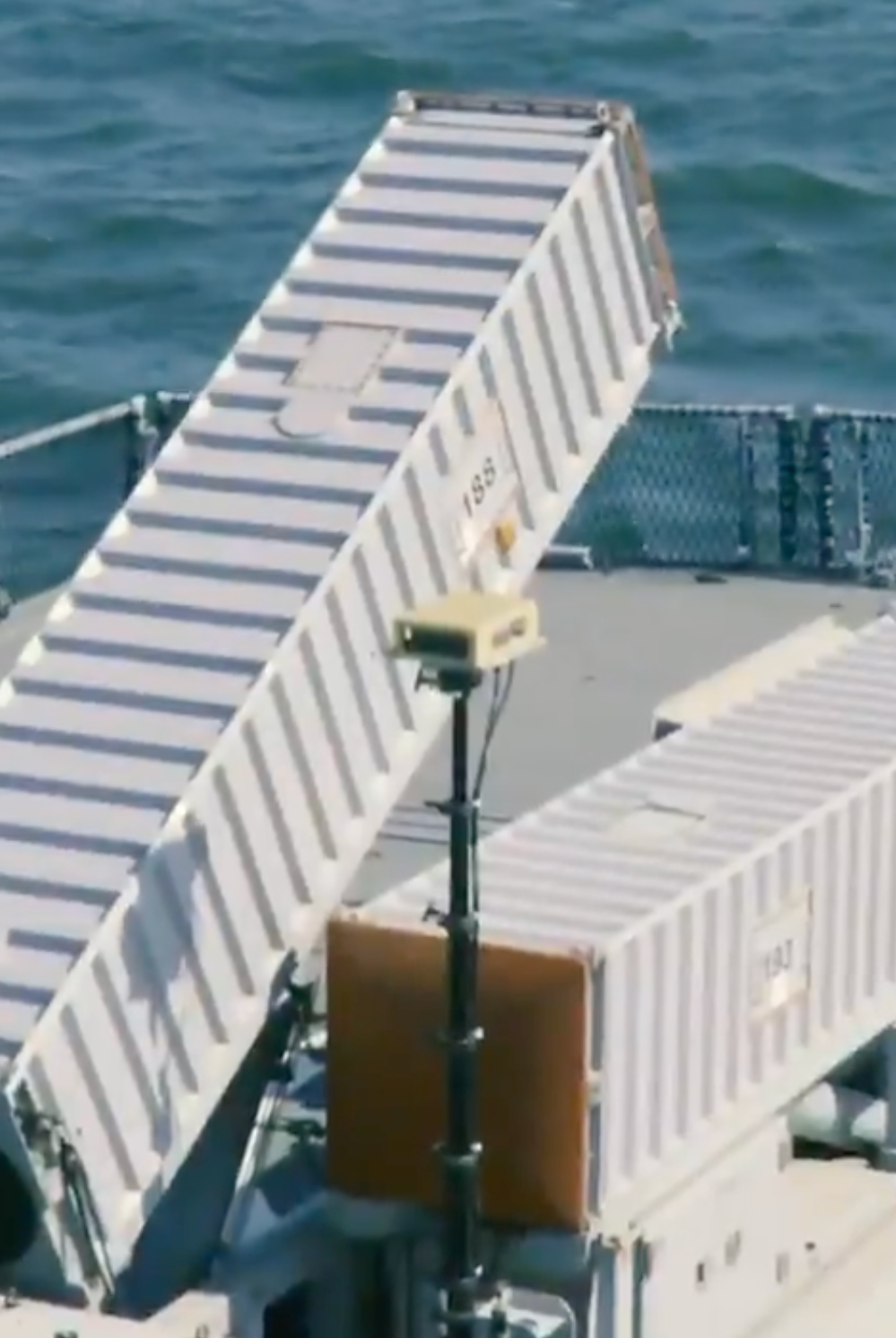
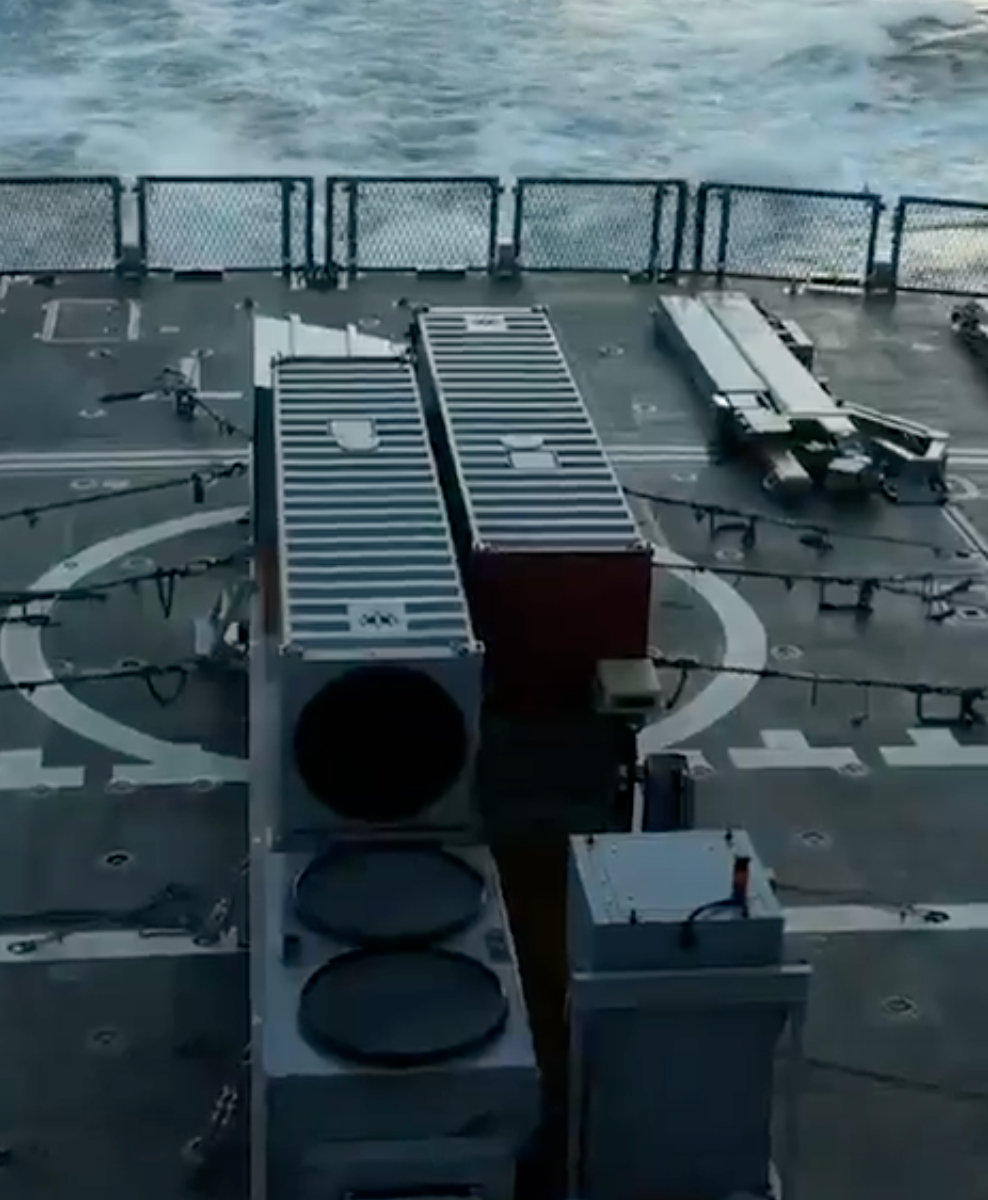
Video: Deutsche Marine pic.twitter.com/eV3yzjrcgg

— Clemens Speer (@clemens_speer) September 2, 2026

The launches were conducted as part of the Bundeswehr’s operational experimentation (OPEX) program in cooperation with the Bundeswehr Innovation Center in Erding. Reportedly, two German frigates were deployed to the waters between Ireland and Iceland for the test, and a warning was issued to maritime and air traffic 45 days beforehand.

The test marks a notable expansion of the weapons capabilities demonstrated by Germany’s F125 frigates and could provide a pathway toward a new long-range naval strike capability.

A LORA canister is raised into the launch position. German Ministry of Defense/screencap

German Navy Inspector General Vice Adm. Jan Christian Kaack described the event in a statement distributed through the Bundeswehr’s official WhatsApp channel:

“With the successful launch of a ballistic missile last night in the North Atlantic, we have made naval history. I am extremely pleased with this achievement. The system can be successfully deployed by our units, and its potential range exceeds anything we have seen before. For the protection of Germany and our allies, this test marks a new chapter in deterrence and defense readiness at sea.”

IAI also confirmed the results of the test, stating that both missiles followed their planned trajectories and struck their targets with high precision.

The exact targets, engagement ranges, flight profiles, and missile configurations used during the test have not been disclosed.

There is no possibility that Sachsen-Anhalt will retain the launchers in their current location, since they mean the F125’s flight deck cannot be used, depriving it of a critical capability. Potentially, they could be installed elsewhere on the vessel, but, moreover, it is unclear if the current experiment will lead to a formal acquisition program.

The two LORA canisters on the flight deck of the frigate. German Ministry of Defense/screencap

At the same time, LORA is a substantially different weapon from the anti-ship and land attack cruise missiles normally associated with modern surface combatants.

Available for ship- and ground-launch, the missile is approximately 17 feet long, 25 inches in diameter, and weighs around 3,500 pounds. It follows a quasi-ballistic trajectory and has an officially stated range of approximately 60 to 270 miles. An air-launched derivative has also been developed.

A weapon capable of reaching targets hundreds of miles away would give German surface combatants a long-range strike option extending far beyond the range of traditional naval guns and many shorter-range precision weapons.

Its quasi-ballistic flight profile also differentiates LORA from a conventional cruise missile. A ballistic-style trajectory allows the weapon to cover distance rapidly and presents an air-defense challenge different from that posed by a low-flying cruise missile. This type of missile also impacts its target with much greater kinetic energy, making it especially useful for striking more hardened target sets.

LORA uses a navigation architecture combining GNSS satellite navigation with an inertial navigation system and can achieve a circular error probable, or CEP, of approximately 33 feet. IAI also says LORA can be launched within minutes, including from unprepared positions, and can attack a target within its range in less than 10 minutes after a decision to launch.

Back in 2017, as you can read about here, IAI successfully test-fired LORA from a containerized launcher on the back of a truck sitting on the deck of a cargo ship. The missile successfully struck a target on land.

What is less clear is its ability to strike targets at sea.

A long-range anti-surface application would be particularly interesting for the German Navy, although the weapon, in its basic form, has no terminal seeker. This limits the missile to use against targets with a fixed location, rather than autonomously finding and tracking a maneuvering warship during the terminal phase of flight.

In a 2020 test, IAI demonstrated firing two LORA missiles from a ship before hitting separate floating targets at approximately 60 miles and 250 miles. However, striking a static floating target is different from an enemy warship that is maneuvering and potentially employing electronic warfare and air defenses.

Regardless, Germany has an even clearer requirement for land attack capabilities, which LORA is fully capable of fulfilling, as we will return to later.

As for Germany’s F125 frigates, these were designed primarily for long-duration deployments, maritime security, stabilization operations, and other missions requiring a persistent naval presence. Their overall lack of firepower is something we have examined in detail before now.

01 March 2026, Lower Saxony, Wilhelmshaven: The frigate "Sachsen-Anhalt" (F 224) arrives in port at the naval base after a deployment lasting several months. The crew supported the Lebanese Navy off the coast of Lebanon with maritime surveillance and training as part of the Unifil mission. Photo: Hauke-Christian Dittrich/dpa (Photo by Hauke-Christian Dittrich/picture alliance via Getty Images)
The frigate Sachsen-Anhalt (F 224) arrives in port. Photo by Hauke-Christian Dittrich/picture alliance via Getty Images picture alliance

The latest test involving the Sachsen-Anhalt is in line with the Bundeswehr’s OPEX framework, which is intended to evaluate emerging technologies and operational concepts under realistic conditions before decisions are made about wider adoption.

There is precedent for such experimentation leading to operational capabilities. Israeli-developed systems, including IAI’s Blue Whale autonomous underwater vehicle, have previously been evaluated through German naval experimentation efforts and subsequently moved toward formal adoption.

As well as the four F125 hulls, Germany might look to incorporate LORA from the start on its future F127 multi-purpose frigates and/or its planned Large Remote Missile Vessels (LRMV), uncrewed vessels that will serve as arsenal ship ‘wingmen,’ supporting conventional surface combatants.

A highly provisional diagram shows the F127 frigate (top) and the LRMV (below). German Navy

It is worth noting that Germany has recently acquired various other Israeli-made missile and rocket systems. These include the Arrow 3 anti-ballistic missile system — the largest-ever Israeli defense export deal — and the PULS multiple rocket launcher. A German purchase of the land-based version of LORA would also be an option, with the truck-mounted system also able to be launched from ships at sea.

Meanwhile, Germany is a major provider of weapons systems to Israel, among them its most powerful surface combatants and submarines.

The LORA test also reflects a broader European push toward longer-range precision fires.

Russia’s war in Ukraine has underscored the importance of ballistic and cruise missiles, while NATO countries have increasingly sought weapons capable of holding targets at greater distances at risk.

Key German Navy operating areas, including likely Russian attack routes. German Navy

Germany has historically possessed comparatively limited deep-strike capability. The Bundeswehr is now working to expand its ability to conduct long-range precision engagement, both independently and within NATO structures. This includes planned procurement of land-based Tomahawk cruise missiles, with a range exceeding 1,000 miles depending on the exact configuration.

Very deliberate NATO messaging right here – interesting to see the alliance using this kind of signalling https://t.co/BYvpzkq0Vq

— Deborah Haynes (@haynesdeborah) September 2, 2026

A naval LORA capability could add another layer to that effort and would allow Germany to distribute long-range fires across surface combatants, complicating an adversary’s targeting problem while giving its naval forces a more meaningful role in high-end combat operations. With the security situation in Europe deteriorating, the potential deterrence factor that such a weapon would bring to Germany, and to NATO, should also not be underestimated.

Contact the author: thomas@thewarzone.com

The post Israeli LORA Ballistic Missiles Fired From German Frigate appeared first on TWZ.

  •  
❌