❌

Reading view

‘Purge Palantir!’: Union nurses warn Big Tech and Big Brother are invading our healthcare system

Unionized Nurses and community allies march in Washington, DC, on August 27 to demand hospitals and elected officials cut ties with AI tech giant Palantir. Photo courtesy of National Nurses United.
https://www.spreaker.com/show/2952221/episodes/feed

On August 27, registered nurses, patients, and community allies rallied and stopped traffic in cities around the US to demand that hospitals and elected officials cut all ties with artificial intelligence giant Palantir. In this episode of Working People, we speak with a panel of registered nurses—Kelli Brennan (Portland, Maine), Lee Barker (Kansas City, Missouri), and Kiera Arbour (Chicago, Illinois)—about National Nurses United’s “Purge Palantir!” campaign, and about the disturbing creep of Big Tech and Big Brother into a US healthcare system that is already in crisis.

Additional links/info:

Featured Music:

  • Jules Taylor, Working People Theme Song

Credits:

  • Audio Post-Production: Jules Taylor
Transcript

The following is a rushed transcript and may contain errors. It will be updated.

Maximillian Alvarez:

Alright. Welcome everyone to Working People, a podcast about the lives, jobs, dreams, and struggles of the working class today. My name is Maximillian Alvarez, and today we are speaking with union nurses who are speaking out against big tech and big brother, sneaking more of their tentacles into our healthcare system and into our lives. They and their union, National Nurses United, participated in a National Day of Action on August 27th, which brought together hundreds of registered nurses, patients, and community allies in cities around the country to demand that hospitals and elected officials cut all ties with artificial intelligence giant Palantir. As a press release from NNU lays out, “The nurses who are members of National Nurses United, the nation’s largest union of registered nurses, stop traffic in an act of civil disobedience in eight cities, Palo Alto, California, Los Angeles, California, Chicago, Illinois, Washington DC, Portland, Maine, Asheville, North Carolina, Austin, Texas, and New Orleans, Louisiana.

Union nurses cannot be silent when our most vulnerable people, babies and children are being detained by federal immigration agents,” said NNU President Jamie Brown. “While our patients and neighbors are living in fear of immigration raids enabled by Palantir, our hospitals are facing huge cuts and our patients are facing mounting healthcare costs because of H.R.1. Nurses aren’t just saying no to Palantir, but we’re calling for our public resources to go toward the benefit of working people, not billionaires and their corporations. “The press release continues. From 2009 to 2025, Palantir received $2.5 billion in federal government funding, but this number has grown tremendously in just the past year. Last July, the Department of Defense announced a $10 billion agreement with Palantir to use its technology to share data across federal agencies, enabling unprecedented surveillance power. This followed a $30 million contract awarded to Palantir by the Department of Homeland Security to build an AI-powered system that would identify immigrants for deportation.

In February of 2026, the Department of Homeland Security and Palantir signed a $1 billion contract. In the hospital industry already, Palantir manages more than one fifth of US hospital beds. For nurses, this marks a dangerous threat to their nursing profession, which is seeing a glut of untested and unregulated technology introduced into patient care settings.” All right, so we got a lot to talk about here, and to talk about all of this, I am really grateful to be joined on the show today by three guests who are all registered nurses, all members of National Nurses United. Thank you all so much for joining me today. I really appreciate it. Please introduce yourselves to our listeners.

Kiera Arbour, RN:

My name’s Kiera Arbour. I’m a registered nurse from Chicago, Illinois.

Kelli Brennan, RN:

My name’s Kelli Brennan . I’m a registered nurse from Portland, Maine.

Lee Barker, RN:

I’m Lee Barker. I’m a registered nurse in Kansas City, Missouri.

Maximillian Alvarez:

Well, again, thank you all so much for joining me today. I really, really appreciate having you all three here to talk about this because there’s so much here that I didn’t even know before I saw the day of action and started digging into this. So before we really get into Palantir and all this AI stuff, I want to start at the shop floor worker’s eye level, and I want listeners to get to know more about you all and to have y’all give us more of a lay of the land here. So could you start by telling us more about the jobs that you do, the hospitals that you work at, the kind of patients that you care for? And I guess could we talk a bit about all the non-AI workplace issues that you and your coworkers are already dealing with on a daily basis?

Kiera Arbour, RN:

This is Kira. I am a nurse in the neurosurgical ICU at Stroger Hospital of Cook County. We are one of the largest safety net hospitals in the United States. So I am just finishing up my first year as a nurse. Just graduated from my nurse residency program last week, came to nursing late in life. I took my licensing exam the day after I turned 50. For me, I think the thing that has really been the most challenging part of my first year of practice as a nurse is the patient population that we serve at Stroger Hospital as a safety net hospital in the third largest city in the country is just all of the poverty related, social determinants of health related illnesses. So in the neurosurg ICU, anybody who’s a gunshot wound to the head comes to us, blunt force trauma to the head, two gunshots to the head on the unit last night, one blunt force trauma, and then a whole bunch of people who have had strokes because they live in food deserts, they don’t have access to healthy things to eat or they don’t know how to manage chronic conditions like diabetes and high blood pressure.

And as somebody who grew up pretty privileged and whose parents are heading into their 80s over the next year and a half or so, I see my amount of death play golf every day. They go swimming with their grandkids every day because they grew up middle class, they grew up with money. And then I see people 20 years younger than them who are looking at end of life type of illnesses in our hospital. And it has really kind of overwhelmed me emotionally just because we live in a system that doesn’t do a very good job of allocating resources to folks. And so I’m watching people be very sick and eventually die from very preventable diseases and things that are associated with poverty. Violence is associated with poverty.

Kelli Brennan, RN:

I’m Kelly. I’m at Portland, Maine. Similar to Kara, I also work in neurosurgery, neurotrauma. My background is in stroke. I’ve been a nurse for a little over 17 years from Boston and then I moved to Georgia. I was a director of neurosciences in Georgia, so I was in management, left management to come back to the bedside and be a union nurse and use everything I learned as a manager now for the good of the union. So happy to be here. I’ve been at MaineMed for about five years. I was a member of the original facility bargaining committee when we were organizing for our union. And when I got here, I was coming from Georgia right after COVID and COVID in Georgia was awful, made me realize I needed to go back to New England. So I left the South, came back to New England, wanted to be near family.

So I came to Maine and just wanted to work at the bedside, work my three 12s, get my shifts done and go home and not have twenty four seven responsibility. Now I’m in the union and I have a different kind of twenty four seven responsibility, but I love it. So I started and when I got to the hospital in Maine, I was almost like, well, this is compared to where I came from in Georgia, I was like, “Well, this is pretty nice.What are you guys all upset about?” And started talking to the staff and learning things. And then I shifted my thinking and I was like, “I just came from a really bad situation. Things aren’t that bad up here in Maine, but I know that the way healthcare works, because what I saw in Georgia was consolidation of healthcare systems, lots of financial issues, lots of layoffs and closures and all that kind of stuff.

I didn’t want any of that bad healthcare to come up to this hospital.” So I was like, “You know what? The best thing is to start a union and to lock it in what we have now so that it can’t get taken away because we know the turnover in the C-suite is every five years. These people are not dedicated to the communities. They’re not dedicated to the hospital. They are there for five years just to make a resume, just to go on to the next place.” So I got all in with the union. I’m a charge nurse, I’m a steward, I’m chair of our professional practice committee, and I’m co-president of the Maine State Nurses Association. Yeah, I’m all in. And the things that we’re working on now outside of AI is staffing. There’s this huge misconception or this though process that there’s a nursing shortage.

And we’ve been saying for years there’s not a nursing shortage. There’s a shortage of nurses willing to work in unsafe conditions at the bedside. And that’s why I went into management when I did because the working conditions at the bedside suck and nobody wants to work every weekend. Nobody wants to work every holidays. You can go to management and have your weekends off, have your holidays off, get paid more. So you see the shift of people leaving the bedside because the work is just unmanageable. The working conditions aren’t safe. The patients are sicker, more complex. Our nursing turnover is super high. The years of experience on the floor are low. When I work, there’s a lot of times I’m the most experienced nurse on my unit by 15 years. So it’s a lot of challenges in that, and there’s no focus on nurse retention. They just let one go and then just hire a traveler or temporary staff and we try to make the best of it.

I was at my professional practice committee meeting this morning and it was all about staffing. The hospital has budgets and staffing grids and plans, but they fall through. They don’t hold themselves accountable.

Lee Barker, RN:

Just wanting to build off of what Kelly said, staffing is also an issue at the hospital that I work at research in Kansas City, Missouri. I work specifically in our inpatient psychiatric population. Our staffing grids call for one nurse to every eight patients. That’s already an unsafe ratio and our management likes to push us to one to nine, one to 10. I’ve seen 11 and 12 as well. And like Kelly said, it’s not that there’s a nursing shortage in this country. There’s a shortage of nurses that are willing to work in the unsafe conditions that the hospitals push on us. At research, I mean, we used to have, I think, 800 nurses when we were fully staffed up. Currently we have like 550 and we just can’t. The hospital doesn’t care to retain nurses. Somebody leaves and, oh, we can hire in a new grad and they’ll stay for their two years, get their experience and leave and well, we’ll just hire another new grad.

Maximillian Alvarez:

Well, and it’s like, I hate to make light of all the incredibly serious and important stuff that y’all just laid out, but in 2026, hearing all this, my mind is imagining the Pawn Stars meme of like, “Hey, hospitals, can you fix any of these problems?” And the response is, “No, the best I can do is nothing, and I’m going to add Palantir to your list of things to be worried about now.” So that’s the kind of upside down, topsy-turvy nightmare reality that we’re living in right now, but it is what it is and we got to deal with it.

I’m so grateful to all of you for laying that out for folks because it’s such important context for everyone to understand even though we’re all focused on AI and Palantir right now, let’s not lose sight of the forest from the trees here. There’s so many other systemic issues that are running workers into the ground and screwing over patients and all of us for the benefit of a few. Those sorts of dynamics are already at work in the stories you’ve been hearing on this show about the working conditions for healthcare workers around the country. We’ve been covering it for years, but now we got to worry about ICE coming into hospitals. We got to worry about these truly super villain-esque big tech oligarchs putting their AI into our most sensitive and private systems and information. So let’s talk about this gang, because I need your help unpacking this for myself and for our listeners.

So I want to stay in the world of healthcare right now, and I want to ask if you could sort of lay out for us how is AI in general and Palantir specifically seeping into your workplaces and your work lives?What are nurses seeing here that perhaps the average patient is not?

Lee Barker, RN:

So the hospital that I work at is owned by HCA or the Healthcare Corporation of America, and what HCA has done in their partnering with Palantir is to build an AI scheduler called Timpani. We don’t really know how it works. It’s like a black box. We put our preferred days of working in. Timpani spits out a schedule that’s allegedly balanced, so we have enough nurses working throughout the week. They’re supposed to also balance our level of experience so we don’t have a unit full of new grads and then all of the experienced nurses are working different shifts. These were the promises that we were made. And unfortunately, at the end of the day, Palantir is giving us a shitty product. Aside from all of the moral reasons that Palantir sucks, they can’t even provide us again with the product that meets the promises that they told us, which is that it would take the burden of scheduling off of our managers.

And now our managers in the building don’t have any way to adjust our schedules. So when the AI inevitably screws up, puts out a bad schedule, nobody in the building has any way to fix the schedule unless it’s, I think, within 24 or 48 hours of the shift beginning, which is ridiculous. Part of what Timpani does as well is HCA is using it to push short staffing. Allegedly, our understanding of how Timpani works is that it somehow looks at the average daily census on the unit and decides, “Oh, for 16 patients on this psych unit, we need two nurses every shift.” What Timpani doesn’t see is that that unit can hold up to 24 patients, and frequently we are trying to fill it up to 24. Timpani will schedule only two nurses and management will say, “Well, really, we could admit a couple more patients.

We’ll push you guys up to one nurse can take 10 patients instead of one to eight.” And so they’ll sneak in and just ask us to do more and more with less and less.

Kelli Brennan, RN:

So at MainMed or Maine Health, we have Palantir in our hospitals through their application called Foundry. When we first heard about the potential, we asked the hospital or MaineHealth to let us know what they were using it for. And at first they told us it wasn’t really any of our business. We further pushed, sent letters to the board asking what’s going on, what’s it for? And their response was that they’re using it for insurance denials. So they’re using it. So say a patient comes in and they have pneumonia and the doctor doesn’t write the details of the pneumonia clearly. The insurance company will deny the claim and say that there’s lacking documentation for payments or whatever. So the hospital or MaineHealth’s idea is that Palantir’s AI software will look at these denials and claims and figure out what the letter or what the documentation needs to be in order for the claim to get approved.

So this requires us, Maine Health, sharing information with Palantir of our patient’s information.

Maximillian Alvarez:

I’m sorry. So was our whole system of already not approving so many prescriptions and surgeries in our American healthcare system, was that all not bad enough that now we need a fucking AI bot denying us as well? I can’t believe that that is actually happening.

Kelli Brennan, RN:

It’s very much crazy. The argument is that the return on investment is already better than projected, so the hospital will be gaining so much money, but they’re claiming that they’re losing money because the insurance company is denying it because the insurance company changes the rules 15,000 times a year. It has no obligation to tell the hospitals, so that’s why they’re getting denied. So instead of holding the insurance companies accountable, now we’re introducing Palantir to help solve it. That’s the solution. It doesn’t make any sense, and it just makes us complicit in this whole thing.

Kiera Arbour, RN:

Thankfully, in Chicago, we don’t have Palantir software anywhere near our patient’s information. Our action was based on the fact that our pension fund has $28 million invested in Palantir. That includes all county employees, not just nurses. So everybody who works for Cook County, which is where Chicago is, including all the people who work at the hospital, the doctors, the administrators, the nurses, the PCTs, the environmental service people, the folks who work in the cafeteria, the people who work in the forest preserves of Cook County, where I like to ride my mountain bike. All these people unknowingly have their pension funds, A, invested in a company that’s heavily aligned with the current administration and could potentially go, if Democrats screw his spine, could go belly up in a couple years. And then B, is doing some pretty nefarious stuff, is collaborating with ICE and making it so.

Kellyann mentioned that the patients are getting sicker and sicker. One of the reasons the patients are getting sicker and sicker is because they know that they have the potential to get arrested if they come seek healthcare. So they delay and defer care and then they come to us and they’re a lot of times near death. I took care of somebody last night who intubated completely unconscious body full of ammonia because their liver had failed and they had deferred care. And I couldn’t get this person’s story because obviously they were intubated and in a coma, but judging from this person’s last name, they very easily could have been somebody who was undocumented. But for us, for me, for the nurses at Cook County, we became nurses because it sounds cheesy, but it is a calling. I walked away from a six-figure career in supply chain and logistics management to come do this with the rest of my life because I felt a calling to do so because in 2020, I was at the George Floyd protest.

I said, “Wow, I’m actually the baddie and I need to get my life right.” And so I was feeling really good about what I was doing every day, taking care of some of the sickest people, the poorest people, the least fortunate people in my community and serving my community. And then I find out the thing that I’m relying on for my retirement is heavily invested in a company that’s collaborating with ICE, that is writing software for the IDF, that is tracking kids home from school in Gaza so that the Israeli Defense Force can send a bomb to this person’s house because there’s a one in two million chance that this kid’s dad is part of Hamas. And so that doesn’t align in any way with my values. And so we felt the need to step up and demand that our pension board divest itself from Palantir, and we were kind of blown off.

So I am looking to put together a run to be part of the pension board in the next few months. So that’s where our involvement with Palantir is.

Maximillian Alvarez:

Hell yeah. Well, I want to keep going in the direction that y’all are leading us to. I want to keep zooming out here and take this discussion beyond the world of healthcare, but I think it bears repeating or reminding all of us who and what we’re talking about here. I mean, if you’re still asking yourself or you listen to this and you’re saying, “Well, why is Palantir so bad? Who are they?” They’re telling us who they are. They published a whole batshit manifesto about their evil vision of and for the world. Their CEO, Alex Karp is constantly saying super villain type stuff about the kind of future he imagines with AI. And there’s a piece that we’ll link to in the show notes from The Guardian that is literally titled Palantir Manifesto described as Ramblings of a Super Villain Amid UK Contract Fears. And in that article, here’s a quote that says, “Palantir’s manifesto, which embraces AI state surveillance of citizens along with national service in the USA is either a parody of a Robocop film or a disturbing narcissistic rant from an arrogant organization.” And that was actually from a liberal Democrat MP in the UK.

But read that, read the manifesto. They are telling us who they are and we should believe them. I don’t want this creep carp near my healthcare or my information or any of my government data. I don’t want them near anything having to do with the administration of our society or what remains of it these days. And yet they are getting in there in our government. The data centers that are popping up everywhere. They’re tied up in all of that too. So I wanted to ask y’all to sort of zoom out and keep talking about that bigger picture. And I wanted to ask why you and your union are demanding that not only hospitals, but elected officials cut ties with Palantir. Why is it important for you to speak out against this kind of larger onslaught of big tech and to speak out as union nurses to stop it?

Kiera Arbour, RN:

I would say first of all, we have our own manifesto. It’s called Vision for a Healthy Society, and it’s not super villainy. We want people to live happy, healthy, self-fulfilled, self-actualized lives where they have the resources they need to not just survive day-to-day, but to thrive as human beings in the way that human beings were meant to exist and to flourish, not to be beholden to these giant unelected powers, whether it’s Palantir, whether it’s Anthropic, who was just in the news yesterday because they have their own AI building dossiers on folks like us who are opposed to what they do, and nobody elected these people. They became billionaires because venture capitalists invested money in them, and now they call the shots. They own pretty much both parties. Shout out to Rokana for giving that money back from Palantir, but for the most part, they’re heavily invested in both Democrats and Republicans.

As far as union nurses, because we can’t, because our union has our backs, because they’re going to protect our free speech rights, they’re going to protect our right to go out there and say, “This is wrong. We don’t agree with it.” And they allow me, because they are themselves, my union is itself anti-colonial, anti-imperial. They stand up for these values that I try to model myself, and so I need to stand in solidarity with my working class siblings, and I need to work for the society that I think is going to allow human beings the best chance to live the lives they deserve.

Kelli Brennan, RN:

In Maine, in January, we had operation Catch of the Day, which Maine is one of the whitest states in the country. We have a Somali population. So for us to be targeted with this operation, it was devastating. It affected our community, it affected the hospital, our housekeeping workers, our transporters, our ancillary services, and all staff felt this. You could feel the emotions throughout the hospital as this was going on. About 30% of our housekeeping were calling out because they were afraid. We were picking up food because we had a food bank, but people were afraid to go to the food bank. So our C-suite was storing groceries, so we were bringing our immigrant vulnerable community members to get food. And then one of my coworkers, who’s of the vulnerable community, I offered to give her a ride into work because everything was so escalating. So I picked her up one morning and we were driving to the hospital to go to work, and it was about six o’clock in the morning.

It was dark out. We were driving down the street, and as we were driving, pulled up to what seemed to be ice activity. There was a bunch of unmarked cars, out-of-state license plates, just seemed suspicious. So I couldn’t just drive by. So I pulled into a parking lot across the street and started filming on my phone what these officers were doing, just trying to see if they had anybody, if anybody was in trouble. But I also had my friend in the car, so I didn’t want to draw too much attention, so I didn’t honk my horn. I didn’t get out. I didn’t yell. I just sat there with my phone on recording, and the officers saw me. They flashed their flashlight at me as to say, “Hey, we see you.” And then I saw them heading to their car. So at that point, I decided that this was not a safe situation and we should leave.

So we pulled out of the parking lot, carried on down the street, and realized that they were following us. So got to a red light, and they pulled up in the lane next to me, and I could feel them staring at me through the window. So I rolled my window down because I could see that they were wanting that, and they rolled down their window and they looked at me. It was a male and a female officer, and they said, “Can we help you?” I said, “Yeah.” I said, “You can get the fuck out of Maine.” To which they replied, “Oh, looks like we have another Karen here.” At this point, the light is still red, and I’m like, “Okay, this is going to escalate.” I was worried My friend. And so when the light turned green, they looked at me and they said, “I’m going to arrest three more people today just for you.

Ha ha ha ha ha.” And pulled out in front of me, did a U-turn and carried on down back to where they came from. I don’t think anybody was abducted that morning, but my friend and I continued to drive to work and it was just like I felt so awful. It was traumatizing. And so that right there for me was like, this isn’t okay. And so we went to work and then this was happening across our town and the hospital went through so much to help and support people. They changed where they were picking up employees so that the parking lot was gated so that there couldn’t be agents in there. And they did all these things. And then we find out that they have a contract with Palantir and it’s like, wait a minute, we just went through this in January. We felt the effects of this in the hospital.

So that’s where we all kind of started to get involved. And then fast forward through the summer, we get to July and we have the murder of Johan Sebastian Guerrero in Biddeford, which is three miles down the street from a Maine health facility. And at this point we are aware about the app called Elite that Palantir is using to target immigrants in our communities. So at this point, we’re concerned that this is really ramping up in our community. And then fast forward to August when our own nurse was abducted by ICE at an airport in Portland. And then to still find out that MaineHealth is still doubling down on their contract and Susan Collins is still holding onto her money, it’s just infuriating. And I think for us up here in Maine, you’re going to see us out and doing everything we can to try to tell the community that Palantir has no place in our hospitals, no place in our community.

And that if patients can’t trust the hospital, if they can’t trust where they’re going is safe, they’re not going to come and get care. And that’s not what we’re here for. Nurses are advocates first. We’re trained to advocate and to speak up when something is wrong and that’s what we’re doing.

Lee Barker, RN:

I mean, exactly. I think the biggest reason that union nurses are speaking out against Palantir is simply because we can. It’s the right thing to do. And like Kelly said, we’re advocates for our patients, we’re advocates for our communities.

Maximillian Alvarez:

Well, my God, thank you all so much for that. That was really, I think, important, really powerful. And I’m really grateful to y’all again for speaking out the way that you are and letting our listeners know why this is important. And I want to end on that and bring us back to where we started in the beginning where I learned about this Purge Palantir campaign from NNU because of the day of action in August. So I wanted to ask if you could tell folks more about now that we’ve thoroughly covered why we should all be invested in this and horrified that these tyrants and oligarchs and freaks and villains who want to control everything and everyone, why we should not just go quietly into that dark night and why people should stand up and fight back and that we can choose a different path. We don’t have to go down this path.

And that’s what I see all around me and in every kind of story we cover at The Real News. People around the country are pissed, they are fighting back, they are doing so wherever they can, however they can, whether it’s speaking out as union workers in mobilizations or it’s people in deep red, rural areas where there are data centers popping up or people here in quote unquote deep blue cities like Baltimore where data centers are also threatening to pop up. This is kind of forcing us all together and we’re going to need to work together to figure this out. And so in that spirit, I wanted to end by asking y’all if you could tell folks more about what NNU is doing to fight back and what people listening, what your message is to them about why they should get involved and what they could do to get involved.

And if you have any final words about what will happen to all of us if people don’t fight back against this now.

Kiera Arbour, RN:

So I would say that, and probably understanding that the demographic of your podcast are what we like to call fellow travelers. They’re socialist, anarchists, anti-capitalists, what have you. We need to get people off the sidelines. We’ll take care of our own business here in Chicago with this pension fund. What I would suggest that your listeners do is reach out to somebody who they would probably consider a liberal or a conservative and do something simple like, I don’t know, go take them to see the movie American Doctor. I don’t know if you’ve heard about that. It’s the story, it’s a documentary of people trying to go provide aid in Gaza in the midst of a genocide because I really feel like there is a large percentage of the population out there who just doesn’t really understand. It’s not that they don’t care, it’s just that A, they don’t understand what’s happening and B, they don’t know or don’t feel like they have any sort of political agency to change it.

And there are a lot of people who probably identify as neither any sort of political affiliation, and those are the people that we need to reach out to to let them know what’s happening around us. So go see something like American Doctor, which is really going to get you right here. Understand that Palantir and all these big tech companies played a very large part in all the horrible things that you’re going to see in that movie. And then wherever you live, I guarantee you there are people that there’s an anti-war committee. There are mutual aid groups who are going out every day and collecting donations and trying to feed the less fortunate in our community, the people who are undocumented, who are afraid to go to work. There’s so many opportunities to go out there and connect with the people in your community and that’s what’s going to make you feel safe and that’s what’s going to make you feel like you have power over this and that’s what’s going to make you feel like you have agency over this.

And that’s how we defeat this in solidarity together as working class human beings.

Kelli Brennan, RN:

I think it’s going to be really important that people get out and vote in November. I think it’s really going to be, we don’t know what the outcomes of the elections will be, but if they go the way we want them to go, there’s a chance that those results aren’t going to be accepted. So I think we have to prepare and organize and make sure that we’re getting everyone out to vote, making sure people are registered. I think there’s no hesitation on my mind about that we need a huge voter turnout this midterm. And I think if people aren’t involved, be a poll watcher, drive people to the polls, make sure your community members know if they’re registered, how to register, where the voting locations are, and notify your elected officials that you don’t approve of Palantir. Whenever I do stuff lobbying, one things that representatives in Congress or locally or wherever, they say that I don’t hear from my constituents.

No one’s called me to tell me about this. And that really matters. So I think it’s important for people to get out and vote. I think it’s important for people to join an organization, unionize. If you’re not in a union, join one, make one, connect with one because there’s so many resources. And if we’re all doing different things, we need to all do the same thing together at the same time. And we need to sustain organizing, sustain networking, talk to people that you don’t normally talk to. What I love is our candidate for Senate, Troy Jackson, one of his sayings I love is we’re not from the left, we’re not from the right, we’re from the bottom and we’re rising. This is a working class issue. They’re sayings that unions save the middle class, unions built the middle class. We’re going to have to do that again.

And even if you’re not in a union, you’ve got to link up with somebody because it’s going to take all of us to get through this. And nurses are first and foremost humanitarians, right? We’re the trusted profession over and over again. So we know what’s needed in healthcare. And as a nurse for 17 years, I’m so sick and tired of apologizing to my patients and their families on behalf of health insurance executives and hospital CEOs. So everyone get out and do something.

Lee Barker, RN:

Absolutely. Just to echo that, getting out to vote, reaching out to your elected representatives, telling them to purge Palantir. I’m going to put a couple links in the chat also. There’s a purgepalantir.com. You can get on there and find out what’s going on with the Purge Palantir campaign, Actions Near You. The other link I put in there is there’s a letter that people can fill out that will go to HCA specifically telling them to cut ties with Palantir. Anyone can sign that. Anyone can sign that. Anyone can find that.

Maximillian Alvarez:

All right gang, that’s going to wrap things up for us today. I want to thank our guests, Kelly Brennan, Lee Barker and Kira Arbour, all three registered nurses, all three members of National Nurses United, all participating in NNU’s Purge Palantir campaign. And you can learn more about that campaign in the links that we provided in the show notes for this episode. And of course, I want to thank you all for listening and I want to thank you for caring about this. We do this work for you, but we cannot do it without you. Working People is brought to you in partnership with In These Times Magazine and the Real News Network. This show is produced by the great Jules Taylor and is a proud member of the Labor Radio Podcast Network. We’ll see y’all back here next time for another episode of Working People. And in the meantime, go explore all the great work that we’re doing at the Real News Network, where we do grassroots reporting that lifts up the voices and stories from the front lines of struggle around the US and across the world.

Subscribe to our YouTube channel. Check out our great podcasts like Under the Shadow and the Mark Steiner Show and connect with us on social media and get updates on our reporting there and help us do more work like this by going to therealnews.com/donate and becoming a supporter today. I promise you guys, it really does make a difference. I’m Maximillian Alvarez. Take care of yourselves. Take care of each other. Solidarity forever.

  •  

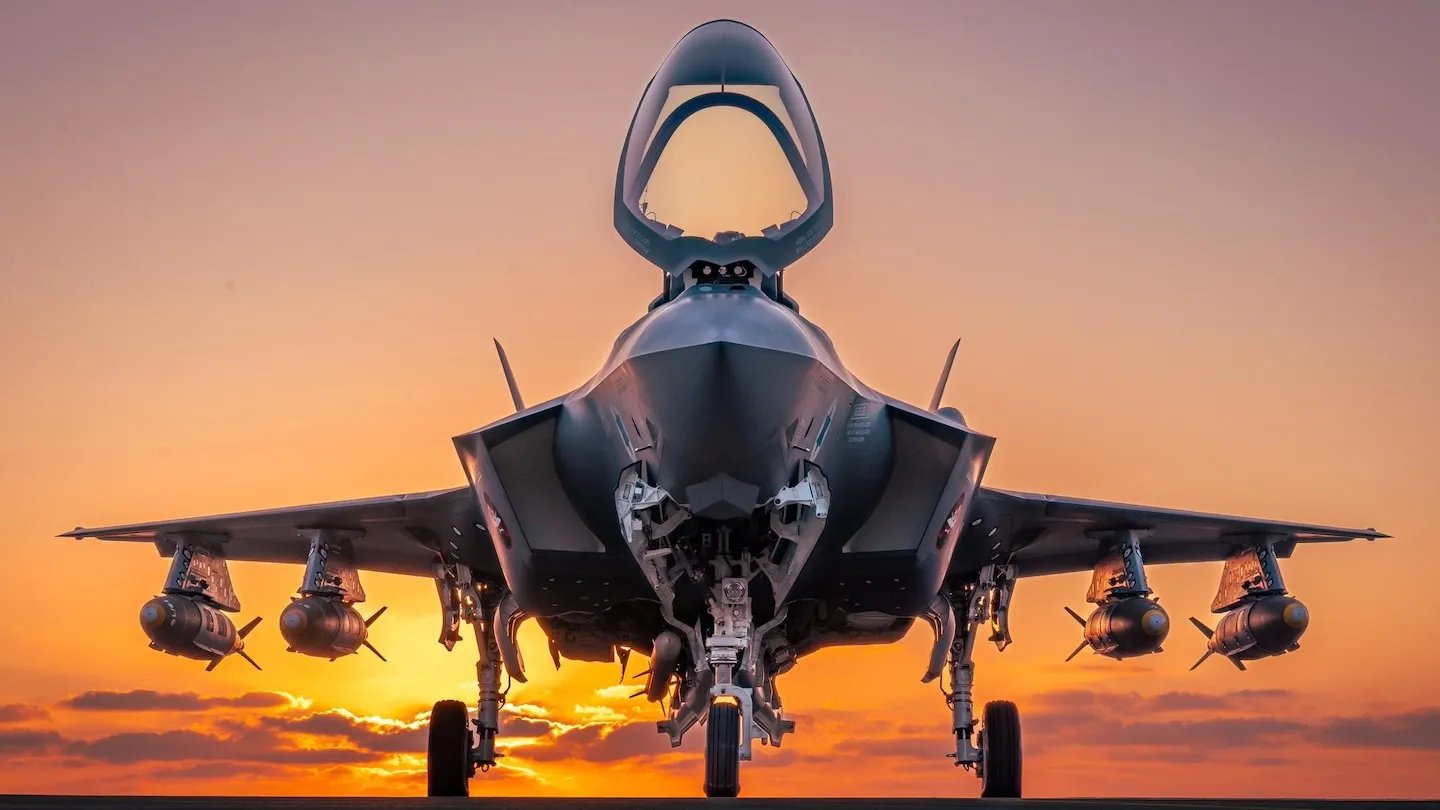
Israel Is Bringing SPICE 1000 Standoff Weapon To The F-35

Israel’s Rafael and Lockheed Martin are working to accelerate integration of the 1,000-pound-class SPICE standoff weapon with the Israeli Air Force’s F-35I Adir. The development could potentially open the door for the precision-guided munition to be offered to other Joint Strike Fighter operators.

Rafael Advanced Defense Systems announced the effort September 15 during the Air & Space Forces Air, Space and Cyber Symposium that TWZ is attending. The work is being conducted as a joint project with Lockheed Martin at the U.S. contractor’s facilities in the United States and is expected to take several months.

AFA 2026: For the first time, Rafael's SPICE 1000 is being integrated on the F-35

Rafael Advanced Defense Systems Ltd. is integrating its SPICE 1000 air-to-surface munition on the F-35 Adir fighter aircraft.

SPICE 1000 is an advanced air-to-surface munition capable of striking… pic.twitter.com/QOeNISGKFE

— Rafael Advanced Defense Systems (@RAFAELdefense) September 15, 2026

Rafael says the effort could eventually make the weapon available to other F-35 operators. “At a later stage, F-35 operators worldwide will be able to field SPICE 1000,” the company said.

The effort was previously referenced in U.S. government documentation before Rafael’s announcement. Published in August, the Pentagon F-35 Modernized Selected Acquisition Report identified the weapon as the “Israel-unique Smart, Precise Impact, Cost-Effective 1000B,” or SPICE 1000B, and said its integration was progressing “with a strategy to accelerate the implementation via a SPICE Lite process.”

The report does not explain what the “SPICE Lite” process entails.

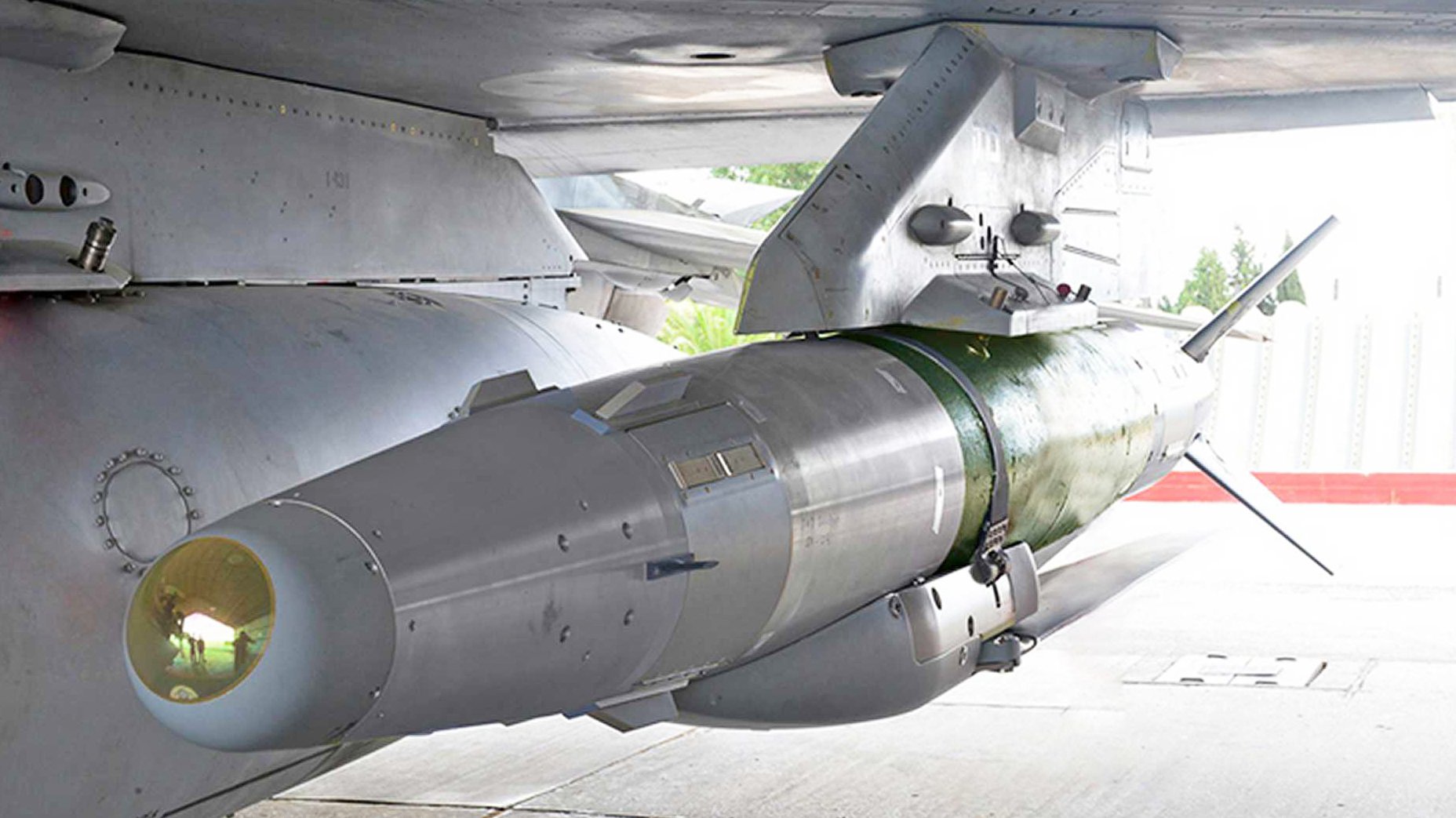
SPICE — which stands for Smart, Precise Impact, and Cost-Effective — is a family of electro-optically guided standoff weapons developed by Rafael. The family includes SPICE 2000, SPICE 1000, and SPICE 250, with the numbers corresponding broadly to the weight class of the underlying warheads.

Based around a 1,000-pound-class bomb, SPICE 1000 uses pop-out wings to achieve a manufacturer-stated range of approximately 125 kilometers, or 78 miles. Rafael gives the weapon a claimed circular error probable of around three meters.

The glide bomb combines inertial and satellite-aided navigation with an electro-optical seeker. During the terminal phase, its seeker can compare the observed target area with stored imagery using scene-matching algorithms, allowing the weapon to continue its attack without relying exclusively on GPS. That feature allows it to engage targets autonomously, offering the launch aircraft a true ‘fire and forget’ capability, and provides resilience in GPS-denied or GPS-degraded environments.

SPICE can also be programmed to approach a target from a particular azimuth and impact angle. This provides flexibility in selecting the terminal attack geometry and can support steep attack profiles against targets where penetration from above is desirable.

SPICE 1000 is not a new Israeli capability. It has been operational with the Israel Air Force since 2017 and is already integrated with Israeli F-16I Sufa, F-16C/D Barak, F-15I Ra’am, and F-15 Baz fighters.

An F-15 Baz configured for precision strike, with a pair of 2,000-pound Rafael SPICE standoff weapons on the underwing pylons. Amit Agronov

“SPICE 1000 has been sold to several countries and is in operational service with a number of air forces worldwide,” Rafael said. “It has served as a primary munition of the Israeli Air Force for several years, including extensive use in recent long-range operations flown from F-15 and F-16 aircraft.”

The Israeli Air Force has released footage showing SPICE weapons being used during recent operations, including imagery from the weapon’s own perspective during its terminal attack.

Israeli Air Force F-15 Bazs preparing for a strike on Iran, each carrying a pair of Spice 1000 glide bombs.

Notably, one of the F-15s, tail no. 450, took part in Operation Wooden Leg exactly 40 years ago, striking PLO targets in Tunisia. pic.twitter.com/FEy6PiDkdU

— OSINTtechnical (@Osinttechnical) June 15, 2025

Combat validated.
The stand-off strike capability air forces are asking about. SPICE 250 at Farnborough.
Pinpoint accuracy against high-value targets. Real operational results.

Full details in our exhibition press release: https://t.co/FWYYvcM0Vw pic.twitter.com/lQV8sw32zN

— Rafael Advanced Defense Systems (@RAFAELdefense) July 22, 2026

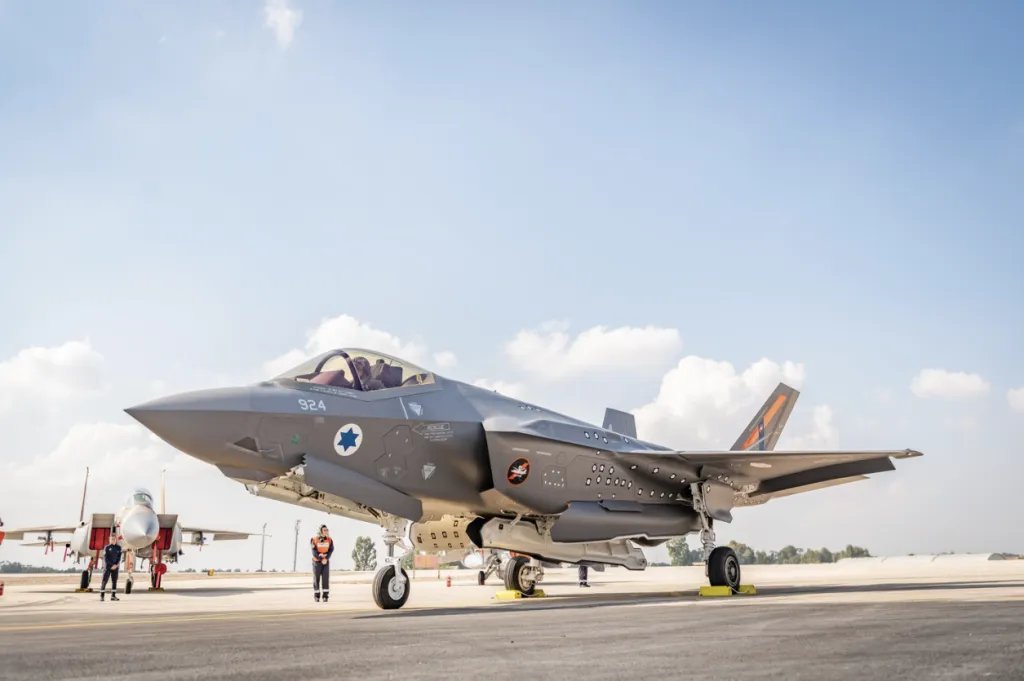
Israel’s F-35I is already unusual within the international Joint Strike Fighter fleet. The IDF has developed and demonstrated an external Joint Direct Attack Munition (JDAM) carriage capability, and said in March 2025 that the Israeli Adir was the only F-35 to have conducted operational strikes with an external weapons configuration. You can read more about that here.

The unique instrumented F-35I assigned to the Israeli Flight Test Center carrying four external 2,000-pound class GBU-31 JDAMs. A single AIM-120 AMRAAM air-to-air missile can be seen in one of the internal weapons bays, which may also house another internal JDAM. Israeli Air Force

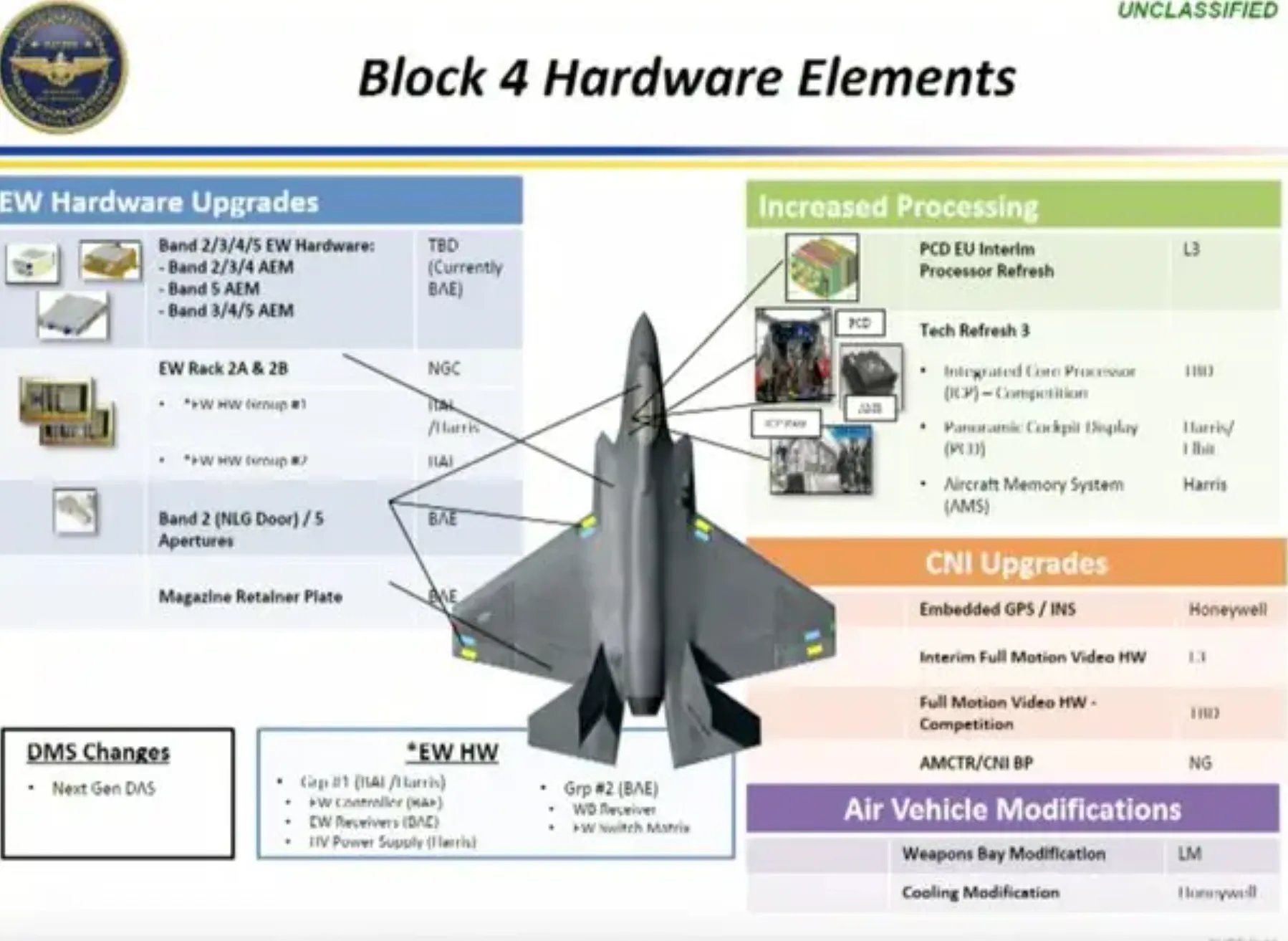
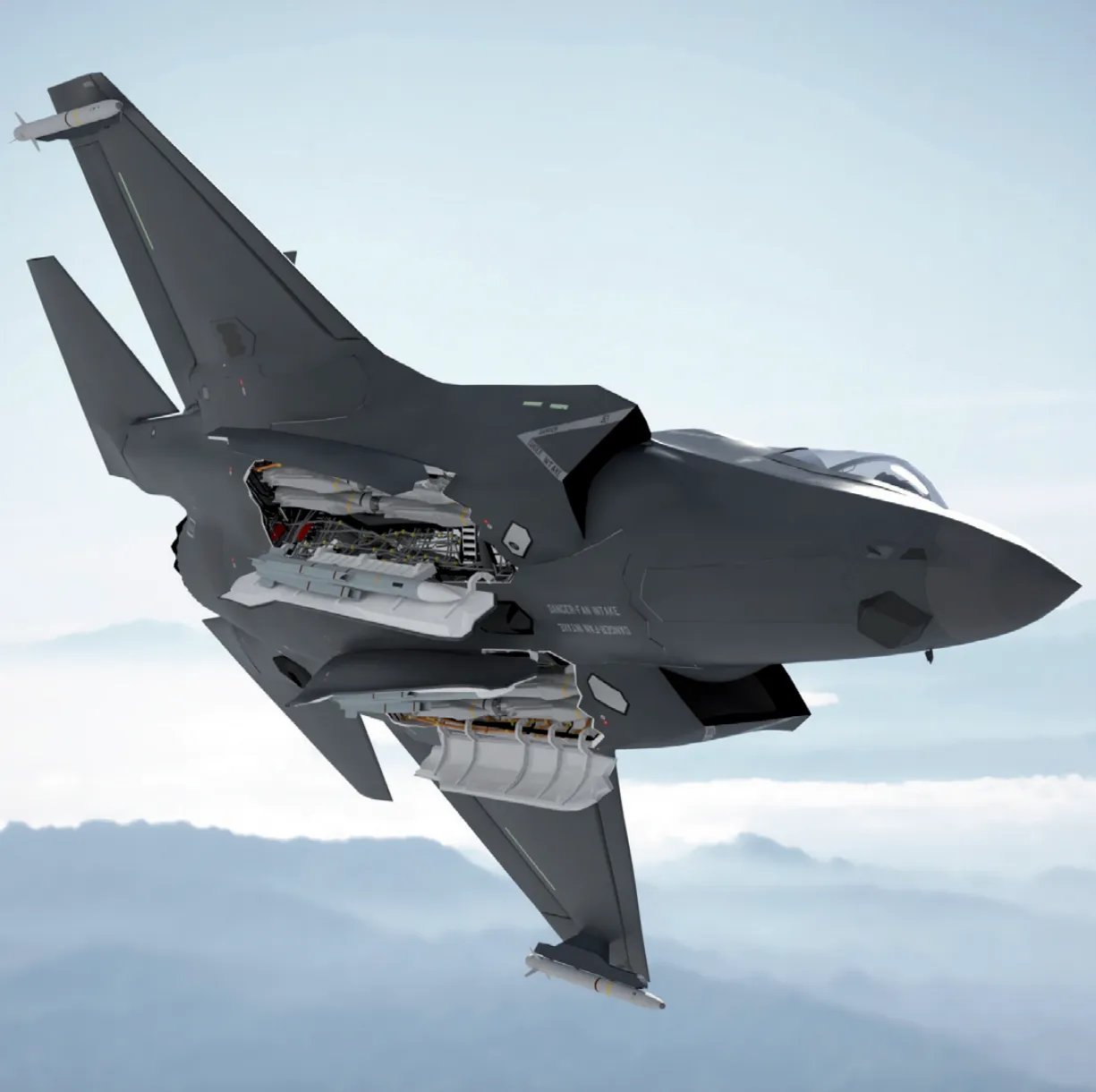
However, according to The Jerusalem Post, the SPICE weapon is expected to be carried internally by F-35Is equipped with Technology Refresh 3, or TR-3, hardware, which would maintain its low-observable configuration. Neither Rafael nor Lockheed Martin has publicly detailed the specific carriage configuration, aircraft modifications or software associated with the current integration effort.

The long-delayed TR-3 is a major upgrade to the F-35’s computing architecture and provides the processing infrastructure required for subsequent Block 4 capabilities. Israel received its first three F-35Is equipped with TR-3 hardware in January of this year.

Lockheed Martin describes Block 4 as the F-35 program’s “most significant evolution of F-35 capabilities to date,” encompassing more than 70 major upgrades, including increased weapons capacity, advanced electronic warfare capabilities, and improved target recognition.

Some of the unclassified upgrades within Block 4. The exact configuration has not been publicly disclosed. U.S. Department of Defense

It remains unclear if the SPICE 1000 integration itself requires the full Block 4 configuration.

The potential significance of the Israeli integration extends beyond the Israel Air Force. If SPICE 1000 ultimately becomes available to other F-35 operators, the completed Israeli integration could provide those countries with another pathway toward fielding a precision standoff weapon rather than requiring them to begin an integration effort entirely from scratch.

Integrating national weapons onto the F-35 can be a lengthy process. It involves not only the weapon itself, but aircraft software, interfaces, weapons-bay compatibility, flight testing, mission-system integration and certification within the U.S.-led F-35 program.

The United Kingdom’s experience with MBDA’s SPEAR 3 provides a good example of the challenges.

In 2022, the U.K. Ministry of Defence said that scheduled delivery dates for SPEAR 3 had been delayed because of “prioritisation in the overall F-35 development programme,” which is managed by the U.S.-led F-35 Joint Program Office.

An artist’s impression of an F-35 armed with SPEAR 3 and Meteor missiles. MBDA

The program has continued to progress, including F-35B integration work and flight testing. But in June 2026, the U.K. government said that completion of mission-systems integration and jettison trials remained part of a wider weapons-integration program and that SPEAR 3 integration and subsequent release to service would occur in the early 2030s.

The United Kingdom has consequently approved the acquisition of the GBU-53/B Small Diameter Bomb II as an interim standoff weapon for the F-35B until SPEAR 3 enters service.

Nevertheless, another F-35 operator would not be able to adopt the Israeli SPICE integration without additional work. National configurations, software baselines, certification requirements, weapons procurement, and export approvals would still have to be addressed.

Already, however, aided by its uniquely configured test jet, Israel has demonstrated an unusual ability to integrate nationally developed capabilities onto its F-35I. This has been aided by privileged access to the Joint Strike Fighter’s closely guarded software codes.

The Israeli Air Force F-35I test jet on the flight line together with an F-15I strike fighter. Amit Agronov/Israeli Air Force

A U.K. parliamentary report noted delays in integrating British weapons onto the F-35B while contrasting that with Israel’s ability to integrate domestic electronic warfare systems, sensors, and communications technology onto its Adir.

Meanwhile, Rafael and Lockheed Martin already have experience working together on the SPICE family.

The companies signed a teaming agreement in 2019 covering the joint development, marketing and manufacture of SPICE guidance kits for the U.S. market. In 2021, they expanded the agreement to include SPICE 250, including development for potential sales to the United States and Poland. With some unque capabilities, SPICE could be of particular interest to the U.S. military, especially as it seeks to leverage multiple sources of precision munitions.

The SPICE family also extends beyond the 1,000-pound-class weapon now being integrated with the F-35.

At the other end of the family is SPICE 250, a much smaller weapon designed around a 250-pound-class payload. It incorporates a man-in-the-loop capability that allows an operator to redirect the weapon during its flight and abort the attack if necessary.

Its smaller dimensions also allow substantially greater weapon carriage. Rafael has marketed configurations in which a fighter can carry as many as 16 SPICE 250 weapons.

SPICE 1000, by comparison, is a substantially heavier weapon intended to provide longer-range precision attack capability with a larger warhead.

The SPICE effort is taking place alongside several other Israeli initiatives aimed at extending the F-35I’s range and weapons capabilities.

The Pentagon’s F-35 documentation has referenced ongoing work on extended-range fuel tanks and electronic warfare pods for the Israeli Air Force, although it did not provide fielding dates.

In May 2026, Israel’s defense ministry awarded an extended-range capability development contract for the F-35I to Elbit Systems subsidiary Cyclone. The capability is intended to increase the aircraft’s radius of action and reduce its reliance on aerial refueling during long-range missions.

Israel has also announced a major expansion of its F-35I fleet, with plans to increase the number of aircraft from 50 to 100. The country is simultaneously expanding its forthcoming F-15IA fleet from 25 to 50 aircraft.

A rendering of the F-15IA for Israel. Boeing

For the F-35I, SPICE 1000 adds a long-range strike option that pairs the aircraft’s low observability with substantial standoff range and a relatively heavy warhead. This offers a survivability advantage in increasingly contested environments, allowing attacks from farther outside capable air defense systems and under heavy electronic warfare conditions. This factor will only become more important as integrated air defense systems become more capable and the F-35 more detectable.

Exactly how the weapon will be integrated remains undisclosed. Rafael and Lockheed Martin have not announced the final carriage configuration, aircraft software requirements, flight-test schedule, or expected date for operational clearance.

At the same time, Rafael is explicitly positioning the effort as a potential pathway for SPICE 1000 to become available to the wider F-35 community. This would conceivably give other operators another option at a time when integrating a new standoff weapon onto the fighter can take years.

Contact the author: thomas@thewarzone.com

The post Israel Is Bringing SPICE 1000 Standoff Weapon To The F-35 appeared first on TWZ.

  •  

NATO Air Commander Details Thinking Behind The Alliance’s New Air Defense Plan

The top U.S. Air Force officer in Europe, who also serves as the NATO Allied Air Command leader, said he has been tasked with enacting new alliance plans to defend against cruise missiles and drones. He was responding to questions about a drone that NATO had to shoot down after it entered Lithuanian airspace overnight. European Commission President Ursula von der Leyen said Tuesday morning that the incident was “part of a broader pattern of Russian aggression and provocation against Europe, testing our readiness and our resolve.”

The drone incursion into Lithuania took place against the backdrop of the ongoing Russian war on Ukraine and amid a spate of so-called ‘hybrid’ or ‘gray zone’ actions Moscow has been accused of carrying out throughout Europe, including a recent attempted drone attack on the Leipzig-Halle airport in Germany.

We now know that Russia is responsible for the attempted explosive attack at Leipzig airport. Russia's repeated hybrid attacks on Germany and Europe are unacceptable. (1/4) pic.twitter.com/o3vBjgpeb1

— German Embassy Washington (@GermanyinUSA) September 1, 2026

“I don’t know what’s in the mind of Putin or his fielded forces about those one-way attack drones or even cruise missiles, like we’ve seen enter Polish airspace just a few months ago. In July, we had an AS-23 cruise missile enter Poland,” Lt. Gen. Jason T. Hinds, Commander, U.S. Air Forces in Europe/U.S. Air Forces Africa (USAFE), and Commander of the Allied Air Command, said in response to a question about the drone shootdown over Lithuania. He was speaking during a media roundtable at the Air & Space Forces Air, Space and Cyber Conference that TWZ is attending.

This video grab taken from footage of TVN Poland on July 30, 2026 shows the Polish army securing a large crater, the probable impact site of a projectile linked to the strikes carried out in Ukraine overnight by Russia, in Tarnawa-Kolonia, eastern Poland. Residents of this locality in the Lublin region heard, shortly before 4:00 a.m. (2:00 a.m. GMT), a powerful explosion that shook the windows of their homes. The impact site is located around 80 km from the Ukrainian border. NATO said on July 30 it was in close contact with Warsaw as it blamed Russia for a missile that crashed in Poland, and vowed to "continue to take all necessary measures to defend" alliance territory. (Photo by various sources / AFP via Getty Images)
This video grab taken from footage from TVN Poland on July 30, 2026, shows the Polish army securing a large crater from a Russian missile that crashed in Poland. (Photo by various sources / AFP) –

Hinds added that while he doesn’t “know the why behind” the drone incursion into Lithuania, he has been tasked by U.S. Air Force Gen. Alexus G. Grynkewich, who serves as NATO Supreme Allied Commander Europe (SACEUR), “to fully implement EVA [Enhanced Vigilance Activity] Eastern Sentry and now its Standing Defense Plan 12000, which gives the nations the capabilities that they need to defend their airspace against either one-way attack drones like the one that you described last night, or a cruise missile.”

EVA Eastern Sentry is a mission NATO stood up in September 2025 after “an unprecedented number of Russian drones and planes violated the airspace of several NATO Allies,” according to the alliance. “Allies are contributing additional capabilities and assets to NATO’s deterrence and defense – for instance, more fighter jets, helicopters, transport aircraft, air defense systems, surveillance aircraft and frigates – and improving the coordination of these assets through NATO.”

Standing Defense Plan 12000 is a new plan for integrated air and missile defense across the alliance. Grynkewich introduced the concept during testimony to Congress in March.

Hinds acknowledged that Russia could be testing the alliance.

“It’s not about the small UASs; that’s typically a national responsibility, and it could be probing,” the Air Force general noted. “Regardless of the intent behind it, what we want to be prepared for is the second that a one-way attack drone or a cruise missile is first and foremost detected – hopefully well before it enters NATO territory – we want to know it. We want to know where it’s coming from. We want to have the capability to sense it. We want to be able to have the C2 [command and control] systems to be able to decide what to do about it, and then have the right kit to be able to act.”

Despite an integrated air and missile defense system that includes Patriot surface-to-air missile batteries, NATO currently is primarily “using air power” against drones and cruise missiles “and that’s not putting us on the right side of the cost curve,” Hinds stated. “But we want to get there.”

Using NATO jets to take down drones “is very effective, just like what you saw last night, and many other times,” but not necessarily efficient, Hinds explained. 

“I think there’s been at least five other cases of allied nations providing air power to shoot down one-way attack drones,” he proffered. “I want to get to the point where we’re doing it efficiently, using lower-cost interceptors, hopefully ground-based, and in some cases air-based that are cheaper to use, so we’ll see what the intent may be. Intelligence organizations are going to provide us with that intelligence later on, but I just don’t know yet.”

You can see one of those NATO jet engagements with drones in the following video.

NATO airpower in action this morning, safeguarding Latvian airspace. pic.twitter.com/Ugzbx8aaZS

— Marko Mihkelson 🇪🇪🇺🇦🇪🇺 (@markomihkelson) June 8, 2026

It should be noted that Europe is starting to follow the American lead in using less expensive laser-guided, air-to-air rockets as drone-killing weapons. TWZ was the first to report about the use of 70mm Advanced Precision Kill Weapon System (APKWS) rockets by the U.S. The U.K. Royal Air Force announced in May of this year that its Typhoons were now equipped with APKWS rockets while the French recently tested their own 68mm laser-guided rockets from Rafale fighters.

The Defence Procurement Agency has successfully completed integration testing of 68 mm laser-guided rockets on the Rafale fighter jet. The time between the contract being awarded for this new capability and initial operational capability being achieved was less than 8 months. pic.twitter.com/rR2Nij9EzY

— French Aid to Europe 🇨🇵 🇪🇺 (@aidefranceukr) July 13, 2026

As the threats have evolved, NATO has “transitioned away from air policing, and we’ve transitioned to air defense for some specific reasons,” the general pointed out. “One is readiness. Air policing is a readiness decrementing mission that the alliance has done for years. There’s also an assurance mission that we did for 32 nations. That’s transitioned to air defense now. Air defense means we have the right kit, multi-domain, to be able to be put in the right place based on indications, warnings, or real threats, like you saw last night, inside of the Baltic nations, to be able to respond decisively and quickly.”

“There’s also a deterrence value there,” Hinds added. “So if Russia does fly a one-way attack drone or a cruise missile, they know that we’re going to be in the right spot to be able to detect it and then defend against it.”

“These are limited incursions, right? Small numbers. Here’s what I see: hybrid activities may, in fact, only be one of the few levers that Putin has available to him, because he sees that he does not have an advantage in geography, domain, or readiness,” Hinds suggested.

“Think about that,” he urged. “So what are we seeing? We’re not seeing a massing of forces across the opposite side of Finland, a new NATO nation. We’re not seeing a massing of forces whatsoever in any domain opposite of Poland, Latvia, Lithuania, or Estonia. You’re seeing a significant number of one-way attack drones in the Black Sea targeting Ukraine. Some of them are entering Romania. What you’re not seeing is a direct confrontation in geography. We’re not seeing direct competition in domains. And I think Putin knows that we are ready. I know he knows that we’re a defensive alliance. I know he knows that we have an advantage in every domain against them, and I think that’s likely why you’re seeing things like what you’re seeing with hybrid activity.”

NEW DELHI, INDIA - SEPTEMBER 11: Russian President Vladimir Putin speaks during a Russian-South African bilateral meeting, on September 11, 2026 in New Delhi, India. Russian President Vladimir Putin is in India for a three-day visit starting Friday, 11 September 2026. The high-profile trip revolves around Russia's participation in the 18th BRICS Summit, which India is hosting at the Bharat Mandapam this weekend. The trip marks Putin's second face-to-face engagement with Indian Prime Minister Narendra Modi in less than two weeks, following their bilateral meeting at the SCO Summit in Bishkek. (Photo by Contributor/Getty Images)
Russian President Vladimir Putin. (Photo by Contributor/Getty Images) Contributor#8523328

Though below the level of armed conflict, these Russian activities raise the potential for something worse, Hinds posited.

“The risk about hybrid activity, from my perspective, is it could lead to escalation, and that’s where I hope that we get back towards deterrence again, and that the nations they’re going to decide to do what they want to do when it comes to these hybrid activities,” the general said. “Some of them are law enforcement. Some of them are military responses, and that’s up to the nations to decide how they’re going to deal with that. Not me.”

“But what I owe General Grynkewich is to ensure that we are demonstrating our deterrence each and every day, and we’re doing that effectively across all domains,” Hinds added. “And to ensure that Putin knows that if he tries something against the alliance, that we will be there, and we’re ready to win decisively if challenged.”

Contact the author: howard@twz.com

The post NATO Air Commander Details Thinking Behind The Alliance’s New Air Defense Plan appeared first on TWZ.

  •  

EU moves to speed up recognition of qualifications and make skills more portable

Executive Vice-President Roxana Mînzatu presents Fair Labour Mobility package © European Union

The European Commission has unveiled what it calls an ambitious “Fair Labour Mobility” package aimed at making it easier for people to work across EU borders while strengthening protections against exploitation and fraud.

The proposals would allow workers to prove social security and health insurance entitlements digitally and make qualifications easier to understand and recognize. The Commission estimates the measures could generate €6 billion in benefits by 2040.

Central to the package is a European Social Security Pass, or ESSPASS, enabling people to request and receive documents such as the European Health Insurance Card and the A1 certificate for posted workers online. Documents could be stored in the EU Digital Identity Wallet and verified by national authorities.

Brussels is also proposing faster recognition of professional qualifications. Procedures for regulated professions, including doctors and nurses, with the aim of reducing the target processing time from three months to five weeks.

Recognition of qualifications obtained outside the EU would also be streamlined, with common standards intended to cut average processing times from 14 months to four months.

The European Federation of Nurses Associations (EFN) has welcomed the Commission’s plans for recognising qualifications from outside the EU, arguing that they bring greater transparency to a labour market already heavily reliant on internationally recruited healthcare professionals.

EFN Secretary General Paul De Raeve said recruitment from third countries was already well established and frequently organised through bilateral arrangements between governments. Denmark, he noted, has gone considerably further, establishing a school in Delhi to prepare Indian nurses for work in Denmark, including Danish-language training.

“This is going on,” De Raeve said, arguing that international mobility cannot simply be prevented when European health systems need staff and qualified professionals want to move. In the short term, he said, overseas recruitment is also difficult to avoid given that educating a nurse takes around four years.

For De Raeve, an important improvement in the Commission proposal is therefore not simply facilitating recruitment, but putting it within a clearer European framework. The proposed directive would establish common rules for recognising qualifications obtained outside the EU, including aligned documentation requirements.

It would also provide stronger mechanisms for checking whether qualifications are genuine and meet European standards. Training programmes and institutions seeking access to automatic recognition would undergo EU-level assessment, potentially including independent review, site visits and direct examination of training environments.

De Raeve particularly welcomed this approach, pointing to the risks of fraud in diploma accreditation. Having universities and training institutions formally assessed and certified would give regulators and employers greater confidence that somebody arriving with a qualification has been trained by a legitimate institution to an appropriate standard.

He also welcomed plans to reduce administrative delays for individual professionals.

For nursing, De Raeve argued, faster recognition and stronger verification could help Europe recruit internationally without lowering professional standards, while replacing opaque bilateral arrangements with more consistent EU-level rules.

The proposals still require approval by the European Parliament and EU governments. Key measures would then be phased in over several years, with improvements to the Labour Authority expected during 2028–2030.

  •  

Lockheed Flexes To Modular AGM-158 JASSM Missile Concept

Lockheed Martin has unveiled a modular airframe concept for its stealthy and combat-proven AGM-158 Joint Air-to-Surface Standoff Missile (JASSM) family that could support multiple configurations, launch methods, and sensor packages while making use of the existing JASSM and Long-Range Anti-Ship Missile (LRASM) production infrastructure. Highly survivable, the missiles are an incredibly important and staple weapon for the U.S. military, and for select export customers.

Called AGM-158 FLEX, the new concept is centered on a common airframe with interchangeable components. Lockheed Martin says it has invested more than $35 million of its funds in the effort so far, including airframe design, testing, prototype production, subsystem qualification, and work with suppliers.

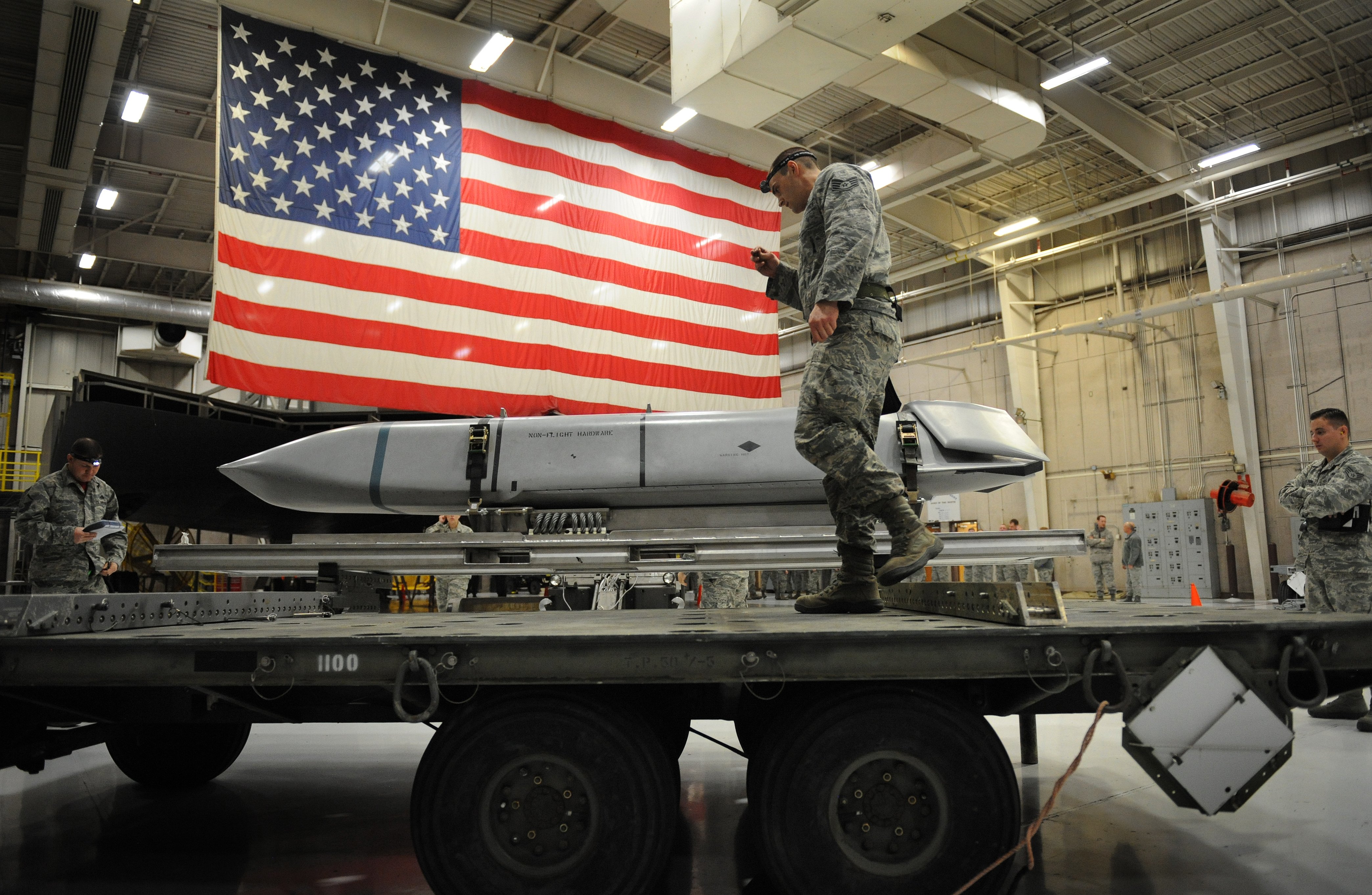
U.S. Air Force Staff Sgt. Joseph Herdliska, 131st Aircraft Maintenance Squadron load crew member, prepares to load an AGM-158 Joint Air-to-Surface Standoff Missile onto the B-2 Spirit weapons load trainer during a weapons load competition at Whiteman Air Force Base, Mo., Jan. 23, 2015. The competition is designed to showcase the teamwork, precision and attention to detail amongst Airmen in support of nuclear deterrence and global strike operations. (U.S. Air Force photo by Airman 1st Class Joel Pfiester/Released)
An Air Force load crew member prepares to load an AGM-158 Joint Air-to-Surface Standoff Missile onto the B-2 Spirit weapons load trainer during a weapons load competition at Whiteman Air Force Base, Missouri. U.S. Air Force photo by Airman 1st Class Joel Pfiester/Released Tech. Sgt. Joel Pfiester

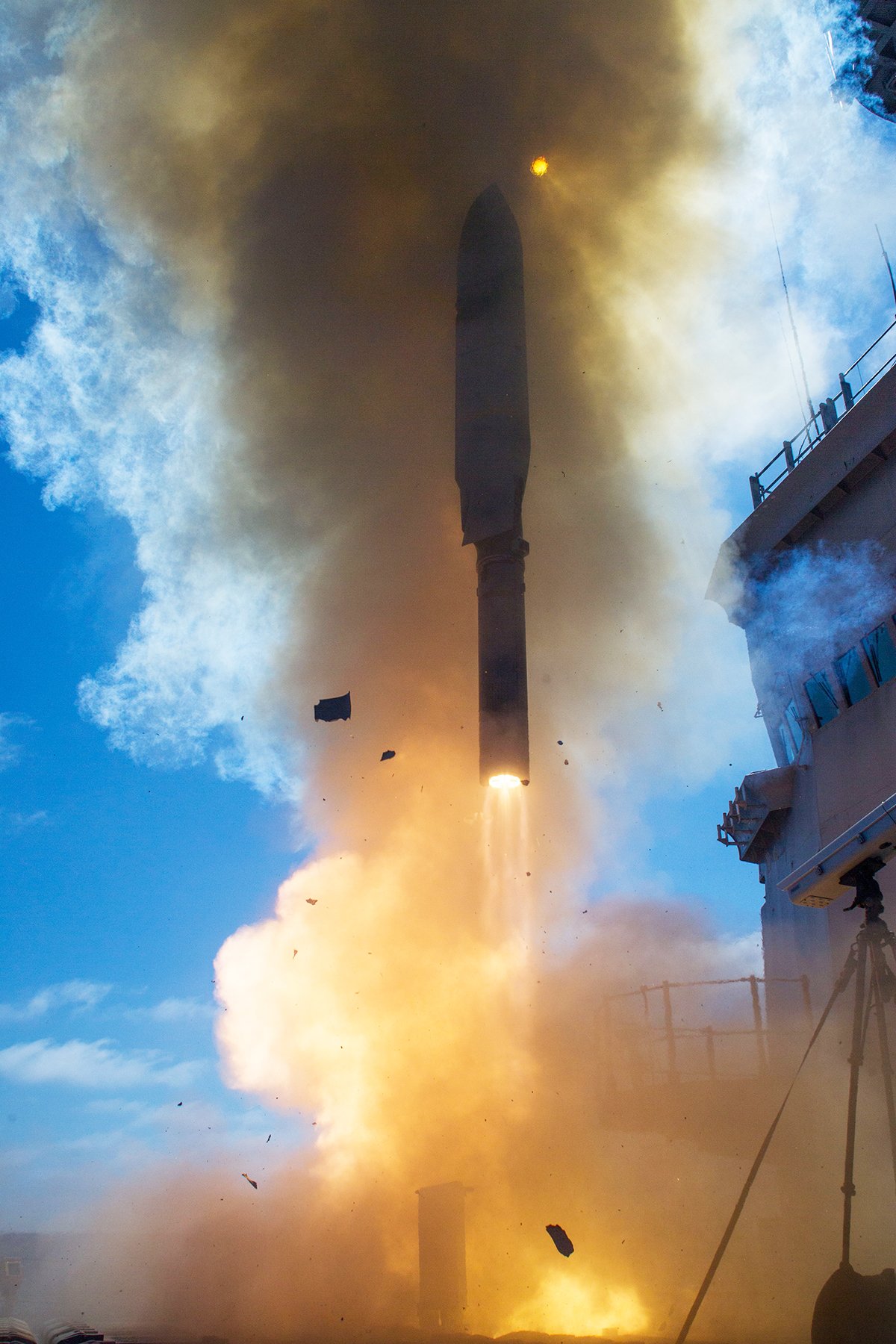
The company says the FLEX design will use removable nose sections that can accommodate sensor suites associated with the AGM-158 family. A removable boat tail would allow the same basic airframe to be configured for different launch methods, including air, surface, and subsurface launch. That would open the AGM-158 architecture up to ground-, ship-, and submarine-launched applications, although Lockheed Martin has not provided details on the specific launchers, platforms, or configurations envisioned. It’s worth noting the LRASM has been tested in vertical launch configuration for vessels equipped with the Mk 41 launch system.

A 2016 test of LRASM from a Mk 41 launcher on the Navy’s Self Defense Test Ship. Lockheed Martin

In addition to the Navy vertical launch tests, the idea of moving the JASSM family beyond its traditional combat aircraft launch platforms is not new. The Air Force’s Palletized JASSM concept, better known as Rapid Dragon, has demonstrated the ability to deploy JASSM-ER from palletized launchers carried inside cargo aircraft, using an expendable airdrop system. FLEX takes a different approach by building those kinds of launch options into the airframe architecture itself, with modularity supporting various launch configurations for the same basic weapon.

For aircraft-launched weapons, Lockheed Martin says FLEX will retain compatibility with current and future JASSM and LRASM launch platforms.

NAS PATUXENT RIVER, Md. -- An F-35 Lightning II test pilot conducts the first flight test to certify the F-35B short takeoff and vertical landing variant of the fighter aircraft for carrying the AGM-158C Long-Range Anti-Ship Missile (LRASM). As part of ongoing weapon integration efforts, the Pax River F-35 Integrated Test Force (Pax ITF) team for the first time flew test flights Jan. 14 with two AGM-158 loaded on external stations. LRASM is a defined near-term solution for the Offensive Anti-Surface Warfare (OASuW) air-launch capability gap that will provide flexible, long-range, advanced, anti-surface capability against high-threat maritime targets. The Pax River ITF’s mission is to effectively plan, coordinate, and conduct safe, secure, and efficient flight test for F-35B and C variants, and provide necessary and timely data to support program verification / certification and fleet operational requirements.
An F-35B carrying the AGM-158C Long-Range Anti-Ship Missile (LRASM). U.S. Marine Corps Kyra Helwick

The company is also proposing multiple airframe lengths. A 206-inch configuration is associated with the supersized JASSM-XR, while a 168-inch version is consistent with the dimensions of JASSM-ER. Lockheed Martin says JASSM-XR will be the first configuration of the FLEX airframe.

The AGM-158 family has already grown well beyond the original JASSM. The AGM-158A is the baseline stealthy air-launched land-attack missile, with a publicly reported range of roughly 230-330 miles, while the AGM-158B JASSM-ER uses a more efficient engine and additional fuel to roughly double that reach, to around 575 miles or more.

Alongside the land-attack variants is the AGM-158C LRASM, which uses the JASSM airframe but substitutes a sophisticated imaging infrared anti-ship seeker, electronic support measures, datalink, and other capabilities, for operations against heavily defended surface combatants.

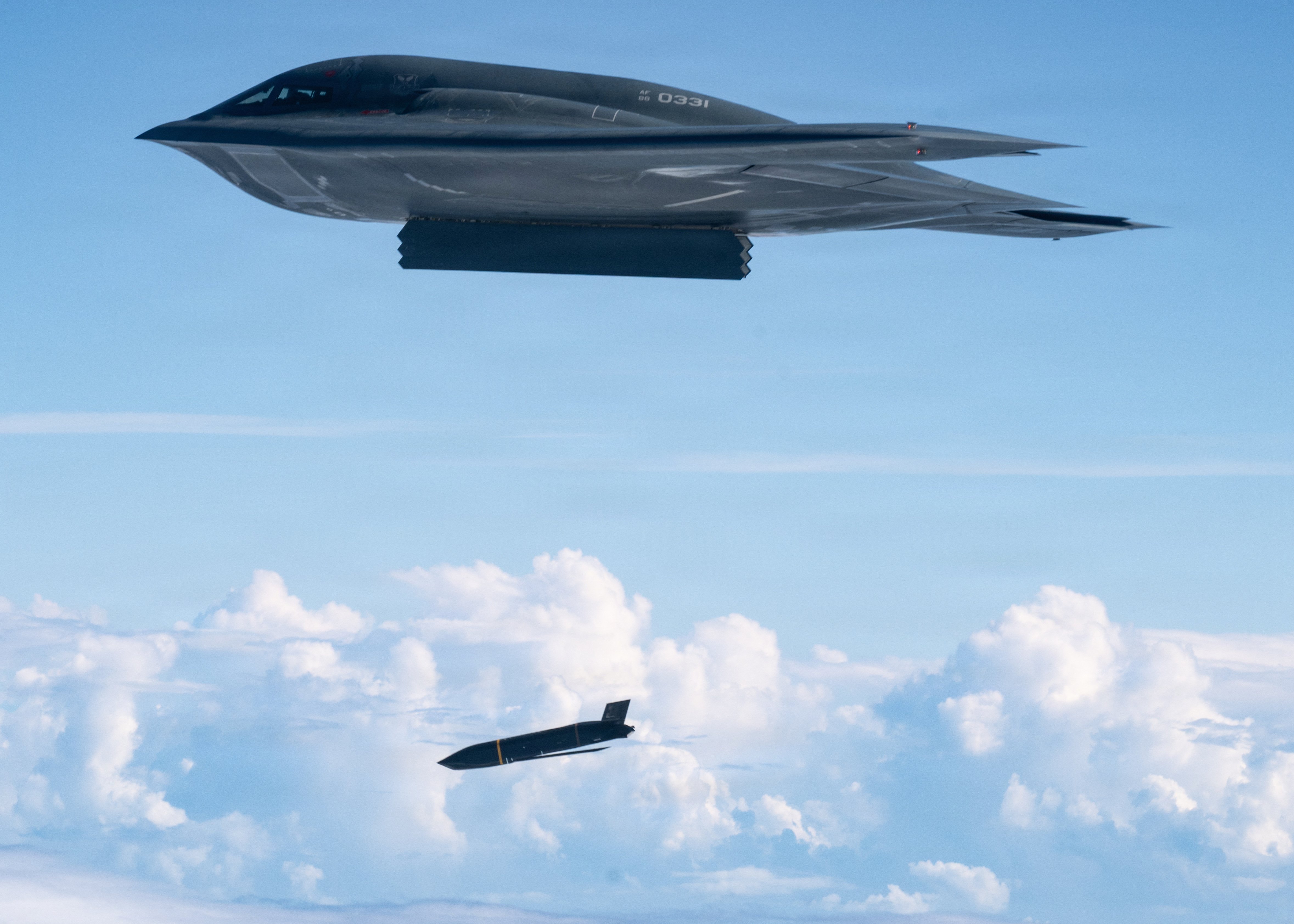
A U.S. Air Force B-2 Spirit Stealth Bomber, assigned to the 509th Bomb Wing, deploys an AGM-158C Long Range Anti-Ship Missile to support a live-fire sinking exercise as part of Valiant Shield 2026 over the Philippine Sea, June 27, 2026. The B-2 flew into the Mariana Island Range Complex to successfully employ the AGM-158C LRASM and demonstrated flexibility across the globe and hold maritime vessels at risk. (U.S. Air Force photo by Tech Sgt. Thomas Barley)
A B-2 deploys an AGM-158C Long Range Anti-Ship Missile to support a live-fire sinking exercise as part of Valiant Shield 2026 over the Philippine Sea, June 27, 2026. U.S. Air Force photo by Tech Sgt. Thomas Barley Tech. Sgt. Thomas Barley

Finally, the much larger JASSM-XR is being developed with a substantially stretched fuselage to carry more fuel and a larger 1,000-pound-class warhead, with a range expected to approach or exceed 1,000 miles. This would give it a similar striking capability as the Tomahawk cruise missile, although in a stealthier package.

Beyond range and launch options, the company is pitching its new FLEX concept as a way to simplify future upgrades. Components could be replaced as they become obsolete or new capabilities become available without necessarily requiring a completely new missile design.

That approach could have an industrial-base advantage, particularly as the United States seeks to increase production of long-range weapons. Lockheed Martin says FLEX would use the existing JASSM/LRASM production line, supply chain, mission-planning infrastructure, and software ecosystem rather than establishing an entirely new manufacturing and support architecture.

The company says its JASSM/LRASM production infrastructure includes a 225,000-square-foot facility opened in 2022 with increased automation and a robotic paint line.

Notable, however, is the fact that FLEX is being proposed at a time when the U.S. Air Force is pursuing affordable mass as a key priority.

For example, as part of a slew of low-cost cruise missile offerings, the service has been moving ahead with the Extended Range Attack Munition, or ERAM, a new air-launched missile explicitly intended to provide a relatively low-cost, rapidly producible standoff weapon. The Air Force conducted a live-warhead ERAM test in January of last year, less than 16 months after the program received its initial contract, and described the weapon as a means of generating mass against fixed targets. ERAM is understood to have a range of between 150 and 280 miles, putting it below the reach of the baseline JASSM, let alone the JASSM-ER or XR.

The Extended Range Attack Munition live-fire test on Jan. 22, 2025, at Eglin Air Force Base, Florida. via U.S. Air Force

However, the emerging class of lower-cost weapons are intended very much more to complement than compete with JASSM. While the Air Force plans to buy thousands of the cheaper missile, the JASSM will still be needed to take up the higher end of the cost and capability list.

Lockheed Martin mentions that FLEX should “unlock future cost savings,” but this sounds more about giving customers the ability to swap out components and upgrade capabilities on existing missile rounds, to avoid obsolescence, rather than facilitate mass production.

As it stands, JASSM has evolved into a family of increasingly capable and longer-range weapons, but those capabilities necessarily come with a different set of cost and production considerations than a weapon designed from the outset around large-scale production. Lockheed Martin’s announcement does not disclose a target unit cost for FLEX, nor does it explain how the eventual cost of a FLEX-derived weapon would compare with a baseline JASSM or LRASM. The unit price of the latest subvariants of the JASSM-ER is around $1.2 and $1.5 million, according to official budget documents.

The new weapon is a way of getting more variants and launch options out of the established JASSM/LRASM architecture, potentially with less development work than creating entirely new weapons. Whether that translates into enough savings or production capacity to satisfy the military’s growing demand for large numbers of standoff weapons remains to be seen.

For Lockheed Martin, the proposal also offers a way to extend the relevance of the AGM-158 family as the company and the Pentagon pursue additional range, new launch platforms, and potentially new launch methods.

The flexibility of the missile could be particularly relevant to the Agile Combat Employment concept, and the wider U.S. military in the Indo-Pacific, where forces are expected to operate from a larger number of dispersed and potentially austere locations. A common missile architecture that can be adapted to different launch platforms and different target sets could allow weapons to be positioned and employed across a distributed force rather than tying particular missile variants to particular launchers.

The original JASSM/LRASM has also become a significant export weapon, with Australia, Finland, Poland and several other U.S. allies cleared to acquire variants of the missile. While the advanced capabilities of the weapon have seen its export opportunities carefully controlled, FLEX could potentially open up the market to more customers, including less-advanced, ‘sanitized’ versions.

Pilot and Weapon Systems Officer conduct a pre-flight check on the JASSM-ER loaded to a Royal Australian Air Force F/A-18F Super Hornet at RAAF Base Amberley, Queensland. Australian Department of Defense LAC Campbell Latch

Lockheed Martin’s announcement provides few details on FLEX’s eventual cost, production rate, schedule, or specific performance beyond the stated airframe dimensions. For now, the concept demonstrates that the company is seeking to create a more adaptable architecture around an established missile family, one that has played a critical role in numerous operations since its introduction.

Contact the author: thomas@thewarzone.com

The post Lockheed Flexes To Modular AGM-158 JASSM Missile Concept appeared first on TWZ.

  •  

Un pluralisme en trompe-l'œil

Les Iraniens sont régulièrement invités à se déplacer dans les bureaux de vote pour élire leur maire, leur député et le président de la République. Mais, outre l'interdiction de partis politiques indépendants, le système demeure verrouillé en raison de l'implacable filtrage des candidats par le Conseil des gardiens de la Constitution.

JPEG - 83.9 kio
Jean Gaumy //// Agriculteurs près de Rasht, province de Guilan, Iran, 1986
© Jean Gaumy/Magnum Photos

@IMAGE 3516.HR.ai

Bien que la République islamique d'Iran se distingue de nombre de régimes autoritaires voisins par son origine révolutionnaire et par le maintien d'institutions électives, ses dirigeants semblent aujourd'hui guidés par deux impératifs que ne renieraient pas certains autocrates arabes. Le premier est d'empêcher la remise en cause du système institutionnel (voir la carte « Institutions de la république islamique ») et d'assurer à n'importe quel prix la pérennité de la Jomhuriye Eslamiye Iran (« République islamique d'Iran »), instaurée après la révolution de 1979. Cela se traduit par l'absence de véritables partis politiques indépendants, par l'interdiction et la répression de nombreuses organisations d'opposition, ainsi que par des vagues d'arrestations et d'exécutions de leurs militants. Ces restrictions concernent aussi les organisations syndicales et les médias.

Dans ce cadre très contraint, le second impératif relève quant à lui de la nécessité de veiller aux apparences en admettant un certain pluralisme mais uniquement au sein d'un périmètre idéologique bien défini. Ce qui exclut, par exemple, un changement des institutions. Officiellement, la « voix du peuple » compte puisque les Iraniennes et les Iraniens désignent au suffrage universel leur président, leurs députés et leurs conseillers municipaux. Mais, en réalité, le système dominé par le clergé et placé sous l'autorité du Guide suprême oriente à son gré la vie publique grâce à plusieurs mécanismes de contrôle. À cet égard, l'élection, tous les quatre ans, d'un président de la République illustre à la perfection ce formalisme démocratique puisque personne ne peut être candidat sans l'aval du Conseil des gardiens de la Constitution (texte fondateur adopté par référendum le 3 décembre 1980, et modifié le 28 juillet 1989). Composé de six clercs et de six juristes, le Conseil, ou Shora-ye negahban-e qanun-e assassi, vérifie la conformité des lois avec la Constitution ou les préceptes de l'islam, et c'est lui qui décide qui peut se présenter sans avoir à fournir d'explications publiques sur le rejet de tel ou tel postulant. En somme, cette structure joue à la fois le rôle de Conseil constitutionnel et de commission de contrôle des listes électorales.

En 2013, année de l'élection du modéré Hassan Rohani, ce Conseil fit beaucoup parler de lui en rejetant la totalité des candidatures liées au camp des réformateurs, généralement plus favorables à l'ouverture vers l'Occident, à un assouplissement des restrictions sociétales et aux privatisations (les conservateurs, quant à eux, défendent davantage les normes religieuses et se montrent plus méfiants envers l'Occident, tout en soutenant des intérêts économiques puissants liés aux oligarques). C'est ainsi qu'Ali Akbar Hachemi Rafsandjani, pourtant lui-même ancien président de la République (1989-1997), fut empêché de concourir. Dans le même temps, et peut-être par souci d'équilibre, le Conseil refusa aussi de permettre au vice-président sortant, l'ultraconservateur Esfandiar Rahim Mashaei, très proche du président Mahmoud Ahmadinejad (2005-2013), de se présenter. En 2017, tandis que M. Rohani allait être réélu, ce fut au tour de M. Ahmadinejad de subir l'affront d'un refus de validation de sa candidature. À l'époque, les observateurs se perdirent en conjectures. Était-ce dû à la volonté du Guide suprême de la révolution Ali Khamenei d'empêcher le retour aux affaires d'un homme aux déclarations intempestives et dont les deux mandats (2005-2009 puis 2009-2013) furent marqués par un raidissement du régime et, surtout, par la dégradation des relations avec la plupart des pays occidentaux ? Quoi qu'il en soit, M. Ahmadinejad est, depuis cette date, systématiquement candidat aux scrutins présidentiels (2017, 2021 et 2024) sans jamais pouvoir obtenir le feu vert du Conseil.

Jeunes et femmes écartés

En 2021, il ne fut pas le seul à être écarté, puisque, comme en 2013, la majorité des candidats réformateurs furent priés de rester chez eux, y compris M. Mohsen Hachemi Rafsandjani, le fils de l'ancien président. Le Conseil provoqua aussi une polémique de grande ampleur en décidant de changer les règles officielles d'admission (âge, niveau d'études, etc.) à quelques jours seulement de la clôture des listes. Seuls ceux ayant entre 40 et 75 ans étant habilités à se présenter, cette manœuvre fut interprétée par les médias proches des réformateurs comme la volonté d'exclure le très jeune ministre sortant de l'information Mohammad-Javad Azari Jahromi.

Un autre aspect du tri des candidats à l'élection présidentielle illustre le caractère non démocratique de la République islamique. À ce jour, aucune femme n'a pu obtenir l'aval du Conseil. Cette fermeture intransigeante semble même dissuader les impétrantes. En 2017, elles étaient 137, toutes orientations politiques confondues, à déposer leur candidature. Ce nombre est tombé à 40 pour le scrutin de 2021 et… à 4 pour 2024, dont la députée de Téhéran Zohre Elahian. Pourquoi une telle exclusion alors que des Iraniennes sont élues au Majlis, l'Assemblée consultative islamique, même si, en moyenne, elles n'y constituent qu'entre 4 % et 6 % de l'ensemble des députés ? La question est posée avec insistance depuis la fin des années 1980 avec l'irruption, dans le champ politique, d'Iraniennes se revendiquant à la fois de la République islamique et du féminisme. Mme Faezeh Rafsandjani, fille cadette de l'ancien président et favorable à un rapprochement avec les États-Unis, a ainsi très tôt défendu l'idée que la loi ne pouvait empêcher les femmes de se présenter à la magistrature suprême : « Quelle est la différence entre la présidence de la République et la direction d'une administration [dirigée par une femme]  ? Aucune, déclarait-elle dans les colonnes du Monde diplomatique en 1996 (1) alors qu'elle venait d'être élue députée de Téhéran. Dans les deux cas, il s'agit d'une responsabilité exécutive. Alors pourquoi une femme ne pourrait-elle pas diriger le pays si elle peut être à la tête d'une administration ? (…) Ce n'est pas l'islam mais l'interprétation par le clergé de ses préceptes qui est à l'origine de l'interdiction des femmes à la magistrature. » Mme Azam Taleghani, ancienne députée et fille de l'ayatollah Mahmoud Taleghani, figure importante de la révolution de 1979, a combattu, elle aussi, cette restriction. Première Iranienne à déposer une candidature à l'élection présidentielle, en 1997, elle renouvela cette démarche à plusieurs reprises afin de contraindre le Conseil des gardiens à clarifier sa position. En 2017, elle résumait ainsi son combat : « Les femmes représentent 50 % de la population iranienne ; le pays mérite donc au moins une candidate. »

La bataille pour la licéité des candidatures féminines à l'élection présidentielle tourne autour de l'article 115 de la Constitution, qui exige que le président soit choisi parmi les rajol-e siasi. La traduction littérale de ces termes arabes équivaut à « homme(s) politique(s) ». Mais de nombreuses personnes en Iran, y compris des religieux, estiment que c'est sa définition plus large, autrement dit « personnalité(s) politique(s) », qui doit primer. Quoi qu'il en soit, le 13 septembre 2020, M. Abbas-Ali Kadkhodaei, alors porte-parole du Conseil, admettait dans une déclaration qu'il n'existe pas de disposition juridique formelle interdisant l'accès des femmes à la fonction suprême (2) : « Il ne s'agit pas à proprement parler d'interdictions légales, mais plutôt de considérations culturelles. Une femme pourrait accéder à la présidence un jour (3).  » Le scrutin de 2024 n'a pas confirmé cette prédiction. Peut-être sera-ce le cas en 2028 ?

« Où est mon vote ? »

Malgré les limites politiques de l'exercice (absence de partis politiques et d'organisations indépendantes, tri des candidats, absence des femmes), les dirigeants de la République islamique ont toujours présenté l'élection présidentielle comme une preuve de la légitimité du régime. Il est vrai que le déroulement des campagnes, avec profusion d'articles, des débats parfois musclés entre candidats et une multitude de sondages, tranche souvent avec les plébiscites peu surprenants auxquels on peut assister au Proche-Orient, notamment à l'époque des régimes baasistes en Irak et en Syrie, avec des présidents élus à plus de 95 % des suffrages… Mais au fil du temps, cet argument de la légitimité s'avère à double tranchant. En 2009, c'est pour protester contre le trucage du scrutin que des millions d'Iraniens ont défilé dans la rue malgré la répression, qui, selon un bilan officiel, a provoqué la mort de 109 personnes (plusieurs milliers, selon l'opposition à l'étranger). « Où est mon vote ? », clamaient les manifestants, accusant le régime d'avoir frauduleusement œuvré à la réélection de M. Ahmadinejad, ce dernier affirmant que le scrutin avait été « totalement libre » et qualifiant ses contempteurs de « racailles ».

Ce « mouvement vert », de la couleur de M. Mir Hossein Moussavi, principal adversaire de M. Ahmadinejad, a démontré les limites du système puisque ce dernier n'a pas eu d'autre choix que de truquer le scrutin pour empêcher la défaite du président sortant. Par son usage des réseaux sociaux, notamment Twitter (aujourd'hui X), il a inspiré d'autres vagues à travers le monde : les occupations populaires de places publiques à Madrid, New York ou Athènes, sans oublier les « printemps arabes » de 2011. Mais il a surtout constitué le point de départ d'une séquence qui demeure ouverte et qui se traduit souvent par le même enchaînement dramatique : colère populaire et manifestations — souvent liées à la dégradation de la situation économique —, répression sanglante, arrestations et jugements expéditifs parfois suivis d'exécutions. L'élection présidentielle de 2009 a aussi dégoûté un grand nombre d'Iraniens de la politique. Cette année-là, le taux de participation fut de 85 %. Au second tour du scrutin de 2024, cet indicateur que les autorités ont longtemps brandi comme une preuve de légitimité du régime atteignait à peine 50 %, et seulement 40 % pour le premier.

Voir en ligne : /mav/209/BELKAID/69944

(1) Lire Azadh-Thiebaut Kian, « Islamistes et laïques pour la première fois unies », Le Monde diplomatique, novembre 1996.

(2) Cf. Raz Zimmt, « Will Iran let a woman run for president in 2021 ? », Atlantic Council, 15 octobre 2020.

  •  

The US “Burden Sharing Network” Takes Shape

In 2025, the US National Security Strategy paper would be broadly misinterpreted as a US plan to break with its historical pursuit of global primacy and instead retreat to the Western Hemisphere while somehow reconciling or coexisting with traditional targets of US aggression. Many analysts even claimed there was an absence of any direct mention […]
  •  

Sweden’s left narrowly wins national elections, 70% of Swedes with non-European background backed the left

For years, the right across the West has noted that mass immigration has been a boon for left-wing parties, which are essentially importing a new voting base. Sweden’s latest election appears to once again affirm this view, with the left narrowly winning the election, in large part due to their overwhelming support from those with a non-European background in Sweden.

Sweden’s 2026 election produced one of the narrowest results in recent memory. With roughly 94.7 percent of votes counted, the center-left opposition holds 176 seats against 173 for the parties backing outgoing Prime Minister Ulf Kristersson.

The left-wing Social Democrats remain the largest party at 28 percent, enough to put Magdalena Andersson in position to try to form a government.

A striking pattern in SVT’s VALU exit poll helps explain how the result took shape, with 70 percent of voters of non-European origin backing the left-wing bloc of Social Democrats, Left Party, Greens, and Center.

“VALU shows a very clear political dividing line. Among voters with non-European backgrounds, S, V, MP, and C together receive 70 percent, while the Tidö parties receive 27. This is a voter group whose party sympathies differ sharply from the electorate as a whole – and which therefore has significance for the long-term electoral math,” wrote Swedish political scientist and author Daniel Schatz on X.

VALU visar en mycket tydlig politisk skiljelinje. Bland väljare med utomeuropeisk bakgrund får S, V, MP och C tillsammans 70 procent, medan Tidöpartierna får 27.

Det är en väljargrupp vars partisympatier skiljer sig kraftigt från väljarkåren som helhet – och som därför har… pic.twitter.com/m6J7pz2ySV

— Daniel Schatz (@drdanielschatz) September 13, 2026

VALU defines the group as people who themselves, or whose parents, grew up outside Europe. Their votes broke down for the Left at 21 percent, Social Democrats at 38 percent, Greens at 7 percent, and Center at 4 percent.

Before the election, the leader of the right-wing Sweden Democrats, Jimmie Åkesson, also wrote that the left’s strategy is to gain votes from Swedes with a foreign background even as they lose votes from native ethnic Swedes:

“It’s about power. The Social Democrats’ decades-long campaign for increased immigration from the Muslim world has never been a coincidence. On the contrary, it seems to be a long-term strategy. The election promise from Magdalena Andersson to grant citizenship to up to 100,000 immigrants, based on the old and undemanding regulatory framework, should be seen in the same light,” he wrote.

Det handlar om makt.

Socialdemokraternas mångåriga kamp för ökad invandring från den muslimska världen har aldrig varit en slump. Tvärtom tycks det vara en långsiktig strategi.

Vallöftet från Magdalena Andersson att ge uppåt 100 000 invandrare medborgarskap, utifrån det gamla… pic.twitter.com/Tz2jrUfzVP

— Jimmie Åkesson (@jimmieakesson) August 26, 2026

“When Swedish voters flee the party, you need votes from elsewhere, and mass immigration from the Muslim world then appears to be an attractive way to circumvent the will of the Swedish people,’ he added.

In 2022, Swedes with a foreign backgroun already attracted around 68 percent of this electorate. Earlier surveys of Muslim voters had placed combined support for the Social Democrats, Left and Greens near 85 percent, with the Social Democrats alone above 61 percent. This slice of the electorate has expanded rapidly over the years.

About 13 percent of eligible voters, close to 1 million people, now have non-European origins, up from just over 3 percent in 2002 and 0.3 percent in 1982.

Many arrived from Muslim-majority countries in the Middle East, Africa and Asia through asylum, family reunification and earlier, more open immigration rules.

Sweden does not record religion in official statistics, yet estimates indicate that Swedish citizens from Muslim-majority countries number in the hundreds of thousands. Together, with other voters of non-European background, they form a reliable base for the left even as much of the rest of the country has shifted toward tighter immigration and crime policies.

Remix News reported on polling already six years ago which showed that a majority of Swedes wanted to tighten immigration substantially. While the native ethnic Swedish population has swung to the right, foreigners have incentives to vote for the left to ensure their families and fellow countrymen can arrive in Sweden unimpeded. Foreigners are also more likely to benefit from social welfare, which left-wing parties promote.

The overwhelming vote for the left from those with a non-European background has been seen across the Western world. In Germany, for instance, the Left Party has proposed giving voting rights to all foreigners who have lived in Germany for five years, regardless of whether they have citizenship. Similar proposals have been put forward by other left-wing parties in the country.

The post Sweden’s left narrowly wins national elections, 70% of Swedes with non-European background backed the left appeared first on Remix News.

  •  

The Significance of the Enemy States Clause for Germany

When the Allied powers of World War II drafted the United Nations Charter, they sought to establish a global system of collective security. Its aim was to “save succeeding generations from the scourge of war.” With its adoption, all UN member states undertook to settle disputes exclusively by peaceful means. Decisions on the use of force were to be taken collectively (initially by eleven and now by fifteen members of the UN Security Council).

Yet the UN Charter contains an exception—the so-called ‘enemy states clause’ in Articles 53, 77, and 107—that has largely been forgotten today. It grants the former Allied powers the right to take military action against the former Axis powers without a Security Council mandate, in order to prevent renewed aggression from the former Axis powers. With the UN Security Council expressly excluded from this provision, each of the former Allies is free to assess for itself whether a former Axis power is once again adopting an aggressive stance.

By far the most important Axis powers to which the ‘enemy states clause’ referred were Germany and Japan. But does this clause apply to these countries today, more than 80 years after the end of WWII? The German government answers this question with an unequivocal ‘no.’ However, the legal situation does not appear unambiguous.

The German government argues that the ‘enemy states clause’ has long become obsolete. It refers to the 1995 UNGA Resolution 50/52, which “recognized that, having regard to the substantial changes that have taken place in the world, the ‘enemy State clauses’ have become obsolete.”

The German government points to the fact that reunified Germany is now one of the peace-loving members of the United Nations. Even before that, it argued that the four Allied Powers had waived their special rights vis-à-vis Germany in the 1990 Two-Plus-Four Treaty, including the right arising from the ‘enemy states clause’.

But do these arguments hold water? Here are a few considerations.


  1. The ‘enemy states clause’ was never removed from the UN Charter.

The wording of the 1995 UNGA Resolution 50/52 does not indicate that ‘enemy states clause’ is now permanently invalid. Following a report from the Special Committee on the Charter of the United Nations and on the Strengthening of the Role of the Organization which recommended deletion of the clauses, the Resolution only “expressed its intention to initiate the procedure to amend the Charter, with prospective effect, by the deletion of the ‘enemy State’ clauses from Articles 53, 77 and 107.” However, there has been no follow-up resolution. Hence the text of the UN Charter remains unchanged.

If, at some time in the future, Germany were no longer regarded as a peace-loving state, could the ‘enemy states clause’ be applied again? There is no clear-cut answer to that.


  1. Resolutions of the UN General Assembly are not legally binding.

UN resolutions are generally of a recommendatory nature. Under the UN Charter, binding decisions can, in principle, only be taken by the Security Council. However, there has never been a Security Council resolution formally repealing the ‘enemy states clause’. The relevant provisions therefore remain in the text of the Charter.


  1. Removing the clause would require an amendment to the UN Charter.

Removing the ‘enemy states clause’ would require a formal amendment procedure in accordance with the rules of the Charter. This would presumably also require ratification of this amendment by all UN member states. Nothing of the sort has happened, and the relevant articles therefore remain in force.


  1. The Two-Plus-Four Treaty cannot amend the UN Charter.

Whilst the 1990 Two-Plus-Four Treaty is a legally binding treaty under international law, a treaty between Germany and the four Allied powers cannot decide on an amendment to the Charter. Nor does the Treaty contain any reference to an explicit repeal of the’ enemy states clause’ in the UN Charter.


  1. Russia could potentially terminate the 1990 Two-Plus-Four Treaty.

Russia could argue that Germany has violated the spirit and letter of the Two-Plus-Four Treaty, for example, by participating in NATO’s war against Yugoslavia in 1999, stationing its troops in Lithuania, or establishing NATO military structures on the territory of the former GDR. 

In view of the growing tensions between Germany and Russia, the ‘enemy states clause’ could regain political significance in this conflict.[1] Russia might attempt, as it has already warned, to use it as justification for a military operation against German production facilities manufacturing long-range drones for Ukraine. It could argue that by supporting Ukraine militarily, Germany has effectively become part of the confrontation. Furthermore, Russia could point out that the German Government has developed a new military strategy directed exclusively against Russia. Worse, it could be argued that the last German military strategy was drawn up in 1939 and led directly to WWII.

By applying the ‘enemy states clause’—or even merely threatening to do so—Germany could find itself haunted by its past. Can Germany count on international support in such a scenario?

The German Government should not only consider the possibility of this clause’s enforcement but remember that, given its past, it has a special obligation to work towards a peaceful resolution of the Ukraine war, to avoid its escalation, and not to exacerbate political tensions. At the time of increasing military confrontation in Europe, it would be reasonable—and prudent—to re-establish dialogue with Russia and seek ways to de-escalate the situation. 

  •  

The Pentagon Crisis: Trump Wants Regime Loyalty

The Pentagon’s extraordinary use of polygraph tests on senior military personnel is not merely a hunt for leakers; it is a warning that loyalty to the president may increasingly matter more than loyalty to the institution, accelerating the ultimate American downfall. When Loyalty Becomes the Test There is nothing inherently unusual about a US administration […]
  •  

An Ironic Ghost in Magdeburg: AfD’s Win, Europe’s Right Lean, and Selective Blame Games

The AfD’s victory in Saxony-Anhalt reflects Europe’s rightward drift, driven predominantly by domestic causes. Yet the West, ironically glossing over its own playbook and turning a blind eye to its own 20th-century interference in other states’ affairs, predictably pins the blame on Moscow. On September 6, 2026, in the unglamorous eastern German city of Magdeburg, […]
  •  

India’s BRICS Dilemma: Multi-Alignment Without a Clear Global South Vision. Part 1

As India hosts the 18th BRICS Summit in New Delhi, its policy of multi-alignment is under crucial scrutiny: whether New Delhi can achieve a balance between strategic autonomy and a real commitment to the Global South, or whether BRICS is simply another instrument of transactional, multi-alignment diplomacy? India is presenting its term as president of […]
  •  

Operation Interflex: Britain Is Bankrolling a War Europe Cannot Pay For

While posing as a defender of European security, Britain is in fact fuelling the fire: its military programmes and century-long partnership with Kyiv make peace with Moscow ever less attainable and militarise the continent for decades to come. While Britain tries to pose as a major protector of the European security, its military actions are […]
  •  

Germany’s Political East Has Broken With Berlin: What the AfD’s 44.5% Really Means

On September 6, 2026, voters in Saxony-Anhalt delivered a result that Germany’s political establishment will find difficult to process. The AfD secured 44.5 percent of the vote, more than doubling its 2021 result of 20.8 percent. The CDU, which had governed the state for years, collapsed to around 18 percent, losing more than half its […]
  •  
❌