After the US officially admitted it deployed weapons into outer space earlier this week, Russia and China expressed concerns, calling it a threat to international peace and demanding the immediate stoppage of all such activities.
During a regular press conference on Tuesday, September 15, Guo Jiakun, official spokesperson of China’s Ministry of Foreign Affairs, said that “China opposes any arms race in outer space or any attempt to weaponize it and turn it into a warzone.”
He further said that “China stands for the peaceful use of outer space and keeping it safe” and urged the US to “stop expanding military build-up in outer space, and uphold global strategic stability with concrete actions.”
Russia’s Foreign Ministry Spokesperson Maria Zakharova said that the US weapons deployment is a threat to international security and puts a question mark on the stability in outer space.
“Russia has for many years been consistently drawing the attention of the global community to the grave consequences for international security that Washington’s destructive course may lead to,” Zakharova said.
She said her country seeks “urgent practical measures to prevent arms race in outer space” and reiterated Russia’s push for a “multilateral legally binding instrument banning the deployment of weapons in outer space.”
Though it has long been a subject of speculation, a couple of US military officials, earlier this week, admitted that its military is operating weapons deployed in outer space.
The admission was made by US Air Force Secretary Troy Meink on Monday during a conference. He said that the US “has on-orbit space control weapons capable of defending the joint force against hostile adversary action.”
Meink’s statement was substantiated by US Space Force chief Douglas Schiess, who a day later, on Tuesday, said that in the coming years the US is even planning to increase the number of orbital weapons already used by the members of his military unit.
Urgent need of legal prohibitions
Underlining the threat that the deployment of weapons in outer space poses, several countries, including Russia and China, have been calling for an international treaty to prevent any arms race in outer space for decades now.
The existing instrument, the UN Outer Space Treaty (1967) makes clear that “outer space is not subject to national appropriation by claims of sovereignty, by means of use or occupation, or by any other means.”
It also prohibits the deployment of “nuclear weapons, or other weapons of mass destruction in orbit or on celestial bodies or stationing them in outer space in any other manner,” but it says nothing about the deployment of conventional weapons, despite declaring it should be used for peaceful purposes only.
None of the US military officials spoke about the nature of weapons deployed by the US in outer space.
Though only a handful of countries have the technological capability to explore outer space in any significant way, several countries have used satellites for military and war purposes for decades now.
The US has a dedicated space force which has recently held exercises related to possible military conflicts in space.
The deployment of weapons and claims of exclusivity, apart from increasing possibilities of an arms race between the existing powers in space; the US, Russia, and China, may also make the rest of the world more insecure.
Zakharova said that Russia is planning to submit a proposal for the creation of an international instrument legally prohibiting all weapon deployment in outer space during the upcoming annual UN General Assembly session.
She asked for more countries to join the Russian initiative and co-author the treaty document.
Senior U.S. Air Force leaders in Europe say NATO allies are increasingly looking to participate in the development and employment of collaborative combat aircraft (CCAs), even as several of those same countries pursue their own indigenous fighter and drone programs. American commanders say they are looking forward to CCAs expanding the alliance’s overall capacity, and are already pushing for such systems to work together from the outset.
Speaking yesterday at the Air & Space Forces Air, Space and Cyber Symposium that TWZ is attending, Lt. Gen. Jason T. Hinds, commander of U.S. Air Forces in Europe, U.S. Air Forces Africa, and NATO’s Allied Air Command, and Chief Master Sgt. Joshua J. Wiener, USAFE-AFAFRICA’s command chief, discussed how the command is preparing for an eventual European role in the U.S. Air Force’s planned fleet of hundreds of CCAs.
U.S. Air Force Lt. Gen. Jason T. Hinds, U.S. Air Forces in Europe – Air Forces Africa commander (far left), and U.S. Air Force Chief Master Sgt. Joshua J. Wiener, USAFE-AFAFRICA command chief (second from left), pose for a group photo with the Association of African Air Forces representatives from Kenya, Nigeria, and Tunisia at Ramstein Air Base, Germany, earlier this month.
The issue is particularly significant for USAFE, which operates a fraction of the fighter force it maintained in Europe during the Cold War, even as many of its NATO allies contend with shrinking fleets of crewed combat aircraft. This comes against a backdrop of deepening tensions with Russia and the emergence of new kinds of threats. Autonomous aircraft that can augment crewed fighters could provide the alliance with additional combat mass without requiring a corresponding increase in the number of crewed aircraft and personnel permanently based in Europe.
“I’m excited about what CCAs have in store for the Air Force,” Hinds said, pointing to recent comments from the Secretary of the Air Force Troy Meink, including the aim of having at least 500 CCAs in service by 2032.
He added that European interest in these kinds of platforms is already growing.
“I think you’re going to see a lot more interest from other nations inside Europe about what is America doing with CCAs and how they can join this party, if you will,” Hinds said.
Germany is “heavily involved,” he said, while Scandinavian countries and the Netherlands are also showing interest.
In the case of Germany, we have previously explored how that country is looking to procure CCAs by 2029. Sweden, too, recently unveiled a concept for a high-end, stealthy CCA-type drone, while the Dutch are looking to become more closely alligned with U.S. Air Force CCA efforts.
Saab has produced a full-scale concept model of a future uncrewed combat air system, known as aircraft A3. Saab
USAFE is currently using two broad operational scenarios to explain to allies how CCAs could fit into NATO’s force structure.
The first is defensive. A CCA could operate as part of an integrated air and missile defense network, potentially engaging one-way attack drones or cruise missiles without the need for expensive crewed fighters.
The second is offensive. In that scenario, autonomous aircraft could help suppress or destroy integrated air defense systems and potentially attack fielded forces during an effort to repel a hostile incursion into NATO territory.
Allies are interested in both missions, Hinds said, and want the ability to incorporate CCAs into their own force designs. Interestingly, only yesterday, Anduril shared photos of its YFQ-44A Fury configured with air-to-ground weapons, underscoring the fact that the CCA could take on an air-to-ground role in the future in addition to its current air-to-air focus.
A YFQ-44A carrying pods for 2.75-inch rockets and 500-pound Joint Direct Attack Munitions (JDAM) under the wings. Anduril
That kind of interest has already prompted work at the NATO level. Hinds pointed to a study by the Joint Air Power Competence Center, the alliance’s airpower think tank based in Kalkar, Germany, examining how NATO members could employ CCAs in a modular fashion, including issues such as sustainment, training, and exercises.
“It was a pretty long paper, but the nations wanted it,” Hinds said.
Initial experimentation is expected to take place in the United States, but European experimentation could follow, including by Sweden and potentially other NATO members.
At the same time, European countries are not simply waiting for an American CCA to arrive.
The United Kingdom has launched its own Storm Fighter CCA program. Germany is pursuing a separate loyal-wingman effort, while the United Kingdom, Italy, and Japan are meanwhile jointly embarked on the Global Combat Air Program, or GCAP, which is intended to produce the Tempest next-generation crewed fighter and associated uncrewed systems.
A rendering of a CCA concept released at the launch of the U.K. Royal Air Force Storm Fighter program, earlier this year. BAE Systems
The proliferation of national programs raises an obvious question: How does NATO prevent a growing fleet of autonomous aircraft from becoming a collection of incompatible national systems?
Hinds said the answer starts with commonality.
“The first and foremost thing is we want to strive for commonality,” he said. “Commonality means we don’t even have to worry about interoperability.”
Where common equipment is not possible, however, USAFE wants interoperability built into national systems from the beginning.
“Interoperability by design” is the preferred approach, Hinds said, with NATO data standards and other requirements incorporated before a system enters service rather than retrofitted later.
The good news for USAFE is that NATO already has extensive experience establishing common standards for interoperability, covering everything from tactics and procedures to communications, datalinks, weapons employment, and other technologies. That existing framework gives the alliance a foundation for integrating increasingly diverse national systems without requiring every member to field identical equipment.
F-35A from the U.S. Air Force’s 48th Fighter Wing and the Royal Norwegian Air Force fly tandem after a formation flight near Lofoten, Norway, March 10, 2026. The formation flight was intended to symbolize the partnership and degree of interoperability displayed between participating NATO militaries during Exercise Cold Response 26. U.S. Marine Corps photo by Cpl. Mya Seymour Cpl. Mya Seymour
Hinds did warn that some countries have previously acquired equipment that was not compatible with NATO systems, leaving them with the choice of paying to modify their own equipment or forcing the alliance to adapt its systems around it.
That problem becomes particularly important as autonomous aircraft are connected to increasingly complex sensor and weapons networks. Even more important is the requirement for a baseline command-and-control network for CCAs themselves, allowing different platforms to manage them seamlessly.
The ability to share and control CCAs across a complex battlespace is already emerging as both a major opportunity and a significant integration challenge. The U.S. Air Force and Navy, for example, have made clear that their respective CCAs are being developed with the ability to be controlled seamlessly across services, pointing toward a future in which autonomous aircraft need not remain tied to the service or platform that launched them.
In such an architecture, the aircraft, sensor, command-and-control network, and weapon do not necessarily have to belong to the same country.
As an example, Dutch F-35s, operating in Europe, have used a data-exchange system to transmit targeting coordinates to Israeli-made PULS (Precise and Universal Launch System) rocket artillery. The system, developed by Lockheed Martin is known as Keystone, and you can read more about it here.
A Dutch F-35A brandishing its AIM-120 AMRAAM missiles during a NATO air policing drill. Bartek Bera
USAFE is making “significant advances” in areas including cross-servicing, cross-loading, and cross-flying allied aircraft, Hinds said, all of which are intended to make multinational operations more seamless.
A U.S. Air Force F-35 crew chief conducts post-flight checks at Pirkkala Air Base, Finland, during the tactical exercise, Ramstein Flag 26. U.S. Air Force photo by 2nd Lt. Sarah Hedgman
The same philosophy applies to weapons.
“We want to have all the fires, right? Whether it’s U.S. built or built inside European nations,” Hinds said.
That could prove increasingly important as European countries expand domestic production of missiles, drones, and other weapons alongside their aircraft programs.
The growth of GCAP and other European defense programs comes amid broader debate over how much Europe should depend on U.S. military equipment.
But Hinds rejected the idea that allies developing indigenous aircraft and autonomous systems necessarily signals a move away from American equipment.
“No, I don’t,” he said when asked whether allies were moving away from U.S. systems.
Instead, Hinds characterized the trend as an expansion of the transatlantic defense-industrial base.
Sweden was one example he cited. The country, which recently joined NATO, continues to produce new military equipment, including Gripen fighters, while those aircraft are already being operated by NATO members.
Swedish Gripens are currently leased to Hungary, and other countries are considering the aircraft, Hinds said.
A Hungarian Air Force JAS 39C Gripen participating in NATO Exercise Ramstein Flag 24 flies over the west coast of Greece, in 2024. U.S. Air Force photo by Tech. Sgt. Emili Koonce
The broader trend toward co-manufacturing and co-production is also something he welcomed.
“I’m seeing a lot of discussions about co-manufacturing and co-production, and I welcome those discussions as well,” Hinds said.
That approach could become increasingly important as NATO tries to expand its available combat power without relying exclusively on additional U.S.-built platforms.
For USAFE, the objective is to ensure that whatever aircraft NATO countries develop or purchase can plug into a common architecture, sharing data, receiving targeting information, drawing on common logistics networks, and contributing weapons effects across national boundaries.
For a U.S. Air Force command that has spent decades trying to cover Europe with far fewer fighters than it once had, hundreds of autonomous wingmen, whether American-built or allied, could provide a significant way to generate additional combat mass.
Senior U.S. Air Force officials are now working to ensure that the networking, weapons integration, logistics, and command-and-control architecture will be in place once those aircraft start to come online.
The left’s capacity to build knowledge, organization, and struggle was a central theme at this year’s ManiFiesta, introduced during a discussion of Peter Mertens’ new book, “The Last Days of the Old Normal“. In the context of Europe’s ongoing armament, these questions are crucial not only for progressive movements in core countries but also for those building alternatives in Central and Eastern Europe.
The festival featured several sessions examining developments in Central and Eastern Europe, including an intervention by Ukrainian sociologist Volodymyr Ishchenko on the class character of the Ukraine war. Another session – “East of the former wall: the AfD, the industrial crisis, and the war economy” – brought together Markéta Juřicová of the Czech party Levice, Orsolya Haboczki from the Hungarian progressive movement Szikra, German Bundestag representative Cem Ince from Die Linke, and Member of the European Parliament Marc Botenga from the Workers’ Party of Belgium (PTB-PVDA).
They discussed how the growth of the far right in core EU countries is interacting with events eastwards – and what lessons Western left movements can learn from their Eastern counterparts.
As Juřicová and Haboczki pointed out, while movements in the West are worried about the popularity of parties like the Alternative for Germany (AfD), many nations in Central and Eastern Europe already have experience with far-right participation – even leadership – in government. More than 15 years of Viktor Orbán’s rule in Hungary, Haboczki noted, offers an important lesson on far-right governments’ economic agendas and tactics. As the Orbán administration used identity issues to capture opposition parties’ attention, it channeled resources into the hands of the local bourgeoisie and served transnational capital by securing huge state subsidies, she said.
Right-wing parties in Eastern Europe also look to their international peers for inspiration. In the Czech Republic, Juřicová said, the far right “loves” the AfD, picking and choosing many of the same topics the German group campaigns on. The discussion signaled this is particularly important to recognize as the growth of extreme right parties is fueled largely by popular dissatisfaction with mainstream parties’ programs.
Ince emphasized this was the case in Germany, where a large share of AfD votes came from those believing the party would bring upheaval compared to the status quo, marked by massive job losses and cuts to welfare. But while European progressives recognize this, they still struggle to incorporate it into their programs, recent experiences show. Instead, many of them ponder attempts to prevent the far right from seizing institutional power by providing support to establishment parties, failing to shape a concrete alternative to both the mainstream and the extreme right.
In Central and Eastern Europe, the work of progressive parties is further complicated by the need to rebuild credibility after decades of vilification of socialism and austerity measures implemented by liberal options, Haboczki added.
While recognizing workers’ material concerns in Central and East Europe is imperative for building local alternatives, the panel showed, it will also be necessary to build region-wide partnership to challenge topics dominating the narrative in Germany, Belgium, and other core countries.
Militarization stands out among these topics, Botenga and Ince outlined in their interventions, though its implementation might differ by sub-region. Botenga added that German industry stands to gain the most from European armament, yet these gains will not trickle down to the working class – meaning the left in the region can find in anti-militarism a common cause to rally around.
Ince echoed these observations by emphasizing that, even as their profit lines stand to gain from billions of euros directed towards rearmament, German companies continue to shift significant parts of their operations to countries including Poland, Slovakia, and the Czech Republic – making most of eroded workplace protections and labor rights. This shows that the left across Europe must work together to protect workers’ interests everywhere, building a joint struggle for peace and civilian industry, he indicated.
La présidente de la Commission européenne Ursula von der Leyen a émis mercredi l'hypothèse que le Canada devienne le premier "membre associé" de l'UE, dans un contexte de détérioration marquée des relations entre Ottawa et Washington. En réaction, Donald Trump a menacé de rompre les échanges commerciaux avec l'UE.
European Commission President Ursula von der Leyen used her State of the Union address on Wednesday (16 September) to make the case for a more independent Europe, confronting war, economic competition, AI disruption and climate change — while proposing Canada become the EU’s first associate member.
Opening her #SOTEU speech with Charles Dickens’ “best of times, worst of times”, von der Leyen described a Union stronger but also more exposed to external threats.
“The state of our Union is the strongest it has ever been,” she said, while acknowledging it could feel “as precarious as it has ever been”. “Europe has chosen to forge its own path. And a stronger, independent Europe is now emerging.”
Competitiveness and energy
Von der Leyen called kickstarting Europe’s economy her “number one priority”, promising faster permitting, less red tape and further integration of the Single Market.
The Commission will propose a new Banking Package and create a European Corporation on Critical Raw Materials to secure supplies needed for chips, batteries, clean technology and defence.
With high energy costs weighing on European industry, von der Leyen called for faster electrification and investment in grids, renewables and nuclear power to reduce dependence on imported fossil fuels.
Climate after a 'summer of truth'
After a summer of fires, drought and extreme heat, von der Leyen promised a climate resilience framework focused on 100 of Europe’s most vulnerable territories, alongside a Climate Insurance Alliance, European Heatwave Plan and Water Initiative.
She also floated a future European Firefighting Fleet, declaring that Europe “can, must and will stay the course” on its climate targets.
AI: Opportunity and threat
AI was presented as both an economic opportunity and an emerging security threat. Von der Leyen warned that advanced models could enable hacking “on a level we never thought possible” and pledged closer cooperation with Canada, the UK and others on AI security.
At the same time, Europe will expand computing capacity and push AI into health, transport, agriculture, manufacturing, defence and space. “Above all, we want AI with human agency,” she said.
Jobs, housing and social rights
The Commission plans a Quality Jobs Act before the end of the year and a European Care Deal, alongside measures tackling housing pressures.
Von der Leyen said technological change must benefit workers, while strongly defending women’s rights and Europe’s social model.
One of the biggest surprises came with Canadian Prime Minister Mark Carney in the chamber.
Von der Leyen proposed an “Alliance for the Future” spanning technology, defence, energy, critical minerals, AI and the Arctic — before going further.
“I would like to work with you on opening the door for Canada to be the first associate member of the EU,” she told Carney. “We share one ocean, one set of values, one way of seeing the world.”
Security, defence and Ukraine
With drone incursions, cyberattacks and sabotage raising security concerns inside the EU, von der Leyen proposed a new European security strategy and an Emergency Security Protocol for incidents falling below the threshold of armed aggression.
She also wants to establish a European Security Council and strengthen joint European defence capabilities.
Ukraine faces what von der Leyen called the “toughest winter of the war”. She promised humanitarian and energy support, stronger air defences and deeper defence-industrial cooperation with Kyiv.
Borders, democracy and children online
The Commission will propose an Emergency Response Framework for exceptional migration crises and strengthen Frontex, while launching a Mediterranean Youth Skills and Jobs initiative.
Von der Leyen also announced an EU KIDS ACT, including no social media for under-13s and restrictions for children under 15, followed by a broader Digital Fairness Act.
Political groups draw battle lines
EPP leader Manfred Weber backed the focus on AI, defence and competitiveness but pushed against restrictive climate policies. “Climate change is a reality,” he said, arguing Europe needed “innovation and not bans.”
S&D leader Iratxe García Pérez demanded that von der Leyen turn “words into action”, backing climate investment, housing and worker protections while warning that simplification must not become deregulation.
Renew Europe leader Valérie Hayer made a pointed appeal for the Parliament’s pro-European majority, as the EPP has increasingly worked with parties further to the right on some legislation. “There’s only one possible majority. It’s our pro-European majority,” she said. “We need to do more. We need more Europe, and we need it more quickly.”
Greens/EFA co-chair Terry Reintke accused EU leaders of failing to respond urgently enough to extreme heat and wildfires. “We are in the middle of a climate emergency,” she said, demanding stronger Green Deal implementation while insisting: “We are not powerless. Europe is strong, and Europe can be even stronger.”
ECR co-chair Patryk Jaki struck a sharply different note, attacking the Commission over bureaucracy, energy costs and industrial competitiveness. Europe, he argued, was “as weak as it’s ever been.”
Von der Leyen closed on the central theme running through the speech: European sovereignty in an increasingly hostile world.
“The fate of Europe,” she said, “must remain in the hands of Europeans.”
Turkish President Recep Tayyip Erdogan during the press conference at the NATO Summit in Ankara, Turkiye on July 8, 2026. (Photo by Jakub Porzycki/NurPhoto) | picture alliance / NurPhoto | Jakub Porzycki
Summary
Europe still expects Turkey to pick a side. It has refused, and a post-Erdogan government would refuse too.
Turkey has become an embedded outsider: a middle power that builds strategic autonomy from inside the Western system—because that is where its leverage comes from.
Ankara has now tools of its own: troops abroad, a $10bn arms industry, partners in the global south, a geography everyone needs and channels to actors Europeans cannot reach.
Yet it still needs NATO for its security, Europe to buy its exports and fund its factories, and Western technology to power its best weapons.
Europe should stop trying to resolve the contradiction and learn to capitalise on it. It should deepen cooperation where interests converge, tie benefits to reciprocal obligations and withhold access when Ankara acts against fundamental European interests.
At the NATO summit he hosted in Ankara this July, Recep Tayyip Erdogan, the Turkish president, gifted visiting heads of state a peculiar souvenir: a Turkish-made revolver, loaded with live ammunition. Several delegations were left wondering how one declares an unregistered firearm at customs.
It was a fitting emblem: a gift no one could quite accept, from an ally no one can quite place. At the summit itself, Turkey had never looked more central to the alliance. The Ankara Summit Declaration called for “a stronger Europe in a stronger NATO”, reaffirmed Article 5 and placed European support for Ukraine at the heart of the alliance’s future. With NATO’s second-largest armed forces, an expanding defence industry and control of the Black Sea’s southern gateway, Turkey looked indispensable.
Look closer though and the picture is less tidy. This is still the NATO ally that bought Russia’s S-400 air-defence system, the EU candidate country whose membership negotiations have effectively collapsed, and the Black Sea power that arms Ukraine while maintaining extensive ties with Moscow. It is also, thanks to Erdogan’s close relationship with US president Donald Trump, an ally with unusual leverage over Washington at a time of strained transatlantic relations.
Turkey is neither drifting away from the West nor it is coming home. It has become an embedded outsider: a middle power that has learned to build strategic autonomy from inside the Western system rather than by leaving it. NATO still guarantees its security, Europe still buys its exports and funds its factories, and Western technology still powers its best weapons. But none of that buys alignment with Western preferences any more.
European policymakers have often treated this contradiction as a problem to solve. Their debate has revolved around whether Turkey can be “anchored” in the West or prevented from “drifting” towards Russia, China or the Middle East. Both approaches assume that Ankara must eventually pick a geopolitical home. It has chosen not to. Nor is this likely to change after Erdogan. A post-Erdogan government could be more democratic and predictable, but it would still be unlikely to abandon defence autonomy, regional activism or Turkey’s desire to balance among larger powers.
This paper argues that Europe should stop trying to resolve this contradiction and instead learn to capitalise on it. Turkey’s autonomy can frustrate Europeans, but it has also produced capabilities and relationships that Europe itself lacks. Its ability to maintain channels to Moscow helped it broker the Black Sea Grain Initiative and prisoner exchanges while continuing to arm Ukraine. Its military presence and political networks in Syria give it influence that few European states can match. Its growing defence industry could also make it an important partner in Europe’s rearmament.
It is true that the same autonomy sometimes works against European interests. In the eastern Mediterranean, Turkey’s assertiveness has brought it into direct conflict with EU member states Greece and Cyprus. Elsewhere, its balancing between Russia and the West has sometimes undermined European objectives.
The more useful question for Europe therefore is not whether Turkey can ever be a reliable ally, but when its autonomy serves Europe and when it cuts against it. The answer is managed interdependence: deepen cooperation where interests converge, tie the benefits of cooperation to clear and reciprocal obligations and withhold these benefits when Ankara acts against fundamental European interests. The aim is not obedience. It is to make Turkey’s autonomy pay for Europe more often than it costs.
Under Erdogan: An old instinct transformed
Turkey’s pursuit of greater foreign-policy autonomy did not start with Erdogan. Since the early republic, Turkey’s Western alignment has coexisted with suspicion of Western intentions.
The young republic pursued Westernisation after fighting a war of independence against European powers. It developed close ties with Soviet Russia after the war, but Soviet pressure later helped justify Turkey’s integration into the US-led Western bloc, culminating in NATO membership in 1952. But alliance membership did not end tensions with the West. The Cyprus crisis, the 1974 military intervention and the subsequent US arms embargo reinforced Turkey’s conviction that it could not always rely on its allies.
Erdogan inherited this impulse, but he also transformed it. Over more than two decades, his governments have expanded Turkey’s geographical ambitions and given them a neo-Ottomanist flavour at home. Turkey has become more willing to use force abroad and built the institutions needed to sustain a more autonomous foreign policy. Erdogan has also added a personal style of decision-making and an ideological vocabulary. His slogan “the world is bigger than five” calls for reform of the UN Security Council. The term “precious loneliness”, coined in 2013 by his then foreign policy adviser Ibrahim Kalim, casts Turkey’s regional isolation as the price of moral consistency.
This transformation unfolded in four broad phases:
European integration
In the Justice and Development Party’s (AKP) first years in power, from 2002 to roughly the end of that decade, Erdogan and his government were celebrated in the West as reformists. They used the EU accession process to modernise the economy, pursue political reforms and curb the military’s influence over civilian politics. Ankara also expanded trade and diplomacy across its neighbourhood, presenting this activism as complementary to its Western orientation.
Closer ties with Europe accompanied an economic boom. Turkey’s GDP rose from roughly $241bn in 2002 to $775bn in 2008, while GDP per capita tripled. Foreign investment surged after accession talks opened in 2005, from about $900m in 2002-04 to nearly $12bn a year in 2005-08. EU member states accounted for roughly three-quarters of inflows by 2008.
Regional ambitions and civilisational mission
From the late 2000s through the Arab uprisings, Ankara became more ambitious in its neighbourhood. Foreign minister Ahmet Davutoglu’s “zero problems with neighbours” doctrine reflected a growing belief that Turkey’s history, location and political model gave it a distinctive regional role. Economic growth and mediation underpinned this confidence, while construction companies, television dramas, Turkish Airlines, diplomats, religious institutions and development agencies extended the country’s soft power.
However, the Syrian civil war, Egypt’s military coup and the regional backlash against the Arab uprisings upended this strategy. Soft power gave way increasingly to hard power and regional rivalry.
“Precious loneliness”
The decisive turn came between 2015 and 2020. The collapse of the peace process with the Kurdistan Workers’ Party (PKK) and a failed coup attempt of July 2016 fed a sense of geopolitical isolation and a more combative foreign policy. As Turkey grew more authoritarian, with executive power consolidated in the presidency, the country launched several external military operations in Syria, Iraq and Libya, and expanded its overseas military presence across the Middle East. It also cultivated closer economic and defence ties with Russia to reduce dependence on the US and Europe, both of which were becoming increasingly concerned about Turkey’s democratic backsliding and regional activism.
Turkey’s purchase of Russia’s S-400 systems in 2017 became the clearest symbol of this rupture. It led to Turkey’s removal from the F-35 programme—the US-led fighter-jet project for which Turkish firms were supplying components—in 2019 and to American sanctions in 2020. This purchase showed that Ankara was prepared to defy its allies when it believed core security interests were at stake.
Anti-Western sentiment rose significantly during this period. Many Turks blamed the US for the failed coup attempt and for supporting Kurdish forces in Syria affiliated with the PKK. The post-coup crackdown, along with the 2017 constitutional referendum, helped create a national security state and concentrated decision-making even more in the presidency.
Military interventions in Syria and elsewhere during this period also created their own momentum. The armed forces, intelligence services, defence companies and the state bureaucracy acquired the skills and experience to sustain overseas operations, cooperate with non-state partners and convert military involvement into diplomatic leverage.
Transactional re-embedding
By the end of 2020, Ankara concluded that its assertive posture had become counterproductive—it had alienated Western allies and Middle Eastern governments alike, thereby helping create an anti-Turkey alignment across multiple fronts. Intensifying great power rivalry and the fragmentation of the West also made Turkish leaders more anxious about being left out in the cold in a tumultuous world. The recalibration was also economic: a currency crisis at the end of 2020 left Ankara in acute need of external capital—Western and Gulf alike—and de-escalation on both fronts was the price of access to it.
From 2021, Ankara therefore sought to repair ties with former regional rivals, from Saudi Arabia to Greece, and pursued a pragmatic reset with Europe and America—while preserving its autonomy.
Turkey’s response to Russia’s invasion of Ukraine captured this shift. Ankara condemned the invasion, supplied Kyiv with drones that proved highly effective early on, refused to recognise Moscow’s annexations, and invoked Montreux’s wartime provisions to close the Straits to belligerents’ warships, which mainly constrained Russia’s Black Sea fleet. It saved its neutrality for the economic sphere, declining to join Western sanctions and casting itself as mediator, keeping Moscow close.
Donald Trump’s return to the White House created another opportunity to reboot ties with the Western system. Erdogan and Trump share a disdain for liberal Europe and a preference for flexible, transactional and personalised diplomacy. Close ties between the two presidents and their inner circles also facilitated dialogue on Gaza, Caucasus, Ukraine and Syria, with a surprising degree of alignment on many of these files.
Ankara increasingly saw its military leverage and geography as the basis for strategic autonomy—a foreign policy built on cultivating ties across rival centres of power so that no single relationship became indispensable and none foreclosed another. It sought closer defence-industrial ties with European states without abandoning its domestic production. It normalised relations with Gulf monarchies while retaining military or political networks in Libya, Syria, Palestine and Somalia. It renewed dialogue with the EU while prioritising bilateral ties with individual member states. Even as a NATO member, it flirted with membership of BRICS and the Shanghai Cooperation Organisation.
In August 2026, Turkey joined Saudi Arabia and Pakistan in the Mecca Joint Defence Agreement—a trilateral mutual-defence pact dubbed in the media as a “Muslim NATO” that commits the three states to Article 5-like security guarantees. Building on a 2025 Saudi-Pakistani accord, the pact signals Turkey’s ambition to make regional security arrangements of its own, even as it remains in NATO. However, the new pact so far lacks the integrated command, joint planning and shared threat perception that would make it a functioning alliance rather than a political declaration.
The Mecca agreement aligns with Turkey’s ambition to keep a foot in several camps. Many in the country’s ruling elite see a larger role in the Middle East and on the world stage as Ankara’s natural destiny. Meanwhile, where previous US presidents saw Turkey’s regional ambitions as disruptive, the Trump administration came to view Ankara as a useful and capable regional partner.
Turkish foreign policy under Erdogan has not travelled a simple path from pro-Westernism to anti-Westernism and back again. Ankara has rebuilt its foreign policy repeatedly around the needs of the ruling far-right nationalist coalition at home and what a changing international order permits abroad. The re-embedding since 2021 is no exception: it did not reverse Turkey’s pursuit of strategic autonomy, but relocated it. Ankara now seeks that autonomy from inside Western structures, because that is where the leverage lies.
Beyond Erdogan: Different versions of autonomy
Although Erdogan’s dominance at home is a reality, in 2024, the opposition alliance led by the Republican People’s Party swept local elections, taking Istanbul, Ankara and most major cities—its best showing since 1979. The following March, Istanbul’s mayor Ekrem İmamoglu, the opposition’s presidential candidate and the man most likely to beat Erdogan, was arrested on corruption charges widely seen as politically motivated. Two decades of Erdogan rule have narrowed political space, but they have not closed it.
So what would change in foreign policy in a post-Erdogan Turkey? A successor could reset relations with the West and rebuild institutions. But a new government would not rethink the fundamentals—that Turkey must keep its freedom of action, arm itself and depend on no single power. Those assumptions no longer rest on one man’s decisions. They rest on an elite consensus, underpinned by a domestic defence industry, bases across three continents and Turkey’s own geography—and reinforced by a fragmenting international order that makes autonomy look like a necessity.
Public sentiment also seems to embrace an independent foreign policy. Turks might be split over Erdogan and domestic governance, but they largely agree on autonomy and avoiding unconditional alignment with any single outside power. Ukraine makes this point clearly. In a 2022 Kadir Has University survey, 52% of respondents wanted Turkey to remain impartial and 50.7% wanted it to mediate. Only 21.5% backed sanctioning Russia and 20.8% backed supporting it. In spring 2024 polling by Pew Research Center, a plurality of Turks (46%) said Turkey was providing the right amount of support to Ukraine.
The Iran war reveals a similar picture. A MetroPoll survey in March 2026 found that 68.1% wanted Turkey to remain neutral between Iran and the US, compared with 22.6% favouring support for Iran and 2.1% for the US and Israel. Neutrality won among the voters of every major party. This was no affection for the mullahs; rather, Turks fear a collapsing Iran would send refugees across the border, give the Kurdish insurgency new momentum, disrupt the Turkish economy and embolden Israel.
The argument at home is therefore about the methods, not autonomy itself. The opposition parties criticise the AKP-MHP government’s rhetoric and self-inflicted isolation, yet they treat maritime jurisdiction, the Aegean and Cyprus as national issues. In the 2022 Kadir Has survey, half or more of every major party’s supporters named maritime jurisdiction and the militarisation of Aegean islands among Turkey’s main problems with Greece.
A 2022 Carnegie study that interviewed opposition foreign-policy figures found the same. Most favoured repairing relations with the US and EU, restoring the foreign ministry’s authority, reducing personal diplomacy, and resolving the S-400 dispute to reopen the path to the F-35 programme. They also wanted no confrontation with Russia, no concessions on Turkey’s maritime claims, and no American weapons for Syria’s Kurds.
A post-Erdogan Turkey would therefore be a different kind of embedded outsider, not a former one. Democratisation and a return to institutional decision-making would make Turkey more predictable. But Ankara would still likely pursue diversified partnerships, its own arms industry, regional influence and the ability to say no to allies.
Turkey no longer treats the West as a complete strategic home or a reliable guarantor of its interests. Yet Russia, China, Iran and the Gulf cannot replace the security, markets, technology and institutional ties it draws from NATO, Europe and America. Turkey thus hedges from the inside. Europe cannot end that, and no Turkish government would tolerate the attempt. Its only realistic aim is to keep the hedge bending westward.
What Turkey is embedded in
Turkey today is rarely described as a European power. Yet it is still a NATO member and, technically, an EU candidate. It is also a partner for Europe and the US on critical regional issues ranging from containment of Iran to counter-terrorism and support for Ukraine.
But Turkey’s Western embeddedness goes much deeper than institutions. Its economy, private sector, defence industry and society are tightly integrated with the West, particularly Europe. These connections constrain Turkish autonomy, but they also enable it: the markets, technology, capital and security relationships Turkey draws on to project power remain disproportionately Western.
Economic embeddedness: Europe as market and regulatory ecosystem
The EU remains the centre of gravity of the Turkish economy. The customs union, in force since 1996, goes far beyond an ordinary free-trade agreement. It removed tariffs and quantitative restrictions on industrial goods and required Turkey to align with important parts of EU customs, commercial, competition, intellectual-property and technical legislation.
The numbers remain striking despite political tensions. The EU accounts for 42.7% of Turkey’s goods exports and 35.3% of its imports, with volume reaching €217.6bn in 2025. Services trade added €42.1bn in 2024.
Trade volumes understate the depth of integration. Turkish factories are embedded in European production networks, supplying the automotive, appliance, machinery, textile and electronics industries while relying on European capital goods, technology, standards and intermediate inputs. By mid-2025, Turkey reported that it had aligned 24,597 national standards with European standards, a harmonisation rate of 99.5% with the European Committee for Standardisation and the European Committee for Electrotechnical Standardisation systems.
European capital has been equally important. Turkey received roughly $200bn in foreign-equity inflows between 2003 and 2025, with around 60% originating in the EU. The West as a whole, including the US, UK and Canada, supplies roughly 70% of Turkey’s foreign direct investment.
Ankara has tried to diversify, towards Russia, the Gulf and, above all, China. It joined the Belt and Road Initiative in 2015, applied to BRICS in 2024 and courted Chinese manufacturing, including electric vehicle manufacturer BYD, whose $1bn plant in Turkey will benefit from access to the EU market. But China has not emerged as an alternative to the EU. Chinese firms treat Turkey as high-risk and stayed out of the top 20 sources of foreign investment in 2024. Turkey runs a large trade deficit with Beijing and competes with it for influence in Africa and Central Asia, while Beijing’s treatment of its Uyghur population remains a source of tension.
No partner has been able to match Europe’s market, investment stock and dense supply chains. Ankara’s economic autonomy therefore has limits. It can diversify eastwards, but the capital, technology and markets on which much of its industry depends remain Western. That dependence is sharpened by chronic macroeconomic fragility—high inflation, a weak lira and reliance on external financing—which has repeatedly forced Ankara to seek Gulf and Western capital, setting a hard ceiling on its autonomy.
This dependence also comes with a political irritation. Through the customs union, Turkey aligns with relevant EU regulations but has no say in making them. The agreement is also outdated, excluding services, digital commerce, public procurement, agriculture and climate regulation. The European Commission proposed negotiations to modernise it in 2016, but the European Council has yet to approve a mandate.
This captures a contradiction in Turkish foreign policy. Ankara seeks privileged access to the EU economy while demanding political distance from Brussels. Yet much of its industrial power, export capacity and ability to attract investment still depends on its position at the edge of Europe.
Security embeddedness: Inside NATO’s architecture
Turkey’s security ties with the West are deep. A NATO member since 1952, Turkey has the alliance’s second-largest military after the US and critical infrastructure including the Incirlik air base, where US nuclear weapons are widely believed to be stored; the Kurecik early-warning radar system that covers the Middle East; the Allied Land Command headquarters in Izmir; and forward bases at Konya and Istanbul. Turkey and its territory are therefore woven into a NATO security architecture that stretches from the Middle East to Europe’s eastern flank.
Despite the on-and-off crises with America and a more ambivalent policy towards Russia than most European allies, Turkey’s relationship with NATO is not dormant. Not only has Ankara recently hosted the NATO summit, it has also continued to support NATO’s collective defence missions, including participating in the Baltic Air Policing in 2006 and 2021. After the summit, Turkey agreed to do so again in 2026, even as it maintains cordial relations with Moscow. And while Turkey has worked hard to reduce its military dependence on its allies, many of its high-end programmes still depend on Western engines, components, certification, financing and export access.
Yet embeddedness has not meant deference or loyalty. For example, when Sweden and Finland sought to join NATO, Ankara used its veto in the alliance as leverage—delaying ratification until it had extracted commitments on the PKK and, from the US, approval of a major F-16 sale. Turkey capitalises on its position in NATO as much as it upholds the alliance.
Social and political embeddedness: A diaspora and a stalled accession
Turkey’s political relationship with Europe is weakest precisely where its institutional ties are deepest. Ankara applied to the European Economic Community in 1959, signed the Ankara Agreement in 1963, became an EU candidate in 1999 and opened accession talks in 2005. Those negotiations have now effectively collapsed: only 16 of 35 chapters were opened and just one closed before the process froze. In 2018, the EU General Affairs Council noted that accession talks had come to a standstill, stopping short of formal suspension, but freezing the opening or closing of any new chapters. In 2025, the European Parliament reaffirmed this, on the grounds that Turkey’s strategic importance cannot offset its democratic backsliding and divergence from European norms.
Yet neither side has formally ended the process. Turkey remains a candidate, receives pre-accession funding and participates in EU programmes like Erasmus and Horizon Europe. It is also in the European Political Community and has expressed a desire to be part of a future European security architecture.
Turkey’s European embeddedness is also demographic. Since the 1960s, migration has created communities whose lives span Turkey and Europe. At the end of 2024, around two million Turkish citizens held valid residence permits in the EU, excluding naturalised citizens and second generation Turks born in Europe. Germany alone is home to about 2.6 million people of Turkish background, the country’s largest single-origin immigrant community. Belgium, Britain, France, the Netherlands and Sweden also have sizeable Turkish communities.
Turkey’s European diaspora connects Turkish cities and regions to European labour markets, schools, businesses, media and political parties. They also make Europe an arena of Turkish domestic politics: governments and opposition parties campaign among overseas voters, while disputes about nationalism, religion, Kurdish identity and democratic rights spill into European public life. Europe is therefore not just an external actor but an extension of the political debate in Ankara.
Turkey’s political estrangement from the EU can also obscure the continued attraction Europe holds for many Turks. In a spring 2025 survey commissioned by the EU delegation to Turkey, 58% said they would support EU membership in a referendum and 66% said membership would bring more advantages than disadvantages. Visa-free travel, higher living standards and employment opportunities were the most frequently cited benefits. Similarly, Pew found in 2024 that 56% supported EU membership, rising to 66% among those under 35. Polls show mixed motivations for supporting Turkey’s accession to the EU, with younger, urban and educated Turks consistently aspiring to European legal and political standards even as faith in accession has eroded.
Migration creates another form of interdependence between Turkey and Europe. Turkey hosts a large refugee population and sits on major migration routes from the Middle East and Asia into Europe. European governments have relied on Turkey as a buffer, most explicitly through the 2016 EU-Turkey migration deal. Meanwhile, Ankara has periodically used refugee flows as political leverage, but it has also come to rely on EU funds to manage migration. Neither side can manage migration sustainably without the other.
The instruments of autonomy
Turkey’s distinctive position among middle powers lies not only in its aspiration to act independently but in the tools it has built to do so. It is one of the few middle powers that treats military force as a routine instrument rather than an exception, and the only one that has turned the resulting hardware into a diplomatic currency.
Five tools carry Turkish influence abroad: an expeditionary military, a strong arms industry, a geography that charges rent, an apparatus for soft power and a habit of brokering other people’s wars. Each has widened Ankara’s room for manoeuvre, but each also reveals the limits of Turkish autonomy.
An expeditionary military
What changed under the AKP was less Turkey’s appetite for military activism abroad than how it used force. Before the Arab uprisings, Turkish deployments took place largely within NATO and UN frameworks. But over the past decade, Ankara has increasingly acted unilaterally to advance its own security interests, using forward bases, long-term deployments and partnership with local armed actors. Syria, Libya, Iraq and the Caucasus region each show a version of the method.
In Syria, four cross-border operations between 2016 and 2020 created a belt of Turkish-controlled territory in the north, governed through the Turkey-backed Syrian National Army. Ankara’s presence also helped preserve an opposition-controlled enclave in Idlib, from which Hayat Tahrir al-Sham (HTS) emerged and eventually overthrew Bashar al-Assad, in December 2024. Turkey has since become the most important external backer ofSyria’s new government, signing a defence accord in August 2025 to train, equip and advise the army Damascus is rebuilding out of former rebel factions. Ankara’s leverage nonetheless has limits: it has not yet converted this partnership into permanent bases beyond the north, constrained by Israeli red lines and Damascus’s own wariness of overdependence.
Turkey has similarly intervened militarily in Libya since 2020, when it helped prevent warlord Khalifa Haftar’s forces overrunning the internationally recognised government in Tripoli. The intervention has shifted the military balance and entrenched a Turkish security presence, which Ankara subsequently converted into economic and political leverage—against the will of competitors like Cyprus, Egypt, Greece and the UAE. However, Turkey has recently repaired relations with Egypt and opened channels to actors in eastern Libya.
In Iraq, Ankara’s footprint has proved more durable, driven primarily by its campaign against the PKK. A network of forward operating bases across the north has hardened into a de-facto security belt along the border. And despite renewed efforts to resolve the Kurdish question—such as PKK founder Abdullah Ocalan’s 2025 call to disarm and the party’s subsequent dissolution—Ankara is unlikely to dismantle that presence in the near future.
Beyond those, Turkey maintains bases in northern Cyprus, facilities in Qatar, and a training base in Mogadishu. Turkey’s regional footprint today is far larger than it was two decades ago.
Defence
Turkey’s expanding defence industry provides the material foundation for this more assertive foreign policy. Once a buyer of US weapons systems, Turkey has spent the last three decades building its capacity to produce a range of high- and low-end systems, from armed drones and navy vessels to armoured vehicles, missiles, tanks and artillery shells.
Defence and aerospace exports reached $10.05bn in 2025, a dramatic hike from $248m in 2002. The Stockholm International Peace Research Institute ranked Turkey the 11th-largest exporter of major arms for 2021-25, with five Turkish firms—MKE, ASELSAN, Turkish Aerospace, Baykar and Roketsan—entering its global top 100 in 2025. Many of their systems have been battle-tested in Karabakh, Libya, Syria and Ukraine. In the early phase of the Ukraine war, Baykar’s TB2 “Bayraktar” drones gained particular prominence and have since become a symbol of Turkey’s defence-industrial rise. This transformation in the defence industrial base has given Ankara capabilities and relationships in Africa, Central Asia and Europe it did not possess two decades ago.
Greater autonomy, however, is not self-sufficiency. Turkish officials boast that the domestic share of defence production has risen from about 20% in the early 2000s to roughly 80%. But that figure conceals continued dependency on imported technology in propulsion, power transmission, advanced materials and aviation components. For example, Turkey’s flagship fifth-generation fighter-jet, the KAAN, relies on imported engines, as its indigenous turbofan is still in development. Altay tanks entered production with a South Korean power pack, pending integration of the domestic BATU engine and transmission. Imported engines and export licences have also complicated both production and sales of systems such as the Firtina howitzer.
One way Turkey has sought to overcome these constraints has been by embedding itself into the European defence base. In 2025, Baykar and Italy’s Leonardo formed LBA Systems, a fifty-fifty joint venture headquartered in Italy to build unmanned systems, while Baykar outright bought Italian aerospace company Piaggio Aerospace, with its production lines inside the EU. Also in 2025, Turkish Aerospace agreed to supply Spain with Hürjet trainer jets in a €2.6bn deal, which includes substantial production in Spain. These are co-production arrangements inside European supply chains.
Turkey’s defence-industrial autonomy is therefore uneven. It is strongest where companies have accumulated design experience and domestic supply chains, and weakest where production depends on complex propulsion or externally controlled components. And while the industry’s rise has reduced the ability of any single country or supplier to block Turkish military action, its most ambitious programmes still depend on Western technology, certification, finance and markets. This captures the logic of the embedded outsider. Turkey has built greater autonomy not by leaving Western industrial networks, but by using domestic production, offset agreements and selective partnerships to improve its bargaining position within them.
Connectivity
Ankara has not created its own geography, but it has learned to monetise it. Turkey sits between Central Asia, Europe, the Middle East and Russia, astride important trade and energy routes. It is crisscrossed by several energy pipelines despite producing little energy itself. And regional disorder only makes Turkey’s location more valuable.
Azerbaijani oil and gas cross Anatolia through the Baku-Tbilisi-Ceyhan pipeline and the Southern Gas Corridor. Russian gas reaches Turkey and south-eastern Europe through Blue Stream and TurkStream, while Iranian gas enters from the east. Expanding liquefied natural gas terminals give Ankara access to seaborne supplies from America, Qatar and elsewhere.
Turkey has also invested in logistics and connectivity. The Baku-Tbilisi-Kars railway connects Turkey to the trans-Caspian Middle Corridor, linking Central Asia and China westwards. Ankara regards the India-Middle East-Europe Economic Corridor, which bypasses Turkey, as a geopolitical challenge. It has instead backed the $17bn Development Road, linking Iraq’s al-Faw Grand Port through Turkey to Europe. Instability in the Strait of Hormuz has given a boost to this project. This eastward reach also has an institutional home: Turkey leads the Organization of Turkic States, a bloc spanning Azerbaijan and Central Asia that hopes to turn the corridor’s unique geography and ethnic ties into standing political influence.
Soft power
Turkey’s ambitions are also supported by an extensive cultural and diplomatic network. It now operates 255 diplomatic missions, up from 163 in 2002, with the number of African embassies rising from 12 to 44 in this period.
In addition to its diplomatic corps, there is the Turkish Cooperation and Coordination Agency, the Turkish Maarif Foundation, the Presidency of Religious Affairs, the Yunus Emre Institute and the state broadcaster TRT World. All of those are active in Africa, Asia and Latin America. Turkish Airlines has also become an unusually effective instrument for connectivity and visibility. The Antalya Diplomacy Forum now serves as a flagship venue to showcase Turkey’s ambition to convene international actors, modelled after the Munich Security Conference, India’s Raisina Dialogue and Russia’s Valdai Discussion Club.
Perhaps Turkey’s most effective soft power, however, is one the state neither built nor controls. In 2024, Turkish producers exported more than 300 television dramas to over 150 countries, earning over $500m a year and reaching close to a billion viewers. They have made Turkey’s language, cities and lifestyle familiar across the Balkans, Middle East, Latin America and parts of Africa. The state has since moved to harness this success: TRT’s own historical epics carry a more explicit neo-Ottoman message abroad, while per–episode export subsidies introduced in 2026 aim to bend the commercial sector toward promoting Turkey’s image.
Meanwhile, humanitarian aid, education, religion, media, commerce and defence partnerships reinforce the conservative government’s “civilisational” narrative, placing Turkey at the centre of a wider historical and cultural world. Turkey’s overseas network promotes Palestinian rights and positions Turkey as a natural leader of Muslim nations. Erdogan’s slogan that “the world is bigger than five”, referring to the UN Security Council, captures this ambition.
Yet Turkey’s economic fragility sets a hard limit on its ambitions. Inflation peaked at 85.5% in October 2022 and, despite the return to orthodox monetary policy after the 2023 election, remained above 32% in mid-2026. A volatile lira and persistent inflation make it harder to finance reconstruction in Syria, sustain long-term influence in Africa and compete with other powers. Technological dependence, weak institutions and personalised decision-making reinforce these constraints.
Mediation
Mediation became a signature of Turkish foreign policy in the mid-2000s. Under the Davutoglu doctrine of “zero problems with neighbours”, Ankara presented itself as a country able to speak simultaneously to the West, the West’s regional adversaries and the Muslim world. Ankara facilitated indirect talks between Syria and Israel in 2008, engaged in Balkan diplomacy and, alongside Brazil, negotiated a nuclear fuel-swap with Iran in 2010. Also that year, Turkey and Finland launched a UN Friends of Mediation group.
That premise collapsed with the Arab uprisings. Ankara’s support for Syrian opposition and the Muslim Brotherhood, along with its feuds with the Arab Gulf monarchies, Egypt and Israel, made Turkey increasingly party to the region’s conflicts rather than a neutral mediator. As it expanded its regional entanglements, the nature of its mediation efforts changed. From 2017, Ankara worked with Russia and Iran through the Astana process on ceasefires and de-escalation deals in Syria even while backing the opposition on the ground. In Libya in 2020, Turkey participated in the Berlin process as a stakeholder while its troops were deployed in Tripoli. Ankara was not mediating because it stood outside these conflicts, but because it was embedded in them.
From the 2020s, Turkey’s mediation rested on a different foundation. Its leverage came from its higher international profile and its unique access to regional conflicts, such as in Gaza and Ukraine.
Since the start of the war in Ukraine, Turkey has hosted several rounds of negotiations between Russian and Ukrainian officials, facilitated prisoner exchanges and, with the UN, brokered the Black Sea grain deal in 2022. None ended the war, but the grain agreement kept a critical maritime trade route open for almost a year and demonstrated the value of Ankara’s working relationships with both Moscow and Kyiv.
In the final round of negotiations leading to the Gaza ceasefire, Turkey used its relationship with Hamas to convince the armed group to sign the US-brokered agreement with a specific clause for disarmament. Ankara provided political guarantees that helped bring Hamas to the table, but its involvement also led Israel to veto a greater Turkish role in a multinational peacekeeping force in Gaza.
Turkey’s comparative advantage in mediation therefore does not come from neutrality but access. Its willingness to maintain relationships across geopolitical divides can make Ankara frustrating for its Western allies. But it is also precisely what allows Turkey to reach actors that Europeans and Americans sometimes cannot.
What it means for Europe
For Europe, the instruments described above could be assets or liabilities, depending on where and how Turkey uses them. The three case studies that follow trace that variation. In Ukraine and Syria, autonomy generates outcomes Europe wants—grain corridors, prisoner exchanges, a check on Russian and Iranian influence—that a more compliant ally could not have delivered. In the eastern Mediterranean, the same autonomy cuts the other way, pitting Turkey directly against two member states. Together, the three cases leave Europe with a question: how to channel an autonomy it can influence but cannot switch off.
Ukraine: Pro-Kyiv, but not anti-Moscow
Ankara’s position is often summarised as “pro-Ukraine without being anti-Russia”—a formulation that frustrates European allies but has proved durable. Turkey recognises Ukraine’s territorial integrity, including Crimea, and built a substantial defence relationship with Kyiv before the full-scale invasion, selling it Bayraktar TB2 drones and agreeing joint production. It was also among the few NATO states willing to provide strategically significant military technology before February 2022.
At the same time, Ankara refused to join Western sanctions, kept extensive ties with Moscow and described Russia’s aggression in cautious language. After the invasion, it invoked the wartime provisions of the Montreux Convention, closing the Straits to belligerent warships—a move that limited escalation while also constraining NATO’s naval access.
Ankara’s access to both capitals produced results, though not a ceasefire. In 2022, Turkey brokered the Black Sea grain deal with the UN and has facilitated several prisoner exchanges. But it has also been a key conduit for trade with Russia, the flipside of its balancing act.
Ukraine shows the embedded outsider at work: Turkey supports the principles and institutions that protect its own security while reserving the right to diverge from the broader Western strategy. While this balancing is self-interested, it has at times served Ukrainian or European interests.
Syria: Access without capital
Syria offers the clearest demonstration of Turkey’s embedded-outsider role in practice. After more than a decade of cross-border operations, troop deployments, intelligence work and local patronage, Ankara entered the post-Assad period with leverage few external powers could match: close access to President Ahmed al-Sharaa’s government, influence over armed groups in the north, control of border routes, a substantial military presence, and a strong hand in debates about reconstruction and refugee returns. Assad’s fall also weakened Turkey’s rivals, Iran and Russia, and opened up space for Ankara to expand its political and economic influence.
Yet Syria remains a work in progress. Turkey met its core security objective—blocking a PKK-linked autonomous zone along its border—and deepened its leverage in Damascus, but it has neither established a new order nor reaped the economic benefits of its patronage.
Syria’s battered economy is one constraint. Ankara can reopen trade routes, repair energy links and position its companies for reconstruction, but it cannot finance Syria’s recovery alone; that will depend on external capital, European and Gulf support and governance reforms.
Israel is another problem. It remains deeply suspicious of an enlarged Turkish role and has attacked sites earmarked for Turkish military installations. Turkey, in turn, views Israeli support for Syria’s Druze and Kurdish minorities as an obstacle to state consolidation. The Turkish-Israeli rivalry, sharpened since 2024 by Gaza and in the contest for Syria’s new government, increasingly structures the regional order into rival camps: Ankara’s Sunni grouping on one side and an Israel-Greece-Cyprus bloc on the other.
Syria is therefore where Turkey’s embedded-outsider status could pay off most—and where its limits show most clearly. Ankara has access, military leverage and relationships Europe cannot easily reproduce, but not the financial resources and institutional capacity to rebuild Syria on its own. Its ability to shepherd the transition depends, paradoxically, on the very Western relationships it has sought to loosen.
The eastern Mediterranean: Autonomy that backfires
The eastern Mediterranean shows the other side of bounded autonomy. Turkish hydrocarbon exploration in waters claimed by Greece and Cyprus triggered EU sanctions in 2020, and contested maritime claims between the three countries remain. This is potentially the most dangerous flashpoint in Turkey’s relations with the EU.
The dispute predates Erdogan. It is rooted in the unresolved conflict in Cyprus and competing interpretations of maritime jurisdiction in the Aegean and eastern Mediterranean. Ankara rejects Greek claims that islands close to the Anatolian coast should generate extensive maritime zones, and resists any arrangement it sees as restricting Turkey’s access to the open sea. Successive rounds of UN-led negotiations—including a 2004 referendum and the 2017 talks at Crans-Montana—have failed to produce a settlement.
These longstanding trilateral disagreements have sprawled into a regional confrontation. Offshore gas exploration around Cyprus has repeatedly stoked tensions over the past decade, while closer defence and energy ties between Cyprus, Greece and Israel have reinforced Ankara’s sense of encirclement.
Tensions peaked in 2020, when Turkish and Greek vessels came close to direct conflict. The EU subsequently imposed targeted sanctions linked to Turkish drilling activities. At that time, the German former chancellor Angela Merkel became personally involved in shuttle diplomacy between Ankara and Athens and helped avert a military confrontation. But since Merkel left office, no European leader has had the same standing with Erdogan or mounted a comparable sustained effort to address the underlying political dispute.
As long as Cyprus remains divided, Ankara is unlikely to abandon its insistence that Nicosia cannot unilaterally develop the island’s hydrocarbon resources without agreement on how Turkish Cypriots will share in them. Ankara is also unlikely to accept any Greek extension of territorial waters from six to twelve nautical miles in the Aegean—a step the Turkish parliament declared a casus belli in 1995—on grounds that it would sharply curtail its own access to the open sea. That suggests a limit to punitive conditionality by the EU. Targeted sanctions may raise the price of Turkish actions, but by themselves they are unlikely to change Ankara’s position on an issue it regards as a core national interest.
But Europe has not yet seriously tested sustained diplomacy aimed at the source of the dispute. The EU should invest political capital in a renewed Cyprus settlement process, working alongside the UN and encouraging a negotiated arrangement between the island’s two communities. It should not approach the conflict simply as a dispute between a member state and an outside power. The EU cannot easily present itself as a neutral actor when Cyprus is itself a member state, but it can provide incentives, pressure Nicosia into talks, and use diplomatic weight and the prospect of deeper Turkey-EU integration, with security guarantees for Cyprus, to support a settlement. Without progress on Cyprus, the island will remain a perennial obstacle to a more functional relationship between Turkey and Europe.
***
The three case studies show the uses and limits of Turkish autonomy. In Ukraine, Ankara worked both sides without breaking with either, creating access Europe could use. In Syria, Turkish power created leverage but not the resources to consolidate it. In the eastern Mediterranean, autonomy produced confrontation, while European sanctions contained some of the immediate costs without resolving the political dispute that generated them.
A European strategy for the embedded outsider
Europe’s Turkey policy swings between two illusions: that Ankara can be brought back to the Western alignment of the 1990s, or that it is lost and can only be contained. A country this entangled with Europe yet so determined to act alone fits neither.
The alternative is managed interdependence. It begins from two facts: first, Turkish autonomy is here to stay—no future government will return to unquestioned Western alignment; second, autonomy stops well short of independence—Turkey still relies on NATO for ultimate security, Europe for markets, capital, technology and regulation, and America for advanced defence cooperation and regional deterrence.
Europe should use that dependence without trying to eliminate Turkish autonomy. It should make Western cooperation valuable enough that Ankara keeps its forces interoperable, honours common rules and avoids partnerships that damage allied security.
There are limits to this policy. Ankara is unlikely to agree to Greek or Cypriot maritime claims, but it could be open to a UN-led settlement or a deal dividing hydrocarbon resources. Europe should push for that instead of settling for the status quo, even at the cost of having to pressure Cyprus into a new framework or resumption of UN-led talks.
The reality is that European leverage on the eastern Mediterranean is limited, and punitive measures will not change the Turkish calculus. In order to build leverage, Europe first has to define a credible endgame in the conflict and try something new: positive engagement with Ankara aimed at a durable settlement to the frozen conflict. A good place to start would be a pan-Mediterranean conference, inviting Turkey, to set out the disputes and the case for diplomacy. Following that, the EU could work with the UN to push Cyprus and Turkey back to the table, either for a final settlement on Cyprus or a resource-sharing deal on hydrocarbons.
On the broader agenda with Turkey, the EU should pursue separate, self-contained deals across defence, trade, regional security, migration and mobility. Cyprus can block some of these deals, but in the end can be persuaded by other member states to agree to a more pragmatic approach in return for security guarantees. Each deal should exchange concrete benefits for defined obligations with clear monitoring so that cooperation no longer rests on personal ties between leaders.
The return of Donald Trump somewhat complicates this strategy. Erdogan’s direct relationship with Washington can reduce the immediate cost of ignoring Brussels by giving Ankara another route into the Western system. But transatlantic uncertainty also cuts the other way. Turkey likes to hedge and understands that Trump’s America is a risky player—and that Europe is a good hedge against US volatility. As Europe assumes more responsibility for its own defence and Washington becomes less predictable, Turkey’s military capacity, geography and defence industry become more valuable to Europeans. The result is mutual leverage rather than European dependence alone. Ankara has alternatives to Brussels, but Europe also has assets—market access, industrial integration, finance and regulation—that Washington cannot replace.
Integrate Turkey into European defence
This is where Turkish and European interests overlap most obviously. Europe is rearming; Turkey has factories, a fast-growing arms industry and capabilities relevant to Europe’s eastern and southern flanks. Excluding Turkey entirely from emerging defence-industrial arrangements would be self-defeating.
Yet that is roughly what has happened. In 2025, the EU launched its most ambitious defence effort to date—ReArm Europe, including SAFE, a €150bn joint-procurement instrument. SAFE is open in principle to candidate countries such as Turkey, but deeper participation requires a separate bilateral agreement with the EU, and Turkey has yet to conclude one. Cyprus and Greece have made clear that they view such access through the prism of their own security disputes with Ankara, and this is another way unresolved conflicts in the eastern Mediterranean constrain Europe’s ability to draw Turkey more deeply into its emerging defence architecture.
Turkey should be let in. Europe should use the linkage constructively: greater Turkish access to European defence programmes should accompany sustained de-escalation with Greece and progress on Cyprus, rather than being treated either as an unconditional entitlement or as a permanent exclusion.
EU institutions and member states should pursue this at different levels. The Commission and Council should create pathways for Turkish participation in EU-level defence instruments where political and security conditions are met. Meanwhile, individual member states should expand bilateral procurement, co-production and supply-chain partnerships with Turkish firms on a project-specific basis. Access should be conditional: tied to end-use guarantees, IP protection, sanctions compliance and limits on transferring jointly developed technology to third countries. Kept modular and reversible, such projects give Ankara a stake in interoperability and give Europe access to Turkish capacity without waving away its political and security concerns.
Modernise the customs union
Economic interdependence is Europe’s strongest lever and Turkey’s main reason to stay close. Yet the existing customs union is outdated and ill-suited to a world of supply chain fragmentation, US tariffs, Chinese overcapacity, digital trade and climate regulation. It covers goods and little else—no services, no digital trade, no public procurement and almost no agriculture—besides having weak dispute mechanisms.
Modernisation of the customs union should be at the centre of the Turkey-EU relationship. An expanded agreement would deepen supply-chain integration, attract investment, support green and digital transitions, and pull Turkish regulation closer to that of the EU. And by helping the EU’s industrial competitiveness, it would strengthen its hand against both China and America.
Modernisation should proceed in stages, with access to new sectors tied to measurable compliance and stronger dispute settlement. The objective is not more trade for its own sake. It is to make the dependence run in both directions.
Build coalitions in the neighbourhood
Turkey is now central to many crises in the Middle East, and there is room for Ankara and Brussels to work together more closely. But this does not have to be a single regional bargain. A more realistic model is a portfolio of issue-based coalitions.
In Iraq, both want stronger state institutions, better energy and transport links, reduced dependence on the Strait of Hormuz and Iranian-backed militias out of the military and politics. In Lebanon, both want functioning state institutions and reconstruction while containing escalation with Israel. In Libya and Somalia, maritime security, migration, energy and political stabilisation all provide areas for cooperation.
In the South Caucasus, Europe should continue to support Turkish-Armenian normalisation, the Armenia-Azerbaijan peace process and the east-west transit corridor. On Iran, Ankara’s rivalry with Tehran and diplomatic access to it are useful: both Europe and Turkey want neither an Iranian hegemon nor an Iranian collapse.
Cooperate on migration
The 2016 migration deal reduced a complicated relationship to cash for border control, punctuated by political threats. Europe treats Turkey as a wall; Turkey periodically opens a door in it to make a point. This has delivered no more than short-term containment.
A more durable framework should distribute responsibilities more evenly between Turkey and Europe. It should combine joint border management with sustained refugee protection, greater EU financial support for Turkish municipalities and host communities and expanded resettlement from Turkey to EU member states. Any large-scale return to Syria should be voluntary and depend on improvements in security, housing, documentation, ability to earn a living and protection from persecution. Achieving that will require the EU to do more than simply leave returns for Turkey to manage: it should jointly monitor conditions on the ground, while helping finance reconstruction of civilian infrastructure Syria needs to improve those conditions.
The EU should also make legal travel easier for Turkish citizens: faster visa processing for students, academics, businesspeople, and families, alongside expanded educational and professional exchanges. The point is to replace money-for-containment with better mobility, giving Turkish citizens a reason to care about Europe while reducing Ankara’s ability to weaponise migration.
Make conditionality targeted, not existential
Managed interdependence cannot ignore Turkey’s authoritarian turn. Politicised courts, jailed political opponents and hollowed-out institutions render commercial deals less reliable and foreign policy less predictable.
But Europe’s response has often produced the opposite of what it intended. Keeping Turkey at political distance has not reversed democratic backsliding. It has instead weakened constituencies invested in European integration, reduced the EU’s influence over domestic reform and recast the relationship as an increasingly transactional exchange between governments. The lesson is not to abandon conditionality, but to use it more precisely and consistently.
Europe’s experience with Viktor Orban’s Hungary offers a partial lesson. It demonstrates the value of linking material benefits to specific institutional and rule-of-law conditions, and that different policy areas can be treated separately. But Turkey is not an EU member. It has an independent, regional presence, relationships beyond Europe and no obligation to submit to European courts. The EU’s leverage therefore is much narrower.
Conditionality should therefore be specific, proportionate and tied to the area of cooperation concerned. Instead of making the broader relationship contingent on an open-ended judgment about Turkey’s political trajectory, the EU should tie access to particular benefits to transparent and measurable commitments. Serious rule-of-law violations might affect access to EU financing or progress in areas requiring high levels of regulatory and judicial trust. Coercive actions abroad might trigger restrictions on particular defence-industrial partnerships or targeted measures against the individuals and entities responsible. Measures should have clearly defined triggers and, equally importantly, a clear route to reversal when the triggering behaviour stops.
This approach also requires distinguishing between the Turkish government and Turkish society. Measures intended to constrain the government should not unnecessarily restrict students, researchers, businesses, municipalities or civil society organisations whose interaction with Europe sustains the social foundations of the relationship. Visa access, academic cooperation, municipal partnerships and civil society programmes should therefore be insulated, as far as possible, from political disputes between Ankara and European governments.
Conditionality also has limits when disputes concern interests that Ankara defines as fundamental to sovereignty or national security. In such cases, increasing the cost of Turkish behaviour may signal European resolve without producing a change in policy. Conditionality works best when it creates incentives for a negotiated adjustment, not when it becomes a substitute for diplomacy. Europe therefore needs to pair credible costs with equally credible benefits and a political route back to cooperation.
Keep the accession question open
Managed interdependence is not a substitute for democracy, nor does it require pretending that Turkish accession is imminent. It is a framework for organising relations in the space between joining and walking away. But that raises the question of what should happen to Turkey’s candidate status. Three options are on the table.
Re-opening accession negotiations is unrealistic: the talks have been at a standstill since 2018 and there is neither consensus for a fresh start nor much value in pretending membership is approaching. Formally closing the process would be worse. It would remove one of the last institutional links between the two, weaken pro-European constituencies inside Turkey and make cooperation harder without resolving a single underlying dispute.
The better course is to leave candidate status legally intact but politically dormant and build the cooperation around it. However, the relationship should not be called a “privileged partnership”. This term, floated in some European capitals in the past, remains toxic in Turkey as Ankara sees it as a demotion that in practice would close the accession door forever. The substance is more important: a deep and differentiated partnership of managed interdependence that both sides have reason to maintain, with the formal question left open.
Turkey would remain outside the EU’s political core but get closer where interests align: NATO planning, Ukraine and Black Sea security, defence production, trade, energy, migration, mobility and Syria. In return, Europe would demand greater predictability, sanctions compliance, institutional accountability and adherence to agreed rules.
Disagreement would persist over Cyprus, the eastern Mediterranean, Israel, aspects of the regional order, and Turkey’s continued relations with Russia and China. Managed interdependence is not designed to erase those differences, but to prevent them from bringing down the wider structure of cooperation.
Europe’s choice is not between restoring the Turkey of the past and accepting permanent divergence. It is between an interdependence left hostage to crises and personal bargains, or one organised around common projects, reciprocal obligations and enforceable conditions. A successful strategy would give Turkey room to act as a middle power while making Western cooperation more valuable than the alternatives.
Neither home nor away
Over the past two decades, Turkey has gone from aspiring to regional influence to building the capabilities to exercise it—military deployments, overseas bases, defence exports, economic networks and diplomatic channels. The paradox is that much of this autonomy rests on continued integration with the West. Turkish embeddedness is the platform Turkish autonomy runs on. Ankara has learned to operate in the space between alliance and independence, sufficiently autonomous to shape regional crises, yet sufficiently embedded that the West cannot easily exclude it.
There are limits to this model. Turkey might be able to disrupt arrangements it opposes, but it has been less successful at building durable regional arrangements of its own. That asymmetry is the opening for Europe. A Turkey that can obstruct but not construct needs partners for what it wants to achieve—reconstruction money in Syria, advanced technology for its defence programmes and markets for its exports. Europe has been slow to use this leverage because it keeps looking for a different kind of relationship: an ally that agrees, or an adversary it can hold at arm’s length. Turkey is neither.
Europe needs to stop waiting. It should start using the interdependence that already exists around common projects and enforceable terms. This will not eliminate the contradictions at the heart of the relationship. It will instead turn those contradictions into a framework for bargaining, making cooperation possible without requiring alignment and disagreement manageable without producing rupture.
Acknowledgments
We are grateful to Jana Puglierin and the Re:Order team at ECFR for encouraging us to take on this project and for helping shape the original idea, and to Angela Mehrer for her coordination throughout. Thanks also to Jeremy Cliffe and the ECFR publications team for their guidance on the initial proposal and outline, and to Nastassia Zenovich whose work on the maps was essential. We would also like to thank the many officials, experts and practitioners who shared their insights with us on an off-the-record basis; their perspectives informed the argument in important ways. Finally, we are especially grateful to Taisa Sganzerla for her thoughtful and incisive editing, which sharpened both the structure and the argument of the paper.
About the authors
Aslı Aydıntaşbaş is an associate senior policy fellow at the European Council on Foreign Relations (ECFR) and a fellow in the Center on the United States and Europe at the Brookings Institution in Washington, DC, where she also directs the Turkey Project. Before joining the foreign policy community, Aydintasbas had a long career in journalism, including writing a Global Opinions column for the Washington Post. She has covered wars in the Middle East and lived in New York and Istanbul, holding positions at Milliyet, Cumhuriyet, and CNN Turk. She is a regular commentator on the Middle East and Turkey and her work has appeared in the New York Times, the Wall Street Journal, Foreign Affairs, among others. Her recent publications include “Turkey’s search for a new Middle East order” and “Turkey’s post-American hesitation” on the impact of the Iran war. She has also recently written “Here is how one country may have solved a violent uprising” and “Trump, don’t repeat Churchill’s mistake” for the New York Times.
Evren Balta is a professor of international relations at Özyeğin University in Istanbul. She is also academic coordinator of the TÜSİAD Global Politics Forum, co-director of the Democracy Lab at Özyeğin University, a permanent member of the North South Futures Forum and a member of the Global Scholars Network on Identity and Conflict at Harvard University’s Weatherhead Center for International Affairs. She is also affiliated with the Middle East Institute in Washington, DC. She is the author or co-author of several books, including “The American Passport in Turkey: National Citizenship in the Age of Transnationalism”, which received a Best Book Award from the American Sociological Association. She holds a PhD in political science from The Graduate Center, City University of New York, an MIA from Columbia University’s School of International and Public Affairs and an MA in sociology from Middle East Technical University.
This paper is part of the Re:Order project and was made possible with support from Stiftung Mercator, but does not necessarily represent its view.
Ursula von der Leyen a prononcé mercredi matin son discours annuel sur l’état de l’UE devant le Parlement de Strasbourg. La présidente de la Commission européenne a balayé pendant une heure une multitude de sujets, dont les menaces sécuritaires qui pèsent sur l'Europe, le réchauffement climatique, l'IA ou encore les dangers des réseaux sociaux pour les mineurs.
Ursula von der Leyen a prononcé mercredi matin son discours annuel sur l’état de l’UE devant le Parlement de Strasbourg. La présidente de la Commission européenne a balayé pendant une heure une multitude de sujets, dont les menaces sécuritaires qui pèsent sur l'Europe, le réchauffement climatique, l'IA ou encore les dangers des réseaux sociaux pour les mineurs.
Leaders of pro-independence parties in Ireland, Scotland, and Wales met in Cardiff on Monday to sign a memorandum of understanding laying out a plan for strengthened cooperation. The document commits Sinn Féin, the Scottish National Party (SNP), and Plaid Cymru to deepen exchanges on renewable energy, economic policy, and, notably, “supporting the right of each nation to determine its own future.”
“For the first time ever, people across these islands have First Ministers in Scotland, in Wales, and in the North of Ireland who are all committed to independence from the United Kingdom,” the memorandum states. “For people watching across these islands – for people watching around the world – there could be no clearer sign that Westminster’s time is coming to an end.”
The agreement includes commitments to break with the economic policy shaped in London and to build a different approach that would “create good jobs, tackle inequality and ensure that wealth and opportunity are spread more fairly.” It also outlines an energy strategy promising to leverage the three regions’ renewable resources to bring more affordable energy to communities.
However, the provision that has attracted most attention is the commitment to realize the three nations’ right to self-determination. “We call for the British Government to prepare for, plan and facilitate constitutional change in each jurisdiction,” the party leaders wrote. “No Westminster government has the right to block democracy or undermine the principle that our people will decide their own future,” they added.
The meeting followed comments by British Prime Minister Andy Burnham on the possibility of independence referendums in Scotland and Ireland. Burnham ruled out – in different terms – such public votes, drawing criticism from independence-oriented parties.
In Ireland, his remarks were called out for contradicting Good Friday Agreement provisions that foresee a path to the island’s unity. “It is not an option that the British government can choose whether or not to exercise based on what is politically convenient, but a legal obligation that plays a critical role in underpinning the relative peace achieved since 1998,” the Workers’ Party of Ireland wrote.
The SNP insisted their ongoing efforts for achieving independence must be contextualized as a response to the aftermath of the 2014 referendum, where unionist parties argued that staying in the UK provided more stability and predictability. Following that vote – where a majority of Scots opted for remaining in the UK – British authorities failed to live up to such arguments, the party said, including when it comes to the protection of public services. “Westminster blocked legislation designed to protect the NHS from being opened up to US healthcare corporations in post-Brexit trade deals, treating our public health service like a garage sale item,” the SNP wrote.
Pro-union critics suggested the memorandum’s commitments risk diverting public attention from everyday issues toward lengthy constitutional discussions. However, Sinn Féin, the SNP and Plaid Cymru contrasted this with a different approach, insisting that independence would allow more space for challenging harmful policies imposed by the British government and for realizing a different vision of society.
The top U.S. Air Force officer in Europe, who also serves as the NATO Allied Air Command leader, said he has been tasked with enacting new alliance plans to defend against cruise missiles and drones. He was responding to questions about a drone that NATO had to shoot down after it entered Lithuanian airspace overnight. European Commission President Ursula von der Leyen said Tuesday morning that the incident was “part of a broader pattern of Russian aggression and provocation against Europe, testing our readiness and our resolve.”
We now know that Russia is responsible for the attempted explosive attack at Leipzig airport. Russia's repeated hybrid attacks on Germany and Europe are unacceptable. (1/4) pic.twitter.com/o3vBjgpeb1
“I don’t know what’s in the mind of Putin or his fielded forces about those one-way attack drones or even cruise missiles, like we’ve seen enter Polish airspace just a few months ago. In July, we had an AS-23 cruise missile enter Poland,” Lt. Gen. Jason T. Hinds, Commander, U.S. Air Forces in Europe/U.S. Air Forces Africa (USAFE), and Commander of the Allied Air Command, said in response to a question about the drone shootdown over Lithuania. He was speaking during a media roundtable at the Air & Space Forces Air, Space and Cyber Conference that TWZ is attending.
This video grab taken from footage from TVN Poland on July 30, 2026, shows the Polish army securing a large crater from a Russian missile that crashed in Poland. (Photo by various sources / AFP) –
Hinds added that while he doesn’t “know the why behind” the drone incursion into Lithuania, he has been tasked by U.S. Air Force Gen. Alexus G. Grynkewich, who serves as NATO Supreme Allied Commander Europe (SACEUR), “to fully implement EVA [Enhanced Vigilance Activity] Eastern Sentry and now its Standing Defense Plan 12000, which gives the nations the capabilities that they need to defend their airspace against either one-way attack drones like the one that you described last night, or a cruise missile.”
EVA Eastern Sentry is a mission NATO stood up in September 2025 after “an unprecedented number of Russian drones and planes violated the airspace of several NATO Allies,” according to the alliance. “Allies are contributing additional capabilities and assets to NATO’s deterrence and defense – for instance, more fighter jets, helicopters, transport aircraft, air defense systems, surveillance aircraft and frigates – and improving the coordination of these assets through NATO.”
Standing Defense Plan 12000 is a new plan for integrated air and missile defense across the alliance. Grynkewich introduced the concept during testimony to Congress in March.
Hinds acknowledged that Russia could be testing the alliance.
“It’s not about the small UASs; that’s typically a national responsibility, and it could be probing,” the Air Force general noted. “Regardless of the intent behind it, what we want to be prepared for is the second that a one-way attack drone or a cruise missile is first and foremost detected – hopefully well before it enters NATO territory – we want to know it. We want to know where it’s coming from. We want to have the capability to sense it. We want to be able to have the C2 [command and control] systems to be able to decide what to do about it, and then have the right kit to be able to act.”
Despite an integrated air and missile defense system that includes Patriot surface-to-air missile batteries, NATO currently is primarily “using air power” against drones and cruise missiles “and that’s not putting us on the right side of the cost curve,” Hinds stated. “But we want to get there.”
Using NATO jets to take down drones “is very effective, just like what you saw last night, and many other times,” but not necessarily efficient, Hinds explained.
“I think there’s been at least five other cases of allied nations providing air power to shoot down one-way attack drones,” he proffered. “I want to get to the point where we’re doing it efficiently, using lower-cost interceptors, hopefully ground-based, and in some cases air-based that are cheaper to use, so we’ll see what the intent may be. Intelligence organizations are going to provide us with that intelligence later on, but I just don’t know yet.”
You can see one of those NATO jet engagements with drones in the following video.
The Defence Procurement Agency has successfully completed integration testing of 68 mm laser-guided rockets on the Rafale fighter jet. The time between the contract being awarded for this new capability and initial operational capability being achieved was less than 8 months. pic.twitter.com/rR2Nij9EzY
— French Aid to Europe (@aidefranceukr) July 13, 2026
As the threats have evolved, NATO has “transitioned away from air policing, and we’ve transitioned to air defense for some specific reasons,” the general pointed out. “One is readiness. Air policing is a readiness decrementing mission that the alliance has done for years. There’s also an assurance mission that we did for 32 nations. That’s transitioned to air defense now. Air defense means we have the right kit, multi-domain, to be able to be put in the right place based on indications, warnings, or real threats, like you saw last night, inside of the Baltic nations, to be able to respond decisively and quickly.”
“There’s also a deterrence value there,” Hinds added. “So if Russia does fly a one-way attack drone or a cruise missile, they know that we’re going to be in the right spot to be able to detect it and then defend against it.”
“These are limited incursions, right? Small numbers. Here’s what I see: hybrid activities may, in fact, only be one of the few levers that Putin has available to him, because he sees that he does not have an advantage in geography, domain, or readiness,” Hinds suggested.
“Think about that,” he urged. “So what are we seeing? We’re not seeing a massing of forces across the opposite side of Finland, a new NATO nation. We’re not seeing a massing of forces whatsoever in any domain opposite of Poland, Latvia, Lithuania, or Estonia. You’re seeing a significant number of one-way attack drones in the Black Sea targeting Ukraine. Some of them are entering Romania. What you’re not seeing is a direct confrontation in geography. We’re not seeing direct competition in domains. And I think Putin knows that we are ready. I know he knows that we’re a defensive alliance. I know he knows that we have an advantage in every domain against them, and I think that’s likely why you’re seeing things like what you’re seeing with hybrid activity.”
Russian President Vladimir Putin. (Photo by Contributor/Getty Images) Contributor#8523328
Though below the level of armed conflict, these Russian activities raise the potential for something worse, Hinds posited.
“The risk about hybrid activity, from my perspective, is it could lead to escalation, and that’s where I hope that we get back towards deterrence again, and that the nations they’re going to decide to do what they want to do when it comes to these hybrid activities,” the general said. “Some of them are law enforcement. Some of them are military responses, and that’s up to the nations to decide how they’re going to deal with that. Not me.”
“But what I owe General Grynkewich is to ensure that we are demonstrating our deterrence each and every day, and we’re doing that effectively across all domains,” Hinds added. “And to ensure that Putin knows that if he tries something against the alliance, that we will be there, and we’re ready to win decisively if challenged.”
Ursula von der Leyen is expected to make the case for a more independent and resilient Europe in her State of the European Union address on Wednesday (16 September). But analysts and political groups in the European Parliament are demanding something more concrete: evidence that the Commission can turn its expanding ambitions into results Europeans can see.
The State of the European Union address, commonly known in Brussels as the “SOTEU”, is the Commission president’s annual speech to Parliament setting out priorities for the year ahead. Modeled in part on the US president’s State of the Union address to Congress, the EU version began in 2010 under then Commission president José Manuel Barroso. Von der Leyen will deliver this year’s address at 9:00 tomorrow morning (16 September).
The speech comes as Europe is confronted with an ongoing war in Ukraine, a fragmenting global trading system and the challenge of strengthening defence while reviving competitiveness and financing the green transition. At home, von der Leyen must reconcile political groups that broadly agree on the need for a stronger Europe but differ over what that means.
For Manfred Weber, chairman of von der Leyen’s centre-right European People’s Party group, the focus should be on voters’ economic and security concerns.
“Europe’s priorities must reflect people’s concerns: jobs, the cost of living and economic security,” Weber said. He called for a stronger economy and well-paid jobs, tighter control of Europe’s borders, leadership on AI, continued support for Ukraine and “a strong European defence pillar”.
On the centre-left, Iratxe García Pérez, president of the Socialists and Democrats group, argues that the Commission has relied too heavily on deregulation.
“Europe needs more than announcements,” García Pérez said. “It needs concrete policies backed by the necessary resources.” The S&D wants greater emphasis on affordable food, housing and energy, quality jobs and climate action, alongside European sovereignty in defence and digital technologies.
Renew Europe is also making delivery the benchmark, calling on von der Leyen to present “a credible plan turning European ambition into visible results” and framing the choice as one between united European action and fragmentation.
Analysts at the European Policy Centre see the same challenge extending to Europe’s position in the world.
“Von der Leyen will tell us that the EU is forging new partnerships around the globe,” said Almut Möller, the EPC’s director for European and Global Affairs. Canadian Prime Minister Mark Carney’s attendance will reinforce the geopolitical dimension of the speech.
But strategic autonomy goes beyond defence and trade. Georg Riekeles, the EPC’s head of political economy, identifies financial dependence as an overlooked vulnerability. With the international financial system becoming less stable, Europe cannot assume Washington and the US Federal Reserve will play the stabilising role they did in previous crises. Von der Leyen “must therefore address financial sovereignty as a core element of European security”, he argues.
Technology poses another test. Elizabeth Kuiper, the EPC’s head of health and societal resilience, says von der Leyen should “reject the trade-off between competitiveness, technological progress, and the EU’s social model”, particularly as AI affects employment, income security and social cohesion.
Climate policy presents a similar collision between ambition and resources. Stefan Šipka, the EPC’s head of sustainable prosperity, argues that Europe needs “a robust delivery mindset, no more strategies” as it tries to combine defence, decarbonisation and economic security.
The common thread is delivery. Von der Leyen has no shortage of strategic objectives. The harder task on Wednesday will be explaining how they fit together, how Europe will finance them and what takes priority when they conflict.
For EPC policy analyst Eric Maurice, von der Leyen “must provide strategic focus and political clarity”.
“As the midterm in her second term approaches,” Maurice said, “it is time for von der Leyen to present a vision and deliver.”
In August 2026, Polish MEP Anna Bryłka revealed that Ukraine is conducting closed-door negotiations with Poland regarding the transit of Ukrainian grain. Ukrainian Ambassador to Poland Vasyl Bodnar stated that the issue of grain transit “should not be public” and should first be handled at the expert level before becoming a subject of public discussion. […]
Les dirigeants de l'Union européenne se sont réunis lundi dans le nord de la Finlande pour discuter de quelle façon renforcer la présence du bloc dans l'Arctique, une région où les tensions géopolitiques ont atteint des sommets ces derniers mois.
In August 2026, the Ethiopian government declared Sam Fabrizi, the Italian ambassador, persona non grata. Rome chose to remain silent. This incident is not merely a diplomatic incident, but a striking example of the new balance of power between Africa and the former colonial powers. It is significant that, on February 13, 2026, Giorgia Meloni […]
The AfD’s victory in Saxony-Anhalt reflects Europe’s rightward drift, driven predominantly by domestic causes. Yet the West, ironically glossing over its own playbook and turning a blind eye to its own 20th-century interference in other states’ affairs, predictably pins the blame on Moscow. On September 6, 2026, in the unglamorous eastern German city of Magdeburg, […]
At the end of August, the Greek government signed the “Achilles Shield” agreement – a €3 billion “defense” deal with Israel. Under the terms, Israeli companies including Rafael Advanced Defense Systems and Israel Aerospace Industries (IAI) will develop and build anti-aircraft and anti-ballistic systems for Greece.
“This is the largest defense export deal in the history of Israel-Greece relations, and one of the largest in the history of the State of Israel,” the occupation’s Ministry of Defense stated. “Greece’s choice of Israeli technology as the backbone of its most ambitious air defense buildup program in the past decade reflects the depth of trust built between the two countries.”
“Under the deal, Israel will build Greece a comprehensive, multi-layered air defense array, drawing entirely on Israeli-made systems and on the extensive operational experience Israel’s defense establishment has gained during the war.”
The “war” in the statement being the genocide Israeli forces have been conducting in Gaza since October 7, 2023.
An influx of Israeli investments in Greece
According to journalist Vangelis Ilias, the new deal should be contextualized within broader trends of Greek capital and subsequent governments deepening ties with the occupation power. While the current Mitsotakis administration did not initiate this trend, he says, it deepened it both before and since the genocide in Gaza began. “Over the past 6-7 years, we have witnessed an influx of Israeli investment funds into Greece, both in the real estate sector and through the acquisition of former public – but not exclusively public – companies in various sectors of the economy, one of which is defense.”
Israeli real estate investments in Greece have already had a notable impact on people’s everyday lives, driving up rents and making housing more unaccessible. Endeavors in the defense sector might have been more lowkey, Ilias adds, but they are widespread and expanding under the sight of NATO and European institutions. “In the south of the country, in Kalamata, there is a large Greek Air Force base that also falls under the NATO umbrella as an International Pilot Training Center,” he says, emphasizing the presence of Elbit Systems in the area.
Israeli companies have also purchased local military enterprises, including Intracom Defense, operating in electronic warfare and drone production. “Through this acquisition, the Israeli state-owned company IAI gained access to the European Defense Fund (EDF), an EU mechanism intended exclusively for financing European defense procurement programs – something that was made possible only thanks to the active support of the Greek government,” Ilias adds.
“[Achilles Shield] has been promoted by the domestic media and the elite as an agreement that shields Greece,” he adds. “[Under the claim] that the money being spent, while not going to healthcare and education, or toward supporting the incomes of citizens who are still trying to recover from the years of economic crisis, protects us from those who seek to harm the country, with Turkey always implied in this context,” he explains.
“In this era of crises, military buildup, and preparations for a full-scale war, they are trying to present this not only as something reasonable but also as something necessary, where strategic agreements between states take precedence over the needs of the people and international law, overlooking genocides or the ethnic cleansing of an entire people.”
The deal’s Achilles’ heel: reliance on Israeli arms
While Greek officials described the deal as a breakthrough for Greek sovereignty, critics have warned of dangers on several fronts. To begin with, in the announced distribution of funds, local industry expects only €750 million of the total €3 billion. The rest goes to Israeli arms companies making the genocide in Gaza technically feasible.
And despite the amount of money being spent, parts of the agreement have been presented inconsistently to the public. “We’re talking about a complex system of sophisticated weapons utilizing artificial intelligence, with a central control unit that operates based on computer code, Ilias emphasizes. “There has been extensive debate over whether this code will belong to Israel or be controlled by Greece. So far, the government’s responses to a barrage of questions from the opposition have been neither reassuring nor consistent. This remains to be clarified.”
The expenditure has been heavily criticized by left movements, including the Communist Party of Greece (KKE), in the context of EU armament taking place at the expense of labor rights and social services. “Costing more than €3 billion, this agreement forms part of the broader ‘2030 Agenda’ arms program serving NATO’s needs, for which our people are paying dearly – tens of billions of euros – at the expense of their rights and needs,” the KKE pointed out.
Like most other EU governments, the Mitsotakis administration has announced harmful labor and social reforms just as it committed billions for Israeli arms producers. This new-old austerity agenda has met widespread resistance. Recently, tens of thousands demonstrated in Thessaloniki demanding dignified wages and pensions, efficient public healthcare, and investments in education. “Not one euro for imperialist wars,” they insisted.
The “Achilles Shield” deal also adds to the case made by academics and activists worldwide that Israel is using the Gaza genocide to market its weapons. This is apparent not only from the purchase list, but from official statements as well. The Israeli Ministry of Defense announced similar deals are part of a broader strategy “to expand defense exports as a central tool for strengthening the IDF’s force buildup, influencing Israel’s foreign policy standing worldwide, and bolstering the Israeli defense industry and economy.”
Critics have argued that Greece’s arms deal risks making the country captive to Israel’s defense industry and alienating it from other countries in the region. “In practice, strategic relations with the murderous state of Israel, together with joint military preparations, are adding fuel to the fire of imperialist rivalries in the region, as well as the conflicts between the bourgeois classes of Turkey and Israel, and of Greece and Turkey, in the Aegean and the Eastern Mediterranean, with the peoples being the victims,” the KKE emphasized.
“Greece’s ruling class has made a strategic choice to align itself closely with the Western alliance,” Ilias says, referencing events since the Greek Civil War. “It is particularly worth noting that, as a result, the Greek people have borne the brunt of the bloodshed.”
And while the post-Civil War regime attempted to crush “the popular and anti-imperialist movement that existed in the country,” he concludes, they did not succeed.
“This is partially why we still see today such a stark contrast between the ruling class and the organized, collective reactions of significant segments of the Greek people throughout the country against the genocide perpetrated by the Israeli state against the Palestinian people. These reactions are multifaceted, with segments of the working class – beyond just the youth – actively participating.
The Ukrainian Navy is claiming one of its uncrewed surface vessels (USV) sank a Russian USV, marking the first time one of these weapons, also known as drone boats, destroyed another. The engagement is the latest iteration in the use of combat drone boats, which Ukraine has employed to devastating effect against Russia’s Black Sea Fleet vessels and facilities, forcing the general evacuation of Russian naval assets from occupied Crimea to bases in Russia proper. The use of weaponized USVs is now proliferating around the globe at an increasing rate.
The incident took place somewhere in the Black Sea, said the Ukrainian Navy, which provided no details about when it happened or exactly where. TWZ cannot independently verify this claim; however, we cannot find any evidence of a drone boat killing another drone boat in the past.
“Units of the Main Intelligence Directorate (GUR) detected the target,” the Ukrainian Navy stated on Telegram. “The Ukrainian Navy’s ‘Sargan 3000’ unmanned boat, equipped with a remotely operated weapon station (RWS) Protector 12.7 mm, successfully destroyed it. This is the first naval battle in history between unmanned boats.”
An 81-second video released by the Ukrainian Navy opens with a view from the Sargan 3000’s onboard camera. It shows the Ukrainian USV acquiring, then engaging the Russian USV with its machine gun. It then cuts to a closer view of the Protector gun system firing at the Russian drone boat. At about the 30-second mark, the view switches to a feed from an aerial platform, though it is unclear if it is piloted or a drone. The video continues with the Sargan 3000 raking the Russian USV with its heavy machine gun until pieces start flying off and it eventually sinks, stern first.
Ukraine's Navy says a Sargan unmanned surface vessel destroyed a Russian unmanned boat with machine-gun fire in the Black Sea, the first-ever battle between unmanned surface vessels. Ukrainian Navy personnel operated in coordination with HUR. #Ukrainepic.twitter.com/Avg4ecz8m6
The Sargan 3000 (the name means needlefish in Ukrainian) was first introduced by Ukrainian President Volodymyr Zelensky in April as a “multi-purpose platform that has undergone testing and entered service with the Ukrainian Navy. These uncrewed vessels are highly maneuverable and capable of carrying out strike missions.”
“The maritime drone features a specialized low-profile hull with distinctive hydrodynamic lines and is constructed from materials that reduce its radar signature,” the publication explained. “The Sargan-3000 USV is equipped with a waterjet propulsion system (presumably powered by a diesel or hybrid engine to ensure a long operational range).”
AmalNews states that the Sargan 3000 is 6.9 meters (about 22.6 feet) long, 2.2 meters (about 7.2 feet) wide, with an operational radius of up to 1,600 km (about 994 miles) and can carry a payload of 450 kg (about 992 pounds). It travels at an estimated speed range of 40-55 knots.
During operations, the Sargan 3000 connects to Ukraine’s Delta situational awareness system, “enabling the real-time transmission of target data, video feeds, and telemetry to operators,” AmalNews noted. “It features multi-channel control capabilities, including redundant satellite communication terminals (utilizing secure Western commercial networks and NATO military networks).”
It is also equipped with “an autonomous inertial and optical navigation system to ensure operation in the event of GPS jamming, and it incorporates electronic countermeasures (ECM) modules.”
There are several variants of this USV. They include those equipped with machine guns; rockets; FPV drones; an electronic warfare version and one that lays mines, the publication added.
Ukraine’s Sargan-3000 naval drone was presented in an FPV drone carrier variant, additionally fitted with a remote weapon station. The type first appeared in combat conditions in early June, when one washed ashore and detonated in the waters of Romania’s Constanța port. #Ukrainepic.twitter.com/QyKnyJFqUq
The drone boat’s first publicly known combat engagement took place in July, when one “destroyed the Russian Federation’s FSB border guard ship Izumrud,” the Ukrainian Navy stated at the time.
“Ukrainian naval sailors sank the border guard ship of the 2nd rank with the Sargan-3000 maritime unmanned complex near Novorossiysk,” the Ukrainian Navy claimed on Facebook. “Among the crew of the ship are dead and wounded.”
It is unclear whether the USV acted as a kamikaze vessel or a weapons platform, although the former is most likely.
“It was Izumrud that on November 25, 2018, participated in the attack on the ships of the Ukrainian Navy in the Kerch Strait,” the service added. “Revenge is inevitable.”
Ukraine's Navy has sunk the Russian FSB Border Guard patrol ship Izumrud near Novorossiysk using the Sargan-3000 unmanned maritime system.
The vessel, a Rank 2 patrol ship, reportedly sustained catastrophic damage, with casualties and injuries among its crew.
— SPRAVDI — Stratcom Centre (@StratcomCentre) July 14, 2026
One sea drone killing another is a notable development given the damage these systems can inflict and the challenge of locating and destroying them on open waters. Being able to operate on the water over long distances and timeframes, they can be used to hunt down other drone boats, as what appears to have taken place in this engagement, or serve as a picket line of sorts to protect harbors, vessels and other targets that have been attacked by USVs in the past.
The Russian drone boat, which is not identified, did not appear to be armed.
Ukraine has carried out the world's first known combat mission in which a sea drone transported and deployed an armed ground robot behind Russian lines on the occupied Kinburn Spit. pic.twitter.com/zyJdFXWxVb
The U.S. used drone boats as kamikaze weapons for the first time in July, during an attack “on a submarine and ship maintenance facility in Iran,” U.S. Central Command (CENTCOM) announced on X at the time.
Yesterday, using multiple one-way attack surface drones, CENTCOM forces successfully struck a submarine and ship maintenance facility in Iran. Three Corsair unmanned surface vessels hit the port at Bandar Abbas Naval Base, marking the first time American forces have employed sea… pic.twitter.com/bOM2kmgRxz
Regardless, it looks like history was made with this incident in the Black Sea. But this involved a sea drone hunting down and destroying another that couldn’t fight back. Given the rapid pace of weapons development by both sides in the Ukraine war, it seems inevitable that a duel between two armed drones boats could soon follow.
Earlier this year, an Iran-linked actor used Anthropic’s Claude artificial intelligence model to scrape and analyze data with the aim of helping target U.S. naval forces in the Middle East. A group in Yemen – very likely Iranian-backed Houthi militants – also used Claude to assist with work on guidance systems for ballistic and hypersonic missiles.
These are just some of the revelations about how adversaries and other malign actors have been using one of the premier pieces of AI software being developed in the United States that were contained in a new report Anthropic released late yesterday. The 154-page document also details instances where Claude was used directly and indirectly to support intelligence gathering and surveillance, cyberattacks, influence operations, and even worrisome biological research over the past eight months. In addition to Iran and Yemen, the human actors behind these activities were based in Russia, China, and a host of other countries.
Anthropic has shared details about what it calls the “misuse” of its models in the past, but describes the new report as its “most detailed” to date. The company has clearly been cataloging these case studies, and has assigned each one a control number. Though the entire contents of the report are cause for concern, the explicit attempt to use Claude to target American forces, as well as to develop new higher-end missiles and other military technology, are particular standouts and signs of what’s to come, as we will highlight below.
GTG-30005: Military reconnaissance
GTG-30005 is the case study dealing with the targeting of U.S. naval forces, and the summary is as follows:
“In another investigation, we identified and disrupted an Iran-nexus threat actor that used Claude to collect and analyze publicly accessible data to develop targeting recommendations against US naval forces in the region. The threat actor used Claude to compile targeting handbooks, through a Python pipeline the threat actor built with Claude’s assistance, to identify and track naval positions based on open-source information. The compiled material included a roster of US personnel scraped from captions on public military photographs; publicly accessible ship and aircraft transponder identifiers; commercial satellite-imagery query scripts; and an inventory of public websites that exposed US naval movements. The threat actor also directed Claude to compile vulnerability research on shipboard systems, cataloging known CVEs in maritime VSAT terminals, Cisco communications equipment, and industrial control products.”
“We banned the actor’s account, developed detections to reduce the risk of future misuse, and shared threat intelligence with government authorities to disrupt the threat.”
The Nimitz class aircraft carrier USS George H.W. Bush and several other US Navy warships sail together in the Arabian Sea in June 2026. CENTCOM
How exactly Anthropic defines the term “nexus” here is not immediately clear, and other entries in its new report also use “state-nexus” in addition to country-based variations. However, in this specific case, an addendum is added to the entry that explicitly says that the same account was separately tied to “domestic mass surveillance” software development work “for Iranian state systems,” clearly pointing to an actor directly linked to the regime in Tehran.
The use of AI technology by nation-state armed forces to develop target sets and engage them is already known to be growing globally. The Israel Defense Forces (IDF) have been a pioneer in this regard, but the U.S. military, China’s People’s Liberation Army (PLA), and others are also known to be developing and fielding these capabilities.
GTG-87001: Disrupting a Yemen-based guided weapons engineering cell using Claude to develop guidance software
Anthropic’s new report details an instance where an individual in Yemen used Claude as part of missile guidance work, which is given the control number GTG-87001.
“We identified a cell of threat actors based in northern Yemen running three weapons development programs: a guided rocket that used a commodity phone-class flight computer with final-phase homing guidance; a multi-stage ballistic missile with a stated range goal above 2,000 km; and a multi-variant missile (referred to as the “R2000” set) that included a hypersonic glide vehicle variant.”
“The actors used Claude Code in place of human software engineers to develop the guidance, navigation, and control (GNC) software that steers and stabilizes a flying vehicle. For example, they used Claude to integrate an open-source autopilot onto a phone-class flight computer, writing the control and position estimation software, tuning the control settings, running a firmware build pipeline, and performing a flight simulation. The actors managed several Claude instances at once, assigning each one a role, much as a lead would delegate work on a small engineering team: the actors tasked one instance with writing the code, another with research, and a third with reviewing the code the first instance produced.”
A graphic included in Anthropic’s new report summarizing the ways in which Claude was used by the actors in Yemen to support missile guidance system development. Anthropic
“Our safeguards blocked many of their requests, but not all of them. The actors used a variety of tactics to evade our safeguards, including hiding their goals and the products the software was meant for, and they split their work across multiple sessions so no single session revealed their full intent.”
“These actors carried out a sustained effort to develop guided weapons, including using Claude to design guidance software. We do not have evidence the actors succeeded in fielding an operational device; but they did test-fire a guided rocket. This field test appears to have failed: within hours, the actors returned to Claude to work out why it failed.”
“We identified this activity as part of our internal investigations into suspected weapons development. We banned accounts associated with the actors and shared threat information with public- and private-sector partners to mitigate risks posed by the actors. Nevertheless, we have evidence that the actors had already built an offline simulation toolkit that does not rely on Claude or other engineering computing environments such as MATLAB.”
As mentioned earlier, the report does not name the Houthis, but that group has historically been based primarily in the northern end of Yemen. It is also the only entity in the country known to have active missile development programs, which are conducted with critical support from Iran.
Whether this particular work directly resulted in any new capabilities is unknown. Anthropic notes that there looked to be at least one failed test launch before the accounts were banned, which would have occurred sometime after the beginning of this year, based on the stated cutoff dates for the report. By the end of 2025, the Houthis had already amassed a wide array of very real ballistic missiles, including types with at least claimed ranges of 2,000 kilometers (approximately 1,242 miles). The group also has a variety of cruise missiles and one-way attack drones that it has employed operationally.
An example of just one of the many types of ballistic missiles in the Houthis’ arsenal. Houthi-controlled media
Still, being able to leverage Claude could only have helped any domestic missile development efforts in Yemen, which might help reduce dependency on Iran, at least to a degree. Furthermore, developing functional hypersonic glide vehicles capable of prolonged stable flight has historically been notoriously difficult, even for entities with extensive relevant knowledge bases on an organizational level.
GTG-17001: Disrupting a China-based operation using Claude to draft a fire control specification and acquisition documents for undersea warfare
Use of Claude in foreign military endeavours goes beyond the Middle East, as evidenced by case study GTG-17001. This involved a Chinese actor conducting work related to a naval counter-torpedo defense system.
“We identified a China-based threat actor who used Claude to advance three parallel tracks of work on an anti-torpedo weapons system:”
“First, the actor used Claude to draft a Chinese-language specification for an anti-torpedo fire control system (the core logic that aims and times an anti-torpedo weapon’s response). The document was written to win approval from a Chinese defense manufacturer, which would move the work on to technical certification and operational testing.”
“Second, the actor used Claude to produce a Chinese-language technical proposal of more than 200 pages, accompanied by an executive briefing deck.”
“Third, the actor used Claude to benchmark their own system against specific US anti-torpedo and anti-submarine programs based on publicly accessible information. They then generated a Chinese-language briefing on US Navy systems derived from open-source reporting.”
“The actor presented themselves as an original equipment manufacturer in the US defense sector. We assess the actor was associated with a Chinese defense industry manufacturer aiming to produce a weapons specification and acquisition proposal for the People’s Liberation Army Navy.”
This picture shows a test of an anti-torpedo system fitted experimentally to a Nimitz class aircraft carrier in the 2010s. USN
“The actor used Claude to write the acquisition proposal, refining it over many drafts. After each draft, the actor instructed Claude to role-play a hostile expert reviewer to critique the proposal, then used that feedback to sharpen the next version. In parallel, the actor used Claude to build pieces of the anti-torpedo weapons system’s fire control software and a test matrix to validate them.”
“The operational lift the actor achieved was a function of using Claude to automate complex technical outputs. The actor leveraged the model to compress the development timelines for the certification registry, compliance documentation, and automated fire control logic. The actor also accelerated the traditional human review cycle by having Claude critique the acquisition proposal across multiple rounds of review while role-playing a persona.”
“We uncovered this activity as part of our internal investigations into suspected weapons development. We cannot attribute the activity to a specific entity or actor. But we have banned the account for violating our Supported Regions Policy and our Usage Policy, which prohibits weapons design and development, and incorporated our investigative findings into our safeguards to mitigate the risk of future misuse.”
Anthropic’s report does not name the U.S. programs leveraged here, but does note the information in question was publicly available. Anti-torpedo systems for surface warships and submarines have been an area of significant interest for the U.S. Navy for years now. Those developments have also produced compact torpedo designs for use in other applications.
A Very Lightweight Torpedo (VLT), a compact torpedo design developed by Northrop Grumman. Northrop Grumman
The PLAN’s interest in these same kinds of capabilities is not at all surprising. Underwater threats and countermeasures to them, broadly speaking, would play a central and vital role in any future conflict between the United States and China across the broad expanses of the Pacific.
GTG-27005: Disrupting a Russia-based operation using Claude to engineer an autonomous military drone swarm
Another case study, GTG-27005, details the use of Claude by Russian actors working on drone swarming technology.
“We identified likely freelance Russia-based threat actors who set out to build a full-stack autonomous first-person-view (FPV) kamikaze drone swarm. The actors used Claude Code to write and test the code and save it directly into the actors’ own project files. In addition to Claude Code, the actors used a software-in-the-loop simulation stack and a rented graphics processing host for model training. They called the operation ‘DronDoc’ or ‘Serafim.'”
“The actors used Claude to build the core software system, including the drones’ shared swarm memory and fault-tolerant coordination logic (FTCL); an onboard small language model to govern attack, observe, and return-to-base behaviors; a terminal guidance software system to steer drones to their target (using the onboard camera) and issue the call to detonate; a control-link geolocation module to find opposing drone operators; a passive acoustic detection layer; and low-level logic for the drones’ programmable chips. The actors designed the platform for autonomous lethal engagement; the onboard model could select targets (including a ‘person’ target class) and issue detonation commands without a human in the loop. The actors’ activity—including flashing the low-level firmware to live development boards, provisioning single-board computers, and wiring up a simulation environment over a mesh network—confirmed that they were using real hardware-in-loop testing within their sessions.”
Many were surprised yesterday by the news that a Russian fiber-optic FPV drone flew into Kramatorsk and attacked a car.
But there is nothing surprising here. The war of 2025 is already very different from the war of 2024. From LBZ to Kram — 20 kilometers. Enemy FPVs can fly even… pic.twitter.com/hTfhJFPcxZ
“The actors trained a computer vision classifier on scraped Ukrainian combat footage, splitting the target classes into “enemy” and “friendly,” and allow-listing Russian systems. They also repeatedly used a fixed coordinate in Donetsk Oblast as the demonstration strike point, with front-line cities and corridors in Ukraine as the mission geography.”
“The actors created their accounts between late 2025 and early 2026 and started the operation in mid-May 2026. The actors circumvented our geographic access controls by routing traffic through commercial virtual private servers.”
“We assess the actors were a small, specialized freelance team doing a mix of civilian and military work, not a Russian state entity. We identified nine accounts associated with this group; eight were used only for ordinary freelance work, not weapons-related software development. Based on our investigation, we assess the actors had ties to a regional university with a federal research center associated with the Russian Academy of Sciences. The actors claimed to have received funding from Russia’s Advanced Research Foundation, National Technology Initiative, and Ministry of Defence, though we cannot verify those claims. We identified this activity as part of our internal investigations into suspected weapons development, we banned accounts associated with the actors, and have incorporated our investigative findings into safeguards to reduce the risk of future misuse.”
Anthropic’s report included a table, reproduced below, detailing different types of drones and other capabilities that were fed into the model as part of this work.
GTG-17002: Disrupting a China-based operation using Claude to build targeting software for electronic warfare and air defense suppression
The last case study in the Conventional Weapons section of Anthropic’s new report, GTG-17002, covers electronic warfare-related work by a Chinese actor, with a particular focus on potential air defense targets in Taiwan.
“We identified a China-based actor who used Claude’s chat, coding, and agentic work tools to design, build, and iterate on a Chinese-language suite of about 16 modules for electronic warfare, using the electromagnetic spectrum to detect, jam, or deceive an opponent’s radar and communications, and for suppressing an opponent’s air defenses.”
“The actor used Claude to build the software system, from the underlying logic to the user interface, and iterated through 12 versions. This included implementing and optimizing the system’s radar detection and jamming physics, generating a vulnerability analysis module, and drafting Chinese-language targeting instructions. The software suite the actor built analyzed an opponent’s radars, surface-to-air missile sites, command posts, and communications nodes, then computed their detection coverage, assessed the effectiveness of jamming, ranked targets by value and vulnerability, including which to suppress first, and determined how best to assign jammer sorties to targets across multi-day campaigns. The suite also ranked which of an opponent’s assets to suppress first, and modeled specific engagement envelopes, including those of Patriot and THAAD-class [Terminal High Altitude Area Defense] systems.”
“Mid-project, we observed the actor change the simulation’s default scenario to 12 targets in Taiwan. The targets included a command bunker in Taiwan, an early warning radar site, Patriot and Tien Kung [surface-to-air missile] batteries, major air bases, and a regional combatant command headquarters.”
“The actor also ran a self-hosted model on an internal network alongside Claude and connected the software suite to this model through a tool-use integration.”
“Based on our investigation, we assess the actor is a China-based defense and military-industrial researcher. Account-level metadata and content flagged by our safeguards indicated the actor was linked to PRC research institutions, including the PLA Academy of Military Sciences. We detected this activity as part of our internal investigations into suspected weapons development, we banned accounts linked to the actor, and have incorporated our investigative findings into our safeguards to reduce the risk of future misuse.”
An accompanying table, seen below, mentions several specific types of U.S.-made air defense radars, as well as the Link-16 datalink network, as having come up in the course of this work. Electronic warfare variants of the Chinese Y-8 and Y-9 aircraft, as well as the J-16D electronic warfare jet, and what appears to be a reference to the Golden Eagle drone helicopter, are also mentioned.
A Chinese Y-8GX-11, one of several electronic warfare variants of the Y-8/Y-9 design. Chinese internet via X
The suppression of enemy air defenses is an essential part of any modern air campaign, whether conducted independently or as a part of a larger operation. This would be no less critical in any military intervention against Taiwan from the mainland, or any other larger-scale conflict the PLA might find itself in.
Guardrails and ethics
Beyond the details in any of the specific case studies, Anthropic’s new report underscores growing broader concerns about guardrails for the use of AI and general ethics surrounding the technology. As noted in the instances above, Anthropic has also implemented various safeguards to try to block access to Claude from certain regions and/or to prevent the model from conducting certain types of work. At the same time, what the company has now shared makes clear that those protections can still be circumvented to a significant degree, at least for now.
TWZ has noted in the past that America’s adversaries are likely to be less worried about ethics, in general, when it comes to AI. Anthropic’s new report also shows there are few bounds to what state-aligned or even non-state actors might seek to use this technology for, including the development of potential weapons of mass destruction.
At the same time, AI models like Claude are not going away, and developments continue to advance at an ever-quickening pace, opening the door to further proliferation. Developments are rapidly intermingling globally, with companies in China notably leveraging models created in the U.S. to further their own work, which is then released publicly. The technology will increasingly become more integrated and critical to most aspects of military operations and weapons development, alongside its commercial and civilian applications. It is just as much a superweapon as anything else, and the country with the more capable models, and the willingness to deploy them, will have a major edge in future conflicts.
With all this in mind, it seems very plausible, if not probable, that the case studies described in Anthropic’s new report are just the tip of an approaching iceberg that will need a concerted effort to tackle.
Cette semaine, Caroline De Camaret reçoit Luc Frieden, Premier ministre luxembourgeois et président du Parti populaire chrétien-social, membre du Parti populaire européen (PPE). Présent à Paris pour le premier Sommet international sur l'espace organisé par le président français Emmanuel Macron, il évoque l'importance d'une autonomie stratégique de l'Europe, la nécessité de s'unir face à un monde de plus en plus menaçant, mais aussi certains chantiers à venir au sein de l'Union.
Cover image: picture alliance / AP Photo/Virginia Mayo
Despite her diminutive stature, Emma Bonino was a giant of European foreign policy. She made a critical difference on a bewildering range of causes. She was a master at operating in a diverse array of settings: protesting on the streets, mobilising NGOs, shaping the agenda of the European Commission, creating unlikely coalitions in the European Parliament and chairing the Italian Senate. She managed to make such a difference in all these places because, wherever she found herself, she was always an activist fighting for civil rights, for justice, for equality.
Emma was also a rebel. She used her charm, humour and honesty to puncture pomposity and force people into a real conversation. She embraced controversy, both in her advocacy for challenging causes like women’s rights, abortion access and drug legalisation, and in her methods such as protests and hunger strikes.
She knew how to translate lofty goals into concrete steps which had some hope of being implemented, whether it was setting up the European Commission’s humanitarian office, campaigning for the establishment of the International Criminal Court, advocating to ban female genital mutilation, or working to change Italian electoral law. She had a sense of history and understood how to use crises to shift the agenda—as she did when she moved to Cairo after 9/11, deciding to learn Arabic and to push for a better understanding between Europeans and the Muslim world. And she was willing to assemble and work with unlikely coalitions to advance her causes, from joint projects with the Egyptian former president’s wife Mrs Mubarak to campaigns with the Pope.
Emma was a founding member of ECFR and helped turn it into the organisation it has become. We assumed when she became Italian foreign minister in 2013 that she would step down as a member, but instead she wanted to stay involved and constantly drew on ECFR’s ideas, expertise and pan-European networks to shape the Italian and European agenda. When she stepped down as foreign minister she became a co-chair of the organisation, and we felt her sense of urgency, ambition and pro-Europeanism in every board meeting.
Emma helped shape the DNA of ECFR. She encouraged us to be courageous, not to be afraid of controversy and to challenge conventional wisdom. She pushed us to be as pragmatic about how to make a difference as we were principled about our goals. Always inspiring others, Emma was a friend and a role model to so many of us—but she didn’t do small talk or make time for idle fun. When the substantive discussions were finished, she would say “va bene” and move on to the next fight (or go out to smoke a cigarette). Her death leaves Europe a greyer and less vital place. We need more Emmas.

 Login


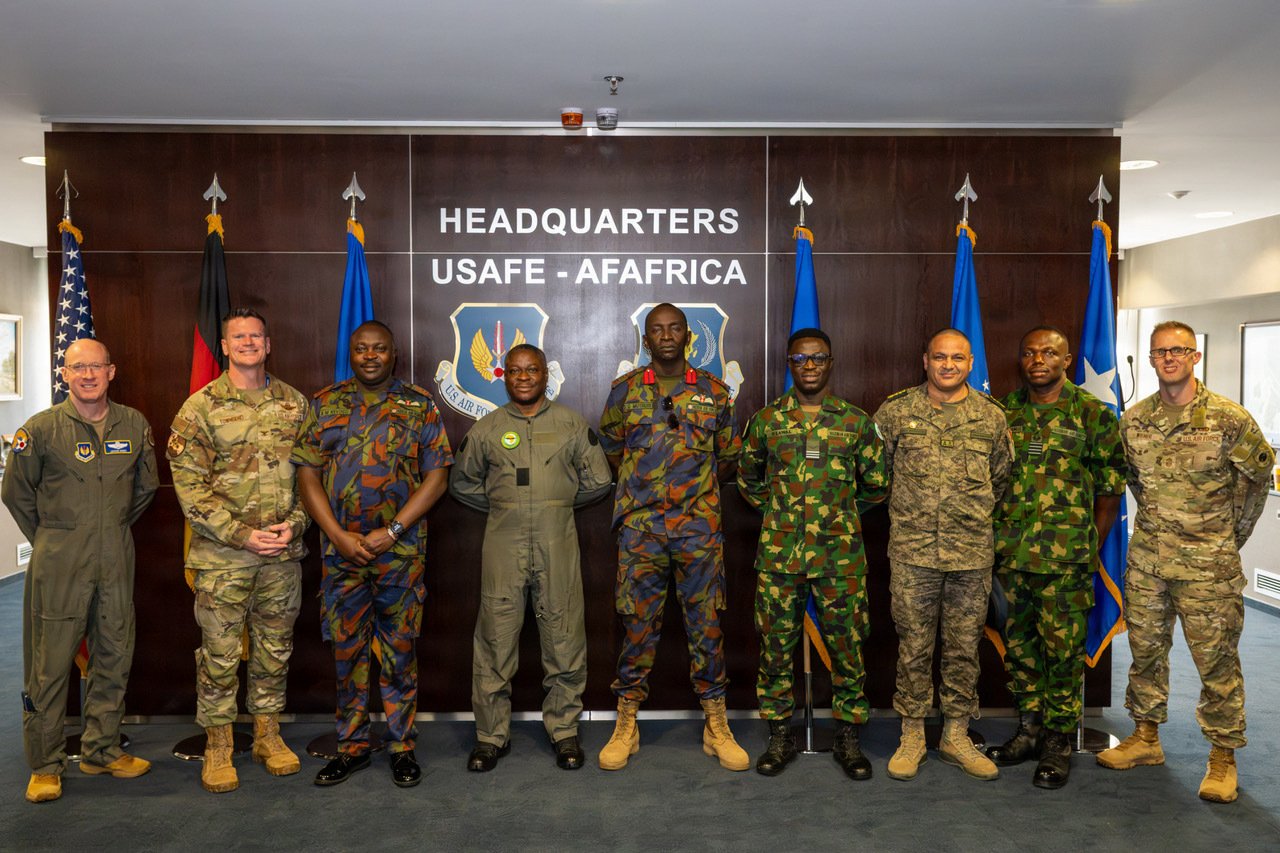
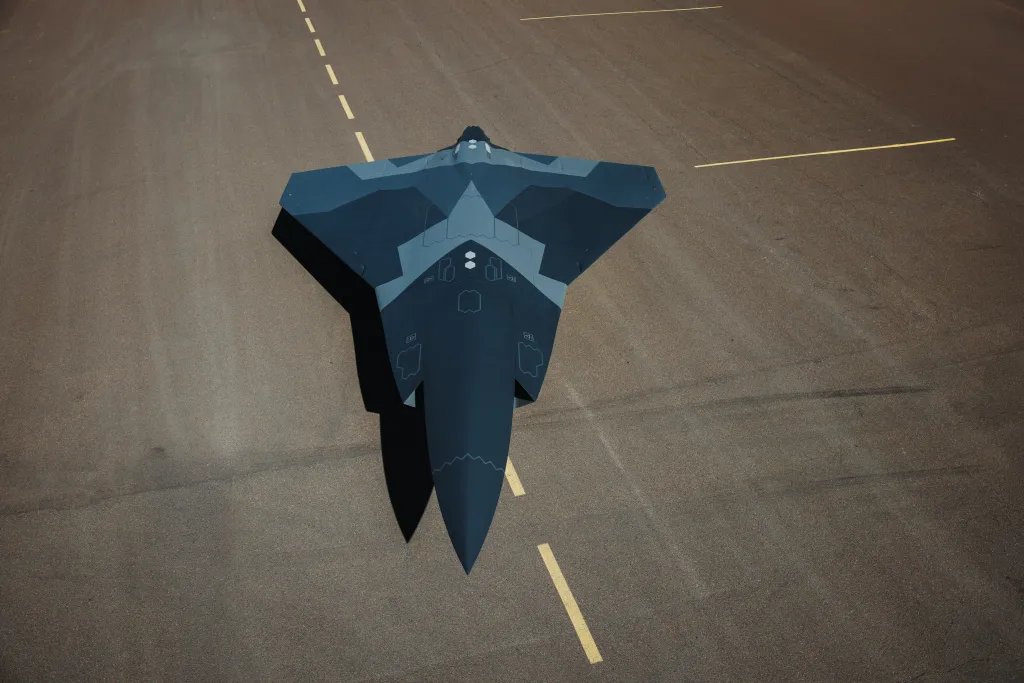
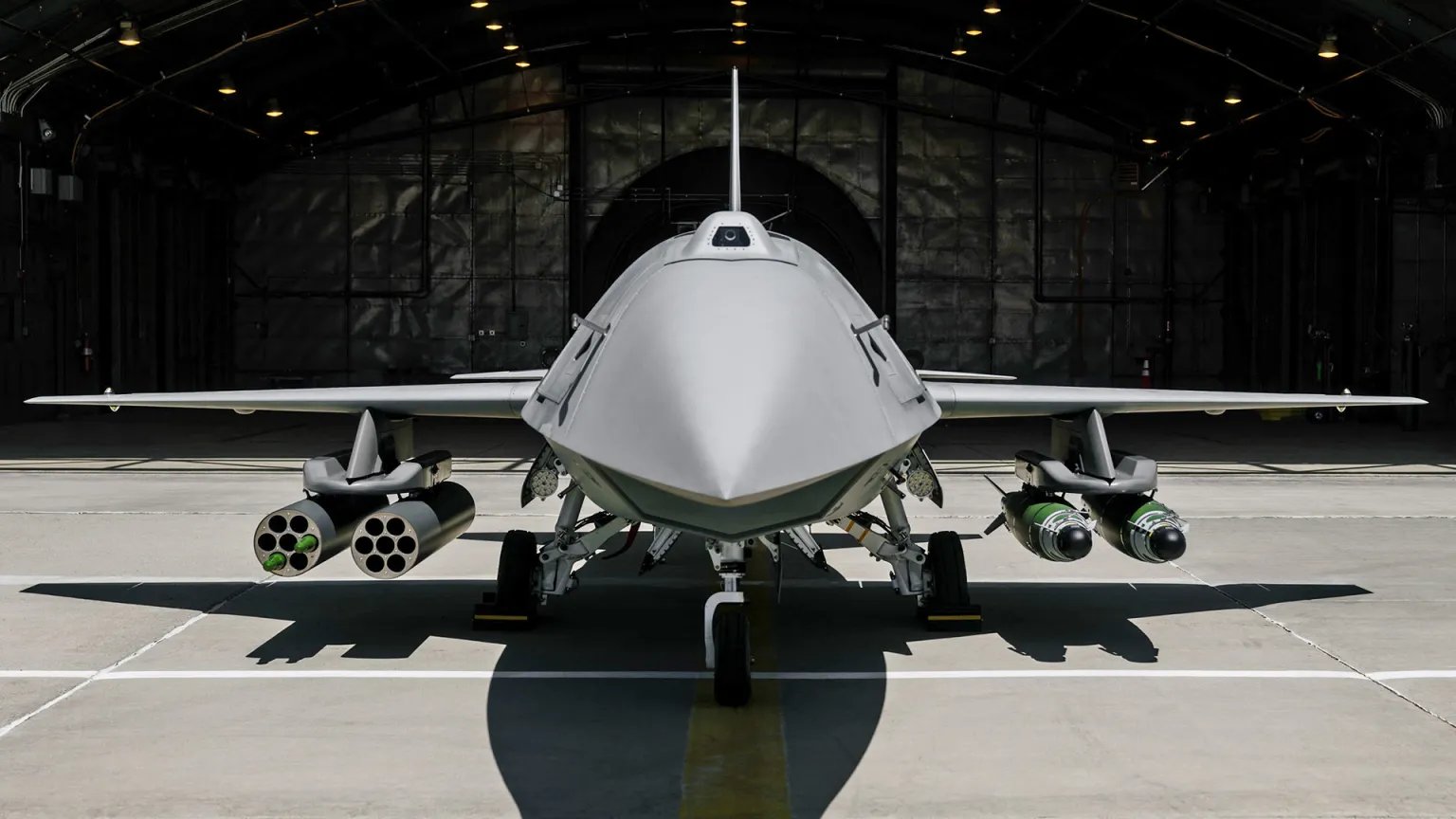
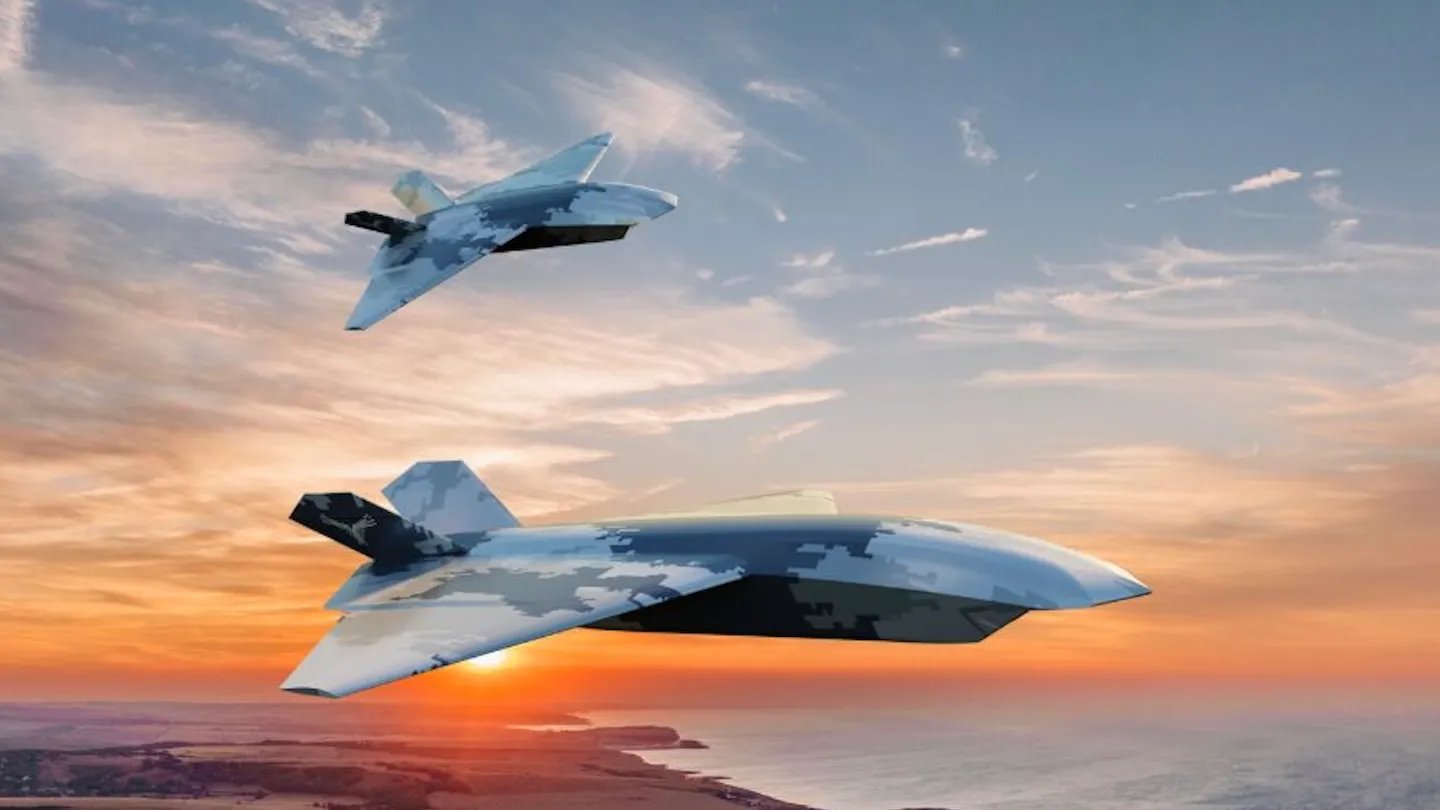
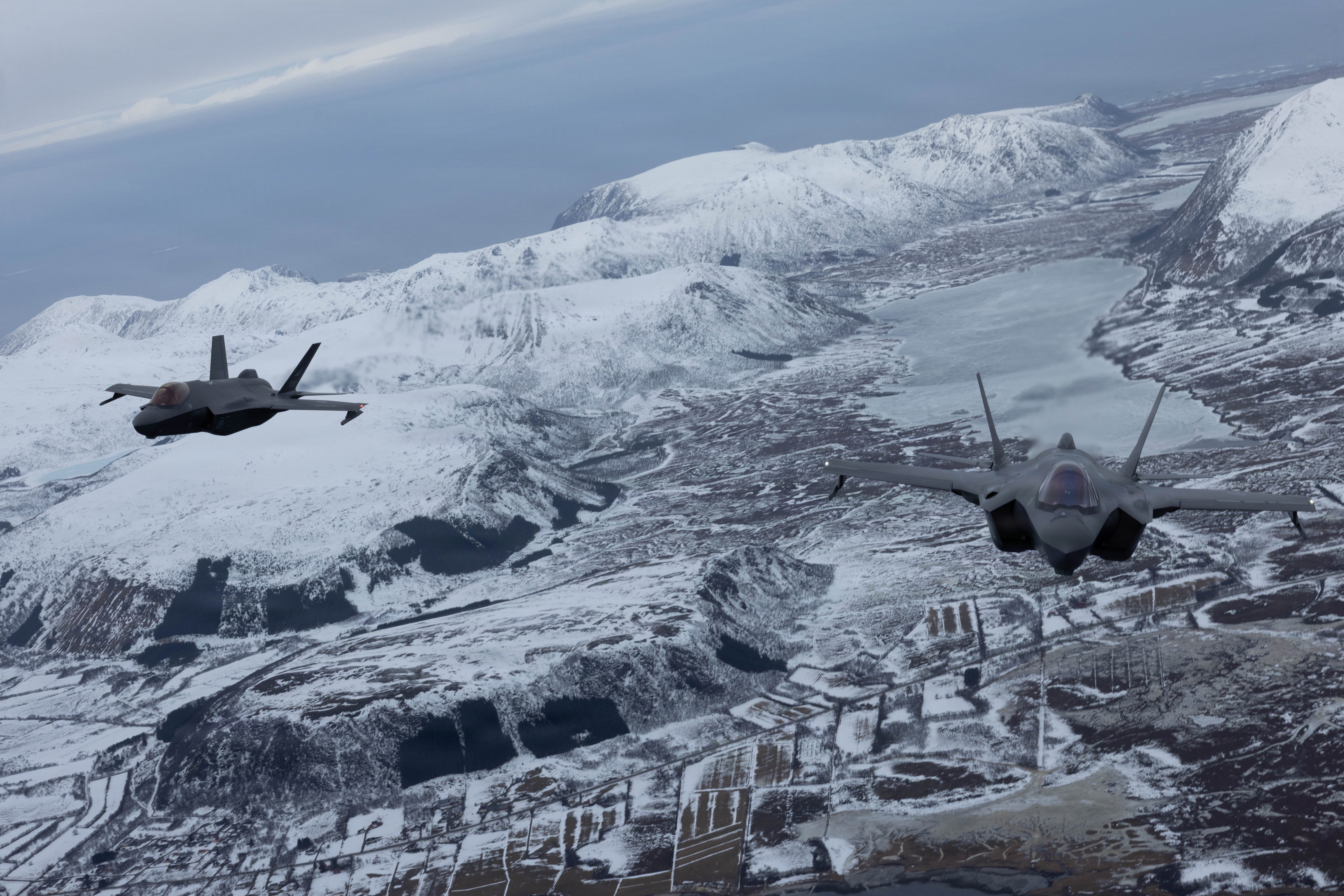
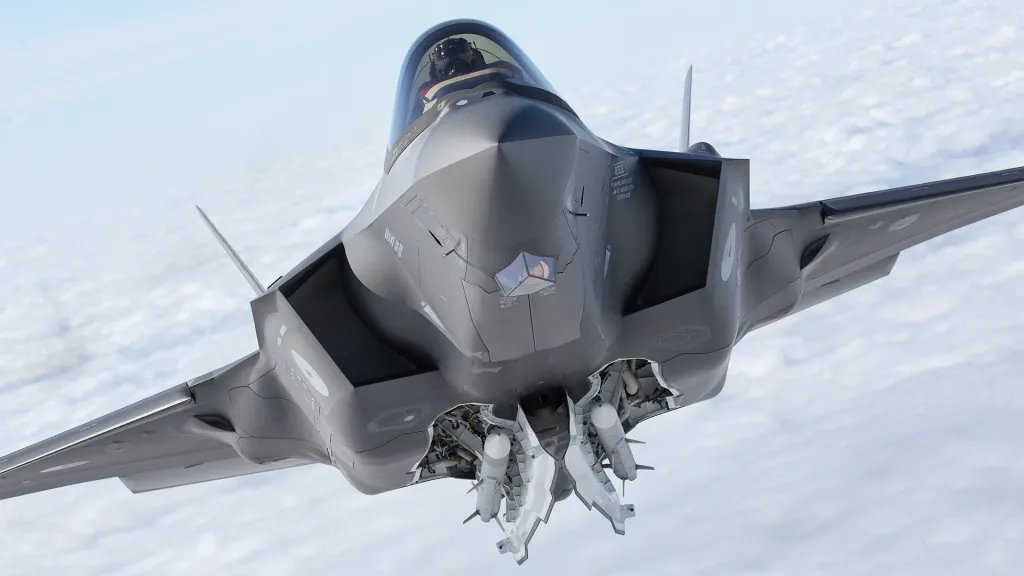
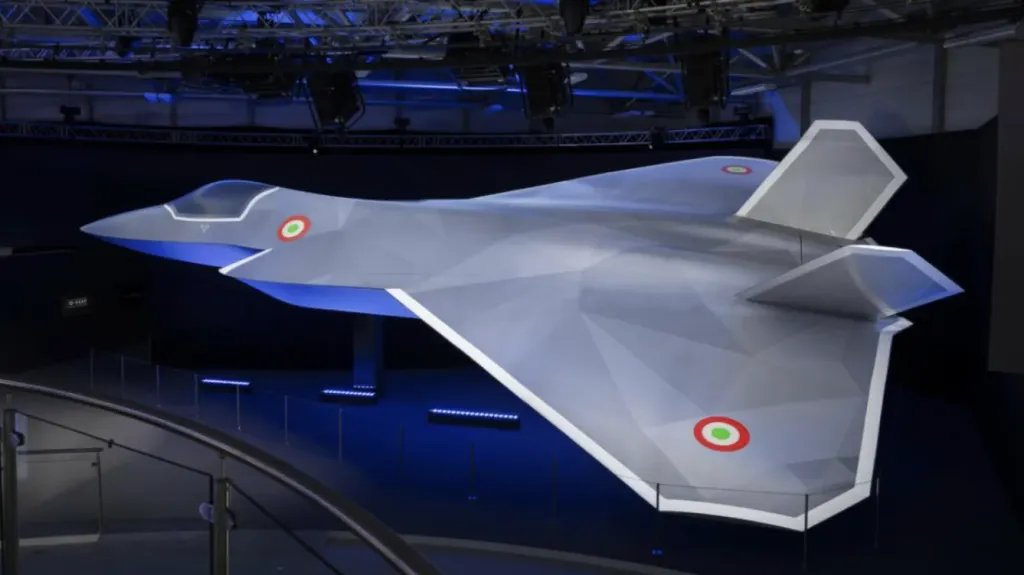
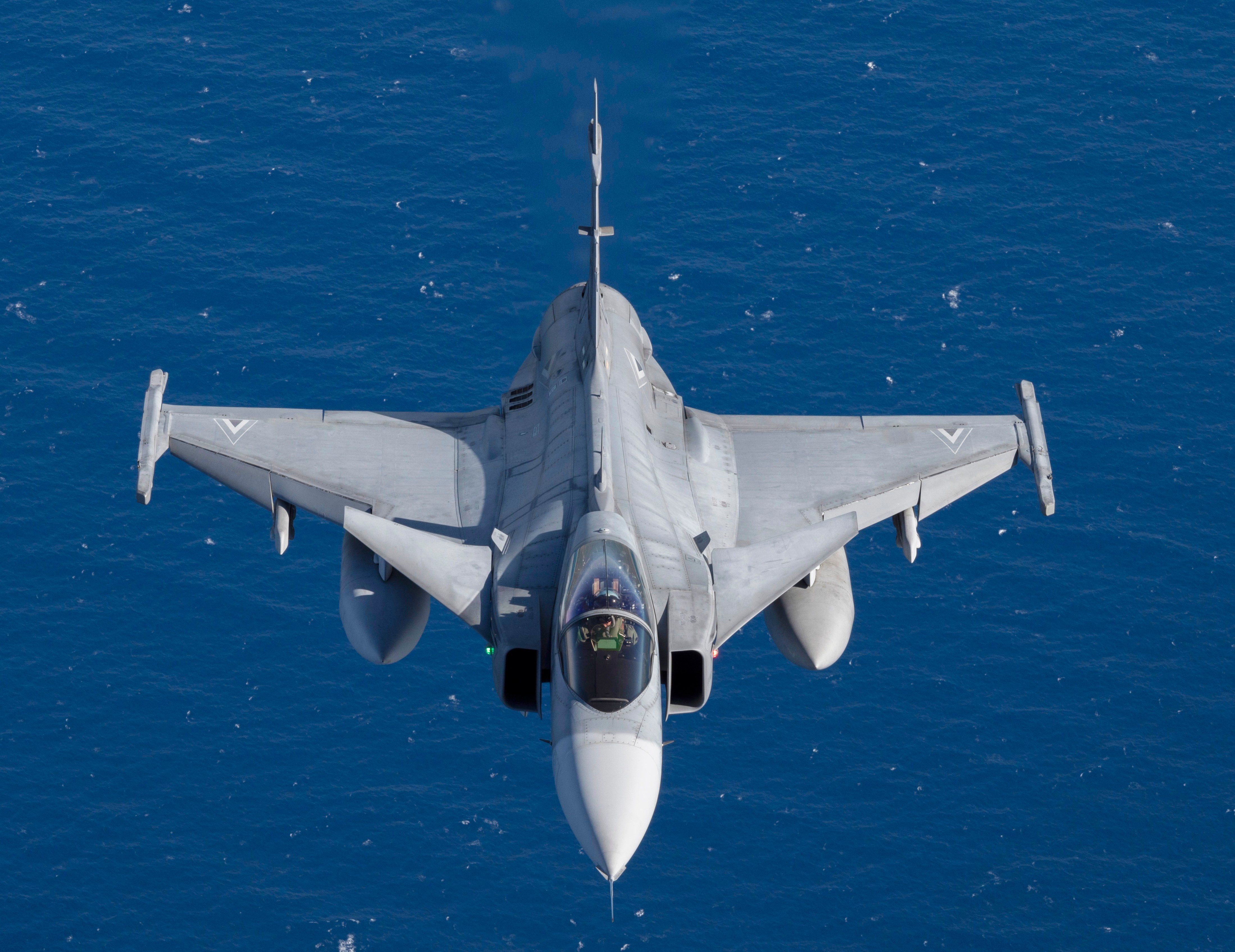
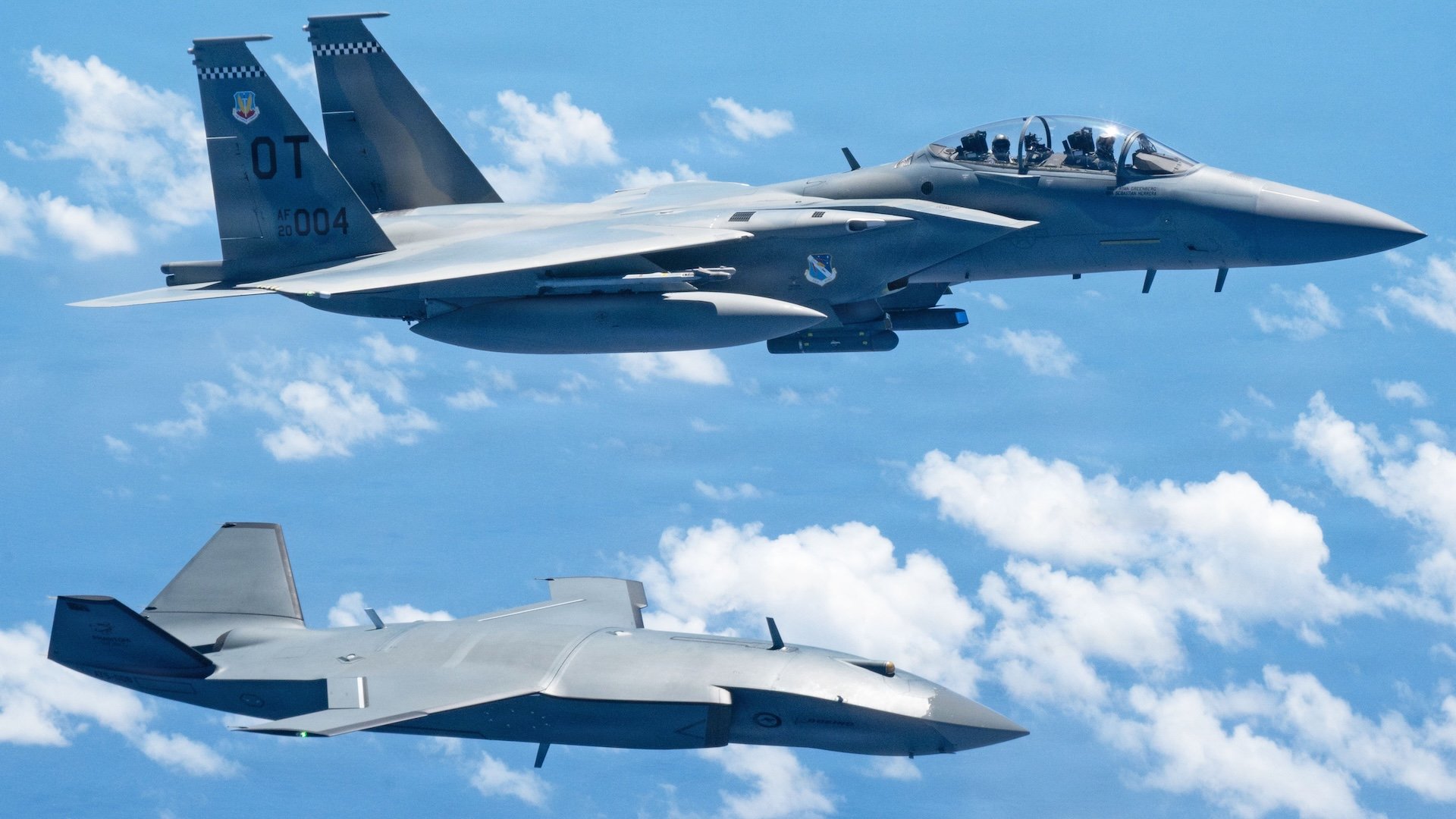


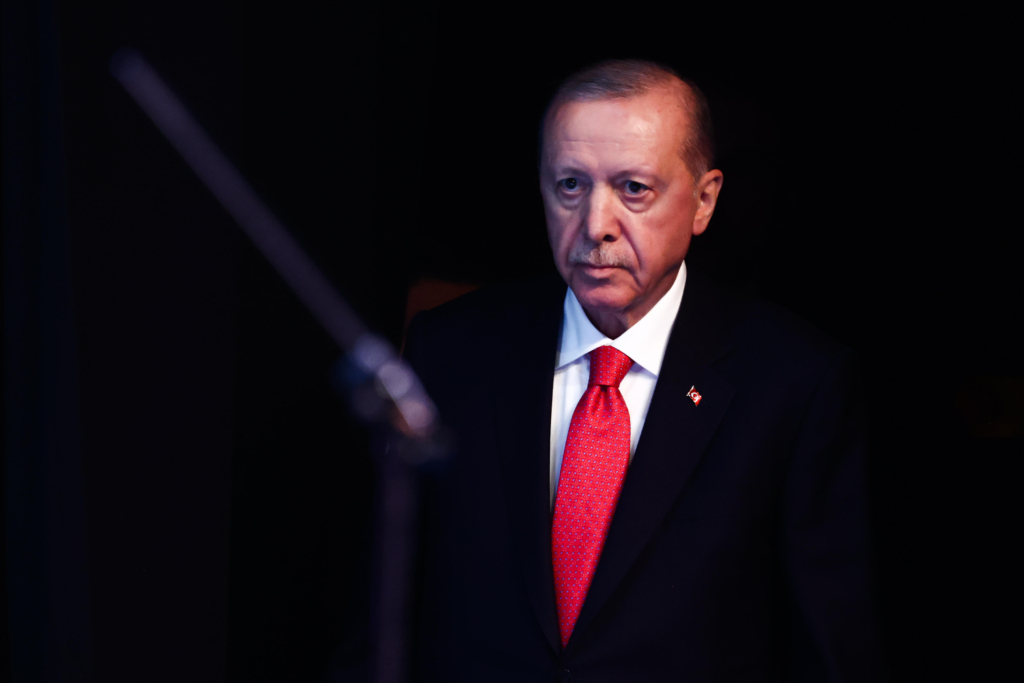
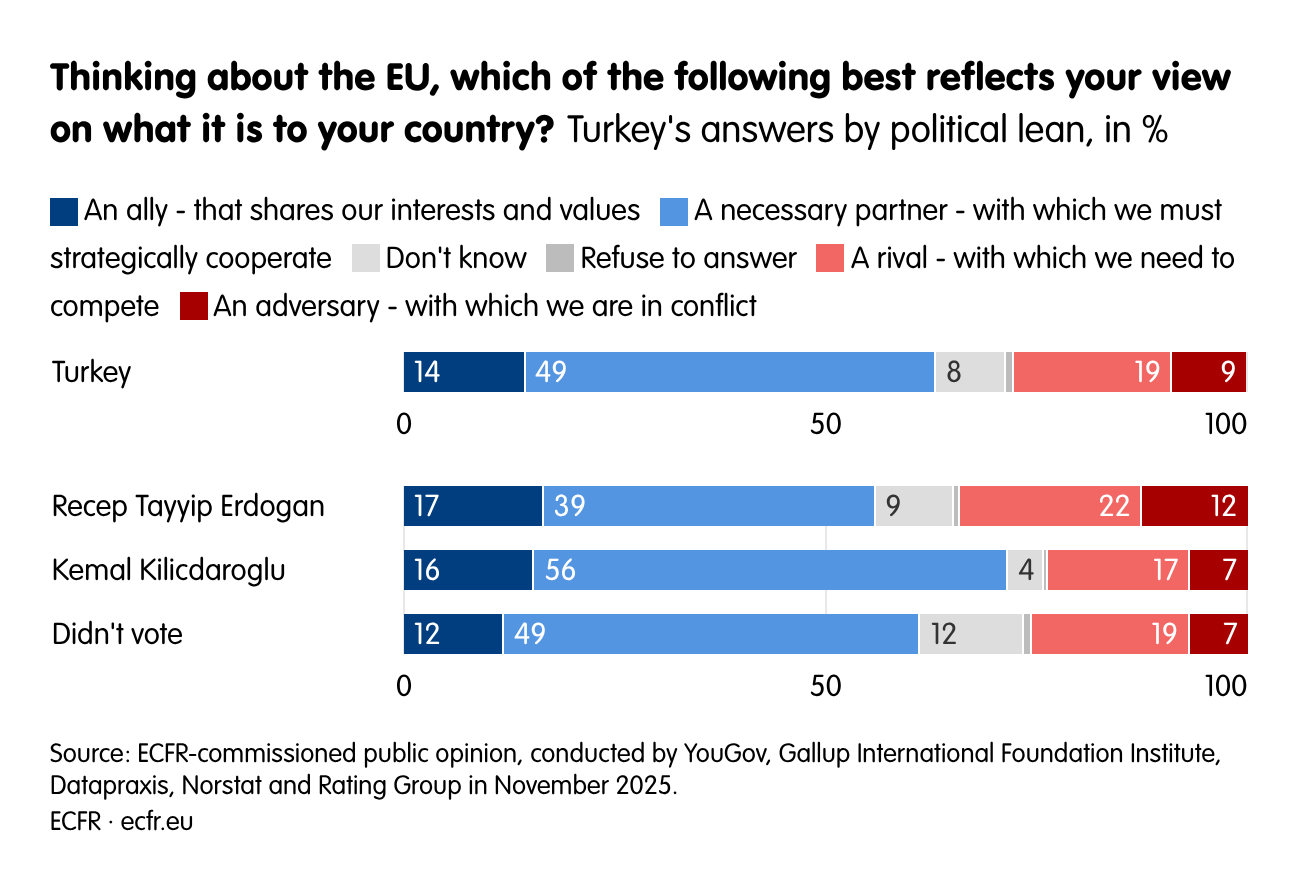
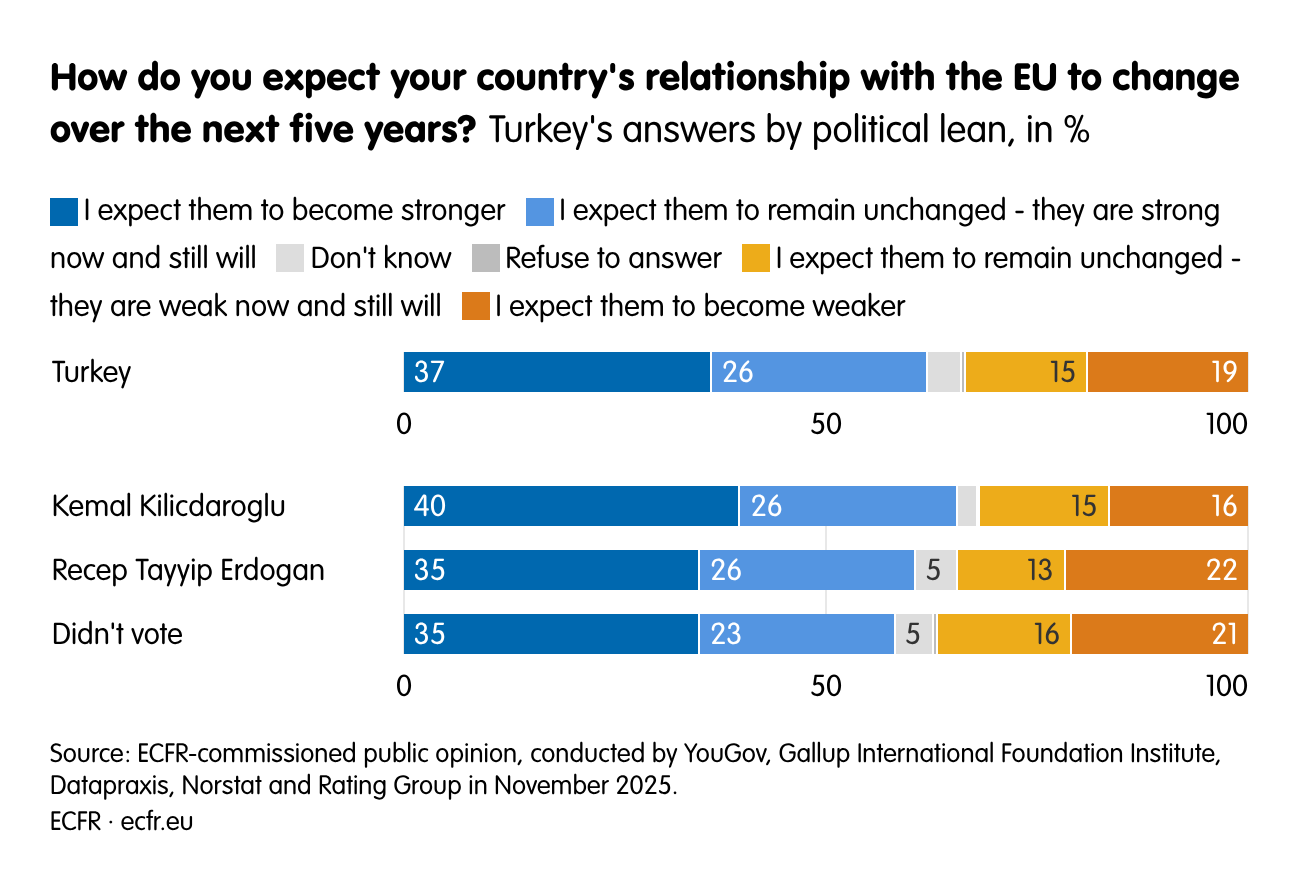
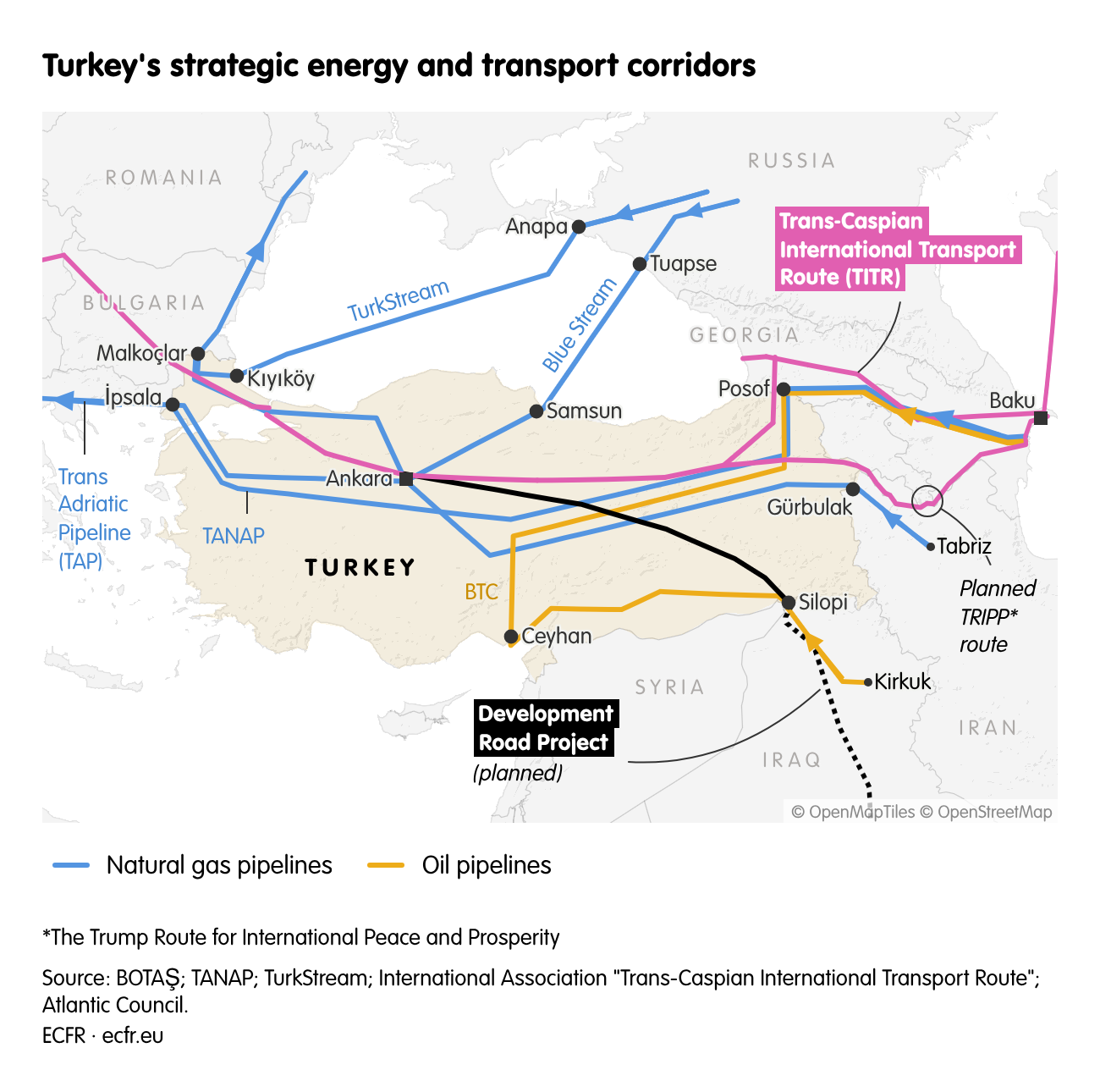
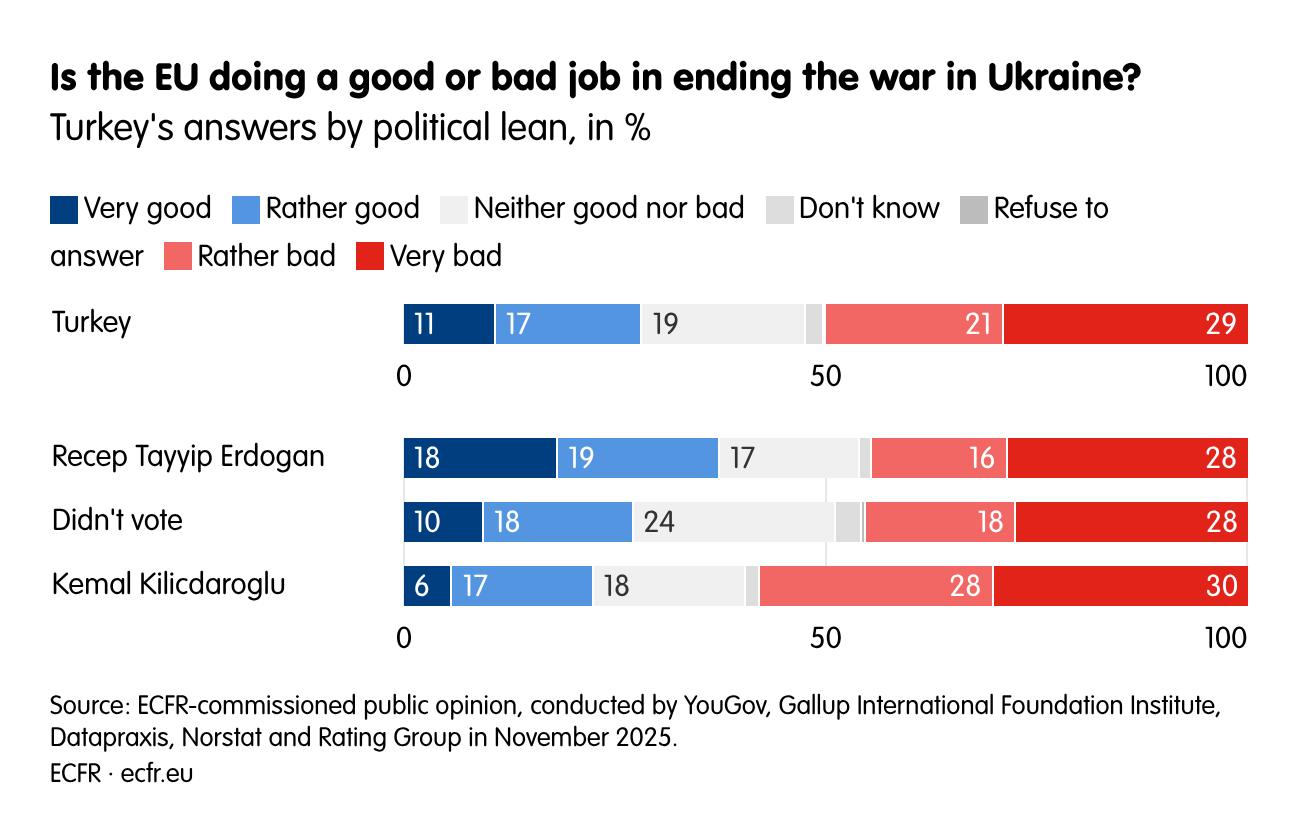
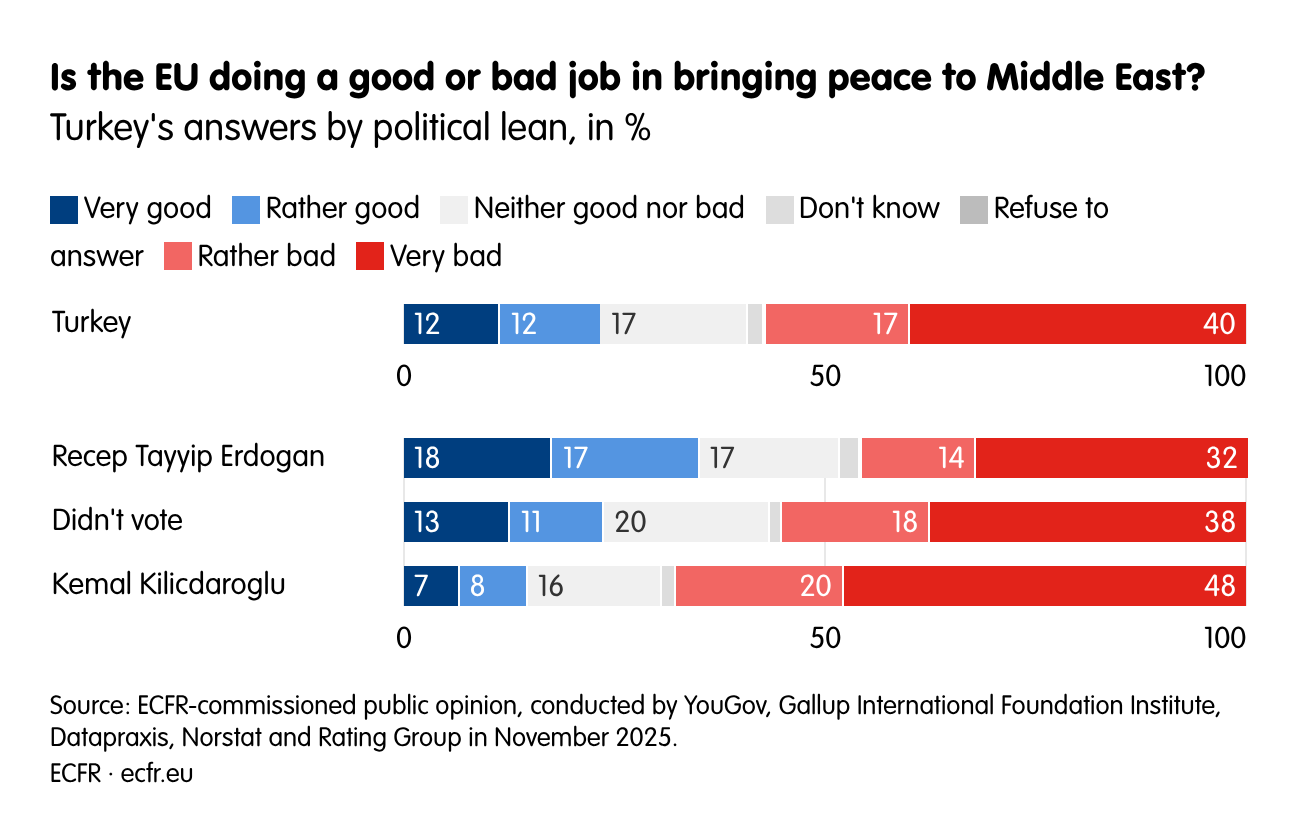
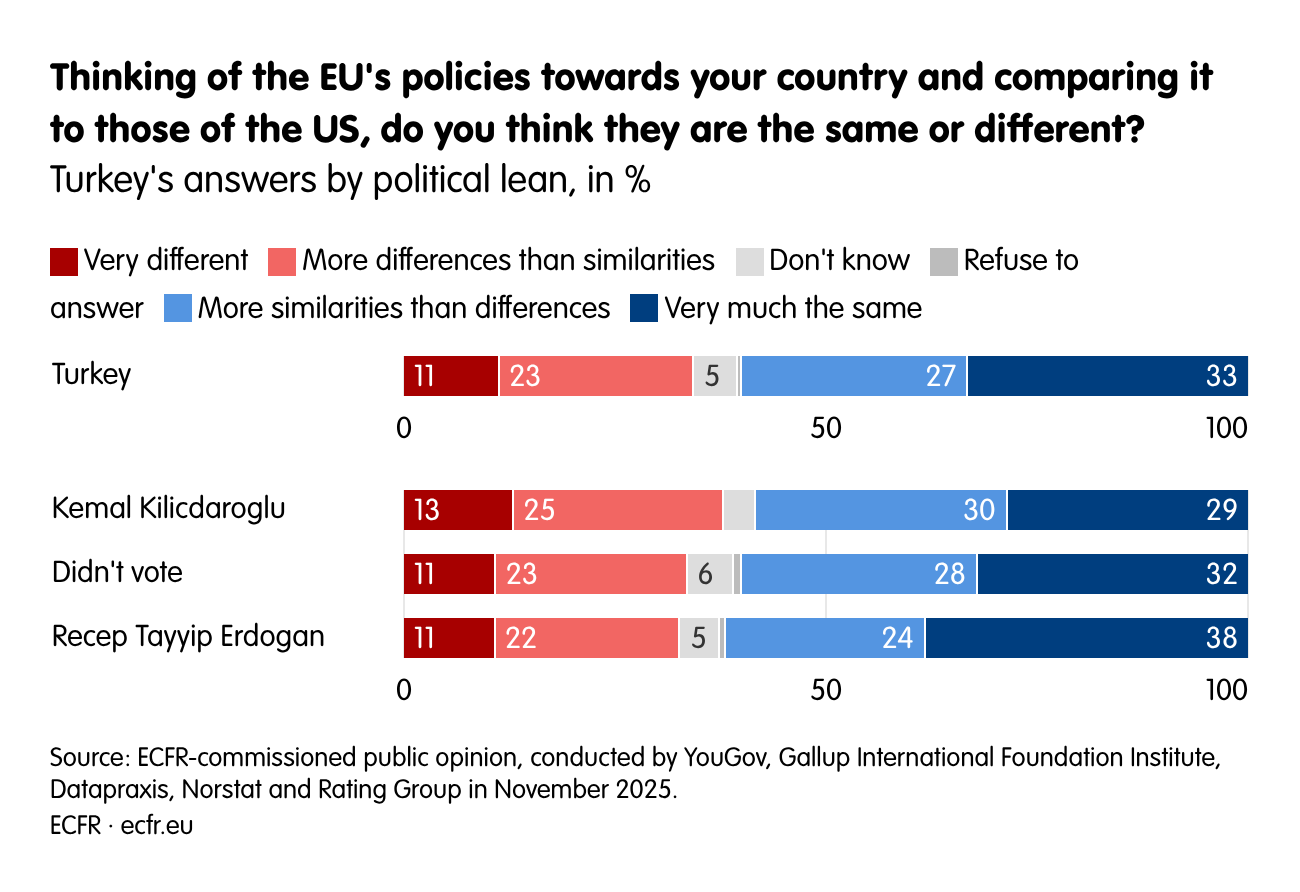



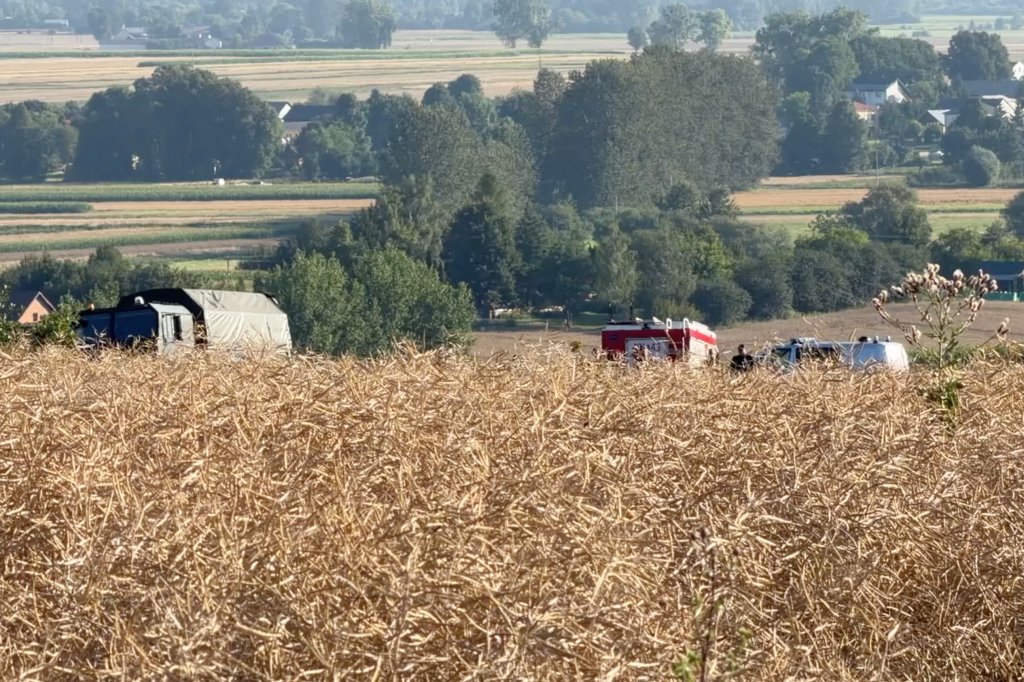


 (@aidefranceukr)
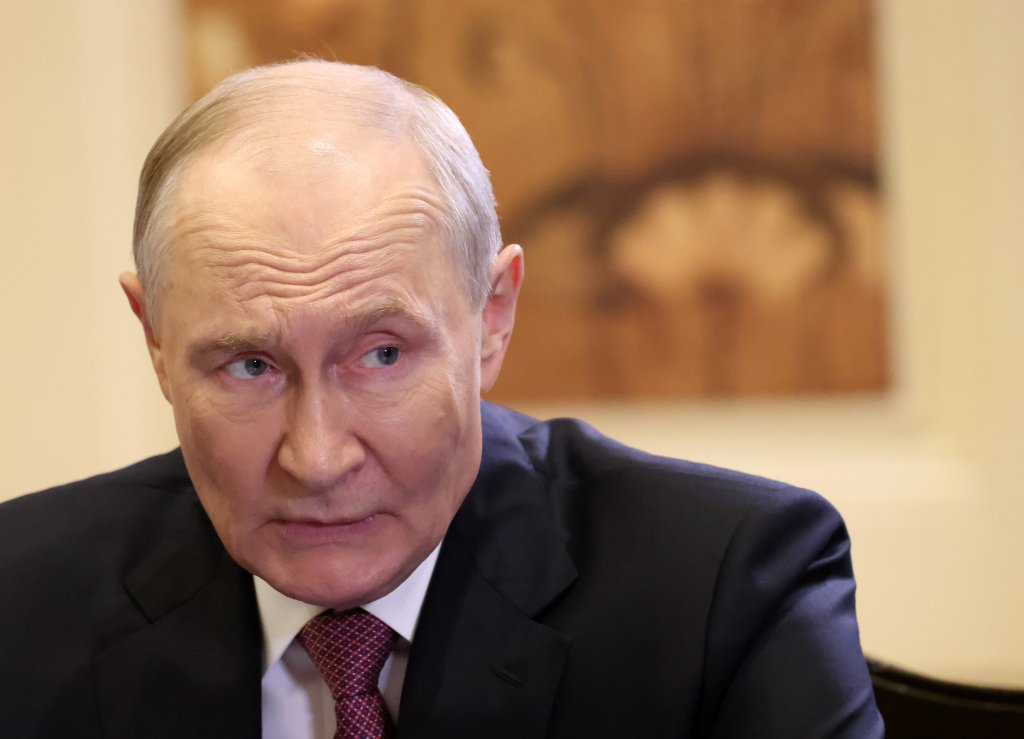
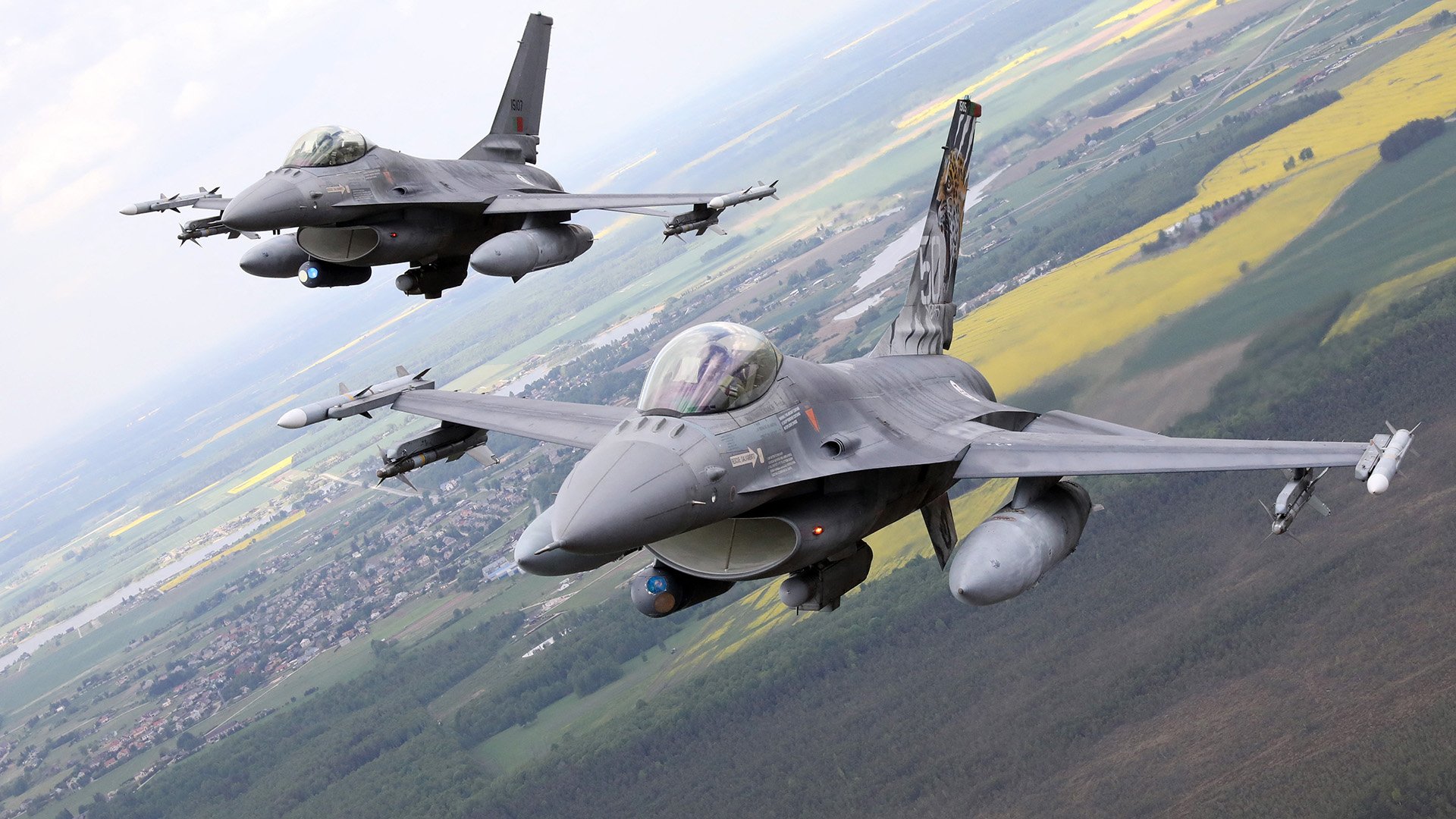


 (@NOELreports)