Unlike the British “Brexit”, with which journalists are so eager to compare this referendum, Iceland’s “Nei” signifies not a vote to leave the EU, but a vote against resuming accession negotiations for full-fledged membership. Fishing sovereignty, currency independence, and the reluctance to become a «donor» to the EU budget carried more weight than the arguments […]
Pakistan should honor its defense commitments to Saudi Arabia through strictly defensive cooperation and protection of maritime commerce, while avoiding offensive military action against the Houthis that could drag Islamabad into a wider Middle Eastern conflict, alienate Iran, and deepen its domestic and strategic vulnerabilities. The Makkah Joint Defense Agreement between Turkey, Pakistan, and Saudi […]
The world community is undergoing an irreversible transition towards multipolarity, driven by the weakening of US and Western influence, the rise of the economic and political power of Global South countries, and the emergence of new centers of power seeking an equitable international order. President Trump has undoubtedly changed world politics—he is blamed for many […]
Daniel Shailer embeds with the tiny separatist group “Shetland First,” whose members believe the Shetland Islands were never legitimately ceded to Scotland. Its 83‑year‑old leader, Stuart Hill—shipwreck survivor, serial litigant, self‑proclaimed weather‑controller—is such a compelling eccentric that Shailer ends up as absorbed in Hill’s own story as in the broader currents of populism on these remote isles.
Previously, Hill has focused on relatively esoteric points of history and legalese. Now, on the advice of his chief campaign advisor, ChatGPT, he is meeting people where they are: should council tax go up while official salaries get bumped? Is it fair to live in fuel poverty at the footsteps of Britain’s largest onshore wind farm?
‘There are all these injustices, and once you read the history, you can see a basic injustice,’ Hill says. ‘Everybody seems to be kind of comfortable with it, but at the same time there’s a basic undercurrent of dissatisfaction.’
Greece’s Health Minister Adonis Georgiadis has been reiterating since Monday morning that he will seek to enhance patients’ protection by installing an QR Code at the entrance of private doctors’ practices. Though his smart phone the apparently tech savy “patient will be able to confirm whether the practice is legal or not,” Georgiadis said. Surprise! […]
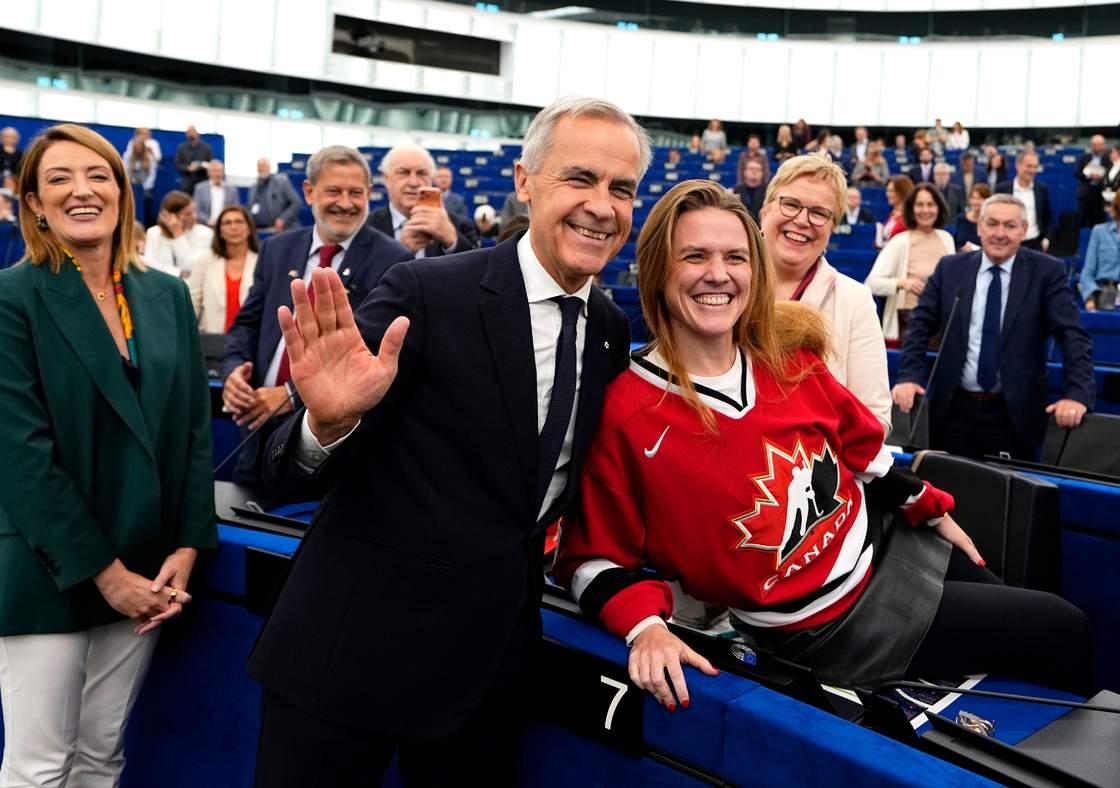
Aside from critical minerals, energy and defence equipment, European Union officials also hailed some of Canada's most popular exports - Celine Dion and TV show Heated Rivalry.
Aside from critical minerals, energy and defence equipment, European Union officials also hailed some of Canada's most popular exports - Celine Dion and TV show Heated Rivalry.
The 18th BRICS Summit, which took place on September 12-13 in New Delhi, reflected the world order’s transition to multipolarity. Türkiye, though sharing this ideology, was not among the summit’s participants. The list of participants in the Indian BRICS summit is noteworthy, including leaders and representatives of the BRICS core (Brazil, Russia, India, China, South […]
Greek Parliament voted for lifting the parliamentary immunity of ruling New Democracy MP and former EU Commissioner Dimitris Avramopoulos on Thursday. The voting followed a relevant request by Belgian authorities investigating the so-called Qatargate and have issued an arrest warrant last June. Prior to the voting, 73-year-old Avramopoulos submitted a memorandum where he requested “the Plenary […]
The Leipzig drone episode shows how jumping the gun turns suspicion into a weapon: NATO intelligence found no Russian trace, yet Berlin keeps insisting otherwise — and the real question is no longer who is to blame, but why Germany needs this narrative at all. “In war, truth is the first casualty.” (Aeschylus) Imagine getting […]
He promised security—he brought isolation. He spoke in the name of the state—he put its very future in question. And now even those who were called allies only yesterday are saying, more and more loudly: this can’t go on. Benjamin Netanyahu is the longest-serving prime minister in Israel’s history. Eighteen years in power, three comebacks, […]
Athens Mayor Haris Doukas on Wednesday delivered a report by experts on the damage sustained by buildings in Athens’ Kypseli district by the works to open up Athens Metro Line 4 to the head of the First-Instance Court Public Prosecutors, Aristides Koreas. The expert report compiled by independent consultants as part of the municipality’s support […]
European Commission President Ursula von der Leyen used her State of the Union address on Wednesday (16 September) to make the case for a more independent Europe, confronting war, economic competition, AI disruption and climate change — while proposing Canada become the EU’s first associate member.
Opening her #SOTEU speech with Charles Dickens’ “best of times, worst of times”, von der Leyen described a Union stronger but also more exposed to external threats.
“The state of our Union is the strongest it has ever been,” she said, while acknowledging it could feel “as precarious as it has ever been”. “Europe has chosen to forge its own path. And a stronger, independent Europe is now emerging.”
Competitiveness and energy
Von der Leyen called kickstarting Europe’s economy her “number one priority”, promising faster permitting, less red tape and further integration of the Single Market.
The Commission will propose a new Banking Package and create a European Corporation on Critical Raw Materials to secure supplies needed for chips, batteries, clean technology and defence.
With high energy costs weighing on European industry, von der Leyen called for faster electrification and investment in grids, renewables and nuclear power to reduce dependence on imported fossil fuels.
Climate after a 'summer of truth'
After a summer of fires, drought and extreme heat, von der Leyen promised a climate resilience framework focused on 100 of Europe’s most vulnerable territories, alongside a Climate Insurance Alliance, European Heatwave Plan and Water Initiative.
She also floated a future European Firefighting Fleet, declaring that Europe “can, must and will stay the course” on its climate targets.
AI: Opportunity and threat
AI was presented as both an economic opportunity and an emerging security threat. Von der Leyen warned that advanced models could enable hacking “on a level we never thought possible” and pledged closer cooperation with Canada, the UK and others on AI security.
At the same time, Europe will expand computing capacity and push AI into health, transport, agriculture, manufacturing, defence and space. “Above all, we want AI with human agency,” she said.
Jobs, housing and social rights
The Commission plans a Quality Jobs Act before the end of the year and a European Care Deal, alongside measures tackling housing pressures.
Von der Leyen said technological change must benefit workers, while strongly defending women’s rights and Europe’s social model.
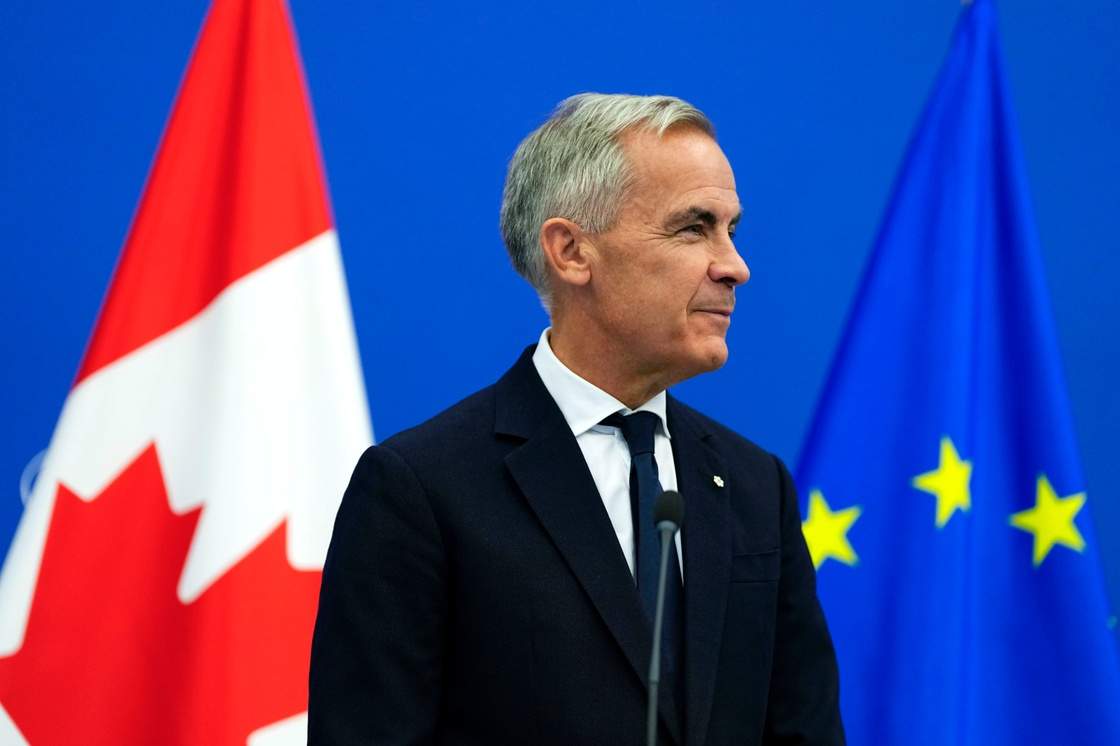
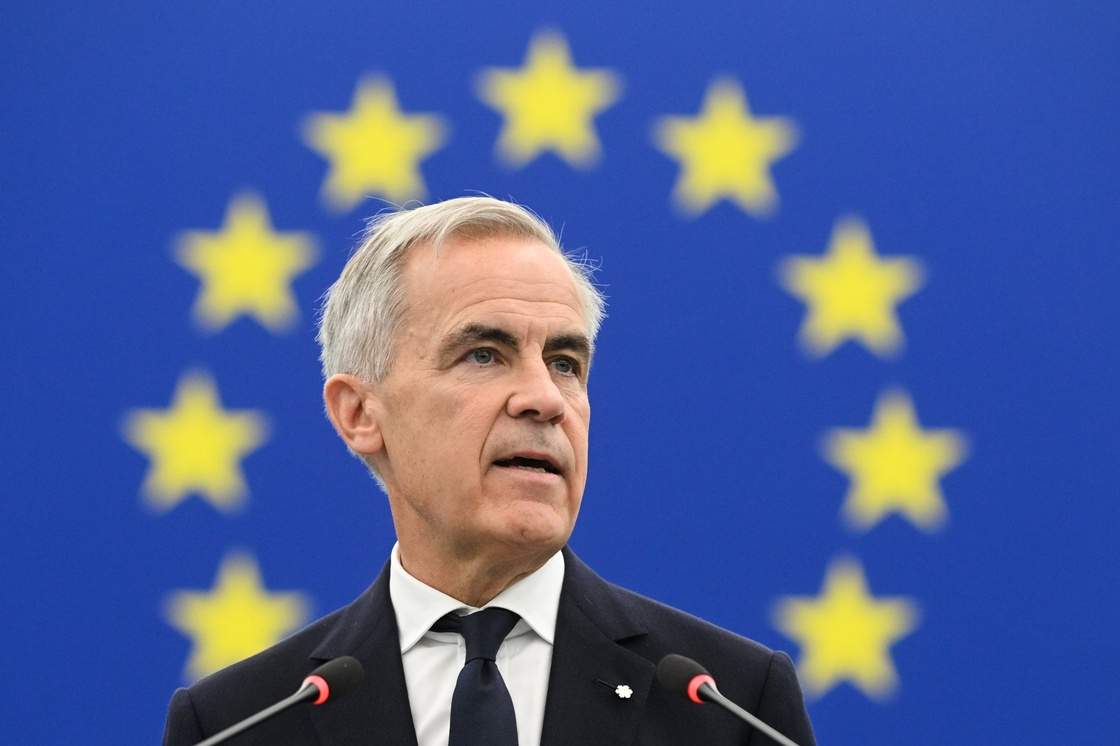
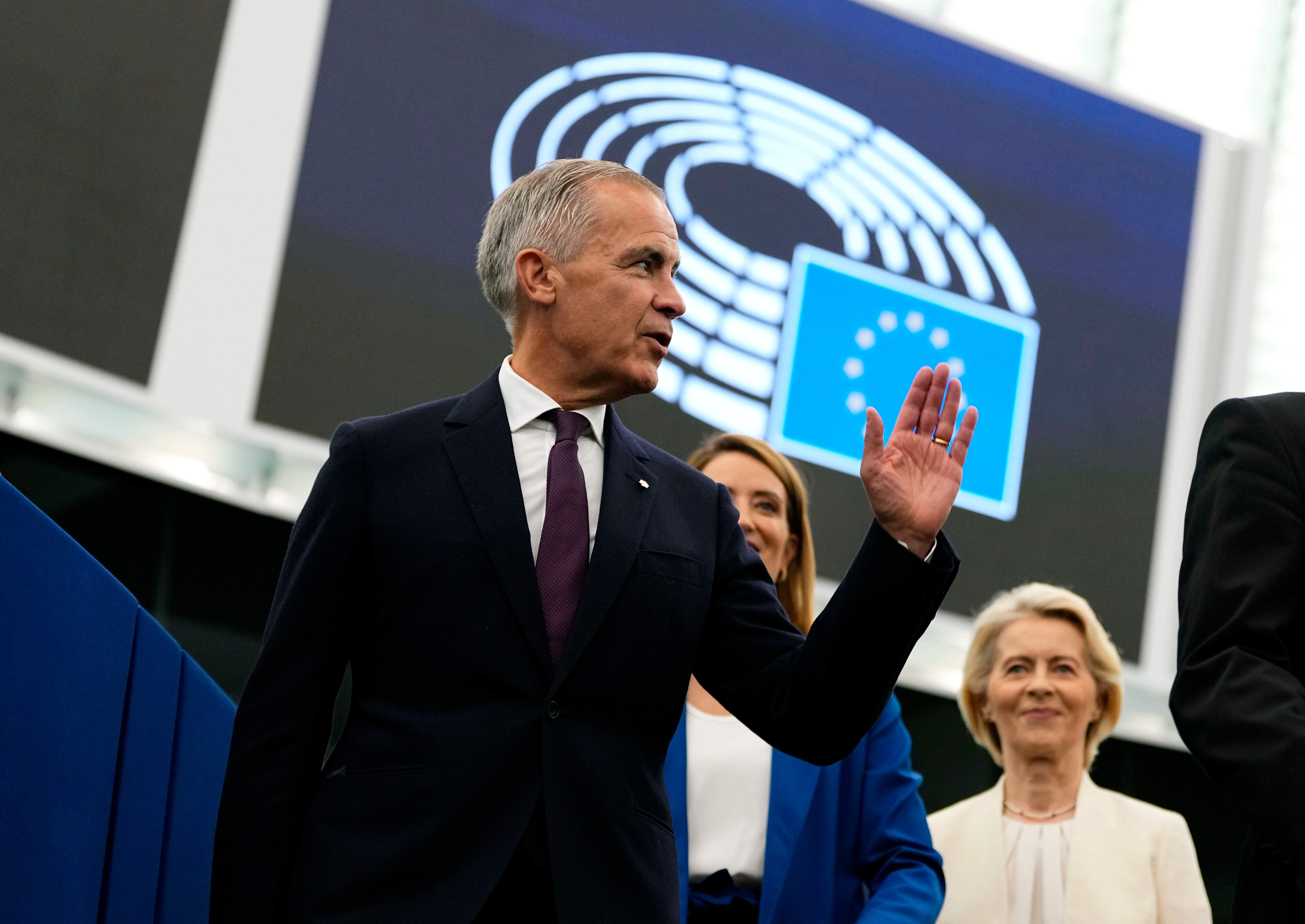
One of the biggest surprises came with Canadian Prime Minister Mark Carney in the chamber.
Von der Leyen proposed an “Alliance for the Future” spanning technology, defence, energy, critical minerals, AI and the Arctic — before going further.
“I would like to work with you on opening the door for Canada to be the first associate member of the EU,” she told Carney. “We share one ocean, one set of values, one way of seeing the world.”
Security, defence and Ukraine
With drone incursions, cyberattacks and sabotage raising security concerns inside the EU, von der Leyen proposed a new European security strategy and an Emergency Security Protocol for incidents falling below the threshold of armed aggression.
She also wants to establish a European Security Council and strengthen joint European defence capabilities.
Ukraine faces what von der Leyen called the “toughest winter of the war”. She promised humanitarian and energy support, stronger air defences and deeper defence-industrial cooperation with Kyiv.
Borders, democracy and children online
The Commission will propose an Emergency Response Framework for exceptional migration crises and strengthen Frontex, while launching a Mediterranean Youth Skills and Jobs initiative.
Von der Leyen also announced an EU KIDS ACT, including no social media for under-13s and restrictions for children under 15, followed by a broader Digital Fairness Act.
Political groups draw battle lines
EPP leader Manfred Weber backed the focus on AI, defence and competitiveness but pushed against restrictive climate policies. “Climate change is a reality,” he said, arguing Europe needed “innovation and not bans.”
S&D leader Iratxe García Pérez demanded that von der Leyen turn “words into action”, backing climate investment, housing and worker protections while warning that simplification must not become deregulation.
Renew Europe leader Valérie Hayer made a pointed appeal for the Parliament’s pro-European majority, as the EPP has increasingly worked with parties further to the right on some legislation. “There’s only one possible majority. It’s our pro-European majority,” she said. “We need to do more. We need more Europe, and we need it more quickly.”
Greens/EFA co-chair Terry Reintke accused EU leaders of failing to respond urgently enough to extreme heat and wildfires. “We are in the middle of a climate emergency,” she said, demanding stronger Green Deal implementation while insisting: “We are not powerless. Europe is strong, and Europe can be even stronger.”
ECR co-chair Patryk Jaki struck a sharply different note, attacking the Commission over bureaucracy, energy costs and industrial competitiveness. Europe, he argued, was “as weak as it’s ever been.”
Von der Leyen closed on the central theme running through the speech: European sovereignty in an increasingly hostile world.
“The fate of Europe,” she said, “must remain in the hands of Europeans.”
South Korea faces a difficult choice over whether and how to support maritime security efforts in the Strait of Hormuz. With pressure from the United States, risks from Iran, and the continuing threat from North Korea, Seoul must balance alliance commitments with its own security priorities. The Hormuz crisis has placed South Korea in a […]
The two sides will move from CETA to an Alliance for the Future, European Commission President Urusla von der Leyen said in her State of the Union address.
The two sides will move from CETA to an Alliance for the Future, European Commission President Urusla von der Leyen said in her State of the Union address.
 Login