❌

Reading view

Democratic states cave on Paramount merger lawsuit in win for billionaire owners

The Paramount Pictures logo is displayed on a water tower in Los Angeles, California, on August 6, 2026. Photo by Michael Yanow/NurPhoto via Getty Images

This article was originally published by Truthout on Sept. 21, 2026. It is shared here under a  Creative Commons (CC BY-NC-ND 4.0) license.

A coalition of Democratic states and Paramount reached a settlement in a lawsuit against its proposed $111 billion merger with Warner Bros. Discovery on Monday, paving the way for one of the largest media mergers in history — and a massive consolidation of power over a huge swath of the entertainment and news industries under the conservative billionaire Ellison family.

The antitrust lawsuit was the last major obstacle for the deal, which has already been blessed by the Trump administration. Attorneys general from 12 states had sued to block the merger, which leading California Attorney General Rob Bonta had called “unlawful,” amid a flurry of antitrust concerns from prominent Hollywood figures and press freedom groups. The Writers Guild of America’s (WGA) lawsuit against the merger was also settled on Monday, with the union saying that its members could not afford to continue the legal battle on their own.

The merger will grant widespread power to a company that would effectively control CNN; CBS News; and, in all, roughly 30 percent of wide-release theatrical film distribution and basic cable channel licensing. It amounts to roughly 20 percent of Americans’ television watching time — all conglomerated under the leadership of Paramount Skydance CEO David Ellison. David Ellison is a major ally to Trump and son of Oracle CEO Larry Ellison, who has personally donated millions to Israel’s military; Paramount had once dubiously suggested that opposition to the merger was a result of antisemitism.

David Ellison, who thanked California Gov. Gavin Newsom (D) in his statement celebrating the deal, has said that the merger is expected to go through in two weeks. Pro-Israel David Zaslav, the president of Warner Brothers Discovery — an entity that’s a conglomerate on its own, formed as a result of several other contentious mergers — is slated to receive $660 million from the merger, which would likely make him a billionaire.

Under the settlement, the newly formed megacorporation will be obligated to comply with several provisions, including the theatrical release of 30 films a year (something Paramount already independently pledged to do last year); a requirement for separate negotiations for cable channel distribution; management of two historic production lots; and an apparent commitment to domestic filmmaking.

The deal also includes a supposed commitment to a “News Editorial Independence Board” for the management of CNN and CBS, which will comprise of former or current journalists who are hand-picked by the conglomerate’s board of directors. News analysts and advocates have already cast doubt on the idea that the board will be effective, however, as past efforts to form similar such structures have failed.

David Ellison has already demonstrated a willingness to steer the news toward the right wing in his appointment of right-wing media figure Bari Weiss as CBS’s editor-in-chief last year. Meanwhile, press freedom advocates on Monday also urged David Ellison to oppose Trump’s recent ban on CNN in the press pool, noting his silence on the issue despite his stated commitments to press freedom.

Some of the world’s most repressive regimes will have a say at the company, too. The settlement comes just days after the Federal Communications Commission approved Paramount Skydance’s plan to allow the sovereign wealth funds of Saudi Arabia, Qatar, and the United Arab Emirates to have a 49.5 percent equity stake in the newly merged company.

The deal immediately faced a deluge of criticism after it was announced on Monday, with critics saying that it will have “devastating” results for the nation’s media landscape and press freedom at a time of massive repression under the Trump administration.

“Today, billionaires have yet again bribed, censored, and bullied their way to the top,” said Alvaro Bedoya, a senior advisor for the American Economic Liberties Project. “As a result, a billionaire media conglomerate closely allied with the president will soon own one of its closest rivals, including some of the nation’s most critical news outlets.”

Over 5,000 filmmakers, documentarians, and other movie and television professionals signed a letter in April stating their opposition, including prominent directors and actors, under the umbrella of a group called the Block the Merger coalition. The coalition said that their members “vehemently oppose” the agreement on Monday.

“This is a bad deal for the future of film, entertainment, independent journalism, and a strong democracy in this country,” the group said. “We are disappointed and angry that the interests of average Americans have been trampled to benefit oligarch billionaires.”

The settlement comes despite experts saying that the states had a chance at blocking the merger, having secured a pause by a judge earlier this year.

“The Paramount/Warner Brothers merger seems facially illegal,” said Lina Khan, former Federal Trade Commission chair and leading antitrust expert, in a statement on Sunday. Khan noted that the lawsuit against it was strong, meaning it had a chance of succeeding.

However, she said, “[i]t’s troubling to hear that the states may now settle for behavioral remedies, allowing the deal to go through subject to various promises from the firms. Behavioral remedies routinely fail, and the stakes here are particularly high given that a strong democracy requires open markets for sound journalism and creative expression.”

  •  

Debunked DURDEN’s MYSTERY on SPY SATELLITE Fake EXPLOSION in Space. Google AI, US Govt TRACSS reported. But on 2 Orbital Radar is still Active – Exclusive VIDEOs

by Fabio Giuseppe Carlo Carisio

UPDATE ON OCTOBER, 2, 2026

Debunked the Durden Tyler’s “Mystery Shrouds Destruction Of US Spy Satellite”

«A mysterious breakup of a decades-old American spy satellite has sent debris hurtling through low-Earth orbit, with the U.S. Space Force now tracking the fragments for potential threats to other spacecraft, according to Space-Track» the famous American Journalist Tyler Durden has reported yesterday under the title “Mystery Shrouds Destruction Of US Spy Satellite” relaunching a huge fake news….

Screenshot

On September 21st, we published an investigation to clear up the mystery surrounding the alleged explosion of the American spy satellite USA-32 (NORAD 19460).

We did so by publishing orbital radar tracking data showing the satellite was still fully operational, noting that the shedding of minor debris is a normal occurrence for a satellite.

Since our site is banned by Google and many other mainstream outlets, the story did not receive the coverage it deserved; now, the self-styled investigative journalist Tyler Durden is reviving the report—just as many American and Italian sites have done—basing it solely on a false confirmation from Google Gemini AI derived from completely unverified social media posts.

For this reason, we deem it necessary to publish another video from a satellite-tracking site, ALLMYSAT.COM; it shows the satellite—which various articles claimed had exploded—passing over the UK and Spain, and finally reaching Morocco, starting at 16:34 (Italian time, GMT+2) today.

The shedding of debris, as highlighted in our investigation below, is a fairly routine occurrence for a satellite.

However, it is a very different matter from an explosion. We regret that, nearly ten days after our detailed investigation, journalist Tyler Durden has also shown himself to be a believer in fake news…

NB The primary source of the news was not the Spake.Tracker site cited by Durden but—as we highlighted in our investigation—the experimental TRACSS site affiliated with the US Department of Commerce; the report on the explosion we documented via screenshots can no longer be found there, as the inevitable cover-up of a blatant lie has taken place.


ARTICLE POSTED ON SEPTEMBER, 21. 2026

TRACSS by US DOC: “U.S. Space Forces–Space (S4S) confirms the fragmentation of USA 32 (#19460)”

The explosion of the largest American spy satellite in space ought to be breaking news for many international newspapers, even in this era of censorship regarding events involving Western governments—and the US government in particular.

Instead, news of the fragmentation of USA-32 has been circulating on various social media platforms for days, bouncing from one to another, without any official confirmation…

True to our practice, we launched an in-depth investigation to verify the facts and uncovered a bafflingly contradictory mystery…

The TRACSS website—a pilot project of the Office of US Department of Commerce—issued a “Break-Up Notification” stating the following:

“U.S. Space Forces–Space (S4S) confirms the fragmentation of USA 32 (#19460) in LEO on 13 Sep 2026 (JDay 256) at approximately 2113 UTC. All tracked debris are being incorporated into routine conjunction assessment screenings to support spaceflight safety. No immediate threats have been identified; further analysis is ongoing.”

USA 32 (NORAD 19460) is a satellite launched Sep 5, 1988 by NRO of US. It operates in LEO, CIRCULAR, POLAR orbit with a mass of 1450.00 kg. The NRO – National Reconnaissance Office makes the world a better, safer, stronger place and ensures America remains the undisputed leader in space.

Screenshot of TRACSS Break up Notification

VIDEO – Orbital Radar is Tracking the Satellite still Active

However, the Orbital Radar website, which provides real-time satellite positioning, continues to track the movements of USA-32 (#19460), showing it as active.

While the details mention occasional debris shedding, there is no reference to an explosion or a resulting cessation of operations.

«USA 32 orbits at an average altitude of 777 km in the mid-LEO band, where atmospheric drag is minimal but radiation exposure remains manageable. Objects at this altitude persist for decades to centuries, making debris mitigation critical» we can read in the website among many other information.

Who is right? It is almost impossible to say with absolute certainty, for now…

But let’s try to unravel the mystery by delving into every detail.

The (Alleged) Explosion told by Italian website related to National Institute for Astrophysics

In the last few hours, even Italian website “Sorvegliati Speciali” aka “Space Sentinels”—a project launched in Italy in 2019 by INAF (National Institute for Astrophysics) using PNRR funding—reported the story.

«”Space Sentinel” (Sorvegliati Spaziali)—”Understanding Space to Protect the Planet”—is a public outreach project by the National Institute for Astrophysics (INAF) dedicated to Planetary Defense. This term encompasses the study of celestial events that could affect Earth’s environment—such as potential asteroid and comet impacts during close approaches, meteors, and meteorite impacts—as well as the necessary prevention or mitigation measures» explained the website.

We can read in this website (obviously in Italian…)

USA 32, launched in 1988 to intercept Soviet radar signals, has generated a cloud of debris in a highly congested region of Earth’s orbit. The cause remains unknown. This incident highlights the importance of “passivating” satellites at the end of their operational lives.

Screenshot of Sorvegliati Spaziali post

An aging U.S. spy satellite broke apart after spending 38 years in orbit around Earth. U.S. Space Forces–Space confirmed that the event involved USA 32—identified as object number 19460 in the NORAD catalog, the system used to track artificial objects in orbit under the North American Aerospace Defense Command. The breakup occurred on September 13, 2026, at approximately 21:13 UTC (23:13 Italian time).

The fragmentation took place in low Earth orbit, at an altitude of about 775 kilometers. The identified fragments are being progressively added to the systems used to assess potential close encounters with operational satellites. A definitive fragment count has not yet been released, and the cause of the event remains unknown.

The Breaking News from Reddit to Google AI without any verification

They essentially republished the conttents of a Reddit post that is circulating globally and has even been validated by Google’s AI—confirming that Artificial Intelligence  is not yet intelligent enough to perform fact-checking…

Screenshot of Google AI research on USA-32 satellite

TRACSS by US Govt DOC is only a Pilot Project…

SpaceWeather.com is cited as the source of the news, yet no information regarding the incident appears on that site. Other sites, however, cite Space-Track.org, which in turn points to TRACSS.

We can read in this alleged US Governement project:

NOAA’s Office of Space Commerce (OSC) is developing the Traffic Coordination System for Space (TraCSS) to provide basic space situational awareness (SSA) data and services to civil and private space operators in support of spaceflight safety.

And more:

TraCSS is being developed to implement President Trump’s direction in Space Policy Directive 3 for the Department of Commerce to provide space operators with space traffic safety data and services.

But at the top of the site, right before the breaking news about the exploded American satellite, it reads:

TraCSS is currently in a pilot phase. Data and products are intended to be used for evaluation purposes only at this time.

The suspicion is that this is actually an experiment to monitor media reactions to the site.

Consequently, one might be led to believe that Orbital Radar is more reliable and that USA-32 never exploded.

However, for the sake of completeness, we include below a video on the topic and a link to an article published on *VT UnCensored Foreign Policy* by a space and science fiction enthusiast.

Fabio Giuseppe Carlo Carisio – founder and director of Gospa News

THE VIDEO: “A Secret Spy Satellite Just Exploded Above Earth”. 

VIDEO SOURCE: 7even via social YouTube

On September 13, the U.S. Space Force detected the unexpected breakup of USA-32, a nearly 38-year-old satellite orbiting about 775 kilometers above Earth. Originally launched in 1988 for a highly classified Cold War mission, USA-32 was designed to monitor Soviet radar systems and remained largely hidden from public view for decades.

ALL SOURCES

THE POST ON VT

TRACSS

REDDIT

SORVEGLIATI SPAZIALI


  •  

Washington’s Oil Wars Come Home: Diesel Crosses $6 a Gallon for the First Time

While Washington pursued and implemented decades-long campaigns (including sanctions, proxy wars, and direct military action) against Russia and Iran to weaken or collapse their governments, those policies have also produced adverse effects at home, the most visible being surging energy prices and inflationary pressure. How are the Wars Coming Along? By all measures, the proxy […]
  •  

Power-grid needs come up against cultural history claims in Cherokee County

Property owner describes Cherokee cultural artifacts and possibly burials. TVA plans transmission line there as data center drives demand.

Power-grid needs come up against cultural history claims in Cherokee County is a story from Carolina Public Press, an award-winning independent newsroom. Our breakthrough journalism shines a light on the critical overlooked and under-reported issues facing North Carolina’s more than 11 million residents. Please consider making a contribution to support our journalism.

  •  

NAZA FILM ON GENOCIDE: Filmmakers targeted by Israeli Ministers and IDF after Venice award. Zionists’ Riots before Parents’ Home (video)

Political Threats and Zionist Protests – VIDEOS

VERSIONE IN ITALIANO

Yuval Abraham and Rachel Szor find themselves at the center of a political clash involving the Israeli Prime Minister, two government ministers, and top intelligence officials. The catalyst is *Naza*, the documentary they presented at the 83rd Venice International Film Festival—a film that, in just a few days, transformed them from acclaimed filmmakers into targets of accusations of treason.

After declaring he would seek to revoke their Israeli citizenship, Israeli Culture Minister Miki Zohar made a fresh appeal to Shin Bet chief David Zini, urging him to investigate how various materials were obtained. The film features testimony from 24 anonymous Israeli intelligence soldiers denouncing the techniques used by the Israeli military to kill civilians in Gaza.

Israel has rejected the film’s content, reiterating that it makes every effort to avoid civilian casualties despite many previous UN reports on war crimes and genoicide.

DEVIL NETANYAHU’s HOLOCAUST. Explosive UN findings: “Israel DELIBERATELY TARGETED Gaza CHILDREN”

In a letter to Zini, Zohar asks the agency to investigate whether there was any illegal use of sensitive or classified information.

“When anonymous sources are used to spread serious, false accusations against the State of Israel and the IDF during wartime, it is imperative to establish who is behind these allegations,” Zohar stated. “I have asked the head of the Shin Bet to investigate the source of the material, who provided it, and whether hostile elements were involved,” the minister added.

Following the political controversy, various Zionist extremists gathered in a threatening manner outside the filmmaker’s parents’ home.

Reactions from Israeli officials following the Venice screening

Immediately after the documentary film was presented in Venice, Culture Minister Miki Zohar called the film “vile” and announced plans to “act immediately” to revoke the Israeli citizenship of Abraham and Szor.

He accused them of “treason against the State” and of a “self-loathing” that drives them to harm their own homeland in order to garner applause from “antisemites around the world.” Zohar stated that he had contacted senior officials at the Ministry of the Interior and the Population Authority to evaluate revoking their citizenship on the grounds of a breach of loyalty to the country.

Joining the chorus of accusations were Army Chief of Staff Eyal Zamir—who claimed the film relied on “blood libels and deliberate distortions of reality”—and National Security Minister Itamar Ben-Gvir, who called on the pair to leave the country.

Finally, Prime Minister Benjamin Netanyahu linked the case to broader “antisemitic incitement” and lashed out at opposition political forces.

ZIONISTS’ Neverending WAR CRIMES, as GENOCIDES. Iran: “US, Israel GUILTY of gravest MASSACRES since 1949”. Children’s Murdering in Lebanon, Qeshm, Minab

The Israeli military largely rejected the documentary’s content, maintaining that it could not verify the identities or military roles of the anonymous sources and reiterating that it does everything possible to avoid civilian casualties.

IDF chief floats legal action against ‘NAZA’ film, orders probe of leaked material

IDF Chief of Staff Lt. Gen. Eyal Zamir on Monday instructed the military’s top legal official to examine legal action against the film “NAZA” and those involved in it, saying it defamed the military, and separately ordered an investigation into the leaking of classified material used in its production.

His comments came shortly after IDF Spokesperson Brig. Gen. Effie Defrin issued a statement inviting the documentary’s filmmakers to allow military officials to view the film in full so that the IDF could respond in a “substantive manner.” So far, the military has only reacted to clips of the movie posted online, and has not yet seen the full documentary.

GAZA GENOCIDE: even a MILITARY TEST for GLOBAL SURVEILLANCE as during Pandemic. UN Report on Big Tech, Zionist Weapons Lobby (Elbit, Lockheed) Plots with Netanyahu-Trump

The 80-minute film by Yuval Abraham and Rachel Szor — whose title is a Hebrew acronym meaning collateral damage — claims to explore AI-powered strikes by Israel in the Gaza Strip it alleges have led to civilian deaths, including testimonies from 24 purported Israeli intelligence soldiers.

The risks of returning to Israel

In the days following the award, Yuval Abraham recounted deleting his social media profiles after being inundated with offensive photomontages targeting both him and his mother; he openly admitted his fear: “Israel is my home… but now, obviously, I am afraid I won’t be able to return.” Abraham had also rejected the idea of ​​positioning himself as a voice of moral superiority, explaining that, as Israelis, they all feel—to some extent—co-responsible for what occurred in Gaza.

The process of stripping Abraham and Szor of their Israeli citizenship—which they hold by birth—is neither swift nor within the sole authority of the Minister of Culture, who lacks the legal power to order it.

Under Israeli law, citizenship can only be revoked in limited cases involving a proven “breach of loyalty” to the State—as established by a 2022 Supreme Court ruling. The procedure requires the Minister of the Interior to submit a request to the Minister of Justice, followed by final approval from a panel of judges. It is, therefore, a lengthy and uncertain process—one that has never before been applied to a case involving journalism or filmmaking.

A more immediate prospect, at least from an investigative standpoint, is Zohar’s request for the Shin Bet to investigate the origins of the material used in the film.

HORRIFIC! Children Killed in Gaza as ISIS-Style by IDF (100 only During Truce). Shot in the head and chest. Investigation by BBC Africa. The best VIDEO of the week

Such an inquiry could lead to investigations into potential offenses related to the disclosure of classified information, carrying criminal consequences not only for the filmmakers but also for the military sources who collaborated anonymously.

Compounding this is the immediate concern for the two creators’ personal safety—a fear fueled by past incidents, such as the assault on Hamdan Ballal following the Oscar win for *No Other Land*.


RELATED POSTS

FREEMASONRY & ZIONISM – 4. How SYNAGOGUE OF SATAN was LICENSED to KILL! It arose from Conspiracy behind the Heretical Catholic text “Nostra Aetate”

“ISRAEL added in the UN’s BLACKLIST of Perpetrators of SEXUAL VIOLENCE in WAR”. Ambassador said (VIDEO). France urges to investigate on Flotilla abuse by Israel

“GENOCIDE IN GAZA WITH ISRAELI RAPES EVEN TO CHILDREN”. Chilling UN Dossier on Netanyahu’s Army supported by Zionist Trump

ZIONIST TERRORISM. 50 % of Palestinian Children Detained without Charges. IDF Soldiers cleared of Raping a male Prisoner

NETANYAHU’s SATANIC MILITARY RAPISTS & PORN BUSINESS. Chilling Dossier: Dozens Prisoners Sexually Tortured even with Dogs and Filmed


  •  

Diesel price explodes to record highs across Europe

Diesel prices have climbed to record or multiyear highs in several European countries this week, squeezing truckers, farmers and households already strained by months of elevated energy costs tied to the Middle East conflict, the war in Ukraine, and tight global fuel supplies.

Germany posted a new all-time high of €2.471 per liter on Wednesday, according to the ADAC motoring club, as reported by German news outlet t-online. This price has left motorists paying about €0.71 more per liter than before the war began. Gasoline prices also set a nationwide record. 

Alternative for Germany (AfD) politicians are going on the offensive.

“Fuel price: Merz government is done for! Incredible €2.55 per liter for diesel and €2.34 for super here at the gas station. In Germany, the highest taxes on fuel are paid. Two days ago, I filled up for €176.00 and my car wasn’t even full,” wrote German MP Dr. Ingo Hahn.

Spritpreis: Merz-Regierung hat fertig! ✅

Unglaubliche 2,55 € für den Liter #Diesel und 2,34 € für SUPER hier an der #Tankstelle. In Deutschland werden die höchsten Steuern auf den #Sprit bezahlt. Vor zwei Tagen hatte ich für 176,00 € getankt und mein Auto war nicht voll. pic.twitter.com/fgHfK1CMy0

— MdB Prof. Dr. Ingo Hahn AfD (@IngoHahnAfD) September 18, 2026

Finland led the European Union at €2.505 per liter in the latest official weekly data, followed closely by Denmark at €2.502 and the Netherlands at €2.494. The EU-wide average stood at €2.075 per liter as of mid-September.

Some individual stations in Germany, France and Italy have even approached or exceeded €2.90 per liter. The weighted average across eight major markets reached €2.172 per liter on Thursday.

One AfD politician, Martin Hess, even highlighted one gas station where prices reached €3.00 per liter for the first time.

Erstmals kostete Diesel gestern an einer Tankstelle im Kreis Göppingen (Baden-Württemberg) über 3 Euro pro Liter, Super 2,859 Euro.

Und was macht Merz? Kurz vor den Wahlen in Mecklenburg-Vorpommern und Berlin kündigt er Entlastungen an, statt endlich zu handeln. Die Bürger… pic.twitter.com/fSgtbHB2qk

— Martin Hess (@Martin_Hess_MdB) September 17, 2026

Physical wholesale diesel prices in northwest Europe and the Mediterranean hit record or near-record levels earlier this week before easing slightly.

The surge in energy costs stems from disruptions to shipping through the Strait of Hormuz, along with advances by Houthi forces in Yemen, Russia’s extended ban on diesel exports, depleted inventories, high refining margins, and seasonal demand. With winter heating season fast approaching, experts warn the energy crisis could worsen.

“Supply disruptions, depleted inventories and strong refining margins highlight an increasingly severe shortage of middle distillates,” Ole Hansen, head of commodity strategy at Saxo, wrote in a note Sept. 16.

Crude prices have remained elevated above $100 a barrel, but the price of refined diesel has risen at a much faster rate compared to crude barrels, which is also the case across the Atlantic in the United States.

Electricity wholesale prices vary widely across Europe. Italy has seen day-ahead prices well above €200 per megawatt-hour in some zones, while Nordic markets have managed to remain much lower.

European Commission President Ursula von der Leyen told the European Parliament on Wednesday that the Hormuz crisis has added €90 billion to the EU’s fossil-fuel import bill since the conflict started “without a single molecule of energy added.”

She urged faster investment in grids, storage and clean power, saying Europe cannot remain an industrial powerhouse with structurally high energy prices.

“Let’s make Europe’s future electric,” she said, calling for electricity’s share of energy consumption to double by 2040.

The Commission’s AccelerateEU package, launched in April, emphasizes closer coordination on gas storage filling and possible oil stock releases, a new Fuel Observatory to track supplies, and a temporary state-aid framework (METSAF) running through Dec. 31 for agriculture, fisheries, transport and energy-intensive industries.

Member states are encouraged to use targeted, time-limited tools such as income support, energy vouchers, social tariffs and lower electricity taxes for vulnerable households rather than broad fossil-fuel subsidies.

Meanwhile, EU governments are scrambling to contain the crisis.

German Economy Minister Katherina Reiche proposed a temporary cut in fuel VAT from 19 percent to 7 percent, saying it “could address the burden where it is felt directly: at the gas pump and it would take effect immediately.”

Chancellor Friedrich Merz has pledged action against “price gouging” but has not announced specific actions. German Finance Minister Lars Klingbeil and other officials pressed on Friday for discussion of windfall taxes on energy companies, arguing these companies are “exploiting the situation.”

EU Economic Commissioner Valdis Dombrovskis said Brussels has no current plan for an EU-wide levy and that taxation remains a national competence.

Industry groups warn that high diesel costs are raising freight rates and threatening competitiveness, particularly for road transport, which remains heavily dependent on the fuel.

EU and national officials say winter gas storage is on track and there is no immediate supply emergency, but they acknowledge prices will stay elevated until geopolitical risks ease and more homegrown clean energy comes online.

The post Diesel price explodes to record highs across Europe appeared first on Remix News.

  •  

What is needed for the circular textile economy to work in the EU?

“The European Union has decided that the textile and clothing sectors must become circular. But there is a gap – one that no one has yet measured – between the strategy set out in Brussels and the factory that has to implement it, and it is this gap that will determine whether or not the European textile and clothing industry will survive its own transition,” writes César Araújo, President of ANIVEC, the Portuguese Association of Clothing, Apparel and Fashion Industries, and Chair of the Executive Committee of the Lusitano Project Consortium.

The textile and clothing sectors are by no means minor players in the European industrial landscape. We are talking about a turnover of around 166 billion euros, nearly 1.2 million jobs and almost 200,000 companies – the overwhelming majority of which are micro, small and medium-sized enterprises. We are talking about an industrial sector which, according to the latest figures from EURATEX (the European confederation for the sector, of which ANIVEC is a member), exports €61 billion worth of goods and, in 2024 alone, invested a total of €5.3 billion in tangible assets.

This is an industry that has demonstrated truly exemplary resilience within the European Single Market, operating in a highly competitive and profoundly unequal environment; one that is open to all manner of external sources, whose requirements are applied relentlessly to domestic producers, but which, in practice, operates without any form of effective control or trade safeguards vis-à-vis external producers.

Without first rectifying the unfairness in the European Single Market, new requirements are now being imposed on the European textile and clothing industry, requiring it to absorb, simultaneously and within a short space of time, new eco-design rules, the introduction of the digital product passport and extended producer responsibility, amongst countless other demands.

The decision to move towards a circular economy is not in question. Indeed, this is probably the only way forward for an industry that Europe should wish to retain within its borders. The problem lies in the way this future is being shaped: with rules devised exclusively from the top down, aimed at a sector that continues to compete on a daily basis under conditions that no one else would tolerate. We are, moreover, well aware of the measures, support and initiatives from which the European automotive industry has benefited, precisely because it is now experiencing what the textile and clothing sectors have been facing for decades.

Let’s look at what happened a few weeks ago in Paris, on the fringes of Première Vision. The European textile and fashion federations have once again joined forces to denounce the competitive imbalance caused by fast fashion. The abolition of the customs exemption for low-value parcels and the introduction of a transitional customs duty of 3 euros were a first step. But that is just that: a first step. Now, the federations are calling for a more ambitious European handling fee, closer to 10 euros, capable of reflecting the real cost of customs control, market surveillance and the safety of the millions of products entering the EU every day. We continue to demand of compliant European brands what we do not demand of those who flood our market from outside. What is being called for is not protectionism; it is simply reciprocity.

That is why circularity cannot be treated as a mere exercise in documentary compliance. A factory that already complies with strict European environmental and social standards, operates under recognised certifications and ensures traceable supply chains, should embark on this transition with a real advantage. But this advantage will only translate into competitiveness if the EU is able to distinguish it – and reward it – from production that disregards circularity criteria and, consequently, does not internalise these costs in the final price of the product.

We have long known what needs to be done to ensure that, by 2030, we have sustainable and circular textiles and clothing in the EU. European industry is the right partner to drive the value chain forward, ensuring that products placed on the market are genuinely durable, repairable and recyclable; made largely from recycled fibres; free from hazardous substances; and produced with full respect for social rights.

However, whilst we must ensure fairness within the Single Market, the key question that remains to be answered in order to realise the 2030 vision is not a conceptual one, but a strictly operational one. Who collects? Who sorts? Who recycles? Who pays and on what scale? What is needed for textile recycling to move beyond the pilot project stage and truly become an industry?

It is to answer these questions, backed by data and practical experience, that ANIVEC, CENIT and the Lusitano Project are organising a meeting at the European Parliament in Brussels on 30 September. Under the patronage of MEPs Paulo Cunha (PT/EPP) and Bruno Gonçalves (PT/S&D) and under the theme “Making circular textiles work in Europe: Transparency, Recycling and Industrial Competitiveness” (https://shorturl.at/r8Ml4), the aim is clear: to bring together European institutions, industry and organisations that are already implementing circular solutions on the ground – with practical experience in extended producer responsibility and recycling – to discuss what is actually needed for textile circularity to work on a European scale.

At the end of the day, the question is not whether the European textile and clothing industry wants to be circular. The answer to that question is given in the affirmative, every single day, by our companies. The question on the table is whether Brussels wants to rely on the European textile and clothing industry as its chosen partner to make this circularity a reality within the European Single Market. To this end, it is imperative to ensure the industrial and commercial conditions that make circularity genuinely competitive. If the response continues to be regulation without reciprocity, we run the very real risk of being left with only the world’s most stringent standards whilst exporting whatever production we have left.

  •  

Mandatory rent payment through bank account postponed to summer 2027

The starting date for the mandatory payment of rent exclusively through a bank account has been postponed until July 1, 2027, following a decision signed  by the governor of the Independent Authority for Public Revenue (AADE), Giorgos Pitsilis. According to an AADE announcement on Thursday, the extension was considered necessary in order to complete a […]

The post Mandatory rent payment through bank account postponed to summer 2027 appeared first on Keep Talking Greece.

  •  

US–Canada trade war: Carney has outplayed Trump

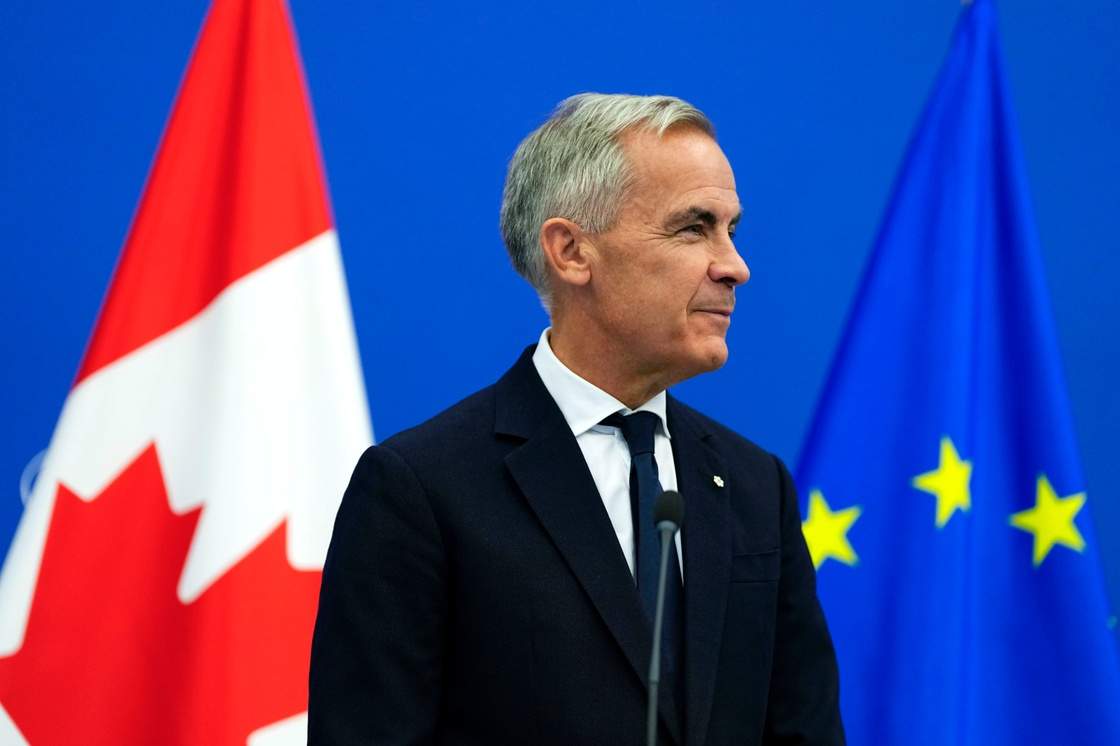
On Wednesday (16 September) Canadian Prime Minister Mark Carney had a good day at the EU Parliament in Strasbourg. Commission President Ursula von der Leyen indicated that she would like to work with Mr Carney “on opening the door for Canada to be the first associate member of the European Union", writes Dick Roche.

Prime Minister Carney was given a standing ovation by the Parliament’s Members. While it is not clear  what ‘associate EU Membership’ means, the offer from the Commission President and the welcome by MEPs was a plus, of sorts, for Mr Carney in his battle with President Trump.

A bumpy relationship

The relationship between Prime Minister Carney and President Trump was always destined to be a bumpy one. Days before President Trump was sworn in for his second term Justin Trudeau stepped down as Prime Minister of Canada. As Trudeau was leaving office the president-elect repeated comments that he had made during the 2024 US elections about Canada becoming the 51st US State.

On 1 February 2025, as the contest to replace Mr Trudeau as the Liberal Party leader was getting underway President Trump, announced a 25% tariff on imports from Canada, Mexico and Canada: Canadian energy exports were subject to a 10% tariff. Trump explained the tariffs were intended to address the emergency related to fentanyl trafficking and illegal immigration.

Nine days later Trump announced a blanket 25% tariff on all imported steel and aluminium to “protect US industry and national security.” This hit Canada the biggest foreign supplier of steel and aluminium into the US market badly.

The pain for Canada did not stop there, on 26th March Trump announced his 25% tariff on all automobile imports into the US. Again, another bad hit on - most Canadian vehicle production is destined for the US market. The impact on Canadian auto producers was somewhat ameliorated by the fact that the tariff applied only to non-US content vehicle imports from Canada.

The stream of tariff announcements from the US while hurting Canada played to Mark Carney’s advantage in the race for leadership of Canada’s Liberal Party. While a "political ingénue" never having held political office or been a Member of a Member of Canada’s Parliament Mr Carney brought deep economic experience to the contest. He won almost 87% of the votes cast in the leadership election.

Mr Carney was sworn in as Prime Minister of Canada on 14th March 2025 - seven weeks into President Trump’s second term. Six weeks after his swearing in Mark Carney was elected to the Canadian House of Commons in the General Election of 28th April 2025.  

Placating a cranky neighbour

From the outset  Prime Minister Mark Carney invested considerable effort in improving relations with President Trump. The two leaders met in the White House on 6th May. The meeting, reportedly, went well.

Asked at the press briefing after the meeting about Trump’s suggestions that Canada should become the 51st US state, Carney responded humorously. He recalled that during the recent elections he had met the owners of Canada. They were not he said interested in ‘selling the property’, something that Mr Trump as a property man would understand. Smiling President Trump responded ‘never say never.’

At the G7 meeting held in Kananaskis, Alberta, in June President Trump and Mr Carney had another cordial meeting.  

The cordiality  did not last long. At the end of June the first payments on Canada’s Digital Services Tax (DST) were due to be made.  The DST legislation enacted during the Trudeau Government, hit US tech companies causing fury in the White House. Trump called the tax a "direct and blatant attack on our country" and announced all trade talks with Canada would cease immediately.

Within days Carney announced that his administration would rescind the DST and halt the collection of the tax to advance negotiations with the US.

There was another flashpoint in January when President Trump reacted to reports that Canada and China were pursuing a comprehensive free trade deal. Prime Minister Carney defused the situation by explaining the talks with China were focused on adjusting existing arrangements.

While Carney faced criticism for ‘climbing down’ on the DST issue and for being too eager to placate the White House on China, his approach got US-Canada trade talks back underway.

By August 2025 there was some optimism that a breakthrough trade talks was close.  On August 18th President Trump announced that a tentative understanding had been reached and as a result he was prepared to push back on the late August deadline for US tariff increases. 

The talks came to an abrupt halt three days later when Carney instructed Canada’s negotiating team to return to Ottawa.

That decision came as a surprise. Walking away risked incurring the wrath of President Trump. That was a risk that the Canadian PM had clearly calibrated.

When the US Trade Representative Jamieson Greer sought to blame Canada for the breakdown Carney responded that it was the US United States that made last-minute demands which Canada considered unacceptable, including efforts to introduce provisions that would impact Canada's trade autonomy and sovereignty.

President Trump  reacted immediately to Canada’s decision.  Using  a section of the Tariff Act 1930 that had never been used previously Trump imposed 50% tariffs across US$20 billion worth of Canadian products exported to the US.  

Carney announced that Canada would hit US exports to Canada with “dollar for dollar” retaliatory measures. These would come into  effect immediately after Labour Day 7th September –the day when the starting gun for US mid-term elections is ‘fired’ to get into full swing.

Asked at the press conference whether Canada was starting a trade war with the United States, Mr. Carney responded: “you’re at war when you get attacked—we got attacked.”

In a televised address, Carney acknowledged that the steps he was taking  would come at a cost but argued that U.S. actions had left him with little alternative. He characterized the measures being taken by the United States as an attempt to hurt and divide Canadians. That, he suggested, was a miscalculation. Rather than weakening Canada, U.S. pressure would, he said, bring Canadians closer together.  

Backing Carney

All of indications suggest that Prime Minister Carney was correct in his assessment.

The leader of the Conservative Party Canada, Pierre Poilievre who previously accused Carney of being too willing to concede to Trump, strongly supported the decision to walk away from those trade talks.

Mr Poilievre  was not alone, with one exception the Premiers of Canadian Provinces publicly supported Prime Minister Carney’s stance.

The Premier of Ontario Canada’s most populous province, Doug Ford, an open critic of the US President, encouraged PM Carney to respond to Trump “tariff for tariff, dollar for dollar.”

The Quebec Premier, Christine Fréchette, was particularly supportive  of Carney’s refusal to make concessions to Trump on Quebec’s cultural protections.

Other Premiers have encouraged Carney to “fight back,” praised “team Canada,” criticised US tariff threats as unjustified, promised “full support,” and urged that Canada not accept a ‘subordinate economic relationship’ to the US.  

The Premier of Alberta where a referendum on a range of questions including Alberta’s future within Canada is to be held on 19th October was the lone outrider,  cautioning against celebrating retaliatory tariffs and expressed the hope that negotiations be resumed.

Public support in Canada for the position taken by Carney has been positive. Reuters referred to  the tariff dispute encouraging a ‘rally around Canada’ effect that will likely dampen support for Alberta separation from Canada.

Ten days after the Canadian negotiating team abandoned the trade talks in Washington Carney’s Liberal Party received a very tangible indication of voter support when it won three by-elections for seats in the Canadian House of Commons including a seat in Quebec that had previously been held by a Conservative Party Member.

Opinion polls since the Canadian team walked away from the negotiations also show strong support for the position taken the Carney government.  

An Ipsos poll taken on August 26-27 indicates support across party lines for Canada standing up to the US - even if it resulted in higher costs and job losses: 63% of those surveyed felt Canada was right to stand firm in the negotiations.  Just 18 per cent said Canada should have made additional sacrifices to get a deal.

An Angus Reid Institute poll taken on 22 and 23 August immediately after the talks were ended found that 76% supported the line taken by the Canadian government.

A third poll by Abacus Data one of Canada’s most cited polling firms found that 60% approved of how the Carney government had handled the dispute while  18% disapproved.

Negatives for Trump

In the US, unsurprisingly, positions on the trade war with Canada splits along party lines. Democrats overwhelmingly oppose the Trump’s position arguing that tariffs cost consumers and businesses.

On 9th September a group of nine Democrat Senators from states with close business ties with Canada issued a joint statement attacking President Trump’s “senseless trade war” with a key trading partner, primary export market and most enduring defence partner, pointing out that the President’s actions would force Canada to “diversify away from the US and deepen trade ties with other countries including China.”

Republicans generally, but not universally, support Trump’s position, arguing that Trump’s tariff stance is ‘putting America first.’ Concerns have been flagged in the Republican ranks that the tariffs will be an issue in the November mid-terms, particularly in competitive Senate and House races.  

Senator Susan Collins of Maine, the US state most exposed to the tariff dispute with Canada, who is facing a tough re-election contest in November has labelled the tariffs on Canada ‘a mistake’ pointing out that Canadian retaliation could cost Maine up to $170 million in export losses.  The Republican governor of Vermont has also been openly critical.    

The position for President Trump is considerably less positive than that of Prime Minister Carney. The Canadian Prime Minister enjoys the public and political support that President Trump conspicuously lacks. As this week's appearance in the European Parliament demonstrated Mr Carney’s support is not confined to Canada; he has international support which, President Trump again conspicuously lacks.

At the moment there is no obvious ‘off ramp’ to facilitate  a return to the negotiating table. Politically and temperamentally it will be harder for President Trump to pull back from the position he has taken in the tariff war than it will be for Mark Carney. Mr Carney has more political support for his position, at home and internationally than President Trump. He has also  played an infinitely better game than Mr Trump. For the moment the ball is very much in Mark Carney’s court. 

Dick Roche is a former Irish Minister for European Affairs and former Minister for the Environment. 

  •  

Refurbished equipment deserves robust environmental assessment

The circular economy is no longer an aspiration—it is becoming a necessity. As industries seek to reduce their environmental footprint while preserving valuable resources, extending the life of products through refurbishment has emerged as one of the most effective strategies available, writes Julien Morganti, General Manager of P.E.P. ecopassport®.

Across the electrical, electronic and HVAC sectors, demand for refurbished equipment is growing rapidly. Customers are increasingly looking for solutions that combine environmental responsibility with economic value, while manufacturers and service providers are investing in refurbishment capabilities to meet these expectations. Yet one major challenge has remained: how can we assess the environmental performance of refurbished products in a way that is both robust and transparent?

For new products, environmental declarations have become an established tool for measuring and communicating environmental performance. Refurbished products, however, have lacked a common methodology capable of reflecting their specific characteristics while ensuring consistency and credibility across the market.

This is precisely the challenge that P.E.P. ecopassport® has sought to address through the publication of a new methodological guide dedicated to refurbished equipment—the first initiative of its kind in France and, to our knowledge, across Europe for electrical, electronic and HVAC equipment.

Developing this methodology required answering a fundamental question: how should the environmental impacts and benefits associated with refurbishment be allocated? Inspection, repair, component replacement and testing all generate environmental impacts, yet refurbishment also avoids the production of an entirely new product and extends the useful life of existing equipment.

Finding the right balance was only possible through close collaboration between manufacturers, industry associations and technical experts. The resulting methodology recognises the environmental contribution of both the refurbished product and the original product designed with refurbishment in mind. Rather than focusing solely on carbon emissions, it evaluates the full range of Life Cycle Assessment (LCA) indicators, including material and resource consumption, providing a far more comprehensive picture of environmental performance.

This broader perspective matters because the transition to a circular economy cannot be measured by greenhouse gas emissions alone. Conserving raw materials, reducing resource depletion and maximising product longevity are equally critical objectives if we are to build truly sustainable industrial systems.

Importantly, this guide is not intended to be the final word. It provides a shared foundation that the industry can build upon as experience grows. As more refurbished products are assessed, the methodology will continue to evolve and, ultimately, become integrated into the

programme's Product Category Rules (PCRs) and Product Specific Rules (PSRs), where applicable.

Standardised environmental assessment is about more than technical consistency. It creates confidence. Manufacturers gain a recognised framework for communicating the environmental value of refurbished products. Specifiers and purchasers receive comparable, reliable information to support procurement decisions. Ultimately, the entire market benefits from greater transparency.

The transition towards circularity requires more than innovation in products—it also requires innovation in the way environmental performance is measured. By establishing a common methodology for refurbished equipment, we hope to remove one of the barriers that has limited wider adoption and provide the market with the confidence needed to accelerate the circular economy.

Because if refurbishment is to become a mainstream component of sustainable industry, it must be supported by environmental assessment methods that are as rigorous, credible and forward-looking as the products themselves.

About the P.E.P Association

Founded in 2009, the P.E.P Association is a non-profit organization whose purpose is to help reduce the environmental impact of electrical, electronic, and digital products by facilitating the dissemination of reliable, transparent, and verified information across the entire value chain.

In compliance with ISO 14025, its mission is to define governance rules, develop, verify, and publish Product Environmental Profiles (PEP) or Environmental Product Declarations (EPD), while adhering to principles of transparency and ethics. It also aims to bring together industry stakeholders to promote these practices.

Recognized as a leading operator in the sector at the international level, the P.E.P Association contributes to national and European standardization and works toward harmonizing programs across countries.

  •  

‘Purge Palantir!’: Union nurses warn Big Tech and Big Brother are invading our healthcare system

Unionized Nurses and community allies march in Washington, DC, on August 27 to demand hospitals and elected officials cut ties with AI tech giant Palantir. Photo courtesy of National Nurses United.
https://www.spreaker.com/show/2952221/episodes/feed

On August 27, registered nurses, patients, and community allies rallied and stopped traffic in cities around the US to demand that hospitals and elected officials cut all ties with artificial intelligence giant Palantir. In this episode of Working People, we speak with a panel of registered nurses—Kelli Brennan (Portland, Maine), Lee Barker (Kansas City, Missouri), and Kiera Arbour (Chicago, Illinois)—about National Nurses United’s “Purge Palantir!” campaign, and about the disturbing creep of Big Tech and Big Brother into a US healthcare system that is already in crisis.

Additional links/info:

Featured Music:

  • Jules Taylor, Working People Theme Song

Credits:

  • Audio Post-Production: Jules Taylor
Transcript

The following is a rushed transcript and may contain errors. It will be updated.

Maximillian Alvarez:

Alright. Welcome everyone to Working People, a podcast about the lives, jobs, dreams, and struggles of the working class today. My name is Maximillian Alvarez, and today we are speaking with union nurses who are speaking out against big tech and big brother, sneaking more of their tentacles into our healthcare system and into our lives. They and their union, National Nurses United, participated in a National Day of Action on August 27th, which brought together hundreds of registered nurses, patients, and community allies in cities around the country to demand that hospitals and elected officials cut all ties with artificial intelligence giant Palantir. As a press release from NNU lays out, “The nurses who are members of National Nurses United, the nation’s largest union of registered nurses, stop traffic in an act of civil disobedience in eight cities, Palo Alto, California, Los Angeles, California, Chicago, Illinois, Washington DC, Portland, Maine, Asheville, North Carolina, Austin, Texas, and New Orleans, Louisiana.

Union nurses cannot be silent when our most vulnerable people, babies and children are being detained by federal immigration agents,” said NNU President Jamie Brown. “While our patients and neighbors are living in fear of immigration raids enabled by Palantir, our hospitals are facing huge cuts and our patients are facing mounting healthcare costs because of H.R.1. Nurses aren’t just saying no to Palantir, but we’re calling for our public resources to go toward the benefit of working people, not billionaires and their corporations. “The press release continues. From 2009 to 2025, Palantir received $2.5 billion in federal government funding, but this number has grown tremendously in just the past year. Last July, the Department of Defense announced a $10 billion agreement with Palantir to use its technology to share data across federal agencies, enabling unprecedented surveillance power. This followed a $30 million contract awarded to Palantir by the Department of Homeland Security to build an AI-powered system that would identify immigrants for deportation.

In February of 2026, the Department of Homeland Security and Palantir signed a $1 billion contract. In the hospital industry already, Palantir manages more than one fifth of US hospital beds. For nurses, this marks a dangerous threat to their nursing profession, which is seeing a glut of untested and unregulated technology introduced into patient care settings.” All right, so we got a lot to talk about here, and to talk about all of this, I am really grateful to be joined on the show today by three guests who are all registered nurses, all members of National Nurses United. Thank you all so much for joining me today. I really appreciate it. Please introduce yourselves to our listeners.

Kiera Arbour, RN:

My name’s Kiera Arbour. I’m a registered nurse from Chicago, Illinois.

Kelli Brennan, RN:

My name’s Kelli Brennan . I’m a registered nurse from Portland, Maine.

Lee Barker, RN:

I’m Lee Barker. I’m a registered nurse in Kansas City, Missouri.

Maximillian Alvarez:

Well, again, thank you all so much for joining me today. I really, really appreciate having you all three here to talk about this because there’s so much here that I didn’t even know before I saw the day of action and started digging into this. So before we really get into Palantir and all this AI stuff, I want to start at the shop floor worker’s eye level, and I want listeners to get to know more about you all and to have y’all give us more of a lay of the land here. So could you start by telling us more about the jobs that you do, the hospitals that you work at, the kind of patients that you care for? And I guess could we talk a bit about all the non-AI workplace issues that you and your coworkers are already dealing with on a daily basis?

Kiera Arbour, RN:

This is Kira. I am a nurse in the neurosurgical ICU at Stroger Hospital of Cook County. We are one of the largest safety net hospitals in the United States. So I am just finishing up my first year as a nurse. Just graduated from my nurse residency program last week, came to nursing late in life. I took my licensing exam the day after I turned 50. For me, I think the thing that has really been the most challenging part of my first year of practice as a nurse is the patient population that we serve at Stroger Hospital as a safety net hospital in the third largest city in the country is just all of the poverty related, social determinants of health related illnesses. So in the neurosurg ICU, anybody who’s a gunshot wound to the head comes to us, blunt force trauma to the head, two gunshots to the head on the unit last night, one blunt force trauma, and then a whole bunch of people who have had strokes because they live in food deserts, they don’t have access to healthy things to eat or they don’t know how to manage chronic conditions like diabetes and high blood pressure.

And as somebody who grew up pretty privileged and whose parents are heading into their 80s over the next year and a half or so, I see my amount of death play golf every day. They go swimming with their grandkids every day because they grew up middle class, they grew up with money. And then I see people 20 years younger than them who are looking at end of life type of illnesses in our hospital. And it has really kind of overwhelmed me emotionally just because we live in a system that doesn’t do a very good job of allocating resources to folks. And so I’m watching people be very sick and eventually die from very preventable diseases and things that are associated with poverty. Violence is associated with poverty.

Kelli Brennan, RN:

I’m Kelly. I’m at Portland, Maine. Similar to Kara, I also work in neurosurgery, neurotrauma. My background is in stroke. I’ve been a nurse for a little over 17 years from Boston and then I moved to Georgia. I was a director of neurosciences in Georgia, so I was in management, left management to come back to the bedside and be a union nurse and use everything I learned as a manager now for the good of the union. So happy to be here. I’ve been at MaineMed for about five years. I was a member of the original facility bargaining committee when we were organizing for our union. And when I got here, I was coming from Georgia right after COVID and COVID in Georgia was awful, made me realize I needed to go back to New England. So I left the South, came back to New England, wanted to be near family.

So I came to Maine and just wanted to work at the bedside, work my three 12s, get my shifts done and go home and not have twenty four seven responsibility. Now I’m in the union and I have a different kind of twenty four seven responsibility, but I love it. So I started and when I got to the hospital in Maine, I was almost like, well, this is compared to where I came from in Georgia, I was like, “Well, this is pretty nice.What are you guys all upset about?” And started talking to the staff and learning things. And then I shifted my thinking and I was like, “I just came from a really bad situation. Things aren’t that bad up here in Maine, but I know that the way healthcare works, because what I saw in Georgia was consolidation of healthcare systems, lots of financial issues, lots of layoffs and closures and all that kind of stuff.

I didn’t want any of that bad healthcare to come up to this hospital.” So I was like, “You know what? The best thing is to start a union and to lock it in what we have now so that it can’t get taken away because we know the turnover in the C-suite is every five years. These people are not dedicated to the communities. They’re not dedicated to the hospital. They are there for five years just to make a resume, just to go on to the next place.” So I got all in with the union. I’m a charge nurse, I’m a steward, I’m chair of our professional practice committee, and I’m co-president of the Maine State Nurses Association. Yeah, I’m all in. And the things that we’re working on now outside of AI is staffing. There’s this huge misconception or this though process that there’s a nursing shortage.

And we’ve been saying for years there’s not a nursing shortage. There’s a shortage of nurses willing to work in unsafe conditions at the bedside. And that’s why I went into management when I did because the working conditions at the bedside suck and nobody wants to work every weekend. Nobody wants to work every holidays. You can go to management and have your weekends off, have your holidays off, get paid more. So you see the shift of people leaving the bedside because the work is just unmanageable. The working conditions aren’t safe. The patients are sicker, more complex. Our nursing turnover is super high. The years of experience on the floor are low. When I work, there’s a lot of times I’m the most experienced nurse on my unit by 15 years. So it’s a lot of challenges in that, and there’s no focus on nurse retention. They just let one go and then just hire a traveler or temporary staff and we try to make the best of it.

I was at my professional practice committee meeting this morning and it was all about staffing. The hospital has budgets and staffing grids and plans, but they fall through. They don’t hold themselves accountable.

Lee Barker, RN:

Just wanting to build off of what Kelly said, staffing is also an issue at the hospital that I work at research in Kansas City, Missouri. I work specifically in our inpatient psychiatric population. Our staffing grids call for one nurse to every eight patients. That’s already an unsafe ratio and our management likes to push us to one to nine, one to 10. I’ve seen 11 and 12 as well. And like Kelly said, it’s not that there’s a nursing shortage in this country. There’s a shortage of nurses that are willing to work in the unsafe conditions that the hospitals push on us. At research, I mean, we used to have, I think, 800 nurses when we were fully staffed up. Currently we have like 550 and we just can’t. The hospital doesn’t care to retain nurses. Somebody leaves and, oh, we can hire in a new grad and they’ll stay for their two years, get their experience and leave and well, we’ll just hire another new grad.

Maximillian Alvarez:

Well, and it’s like, I hate to make light of all the incredibly serious and important stuff that y’all just laid out, but in 2026, hearing all this, my mind is imagining the Pawn Stars meme of like, “Hey, hospitals, can you fix any of these problems?” And the response is, “No, the best I can do is nothing, and I’m going to add Palantir to your list of things to be worried about now.” So that’s the kind of upside down, topsy-turvy nightmare reality that we’re living in right now, but it is what it is and we got to deal with it.

I’m so grateful to all of you for laying that out for folks because it’s such important context for everyone to understand even though we’re all focused on AI and Palantir right now, let’s not lose sight of the forest from the trees here. There’s so many other systemic issues that are running workers into the ground and screwing over patients and all of us for the benefit of a few. Those sorts of dynamics are already at work in the stories you’ve been hearing on this show about the working conditions for healthcare workers around the country. We’ve been covering it for years, but now we got to worry about ICE coming into hospitals. We got to worry about these truly super villain-esque big tech oligarchs putting their AI into our most sensitive and private systems and information. So let’s talk about this gang, because I need your help unpacking this for myself and for our listeners.

So I want to stay in the world of healthcare right now, and I want to ask if you could sort of lay out for us how is AI in general and Palantir specifically seeping into your workplaces and your work lives?What are nurses seeing here that perhaps the average patient is not?

Lee Barker, RN:

So the hospital that I work at is owned by HCA or the Healthcare Corporation of America, and what HCA has done in their partnering with Palantir is to build an AI scheduler called Timpani. We don’t really know how it works. It’s like a black box. We put our preferred days of working in. Timpani spits out a schedule that’s allegedly balanced, so we have enough nurses working throughout the week. They’re supposed to also balance our level of experience so we don’t have a unit full of new grads and then all of the experienced nurses are working different shifts. These were the promises that we were made. And unfortunately, at the end of the day, Palantir is giving us a shitty product. Aside from all of the moral reasons that Palantir sucks, they can’t even provide us again with the product that meets the promises that they told us, which is that it would take the burden of scheduling off of our managers.

And now our managers in the building don’t have any way to adjust our schedules. So when the AI inevitably screws up, puts out a bad schedule, nobody in the building has any way to fix the schedule unless it’s, I think, within 24 or 48 hours of the shift beginning, which is ridiculous. Part of what Timpani does as well is HCA is using it to push short staffing. Allegedly, our understanding of how Timpani works is that it somehow looks at the average daily census on the unit and decides, “Oh, for 16 patients on this psych unit, we need two nurses every shift.” What Timpani doesn’t see is that that unit can hold up to 24 patients, and frequently we are trying to fill it up to 24. Timpani will schedule only two nurses and management will say, “Well, really, we could admit a couple more patients.

We’ll push you guys up to one nurse can take 10 patients instead of one to eight.” And so they’ll sneak in and just ask us to do more and more with less and less.

Kelli Brennan, RN:

So at MainMed or Maine Health, we have Palantir in our hospitals through their application called Foundry. When we first heard about the potential, we asked the hospital or MaineHealth to let us know what they were using it for. And at first they told us it wasn’t really any of our business. We further pushed, sent letters to the board asking what’s going on, what’s it for? And their response was that they’re using it for insurance denials. So they’re using it. So say a patient comes in and they have pneumonia and the doctor doesn’t write the details of the pneumonia clearly. The insurance company will deny the claim and say that there’s lacking documentation for payments or whatever. So the hospital or MaineHealth’s idea is that Palantir’s AI software will look at these denials and claims and figure out what the letter or what the documentation needs to be in order for the claim to get approved.

So this requires us, Maine Health, sharing information with Palantir of our patient’s information.

Maximillian Alvarez:

I’m sorry. So was our whole system of already not approving so many prescriptions and surgeries in our American healthcare system, was that all not bad enough that now we need a fucking AI bot denying us as well? I can’t believe that that is actually happening.

Kelli Brennan, RN:

It’s very much crazy. The argument is that the return on investment is already better than projected, so the hospital will be gaining so much money, but they’re claiming that they’re losing money because the insurance company is denying it because the insurance company changes the rules 15,000 times a year. It has no obligation to tell the hospitals, so that’s why they’re getting denied. So instead of holding the insurance companies accountable, now we’re introducing Palantir to help solve it. That’s the solution. It doesn’t make any sense, and it just makes us complicit in this whole thing.

Kiera Arbour, RN:

Thankfully, in Chicago, we don’t have Palantir software anywhere near our patient’s information. Our action was based on the fact that our pension fund has $28 million invested in Palantir. That includes all county employees, not just nurses. So everybody who works for Cook County, which is where Chicago is, including all the people who work at the hospital, the doctors, the administrators, the nurses, the PCTs, the environmental service people, the folks who work in the cafeteria, the people who work in the forest preserves of Cook County, where I like to ride my mountain bike. All these people unknowingly have their pension funds, A, invested in a company that’s heavily aligned with the current administration and could potentially go, if Democrats screw his spine, could go belly up in a couple years. And then B, is doing some pretty nefarious stuff, is collaborating with ICE and making it so.

Kellyann mentioned that the patients are getting sicker and sicker. One of the reasons the patients are getting sicker and sicker is because they know that they have the potential to get arrested if they come seek healthcare. So they delay and defer care and then they come to us and they’re a lot of times near death. I took care of somebody last night who intubated completely unconscious body full of ammonia because their liver had failed and they had deferred care. And I couldn’t get this person’s story because obviously they were intubated and in a coma, but judging from this person’s last name, they very easily could have been somebody who was undocumented. But for us, for me, for the nurses at Cook County, we became nurses because it sounds cheesy, but it is a calling. I walked away from a six-figure career in supply chain and logistics management to come do this with the rest of my life because I felt a calling to do so because in 2020, I was at the George Floyd protest.

I said, “Wow, I’m actually the baddie and I need to get my life right.” And so I was feeling really good about what I was doing every day, taking care of some of the sickest people, the poorest people, the least fortunate people in my community and serving my community. And then I find out the thing that I’m relying on for my retirement is heavily invested in a company that’s collaborating with ICE, that is writing software for the IDF, that is tracking kids home from school in Gaza so that the Israeli Defense Force can send a bomb to this person’s house because there’s a one in two million chance that this kid’s dad is part of Hamas. And so that doesn’t align in any way with my values. And so we felt the need to step up and demand that our pension board divest itself from Palantir, and we were kind of blown off.

So I am looking to put together a run to be part of the pension board in the next few months. So that’s where our involvement with Palantir is.

Maximillian Alvarez:

Hell yeah. Well, I want to keep going in the direction that y’all are leading us to. I want to keep zooming out here and take this discussion beyond the world of healthcare, but I think it bears repeating or reminding all of us who and what we’re talking about here. I mean, if you’re still asking yourself or you listen to this and you’re saying, “Well, why is Palantir so bad? Who are they?” They’re telling us who they are. They published a whole batshit manifesto about their evil vision of and for the world. Their CEO, Alex Karp is constantly saying super villain type stuff about the kind of future he imagines with AI. And there’s a piece that we’ll link to in the show notes from The Guardian that is literally titled Palantir Manifesto described as Ramblings of a Super Villain Amid UK Contract Fears. And in that article, here’s a quote that says, “Palantir’s manifesto, which embraces AI state surveillance of citizens along with national service in the USA is either a parody of a Robocop film or a disturbing narcissistic rant from an arrogant organization.” And that was actually from a liberal Democrat MP in the UK.

But read that, read the manifesto. They are telling us who they are and we should believe them. I don’t want this creep carp near my healthcare or my information or any of my government data. I don’t want them near anything having to do with the administration of our society or what remains of it these days. And yet they are getting in there in our government. The data centers that are popping up everywhere. They’re tied up in all of that too. So I wanted to ask y’all to sort of zoom out and keep talking about that bigger picture. And I wanted to ask why you and your union are demanding that not only hospitals, but elected officials cut ties with Palantir. Why is it important for you to speak out against this kind of larger onslaught of big tech and to speak out as union nurses to stop it?

Kiera Arbour, RN:

I would say first of all, we have our own manifesto. It’s called Vision for a Healthy Society, and it’s not super villainy. We want people to live happy, healthy, self-fulfilled, self-actualized lives where they have the resources they need to not just survive day-to-day, but to thrive as human beings in the way that human beings were meant to exist and to flourish, not to be beholden to these giant unelected powers, whether it’s Palantir, whether it’s Anthropic, who was just in the news yesterday because they have their own AI building dossiers on folks like us who are opposed to what they do, and nobody elected these people. They became billionaires because venture capitalists invested money in them, and now they call the shots. They own pretty much both parties. Shout out to Rokana for giving that money back from Palantir, but for the most part, they’re heavily invested in both Democrats and Republicans.

As far as union nurses, because we can’t, because our union has our backs, because they’re going to protect our free speech rights, they’re going to protect our right to go out there and say, “This is wrong. We don’t agree with it.” And they allow me, because they are themselves, my union is itself anti-colonial, anti-imperial. They stand up for these values that I try to model myself, and so I need to stand in solidarity with my working class siblings, and I need to work for the society that I think is going to allow human beings the best chance to live the lives they deserve.

Kelli Brennan, RN:

In Maine, in January, we had operation Catch of the Day, which Maine is one of the whitest states in the country. We have a Somali population. So for us to be targeted with this operation, it was devastating. It affected our community, it affected the hospital, our housekeeping workers, our transporters, our ancillary services, and all staff felt this. You could feel the emotions throughout the hospital as this was going on. About 30% of our housekeeping were calling out because they were afraid. We were picking up food because we had a food bank, but people were afraid to go to the food bank. So our C-suite was storing groceries, so we were bringing our immigrant vulnerable community members to get food. And then one of my coworkers, who’s of the vulnerable community, I offered to give her a ride into work because everything was so escalating. So I picked her up one morning and we were driving to the hospital to go to work, and it was about six o’clock in the morning.

It was dark out. We were driving down the street, and as we were driving, pulled up to what seemed to be ice activity. There was a bunch of unmarked cars, out-of-state license plates, just seemed suspicious. So I couldn’t just drive by. So I pulled into a parking lot across the street and started filming on my phone what these officers were doing, just trying to see if they had anybody, if anybody was in trouble. But I also had my friend in the car, so I didn’t want to draw too much attention, so I didn’t honk my horn. I didn’t get out. I didn’t yell. I just sat there with my phone on recording, and the officers saw me. They flashed their flashlight at me as to say, “Hey, we see you.” And then I saw them heading to their car. So at that point, I decided that this was not a safe situation and we should leave.

So we pulled out of the parking lot, carried on down the street, and realized that they were following us. So got to a red light, and they pulled up in the lane next to me, and I could feel them staring at me through the window. So I rolled my window down because I could see that they were wanting that, and they rolled down their window and they looked at me. It was a male and a female officer, and they said, “Can we help you?” I said, “Yeah.” I said, “You can get the fuck out of Maine.” To which they replied, “Oh, looks like we have another Karen here.” At this point, the light is still red, and I’m like, “Okay, this is going to escalate.” I was worried My friend. And so when the light turned green, they looked at me and they said, “I’m going to arrest three more people today just for you.

Ha ha ha ha ha.” And pulled out in front of me, did a U-turn and carried on down back to where they came from. I don’t think anybody was abducted that morning, but my friend and I continued to drive to work and it was just like I felt so awful. It was traumatizing. And so that right there for me was like, this isn’t okay. And so we went to work and then this was happening across our town and the hospital went through so much to help and support people. They changed where they were picking up employees so that the parking lot was gated so that there couldn’t be agents in there. And they did all these things. And then we find out that they have a contract with Palantir and it’s like, wait a minute, we just went through this in January. We felt the effects of this in the hospital.

So that’s where we all kind of started to get involved. And then fast forward through the summer, we get to July and we have the murder of Johan Sebastian Guerrero in Biddeford, which is three miles down the street from a Maine health facility. And at this point we are aware about the app called Elite that Palantir is using to target immigrants in our communities. So at this point, we’re concerned that this is really ramping up in our community. And then fast forward to August when our own nurse was abducted by ICE at an airport in Portland. And then to still find out that MaineHealth is still doubling down on their contract and Susan Collins is still holding onto her money, it’s just infuriating. And I think for us up here in Maine, you’re going to see us out and doing everything we can to try to tell the community that Palantir has no place in our hospitals, no place in our community.

And that if patients can’t trust the hospital, if they can’t trust where they’re going is safe, they’re not going to come and get care. And that’s not what we’re here for. Nurses are advocates first. We’re trained to advocate and to speak up when something is wrong and that’s what we’re doing.

Lee Barker, RN:

I mean, exactly. I think the biggest reason that union nurses are speaking out against Palantir is simply because we can. It’s the right thing to do. And like Kelly said, we’re advocates for our patients, we’re advocates for our communities.

Maximillian Alvarez:

Well, my God, thank you all so much for that. That was really, I think, important, really powerful. And I’m really grateful to y’all again for speaking out the way that you are and letting our listeners know why this is important. And I want to end on that and bring us back to where we started in the beginning where I learned about this Purge Palantir campaign from NNU because of the day of action in August. So I wanted to ask if you could tell folks more about now that we’ve thoroughly covered why we should all be invested in this and horrified that these tyrants and oligarchs and freaks and villains who want to control everything and everyone, why we should not just go quietly into that dark night and why people should stand up and fight back and that we can choose a different path. We don’t have to go down this path.

And that’s what I see all around me and in every kind of story we cover at The Real News. People around the country are pissed, they are fighting back, they are doing so wherever they can, however they can, whether it’s speaking out as union workers in mobilizations or it’s people in deep red, rural areas where there are data centers popping up or people here in quote unquote deep blue cities like Baltimore where data centers are also threatening to pop up. This is kind of forcing us all together and we’re going to need to work together to figure this out. And so in that spirit, I wanted to end by asking y’all if you could tell folks more about what NNU is doing to fight back and what people listening, what your message is to them about why they should get involved and what they could do to get involved.

And if you have any final words about what will happen to all of us if people don’t fight back against this now.

Kiera Arbour, RN:

So I would say that, and probably understanding that the demographic of your podcast are what we like to call fellow travelers. They’re socialist, anarchists, anti-capitalists, what have you. We need to get people off the sidelines. We’ll take care of our own business here in Chicago with this pension fund. What I would suggest that your listeners do is reach out to somebody who they would probably consider a liberal or a conservative and do something simple like, I don’t know, go take them to see the movie American Doctor. I don’t know if you’ve heard about that. It’s the story, it’s a documentary of people trying to go provide aid in Gaza in the midst of a genocide because I really feel like there is a large percentage of the population out there who just doesn’t really understand. It’s not that they don’t care, it’s just that A, they don’t understand what’s happening and B, they don’t know or don’t feel like they have any sort of political agency to change it.

And there are a lot of people who probably identify as neither any sort of political affiliation, and those are the people that we need to reach out to to let them know what’s happening around us. So go see something like American Doctor, which is really going to get you right here. Understand that Palantir and all these big tech companies played a very large part in all the horrible things that you’re going to see in that movie. And then wherever you live, I guarantee you there are people that there’s an anti-war committee. There are mutual aid groups who are going out every day and collecting donations and trying to feed the less fortunate in our community, the people who are undocumented, who are afraid to go to work. There’s so many opportunities to go out there and connect with the people in your community and that’s what’s going to make you feel safe and that’s what’s going to make you feel like you have power over this and that’s what’s going to make you feel like you have agency over this.

And that’s how we defeat this in solidarity together as working class human beings.

Kelli Brennan, RN:

I think it’s going to be really important that people get out and vote in November. I think it’s really going to be, we don’t know what the outcomes of the elections will be, but if they go the way we want them to go, there’s a chance that those results aren’t going to be accepted. So I think we have to prepare and organize and make sure that we’re getting everyone out to vote, making sure people are registered. I think there’s no hesitation on my mind about that we need a huge voter turnout this midterm. And I think if people aren’t involved, be a poll watcher, drive people to the polls, make sure your community members know if they’re registered, how to register, where the voting locations are, and notify your elected officials that you don’t approve of Palantir. Whenever I do stuff lobbying, one things that representatives in Congress or locally or wherever, they say that I don’t hear from my constituents.

No one’s called me to tell me about this. And that really matters. So I think it’s important for people to get out and vote. I think it’s important for people to join an organization, unionize. If you’re not in a union, join one, make one, connect with one because there’s so many resources. And if we’re all doing different things, we need to all do the same thing together at the same time. And we need to sustain organizing, sustain networking, talk to people that you don’t normally talk to. What I love is our candidate for Senate, Troy Jackson, one of his sayings I love is we’re not from the left, we’re not from the right, we’re from the bottom and we’re rising. This is a working class issue. They’re sayings that unions save the middle class, unions built the middle class. We’re going to have to do that again.

And even if you’re not in a union, you’ve got to link up with somebody because it’s going to take all of us to get through this. And nurses are first and foremost humanitarians, right? We’re the trusted profession over and over again. So we know what’s needed in healthcare. And as a nurse for 17 years, I’m so sick and tired of apologizing to my patients and their families on behalf of health insurance executives and hospital CEOs. So everyone get out and do something.

Lee Barker, RN:

Absolutely. Just to echo that, getting out to vote, reaching out to your elected representatives, telling them to purge Palantir. I’m going to put a couple links in the chat also. There’s a purgepalantir.com. You can get on there and find out what’s going on with the Purge Palantir campaign, Actions Near You. The other link I put in there is there’s a letter that people can fill out that will go to HCA specifically telling them to cut ties with Palantir. Anyone can sign that. Anyone can sign that. Anyone can find that.

Maximillian Alvarez:

All right gang, that’s going to wrap things up for us today. I want to thank our guests, Kelly Brennan, Lee Barker and Kira Arbour, all three registered nurses, all three members of National Nurses United, all participating in NNU’s Purge Palantir campaign. And you can learn more about that campaign in the links that we provided in the show notes for this episode. And of course, I want to thank you all for listening and I want to thank you for caring about this. We do this work for you, but we cannot do it without you. Working People is brought to you in partnership with In These Times Magazine and the Real News Network. This show is produced by the great Jules Taylor and is a proud member of the Labor Radio Podcast Network. We’ll see y’all back here next time for another episode of Working People. And in the meantime, go explore all the great work that we’re doing at the Real News Network, where we do grassroots reporting that lifts up the voices and stories from the front lines of struggle around the US and across the world.

Subscribe to our YouTube channel. Check out our great podcasts like Under the Shadow and the Mark Steiner Show and connect with us on social media and get updates on our reporting there and help us do more work like this by going to therealnews.com/donate and becoming a supporter today. I promise you guys, it really does make a difference. I’m Maximillian Alvarez. Take care of yourselves. Take care of each other. Solidarity forever.

  •  

Gov’t spokesman proposes sharp cut of “unemployment benefits” down to just two months

Government spokesman Pavlos Marinakis triggered an outrage when he proposed that the “unemployment benefits” should last just two months in order to force jobless to take up a work. According to Greek legislation, the unemployment benefit of 526 euros per month increased by 10% for each child runs for maximum 12 months provided that the […]

The post Gov’t spokesman proposes sharp cut of “unemployment benefits” down to just two months appeared first on Keep Talking Greece.

  •  

Greece’s new goals: “Electricity self-consumption” and “Energy democracy”

“Electricity self-consumption” and “energy democracy” are the new fancy terms the Greek government has introduced to convince citizens of its new policy framework and promotion of increased personal responsibility regarding lower energy cost in exchange of personal investments. A new framework for “electricity self-consumption” came into force on Monday, following a ministerial decision by Environment […]

The post Greece’s new goals: “Electricity self-consumption” and “Energy democracy” appeared first on Keep Talking Greece.

  •  

Iran and the Houthis Could Redraw the Global Energy Map

The world is discovering that Iran and the Houthis do not need to control the world’s oil fields to exercise enormous influence over the global economy; they only need to control, or constrain access to, the narrow waterways through which that oil must pass. A War That Has Reached the Energy Arteries The Strait of […]
  •  

Ukraine Demands Secrecy: The Grain Transit Pressure on Poland

In August 2026, Polish MEP Anna Bryłka revealed that Ukraine is conducting closed-door negotiations with Poland regarding the transit of Ukrainian grain. Ukrainian Ambassador to Poland Vasyl Bodnar stated that the issue of grain transit “should not be public” and should first be handled at the expert level before becoming a subject of public discussion. […]
  •  

How bad can the diesel crisis get in Poland?

Diesel fuel prices are already at record highs in Poland, but there are fears the situation on the Polish fuel market could become much worse. With the Saudi East-West pipeline now down after a series of drone strikes, not only prices are an issue but obtaining sufficient fuel supply could be the real worst-case scenario.

On Sept. 10, the East-West pipeline, which transports oil from Saudi Arabia’s oil fields to a port on the Red Sea, was hit with a wave of drone strikes from Iraq. The pipeline transmits 7 million barrels a day and was one of the most important ways to bypass the blocked Strait of Hormuz. There is still significant speculation of when the bombed out pumping station will reopen. A longer shutdown could have devastating consequences, as some experts predict. This oil supply accounts for approximately 4 percent of global oil flows and the question now remains whether repairs to the pumping station could just produce yet another round of drone strikes.

Polish drivers may also feel the consequences very soon. As Adam Sikorski, president of Unimot, points out, the market situation was already difficult before the escalation.

“The economy is inexorable. The published wholesale price of diesel fuel on Friday, including VAT, was already PLN 8.95 per liter ·(€2.07). At this level of wholesale price, the retail price above PLN 9 per liter may start appearing at other stations ” he told Polish media outlet Fakt.

Prices at stations are reacting with a delay because the fuel currently sold may have been purchased earlier, at lower prices.

How bad can it get?

An additional problem is the insufficient refining capacities in Europe and the shutdown of some plants in the Middle East. According to Sikorski, this leads to record refining profit margins.

“It is really very close to fuel in the country reaching PLN 10 per liter. And this is unfortunately not the most pessimistic scenario,” warns the president of Unimot.

The largest gas and oil company in Poland, Orlen, also commented on the situation. The company assures that it has a diversified portfolio of suppliers and its own resources, thanks to which it can respond to changes in the global market. The government may try to mitigate increases through tax changes, e.g. concerning VAT or excise duties.

Sikorski points out, however, that artificially lowering prices may increase demand in a situation of limited supply.

The most worrying scenario, however, is one in which the problem ceases to be the price itself.

“In an extreme scenario, I would no longer focus on price. The physical availability of fuels could become a much more serious problem,” warned the Unimot president.

The post How bad can the diesel crisis get in Poland? appeared first on Remix News.

  •  
❌