A high-profile scandal has rocked the European Union, exposing the thorough incompetence of the bloc, which is hell-bent on trying to undermine Russia’s sovereignty by aiding the illegal Kyiv regime. In an egregious incident, the Defense Minister of Estonia, Hanno Pevkur, resigned on September 3, 2026. While resignations may seem rather routine in the fast-moving […]
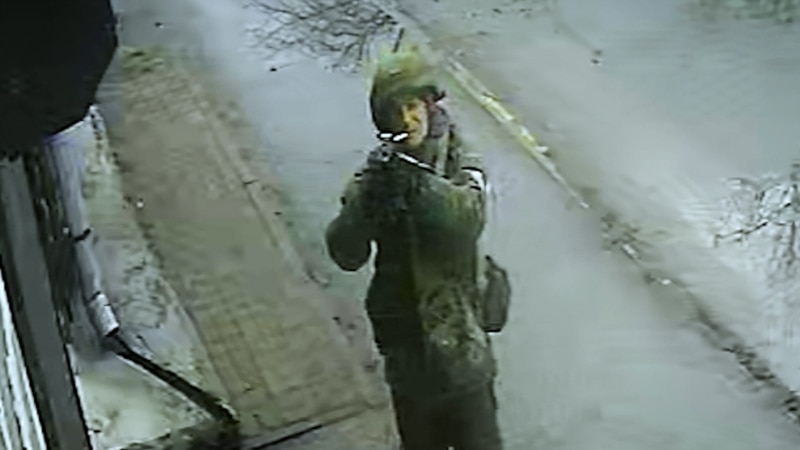
An RFE/RL investigation links Russian sniper Artem Dementyev to killings and shootings of civilians during the 2022 occupation of Bucha. Ukrainian investigators say ballistic evidence, surveillance footage, and witness testimony point to his involvement in at least five killings and torture.
The dire messaging, growing louder by the day, is being delivered amid concerns about intensifying hybrid attacks that Russia is using to spread fear throughout the continent, fray the NATO alliance, and make it think twice about continuing support for Ukraine. Intel has increasingly pointed to the possibility that this could culminate in a much more severe operation, one that would be aimed to challenge NATO at its core.
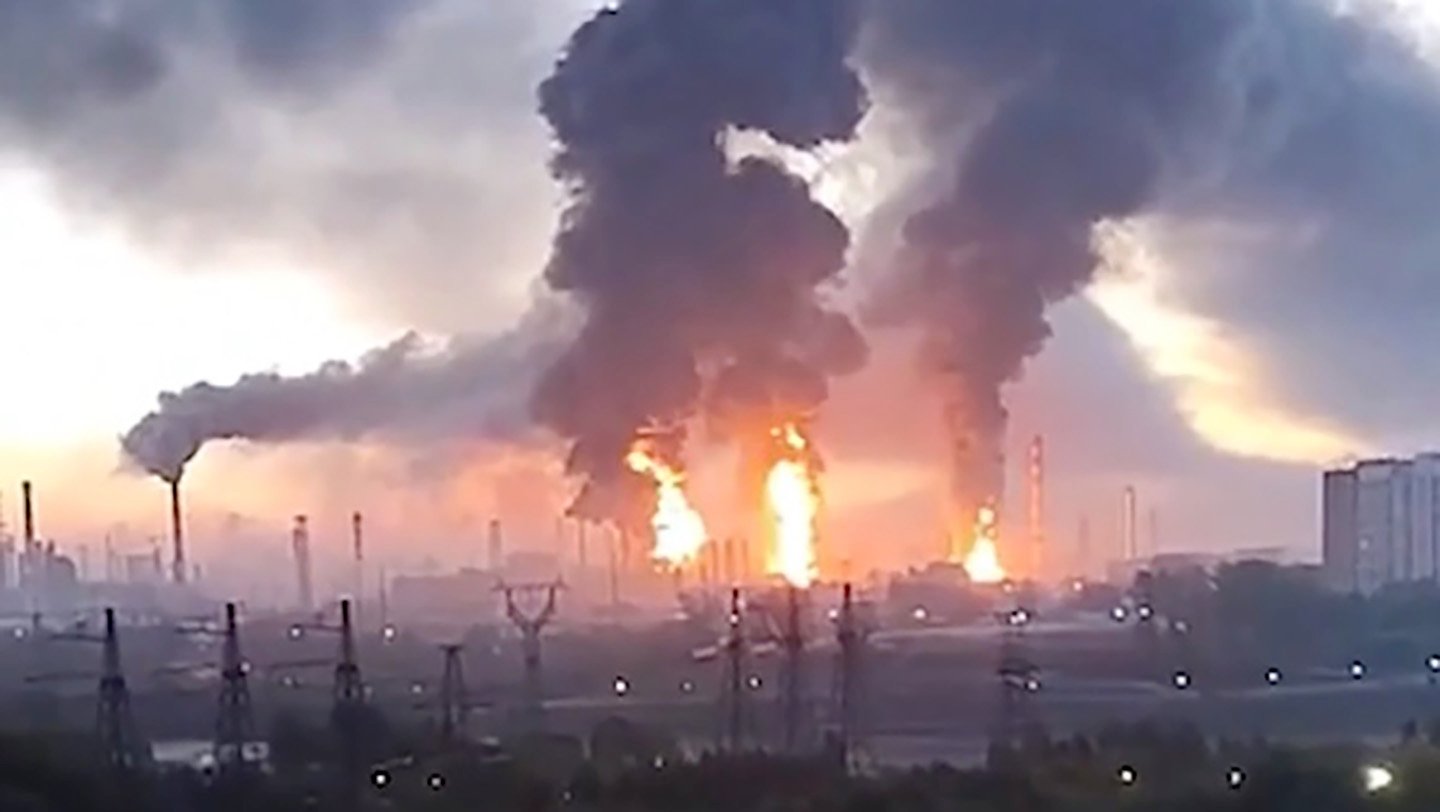
Our long-range responses had a very significant impact in the Moscow region last night. One of Russia’s key oil industry facilities and the aggressor’s logistics facility were hit. These are billions of dollars that sustain the war machine. The systems used included FP-1, RZ-100,… pic.twitter.com/ka5mlDSgb7
— Volodymyr Zelenskyy / Володимир Зеленський (@ZelenskyyUa) September 20, 2026
“There has definitely been an uptick” in Russian so-called hybrid warfare actions of late, a senior NATO military official told TWZ on Monday morning. “Despite its accusatory statements towards NATO, which remains a purely defensive alliance, Russia remains the aggressor. We see that clearly in Ukraine, where Russia is losing more than just the war it started. It therefore may incorrectly perceive the only way out is through increasing its hybrid campaign. That’s a losing proposition, because we are ready to respond, which we have shown.”
The official’s comments come after the shoot down last week of a suspected Russian drone that entered Lithuanian airspace from Belarus and in the wake of recent defensive actions by several European nations.
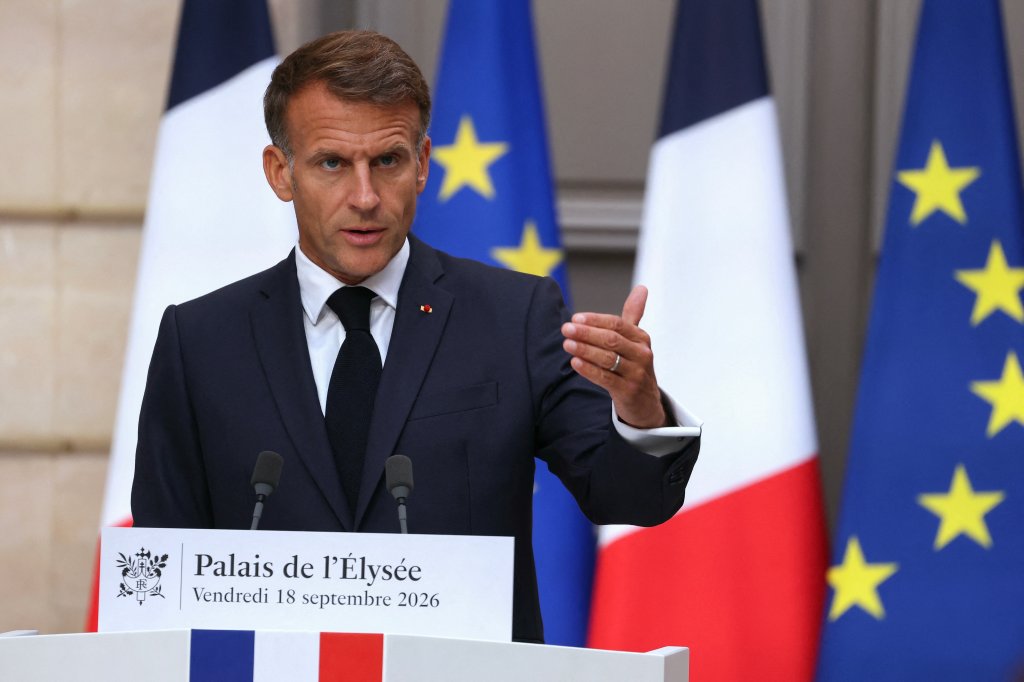
On Friday, French President Emmanuel Macron told reporters that his country had recently been targeted by Russian hybrid attacks. He ordered “the government to prepare a plan to protect our critical infrastructure” and the “most sensitive” defense industry and technology sites against drone and cyberattacks.”
Macron said the “intention behind it is to intimidate us and to derail the effort to support the Ukrainians. The consequence will be the opposite.”
France’s President Emmanuel Macron ordered the preparation of a “plan to protect our critical infrastructure” in the face of “Russian hybrid attacks.” (Photo by Thomas SAMSON / POOL / AFP) THOMAS SAMSON
In addition to Macron’s warnings, the French newspaper Le Monde reported that the French military was carrying out clandestine operations against Russia. However, the unnamed source cited offered no details and TWZ cannot independently verify that claim.
A day before Macron’s statements, Polish Prime Minister Donald Tusk warned in a speech to the Polish parliament that Russia is planning hybrid strikes with drones or rockets on European countries supporting Ukraine, including Poland.
The Polish leader offered an assessment about Moscow’s motives similar to Macron’s.
Russia will pretend the attacks are “accidental” in order to “paralyze or at least weaken the motivation of NATO countries” to rush to the defense of the member state coming under attack, The Associated Press noted.
“There is a real risk that drones or other types of projectiles will enter the territory of one or several countries on the eastern flank and even cause destruction,” Tusk cautioned. In July, a Russian AS-23 cruise missile crashed in Poland.
This video grab taken from footage of TVN Poland on July 30, 2026 shows the Polish army securing a large crater from a Russian missile that crashed in Poland. (Photo by various sources / AFP) –
In the face of these growing threats, officials in Lithuania are updating evacuation plans in case of a Russian attack.
“Poland is to be one of the evacuation destinations from the capital,” Žygimantas Solovjovas, head of the Civil Defense Department at Vilnius City Hall, told Polish Radio.
Evacuation should begin before a direct threat arises, Solovjovas stressed. “Vilnius residents should not assume that they will flee the city along an evacuation route while under fire,” Solovjovas explained, adding that in such a situation, one must seek shelter.
“One of the reasons for preparing this plan was to get residents accustomed to the idea that this should be a controlled process,” he noted. “If we allow chaos to ensue, the entire operation will be much more difficult.”
In Germany, where Defense Minister Boris Pistorius said Russia could attack by 2029, hospitals are preparing for a future influx of war-related casualties.
“In a report that gamed out potential scenarios should Russia invade NATO territory, the Bundeswehr calculated that as many as 1,000 wounded soldiers could arrive in Germany each day,” Bloomberg News reported last week. “As the country’s five military hospitals would quickly reach capacity — and the law requires that civilian hospitals help during wartime — the system would likely come under unprecedented strain, and could be forced to triage soldier and civilian care.”
As we noted last week, the alliance writ large is taking action against the growing Russian threats as well.
NATO’s air commander, U.S. Air Force Lt. Gen. Jason T. Hinds, told reporters, including from TWZ, last week that he was tasked with implementing two NATO air and missile defense plans. Hinds is also the Air Force’s top officer in Europe, serving as the commander of U.S. Air Forces in Europe/U.S. Air Forces Africa (USAFE).
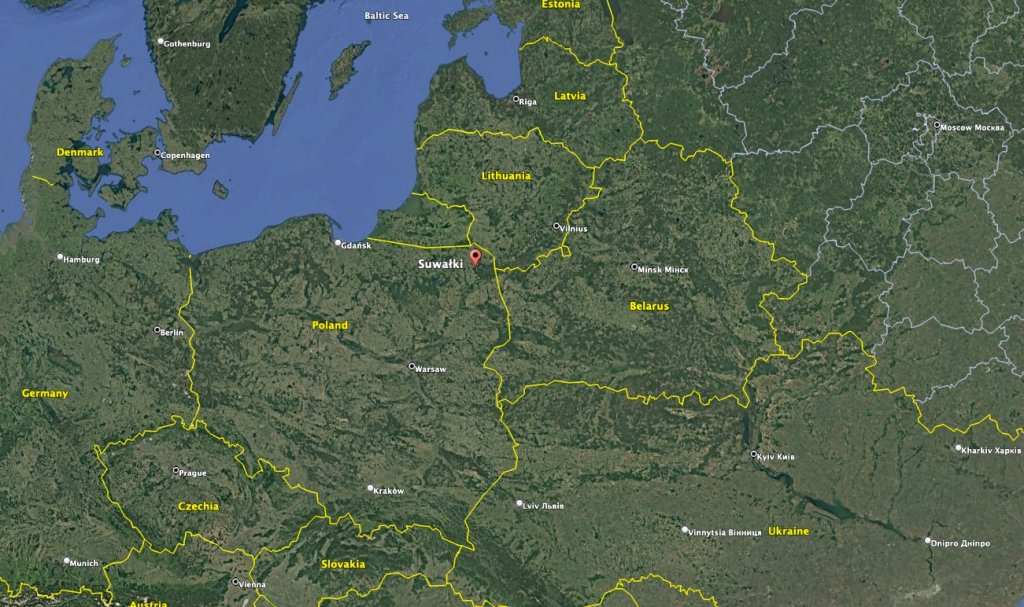
Adding to the concerns about Moscow’s actions, Russia’s client state Belarus just wrapped up mechanized and tank battalion training adjacent to the Suwalki Gap. That’s the border between Poland and Lithuania that separates the Russian enclave of Kaliningrad from Belarus. It has long been considered a potential flashpoint for a war in Europe and the training exercise exacerbated concerns that NATO allies are not prepared for a Russian attack there.
The Suwalki Gap between Kaliningrad and Belarus is also the only land border between Poland and the Baltic states. (Google Earth)
Russia is also making some potentially concerning preparations.
The Defense Ministry is reportedly seeking “an additional 16,000 to 20,000 hospital beds for wounded soldiers in the Northwestern Federal District,” according to the Russian Volya Telegram channel. That district is located near the Baltics.
“Military hospitals have been struggling to cope with the influx of wounded since 2023, so the Ministry of Defense is increasingly using civilian hospitals (including maternity hospitals and specialized medical facilities) for its needs,” Volya stated. “Some of these hospitals are being completely repurposed for military use, but more often, civilian hospitals allocate a few departments to treat the wounded, while continuing to provide care for civilian patients in other departments.”
The expansion “will primarily affect regions within the Northwestern Federal District: Karelia, St. Petersburg, Leningrad and Novgorod regions, as well as Smolensk,” which are near the Baltics “and the Moscow regions.”
Militarnyi: In the fall of 2026, the Russian Federation plans to add 16,000-20,000 military beds in civilian hospitals in the Northwestern Federal District, located near the Baltic states. pic.twitter.com/0sLMvoCxfC
In addition, the Border Service Directorate for St. Petersburg and the Leningrad Region announced that from September 16 to September 26, 2026, there would be a restriction on access to the border of the Slantsevsky and Kingiseppsky districts near the Estonian border.
“These measures aim to prevent violations regarding border regulations, migration laws, and the protection of aquatic biological resources,” the directorate claimed, according to Russian regional officials.
The new rules prohibit people from being on the shorelines or in small vessels along a portion of the Narva River and from hunting or carrying firearms in the border area. In addition, they forbid the “presence and movement of individuals and vehicles during hours of darkness outside of populated areas within the five-kilometer strip of territory along the state border in the Kingiseppsky and Slantsevsky districts.”
Obviously, the stated reasoning behind this was taken with great skepticism from neighboring Baltic NATO countries who are already on edge.
Russia's FSB imposes a nighttime curfew along the Estonian border near Narva, banning people and vehicles outside towns and villages within 5 km of the border in the Slantsy and Kingisepp districts from Sept 16–26 pic.twitter.com/8Ez8AvMXFy
Though Russia remains bogged down in its war on Ukraine and is suffering heavy losses of personnel and equipment, some European intelligence officials suggest Vladimir Putin could still carry out a small-scale invasion of NATO territory.
“It’s possible,” Michal Koudelka, the head of the Czech Republic’s BIS security service, told The Guardian about a potential Russian thrust into NATO. “It could involve a limited incursion, false-flag provocations, a massive influence campaign,” he told the publication, adding that this scenario could play out in a matter of “months, not years.”
While Russia has been carrying out a range of hybrid actions against Europe for years, including cyberattacks, drone incursions and sabotage, last month’s foiled attack on Germany’s Leipzig-Halle airport is seen in European intelligence circles as an inflection point.
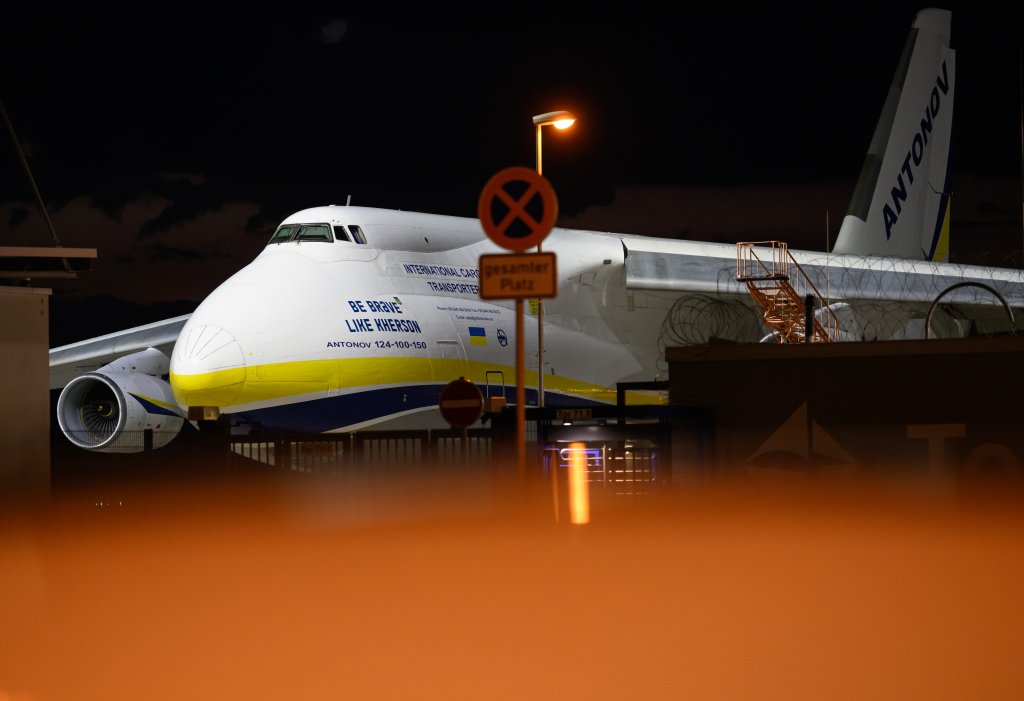
As we previously reported, a drone discovered inside the secured area of Leipzig/Halle Airport during the night of August 4-5, was carrying approximately 1.3 pounds of explosives. It was found close to a Ukrainian-operated Antonov An-124 heavy cargo aircraft used to transport weapons to Ukraine. German authorities blamed Russia for that incident.
“To have an armed UAV drone sent into a busy airport in the middle of Europe … If you have attacks that could result in losses of life or losses of very critical infrastructure that have a huge implication for society, I think that is a gamechanger,” Thomas Nilsson, the head of Sweden’s military intelligence and security service, told The Guardian.
A Ukrainian Antonov AN-124 cargo plane is parked at Leipzig/Halle Airport after specialists from the Federal Police defused a drone equipped with an explosive device that German authorities blamed on Russia. (Photo by Hendrik Schmidt/picture alliance via Getty Images) picture alliance
It is unknown at this point whether Putin will decide to expand his hybrid actions against Europe to a more traditional conflict. However, as the attacks increase, officials across the continent are committing greater resources and planning to be prepared should that happen.
At the same time, the heat is only being turned up on Moscow as Ukraine accelerates its long range attacks. Now it has a whole new weapon, one that has been long in the works, to reach into Russian territory with while bypassing most air defenses.
Zelensky has officially unveiled the FP-7 Pelican ballistic missile and said it was used in the attack on Moscow. This is a monumental advance for Ukraine that has lacked modern ballistic missile capabilities since the war started. Still, Ukrainian media has raised doubts about whether the FP-7 — with an estimated operational range of 200-350 kilometers (124-217 miles) — can reach the Russian capital, which is about 450-500 kilometers (280-311 miles) from the Ukrainian border.
However, one expert suggested “that the ballistic weapon may have played an integral role within a coordinated, multi-axis combined strike,” according to the Kyiv Post.
Regardless, even if it can’t hit Moscow, it can hit plenty of other targets and it represents a major escalation in Ukraine’s weapons capabilities.
Ukrainian President Zelensky said that during an attack on Moscow, Ukraine used its Pelican FP-7 ballistic missile for the first time. pic.twitter.com/KqM9bqk9ur
There is no avoiding the reality that the security situation in Europe is deteriorating, where exactly that leads is unclear apparently to everyone at the moment.
UPDATE: 7:04 PM Eastern –
Airspace restrictions have been imposed over Vilnius Airport due to a suspected “hybrid attack” from Belarus after the detection of what is suspected to be balloons in Lithuanian airspace, airport officials announced.
“Aircraft arrivals are temporarily suspended; however, departures are permitted from 12:55 a.m. subject to all safety requirements,” the airport explained. “These restrictions were introduced due to a hybrid attack by Belarus against Lithuania, civil aviation, and the public, involving the detection of navigational markers—characteristic of balloons—in areas posing risks to aviation.”
Belarus launched balloons toward the Vilnius Airport area, in what Lithuanian authorities are describing as a hybrid attack. pic.twitter.com/U7Etg3xn5o
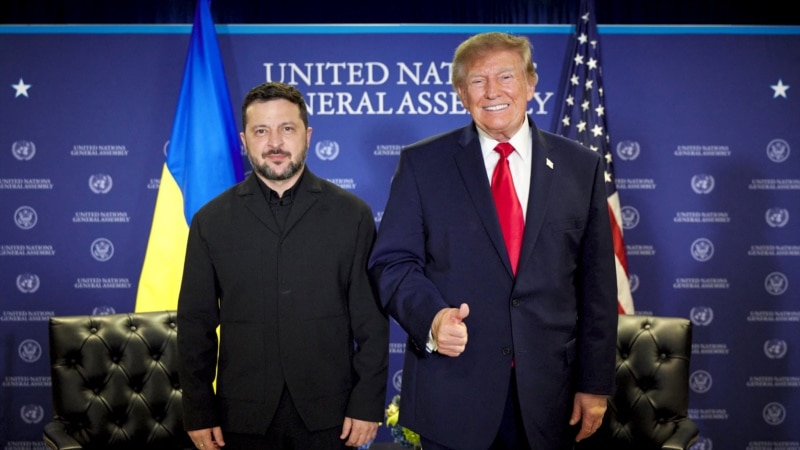
President Trump is set to meet with Ukrainian President Volodymyr Zelensky in New York City on Tuesday on the sidelines of the UN General Assembly following Ukraine’s massive weekend drone attack on Russia, which included attacks on Russian oil refineries. Trump has been calling for Ukraine to halt attacks on Russia’s oil infrastructure and reportedly […]
RFE/RL’s Ukrainian Service correspondent Maryan Kushnir walked some 20 kilometers to reach the embattled city of Bilozerske, in Ukraine’s Donetsk region, which soldiers say has been effectively destroyed by Russian strikes over the past year.
Officials in Moscow have announced a new record victory for the Kremlin-controlled United Russia party in what the European Union dismissed as “sham elections” on September 21.
Ukraine launched a massive drone attack against Russia on Sunday, launching more than 1,000 drones into Russian territory and conducting what the mayor of Moscow called the “largest attack” targeting the Russian capital of the war. Russia’s Defense Ministry said that overnight, its forces intercepted 1,110 Ukrainian drones over about 20 Russian regions and the […]
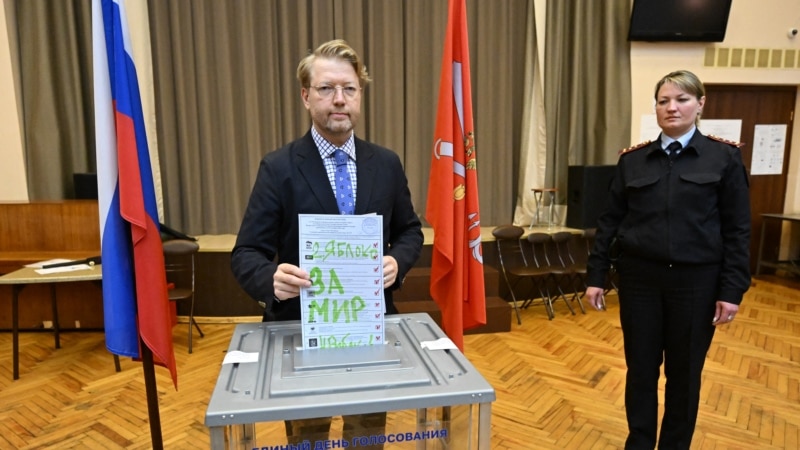
There was no let up in fighting between Russia and Ukraine on September 20, as voters in Russia cast ballots on the final day of parliamentary elections from which a political party calling for peace was excluded.
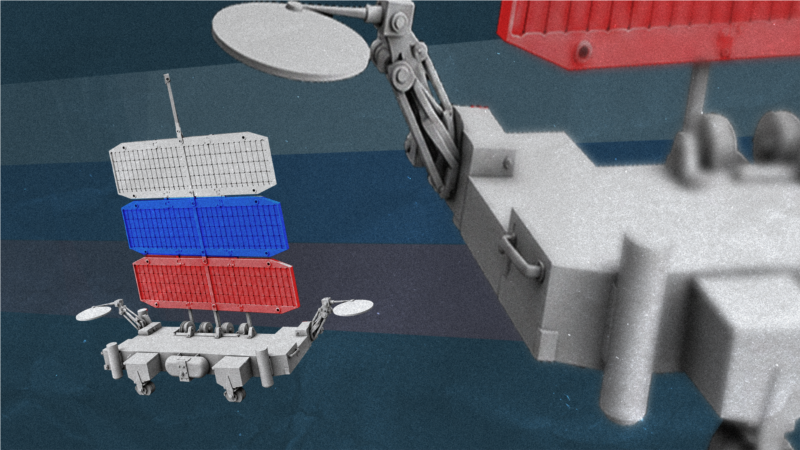
Russia is racing to build Rassvet, its answer to Starlink, after losing access to the satellite network on the battlefield in Ukraine. But troubled satellites, tight deadlines, and a lack of ground terminals could leave Moscow waiting years.
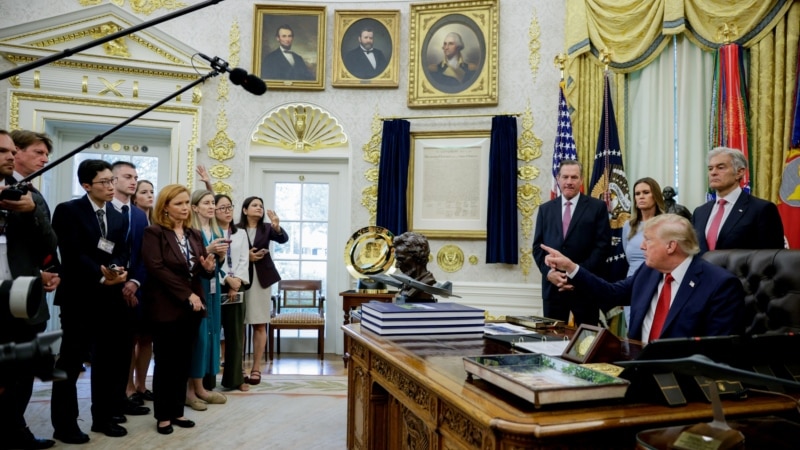
US President Donald Trump signed into law legislation aimed at increasing economic pressure on Russia over its war on Ukraine, including by targeting Moscow's energy revenues as well as countries that continue to buy Russian oil and gas.
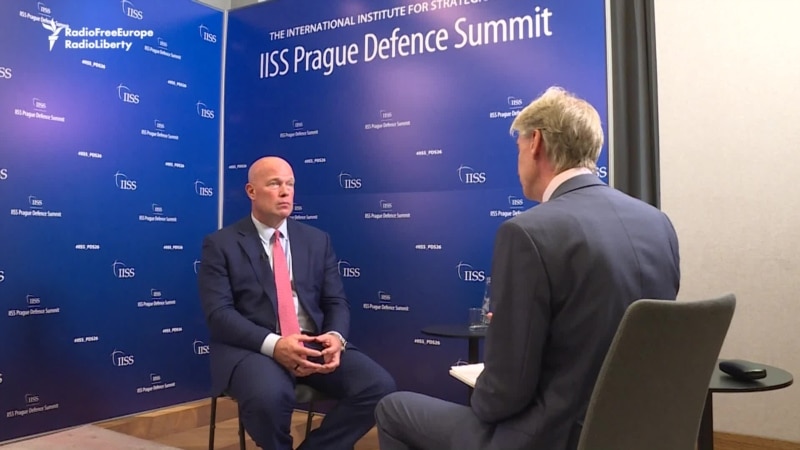
Plans for Ukraine to produce Patriot interceptor missiles under license are “not going to solve this winter's problem” as it reels under Russian aerial bombardment, US ambassador to NATO told RFE/RL.
Vingt ans après, la guerre du Kosovo continue de susciter des polémiques entre les grandes puissances, notamment la Russie et les États-Unis. Moscou invoque régulièrement l'intervention de l'Organisation du traité de l'Atlantique nord (OTAN) au printemps 1999 pour justifier les siennes, par exemple en Géorgie ou en Crimée. Dans un discours devant le Parlement, le 18 mars 2014, le président Vladimir Poutine affirmait ainsi : « Les autorités de Crimée se sont référées au précédent bien connu du Kosovo, un précédent que nos collègues occidentaux ont eux-mêmes créé dans une situation très semblable, quand ils ont convenu que la séparation unilatérale du Kosovo d'avec la Serbie — exactement ce que la Crimée est en train de faire en ce moment — était légitime et n'avait pas besoin d'une quelconque autorisation des autorités centrales du pays. »
Ce parallèle a fait l'objet d'une réfutation en règle par M. Barack Obama lui-même. Le président américain a justifié l'intervention de l'OTAN, qui n'a eu lieu « qu'après les violences et les meurtres systématiques subis par les populations du Kosovo. Le Kosovo n'a quitté la Serbie qu'au terme d'un référendum conforme au droit international, et dans le cadre d'une coopération scrupuleuse avec les Nations unies et les pays voisins du Kosovo » (Bruxelles, 26 mars 2014).
Cet échange pourrait susciter des débats juridiques sans fin, dans la mesure où le droit international consacre deux principes qui peuvent entrer en contradiction : l'intégrité des États et le droit des peuples à disposer d'eux-mêmes. C'est pourquoi les déclarations d'indépendance formulées par certaines composantes d'un pays (région, province), comme celle de la Catalogne en octobre 2017, suscitent des batailles judiciaires, mais aussi politiques : il s'agit d'obtenir que l'indépendance soit reconnue par un nombre d'États suffisamment important, en qualité et en quantité, pour rendre effectif le changement de statut du territoire concerné. C'est le problème rencontré aujourd'hui encore par le Kosovo, qui n'est pas reconnu par tous les membres de l'Union européenne.
Le statut des États étant la pierre angulaire de l'ordre international, les mouvements autonomistes font toujours l'objet d'une attention particulière de la part de leurs pays voisins et des instances internationales, compte tenu de leur potentiel perturbateur (tensions diplomatiques, conflit armé). Les référendums d'autodétermination, lorsqu'ils font suite à des interventions militaires extérieures, ne suffisent pas à lever les doutes sur la légitimité d'une partition. En outre, les conséquences des déclarations d'indépendance, dont le statut n'est pas réglé par le droit international, peuvent se révéler très graves. La reconnaissance unilatérale de l'indépendance de la Croatie et de la Slovénie par l'Allemagne, en décembre 1991, avait ainsi entraîné une réaction en chaîne meurtrière, contribuant au démantèlement désordonné de la Yougoslavie. Sans aller jusqu'à ce cas extrême, les pays membres des Nations unies seraient sans doute avisés de se concerter sur les grandes règles qui doivent gouverner les relations internationales en tenant compte de l'expérience acquise depuis 1990.
Sans cette concertation et la clarification des principes, le débat demeurera le simple jouet des rapports de forces et des appréciations plus ou moins subjectives des uns et des autres, comme l'illustre cette déclaration du ministre des affaires étrangères russe Sergueï Lavrov : « On nous répète sans cesse que “le Kosovo, c'était un cas à part, car des milliers de personnes ont péri là-bas”. Faut-il en conclure que, pour que les habitants de la Crimée obtiennent la reconnaissance de leur droit imprescriptible, il faut que coule autant de sang en Crimée qu'au Kosovo ? Pardonnez-moi, ce sont des parallèles et des analogies parfaitement impropres (1). » De son côté, M. Obama, qui s'était opposé en 2003, alors qu'il était sénateur, à l'agression américaine contre l'Irak, dont l'illégalité ne faisait aucun doute, estime finalement que les États-Unis ont « cherché à travailler dans le cadre du système international » (Bruxelles, 26 mars 2014). Ce qui est vrai, mais… après la guerre. La référence récurrente à l'intervention au Kosovo confirme qu'elle a fracturé un élément essentiel de l'ordre international : la confiance autour du tapis vert des négociations.
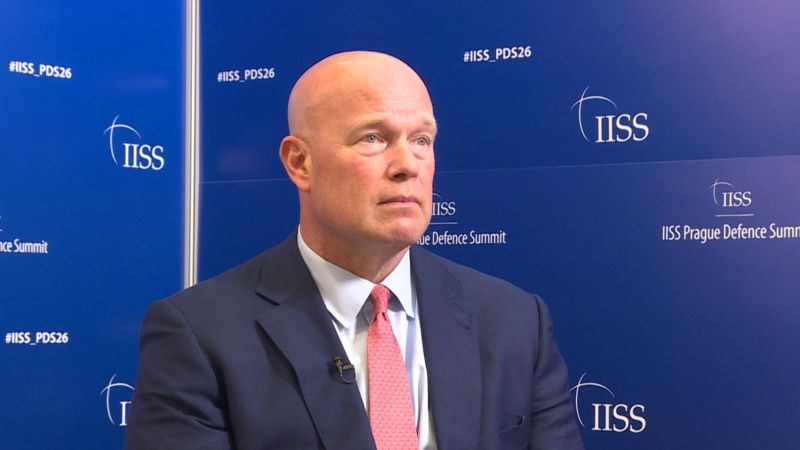
US Ambassador to NATO Matthew Whitaker has warned that global demand for missiles for Patriot air defense systems is “outpacing supply” in an interview with RFE/RL.
Campaigners have called for more effort to "defend democracy" and support a “free, democratic and sovereign Ukraine”.
The demand was made by the Defending Democracy Global Initiative (DDGI) and the Westminster Alliance for Ukraine (WA4U).
It was timed to coincide with the International Day of Democracy.
The Defending Democracy Global Initiative is a transnational, civil society-led platform founded in Skopje in 2024 by CIVIL – Center for Freedom, the New European People’s Forum and Media Dialogue.
It works to defend truth, freedom and democratic resilience against authoritarianism, disinformation and hybrid threats.
Its flagship programme, the Westminster Alliance for Ukraine, brings together parliamentarians and civil society partners to strengthen European cooperation in support of a free, democratic and sovereign Ukraine.
A spokesman told this site, “Democracy depends on people’s ability to speak freely, access reliable information, participate in decisions and hold those in power accountable.
“It requires independent media, active civil society, institutions that protect rights, and space for disagreement without intimidation. These conditions must be defended and strengthened every day.”
The spokesman went on: “Standing with Ukraine is a crucial part of that responsibility.
“Russia’s war of aggression threatens the lives and freedom of Ukrainians and the principle that people have the right to determine their own future. Supporting Ukraine’s sovereignty and democratic aspirations is essential to building a safer, more democratic Europe.”
The two groups seek to build on the commitments that brought DDGI into being in 2024, and on the work of its partners and co-founders in solidarity with Ukraine since Russia began its aggression in 2014.
DDGI and WA4U have now used the International Day of Democracy to call on democratic institutions, parliamentarians, civil society, journalists and citizens across Europe “to turn solidarity into sustained action.”
They demand that they support Ukraine, defend independent journalism, challenge disinformation, protect civic participation and "insist on accountable government".
The spokesman said: “Every voice matters – including those excluded from public debate, those facing threats for speaking out, and those whose communities are living through war.
“Meaningful participation requires that these voices are heard and taken into consideration.
“We invite everyone who shares these commitments to stay connected with our work, take part in future discussions and help strengthen cooperation across borders.”
This week, Mark Leonard is joined by Jana Kobzova, co-director of ECFR’s European Security programme, to discuss the mounting pressures facing Ukraine as it enters another wartime winter. Despite Ukraine’s success in disrupting Russian logistics and energy infrastructure, Russia has intensified its attacks on cities, energy networks and civilian targets, while Kyiv faces growing domestic political and economic strains.
Jana explains how shortages of air-defence interceptors, political infighting, corruption investigations and economic challenges are converging at a particularly difficult moment for Ukraine. She also examines Russia’s escalating hybrid attacks across Europe and how Europeans can strengthen their resilience—and Ukraine’s defences.
Together, Mark and Jana assess Ukraine’s ability to withstand these overlapping crises, the future of European support and the role Ukraine could play in Europe’s long-term security architecture. As Russia raises the pressure both on and off the battlefield, can Ukraine and its allies maintain the unity needed to hold the line?
This podcast episode was recorded on September 16th 2026.
Da der Westen, also vor allem die Europäer, derzeit regelrecht nach Krieg lechzen und ihn mit allen Mitteln zu provozieren versuchen, während die deutschen Medien gleichzeitig über die Positionen und Argumente der russischen Regierung immer schamloser lügen oder sie verschweigen, finde ich es wichtig, ein aktuelles, einstündiges Interview des russischen Außenministers Lawrow komplett zu übersetzen, […]
The Leipzig drone episode shows how jumping the gun turns suspicion into a weapon: NATO intelligence found no Russian trace, yet Berlin keeps insisting otherwise — and the real question is no longer who is to blame, but why Germany needs this narrative at all. “In war, truth is the first casualty.” (Aeschylus) Imagine getting […]
Zum Verständnis beginne ich diesen Artikel mit der Information, dass es verschiedene Arten vom Luftabwehr gegen verschiedene Angriffssysteme gibt. Wenn es in diesem Artikel also darum geht, dass der Ukraine Luftabwehr gegen ballistische Raketen fehlt, dann bedeutet das nicht, dass die Ukraine gar keine Luftabwehr mehr hat. Die Ukraine hat zum Beispiel recht gut gelernt, […]
Am 16. September gab es ein selten gut belegtes Beispiel dafür, wie sehr der Spiegel seine Leser, nun ja, selektiv informiert, um es höflich zu formulieren. Am Abend zuvor hatte Reuters über ukrainische Tests von Abfangdrohnen berichtet, die im Sommer stattgefunden haben und nicht erfolgreich waren. Einen Tag später hat der Spiegel unter Berufung auf […]

 Login


 Militarnyi: In the fall of 2026, the Russian Federation plans to add 16,000-20,000 military beds in civilian hospitals in the Northwestern Federal District, located near the Baltic states.

 (@Maks_NAFO_FELLA)