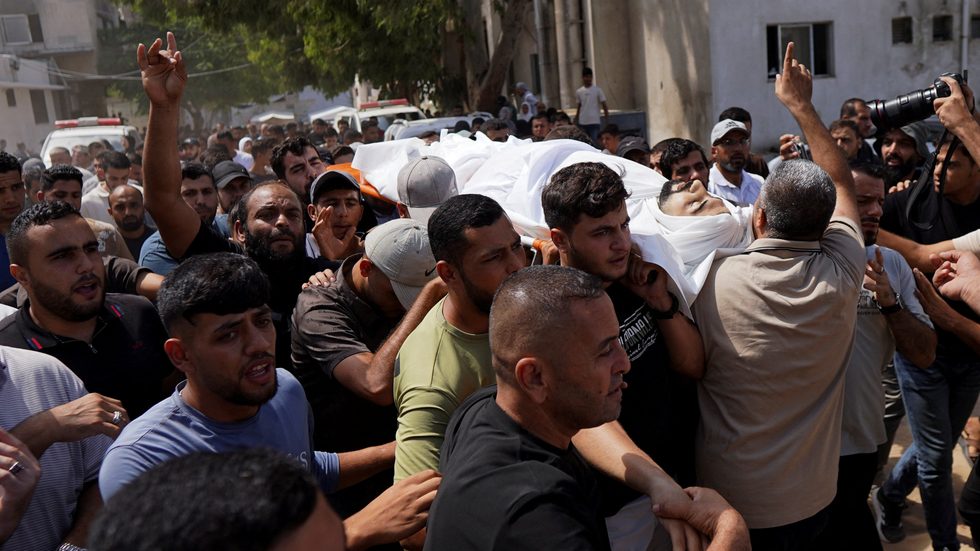
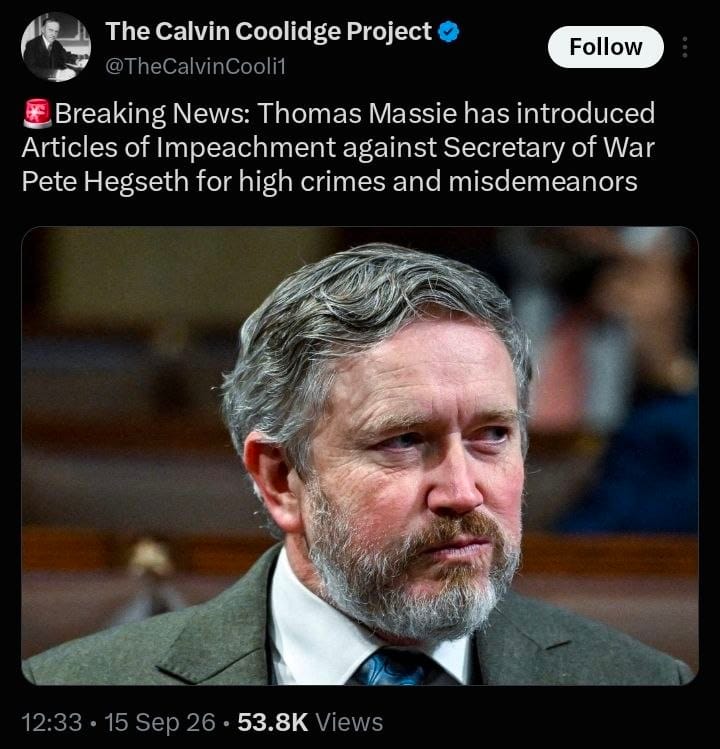
❌

Reading view

The Rise And… Rise Of ‘Color Revolutions’

By Kit Klarenberg | Global Delinquents | September 28, 2026

It’s rather forgotten today how Washington’s post-9/11 imperial adventurism was not restricted to military intervention. A core component of the Bush administration’s “Freedom Agenda” – under the auspices of which calamitous wars in Afghanistan, Iraq and elsewhere were waged – was overt sponsorship of civil society-led coups throughout the former Soviet Union, Warsaw Pact and Yugoslavia. Citizens of these regions, and the world, live with this meddling’s destructive consequences to this day. The seemingly never-ending – and ever-escalating – Ukraine proxy war is a particularly visceral legacy.

The 1983 creation of the National Endowment for Democracy, a US state entity avowedly concerned with executing overtly what the CIA once did covertly, ushered in a new era of “spyless coups”. Working in close conjunction with USAID and George Soros’ Open Society Institute, NED ever after provided funding, training and material assistance to NGOs, ‘independent’ media outlets, opposition groups, and other initiatives in service of regime change, across every corner of the world.

Come 9/11, NED and its confederates had devised a supremely cunning, cost-effective template for toppling troublesome governments – be they left-wing, nationalist, or even former US puppets who’d stepped out of line. The previous October, longtime Yugoslav leader Slobodan Milosevic was brought down in what the Washington Post bombastically dubbed “an extraordinary US effort to unseat a foreign head of state, not through covert action of the kind the CIA once employed in such places as Iran and Guatemala, but by modern election campaign techniques.”
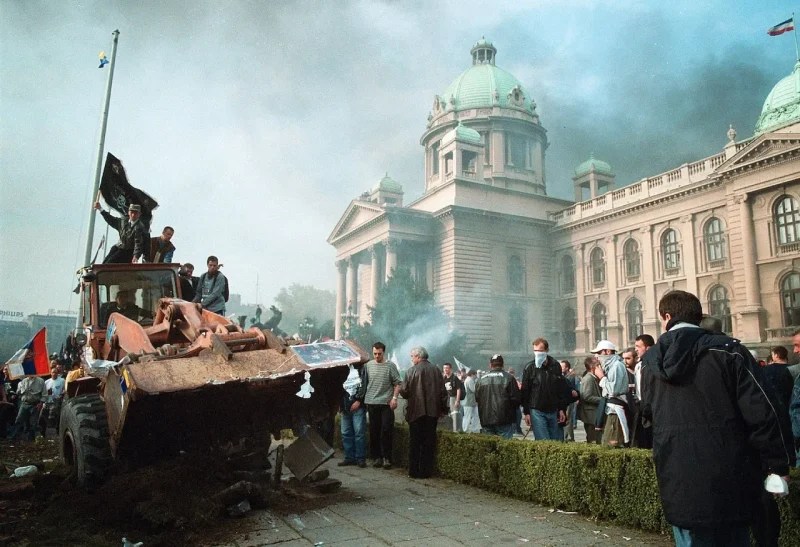
At the anti-Milosevic effort’s forefront was Otpor! (Serbian: Resistance!), a rebellious NED-funded youth activist group. Through a mix of civil disobedience, non-violent resistance, rock concerts, street theatre, and graffiti, they fomented mass public opposition to the Yugoslav President. When election day came and official results pointed to Milosevic’s victory, an NED-funded “parallel vote tabulation” purported to expose major fraud, sending millions to the streets of Belgrade to peacefully demand the President’s resignation. Milosevic duly capitulated, in the face of seemingly overwhelming people power.

The supposedly heroic struggle of Otpor! and other US-supported anti-Milosevic groups was immortalised in a slick ‘documentary’, Bringing Down A Dictator. Milosevic’s fall provided a precise blueprint for future ‘color revolutions’ – so-called because frequently, the Empire-supported activists who led these mob putsches prominently adopted specific colours for their banners, branding and logos. Initially, US officials eagerly associated themselves publicly with this upheaval. Meanwhile, the mainstream media routinely published remarkably illuminating post-mortems of the revolts, extensively exposing Washington’s guiding hand and oft-enormous financial outlay.

Nonetheless, politicians, pundits and journalists alike universally framed colour revolutions as ultimately spontaneous uprisings by liberal, progressive elements with legitimate grievances, who yearned for democracy and freedom. In reality, they almost invariably produced corrupt, repressive governments that ruled via intimidation and brutality, including political assassinations. Post-colour revolution regimes also typically conducted sweeping privatisation and other ravaging ‘reforms’, destroying living standards for average citizens by prostrating their countries to the EU, IMF, NATO, World Trade Organization, and other mechanisms of Western economic, military, and political subjugation.

Slobodan Milosevic’s NED-orchestrated ouster is nicknamed the ‘Bulldozer Revolution’, due to iconic scenes during the upheaval of a wheel loader helping anti-government agitators occupy state buildings. However, its driver quickly turned against the “Revolution”. Subsequent “shock therapy” decimated Yugoslavia’s mixed market economy, causing his successful independent business to fail, and him to go bankrupt. He subsisted until his dying day on meagre state welfare payments. For most participants, subsequent colour revolutions were similarly an object lesson in being careful about what one wishes for.

‘External Shove’

In February 2005, President George W. Bush gave a swaggering address in Bratislava, Slovakia. He hailed how “in recent times, we have witnessed landmark events in the history of liberty.” This included Georgia’s November 2003 Rose Revolution, Ukraine’s Orange Revolution the next year, and Iraq’s Purple Revolution a month prior. “The advance of freedom is the concentrated work of generations,” Bush declared. He looked ahead to Moldova, and “inevitably” Belarus, “someday proudly [belonging] to the country of democracies [sic]”:

“Eventually, the call of liberty comes to every mind and every soul. And one day, freedom’s promise will reach every people and every nation.”

Moldova’s forced transformation into a staggeringly corrupt effective EU-US colony took many years. Belarus conversely remains stubbornly resistant to “freedom’s promise”, as defined by Brussels, London, Washington, and other centres of imperial power. Still, President Bush’s confidence was well-founded. Waves of insurrectionary unrest unleashed by his government’s “Freedom Agenda” had systematically swept away designated enemy governments one by one annually since he took office. Indeed, within weeks of Bush’s speech, Kyrgyzstan’s insufficiently pro-Western leader fell victim to yet another colour revolution.

He would not be the last. Prior colour revolutions had enthusiastically emphasised the importance of techniques of nonviolent resistance – many of which were crafted by Gene Sharp, who was intimately enmeshed within the US military and intelligence establishment for much of his life. However, Kyrgyzstan’s NED-created regime change army, KelKel – directly modelled on Otpor! – attacked police, torched government buildings and even carried out bombings. Their ferocity was actively encouraged and promoted by US-funded TV stations locally. Such belligerence subsequently became a colour revolution calling card.
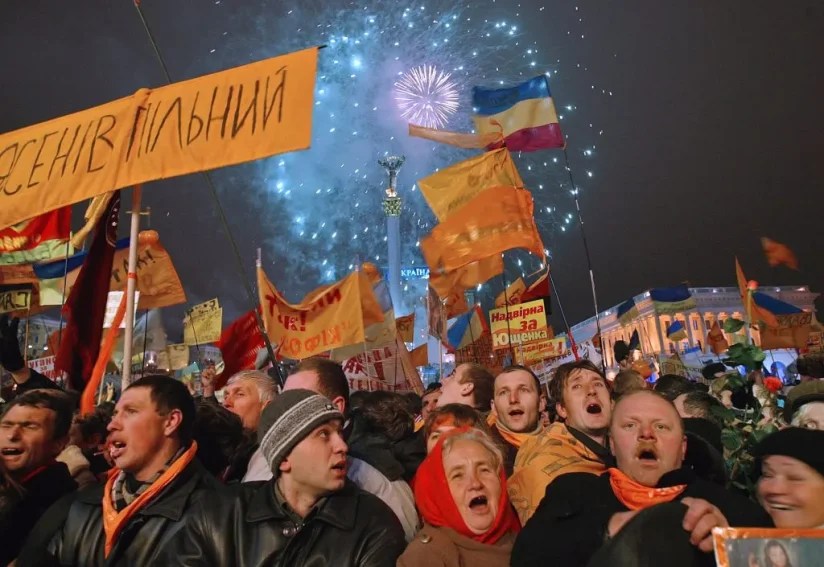
Ukraine’s Orange Revolution

That colour revolutions represented a formal weapon of war in the Empire’s post-9/11 arsenal was enthusiastically spelled out by arch-neoconservative Max Boot in late December 2004. He gushed how Ukraine’s Orange Revolution days earlier, which brought a pro-Western government to power, was “one of the most inspiring events” of that year. Boot declared the “triumph” and “miracle” of the revolution “should dispel the quaint notion still prevalent in many Western universities and foreign ministries that democracy is a luxury good suitable for rich countries”:

“These revolutions reveal the hollowness of the cliché that ‘democracy can’t be imposed by outsiders’… sometimes, when dealing with an entrenched dictatorship, this requires military intervention of the kind that occurred in Iraq and Afghanistan. More brittle regimes can be brought down by their own people, but even they often need a little external shove… There was nothing nefarious about the US intervention in Ukraine.”

Boot boasted how Washington had “spent $58 million on democracy promotion in the last two years” in Ukraine. He proposed Kiev receive “expedited NATO and European Union membership,” to finish off the Orange Revolution. “In the meantime, we need to apply elsewhere the lessons of Ukraine” Boot demanded, suggesting “an obvious candidate for a similar transformation is Iran.” He explained, “it’s hard to think of a higher priority than the overthrow of the mullahs,” encouraging the Bush administration to prioritise “liberating Iran.”

‘USAID Help’

Such was the insurrectionary fervour of the time, in January 2006 USAID went to the extent of publishing a glossy magazine, Democracy Rising, revealing in detail Washington’s central role in fomenting “grassroots” rebellions as far afield as Afghanistan, Gaza and Lebanon. Dedicated sections on colour revolutions to date were replete with stunningly forthright passages. A section on Georgia’s November 2003 Rose Revolution described how NED had financed regime change training for local “lawyers, judges, journalists, members of parliament, NGOs, political party leaders, and others.”

The stated purpose of this investment was to give Georgians “a sense that they should regulate the government.” The Rose Revolution “was the climax of these efforts.” One recipient of US financial support remarked, “without foreign assistance, I’m not sure we would have been able to achieve what we did without bloodshed.” Meanwhile, several pages were dedicated to the Orange Revolution. It noted how thousands of Ukrainian journalists were given training in “investigative reporting”, bankrolled by NED and USAID.

An alumni told Democracy Rising this sponsorship “created a feeling that others stood with them ‘in the trenches’.” Concurrently, NED-affiliated Freedom House flooded the coffers of NGOs “that sponsored voter education, mobilized voters to get to the polls and observed elections.” These organisations “also held meetings, youth dances, rock concerts and karaoke to attract young voters,” and “ran public service ads on TV stations, informing people about their right to vote.” Meanwhile, “democracy trainers from Serbia, Slovakia, Russia and Croatia” were flown into the country.

In the second round of Ukraine’s presidential election, NED-financed NGOs claimed to have been inundated with tens of thousands of reports of fraud from voting stations all over the country, while exit polls they produced pointed to widespread rigging having denied pro-Western candidate Viktor Yushchenko a landslide victory. Vast protests, combined with opposition-organised general strikes, widespread civil disobedience and occupations of government buildings forced a rerun. A US-funded think tank apparatchik asserted:

“USAID help for the poll was absolutely important – the poll results after the second round made people go to the street.”

For all the hype and self-assurance of Democracy Rising, its publication came at a time when colour revolutions were increasingly being viewed with hostility and suspicion at a state and public level throughout the Global South. In every case, the radical outcomes promised by colour revolution leaders and advocates failed to materialise, while US rhetoric about the commitment of resultant pro-Western regimes to democracy and freedom was a perverse fraud.

In Ukraine, US-installed Yushchenko implemented economic austerity, slashed regulations and social spending, bailed out criminal banks, broke open state industry and natural resources for foreign plunder, attacked the rights of Russian speakers, and began preparing the country for locally-feared NATO membership. Within just nine months of entering office, his coalition government – comprised of Orange Revolution activists – collapsed due to deeply corrupt battles with feuding Ukrainian oligarchs over control of key media and industrial assets.

Yushchenko was voted out in the January 2010 presidential election, finishing fifth in the first round with just 5.5% of the vote. As Empire house journal Foreign Policy lamented years later, the Bush administration’s much-vaunted colour revolutions all turned out to be “terribly disappointing.” Each and every time, “elite corruption still continued apace” and “promises of far-reaching change never really materialized.” Damningly, “maladies that typified the preceding regimes quickly came to describe” the governments created by colour revolutions themselves.

‘Revolution Business’

That’s quite some euphemism. In Georgia, longtime Soros acolyte Mikheil Saakashvili granted himself unilateral power in key policy areas, before brazenly exploiting his position to harass and jail business and political rivals. Saakashvili’s targets would be raped and/or tortured in prison, their ordeals filmed for primetime broadcast on local TV networks. Grave questions abound over his personal involvement in several suspicious deaths, including government ministers’. He was voted out in October 2012, despite NED’s best efforts.

Kyrgyzstan’s 2005 Tulip Revolution installed Kurmanbek Bakiyev, who proceeded to run the country as his personal fiefdom for five years. Bakiyev’s relatives profited exorbitantly from legally questionable privatisation of state industries. For example, his family signed a highly controversial $1.8 billion deal to supply fuel to a local US military base, close to Kyrgyzstan’s total GDP in 2003. Elsewhere, Bakiyev’s brother oversaw Bishkek’s security apparatus – arbitrary detentions, bogus convictions, torture, and murders of opposition activists, journalists, and politicians became commonplace.

Bakiyev was himself chased out of not only the presidential palace but Bishkek itself in April 2010, following a massacre of anti-corruption protesters in which up to 100 were killed and at least 450 wounded. Thereafter, Kyrgyzstan was plunged into economic and political chaos for a decade, with numerous governments collapsing along the way. The freest and most stable Central Asian state prior to the Tulip Revolution, it is only since 2020 – following another Anglo-American coup – the country has regained some semblance of stability.

A key player in that upheaval was British ambassador Charles Garrett. He arrived in Bishkek from Macedonia, where as this journalist has revealed from April 2016 he steered what was known as the “colorful revolution”. Illegally obtained, deceptively edited wiretaps seemingly implicating government officials in shocking crimes produced huge protests, featuring widespread arson attacks and brutal clashes between demonstrators and police. Garrett distributed cash to NGOs and activists involved in the unrest from his diplomatic pouch, encouraging them to cause mass havoc.

Paralajmërimi i gazetarit maqedonas: Pas protestave në Ballkan ...

George Soros’ Open Society Foundations, NED, and USAID were also colorful revolution participants. Some protesters even proudly wore “Soros Army” shirts. Despite a huge public counter-revolutionary fightback, the tumult paralysed the Macedonian economy and state, leading to the installation of a doggedly pro-Western, dangerously dysfunctional administration that engaged in industrial scale graft, jailed political opponents on bogus charges, and changed the country’s name despite widespread opposition. Meanwhile, existing economic problems, including crippling brain drain, were gravely exacerbated.

The unfailingly disastrous results of colour revolutions surely contributed to White House officials abruptly and firmly distancing themselves from the entire enterprise, before the Bush administration’s second term was even over. The “Freedom Agenda” was quietly forgotten. The President – who in October 2004 openly mandated financial assistance to Belarusian opposition activists, and once publicly praised the Rose Revolution as an example to be followed throughout the Caucasus and Central Asia – went so far as to deny the US was in the “revolution business” at all.

‘Alternate Reality’

Colour revolutions have continued apace ever since, with the same strategies being recurrently applied the world over, to varying degrees of success. All along, non-Western governments – in particular China, Iran and Russia – have become increasingly vocal in their condemnation of and opposition to colour revolutions, in some cases passing legislation seeking to curtail the operations of foreign funded NGOs on their soil. Yet, the mainstream media long ago adopted a rigid Omertà on Washington’s culpability for civil society-driven destabilisation overseas.

In a striking example of this paradigm shift, in November 2004, before the Orange Revolution was over, The Guardian published a revealing report exposing the “US campaign behind the turmoil in Kiev.” The outlet stated unambiguously the revolt was “an American creation, a sophisticated and brilliantly conceived exercise in Western branding and mass marketing that, in four countries in four years, has been used to try to salvage rigged elections and topple unsavoury regimes.” NED, the State Department and USAID were all fingered as culprits.

Fast forward to July 2015 however, and a Guardian article on Russia’s banning of NED under foreign agent laws quite amazingly relied on a brief quote pulled from the Endowment’s official website to describe its operations. In the intervening time, the Maidan Revolution overthrew Ukrainian President Viktor Yanukovych in February 2014, setting Kiev on the warpath with Moscow. Washington’s irrefutable involvement was strenuously denied at the time by the mainstream media, and has been ever since.

Following the Ukraine proxy war’s February 2022 eruption, The New York Times took vigorous aim at independent journalists for spreading the “conspiracy theory” Maidan was US-orchestrated, dubbing the proposition an “alternative reality” and “Russian disinformation”. This is despite every prominent Maidan actor – including the individuals who started the demonstrations – receiving NED or USAID funding, leaders of US-bankrolled organisations in the country advertising their intention to overthrow Yanukovych years prior, and the Endowment spending $20 million in the country in 2013 alone.

After the outbreak of war in Ukraine, NED removed its grant records on Ukraine, listing its investment in a panoply of initiatives in the country over many years – many of which ultimately targeted Russia, one way or another. In mid-2024, the Endowment undertook the unprecedented step of removing grant records for the entire world. Today, brief entries on different geographical regions describe in vague terms the Endowment’s specific aims locally, and overall sums being spent. The crucial questions of where, and on what, aren’t clarified.

NED going underground makes the task of tracking and exposing contemporary colour revolutions difficult, but not impossible. In September 2025, mass rioting ignited in Nepal. Major news outlets without exception reported the fiery agitation as an organic burst of dissent by the country’s disaffected “Gen Z”, motivated by corruption, unemployment, and state censorship of social media. Publications barely acknowledged demonstrators committed serious crimes, including torching Nepal’s parliament and the Prime Minister’s official residence, which sent occupants fleeing in helicopters.

Based on publicly available information, the clear insinuations of a colour revolution could be discerned. An NGO that organised the protests, Hami Nepal, had clear links to organisations known to be in receipt of NED funding. Subsequent leaks amply demonstrated the Endowment and USAID expended substantial sums over the years preceding the coup training young Nepalese citizens how to protest, founding NGOs and political parties, and “advocate concerns” on issues such as corruption. Evidently, the post-9/11 “Freedom Agenda” never actually ended.


  •  

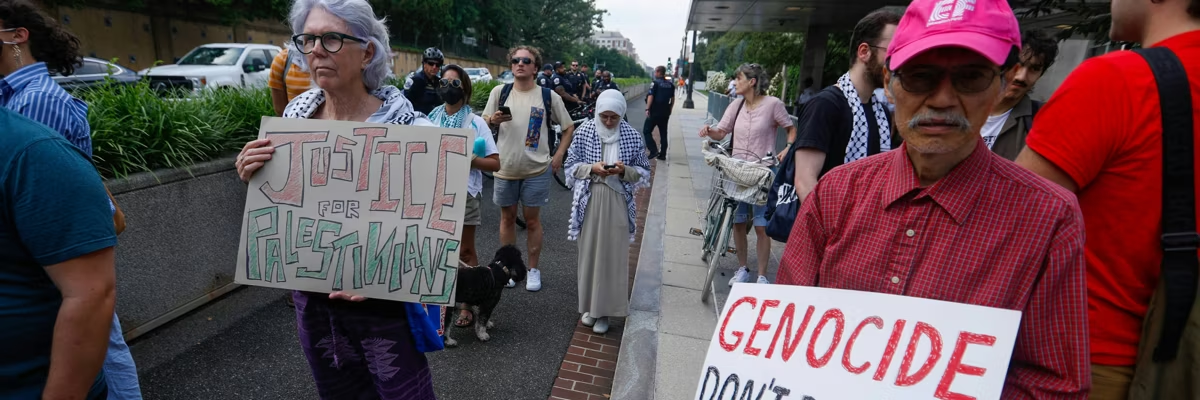
Pro-Palestine protesters arrested outside UK’s ruling Labour Conference in Liverpool

MEMO | September 27, 2026

British police on Sunday arrested two demonstrators during a pro-Palestine protest outside the ruling Labour Party’s annual conference in Liverpool, Anadolu reports.

Protesters gathered outside the conference venue, with several holding homemade signs expressing support for Palestine Action, a group banned by the UK government.

Police officers moved to arrest an elderly man who was sitting beneath a tree, before making a second arrest involving a protester holding a sign supporting the banned group.

A spokesperson for Defend Our Juries, which organized the protest, said it had hoped the new prime minister, Andy Burnham, “would do the sensible thing and bin the ban on Palestine Action given the weight of public pressure to do so and the escalating amount of resources required in enforcing it.”

Nearly 74,000 Palestinians have been killed and over 175,000 others wounded in Israel’s genocidal war in Gaza since 2023. The offensive has also destroyed around 90% of the enclave’s infrastructure.

Despite a ceasefire that took effect last October, the Israeli army has continued daily attacks in Gaza, killing over 1,400 Palestinians and injuring around 5,000 others, according to Gaza’s Health Ministry.

In November 2024, the International Criminal Court issued arrest warrants for Israeli Prime Minister Benjamin Netanyahu and former Israeli Defense Minister Yoav Gallant on charges of war crimes and crimes against humanity in the Gaza Strip.

  •  

Mauritius denies landing permit to flight from Israel, forcing cancellation: Tour operator

MEMO | September 27, 2026

Mauritius on Saturday refused landing clearance for a scheduled flight from Israel, forcing its cancellation after efforts to secure approval failed, Israeli media reported, Anadolu reports.

The Ynet news website said the Air Seychelles flight was due to depart Israel for Mauritius but was called off after authorities did not grant permission for it to land.

Spirit World Productions, the Israeli tour operator behind the trip, said the flight had received approvals several months earlier.

The company said it had been informed that the refusal was based on “political and diplomatic considerations.”

Mauritian authorities have yet to comment on the decision.

Separately, sources familiar with the matter told Israel’s Channel 12 that the refusal was linked to absence of the Mauritius delegation during this week’s address by Israeli Prime Minister Benjamin Netanyahu at the UN General Assembly.

Spirit World Productions said it was working with Air Seychelles and authorities on arrangements for affected passengers.

  •  

Ukrainian Soldiers, Potential Mercenaries: Have Gun, Will Travel!

By Jeffrey Silverman – New Eastern Outlook – September 26, 2026

Ukraine is already providing an early glimpse of what may become a much larger post-war phenomenon: highly trained combat personnel, particularly special-forces and other specialists, carrying their battlefield skills beyond the borders of the countries, in which they acquired them, with many of them NATO trained.

History offers plenty of warnings. Africa has spent decades wrestling with the problem of demobilized combatants, soldiers and guerrillas, whose military skills suddenly have little obvious place in civilian economies.

South Africa and Georgia both provide instructive case studies. After apartheid, using the South African example, the labor force had to absorb, integrate or demobilize personnel from competing military and paramilitary structures. Thousands of former combatants faced unemployment and uncertain futures, while the new South African National Defence Force itself eventually had to undergo substantial downsizing, and not only among white troops.

So what happens when the largest European land war in generations finally winds down? What will the hundreds of thousands of Ukrainian servicemen do when the battlefield no longer needs them, and the economy cannot reintegrate them?

Many will also have significant trauma, both mental and physical, the former being far harder to identify, it is an unfortunate fact that many former combatants will have developed a taste for killing.

And that is where the story becomes considerably more uncomfortable.

In 2024, UNODC and international organized-crime specialists were already examining the possibility that Ukraine’s enormous post-war veteran population could become a source of organized-crime risk—not because veterans were inherently criminal, but because demobilization, weapons proliferation, inadequate reintegration and the availability of trained manpower could create conditions attractive to criminal networks.

Have Gun, Will Travel is an old American expression, but it may acquire a new geopolitical meaning in the aftermath of the Ukraine war. The world already has a market for soldiers, military trainers, private security personnel and combat veterans. Africa, the Middle East and other conflict zones have repeatedly demonstrated the demand for experienced men with battlefield skills.

Will wealthy states, such as the Gulf monarchies, Western governments, private military companies and international security organizations see this enormous reservoir of experience as a manpower pool to be exploited? Almost certainly in fact, it is already happening in Africa, where Ukrainian “specialists” are aiding terrorist groups, particularly in the Sahel, aiming to overthrow governments that have been causing the French problems.

It is doubtful that so many of these veterans be recruited for legitimate security and peacekeeping missions but rather for the less visible wars conducted through proxies, contractors and allied forces as US Flag Draped in Dover Delaware is not politically expedient.

The next major Ukrainian export may not be agricultural products, weapons, or drones. But battlefield tested military experience.

There is a particularly interesting precedent in Africa. War on the Rocks warned several years ago that the eventual end of the Ukraine war could produce an influx of experienced personnel into African conflicts. And we can now see the reverse phenomenon too: Russia has recruited tens of thousands of foreign nationals into its war, including substantial numbers from Africa.

The fact that Ukrainian personnel or Ukrainian-trained capabilities are already appearing in African theaters would suggest that the post-war question isn’t simply what happens to Ukrainian veterans inside Ukraine? It is also who will recruit their expertise internationally?

The broader literature is already warning about exactly this transition: the Global Initiative has specifically examined organized-crime risks surrounding Ukraine’s eventual veteran population.

Demand for armed warm bodies

That does not require those governments to deliberately create a “mercenary army.” Governments already have incentives to use contractors, partner forces, local auxiliaries and allied personnel when they don’t want to commit their own regular forces.

The postwar Ukrainian veteran question is potentially a major international-security story in its own right.

“The postwar disposition of Ukraine’s enormous veteran population could become one of the most important security questions of the post-war period. History shows that when large numbers of highly trained combatants are simultaneously demobilized, economically marginalized and connected to international illicit markets, some will inevitably find employment in private warfare, political militias, transnational security networks and organized crime.”

Africa provides some very strong precedents

This has happened repeatedly in Africa. Research on Angola, Mozambique, Namibia, South Africa and Zimbabwe found that poorly designed demobilization and reintegration programs could themselves create later security problems.

And the phenomenon isn’t limited to Africa. Research on Colombia found that demobilization of armed groups could increase some forms of crime—particularly robbery—where former combatants were not successfully reintegrated.

Ukraine could produce a much larger version of the problem

This is where the argument becomes interesting.

Ukraine is potentially different in scale, technological sophistication and international connectivity. A future Ukrainian demobilization could involve enormous numbers of veterans. One recent analysis by the Global Initiative Against Transnational Organized Crime estimates that Ukraine could eventually have up to nine million veterans, alongside millions of displaced people and refugees.

Obviously, nine million does not mean nine million armed or unemployed men. Most veterans will simply return to civilian life. But even a tiny percentage becoming involved in illicit activity could constitute a significant population.

The Financial Times reported that Colombian criminals have sought to send people into Ukraine to acquire advanced drone expertise and bring that knowledge back to criminal organizations in Colombia, and it is now becoming apparent the Mexican cartels are following suit.

The post-Soviet precedent is important too

There is another historical analogy that may be even more relevant than Africa: the breakup of the Soviet Union.

When the USSR collapsed, large numbers of trained military personnel suddenly found themselves outside a functioning Soviet military system. Some went into private security and legitimate military contracting; others became involved in mercenary activity. Former Soviet military personnel subsequently appeared in conflicts in Africa and elsewhere.

Ukraine is producing veterans with skills that did not exist at anything like today’s scale in previous wars—particularly FPV/drone warfare, electronic warfare and battlefield intelligence.

But there is another elephant in the room. The combat in Ukraine has been brutal, well beyond anything else seen in recent decades. Combined with the violently racist nationalist indoctrination by the Ukrainian government, this has created a large number of emotionally traumatised young men and women, for whom killing comes natural.

If enough of these individuals are recruited into the worlds conflict zones, either by state actors or the underworld and terrorists, the results will be absolutely horrific in terms of war crimes and brutality, as evidenced by the massacre of civilians during the Ukrainian invasion of Kursk, and now in Africa.

Those hoping to profit from the monster they have created may well find its teeth searching for them.


Jeffrey K. Silverman is a freelance journalist and international development specialist, BSc, MSc, based for 30 years in Georgia and the former Soviet Union

Follow new articles on our Telegram channel

  •  

Global Tipping Points Lead the World Into a State of Entropy

We are experiencing not just one, but many tipping points in world history all at once. 

By Peter Hanseler | Forum Geopolitica | September 26, 2026

There have been many tipping points in history; to name just a few examples:

  • The Peace of Westphalia in 1648
  • The French Revolution of 1789
  • The Congress of Vienna in 1815
  • World War I in 1918
  • World War II in 1945

Many of these turning points led to shifts in power in Europe. These were merely transfers of power within the world we now call the “Collective” West. Examples include the collapse of the German Empire, the Austro-Hungarian Empire, the Ottoman Empire, and the Russian Tsarist Empire at the end of World War I.

These shifts in power were significant, yet what is happening now cannot be compared to past turning points, as they encompass the entire globe. The reins of power are not being handed over within the West; rather, there will be a shift in power toward the East and the “Global South.”

From Tipping Point to Entropy

The scale, the number of nations involved, the geographic scope, and the speed at which the current geopolitical crises are unfolding are truly astonishing.

Ukraine as a War Platform for the U.S., NATO, the EU, and Russia

Russia Will Prevail Militarily

Looking at the military reports from the front lines, it becomes clear to any observer that Russia will achieve its military objectives. While Russia might have relinquished the Donbas, Kherson, and Zaporizhzhia had a peace agreement been successfully concluded in the spring of 2022, such an agreement is unrealistic under the current circumstances, as Donetsk, Luhansk, Zaporizhzhia, and Kherson have been part of the Russian Federation since September 2022. It is currently unclear how far the Russian military advance will go. I have commented on this in my article “The Summer Peace Died,” to which I refer. For the situation on the front lines, I once again refer to Military Summary; I have been following this channel for nearly five years, and it provides objective reporting.

Catastrophic Mobilization Situation in Ukraine

There are thousands of videos showing young men being hunted down like animals on the streets throughout Ukraine in order to forcibly recruit them. Recently, however, videos have also been circulating that show some of those forcibly recruited being transported to the front lines without uniforms and even in handcuffs, like criminals—to prevent them from escaping. I’ll leave it to the readers to ponder the combat effectiveness of these men against battle-hardened and motivated Russian soldiers.

Armed guards transport mobilized Ukrainian men to frontline in order to prevent them from deserting. This is described as normal by the Ukrainian officer. Videos also show them in handcuffs. Zelensky & Western politicians call this freedom & democracy. pic.twitter.com/f6AGyuMpRX

— Ivan Katchanovski (@I_Katchanovski) September 22, 2026

The latest move by the Ukrainian military leadership is to forcibly conscript women. Given this situation, it’s no surprise that Scott Ritter stated that the Ukrainians are losing 30 times more soldiers than Russia. We hear nothing in the West about this inhumane treatment of their own soldiers in Ukraine.

Ukrainian volunteers, who later disappeared without a trace, are said to have used drones and artificial intelligence to count the number of soldiers’ graves throughout Ukraine. They counted 2,000,054 graves. Added to this are the dead buried by their own people in mass graves and the wounded—the Ukrainians’ losses do indeed appear to be astronomical. Nevertheless, Zelenskyy claims that only 50,000 Ukrainian soldiers have been killed. A few weeks ago, I attended a funeral in Russia. The soldiers’ graves are easily identifiable by the Russian flag and the flag of the fallen soldier’s unit. There were soldiers’ graves, but no sea of flags like in Ukraine.

Ukrainian volunteers, who later disappeared without a trace, reportedly used drones and artificial intelligence to count military graves across Ukraine.
Their estimate was 2,000,054 graves.
Yet Zelensky claims that only 50,000 Ukrainian soldiers have been killed. Does that mean pic.twitter.com/LeplE4H3n6

— Patricia (@Patriciagouree) September 1, 2026

Military Victory Does Not Solve Russia’s Geopolitical Problem

Whatever needs to be achieved militarily, Russia will achieve it; however, this does not resolve Russia’s geopolitical problem on its western border, because the goal is not new territories, but peace in the West—a goal that Russia has literally been striving for centuries and has never been able to achieve. Time and again, Russia has been attacked from the West and has regularly paid a high price in blood, money, and industrial capacity—resources diverted to military spending rather than civilian purposes. As a result, Russia’s social development has been repeatedly set back.

If Russia wants to keep pace with the major powers in terms of its civilian economy in a sustainable manner, reliably securing its western border is an absolute prerequisite. Although Russia is the only industrialized nation in the world that is self-sufficient and thus capable of waging a war lasting decades, such a confrontation would massively hinder the country from achieving its actual development goals.

The U.S.’s Lack of Credibility in Negotiations with Russia

The U.S.’s lack of credibility in the eyes of Russia is multifaceted. On September 15, Foreign Minister Lavrov said, verbatim:

“If the Americans hadn’t backed away from the Anchorage agreements, if Europe hadn’t pulled them away from those agreements, we would have been living without war for a year now.” – Sergey Lavrov, September 15, 2026

Under this agreement, Russia would have made major concessions. Russia would have retained the Donbas, frozen the conflict in Zaporizhzhia and Kherson, and relinquished further territories. Objectively speaking, this was a bad deal for Russia, but it demonstrated the Russians’ considerable willingness to compromise. The Russians assumed that this verbal agreement was binding as a gentlemen’s agreement. However, gentlemen’s agreements should only be made with gentlemen. The Americans taught the Russians otherwise. The Russians are dismayed about this incident and have had to admit that no agreements are possible with the U.S. government. Personally, I’m surprised by the fact that this realization came so late. Even written agreements with the U.S. government are not to be trusted. This was evident in the breach of the Memorandum of Understanding that the Americans signed with Iran in June. Thus, one must conclude that this conflict—or any conflict in which the U.S. is directly or indirectly involved—must be fought to the bitter end. A bitter lesson for every contractual partner of the U.S.

The Risk of Escalation is Significant

Ukraine is desperately trying to officially draw NATO into this military conflict. It is astonishing that European countries—above all Germany and the United Kingdom—are not only signaling their willingness to do so, but are actually doing everything they can to prepare their people for a war with Russia.

Instead of naming many people, we’ll use Sir Jacob Rees-Mogg—former cabinet minister and Member of Parliament for North East Somerset—as an example. In this excerpt from an interview, he compares the situation with Russia—without naming it—to the situations during World War I and World War II:

European leaders are currently pivoting from “this is not our war” to “it’s your duty to die in a war with Russia.” pic.twitter.com/h2M0CBpk0g

— Glenn Diesen (@Glenn_Diesen) September 21, 2026

Young people are thus being called to arms to prepare for war against Russia. In Germany, such efforts have failed miserably. Of the more than 300,000 young Germans surveyed, only 0.17% volunteered to serve in the Bundeswehr. Furthermore, it came to light a few days ago that the Bundeswehr itself could not even find 5,000 volunteers for a battalion in Latvia.

It is incomprehensible what these European countries are up to besides spreading propaganda. Even combined, the European countries do not possess military forces that would give them even the slightest chance of standing up to the Russian armed forces. The Russians are by no means impressed by this farce in Europe—they are disgusted by it. I assume that this war propaganda in Europe serves only to perpetuate the anti-Russian narrative.

Both President Putin and Foreign Minister Lavrov have repeatedly emphasized that they have no interest in attacking NATO targets outside Ukraine. However, if European countries are foolish enough to send even small European military contingents to Ukraine, the situation could change abruptly.

The greatest risk of escalation at the moment is that the Europeans, presumably in collaboration with the Americans, are planning a false flag attack in Europe in order to somehow trigger Article 5 of the NATO Charter. According to geopolitical analyst Warren Thornton, preparations for false flag attacks are in full swing. He writes on X:

THE FALSE FLAG

These are the areas that are the targets.
The Mallorca airport in Spain.
The Sorrento Continental Hotel in Italy.
The Promenade De Anglais, Nice.
The area to be launched from west of Sardinia.
The agencies involved CIA, French Naval Intelligence Services and the… pic.twitter.com/ThDYyuZBOz

— WARRENTHORNTON.COM (@WARRENTSHOW) September 24, 2026

I can’t say whether this theory is correct, but it’s by no means far-fetched that the Europeans would attempt something so outrageous.

U.S. Military Campaigns in the Middle East Beginning in 2001

Looking back over the past 25 years, the U.S. has sought to reshape the Middle East according to the Wolfowitz Doctrine since 2001. None of the wars the U.S. launched during this period (Afghanistan, Iraq, Libya, Syria, Yemen, Somalia, etc.) were successful. In fact, it was already evident back then that the hegemon lacked the resources, military strategy, strength, and credibility needed to act successfully. However, if one’s view is that the actual intent was destabilization and chaos, then they were extremely successful. Nevertheless, they returned to the plan in collaboration with Israel, apparently after Israel had succeeded in completely undermining American policy.

Israel: Genocide and Greater Israel

The immediate starting signal for the “Genocide” and “Greater Israel” projects was given on October 7, 2023, when a military operation by Hamas was turned into a false flag attack to justify the genocide against women, children, and other civilians in Gaza and, later, in the West Bank and Lebanon. This, in turn, served as the starting signal for the continuation of the Greater Israel project; initially, Syria and Lebanon were attacked. Although the Western press not only downplays Israel’s genocidal and imperialist actions but also fully supports and fuels them—including through the media of “neutral” Switzerland—Israel is viewed with increasing criticism by the general public in the Western world. According to Pew Research, 60% of Americans view Israel negatively. The Western media thus conveys an image that finds no resonance among the general public.

When Israeli Prime Minister Benjamin Netanyahu took the podium to address the plenary session on Thursday, delegates to the UN General Assembly left the hall in droves.

NEW 🚨

UN General Assembly delegates stage a mass walkout as Israeli Prime Minister Benjamin Netanyahu takes the podium to address the hall
pic.twitter.com/EcTpBBvjjM

— Voice of Rabbis (@voiceofrabbis) September 24, 2026

Netanyahu called these delegations “moral cowards”—in other words, genocide requires courage—I am at a loss for words.

One interesting photo shows the plenary hall during the speeches by Netanyahu and Perseshkian.

Humanity stands with Iran. pic.twitter.com/duiokZWBoP

— Jackson Hinkle 🇺🇸 (@jacksonhinkle) September 25, 2026

It is important to me to continually remind my Western readers of what is actually happening in Gaza right before our eyes—eyes that many choose to close.

Major Escalation in the Middle East—Loss of Control

Starting in February 2026, events began to accelerate even further. Since then, everything has gone wrong for the West and Israel in the Middle East. The Global South has already wrested the initiative from the West. While Iran initially limited itself to responding to American-Israeli aggression, it is now the Iranians and the Yemeni Ansar Allah movement who are setting the pace.

Ansar Allah managed to bring the entire western coast of Yemen under its control in a very short time and thus controls not only the Bab al-Mandab Strait but also the island of Perim Mayyun off the coast. With virtually no Western media coverage, the advance continues, and it is quite possible that Aden will soon be captured.

Furthermore, the Saudis’ East-West pipeline was paralyzed and targets near Riyadh were attacked. So far, the Saudis have been unable to mount a serious military response to this large-scale attack, as they do not seem capable of doing so on their own, and repeated calls for help to Trump and others have been in vain. The Mecca Alliance, which unites Pakistan, Saudi Arabia, and Turkey in a military alliance, also appears to be a thing of the past, as even these “friends” refused to provide assistance.

President Macron’s grand announcement that he will send troops to Saudi Arabia won’t change any of that. “Arabia” is called Saudi Arabia because this country is ruled by a family—a tribe—the Sauds. A tribe that is protected by the Americans. However, there are approximately 100 other tribes within Saudi Arabia. It’s very possible that they could join forces with Ansar Allah and overthrow the House of Saud. The House of Saud no longer has any income and seems unable to continue buying off—as it has done until now—all those who could pose a threat to them. There’s a chance that the Saud house of cards will collapse, and if that happens, I wouldn’t give a penny for the remaining Gulf states.

Alastair Crooke also pointed out on several occasions that this dynamic could spill over into Iraq, another millennia-old civilization alongside Iran. If that happens, Kuwait will likely fall as well. Another smoldering conflict can also be detected in Jordan. It is therefore quite possible that the entire structure in the Middle East established by the British a good 100 years ago could collapse within a few months, without the Americans being able to stop this tsunami in any way. Arabia to the Arabs, Persia to the Persians, and the Americans out for good. If this happens, Israel will go from perpetrator to target; one certainly cannot speak of it as a victim in this context. How the emerging great powers of the Middle East will deal with the genocidal Zionists should be left to those who have suffered the greatest losses, for Palestinians are Arabs.

Europe

Chaos is once again rearing its head in Europe. Germany is the first country—once the world’s leading exporter and the major power in the EU—that is in danger of becoming politically ungovernable. The Alternative for Germany (AfD), which has been labeled as far-right and Hitler-like by the previously dominant parties and excluded from government participation by a so-called firewall , not only won landslide victories in two state elections in eastern Germany but also leads the CDU by a clear margin in national polls (30% to 20%). Chancellor Merz’s approval rating stands at 10 percent—a barometer that reveals the people’s dissatisfaction and would have driven any truly democratic chancellor to resign. Whether the Germans, in light of this political situation, will clench their fists and do nothing, as they have in the past, remains uncertain. The chancellor’s downfall would be good for Germany. The AfD is the only major party seeking dialogue and peace with Russia, which is not only desperately needed by this once-thriving industrial nation but is also a prerequisite without which it cannot survive economically. The alternative to real and fundamental political change in Germany is the war against Russia sought by Chancellor Merz and the ruling political elites. The last time Germany went to war against Russia in 1941, Adolf Hitler sent 3.7 million soldiers eastward and failed, despite the Germans’ genocidal behavior, which cost the lives of approximately 17 million civilians. As already explained above, the Federal Republic of Germany today finds itself unable to assemble a brigade of 5,000 volunteer soldiers for the Baltic states. This does not seem to concern the chancellor, which is a clear sign of the madness that has taken hold of him. This is strong evidence that he is acting in the interests of a power located outside Germany. One would be a naughty person to believe that this has anything to do with his BlackRock past. Those who managed to install him as chancellor can pat themselves on the back, as they’ve snagged a puppet at the bargain price of a few million.

The following clip shows how the new leadership in Berlin is presenting itself—the Left has taken over. No words needed:

THIS is the party that won in Berlin: DIE LINKE.

The capital of Germany is dominated by perverts and ANTIFA. pic.twitter.com/upRU5bPNIZ

— Naomi Seibt (@NaomiSeibt) September 21, 2026

The situation in the rest of Europe is no more encouraging. The presidential election in France will take place in April 2027. Macron is no longer eligible to run, and Marine Le Pen has a significant lead over the other candidates. The situation is thus similar to that in Germany: a party that is denounced as far-right by the parties currently in power, yet is the most popular among the people. Le Pen’s position on peace with Russia is unclear—she seems to be speaking with a forked tongue: on the one hand, she wants a negotiated peace, but at the same time supports the training of Ukrainian troops. A seasoned politician who positions herself to capture as many votes as possible. France’s financial situation is grim, with no silver lining. The rise in the interest rate on 10-year French bonds over the past twelve months has been even steeper than in any other European country.

Trump

President Trump’s policies only seem difficult to understand at first glance. His constant flip-flopping on Ukraine, Iran, and Israel is counterproductive and damaging to the U.S.’s reputation on the world stage. The reason behind Trump’s current actions is the midterm elections in November. Trump is struggling with the high oil prices he himself has caused, which he can prevent from spiraling out of control by manipulating the futures markets. However, actual market prices are 30% to 50% higher than the manipulated, fantasy futures prices. The fact that futures prices are indeed manipulated is evident, for example, in diesel prices at gas stations, which are moving in only one direction and have reached unprecedented levels worldwide. Diesel is the lifeblood of the American economy, and high prices are one of the biggest drivers of inflation, since virtually all goods are transported by trucks, agriculture depends on it, and large parts of industry rely on diesel. Trump’s latest farce: He’s blaming Zelenskyy for the high diesel prices because Ukraine is attacking Russian refineries; he’s doing this solely to divert attention from the biggest price drivers—the blockades of Hormuz and Bab al-Mandab.

Somehow, Trump wants to turn things around, but it seems that he will lose the midterm elections coming up in about six weeks. According to Polymarket, an American online prediction market where users bet on the outcomes of future events—with market prices reflecting collective probability estimates—the probability that the Republicans will lose their majorities in the House of Representatives and the Senate stands at 66%. Should this come to pass, Trump will likely face impeachment proceedings. He then runs the risk of going from a lame duck to a dead duck and being replaced by his turncoat vice president, Vance—not a promising outlook for the United States.

Trump’s latest appearance this week before the UN General Assembly was a testament to his psychopathic nature: He announced—nota bene after the election—that he would either make Iran a rich country or obliterate it completely.

Trump is every bit as bad as Adolf Hitler. In his speech at the Berlin Sportpalast on September 4, 1940, Hitler said, “We will wipe out their cities.” Trump wants to wipe out a 5,000-year-old civilization—without any legal basis, of course—acting like a god. In doing so, Trump is publicly calling for the genocide of an entire civilization. One might wonder whether he belongs in prison or in a psychiatric hospital, but the fact that he can make such statements before a global audience with impunity shows the depths to which Western civilization has sunk. I refer to a speech I gave in Switzerland on September 3.

The Financial Markets

I have made numerous comments on the instability of the financial markets. Now my dire predictions seem to be coming true. In addition to the overvaluations in the stock markets, I have repeatedly pointed out the unsustainable situation in the bond markets. Among the more astute market participants, fear is beginning to set in. Mr. Bessent has lost control of interest rates. On August 28, 2026, I looked at the average interest rate the U.S. had to pay on its debt; at that time, it stood at 3.35% (May), resulting in an annual interest burden of 1,340 billion. Today, this average interest rate stands at 3.49% (August); the debt mountain currently stands at 40,070 billion, meaning it has already increased by another 70 billion. Annual interest payments have thus risen by 56 billion to 1,396 billion per year in this short period of time.

Over the past 28 days, the yield on the 10-year U.S. Treasury bond has risen from 4.722% to 5.185%, an increase of 0.46%. It does not appear that this trend will change. If this pace continues, not only will the government bond market collapse, but so will the towering mountains of debt in the AI sector. The same picture is emerging in Europe and Japan as well. The question isn’t whether the collapse will happen, but when—and who the U.S. will let go first: the Japanese or the Europeans. That is my personal opinion. When it comes to timing, I’m regularly wrong, which has taught me not to be active in these markets. I have the great privilege of meeting regularly with one of the world’s most successful investors. At our last meeting, he agreed with me in principle but remarked that I couldn’t possibly imagine what tricks and means the Americans still have at their disposal to delay the inevitable.

The scale of this crisis will dwarf anything humanity has ever seen. Compared to today, the 2008 crisis was a stroll through a sunny park with a delicious picnic. Such a collapse in the West will also affect the countries concerned’s geopolitical freedom of action; suddenly, everyone will be very preoccupied with their own problems. No one knows whether this will lead to an escalation in the geopolitical arena. What is certain, however, is that the “experts”—who are still driving the markets forward with their jubilant cheers—will solemnly declare that this simply could not have been foreseen—as always.

Entropy

All of these individual tectonic shifts lead to what can be described as entropy, a term from thermodynamics. Applied to geopolitics, I describe the situation as a massive, irreversible state of disorder and uncertainty within the various international systems. Existing power structures, rules, institutions, and hierarchies are losing their cohesive power, and a new order that would promise stability is not in sight.

For the collective West, which until recently held the reins firmly in its hands, is unwilling to make compromises so as not to jeopardize its position as a hegemon.

The Global South, taken by surprise by the rapid pace of events, has not yet devised a coherent, unified, and effective policy to wrest power from the West.

It appears that the Global South, under the military dominance of Russia, China, and—most recently, Iran as the fourth major military power—is in the process of adapting to the new circumstances and coordinating its efforts, which will ultimately lead to its victory.

How long this will take, however, and whether the West will use nuclear weapons to maintain its hegemony remains to be seen—though I would like to express my doubts on this point. So far, only Adolf Hitler believed that Germany should go down with him. Let’s hope that cooler heads are in control of the apocalyptic buttons.

Let’s not lose all faith in humanity.

  •  

They see them, then kill them: Israeli quadcopters track, deliberately target civilians in Gaza

Euro-Med Human Rights Monitor | September 12, 2026

Geneva – The Israeli military continues to use armed quadcopter drones to carry out deliberate killings of Palestinian civilians in the Gaza Strip. Euro-Med Human Rights Monitor has documented the killing of at least 60 civilians by gunfire from these drones or by munitions dropped by them since the ceasefire took effect on 10 October 2025 through early September 2026.

The repeated occurrence of these incidents after the ceasefire, and the targeting of children, displaced people, farmers, shepherds, and people returning to check on their homes, reveals a continuing pattern of the deliberate killing of Palestinian civilians, in which Israel employs military technology capable of identifying specific individuals, tracking their movements, and striking them with precision, despite the clear civilian status of those targeted and their non-participation in hostilities or posing of any imminent threat to Israeli forces or others.

Quadcopters are small, multi-rotor tactical drones, some systems of which can be operated by a single soldier. They can be equipped with daytime and thermal cameras, target-identification and tracking systems, and weapon stabilization systems. Depending on the mission, some models can also be fitted with 5.56mm and 7.62mm weapons or 40mm explosive munitions, enabling the operator to closely monitor individuals, track their movements, and then fire at them or drop munitions toward them with a high degree of accuracy.

These technical capabilities give the operator the ability to observe the targeted person, verify their identity, and track their movements before opening fire. This greatly narrows the margin for error in target identification and heightens the obligation to refrain from an attack when the civilian nature of the target becomes apparent or when there is any doubt as to their status. The repeated killing of children, displaced people, farmers, and shepherds by direct gunfire or munitions dropped from these drones, despite their clear civilian status and absence of any direct participation in hostilities or imminent threat, therefore provides, taken together, strong evidence that civilians themselves were intentionally selected as targets of attack, rather than being killed as a result of mistaken identification or accidentally struck. Such attacks are prohibited in themselves and cannot be justified by military necessity or subjected to a proportionality assessment, since a direct attack against a civilian is prohibited from the outset and cannot be made lawful by invoking military necessity or the rules of proportionality.

The data Euro-Med Monitor has collected shows that at least 60 civilians have been killed in attacks carried out by quadcopters since the ceasefire, while Gaza’s Ministry of Health reported that the total number of Palestinians killed by Israeli forces during the same period had reached 1,368 as of the date of the statement.

Field monitoring revealed three main patterns in the use of these drones. The first involved precise and direct gunfire against individuals whom the operator could see and distinguish; the second involved dropping explosive munitions on civilian gatherings and tents housing displaced people; and the third involved using these drones to impose fire control over areas adjacent to what is known as the “Yellow Line,” by targeting civilians as they attempted to reach their homes and lands or carry out their work there.

Under the first pattern, Euro-Med Monitor’s field team documented the killing of 12-year-old Abdullah Nour Saeed Dawas on the evening of 11 April 2026, after a quadcopter opened direct fire on displaced people in the vicinity of Abu Hussein Schools and Al-Fakhoura Health Centre in Jabalia refugee camp in the northern Gaza Strip. It also documented the killing of 26-year-old Fatima Al-Zahra Ramzi Ahmed Al-Ma’ni by fire from the same type of drone east of Deir al-Balah on 21 May 2026. It further documented the killing of 62-year-old Nidal Eid Salmi Abu Halib on 11 October 2025, after an Israeli quadcopter opened direct fire on him while he was heading to inspect his family’s home in Al-Qarara, northeast of Khan Younis.

Under the second pattern, Euro-Med Monitor documented the killing of at least three civilians on 6 December 2025 after a quadcopter dropped an explosive munition on a group of civilians near Al-Atatra roundabout in Beit Lahia. It also documented the killing of Fadi Adel Khalif on 20 February 2026 after an Israeli drone dropped a bomb on his tent in the northern Gaza Strip, and the killing of 52-year-old Inaam Abdullah Al-Attar on 17 July 2026 after a bomb was dropped near Abu Tammam School in Beit Lahia.

The third pattern involved the use of quadcopters to impose fire control over areas adjacent to the “Yellow Line” and target civilians as they attempted to reach their lands and sources of livelihood. Euro-Med Monitor documented the killing of 42-year-old shepherd Raafat Adel Ibrahim Barika by fire from a drone of this type in the Al-Shakoush area near the “Yellow Line,” northwest of Rafah, on 22 May 2026. It also documented the killing of farmer Hamouda Fayeq Al-Attar on 29 August 2026 while he was working on his land east of Al-Masdar village, coinciding with the Israeli forces’ advance along the line in the area.

Children were among the victims of this precision weapon. Euro-Med Monitor’s field documentation is consistent, in terms of pattern, with the findings of a multidisciplinary report published by the Costs of War project at Brown University’s Watson Institute on 17 June 2026. The report was based on 18 cases involving children who were killed or wounded by gunfire that was examined and documented by a physician who participated in preparing the report during her work in Gaza Strip hospitals between August and September 2024. Witnesses who brought the children to hospital reported that quadcopters were responsible for the gunfire in 90 percent of the cases, while most wounds were caused by single, small-calibre bullets that struck the head, neck, chest, or abdomen.

The report presented five detailed cases supported, in each instance, by X-ray images or diagrams based on clinical photographs and witness testimonies. One case involved a seven-year-old child who was wounded inside an area designated as humanitarian while playing in the street, with no one else in the surrounding area being struck by gunfire. Medical, imaging, and ballistic analysis in three cases concluded that the entry angles and trajectories of the bullets were from above, consistent with gunfire originating from a drone. Although these incidents occurred in 2024, these findings are consistent with the pattern documented by Euro-Med Monitor at a later stage and constitute strong evidence of the use of precise, targeted gunfire directly and deliberately against children.

Euro-Med Monitor documented the circumstances of a child’s injury that resulted in permanent mobility impairment after he was directly shot by a quadcopter, providing additional evidence that Israeli forces deliberately used these drones to kill and inflict serious harm without any justification.

In testimony to Euro-Med Monitor’s team, the father of 11-year-old Amir Mohammed Khalil Shaath, a resident of Qizan Rashwan south of Khan Younis who was displaced to an area near Al-Sikka, adjacent to the Yellow Line, described what happened, saying: “On that day, 12 August 2026, I received a text message inviting them to collect a food parcel, so I went with my son Amir to the designated warehouse in the afternoon. On our way back on foot to our residential area in Al-Sikka neighbourhood, at around 5 p.m., we came under random and intense gunfire from a quadcopter flying at low altitude between abandoned residential buildings. This was followed by the dropping of an explosive bomb, which caused a violent explosion and sent shrapnel flying. Metal fragments became lodged in my son Amir’s skull and thigh, causing fractures and severe damage to the skull bones, and he lost consciousness for a long period as a result. He was taken to Nasser Hospital, where doctors said that if he had arrived a few minutes later, he would have died from internal bleeding in the brain. Medical teams managed to control the bleeding, but the fragments lodged in his skull could not be removed with the locally available capabilities. The child sustained a permanent mobility impairment, losing the ability to walk or stand. Medical teams declared that the available local treatment options had been exhausted and recommended that he travel abroad for treatment to remove the fragments lodged in his skull.”

The operator’s ability to clearly see the targeted person, distinguish their status, and track their movement before opening fire, and then strike them with a single bullet or guided munition, effectively eliminates the pretext of mistaken target identification, particularly when the target is a child, farmer, or shepherd carrying no weapon and posing no threat. This demonstrates that these civilians were not struck accidentally, but were deliberately selected as targets of attack.

Targeting these civilians establishes the intent to kill them and constitutes wilful killing and direct attacks against civilians, both of which are war crimes. Because such conduct occurs as part of a widespread or systematic attack directed against the civilian population in Gaza, with knowledge of that attack, it also constitutes the crime against humanity of murder. Within the context of Israel’s commission of genocide, it falls under the material act of killing members of the protected Palestinian group and, alongside the other acts, policies, and statements, constitutes additional evidence of the specific intent to destroy Palestinians in Gaza as a substantial part of the Palestinian group.

Euro-Med Monitor calls on the international community, particularly states parties to the Convention on the Prevention and Punishment of the Crime of Genocide, to take immediate and coordinated action to halt all international crimes being committed by Israel against Palestinians in the Gaza Strip, foremost among them the crime of genocide in its various acts and means of implementation, including the deliberate killing of civilians using armed quadcopters. We call on these states to employ all available political, economic, diplomatic, and legal means to fulfil their obligation to prevent genocide and ensure respect for international humanitarian law, and to refrain from providing any support or assistance that contributes to the continuation of these crimes.

Euro-Med Monitor also calls on states, the United Nations, and international investigative mechanisms to take urgent measures to ensure the preservation and acquisition of all evidence related to these attacks, including drone camera recordings, flight and positioning data, firing records, the types of munitions used, mission orders, rules of engagement, and targeting data, as well as the names of operators and commanders who ordered or authorised the attacks, and to prevent the destruction, alteration, or concealment of such evidence.

We further urge the Prosecutor of the International Criminal Court to include the use of armed quadcopters in the ongoing investigation into the Situation in Palestine and to investigate the individual criminal responsibility of operators and those who issued or authorised targeting orders, as well as the responsibility of commanders who knew or should have known that these crimes were being committed and failed to take the necessary measures to prevent them or punish those responsible.

Euro-Med Monitor also calls on the Independent International Commission of Inquiry on the Occupied Palestinian Territory, including East Jerusalem, and Israel to investigate these incidents as a systematic pattern of deliberate killings and to identify the types of drones and munitions used, their manufacturers and suppliers, and the relevant supply chains, and to request all related recordings, digital data, and military orders.

We also call on states to impose an immediate and comprehensive ban on the export, transfer, re-export, or financing of armed drones to Israel, including their components, munitions, sensors, targeting and tracking software, maintenance services, training, technical upgrades, spare parts, and brokering, as well as to suspend existing licences and contracts and halt all forms of military and security cooperation that could contribute to or facilitate the commission of these crimes.

Euro-Med Monitor also calls on manufacturers and suppliers to halt any direct or indirect support that could enable such uses, trace the components of their systems, preserve sales, end-user, maintenance, and upgrade records, and fully cooperate with international investigative mechanisms.

Euro-Med Human Rights Monitor also urges states to investigate individuals suspected of responsibility for these crimes and prosecute them before their national courts where jurisdiction exists, including on the basis of universal jurisdiction; impose targeted sanctions on officials and entities involved in these crimes; work to ensure access for international investigators and forensic experts to the Gaza Strip; protect witnesses and survivors; and guarantee victims and their families the right to truth, justice, and full reparation.

  •  

Europe was part of the infrastructure of US aggression against Iran: Deputy FM

Press TV – September 24, 2026

Iran’s Deputy Foreign Minister for Legal and International Affairs Kazem Gharibabadi has said NATO Secretary-General Mark Rutte’s admission that some 5,000 sorties were flown from European bases in support of US military aggression against Iran proves that Europe formed part of the infrastructure of that aggression.

In a post on X on Thursday evening, Gharibabadi wrote that the NATO chief’s remarks demonstrated Europe’s role in enabling the illegal US campaign.

“Governments that placed their territory at the disposal of the United States cannot evade their responsibility,” he said. “This participation will not go unanswered.”

Rutte has repeatedly acknowledged that thousands of US military flights, between 4,000 and 5,000, departed from bases in Europe during the US-Israeli war of aggression against the Islamic Republic, which began on 28 February.

He described Europe as a “platform of power projection” without which Washington could not have conducted the operation.

Countries including Italy, Romania, the United Kingdom, France and Germany were cited in connection with the use of bases, airspace, tankers and logistics.

Iran has consistently described the US-Israeli assault as an unprovoked act of aggression in flagrant violation of the UN Charter and international law.

Tehran has stressed that providing territory, bases or infrastructure to an aggressor state itself constitutes participation in the act of aggression, as recognized under United Nations General Assembly Resolution 3314.

Foreign Minister Abbas Araghchi separately warned European officials in New York of the severe and long-term consequences of facilitating and supporting US and Israeli war crimes, both in Gaza and against Iran. He noted that submitting to a bully never satisfies that bully.

  •  

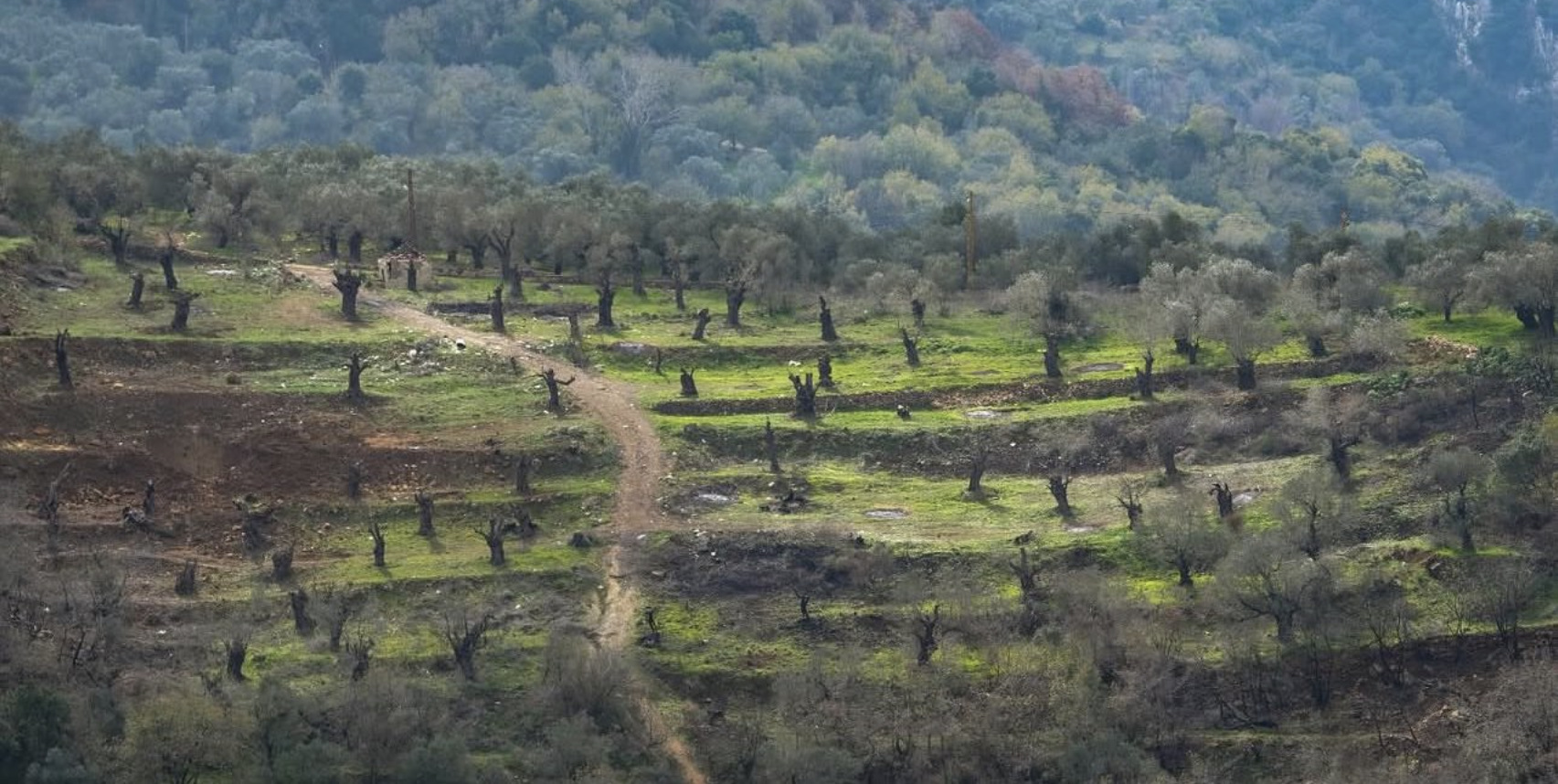
Phosphorus Munitions Fired by Israel Burn Groves, Orchards in Southern Lebanon

Historically an agriculture-heavy part of the country, Israeli attacks have done massive damage to southern Lebanon. Between wiping out some villages in their entirety and damaging tens of thousands of acres of agriculture land, the future structure of south Lebanon looks very uncertain.

  •  

Israeli Attacks in Gaza Kill at Least Seven Palestinians Over Three Days, including Woman and Child

Fida’ Khader Totah, 31, was killed after Israeli soldiers shot her in the head in central Gaza, and a child, Ismael al-Bardawil, was killed after Israeli military vehicles fired at Palestinians in southern Gaza. Since the so-called ceasefire deal was signed in October 2025, the IDF has killed 1,393 Palestinians in Gaza

  •  

On Not Being a Homeowner

In this personal essay at The New Yorker, Anna Holmes writes about growing up in Davis, California, a college town near Sacramento; the financial challenges her mixed-race family faced; and what it means to come from a family without the generational wealth that can make homeownership, and the financial security that comes with it, possible.

It’s hard to hear people who own property grumble about how little money they have. One friend who regularly moans about money has a four-bedroom home on the West Coast and a vacation house in New England. I’m unmoved by the financial lamentations of another friend, who owns a town house in New York with an apartment for a nanny or an in-law. Stuff like this makes me want to scream. Demonstrate some modicum of self-awareness! Read the fucking room! When a friend told me that her parents were going to help her buy a second home, I made a pointed remark that it must be nice to have access to that sort of capital. She conceded the point, graciously, and we moved on.

  •  

A Celebration Turned Into a Nightmare

What were supposed to be moments of immense joy turned out to be the dance of death, brought by the harbingers of war and suffering! On September 1, 2026, in the coastal town of Kuhestak (Sirik County) in the Hormozgan province of southern Iran, a large gathering was underway to celebrate the wedding of a […]
  •  

Images + Memes • 718

Images + Memes • 718

The truth is told very well with images. A picture says a thousand words, and memes a few more. These pages have lots of images and memes that focus on the truth. Click image to enlarge + use arrows to navigate.

Images + Memes • 718
  •  

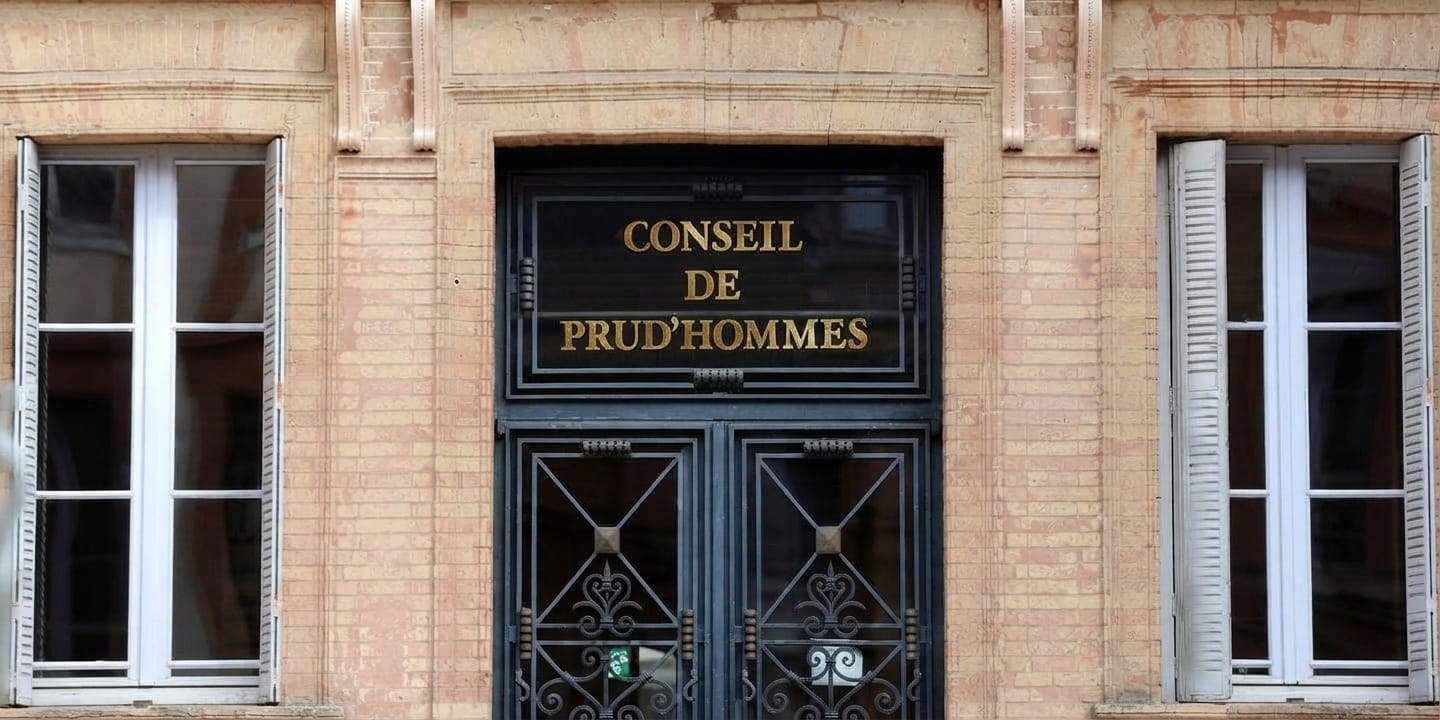
Aux Prud'hommes, le dossier peut mourir de la lenteur du tribunal

Saisi d’un litige après son licenciement, un salarié peut-il perdre son procès parce que la procédure s’éternise ? Deux arrêts rendus le 9 septembre 2026 par la Cour de cassation montrent les pièges de la « péremption d’instance ». L’article 386 du code de procédure civile dispose que l’instance est périmée lorsqu’aucune partie n’accomplit de diligence pendant deux ans. Devant les prud’hommes et en appel, ce mécanisme devient une arme à double tranchant.

Aux Prud'hommes, le dossier peut mourir de la lenteur du tribunal
LE COURRIER
DES STRATÈGES
Restez libre !
LA NEWSLETTER · GRATUITE

Le Courrier,
chaque matin.

Aux Prud'hommes, le dossier peut mourir de la lenteur du tribunal

L'essentiel de l'actualité, passé au crible par les cinq plumes du Courrier. Dans votre boîte, chaque jour ouvré.

Gratuit. Vous restez libre de partir quand vous voulez.

JE M'INSCRIS lecourrierdesstrateges.fr
lecourrierdesstrateges.fr
Restez libre !

Dans l’un des dossiers, le salarié avait déposé ses premières conclusions en septembre 2021 pour une affaire radiée en octobre 2019. Trop tard : la péremption a été constatée et son action s’est éteinte. Dans l’autre, les juges ont estimé que les conditions n’étaient pas réunies et le dossier a survécu.

Aux Prud'hommes, le dossier peut mourir de la lenteur du tribunal
LE COURRIER
DES STRATÈGES
Restez libre !
ABONNEMENT

Allez au fond
des choses.

Deux grands formats par jour. Les cinq plumes du Courrier. La série Sécession, le dimanche.

Le monde commente. Vous, vous comprenez.

S'ABONNER lecourrierdesstrateges.fr
lecourrierdesstrateges.fr
Restez libre !

Deux ans d’attente, et le dossier peut disparaître

L’article 386 du Code de procédure civile prévoit qu’une instance est périmée lorsqu’aucune partie n’accomplit de diligence pendant deux ans. Cette règle vise à éviter que les procédures restent indéfiniment ouvertes. Mais son application devient redoutable lorsque le justiciable dépend précisément du fonctionnement de la juridiction.

Affaire Lyhanna : assigner l’État pour faute lourde du service public de la justice
La plainte contre Darmanin est classée. Reste l’article L. 141-1 : faute lourde du service public de la justice. Qui peut assigner l’État, et qui ne le peut pas.

Dans le pourvoi n° 24-16.579, un directeur industriel licencié en janvier 2018 avait saisi les prud’hommes en janvier 2019. Après l’échec de la conciliation du 25 mars 2019, un calendrier avait été fixé. L’affaire fut radiée le 14 octobre 2019. Le salarié demanda son rétablissement en janvier 2021, puis déposa ses premières conclusions le 13 septembre 2021. Trop tard : le délai de deux ans, courant à partir du délai fixé pour ses conclusions, avait expiré le 25 avril 2021. La Cour de cassation a donc rejeté son pourvoi.

Aux Prud'hommes, le dossier peut mourir de la lenteur du tribunal
LE COURRIER
DES STRATÈGES
Restez libre !
TELEGRAM · L'INFO EN CONTINU

Entre deux éditions,
le fil.

La newsletter vous donne le matin. Le fil vous donne l'instant.

Gratuit, et en continu.

REJOINDRE LE FIL t.me/resterlibre
t.me/resterlibre
Restez libre !

Quand demander une audience devient « vain »

Dans l’arrêt n° 25-12.436, la même chambre sociale rappelle qu'une fois les formalités accomplies et lorsqu'aucune diligence particulière n'est imposée aux parties, la direction de la procédure échappe à celles-ci. Dans ce dossier, le salarié avait accompli les diligences exigées après une radiation et, dans le délai de deux ans, demandé le rétablissement de l’affaire avec ses pièces et conclusions : la péremption ne pouvait donc lui être opposée.

Pour 71 % des Français, 2027 a une odeur de dégagisme
71 % des Français veulent un vrai changement, 78 % jugent que les responsables ont mené le pays à la faillite. Trente ans de blocage expliquent ce chiffre.

En mars 2024, la Cour de cassation avait constaté, sur la base d’auditions et de documents transmis dans le cadre de son examen, que les demandes de fixation pouvaient être « vaines » lorsque les rôles d’une cour d’appel étaient complets au-delà de deux ans. Elle avait alors jugé qu’on ne pouvait imposer aux parties une démarche destinée uniquement à interrompre artificiellement la péremption.

Comment un geek a violé en deux minutes l’application UE de vérification d’âge “techniquement prêt”
Deux minutes pour contourner l’appli européenne de vérification d’âge, puis une extension Chrome en juillet. Paul Moore n’a pas trouvé un bug, mais une contradiction.

La lenteur institutionnelle n’est plus un simple désagrément : elle devient un facteur de décision. Le salarié qui a déjà perdu son emploi se retrouve sanctionné une seconde fois par l’incapacité de l’appareil judiciaire à trancher dans un délai raisonnable. La péremption, conçue pour lutter contre l’inertie des parties, finit par sanctionner l’inertie de l’État. Les délais structurels transforment le droit d’agir en course d’obstacles. Tant que les juridictions resteront saturées, chaque salarié licencié risque de voir son dossier mourir non pas faute de fond, mais faute de temps.

Aux Prud'hommes, le dossier peut mourir de la lenteur du tribunal
LE COURRIER
DES STRATÈGES
Restez libre !
TIPS · SANS ABONNEMENT

Offrez-nous
un café.

Un média libre vit de ses lecteurs. Un pourboire ponctuel, sans compte ni engagement, quand le cœur vous en dit.

Vous donnez ce que vous voulez. Vous restez libre.

LAISSER UN POURBOIRE merci !
lecourrierdesstrateges.fr
Restez libre !

  •  

Les femmes soulèvent le voile

PNG - 13.5 kio

Depuis le début de la guerre, des manifestants se rassemblent sur les places et les carrefours. Dans la capitale et les autres villes, ils brandissent le drapeau iranien et scandent des slogans en défense de la « patrie ». Ils occupent aussi l'espace public en empêchant les opposants de manifester leur soutien aux États-Unis et à Israël.

Dans bon nombre de ces rassemblements, j'ai pu voir des femmes sans voile accueillies à bras ouverts. Pour la première fois, les médias officiels, y compris la télévision d'État, insistent sur leur présence. En réalité, leur nombre est faible, sauf sur la place Enghelab, au centre de Téhéran, où l'on peut voir chaque soir de nombreuses épouses et proches des cadres de la révolution dévoilées. Lors d'un rassemblement dans le nord de Téhéran, l'un des responsables de la sécurité m'avoue que sa femme y participe, car l'atmosphère y est plus ouverte. Un autre organisateur de ces manifestations me raconte discrètement qu'il travaillait dans l'organisation judiciaire et évoque l'époque où la Gasht-e-Ershad (police de la moralité ou police religieuse) arrêtait les femmes en infraction, pour me confier que beaucoup étaient des filles de hauts responsables.

La question du voile a perdu son caractère clivant. Dans les rues, des femmes déambulent cheveux au vent et en tenue occidentale à côté d'autres en tchador. Le gouvernement a reculé sur la question après l'arrivée au pouvoir du président Massoud Pezechkian, en juillet 2024. Depuis le début de la guerre, le régime iranien souligne même la présence de femmes sans foulard, présentée comme un signe de concorde nationale.

Lors de la grande cérémonie chiite de l'Achoura1, le 25 juin dernier, des femmes sans voile participaient à la distribution de thé ou à la préparation de nourriture votive. De telles scènes étaient inenvisageables quelques mois auparavant. Cette année, la commémoration des martyrs de la guerre occupait une place particulière et avait supplanté les rituels traditionnels. Au musée du cinéma, au Bagh-e Ferdows, musique et théâtre avaient remplacé les chants de deuil. Les acteurs jouaient le rôle des pères et des mères des « enfants martyrs » de l'école de Minab, où cent vingt élèves ont été tués par un bombardement américain. Sur un grand écran, on voyait notamment des images de femmes dévoilées présentes dans la foule. Lors de l'une des soirées, un chanteur nommé Gheisar, qui avait quitté l'Iran et se produisait à l'étranger, est monté sur scène pour donner un spectacle promouvant la défense de la patrie.

De nombreux jeunes soutiens du régime, notamment les membres des bassidji (miliciens), ont grandi dans une société iranienne en pleine mutation sur ces questions. Nombre de leurs proches ont ôté leur voile. Désormais, on peut être chiite, partisan de la République islamique et exposer sa chevelure aux yeux de tous.

(1) Jour de deuil majeur pour les chiites, qui commémorent le martyre de l'imam Hussein, petit-fils du prophète Muhammad, tué lors de la bataille de Kerbala en l'an 680.

Voir en ligne : /mav/209/A/69946
  •  

Un pluralisme en trompe-l'œil

Les Iraniens sont régulièrement invités à se déplacer dans les bureaux de vote pour élire leur maire, leur député et le président de la République. Mais, outre l'interdiction de partis politiques indépendants, le système demeure verrouillé en raison de l'implacable filtrage des candidats par le Conseil des gardiens de la Constitution.

JPEG - 83.9 kio
Jean Gaumy //// Agriculteurs près de Rasht, province de Guilan, Iran, 1986
© Jean Gaumy/Magnum Photos

@IMAGE 3516.HR.ai

Bien que la République islamique d'Iran se distingue de nombre de régimes autoritaires voisins par son origine révolutionnaire et par le maintien d'institutions électives, ses dirigeants semblent aujourd'hui guidés par deux impératifs que ne renieraient pas certains autocrates arabes. Le premier est d'empêcher la remise en cause du système institutionnel (voir la carte « Institutions de la république islamique ») et d'assurer à n'importe quel prix la pérennité de la Jomhuriye Eslamiye Iran (« République islamique d'Iran »), instaurée après la révolution de 1979. Cela se traduit par l'absence de véritables partis politiques indépendants, par l'interdiction et la répression de nombreuses organisations d'opposition, ainsi que par des vagues d'arrestations et d'exécutions de leurs militants. Ces restrictions concernent aussi les organisations syndicales et les médias.

Dans ce cadre très contraint, le second impératif relève quant à lui de la nécessité de veiller aux apparences en admettant un certain pluralisme mais uniquement au sein d'un périmètre idéologique bien défini. Ce qui exclut, par exemple, un changement des institutions. Officiellement, la « voix du peuple » compte puisque les Iraniennes et les Iraniens désignent au suffrage universel leur président, leurs députés et leurs conseillers municipaux. Mais, en réalité, le système dominé par le clergé et placé sous l'autorité du Guide suprême oriente à son gré la vie publique grâce à plusieurs mécanismes de contrôle. À cet égard, l'élection, tous les quatre ans, d'un président de la République illustre à la perfection ce formalisme démocratique puisque personne ne peut être candidat sans l'aval du Conseil des gardiens de la Constitution (texte fondateur adopté par référendum le 3 décembre 1980, et modifié le 28 juillet 1989). Composé de six clercs et de six juristes, le Conseil, ou Shora-ye negahban-e qanun-e assassi, vérifie la conformité des lois avec la Constitution ou les préceptes de l'islam, et c'est lui qui décide qui peut se présenter sans avoir à fournir d'explications publiques sur le rejet de tel ou tel postulant. En somme, cette structure joue à la fois le rôle de Conseil constitutionnel et de commission de contrôle des listes électorales.

En 2013, année de l'élection du modéré Hassan Rohani, ce Conseil fit beaucoup parler de lui en rejetant la totalité des candidatures liées au camp des réformateurs, généralement plus favorables à l'ouverture vers l'Occident, à un assouplissement des restrictions sociétales et aux privatisations (les conservateurs, quant à eux, défendent davantage les normes religieuses et se montrent plus méfiants envers l'Occident, tout en soutenant des intérêts économiques puissants liés aux oligarques). C'est ainsi qu'Ali Akbar Hachemi Rafsandjani, pourtant lui-même ancien président de la République (1989-1997), fut empêché de concourir. Dans le même temps, et peut-être par souci d'équilibre, le Conseil refusa aussi de permettre au vice-président sortant, l'ultraconservateur Esfandiar Rahim Mashaei, très proche du président Mahmoud Ahmadinejad (2005-2013), de se présenter. En 2017, tandis que M. Rohani allait être réélu, ce fut au tour de M. Ahmadinejad de subir l'affront d'un refus de validation de sa candidature. À l'époque, les observateurs se perdirent en conjectures. Était-ce dû à la volonté du Guide suprême de la révolution Ali Khamenei d'empêcher le retour aux affaires d'un homme aux déclarations intempestives et dont les deux mandats (2005-2009 puis 2009-2013) furent marqués par un raidissement du régime et, surtout, par la dégradation des relations avec la plupart des pays occidentaux ? Quoi qu'il en soit, M. Ahmadinejad est, depuis cette date, systématiquement candidat aux scrutins présidentiels (2017, 2021 et 2024) sans jamais pouvoir obtenir le feu vert du Conseil.

Jeunes et femmes écartés

En 2021, il ne fut pas le seul à être écarté, puisque, comme en 2013, la majorité des candidats réformateurs furent priés de rester chez eux, y compris M. Mohsen Hachemi Rafsandjani, le fils de l'ancien président. Le Conseil provoqua aussi une polémique de grande ampleur en décidant de changer les règles officielles d'admission (âge, niveau d'études, etc.) à quelques jours seulement de la clôture des listes. Seuls ceux ayant entre 40 et 75 ans étant habilités à se présenter, cette manœuvre fut interprétée par les médias proches des réformateurs comme la volonté d'exclure le très jeune ministre sortant de l'information Mohammad-Javad Azari Jahromi.

Un autre aspect du tri des candidats à l'élection présidentielle illustre le caractère non démocratique de la République islamique. À ce jour, aucune femme n'a pu obtenir l'aval du Conseil. Cette fermeture intransigeante semble même dissuader les impétrantes. En 2017, elles étaient 137, toutes orientations politiques confondues, à déposer leur candidature. Ce nombre est tombé à 40 pour le scrutin de 2021 et… à 4 pour 2024, dont la députée de Téhéran Zohre Elahian. Pourquoi une telle exclusion alors que des Iraniennes sont élues au Majlis, l'Assemblée consultative islamique, même si, en moyenne, elles n'y constituent qu'entre 4 % et 6 % de l'ensemble des députés ? La question est posée avec insistance depuis la fin des années 1980 avec l'irruption, dans le champ politique, d'Iraniennes se revendiquant à la fois de la République islamique et du féminisme. Mme Faezeh Rafsandjani, fille cadette de l'ancien président et favorable à un rapprochement avec les États-Unis, a ainsi très tôt défendu l'idée que la loi ne pouvait empêcher les femmes de se présenter à la magistrature suprême : « Quelle est la différence entre la présidence de la République et la direction d'une administration [dirigée par une femme]  ? Aucune, déclarait-elle dans les colonnes du Monde diplomatique en 1996 (1) alors qu'elle venait d'être élue députée de Téhéran. Dans les deux cas, il s'agit d'une responsabilité exécutive. Alors pourquoi une femme ne pourrait-elle pas diriger le pays si elle peut être à la tête d'une administration ? (…) Ce n'est pas l'islam mais l'interprétation par le clergé de ses préceptes qui est à l'origine de l'interdiction des femmes à la magistrature. » Mme Azam Taleghani, ancienne députée et fille de l'ayatollah Mahmoud Taleghani, figure importante de la révolution de 1979, a combattu, elle aussi, cette restriction. Première Iranienne à déposer une candidature à l'élection présidentielle, en 1997, elle renouvela cette démarche à plusieurs reprises afin de contraindre le Conseil des gardiens à clarifier sa position. En 2017, elle résumait ainsi son combat : « Les femmes représentent 50 % de la population iranienne ; le pays mérite donc au moins une candidate. »

La bataille pour la licéité des candidatures féminines à l'élection présidentielle tourne autour de l'article 115 de la Constitution, qui exige que le président soit choisi parmi les rajol-e siasi. La traduction littérale de ces termes arabes équivaut à « homme(s) politique(s) ». Mais de nombreuses personnes en Iran, y compris des religieux, estiment que c'est sa définition plus large, autrement dit « personnalité(s) politique(s) », qui doit primer. Quoi qu'il en soit, le 13 septembre 2020, M. Abbas-Ali Kadkhodaei, alors porte-parole du Conseil, admettait dans une déclaration qu'il n'existe pas de disposition juridique formelle interdisant l'accès des femmes à la fonction suprême (2) : « Il ne s'agit pas à proprement parler d'interdictions légales, mais plutôt de considérations culturelles. Une femme pourrait accéder à la présidence un jour (3).  » Le scrutin de 2024 n'a pas confirmé cette prédiction. Peut-être sera-ce le cas en 2028 ?

« Où est mon vote ? »

Malgré les limites politiques de l'exercice (absence de partis politiques et d'organisations indépendantes, tri des candidats, absence des femmes), les dirigeants de la République islamique ont toujours présenté l'élection présidentielle comme une preuve de la légitimité du régime. Il est vrai que le déroulement des campagnes, avec profusion d'articles, des débats parfois musclés entre candidats et une multitude de sondages, tranche souvent avec les plébiscites peu surprenants auxquels on peut assister au Proche-Orient, notamment à l'époque des régimes baasistes en Irak et en Syrie, avec des présidents élus à plus de 95 % des suffrages… Mais au fil du temps, cet argument de la légitimité s'avère à double tranchant. En 2009, c'est pour protester contre le trucage du scrutin que des millions d'Iraniens ont défilé dans la rue malgré la répression, qui, selon un bilan officiel, a provoqué la mort de 109 personnes (plusieurs milliers, selon l'opposition à l'étranger). « Où est mon vote ? », clamaient les manifestants, accusant le régime d'avoir frauduleusement œuvré à la réélection de M. Ahmadinejad, ce dernier affirmant que le scrutin avait été « totalement libre » et qualifiant ses contempteurs de « racailles ».

Ce « mouvement vert », de la couleur de M. Mir Hossein Moussavi, principal adversaire de M. Ahmadinejad, a démontré les limites du système puisque ce dernier n'a pas eu d'autre choix que de truquer le scrutin pour empêcher la défaite du président sortant. Par son usage des réseaux sociaux, notamment Twitter (aujourd'hui X), il a inspiré d'autres vagues à travers le monde : les occupations populaires de places publiques à Madrid, New York ou Athènes, sans oublier les « printemps arabes » de 2011. Mais il a surtout constitué le point de départ d'une séquence qui demeure ouverte et qui se traduit souvent par le même enchaînement dramatique : colère populaire et manifestations — souvent liées à la dégradation de la situation économique —, répression sanglante, arrestations et jugements expéditifs parfois suivis d'exécutions. L'élection présidentielle de 2009 a aussi dégoûté un grand nombre d'Iraniens de la politique. Cette année-là, le taux de participation fut de 85 %. Au second tour du scrutin de 2024, cet indicateur que les autorités ont longtemps brandi comme une preuve de légitimité du régime atteignait à peine 50 %, et seulement 40 % pour le premier.

Voir en ligne : /mav/209/BELKAID/69944

(1) Lire Azadh-Thiebaut Kian, « Islamistes et laïques pour la première fois unies », Le Monde diplomatique, novembre 1996.

(2) Cf. Raz Zimmt, « Will Iran let a woman run for president in 2021 ? », Atlantic Council, 15 octobre 2020.

  •  
❌