The Department of War announced a nearly $21 billion, five-year contract to produce Advanced Medium-Range Air-to-Air Missiles (AMRAAM). While AIM-120 missiles are designed for warplanes in air-to-air combat, they can also be used as ground-launched missile interceptors.
The Pentagon announced the contract on Monday. “We are working across the defense industry to ramp production and build the Arsenal of Freedom,” said Under Secretary of War for Acquisition and Sustainment Michael P. Duffey. “This award strengthens our ability to equip the Joint Force and our allies with a proven air-to-air capability, ensuring our warfighters maintain a decisive advantage.”
Raytheon, or RTX, is the primary beneficiary of the contract. The deal was issued as an undefinitized contract action, meaning details of the cost and number of missiles could change. Under the contract, Raytheon will produce up to 1,900 AMRAAM missiles annually.
The AMRAAM, or AIM-120, missiles are designed to be fired from America’s fleet of fighter jets. There are multiple variants of the AIM-120 missile, and the Pentagon announcement did not disclose how many of each variant Raytheon has been contracted to produce.
While the AIM-120 is primarily an air-to-air missile, it can also be fired from the National Advanced Surface-to-Air Missile System (NASAMS), a ground-based air defense system. The AMRAAM-ER is an extended-range variant designed specifically for ground-based air defense.
Ukraine has relied heavily on the NASAMS system for air defenses. In April, the Center for Strategic and International Studies estimated the US has between 4,000 and 4,500 AIM-120 missiles in its stockpile. It noted that the US could use the AIM-120s as a cheaper option to down Iranian drones compared to Patriot or Standard Missiles. However, the AIM-120s still cost $1 million each.
Iran’s Islamic Revolutionary Guard Corps (IRGC) released a letter on 29 September addressing the US population – urging it to “force” Washington to “distance” itself from Israel, and expressing a readiness for “coexistence and peace,” while also vowing to continue fighting for Iran’s rights.
“Our purpose in sending a letter to the US people goes beyond media propaganda and creating familiarity with Iran’s reasoning. This is not a short-term or purely promotional move … Choosing a ‘letter’ as a tool to convey our message directly and clearly was a method selected based on the realities on the ground,” said IRGC spokesman Hossein Mohebbi.
“The countries neighboring or located near the US, whether along its land or maritime borders, do not possess the military and security capabilities to pose a serious threat to the US,” he added following the letter’s release, urging US citizens to question Washington’s military expansionism and the presence of hundreds of its military bases across the globe.
Mohebbi went on to ask, “What is the purpose of deploying 800 US military bases around the world?”
The letter itself poses several questions to the US people, while urging them to “see through” the official claims made by Washington.
This included US, as well as Israeli, claims regarding the Iranian nuclear program.
“For 25 years … the [US] claimed that Iran is only … months or weeks away from building a nuclear bomb … If this were true, why has Iran not yet gone through with its plan to build a bomb? If Iran was only a little while away from making the bomb 25 years ago, when it was far less technologically advanced … then it should possess dozens of nuclear bombs today.”
It also pointed to US intelligence reports acknowledging that Tehran is not looking to weaponize its program.
Additionally, it slams US official claims and declares to the US people that Washington’s bases were “decimated” throughout the war.
This has been confirmed through satellite imagery and western media, not just Iranian outlets.
Tehran, through the letter, also repeated its longstanding declarations to the people of the US that Iran is opposed to their government and not them themselves.
“The people who burn the American flag are not hostile to the American people; it is the oppression and aggression of the American government that they are denouncing,” the letter reads.
“We can live together in peaceful coexistence. Remove from power the evil, deceitful, and violent politicians who are responsible for America’s current state. Entrust your affairs to the wise, not the wily. Make sure your politicians understand that the world has changed,” it adds.
The letter also urges the US people to “distance itself from Israel, as the occupiers of Palestine will, sooner or later, have to leave the land they occupy and return to their countries of origin.”
The letter stresses that Tehran will “continue fighting” despite “all the hardships that our enemies impose on us.”
It comes as reports indicate Washington is planning to renew bombing against Iran. Tehran has vowed much wider retaliation than before in the event of such actions.
Iran has warned the United Nations that US President Donald Trump’s threats to “annihilate” the Islamic Republic constitute a grave development, particularly because the remarks were made from the podium of the UN General Assembly.
Gholamhossein Darzi, Iran’s ambassador and chargé d’affaires to the UN in New York, raised the issue in a September 27 letter addressed to UN Secretary-General António Guterres and the President of the Security Council, Jérôme Bonnafont.
Darzi’s letter came in response to Trump’s September 22 address to the 81st session of the UN General Assembly, during which the US president said he could “annihilate the Islamic Republic” if no agreement was reached with Tehran. The wording appears in the official UN transcript of Trump’s speech.
Iran says threats made at UN carry wider implications
Darzi said Trump’s remarks were neither isolated nor ambiguous, arguing that they form part of a continuing pattern of public threats against Iran by the president of a permanent member of the UN Security Council.
“These repulsive statements are not ambiguous remarks or isolated utterances. They are rather part of a sustained pattern of public threats against Iran by the head of a permanent member state of the Security Council,” Darzi wrote.
“This latest development is particularly grave and alarming because the United Nations General Assembly is not a venue for threats of annihilation,” he added.
The Iranian envoy stressed that the General Assembly serves as the UN’s principal universal forum and was established to promote international peace, cooperation, and relations among states.
In the letter, Darzi referred to several previous statements by Trump that he said demonstrated a broader pattern of threats against Iran.
He cited remarks on March 22 in which Trump threatened to “hit and obliterate” Iranian power plants, followed by statements on March 30 threatening destruction of Iran’s energy facilities and other vital infrastructure, including desalination facilities.
Iran calls for UN response to threats
Darzi argued that the issue extends beyond political rhetoric, saying an explicit threat against a sovereign UN member state raises questions concerning the UN Charter, international peace and security, and the prohibition on the threat or use of force.
He further linked the latest remarks to ongoing US-Israeli aggression against its sovereignty and territorial integrity since February 28, as well as attacks that targeted civilians and civilian infrastructure.
“The issue before the Organization is therefore not merely one of political rhetoric,” Darzi wrote, arguing that failure by the international community to respond could normalize threats against entire nations and undermine the authority of the UN Charter.
The UN has itself emphasized the need for restraint and adherence to international law during the current high-level week. In his September 22 opening address, Secretary-General António Guterres said the principle that force cannot determine whose lives and rights matter was under “profound strain” and called on world leaders to use the week for de-escalation and dialogue.
Iran reiterates right to self-defense
Darzi said Iran would continue to defend itself against any further aggression and reserved its “full and unimpeachable right to self-defense.”
He also said Tehran reserves the right to pursue legal avenues to seek accountability from states and individuals it holds responsible for losses and damage inflicted on the Iranian people.
“Regardless of whether these threats are merely delusional fantasies, they will, as in the past, never materialize or be put into action in the face of the resolute resistance and determined defense of the Iranian people and armed forces,” Darzi wrote.
The Iranian envoy requested that his letter be circulated as an official document of the UN Security Council.
Iraq’s Ambassador to Tehran, Yasser Abdul-Zahra al-Hajjaj, announced that Najaf International Airport will reopen to Iranian flights within 24 hours, according to the Iraqi News Agency.
Al-Hajjaj confirmed the airport will resume receiving flights from Iran within the stated timeframe.
The suspension of Iranian flights to and from Iraqi airports, particularly Najaf International Airport, had triggered a wave of condemnation from official, factional, and religious authorities in Iraq. They called for the decision to be reversed, rejecting US dictates.
Iran submits formal complaint to ICAO over US aviation restrictions
Meanwhile, Iran has submitted a formal complaint to the International Civil Aviation Organization (ICAO) regarding US restrictions imposed on Iran’s aviation sector, the head of Iran’s Civil Aviation Organization, Abouzar Shiroudi, announced on Monday.
Shiroudi said the organization held consultations with the Ministry of Foreign Affairs before filing the complaint, as part of efforts aimed at restoring air routes. In remarks carried by the Iranian news agency IRNA, he said, “It is necessary to use diplomatic and legal potential to protect the rights of the country’s aviation sector.”
He added that “Iran’s Civil Aviation Organization, using all legal tools and in close coordination with the country’s diplomatic apparatus, prioritizes the follow-up of necessary measures to remove obstacles and resume all flights on routes that previously operated.”
The remarks follow US Treasury Secretary Scott Bessent’s announcement on September 21 that Iranian airlines “will effectively be forced to cease operations as of September 23, due to secondary sanctions imposed on aviation service providers.”
Nearly 466 days ago, just seven days into the unprovoked and illegal US-backed Israeli military aggression against Iran, The Economist provocatively placed a torn Iranian flag on its cover and asked: “How will this end?”
The image was widely interpreted as a metaphor for the possible collapse or fragmentation of the Islamic Republic in the face of overwhelming military force.
At the time, the narrative surrounding Iran was dominated by predictions of its imminent defeat, the weakening of its leadership, and even the possible collapse of the Islamic Republic under the weight of an aggression that came amid Iran-US indirect nuclear talks.
The article went on to ask whether what it described as Israel’s first war against Iran “will also be the last,” or whether it would “lead to a series of Iran-Israel wars that mire” West Asia in years, if not decades, of further violence.
Written before the United States directly joined the war of aggression by illegally bombing Iran’s Fordow, Natanz, and Isfahan nuclear facilities on June 22, the article also suggested that Washington should move beyond “merely defending Israel and deterring Iran” and join the occupying regime in attacking Iran’s peaceful nuclear program.
Yet even then, The Economist warned that such a war could spiral into a broader regional war, sending energy prices soaring by targeting Saudi Arabia’s oil infrastructure or blocking the Strait of Hormuz, a vital artery for global energy supplies.
Iran, however, did not turn the war into a regional war at that stage, nor did it close the Strait of Hormuz. It retaliated decisively and inflicted massive damage on the Zionist regime.
Following a powerful wave of retaliatory strikes against Israeli-occupied territories, the Islamic Republic demonstrated that it retained the ability to impose high costs on its adversaries.
After 12 days of war, Israel and the United States ultimately agreed to a ceasefire. The confrontation and US hostility, however, were far from over.
On February 1, the martyred Leader of the Islamic Revolution, Ayatollah Seyyed Ali Khamenei, warned that any new war initiated by the United States against Iran would inevitably become a regional war, engulfing all countries across the region.
Less than a month later, on February 28, Washington and Tel Aviv launched a second round of military aggression against Iran, again in the middle of nuclear diplomacy.
On the very first day, the United States and Israel assassinated Iran’s Leader and several senior commanders, apparently calculating that “decapitating” the country’s leadership would pave the way for the rapid collapse of the Islamic Republic and the so-called “regime change.”
That calculation, however, once again proved wrong.
Iranian armed forces mounted a sustained and forceful response, launching wave after wave of retaliatory strikes against Israeli-occupied territories and US military bases across the region.
Far from collapsing under the pressure, Iran demonstrated its capacity to absorb the initial shock, reorganize its command structure, and continue fighting on multiple fronts.
The war eventually reached the Strait of Hormuz, as Iran asserted its control over the strategic waterway, leading to severe disruption in global energy markets and exposing the vulnerability of one of the world’s most strategically important chokepoints.
After 40 days of war, the United States and Israel were once again compelled to accept a ceasefire. This time, the Trump administration even agreed to an Iranian proposal to end the imposed war.
The outcome was a striking departure from the expectations that had accompanied the opening hours of the aggression: instead of so-called “regime change,” Washington and Tel Aviv found themselves confronting an Iran that had endured the assassination of its senior leadership, absorbed unprecedented attacks and continued to resist and inflict blows on the enemy.
Since the April 8 ceasefire, exchanges of fire have continued intermittently, while the Strait of Hormuz has remained largely closed to hostile vessels.
Having failed to achieve its objectives through military means, Washington has increasingly turned to economic pressure, imposing new sanctions and pursuing a naval and aerial blockade against Iran. Yet the Islamic Republic has continued to withstand the pressure.
Also, despite sanctions, threats, political pressure and military aggression, Tehran has maintained that the Strait of Hormuz will only be reopened once the United States ends the imposed war on all fronts.
And now, more than 15 months after that torn Iranian flag appeared on its cover, The Economist has returned with an image that could hardly be more different.
Gone is the question of how Iran will end. Instead, the magazine has placed a new question at the center of its latest cover: “WHEN AMERICA WALKS AWAY.”
The change in imagery reflects a striking shift in the narrative. In June 2025, the focus was on Iran’s survival. Today, the question being raised is about the future of American power in West Asia.
But the transformation in the narrative is not limited to the language used on The Economist’s covers.
Over the past 15 months, the war has also produced a growing record of military, financial and strategic costs for the United States and its military-industrial complex.
Washington launched the war on Iran with many ambitious objectives, including crippling Iran’s nuclear and missile capabilities in order to undermine and weaken the Islamic Republic.
Yet months of war have instead left the United States facing tens of billions of dollars in expenses, damaged military facilities across the region, depleted stocks of some of its most sophisticated interceptors and other munitions, and casualties among its service members.
The following figures and assessments, many of them coming from US government agencies, American media outlets and Western think tanks, offer a picture of the price Washington has paid for the war — and of the widening gap between the objectives announced at its outset and the situation that has emerged months later.
$43.6 billion — and the bill is still rising
On September 18, The Washington Post reported that the US Central Command (CENTCOM) had estimated the cost of the war at $43.6 billion as of early September.
The figure included $28 billion to replace munitions expended during the war on Iran and more than $4.3 billion for equipment lost or damaged. The breakdown also put Air Force operating costs at more than $6.6 billion, Navy costs at about $2.2 billion, and Army costs at roughly $1.6 billion.
Crucially, the $43.6 billion estimate does not include the future cost of rebuilding or repairing damaged US military facilities across West Asia, according to the report.
The Congressional Budget Office (CBO) also published its own assessment on September 15, estimating that the war on Iran had already cost the Department of War approximately $38 billion as of August 1.
CBO said the figure included the replacement of expended munitions and equipment lost in battle, increased flying hours, other operational costs, and additional fuel costs.
But the most important part of the CBO assessment was its warning about the continuing cost.
It said if the war remained at the relatively low intensity seen in May and June, another month of fighting would cost approximately $2 billion. If fighting returned to the intensity seen in July, the monthly cost could rise to approximately $3 billion.
CBO also stressed that its $38 billion estimate did not include all costs borne by other parts of the federal government and did not include certain costs already incorporated into the regular military budget.
At least 228 US military assets damaged
The financial bill was accompanied by substantial physical damage to US military infrastructure.
On May 6, The Washington Post published a satellite-image investigation finding that Iranian attacks had destroyed at least 228 structures or pieces of equipment at 15 US military sites across West Asia.
The Post’s analysis identified 217 structures and 11 pieces of equipment that had been damaged or destroyed. The targets included hangars, barracks, fuel depots, aircraft, radar systems, communications equipment and air-defense systems.
The newspaper examined more than 100 high-resolution satellite images released by Iranian media and independently verified 109 of those images against imagery from the European Union’s Copernicus satellite system and commercial satellite imagery where available.
It found no evidence that the Iranian imagery had been manipulated. The Post also reported that the destruction was “far larger” than what had been publicly acknowledged by the US government.
The extent of the damage was subsequently reinforced by the US government’s own watchdog. In a report released on September 14, the Pentagon Inspector General provided what the Associated Presssaid was the most comprehensive official accounting to date of the war’s impact on US military facilities.
The report said Iranian attacks had damaged or destroyed hundreds of buildings and other structures at US bases in Kuwait, Bahrain, Qatar, the United Arab Emirates, Saudi Arabia, Iraq, Oman and Jordan.
The significance of this finding is that the damage was no longer based solely on satellite analysis or Iranian reports. It was acknowledged in an official US government assessment.
Dozens of MQ-9 Reapers and other aircraft lost or damaged
The Pentagon Inspector General’s findings also provided a clearer picture of damage to American aircraft.
According to Stars and Stripes on September 15, the war had resulted in damage to or destruction of as many as 30 MQ-9 Reaper drones, along with four F-15 fighter aircraft and more than six KC-135 tanker aircraft.
The report also noted that the cost of repairing or replacing some of these assets had not yet been incorporated into the Pentagon’s overall war-cost estimate.
In other words, even the $43.6 billion figure should not necessarily be regarded as the final bill.
The actual figure, however, is much higher. More than 50 MQ-9 Reapers have disappeared over Iranian skies, according to independent estimates.
The war has depleted America’s missile-defense stockpiles
Perhaps more consequential than the dollar value of the weapons fired is the depletion of America’s stockpile of advanced interceptors.
In its May 6 report, The Washington Post, citing an analysis by the Center for Strategic and International Studies (CSIS), reported that between February 28 and April 8 the US military had used at least 190 THAAD interceptors and 1,060 Patriot interceptors.
Those numbers represented approximately 53 percent of the US prewar THAAD inventory and 43 percent of its Patriot inventory. By September, the assessment had become even more concerning.
The Stimson Center, in a report published on September 22, said that by August the United States had used approximately 80 percent of its THAAD inventory and around half of its Patriot interceptors.
The same report said the Army had used “virtually all” of its ATACMS and Precision Strike Missiles (PrSM) — long-range weapons that would also be important in a potential conflict involving China.
According to Stimson’s assessment, replenishing some of these stocks could take years. CSIS estimated that Tomahawk inventories might not return to prewar levels until late 2030 or early 2031, while Patriot and THAAD inventories could take at least three years to recover.
The costs extend beyond the battlefield
The financial impact has also spread beyond the Pentagon. The CBO said on September 15 that the disruption of oil and gas shipments through the Strait of Hormuz had increased global energy prices, contributing to higher prices for gasoline, diesel and jet fuel in the United States.
CBO estimated that the war would leave US inflation in the first quarter of 2027 0.5 percentage points higher than it had projected in February 2026, while core PCE inflation was projected to be 0.3 percentage points higher.
The agency also estimated that three-month Treasury bill rates would be nearly 0.2 percentage points higher in 2026 than previously projected.
The Stimson Center went further, estimating the direct and indirect cost of the war at approximately $220 billion and putting the average household’s share at roughly $1,650. It attributed much of that wider economic burden to higher energy prices.
Stimson said that by September 15, average US gasoline prices had reached $4.32 per gallon, a 45 percent increase since the war began, while diesel prices had risen by approximately 70 percent.
Damage to US military facilities
Beyond the billions spent on weapons, operations and damaged military equipment, Washington also incurred substantial military, diplomatic and emergency expenses.
On September 14, the Pentagon Inspector General, as reported by The Washington Post, said Iranian attacks had caused approximately $184 million in damage to US military and diplomatic facilities in Iraq, Kuwait, Saudi Arabia and the UAE.
Separately, the US State Department reported around $113 million in war-related and emergency expenses, nearly $80 million of which was associated with the evacuation of diplomats, their families and other US citizens and eligible individuals.
Around 9,000 US citizens were evacuated from the region during the war against Iran.
Iran’s missile program has begun rebuilding
The depletion of American interceptor stocks becomes particularly significant when considered alongside the continued resilience of Iran’s missile program.
On September 10, The Wall Street Journal reported that Iran had resumed production of ballistic missiles, despite the extensive US and Israeli attacks on its missile infrastructure during the opening phase of the war.
According to the report, US and regional officials said Iran was assembling both liquid- and solid-fuel missiles using stockpiled components at underground facilities.
Intelligence pointed to activity at several underground sites, including the Khojir missile facility, while Iran was also working on new underground assembly locations.
The report concluded that the renewed production underscored the difficulty of fully dismantling Iran’s missile program — one of the stated objectives of the war.
Six months on, the original objectives remain out of reach
This brings the military expenditure back to the central question: what did all of this cost actually achieve? Washington continues to describe the war on Iran as having severely degraded the country’s military capabilities.
But independent Western assessments point to a substantial gap between the original objectives and the situation that has emerged.
The Stimson Center, in its September 22 assessment, said the administration initially went to war with objectives that included ending Iran’s nuclear program, destroying its missile industry, annihilating its navy, and ending its support for the Axis of Resistance.
It concluded that the United States had failed to achieve those objectives. Instead, Stimson said, the mission subsequently narrowed to the reopening of the Strait of Hormuz — a goal that became necessary precisely because the war itself had disrupted shipping through the waterway.
“Six months later, little progress toward those goals has been made, while the mission has largely narrowed to the single task of reopening the Strait of Hormuz, a waterway the war itself closed.”
The figures tell the story of that widening gap: $43.6 billion in US military costs; $28 billion needed merely to replace expended munitions; more than 4.3 billion dollars in damaged or lost equipment; hundreds of damaged military structures; depleted THAAD and Patriot stocks; and a weapons-production system facing years of replenishment.
And yet, according to the Wall Street Journal, Iran is already rebuilding parts of its ballistic-missile production capability.
That contrast — between the scale of resources committed by Washington and the difficulty of translating military force into its original political and strategic objectives — is perhaps the most important evidence behind the dramatic change in the narrative surrounding the war.
And now, back to The Economist
This is where the latest Economist cover becomes particularly relevant.
More than 15 months after the magazine placed a torn Iranian flag on its cover alongside the question “How will this end?” the question on its new cover is no longer centered on Iran.
It asks: “WHEN AMERICA WALKS AWAY.”
“America seems to be stuck in the Middle East. It has no easy way out of its war with Iran. Yet the conflict, however it ends, will in fact mark something quite different: the moment when America pulls back from the region—in the sense that it finally relinquishes its hegemony there,” the article reads.
In a September 25 editorial, The Economist’s Deputy Editor Robert Guest makes a similar assessment, writing that the United States has enjoyed decades of dominance in the region, but that this era is now coming to an end.
“Now, as Mr Trump seeks a way out of his ill-planned war, something momentous is occurring. As we describe in our cover package, American hegemony in the Middle East is ending,” Guest writes.
The Iranian Embassy in London announced on 28 September its “categorical rejection” and strong condemnation of speculation regarding Tehran’s involvement in an alleged plot to attack a British military air base used by US forces.
In a post on X, the embassy criticized “recent baseless and malicious speculation circulated by certain individuals and British media outlets attempting to link Iran” to the incident, which occurred in the early hours of Sunday.
Gloucestershire Police had announced on Sunday that a “major incident” was taking place in the Welford area of western England, leading to the evacuation of several buildings near the RAF Fairford air base.
Police stated that army explosive ordnance disposal experts were examining several vehicles and that five men had been detained on suspicion of offenses under the Explosives Act.
Residents were evacuated from 85 homes in the area near the base on Sunday as army bomb-disposal experts used a robot to examine three white vans.
The five men detained in connection with the alleged bomb plot, all British citizens, were released on bail on Monday, suggesting the incident is not serious, in contrast to early claims.
The men will remain under investigation, according to the head of counterterrorism policing, Laurence Taylor.
UK authorities continue to “explore multiple lines of inquiry” regarding the incident, Taylor added.
RAF Fairford has been used as a base by the US Air Force to launch bombing operations against Iran during the war that began in February.
The UK authorized the US to use the base for missions involving B-1B and B-52 bombers.
Britain did not join the US-Israeli war on Iran and initially denied President Donald Trump’s request to use bases in the UK.
However, then-prime minister Keir Starmer soon reversed course, announcing days later that he had agreed to let the US use bases in Britain for what he claimed were “defensive” operations against Iran’s missiles and their launch sites following Iranian attacks on UK interests and Britain’s Gulf allies.
Most indicators suggest that the Republicans in the House and Senate are going to face a brutal backlash from the American people in November. Polling with generic ballots suggest a big win for the Democrats and likely the loss of Republican control of both houses of Congress.
There is little reason to cheer a Democratic party victory, however Republicans in charge have for the most part earned what is coming to them. They have refused to uphold their Constitutional obligation to take leading responsibility for war powers.
Earlier this year, President Trump launched what is the most unpopular war in US history when on February 28th he ordered a full US assault on Iran. Iran had not attacked or even threatened the United States and our own intelligence community continued – and continues – to claim that Iran is not building nuclear weapons.
The February attack followed last June’s US bombing of Iran after which the president claimed that the country’s nuclear program was “completely obliterated.”
Congress over too many years has been used to allowing the President to have his own way on matters of war and peace. Members bask in the false patriotism promoted by the media and special interests as the people “rally around the flag.” Eventually, when the war has gone on for years without “victory” – as in Iraq and Afghanistan – many claim they were never really for the war in the first place.
This time is different. There was no propaganda blitz. There were no attempts to convince the American people that the “smoking gun” could be a “mushroom cloud” as we were told in the run up to the 2003 Iraq war. The majority of Americans were against the war on Iran before it started and only became more opposed over time.
As the war drags on, we have seen the national debt pass $40 trillion, diesel fuel prices at the highest ever, and inflation hitting the middle class and poor even harder. The “cakewalk” again failed to materialize.
Incumbent Republicans seeking re-election are in such a panic over voter anger about the war that they have taken to calling for a quick end to it while on the campaign trail. When they get back inside the Beltway, however, they vote to keep the war going for fear of President Trump’s anger.
This is not leadership.
Late last week the Iranian delegation in New York for the UN General Assembly meeting offered an off-ramp. Essentially it was the same Memorandum of Understanding that President Trump signed last June and promptly disregarded, but on a shorter timeline. By Sunday, the President announced that he would reject the deal – a deal like one he already signed.
There is no strategy for winning this disastrous war, it is clear. From over-confidence on decapitation strikes to certainty of a quick military victory, the Administration is now promising that they will win by crippling Iran’s economy. The problem is that Iran has been operating under “crippling” sanctions for decades and has a high economic pain tolerance.
Unfortunately, both parties in DC are war parties, so again it is hard to cheer the likely Republican losses. But sometimes electoral losses can serve as wake-up calls. Eventually we may see the re-emergence of antiwar Republicans in the spirit of the late Sen. Robert Taft and a restoration of the Constitution.
So, “Britain is back” and ready to provide glorious leadership to the rest of the world, to “solve shared problems we face.”
British Prime Minister Andy Burnham made his debut at the United Nations this week, addressing the 81st session of the General Assembly in New York.
“You can count on us,” assured Burnham. “Count on us to stand up for those long-standing British values of fairness and justice – our shared values – and for the UN Charter.”
Please, don’t make me vomit. Burnham was oozing noble values on the podium of the UN while Saudi warplanes were massacring Yemeni civilians in their homes – warplanes that are directed and refuelled by Britain (and the United States).
This week, Yemeni media reported that over 100 people, including women and children, were killed as Saudi F-15 and Typhoon fighter jets intensified air strikes on residential areas in the Red Sea cities of Mocha and Taiz. Al Masirah TV showed bloody images of two children killed by a Saudi airstrike in Mocha
On his way to the UN, Burnham announced that he had ordered the deployment of RAF refuelling planes to enable the Saudi air assault on Yemen. Of course, the British media described the move as “defensive aid”.
Earlier this month, Downing Street also approved the dispatch of British military advisors to Saudi Arabia. American advisors are also stationed there to assist in the war of aggression against its southern neighbor.
Yemen’s armed forces and the Ansar Allah militia are hitting back hard. They have overrun Saudi forces in key Red Sea positions and have shut down the Saudi oil industry and pipelines with drone and missile attacks.
But make no mistake, this is a Saudi war of genocidal aggression fully supported by the United States and Britain. The war has been going on since 2015, together with a blockade on Yemen that has resulted in an estimated 400,000 Yemeni deaths. A lull in fighting from 2022 was broken when the Saudis launched air strikes on the Yemeni capital’s airport in July. The Yemenis have hit back with a vengeance, targeting Saudi oil installations.
The Saudi monarchy has begged Trump to give more military assistance. But Trump is bogged down and out of his depth with his losing seven-month war with Iran.
This is where Burnham has entered the fray, responding to Saudi pleas for help by signing off on military deployment. This could prove to be a disastrous strategic blunder. No doubt Burnham is trying to ingratiate himself with Washington. His decision to send the RAF into battle this week came ahead of his first meeting with Trump on the sidelines of the UN. The American president gave him a symbolic pat on the head, saying, “he’s going to be a great prime minister.”
Trump had often ridiculed Burnham’s predecessor, Keir Starmer, for supposedly not offering more military support to the U.S. war aims in the Middle East. Burnham is showing himself to be more amenable, that is, pliable.
The British Butler is slaughtering his way into favor with Washington. Women and children are sacrificed in Yemen all to satisfy the sick “special relationship” between the U.S. and Britain.
Burnham is a fraud with this working-class Manchester accent and glib talk about the “need to do more to help people with the everyday cost of living.”
If you can bear to listen to his speech at the UN, it is a masterclass in British disinformation. It takes a special kind of person to deliver such arrant nonsense with a pose of sincerity.
The thrust of his whole address was to blame Russia for everything. From poverty and inequality in British society, to seething discontent among Britons towards their ruling class, to the war in Ukraine. It truly was a consummate performance in misdirection, the kind of charade that British politicians excel at.
He announced that Britain was launching a new National Centre for Information Defence, purportedly to combat Russian disinformation, which he claimed was “a poisonous tide” sowing division and instability among Britons.
According to Burnham, all that is broken and dysfunctional in British society is due to Russian infiltration. Nothing was said about bankrupt British capitalism and the warmongering of the British state fuelling a proxy war in Ukraine or aggression in the Middle East at the expense of social conditions in Britain.
Burnham’s “solution” to Britain’s endemic problems is to increase “national security” and state control over public information – all under the guise of “defending” Britons from being manipulated by Russian propaganda.
The Orwellian condition that Britain is sliding into is awesome.
This British prime minister dares to speak about British values and leadership and condemn Russia while he is approving the supply of long-range air strikes against Russia with British cruise missiles and drones.
The proof of Burnham’s fraudulence and moral bankruptcy is his decision to materially support Saudi warplanes in committing atrocities in Yemen. Murderous aggression is labelled “defense”.
Burnham’s dubious asset as a politician is his ability to articulate justification for slaughter and war with empty platitudes.
A particularly odious point in his UN speech was his claim that English workers allied with Abraham Lincoln in the American Civil War against slavery. As if English mill workers were representative of British “values”. What Burnham conveniently omitted was the much more heinous role of the British ruling class in creating the Atlantic slave trade.
Britain’s historic role in global exploitation and waging genocidal wars is something that damns its governments forever. Its ongoing role in enabling the slaughter in Ukraine and in Yemen is but two of the latest episodes of this British systemic criminality.
These are the British “values” that Burnham deftly concealed this week with his performative debut at the UN.
International flights from Iran to several destinations remain operational despite the expansion of US sanctions targeting the country’s aviation sector, according to Tehran’s Imam Khomeini International Airport.
The airport said Saturday that flights to Turkey, Malaysia, China, Pakistan, Vietnam, and Afghanistan were continuing according to their previously announced schedules.
The announcement comes as Washington escalates economic pressure on Iran and seeks to restrict the ability of Iranian airlines to maintain international operations.
Iranian flights continue despite sanctions
Imam Khomeini International Airport said that, aside from flights already canceled, no additional cancellations had been announced.
The canceled services include flights involving the United Arab Emirates, Iraq, Oman, and Georgia.
The airport also said it was working to restore suspended air connections as soon as possible.
The continued operation of several international routes comes despite growing restrictions on Iranian aviation following a new round of US sanctions announced on September 8.
The measures have affected Iranian airlines as well as companies and intermediaries involved in providing services to the country’s aviation sector.
Recent reporting indicates that Iranian carriers have continued operating some international services despite the sanctions, including flights to China, Turkey, Thailand, and Afghanistan.
US measures target Iran’s aviation sector
The US Treasury Department announced sanctions on September 8 against 36 targets linked to Iran’s aviation sector, including 27 Iranian airlines. Washington described the measures as an effort to target what it considers Iran’s remaining unsanctioned carriers and the networks supporting them.
The sanctions form part of a broader US campaign to restrict Iran’s access to international financial and commercial networks.
The measures have also placed pressure on foreign companies providing Iranian carriers with fuel, ground handling, aircraft-related services, and other forms of support.
The consequences, however, have varied by country. While some governments and companies have restricted Iranian aviation connections, other countries have continued to facilitate flights.
Iraq restrictions trigger backlash
In Iraq, the suspension of Iranian flights, particularly through Najaf International Airport, has triggered criticism from official, political, factional, and religious quarters.
Several Iraqi parties and figures have called for the decision to be reversed and rejected what they described as US pressure on Baghdad.
The Iraqi government is also moving toward dialogue with Washington in an effort to secure an exemption that would allow air links with Iran to resume.
Ali Akbar Velayati, international affairs advisor to Iran’s Leader, said the restrictions on Iranian flights were part of an effort by Iran’s enemies to compensate for their battlefield defeat by attempting to dismantle the “unity of the fronts” from within.
The Iranian Ambassador to Iraq, Mohammad Kazem Al-Sadegh, further told Iran’s ISNA news agency that a new decision surrounding Iranian flights to Iraq is likely to be announced soon.
He added that Iran is in contact with Iraqi officials and proposals on the matter have been submitted.
Al-e Sadegh noted that roughly 12,000 to 13,000 people travel between Iraq and Iran via Iranian airlines.
China maintains air links with Iran
China has maintained its opposition to unilateral US sanctions and continued to receive Iranian flights.
Flight-tracking data cited in recent reports showed Iranian services continuing to operate to Chinese destinations after the latest US measures took effect.
The continued connections with China also reflect the broader geopolitical divide over Washington’s unilateral sanctions policy, with Beijing maintaining economic and diplomatic ties with Tehran despite US pressure.
There have been many tipping points in history; to name just a few examples:
The Peace of Westphalia in 1648
The French Revolution of 1789
The Congress of Vienna in 1815
World War I in 1918
World War II in 1945
Many of these turning points led to shifts in power in Europe. These were merely transfers of power within the world we now call the “Collective” West. Examples include the collapse of the German Empire, the Austro-Hungarian Empire, the Ottoman Empire, and the Russian Tsarist Empire at the end of World War I.
These shifts in power were significant, yet what is happening now cannot be compared to past turning points, as they encompass the entire globe. The reins of power are not being handed over within the West; rather, there will be a shift in power toward the East and the “Global South.”
From Tipping Point to Entropy
The scale, the number of nations involved, the geographic scope, and the speed at which the current geopolitical crises are unfolding are truly astonishing.
Ukraine as a War Platform for the U.S., NATO, the EU, and Russia
Russia Will Prevail Militarily
Looking at the military reports from the front lines, it becomes clear to any observer that Russia will achieve its military objectives. While Russia might have relinquished the Donbas, Kherson, and Zaporizhzhia had a peace agreement been successfully concluded in the spring of 2022, such an agreement is unrealistic under the current circumstances, as Donetsk, Luhansk, Zaporizhzhia, and Kherson have been part of the Russian Federation since September 2022. It is currently unclear how far the Russian military advance will go. I have commented on this in my article “The Summer Peace Died,” to which I refer. For the situation on the front lines, I once again refer to Military Summary; I have been following this channel for nearly five years, and it provides objective reporting.
Catastrophic Mobilization Situation in Ukraine
There are thousands of videos showing young men being hunted down like animals on the streets throughout Ukraine in order to forcibly recruit them. Recently, however, videos have also been circulating that show some of those forcibly recruited being transported to the front lines without uniforms and even in handcuffs, like criminals—to prevent them from escaping. I’ll leave it to the readers to ponder the combat effectiveness of these men against battle-hardened and motivated Russian soldiers.
Armed guards transport mobilized Ukrainian men to frontline in order to prevent them from deserting. This is described as normal by the Ukrainian officer. Videos also show them in handcuffs. Zelensky & Western politicians call this freedom & democracy. pic.twitter.com/f6AGyuMpRX
The latest move by the Ukrainian military leadership is to forcibly conscript women. Given this situation, it’s no surprise that Scott Ritter stated that the Ukrainians are losing 30 times more soldiers than Russia. We hear nothing in the West about this inhumane treatment of their own soldiers in Ukraine.
Ukrainian volunteers, who later disappeared without a trace, are said to have used drones and artificial intelligence to count the number of soldiers’ graves throughout Ukraine. They counted 2,000,054 graves. Added to this are the dead buried by their own people in mass graves and the wounded—the Ukrainians’ losses do indeed appear to be astronomical. Nevertheless, Zelenskyy claims that only 50,000 Ukrainian soldiers have been killed. A few weeks ago, I attended a funeral in Russia. The soldiers’ graves are easily identifiable by the Russian flag and the flag of the fallen soldier’s unit. There were soldiers’ graves, but no sea of flags like in Ukraine.
Ukrainian volunteers, who later disappeared without a trace, reportedly used drones and artificial intelligence to count military graves across Ukraine. Their estimate was 2,000,054 graves. Yet Zelensky claims that only 50,000 Ukrainian soldiers have been killed. Does that mean pic.twitter.com/LeplE4H3n6
Military Victory Does Not Solve Russia’s Geopolitical Problem
Whatever needs to be achieved militarily, Russia will achieve it; however, this does not resolve Russia’s geopolitical problem on its western border, because the goal is not new territories, but peace in the West—a goal that Russia has literally been striving for centuries and has never been able to achieve. Time and again, Russia has been attacked from the West and has regularly paid a high price in blood, money, and industrial capacity—resources diverted to military spending rather than civilian purposes. As a result, Russia’s social development has been repeatedly set back.
If Russia wants to keep pace with the major powers in terms of its civilian economy in a sustainable manner, reliably securing its western border is an absolute prerequisite. Although Russia is the only industrialized nation in the world that is self-sufficient and thus capable of waging a war lasting decades, such a confrontation would massively hinder the country from achieving its actual development goals.
The U.S.’s Lack of Credibility in Negotiations with Russia
The U.S.’s lack of credibility in the eyes of Russia is multifaceted. On September 15, Foreign Minister Lavrov said, verbatim:
“If the Americans hadn’t backed away from the Anchorage agreements, if Europe hadn’t pulled them away from those agreements, we would have been living without war for a year now.” – Sergey Lavrov, September 15, 2026
Under this agreement, Russia would have made major concessions. Russia would have retained the Donbas, frozen the conflict in Zaporizhzhia and Kherson, and relinquished further territories. Objectively speaking, this was a bad deal for Russia, but it demonstrated the Russians’ considerable willingness to compromise. The Russians assumed that this verbal agreement was binding as a gentlemen’s agreement. However, gentlemen’s agreements should only be made with gentlemen. The Americans taught the Russians otherwise. The Russians are dismayed about this incident and have had to admit that no agreements are possible with the U.S. government. Personally, I’m surprised by the fact that this realization came so late. Even written agreements with the U.S. government are not to be trusted. This was evident in the breach of the Memorandum of Understanding that the Americans signed with Iran in June. Thus, one must conclude that this conflict—or any conflict in which the U.S. is directly or indirectly involved—must be fought to the bitter end. A bitter lesson for every contractual partner of the U.S.
The Risk of Escalation is Significant
Ukraine is desperately trying to officially draw NATO into this military conflict. It is astonishing that European countries—above all Germany and the United Kingdom—are not only signaling their willingness to do so, but are actually doing everything they can to prepare their people for a war with Russia.
Instead of naming many people, we’ll use Sir Jacob Rees-Mogg—former cabinet minister and Member of Parliament for North East Somerset—as an example. In this excerpt from an interview, he compares the situation with Russia—without naming it—to the situations during World War I and World War II:
European leaders are currently pivoting from “this is not our war” to “it’s your duty to die in a war with Russia.” pic.twitter.com/h2M0CBpk0g
Young people are thus being called to arms to prepare for war against Russia. In Germany, such efforts have failed miserably. Of the more than 300,000 young Germans surveyed, only 0.17% volunteered to serve in the Bundeswehr. Furthermore, it came to light a few days ago that the Bundeswehr itself could not even find 5,000 volunteers for a battalion in Latvia.
It is incomprehensible what these European countries are up to besides spreading propaganda. Even combined, the European countries do not possess military forces that would give them even the slightest chance of standing up to the Russian armed forces. The Russians are by no means impressed by this farce in Europe—they are disgusted by it. I assume that this war propaganda in Europe serves only to perpetuate the anti-Russian narrative.
Both President Putin and Foreign Minister Lavrov have repeatedly emphasized that they have no interest in attacking NATO targets outside Ukraine. However, if European countries are foolish enough to send even small European military contingents to Ukraine, the situation could change abruptly.
The greatest risk of escalation at the moment is that the Europeans, presumably in collaboration with the Americans, are planning a false flag attack in Europe in order to somehow trigger Article 5 of the NATO Charter. According to geopolitical analyst Warren Thornton, preparations for false flag attacks are in full swing. He writes on X:
THE FALSE FLAG
These are the areas that are the targets. The Mallorca airport in Spain. The Sorrento Continental Hotel in Italy. The Promenade De Anglais, Nice. The area to be launched from west of Sardinia. The agencies involved CIA, French Naval Intelligence Services and the… pic.twitter.com/ThDYyuZBOz
I can’t say whether this theory is correct, but it’s by no means far-fetched that the Europeans would attempt something so outrageous.
U.S. Military Campaigns in the Middle East Beginning in 2001
Looking back over the past 25 years, the U.S. has sought to reshape the Middle East according to the Wolfowitz Doctrine since 2001. None of the wars the U.S. launched during this period (Afghanistan, Iraq, Libya, Syria, Yemen, Somalia, etc.) were successful. In fact, it was already evident back then that the hegemon lacked the resources, military strategy, strength, and credibility needed to act successfully. However, if one’s view is that the actual intent was destabilization and chaos, then they were extremely successful. Nevertheless, they returned to the plan in collaboration with Israel, apparently after Israel had succeeded in completely undermining American policy.
Israel: Genocide and Greater Israel
The immediate starting signal for the “Genocide” and “Greater Israel” projects was given on October 7, 2023, when a military operation by Hamas was turned into a false flagattack to justify the genocide against women, children, and other civilians in Gaza and, later, in the West Bank and Lebanon. This, in turn, served as the starting signal for the continuation of the Greater Israel project; initially, Syria and Lebanon were attacked. Although the Western press not only downplays Israel’s genocidal and imperialist actions but also fully supports and fuels them—including through the media of “neutral” Switzerland—Israel is viewed with increasing criticism by the general public in the Western world. According to Pew Research, 60% of Americans view Israel negatively. The Western media thus conveys an image that finds no resonance among the general public.
When Israeli Prime Minister Benjamin Netanyahu took the podium to address the plenary session on Thursday, delegates to the UN General Assembly left the hall in droves.
NEW
UN General Assembly delegates stage a mass walkout as Israeli Prime Minister Benjamin Netanyahu takes the podium to address the hall pic.twitter.com/EcTpBBvjjM
It is important to me to continually remind my Western readers of what is actually happening in Gaza right before our eyes—eyes that many choose to close.
Major Escalation in the Middle East—Loss of Control
Starting in February 2026, events began to accelerate even further. Since then, everything has gone wrong for the West and Israel in the Middle East. The Global South has already wrested the initiative from the West. While Iran initially limited itself to responding to American-Israeli aggression, it is now the Iranians and the Yemeni Ansar Allah movement who are setting the pace.
Ansar Allah managed to bring the entire western coast of Yemen under its control in a very short time and thus controls not only the Bab al-Mandab Strait but also the island of Perim Mayyun off the coast. With virtually no Western media coverage, the advance continues, and it is quite possible that Aden will soon be captured.
Furthermore, the Saudis’ East-West pipeline was paralyzed and targets near Riyadh were attacked. So far, the Saudis have been unable to mount a serious military response to this large-scale attack, as they do not seem capable of doing so on their own, and repeated calls for help to Trump and others have been in vain. The Mecca Alliance, which unites Pakistan, Saudi Arabia, and Turkey in a military alliance, also appears to be a thing of the past, as even these “friends” refused to provide assistance.
President Macron’s grand announcement that he will send troops to Saudi Arabia won’t change any of that. “Arabia” is called Saudi Arabia because this country is ruled by a family—a tribe—the Sauds. A tribe that is protected by the Americans. However, there are approximately 100 other tribes within Saudi Arabia. It’s very possible that they could join forces with Ansar Allah and overthrow the House of Saud. The House of Saud no longer has any income and seems unable to continue buying off—as it has done until now—all those who could pose a threat to them. There’s a chance that the Saud house of cards will collapse, and if that happens, I wouldn’t give a penny for the remaining Gulf states.
Alastair Crooke also pointed out on several occasions that this dynamic could spill over into Iraq, another millennia-old civilization alongside Iran. If that happens, Kuwait will likely fall as well. Another smoldering conflict can also be detected in Jordan. It is therefore quite possible that the entire structure in the Middle East established by the British a good 100 years ago could collapse within a few months, without the Americans being able to stop this tsunami in any way. Arabia to the Arabs, Persia to the Persians, and the Americans out for good. If this happens, Israel will go from perpetrator to target; one certainly cannot speak of it as a victim in this context. How the emerging great powers of the Middle East will deal with the genocidal Zionists should be left to those who have suffered the greatest losses, for Palestinians are Arabs.
Europe
Chaos is once again rearing its head in Europe. Germany is the first country—once the world’s leading exporter and the major power in the EU—that is in danger of becoming politically ungovernable. The Alternative for Germany (AfD), which has been labeled as far-right and Hitler-like by the previously dominant parties and excluded from government participation by a so-called firewall, not only won landslide victories in two state elections in eastern Germany but also leads the CDU by a clear margin in national polls (30% to 20%). Chancellor Merz’s approval rating stands at 10 percent—a barometer that reveals the people’s dissatisfaction and would have driven any truly democratic chancellor to resign. Whether the Germans, in light of this political situation, will clench their fists and do nothing, as they have in the past, remains uncertain. The chancellor’s downfall would be good for Germany. The AfD is the only major party seeking dialogue and peace with Russia, which is not only desperately needed by this once-thriving industrial nation but is also a prerequisite without which it cannot survive economically. The alternative to real and fundamental political change in Germany is the war against Russia sought by Chancellor Merz and the ruling political elites. The last time Germany went to war against Russia in 1941, Adolf Hitler sent 3.7 million soldiers eastward and failed, despite the Germans’ genocidal behavior, which cost the lives of approximately 17 million civilians. As already explained above, the Federal Republic of Germany today finds itself unable to assemble a brigade of 5,000 volunteer soldiers for the Baltic states. This does not seem to concern the chancellor, which is a clear sign of the madness that has taken hold of him. This is strong evidence that he is acting in the interests of a power located outside Germany. One would be a naughty person to believe that this has anything to do with his BlackRock past. Those who managed to install him as chancellor can pat themselves on the back, as they’ve snagged a puppet at the bargain price of a few million.
The following clip shows how the new leadership in Berlin is presenting itself—the Left has taken over. No words needed:
The situation in the rest of Europe is no more encouraging. The presidential election in France will take place in April 2027. Macron is no longer eligible to run, and Marine Le Pen has a significant lead over the other candidates. The situation is thus similar to that in Germany: a party that is denounced as far-right by the parties currently in power, yet is the most popular among the people. Le Pen’s position on peace with Russia is unclear—she seems to be speaking with a forked tongue: on the one hand, she wants a negotiated peace, but at the same time supports the training of Ukrainian troops. A seasoned politician who positions herself to capture as many votes as possible. France’s financial situation is grim, with no silver lining. The rise in the interest rate on 10-year French bonds over the past twelve months has been even steeper than in any other European country.
Trump
President Trump’s policies only seem difficult to understand at first glance. His constant flip-flopping on Ukraine, Iran, and Israel is counterproductive and damaging to the U.S.’s reputation on the world stage. The reason behind Trump’s current actions is the midterm elections in November. Trump is struggling with the high oil prices he himself has caused, which he can prevent from spiraling out of control by manipulating the futures markets. However, actual market prices are 30% to 50% higher than the manipulated, fantasy futures prices. The fact that futures prices are indeed manipulated is evident, for example, in diesel prices at gas stations, which are moving in only one direction and have reached unprecedented levels worldwide. Diesel is the lifeblood of the American economy, and high prices are one of the biggest drivers of inflation, since virtually all goods are transported by trucks, agriculture depends on it, and large parts of industry rely on diesel. Trump’s latest farce: He’s blaming Zelenskyy for the high diesel prices because Ukraine is attacking Russian refineries; he’s doing this solely to divert attention from the biggest price drivers—the blockades of Hormuz and Bab al-Mandab.
Somehow, Trump wants to turn things around, but it seems that he will lose the midterm elections coming up in about six weeks. According to Polymarket, an American online prediction market where users bet on the outcomes of future events—with market prices reflecting collective probability estimates—the probability that the Republicans will lose their majorities in the House of Representatives and the Senate stands at 66%. Should this come to pass, Trump will likely face impeachment proceedings. He then runs the risk of going from a lame duck to a dead duck and being replaced by his turncoat vice president, Vance—not a promising outlook for the United States.
Trump’s latest appearance this week before the UN General Assembly was a testament to his psychopathic nature: He announced—nota bene after the election—that he would either make Iran a rich country or obliterate it completely.
Trump is every bit as bad as Adolf Hitler. In his speech at the Berlin Sportpalast on September 4, 1940, Hitler said, “We will wipe out their cities.” Trump wants to wipe out a 5,000-year-old civilization—without any legal basis, of course—acting like a god. In doing so, Trump is publicly calling for the genocide of an entire civilization. One might wonder whether he belongs in prison or in a psychiatric hospital, but the fact that he can make such statements before a global audience with impunity shows the depths to which Western civilization has sunk. I refer to a speech I gave in Switzerland on September 3.
The Financial Markets
I have made numerous comments on the instability of the financial markets. Now my dire predictions seem to be coming true. In addition to the overvaluations in the stock markets, I have repeatedly pointed out the unsustainable situation in the bond markets. Among the more astute market participants, fear is beginning to set in. Mr. Bessent has lost control of interest rates. On August 28, 2026, I looked at the average interest rate the U.S. had to pay on its debt; at that time, it stood at 3.35% (May), resulting in an annual interest burden of 1,340 billion. Today, this average interest rate stands at 3.49% (August); the debt mountain currently stands at 40,070 billion, meaning it has already increased by another 70 billion. Annual interest payments have thus risen by 56 billion to 1,396 billion per year in this short period of time.
Over the past 28 days, the yield on the 10-year U.S. Treasury bond has risen from 4.722% to 5.185%, an increase of 0.46%. It does not appear that this trend will change. If this pace continues, not only will the government bond market collapse, but so will the towering mountains of debt in the AI sector. The same picture is emerging in Europe and Japan as well. The question isn’t whether the collapse will happen, but when—and who the U.S. will let go first: the Japanese or the Europeans. That is my personal opinion. When it comes to timing, I’m regularly wrong, which has taught me not to be active in these markets. I have the great privilege of meeting regularly with one of the world’s most successful investors. At our last meeting, he agreed with me in principle but remarked that I couldn’t possibly imagine what tricks and means the Americans still have at their disposal to delay the inevitable.
The scale of this crisis will dwarf anything humanity has ever seen. Compared to today, the 2008 crisis was a stroll through a sunny park with a delicious picnic. Such a collapse in the West will also affect the countries concerned’s geopolitical freedom of action; suddenly, everyone will be very preoccupied with their own problems. No one knows whether this will lead to an escalation in the geopolitical arena. What is certain, however, is that the “experts”—who are still driving the markets forward with their jubilant cheers—will solemnly declare that this simply could not have been foreseen—as always.
Entropy
All of these individual tectonic shifts lead to what can be described as entropy, a term from thermodynamics. Applied to geopolitics, I describe the situation as a massive, irreversible state of disorder and uncertainty within the various international systems. Existing power structures, rules, institutions, and hierarchies are losing their cohesive power, and a new order that would promise stability is not in sight.
For the collective West, which until recently held the reins firmly in its hands, is unwilling to make compromises so as not to jeopardize its position as a hegemon.
The Global South, taken by surprise by the rapid pace of events, has not yet devised a coherent, unified, and effective policy to wrest power from the West.
It appears that the Global South, under the military dominance of Russia, China, and—most recently, Iran as the fourth major military power—is in the process of adapting to the new circumstances and coordinating its efforts, which will ultimately lead to its victory.
How long this will take, however, and whether the West will use nuclear weapons to maintain its hegemony remains to be seen—though I would like to express my doubts on this point. So far, only Adolf Hitler believed that Germany should go down with him. Let’s hope that cooler heads are in control of the apocalyptic buttons.
Xi Jinping left Washington on Friday, September 25, bid farewell by a 21-gun salute and the administration’s top officials lined up at the airport. A three-day state visit organized with a level of attention to detail that the White House rarely reserves for a systemic rival: the welcome at the foot of the aircraft stairs, a three-hour meeting in the Oval Office, the state dinner, tea with the spouses, and a visit to the National Archives. A Schramsberg was chosen for dinner – the same winery that provided the wine for the 1972 toast between Nixon and Zhou Enlai. At the table sat half of the American business community: Musk, Jensen Huang, Zuckerberg, Tim Cook, Bezos, Pichai, Dimon, Fink, as well as three Supreme Court justices, the Federal Reserve chair, and half the Cabinet.
Then there is the real conversation, which must be read between the lines. Beijing immediately released its own account of the talks. On the American side, in the early hours, there was no official statement: only remarks from officials and a president who chose not to answer questions on the substance of the matter. This asymmetry in documentation alone reveals who wanted to set the terms of the meeting in writing.
On the Iran issue, administration sources presented an alignment on three points as “significant progress”: Iran must never acquire nuclear weapons; the Strait of Hormuz must remain open; and there must be no tolls in the strait. Taken one by one, these three points coincide with positions that Beijing had been advocating even before boarding the plane. China holds a permanent seat on the Security Council and is a signatory to the 2015 JCPOA: Iranian nonproliferation has been its official policy for over a decade. An open Strait of Hormuz is in China’s interest even more than it is in America’s, because East Asia consumes the largest share of the crude oil passing through the strait, and China pays more than anyone else for Brent crude that remains above $100 per barrel. As for tolls, a transit fee imposed by Tehran would hit oil tankers bound for Chinese ports first and foremost.
Washington has thus secured Xi’s signature on three statements that Beijing would have endorsed in any forum. The actual gain is more limited, but it exists. China’s distancing itself from Iran’s demand for tolls weakens a card that Tehran is playing in the New York negotiations, where discussions center on a phased exit from the crisis (reopening of the strait, simultaneous lifting of the U.S. naval blockade, followed by the unfreezing of frozen assets), and where the Iranian delegation is reportedly aiming to transfer the issue of transit rights to a separate annex.
Independent accounts fill in what the American version leaves out. Xi asked Trump for an immediate return to the Islamabad Memorandum of Understanding and the resumption of negotiations “as soon as possible,” leading to a comprehensive agreement that includes the nuclear issue. Trump did not say yes. Rather than being resolved at the summit, the Iranian issue was kept off the summit agenda.
Tehran and Taiwan
Regarding Chinese support for Iran, the officials themselves admit that the picture is incomplete: “There has been indirect support, we believe, but no direct evidence.” The United States says it is “very concerned” but is unable to prove it. Trump reportedly told Xi in person, however, that any aid to Tehran – “whether direct or indirect, in the form of intelligence, components, or military equipment” – is “totally unacceptable.”
A warning is only as strong as the tool that backs it up, and here the tool is nowhere to be seen. During the same period, flight tracking data recorded a Mahan Air flight landing as scheduled in Guangzhou, and no measures were taken against Chinese airports or operators: the no-fly zone around Iran has failed precisely where it matters most. The term “indirect,” moreover, remains deliberately vague. If it included the purchase of Iranian crude oil, it would strike at the heart of Sino-Iranian trade; if it does not include it, it is reduced to military supplies that Washington, by its own admission, cannot substantiate. The ambiguity serves both sides: the Americans to keep the threat hanging in the air, and the Chinese to continue operating in the gray zone. My assessment is that action by the Treasury against Chinese entities linked to Iran is unlikely before the trade agreement is finalized, with a moderate degree of confidence.
Washington insists that pressure on Iran is a separate issue, unrelated to arms supplies to Taiwan or any other negotiations. This separation has its own domestic logic. With less than six weeks until the November 3 midterm elections, the administration cannot risk being accused of trading Taipei for Chinese cooperation in the Gulf.
The point is that this separation is unilateral. In the Chinese account, Xi described Beijing’s position on reunification and territorial integrity as clear-cut; he called on the United States to oppose Taiwan’s independence and to handle the issue with caution, noting that doing so would lay a solid foundation for strategic cooperation between the two countries. Taiwan is not just another issue among many; it is the condition underpinning them all, including Iran. Beijing will be watching to see how Washington translates its statements into concrete actions, and that response will remain the primary indicator of American seriousness. The result is a clear asymmetry: the United States is giving up using Taiwan as leverage, while China retains it as a precondition.
What about the option of a trade truce?
On the economic front, the summit resulted in the extension of the trade truce until January 10 – which averts an immediate return to much higher tariffs – and the announcement of a managed trade agreement, the details of which are expected on Monday following weeks of negotiations. No breakthrough on tariffs, rare earths, or technology controls. The very term echoes the “Phase One” model from January 2020: quantified purchase commitments – that is, managing the symptoms of a rivalry whose structural causes remain unchanged.
On artificial intelligence, the positions remained distinct. Xi proposed dialogue on risks, human oversight of technologies, and cooperation against abuses, inviting both sides to build on their respective strengths rather than monitor one another. Trump acknowledged that AI concerns the future of humanity, but made it clear that he prefers the current status quo to remain largely unchanged. No common rules, no mechanisms. The two capitals limited themselves to confirming mutual support for the APEC summit and the G20 summit they will host this year, thereby setting the schedule for upcoming meetings.
Taken together, the U.S. outcome consists of a declarative convergence on three already-shared principles, a verbal warning, and a trade agreement yet to be reviewed. Beijing takes home more: a truce until January, no new technological restrictions, Taiwan reaffirmed as the foundation of the relationship, and, above all, the U.S. adoption of the Chinese formula for a “constructive relationship of strategic stability,” agreed upon in May and now revived. Robert Lawrence Kuhn provided the most honest summary: the summit’s main outcome is a longer planning horizon. For a power convinced that time is on its side, that longer horizon is the reward.
There is one objection that must be taken seriously. Xi’s public distancing from the concessions isolates Tehran just as an internal front is opening up in Iran, with an impeachment motion filed in parliament against Foreign Minister Araghchi, accused of negotiating with the Americans without the green light from the Supreme National Security Council. But this very situation highlights the limitations of that gain. The question in Tehran is no longer just what to offer, but who has the authority to offer it; and on this point, Chinese pressure regarding the tolls changes nothing.
There are few but concrete indicators to watch in the coming weeks. The text of Monday’s agreement will reveal whether the trade deal extends to rare earths or is limited to agricultural and energy purchases. The New York channel will indicate whether the phased exchange – involving shipping through the Strait of Hormuz in exchange for the lifting of the blockade – becomes operational. The six ballistic missiles launched by Ansarallah toward Yanbu and Taif – targeting the terminal of the only major Saudi route bypassing the strait – demonstrate just how narrow the margin is before the price of crude oil pushes Trump, on the eve of the election, toward military options. Finally, a potential designation of Chinese entities by the Treasury would lend real weight to the warning from the Oval Office.
As long as none of these signals change, we can say that the summit has stabilized Sino-American relations without stabilizing the Gulf – and regarding the Gulf, Beijing has offered words, not leverage.
The persistence of current geopolitical alignments, the attention of Eastern actors to the region, the strengthening of Sanaa’s position in the Red Sea, and the expansion of regional opposition to the UAE’s role will diminish Abu Dhabi’s role in the region.
For the past ten years, the Southern Red Sea has been a pivotal factor in the UAE’s foreign policy. Over the past decade, the UAE has built a layered maritime, air, and commercial infrastructure network, including military bases, in the Red Sea or near Yemen, Somaliland, Somalia and Sudan, starting from 2015.
According to some estimates, the value of UAE investments along Africa’s coastal regions and the Arabian Peninsula amounts to $60 billion.
In September 2015, the UAE established its first military base in Africa, in Eritrea. These bases possessed strategic advantages: the ‘protection of interests’ and control over the security and economic architecture of international maritime routes.
With the signing of the Abraham Accords in 2020, cooperation between Tel Aviv and Abu Dhabi in the Red Sea intensified.
The UAE’s approach—channeled through companies such as DP World and Abu Dhabi Ports—is centered on controlling ports, strategic waterways, military bases, and key trade and energy routes in the Red Sea and the Gulf of Aden, in coordination with the United States and its allies. Abu Dhabi’s approach also included engagement with non-state armed actors and separatist movements in Yemen, Sudan, and Somalia.
Factors Behind the UAE’s Diminishing Role
Over the past decade, the UAE emerged as a party to the conflicts in the southern Red Sea. However, geopolitical developments over the past year signal a gradual decline in the UAE’s role in the southern Red Sea.
Several factors are also significant, stemming from US and Israeli military strikes against Iran, the war between Sanaa and Saudi Arabia, Saudi-Emirati rivalry in the region, and disputes among African states.
Sudan’s value lies in its geopolitics. With 853 kilometres of coastline and several key ports, Sudan constitutes a vital link in the Red Sea.
The Sudan war since April 2023 has created conditions for the expansion of the UAE’s role. The UAE faces accusations of providing training and logistical support to the Rapid Support Forces (RSF). Human rights and political demands against the UAE has increased.
The UAE also maintains bases inside Sudanese territory. However, the ongoing war in Sudan and the support of allies for the Sudanese government have led to increased pressure on the UAE.
Riyadh regards the Red Sea as part of its strategic interests and its exclusive backyard. Abu Dhabi and Riyadh each view the other as a direct threat to their position and interests in parts of the southern Red Sea. Thus, the reduction of the UAE’s footprint in the southern Red Sea constitutes a strategic gain for Riyadh. Riyadh has effectively sought to weaken Abu Dhabi’s role.
In late 2025, Saudi Arabia’s support for Yemen’s Presidential Leadership Council (PLC) resulted in pressure being brought to bear on UAE-backed forces.
In July 2026, Saudi Arabia hosted talks among 14 countries—including Egypt, Djibouti, Sudan, and Somalia—which established a multinational maritime defence alliance. The UAE and Ethiopia were excluded from the list.
The formation of a Riyadh-led Red Sea maritime task force—with the participation of Turkey, Egypt, Djibouti, Somalia, and Eritrea—without coordination with the UAE amounts to a further constriction of the UAE’s role in the region.
Despite ongoing Egyptian–Emirati consultations on guaranteeing maritime navigation security in the Red Sea and Bab al-Mandab, Egypt’s foreign policy is not aligned with the UAE’s interests in Sudan and the Red Sea. Additionally, the alignment and coordination among Israel, India, the UAE, and Ethiopia are not particularly consonant with Egypt’s interests in Ethiopia and the Red Sea.
Until last September, the UAE played a significant role in the southern Yemeni islands of the Red Sea and in southwestern Yemen. However, Sanaa’s advance in the eastern Red Sea—the port of Mokha, Mayun Island, and other archipelagos north of the Bab al-Mandab Strait—in September 2026 inflicted negative and fundamental consequences on the UAE’s regional role.
Sanaa’s advance amounts to the nullification of the presence of Emirati actors in Yemen’s future political sphere. Sanaa is seeking to consolidate itself as a strategic “node” within the Iran-led Axis of Resistance.
Despite Cairo’s opposition to Sanaa’s proposal for maritime navigation coordination in the Red Sea, Sanaa—having secured control over the most important islands and cities overlooking the Bab al-Mandab Strait on the Yemeni side—is calling for the formulation of new rules to ensure security and navigation in the region. Ansar Allah’s control over Bab al-Mandab could put the UAE under pressure. Any expansion of Sanaa’s role in Sudan could likewise prove detrimental to the UAE.
Amid tensions between the United States and Iran, Abu Dhabi finds itself facing a more constrained strategic space.
The UAE’s alignment with the United States is, in a sense, also an intensification of Abu Dhabi’s tensions with Iran in areas such as the Red Sea. Unlike the UAE, Iran is seeking better relations with the Sudanese government. Many in Iran believe that Israel and the UAE are devising an economic and geopolitical plan to control the vital routes of the Red Sea and Yemen’s ports.
With Israel’s formal recognition of Somaliland in December 2025, many in the countries of the southern Red Sea have linked it to the UAE.
After years, Eritrea revoked the UAE’s access to its military infrastructure. Eritrean officials have recently made sharp statements about the UAE and Israel—particularly regarding Tel Aviv’s recognition of Somaliland.
Eritrea is providing frontline support to the Sudanese Armed Forces. Any deeper alliance between Eritrea and Sudan, Iran, Russia, China, and Sanaa could diminish the UAE’s regional role in the Red Sea. Additionally, some countries and actors near the Red Sea also hold a negative view of the UAE’s regional role.
The Somali government’s decision in January 2026 to sever relations with the UAE is, in a sense, a counter to the UAE’s role in the Somaliland and Puntland regions. Somalia has revoked all agreements with the UAE, including cooperation as well as security and defence arrangements. This move has negative implications for the UAE’s role in the southern Red Sea.
Moreover, the southern Red Sea plays a pivotal role in the regional strategy of Russia and Beijing. For example, apart from China’s role in Djibouti, Beijing is Eritrea’s principal creditor and has expanded its influence in Sudan.
The developments of the past year have also contributed to a decline in the standing of the UAE’s allies in the region.
Outlook
The US presence in the Red Sea’s African states is rooted in counter-terrorism and anti-piracy operations.
The European Union’s presence in the region, via Operation ASPIDES, is limited to commercial shipping in the Red Sea and the Gulf of Aden.
Despite the UAE’s formal withdrawal from some bases, its economic and security influence, as well as its soft-power instruments, remain strong.
A decrease in UAE military deployments in the region could negatively impact its support for allies in Yemen, Libya, and Sudan.
The UAE continues to have significant economic potential, secure partnerships, and influence in the southern Red Sea. In a way, this is considered a threat and a risk to certain African nations in the Red Sea region.
Certainly, a more extensive Sanaa presence over Bab al-Mandab, strategic coasts, and islands could confront Abu Dhabi’s maneuver and role in the southern Red Sea with a structural challenge.
The UAE’s approach in ports, logistics, energy, and other strategic infrastructure—along with deeper defense and security coordination with the West in the southern Red Sea—is likely to continue. However, the expansion of the UAE’s role also requires an extensive US presence in the Red Sea.
Moreover, the persistence of current geopolitical alignments, the attention of Eastern actors to the region, the strengthening of Sanaa’s position in the Red Sea, and the expansion of regional opposition to the UAE’s role will diminish Abu Dhabi’s role in the region.
Samyar Rostami is а political observer and senior researcher in international relations.
An Iraqi anti-terror resistance group has denounced the Baghdad government’s decision to halt Iranian airline operations following US sanctions on Iran’s aviation sector, vowing to stage sit-ins at Iraqi airports nationwide unless normal air traffic between the two Muslim neighboring countries resumes.
“We will not wait long,” Harakat Hezbollah al-Nujaba Secretary-General Akram al-Kaabi said in a statement on Friday.
He urged Iraqi political forces to “break free from American dominance.”
The restrictions, Kaabi said, were preventing millions of people from visiting religious sites and harming Iraq’s economy.
On Thursday, the Kata’ib Hezbollah resistance group called upon all walks of Iraqi society to break “the US siege on Iran.”
The faction urged Iraqi citizens to “circumvent the embargo through all available means” in demonstration of solidarity with Iran, including the purchase of Iranian commodities, the facilitation of commercial relations with Iran, and the abstention from any undertakings that would exacerbate Iranians’ hardship.
The group also asked Shia religious authorities to issue a decree (fatwa) on whether it is religiously permissible “to help the enemy, in any form, besiege and starve the Iranian people.”
Commercial aviation services between Iraq and Iran were suspended after ground-handling companies stopped providing services on these routes over concerns about potential US sanctions.
The move prompted airlines to suspend their flights.
Najaf International Airport, the last Iraqi airport still operating flights to Iran, suspended the services at 2 a.m. local time on Friday until further notice, according to an official directive.
Erbil International Airport and Sulaymaniyah’s International Airport took similar measures. Kirkuk International Airport also said it had no flights to Iran.
The disruption followed US measures targeting Iran’s aviation sector. On September 8, the US Treasury sanctioned 27 Iranian airlines and claimed that airports, fuel suppliers, ground-handling firms and other service providers dealing with sanctioned carriers could face secondary sanctions.
Mohammad Mokhber, an adviser to the Leader of the Islamic Revolution, Ayatollah Sayyed Mojtaba Khamenei, on Friday warned against recent regional measures that had disrupted Iranian passenger flights, saying: “Flights in the region are either free for everyone, or for no one.”
He added that cooperation with the US in implementing hostile policies would remain in the memory of the Iranian people, stressing that if Iran cannot fly or receive airport services, “no country in the region will have this possibility either.”
Iran has offered the US a new deal aimed at ending the months-long conflict before the midterm election in November, directly challenging President Donald Trump’s claim that Tehran is deliberately waiting until after the election to reach an agreement.
Trump claimed in a speech at the UN on Tuesday that Iran is deliberately stalling the talks to see how Republicans perform in the November 3 midterm election, and predicted that Tehran would make a deal “right after” the vote. He also threatened to “annihilate” the Islamic Republic if negotiations fail.
“We don’t want it to get to the midterm elections,” Iranian President Masoud Pezeshkian told reporters on the sidelines of the UN General Assembly in New York on Thursday. “We wish Americans to return to the MOU before the midterms,” he said, referring to the memorandum of understanding reached by the US and Iran in June.
“We did reach an agreement with your president… The problem is that America, instead of conducting dialogue, descended into the arena by bombing us first, by blocking every pathway,” Pezeshkian said in an interview with Fox News. “We will stand resolutely to defend ourselves. We never sought war… It’s America that must choose whether it wants to end this or not.”
Iranian Foreign Minister Abbas Araghchi said Tehran has submitted a proposal in which the Strait of Hormuz could be reopened within around a week and negotiations on Iran’s nuclear program rapidly resumed. The proposal was sent through mediators during talks in New York this week.
Under the plan, Tehran would restore navigation through the crucial oil shipping route in exchange for Washington lifting its economic blockade, easing restrictions on Iranian oil exports, and releasing some frozen Iranian assets. Iran is also seeking an end to hostilities on other fronts, including Israel’s combat operations in Lebanon.
US and Iranian negotiators are discussing a phased arrangement in which the blockade and restrictions on Hormuz would be addressed first, Reuters reported, citing Iranian, regional, and Western diplomatic sources.
Tehran has not abandoned its claim to regulate Hormuz, with Iranian officials continuing to insist that the waterway should be managed by Iran and Oman and that fees should be charged for services provided to passing vessels.
Araghchi said the proposal largely follows the terms of the June memorandum rather than introducing new demands, adding that Iran is waiting for a response.
Araghchi has also held a series of meetings with foreign counterparts in New York, including Russian Foreign Minister Sergey Lavrov. Moscow has said there is “no alternative” to a diplomatic settlement of the crisis provoked by the “illegal actions” of the US and Israel.
The renewed diplomatic push comes amid mounting pressure on both sides. The US blockade has sharply restricted Iran’s oil exports, while Tehran’s controls over Hormuz have disrupted one of the world’s most important energy corridors and helped push oil prices above $100 a barrel and US diesel prices to historic highs.
Pezeshkian, who is the first foreign head of state to speak at the UN while his country is at war with the US, told the chamber on Wednesday that Tehran is prepared for “dialogue and diplomacy” but will not negotiate under threats of force and “will never bow our head or bend at the knee.”
US President Donald Trump took the UN General Assembly stage on Tuesday and made a sweeping series of claims about Iran, its nuclear program, the imposed war, and the Strait of Hormuz.
He presented Washington’s military aggression as a campaign to defeat an “Iranian threat,” while casting Tehran as the source of “decades of bloodshed across West Asia.”
Behind the worn-out rhetoric was a version of events riddled with falsehoods, omissions, and sweeping distortions.
For example, Trump claimed that Iran killed “72,000 of its own citizens,” described the country’s nuclear program as having been “obliterated” by the US, declared Tehran’s entire 159-ship navy destroyed, accused Iran of violating the ceasefire, and said US naval forces were moving tens of ships and billions of barrels of oil through the Strait of Hormuz.
Nothing could be farther from the truth.
US intelligence assessments found that Iran’s nuclear program was not destroyed; Pentagon investigators documented hundreds of damaged US structures across the region and depleted munitions, with the US war machine incurring tens of billions of dollars in expenses.
American casualties and aircraft losses mounted, while traffic through the Strait of Hormuz collapsed rather than returning to anything resembling normality following the US-Israeli aggression against Iran.
Here is a breakdown of Trump’s most glaringly false claims about Iran and what the documented record shows.
Claim: For 51 years, Iran (Islamic Republic) has “ruled by bloodshed and mass murder,” spreading “death, carnage and chaos” across the entire West Asia and beyond.
Fact: Other than the wrong claim about Iran spreading “death and chaos” in the region, his chronology also begins with a basic historical distortion.
The Islamic Republic was established in 1979 following the victory of the Islamic Revolution, meaning it has been in power for 47 years, not 51, as the megalomaniac US president claimed.
Trump’s portrayal of Iran as a force of “bloodshed and aggression” runs against the historical record.
For the past two centuries, Iran has fought to defend its territory and deter attacks rather than pursue wars of conquest or territorial expansion.
Even US government and policy institutions describe the Islamic Republic’s military doctrine as primarily defensive and deterrence-based, focused on protecting Iran’s territorial integrity.
One US Institute of Peace assessment says Iran “does not have territorial ambitions and does not seek to invade, conquer, or occupy other nations.”
That stands in stark contrast to Washington’s own modern record of invading countries, waging prolonged wars abroad, killing civilians, destroying infrastructure, and, in several cases, fundamentally altering entire states.
The scale of that record becomes clear when the major US-led invasions and military interventions of the past several decades are examined.
1986, Operation El Dorado Canyon: Libya
On April 15, 1986, the United States launched Operation El Dorado Canyon, bombing targets near Tripoli and Benghazi after Washington accused the Libyan government of supporting international terrorism. More than 100 US aircraft were involved, with 27 aircraft carrying out the main bombing missions and dropping about 150 tonnes of ordnance.
Contemporary casualty accounts record 45 Libyan soldiers and officials killed and 15 Libyan civilians killed.
1988, the USS Vincennes and Iran Air Flight 655
On July 3, 1988, the US Navy cruiser USS Vincennes fired a missile at an Iran Air Airbus A300 flying over the Persian Gulf, killing all 290 people aboard, including 66 children and 16 crew members.
Washington claimed that the aircraft had been “mistakenly” shot down. There was no official US apology for the horrendous crime.
The episode is particularly relevant to Trump’s portrayal of Iran as the “source of regional bloodshed,” as one of the deadliest incidents involving Iranian civilians during the period came from a US warship operating near Iranian waters.
1995, Operation Deliberate Force: Bosnia
US and NATO launched the so-called Operation Deliberate Force against Bosnian Serb positions. It severely damaged the Serbs’ military capabilities and helped alter the balance of the Bosnian war.
The bombing campaign killed 152 civilians and injured nearly 300, according to the figures in the material. The operation was conducted without a specific UN Security Council authorization for the air campaign, a point that has remained central to debate over its legality.
1999, Operation Allied Force: Yugoslavia
On March 24, 1999, the US, along with NATO, launched the so-called Operation Allied Force against Yugoslavia. The campaign involved extensive bombing of residential areas, television and radio facilities, hospitals, factories, businesses and infrastructure.
Fourteen NATO member countries participated alongside the United States. The bombing destroyed or damaged 82 railroad and motor bridges, 48 hospitals, 25 post offices and telegraph stations, 70 schools, nine university buildings and four student dormitories, 18 kindergartens, 35 churches and 29 monasteries, including UNESCO-protected heritage sites.
The targets also included the television centre in Belgrade, a convoy of Albanian refugees and China’s embassy in Serbia.
According to the Serbian government’s figures cited in the material, the bombing killed around 2,500 people, including 89 children, and wounded 12,500.
Some 863,000 people, primarily Serbs living in Kosovo, left the region, while another 590,000 became refugees. Estimates of the economic damage ranged from $30 billion to $100 billion.
The Independent International Commission on Kosovo, established in August 1999 to examine the NATO intervention, concluded that the intervention was illegal. It also criticized the use of cluster munitions and the bombing of chemical factories and oil refineries because of their environmental consequences. In 2002, the UN confirmed radioactive pollution in Kosovo following the US bombing.
Post-9/11 toll: millions dead, tens of millions displaced
According to the Costs of War Project at Brown University’s Watson Institute of International and Public Affairs, US-led wars since 2001 have directly caused about 940,000 deaths across Afghanistan, Pakistan, Iraq, Syria, Yemen and other post-9/11 war zones.
The indirect death toll is estimated at another 3.6 to 3.8 million, bringing the overall number of deaths from post-9/11 wars to at least 4.5 to 4.7 million and counting.
The wars displaced an estimated 38 million people across Afghanistan, Pakistan, Iraq, Syria, Libya, Yemen, Somalia and the Philippines.
The financial cost has reached about $8 trillion. Brown’s Costs of War research has documented erosion of civil liberties and human rights in the US and abroad.
Claim: Iran“slaughtered” over 72,000 of its citizens this year. Recently, 10,000 were killed for “protesting.”
Fact: Trump’s extraordinary figure of casualties, which he keeps updating every few weeks, requires comparison with the available record.
On February 1, the Iranian government published the names of nearly 3,000 people killed during the foreign-backed riots of early January.
The Iranian Presidency released a list of 2,986 individuals killed, including their full names, their fathers’ names and the last six digits of their national identity numbers.
An Iranian government statement put the total number of fatalities at 3,117. A statement issued in late January said more than 600 of the deceased were rioters and terrorists, with the remainder civilians and security forces killed mostly by heavily armed rioters.
The foreign-backed riots were accompanied by widespread destruction, including systematic assaults on bazaars, shops, banks, mosques, hospitals, ambulances, fire stations, clinics and public infrastructure.
Evidence presented by the government showed that the systematic and coordinated riots involved foreign-backed spy networks.
Supporting the rioters, former US secretary of state Mike Pompeo wrote on social media: “Happy New Year to every Iranian in the streets. Also, to every Mossad agent walking beside them.”
Mossad separately issued a Farsi-language social-media message urging rioters to “Go out together into the streets. The time has come,” and saying its agents were present “not only from a distance and verbally” but “in the field.”
Claim: I(Trump) will never allow Iran to have a nuclear weapon.
Fact: Trump presented the ongoing US military aggression against Iran as the means of preventing Iran from having a nuclear weapon.
Iran, as a signatory to the Non-Proliferation Treaty (NPT), has consistently maintained that its nuclear program is peaceful and remains under IAEA supervision.
The scale of international inspection has been substantial. In 2023 and 2024 alone, Iranian nuclear facilities underwent more than 427 inspections, an “unprecedented” level of scrutiny in the history of global nuclear oversight, as admitted even by UN officials.
In a recent interview, Major General Mohsen Rezaei, Secretary of Iran’s Supreme National Security Council (SNSC) stated, “We remain committed to the fatwa (religious decree) of the martyred Leader of the Revolution and have not changed our nuclear doctrine, but we do not know what will happen in the future.”
In a religious decree, the martyred Leader of the Islamic Revolution, Ayatollah Sayyed Ali Khamenei, declared that not only nuclear weapons but also other weapons of mass destruction, including chemical and biological weapons, pose a serious threat to humanity and ruled their use forbidden.
Trump’s claim that the US military “obliterated” Iran’s nuclear program runs directly into the US intelligence assessment that followed the so-called Operation Midnight Hammer.
During the 12-day US-Israeli aggression against Iran in June last year, the United States struck three peaceful nuclear facilities, Fordow, Natanz and Isfahan, using bunker-buster bombs capable of penetrating up to 18 meters of concrete or 61 meters of earth.
An early Pentagon intelligence assessment found that the strikes “probably set Iran’s nuclear program back by months rather than destroying it.”
The report said the Islamic Republic’s stockpile of enriched uranium was not eliminated, according to sources familiar with the Defense Intelligence Agency evaluation.
According to various Western media reports, entrances to two nuclear facilities were sealed, but much of the deeply buried infrastructure remained safe from the US bombardment.
Claim: As a result of so-called Operation Epic Fury, all 159 ships of Iran’s navy are “now lying at the bottom of the sea.”
Fact: Trump’s claim that Iran’s entire navy was destroyed is flatly contradicted by the continued combat operations of Iranian naval forces deep into the war, including their ability to track, intercept and push back US naval assets in the strategic waters of the Strait of Hormuz.
In the early hours of September 8, 2026, at the entrance to the Strait of Hormuz, naval forces of the Islamic Revolution Guards Corps (IRGC) tracked, intercepted and recovered one of the United States Navy’s most advanced unmanned undersea platforms.
Media reports identified the vessel as an Anduril DIVE-LD, a large-diameter autonomous underwater vehicle delivered to the US Navy’s Unmanned Undersea Vehicle Group One only a year earlier.
Iranian naval forces have also successfully intercepted and pushed back American naval assets, compelling them to retreat as far as 400 kilometres from the strategic chokepoint.
For the first time since the Second World War, the US has been ostensibly fighting a naval war against a peer adversary largely from a standoff position, unable to project power close to Iran.
Iranian naval forces have effectively denied the US military the freedom to operate close to Iran’s coastline, forcing it to fight from a distance rather than dominate the waters it entered.
The strain on US naval operations has been visible. The USS Gerald R. Ford fire in March, the suicide attempts by sailors aboard the USS Abraham Lincoln, and repeated retaliatory attacks on American destroyers in the Strait of Hormuz have added further pressure on US naval forces operating in the region.
Claim: Iran’s air force is gone, their radar is gone, their antiaircraft equipment is gone, their missile and drone manufacturing capacity is almost gone.
Fact: On September 16, the Pentagon’s own inspector general presented a different set of facts about the war’s consequences.
A report covering February 28 through June 30 said Iranian retaliatory strikes damaged or destroyed hundreds of buildings and equipment at US military bases across Kuwait, Bahrain, Qatar, the UAE, Saudi Arabia, Iraq, Oman and Jordan.
The report also acknowledged significant depletion of key US munitions stockpiles and destruction of critical military assets, including missile-defense radar installations.
The retaliatory Iranian strikes forced US Central Command to change how American forces operated across the region. CENTCOM “shifted personnel, assets and storage facilities” in response to attacks by Iran and allied forces.
Among the changes was the withdrawal of US Army medical evacuation helicopters from Iraq and Kuwait. As a result, “most medical evacuations have been carried out by ground … to local treatment facilities,” according to the report.
The destruction of the US Navy’s regional hub in Bahrain by Iranian strikes created “significant challenges” in establishing adequate naval bases and support ports.
The US military turned the remote Indian Ocean island of Diego Garcia into a sea logistics hub, extending resupply cycles to between 14 and 18 days.
Iran also brought down roughly 30 percent of the US military’s MQ-9 fleet over Iranian skies.
A recent Congressional report said the American military lost at least 42 aircraft during the 40 days of the US-Israeli war of aggression against Iran, with estimated losses of approximately $2.6 billion.
The US Department of War also updated its casualty database, raising the total number of American forces killed or wounded during Washington’s war on Iran to 642 in figures published in July.
Claim: US has “more munitions” than it could ever possibly even think of using.
Truth: The war on Iran has severely depleted US munitions stockpiles, creating shortages and resupply bottlenecks that have begun to strain Washington’s ability to meet military commitments elsewhere, according to US government and congressional assessments.
The September report by Pentagon inspector general found that the war had produced “shortfalls” in key munitions and bottlenecks in resupply, directly contradicting Trump’s repeated claims about the abundance of US firepower.
A separate assessment by the Congressional Budget Office (CBO) found that the war on Iran had exhausted US supplies of key munitions, stretching the military’s ability to fulfill commitments in other parts of the world. The CBO estimated that rebuilding US stockpiles could take up to five years.
The scale of depletion is particularly stark in air-defense systems. A late July estimate by the Center for Strategic and International Studies (CSIS) found that stocks of several key interceptors, including the Patriot and Terminal High Altitude Area Defense (THAAD) systems, had been significantly depleted, in some cases by more than half.
The war on Iran also consumed more than 1,000 Tomahawk cruise missiles, according to CSIS, with the institute estimating that the US stockpile may not return to pre-war levels until 2031.
The Patriot system, the US military’s principal ground-based air-defense missile, was among the most heavily used. CSIS estimated that as many as 1,430 Patriots were fired during the war on Iran, compared with an estimated pre-war stockpile of about 2,330, meaning roughly 61 percent of the inventory had been expended.
The depletion of THAAD interceptors is even more consequential because the system is more sophisticated and designed to intercept ballistic missiles at higher altitudes and over longer ranges than the Patriot. CSIS estimated that 190 to 290 THAAD interceptors were fired from an estimated pre-war stockpile of just 360.
That means Washington may have expended more than half, and potentially more than 80 percent, of its pre-war THAAD inventory.
With only nine THAAD batteries operational worldwide, sustained expenditure risks leaving US forces with fewer of a highly specialized system that Washington considers critical for defending against ballistic-missile threats from countries including Russia, China and North Korea.
Claim: Iran violated the ceasefire with “brazen acts of terrorism.”
Fact: Iran has formally submitted a detailed complaint to the United Nations Security Council (UNSC) stating that the US systematically violated the Islamabad Memorandum of Understanding (MoU).
Tehran cited repeated US military strikes against Iranian territory, the revocation of oil-sale licenses, the establishment of a illegal maritime route in the Strait of Hormuz, failure to remove the illegal naval blockade and continued US support for Israeli military aggression in Lebanon as “fundamental and unequivocal breaches” of the agreement.
The US violation centers heavily on Article 5. According to Article 5 of the MoU, Iran would make arrangements to reopen the Strait of Hormuz within one month, with safe passage of commercial vessels forming part of the agreement.
The US, meanwhile, directed ships away from the route designated by Iran as safe and encouraged them to use an alternative illegal route. The MoU subsequently collapsed.
The Washington Post and AP reporting on the memorandum confirmed that the document required the United States to begin removing its naval blockade immediately upon signing and to fully end it within 30 days. However, the US returned to continuing its illegal blockade on Iranian ports.
Washington’s subsequent military strikes and the re-imposition of economic pressure form part of the context in which ceasefire violations are examined.
Claim: The US Navy has recently escorted “more than 1 billion barrels of oil” out of the Strait of Hormuz and “more oil is flowing than at any point” since the start of the war.
Fact: The shipping data tells a markedly different story. Recent satellite imagery has shown traffic through the Strait of Hormuz continuing to fall.
The number of commodity vessels crossing the strait has been around 12 over the weekend, while the pre-war level was more than 100 vessels a day.
According to UN Trade and Development (UNCTAD) data, during the week before the war on Iran began, average crude-oil flows through Hormuz represented roughly 38 percent of the global total, LPG 29 percent and LNG 19 percent.
According to August figures, crude exports from the Persian Gulf region have dropped by nearly half, 47 percent, compared with before the war, falling from about 17 million barrels a day in 2025 to roughly nine million barrels per day as of August 2026.
Reuters has cited analyst estimates that five to seven million barrels of Persian Gulf oil a day are currently being disrupted.
Direct crude exports moving through the strait have fallen to an average of just 2.2 million barrels per day, according to Kpler.
From July 15 to August 23, an average of about five vessels a day passed through the waterway, an almost 95-percent decrease from pre-war traffic levels.
What little traffic remains consists of tankers operating under naval escort by Iran.
The impact is also being felt in global energy markets. In recent days, oil prices have climbed more than two percent amid uncertainty over the reopening of the Strait of Hormuz and continued security risks across West Asia.
Brent crude, the benchmark for two-thirds of global oil, has surged past $106 a barrel.
The US war on Iran has also pushed fuel costs higher in America. US gas prices have risen more than 40 percent since Washington and Israel launched their war on Iran. The national average in the US is more than four dollars per gallon.
In the European Union, diesel prices have hit a new record of 2.23 euros per liter, with 19 countries, including Germany, France and Italy, registering all-time highs.
Markets remain focused on the Strait of Hormuz, where US hostile and reckless attacks continue to threaten energy flows, as traders assess reported US discussions on a 90-day diesel-export ban.
The strategic waterway Trump described as carrying more oil than at any point since the start of the imposed war is experiencing a historic collapse in commercial traffic, with the disruption rippling through global oil prices and fuel markets.
US intelligence assessments, Pentagon reports, shipping data and the documented human cost of America’s wars all point to a widening gap between the picture Trump presented at the UN and the reality on the ground.
His portrayal of an unstoppable US military, a destroyed Iranian nuclear program, a decimated Iranian navy and an open Strait of Hormuz is increasingly at odds with facts, which is of depleted US munitions, military aggression that failed to achieve any objectives, Iran’s continued ability to retaliate and freely operate at sea, and a strategic waterway where shipping has fallen sharply rather than returned to normal amid continued US military adventurism.
Iran’s Deputy Foreign Minister for Legal and International Affairs Kazem Gharibabadi has said NATO Secretary-General Mark Rutte’s admission that some 5,000 sorties were flown from European bases in support of US military aggression against Iran proves that Europe formed part of the infrastructure of that aggression.
In a post on X on Thursday evening, Gharibabadi wrote that the NATO chief’s remarks demonstrated Europe’s role in enabling the illegal US campaign.
“Governments that placed their territory at the disposal of the United States cannot evade their responsibility,” he said. “This participation will not go unanswered.”
Rutte has repeatedly acknowledged that thousands of US military flights, between 4,000 and 5,000, departed from bases in Europe during the US-Israeli war of aggression against the Islamic Republic, which began on 28 February.
He described Europe as a “platform of power projection” without which Washington could not have conducted the operation.
Countries including Italy, Romania, the United Kingdom, France and Germany were cited in connection with the use of bases, airspace, tankers and logistics.
Iran has consistently described the US-Israeli assault as an unprovoked act of aggression in flagrant violation of the UN Charter and international law.
Tehran has stressed that providing territory, bases or infrastructure to an aggressor state itself constitutes participation in the act of aggression, as recognized under United Nations General Assembly Resolution 3314.
Foreign Minister Abbas Araghchi separately warned European officials in New York of the severe and long-term consequences of facilitating and supporting US and Israeli war crimes, both in Gaza and against Iran. He noted that submitting to a bully never satisfies that bully.

 Login


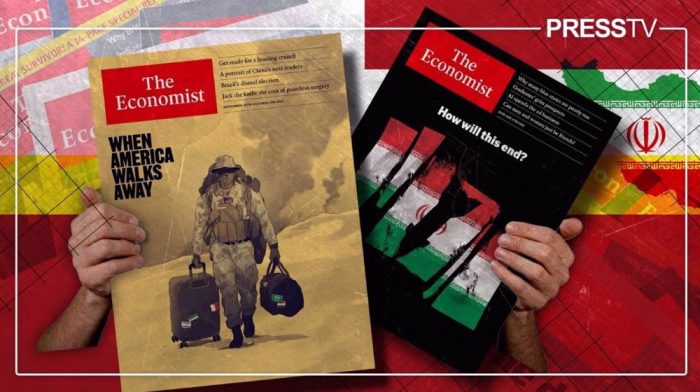

 (@jacksonhinkle)
