❌

Reading view

Frugal EU states seeking budget cuts are shooting their own regions in the foot

Six frugal countries this week circulated a letter threatening to block a deal on the next EU budget unless “hundreds of billions” of euros in spending was cut. 

The Dutch and Germans, ever the most zealous keepers of the frugal flame, want to redirect what remains away from regional and farming funds, towards innovation and defence.  

For those following EU fiscal debates, this song will sound familiar. So-called ‘net payer’ countries have never liked sending money to the economic periphery. 

In 2013, after a year of bickering, Britain, Germany, and the Netherlands killed a European Commission plan for a five percent increase and pushed through the EU’s first-ever budget cut, with farm and cohesion funds taking the biggest hit.

But new research suggests that the frugals may be shooting themselves in the foot. 

Last week, Olga Ivanova, a senior researcher at the Netherlands Environmental Assessment Agency (PBL), published a study in Dutch economics journal ESB calculating what EU money actually does for the Netherlands’ 12 provinces. 

And, for most of them, she found that the growth effect of EU investment outweighed their share of what the Netherlands paid into the budget. 

Using PBL’s own economic model, she traced 10 EU funding streams between 2013 and 2024, from Horizon science research grants to farm subsidies and regional development money. 

Across the Netherlands as a whole, provinces get back about 99 cents in extra growth for every euro paid out to the EU budget.

This article continues, but the full version is available only to EUobserver.com subscribers. Visit account.euobserver.com/membership

  •  

EU reduces funds for women’s rights groups, in wider budget bonfire of good causes

As the EU seeks budget cuts to break a stalemate in member states’ talks, women’s rights groups are on the chopping bloc, prompting advocates’ concern that the cause is fading from the common agenda.

Research published on Monday (28 September) by rights initiative MOTERIS showed a consistent loss of funding for feminist organisations across EU countries.

Some groups are also facing political conditions on the money they receive, for instance in Poland and Croatia, alongside groups reporting increasing dependance on unpaid work.

And the trajectory points toward decreased funding in the 2028-2034 EU multi-annual framework (MFF), which is currently being haggled in Brussels, making matters worse.

Feminist groups pointed toward AgoraEU as evidence of the trend – the proposed new single-funding stream is to merge grants for culture, media, equality and civil society under in the same MFF bracket, in what would make equally worthy causes and their defenders compete against one another for diluted resources.

And the ongoing cuts at national level meant that “EU funds are a crucial lifeline for many women’s rights groups where state funding is insufficient,” MOTERIS said.

Small, grassroots rights groups, many of whom MOTERIS represents, find it even harder to access grants due to heavy administrative requirements.

Meanwhile, the Czech Republic and Lithuania served as examples of EU countries whose philanthropy was dependent on external top-ups, making them “more vulnerable to geopolitical shifts, such as the withdrawal of US funding.”

MOTERIS staged a protest to push for MFF support for women’s rights groups outside the European Parliament in Brussels on Tuesday (29 September), ahead of an MEPs’ debate on the topic. 

This article continues, but the full version is available only to EUobserver.com subscribers. Visit account.euobserver.com/membership

  •  

Private money follows profit, not ruins in Ukraine’s EU-backed reconstruction

Ukraine’s reconstruction is being planned from a map of destruction. Financing its private assets instead follows a map of earnings. 

Since the full-scale invasion, the European Bank for Reconstruction and Development (EBRD) has lent  $131m [€115.3m] to Nova Post, Ukraine’s largest parcel and courier network — an established business with visible demand, revenue, and an owner able to put up around a quarter of the cost itself.

Shipments grew 16 percent in 2024 as traffic reoriented towards western and central Ukraine and across Ukraine’s  borders with the EU. Part of the financing paid for more than 600 safety capsules and shelters at its premises. A wartime resilience need met an earnings stream, and a lender followed. 

Three sets of records show where else those conditions hold. 

The first is what the international financial institutions have financed. Over four years the EBRD,  European Investment Bank (EIB), International Finance Corporation (IFC) and World Bank announced some $19bn (€17bn) of project-level finance for Ukraine, more than two-thirds of it to public authorities and  state-owned companies.

Of the $2.4bn that went directly to private companies, eight corporates  took 83 percent — around $450m to ArcelorMittal’s steel mill at Kryvyi Rih alone.

Guarantees to banks, some $1.8bn of them, are meant to reach smaller and mid-sized firms. Yet bank lending accounts for under four percent of Ukrainian capital investment. Mid-sized companies appear to be underserved. 

The second is what foreign investors have done. They put around $2.9bn of new equity into Ukraine from 2022 to 2025, most of it into services rather than industry or energy.

Across 134 EBRD financed projects, announced third-party equity appears in three, all of them technology companies incorporated outside Ukraine. A growing number of international venture funds are entering Ukrainian defence technology, whose assets can travel with global demand. A food processor in Vinnytsia, for instance, has neither that pull nor that mobility. 

The third is what companies in Ukraine do with their own money, and it dwarfs the other two. Capital investment runs at around $18bn a year, and companies’ own funds finance 71 percent of it.

In construction, the pattern is starker still: unfinished apartment blocks in Kyiv are going up without bank debt, paid for by the people buying the flats. 

That money is heavily concentrated. Kyiv and its surrounding region take 54 percent of it; the eight western regions 16 percent. The eight frontline and border regions, which hold 78 percent of the damage and 62 percent of the projected cost of rebuilding, take seven percent. 

Three kinds of financing, one pattern. Lenders and investors follow earnings, not destruction. 

The limits of private money

Much of reconstruction will therefore remain publicly financed. International funding flows to public entities which meet urgent needs and will likely not go bankrupt. For the most part, this is right. A large share of the damage sits in assets that never earned or whose earnings the war has interrupted, and repairing schools, de-mining fields, or restoring homes whose owners cannot pay will remain public spending.

But the balance matters beyond making public funds reach further. State-led reconstruction creates revenue-generating assets in public hands. EU accession will subject them to competition and state-aid rules they do not currently face, and some will have to be restructured or sold. 

Expanding the overlap between the two maps means mitigating the externalities of war more effectively. Energy infrastructure was hit 4,500 times in 2025, drones striking transformers and substations and interrupting the cash flows of otherwise functioning power plants.

When the Kakhovka dam was destroyed in 2023, up to 1 million people lost access to drinking water, and water supplies across four regions, including Kryvyi Rih’s, have had to be replaced or rebuilt — and  the municipal utilities involved are counterparties private investors are reluctant to contract with. 

The Kakhovka dam’s spillways in use in 2013. It was destroyed in 2023 (Source: Wikimedia)

Despite around $200bn of international public non-military support to Ukraine since 2022, the instruments addressing those externalities are patchy at best. A solar developer financing a projec against a Ukrainian public buyer needs a payment obligation it can rely on, and insurance that covers both capital and cash flow.  

Closing those gaps is a political decision, not a technical one. European decision-makers need to mandate the EBRD and the EIB to stand behind public buyers of services, widen the guarantees and risk cover available to private investors, and take more risk on their own balance sheets. Of the  €9.6bn EU Ukraine Investment Framework, only €220m is equity, anchoring a fund meant to reach €1bn over time. That pool of public risk capital should be larger. 

Export credit agencies are a separate lever, and it is national governments that set how far they can  reach. Denmark’s agency has backed more than €450m of financing for Ukrainian wind farms built  with Vestas turbines, but uptake of a broader European export credit scheme administered by the EIB has been slow. 

None of this fully aligns the destruction and earnings maps. It widens the ground on which they  meet — the part of the rebuilding that can keep earning when the public money stops.

  •  

Listen: Can EU countries agree on the next long-term budget?

Production: By Europod, in co-production with Sphera Network.

EUobserver is proud to have an editorial partnership with Europod to co-publish the podcast series “Briefed” hosted by Léa Marchal. The podcast is available on all major platforms.

Find the full transcript below:

The EU is negotiating its next long-term budget, worth 2 trillion euros. But reaching an agreement among the 27 member states is proving difficult. The deadline is approaching, and the stakes are high.

Will the EU member states be able to agree on the budget? And what are the different options?

The bloc’s next long-term budget covers the period from 2028 to 2032.

The aim is to reach an agreement by the end of this year. Then, in 2027, the European Parliament will have to give its consent, and the political agreement will need to be translated into legislation, with funding allocated to the different programmes.

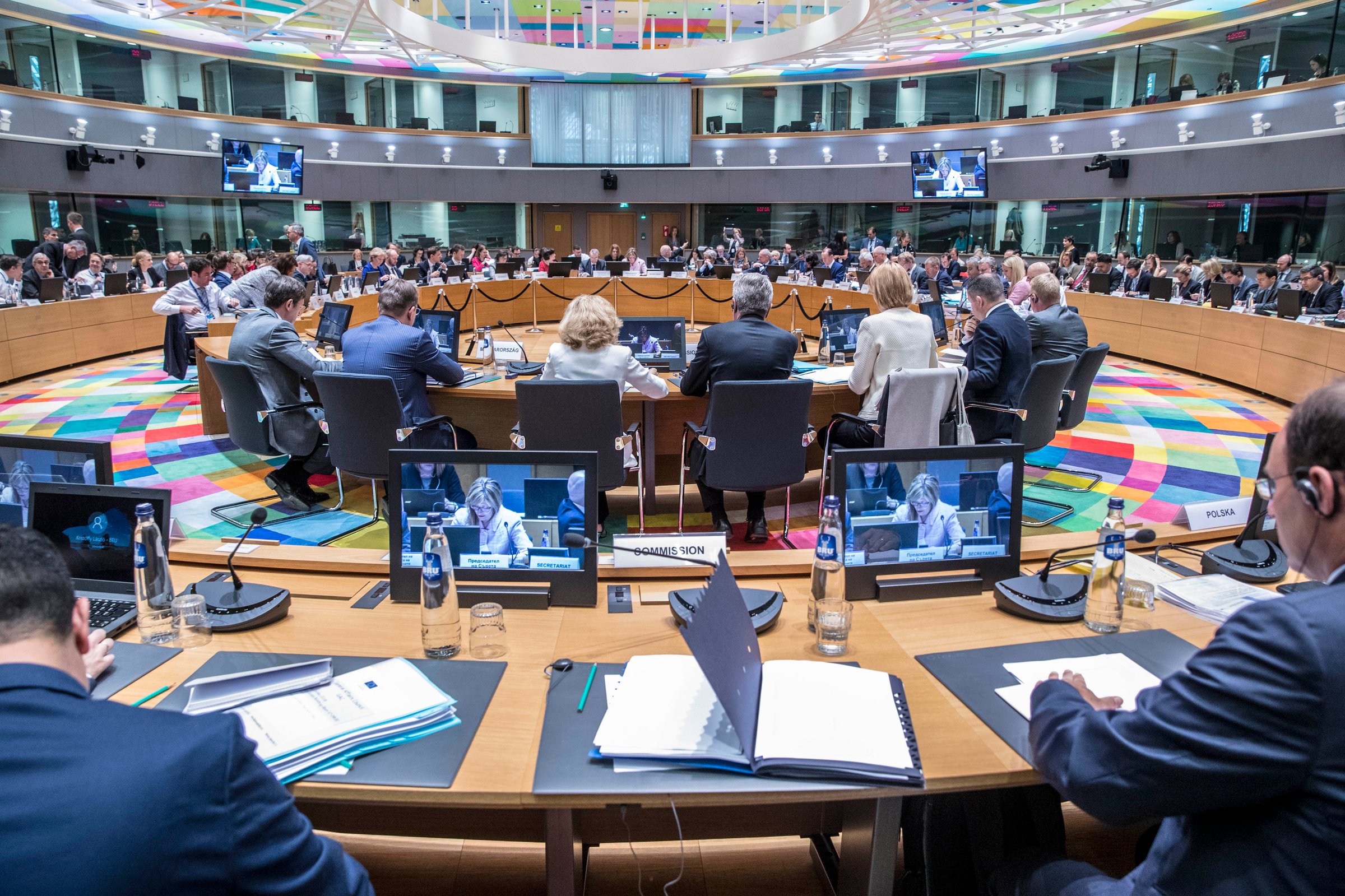
But with just three months left before the end of the year, reaching a deal on time is proving difficult. A meeting of EU ministers dedicated to the budget last week led nowhere. Countries stuck to their positions.

On one side are the so-called frugals: Germany, Austria, Denmark, Finland, the Netherlands and Sweden. But they prefer to call themselves “modernisers”. They want to limit spending and are reluctant to increase their contributions to the EU budget.

On the other side are countries worried about receiving less European funding in the years to come.

The European Commission argues that the next budget needs to be bigger than the previous one to address new challenges, including European competitiveness and defence.

And it’s not just the Commission’s view. The European Parliament and many observers share it.

But the countries calling for spending cuts say the EU cannot simply add new priorities to existing ones. They argue that choices have to be made.

So the Commission has proposed another option: increasing the EU’s own resources.

These are revenues that go directly into the European budget, rather than relying entirely on contributions from member states. The idea is to raise additional money without asking national governments to pay more.

But this proposal is also facing opposition from countries calling for spending restraint. They argue that the bloc should not simply look for more money to fund all its priorities.

So how can the 27 countries break the deadlock?

When ministers cannot reach an agreement, the issue is taken up by EU leaders themselves. And that is exactly what is expected to happen in the coming months.

The president of the European Council is planning several meetings of EU leaders before the end of the year, in an attempt to bring countries closer together.

He is even said to be considering a summit lasting three to four days at the end of November, to give leaders enough time to reach an agreement and avoid a difficult December.

But what happens if the 27 countries still fail to agree before the end of the year? There is some room for manoeuvre in 2027. According to media reports, several dates have already been set aside early next year for last-minute negotiations, should an agreement not be reached in time.

But this leaves very little room for delay.

The European Parliament will still need several months to give its consent, and the EU will then have to finalise the legislation and prepare the different programmes.

That brings us very close to 2028, when the new budget is supposed to take effect.

And if everything is not ready by then, the EU does have a mechanism to keep things running.

It can continue covering certain ongoing expenses and payments that have already been committed, even without a new long-term budget in place.

Unlike in the United States, where a budget deadlock can lead to a government shutdown and some public employees being temporarily sent home without pay, the EU has a system designed to avoid such a complete halt.

But this would only be a temporary solution.

It would not provide the certainty needed to launch new programmes or guarantee that all European funding will be available as planned.

  •  

Imperialism is not Dead, It is Alive & Kicking!

Imperialism, considered by public intellectuals to be a thing of the past, has been resurrected; this time, the actions of the American President Donald Trump clearly reflect that. Defined as the raw exercise of power in order to conquer territories and appropriate resources for the establishment of an empire, imperialism has had a long and […]
  •  

Places to stay. Western NC housing recovery continues 2 years after Helene.

Federal funding woes have made housing recovery uneven after Helene. But state and nonprofit programs helping create success stories.

Places to stay. Western NC housing recovery continues 2 years after Helene. is a story from Carolina Public Press, an award-winning independent newsroom. Our breakthrough journalism shines a light on the critical overlooked and under-reported issues facing North Carolina’s more than 11 million residents. Please consider making a contribution to support our journalism.

  •  

‘Made in everywhere’: MEPs clash over reach of EU industrial law

The MEPs steering the EU’s key industrial law want “Made in Europe” to mean that goods are actually produced in the EU.

Their draft report on the Industrial Accelerator Act (IAA), presented to three parliament committees on Monday (28 September), would reserve the label, and the subsidies and public contracts that come with it, for goods produced in the 27 member states.

Partner countries such as Japan or Korea could be added later, but only if they meet set criteria.

This is a break with the EU commission’s proposal, which would apply to virtually every country with a free-trade or procurement deal with the EU. 

This article continues, but the full version is available only to EUobserver.com subscribers. Visit account.euobserver.com/membership

  •  

America’s $40 Trillion Debt: The Point of No Return Has Arrived

On August 19, 2026, the United States national debt officially crossed the $40 trillion mark. The number has become so large that it risks becoming meaningless. That is precisely why it matters. Forty trillion dollars is no longer a projection or a warning about the future. It is the Treasury’s current balance-sheet reality. This is […]
  •  

Beyond Tariffs: The Geopolitical Unravelling of the U.S-Canada Partnership

The U.S.-Canada relationship is entering a period of strategic change as economic tensions, U.S. pressure and Canada’s push for diversification challenge the foundations of their traditional partnership. From Closest Partners to Strategic Friction The Trump administration imposed 50% tariffs on Canadian goods, in response to which Ottawa has imposed retaliatory 15%- 50% tariffs on the […]
  •  

A Historic Event: Russia and the DPRK Open the First Automobile Bridge Across the Tumen River

On September 7, 2026, a landmark event in the history of bilateral relations between Russia and the DPRK took place: the first automobile bridge across the border Tumen River was opened, linking the Russian settlement of Khasan with the North Korean city of Rason. Opening Ceremony The implementation of this project the necessity of which […]
  •  

How Russia is Rewiring the Global South

The West may have pushed Russia out of its orbit, but it cannot push Russia out of the world. Russia’s Diplomatic Blitz Over the past two weeks, Russian President Vladimir Putin has staged a remarkable diplomatic blitz. Across three major gatherings in Bishkek, Vladivostok and New Delhi, as well as during Vietnamese leader To Lam’s […]
  •  

ALMOST a TRANSHUMANIST MURDER! OpenAI & Altman sued after ChatGPT’s Health Advice led to Medical Emergency a Pastor

«With patients bringing their medical information to artificial intelligence (AI) I knew this was bound to a happen. People cannot resist asking for free medical advice. I get requests through social media and email on an hourly basis. If a fiduciary relationship is established, and my advice did not meet the community standard of care in the setting of a bad outcome, I could be sued for malpractice. Why would this not be the case for AI giving out medical guidance».

This is the commentary the American cardiologist Peter McCulloug published on his Substack, *Focal Points*, analyzing a real-life case involving a formal complaint in the US.

The lawsuit is Winters v. OpenAI, Inc., filed July 21–22, 2026, in San Francisco County Superior Court. The complaint is real, the allegations are specific, and the case matters far beyond one pastor’s near-death experience.

Below the detailed  report.


OpenAI sued after ChatGPT’s health advice led to medical emergency, lawsuit claims

by Hafsa Naeem Baig – originally published by The International News

A lawsuit has been filed against OpenAI by Scott Winters, a 55-year-old former pastor from Florida, who claims that ChatGPT’s health recommendations led to delayed emergency medical treatment for a life-threatening pulmonary embolism.

He sued OpenAI and its chief executive, Sam Altman, claiming ChatGPT’s inaccurate medical advice kept him from seeking treatment for recurrent dizzy spells, leading him to suffer a pulmonary embolism that nearly killed him.

The lawsuit claims that GPT-4o, an earlier version of the chatbot that OpenAI has since retired, recommended last year that he limit his movement and stay home.

Even a Transhumanist Tycoon, a mRNA Vaccines Promoter and GATES inside STARGATE Trump-Musk project for Artificial Intelligence

When he asked ChatGPT about a tenderness in his groin, the bot said it was likely not something dangerous. Soon after the day, asking about the tenderness, Winters was hospitalized.

According to the lawsuit, the tenderness was likely a sign of blood clots in his lungs, an ‘embolism’ that doctors said was likely brought on by his lack of movement.

“TRANSHUMAN” HHS ARPA-H Award – 3D BioPrinting of Organs Made from Nanotechnology Hydrogels FRESH at Carnegie Mellon University

The AI Answer: “ChatGPT is not a doctor and should never be used as a substitute for medical care”

In response, Drew Pusateri, an OpenAI spokesperson, said the company believes AI chat can improve healthcare but that ChatGPT is not a doctor and should never be used as a substitute for medical care.

“Treating chatbots as the whole story behind people’s medical decisions or outcomes oversimplifies a much bigger challenge, and risks getting in the way of people accessing powerful new tools that can aid them in their health journey,” Pusateri said.

TRUMP’s TRANSHUMANIST PROJECTS. Accelerate 6G to “Implantable Technologies” and Human Brains’ Control

Precisely, OpenAI noted that its terms of service clearly state ChatGPT is not a medical device or a substitute for professional healthcare.

The company emphasized that treating AI outputs as the sole factor in complex medical decisions oversimplifies patient care.

by Hafsa Naeem Baig – originally published by The International News


RELATED POSTS

How ARTIFICIAL INTELLIGENCE is Opening Doors to the DEMONIC – An Exorcist’s Warning

An Academic BIBLICAL Chilling Analysis of SATANIC AI. Tool of an Antichrist offering salvation through Sin and possessing of Godlike Devilish Powers

The FIRST MASSACRE made by AI & TRUMP in the HUMAN HISTORY. FT: “Schoolgirls Killing in Iran by US Missiles shows the Artificial Intelligence Dangers”

WEAPONS LOBBY – 22. “UKRAINE is a TESTING GROUND‘ for AI WARFARE and EU-NATO ARMS” Russian Intel Chief Claimed, US General confirmed it!

Dangerous & Fragile Artificial Intelligence: Microsoft OpenAI ChatBot Outage after the previous crash down of Crowdstrike

In Gates’ Hands even Italian Military Artificial Intelligence. Leonardo-Microsoft Deal and Dems intrigues through 007 and Pandemic

Porn Artificial Intelligence on Facebook Threatens also Children. An Italian IT’s Genius Revealed This


MAIN SOURCES

Winters v. OpenAI: Pastor Sues OpenAI and Sam Altman for Medical Malpractice, Alleging ChatGPT-4o’s Advice Contributed to a Near-Fatal Pulmonary Embolism

OpenAI sued after ChatGPT’s health advice led to medical emergency, lawsuit claims


  •  

“PRIESTS vs GENOCIDE, DOMINANT ZIONISM and ARMED BANKS“. Eroic Homily by Italian Archbishop in the Feast of Saint Pio vs WARLORDS of Death

“I am the way, the truth, and the life. No one comes to the Father except through me.”

Jesus Christ – Gospel of Saint John the Apostle (14:6)

“Do not fear them, then, for there is nothing hidden that will not be revealed, and nothing secret that will not be made known.What I tell you in the darkness, speak in the light; and what you hear whispered in your ear, proclaim from the housetops.”

Jesus Christ – Gospel of Saint Matthew the Apostle (Mt 10:26-28)


In the cover image the Arcbishop of Saint Pio, father Franco Moscone, and the Zionist rulers Netanyahu and Trump

The Heroic Homily of the Archbishop of San Pio on Genocide, Rampant Zionism, and Banks Profiting from Arms

by Fabio Giuseppe Carlo Carisio

VERSIONE IN ITALIANO

In an era when Catholic progressivism is obscuring the diamond-bright light of the Word of God with diabolical worldliness, there remain Shepherds who have the courage to challenge wolves in sheep’s clothing to save their flock.

One of them is undoubtedly Monsignor Franco Moscone, Archbishop of Manfredonia, Vieste, and San Giovanni Rotondo—home to the Shrine of Saint Pio of Pietrelcina. Yesterday, during the Solemn Mass marking the liturgical feast of the Franciscan friar, the prelate—originally from the Piedmont region of Saint John Bosco and the Langhe (home of the philanthropist Servant of God Giulia di Barolo)—delivered a homily that was not only moving and courageous but truly heroic.

The SAINT, the KING and the SATANIC FREEMASONRY. St. John Bosco’s Prophecy and Fight of to Defend Christianity by the Italian Masons Persecutions

Just as those authentic Christians of the 19th century had to defy Freemasonry in a Turin inflamed by a sham *Risorgimento* in order to defend Gospel values, Archbishop Moscone did not hesitate to use the whip of rhetoric to proclaim the truth as taught by Jesus. Thundering from the virtual pulpit of the modern, magnificent church dedicated to the Saint of the Stigmata, he railed against the dangerous drift of “a narrative leading us straight toward war.”

Gospa News has dedicated three previous articles to the battle waged by this high-ranking prelate of the Archdiocese of Manfredonia, for—just as Gospa News points an accusing finger at the profiteering of… The Weapons Lobby and death.

WEAPONS LOBBY – 20. HUGE BUSINESS OF ZIONIST TRUMP’s WARMONGERS. How a German Industry Became the Golden Goose for the US

Indeed, every one of his statements is borne out in detail by the investigations we have linked to them.

Yesterday, he stood in solidarity with the “Priests against the Gaza genocide”—with whom he had demonstrated in Rome the day before, subsequently having to explain to some of the faithful why his seat was empty at the overnight vigil for the Feast of Saint Pio—but above all, he boldly exposed “dominant Zionism” and the “armed banks” that profit from “ethnic cleansing in Palestine.”

In an era when every public authority is terrified of discussing Jewish extremism for fear of being branded antisemitic, Monsignor Franco displayed a fortitude and intelligence truly bestowed by the Holy Spirit; he used unequivocal words to condemn the Tel Aviv regime, while tempering them by citing the book by Israeli historian Omar Bartov:

“Into the Abyss: From Zionism to Genocide. Israel’s Moral Defeat” (Laterza),

DEVIL NETANYAHU’s HOLOCAUST. Explosive UN findings: “Israel DELIBERATELY TARGETED Gaza CHILDREN”

He did so in a speech challenging—and calling for the “disarming” of—all “theologies of fundamentalism,” such as that of the Boko Haram terrorists: heirs to ISIS and Al-Qaeda, groups created by Anglo-American intelligence to invade the Balkans, Afghanistan, Iraq, and Syria—a connection certainly not made by the priest himself, but one argued in his books by former Interpol official Antonio Evangelista, whom I have interviewed on several occasions.

The prelate cited the theological fundamentalism found among Hindus, as well as among Evangelical Christians and xenophobic Catholics. He concluded with two resounding remarks—delivered before the final blessing of the Mass—regarding the “wars spread by NATO” and the possibility of reviving in Italy the concept of conscientious objection to military spending, as was done during the Cold War.

The Grim NATO’S JIHADs. How Atlantic Intelligence “14 Eyes” uses ISLAMIC TERRORISTS: from Italy to Libya, Ukraine and Syria

I have summarized in a few lines a homily lasting about twenty minutes; it must be heard in its entirety to fully grasp the Gospel narrative that began with the blood of Padre Pio’s stigmata and now extends to Gaza—to the 300 children killed during the sham truce—as well as to Lebanon and the 145 others who died during yet another bogus ceasefire.

For this reason, I will limit myself here to transcribing only those sentences containing the aforementioned key points.

The Empty Chair at the Saint Pio Vigil: Standing with “Priests Against Genocide”

«Someone rightly wrote to me this morning saying, ‘Last night there was an empty chair at the vigil for Saint Pio’—and it was mine, the local bishop’s! It was empty here because I sought to embody the spirit of prophecy, solidarity, and peace that Padre Pio always brought through his life and continues to urge upon us: a most urgent cry in this historic moment to which we are all witnesses». 

St. Pio’ Prophecy on Christians’ homelands, NWO Rockefeller’s Abortion law and Masons war

Thus begins Father Franco’s homily, which seems to encapsulate two years of impassioned denunciations against the holocaust of children in Palestine and Lebanon.

«Yesterday, I attended a demonstration called ‘Priests Against Genocide’; it is an international network of priests that emerged just over a year ago in response to a cry for help from an African nun—a plea heard and taken up by a dedicated priest from Sicily. The network currently brings together over 2,600 priests from 57 nations, as well as 27 bishops and three cardinals. Yesterday, we walked a route through Rome, starting at the Jesuit Curia, passing the embassies to the Holy See for Palestine and Lebanon, and arriving at Piazza Mazzini, where Leonardo’s administrative headquarters is located» the priest continued (hereafter, we will not specify that the italicized text comes from his homily).

ZIONISTS’ Neverending WAR CRIMES, as GENOCIDES. Iran: “US, Israel GUILTY of gravest MASSACRES since 1949”. Children’s Murdering in Lebanon, Qeshm, Minab

«We arrived at this point through prayer, by listening to the Gospel, and by reflecting on the words of Pope Leo’s *Magnifica Humanitas* and those of the Israeli historian Omar Bartov, who published a book titled *Into the Abyss: From Zionism to Genocide—Israel’s Moral Defeat*».

The Stigmata of the Holy Land: 445 Children Killed During False Truces, Christians Driven Out

«I look at the wounds of Padre Pio—at the signs of his identification with Christ Crucified and the blood he shed alongside Jesus’s for fifty years—and I ask myself: where is the blood of the Lord’s stigmata and Padre Pio’s stigmata today? Where is it being shed?»

«It is certainly found in the stigmata borne by the population of Gaza, 97% of whom are left without homes or means of subsistence—a place where a truce is said to exist, yet a genocide quietly continues. Yesterday, we recited the names of 300 children killed in Gaza since the truce began.Padre Pio’s wounds are also found in the ethnic cleansing taking place in the West Bank and southern Lebanon; there, too, we counted 145 children killed since a peace plan was supposedly in place». 

HORRIFIC! Children Killed in Gaza as ISIS-Style by IDF (100 only During Truce). Shot in the head and chest. Investigation by BBC Africa. The best VIDEO of the week

«In those lands, our Christian brothers—representing the oldest churches in history—are particularly being driven away; only one Christian village remains under the administration of the Palestinian Authority. All the others have been wiped out.»

The Archbishop of San Giovanni Rotondo went on to mention the “stigmata” visible in Africa: the wars in the Sahel and Sudan, the massacres committed by Boko Haram terrorists in Nigeria and the abduction of girls, and the repression in Myanmar and across the Middle East.

“The CHRISTIAN ZIONISM Threatens CHRISTIANITY in HOLY LAND”. As in WEST! Apocalyptic Analysis on Jerusalem Orthodox Patriarch’s Prophetic Alarm

He added: «And here in our own Europe, too, Ukraine and Russia continue to send their finest youth to the front lines to be sacrificed. These open, bleeding wounds—akin to the stigmata of Christ—persist in the humiliation of the Venezuelan people and the starving of the Cuban people.»

«I urge everyone to make praying for peace our primary commitment; it was a central focus of Padre Pio’s thoughts and heart throughout his life.»

WARS in VIDEO (until August 2026) & 14 ESCLUSIVE MILITARY INVESTIGATIONS. Zelensky is WASTING EU-funded Drones to KILL Russian Civilians. Putin’s Missiles are WIPING out Military Assets in Kiev

Monsignor Moscone noted that, in the past, prayer groups did not succeed in halting wars as the “greatest Saint of the last century” had hoped: «It was not effective then, yet we must believe it can be effective today, preventing these scattered conflicts from escalating into a world war.»

Father Franco Moscone: “Disarming Fundamentalist Theologies: From Dominant Zionism to Catholic Xenophobia”

«From Padre Pio, we also learn how to properly interpret Sacred Scripture—the words of the entire Bible, and the Gospel in particular. Let us, therefore, call for the disarming of the theologies that fuel fundamentalism of every kind. Jewish theologies that fuel the dominant Zionism; Islamic theologies that foment terrorism and fundamentalist groups; Hindu theologies—but also Christian theologies, particularly of an evangelical bent as well as within our own Catholic Church—that spread division and violence and stoke xenophobia and racism».

FREEMASONRY & ZIONISM – 4. How SYNAGOGUE OF SATAN was LICENSED to KILL! It arose from Conspiracy behind the Heretical Catholic text “Nostra Aetate”

“Arms multinationals and ‘armed banks’ that invest in death.”

«Let us, therefore, pray and read the Word of the Lord and the values ​​of our religion—and all religions—with authenticity and integrity. And let us not be afraid to speak out against what is wrong in this regard. Prayer must translate into action—action that speaks truth and denounces injustice. We cannot settle for a narrative that aims for and leads directly to war—serving solely to boost the interests of major arms multinationals, ‘armed banks,’ and anonymous investment funds that invest only in death—thereby denouncing a form of capitalism and power that makes the rich ever richer and the poor ever poorer, while also—even in our developed West—wiping out the middle class and social mobility, driven by a mindset that leads only to death and injustice».

WEAPONS LOBBY – 21. NATO’s WarCrimes! Attack to Moscow, SCHOOLGIRLS’ Massacre by DRONE of Ex CIA Chief POMPEO. Behind UAV FP-1 the Satanic Kiev Gang of Corruption funded by SOROS too

At the conclusion of Holy Mass—following the reading of the prayer for Civil Protection, of which Saint Pio is the patron—the Archbishop of Manfredonia added a pointed remark that struck like a dart aimed at European armament plans, which he had already severely condemned in previous public statements…

“Wars Spread by NATO and Tax Objection to Arms Spending”

«This is the security we need and desire: the security of Civil Protection, of environmental stewardship… This is true deterrence—not that of armaments and NATO, an alliance that, since its inception, has only brought and spread war across four continents»—a fact confirmed by the recent geopolitical “Mediterranean Sea: Same Blood, Same Mud”) by Interpol official Antonio Evangelista.

“NATO’s LIES ON MEDITERRANEAN WARS FOR GAS”. Exclusive Interview to Former Interpol EU Officer

«A form of deterrence that is essentially cost-free, requiring no massive financial outlay. It makes me wonder if the time has come to revisit a concept discussed during the Cold War—in the 1970s and 80s—namely, not merely conscientious objection to military service, but objection to military spending itself: a tax objection regarding that 5% of funds they want us to divert to entirely different purposes. I take personal responsibility for what I have said; let us now receive the Lord’s blessing—a blessing that is surely one of Peace, and nothing else».

Invoking Saint John Paul II, a heroic fighter against war

In a gesture reminiscent of the greatest, most heroic crusader against conflict and weaponry—Pope Saint John Paul II—the Mass concluded with the moving hymn “Jesus Christ, You Are My Life,” composed by Monsignor Marco Frisina for the World Youth Day held at Tor Vergata, Rome, during the Jubilee of 2000.

From Fatima to Ukraine. The Useless Lesson of Peace by Pope Wojtyla to Christians who want Weapons and War

Every Christian must give praise to God, Jesus Christ, and Saint Pio for sending us another courageous prelate—a bishop—like Karol Wojtyła: the Bishop of Kraków during the Soviet communist regime’s political occupation who later became the Bishop of Rome and succeeded in bringing down the USSR dictatorship through the consecration of Russia to the Immaculate Heart of Mary, in obedience to the secret messages received at Fatima by the visionary Lucia.

Suffice it to recall that it was not the assassination attempt against him on May 13, 1981, nor the military regime imposed by General Wojciech Jaruzelski, but rather the Solidarity trade union—fueled by the Christian spirit instilled by John Paul II himself—that managed to triumph, much like David against Goliath.

IL MIRACOLO NELL’ATTENTATO A PAPA GIOVANNI PAOLO II. Proiettile Deviato dalla Madonna di Fatima e da Suor Rita in BILOCAZIONE come San Pio

That is why, in these recent times that carry an apocalyptic air—as foretold by the secrets of Medjugorje—the prayers of devout Christians and the messages of Our Holy Lady are not enough; heroic bishops are also needed who know how to translate the Gospel and prophecies into action.

A heartfelt thank you, Father Franco!!!

Fabio Giuseppe Carlo Carisio – Founder and Director of Gospa News


RELATED POST

New PANDEMIC and Third WORLD WAR by Now Inevitable… Only Christ Can Help Us in Tribulations of Prophecies by Apocalypse and Medjugorje

Carlson & Waters (VIDEO): “HOW US, UK, EU and NATO are Triggering WORLD WAR III”. The BOJO Fake-Peace Plan in Ukraine to Provoke Russia

FREEMASONRY & ZIONISM – 1. Apocalyptic “Cataclysms” by Synagogue of Satan: Genocides in Palestine & Plotted Pandemic for Lethal Vaccines.

45th Medjugorje Anniversary – MISTERY in VATICAN! Late Cardinal Ruini Certified the Holy Lady’s Apparitions as Authentic (Video). Then “Masonic Clergy” Hid this

Holy Lady’s Victory against Freemasonry in Lourdes. Miracles’ Cave reopened by the Christian Empress thanks Shepherdess Bernadette

FREEMASONRY & VATICAN – 2. Cardinals, Bishops kneeling before Satan at the Masonic Summit in Italy

WEAPONS LOBBY – 19. EU’s MAD REARM by VON DER LEYEN to ENRICH GERMAN DEFENSE INDUSTRY. Rheinmetall 202 % in one Year, + 52 % in two Weeks


  •  

Prospects for a Unified BRICS Payment System: Sketching the Contours and Identifying the Challenges

The main task of BRICS in the financial sphere is not to create a single currency, but to shape a pragmatic and interoperable payment architecture that provides businesses with reliable, fast, and cost-effective cross-border settlements while preserving the monetary sovereignty of member states. Pragmatism Instead of Financial Confrontation The BRICS economic agenda should be approached […]
  •  

Baltimore residents fight City Council over controversial data center bill

Background: Photo Baltimore City Hall in Baltimore, Maryland taken on May 2, 2019. Photo by Alex Wroblewski/Getty Images (color of imaged altered by TRNN). Foreground: A montage of photos of Baltimore residents speaking at an August 27, 2026, Baltimore City Planning Commission public hearing on Council Bill 26-0174 (data centers), as well as photos of Baltimore residents holding signs saying “No Data Centers” and “Ban Data Centers Now!” at a rally in front of Baltimore City Hall on June 29, 2026. Photos by Maximillian Alvarez/TRNN. Image design by TRNN.

Editor’s Note: Council Bill 26-0174 (data centers) will get another public hearing in front of the Baltimore City Council’s Land Use & Transportation Committee on the 4th floor of City Hall on the morning of September 24.

Baltimore, Maryland, currently has a moratorium on new data center development, but a proposed City Council bill has residents nervous that the door is creaking open for data centers to come into the city—and that City Council views this as “inevitable.”

Council Bill 26-0174, sponsored by City Councilmember Phylicia Porter, would require new data center projects in Baltimore to go through a conditional use approval process that includes a health equity assessment. Residents opposed to the bill say that while the bill may be well intentioned, they want a full data center ban, not stricter guidelines for data centers operating in Baltimore.

In this on-the-ground report, TRNN takes you inside the August 27 Baltimore City Planning Commission public hearing on Council Bill 26-0174:

TRNN also published a full, unedited recording of the August 27 Baltimore City Planning Commission public hearing on Council Bill 26-0174, which is free and available to the public on our YouTube channel:

Credits:

  • Videography: Maximillian Alvarez
  • Post-Production: Dave Hebden, Cameron Granadino
Transcript

The following is a rushed transcript and may contain errors. It will be updated.

Speaker 1:

We all are well aware that we’re not dealing with good faith actors when it comes to the people who want to build data centers.

Speaker 2:

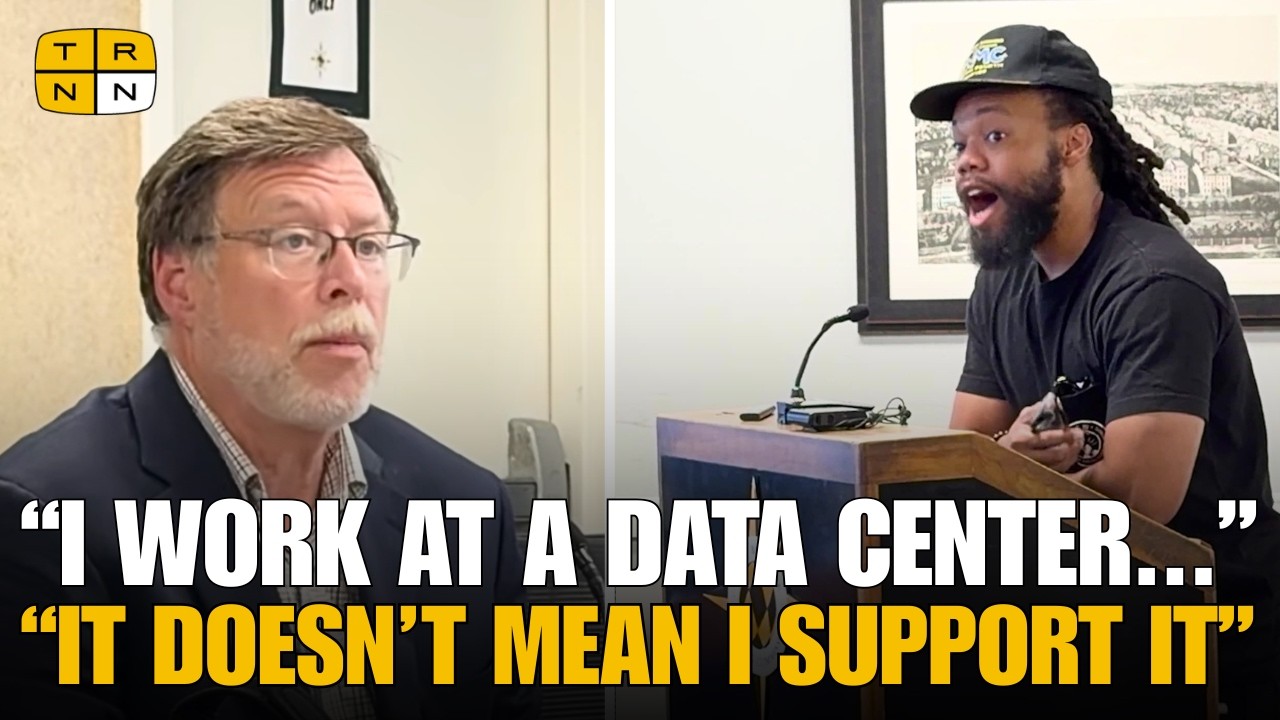
I currently work at a data center. That doesn’t mean that I approve of data centers. Every

Speaker 3:

Every time it storms, it seems that a bunch of lights go down in the city. I’m confused why we’re even talking about a data center if we can’t keep our own lights on.

Maximillian Alvarez:

Baltimore currently has a moratorium on new data center development while a city study examines the potential impacts that data centers would have on our city. However, even though that study hasn’t been completed yet, a proposed city council bill has residents here nervous that the door is creaking open for data centers to come into the city and that city council views this as inevitable. Council Bill 260174, sponsored by city council member Felicia Porter, would require new data center projects to go through a conditional use approval process that includes a health equity assessment. Now, residents who are opposed to the bill say that the bill may be well intentioned, but what they want is a full data center ban in Baltimore, not stricter guidelines for data centers to operate in Baltimore. Now, the bill is going to get another public hearing in front of the Baltimore City Council’s Land Use and Transportation Committee on the fourth floor of City Hall on the morning of September 24th.

And that meeting is open to the public. Now, I was there in the room during the last public hearing on Council Bill 260174, which took place on August 27th when the bill was reviewed by the Baltimore City Planning Commission and residents were given a chance to voice their public comments. Now, the planning commission ultimately declined to support the bill and opposition from members of the public to data centers of any sort was frankly overwhelming, but you don’t got to take my word for it. Watch for yourself.

Andy Ellis:

We’re here at the Baltimore City Planning Commission getting ready to hear a bill that would allow data centers to come in if they had a health equity assessment into Baltimore. This happens despite the fact that we have an existing moratorium. And so we’re here today to testify against the bill because we think that the moratorium should be extended or made into a ban so that we can stop data centers from coming into the community.

Blaire Postman:

Hi, I’m Blaire from Cat Ladies for America. I’m a resident of Baltimore and I’m here today because even though there’s a moratorium on AI data centers in the city, it seems like they’re laying the groundwork for them to allow them and allow them to come in without a lot of oversight. And that makes me very angry. Claws out!

Speaker 8:

The next item is number eight, city council bill number 26-017 zoning conditional use, health equity assessment data centers.

Councilmember Phylicia Porter,:

I am Councilwoman Phylicia Porter and I represent Baltimore’s 10th District and chair of the Public Health and Environment Committee and bill sponsor for 26-0174. The data center industry is looking at Baltimore at the peninsula, Fairfield, Hawkins Point and other industrial areas. At the same time, the federal government is accelerating AI infrastructure development and scrutinizing state and local laws. It regards its obstacles to that development. This creates a real risk for jurisdictions relying only on a temporary moratorium without a permanent framework under development, which will face legal and economic pressure. Other jurisdictions have already quickly learned how that pressure can arrive. Hill County, Texas faced a hundred million dollars in federal lawsuit shortly after adopting its moratorium and rescinded under that pause under the weight of that litigation. This lesson is not that Baltimore should surrender its authority. This lesson is that Baltimore must exercise its authority carefully, deliberately, and now.

A moratorium alone without companion framework and process is exposed to taking legal challenges. Moving bill 26-0174 through this process, hearings, testimonies, amendments, votes itself is a part of that good faith planning effort that the Supreme Court has been requiring. Bill 26-0174 does not promote or green light data centers. It strategically and administratively blocks development at every step of the way that does not align with community. It creates public accountable process for deciding whether a qualifying data center is appropriate for a particular location and under what conditions it may process. This is the foundational right of the conditional use ordinance process. Traditional zoning asks whether proposed use is compatible with the land around it. A health equity assessment asks an equally important question, what will this decision mean for the people who already live in those conditions surrounding that land? Bill 26-0174 puts that cumulative reality into the decision making process of the city council before approval, not after residents become ill, household costs rise and public infrastructure is strained.

This is environmental justice and it’s basic due diligence.

Jon Laria:

There are maybe some questions, but it took me a while to sort of get this straight in my head, but there are only written submissions opposed to this bill by people who are opposed to data centers and so are you. Yes. So it’s kind of odd because they’re opposing a bill and I think the reason that’s happening is because most people are starting with the idea that there’s a moratorium, meaning zero data centers. And your bill provides a path, a difficult path, but a path to data centers. No,

Councilmember Phylicia Porter,:

That’s not correct. So it is not correct. So the study adds a legal framework attached to the moratorium right now as shared within my remarks, right now we are under a moratorium where we are legally unrestricted. We are unprotected right now under this moratorium without the conjoining health equity framework attached to it.

Jon Laria:

I’m not sure I understand.

Councilmember Phylicia Porter,:

Yeah. So no worries. So when you have a data center and we currently have, I will say if you have a data center that comes into the city that’s under a moratorium right now, if they sue Baltimore City, they sue Baltimore City saying this is unjust. We understand that data center developers are getting very crafty in their arguments. They’re arguing First Amendment rights. They are arguing other rights that provide them a pathway forward. We are seeing that those moratoriums are getting overturned. The successful moratoriums that have been upheld are always assigned and/or connected to a framework that allows good faith effort to showcase that they are doing some sort of regulatory footprint with that moratorium, not just saying that you want a moratorium. So that is the issue.

Jon Laria:

Okay. Although we are doing this study, I mean the moratorium is not just a moratorium. A moratorium that just says moratorium because we feel like it, I see the weakness that you’re describing, but a moratorium so we can study it seems like a defensible position.

Councilmember Phylicia Porter,:

It’s not because again, what was mentioned in the planning commission report was that there is a lack of health equity associated with the current moratorium. This answers that response.

Jon Laria:

But it is sort of an odd posture because I think, and people should speak for themselves, but we have all these people who are opposed to data centers and they will come and testify and they’ve submitted testimony saying no data centers because I think they see in your bill a pathway to data centers and their view is we don’t want them at all. And under the moratorium – I’m not arguing with anyone. I’m just trying to get straight because they have all these people who are going to come up and say no data centers because they perceive perhaps your bill as loosening the restrictions, which is actually not how you intend

Councilmember Phylicia Porter,:

To bill. It’s not the intent of the bill. And I will also caveat, how many data centers have an application now with the current city of Baltimore that once this moratorium goes away, if we do not have the regulatory framework in place, how many of them will be actually going through the process?

Speaker 1:

But if I’m understanding the bill correctly, basically we currently have a moratorium that is pending a health review, health study review in the findings there. And that the bill is saying we need to do something that is stricter than a review and stricter than a moratorium because a moratorium can be overturned. And basically the bill is saying we’re going to provide a path to a data center, but the path is going to be very difficult. And so the hope, I believe if I’m understanding correctly, is that with the difficulty of the path, the data center should not be able to be built unless it passes very strict scrutiny that it likely will not pass. My concern as a citizen of Baltimore is this. I understand we all know full well, we cannot legislate the hearts and minds of people. We cannot put into a bill.

We all have to be nice to each other. However, we all are well aware that we’re not dealing with good faith actors when it comes to the people who want to build data centers. We’ve already heard testimony that there are people in rooms looking, combing through every law, probably across the country with fine tooth combs to see where they can actually exploit loopholes. And my concern is a citizen of the city and someone who cares about the city, who has young people who I care about in the city, who I want them to grow up in a place with clean air, clean water, not having the sound pollution and the headaches and all the things that come with having a data center in their vicinity. My concern is that if we know that we’re dealing with bad faith actors, then is it not our responsibility as citizens and as people in government to deal with the world that we have and not the world that we want to be?

You know what I mean? Deal with the people who we know are building these, which are bad faith actors and not deal with the fantasy of, oh, well, it’s going to be really hard so people aren’t going to be able to pass the test when people are looking to do everything they can to subvert every possible obstacle to getting these built.

Speaker 2:

So I’m a longtime Baltimore resident, electrician with IBW. I’m here to speak against obviously data centers. Obviously the contradiction here is that majority of the work for the IBW right now is data centers. I currently work at a data center. That doesn’t mean that I approve of data centers. One of the things that I think that we’re all missing here is that Baltimore is a city that has suffered from de-industrialization for a long period of time. Obviously the shutdown of General Millers, the shutdown of Bethlehem Steel. What we could be talking about instead of wasting our time with this is we could be thinking about how can we generate the power that the grid demands for something like this. We could be talking about solar farms, wind generation, be talking about battery storage. If you look at PJM’s own records, they say that Baltimore and the mid-Atlantic region is at risk of rolling blackouts, as others have said, by 2028.

Obviously our grid needs investment. Our infrastructure needs investment. The city needs investment. Investment from Google Meta does not solve our issues. If we actually care about having a city that functions, we’re going to need to be thinking about where are we putting power, not where are we taking power to? It’s really just that simple. And on that topic, if we’re talking about actually maintaining a labor force, we should be talking about how do we get the young people in our city into the trades that this type of work demands by doing some type of local hire mandates, something to make sure that our young people are not just left in the wind. Roughly 25% of young black men in the city aren’t working. Why are we not talking about what we can be doing for our city? It pains me. I just see no solutions, but we’re talking about something that can help billionaires become trillionaires.

Speaker 10:

Baltimore ordered the nine month study specifically required to recommend conditional use standards for data centers, yet this bill is already establishing conditional use framework. Why not finish the study and let the evidence inform the legislation? Second, under this bill, the company seeking approval prepares the health equity assessment evaluating its project’s potential health and environmental impacts. Subjection C9 even requires that applicants to explain the compelling public interest in its own project would serve. When a company has financial stake in an outcome, relying heavily on evidence prepared by that same company creates a conflict of interest. Why isn’t this assessment independent from the applicant seeking approval? Where is the scientific independence in this process? Finally, if this legislation is truly about putting community first, where is the community process when this hearing is being held in the middle of the day? As other people have stated, my friend, she had to leave.

Many working class Baltimoreans cannot take off to participate. So we are urging that this study be completed, that we require independent assessment, give affected communities meaningful participation. Please oppose this bill and enact a ban on data centers.

Blaire Postman:

I’m a 29 year resident of Remington in Baltimore. I want to tell you about a new building that’s being built. I know this hearing is not about that, but it’s relevant. This new building is going to use more energy than Remington and Charles Village combined. It required the building of a new electric substation. It’s going to be as big as the convention center. It’s on the edge of Stony Run, ground not appropriate for such a large building requiring very deep pilings. It’s displacing animals already. There are deer on my street. For the first time in 29 years, there are deer on my street. My street is five blocks from any wooded area. Deer are walking five city blocks to come to my street to eat all my flowers. I don’t care that they’re eating my flowers because they’re hungry. This building also has a truck road.

It’s going to result in this destruction of over a hundred trees. There was strong community opposition to this building. We were told that this building would not be a data center. I personally don’t know if it’s a data center. The amount of power it’s using, the size of it makes me wonder. So I have some questions. How did this happen? What’s the definition of a data center? And I just want to say that’s why I want to ban. I don’t believe this is a legal issue. I believe it’s a trust issue. There are bad actors. The megas of the world are bad actors and often our representatives do not support us. Odette supported our community. We voiced our opposition and yet Zeke Cohen voted for this and said data centers are inevitable and we need them.

Speaker 11:

I want to also remind everybody that people in Baltimore City, many, many are living on the edge. They’re living week to week. They’re living month to month already. Now, data centers are needed for AI. So you have AI and data centers working together. For some reason, we’re rushing into unregulated, unplanned black box of technology. I don’t know why, except I think it’s the investors who are creating this, creating this need and creating this bubble. So we have people, regular people striving to just get by. AI on the one hand is displacing jobs. It has displaced jobs. Everybody involved in AI says it’s going to massively destroy jobs. Sam Altman bragged about it. On the other hand, we have data centers which have raised utility rates for people around the city. As they’re built, they will raise more utility rates. Now we have people who are barely getting by.

What happens to them?

Speaker 3:

I love Baltimore. It’s a fantastic city. Fell in love here. We’ll have lots of friends and I’m connected to a lot of local art communities. It’s an important city to me and everyone in this room. And I say that because there’s a lot of conversations going on about water, about power. Every time it storms, it seems that a bunch of lights go down in the city. I’m confused why we’re even talking about a data center if we can’t keep our own lights on. I see streets and potholes all over the place and I would really like Baltimore to be a city that is ready for something like a data center. And to be clear, I want a ban on data centers.

But if I’m looking at the infrastructure we currently have just to support homes, just to support me, just to support my friends and family using regular water, I turn the heat down on my water heater. I’m doing what I can to try to make sure that I’m a good citizen in a drought, in a moment of contention. So I am asking council to put a ban on data centers, period, until we deal with potholes, until I can drive my car and not worry about it, period, until we can deal with power outages after storms, until we can make sure that all of our neighbors have access to grocery stores that are healthy for them in their local neighborhoods.

Speaker 12:

I’m a longtime participant in Baltimore’s professional filmmaking community. I’m also a longtime member of IATSE Local 487. So I think I’ll kind of address my concerns in terms of in sort of a cinematic fashion with a metaphor of sorts. When I think of the evolution of data centers as a topic of debate in the public consciousness, I can’t help but think of vampires as a metaphor for what they offer, both in how they mystify the impressionable and how they have the power to leach resources and destroy communities. When I look at this bill, it almost feels like they’re saying, “Hey, vampires want to come to Baltimore. We want to lay the groundwork to only allow the right vampires to come into the city. Vampires are risky. We want to make sure we know what a vampire is and then we want to make sure we get the old money vampires who have accumulated their wealth over hundreds of years and only bite certain kinds of people, maybe vampires that’ll make some of us super hot and young forever.

We want the best vampires for the community.” I don’t think I’m alone when I think of that and I go, “What if we just did no vampires?

💾

“When I look at this bill, it almost feels like they're saying, ‘Hey, vampires want to come to Baltimore. We want to lay the groundwork to only allow the right vampires to come into the city”... What if we just did ‘No vampires’”?
  •  

The big immigration lie: China increasingly dominate Germany’s automobile industry

This is an article about China’s booming automobile industry and Germany’s declining automobile industry, but in reality, it is really a story about how anti-immigration China increasingly dominates the open borders, multicultural West.

That is not the typical way to open an article in our modern Western press, but this framing is entirely accurate, fair, and a reflection of reality.

For one, we need to stop trying to understand China entirely through the lens of “communism” or “authoritarianism.” Whether it is Bloomberg, Spiegel, the Wall Street Journal, the New York Times, or the Guardian, all of these media megaphones endlessly gloss over a core reality: China is an ethnostate that exists to advance the interest of the Han Chinese people.

Not only is China incredibly successful in this regard, but there is nothing inherently wrong in pursuing this goal. In fact, it not only accounts for China’s increasing strength, but also accounts for the economic success of a range of Asian countries, including Japan, South Korea, and Taiwan, all of which feature stringent anti-immigration policies that ensure ethnic and cultural homogeneity.

The latest data from Germany’s automobile industry only adds to the growing body of evidence that despite years of diversity and mass immigration, Germany is failing. The data shows that China has now become Germany’s largest supplier of new passenger cars after imports from China more than doubled in the first seven months of 2026, official figures show.

The surge in Chinese vehicles is the main driver behind a sharp rise in overall car imports. Notably, at the same time, German exports declined.

This is far from the only data point. Remix News has been running an ongoing series comparing Western countries like Germany that have tied their economic fortunes to mass immigration to anti-immigration Asian countries (part 1, part 2, part 3, part 4, part 5, and part 6). Once again, the latest figures prove that despite claims that immigration has made the German economy stronger, the reality is that Asian countries are proving this baseless claim wrong many times over.

Between January and July, 175,000 new passenger cars arrived from China in Germany, 13.8 percent of all imports and 120.9 percent more than in the same period a year earlier. That leap pushed China ahead of other importers, including the Czech Republic which sent 173,000 cars and Spain with 157,000 cars. A year earlier, China had ranked only fourth among supplier countries.

At the same time, German exports of new passenger cars fell. Around 2 million vehicles left the country, 4 percent fewer than a year earlier. Their value dropped 8.9 percent to €73.5 billion.

These numbers do not tell the full story either and actually underplay the strength of the Chinese auto manufacturing industry.

Headlines also now routinely dominate the German press regarding the decline of the auto sector, including planned layoffs for tens of thousands of VW workers.

How does China beat out Germany?

China has pulled ahead of Germany by investing in its own native population instead of relying on foreign labor. In fact, there are more foreigners in just one German city, Berlin, than there are in all of China, a country of 1.4 billion people.

Many German leftists and even those in the Christian Democrats (CDU) claim the German economy would fall apart without immigrants. However, China and other Asian countries provide a sharp contrast to this ideological and factually unsound narrative. Instead, these Asian countries sharply rejected mass immigration and turned to innovation, automation, and investment in research and development. At the same time, Asian countries are known for their stringent and in-depth education systems designed for the benefit of their own native populations.

The result is that these Asian nations have now soared ahead of languishing European economies that chose open borders and foreign workforces, which often fueled illusory GDP growth resembling a pyramid scheme based entirely on rising populations rather than true innovation and productivity growth.

In key industries, including automobile production, machine tools, chemical production, and renewable energy, China and other anti-immigration Asian countries are leapfrogging ahead. This is all on top of China’s chokehold on rare earth metals, which theoretically could allow China to shut down production of Western weapons, automobiles, and renewable energy, just to name a few sectors.

Europe relies on protectionism to block superior and cost-effective Chinese technology

In terms of automobile exports to Europe, China’s growth has to be put in context. The reality is that China would be on the verge of bankrupting or overtaking nearly every European automobile company if it was not for extreme protectionism.

China’s growth in Europe is mostly coming from hybrid vehicles, as EU tariffs on battery electric vehicles (BEVs) can go as high as 45 percent. On the other hand, plug-in hybrid electric vehicles (PHEVs) only face the standard 10 percent duty.

Without these tariffs on BEVs, the European EV automobile market would collapse due to Chinese competition. Despite these barriers, more and more Chinese vehicles are making their way into the European market. China is simply far too innovative in nearly every aspect of EV production. China is also building battery production plants within Europe because the Europeans can no longer do it themselves. Even top automobile executives, whether in the United States or Europe, admit they are years behind China.

European automakers are so far behind that they rely on batteries, which are by far the most expensive and vital components of any electric vehicle, almost exclusively from China. China accounts for over 80 percent of global battery cell production and supplies a major share of the cells and lithium iron phosphate (LFP) chemistry used in European-branded electric vehicles. There are other players, however, these also include immigration-restrictionist nations like South Korea and Japan.

Europe is now racing to place tariffs on PHEVs as well, as European automaker CEOs beg for relief. However, these same European automakers would have no electric vehicle market at all if they were cut off from Chinese batteries.

For those who do not want to read long treatises on the dominance of Chinese automakers, there are also plenty of video formats available that explore this topic. This video from “Modern MBA” is just one that illustrates just how far ahead Chinese auto manufacturers are in terms of innovation and development. This dominance is not down to cheap labor either or even government subsidies. At its heart, this dominance is about the engineering talent and technological leapfrogging Chinese automakers have managed to achieve in an extremely short time.

Diversity has not benefited the West

It seems as Europe becomes more “diverse,” it also falls farther and farther behind in terms of industrial strength, with the automobile industry perhaps one of the most glaring examples. However, this basic claim undersells just how far European industry has fallen in comparison to China.

China, with its anti-immigration policies, has ascended into the modern age and pulled ahead in key modern industries on a scale that is unprecedented in world history. Just like many other modern Asian nations that pursue similar anti-immigration policies, instead of relying on waves of cheap foreign labor, China continues to automate and innovate around its falling population through robotics, engineering and artificial intelligence.

The future of Germany and other Western nations also appears less and less bright. A multicultural student body has led to chaos in classrooms, falling test scores, lower achievement, and conflict among students across the Western world. Meanwhile, systems like Singapore and major Chinese cities, such as Beijing, Shanghai, Jiangsu, and Zhejiang, consistently maintain elite scores in mathematics, reading, and science cycle after cycle of PISA testing.

That is why headlines like “Asia dominates global education. A historic decline for the West,” are par for the course.

If White European countries pursued similar policies as their Asian counterparts, these same Western news outlets that dominate the West would endlessly berate them as racists, Nazis, and xenophobes. There is some occasional sniping at the immigration policies of these Asian countries, yet this central and core policy of maintaining ethnic homogeneity is more or less ignored.

For one, these countries are not White, so mostly White journalists do not know how to approach this topic.

However, there is another reason and it is perhaps more important.

If these same journalists continuously attacked the Asian tigers on a daily basis for being racist and xenophobic — while still complaining that they are continuously more successful in terms of education, innovation, and economics — then their Western liberal audiences might begin to second-guess their own open-borders policies.

It could also be possible that Western liberal audiences are not actually as smart as they think they are, and they will forever fail to make this connection.

Nevertheless, on a fundamental level, these Asian countries represent a core threat to the open-borders vision that has been relentlessly promoted among Western countries.

The reality is the Western world is confronted daily with the failures of diversity and multiculturalism.

The other reality is that we are ruled by elites, business executives, and an ideologically captured populace that not only refuses to acknowledge this despite facts, figures, data, and real-world experience. In fact, those who point all of this out are facing persecution, censorship, and even imprisonment.

The post The big immigration lie: China increasingly dominate Germany’s automobile industry appeared first on Remix News.

  •  

Germany: Chemical giant Evonik to cut thousands of jobs

Essen-based chemical group Evonik plans to cut 3,200 jobs worldwide, including 2,150 in Germany, and is looking to put new money into Asia and the United States instead.

Interim chief Claus Rettig said management, the supervisory board and employee representatives were aligned on the diagnosis. “The board of directors, supervisory board and employee representatives share a conviction: We are in a structural and economic crisis of our industry,” Rettig announced.

Two-thirds of the planned cuts fall in Germany. Evonik employed more than 31,000 people worldwide at the end of 2025, according to German news outlet Tagesschau. Existing savings and efficiency programs are already expected to remove about 2,800 jobs by the end of this year. The additional wave is scheduled through the end of 2029 and is to be carried out “in a socially responsible manner” through early retirements, severance payments and leaving vacant posts unfilled. The company says there will be no compulsory redundancies.

Growth, Rettig said, looks better outside Europe. Further investment projects are being examined in Asia and America.

Evonik also wants to sell subsidiaries Oxeno and Syneqt, which together employ more than 4,300 people. 

“We speak with investors at Oxeno, but that’s not yet the case with Syneqt,” Rettig said. He added that both units are to be put up for sale.

The group is one of Germany’s largest chemical firms. Revenue in 2025 came to €14.1 billion, down 7 percent from the year before. Its portfolio covers more than 4,000 products used in pharmaceuticals, food and mechanical engineering.

The cuts sit inside a wider slump. Germany’s chemical-pharmaceutical industry remains the country’s third-largest industrial sector, with more than 476,000 employees. In May, the Munich-based ifo Institute warned that the sector’s business climate had deteriorated sharply. High energy prices, bureaucracy and the Iran war were cited as causes.

“The consequences of the hostilities in the Middle East are hitting the already struggling chemical industry with full force,” said Anna Wolf, head of the ifo Centre for Innovation Economics.

Evonik’s answer is a familiar story in German industry this year: fewer jobs at home, asset sales, and a search for cheaper growth abroad.

The post Germany: Chemical giant Evonik to cut thousands of jobs appeared first on Remix News.

  •  

Filling the gaps after Helene. Volunteer groups have stepped up across the NC mountains over last 2 years.

In many Western NC communities devastated by Helene, volunteer organizations have helped bring relief while government funding has been slow.

Filling the gaps after Helene. Volunteer groups have stepped up across the NC mountains over last 2 years. is a story from Carolina Public Press, an award-winning independent newsroom. Our breakthrough journalism shines a light on the critical overlooked and under-reported issues facing North Carolina’s more than 11 million residents. Please consider making a contribution to support our journalism.

  •  
❌