❌

Reading view

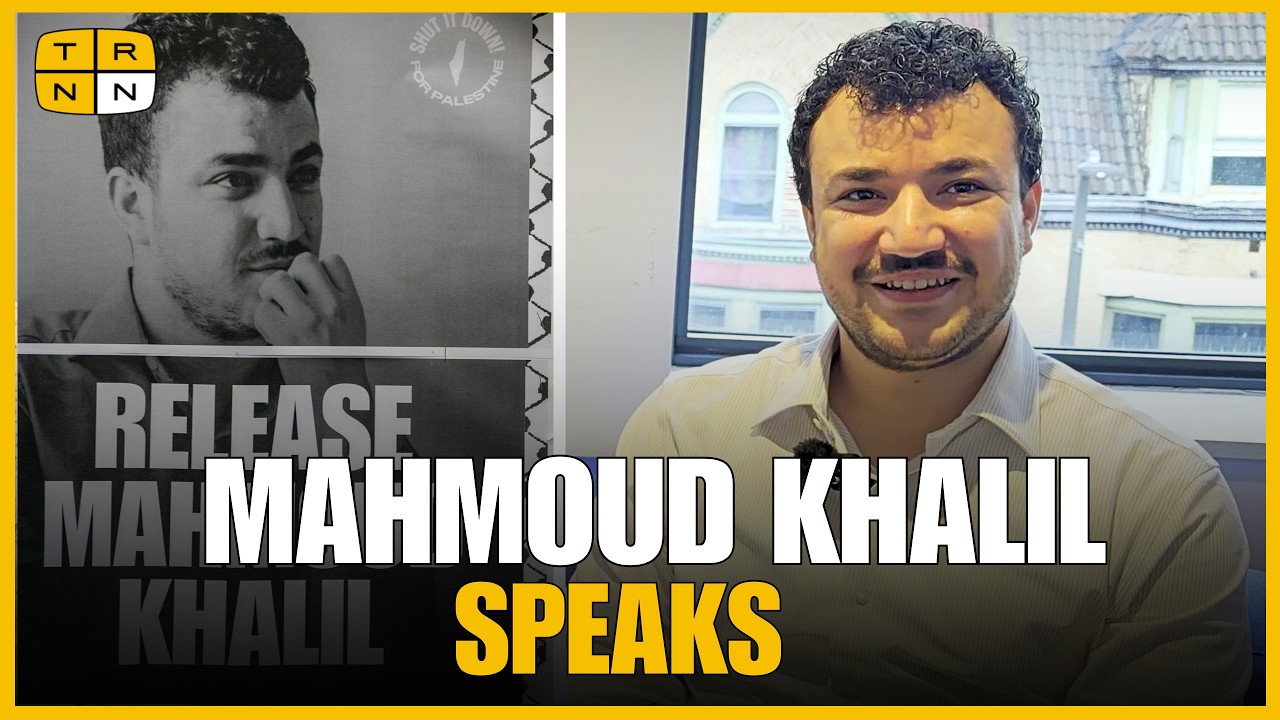
‘Resistance Is Our Only Option’: Mahmoud Khalil speaks

Maximillian Alvarez (L) and Mahmoud Khalil (R) speak at an event in Baltimore, MD on Sept. 24th 2026.

After being abducted by plainclothes ICE agents from his New York apartment building in March of 2025 and locked away in immigration jail for 104 days, Mahmoud Khalil has been freed and reunited with his family. But Khalil, a former Columbia University graduate student who was heavily involved in the student-led justice for Palestine movement, is still being targeted by the Trump administration and still faces the possibility of deportation. In this exclusive interview, TRNN Editor-in-Chief Maximillian Alvarez sits down with Khalil to speak about his new book, “No Land to Stand On,” and his continuing fight for freedom and justice.

Credits:

  • Post-Production: David Hebden
Transcript

The following is a rushed transcript and may contain errors. It will be updated.
Maximillian Alvarez:

I’m here at the Parkway Theater and I’m sitting with Mahmoud Khalil, freed political prisoner and former Columbia graduate student who was heavily involved in the student-led Justice for Palestine movement and who because of that was abducted by plainclothes ICE agents from his New York apartment building in March of 2025 and locked away in immigration jail for 104 days. But he’s here with us now. Brother Mahmoud, welcome home, man.

Mahmoud Khalil:

Thank you for having me, Max. Thank you so much.

Maximillian Alvarez:

It’s such an honor to be here with you in person. I don’t even know how you begin to answer this question, but I can’t begin without asking it. How are you and your family doing after enduring this horrific nightmare that is sadly still not over?

Mahmoud Khalil:

We’re doing all right and we’re taking it day by day, really sort of surviving under the threat of deportation at any second or worse than that, whatever this government may decide to do at any point. But our fear is part of the fear of so many families in this country who are now worried about sending their children to school. We are in September now and I know a lot of kids are worried about going to school because they’re either undocumented or their parents are undocumented. I’m thinking about just the families in Minnesota and in New York and in Texas who are now under the threat of being really deportation by this or ripping them apart. It’s not only deportation. Haitians

Maximillian Alvarez:

In

Mahmoud Khalil:

Ohio,

Maximillian Alvarez:

Latinos in

Mahmoud Khalil:

Southern California. Anyone who this administration sees as the other or sees as a threat to whatever plans they have. So in that bigger scheme of things also, at least I know my son will be fed tonight. There wouldn’t be a bomb being thrown on our house as happening in Gaza right now as we are speaking. So in the bigger scheme of things, we’re grateful. We’re grateful for the community that’s supporting us.That’s what’s keeping us going forward right now is just the level of support, the level of solidarity, the community that was built around us because of what this government has imposed on me and my family.

Maximillian Alvarez:

I didn’t plan to ask this, but as a father as well, I have to. What was it like to hold your kid that first time?

Mahmoud Khalil:

I don’t think anyone can describe that feeling. It’s just the first time I held Dean was in detention in a courtroom, in an immigration courtroom where verdicts of deportations happen, like rain daily in these rooms. So it was a little bit weird that I was able to reunite with my family in a place where families are being torn apart. But at the same time I felt victorious because that’s a moment that this government tried to steal from me. Although it was only for one hour, but felt the world to me. And of course now being with Dean, a lot of people ask me, “What gives you purpose?” And just seeing Dean and dreaming of a world where he can live in dignity and safety, inequality, just like anyone else, as an American citizen who has the same rights and responsibility as any other American citizen, regardless of his background, regardless of the ethnicity, regardless of anything, really it’s just like being a human.

Maximillian Alvarez:

And how could you not look at your kids and our children and not fight? We’re going to give this world over. We’re going to give their future over to these psychopaths, to these fascists, to these fanatical nut jobs? Of course not.That’s just not an option. But it’s really hard to put that into action on a day-to-day level when we’re being bombarded by so much terror and awfulness. I interviewed members of your former graduate student union at Columbia after you were taken. I’ve interviewed members of my former grad student union in Michigan where activists are having their homes raided by the FBI. I mean, students, community members, workers, people all over this country who are terrified to fight back or do anything because of what happened to you. But you continue to speak out. You wrote this book, No Land to Stand On. You’re here in Baltimore to speak to folks.

What do you and this book have to say to all of us out there about confronting that fear and not living in fear?

Mahmoud Khalil:

I think the fear is very real and I would be lying if I said I don’t have fear about myself, about my children, about my family. But courage is not the absence of fear. It is actually acting despite the fear. I would be lying if I said, “Oh, I’m not afraid.” Or when you are dealing with such injustice and as you’ve mentioned, just these fascist tactics and the way that they dehumanize us, whether as immigrants or whether as Palestinians or just as someone who does not agree with what this government is doing. So to take you back, I think a day after my release, I decided to go to a protest. And I usually am not that protest guy, although I was very heavily involved in the Columbia movement, but I decided to go mainly to give a message that despite all this violence inflicted upon me from the government, from the university, from the institutions and the establishment in this country, I refuse to be silent.

And now my book is out because the government tried to silence me. Or in essence, they tried to make an example out of me so you and others wouldn’t speak out. But to me, this book is a testament that I refuse to be silent. Now the government gave me a platform and they would take it with a grace and responsibility that I should take this platform to advocate for those who don’t have voices. At any moment now there’s over 70,000 immigrant in ICE detention. At every second, there’s at least 70,000 immigrants in detention. That we know

Maximillian Alvarez:

Of. Now they’re like, we don’t even know if they’re keeping proper track.

Mahmoud Khalil:

Exactly. I don’t know how many went through the administrative errors that this administration every now and then does. So really this administration tried to silence me and I refuse to be silent. And that’s why I want to give people not hope, but at least some sort of despite all this violence, you can still speak out because what we’re dealing with right now is this administration, they are bullies and what our parents teach us when a bully come to bully you, you should not – Stand up, baby. Exactly. So that’s what I’m doing right now. And part of my fight is not about staying in the US. It’s more around what happened to me is wrong and shouldn’t happen to anyone else. Even if I win my case tomorrow, I may decide to leave the day after, but that’s totally besides the main point, which is what’s happening is wrong and should be confronted.

Maximillian Alvarez:

Well, I want to end on that note because ever since you were taken, one of the reasons that people found so much hope in your story was that you continued to use your voice to advocate for others who were locked away in immigration jail, people who couldn’t speak English, people who didn’t have access to lawyers and who could get contact with the outside world. And that meant so much to so many. And of course you ended up in that jail because you were speaking out and speaking up along with millions around the country and around the world against a genocide in Palestine funded by our tax dollars. So here we are in 2026 and I’m not going to say it doesn’t feel like we’re losing everything and that it was all for naught, but I know a lot of our viewers can feel that way when they look at what’s happening to the ruins of Gaza and to the continual onslaught to erase that people from that land while back home they’re using the same tech to disappear our neighbors and family members.

So how do you put all of this in perspective and how do we continue to fight even when it feels like all is lost?

Mahmoud Khalil:

I think hope and resistance is our only option right now because this administration wants us to feel defeated, want us to feel that nothing is working. And the moment that we succumb to that feeling is the moment that they win because even if we remain silent, because I know people who were targeted and remain silent, the administration did not stop going after them because their mere existence was a problem to this administration. And that’s why I’m hopeful because I don’t have any other option. And the fact that the president of the United States came after an unknown student speaks a lot to the successes of our movement because it was impactful. It was actually changing things on the ground. It was changing public opinion in droves. That’s why the president of the United States felt the need to go after a random student to make an example out of him so that others would fear speaking out.

And that’s I think my only message in terms of why we should be hopeful because the change doesn’t happen in a day and night. It is the persistence. It is the continued resistance against all odds when you see that nothing is happening, but you continue because you believe in that. And that’s the thing as Palestinians, why we continue resisting despite everything all odds against us is that we are righteous. We know that human beings, regardless of their faith and nationality, they can see that in us and they would support us. So that’s why we have a strong belief in our cause that it’s a righteous cause. We don’t need millions and billions of dollars to convince public opinion about the righteousness of our cause or not. It’s just like we need to present it and that’s it. And that’s what they are fearing right now.

That’s why you see the establishment in this country is scrambling to control the media, to buy TikTok and to buy CNN and all of these just because we are actually winning and they know they will not be able to stop us. That’s why they’re bringing these all new tactics about, in my case, they’re weaponizing the immigration law from 1952. And in other cases they’re bringing all these alien laws.

Maximillian Alvarez:

They’re

Mahmoud Khalil:

Reaching back to laws from centuries ago. Yeah, 1800 something because they’re looking for tools because we’re actually winning and the public is with us. But also with immigrants, an average American sees that an immigrant is a benefit to this country, whether it is through the work that they do, whether through the diversity they bring. And this country was built upon, I mean recently, I don’t want to stoke about the enslaved people and how this country was built on their shoulders, but recently also immigrants were part of this.

Maximillian Alvarez:

You and I wouldn’t be sitting here if that wasn’t true.

Mahmoud Khalil:

Absolutely. And we absolutely must be conscious of that. And that’s the other thing about why I’m writing the book now, not in five years, because this is urgent. A lot of people ask me, “How would you look at this moment in 20 years?” I don’t want to look at it in 20 years. I want to do what I can do right now to stop it because what’s happening right now is a stain on the constitution, is a stain on the American consciousness, is a stain on every human value that we stand or we say we stand for. And I don’t want to look in 20 years and say, “Oh, we should have done something because it’s happening now in our backyards. An ICE detention center is at least 30 minutes from any one of us right now. If you drive 30 minutes, you would find an ICE detention center.

There’s one

Maximillian Alvarez:

Five minutes that way. Thank you so much, bro.

Mahmoud Khalil:

No, thank you so much,

Maximillian Alvarez:

Max.

Mahmoud Khalil:

Appreciate it, man.
💾

“I'm hopeful because I don't have any other option. And the fact that the President of the United States came after an unknown student speaks a lot to the successes of our movement”
  •  

Police Lectured About Farage in Islamophobia Talk

Police officers were lectured about Nigel Farage in a publicly funded talk about Islamophobia, with the Reform leader's doubts about Muslims' ability to adhere to British values compared to a racially aggravated offence.

The post Police Lectured About Farage in Islamophobia Talk appeared first on The Daily Sceptic.

  •  

Frugal EU states seeking budget cuts are shooting their own regions in the foot

Six frugal countries this week circulated a letter threatening to block a deal on the next EU budget unless “hundreds of billions” of euros in spending was cut. 

The Dutch and Germans, ever the most zealous keepers of the frugal flame, want to redirect what remains away from regional and farming funds, towards innovation and defence.  

For those following EU fiscal debates, this song will sound familiar. So-called ‘net payer’ countries have never liked sending money to the economic periphery. 

In 2013, after a year of bickering, Britain, Germany, and the Netherlands killed a European Commission plan for a five percent increase and pushed through the EU’s first-ever budget cut, with farm and cohesion funds taking the biggest hit.

But new research suggests that the frugals may be shooting themselves in the foot. 

Last week, Olga Ivanova, a senior researcher at the Netherlands Environmental Assessment Agency (PBL), published a study in Dutch economics journal ESB calculating what EU money actually does for the Netherlands’ 12 provinces. 

And, for most of them, she found that the growth effect of EU investment outweighed their share of what the Netherlands paid into the budget. 

Using PBL’s own economic model, she traced 10 EU funding streams between 2013 and 2024, from Horizon science research grants to farm subsidies and regional development money. 

Across the Netherlands as a whole, provinces get back about 99 cents in extra growth for every euro paid out to the EU budget.

This article continues, but the full version is available only to EUobserver.com subscribers. Visit account.euobserver.com/membership

  •  

Danny Tommo Denied Bail

Danny Tommo, the anti-migrant activist, has been denied bail after appearing in court for allegedly slashing a migrant boat in the Channel – despite the five suspects in the RAF Fairford terror plot all being bailed.

The post Danny Tommo Denied Bail appeared first on The Daily Sceptic.

  •  

‘Like the Gestapo’: ICE brings terror and violence to Maryland

Still image of eyewitness Soolah speaking with TRNN about ICE raid in Frederick, MD on Sept. 14th 2026. Credit TRNN (R). Still image of ICE agents beating peaceful protestors in Frederick, MD. on Sept. 4th, 2026. Photo courtesy of Hagerstown Rapid Response Network (L).

Residents are shaken and demanding answers after ICE agents terrorized a quiet, suburban neighborhood in Frederick, Maryland, earlier this month. On September 4, federal agents swarmed the Tasker’s Chance neighborhood in West Frederick, invaded the home of one family, and eventually left without making any arrests. ICE agents were filmed beating peaceful protestors and menacingly driving their unmarked cars onto sidewalks and private property while local police officers stood by and watched. In this on-the-ground report, TRNN takes you to the very spot in Frederick where these terrifying events transpired, and we speak with an eyewitness who saw everything.

Credits:
Videography: Maximillian Alvarez
Post-Production: Cameron Granadino

Transcript

The following is a rushed transcript and may contain errors. It will be updated.

Reporter 1:

Breaking story in Frederick. We have been told that ICE agents have been camped out in the Taskers Chance neighborhood. Neighbors

Reporter 2:

Say ICE has made a move on one home under the cover of night. That’s exactly what you are seeing right now.

Soolah:

There were protestors next to me. There are protestors across the street. And then I turned to this car and it was right here. And then I heard out of the side, the siren go off and I turned and here’s this car coming at me from on the sidewalk. By

Reporter 1:

Friday night, protestors were chanting on the sidewalk, also trying to block the street and a home they believed ICE was targeting. That’s when Santos says ICE became aggressive. This video shows when an ICE officer drove up on the sidewalk toward protestors. Santos and local activist Sula Kemp say ICE officers became violent.

Maximillian Alvarez:

I’m standing here in Frederick, Maryland, just over an hour west from Baltimore, and I’m standing in a quiet residential neighborhood where just over a week ago, ICE agents in unmarked cars swarmed this neighborhood, surrounded the house behind me. ICE agents are on video beating peaceful protestors with their batons, menacingly driving their cars onto the curbs into the directions of protestors. And I’m standing here with Sula, who is a local resident of the area and who was here the night of those events. Sula, thanks so much for joining me here. Can you walk listeners through what happened and what you saw that night?

Soolah:

Okay. I was asked by as many people were asked to come and help. So I had that time and I was able to come down and I saw different ICE peoples actually around this whole neighborhood. They were in different pockets and locations. I hadn’t even come to this street. I had gone to two streets down and then the next street right over and you could see where they were positioned. And then there was also one that was driving around that seemed to be sort of intimidating by chasing cars, which I thought was really strange behavior because you didn’t see anything on the vehicle to say who it was. It didn’t say police, it didn’t say anything. Didn’t have any markings on the cars. So we didn’t know who they were. Assumed they were ice and their lights were just kind of on. They’re just sitting in their cars parked on the street.

So then there was a call later. I was there about three hours and then somebody had just said they need people on this street specific. So I was like, “Well, I’ll just walk over.” And they said that there was one car that had a spotlight on protestors. And what they were apparently trying to do on this street was just line the sidewalk, a public space with protestors. So that was fine. So I was like, “All right, let me take my phone and go to the other side and get the perspective of the spotlight being put onto the protestors.” So I did that. I first took a bit of video from this side as an observer and then went to the other side and stood there and watched just cars. And then all of a sudden as I was standing on the sidewalk, I heard a siren go off, just a few bursts of it.

And I happened to turn my camera and there was a car on the sidewalk coming toward me and telling me, and everybody who’s on the sidewalk, “Move, move, get out of the way.” At some point they sa, “You’re impeding a federal investigation.”

Maximillian Alvarez:

We’re talking about a car driving up

Soolah:

Right

Maximillian Alvarez:

Here where we’re standing.

Soolah:

Right. On the sidewalk, public space.

Maximillian Alvarez:

These are people’s houses. They’re driving onto people’s property.

Soolah:

Well, and if you or I had done that, what would’ve happened to us?

Maximillian Alvarez:

Yeah, they’d throw my ass in jail.

Soolah:

Reckless endangerment of people. And it was crazy. They stopped for a hot second and I jumped onto the grass at first and then I stepped back onto the sidewalk because I was like, “I don’t know what’s happening.” Just a natural response. I was like, “Wait a minute, I’m on the sidewalk.” So I stepped back on the sidewalk and then he started really coming. He did not stop and he sped up toward me first and then there was a woman behind me. And then there was another person, another protestor that they did hit and started to push with their car.

Maximillian Alvarez:

So you were standing right around here?

Soolah:

I was right here. And there was a car there. There was a car across the street. So I had my camera on this car. There were protestors next to me. There were protestors across the street. And then I turned to this car and it was right here. And then I heard out of the side, the siren go off and I turned and here’s this car coming at me from on the sidewalk. I jumped over to here. He passed me. He hit another protestor and then pushed that protestor out of the way. And then the protestors at some point have been sitting down, just linked arms, sitting down, singing and chanting right in the middle of the street, which is fine. They can do whatever they want to.

Maximillian Alvarez:

Community members surrounding one of their neighbor’s homes to try to protect them. Yeah. And then agents of the state come in and start beating the hell out of them for it.

Soolah:

Yeah. So they sat in the road and then they did get up and did that protection. And it’s a typical thing that people do to blockade, but peacefully, they didn’t do anything. They just linked arms. You can’t do much when you’re linked arms. And it’s a whole group of people. And then all of a sudden Frederick Police were coming and then they moved up to the porch area and started beating them up.

Maximillian Alvarez:

You and I are standing here right now on this quiet residential street. People who are watching this may have only seen a small slice of this street on line. What they can’t see is that this is the quietest residential street you can imagine. There’s nothing happening here. You would think with all the ICE agents and vehicles that were here last week that this would be a hotbed of overrun with criminals and criminal activity. It’s just families and houses.

Soolah:

Yeah, it’s very quiet here. You can drive around here and people are working, people are doing their lives and that’s it. So it’d be like every day storm into your everyday world in your suburban America, and that’s what happened. And when you look at now, it’s quiet, it’s peaceful here. So they brought a sense of terror and they brought a sense of unsafety. So yeah, the main set of protestors, they’re stationed on the sidewalk here right at the stop sign. There’s a whole group here. And then there was an ice vehicle here. There was an ice vehicle behind –

Maximillian Alvarez:

Right behind

Soolah:

Where I’m standing. Right behind where you’re standing. Because they started sort of parading in, it looked like a little ice parade. And I’m just joking about that because it was so weird. Once they got into the house, I could hear up in one of the rooms them banging stuff around. And another protestor had asked me, who was observing, asked me, “Do you hear that?” I was like, “Oh yeah,” because it was loud. I don’t know how the house was on the inside when this was all done, but this was a lot. And then I actually went and looked through the back part. They had a shed or some kind of building out in the back there, and you could see these guys go into the back and they started searching. They didn’t know how to get open the shed or whatever because it’s big, but eventually they did.

And it was eerie. It was very eerie.

Maximillian Alvarez:

And it feels reminiscent of the Gestapo view.

Soolah:

It does because who bangs down a door like that? Who goes through looking for whomever? And apparently they didn’t take anybody. I don’t understand why it all happened in the first place.

Maximillian Alvarez:

Yeah. So all that terror for nothing?

Soolah:

All that terror for nothing.

Maximillian Alvarez:

How do you move on from something like this? How does this community move on? How are folks responding?

Soolah:

I know right now they’re collecting donations for the people who were beaten because they had hospital bills. And it’s really hard because I don’t know them all personally. I came because just like anybody else, we don’t know each other half the time, but we do see something in need. So they do have a donation set up for them specifically. I am not sure what the next steps are. I know that I have personally tried to contact the attorney general’s office a few times. I haven’t heard anything yet. And I’m hoping that somebody who’s above, in some kind of governmental stance or something, because who feels safe going to the police when you watch the police stand there? There’s the question. I didn’t report anything to them, even though I had a vehicle come at me on the sidewalk. I doubt anybody else is really going to feel comfortable or safe, and maybe that’s the point.

Maybe that was the point too. I can’t speak for that, but it’s just what goes in my head, why would I contact you to tell you what happened? So I want to go higher up.

Maximillian Alvarez:

And so when you were here and you had federal agents and unmarked cars and you also had local police, did you feel in that moment like the police were there to protect you?

Soolah:

No. And the wild thing too is on the car that, at least this car that came at me, you couldn’t tell who they were because their license plate was tinted out. There’s nothing identifying that either. So who are these people? I don’t know if Frederick Police had some kind of directive because I don’t know what even drew them out here in the first place. Maybe they heard that people were getting beat maybe, but they were here before that happened. So maybe they have to take a specific. I don’t know. I literally do not know. And if that’s the case, if they have a specific directive or they don’t know what to do, maybe that needs to be talked about. Maybe something like this, when you have unmarked cars doing reckless behavior with their cars, doing reckless behavior towards other people, what is the community’s protect and serve folks going to do for the community?

Yeah.

Maximillian Alvarez:

Who are you protecting? Who are you

Soolah:

Serving?

Maximillian Alvarez:

Not us.

Soolah:

There are tax dollars going into all of this too, that people are going to step back and go, “Wait a minute, what’s happening here? I’m putting money toward them and it’s whoever was called out here for that night.” Who knows? I don’t know. But at the end of the day, who are they protecting?

💾

ICE agents terrorized this suburban neighborhood in Frederick, Maryland, and beat peaceful protestors while local cops just watched. We speak with an eyewitness who saw and filmed everything.
  •  

From Yemen to Ethiopia and Europe: Everything is connected

The sudden escalation in fighting between Ethiopian federal forces and Tigrayan rebels in the Afar region, raising fears of a new civil war, is part of a wider potential cascade effect from Yemen that could hurt Europe. 

After months of low-level skirmishes, Ethiopian officials have accused the Tigrayan People’s Liberation Front of launching an all-out offensive against federal government positions in northern Ethiopia. 

So what does that mean for Europe and the EU? More than you might think. 

Ethiopia’s economy is particularly vulnerable following the capture of Yemen’s entire Red Sea coastline by the Houthi rebel group, who now control the Bab el-Mandeb Strait. 

Some 97 percent of Ethiopia’s trade is via Djibouti’s port. There is now a real prospect of a series of regional chain reactions and the prospect of civil war in northern Ethiopia is one of them. 

This doesn’t directly impact on the EU’s interests, but it could soon enough.  

Ethiopia is not alone in facing major new threats posed by the Houthis’ advances.  

Egypt, a vital ally for the EU on migration control, faces its own economic crunch as it relies on Suez Canal tolls as a main source of foreign currency. That could lead to more financial demands being made of Brussels 

For their part, Djibouti and Somalia face major security concerns. Djibouti hosts military bases for a handful of EU countries, as well as the EU itself, and the United States, China, and others.  

Somalia, meanwhile, has a longstanding African Union (AU)-led security mission aimed at combatting the Al-Shabaab terror group to which the EU is the biggest single donor.

And the AU mission is particularly reliant on the EU after the Trump administration pulled the plug on US financial support earlier this year. The Houthis already supply at least $100m (€88m) in arms to Al-Shabaab, a smuggling operation now made easier by its coastal advances. 

For the moment, the EU is offering only modest additional support. Last week, EU governments agreed to double financial support for the Djibouti Armed Forces to €20m under the European Peace Facility. 

This article continues, but the full version is available only to EUobserver.com subscribers. Visit account.euobserver.com/membership

  •  

Ukrainian Soldiers, Potential Mercenaries: Have Gun, Will Travel!

Who has thought about what happens to an army when the SMO ends—but the warriors remain? Ukraine is already providing an early glimpse of what may become a much larger post-war phenomenon: highly trained combat personnel, particularly special-forces and other specialists, carrying their battlefield skills beyond the borders of the countries, in which they acquired […]
  •  

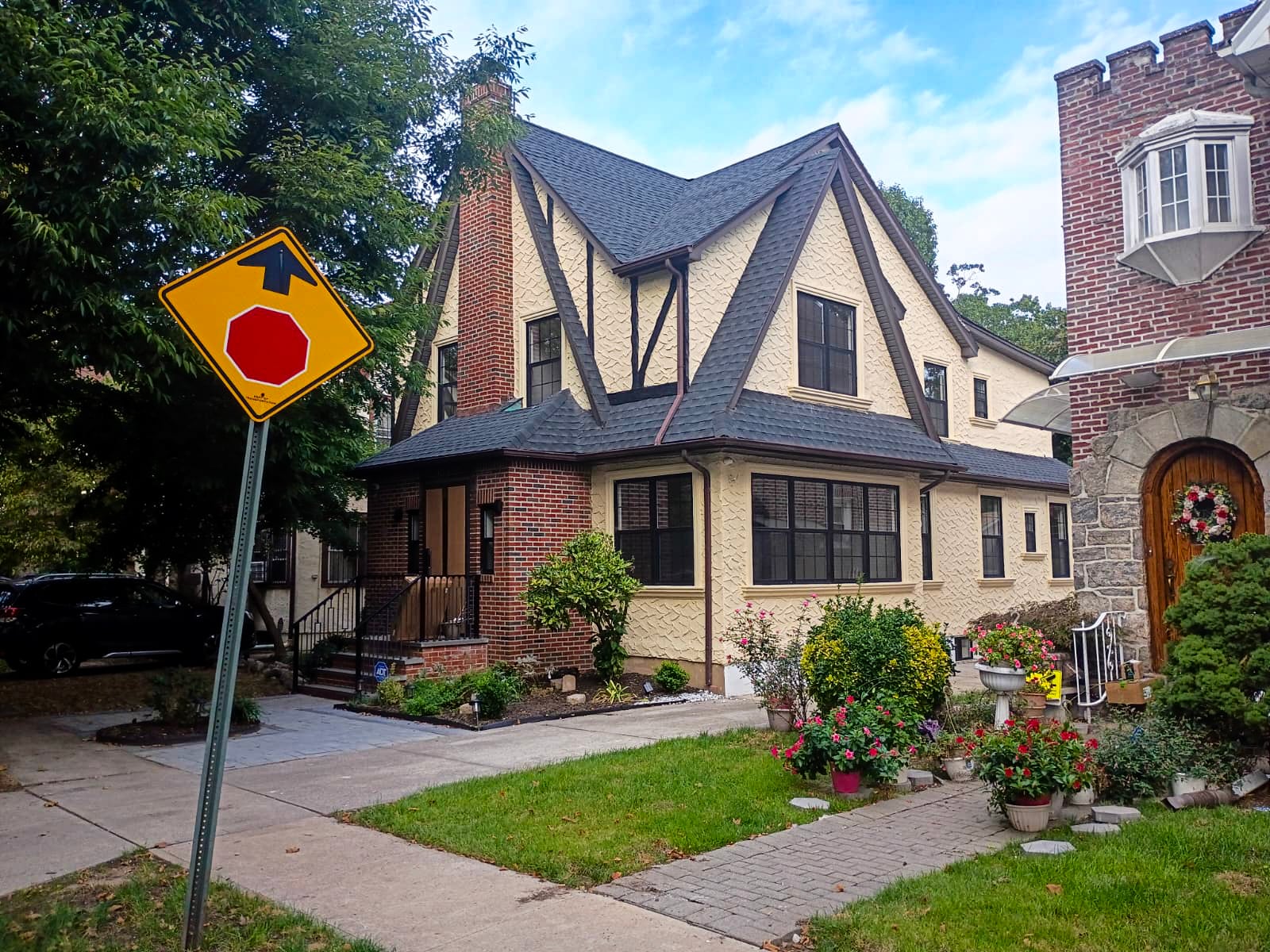
From Airbnb to stray cats: Trump’s childhood home in Queens sells for $2 million

The Jamaica–179th Street subway stop in Queens is only about a 10-minute walk from Wareham Place. But an abyss separates the two places. From the crowded low-rise blocks of busy shops, where spotting a white resident is difficult, to single-family homes with manicured yards on quiet streets where cars rarely pass. “Different parts of Queens were rough; this was an oasis,” Donald Trump said in a 2015 New York Times interview. This “oasis” is where the man who is now president of the United States lived as a child, in a house an anonymous family has just bought for $1.93 million.

Seguir leyendo

© Luis Doncel

The house in Queens where Donald Trump lived until age four, last Thursday.
  •  

Faillite de la mission européenne au Kosovo

Des crimes impunis, un déficit extérieur colossal, une partie de la population fuyant un chômage de masse, des responsables rêvant tout haut de « Grande Albanie » : le Kosovo semble livré à ses démons. Le patronage de l'Union européenne ne lui a pas permis de décoller, et des affaires de corruption entachent la mission internationale visant à instaurer un Etat de droit.

En moins d'un an, près de cent mille Kosovars auraient tenté de rejoindre l'Union européenne. Le flux a grossi avec l'arrivée du printemps. Chaque jour, des familles entières, parents, enfants, vieillards, traversent la Serbie pour gagner la frontière hongroise. Soixante mille Albanais du Kosovo auraient demandé des passeports serbes pour obtenir un visa européen, selon les autorités de Belgrade.

« Sept ans après la proclamation d'indépendance et la mise sous tutelle du Kosovo par l'Union européenne, c'est la débâcle », nous affirme M. Andrea Capussela, qui fut jusqu'en avril 2011 directeur des affaires économiques du Bureau civil international (International Civilian Office, ICO), l'une des principales missions déployées au Kosovo. « La situation est pire qu'avant l'arrivée de la mission européenne », ajoute l'expert italien, qui vient de publier un brûlot sur la politique européenne dans les Balkans (1). Selon lui, cette situation ne met pas seulement en cause les investissements de l'Union européenne dans le pays — plus de 4 milliards d'euros sur la période 1999-2013 —, mais aussi la crédibilité de sa politique étrangère.

Depuis l'automne dernier, la responsable de la diplomatie européenne, Mme Federica Mogherini, tente d'éteindre l'incendie qui gagne la mission européenne pour l'instauration de l'Etat de droit au Kosovo (Eulex). Celle-ci, décidée en février 2008, vise à renforcer les institutions judiciaire et policière. Dotée d'un financement annuel de 111 millions d'euros, elle mobilise mille six cents personnes afin, notamment, de combattre la corruption et la criminalité organisée. Mais plusieurs de ses responsables sont soupçonnés de malversations, tandis que l'institution est accusée d'avoir couvert ces dérapages.

« Pendant un an, ils ont non seulement enterré, mais aussi compromis l'enquête », dénonce Mme Maria Bamieh, par qui le scandale est arrivé. Cette procureure britannique travaillait pour la force d'intervention indépendante chargée des affaires criminelles au sein de la mission européenne. Dans un rapport de 2012, elle a averti ses supérieurs de soupçons de corruption visant notamment deux hauts responsables : le juge italien Francesco Florit, alors président de l'assemblée des juges d'Eulex, et la procureure en chef Jaroslava Novotna. La magistrate britannique fonde ses allégations sur les écoutes de conversations téléphoniques entre l'ex-secrétaire du ministère de la santé du Kosovo, M. Ilir Tolaj, poursuivi pour corruption et fraude fiscale en 2010, et des intermédiaires. Ceux-ci l'assuraient être en contact avec ces deux juges, capables de se montrer compréhensifs (2)…

« Nos chefs dînent avec des mafieux »

La procureure évoque d'autres cas de compromission en lien avec Eulex. En particulier ceux concernant le très influent Fatmir Limaj, ancien ministre des transports, inculpé pour crime organisé et détournement de fonds, ou M. Enver Sekiraqa, un petit chef mafieux de Pristina mis en cause dans une affaire d'attentat à la bombe. Mais, curieusement, son rapport disparaît et aucune suite n'est donnée.

En octobre 2014, le principal quotidien du Kosovo, Koha Ditore, se procure des éléments du dossier et obtient un entretien avec Mme Catherine Fearon, la conseillère politique du nouveau chef d'Eulex, l'Italien Gabriele Meucci. Le journaliste Vehbi Kajtazi affirme que, lors de leur entrevue, Mme Fearon l'a sommé de livrer ses sources et l'a menacé de poursuites judiciaires. En dépit de ces pressions, le journal commence à publier une enquête dans son édition du 27 octobre 2014. Ces révélations provoquent la suspension… de Mme Bamieh ! « Epuisement au travail », décrète M. Meucci, qui reproche aussi à la Britannique d'avoir donné des informations aux médias. Rentrée depuis à Londres, Mme Bamieh accuse ses supérieurs d'être trop proches de puissants hommes politiques au cœur d'enquêtes criminelles : « Comment pouvons-nous remplir notre mission quand nos chefs dînent avec des mafieux et des politiciens kosovars soupçonnés de corruption ? »

Devant le scandale, Mme Mogherini ordonne une enquête, confiée au professeur Jean-Paul Jacqué, ancien directeur de l'Institut des hautes études européennes de Strasbourg. Cet expert en droit international a dirigé entre 1992 et 2008 le service juridique du Conseil des ministres de l'Union européenne, l'institution qui a mandaté Eulex. Dans son rapport, rendu public le 14 avril dernier, il ne considère pas qu'une affaire aurait été étouffée ; il invoque plutôt une série d'erreurs administratives. Bruxelles n'a pas été suffisamment informé du document détaillant les soupçons au sein d'Eulex, et ses cadres supérieurs auraient tardé à enquêter car ils ne trouvaient pas le contenu des interceptions téléphoniques « particulièrement crédible ». Il juge pourtant qu'une enquête « aurait dû être ouverte dès le départ », après l'avertissement de Mme Bamieh à sa hiérarchie. Evoquant les menaces contre Kajtazi (3), Jacqué estime que la conseillère du chef de la mission « a mis en garde le journaliste contre la divulgation d'informations concernant des cas criminels, puisque ce serait une infraction en vertu de la loi kosovare ».

Pour Kajtazi, on ne peut pas considérer le rapport de Jacqué comme indépendant : « Il conclut que je n'ai pas été l'objet de menaces. Il s'agirait d'une erreur de communication. La vérité est que la mission Eulex m'a bien menacé de poursuites si je venais à publier un article », nous affirme le journaliste. « Jacqué a essayé de minimiser la possibilité que la mission soit impliquée dans la corruption. »

Le rapport se démarque néanmoins du discours officiel des institutions européennes, qui présentent la mission au Kosovo comme un modèle de reconstruction. Le professeur constate de graves dysfonctionnements au sein de la représentation de l'Union et décrit une corruption « omniprésente » dans le pays, en précisant que « le secteur judiciaire ne fait pas exception ». Sept ans d'une action visant à restaurer l'Etat de droit n'ont pas suffi à éradiquer les prévarications, mais « il devait être néanmoins possible d'établir les fondations d'un système capable de combattre la corruption ». Selon lui, Eulex — dont le mandat s'achève en 2016 — perdra son sens si on ne parvient pas à la réformer. Mais son retrait lui apparaît prématuré, car le système judiciaire local ne semble pas capable de traiter certaines affaires.

Dans une lettre ouverte à Jacqué, Mme Bamieh juge son rapport décevant et imprécis. Elle y voit davantage une note interne qu'un travail indépendant. « Les transcriptions [des écoutes] indiquent que l'argent a bien été versé », souligne-t-elle. Elle déplore que l'enquête ne concerne pas la procureure en chef Novotna. Elle regrette en outre que celle visant M. Florit n'ait été lancée qu'en 2013, après la réception d'informations provenant des services de renseignement allemands, et non sur la base de son propre rapport interne, transmis à ses supérieurs en 2012. Elle cite également les noms d'anciens collègues qui l'ont soutenue et qui ont dû quitter Eulex.

Après les errements du Tribunal pénal international pour l'ex-Yougoslavie (TPIY) (4), et toujours dans l'attente de suites judiciaires au rapport du procureur américain Clint Williamson sur les trafics d'organe et les crimes de l'Armée de libération du Kosovo (UCK) (5), l'affaire Bamieh révèle l'ampleur des compromissions européennes : « On parle de la corruption, du crime organisé, mais on ne dit jamais que c'est un régime autoritaire semi-consolidé que nous avons créé, et qu'une élite de criminels issue de l'UCK vole l'argent public et s'accroche au pouvoir », s'enflamme M. Capussela, qui a travaillé durant quatre ans pour l'Union européenne au Kosovo.

Principale force de la guérilla soutenue par les Occidentaux dans le conflit de 1999, l'UCK a pris le pouvoir après les bombardements de l'Organisation du traité de l'Atlantique nord (OTAN) et la capitulation de la Serbie. Les enquêtes de la procureure du TPIY, Mme Carla Del Ponte, puis de M. Dick Marty, au nom du Conseil de l'Europe, ont montré que cette milice s'était livrée à des exactions contre des civils serbes ou roms et contre ses opposants politiques albanais. Une partie de ces meurtres, enlèvements, séquestrations et tortures ont eu lieu dans les premières années de l'après-guerre, en présence des troupes de l'OTAN et de la Mission d'administration intérimaire des Nations unies au Kosovo (Minuk), dont le Français Bernard Kouchner fut le premier dirigeant.

« La mission n'était pas capable de défendre les civils », estime M. Christopher Decker, venu au Kosovo en 1999 comme membre de l'International Crisis Group, avant de rejoindre l'Organisation pour la sécurité et la coopération en Europe (OSCE). « La police de l'ONU était mal équipée et pas du tout préparée. C'était facile pour l'UCK de se livrer à la violence », explique cet Américain qui a passé douze ans sur place. « La communauté internationale répète les mêmes erreurs : on intervient militairement, puis on laisse des éléments criminels prendre le pouvoir, ce qui empêche l'instauration de l'Etat de droit », se désole-t-il.

Dès le début, on a épargné l'élite locale, les « gros poissons », car cela pouvait déranger l'ordre établi et provoquer une instabilité. Mme Del Ponte affirme non seulement que les plus hauts dirigeants de l'UCK représentaient un danger pour l'accomplissement de sa mission, mais aussi qu'ils pouvaient mettre en péril tout l'édifice du processus de paix dans les Balkans : « Hashim Thaçi [premier ministre de 2008 à 2014] et Agim Ceku [de 2006 à 2008] étaient en mesure de déclencher des violences en Macédoine, dans le sud de la Serbie et dans d'autres régions, en appelant les minorités albanaises rebelles aux armes (6). »

« Au début, j'étais surpris par la négligence, l'incompétence et la paresse qui régnaient au sein de la mission. J'ai compris plus tard que des choix politiques expliquaient en partie cette attitude », raconte M. Capussela. « Ceux qui voulaient européaniser le Kosovo se sont balkanisés », estime le politiste kosovar Belul Beqaj. S'y ajoute une culture de l'impunité propre à toutes les missions internationales, puisque leurs membres échappent aux poursuites judiciaires. « Leurs employés ne sont pas justiciables. Les pays ne veulent pas que leurs représentants nationaux soient jugés », nous explique Mme Sian Jones, spécialiste du Kosovo à Amnesty International.

Poursuites contre des innocents

Dans son livre, M. Capussela dresse une liste des défaillances flagrantes d'Eulex, qu'elles soient économiques, financières ou relatives aux droits humains. Ainsi, la mission n'a pas enquêté sur les affaires de corruption liées aux privatisations (télécommunications, ciment), aux constructions de routes, à l'expropriation des terres, à la fraude électorale, à l'intimidation des journalistes, aux assassinats politiques, ni sur certains crimes de guerre.

Pis, Eulex a parfois poursuivi des innocents. La mission a par exemple gardé en détention pendant quatre mois le gouverneur de la banque centrale sans révéler les charges pesant contre lui — qui furent abandonnées par la suite. Pour l'économiste italien, qui a alerté Eulex sur des accusations qu'il jugeait peu crédibles, l'homme a été arrêté parce qu'il s'opposait aux intérêts de personnages puissants.

Avec la corruption et l'impunité qui règnent au Kosovo, les tensions montent. Les politiciens, l'homme fort du pays Hashim Thaçi en tête, détournent l'attention vers l'extérieur : « Grâce à leurs réseaux, ils peuvent provoquer des émeutes en Macédoine, où la situation est très instable, contre les Serbes du Kosovo, ou contre les représentants de l'Union, estime M. Capussela. Ils enverraient ainsi un message à Bruxelles et à Washington : “Vous franchissez la ligne rouge.” » Pour M. Decker aussi, la classe dirigeante kosovare sait tirer parti de la violence : « S'il n'y avait pas eu d'émeutes en 2004 [contre les Serbes et les autres minorités], il n'y aurait pas eu autant de pressions pour l'indépendance. »

L'incapacité d'Eulex, après celle de la Minuk, à établir une justice fonctionnelle ne pose pas seulement la question des investissements européens dans la mission — plus d'un milliard d'euros —, mais aussi celles du respect des droits des citoyens kosovars et du maintien de la paix dans la région.

Voir en ligne : /2015/06/OTASEVIC/53059

(1) Andrea Lorenzo Capussela, State-Building in Kosovo : Democracy, Corruption and the EU in the Balkans, I. B. Tauris, Londres, 2015.

(2) Julian Borger, « EU's biggest foreign mission in turmoil over corruption row », The Guardian, Londres, 7 novembre 2014.

(3) « Un journaliste d'investigation menacé par la mission européenne au Kosovo », Reporters sans frontières, 31 octobre 2014.

(4) Lire Jean-Arnault Dérens, « Justice borgne pour les Balkans », Le Monde diplomatique, janvier 2013.

(5) « Statement by the Chief Prosecutor of the Special Investigative Task Force (SITF) on investigative findings », 29 juillet 2014. A partir de ce rapport, le Parlement du Kosovo avait jusqu'à la fin mai pour mettre en place le tribunal spécial devant juger ces crimes, qui sont hors du mandat du TPIY.

(6) Carla Del Ponte, La Traque, les criminels de guerre et moi, Editions Héloïse d'Ormesson, Paris, 2009.

  •  

Savak

PNG - 9.1 kio

Dans les mémoires iraniennes, ce mot évoque à lui seul la tyrannie de l'ancien régime. C'est l'acronyme de l'Organisation pour le renseignement et la sécurité nationale, autrement dit la « police » du chah de 1957 jusqu'à sa chute en 1979. Cette institution tentaculaire fut impitoyable avec toute forme de contestation de la monarchie, y compris culturelle, et s'illustra par ses méthodes expéditives et son recours à la torture.

Voir en ligne : /mav/209/A/69912
  •  

Germany: Trans police officer on trial for raping 14-year-old girl in fast food toilet stall, possessing hundreds of child and animal abuse videos

A trans person on trial in the German state of Bavaria on charges that include the alleged rape of a teenage girl and the possession of a large collection of child sexual abuse material while serving as a German police officer.

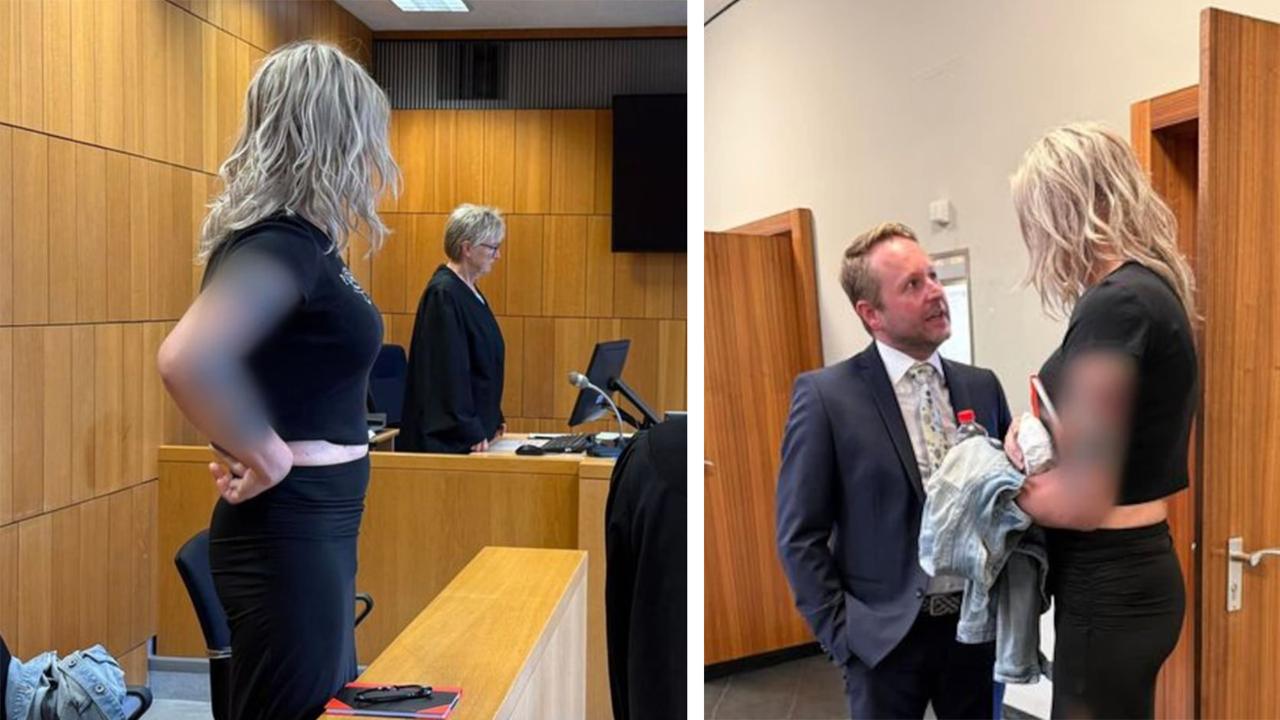
The trial of the 55-year-old defendant — who is a male-to-female trans person and who has been removed from duty — began today, Tuesday morning, at the Traunstein Regional Court, according to German news outlet Rosenheim24.

Prosecutors accuse the trans ex-officer of raping a 14-year-old girl in the toilet stall of a fast food restaurant and of possessing hundreds of files depicting the sexual abuse of children. Investigators say the material includes violent acts against children, with the youngest victims described as about three years old.

Photos of the trans ex-officer in the courtroom show a tall individual with long bleach-blonde hair, a large arm tattoo, and tall platform shoes.

The defendant also faces an accusation of producing animal pornography. The trans ex-officer is alleged to have made videos where the defendant had sex with a dog, along with several sexual partners. It remains unclear if any of these other individuals have been identified.

The most serious charge concerns an incident in August 2025. Prosecutors say that during an outing with a friend, the defendant raped the friend’s 14-year-old daughter in the restroom of a fast-food restaurant.
The defendant is also accused of sending a pornographic WhatsApp message to the girl, who was roughly 40 years younger than the defendant.

The court has scheduled four days of hearings. A verdict could be delivered on Oct. 8.

The post Germany: Trans police officer on trial for raping 14-year-old girl in fast food toilet stall, possessing hundreds of child and animal abuse videos appeared first on Remix News.

  •  

A Lake the Size of Connecticut Has Been Sealed Under Antarctic Ice Since Before Humans Existed

In February 2012, after twenty years of nearly uninterrupted work, a Russian drill broke through the last stretch of ice over East Antarctica and reached something no human had ever touched: the surface of a lake sealed shut long before our species existed. Water surged up the borehole, mixed with the kerosene and Freon used […]

  •  

The Pentagon Crisis: Trump Wants Regime Loyalty

The Pentagon’s extraordinary use of polygraph tests on senior military personnel is not merely a hunt for leakers; it is a warning that loyalty to the president may increasingly matter more than loyalty to the institution, accelerating the ultimate American downfall. When Loyalty Becomes the Test There is nothing inherently unusual about a US administration […]
  •  

Greece acquires two second hand FREMM frigates from Italy for €460 million

Greece and Italy signed in Rome on Tuesday, September 8, the implementation agreement for the transfer of two Italian Navy FREMM frigates, ITS Carlo Bergamini (F 590) and ITS Virginio Fasan (F 591). The acquisition of the two former Italian Navy FREMM Bergamini-class frigates for approximately €460 million, is significantly strengthening the Hellenic Navy’s surface […]

The post Greece acquires two second hand FREMM frigates from Italy for €460 million appeared first on Keep Talking Greece.

  •  

This Bottle of Dijon Mustard from Costco is Crazy Hot. A Months-Long Investigation Revealed the Surprising Reason Why.

Jake Edmiston, a business reporter for the Toronto Star, thinks highly of his mustard chicken recipe. So when one batch goes over like a lead balloon, he checks his namesake ingredients and finds that his usual glass pot of Maille Dijon Originale is extraordinarily spicy—a fact he confirms, good reporter that he is, by conducting a blind test with a professional taster. In no time, Edmiston is on the floor of one of Canada’s largest mustard mills, trying to stay dry and avoid mustard dust burns(!), and peppering Unilever, Maille’s owner, with questions. This isn’t exactly a case for Benoit Blanc, but Edmiston’s investigation takes a few surprising turns and drops some serious knowledge on glucosinolates on the way. Every ingredient is in harmony here.

“Do a little dollop,” she said, then turned her back so I could do my work in secret.

I spooned the mustard from my jar onto a plate, and some from another jar of Maille I found in the grocery store that morning. She tried the sample from my jar first and sputtered a little. 

“It’s quite spicy,” she said.

I asked her how much spicier it was than the control jar. 

“Like, 10 times,” she said.

  •  

Draconian police measures, protests & traffic restrictions as PM visits Thessaloniki

Draconian police measures, traffic restrictions and protests are scheduled as Prime Minister Kyriakos Mitsotakis will be visiting the International Fair (TIF) on Saturday and will deliver a speech traditionally announcing relief measures for the society. The operational plan of the Hellenic Police features increased policing, security and traffic measures, more than 3,500 police officers on […]

The post Draconian police measures, protests & traffic restrictions as PM visits Thessaloniki appeared first on Keep Talking Greece.

  •  
❌