❌

Reading view

Inside Ukraine’s First Combat Deployment Of Robotic Amphibious Vehicles

Taking a break from fighting Russians in the Kostiantynivka sector of the eastern Donetsk region, the commander of a Ukrainian uncrewed ground vehicle (UGV) unit spoke with us about innovations in the use of these systems. One was the first deployment of a UGV specifically designed for amphibious operations to deliver supplies to frontline troops in areas impeded by water obstacles. Large areas of the front line are bisected by rivers and wetlands, and the country has many other small waterways and marsh areas. As we have frequently reported, the use of UGVs by both Ukraine and Russia has exploded as the ubiquity of aerial attack drones makes it far too dangerous for human battlefield movements.

In an exclusive interview with TWZ, the commander of the 93rd Separate Mechanized Brigade’s “Alter Ego” UGV unit, who goes by the call sign “Electric,” offered us unique insights into the challenges of developing amphibious UGVs and how they were deployed.

In the first of two parts, Electric talks about why Alter Ego developed amphibious UGVs – including modifying a Triton variant for this – and how the unit made them work. The second part features his insights into using heavy ‘bomber drones’ to drop UGVs behind enemy lines for kamikaze raids. In addition, a representative of Brave1, Ukraine’s weapons technology accelerator, spoke about developing these systems at scale.

Some of the questions and answers have been slightly edited for clarity.

Q: How did the need for amphibious UGVs for logistics operations first come up?

A: We had this idea for a long time, but recently one of the units of the Armed Forces asked for our help to solve this problem, so that the UGV could overcome water obstacles.

There was a crucial need for this kind of means at certain parts of the front, but the units that are located there didn’t have the capacity by themselves to solve this task. So our battalion was asked to solve this problem because we are one of the most experienced units in terms of UGVs.

A first-ever logistics mission on an amphibious UGV: the robot covered 40 kilometers across land and water.

Operators of the "Alter Ego" unit (93rd Brigade) deployed the robotic system across mixed terrain. Facing water obstacles, the UGV seamlessly switched to swimming mode to… pic.twitter.com/rH8waq04a4

— BRAVE1 (@BRAVE1ua) September 29, 2026

Q: How long did it take to design and test the amphibious UGV, and what went into that process?

A: The whole process from development to battle deployment took less than three months.

Q: What did you have to do to make this work?

A: First of all, we looked at amphibious solutions that were on the market, not only in Ukraine, but in the world, and we took two separate approaches. One was taking one of the main UGVs that our unit is using on the ground, and we made it amphibious. And the other approach was that we took one of the solutions that was on the market that already had amphibious capabilities, and we solved several disadvantages that it had. And at the moment, we are using both.

Q: What did you have to do to make the UGV amphibious, and then what were some of the obstacles that had to be overcome to get this operational?

A: First of all, we have to explain that there are different solutions on the market that kind of work on the testing ground — like they can swim, they can drive on the ground, and in the vision of the manufacturer, they are working. But the fact is that these solutions are not ready for the reality on the front line, which is often very different from what is on the testing ground.

And the second point is that the unit has its own workshops where people work near the front line, and the experts, the engineers that work there, they have a very high level of competence to evaluate different solutions and select the one that has potential. And that’s what’s completely different between this unit and everyone else, like manufacturers and others who are working on these solutions, because they don’t understand what’s needed on the battlefield.
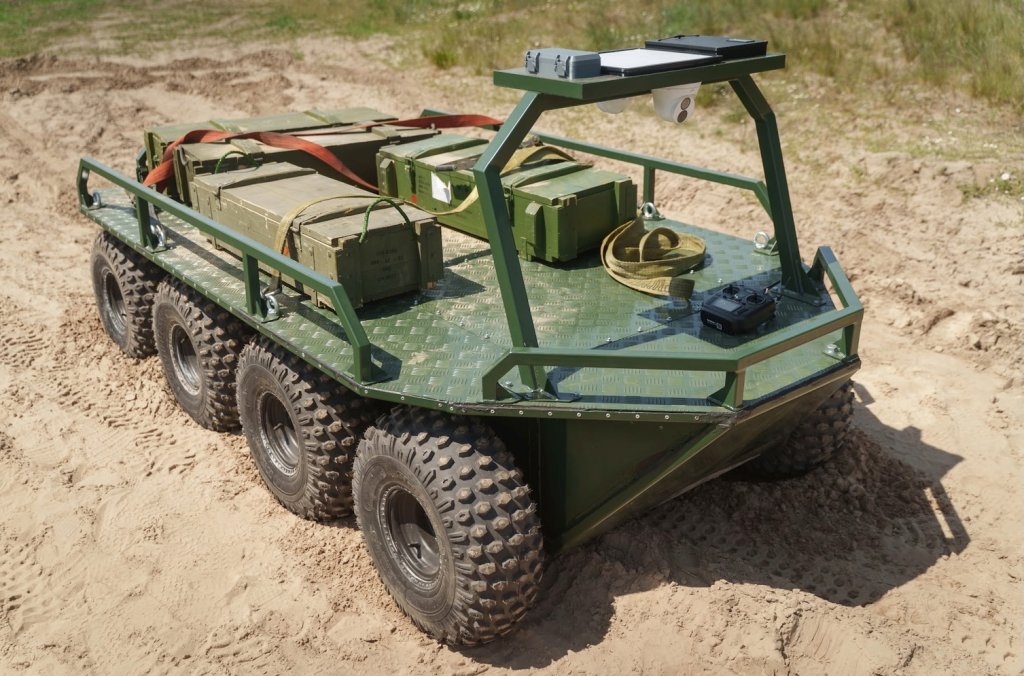
The Alter Ego unit’s uncrewed amphibious ground vehicle (UGV). (Brave1)

Q: So what did you have to change to make it work?

A: Regarding the amphibious one, basically the unit changed almost everything that that UGV had, starting from electronics, the software, the waterproofing, the communications – we basically changed everything. Regarding the one that we already used on the ground, we basically tried to retain what was allowing it to be an effective UGV on the ground, and we added waterproofing and specific mechanics, so that it can work in the water environment.

Q: You mentioned communications. What kind of communications did you add?

A: The communication means that was installed on the UGV by the manufacturer was not sufficient at all. Basically, it didn’t have enough quality for the battlefield situation. It was not working. But we already have our own communications that we were working on, and we have a lot of experience because we have been working for a long time in this UGV area. So we basically helped to install a sufficient level of communications on this UGV.

Q: So how does the amphibious UGV communicate with the controller? Does it use Starlink or some other satellite communications system for navigation?

A: This is satellite navigation, but not only. Satellite navigation is a part of this communication system.

Q: What are the other parts?

A: It’s better not to talk in detail about the other part of the communication system.
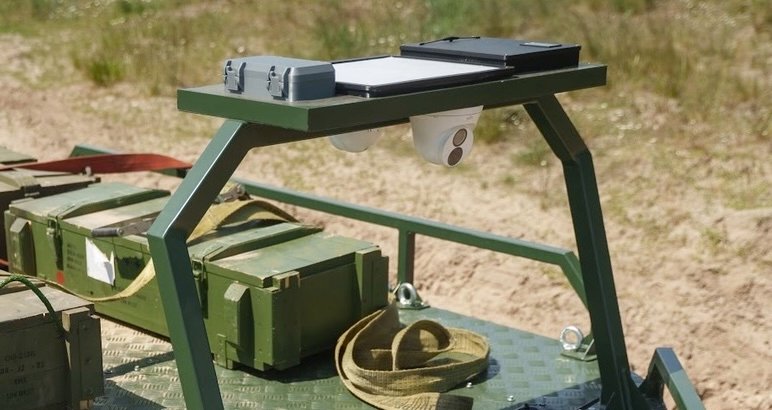
Triton amphibious UGV communications and camera systems. (Brave1)

Q: There were probably a lot of different missions that could have been used for this first amphibious UGV logistics delivery. Why was this particular mission chosen?

A: The Alter Ego unit has so much experience in terms of UGVs, and not just experience of using UGVs, but the experience of being the first in the world. We had one of the first evacuation missions, we had one of the first strike missions using UGVs, the paratrooper UGV, and now the amphibious UGV. So basically, we have the systems to make it work for the first time when nobody knows how to conduct this mission.

Q: No, I mean why did this particular mission get chosen to be the first one?

A: There are certain places on the front line where we have water obstacles that prevent logistics from being done by UGV. At the moment, UGVs are carrying hundreds of tons of logistics, probably the most compared to any other means on the front line, but before this, these water obstacles would prevent UGVs from providing logistics for those parts of the front, and that need can’t be fully satisfied by UAVs or other means. That’s why we did this mission with the amphibious UGV, and now our task here is to scale this technology and provide this logistics system for other similar parts of the front where there are water obstacles.
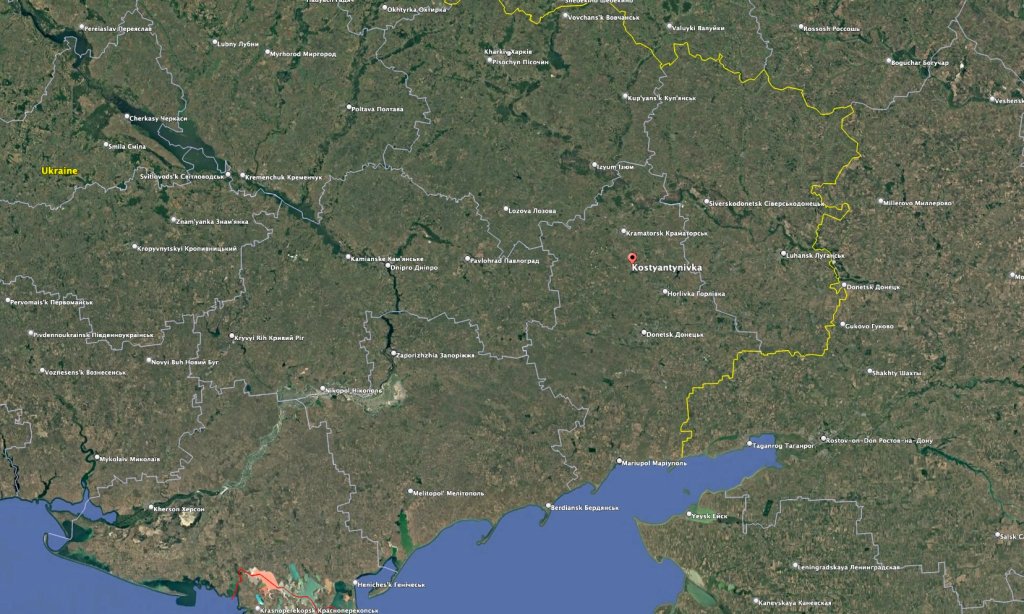
Kostiantynivka, Ukraine. (Google Earth)

Q: Tell me about where and when this mission took place and what it was like to watch it unfold.

A: So unfortunately, we can’t provide information about when and where this operation took place. But regarding how it went and what we felt, this was another big challenge, because this is something that wasn’t done before, and nobody thought this is real. So this was quite difficult, and to tell the truth, the mission didn’t succeed on the first try, actually, and it required a lot of effort in terms of planning, preparing, engineering, and basically it required 100% effort from everyone involved in that mission.

Q: How many times did it fail before, and what went wrong?

A: We had one failed attempt. The reason for failure was a certain technical problem. After that, we analyzed what went wrong, and we worked on solving those issues. Basically, it’s something that nobody had tried to do, it’s kind of hard to know what can go wrong before you actually try it. So the best way to find a solution like that is to try and then iterate on that attempt and make it better and better and better.

Also, I would like to add that although this was the first successful mission regarding an amphibious UGV, it’s not that there was no work on that before that. We were actively talking to and collecting the experience of everyone who was working on these kinds of missions before, and that was also a reason why this mission succeeded.

Q: How far did the amphibious UGV go for this mission?

A: So the UGV went 40 kilometers one way, and then it returned. So probably around 70 kilometers in total, and it carried food and other supplies.

Q: Did this UGV come under Russian fire on this mission?

A: Yes, and it survived.

Q: How does the UGV switch from water to land operations?

A: So the UGV has two separate control systems, one for water and one for land, and basically it switches to the one that is required at the moment. That’s how it can operate in both environments.

The Alter Ego unit’s uncrewed amphibious ground vehicle (UGV). (Brave1)

Q: Is that autonomous, or is that something that the controller at the base has to do as they watch the UGV on its mission?

A: At the moment, the operator fully controls the UGV manually. And basically, before, the operators of UGVs only knew how to move them on land, but now they also had to learn how to move them in the water. So not only was the technology itself developed, but we also had to prepare the operator and come up with tactics for this UGV.

Q: Did you use AI on this mission in any way, and if so, how?

A: We didn’t use AI.

Q: Have there been other missions using amphibious UGVs?

A: Yes.

Q: Can you say how many and what was delivered?

A: No.

Q: Is this designed only for logistics missions, or will it be used in the future for strike missions, either as a one-way attack system or as a platform for machine guns or other weapons?

A: We can use it in different ways in the future.

Q: Mud season is fast approaching, when much maneuvering becomes impossible or severely degraded because of how difficult it is to move in the thick, oozing slop. Will your amphibious UGVs work in the mud?

A: I think it can operate in the mud in the same way it operates in the water.

In the next segment of our interview, Electric talks about using bomber drones to deliver UGVs behind the lines, and a Brave1 representative talks about how the organization is working to develop these systems at scale for wider use.

Contact the author: howard@twz.com

The post Inside Ukraine’s First Combat Deployment Of Robotic Amphibious Vehicles appeared first on TWZ.

  •  

JACARDI – Reducing the burden of cardiovascular diseases (CVDs) and diabetes

For the EU Screening Week 2026, during which the European Commission proposed a Council Recommendation on cardiovascular health checks,HaDEA spoke with Benedetta Armocida, coordinator of the Joint Action JACARDI co-funded by the EU4Health programme, about the importance of preventing cardiovascular diseases (CVDs) and diabetes, identifying risks early and ensuring that interventions reach the right people […]

  •  

NATO chief says ‘no imminent danger’ but rearmament of Europe continues in full swing

More rearmament talks are underway in Brussels as European politicians continue building an increasingly tense anti-Russian discourse. On Wednesday, September 30, defense ministers and industry representatives joined the Euronews Defense and Space Summit, focusing on the bloc’s growing defense expenditure and member cooperation.

The summit took place after weeks of allegations of hybrid attacks on EU members, which pushed the already tense rearmament narrative permeating the European political establishment up a couple more notches. It also followed, by only a couple of days, the Council of the EU’s announcement of the next phase of five European Defense Projects of Common Interest (EDPCIs) – projects that “allow EU countries to work together on major defense initiatives that are too large or too complex for individual countries to develop on their own.”

Read more: “Militarization of rules and minds” in Europe threatens workers and welfare

While separate, the two events shared several points in common, starting with a focus on increasing coordination between EU countries to arm more efficiently – and spend the billions of euros planned for defense over the coming years. They also emphasized sections of the military sector to receive the most attention – including drones and military capacities in Eastern Europe. 

This geographical focus goes beyond EU members, expanding to – at least – Ukraine and Moldova. Most EDPCIs – like the Drone and Counter-Drone European Resolve (DECODER) and the Eastern Flank Watch – list Ukraine as a partner. Ukrainian arms entrepreneurs were also present at the summit in Brussels, including leading figures from Fire Point, one of the country’s most prominent arms companies.

Very imminent investments into arms

While NATO Secretary General Mark Rutte stated in his summit intervention that there is “no imminent danger” to the alliance members’ territories, he and others did not hold back in offering anticipations of an unstable period.

Belgian Minister of Defense Theo Francken, for one, anticipated “more hybrid threat actions” and an overall “dark winter for Europe” – a scenario he seems to want to address by spending more on arms and cutting social services, as he has explicitly stated on numerous occasions.

“Europe has been very good in investing in soft power, in social security,” Francken said. “And it’s beautiful to have a pension system, to have social welfare systems when someone gets sick, when somebody loses his job – we have everything. But when there’s a war or there’s hybrid threats, we don’t have anything.”

Considering the significant amount of money European countries have already invested into armament, his assessment that “we don’t have anything” is inaccurate at best. 

It also remains contested on a regular basis on the streets of many European cities, where trade unions, students, and peace movements continue to protest against austerity budgets that aim to provide for war.

Europe needs a policy that builds security with its neighbors

In addition to large-scale demonstrations against social security and labor cuts in France’s proposed 2027 budget and student strikes against conscription in Germany last week, mobilizations are expected to grow over the coming months – including an international youth strike in November.

“We reject the militarization of our societies and support the young people who are refusing it,” the Stop ReArm Europe coalition wrote on September 23. “Thousands of high school students and university students across Europe are rising up to refuse militarization and the return of conscription.”

Read more: German students say ‘we don’t want to go to war’

“Nearly 20 million children in the EU – one in four – live at risk of poverty or social exclusion,” the group added. “Meanwhile, governments have committed to military spending that the EU’s own Defense Commissioner, Andrius Kubilius, puts at €7 trillion by 2035.”

“The trillions earmarked for militarized security will leave us staring down the barrel of a gun and indebted to global financiers,” Stop ReArm wrote, calling for a solidarity- and care-based alternative. “This must go hand in hand with a non-aligned foreign policy that resolves conflicts through diplomacy, upholds international law and human rights, and builds common security for all: security with our neighbors, not against them.”

  •  

How Ukraine became a cash cow for Europe’s war elite 

Is Ukraine becoming an “Eastern European Israel” for the EU? Sociologist and author Volodymyr Ishchenko joins Rania Khalek and Zoe Alexandra to discuss Ukraine’s eroding sovereignty, who profits from keeping the fighting going, and whether an off-ramp still exists to a war with Russia now costing Ukraine 27,000 casualties per month, according to Poland’s prime minister.

Europe is pushing record defense budgets and warning that Russia could test NATO within months. But this month Ukraine launched its largest drone attack yet on Moscow, Washington approved a $2.68 billion air defense sale, and the EU unblocked €6.6 billion in military aid. Is Europe readying to defend itself from a Russia with imperialist ambitions? Or preparing for a forever war, where profiteers abound and working-class Ukrainians do the fighting and dying at the direction of a state they’ve come to hate?

Ishchenko describes an emerging vision for Ukraine amongst Kyiv’s power brokers: a militarized, ethnonationalist frontier state serving as outsourced security for the European Union against Russia. Sound familiar? 

“Maybe NATO at this point is not an alliance for security, but actually a source of insecurity in Europe.” 

Watch full episodes of BT Live, join breakthroughnews.org as a member today!

  •  

Russia’s Jet-Powered Shahed Drones Are Quickly Evolving As Ukraine Scrambles To Blunt Their Damage

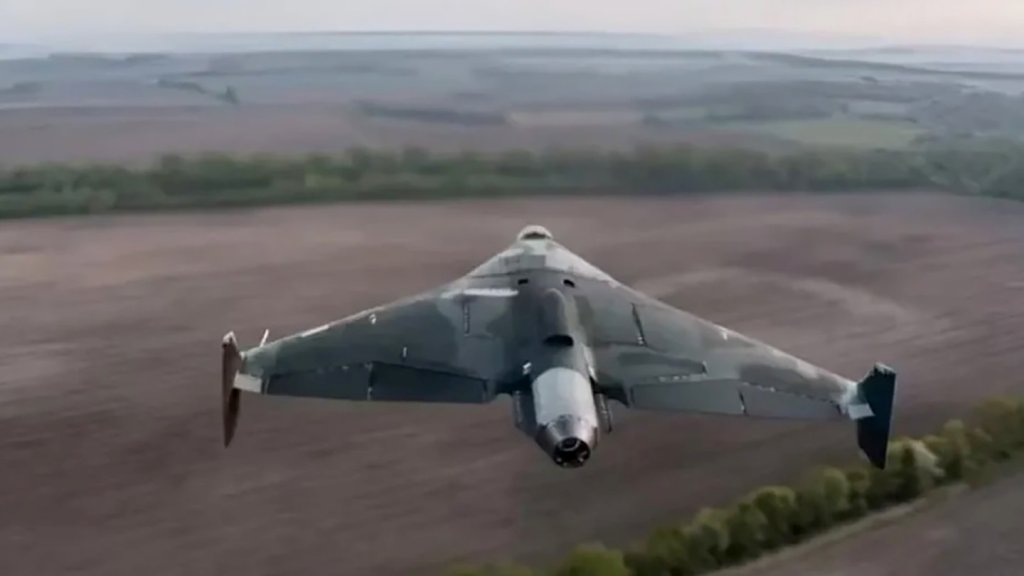
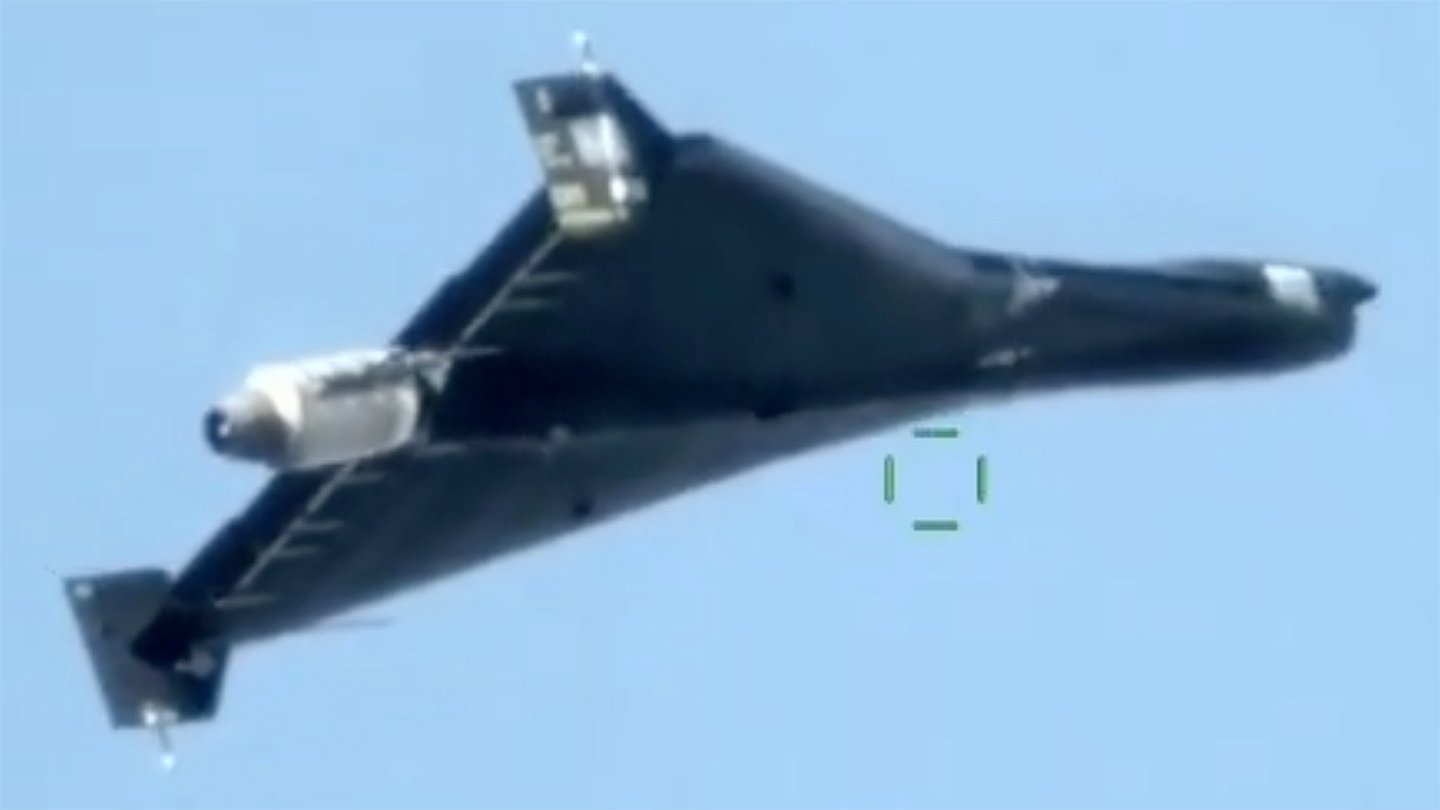
Over the summer, Russia intensified its use of jet-powered one-way attack drones. Flying faster and higher than the propeller-driven Shahed-136s (or Geran-2s as Russia calls their copies) that have been terrorizing Ukraine for years, these weapons are far harder to intercept. We predicted this would happen over three years ago when Iran first introduced its jet-powered Shahed-238, which itself was an adaptation of the Shahed-136. Initial variants of Russia’s copy of that drone, called the Geran-3, first appeared over the skies of Ukraine in early 2024. By mid-2025 they were becoming a real problem. Since then, the latest higher-performance variant of this weapon, the Geran-4, has added great strain to Ukraine’s dwindling air defense resources and is the source of increasing levels of destruction across the country. 

The Geran-4 appeared last May, according to the Ukrainian Defense Intelligence Directorate (GUR). Unlike the Geran-3, which largely used a modified Shahed-136 airframe, the new drone has one purpose-built for higher-speed flight because “the structural strength [of the older model] was insufficient for high-speed flights, and even less so for maneuvering under high G-loads,” GUR noted.

We get our best look yet at the deadly Russian Geran-4 jet-powered drone.
A Geran 4 attempting to be intercepted by a Ukrainian drone. (Via X) (GUR)

The Geran-4’s new airframe features a blended air intake and overall “improved aerodynamic efficiency, a reinforced structure, and a turbojet engine with increased thrust,” GUR stated. “The wings are now permanently integrated into the center wing section. To reduce air resistance, the number of technological hatches on the fuselage has been minimized.”

In an overnight attack across Ukraine that lasted until Monday, “Russia launched 165 drones overnight, 79 of them jet-powered, the Air Force reported. Air defenses downed or suppressed 112, and hits were recorded at 14 locations.” You can see the aftermath of one of those attacks in the following video.

We’re under constant attack🚨🚨🚨Unfortunately, just a few minutes ago, a jet-powered Shahed drone hit a residential building 💔. #Odesa
Burn in hell, ruzzians🤬 pic.twitter.com/EXTWM1yVIN

— Antoninaodesa NAFO (@antoninaodesssa) September 28, 2026

Recently, Radio Free Europe/Radio Liberty (RFE/RL) got its hands on one of these weapons. Its report offers the best view yet of what makes these drones so dangerous.

The Geran-4 is “a new, faster version of the attack drone that is proving harder for Ukrainian air defenses to intercept,” the report states. “We were given a rare opportunity to literally take this surviving drone apart and find out what makes it so much faster, more maneuverable, and more accurate.”

“The first part we uncover is the turbojet engine. It is one of the Geran-4’s most significant upgrades, allowing the drone to fly at altitudes of up to eight kilometers,” the report explained. “That’s twice as high as the older propeller-powered drones. According to specialists, drones equipped with this type of engine have already flown from Russia-occupied Crimea to Lutsk in northwestern Ukraine, a distance of more than 700 kilometers.”

RFE/RL takes apart a Russian Geran-4 drone to uncover what makes the jet-powered unmanned aerial vehicle (UAV) faster, harder to intercept, and capable of operating deep inside Ukraine — from its turbojet engine and advanced camera to foreign-made communications and navigation… pic.twitter.com/WGNdlpS9w1

— Radio Free Europe/Radio Liberty (@RFERL) September 25, 2026

“This engine allows it to fly at speeds of up to 450 to 500 kilometers per hour over Ukrainian territory. Sometimes even faster,” RFE/RL proffered. “It flies fast and high, which is why it is still difficult to intercept.”

As the camera pans down over the engine, the reporters noted that while it is made in China, “we have investigated cases where these engines were assembled in Russia using Chinese components.”

The next component examined was the drone’s camera.

“It has several modes: daylight, night vision, and infrared,” the report stated. “The camera offers 10-times optical zoom and up to 32-times digital zoom, allowing the drone operator to view terrain from an altitude of eight kilometers.”

“If there is a relay station and it is connected to the network, an operator sitting in an automated workstation somewhere in Bryansk, Oryol, or Crimea can control the drone and guide it to its target,” RFE/RL stated.

“Once the drone is inside Ukraine, regular cellular SIM cards can help keep it connected,” the report continued. “We also found two GSM modems inside this drone. Using SIM cards, they can transmit the Geran-4’s location over mobile networks, allowing the operator to track it in real time.”

Back in 2024, we explained how Shaheds fitted with 4G modems and SIM cards from Ukrainian telecom firms, combined with a camera installed on the drone and the ability to use wireless networks, could be one of a number of avenues that would transform the Shahed into a relatively long-range reconnaissance and strike asset capable of beyond-line-of-sight real-time operations. This could help plug what at the time was a glaring gap in the Russian arsenal, although the stability of its connectivity is still unknown and providing man-in-the-loop guidances in real-time for strikes may be beyond the capabilities of this configuration, at least consistently.

Regardless, most of these drones do not have cameras or modems, they fly to a specific set of coordinates and dive on a target before detonating.

The following images offered a glimpse into that system.

👀 Inside Russian Shahed: power bank and a SIM card of a Ukrainian operator pic.twitter.com/D5LGBMJfIv

— MAKS 26 🇺🇦👀 (@Maks_NAFO_FELLA) November 29, 2023

Drone specialists who have investigated the remains of these weapons told the outlet that they had found SIM cards “from Ukraine, Russia, Belarus, and even some European Union countries. And the deeper we go inside the drone, the more foreign-made components we find.”

The RFE/RL team also found a Chinese mesh modem the Russians use to help guide the drone. 

“It’s responsible, among other things, for radio and video communications. Essentially, this device allows the drone operator to see the video feed from the Geran-4 almost in real time,” RFE/RL stated. “The modem has a range of up to 300 kilometers and can also act as a signal relay. That means several drones flying near each other can relay and strengthen the signal, making it possible to control them over much greater distances.”

The discovery of the Chinese mesh modem illustrates something we reported earlier this year: “For some time now, Russia has been working on a man-in-the-loop (MITL) control capability for the Shahed/Geran, a feature that was confirmed when they started to appear with cameras and cellular modems, something TWZ explored in detail at the time. These developments allow the drone to be connected to an operator. Standard Shaheds fly autonomous routes to pre-planned targets on autopilot with no man-in-the-loop control. They are ‘fire and forget’ weapons.“

“Meanwhile, the range at which MITL can be achieved has been steadily increased. At first, the drones were adapted to exploit patchy cellular networks to provide additional connectivity when available. More recently, Shaheds have been flying with antennas allowing for direct line-of-sight control close to the front lines. This allows them to hit targets dynamically like an FPV drone, while packing a much heavier punch and being able to loiter for long periods of time. You can read all about this development here. Now, the datalink range is being extended using airborne signal relays, possibly creating a mesh network with multiple line-of-sight links.”

درون”Geran-4“ توقف محرك الـMicro-turbojet قبل الانقضاض على الهدف،
وتتَّخذ وضعية الانزلاق البطيء، ربّما لتوفير الوقود او لدقة افضل اثناء البحث بالعدسة البصرية.
ايضاً يظهر بوضوح هوائيات الارسال Mesh Antennas
اثنان مثبَّتان على الذَّيل، أحدهما موجّه الى الاعلى والاخر الى الاسفل. pic.twitter.com/cQIyHhvbmm

— TACTIX ™ (@Tactixtm) September 27, 2026

Finally, the Ukrainian journalists found something else we have long reported on. Like many other Russian weapons, the Geran-4 even contains components made in America.

“Despite international sanctions, a significant portion of its components are still coming from abroad, highlighting gaps in global export control enforcement,” RFE/RL showcased. “We just opened up the drone’s onboard computer, and these circuit boards contain components made by a U.S. company. The markings on this component are partly worn off, but you can still see the manufacturer, Texas Instruments.”

“According to the specialists, what is actually Russian-made here is mainly the drone’s body and its assembly. This particular drone was manufactured and assembled at Alabuga, a major Russian drone production site. According to Ukraine’s military intelligence, Russia is now producing around 3,000 Geran-4 and Geran-5 drones a month at Alabuga and other facilities across Russia.”

Satellite images of the site first emerged in 2023, which you can see below.

Satellite images of the factory producing Iranian kamikaze drones Shahed-136 in Yelabuga, Tatarstan.#russia #Ukraine pic.twitter.com/07HBMwcGCs

— Dr. Khaled Alfaiomi (@Alfaiomi) November 15, 2023

As if the Geran-4 drones were not challenging enough for Ukraine, Russian Geran-5 jet-powered drones are equipped with “a DSMAC (Digital Sensor Module for Autonomous Navigation) module for navigation using reference images of the Earth’s surface, similar to the X-101 missile,” the Ukrainian technology monitoring channel Polkovnyk GSh reported on Telegram. DSMAC allows for a weapon to navigate without any external help from global positioning satellites. The Tomahawk also uses this system. You can read all about it and how AI embedded in Shahed models will be the next leap in true autonomy far beyond the front lines, even for hunting and killing targets of opportunity, in our special feature linked here.

In addition, Russia has installed mesh repeaters on these weapons for radio signals so that video of the attacks can be “recorded (and immediately transmitted),” presidential adviser on defense technology Serhii Beskrestnov, known as Flash, said on Telegram.

The Russian military is now capable of acquiring real-time, high-quality BDA of its strikes with Geran-type OWA-UAVs/cruise missiles in downtown Kyiv.

In the footage below, we can see the moment of a Russian strike with Geran-5 cruise missile on the "Inkom" business center… pic.twitter.com/mPx4Kf9tmH

— Status-6 (@Archer83Able) September 27, 2026

Though these jet-powered drones are causing major problems for Ukraine, the country is finding a way to combat them.

One way is by using Ukrainian Air Force F-16 Vipers to shoot them down, which you can see in the following video.

The moment a Russian jet-powered "Shahed" drone is shot down by an F-16 fighter jet using its M61 Vulcan cannon. pic.twitter.com/gU72HJTXUa

— WarTranslated (@wartranslated) September 23, 2026

The Russian jet-powered drones were largely outrunning the drone interceptors Ukraine began using with great success against the piston-driven Shaheds. Those interceptors were not only saving lives, but they were also saving money because they cost a tiny fraction of far more expensive, higher-end munitions like the PAC-3 MSE fired by the Patriot system or the AIM-120 Advanced Medium-Range Air-to-Air Missile variants fired from the National Advanced Surface-to-Air Missile System (NASAMS) air defense launchers.

Seeking a more efficient and effective defense, Ukraine adapted by fielding higher-performing interceptor drones that are purpose-built to take on the jet-powered Russian munitions. Still, the engagement window for hitting the Russian drones is small, and these are more expensive to build. However, they will remain far less costly and faster to acquire than surface-to-air missiles.

In his speech earlier this week at the U.N. General Assembly, President Volodymyr Zelensky claimed that “our soldiers have already successfully tested four new jet-powered interceptor drones against Russian jet-powered Shaheds. So we are scaling up production.”

It is unclear exactly which interceptors the Ukrainian president was talking about; however, other types designed to take on Russian jet-powered Gerans have become public. One of them is the Sting S, a variant of the bullet-shaped Sting interceptor drone made by the Ukrainian Wild Hornets drone company.

On Sept. 19, the company posted a video on X claiming that “a crew from the 1020th Anti-Aircraft Missile Regiment took down a Russian Geran-5 using the new STING S. This drone is faster and carries a larger explosive payload than other Geran variants.”

TWZ cannot independently verify these claims.

STING S takes down a Geran-5 jet-powered drone-missile ❗💥

The crew from the 1020th Anti-Aircraft Missile Regiment took down a Russian Geran-5 using the new STING S. This drone is faster and carries a larger explosive payload than other Geran variants.

Big thanks to the… pic.twitter.com/Eg0rQgd1tL

— Wild Hornets (@wilendhornets) September 19, 2026

When we asked for more details, Wild Hornets told us “that the tests are going well. About a dozen enemy ‘Geran-4′ jet-powered strike UAVs have already been shot down, as well as several ‘Geran-5’ models, just in the last few days. We should note that at this stage we are talking about only the first results of combat testing within a few select units.”

The Sting S “is a high-speed quadcopter-type interceptor,” the Wild Hornets spokesperson added. “When choosing this model, we took into account that the solution should be inexpensive, easy to use, and quickly scalable.”

“Furthermore, most of the targets during combat testing have been destroyed using ‘Hornet Vision Ctrl’ remote control technology,” the spokesman stated. Wild Hornets claims the system provides low-latency image transmission, long-range communication, and resistance to electronic warfare.

100 remote interceptions in 100 seconds: Hornet Vision CTRL in action 🔥

Since deployment, Ukraine’s Defense Forces have remotely destroyed 1,000+ enemy targets using the system.

All thanks to the skill of crews taking down enemy drones with STING interceptors every day 🫡 pic.twitter.com/9sUthdjsvF

— Wild Hornets (@wilendhornets) September 3, 2026

“We expect this will allow us to rapidly scale up the deployment of the new interceptor once mass production begins,” the spokesperson noted.

As we have frequently noted, Russia and Ukraine continuously create new weapons and ways to defeat them. The jet-powered Russian drones, and Ukraine’s newest interceptors designed to destroy them, are the latest examples of a seemingly endless weapons evolution cycle in this war.

Contact the author: howard@twz.com

The post Russia’s Jet-Powered Shahed Drones Are Quickly Evolving As Ukraine Scrambles To Blunt Their Damage appeared first on TWZ.

  •  

British Police Arrest Men Driving Toward U.S. Bomber Base In The U.K. With Suspected Explosives

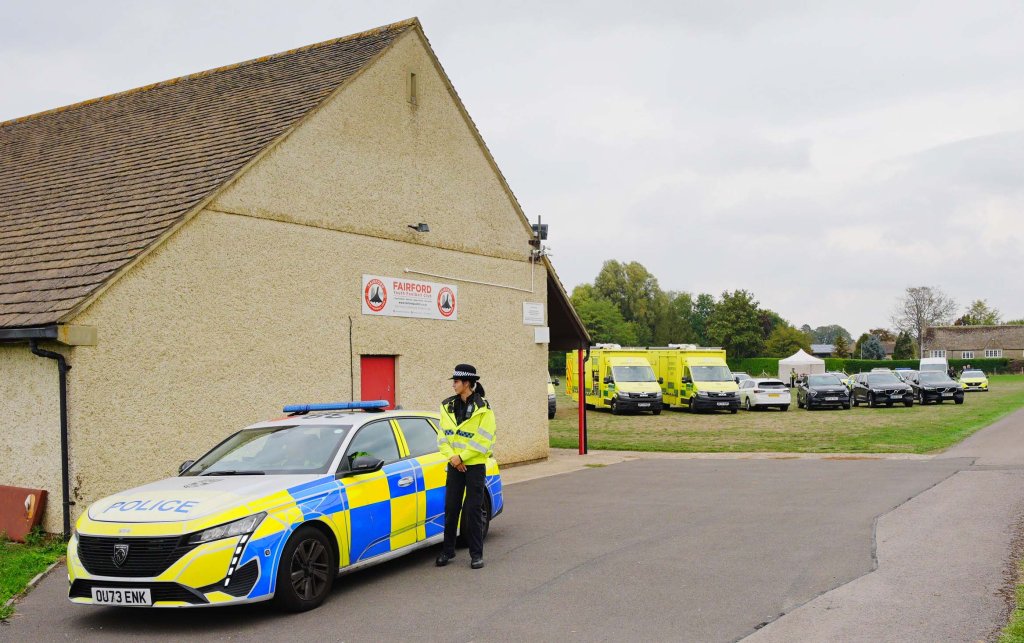
Details continue to come in, but police in the United Kingdom have declared a “major incident” and ordered evacuations near RAF Fairford after the arrest of “several men on suspicion of offenses under the explosives act,” the Gloucestershire Constabulary stated.

RAF Fairford is a major hub for U.S. military aircraft in the United Kingdom. It is a regular host of strategic assets, including bombers and U-2 spy planes. It also acts as a pit stop for other aircraft, including fighters, that are being ferried to and from the United States. Bomber strikes launched from Fairford were a central aspect of major U.S. combat operations against Iran earlier this year.

“A number of properties are currently being evacuated in the Whelford area following the declaration of a major incident,” the Gloucestershire Constabulary also announced today in light of the incident.

Emergency services in Fairford after major incident has been declared, with armed police manning a cordon near the village of Whelford in Gloucestershire, near RAF Fairford which is used by the United States Air Force (USAF). Picture date: Sunday September 27, 2026. (Photo by Ben Birchall/PA Images via Getty Images)
Emergency services in Fairford after a major incident has been declared, with armed police manning a cordon near the village of Whelford in Gloucestershire, near RAF Fairford, which is used by the United States Air Force (USAF). (Photo by Ben Birchall/PA Images via Getty Images) Ben Birchall – PA Images

The evacuations were spurred by the arrests.

“The Army’s specialist explosive ordnance disposal team are currently examining a number of vehicles,” Gloucestershire Constabulary added. “The local residents are being evacuated to a nearby leisure center.”

“A cordon is currently in place, but we’d like to reassure people that we believe this incident is contained,” the law enforcement agency explained. “We are working closely with our partners and are enacting the well-rehearsed plans we have in place.”

The incident began around 12:45 AM local time Sunday “when police received a call relating to three suspicious vehicles traveling towards RAF Fairford,” according to Gloucestershire police Assistant Chief Constable Richard Ocone. “Armed officers responded and subsequently arrested five men in the Whelford area on suspicion of committing offenses under the Explosives Act. The men were taken into custody, where they remain.”

“A 400-meter cordon has been put in place around the vehicles while the army’s explosive ordnance disposal unit examined them,” Ocene continued. “As a precaution, around 85 households have been advised to evacuate while these examinations take place.”

BREAKING:

The British authorities issue a first official statement on the suspected terror plot against RAF Fairford

They sent in a local low-ranking policemen to deliver a statement saying 5 men have been arrested and that people shouldn’t speculate about the case.

He… pic.twitter.com/9dD8910Kpw

— Visegrád 24 (@visegrad24) September 27, 2026

Video has emerged showing British military explosive ordnance disposal robots reportedly defusing the vans used by the suspects.

Video of British military EOD robots defusing suspected bomb vans near RAF Fairford courtesy of SkyNews. pic.twitter.com/PbrrVH6V1x

— WarMonitor🇺🇦🇬🇧 (@WarMonitor3) September 27, 2026

“We are aware of the current reporting, for questions regarding off-base incidents please contact the local authorities,” a U.S. Air Force spokesperson told us in response to our questions about whether the incident had raised force protection levels at RAF Fairford or other installations in the area hosting American forces. Unconfirmed reports by the local aviation spotter community claimed RAF Fairford had been placed under what is called FPCON Delta, the highest level of alert at U.S. military installations.

The incident at RAF Fairford has been escalating overnight, this is what is clear so far.

Gloucestershire Police has announced that they have arrested multiple men on suspicion of offences under the Explosives Act, and that they have declared a Major Incident.

According to the… https://t.co/vk5N7yUuzB pic.twitter.com/IMHGtKGiC1

— Armchair Admiral 🇬🇧 (@ArmchairAdml) September 27, 2026

“For operational security reasons we will not discuss specific force protection measures,” the Air Force spokesperson added. “The 501st Combat Support Wing and our fellow UK-based Wings remain vigilant and will take appropriate actions to ensure the safety and security of our U.S. service members, civilians, contractors, and their families. We constantly assess a variety of factors that determine what measures we institute or modify to protect our installations, our people and their families.”

It is unclear if airfield operations at RAF Fairford have been affected. U.S. Air Force officials did not immediately respond to our request for comment.

The British Defense Ministry did not immediately provide comment on this unfolding event.

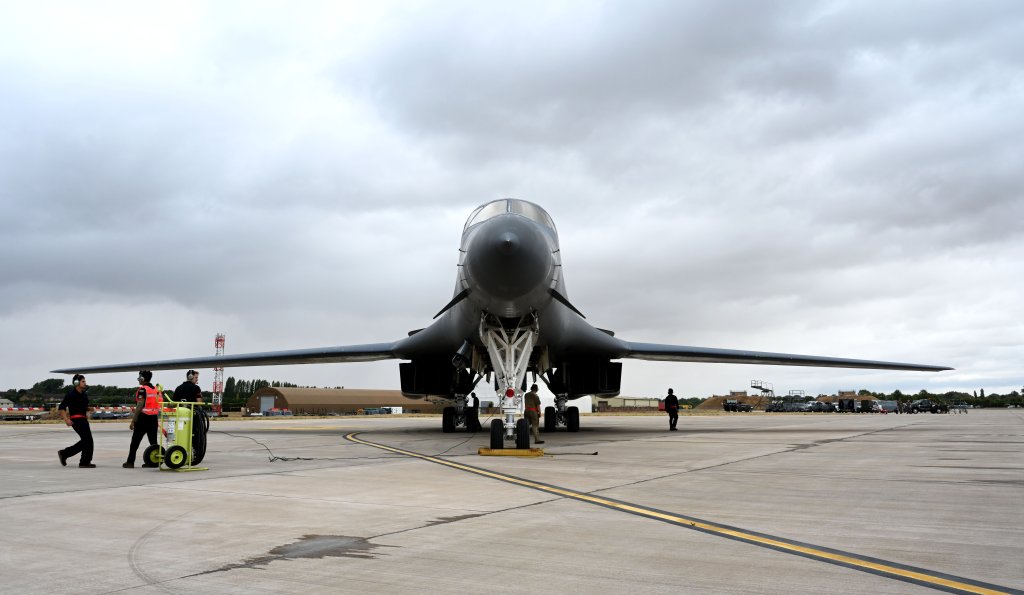
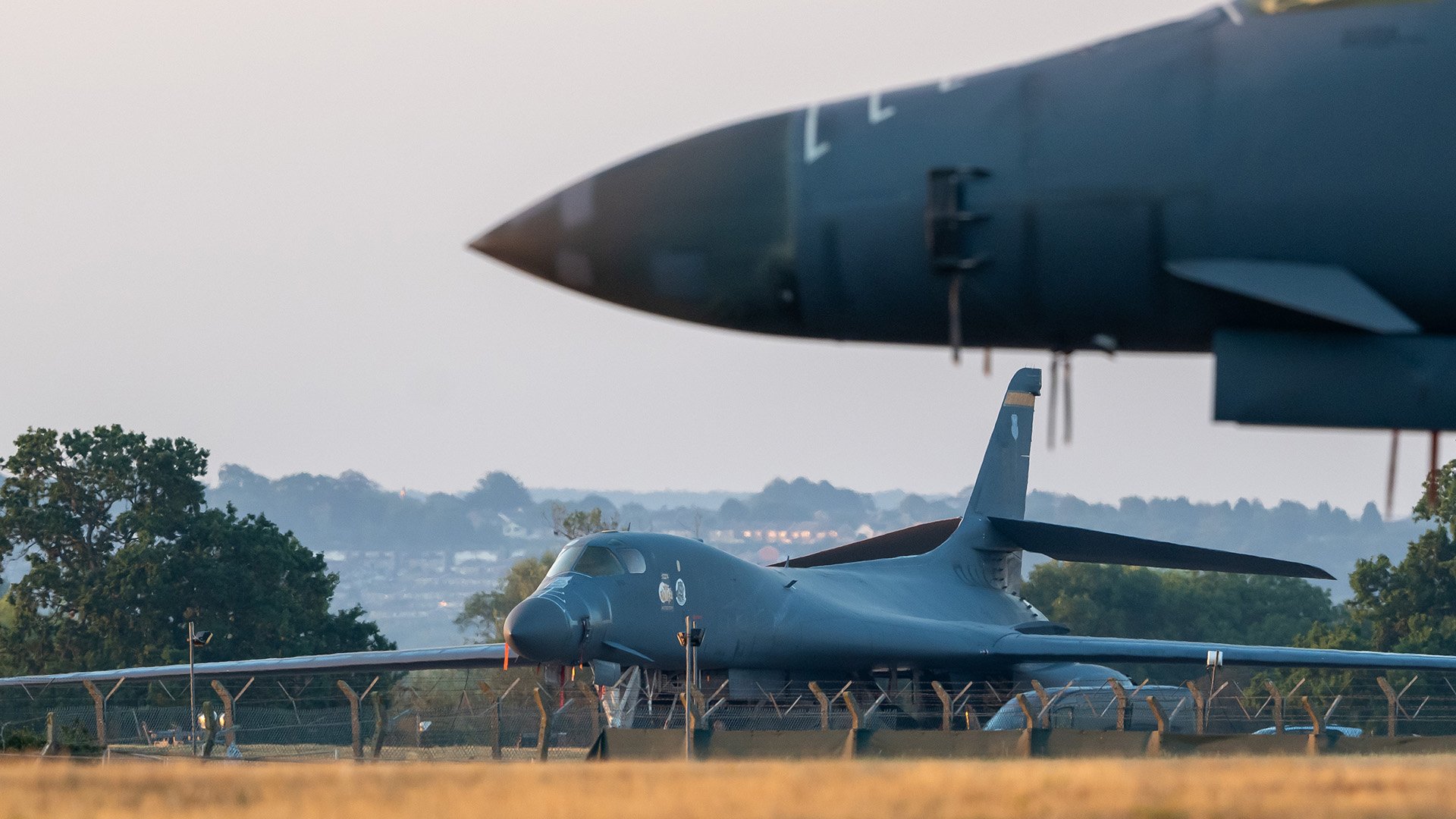
RAF Fairford is a major hub for U.S. military aircraft, with strategic assets, like B-1B Lancer bombers, being forward deployed to the base and tactical and other assets often using it as a pit stop during flights ‘across the pond.’

A U.S. Air Force B-1B Lancer assigned to the 37th Bomb Squadron, Ellsworth Air Force Base, S.D., arrives to participate in the Royal International Air Tattoo at Royal Air Force Fairford, England, July 15, 2025. The Lancer is slated to participate in RIAT, which has more than 80 aircraft are scheduled to attend from July 18-20, 2025. (U.S. Air Force photo by Tech. Sgt. Robert M. Trujillo)
A U.S. Air Force B-1B Lancer at RAF Fairford. (U.S. Air Force photo by Tech. Sgt. Robert M. Trujillo) Tech. Sgt. Robert Trujillo

As mentioned, RAF Fairford played a key role in major combat operations against Iran earlier this year. No connection has been established yet between today’s incident and any particular group, but the base has drawn direct threats from the regime in Tehran in the past.

“The American aggressor army, which used to launch cruise missiles from its vessels in the Indian Ocean in its aggression after the official resumption of the war, with the end of the missile reserves of the aforementioned vessels, yesterday switched to using B1 planes flying from Fairford Air Base, England,” Tasnim News Agency, a quasi-state outlet in Iran with ties to the country’s powerful Islamic Revolutionary Guard Corps (IRGC), claimed on Telegram on July 23. “As the officials of the Ministry of Foreign Affairs also stated, any base that is used to invade Iran’s territory is our legitimate goal.”

the enemy must pay the price for its breach of promises, and this time we will not allow America to use deceptive ceasefires to replenish its oil and ammunition stockpiles and then resume attacks once again.

— Press TV 🔻 (@PressTV) July 23, 2026

Considering its importance to U.S. military operations, the base is a major potential target for nefarious actors, in general. Like other bases across Europe, it is a major potential target for Russia’s ‘hybrid war’ or ‘gray zone’ activities, as well.

Asked about the threats at the time, a British official told us that the country was prepared to defend itself.

“Our Armed Forces are ready to keep the United Kingdom safe from any kind of attacks, whether it’s on our soil or from abroad,” a government official told TWZ. “The UK stands ready 24/7 to defend itself. This includes through operating a layered approach to air and missile defense, provided by Royal Navy, British Army and Royal Air Force assets equipped with a range of advanced capabilities, working closely with our NATO allies.”

“In the Defense Investment Plan we have made air and missile defense a priority after years of underfunding, dedicating £790 million to enhance protection of the UK homeland and overseas bases from air, drone and missile threats,” the official added. “That is complemented by more than £2 billion of funding to deliver further air defense and counter-drone capabilities, and to upgrade and sustain our Typhoon fleet.”

This is a developing story.

UPDATE: 10:49 AM Eastern –

A Temporary Flight Restriction (TFR) has been imposed over Whelford, Gloucestershire, following the incident. It applies to all aircraft, including “any small balloon, any kite, any UAS and any parachute, including a parascending parachute or paramotor,” according to the FAA. “Pilots are forbidden to fly within the designated area without permission.”

The TFR runs through Oct. 5.

Contact the author: howard@twz.com

The post British Police Arrest Men Driving Toward U.S. Bomber Base In The U.K. With Suspected Explosives appeared first on TWZ.

  •  

No Purchase Necessary: Trump’s Strategic Takeover of Greenland

From Trump’s earlier push to acquire Greenland to the 2026 security agreement with Denmark and Greenland, Washington’s approach has shifted from territorial acquisition to strategic access — a shift that reflects a broader contest for control over the Arctic, supply chains and spheres of influence. Since his first term as the American President, Trump has […]
  •  

German students say ‘we don’t want to go to war’

Thousands of students across Germany were once again on strike against conscription and militarization on Friday, September 25. Actions took place in at least 100 localities as young people demanded a sharp turn from the government’s chosen path.

“We don’t want to be forced into military service and we don’t want to go to war,” the students wrote in declaration after their last strike in May.

Read more: German students expand their strike against conscription and militarization to 150 cities

This is the fourth time students have exchanged classrooms for streets since the end of 2025. The mobilization has strengthened in resistance to the Merz administration’s plans to build the “strongest conventional army in Europe” – including by drawing more people into the Bundeswehr, the German armed forces.

While authorities insist military recruitment remains voluntary, students have warned of a clear tendency toward outright conscription. Local strike committees and activists also emphasized the widespread repression ahead of actions. This included scheduling of exams on strike days and locking-in students on school grounds, they pointed out.

Billions for the Bundeswehr, cuts for schools and youth services

Over recent months, the government has sent thousands of questionnaires to map voluntary interest in joining the armed forces. According to German media, the response has been underwhelming: tens of thousands of students have disclaimed no interest whatsoever. Not even a multi-million-euro budget allocated to promoting the army has been able to shake this opinion.

“They sell us war service as an ‘adventure’ while we know that what awaits us is coertion, humiliation, sexism, right-wing extremism, and racism,” the student declaration adds.

Instead of taking the message seriously, authorities recently advanced the implementation of medical checks among their targeted population, drawing further frustration from students.

“We don’t want compulsory questionnaires, fines, draft physical examinations, conscription assessment centres across the country, nor planned integration of the Federal Volunteer Service into military service,” they wrote. “These are means to prepare the reintroduction of the draft and thus another war originating from Germany.”

“In case of conscription, we’ll be trained as cannon fodder, forced into the trenches,” students added. “War costs us our lives, while corporations like Rheinmetall make record profits.”

Read more: Ulrike Eifler: ‘The workplace is a place where we have to fight against war’

Students on strike have expressed solidarity with other ongoing struggles against militarization and budget cuts. They stated they would join peace demonstrations planned for early October in Berlin and Stuttgart, as well as a trade union-backed mobilization against budget cuts on Saturday, September 26.

Their decision reflects the widespread understanding that youth and education services are among those impacted by this round of austerity. According to junge Welt, the federal ministry responsible for education will face close to €1 billion in cuts – while €140 billion will be made available for so-called defense in 2027.

“Every tank, every rocket we pay for with dilapidated schools and social cuts,” students remarked.

  •  

Latvia To Order Anduril’s Barracuda Cruise Missile For Long-Range Strike Capability

NATO member Latvia is moving toward acquiring Anduril Industries’ Barracuda family of long-range strike missiles, with Latvian President Edgars Rinkēvičs highlighting the effort during a visit to the U.S. defense technology company and a series of new defense-industry cooperation agreements involving Latvia. If the acquisition goes through, Latvia would be the first of the Baltic states to field a strike weapon in this category.

“It was great to visit Anduril to meet with Palmer Luckey and to witness signing of memoranda of cooperation with MOD of Latvia and Origin Robotics,” Rinkēvičs said in a post on X. “Looking forward to complete acquisition of Barracuda long-range missiles and [Latvian-U.S.] defense industry cooperation.”

It was great to visit @anduriltech to meet with @PalmerLuckey and to witness signing of memoranda of cooperation with MOD of Latvia and @OriginRobotics. Looking forward to complete acquisition of Baracuda longe range missiles and 🇱🇻 🇺🇸 defense industry cooperation pic.twitter.com/JafnNy5RAe
— Edgars Rinkēvičs (@edgarsrinkevics) September 25, 2026

The statement does not specify the precise Barracuda variant involved, the number of missiles Latvia intends to acquire, the expected delivery schedule, or the value of the prospective purchase. We have reached out to Anduril for more details.

A likely candidate weapon is the Barracuda-500M, one member of Anduril’s family of autonomous, jet-powered cruise missiles, alongside the Barracuda-100M and -250M variants. Official descriptions put its range at more than 500 nautical miles, with a stated speed range of approximately 190 to 500 knots. The missile can be air-launched, for which it has received the official U.S. military designation AGM-189A. But with only a handful of utility biplanes and helicopters in its inventory, Latvia would acquire the surface-launched version, designated SLB-500M.

The announcement points to a potentially significant expansion of Latvia’s precision-strike capabilities as NATO’s eastern flank continues to build out longer-range conventional fires.

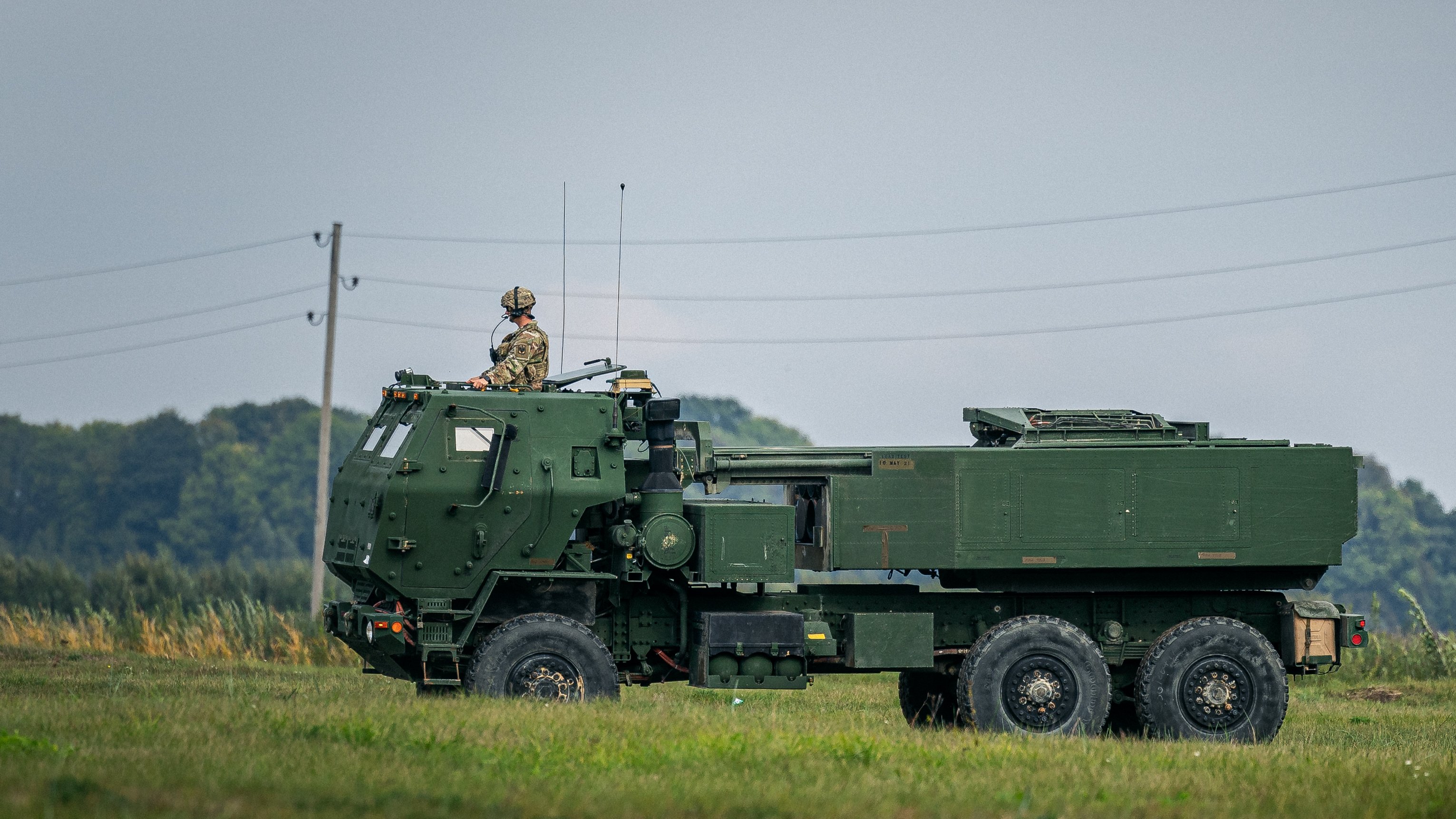
Latvia has already ordered the U.S.-made Army Tactical Missile System, or ATACMS, which will be fired from M142 HIMARS launchers. The system is expected to enter Latvian service in 2027 and has a maximum range of about 186 miles.

A U.S. Army M142 HIMARS launcher involved in an exercise at at Spilve Airfield and Liepāja Airport in Latvia. Latvian Armed Forces Eriks Kukutis

Latvia’s ATACMS capability will give the country a foundation for ground-launched precision fires, but the broader European trend is toward significantly greater reach.

Ground- and sea-launched cruise and ballistic missile systems capable of hitting targets at between 1,000 and 2,000 kilometers (620 and 1,242 miles) or more are an emerging target for several European NATO members. France, Germany, Poland, Italy, Sweden and the United Kingdom are pursuing combinations of indigenous development and foreign procurement to address this requirement.

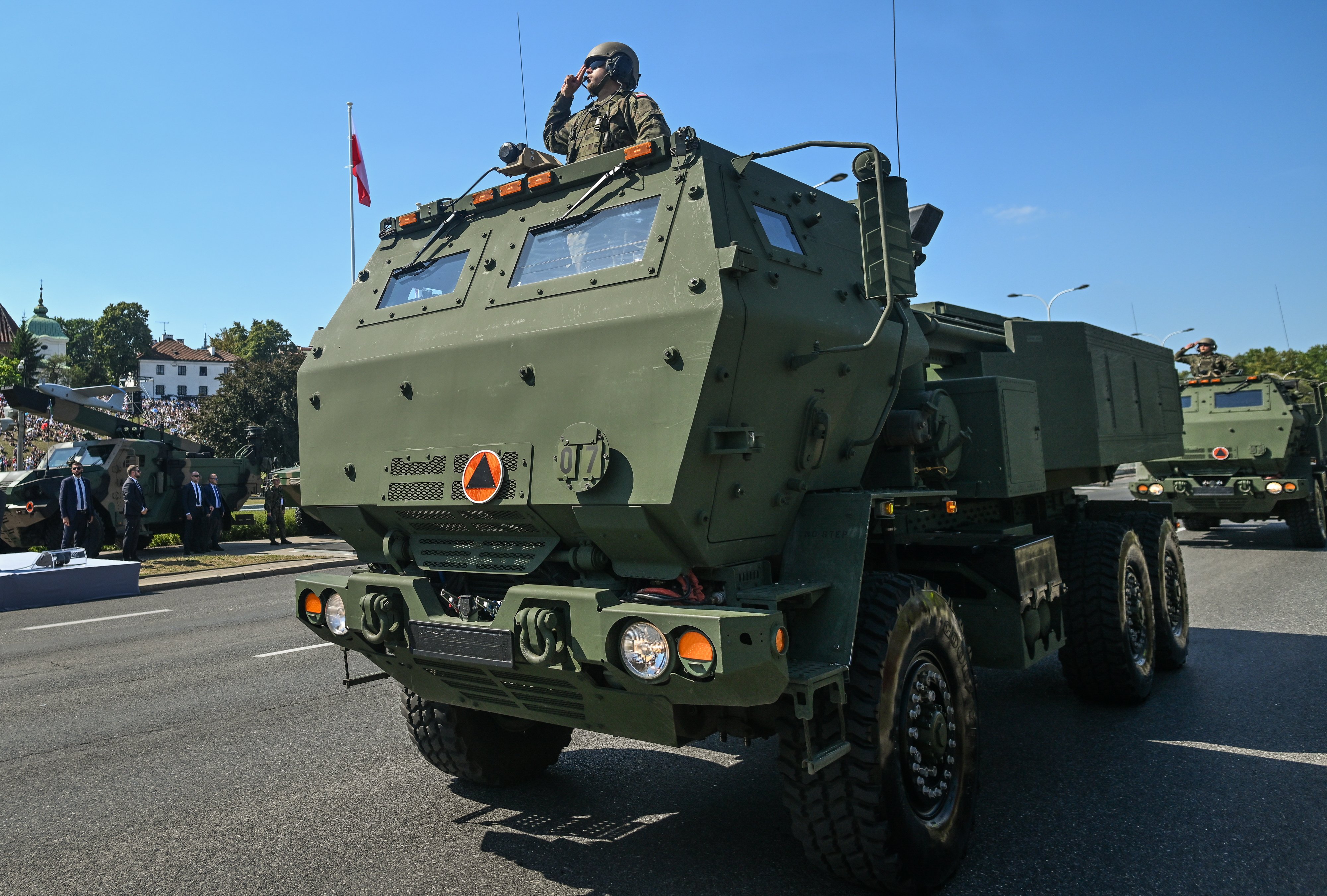
Latvia’s neighbor Poland, for example, has been building a layered long-range strike architecture combining JASSM/JASSM-ER air-launched cruise missiles with HIMARS and ATACMS. Warsaw’s ambitions are extending toward ground-launched weapons with ranges potentially reaching 3,000 kilometers (1,864 miles) and the country has previously expressed openness to hosting U.S.-owned nuclear weapons on its territory, too.

WARSAW, POLAND AUGUST 15: The M142 HIMARS rocket launcher is seen during the Armed Forces Day parade, commemorating Poland's 1920 victory over the Soviet Red Army and marking the 105th anniversary of the Battle of Warsaw, in Warsaw, Poland, on August 15, 2025. The event featured more than 4,000 Polish troops, about 200 soldiers from allied NATO nations, around 300 military vehicles, and nearly 50 aircraft, making it the largest parade in the country's history. (Photo by Artur Widak/NurPhoto via Getty Images)
A M142 HIMARS launcher is seen during Poland’s Armed Forces Day parade in 2025. Photo by Artur Widak/NurPhoto/Getty Artur Widak

Latvian interest in Barracuda fits into the same larger transformation in European conventional strike capabilities.

For NATO’s Baltic members, the logic is particularly straightforward, with mobile, ground-launched weapons providing an additional means of striking military targets at depth without requiring control of the air over the launch area.

Dragon’s teeth obstacles are among the anti-mobility measures on Latvia’s eastern border with Russia. Latvian Armed Forces

The potential Barracuda acquisition would represent another step in a broader European shift toward deep precision strike, a term increasingly used to describe conventional weapons capable of holding targets hundreds or thousands of miles away at risk.

Deep precision strike is widely acknowledged as an increasingly important European capability gap. European NATO members have historically relied heavily on air-launched cruise missiles and other aircraft-delivered weapons, while ground-launched long-range systems have been comparatively scarce.

The deterioration of the European security environment following Russia’s full-scale invasion of Ukraine, together with the 2019 collapse of the Intermediate-Range Nuclear Forces Treaty, are important factors behind renewed European interest in long-range conventional strike.

A key driver behind Europe’s push for longer-range conventional strike is the desire to build a credible deterrent capable of holding targets deep inside Russia at risk, potentially including Moscow. Ukraine’s long-range strike campaign has demonstrated the strategic value of being able to impose costs at significant distances, while also underscoring the importance of having sufficient stocks of precision weapons. For NATO’s eastern flank, systems such as the ground-launched Barracuda could therefore provide not just another fires capability, but an additional means of imposing costs on an adversary without relying exclusively on airpower.

Importantly for Latvia, the emerging European approach is not limited to large air forces. NATO’s prospective deep-strike requirements are likely to place significant emphasis on mobile ground-launched systems because they can be dispersed and offer survivability advantages while avoiding the cost and vulnerability associated with relying exclusively on aircraft or ships as launch platforms.

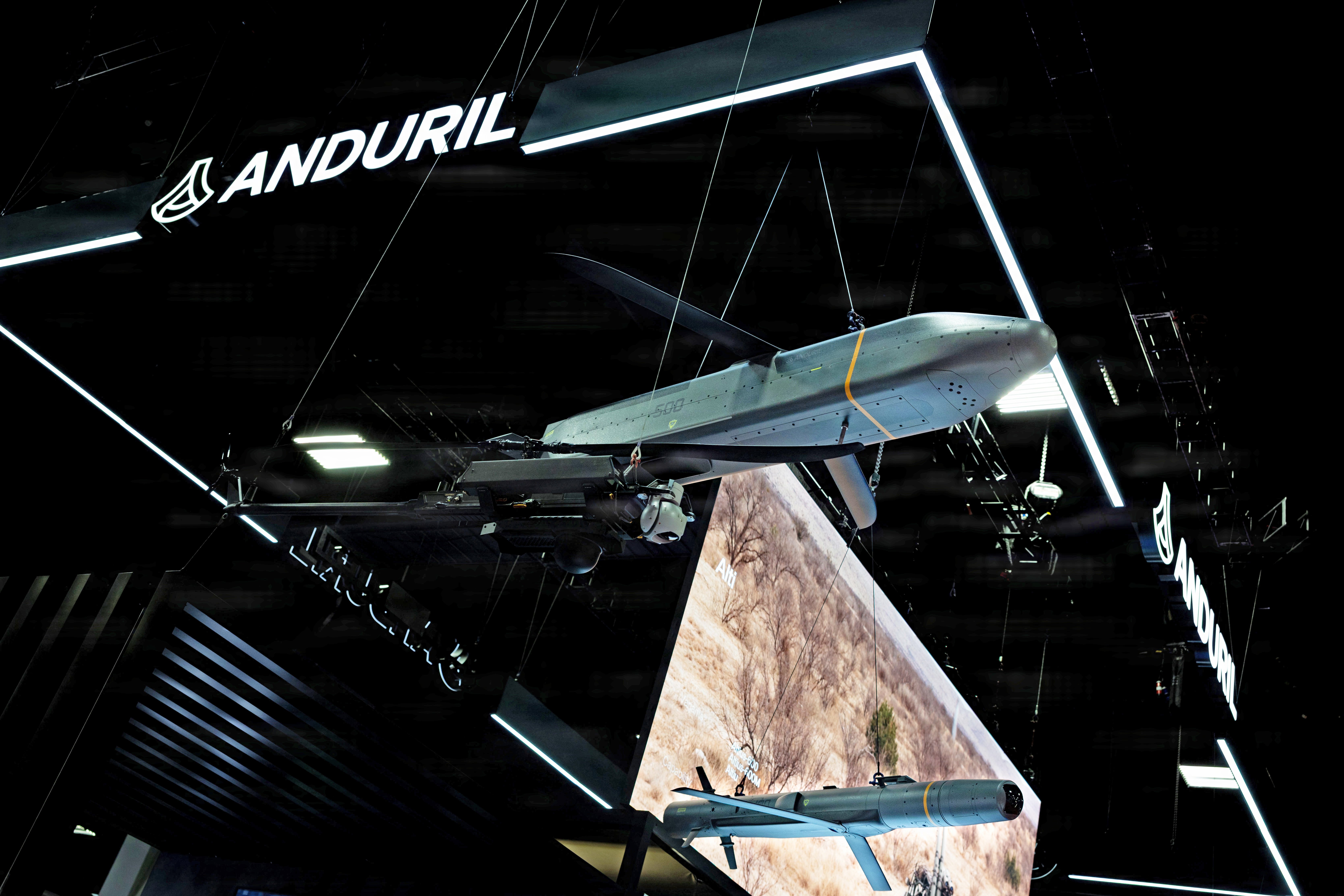
An Anduril Barracuda 500, top, and a Barracuda 100, autonomous aerial vehicles, are displayed during Modern Day Marine 2026 at the Walter E. Washington Convention Center, Washington, D.C., April 30, 2026. Modern Day Marine is a military exposition exclusively organized for the Marine Corps to showcase the newest technology and warfighting innovations from amphibious assault vehicles to drones and more. (U.S. Marine Corps photo by Cpl. Abigail Hutcheson)
An Anduril Barracuda 500, top, and a Barracuda 100, displayed during Modern Day Marine 2026 in Washington, D.C. U.S. Marine Corps photo by Cpl. Abigail Hutcheson Cpl. Abigail Hutcheson

That makes systems such as the surface-launched Barracuda particularly relevant to countries on NATO’s eastern flank.

Anduril has positioned Barracuda as part of an effort to address what it describes as a shortfall in affordable, producible long-range precision weapons. A prototype surface-launched Barracuda-500 successfully demonstrated its launcher, missile, and booster concept in testing in 2025. Anduril has emphasized that the family is intended to be more producible and affordable than many existing “exquisite” long-range weapons.

The emphasis on production capacity is notable in light of lessons emerging from the war in Ukraine, where both sides have demonstrated the importance of maintaining substantial stocks of precision weapons and relatively inexpensive one-way attack systems.

European governments are increasingly wrestling with the same issue. However, there is a fundamental tension between rapidly filling capability gaps through off-the-shelf purchases and developing indigenous European weapons that can strengthen the continent’s defense-industrial base, which is also a critical political consideration.

Latvia’s emerging relationship with Anduril appears to combine elements of both approaches, by acquiring an American-developed strike capability while simultaneously pursuing industrial cooperation with U.S. defense companies.

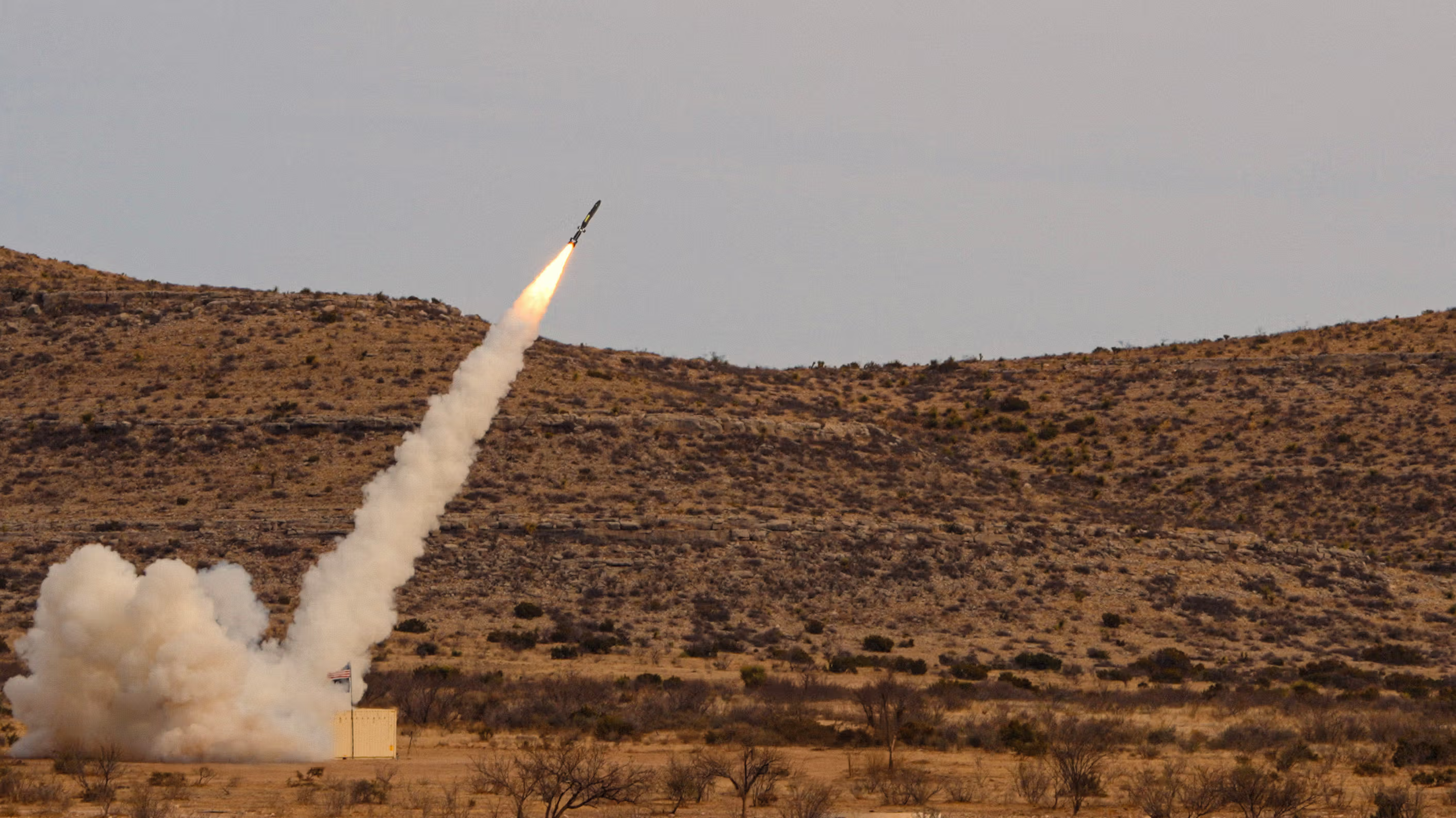
Ground launch of Anduril’s Barracuda-500M. Anduril

There is also a recent European precedent for combining Barracuda procurement with local industrial participation.

In July 2026, Anduril signed a strategic agreement with Polish national maintenance, repair and overhaul provider Wojskowe Zakłady Lotnicze Nr 2 (WZL-2) to establish production of the Barracuda-500M at WZL-2 facilities in Bydgoszcz, Poland. Polish state-owned defence group Polska Grupa Zbrojeniowa said Poland was the first European country to sign such an agreement with Anduril.

Bezpieczeństwo zaczyna się od silnych sojuszy.

💥🖊 Dziś została podpisana umowa o współpracy @PGZ_pl i WZL-2 z firmą Anduril Industries, która umożliwi utworzenie w Polsce miejsc montażu i produkcji autonomicznych rakietowych pocisków manewrujących dalekiego zasięgu… pic.twitter.com/JnmM6lQZ7L

— Ministerstwo Aktywów Państwowych 🇵🇱 (@MAPGOVPL) July 6, 2026

Polish officials have also emphasized the missile’s intended low production cost relative to higher-end U.S. cruise missiles. The planned Polish program is expected to progressively increase Polish content and eventually incorporate broader European elements, including software solutions from Anduril.

Latvia has not publicly detailed whether any Barracuda-related production, assembly, or other industrial work would be conducted in the country.

However, Latvia’s Investment and Development Agency says the country’s defense-technology delegation in the United States is seeking opportunities involving joint development, testing, manufacturing, system integration and supply chains. Origin Robotics is among the Latvian companies participating in that effort.

The broader Latvian delegation includes companies working across unmanned and counter-unmanned systems, communications, electronics, sensors, software, artificial intelligence, cybersecurity, and manufacturing.

Latvian Army Staff Sgt. Gatis Indrevics, a combat cameraman with the Latvian Army, shows drone video footage to U.S. Marines with the Marine Forces Reserve’s Communication Strategy and Operations section before a High Mobility Artillery Rocket System live-fire range at Adazi Training Area, Latvia, March 4, 2019, during exercise Dynamic Front 19. Two HIMARS from Fox Battery, 2nd Battalion, 14th Marine Regiment, 4th Marine Division, coordinated fires with army units in Germany. Approximately 3,200 participants from 27 nations will take part in the live-fire portion of exercise Dynamic Front 19, March 2-9, 2019, at the U.S. Army's Grafenwoehr Training Area, Germany; as well as in Riga, Latvia; and Torun, Poland. (U.S. Marine Corps photo by Cpl. Niles Lee)
A Latvian Army soldier shows drone video footage to U.S. Marines during a HIMARS live-fire exercise at Adazi Training Area, Latvia. U.S. Marine Corps photo by Cpl. Niles Lee Sgt. Niles Lee

Exactly how Latvia intends to employ Barracuda, how many missiles it plans to acquire, and whether any portion of the system will eventually be produced or integrated in Latvia remain unclear from the president’s announcement.

For now, the development marks another indication that long-range precision fires are moving from a capability concentrated among Europe’s largest military powers toward a broader requirement across NATO’s highly strategic eastern flank.

Contact the author: thomas@thewarzone.com

The post Latvia To Order Anduril’s Barracuda Cruise Missile For Long-Range Strike Capability appeared first on TWZ.

  •  

Aurore Lalucq : "Supprimer les inégalités inacceptables", remède à la montée des populismes

Face à des Européens peu audibles à l'Assemblée générale de l'ONU et inquiets de leurs vulnérabilités économiques, Aurore Lalucq, présidente de la commission des Affaires économiques et monétaires du Parlement européen, nous livre son analyse après la dernière réunion de l’Eurogroupe à laquelle elle a participé. Aurore Lalucq est eurodéputée du groupe socialiste et co-présidente de "Place publique".

  •  

Canicule, incendies, sécheresse : quelles leçons pour l'UE ? L'été européen le plus chaud

L'Europe n’a pas été épargnée par la canicule. Le mois d'août 2026 a été le mois le plus chaud jamais mesuré, et l’Europe dans son ensemble a vécu le pire été de son histoire : 2,7°C de plus que les normales de saison. Il en résulte une sécheresse record qui se prolonge encore en septembre. Au pic de l’été, les deux tiers du territoire de l'Union européenne étaient en état d’alerte, de quoi fragiliser la végétation et l'agriculture, et faciliter la propagation des incendies.

  •  
❌