❌

Reading view

Italy: Bangladeshi man arrested for raping and impregnating his 15-year-old daughter in Brescia

A 46-year-old man of Bangladeshi origin is accused of aggravated sexual violence against his minor daughter in Brescia province, Italy, after investigators say years of abuse left her pregnant before she turned 15.

According to Italian newspaper Giornale di Brescia, the preliminary hearing opened at the Palace of Justice in late September 2026. The defendant, held since February in Cremona prison’s section for those accused of sexual offenses, requested an abbreviated trial conditioned on a proposed compensation payment to the victim. That request is scheduled for discussion on Jan. 19. DNA tests and police interviews with the girl, assisted by social services, supplied further corroboration that the father had impregnated his daughter.

The case surfaced in early 2026 when the mother took the girl to the emergency room at Brescia’s Civil Hospital for severe abdominal pain. Doctors determined she was pregnant and notified police. Italian police arrested the father after initial checks. Italian newspaper Il Giornale described the allegations as prolonged abuse beginning when the girl was a child.

The paper stated that inside the hospital, she told staff that he “had forced her to undergo sexual acts since she was a child. First he would subjugate her, then he would move on to groping, finally he began full intercourse. It was precisely during one of these sexual relationships that she became pregnant.”

Laura D’Urbino, president of Brescia juvenile court, said the court becomes involved in such situations both because of the daughter’s age and because the pregnancy involves a close relative.

This is not the first serious case of sexual violence from a Bangladeshi man in the Italian city. A separate case in the Brescia-area from 2024 involved a different 29-year-old Bangladeshi man and a 10-year-old girl of sub-Saharan origin inside a reception center in Collio. He was sentenced to five years in prison, however, the victim was not his daughter.

The post Italy: Bangladeshi man arrested for raping and impregnating his 15-year-old daughter in Brescia appeared first on Remix News.

  •  

France burns: Migration-background students rampage across the country, teachers doused in gasoline, schools set on fire, and hundreds of arrests reported

Images of burning schools, buses, and vicious assaults, along with a report of attempted murder, have once again hit France this morning, Oct. 1, as high school blockades mark their second week across France. What began as protests demanding better conditions for students and teachers has devolved into violence at dozens of locations, concentrated at schools with large immigrant populations

This morning, Oct. 1, further clashes, burning buses, and arson attacks have been reported. French news outlet BFMTV is even speaking of murder attempts being carried out by certain students in one incident where the leadership team of one school in Marseille was doused in gasoline. In response, French Prime Minister Sébastien Lecornu is convening an interministerial emergency meeting at 1 p.m. to contain the crisis.

🇫🇷🔴 BREAKING: Migrant student youths have set fire to multiple buses and even fire trucks in the French city of Marseille as chaos spreads.

The Marseille transport authority, RTM, said several of its buses "were targeted near high schools in the north and east of Marseille,"… pic.twitter.com/hv8tilIB3B

— Remix News & Views (@RMXnews) October 1, 2026

In Marseille, the regional government said an “unacceptable line” had been crossed at Victor Hugo High School, where “the principal, the deputy principal, the general secretary and the team leader were assaulted and doused with gasoline,” according to the Provence-Alpes-Côte d’Azur region, cited by BFMTV.

BFMTV also reported that a naval firefighters’ vehicle was looted and set on fire in the city. Viral videos also show a bus on fire with numerous Black and Arab youths pelting the bus with stones and dancing on its roof. The Marseille transport authority, RTM, said several of its buses “were targeted near high schools in the north and east of Marseille,” that “drivers had to leave their vehicles in a hurry, and one of them was assaulted.”

The transit authority condemned “these irresponsible acts.” ICI reported that two buses caught fire in northern Marseille and that two buses were damaged near Floride High School in the 14th arrondissement. A dumpster was also set alight outside Victor Hugo High School. Authorities said 40 high schools in the Bouches-du-Rhône department were affected Thursday, and 18 of them were fully blocked.

The regional authority said the violence was no longer a protest.

“Mortar fire at staff, vehicle fires, gates torn down, stoning and intolerable intrusions: this is not contestation, it is delinquency,” it said, according to ICI. “Those who burn our high schools are attacking the Republic.”

🇫🇷🚨 BREAKING: Nelson Mandela High School is currently on fire in the French city of Nantes.

Schools across France are being set on fire as student protests and blockades rage on.

This story is developing.

Follow: @RMXnews pic.twitter.com/pOgOO4w0HQ

— Remix News & Views (@RMXnews) October 1, 2026

In Nantes, the hall of Nelson-Mandela High School was destroyed by what deputy principal Gaëlle Cordier called a “deliberate” fire that spread to the façade before firefighters brought it under control, RTL and Ouest-France reported. The school was expected to stay closed for days, and RTL said the administration expected a closure of several weeks.

The Nelson Mandela High School of Nantes actually just had a major “eco-friendly inclusive” renovation. The building cost €77 million in taxpayer money. However, the all-wooden design, with the interior reportedly designed for “positive energy,” has now gone up in flames. It could cost tens of millions to rebuild.

Despite the threat to life and property, the far-left pro-migration party France Unbowed (LFI) has tried to bolster the student movement, which is now spiraling out of control.

🇫🇷🔥 BREAKING: Schools are burning across France as violent student blockades grow. The mayhem shows no sign of slowing down despite 625 arrests.

Oct. 1
🔺 Nelson-Mandela high school in Nantes burned, façade and hall destroyed. The school is expected to be closed for several… pic.twitter.com/v1fxbNuWfH

— Remix News & Views (@RMXnews) October 1, 2026

A fire at the private Talensac High School in the city center destroyed the entrance doors.

“The same wreckers everywhere. The same violence everywhere. The same political exploitation everywhere,” Christelle Morançais, president of the Pays de la Loire region, wrote. “No demand to satisfy, just the will to sow chaos and destroy everything. This is not the youth of France.”

Staff have also been repeatedly attacked in other schools by migrant students hunting in packs.

🇫🇷🔥 France in chaos: Youths are literally hunting teachers and school staff in packs.

A chemistry teacher was violently attacked and kicked in his back as rioters chase him at the César Baggio high school in Lille, France.

Nationwide protests and school blockades have led to… pic.twitter.com/OOfIkdeLk2

— Remix News & Views (@RMXnews) September 30, 2026

Elsewhere Thursday, the prefecture said the façade of Lumière High School in Lyon’s 8th arrondissement was set on fire, Actu Lyon reported. In Annecy, fires were set outside the Berthollet, Baudelaire and Sommeiller high schools. Firefighters said they were working to keep the flames from reaching the buildings.

The unrest built through the week. On Wednesday, Interior Minister Laurent Nuñez said 356 high schools were disrupted, 625 people were arrested and 83 police officers and gendarmes were injured, in a tally he described as not yet final, Europe 1 reported. Education Minister Édouard Geffray said 119 students and staff had been injured since the blockades began, including 34 staff members. “That is unprecedented in the national education system,” he said.

In addition, the following cases have been reported:

In Wattrelos, in the Nord, a car was driven against the gates of the Émile-Zola middle-and-high school and set on fire Wednesday. The school was closed, and prosecutors opened an inquiry for arson, Le Figaro reported.

In Montpellier on Tuesday, a fire destroyed the caretaker’s lodge at a side entrance of Jean-Mermoz High School and the school was evacuated.

In Bordeaux on Wednesday, a bin fire outside Gustave-Eiffel High School spread to the façades of two houses across the street, and firework mortars were fired toward the school, ICI reported. Ten people were arrested in the Gironde for arson, damage and throwing projectiles.

At Paul-Éluard High School in Saint-Denis, outside Paris, a fire damaged the main gate. Île-de-France region president Valérie Pécresse said replacement, security and cleaning up would cost about €100,000, and put total damage at regional high schools near €1 million, including about 10 gates out of service.

Geffray also cited a teacher beaten in the Nord, a head teacher injured by a firework mortar in the Hauts-de-Seine, and another threatened with death in the Essonne.

As Remix News reported yesterday, Geffray said: “This violence is unspeakable.” However, despite his threats to launch legal proceedings against rioters, the violence has only grown far worse today, Oct. 1.

Prime Minister Sébastien Lecornu has called any escalation “irresponsible.” Nuñez has described some of the violence as closer to urban rioting than to a labor protest.

The post France burns: Migration-background students rampage across the country, teachers doused in gasoline, schools set on fire, and hundreds of arrests reported appeared first on Remix News.

  •  

Germany: ‘Peace-loving’ Syrian migrant sentenced for stabbing man in the neck, now wants to bring his wife and child to Germany

A regional German court sentenced a 29-year-old Syrian man to four years and 10 months in prison for attempted manslaughter after he stabbed a man in the neck during a dispute at a Cologne drug hotspot, slightly reducing an earlier five-year term after Germany’s highest criminal court ordered a resentencing.

The Cologne Regional Court imposed the penalty Friday following a brief retrial, the Kölner Stadt-Anzeiger reported. The Federal Court of Justice had largely upheld the original findings but ruled that the first chamber had improperly double-counted an aggravating factor.

The stabbing occurred on April 27, 2025, at the Josef-Haubrich-Hof near Neumarkt, an area known for heroin and cocaine dealing. The defendant intervened in an argument within the drug scene and was struck during the altercation between the two men, possibly with brass knuckles. In anger, he then drew a folding knife and stabbed one of the men in the neck, severing his jugular vein, the court findings stated.

Blood sprayed from the stab wound immediately. The 47-year-old victim dragged himself to a stairwell in the Neumarkt passage and collapsed.

Prosecutors said in the first trial that the attacker recognized the victim would die without help but was indifferent to whether he survived.

The victim lost about 1.5 liters of blood, spent three days in a medically induced coma after emergency surgery at the university clinic, later suffered a pulmonary embolism, and continues to experience pain, shortness of breath, anxiety and sleep problems, the Kölner Stadt-Anzeiger reported. A scar also remains on his neck.

The victim told the court he has been living on the street.

Defense lawyer Mario Geuenich described the convicted man as “peace-loving” but said that day he was “surely not in control of his senses” and that the act stemmed “from affective agitation.”

The defendant said, “I really regret it,” and told the court he had stopped using alcohol, drugs and methadone while in custody. He also told the court he wants to bring his wife and children from Syria to Germany and lead a normal life.

The victim addressed the defendant directly: “I forgive you. But my life is fucked up and shitty.” He added, “God bless you. I ask for a mild sentence,” and said, “God is his judge, not me.”

Presiding Judge Achim Hengstenberg replied, “But we still exist.”

Mitigating factors included the apology, expressed remorse and the victim’s forgiveness. Aggravating factors were the dangerous knife wound and the defendant’s prior convictions. The new sentence is two months shorter than the original. The victim’s lawyer, Eva Kuhn, said she was satisfied with the sentence and plans to seek compensation from the convicted Syrian.

The verdict is final.

The post Germany: ‘Peace-loving’ Syrian migrant sentenced for stabbing man in the neck, now wants to bring his wife and child to Germany appeared first on Remix News.

  •  

France: 93-year-old Marie-Louise was murdered and raped in her own home, police found naked Sudanese man laying on top of her

A 93-year-old woman was found dead in her home Sunday after neighbors, with police discovering a 34-year-old Sudanese man naked and lying on her body when they entered after emergency calls from neighbors, prosecutors said. The man was placed under formal investigation Tuesday for murder preceded or followed by rape.

The victim, identified by French media as Marie-Louise and known to some neighbors as “Juliette,” had been bedridden for months after a stroke and could not move without help. She lived in the Minimes district, near the Cité Bourbaki housing complex.

Neighbors called police about 5 p.m. Sunday after hearing shouting, insults and sounds of blows coming from the house. Officers found the front door locked and entered through the rear. They reported blood on the floor and a mattress in a bedroom before finding the woman unclothed and motionless on the bathroom floor.

The suspect was also unclothed and appeared intoxicated, police and prosecutors said. Some reports stated they found the man either asleep or dazed on top of the woman’s body when they entered.

He resisted arrest and injured an officer, according to the Toulouse prosecutor’s office. A breathalyzer test later showed an alcohol level of 0.92 milligrams per liter.

Prosecutor David Charmatz said an autopsy found injuries suggestive of sexual violence, a rib fracture, a spinal fracture, facial bruises and traumatic injuries to the neck consistent with asphyxia. Further tests were ordered to confirm the findings and determine the exact cause of death.

The man was placed under formal investigation Tuesday for murder preceded or followed by rape. Prosecutors asked that he be held in pretrial detention. He had little to say in questioning, and a psychiatric evaluation was planned, according to local reports.

French outlets have given conflicting accounts of the suspect’s immigration status. Some early reports described him as a homeless man living in the country illegally. La Dépêche du Midi later reported that he was a Sudanese refugee with legal status and no criminal record. Investigators have not publicly said how he entered the home. Neighbors told local media the woman often left a door unlocked so caregivers and relatives could get in.

Residents described Marie-Louise as a familiar figure, with one neighbor stating she was “the little grandmother of the neighborhood.” People who knew her said neighbors routinely helped with daily tasks. Flowers were left outside the house as residents mourned.

The investigation is being handled by specialized police units in Toulouse. A judge is expected to decide on the next legal steps in the case as forensic and toxicology results come in.

The post France: 93-year-old Marie-Louise was murdered and raped in her own home, police found naked Sudanese man laying on top of her appeared first on Remix News.

  •  

Trump about to self-destruct over latest diesel initiative?

The West is run by the dumbest leaders ever.

Join us on Telegram, X, and VK.

Contact us: info@strategic-culture.su

It is a mark of our times that Western leaders are not only the weakest that they have ever been, but they are also the dumbest – with Donald Trump leading the pack. His latest initiative has enraged the business press, who have wheeled out all the experts to shoot it down in flames. Trump wants to limit diesel exports from the U.S., which he believes will drive down diesel pump prices in the U.S., but it is such a stupid idea that many political commentators are pointing out his own level of desperation by playing what one called “an economics game of roulette where if the ball lands on a red number we lose everything”. Experts predict that such an initiative would only reduce diesel prices by about 5 percent for American truckers, but, according to the economists at Goldman Sachs, will drive up gasoline prices at the pumps. Quite apart from the diesel ban also wrecking the global oil economy – which will have its own blowback with American consumers – Trump is showing that not only does he not have smart economists around him advising him on these late-night whims which come to him, but he himself understands practically nothing about how the U.S. economy works.

After giving the most vulgar and disgraceful speech at the UN, talking about himself like a Roman Emperor “annihilating” Iran – a civilisation which is about 4,000 years old – it is easy to see, though, how leaders like Trump exist, when there is practically no safety mechanism in place for a U.S. president to behave so appallingly and to be so reckless with the economy. Nothing from Congress, or even either the Speaker of the House or even leaders of either party, to condemn such narcissistic speeches or foolish policy decisions by a man who represents the greatest wrecking ball to Western civilisation as we know it. And even though we saw a glimmer of hope from U.S. media groups who boycotted his Oval Office sessions, few if any journalists are prepared to report on Trump accurately, preferring to give a gloss or simply bypass his buffoonery altogether. In such an environment where the press gives you a free card, is it any wonder that Trump in his second term in office is basically a New Jersey mobster who has lost his mind entirely – drunk on power and corrupted by it, like Rome’s last emperor who was looking for his chicken while the entire empire was collapsing around him?

The sad thing, though, is that he is not alone.

In the EU, we’ve never had such unremarkable, dithering, under-performing, corrupt political wasters as the current coterie of losers running the UK, France and Germany. The UK is particularly bad, as Andy Burnham and Ed Miliband capture the internet’s imagination for a few brief moments as they enter the UN auditorium – and the main takeaway from their perplexed expressions as they look into someone’s camera is that they appear to be both lost and out of their depths, like children on their first day at the big school. While all three throw all their weight behind war talk about the Russians coming – a scam designed to distract people’s attention away from failed public sectors, immigration and economies in tailspins – Burnham stood out this week, though, for a new policy initiative. He’s going to create an Orwellian new police department to control content on the internet, perhaps inspired by the EU’s own German fascist leader – er, European Commission president, I mean – Ursula von der Leyen, who hates free speech so much that she wants it outlawed altogether.

Trump may well end up looking smarter than the leaders of the UK, France and Germany, as these three bankrupt economies now have only one modus operandi, which is to create a phoney war with Russia – which they believe will deflect any blame aimed at them for when these economies hit rock bottom and all these clowns can offer is to turn to international banks and borrow even more. They know their time in office is limited, and so a war is the perfect solution – not only to divert attention away from their own failure but to also give a massive boost to their friends in the industrial military complex, who will be very grateful for the huge new contracts given to them. We should not be surprised that both the children of Trump and even Tony Blair have huge stakes in weapons companies and could really do with a war which shovels billions their way. Yet the diesel initiative from Trump could actually be the last nail in his coffin, as if he goes ahead with it and it proves to actually jack up gasoline prices, he is likely to lose both houses. Already droves of Republican senators and representatives are distancing themselves from Trump’s Iran war and higher pump prices; it’s hard to imagine how many more stupid lies Trump can tell, blaming others for his own self-made calamities.

  •  

Pourquoi les ministres ont-ils perdu le contrôle du défaillant ministère britannique des Affaires étrangères ?

Par Ian PROUD

Il y a un double standard particulier que les journalistes appliquent aux dirigeants élus britanniques. Tout en soulignant le mécontentement du public à l’égard des politiques intérieures appliquées par les gouvernements successifs, ils continuent de dépeindre nos politiciens comme des titans sur la scène mondiale, en parlant du rôle central de la Grande-Bretagne dans la “Coalition des volontaires”, ou en insistant sur le fait que Boris Johnson, même s’il a été un mauvais premier ministre, est en quelque sorte un deuxième Churchill, même après avoir évité de peu un missile russe cette semaine en Ukraine.

Les fonctionnaires, quant à eux, les considèrent tous avec mépris. Au ministère des Affaires étrangères, les politiciens sont considérés comme des meubles, des meubles jetables. Dans une scène mémorable de Yes Minister, Sir Humphrey et le secrétaire du Cabinet discutent des remaniements, convenant avec complaisance que « le pouvoir est dans la permanence. L’impermanence est l’impuissance. Et la rotation est la castration ».

Depuis le début de la crise ukrainienne, la Grande-Bretagne a épuisé sept premiers ministres, neuf secrétaires à la Défense et onze secrétaires aux Affaires étrangères. Nos dirigeants élus sont si souvent changés qu’ils n’ont plus le courage de proposer de nouvelles idées. Le résultat ? La Grande-Bretagne a une politique étrangère monomaniaque et une seule obsession : soutenir l’Ukraine dans sa guerre contre la Russie, ce qu’elle fait au détriment de pratiquement tout le reste.

Dans son premier discours en tant que premier ministre, Andy Burnham a décrit à quel point il était “parfaitement conscient” d’être le septième Premier ministre britannique en une décennie. Pour corriger ce bilan, a-t-il déclaré, « il faut que ma génération de politiciens élève notre niveau de jeu ». Mais ici, il fait face à un défi considérable. Les bureaucrates auront déjà supposé qu’il sera remplacé dans les trois prochaines années, et leurs ministres respectifs probablement plus tôt.

Pendant ce temps, même lorsqu’ils sont au pouvoir, nos dirigeants élus semblent avoir peu d’influence sur l’orientation de la politique, annulés par les fonctionnaires qui passent le plus clair de leur temps à échanger des commérages à leur sujet. Il y a toujours une tension créative entre l’inertie des fonctionnaires permanents et l’énergie des élus. Mais le jeu de chaises musicales de la dernière décennie a déplacé l’équilibre des pouvoirs de manière décisive entre les mains des fonctionnaires.

Dans sa première déclaration en tant que ministre des Affaires étrangères, Ed Miliband a parlé de la nécessité de mettre fin à la guerre en Iran, d’apporter la paix en Israël et en Palestine et de se tenir au coude à coude avec l’Ukraine. C’est exactement ce que ses prédécesseurs auraient été invités à dire par leurs administrations : continuez à vous battre jusqu’au dernier Ukrainien dans un pays qui a vu sa population diminuer de moitié depuis l’effondrement de l’Union soviétique.

Les ministres arrivaient chargés de leurs propres idées. J’ai travaillé au Ministère des Affaires étrangères pendant 24 ans, et William Hague est le dernier ministre des Affaires étrangères, dont je me souvienne, qui a été capable de plier la machine bureaucratique à sa volonté pendant son mandat de quatre ans. Il l’a fait en ayant une vision claire de ce qu’il voulait accomplir, mais aussi en conservant une courtoisie étudiée (bien que distante) lorsqu’il travaillait avec le personnel permanent. De plus, il s’est fait aider des ministres juniors bien appréciés comme Alastair Burt. J’ai organisé pour lui la Conférence de Londres sur la Libye avec un préavis de cinq jours en 2011, et son projet phare Preventing Sexual Violence in Conflict Initiative en 2012.

Hague avait également ouvert 50 nouvelles missions diplomatiques à travers le monde et augmenté le budget du Ministère des Affaires étrangères en s’emparant de 140 millions de livres sterling de financement du développement à l’étranger, en recrutant l’aide d’Andrew Mitchell, ministre du Ministère du Développement international, un ministère aujourd’hui dissous. Hague a rouvert une école de langues étrangères fermée sous le New Labour et a lancé une Académie diplomatique. Au total, il avait donc repris un certain contrôle sur la politique étrangère du gouvernement britannique, après sa capture par Tony Blair et Alastair Campbell à la suite du 11 septembre.

Au cours de ces années, le ministère des Affaires étrangères avait un sens renouvelé de son objectif ; Hague était suffisamment en sécurité dans son travail pour inciter la bureaucratie à agir, malgré les efforts de Sir Simon Fraser, alors secrétaire permanent, pour diluer ses efforts et faire les choses à marche lente. Le règlement budgétaire établi sur plusieurs années par le Foreign Office n’anticipe pas l’arrivée de nouvelles idées ; Fraser considérait que la Preventing Sexual Violence in Conflict Initiative était un gaspillage d’efforts. Après avoir bifurqué vers un nouveau centre de langues, il a mis en place l’Académie diplomatique avec un budget étriqué. J’ai dû mendier et emprunter de l’argent à d’autres ministères pour payer les 70 millions de livres sterling nécessaires pour le sommet du G8 de 2013.

Malheureusement, même Hague a finalement été castré, les responsables du Foreign Office s’étant assuré que la Grande-Bretagne soit exclue du processus de paix pour l’Ukraine dirigé par la France en juin 2014. La Grande-Bretagne avait joué un rôle de premier plan dans l’imposition de sanctions à la Russie après l’annexion de la Crimée, mais alors que David Cameron espérait que les sanctions contre la Russie seraient une mesure temporaire, les hauts fonctionnaires les considéraient comme le principal effort. Maintenant, Cameron est devenu obsédé par la tâche manifestement inutile d’empêcher Jean-Claude Juncker de devenir président de la Commission européenne, aspirant la majeure partie de l’énergie diplomatique britannique dans cette entreprise vouée à l’échec.

Le président français Hollande avait réussi à réunir les présidents Poutine et Porochenko autour d’une table, avec la chancelière Merkel, afin de mettre au point un processus de résolution du conflit dans le Donbass, mais le Ministère des Affaires étrangères rejetait l’importance de cette initiative. Ses experts sur la Russie ayant déclaré : « Eh bien, puisque les américains ne participent pas à l’initiative de paix de Hollande, pourquoi devrions-nous le faire ? »

Depuis lors, la Grande-Bretagne ne veut plus entendre parler d’efforts de paix en Ukraine. Phillip Hammond refuse simplement de s’engager directement avec les Russes dans la diplomatie et l’habitude de ne pas parler aux Russes s’est ancrée dans la politique étrangère, alors que la crise ukrainienne continue de s’aggraver, avec des hauts fonctionnaires toujours froidement au contrôle. Au cours de son mandat à King Charles Street, Boris Johnson a été rapidement rejeté comme “pas à la hauteur”, tandis que ses successeurs au poste de ministre des Affaires étrangères ont été évalués en fonction de la mesure dans laquelle ils suivaient les scripts politiques rédigés par leurs bureaucraties.

En ce qui concerne le dernier Premier ministre britannique, un haut responsable travailliste m’a récemment dit qu’Andy Burnham n’était “absolument pas un belliciste”. Pourtant, il a depuis remis à Kiev des propositions pour vendre des composants britanniques pour des missiles à longue portée, même si Zelensky est en grande difficulté au niveau national à la suite d’une série de scandales de corruption dans son entourage, parallèlement à une répression interne croissante. Burnham soutient également les nouvelles frappes profondes de Kiev sur le territoire russe, alors même que l’Ukraine risque de voir son infrastructure énergétique anéantie au cours d’un autre hiver froid, avec une défense aérienne insuffisante pour empêcher l’inévitable. Pendant tout ce temps, Burnham a proposé de soutenir l’Ukraine “aussi longtemps qu’il le faudra”, à un coût de 4,5 milliards de livres sterling par an pour les contribuables britanniques.

À son crédit, Miliband a maintenant modifié la politique étrangère du Royaume-Uni pour adopter une position plus dure envers Israël, à commencer par sa récente sanction sur le commerce avec les colons de Cisjordanie. [Bien que cela semble en grande partie un geste symbolique, dépassé par la fermeture par Israël du bureau diplomatique britannique avec la Palestine.] Mais je ne vois aucun indice d’un changement de cap sur la guerre en Ukraine qui, selon des estimations prudentes, a tué ou blessé plus de deux millions de personnes des deux côtés depuis 2022.

Il est donc clair pour moi que Burnham et son gouvernement ont reçu le script habituel de la part de ses fonctionnaires ; et ont décidé que c’était trop compliqué de le changer. Pour comprendre pourquoi vous devez comprendre comment fonctionne le Foreign Office. Cela commence par le vaste blob spécialiste de la Russie de Whitehall. Une grande unité siège au Foreign Office dans King Charles Street mais, remarquablement, elle semble incapable de proposer de nouvelles idées autres que celle de continuer à soutenir l’Ukraine. Puis elle croise les doigts en espérant une percée miraculeuse contre Poutine.

Il y a plusieurs raisons à cela. La principale est que, depuis 2015, la direction de l’Unité russe est partagée entre le Ministère des Affaires étrangères et la communauté du renseignement. Cela suite à la création d’un Fonds commun de sécurité de 1,5 milliard de livres sterling pour accroître la coordination entre les départements. Bien sûr, nos espions effectuent un travail d’une importance vitale pour ce pays ; mais ils ne devraient être qu’un outil au service de la politique étrangère, pas leur auteur. Les mettre en charge de la politique russe de la Grande-Bretagne a inévitablement satisfait leurs instincts égoïstes. Car pas d’ennemi veut dire pas de budget. Ce n’est pas un hasard si le week-end de réflexion post-Salisbury, en 2018, s’est déroulée avec une grande hospitalité au centre de formation du MI6 à Fort Monckton.

Deuxièmement, une augmentation considérable de la quantité de personnel n’équivaut pas à la qualité. Lorsque j’ai visité le GCHQ en 2017, certains des nouveaux membres du personnel que j’ai rencontrés ne semblaient manifestement pas avoir de connaissances de base ou d’expérience sur la Russie, mais représentaient simplement des sièges à pourvoir. La même chose est vraie au Ministère des Affaires étrangères. De nouvelles personnes sont expédiées, écoutent avec une grande admiration les vieilles sueurs du Groupe de recherche sur l’Est, puis suivent rapidement la ligne du parti. Il n’y a pas de fonction de remise en question critique.

De plus, la presse britannique, qui regorge d’anciens militaires et de types du renseignement servant d’analystes, étouffe toute suggestion de contacts avec la Russie pour mettre fin à la guerre, ce qui est dénigré comme étant un “apaisement”. Les personnes qui expriment un point de vue alternatif sont qualifiées de larbins du Kremlin.

Pourtant, la diplomatie n’est pas une question d’amitié, mais plutôt de parler à ceux avec qui vous êtes le plus en désaccord ; idéalement avant que des coups de feu ne soient tirés, mais encore plus lorsque les missiles volent.

Bien sûr, la diplomatie n’est qu’un bras de la politique étrangère, aux côtés de la guerre et de l’espionnage. Pourtant, alors que le Royaume-Uni a injecté des milliards dans l’espionnage, il a désinvesti dans les diplomates. Le rêve de Hague de développer une expertise spécifique à un pays s’est depuis longtemps évanoui, et il y a maintenant une pénurie d’officiers connaissant la Russie. Le ministère des Affaires étrangères continue d’avoir un bilan déplorable en matière de maîtrise des langues étrangères, y compris le russe. Parler des langues étrangères est de plus en plus considéré comme une option supplémentaire, en particulier à un moment où les universités britanniques ferment les programmes d’études en langues étrangères. Comme pour les connaissances spécifiques envers un pays, il en va de même pour les compétences diplomatiques. Lorsque j’ai quitté King Charles Street en 2023, il n’y avait toujours pas de programme systématique de formation aux compétences diplomatiques.

Comme je l’ai rapidement appris lors de mon propre séjour à Moscou, vous ne pouvez tout simplement pas opérer efficacement à partir de l’ambassade britannique là-bas à moins de parler russe et d’avoir des compétences de base pour parler à des gens qui sont violemment en désaccord avec vous. Lorsque les Russes acceptent des réunions, leurs fonctionnaires ne parleront que dans leur langue maternelle, même s’ils parlent couramment l’anglais. Je me souviens d’un gars qui me mitraillait en russe, puis s’est présenté aux réceptions de la résidence en parlant aussi bien l’anglais que moi. Après avoir expulsé tant de membres de notre personnel d’ambassade, l’État russe sait très bien que tous les nouveaux arrivants qui arrivent de Londres sont, le plus souvent, mal équipés pour faire leur travail.

Les diplomates doivent également sortir de leur ambassade, rencontrer des gens ordinaires et avoir des conversations difficiles dans les ministères. J’ai souvent eu de vigoureux débats avec des contacts russes autour d’un verre de vodka, mais nous les terminions en bon terme. De nombreux Britanniques n’aiment pas les désaccords ; Les Russes n’aiment pas la dissimulation ; et ils soupçonnent que nous sommes en train de préparer quelque chose dans leur dos.

Il y a un point plus important ici. Les Russes se moquent de savoir si nous ne leur parlons ou pas. Pourtant, par indignation pharisaïque et un sentiment largement exagéré de notre place dans le monde, nous restons évasivement distants, même si nous nous réduisons à une non-entité diplomatique. Je ne me souviens pas d’une époque où la Grande-Bretagne apparaissait aussi insignifiante.

La politique de parler de la Russie et non à la Russie est désormais gravée dans le marbre depuis juillet 2014, une aversion pour le dialogue qui a désormais infecté tous les grands États d’Europe, de sorte que personne ne voit l’intérêt de mettre fin à une guerre en Ukraine, qui nous coûte des milliards et nous rend moins en sécurité. Mais au milieu de tout cela, les faits fondamentaux restent les mêmes. Lourdement endettée et désindustrialisée, l’armée britannique est à son plus bas niveau depuis 200 ans. Burnham ne peut même pas s’engager à augmenter les dépenses de défense parce que le budget est maigre. Plus que cela, l’Ukraine ne peut pas gagner une guerre contre la Russie. L’État est en faillite et fonctionne sur la base de prêts au jour le jour venant de ses sponsors européens. Pas étonnant que Zelensky vienne de demander 27 milliards de dollars supplémentaires à l’Europe : son ministère de la Défense a déjà dépensé de l’argent prévu pour le second semestre de cette année.

Pendant ce temps, malgré la saisie de 300 milliards de dollars de ses réserves de change en février 2022, la Russie a surfé sur les prix élevés du pétrole et dispose désormais de 420 milliards de dollars supplémentaires, la plupart en or. Sa dette est de 20% du PIB. Certes, la Russie a souffert de pénuries d’essence à la suite des frappes ukrainiennes en profondeur, mais elle continue d’exporter de grandes quantités de pétrole brut non raffiné dans le monde entier à un moment où l’approvisionnement est limité. L’Ukraine et l’Europe sont toutes deux dépendantes de l’énergie, les laissant à la merci des prix élevés, les obligeant à fermer des usines, des Midlands à la Ruhr.

Dans le même temps, la Russie construit une formidable base industrielle, qui surpasse systématiquement les États-Unis, la Grande-Bretagne et l’Europe réunis dans la production de munitions. La Grande-Bretagne, bien sûr, a passé des décennies à sous-traiter sa production de défense à de gros entrepreneurs qui nous toisent et livrent systématiquement des kits qui arrivent en retard et ne fonctionnent souvent pas. La corruption en Ukraine n’aide guère non plus. Les alliés occidentaux ont versé 350 milliards de dollars à l’Ukraine dans l’espoir de battre la Russie, dont une partie a été volée par les copains de Zelensky.

J’ai visité Kiev à plusieurs reprises alors que j’étais en poste à l’ambassade britannique à Moscou et la corruption était le problème auquel les gens ordinaires voulaient le plus s’attaquer. Le « soutien » occidental n’a pas aidé l’Ukraine à découvrir la paix et l’indépendance que son pool de citoyens, en diminution rapide, mérite. Les deux tiers veulent maintenant que la guerre se termine, un renversement par rapport aux demandes de défaite totale de la Russie il y a quatre ans.

Puisque nous ne voulons pas la paix — mais que nous sommes trop faibles pour combattre directement la Russie — les sanctions économiques sont devenues notre principal levier pour influencer la pensée de Poutine. Mais là encore, la politique britannique n’a tout simplement pas fonctionné. Avant que quiconque ne m’accuse d’être un singe lâche et mangeur de fromage, je tiens à souligner que j’ai personnellement autorisé environ la moitié des sanctions britanniques contre la Russie après le déclenchement de la guerre en 2022. À l’époque, leur objectif déclaré était d’encourager “la Russie à cesser ses actions déstabilisant l’Ukraine ou sapant ou menaçant l’intégrité territoriale, la souveraineté ou l’indépendance de l’Ukraine”. Cela a manifestement été un échec.

Certes, les sanctions ont modifié la structure de l’économie russe depuis 2014. Mais le pic de pression s’est produit entre 2014 et 2016, lorsque la Russie a été frappée par le double coup des sanctions et des bas prix de l’énergie. Depuis lors, la Russie a complètement réorienté sa politique monétaire et industrielle pour adopter un rouble faible comme article de foi, gérant l’inflation tout en accumulant ses réserves et en donnant la priorité à ses monopoles publics de l’énergie et de la défense.

L’économie forteresse de la Russie – un mélange d’austérité monétaire et de keynésianisme militaire – signifie qu’elle peut continuer à se battre avec peu de risque de manquer d’argent. Sa grande population signifie également que l’Ukraine manquera d’hommes avant elle, même si les deux pays ont déjà subi des centaines de milliers de morts et de blessés. S’engager avec Poutine pour négocier la paix en Ukraine n’est donc pas une faiblesse mais une nécessité. La diplomatie n’est pas une question d’amitié, elle sert à résoudre les conflits.

Le Ministère des Affaires étrangères n’a produit aucune nouvelle idée pour résoudre le conflit ukrainien depuis 2014. Si Andy Burnham veut vraiment réussir le « test de Makerfield » – s’assurer que chaque politique gouvernementale aide les travailleurs – il pourrait proposer ses propres idées sur la politique étrangère plutôt que de lire le script standard qui lui est donné par les mandarins du Foreign Office. Il est temps pour Burnham de montrer du courage en politique étrangère ou, mieux encore, de demander à Ed Miliband d’en avoir.

Publié à l’origine par  The Peace monger 

Traduction:  Le SakerFr ancophone

  •  

Europe’s housing crisis is an immigration crisis, as Berlin data confirms

Across the West, native Europeans are dying out but rental prices continue to go up every year. While the left would like to point the finger at capitalists and greedy landlords, the primary factor driving the housing affordability crisis is mass immigration.

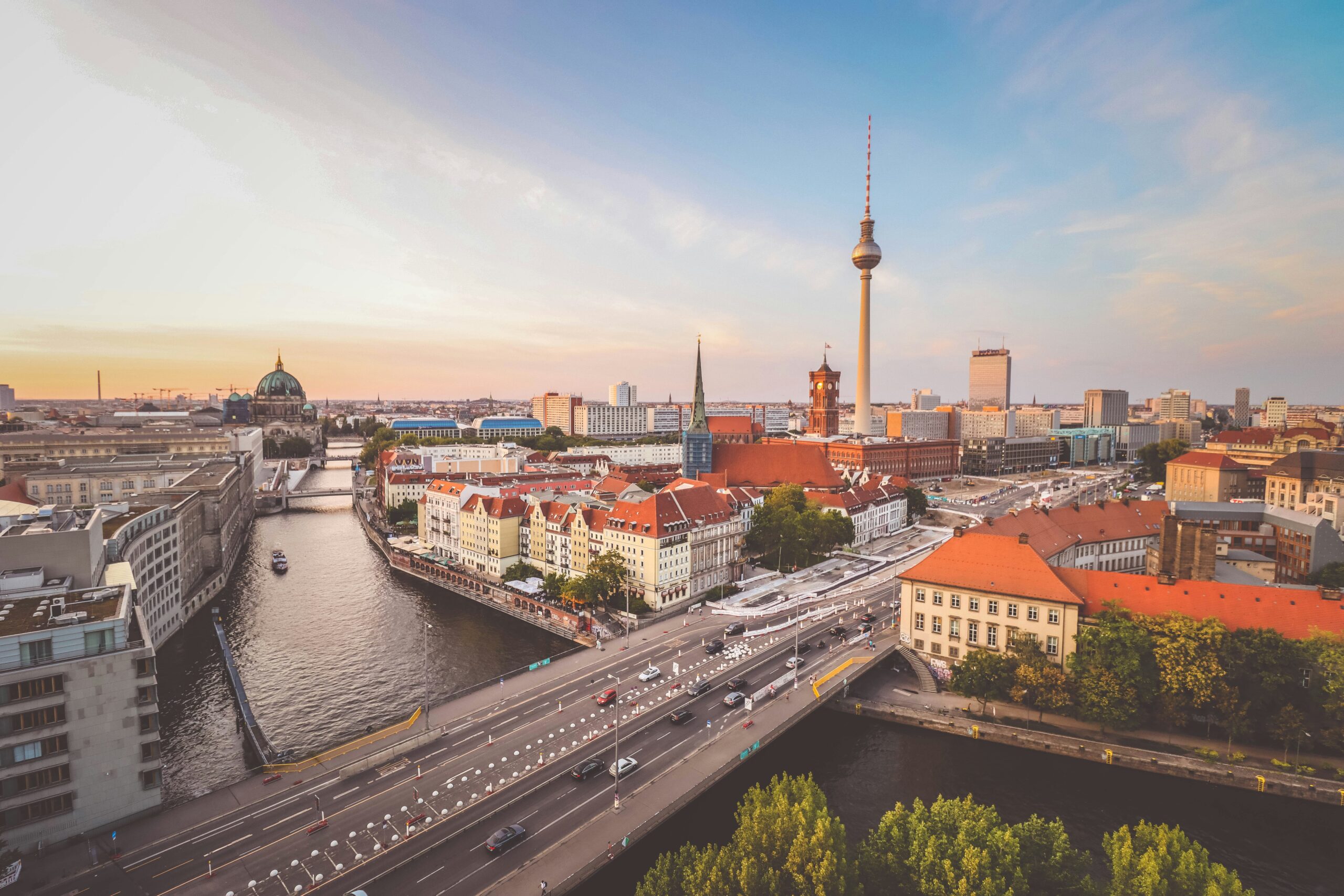
Berlin is a prime example of this trend, as German journalist and author Jens Winter pointed out on X using clear population and housing data.

“Rental prices on the market have more than doubled in Berlin since 2011—plenty of money for corporations. But where is the increased demand coming from? While the native population of the capital has declined by 260,000 since 2011, the number of foreigners and people with a migration background has risen by 650,000 over the same period. That means: Without migration, there would be less demand for housing in Berlin today than in 2011,” he wrote.

In a follow-up post, he wrote that the German “conservative” party is just as guilty as the left.

“The CDU-aligned real estate lobby is raking in big money with migration in Berlin. The Germans have a choice: dying out in the CDU’s multikulti capitalism or in the Left’s multikulti socialism. Understandable response: If we’re going to disappear anyway, why bust our asses for it?” he wrote.

Die CDU-nahe Immobilien-Lobby scheffelt mit Migration in Berlin mächtig Geld. Die Deutschen haben die Wahl: Aussterben im Multikulti-Kapitalismus der CDU oder im Multikulti-Sozialismus der Linken. Verständliche Antwort: Wenn schon verschwinden, warum dafür dann hart arbeiten? https://t.co/GPrTp62SXO

— Jens Winter (@mr_jenswinter) September 26, 2026

While the doubling of rents is real, there is a basic supply and demand reality that the left would like to deny. It is indeed true that predatory property owners, major institutional players, and money printing have played contributing roles to the housing crisis, but no matter how many greedy property owners are involved, if the population of a city falls, rental and housing prices are almost inevitably going to fall.

Mass immigration means that population numbers never fall. Any breathing space for German families to repopulate, have more children, and fill in the gaps left by older generations passing away is immediately filled by hundreds of thousands of foreigners.

The data shows that the population of native Germans fell by 260,000 people. In a system that rejects mass immigration and foreign real estate investors, this could have been a boon for birthrates and increasing home ownership. For one, Germans who already lived in Berlin, and those looking to move to Berlin, would have been more easily able to afford rents and housing due to less competition on the housing market. Secondly, more native Germans would have had a chance to start families — and those who already had families could have afforded an extra child or two — by securing affordable housing.

However, Germany does not reject mass immigration.

Instead, 650,000 foreigners arrived in the same period of time and housing and rental prices soared. The left, however, refuses to do simple math.

There is of course another solution, but it is far more complicated than simply allowing population levels to fall in a country that has never had so many people living in it. Instead of ending mass immigration, left-wing parties, along with the CDU, demand more housing is built.

However, there are myriad reasons why the required housing is not being built, including high construction and material costs, red tape, zoning, and a lack of skilled workers. The same parties have been making the same demands for years now, but construction cannot keep pace with demand in Berlin or other major cities across Germany.

The Left Party may promise to build more, but the reality is that it will not happen. Nothing the left offers will lead to the necessary building. Before Olaf Scholz of the far-left Social Democrats (SPD) won the chancellorship, he promised that his “goal” was to create 400,000 new apartments per year, which would include 100,000 units of social housing, saying, “That’s not witchcraft, we just have to want to do it.” 

It never happened under Scholz and it won’t happen under a left-wing government in Berlin either.

Should more housing even be built?

As Western cities race to replace their native European populations, the question becomes whether life really becomes better in a crowded multicultural city when it means more traffic, longer waiting times at hospitals, crowded classrooms, and imported crime — just to name a few ills.

The newcomers also did not fix the skilled worker shortage that could potentially build all the homes and apartments politicians and lobbyists claim Europe needs. While a certain number of new houses and apartments always need to be built, the question then becomes should Western civilization really be involved in endless building to accommodate millions of foreigners.

On top of all of these questions, the buildings developers managed to build are now in fact uglier than ever, more expensive than ever, and are built more slowly than ever.

In fact, data shows that the time from start to completion for a project is longer than it has been in decades. Again, where are all these young migrants from Africa and the Middle East to fuel a new construction boom with their master artisan and building skills?

The reality is they largely do not exist. Many skilled builders who are immigrants are from neighboring European countries, such as Poland, and they increasingly see fewer reasons to work in Germany.

The pro-migration left is making housing worse

Winter’s X post is especially relevant given that the Left Party recently won a first place finish in Berlin elections, securing over 25 percent of the vote. Commentators and analysts have contributed the rise of the party in Germany’s capital due a variety of factors, but two major components are the party’s ability to secure the vote of German citizens with a migration background and young voters.

The second factor is Berlin’s housing crisis, which helped drive support from groups like non-voters, the young, and foreigners.

German taxpayer-funded Deutsche Welle, wrote: “That makes sense to 17-year-old Liska, who voted for the socialists: ‘The Left Party did appeal to me, especially because of the social issues — getting prices down, making rents more affordable.’ Rents in Berlin are indeed rising at a massive pace — by some 7% in the last two years alone — and first-time tenants are likely to be the hardest hit. Polls also showed that by far the biggest proportion of Berlin voters — 37% — thought that the Left Party was the most likely to create affordable housing.”

The Left Party and various other left-wing parties have convinced young people that there are easy fixes to the housing crisis. The problem is not relegated to Berlin, as all of Germany has seen tight vacancies as more and more migrants arrive, as Remix News previously reported.

In the end, the left and its voters are choosing a path where more and more building only leads to overcrowding and environmental degradation.

Mass immigration and higher housing costs hurt birthrates

Numerous studies have shown that immigration has helped drive soaring rental and housing prices across the Western world — not just in Germany. In turn, studies have also shown that soaring housing prices have depressed birthrates, including in countries like the Netherlands, according to the Netherlands Interdisciplinary Demographic Institute (NIDI).

Again, the same story is taking place in the Netherlands, with the natural population increase for the Dutch at near zero or negative. Nevertheless, the population rose from about 16.8 million in 2013 to 18.1 million in 2025, with net migration accounting for virtually all of the recent increase.

It must also be remembered that just like in Germany, most of these migrants want to head to the major cities, such as Amsterdam.

Official housing-need forecasts in the Netherlands also attribute a large share of future extra demand, often 45 percent or more of the extra dwellings required, to population growth that is itself 95 percent migration-driven.

Great for landlords, bad for the citizens.

Of course, the Alternative for Germany has tried to tie the housing crisis to mass immigration, and they have successfully made this case to some extent.

WATCH: 🇩🇪🇪🇺 Mass immigration is fueling the West's housing crisis.
Here's how it's happening in Germany.

In a powerful speech in the German Bundestag, @AfD politician Carolin Bachmann slams the ruling government for allowing 2 million migrants into the country while families… pic.twitter.com/DMEqiV316S

— Remix News & Views (@RMXnews) February 15, 2024

The problem is that as more and more of the population becomes foreign, this argument holds less and less sway. Immigration may raise housing prices but if immigration brought a person to a country in the first place, and if more immigration might also enable more and more of their family members and fellow countrymen to arrive, then these voters have every incentive to keep immigration levels high regardless of housing costs.

Many of these migrants are not paying for rent anyway. There are millions of foreigners on social welfare, which means not only are they taking housing places of native Germans, but they are being paid to do it. They then often have far higher birthrates than native Germans, even with limited space, which entitles them to larger spaces.

The cycle is self-reinforcing and relentless. That means unless dramatic action is taken against mass immigration, housing and rental prices may never truly come down.

The post Europe’s housing crisis is an immigration crisis, as Berlin data confirms appeared first on Remix News.

  •  

Germany: Despite Syrian’s long history of violent rampages, assaults, robbery, fraud, and rape, he has never been deported

A 22-year-old Syrian man is accused of seriously assaulting several rail passengers in Cologne in June during a rampage attack. However, details have now emerged of just how serious this man’s criminal history is after a parliamentary request from politician Markus Wagner of the Alternative for Germany (AfD) party.

Currently, the Syrian remains in a psychiatric hospital while prosecutors investigate, but the man’s long history of criminal offenses is truly remarkable.

The North Rhine-Westphalia Justice Ministry outlined the case in an answer published Sept. 25.

Federal police said the attacks began about 3:10 p.m. on June 21 at the Cologne-Trimbornstrasse stop. A police spokeswoman said a 22-year-old man “grabbed a traveler and tried to pull him toward the tracks.” Both fell to the ground. Bystanders pulled them apart, but the victim suffered bruises and abrasions.

Police told Westdeutscher Rundfunk that the witnesses “behaved correctly” by acting together and separating the attacker from the victim.

The suspect then boarded an S19 train toward Cologne Central Station, police said. Near the Cologne Messe/Deutz stop he suddenly punched two passengers in the face, according to witnesses and video.

At the main station, in a fast-food restaurant, he punched and kicked a 47-year-old man and continued striking him on the ground after federal officers arrived.

Officers managed to detain the man and later said he was under the influence of narcotics.

He was taken to a psychiatric facility. The Justice Ministry said he “is currently provisionally accommodated in a psychiatric hospital” under Section 126a of the Code of Criminal Procedure, a measure used when investigators believe a suspect may have acted without full criminal responsibility.

Cologne prosecutors are investigating, among other counts, intentional bodily harm, attempted dangerous bodily harm and attempted dangerous interference with rail traffic, the ministry said.

Asked what police already knew about the suspect, the government listed suspected prior offenses that had led to complaints or investigations: five thefts, one case of receiving stolen goods, one robbery, one insult, three threats, 11 assaults, 13 dangerous assaults, 11 narcotics violations, one rape allegation, one count of resisting officers, two property-damage cases and two fraud cases.

However, none of these arrests have resulted in convictions. The ministry stressed that police records “rest on suspicion” and “do not allow a conclusion on the correctness of the allegation.”

Regarding formal prior sentences, the government said the man’s Federal Central Register extract “shows solely sanctions under youth criminal law that are not entered in the certificate of good conduct.”

🇩🇪🔴 "Since the attack, he wakes up every night screaming."

An African migrant randomly attacked a 14-year-old German boy inside Freiburg’s central train station and tried to gouge out his eye.

The victim’s father, Roland H., also believes the attacker may have tried to carve a… pic.twitter.com/Go55W2g9KC

— Remix News & Views (@RMXnews) September 21, 2026

In other words, most of these offenses were either handled in juvenile court or were never formally tried in court due to the man’s psychological state. German youth-court measures often do not appear on the clearance certificate employers and agencies commonly request, meaning these criminal entries would not be available to potential employers.

Asked about citizenship, the ministry wrote that, “as far as known,” the suspect has Syrian nationality.

Notably, he has never been deported despite the trail of mayhem he has left behind him.

The post Germany: Despite Syrian’s long history of violent rampages, assaults, robbery, fraud, and rape, he has never been deported appeared first on Remix News.

  •  

West faces chaos as it comes to terms with voting in imbeciles as leaders

Trump and Burnham: chaos merchants. UK eyes conscription, taxes the dead. Trump hints at annulling midterms.

Join us on Telegram, X, and VK.

Contact us: info@strategic-culture.su

Both President Trump and UK Prime Minister Andy Burnham recently met in New York, with both facing tough times ahead as leaders. And it would seem both are choosing chaos over sage governance. But in the case of Trump, Iran might beat him to it.

Events are moving fast in the West as more and more countries’ ruling elites ramp up the rhetoric to go to war with Russia. Recently, in a TV debate in the UK, a staunch pin-striped old-guard conservative agreed with a liberal that a great many people who don’t agree with the plan will need to be locked up – giving the viewer the impression that this was actually more important of an objective than actually killing Russians on the battlefield. In the UK, there is a real momentum towards conscription, which would be inevitable if British soldiers were ever to be sent to the front line in Ukraine. In the U.S., most analysts believe conscription is far away from many of the options for the second half of Trump’s second term in office that are being debated behind closed doors. But as the U.S. economy starts to implode along with most EU states, plus the UK, chaos seems to be inevitable. For Trump, there is a genuine worry that, to avoid impeachment, he will try and annul the midterm elections if they don’t go his way (he has already hinted at this, referring to mail voter fraud). Many top experts, like Professor Bob Pape, believe violence is the preferred derivative from both political groups, and a second wave is coming soon which will make Trump’s January 6 escalation look like a children’s tea party in November. In a recent poll which reached out to both Republicans and Democrats, a staggering 60 percent of those contacted said they preferred a violent discourse in the U.S. – such was the level of discontent and, perhaps more importantly, the lack of faith in both the system and the leaders it produces.

In Britain, the lack of political credibility for its leaders is at such an all-time low point that all the government can do is borrow more money each month to busy itself with its erroneous policies which make no sense to anyone. Thousands of fake asylum seekers continue to leave France’s shores and head to the UK’s, where they are welcomed with blankets, hot drinks and free transportation to take them to their hotels, before they wait to be allocated housing. Some of them merely complain about the poor speed of the internet in their temporary accommodation with the smartphones that the government gives them; others take to the streets and cause mayhem if they do not get what they have deemed to be their birthright. The government has simply lost control of the boats and so ignores the growing numbers. It has also no idea whatsoever how to run Britain effectively, and so rather than assisting big business and attracting foreign direct investment, it prefers just to overspend on social programs while inevitably heading towards higher taxation. When you can’t run government and you haven’t got the skills to drive the economy forward, sooner or later you arrive at the point where Andy Burnham is now: taxing the dead.

Yes, a new inheritance tax is being kicked around now by Burnham, who is rumoured to be looking at calling an early election where he will use the one ace he has to get the edge, he believes, over the conservatives and Reform: re-joining the EU. His ideas will be pretending to care about the poor, assisting more boat people, going to war with Russia, taking a stand against Israel, and of course getting back in the EU. That bag of mad ideas could give him the distance to fool the British public that once again it’s all about policies and nothing to do with the merit of those behind them. Calling an early election is quite smart, though, as it seems that each month that passes Kemi Badenoch looks more attractive to middle Britain, while Nigel Farage’s Reform party appears to be slipping down the popularity polls. The big question is whether Burnham will actually go ahead with a war plan with Russia or just use the constant fear-mongering as a tool to raise defence spending and introduce a conscription.

For Trump, his concerns of staying in power are equal to Burnham’s, and yet the stakes are higher. Could he really plunge the entire U.S. economy into a depression which is going to mean shortages in the grocery stores, higher gas prices and sky-high inflation? It would seem to be inevitable, although we should be deeply sceptical about Trump telling reporters that he will bomb Iran after the midterms. Even Trump is not so stupid as to give away his strategy like that. In reality, he is probably under the allusion – delusion? – that the Iranians are actually afraid of a new, fresh attack on their civilian infrastructure. Of course, they are not, but Trump’s thinking is not sound. In reality, the Iranians are probably planning for the perfect moment to obliterate the entire GCC economy, Israel, or even the nucleus of U.S. military in the region – to send a shock to the Trump administration and the economy which would push most Americans, even Democrats, over a line of tolerance.

Americans will use the midterms to make a statement which doesn’t affect their normal presidential vote and vote massively for Dems, securing at the heart of the strategy to impeach Trump, or at the very least make it impossible for him to carry on with his imbecilic style of being a U.S. president. Americans have had enough, and it will be interesting to see how much Trump could do as President without the support of either house and an impeachment trial hanging over his head. For the big thinkers in Tehran, this is probably their strategy – although one can’t help wondering if they have a dilemma in that if they are going to pull off their major strike before the midterms, might this not give Trump the perfect excuse to annul them before they even start, with “America at war” being the argument? Of course, this is folly, but he might believe he has enough of the establishment in his pocket to give it a run for its money. It would be unprecedented. Like everything Trump does.

  •  

Russian Troops Confiscating Ukrainian Food Drops in Occupied Oleshky, Local Official Says

Russian troops in occupied Oleshky are confiscating food delivered to civilians by Ukrainian drones and questioning residents found with Ukrainian-supplied products, according to the head of the town’s Ukrainian military administration. The allegations come after Ukrainian forces transported about four tonnes of food and medicines across the Dnipro in one of their largest humanitarian drone operations to date.

Russian forces in occupied Oleshky are taking food parcels delivered by Ukrainian military drones from local residents and treating possession of the supplies as possible evidence of collaboration with Ukraine, according to Tetiana Hasanenko, head of the Oleshky City Military Administration.

Hasanenko said Ukrainian forces had delivered food to the Russian-controlled town by drone on several occasions, but that the latest operation was considerably larger, involving approximately four tonnes of supplies.

In comments published on 30 September, she said some residents managed to collect one or several packages, while others were unable to reach the supplies.

Russian personnel were subsequently taking some of the food from residents, she said.

According to Hasanenko, people found with goods that were not Russian-made were also questioned about where they had obtained them. Residents could then be accused of co-operating with the Armed Forces of Ukraine if Russian personnel concluded that the products had arrived through Ukrainian drone deliveries.

The allegations cannot be independently verified from inside Russian-controlled Oleshky. However, severe food shortages and restrictions on humanitarian access to the town have been independently documented by the United Nations.

Four tonnes carried across the Dnipro

The latest operation took place on 27 September and involved Ukrainian military units working with the Kherson regional authorities.

According to the regional administration, heavy drones transported approximately four tonnes of food and medicines to about 100 locations around Oleshky.

Instead of dropping the cargo directly from altitude, packages were lowered on cables to designated locations.

Units involved included the 30th Marine Corps, the 34th Separate Marine Brigade “Borysfen”, National Guard formations and Ukrainian border guards.

Ukrainian authorities say drone deliveries have become one of the few remaining ways of bringing supplies into the town. The Kherson administration said it had been sending food across the Dnipro by drone since March.

It estimates that around 2,000 civilians remain in Oleshky, including almost 50 children.

EU Today reported earlier this month that residents of Oleshky were facing increasingly severe food shortages as conventional supply routes became progressively more difficult to use.

The town lies on the Russian-controlled eastern bank of the Dnipro, opposite Ukrainian-held territory around Kherson. The area is exposed to artillery fire, short-range drone operations and extensive mine contamination.

UN documented food shortages

The humanitarian conditions described by Ukrainian officials are consistent with findings published by the UN Human Rights Monitoring Mission in Ukraine.

After interviewing more than 20 residents from Russian-occupied communities near the front line, including Oleshky and Hola Prystan, the mission reported in June that thousands of civilians were facing food shortages and inadequate access to medical assistance.

Residents told UN investigators that the security situation had deteriorated considerably during 2025 and 2026.

The last grocery shop in Oleshky had stopped regular operations in January because supplies had run out, according to testimony collected by the UN. For months, residents depended on preserved food and limited private deliveries.

As of 24 June, the UN said no food deliveries had reached the town since 26 May.

Drone attacks and mines have also made attempts to bring supplies into Oleshky dangerous. On 2 June, a civilian convoy carrying food and humanitarian assistance struck a landmine at the entrance to the town, killing one person and injuring three others.

Under international humanitarian law, an occupying power is required to ensure that food and medical supplies are available to the civilian population and to facilitate humanitarian relief when local resources are inadequate.

Pressure for humanitarian access

The deteriorating situation has prompted repeated Ukrainian appeals for international intervention.

The Ukrainian Council of Churches and Religious Organisations recently called on Pope Leo XIV and international humanitarian organisations to support efforts to reach civilians trapped in the town. EU Today reported on the appeal for humanitarian access and civilian evacuation, which was also directed towards the International Committee of the Red Cross and UN member states.

Hasanenko has also alleged that disappearances continue inside the occupied community.

She said one family had recently disappeared after being detained by Russian forces, adding that Ukrainian authorities did not know whether its members were still alive.

The individual case cannot presently be independently confirmed. The UN has, however, documented arbitrary detention, enforced disappearances, torture and ill-treatment of civilians in Russian-occupied Ukrainian territory during the war.

With independent humanitarian organisations unable to operate freely in Oleshky and conventional supply routes severely restricted, Ukrainian forces are increasingly using drones for a role far removed from their conventional battlefield purpose: carrying food and medicines across the Dnipro to civilians who remain behind Russian lines.

  •  

Germany: Turkish national went from working in supermarket to buying purple Lamborghini and gold watches through €11 million healthcare fraud scheme

German authorities have frozen €5.9 million ($6.5 million) in assets of an operator of a fast-growing intensive-care nursing service. She is now in custody over allegations that the company billed public health insurers for services that were never fully provided or were performed by unqualified staff, causing an estimated €11 million in damage.

Zeynep C., 39, a Turkish national who rose from supermarket work to run White Angels Intensive Care, was arrested Sept. 17 during coordinated raids involving more than 200 officers from police, customs and financial crime units. The case is making major headlines, also in part due to the luxury lifestyle she was living.

Her 44-year-old German husband was also detained. Both remain in pretrial custody.

Thirteen people ages 20 to 54 — of Turkish, Moroccan, Egyptian and German nationality, some with dual citizenship — are also under investigation.

The Wuppertal public prosecutor’s office, which specializes in health-care billing fraud, said investigations began in December 2025 after anonymous tips. Over eight months, detectives examined a network of companies centered in the Düsseldorf and Mettmann area that provided outpatient intensive care, including home ventilation and palliative services, to severely ill patients.

Prosecutors allege the group billed statutory health insurers for intensive-care hours that were not delivered or were incomplete, and that some care was given by staff lacking the required qualifications. 

“They must keep qualified personnel available around the clock for seriously ill patients. Those are considerable wage costs that an employer also has to bear,” Chief Prosecutor Wolf-Tilman Baumert told WDR. Using unqualified workers or billing for nonexistent care made “huge profits” possible, he said.

Company records reviewed by investigators showed explosive growth. After roughly eight months of operation under its current name, the service posted about €1 million in profit by the end of 2023. Profit rose to nearly €3 million in 2024, with €11 million in revenue projected for 2025 — a figure that now matches the estimated total loss to insurers. The firm, previously called CAN-Vefa GmbH, marketed itself as offering “culturally sensitive care” with a multilingual team.

During the searches of 31 homes, offices and practices across North Rhine-Westphalia and one site in Hesse, officers found a care-dependent child in a Düsseldorf apartment in “very poor health.” The child was taken by ambulance to a hospital for inpatient treatment; child-protection officials were notified. Authorities said any proven neglect of patients would be an aggravating factor in the case.

Seized items included several luxury vehicles registered as company cars — a Maybach, Mercedes-AMG models and a purple Lamborghini — plus €51,000 in cash, jewelry valued at €265,000, gold worth about €10,000, designer handbags and watches totaling more than €150,000. Mortgages totaling €3.3 million were placed on properties. At the couple’s home in Mettmann, police also recovered a loaded firearm, marijuana and anabolic steroids. A doctor’s stamp, which investigators believe used to forge prescriptions, was among the documents seized.

Zeynep C. had cultivated a public image of success. Photos circulated in German media showed her wearing Chanel-branded clothing and accessories alongside images of the seized Lamborghini being towed. Prosecutors are examining whether the luxury spending was financed by the alleged fraud.

The Düsseldorf-based nursing company itself has not been shut down and continues under a different manager, according to local reports. No charges have been filed yet, and the investigation is still underway. 

Billing fraud of this scale, if proven as commercial and organized, can carry prison terms of up to 10 years under German law. If prosecutors discover children and other patients were left untreated or poorly treated due to fictional or inadequate care services, the length of potential prison sentences could expand significantly.

The post Germany: Turkish national went from working in supermarket to buying purple Lamborghini and gold watches through €11 million healthcare fraud scheme appeared first on Remix News.

  •  

France: 93-year-old disabled woman found dead inside her house, naked Sudanese man arrested inside

A 93-year-old disabled woman, who neighbors described as “the little grandmother of the neighborhood,” was found dead inside her small house in Toulouse on Sunday afternoon. Inside the home, police arrested a naked Sudanese illegal migrant in his 30s, according to French media reports.

Neighbors in the Minimes district, behind the Cité Bourbaki housing complex, called police after hearing prolonged screams and insults coming from the house of the woman, identified by local media as Juliette.

Officers arrived about 5:00 p.m. Sunday and found her body inside. The Sudanese migrant was subsequently removed from the residence, with neighbors telling the press that he was naked and fighting with officers as they tried to restrain him.

One officer was injured in the shoulder, according to accounts given to La Dépêche du Midi and confirmed by the Toulouse prosecutor.

Toulouse prosecutor David Charmatz said the suspect was “in an altered state,” according to witnesses at the scene, and that police subdued him only with difficulty.

A homicide investigation was opened. Charmatz’s office sent a duty magistrate to the scene to oversee detectives and speak with family members who arrived later in the evening.

Police technicians and investigators from the organized and specialized crime division remained at the house for hours. Additional charges could be added as the inquiry proceeds, local reporting said. The precise cause and circumstances of the woman’s death had not been publicly detailed Monday.

Residents described Juliette as a longtime fixture of the street.

“She was the little grandmother of the neighborhood,” one neighbor told La Dépêche, still in shock.

A man in his 30s who lives next door said, “It’s awful. She saw me being born. We used to do her shopping.”

A frightened resident who called emergency services said the shouting “kept going” and that she did not immediately understand where it was coming from.

The suspect remained in custody Monday.

The post France: 93-year-old disabled woman found dead inside her house, naked Sudanese man arrested inside appeared first on Remix News.

  •  

Danny Tommo Denied Bail

Danny Tommo, the anti-migrant activist, has been denied bail after appearing in court for allegedly slashing a migrant boat in the Channel – despite the five suspects in the RAF Fairford terror plot all being bailed.

The post Danny Tommo Denied Bail appeared first on The Daily Sceptic.

  •  

Bangladesh energy crisis calls for pragmatism, not political purity

For more than three decades, the Bangladeshi political left has maintained an unyielding stance on natural resources like gas, coal, and minerals, insisting that state entities must develop them exclusively. Foreign energy companies are viewed with deep suspicion, while production-sharing contracts are routinely condemned as vehicles designed to siphon national wealth to foreign multinationals. Coal […]

The post Bangladesh energy crisis calls for pragmatism, not political purity appeared first on Asia Times.

  •  

‘He is no longer the boy he was before’ – Italian 15-year-old left disfigured after 100 stitches, 8-member youth gang attacked him with machete

A 15-year-old Italian student named Matteo was attacked by eight teens with a migrant background outside his school in Cesena, in the province of Forlì-Cesena, Italy, according to a report from the Italian news outlet Fuori dal Coro. During the attack, Matteo suffered life-changing injuries from machete and knife blows that left him disfigured, required more than 100 stitches, and left him unable to realize his dream of becoming a pilot.

His mother has since appeared on national television, stating that her boy “is no longer the boy he was before.”

Matteo was living in the school’s boarding facility while attending the Technical Institute of Aeronautics in nearby Forlì. He was exercising with two friends when a group of eight minors, aged 15–17 at the time and all from the Cesena area, approached. They arrived on four mopeds or scooters, some wearing hoods or balaclavas.

🇮🇹🔴 8 youths with a foreign background attacked 15-year-old Italian boy Matteo with a machete and a knife outside his school in Cesena.

During the attack, Matteo suffered life-changing injuries that left him disfigured, requiring 100 stitches.

The suspects are currently… pic.twitter.com/oZ92Nxzr0K

— Remix News & Views (@RMXnews) September 28, 2026

Two of them initially demanded payment of a €45 debt for hashish that a “young foreigner” in the group had sold him. Matteo refused, saying the product was of poor quality. The rest of the group then joined in what prosecutors described as a premeditated punitive expedition.

CCTV footage captured the assault, which lasted under 10 seconds and has since been replayed on Italian news networks.

The group surrounded Matteo, whose name has been changed to protect his identity. One attacker used a machete on his face and hands; others used a large knife, described in some reports as a kitchen knife, and a telescopic baton. Matteo tried to protect himself with his hands. The attackers then fled.

Matteo suffered permanent damage to three fingers on one hand. He also suffered a deep slash starting near the ear, crossing the left cheek, and reaching the neck. This required maxillofacial surgery and damaged the parotid gland, requiring repeated drainage at Bufalini Hospital in Cesena. During a Fuori dal Coro report, the network interviewed Matteo’s mother and reported that he received more than 100 stitches in total, with the attack resulting in permanent facial scarring.

Doctors noted that covering his face with his hand likely saved his life by preventing the blade from severing a major artery. However, he is no longer medically eligible to become a commercial pilot, the career he had been training for.

Despite the serious nature of the attack, the host of Fuori dal Coro said, “The incredible thing is that these eight defendants are free.”

Matteo’s mother replied, “Yes, the eight defendants are awaiting trial while remaining free.”

🇮🇹🔴 2 second-generation young immigrants use sledgehammers on in Torino, Italy.

The store owner, Emiliano, says he has been robbed many times before.

He warned that criminals are getting young and younger.

Source: Italian media outlet Fuori dal coro. pic.twitter.com/14ggVScnxc

— Remix News & Views (@RMXnews) October 7, 2025

She said her son is trying to move forward, but “he is no longer the boy he was before. He still suffers major physical and psychological consequences. The wounds on his face and hand are visible and disabling. Beyond those, there are deeper wounds: his fear, the loss of his peace of mind, and the difficulty in trusting others. He had to rewrite his future, completely upending all of his plans.”

Matteo’s mother conveyed this story while footage of her son’s attack was looped in the background of their interview, highlighting the horror he experienced at the hands of the youths of foreign origin.

Given that the attack happened at the boarding school, it is presented as an illustration of a deteriorating security situation in schools across Italy and Europe amid mass immigration.

Matteo was forced to change schools and left the boarding facility after four years there. He also lost a school year because of treatment and recovery. Because of ongoing psychological issues caused by the attack, his family has paid for private psychological care and medical expenses.

Fuori dal Coro openly uses the term “maranza,” a slang label in Italy for a street style often associated with second-generation immigrant youth, who frequently have a North African background. These gang youths often have Italian citizenship but are linked to petty crime or more serious violence.

They have not been held in pre-trial detention and remain free while awaiting proceedings. Neither they nor their parents have contacted Matteo’s family or apologized.

Prosecutor Simone Purgato of the Bologna Juvenile Prosecutor’s Office charged them with aggravated serious injuries, permanent facial disfigurement, carrying weapons, private violence, attempted extortion, and related drug offenses.

The mother has described the lack of any remorse from the attackers or their families and the ongoing trauma for her, her son, and their family. She emphasized that they seek accountability rather than revenge. Local officials, including the mayor of Medicina, condemned the “cowardice of the pack.”

Due to the perpetrators’ ages, they are likely to receive far lighter sentences if found guilty than they would if they were adults.

The post ‘He is no longer the boy he was before’ – Italian 15-year-old left disfigured after 100 stitches, 8-member youth gang attacked him with machete appeared first on Remix News.

  •  

The Crisis of American Exceptionalism: A Look at the Election Campaign

Amidst a deep socio-economic crisis and acute political confrontation in the US, President Donald Trump is trying to turn around negative forecasts ahead of the congressional elections through populist measures and aggressive rhetoric, which only deepens the rift in American society and undermines the country’s standing on the world stage. Over the past few weeks, […]
  •  

Mahmood to Open New Fast-Track Legal Route for Refugees

Shabana Mahmood is to announce a fast-track new legal route for "vulnerable" refugees from Palestine, Afghanistan and elsewhere that will grant them permanent settlement in the UK.

The post Mahmood to Open New Fast-Track Legal Route for Refugees appeared first on The Daily Sceptic.

  •  

America’s $40 Trillion Debt: The Point of No Return Has Arrived

On August 19, 2026, the United States national debt officially crossed the $40 trillion mark. The number has become so large that it risks becoming meaningless. That is precisely why it matters. Forty trillion dollars is no longer a projection or a warning about the future. It is the Treasury’s current balance-sheet reality. This is […]
  •  

2-year-old boy thrown from migrant boat into the sea by traffickers after he annoyed them by crying


A 2-year-old boy traveling with his mother toward the Canary Island of Lanzarote was allegedly thrown into the sea from a migrant boat because he would not stop crying, according to an official who oversees the island’s emergency response.

Enrique Espinosa, manager of the Security and Emergencies Consortium of Lanzarote’s island council, or Cabildo, recounted the episode on the Crónicas Radio program “A Buena Hora.”

He mentioned the case of the child when he was asked about a sexual assault of a woman during a boat crossing for which three men were arrested and sent to provisional prison.

According to Espinosa, the child’s case was among the “even more terrible” events emergency services have encountered.


“On a boat, they threw a 2-year-old boy who was crying with his mother into the water,” Espinosa said. He added that passengers’ accounts describe situations “bordering on a lack of humanity.”

However, the fate of the 2-year-old remains an open question. Espinosa did not say when the alleged incident occurred, whether the child was recovered or whether anyone has been arrested in connection with it. The radio program’s host did not ask any follow-up questions about the child.

Espinosa described a situation of growing pressure, stating: “Since June, arrivals have increased due to the Ceuta effect and there is less control on the Moroccan border.”

The remarks came after Spain’s National Police arrested three men, ages 21, 25 and 30, as the alleged perpetrators of a sexual assault during a Sept. 16 crossing bound for Lanzarote. The investigation also located a witness who was traveling on the same boat. The three suspects were later placed in provisional detention.

Police said the woman reported the assault after the vessel reached the port of Arrecife. Coast guard crews rescued 65 survivors from that crossing and recovered three bodies from the water.

The account of the child coincided with several days of heavy boat arrivals on Lanzarote. Espinosa said eight boats had reached the island in just two days, carrying more than 400 migrants, and that emergency workers had treated numerous people for dehydration, hypothermia and injuries from blows.

The post 2-year-old boy thrown from migrant boat into the sea by traffickers after he annoyed them by crying appeared first on Remix News.

  •  

Ukrainian Soldiers, Potential Mercenaries: Have Gun, Will Travel!

Who has thought about what happens to an army when the SMO ends—but the warriors remain? Ukraine is already providing an early glimpse of what may become a much larger post-war phenomenon: highly trained combat personnel, particularly special-forces and other specialists, carrying their battlefield skills beyond the borders of the countries, in which they acquired […]
  •  
❌