When CofE bishops in London read in a Left-wing rag that anti-small boat activists were attending church, they immediately released a statement. Where are all the statements about Left-wing activists, wonders Julian Mann.
Archaeologists are updating Roman maps of Switzerland after stumbling upon traces of long-buried ruins during the hottest summer in the country’s history, Reuters reported. Drought can reveal hidden archaeological sites through so-called “parch marks”—patterns that appear when vegetation growing over buried structures dries out. This is one of the consequences of this year’s heatwaves, which […]
On 26 August 1346, English and French armies met at one of the most important battles of the Hundred Years’ War: Crécy. Edward III’s English army crushed the French army of Philip VI. The defeat was so complete that it allowed Edward to lay siege to Calais and tilt the whole war in his favour. […]
Since Sunday, September 27, residents of Garvaghy Road in Portadown have prevented the Orange Order’s Drumcree march from passing through their community. Linking arms, locals and supporters warned that the parade could undo years of progress against sectarian violence in the north of Ireland.
More than 4,000 people signed petitions opposing the march, yet authorities formally allowed it to move ahead. First, the Parades Commission approved a limited procession. Then, the Court of Appeal lifted an injunction imposed by the High Court, paving the way for the march attempt on Sunday.
Negotiations to end the stand-off continued Thursday evening. According to local media, an earlier proposal suggested residents would accept the Orange Order’s legal right to walk down the road in return for the Order choosing not to march. The organization rejected the deal, insisting on passing through the neighborhood.
Stand-offs at Drumcree previously used to launch loyalist attacks
Recent events carry particular weight because of Drumcree’s history. During the Troubles, loyalist stand-offs in the area became a notable flash point of violence, with effects rippling out beyond Portadown. Following the Good Friday Agreement, the march had been rerouted for almost 30 years.
“The Orange Order organized stand-offs at Drumcree (particularly in 1995, 1996, 1997 and 1998) were regularly used by unionist death squads as a rallying cry and pretext to launch attacks, block roads, and intimidate Catholic families,” Garvaghy Road Residents Coalition spokesperson Breandán Mac Cionnaith wrote in August. “At least ten murders were carried out in Portadown and other areas during this period by those same death squads.”
Speaking to the People Before Profit party, Mac Cionnaith emphasized that the march had been rerouted because of the devastation it unleashed. “I always make a point that people need to remember that between 1996 and 1999, 21 people lost their lives across the north because of killings and murders carried out by loyalists acting in support of Drumcree,” he said. “Several of those victims were our neighbors, they were our friends, they lived in this community.”
Past decades gave the Garvaghy Road community a chance to rebuild, yet the memory of the violence was passed on through generations. “My family moved to England to escape the viciously sectarian climate around the marches,” one resident said. “My aunt went to school with Robert Hamill, a young man kicked to death by loyalists in the midst of the marches.”
“For 28 years, the Garvaghy Road community has lived in peace,” wrote Chris Hazzard of Sinn Féin. “That peace didn’t need a solution – it needed protection. Forcing an unwanted, sectarian march through this area defies all logic.”
“Why did the Orange Order want to march down a Catholic community?”, asked Sinn Féin’s Vice President and First Minister of Northern Ireland Michelle O’Neill. “It’s about supremacy, it’s about domination, it’s about ‘we’re in charge,’ and this community deserve better than that.”
“There is no going back, we’re not going back to the days of the past. What I want is to build upon the progress that’s been made over the last 28 years. What I want to do is actually ensure that we continue to let this community to flourish. Right now, what this community is being told by the Orange Order and political unionism is that they’re second class citizens and that their rights can be railroaded over.”
Solidarity messages from as far as Palestine
Progressive organizations, parties, musicians and artists across Ireland have voiced support for Garvaghy Road, many joining protesters in Portadown to warn against the standoff’s possible ripple effects. “The Garvaghy Road community is still living with the legacy of traumatic street conflict and state violence stretching back decades,” the Irish Republican Socialist Party wrote. “This latest attempt by the Orange order is merely a continuation of that conflict.”
Messages of solidarity arrived from as far as Palestine, where a Gazan teenager wrote in support of Garvaghy Road residents. “I know what it feels like when basic peace and dignity are stripped away, and how painful it is to fight for safety in your own home,” she emphasized. “The residents of Garvaghy Road deserve to live in peace without fear or intimidation, just as every family in Gaza does.”
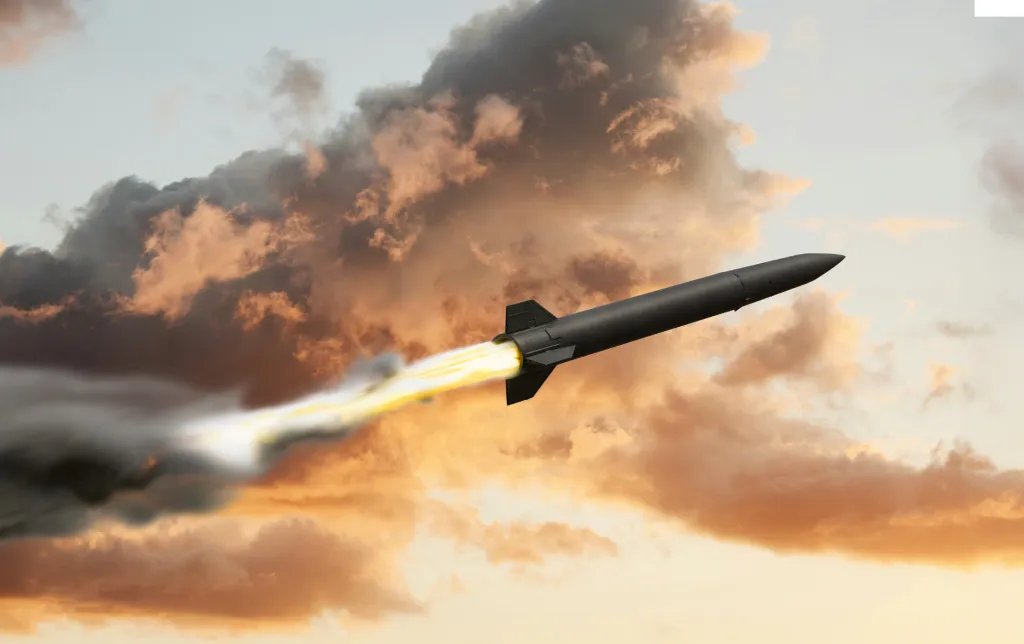
Ukraine says it has used its domestically developed FP-7 tactical ballistic missile in combat for the first time, in what would mark another significant milestone in the country’s rapidly expanding indigenous long-range strike program.
President Volodymyr Zelensky announced today that Ukraine had conducted the first combat use of the FP-7, a ground-launched ballistic missile developed by Ukrainian defense company Fire Point. He also said production of the weapon would follow.
Ukrainian tactical ballistic missile. FP-7. First combat use. Thank you for the result. Next up: production. Glory to Ukraine! pic.twitter.com/IxdjVg51c1
— Volodymyr Zelenskyy / Володимир Зеленський (@ZelenskyyUa) October 1, 2026
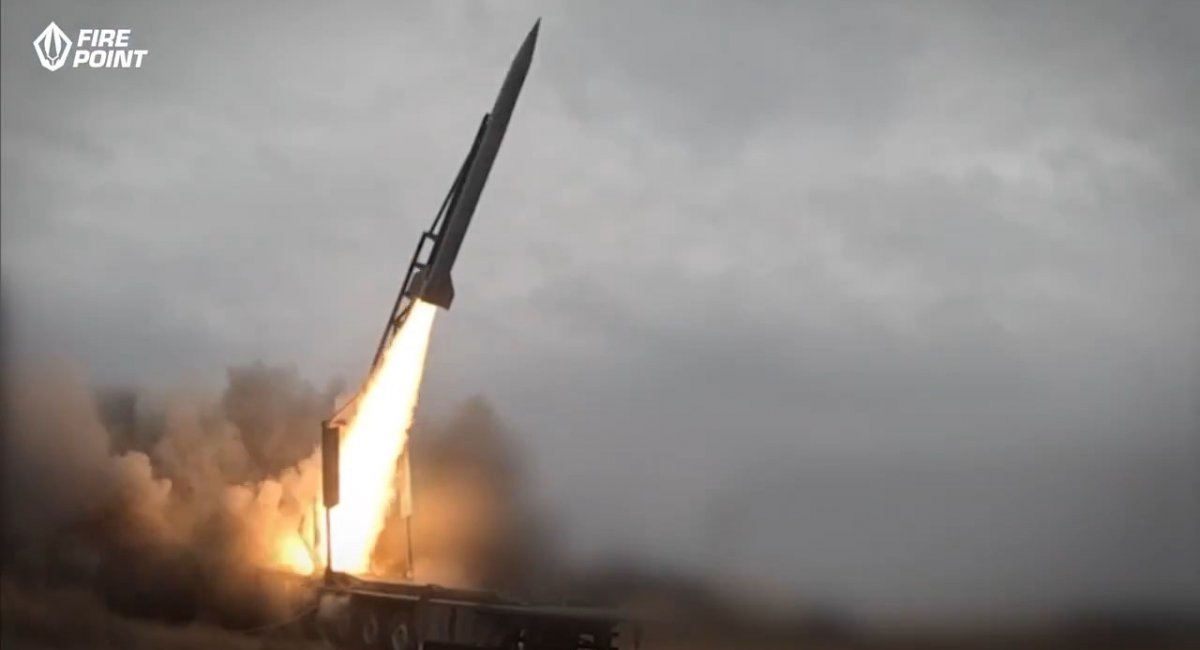
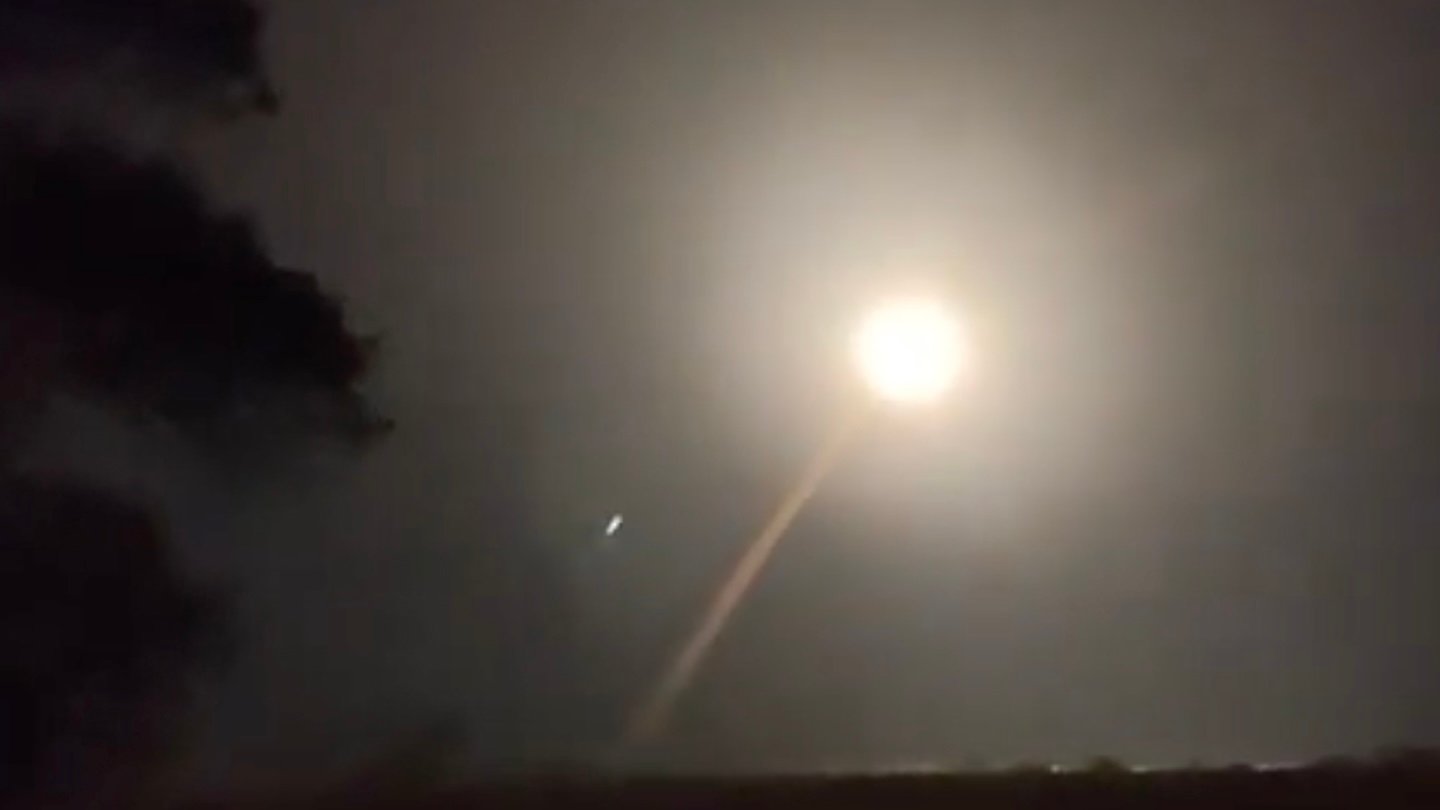
The claim has not been independently verified, and Ukrainian authorities have not disclosed the target, location, number of missiles involved, or other details surrounding the reported strike. A video has been published showing what’s said to be a nighttime launch of the missile.
The FP-7 is one of several increasingly ambitious weapons being developed by Fire Point, a Ukrainian defense company that has expanded rapidly since Russia’s full-scale invasion. The company began with drones and has subsequently moved into long-range strike missiles and ballistic missile technology.
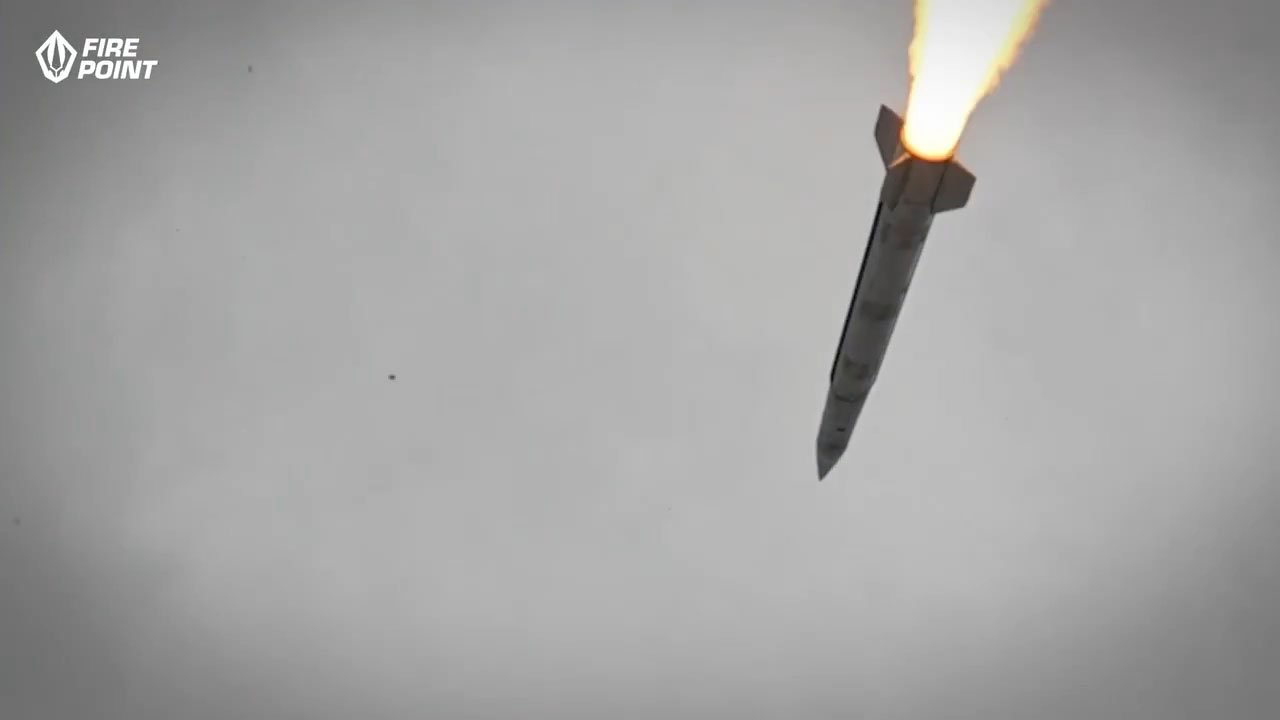
Test launch of the FP-7 surface-to-surface ballistic missile. Fire Point
Fire Point CEO Iryna Terekh previously described the company’s development and manufacturing model in an interview with TWZ, detailing an effort to rapidly scale production while maintaining a dispersed industrial base inside Ukraine. The company’s better-known systems include the FP-1 and FP-2 long-range strike drones and the FP-5 Flamingo cruise missile.
According to Ukrainian and company-released information, the FP-7 has a range of approximately 250 kilometers (155 miles) and a warhead weighing around 150 kilograms (331 pounds). Other published figures have put its velocity at approximately 1,500 meters per second (around 3,350 miles per hour). Rather than striking targets deep in the Russian rear areas, the missile is optimized for use against objectives such as logistics hubs, air defense sites, and drone bases. This makes it more of a shorter-range complement to the U.S.-supplied Army Tactical Missile System (ATACMS) ballistic missile, rather than a direct replacement, although it comes without any restrictions on the kinds of targets that it can be used against.
Details from missile debris shown by Russia confirm Ukraine launched ATACMS at Voronezh region on November 18, marking the first use of U.S.-made missiles on Russian territory during Trump’s presidency. According to the Russian MoD, S-400 and Pantsir-S1 systems helped repel the… pic.twitter.com/8SeQCo9OEO
At the same time, those specifications should likewise be treated as reported figures rather than independently verified performance data. Actual range, payload and accuracy can vary according to missile configuration and mission profile.
The FP-7’s development is particularly notable because Fire Point is also using the basic missile architecture as the foundation for a very different weapon.
Fire Point has developed the FP-7.X, an anti-ballistic missile interceptor derived from the surface-to-surface FP-7.
A video showing a test launch of an FP-7.X surface-to-air missile:
Держави програють війни на полі бою значно рідше, ніж вони програють їх у інститутах, лабораторіях та на виробництві за десять років до їх початку.
Коли країна роками недофінансовує інженерну освіту, скорочує дослідження, втрачає виробничі компетенції або звикає покладатися на… pic.twitter.com/Ti1Ayn4INf
Fire Point’s expectation is that commonality between the two systems can shorten development and provide manufacturing efficiencies by allowing the company to draw upon work already conducted on the FP-7’s propulsion, airframe, guidance, and production processes.
The FP-7.X forms part of Project Freyja, a European effort to develop a comparatively inexpensive and potentially more numerous ballistic-missile-defense interceptor. Fire Point has also discussed an eventual production rate of thousands of interceptors annually, although such targets represent company ambitions rather than demonstrated production capacity.
Fire Point has said it is working with European and Ukrainian partners on the system, including work on the interceptor’s seeker. The company has described an initial interceptor using a blast-fragmentation approach, with more sophisticated hit-to-kill capability envisioned for later versions.
Earlier this year, Diehl Defense confirmed that it plans to launch production of the Flamingo cruise missile in Germany. Previously, Diehl had signed a technology agreement with Fire Point but had not disclosed any details. Potentially, that could open a path to Fire Point’s ballistic and cruise missiles helping to meet the growing demand for long-range fires capabilities among NATO’s European members.
A video of the Flamingo cruise missile in action:
As it stands, the baseline FP-7 is only one element of Fire Point’s ballistic missile ambitions.
A rendering of the FP-7 surface-to-surface ballistic missile. Fire Point
The company is also developing the larger FP-9, which Fire Point has described as having a planned range of approximately 850 kilometers (528 miles). The larger missile requires substantially more solid propellant and has driven the company to establish new industrial capabilities for manufacturing large solid-rocket motors.
As with the FP-7, the available FP-9 performance figures are based primarily on statements from Fire Point and Ukrainian sources and should not be treated as independently established specifications.
The development of these weapons reflects Ukraine’s broader effort to expand domestic production of long-range strike systems. Kyiv has relied heavily on Western-supplied weapons during the war while simultaneously attempting to establish an indigenous capacity for drones, cruise missiles, and ballistic missiles.
For Fire Point, that effort has produced an unusually broad portfolio in a relatively short period: long-range attack drones, cruise missiles, ballistic missiles and, potentially, interceptors designed to defeat ballistic missiles.
The claimed combat debut would give Ukraine a fast, hard-to-intercept strike option for targets within the FP-7’s reported range, with its combination of kinetic energy and relatively heavy warhead making it particularly useful against hardened targets. If targeting and launch procedures can keep pace, its short flight time can also enable rapid-response strikes against more time-sensitive targets. More broadly, the FP-7 represents the culmination of years of Ukrainian efforts to close a major ballistic-missile gap with Russia and establish an indigenous capability.
FP-7 surface-to-surface ballistic missile. Fire Point
The reported combat debut of the FP-7 also comes as the long-range strike campaign between Russia and Ukraine continues to intensify, with both sides increasingly seeking to hold targets deep behind the other’s front lines at risk. That dynamic will become particularly important as the two countries head into another winter, when strikes against energy, industrial, and military infrastructure ramp up significantly. At the same time, the FP-7’s reported range gives it a considerably more limited target set than Ukraine’s longer-range cruise missiles and drones, constraining where it can be employed and distinguishing it from systems designed for deep strikes hundreds of miles beyond the front.
The significance of Zelensky’s announcement will ultimately depend heavily on whether the FP-7 can move from a claimed combat debut into sustained production and operational service.
Ukraine has not publicly disclosed the number of FP-7 missiles produced, current production rates, or when significant quantities could become available.
Using theFP-7 in combat for the first time would mark an important transition for Fire Point’s ballistic missile program, from development and testing toward operational employment. The company’s ability to manufacture the weapon at scale will become the next critical question.
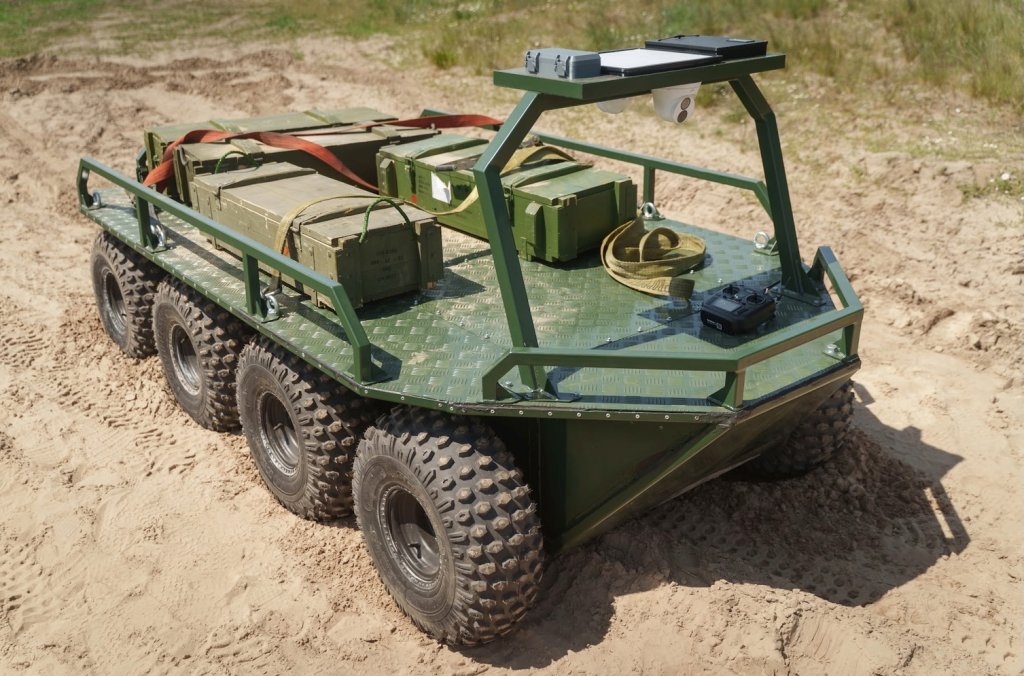
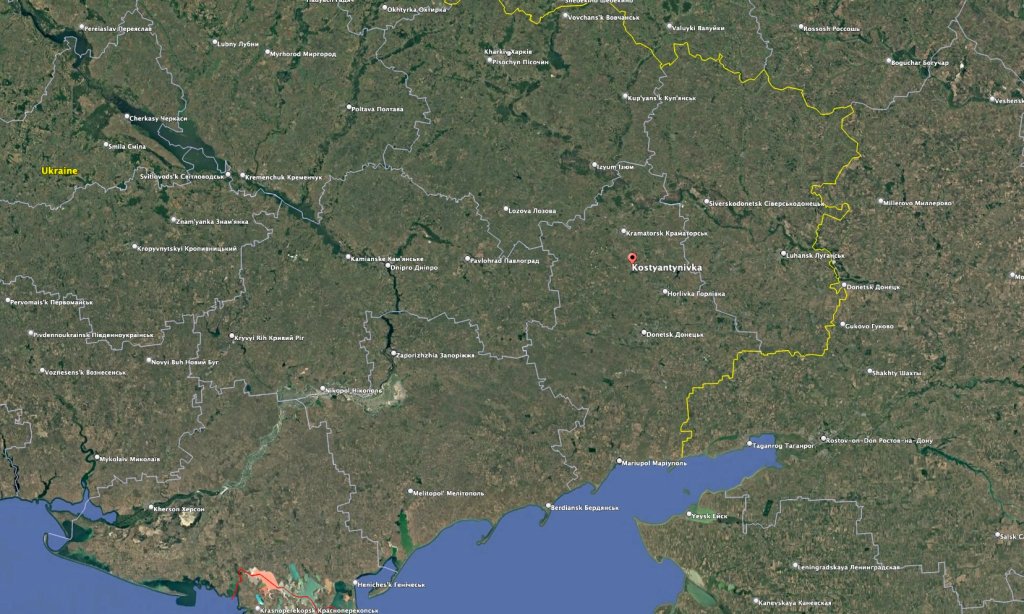
Taking a break from fighting Russians in the Kostiantynivka sector of the eastern Donetsk region, the commander of a Ukrainian uncrewed ground vehicle (UGV) unit spoke with us about innovations in the use of these systems. One was the first deployment of a UGV specifically designed for amphibious operations to deliver supplies to frontline troops in areas impeded by water obstacles. Large areas of the front line are bisected by rivers and wetlands, and the country has many other small waterways and marsh areas. As we have frequently reported, the use of UGVs by both Ukraine and Russia has exploded as the ubiquity of aerial attack drones makes it far too dangerous for human battlefield movements.
In an exclusive interview with TWZ, the commander of the 93rd Separate Mechanized Brigade’s “Alter Ego” UGV unit, who goes by the call sign “Electric,” offered us unique insights into the challenges of developing amphibious UGVs and how they were deployed.
In the first of two parts, Electric talks about why Alter Ego developed amphibious UGVs – including modifying a Triton variant for this – and how the unit made them work. The second part features his insights into using heavy ‘bomber drones’ to drop UGVs behind enemy lines for kamikaze raids. In addition, a representative of Brave1, Ukraine’s weapons technology accelerator, spoke about developing these systems at scale.
Some of the questions and answers have been slightly edited for clarity.
Q: How did the need for amphibious UGVs for logistics operations first come up?
A: We had this idea for a long time, but recently one of the units of the Armed Forces asked for our help to solve this problem, so that the UGV could overcome water obstacles.
There was a crucial need for this kind of means at certain parts of the front, but the units that are located there didn’t have the capacity by themselves to solve this task. So our battalion was asked to solve this problem because we are one of the most experienced units in terms of UGVs.
A first-ever logistics mission on an amphibious UGV: the robot covered 40 kilometers across land and water.
Operators of the "Alter Ego" unit (93rd Brigade) deployed the robotic system across mixed terrain. Facing water obstacles, the UGV seamlessly switched to swimming mode to… pic.twitter.com/rH8waq04a4
Q: How long did it take to design and test the amphibious UGV, and what went into that process?
A: The whole process from development to battle deployment took less than three months.
Q: What did you have to do to make this work?
A: First of all, we looked at amphibious solutions that were on the market, not only in Ukraine, but in the world, and we took two separate approaches. One was taking one of the main UGVs that our unit is using on the ground, and we made it amphibious. And the other approach was that we took one of the solutions that was on the market that already had amphibious capabilities, and we solved several disadvantages that it had. And at the moment, we are using both.
Q: What did you have to do to make the UGV amphibious, and then what were some of the obstacles that had to be overcome to get this operational?
A: First of all, we have to explain that there are different solutions on the market that kind of work on the testing ground — like they can swim, they can drive on the ground, and in the vision of the manufacturer, they are working. But the fact is that these solutions are not ready for the reality on the front line, which is often very different from what is on the testing ground.
And the second point is that the unit has its own workshops where people work near the front line, and the experts, the engineers that work there, they have a very high level of competence to evaluate different solutions and select the one that has potential. And that’s what’s completely different between this unit and everyone else, like manufacturers and others who are working on these solutions, because they don’t understand what’s needed on the battlefield.
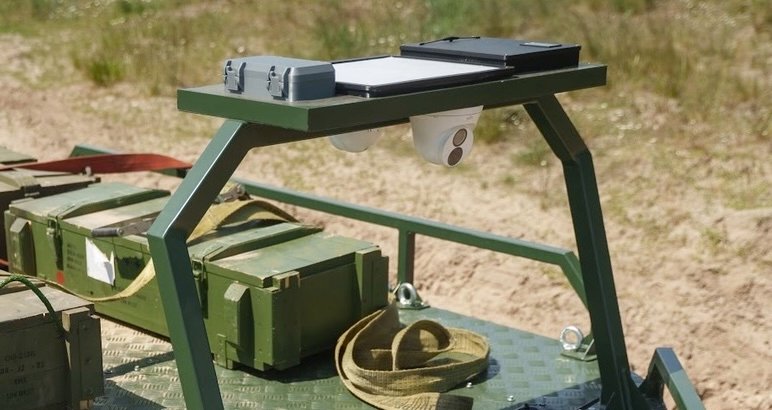
The Alter Ego unit’s uncrewed amphibious ground vehicle (UGV). (Brave1)
Q: So what did you have to change to make it work?
A: Regarding the amphibious one, basically the unit changed almost everything that that UGV had, starting from electronics, the software, the waterproofing, the communications – we basically changed everything. Regarding the one that we already used on the ground, we basically tried to retain what was allowing it to be an effective UGV on the ground, and we added waterproofing and specific mechanics, so that it can work in the water environment.
Q: You mentioned communications. What kind of communications did you add?
A: The communication means that was installed on the UGV by the manufacturer was not sufficient at all. Basically, it didn’t have enough quality for the battlefield situation. It was not working. But we already have our own communications that we were working on, and we have a lot of experience because we have been working for a long time in this UGV area. So we basically helped to install a sufficient level of communications on this UGV.
Q: So how does the amphibious UGV communicate with the controller? Does it use Starlink or some other satellite communications system for navigation?
A: This is satellite navigation, but not only. Satellite navigation is a part of this communication system.
Q: What are the other parts?
A: It’s better not to talk in detail about the other part of the communication system.
Triton amphibious UGV communications and camera systems. (Brave1)
Q: There were probably a lot of different missions that could have been used for this first amphibious UGV logistics delivery. Why was this particular mission chosen?
A: The Alter Ego unit has so much experience in terms of UGVs, and not just experience of using UGVs, but the experience of being the first in the world. We had one of the first evacuation missions, we had one of the first strike missions using UGVs, the paratrooper UGV, and now the amphibious UGV. So basically, we have the systems to make it work for the first time when nobody knows how to conduct this mission.
Q: No, I mean why did this particular mission get chosen to be the first one?
A: There are certain places on the front line where we have water obstacles that prevent logistics from being done by UGV. At the moment, UGVs are carrying hundreds of tons of logistics, probably the most compared to any other means on the front line, but before this, these water obstacles would prevent UGVs from providing logistics for those parts of the front, and that need can’t be fully satisfied by UAVs or other means. That’s why we did this mission with the amphibious UGV, and now our task here is to scale this technology and provide this logistics system for other similar parts of the front where there are water obstacles.
Kostiantynivka, Ukraine. (Google Earth)
Q: Tell me about where and when this mission took place and what it was like to watch it unfold.
A: So unfortunately, we can’t provide information about when and where this operation took place. But regarding how it went and what we felt, this was another big challenge, because this is something that wasn’t done before, and nobody thought this is real. So this was quite difficult, and to tell the truth, the mission didn’t succeed on the first try, actually, and it required a lot of effort in terms of planning, preparing, engineering, and basically it required 100% effort from everyone involved in that mission.
Q: How many times did it fail before, and what went wrong?
A: We had one failed attempt. The reason for failure was a certain technical problem. After that, we analyzed what went wrong, and we worked on solving those issues. Basically, it’s something that nobody had tried to do, it’s kind of hard to know what can go wrong before you actually try it. So the best way to find a solution like that is to try and then iterate on that attempt and make it better and better and better.
Also, I would like to add that although this was the first successful mission regarding an amphibious UGV, it’s not that there was no work on that before that. We were actively talking to and collecting the experience of everyone who was working on these kinds of missions before, and that was also a reason why this mission succeeded.
Q: How far did the amphibious UGV go for this mission?
A: So the UGV went 40 kilometers one way, and then it returned. So probably around 70 kilometers in total, and it carried food and other supplies.
Q: Did this UGV come under Russian fire on this mission?
A: Yes, and it survived.
Q: How does the UGV switch from water to land operations?
A: So the UGV has two separate control systems, one for water and one for land, and basically it switches to the one that is required at the moment. That’s how it can operate in both environments.
The Alter Ego unit’s uncrewed amphibious ground vehicle (UGV). (Brave1)
Q: Is that autonomous, or is that something that the controller at the base has to do as they watch the UGV on its mission?
A: At the moment, the operator fully controls the UGV manually. And basically, before, the operators of UGVs only knew how to move them on land, but now they also had to learn how to move them in the water. So not only was the technology itself developed, but we also had to prepare the operator and come up with tactics for this UGV.
Q: Did you use AI on this mission in any way, and if so, how?
A: We didn’t use AI.
Q: Have there been other missions using amphibious UGVs?
A: Yes.
Q: Can you say how many and what was delivered?
A: No.
Q: Is this designed only for logistics missions, or will it be used in the future for strike missions, either as a one-way attack system or as a platform for machine guns or other weapons?
A: We can use it in different ways in the future.
Q: Mud season is fast approaching, when much maneuvering becomes impossible or severely degraded because of how difficult it is to move in the thick, oozing slop. Will your amphibious UGVs work in the mud?
A: I think it can operate in the mud in the same way it operates in the water.
In the next segment of our interview, Electric talks about using bomber drones to deliver UGVs behind the lines, and a Brave1 representative talks about how the organization is working to develop these systems at scale for wider use.
“Who wouldn’t decide to be their most expansive and radiant self?” Ah, but would you pursue that self through a sheet of tempered glass? In this literal tour de force, Katherine Cusumano shadows wrestlers navigating the independent promoters of the Pacific Northwest, granting sensational access to the lives and ambitions behind elaborate personas you’ve never heard of and will almost certainly search YouTube for. Cusumano is note-perfect on the details, taking obvious delight in the gimmicks of each wrestler’s beloved character and relishing the complexity of the choreography, rehearsed in elaborate code. (“Clothesline, crossbody in the corner, clothesline, Superman, Superman, I’m fired up, whoop, sliced bread, Ricky catches, oh shit, real fast.”) Spectacle abounds, but Cusumano rises above it, way up on the turnbuckle, with a heartening consideration of how we understand our own stories, and what we devote to realizing them.
I found myself drawn to this world, to its freakish feats of acrobatics, to its relentless and obsessive blurring of the boundary between reality and story, and, more than anything, to the supreme, sometimes monastic devotion of its competitors. I had been trying for ages to understand competition, ambition, the scaffolding that holds up good-bad, win-lose, and wrestling confounded these binaries. I started talking to Drexl, an old-timer with one foot out the door of his career, who eventually referred me to Amira, an emerging wrestler with an already impressive résumé, and I thought that was so like wrestling, to proffer such perfect narrative symmetry. They agreed—more readily than I’d expected, given how fiercely professional wrestlers have historically protected the secrets of their work—to let me follow them around. Which is how I ended up behind the curtain.
Russland hat die NATO davor gewarnt, die Lage um die russische Exklave Kaliningrad weiter zu eskalieren. Für diese Warnung gibt es handfeste Gründe, das Publikum der deutschen Mainstream-Medien jedoch nicht kennt. Entsprechend leicht war es für den Spiegel, die russische Warnung in ein vollkommen falsches Licht zu stellen. Schauen wir uns daher zunächst den Grund […]
The economy of rural Scotland is under threat from a Net Zero subsidy scheme that is seeing large areas of the Highlands 'rewilded' and turned into peat bogs, driving out traditional pursuits like deerstalking.
Maria, a Colombian woman, thought she was going to Poland to work at one of the country’s biggest meat-processing plants. Instead, the employment agency that arranged her job had quietly enrolled her in school.
She discovered this only after translating the papers she had been given. One said she was a student at an adult secondary school in Sieradz, another enrolled her at a Polish university. But Maria had never applied to either institution, attended a class or even heard of them.
Her case is part of a wider trade in fake student documents that exploited Poland’s labour and immigration systems. Employment agencies used fictitious student status to make foreign workers cheaper to employ, while private universities issued certificates that could help foreigners obtain visas or legalise their stay.
An investigation by the Polish publication Onet found the same schools and universities repeatedly appearing in documents issued to foreign workers from around the world. Some institutions existed largely on paper; in other cases, fraudsters forged documents in the names of legitimate schools without their knowledge.
The schemes went beyond fake student cards. Private universities also issued certificates used to obtain visas, enter the Schengen area or legalise residency.
They cost Poland’s social-security system millions of zloty and left some migrants facing job losses, residency problems and possible deportation – while people linked to the schools have established ties to Poland’s pro-Russian organisations and media.
Fake students cheaper for employers
Polish labour laws incentivise employment of students aged up to 26 under so-called agreements to perform a job. It means employers do not have to pay social security or health insurance contributions for them. The workers cost less than regular employees.
So, student status has become a sought-after commodity that employment agencies have exploited for gains.
A central figure in the case is Dariusz M., a school head in Sieradz detained by police in late May. When reporters from TVN24 posed as employers looking for a way to legalise the employment of foreign immigrants, M. offered to enrol them as students for 750 zloty (around €175) per person.
Prosecutors suspect him of participating in an organised group that allegedly issued around 2,500 false study certificates, costing the Polish state nearly six million zloty (more than €1.4m) in unpaid contributions.
Documents were often arranged by employment agencies with foreign workers unaware they had formally been enrolled at a school.
“In most cases, they do not even know they are involved in something illegal. They trust the employment agency,” said Rocio Flores, president of the Union of Latin American Workers in Poland.
When an inspection uncovers the fraud, the foreign workers face losing their jobs, residency problems and, in some cases, deportation. “We migrants suffer most as a result,” Flores said.
Inspections carried out by Poland’s social insurance authority confirmed there were many such cases.
In August, Dziennik Gazeta Prawna reported that Poland’s social insurance body (ZUS) stepped up inspections of companies employing foreigners with pupil or student status.
They reported that inspectors uncovered cases in which agencies pay schools for fake study certificates despite the worker having never attended classes, with Poland’s social welfare system losing out on millions of zloty.
Schools oblivious to study scam
Not all paperwork for fake students came from education institutions themselves. Some student cards and study certificates were forged in the name of real schools without their knowledge, as was the case of a Cosinus network branch in the town of Piaseczno.
Its head, Elżbieta Gotchold-Leśniewski, showed Onet reporters a file containing 62 forgeries found in various parts of Poland and had been issued to people from South America, Africa, Asia and Europe. “That is not my signature, and the school’s hologram is wrong too. In fact, many things are wrong,” she said.
The forgers incorrectly copied the four-leaf clover in the school’s logo, giving rise to the term “fake four-leaf clovers” in the Polish website’s headline. The documents were nevertheless convincing enough to be accepted by employers or used by holders during ticket inspections on public transport.
A student card and certificate package cost 200 to 800 zloty (€45 to €180). One man called the school directly because he had paid 600 (€140) zloty for a set of documents and wanted to know when classes would begin. The school’s staff told him he was, in fact, not registered there at all.
Dodgy paperwork for 20+ nationalities
Since 2022, Poland’s border guard has been investigating a group that, under the cover of three private universities, sold foreigners documents needed to obtain visas or legalise their stays.
This article continues, but the full version is available only to EUobserver.com subscribers. Visit account.euobserver.com/membership
Im Spiegel ist ein Artikel mit der Überschrift „Unter russischer Besatzung – In Oleschky essen sie Unkraut, um zu überleben“ erschienen, der durch seine Dreistigkeit hervorsticht. Die Geschichte des Artikels ist schnell erzählt: Der Spiegel berichtet über den Ort Aljoschkin, für den der Spiegel den ukrainischen Namen Oleschky benutzt, in dem die Menschen angeblich hungern […]
Im September gab es in deutschen Medien einige Schlagzeilen, die zeigen, wie sehr die Ukraine in den letzten Wochen geschwächt wurde. Im Spiegel erschien am 23. September beispielsweise unter der Überschrift „Schläge gegen Stahlwerke und Apothekenlager – Russlands neues Kriegsziel? Die Vernichtung der ukrainischen Wirtschaft“ ein recht guter Artikel, in dem der Leser erfuhr, dass […]
The US, Denmark, and Greenland have signed a new agreement to expand American military activity on the island. Washington calls Greenland vital to its security, but an expanded military presence also raises an older question: What risks does the Arctic island take on in return?
The agreement builds on a defense partnership dating back to 1951. That history includes an episode that brought the risks of Washington’s Cold War strategy into sharp focus: An American mission over Greenland that ended in a nuclear disaster.
The nuclear patrols over Greenland
In the 1960s, in the middle of the Cold War, the US Air Force launched Operation Chrome Dome. This mission implied keeping bombers armed with nuclear weapons on continuous airborne alert, ready to strike the USSR if necessary. If you’ve seen the film ‘Dr. Strangelove’, you’ll remember that Major T.J. ‘King’ Kong’s crew was involved in such a patrol mission.
Theoretically, this strategy was feasible: It would have made it impossible for the USSR to disarm the US with a single blow. However, in practice, as the number of nuclear-armed aircraft patrols increased, so did the number of incidents involving nuclear weapons.
Then-US Secretary of Defense Robert McNamara advocated for ending this program, arguing that Americans had already established an effective early warning system for ballistic missile launches, so the US could take fewer risks and cut costs. However, the Strategic Air Command resisted this idea, fearing it would decrease their importance and result in budget cuts.
A horrific incident occurred in 1966 over Spain when a bomber collided with a refueling tanker aircraft, resulting in several fatalities and nuclear bombs landing on beaches and in the Mediterranean Sea. Despite this incident, the US considered the nuclear threat from the USSR a matter of primary importance, one which justified any security measures.
Eventually, after intense debates, a compromise was reached: The number of patrolling bombers would be reduced, but the airborne patrols would continue.
Thule Air Base in northern Greenland was established in the 1950s. A Mercator projection map gives a distorted sense of distance; in reality, its location was very convenient for potentially launching missiles at the USSR and monitoring missile launches from there. It also provided a convenient vantage point for reconnaissance of the Novaya Zemlya Soviet nuclear test site.
Thus, the US Strategic Air Command built a military base in northern Greenland. The name referred to ‘Ultima Thule’ (farthest Thule) – a mythical island at the edge of the world. The base housed bombers, reconnaissance planes, radar systems, missile launch sites, and early-warning radars. In its most active period, Thule base housed about 10,000 personnel. Additionally, the US launched the highly classified Project Iceworm, which aimed to build a wide network of nuclear missile launch sites concealed in tunnels beneath the ice. One could say Greenland became thoroughly inhabited.
Seven men, four hydrogen bombs, and a fire in the sky
On January 21, 1968, a B-52 bomber rose into the air, carrying four megaton bombs. It took off from New York to visually monitor the nuclear alert system, bearing four thermonuclear bombs, each with a yield exceeding one megaton.
The standard crew consisted of five members; however, a third pilot and a substitute navigator were included on the mission.
Everything started out smoothly. But eventually, the factor of human error came into play.
The third pilot, Major Alfred d’Amario, took aboard a few cloth-covered foam cushions to make his flight more comfortable. He placed the cushions under the instructor navigator’s seat and went to replace co-pilot Leonard Svitenko, who went to take his rest period. The cushions remained in place.
Not long after, the pilots opened an engine bleed valve which channeled hot air from the engine to the heater. Unfortunately, the heater was defective and quickly became dangerously hot.
At some point, the pilots noticed the smell of burning rubber filling the cockpit. While they searched for the source of the burning, a fire had already started onboard. The navigator went looking for the flames, and, on discovering the fire, attempted to extinguish it using two fire extinguishers. However, he was unable to put it out.
Captain Haug, the aircraft commander, requested an emergency landing at the airbase. All the extinguishers had been used, but the fire continued to spread. Smoke thickened to the point that the crew could hardly see each other in the cockpit. Ultimately, as the plane neared Thule Air Base, Haug ordered everyone to abandon it.
Out of the seven crew members, six managed to eject relatively safely. Tragically, co-pilot Leonard Svitenko sustained fatal head injuries while trying to escape.
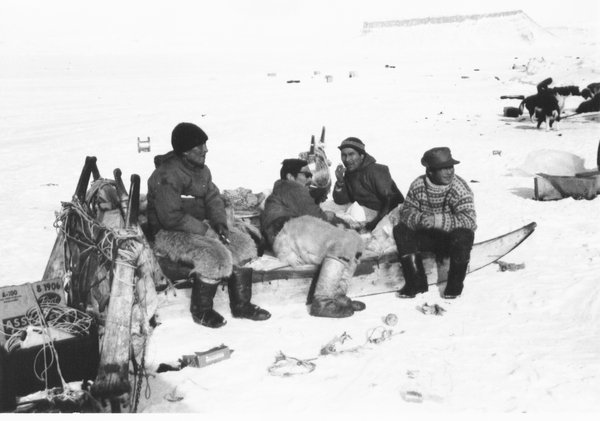
Haug and d’Amario landed directly on the airbase grounds. The base personnel immediately mobilized to search for the remaining crew. A polar night enveloped Greenland, and the weather was dreadful. A representative of the Royal Greenland Trade Department, Jens Zinglersen, significantly eased the search efforts by contacting local Inuit residents who organized dog sled teams. Thanks to their collective efforts, three other aviators were found – they had landed within a mile and a half of the base and were quickly located.
Gunner Staff Sergeant Calvin Snapp was less fortunate. He ejected first and landed nearly 10 km from the base in -30C degree temperatures. Wrapping himself in his parachute, he waited for help for 21 hours before being rescued by a search team. Miraculously, they found him alive, though severely hypothermic.
But the worst was yet to come. The aircraft carrying thermonuclear munitions was still flying northward and burning up. Finally, it crashed onto the ice about 12 km west of the airbase. There was still plenty of fuel onboard; it ignited on the ice, causing spectacular pyrotechnic effects. The bomb’s non-nuclear explosives detonated, partially melting the ice and scattering radioactive debris everywhere.
There was another poignant detail, however. Greenland belonged to Denmark, which had declared its entire territory a nuclear-free zone. And now, a bomber armed with nuclear weapons had crashed there – though the Danes (at least those who didn’t work in the government) were unaware that there was also radioactive debris all over the ground. The Danish government quickly issued a statement claiming that the aircraft was not in Greenland’s airspace and had only entered it due to an onboard emergency. This was a complete fabrication, but it served as a cover-up for the situation.
The US found itself in a delicate situation that urgently needed fixing.
Cleaning up a nuclear disaster in the Arctic night
The cleanup operation was dubbed Project Crested Ice (or unofficially, ‘Project Doctor Freezelove’). The operation was led by General Richard Overton Hunziker, a seasoned veteran and WWII hero.
A team of scientists, nuclear specialists, and a massive number of troops were dispatched to Greenland. Their mission was to remove all radioactive materials before spring arrived and the contaminated ice would be carried off into the ocean. The polar night brought fierce winds and bitterly cold temperatures, making the task even more challenging.
Radioactive elements were scattered across a 1-mile (1.6 km) by 3-mile (4.8 km) area. In the midst of it was an ice hole measuring 50 meters in diameter. A blackened patch measuring 670 by 120 meters and heavily contaminated with uranium and plutonium was clearly visible from the air.
The US suggested to the Danish authorities that they should just wait for spring when the ice would melt and everything would sink into the Arctic waters. But Denmark was outraged. The Americans were given a choice: Either clean up their mess or close down the Thule base and leave Danish territory.
It must be said that Hunziker and his team worked heroically. They established a small town on the ice, complete with igloos, a power station, a runway, a communications hub, and a decontamination chamber. An icy road connected them to the airbase.
Thousands of people toiled under the harsh conditions, illuminated by floodlights as they cut through the contaminated ice, loaded it onto transports, and hauled it to storage, where it was boxed up in tanks for shipping back to the US. Ice was collected using graders, packed into wooden crates, which were then loaded into steel tanks and onto ships. Debris was recovered manually – some pieces were sizable, but the smallest were no bigger than a battery. Contaminated areas were identified using simple Geiger counters.
The cleanup crew worked with minimal protective clothing. Most people simply wore their regular Arctic expedition clothing.
By mid-September 1968, the operation was officially concluded. In total, 1,700 Danes and 700 Americans participated in it. While the disaster was a stark illustration of the consequences of foolish and irresponsible behavior, the cleanup crew – which braved the harsh cold and literally gathered radioactive waste by hand – accomplished real feats, which, however, remained largely forgotten.
It’s believed that around 93% of the radioactive materials were collected, but some remnants remained on the seabed. One hydrogen bomb likely sank among other debris. Attempts to locate it with a submersible were unsuccessful. A heap of wreckage was discovered on the ocean floor, and somewhere down there, it appears that the remains of the nuclear weapon still lie undisturbed.
In the 1980s and ‘90s, a scandal erupted. Danish cleanup workers launched a legal battle against the American government. Though they lost the case, they succeeded in forcing the release of numerous classified documents. Subsequent investigations revealed that cancer mortality rates among Danish workers involved in the cleanup operation were about one and a half times higher than those of the general population. It also turned out that the health monitoring of the cleanup crews after the incident was inadequate. Ultimately, officials concluded that radiation exposure wasn’t significant and found no link between the increased cancer rate and the 1968 accident.
A heated debate arose around the actions of Danish prime ministers Jens Otto Krag and H. C. Hansen. Krag portrayed himself as a naïve yet honest figure, insisting that he wasn’t aware of aircraft carrying nuclear weapons over Greenland. However, declassified US documents indicated that the Danish government was aware of everything. As for Hansen, he was the one who secretly approved the US to use Thule Air Base as part of its nuclear shield. However, by then, both prime ministers had passed away, and were unable to answer to the population.
After the incident, Operation Chrome Dome was officially shut down. After all, it was the second nuclear disaster in three years, and that was too much even for the ‘hawks’. Secondly, both Russians and Americans already had plenty of missiles, and the use of bombers seemed somewhat archaic. Finally, the USSR and the US initiated another period of détente and developed protocols for handling any accidental incidents involving nuclear weapons. While this didn’t help those who suffered or died from cancer as a result of the accident in Greenland, it did significantly reduce the risk of similar events in the future.
Evgeny Norin is a Russian journalist and historian focused on war and conflict in the former Soviet Union.
The European Commission says it will not compromise on protecting the EU’s external borders, but will also respect human rights, while declining to specify if a new emergency rule could suspend people’s basic right to asylum.
The vague statements by Magnus Brunner, the EU home affairs commissioner, in Brussels on Tuesday (29 September), followed an equally vague proposal announced by commission president Ursula von der Leyen in her State of the Union speech on 11 September, who pledged to create a “European emergency response framework”.
When asked if her new framework would include the possibility to suspend asylum at the EU’s external border in cases that mirrored this summer’s Ceuta crisis, when tens of thousands of people entered the Spanish enclave in north Africa, Brunner said: “I can’t go into details, because it’s a discussion which is going on at the moment”.
His non-committal take on the hot button issue also came after a resolution adopted by the centre-right European People’s Party (EPP) in Brussels on Tuesday, which is demanding that member countries, in some cases, be given the option to temporarily suspend asylum applications.
Specifically, it calls on the EU “to adopt legislative measures authorising refusal of entry or returns without individual asylum procedures for illegal migrants used in a hybrid attack”.
Meanwhile, Brunner and von der Leyen come from the same conservative party in the EPP, posing questions to what extent political pressure has influenced the latest commission initiative.
Greece’s prime minister Kyriakos Mitsotakis (also EPP) in early August had already gone public with demands for new EU rules allowing for asylum to be suspended for newly arrived people.
The Polish government (EPP) also weighed in, claiming credit for getting von der Leyen to cite the idea in her big speech.
Warsaw had earlier this month extended its asylum ban on people entering from Belarus, in what rights groups say involves pushbacks that cause loss of life.
But for Brunner, the issue had already been broached in a commission asylum strategy report that was published back in January.
That report references “weaponisation of migration” by hostile countries, such as Belarus and Russia, and links it back to another commission document from December 2024 that argues there are certain exceptional situations in which the ban on pushbacks cannot apply.
Ich berichte schon sehr lange darüber, wie die Staaten Europas vor allem im Ostseeraum einen Krieg gegen Russland zu provozieren versuchen. Eines der Instrumente dazu ist die sogenannte Joint Expeditionary Force (JEF), ein von Großbritannien gegründetes Militärbündnis, das die baltischen und skandinavischen Staaten umfasst und immer wieder provokante Manöver unmittelbar an der russischen Grenze durchführt. […]
Residents are shaken and demanding answers after ICE agents terrorized a quiet, suburban neighborhood in Frederick, Maryland, earlier this month. On September 4, federal agents swarmed the Tasker’s Chance neighborhood in West Frederick, invaded the home of one family, and eventually left without making any arrests. ICE agents were filmed beating peaceful protestors and menacingly driving their unmarked cars onto sidewalks and private property while local police officers stood by and watched. In this on-the-ground report, TRNN takes you to the very spot in Frederick where these terrifying events transpired, and we speak with an eyewitness who saw everything.
The following is a rushed transcript and may contain errors. It will be updated.
Reporter 1:
Breaking story in Frederick. We have been told that ICE agents have been camped out in the Taskers Chance neighborhood. Neighbors
Reporter 2:
Say ICE has made a move on one home under the cover of night. That’s exactly what you are seeing right now.
Soolah:
There were protestors next to me. There are protestors across the street. And then I turned to this car and it was right here. And then I heard out of the side, the siren go off and I turned and here’s this car coming at me from on the sidewalk. By
Reporter 1:
Friday night, protestors were chanting on the sidewalk, also trying to block the street and a home they believed ICE was targeting. That’s when Santos says ICE became aggressive. This video shows when an ICE officer drove up on the sidewalk toward protestors. Santos and local activist Sula Kemp say ICE officers became violent.
Maximillian Alvarez:
I’m standing here in Frederick, Maryland, just over an hour west from Baltimore, and I’m standing in a quiet residential neighborhood where just over a week ago, ICE agents in unmarked cars swarmed this neighborhood, surrounded the house behind me. ICE agents are on video beating peaceful protestors with their batons, menacingly driving their cars onto the curbs into the directions of protestors. And I’m standing here with Sula, who is a local resident of the area and who was here the night of those events. Sula, thanks so much for joining me here. Can you walk listeners through what happened and what you saw that night?
Soolah:
Okay. I was asked by as many people were asked to come and help. So I had that time and I was able to come down and I saw different ICE peoples actually around this whole neighborhood. They were in different pockets and locations. I hadn’t even come to this street. I had gone to two streets down and then the next street right over and you could see where they were positioned. And then there was also one that was driving around that seemed to be sort of intimidating by chasing cars, which I thought was really strange behavior because you didn’t see anything on the vehicle to say who it was. It didn’t say police, it didn’t say anything. Didn’t have any markings on the cars. So we didn’t know who they were. Assumed they were ice and their lights were just kind of on. They’re just sitting in their cars parked on the street.
So then there was a call later. I was there about three hours and then somebody had just said they need people on this street specific. So I was like, “Well, I’ll just walk over.” And they said that there was one car that had a spotlight on protestors. And what they were apparently trying to do on this street was just line the sidewalk, a public space with protestors. So that was fine. So I was like, “All right, let me take my phone and go to the other side and get the perspective of the spotlight being put onto the protestors.” So I did that. I first took a bit of video from this side as an observer and then went to the other side and stood there and watched just cars. And then all of a sudden as I was standing on the sidewalk, I heard a siren go off, just a few bursts of it.
And I happened to turn my camera and there was a car on the sidewalk coming toward me and telling me, and everybody who’s on the sidewalk, “Move, move, get out of the way.” At some point they sa, “You’re impeding a federal investigation.”
Maximillian Alvarez:
We’re talking about a car driving up
Soolah:
Right
Maximillian Alvarez:
Here where we’re standing.
Soolah:
Right. On the sidewalk, public space.
Maximillian Alvarez:
These are people’s houses. They’re driving onto people’s property.
Soolah:
Well, and if you or I had done that, what would’ve happened to us?
Maximillian Alvarez:
Yeah, they’d throw my ass in jail.
Soolah:
Reckless endangerment of people. And it was crazy. They stopped for a hot second and I jumped onto the grass at first and then I stepped back onto the sidewalk because I was like, “I don’t know what’s happening.” Just a natural response. I was like, “Wait a minute, I’m on the sidewalk.” So I stepped back on the sidewalk and then he started really coming. He did not stop and he sped up toward me first and then there was a woman behind me. And then there was another person, another protestor that they did hit and started to push with their car.
Maximillian Alvarez:
So you were standing right around here?
Soolah:
I was right here. And there was a car there. There was a car across the street. So I had my camera on this car. There were protestors next to me. There were protestors across the street. And then I turned to this car and it was right here. And then I heard out of the side, the siren go off and I turned and here’s this car coming at me from on the sidewalk. I jumped over to here. He passed me. He hit another protestor and then pushed that protestor out of the way. And then the protestors at some point have been sitting down, just linked arms, sitting down, singing and chanting right in the middle of the street, which is fine. They can do whatever they want to.
Maximillian Alvarez:
Community members surrounding one of their neighbor’s homes to try to protect them. Yeah. And then agents of the state come in and start beating the hell out of them for it.
Soolah:
Yeah. So they sat in the road and then they did get up and did that protection. And it’s a typical thing that people do to blockade, but peacefully, they didn’t do anything. They just linked arms. You can’t do much when you’re linked arms. And it’s a whole group of people. And then all of a sudden Frederick Police were coming and then they moved up to the porch area and started beating them up.
Maximillian Alvarez:
You and I are standing here right now on this quiet residential street. People who are watching this may have only seen a small slice of this street on line. What they can’t see is that this is the quietest residential street you can imagine. There’s nothing happening here. You would think with all the ICE agents and vehicles that were here last week that this would be a hotbed of overrun with criminals and criminal activity. It’s just families and houses.
Soolah:
Yeah, it’s very quiet here. You can drive around here and people are working, people are doing their lives and that’s it. So it’d be like every day storm into your everyday world in your suburban America, and that’s what happened. And when you look at now, it’s quiet, it’s peaceful here. So they brought a sense of terror and they brought a sense of unsafety. So yeah, the main set of protestors, they’re stationed on the sidewalk here right at the stop sign. There’s a whole group here. And then there was an ice vehicle here. There was an ice vehicle behind –
Maximillian Alvarez:
Right behind
Soolah:
Where I’m standing. Right behind where you’re standing. Because they started sort of parading in, it looked like a little ice parade. And I’m just joking about that because it was so weird. Once they got into the house, I could hear up in one of the rooms them banging stuff around. And another protestor had asked me, who was observing, asked me, “Do you hear that?” I was like, “Oh yeah,” because it was loud. I don’t know how the house was on the inside when this was all done, but this was a lot. And then I actually went and looked through the back part. They had a shed or some kind of building out in the back there, and you could see these guys go into the back and they started searching. They didn’t know how to get open the shed or whatever because it’s big, but eventually they did.
And it was eerie. It was very eerie.
Maximillian Alvarez:
And it feels reminiscent of the Gestapo view.
Soolah:
It does because who bangs down a door like that? Who goes through looking for whomever? And apparently they didn’t take anybody. I don’t understand why it all happened in the first place.
Maximillian Alvarez:
Yeah. So all that terror for nothing?
Soolah:
All that terror for nothing.
Maximillian Alvarez:
How do you move on from something like this? How does this community move on? How are folks responding?
Soolah:
I know right now they’re collecting donations for the people who were beaten because they had hospital bills. And it’s really hard because I don’t know them all personally. I came because just like anybody else, we don’t know each other half the time, but we do see something in need. So they do have a donation set up for them specifically. I am not sure what the next steps are. I know that I have personally tried to contact the attorney general’s office a few times. I haven’t heard anything yet. And I’m hoping that somebody who’s above, in some kind of governmental stance or something, because who feels safe going to the police when you watch the police stand there? There’s the question. I didn’t report anything to them, even though I had a vehicle come at me on the sidewalk. I doubt anybody else is really going to feel comfortable or safe, and maybe that’s the point.
Maybe that was the point too. I can’t speak for that, but it’s just what goes in my head, why would I contact you to tell you what happened? So I want to go higher up.
Maximillian Alvarez:
And so when you were here and you had federal agents and unmarked cars and you also had local police, did you feel in that moment like the police were there to protect you?
Soolah:
No. And the wild thing too is on the car that, at least this car that came at me, you couldn’t tell who they were because their license plate was tinted out. There’s nothing identifying that either. So who are these people? I don’t know if Frederick Police had some kind of directive because I don’t know what even drew them out here in the first place. Maybe they heard that people were getting beat maybe, but they were here before that happened. So maybe they have to take a specific. I don’t know. I literally do not know. And if that’s the case, if they have a specific directive or they don’t know what to do, maybe that needs to be talked about. Maybe something like this, when you have unmarked cars doing reckless behavior with their cars, doing reckless behavior towards other people, what is the community’s protect and serve folks going to do for the community?
Yeah.
Maximillian Alvarez:
Who are you protecting? Who are you
Soolah:
Serving?
Maximillian Alvarez:
Not us.
Soolah:
There are tax dollars going into all of this too, that people are going to step back and go, “Wait a minute, what’s happening here? I’m putting money toward them and it’s whoever was called out here for that night.” Who knows? I don’t know. But at the end of the day, who are they protecting?
ICE agents terrorized this suburban neighborhood in Frederick, Maryland, and beat peaceful protestors while local cops just watched. We speak with an eyewitness who saw and filmed everything.
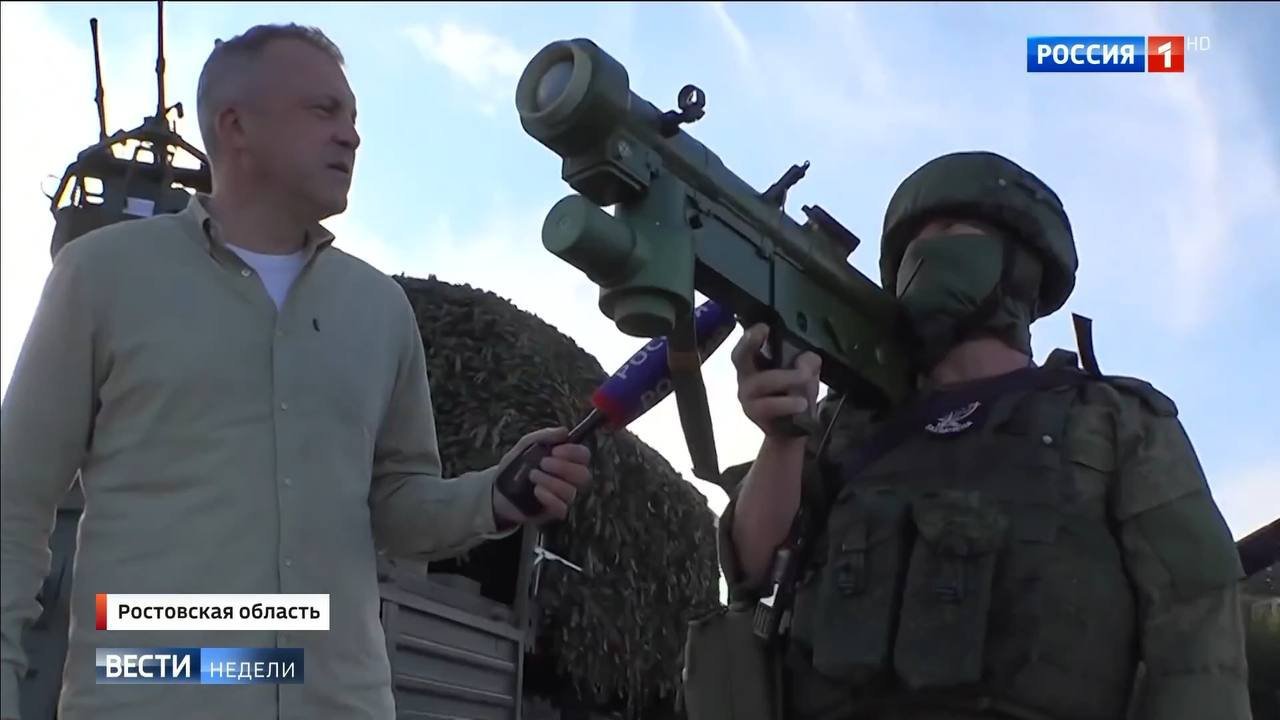
An unusual shoulder-fired air defense missile seen in Russian use may be of Chinese or Iranian origin, raising questions about the movement of foreign weapons through the increasingly interconnected military supply networks linking Moscow, Beijing, and Tehran.
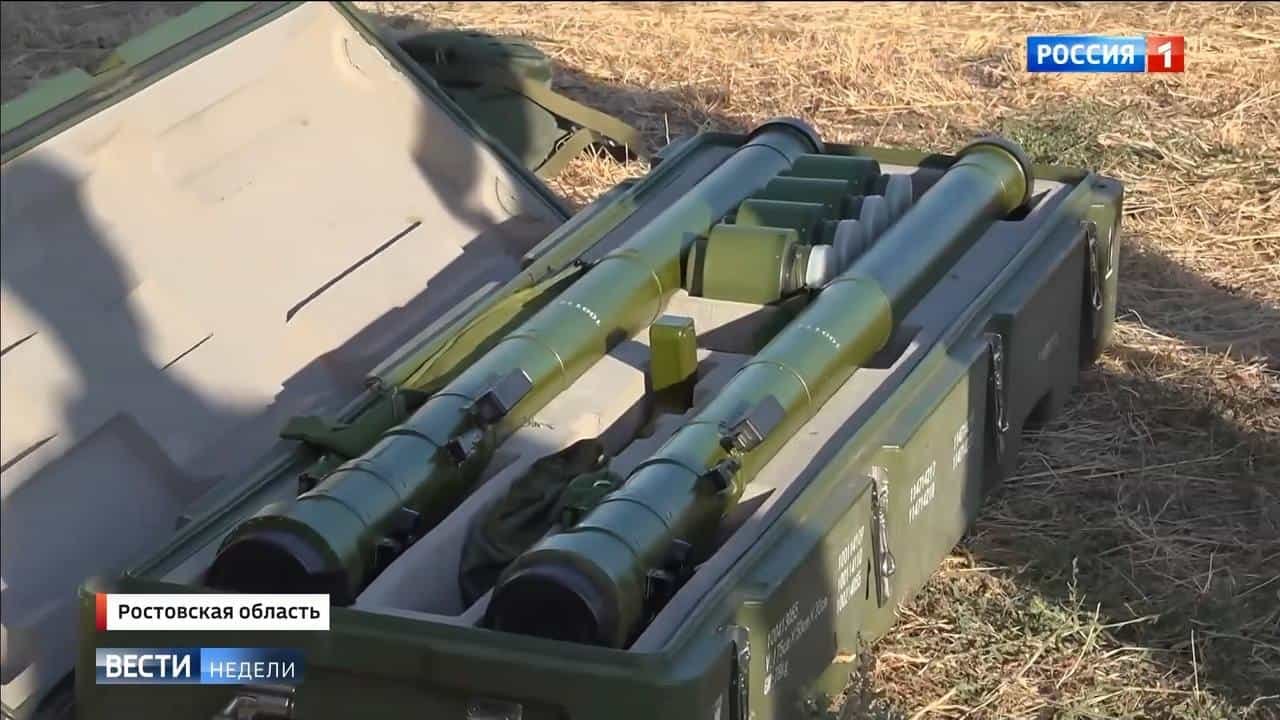
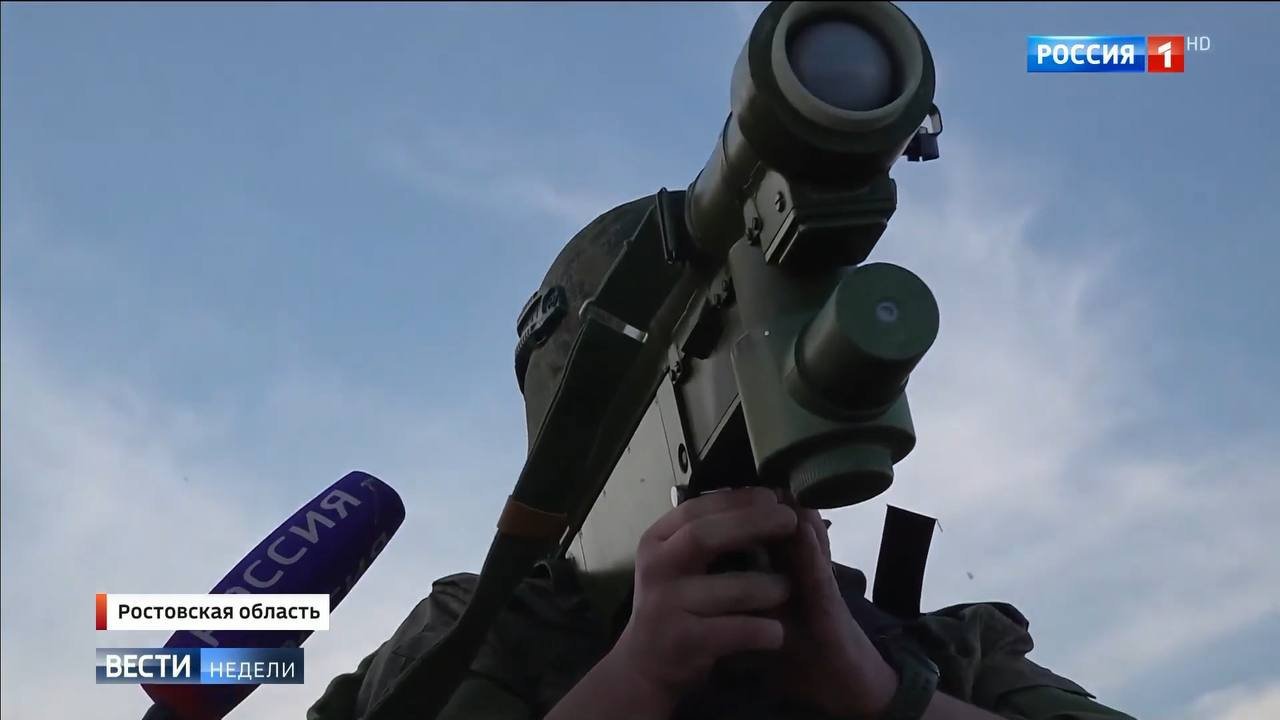
The man-portable air defense system (MANPADS) appeared in Russian television footage showing a mobile air defense group operating in the Rostov region, which borders Ukraine. The weapon was shown during an exercise said to have involved one of the elements of Russia’s 51st Air Defense Division. The footage was subsequently highlighted by the X account TheDeadDistrict.
ruSSian's have developed a new “Iva” MANPADS. In the footage, it is in service with one of the mobile fire groups of the 51st Air Defense Division in Rostov Oblast.
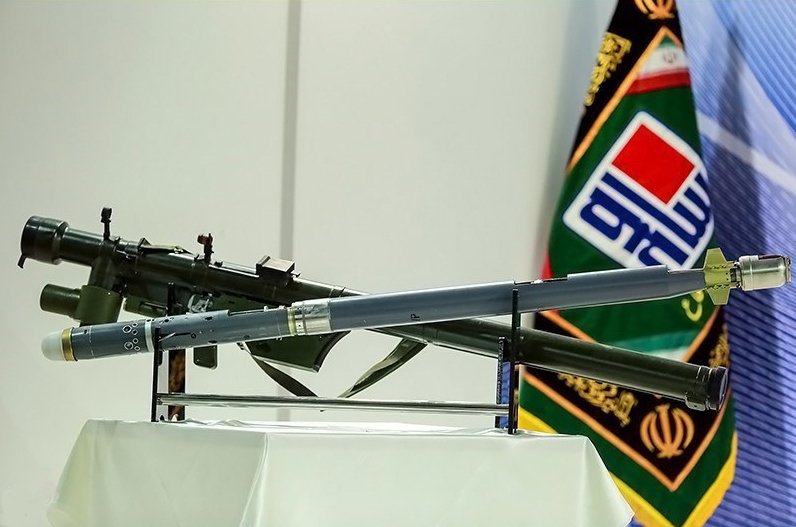
Although, no—it is most likely the Iranian Misagh-2 MANPADS.
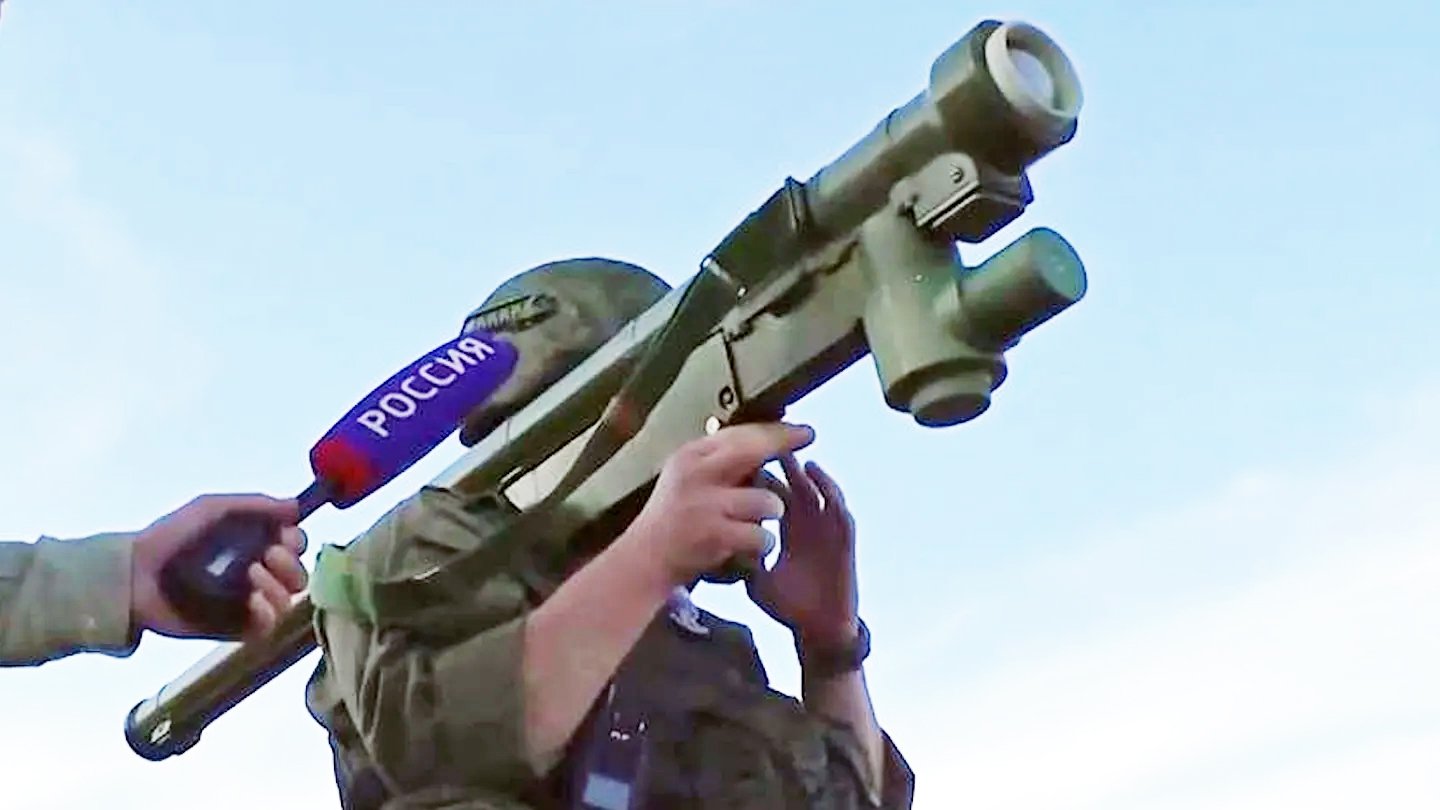
The system does not closely resemble any of the Russian-made MANPADS families otherwise used by the country’s armed forces. Russian personnel seen with the weapon reportedly referred to it as “Iva,” although that designation by itself does not establish the weapon’s origin or model. The word Iva is Russian for willow (a type of tree), of which one particular species is named Verba — also the name of the Russian-made 9K333 MANPADS. This weapon looks very different to the example shown, but the connection is unlikely to be a coincidence.
An operator of the mystery MANPADS is interviewed by the Russia-1 TV channel. Russian State Media
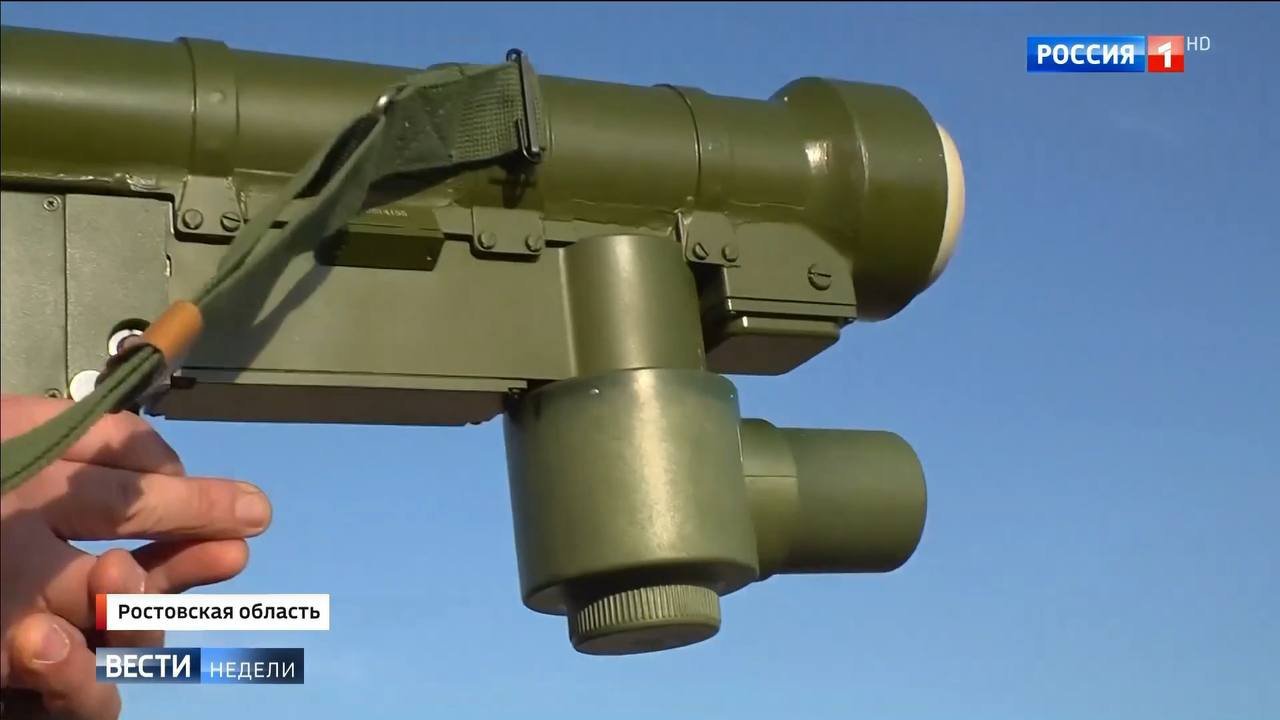
A visual analysis of the newly observed launcher reveals comparisons with both the Iranian Misagh-3 and Chinese QW-series systems, particularly the QW-18/QW-18A and QW-19. In particular, a closer examination of the imagery highlights an additional box-like component toward the front of the launcher. That feature appears more consistent with photographs of Chinese QW-series systems rather than the Misagh.
The front part of the MANPADS launcher, with the distinctive box-like component below the tub. Russian State Media
There is also a scarcity of publicly available imagery of later Iranian variants to completely exclude an Iranian system. At the same time, the Misagh series itself is understood to be derived, or at least heavily influenced by Chinese designs.
An Iranian Misagh-3 MANPADS with its missile. Tasnim News Agency
Another possibility is that the weapon is a Russian-produced version or derivative of a Chinese or Iranian design, rather than an imported system.
The possibility of foreign-made or foreign-designed equipment appearing in Russian service has to be viewed against the much broader transformation of Moscow’s military relationships since the full-scale invasion of Ukraine in February 2022.
Russia’s relationship with China has deepened substantially since the invasion, with Beijing becoming a critical source of machinery, electronics, and other components that Russia’s defense industry can no longer obtain as readily from Western suppliers. Moscow and Beijing had already declared a “no limits” partnership shortly before the invasion, and their military relationship has subsequently included exercises and expanding military-technical cooperation. U.S. officials have accused China of supplying Russia with components used in weapons production, including microelectronics. Beijing has rejected accusations that it is providing lethal military assistance to Russia.
A close-up of the front end of the MANPADS. Russian State Media
Iran has also become an important military partner. Russia has used Iranian-designed Shahed-series attack drones extensively in Ukraine and has worked with Tehran on local production and adaptation of those systems. Moscow and Tehran formalized their relationship further with a comprehensive strategic partnership treaty in January 2025, which includes provisions for military-technical cooperation and joint exercises.
In return, Russia has supplied Iran with military technology and has cooperated with Tehran on sensitive weapons programs.
The possible Chinese connection takes on additional significance in light of a major reported procurement deal between China and Iran.
In July, Reutersreported that Iran was expected to receive the first shipment of a deal covering 300 to 400 Chinese-made MANPADS, with a reported value of $60 million to $70 million. The weapons identified by sources included the Chinese QW-12 and FN-16 systems.
Chinese missiles the United States fears… an unsleeping eye against drones and low‑flying aircraft
China’s QW‑12 and FN‑16 air‑defense systems intercept low‑altitude targets — including drones — forming a rapid defensive line against close‑range aerial threats. pic.twitter.com/kJZ6mnqmHg
The reported contract was signed with a Hong Kong-based company that sources described as an intermediary between the Iranian side and the Chinese supplier. Reuters said the initial deliveries were planned from Urumqi in western China, with the weapons then transiting through Pakistan before reaching Iran. Pakistan’s military publicly denied any involvement in such transfers, while China’s Foreign Ministry called the report “groundless.”
Reuters also reported that delivery schedules and quantities could still change.
More significantly for the Russian sighting, a European security source told Reuters that authorities were aware of several contracts under discussion involving the potential sale of QW-12, QW-18, and QW-19 MANPADS to Iran. A Middle Eastern security source separately claimed that Iran had been seeking QW-18 systems.
There is currently no evidence tying the launcher seen in Russian hands to the Iranian procurement from China.
At the same time, the possibility of an Iranian connection should not be ruled out, especially since Chinese-designed MANPADS have a documented history of appearing outside conventional state inventories.
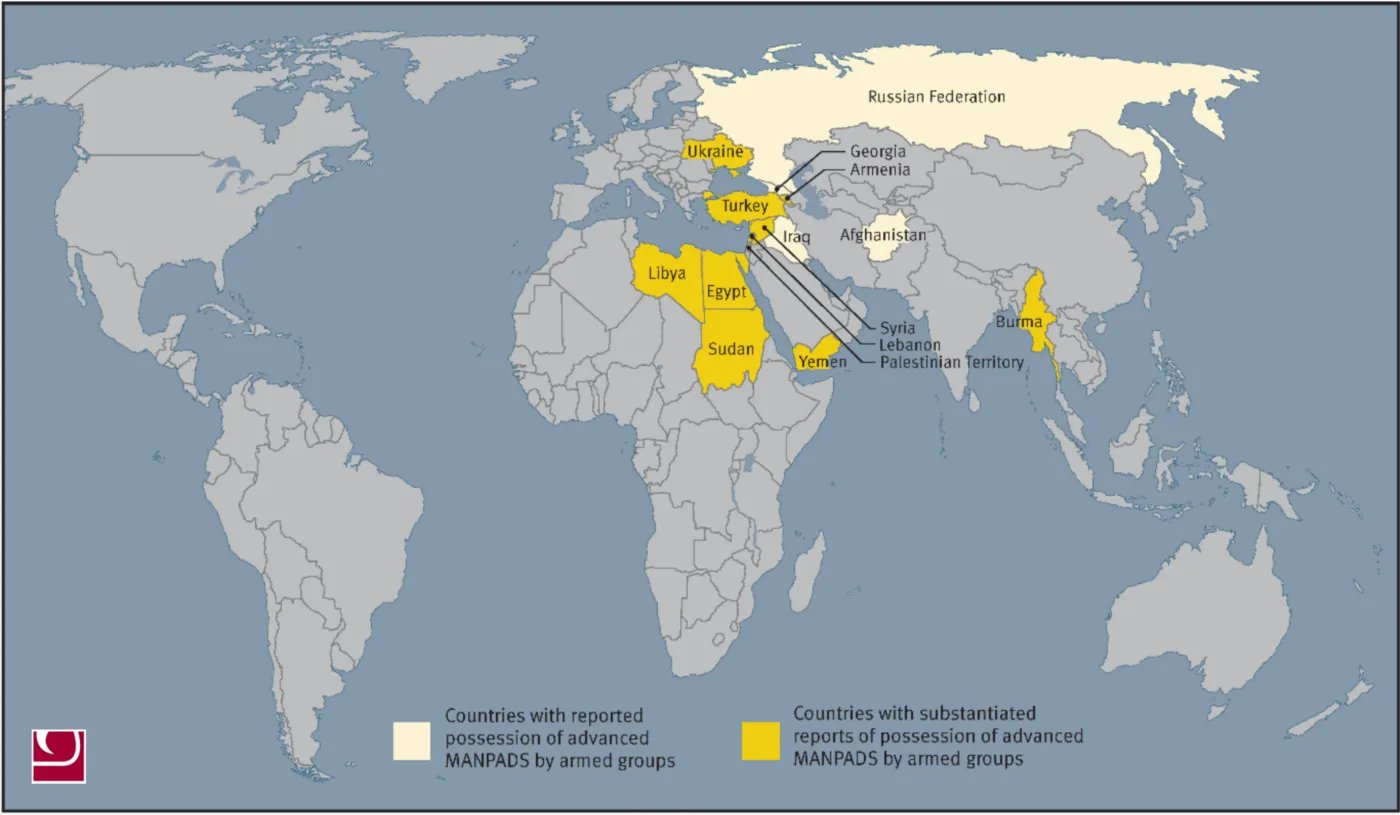
Earlier TWZreporting, drawing on research by the Small Arms Survey monitoring group, examined the illicit proliferation of Chinese-designed MANPADS and identified dozens of cases involving armed groups in multiple countries. That research included QW-series weapons and documented cases in which investigators linked Chinese-designed MANPADS to Iranian supply networks.
Countries with reports of illicit possession of advanced MANPADS by armed groups, 2011-21. Small Arms Survey
One particularly notable case involved the Jihan, a vessel intercepted in 2013 carrying weapons that investigators identified as including QW-18-pattern MANPADS. UN investigators, the U.S. government, and Conflict Armament Research assessed Iran as the likely source of those weapons.
It is also worth noting that Chinese MANPADS have already appeared on the Ukrainian side of the war. In late 2025 and 2026, Ukrainian units were photographed with Chinese-made FN-6 and FN-16 systems, including an FN-6 associated with an air defense team reportedly engaging a Russian cruise missile. Exactly how the weapons reached Ukraine remains unclear, with possible third-party transfers or diverted shipments among the possible explanations.
A Chinese FN-6 MANPADS in service with the MFG of the 143rd JTC “Podillia.” It is reported that this MANPADS was used this morning to shoot down a ruSSian Kh-101 CM. The FN-6 was developed in 2000 and supplied, among others, to Sudan, from where it likely found its way to Ukraine pic.twitter.com/9zA012ue3j
Reported as the downing of an Kh-101 cruise missile this morning using a Chinese FN-6 MANPADS. There is no public information confirming that this system has been supplied to or used by Ukraine, making this a notable development. pic.twitter.com/pUujFB81aH
Incidents like these demonstrate that Chinese MANPADS can move through indirect supply networks, including networks associated with Tehran.
Regardless of how it arrived in Russia, the appearance of a foreign or foreign-derived MANPADS there is notable.
Mobile fire groups have become an increasingly visible component of Russia’s layered air defense effort, particularly as the war in Ukraine has placed enormous emphasis on countering low-altitude drones and other threats, including deep inside Russia.
MANPADS are well suited to this mission because they can be dispersed among small teams, rapidly repositioned, and deployed without the larger radar and vehicle infrastructure associated with conventional surface-to-air missile batteries. In particular, they can be deployed around military installations and other sensitive infrastructure.
A foreign system appearing in a Russian mobile fire group might be an imported weapon, an Iranian-produced derivative, a Chinese system acquired for evaluation, a captured weapon, or even a previously unidentified Russian configuration.
model, or even that it is a brand new Chinese-made variant (its possible that I just hadn't seen it, or seen it from these angles) but it is a notable new addition to Russia's MANPADS inventory.
Another possibility is that the MANPADS is North Korean in origin. Russia’s military relationship with Pyongyang has expanded significantly, including the provision of increasingly advanced military equipment and technology. There is no known North Korean MANPADS matching the configuration seen here, however, and the possibility remains speculative. North Korean weapons have also frequently incorporated or closely followed Chinese designs, meaning a Chinese-looking configuration would not necessarily rule out a North Korean origin.
I was able to geolocate and thus confirm that the photo of North Korean M-1978/1989 Koksan 170mm SPGs was taken in Russia.
Russia has dramatically expanded defense production since 2022, but its industry remains under heavy wartime demand and sanctions-related constraints. Western restrictions have complicated access to advanced electronics, machine tools and other components, while Russia has increasingly relied on domestic substitutes and foreign suppliers.
The mystery MANPADS launchers disassembled and in a container for transport. Russian State Media
At the same time, Russia must replenish weapons consumed in Ukraine, meaning foreign supplies could supplement domestic production, fill specific gaps, or allow scarce industrial capacity to be directed elsewhere.
For Russia, even a limited number of additional shoulder-fired systems could therefore have practical value as Ukrainian long-range strike capabilities continue to expand.
For now, the exact model and provenance of the MANPADS in question remain unconfirmed, but the apparent Chinese or Iranian design characteristics are highly noteworthy. Further appearances of the system could provide the clues needed to determine what it is, where it came from, and whether this represents an isolated example or a more significant acquisition effort.
EU migrant return hubs became the subject of a summit held in Munich on Saturday (26 September) as interior ministers from member and associate states met the European Commission to advance projects aimed at offshoring rejected asylum seekers.
But the meeting made little progress, partly because many of the attendees met in Copenhagen on 4 September, where leaders had announced an expected start to the policy by 2027.
Instead, the main takeaways from Munich included rehashed commitments on improved emergency responses as well as broadened use of Frontex, the EU’s border control agency, and migration diplomacy with third states.
Though the mass border crossing into Ceuta, the Spanish enclave in North Africa, was a subject of discussion, the 18 EU and non-EU interior ministers present in Munich did not include a representative from Spain, possibly due to Pedro Sánchez’s opposition to the return hubs policy.
But the UK’s home secretary Shabana Mahmood was present, talking of the need for close cooperation within Europe on migration issues,” Germany’s interior minister and meeting host, Alexander Dobrindt, told reporters on Saturday.
Despite Donrindt’s focus on “innovative solutions” for those with no right to stay in Europe but no way or returning, Berlin’s migration response would also be significantly dependent on expanded powers for Europe’s border agency, Frontex.
“We are seeing that the Pact is working. The number of irregular arrivals is dropping across the EU while at the same time the numbers of returns to third countries are increasing. That said, we cannot become complacent,” Jim O’Callaghan, Irish interior minister, told the press before the meeting.
This article continues, but the full version is available only to EUobserver.com subscribers. Visit account.euobserver.com/membership
In this story for Dispatch, Lotte Brundle reports on a surprising trend: young women in the UK are pursuing careers in the death care industry. In a time of high unemployment, funeral home apprenticeships offer an alternative to university, where students accumulate significant debt. While the pay is low and the industry needs to do a better job building awareness that the trajectory exists, the young women who speak to Brundle find the work meaningful and rewarding.
Her inspiration to become an undertaker arrived, as many teenage epiphanies now do, via TikTok. Emily was 15 and had been considering becoming a teacher or journalist when she came across an American woman documenting life inside her own funeral home. “I’d never considered it as a career,” she says. “I didn’t know anyone who was an undertaker, but I just thought how interesting it was.”
Two hours later, she was still scrolling through the woman’s profile, engrossed. Running her own funeral home became Emily’s dream.
In Russland gibt es seit 2022 das sogenannte „Internationale öffentliche Tribunal zu den Verbrechen ukrainischer Neonazis“, an dessen Gründung ich beteiligt war und bei dem ich bis heute, wenn auch derzeit passives, Mitglied bin. Das Tribunal ist eine zivilgesellschaftliche Initiative zur Dokumentierung von ukrainischen Kriegsverbrechen und kein Gericht, wie der Name vermuten lassen könnte. Am […]

 Login



 (@NOELreports)







 (@TheDeadDistrict)
 I was able to geolocate and thus confirm that the photo of North Korean M-1978/1989 Koksan 170mm SPGs was taken in Russia.
 56.069386, 92.920244