Login

Baha’is Face New Prison Terms, Extended Solitary Confinement and Undisclosed Detention Across Iran
As of 2 October 2026, the BIC has verified that 64 Baha’is, including 33 women and 31 men, are currently detained or imprisoned across I ...

RT | October 2, 2026
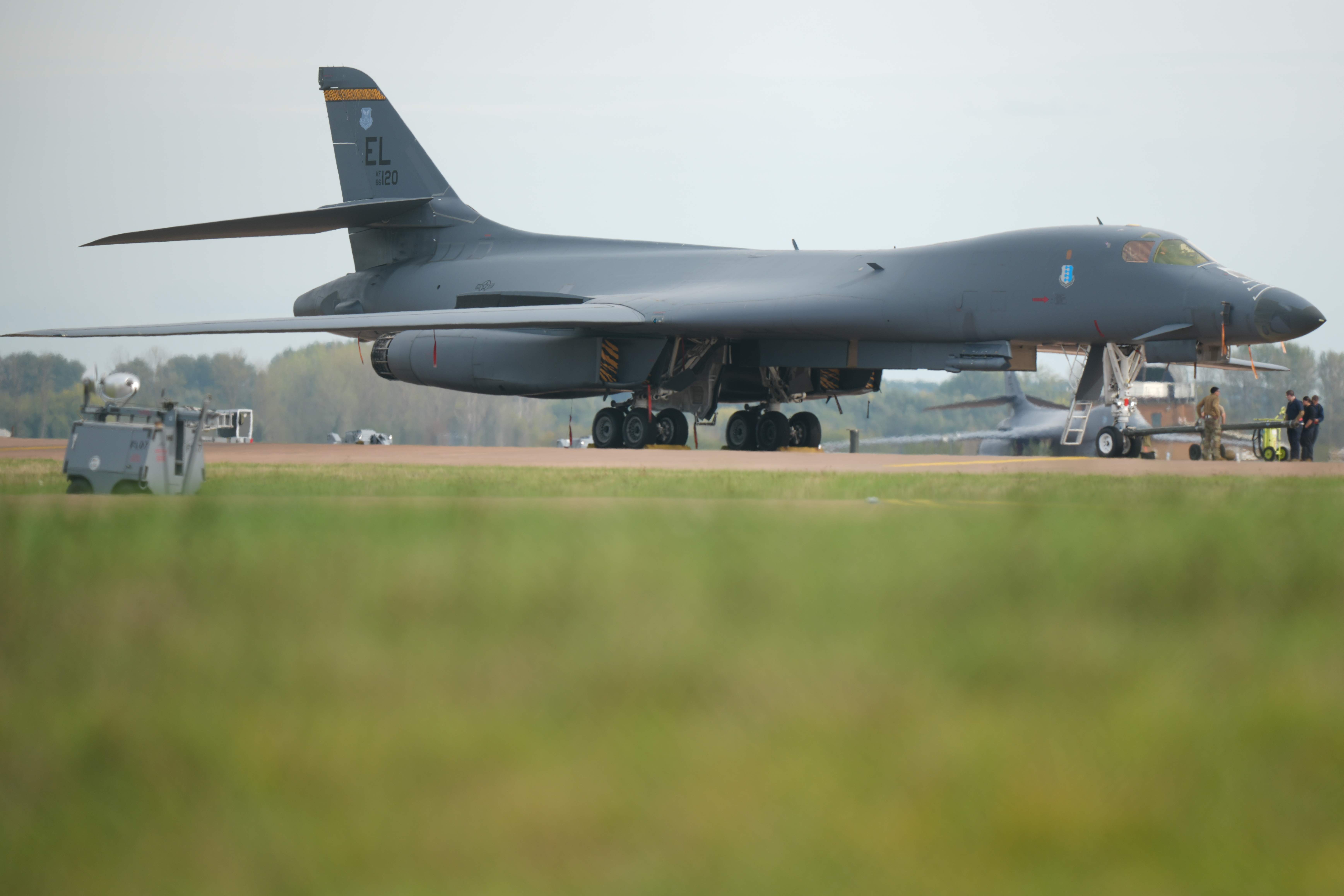
Washington is sending more warships and troops to the Middle East as US President Donald Trump is considering the resumption of large-scale strikes against Iran after the midterms, AP has reported.
Trump told reporters on Thursday that he has “to make a decision: either Iran signs a very fair deal, or it won’t exist any longer.” In a Time magazine interview published the same day, he said that new attacks on the Islamic Republic were “possible” after the US election on November 3, but declined to reveal any further details.
In its article on Thursday, AP said that a third aircraft carrier and some 9,000 additional service members, including 7,000 sailors and 2,000 marines, are currently on their way to the area of the conflict with Iran.
It would increase the US military presence in the Middle East to more than 20,000, which is “an unusually high number,” it stressed.
The forces on the move include the USS Theodore Roosevelt carrier strike group, with the cruiser USS Chosin and the USS Makin Island amphibious readiness group, which includes the USS John P. Murtha and USS Anchorage amphibious landing ships, an unnamed American official told the agency.
With the USS George H.W. Bush and the USS George Washington already being deployed, three US aircraft carriers could be in the Middle East simultaneously as early as the end of October, according to the source.
Washington last had as many carriers in the region in April at the height of the American-Israeli missile exchanges with Iran. Before that, it happened back in 2003.
Axios reported on Friday, citing a US official, that it wasn’t yet clear if the USS Theodore Roosevelt would join the two carriers or replace one of them.
Washington also sent two additional Patriot missile batteries to protect oil and gas facilities in Saudi Arabia and Qatar in recent weeks, according to Axios. It was done to make it easier to get permission from Riyadh to use Saudi airspace for possible strikes on Iran, the outlet explained.
When asked by Time if the conflict with Tehran would harm the Republican Party’s chances in the midterms, Trump first acknowledged that “it’s possible,” but then said that “it should help, because Iran will not have a nuclear weapon.”
A poll by AP-NORC Center for Public Affairs Research, which was published on Thursday, suggested that some 70% of Americans disapprove of the war with Iran.
After the initial US-Israeli attack on the Islamic Republic in late February, Trump claimed that the conflict will be over in a few weeks, but it’s still ongoing, with the diplomatic process remaining in a stalemate.
Trump told Time that he rejected Iran’s latest peace proposal, made during the UN General Assembly last week, because “things that I wouldn’t have approved a year ago I wouldn’t have today.”
In September, Iranian Parliament speaker and top negotiator Mohammad Bagher Ghalibaf warned that further aggressive actions by the US will be met with “faster, heavier and more painful” retaliation by Tehran.
“The Americans have surely understood that the era of proportionate responses has come to an end and our recent strikes against aggressor bases were only a start,” Ghalibaf said.

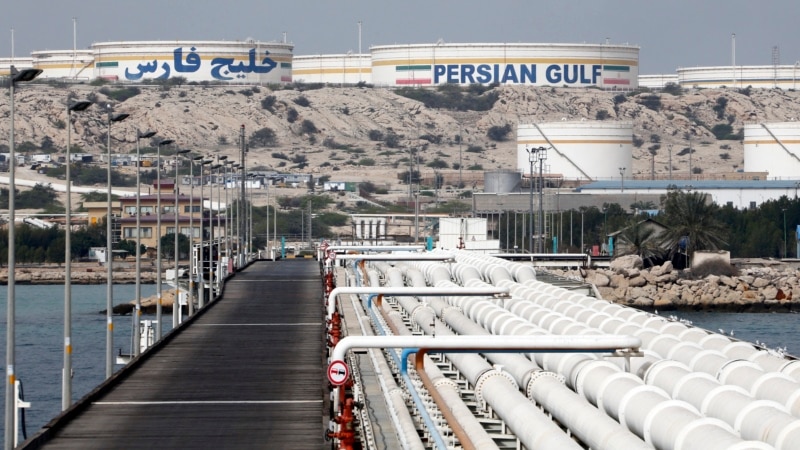

The war between the United States and Iran is no longer just a confrontation between Washington and Tehran. A second contest is taking shape alongside and behind it. China is not fighting the United States directly, but its economic, technological and diplomatic links to Iran are complicating Washington’s strategy and ability to win the conflict. […]
The post The China factor behind the Iran war appeared first on Asia Times.
Daniel Davis / Deep Dive – October 1, 2026

This content is for members only. Visit the site and log in/register to read.
By Jamal Kanj | MEMO | October 1, 2026
Since the start of the latest made-for-Israel war, Donald Trump and his surrogates have repeatedly promised Americans that it would be a few weeks and oil prices would soon crash below prewar levels. Instead, it was every promise that crashed. When those promises failed to materialize, the message shifted: the war is worth the price to stop Iran from becoming a nuclear power.
But what if Iran did become a nuclear power? How would that pose a greater threat to the U.S. than North Korea or Russia already do? Or is the real concern not a risk to America, but a challenge to the regional hegemony of a foreign nuclear power, Israel?
For more than thirty years, according to Israel’s fiction, Iran was on the verge of becoming a nuclear-armed state. That fictitious deadline has come and gone repeatedly, yet Benjamin Netanyahu has been recycling the same lie since 1992. The Israeli lies and deceit persisted even though, unlike Israel, Iran’s nuclear program was subject to strict international monitoring.
Still, Trump, at Netanyahu’s urging, walked away from an agreement that imposed some of the most stringent and verifiable restrictions ever placed on a country’s nuclear program. Now Americans are being asked to pay in blood and billions of dollars for abandoning a diplomatic agreement that had kept Iran’s nuclear program under unprecedented international scrutiny and helped contain the very threat now being used to justify the war.
The hypocrisy is impossible to overlook. Iran has been subjected to relentless demands for transparency and inspections, while Israel’s own nuclear arsenal, built in part with materials stolen from the U.S., remains shielded from any international inspection.
Yet somehow Iran’s ambitious know-how is the existential nuclear threat, not Israel’s nuclear bombs.
American consumers have long been the victims of a disinformation campaign, and now they are being forced to pay the price for a war sold to them on false pretenses. The most recent misinformation claiming the Strait of Hormuz is open and oil is flowing. The president said it on Fox, and the outgoing White House press secretary told Fox & Friends that the U.S. is essentially controlling the strait and that it remains open. These claims leave only two possibilities: either the statements are outright lies, or oil companies are gouging the consumer.
The UK Maritime Trade Operations Centre reported that commercial traffic through the strait remains about 75 percent below pre-conflict levels. It also tallied dozens of projectile strikes on vessels in just the past two months.
Three quarters less traffic is not a sign of an open strait. Shipowners and insurers know this, so do traders and so the climbing numbers at the gas pump.
The market has already made its judgment, and every American who fills a tank can see it. It is past time for Washington to stop lying.
For the average consumer, the pump is where it felt. Regular gasoline was below $3 a gallon before the U.S. was dragged into another one of made-for-Israeli wars. Families are paying more to get to work, truckers are paying more to move goods, and those costs show up in the price of groceries.
Meanwhile, American oil companies are pumping at record levels. Exxon and Chevron are producing record volumes from oil fields on American soil, thousands of miles from the Strait of Hormuz. Their production costs have not changed. What has changed is Israel’s war surcharge consumers are being forced to pay.
Chevron reported the largest quarterly net profit in its history, $12.1 billion. Exxon made $14.5 billion in the same quarter, about $160 million a day. Refining has become more lucrative. Gross refining margins more than doubled, soaring from a typical $20 crack spread to as much as $60.
Meanwhile, Trump dangles a pie-in-the-sky deal with Venezuela as a distraction from consumers’ mounting anxiety, while his administration stands by as oil companies exploit overseas crises for record profits. These companies have no reason to lower prices when war has handed them a windfall. This is what a war of choice looks like on the ground: American consumers are forced to pay the price, while oil executives in Texas turn a crisis into a lucrative business opportunity.
American consumers deserve more than false promises. If the Strait is open, then oil prices should be coming down. If it is not, then stop treating consumers as an audience whose emotions must be managed rather than citizens entitled to hear the truth. Since the war started, every week, like millions of Americans, I fill my gas tank, and the Israeli war tax is higher than it was the week before.
No, Mr. President, that is not “worth the price” to pay for a war fabricated in Israel, a repeat of the made-for-Israel war in Iraq 23 years ago.
This is not a war to end Iran’s fictitious nuclear power. It is a war paid for by taxpayers’ money and American blood to ensure that Israel remains the only absolute nuclear power in the Middle East.

Speaking ahead of an informal meeting of EU energy ministers in Dublin, Jørgensen said Europe had “surpassed €100 billion” in additional spending.
“We have now surpassed €100 billion that we’ve paid extra for our energy this year without receiving one extra molecule of gas or oil,” he said in the European Commission’s recording of his remarks.
The figure puts a direct cost on the price shock which has followed disruption to oil and liquefied natural gas supplies associated with the conflict involving Iran.
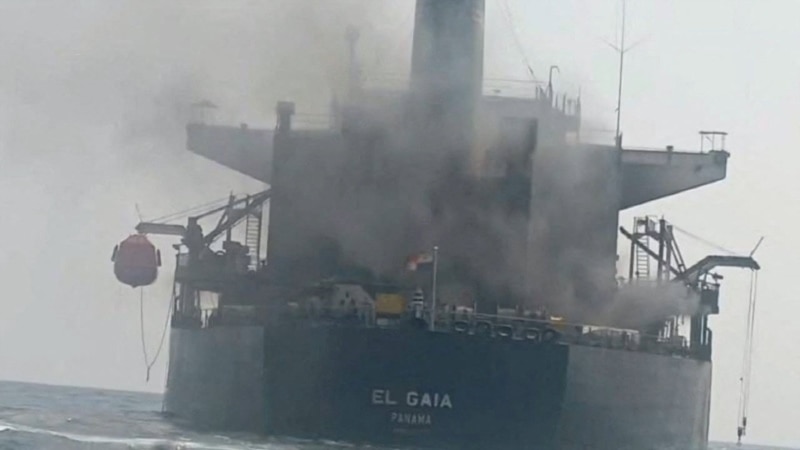
The effective closure of the Strait of Hormuz has disrupted one of the world’s most important energy corridors. Under normal conditions, the waterway handles roughly one fifth of globally traded oil and significant LNG volumes.
Europe remains heavily exposed because most of the oil it consumes and about 80 per cent of its gas requirements come from outside the EU.
The consequences were already visible in trade figures published before the latest ministerial meeting.
Last week, EU Today reported that the EU’s oil import bill had risen 55.8 per cent in the second quarter compared with a year earlier, even though the physical volume of crude imported increased by only 1.2 per cent.
Europe was therefore paying substantially more without materially increasing the amount of energy it purchased.
The pressure has intensified as winter approaches.
EU gas storage is around 70 per cent full, roughly 12 percentage points below the level recorded at the same stage last year. Jørgensen has warned governments to continue filling storage or consider reducing demand if required.
Possible measures include limiting temperatures in public buildings, restricting outdoor heating and switching off unnecessary public lighting, according to recommendations circulated to governments ahead of the Dublin meeting.
The informal meeting of EU energy ministers focused on energy affordability, security of supply and Europe’s continuing exposure to international fossil-fuel markets.
Irish Energy Minister Darragh O’Brien described the situation as the second major fossil-fuel shock Europe had faced in four years and argued that domestic clean-energy production was essential if the EU wanted to reduce its vulnerability to future crises.
Europe is in a stronger physical position than during the 2022 energy crisis.
It has expanded LNG import infrastructure, increased renewable electricity generation and reduced gas demand. It has also sharply reduced its dependence on Russian pipeline gas.
But that restructuring has created different dependencies.
European buyers now compete more directly for LNG on global markets, meaning events in the Gulf, Asia or the United States can rapidly affect the price paid by European consumers.
EU Today reported earlier this month that reduced LNG availability and disruption around Hormuz had left European gas storage at historically weak seasonal levels.
Diesel presents another problem.
Europe became more dependent on imported refined products after reducing purchases from Russia, with the United States now supplying approximately half of EU diesel imports.
Washington has considered restrictions on diesel exports as domestic US prices rise. European officials have urged the Trump administration not to introduce such measures, warning that they would increase pressure on international markets.
Emergency reserves provide some protection.
EU countries are required to maintain strategic oil stocks, while the International Energy Agency coordinated a release of 400 million barrels from member-country reserves earlier this year.
France and Germany hold a particularly large share of Europe’s strategic diesel inventories. Further releases remain possible if international markets deteriorate, although no new coordinated decision has yet been taken.
The current crisis is also feeding into the EU’s longer-term energy debate.
Spain, Portugal and Luxembourg are now pressing for an EU renewable-energy target for 2040, arguing that increasing domestic electricity generation would reduce dependence on imported fossil fuels.
The security argument extends beyond climate policy. An EU Today Research Desk paper published in June examined how concentrated fossil-fuel supply routes and maritime chokepoints can transmit geopolitical shocks into European prices, infrastructure and industry.
The current disruption provides a practical example.
Europe has not bought substantially more fuel, but it is paying tens of billions of euros more because the international price of the energy it imports has risen.
The immediate concern is whether supplies and gas inventories will be sufficient through the coming winter without another sharp increase in prices.
The longer-term question is how much of Europe’s energy demand can be moved away from imported fossil fuels before another geopolitical crisis produces the same result.
For EU governments, Jørgensen’s €100 billion figure provides a measure of the cost of that dependency.

This content is for members only. Visit the site and log in/register to read.
Al Mayadeen | September 30, 2026
The US-Israeli war on Iran has exposed a widening gap between Washington’s promises to protect its allies and its ability to sustain that protection, with expensive missile interceptors being consumed faster than American manufacturers can replace them, The Atlantic reported.
In an investigation titled “The THAAD Delusion,” Christopher Leonard argues that the Terminal High Altitude Area Defense system became a cornerstone of US security arrangements in the Middle East despite being developed for a more limited battlefield role.
Iran’s ability to maintain missile attacks has challenged the assumption underpinning that role: that American forces would survive an opening barrage, then rapidly destroy the launchers responsible.
Instead, a prolonged conflict has placed mounting pressure on interceptor supplies, exposing weaknesses in US military planning, weapons procurement, and industrial capacity.
A missile shield built around a short war
According to the report, THAAD was originally intended to protect critical military deployments during the initial phase of a conflict, allowing US aircraft and naval forces time to respond.
Washington subsequently promoted the system as a central component of broader missile shields for regional allies, including the United Arab Emirates and Saudi Arabia.
The distinction has become consequential during the war on Iran. While THAAD has intercepted ballistic missiles effectively, Leonard writes that Washington neither accumulated enough interceptors for sustained operations nor established the manufacturing capacity needed to replace them quickly.
US interceptor stocks depleted by sustained warfare
Drawing on estimates from the Center for Strategic and International Studies, the report says US forces used more than 150 THAAD interceptors during the 12-day war in 2025 and another 190 to 290 during “Operation Epic Fury.”
CSIS estimated that approximately 250 interceptors remained in the US stockpile. The report notes that additional deliveries could affect those calculations, while Washington has not disclosed its remaining inventories.
The depletion extends beyond THAAD. The investigation also described heavy consumption of Patriot interceptors and offensive weapons, including Tomahawk and JASSM missiles, placing pressure on multiple parts of the US arsenal.
Iran’s sustained attacks strain expensive defenses
The investigation identifies Iran’s combination of ballistic missiles and comparatively inexpensive drones as a major challenge to American defensive planning.
THAAD interceptors cost about $12 million each, according to the report. Repeated Iranian missile launches therefore impose substantial financial and logistical costs even when interceptions succeed.
At the same time, Shahed drones, which the article puts at $20,000 to $50,000 apiece, require separate defenses because THAAD cannot intercept them.
This combination forces defending militaries to confront different threats simultaneously while managing limited ammunition. The report describes regional forces using helicopters and costly air-to-air missiles against drones as pressure on their defenses increased.
Leonard’s central argument is that interception accuracy alone cannot deliver the lasting security Washington offered its partners when the attacker can sustain successive waves.
Industrial weaknesses slow replenishment
The article traces the shortage to years of budget decisions that favored major weapons platforms over ammunition reserves, alongside a concentrated defense industry dependent on vulnerable networks of specialized suppliers.
THAAD missiles require intricate assembly and components sourced from hundreds of companies. Expanding production involves increasing capacity throughout that network, rather than simply adding workers at a final assembly plant.
Pentagon assessments cited in the report found that substantial increases in production for several missile systems could require billions of dollars and take years.
The investigation also scrutinizes defense contractors’ spending priorities. Lockheed Martin distributed $6.8 billion through dividends and share buybacks in 2024, while RTX returned $3.7 billion to shareholders, even as industry representatives argued that factory expansion required advance funding or long-term government contracts.
Washington’s protection promises face scrutiny
The implications reach beyond ammunition shortages. US weapons sales helped bind allied militaries to Washington through shared equipment and reliance on American supplies, the report notes.
However, delayed deliveries and competing wartime demands have prompted some partners to seek alternatives, raising questions about the reliability of those arrangements.
In the Middle East, Leonard argues, attacks on infrastructure and military installations have also challenged the perception that hosting US forces guarantees security.
Stephen Wertheim, a senior fellow at the Carnegie Endowment for International Peace, told The Atlantic that the consequences could reshape Washington’s regional position.
“We could be moving away from a Middle East that can be fairly described as being an American-dominated region,” he said.