❌

Reading view

Estaria Israel armando uma das maiores facções criminosas brasileiras?

Fuzis israelenses ARAD-7 apreendidos com TCP, facção que não foi classificada como terrorista pelos EUA. Israel já armou cartéis na Colômbia e México.

Junte-se a nós no Telegram , X e VK.

Escreva para nós: info@strategic-culture.su

Na última semana 7 fuzis ARAD-7, de fabricação israelense, foram apreendidas pela Polícia Federal do Brasil, em uma transportadora localizada em Niterói, Rio de Janeiro, enquanto eram preparados para serem remetidos para narcotraficantes da organização Terceiro Comando Puro (TCP). Estes são os mesmos narcotraficantes que controlam um território chamado “Complexo de Israel”, que reúne as favelas Cidade Alta, Parada de Lucas, Vigário Geral, Cinco Bocas e Pica-Pau.

2 anos atrás atrás escrevemos aqui no Strategic Culture Foundation um artigo sobre o perigo do “narcopentecostalismo” – a vinculação profunda entre o narcotráfico e o neopentecostalismo em algumas favelas – apontando para este novo fenômeno como uma possível ameaça de segurança nacional para o Brasil, bem como eventual foco de atividades de desestabilização do tecido social e perseguição religiosa. De fato, nos territórios do TCP, igrejas católicas e centros religiosos afrobrasileiros são fechados e atacados com violência.

Não obstante, na época em que escrevemos aquele artigo, julho de 2024, não havia ainda elementos materiais suficientes para afirmar de forma incisiva a existência de uma conexão direta entre o narcopentecostalismo e o Estado de Israel. Os traficantes do TCP exaltavam o Estado de Israel, usavam patches e uniformes israelenses, mas tudo isso era circunstancial e podia ser explicado pela mera adesão ao discurso evangélico.

Agora, porém, dispomos de mais evidências específicas para poder retornar ao tema e lançar a preocupação sobre o possível vínculo entre Israel e uma das principais organizações narcotraficantes brasileiras.

Afinal, até agora ainda não se sabe como esses fuzis israelenses modernos chegaram até o ramo logístico de uma importante organização criminosa brasileira, quando esse fuzil específico ainda é pouco comum entre forças policiais brasileiras e inexiste entre os militares.

A primeira objeção que se poderia levantar seria sobre o “interesse” de Israel em armar ou financiar uma organização criminosa no Brasil. Bem, não seria a primeira vez.

Nos anos 80, 500 armas automáticas (incluindo rifles IMI Galil e submetralhadoras Uzi) e 200 mil cartuchos de munição foram encontrados em um armazém pertencente ao Cartel de Medellín, uma das maiores organizações narcotraficantes da Colômbia. À época, as “investigações independentes” concluíram que o responsável pela operação, o mercenário e militar israelense aposentado Yair Klein, havia agido por conta própria. O próprio Klein, porém, sempre afirmou que suas atividades na Colômbia (que envolviam não apenas venda de armas, mas também treinamento de grupos paramilitares) contavam com ciência e autorização das autoridades israelenses.

O vínculo de Klein com o aparato estatal israelense, demonstrando que ele não era, realmente, um “agente independente”, é confirmado pelo fato de que quando ele foi preso em Serra Leoa em 1999 por vender armas para os insurgentes da Frente Revolucionária Unida, o Estado de Israel interveio para garantir a sua libertação, bem como recusou todos os pedidos de extradição.

Uma outra notícia interessante e recente envolve o México, onde autoridades declararam que 80% das armas encontradas com os soldados dos cartéis narcotraficantes tinham origem estadunidense… e a maior parte dos 20% restantes tinha origem israelense. De fato, Israel exportou 24 mil armas automáticas entre 2006 e 2018, oficialmente, para as instituições militares e policiais do México, e mais 18 mil em anos mais recentes. Observe-se, porém, que as estimativas de observatórios independentes sugerem que os cartéis mexicanos, como um todo, dispõem de um arsenal de algumas centenas de milhares de armas automáticas. Se, algo como 15-20% dessas armas tiver origem israelense, então estamos falando de qualquer número entre 20 mil e 100 mil armas de origem israelense nas mãos dos cartéis. São números que simplesmente não batem com os números das exportações oficiais de armas israelenses para as forças de segurança mexicanas.

Um último ponto que pode chamar a atenção é a atenção recente que os EUA têm dado às organizações criminosas brasileiras, com os grupos PCC e CV categorizados como grupos terroristas pelo governo de Donald Trump. O que chama a atenção é o fato do TCP – 3ª maior organização criminosa do Brasil, com presença em alguns outros países da região, ação em vários estados brasileiros e pelo menos um vínculo verificável com um indivíduo ligado à rede de financiamento da Al-Qaeda, para não falar numa aliança operacional com o PCC – ter ficado de fora da categorização.

Naturalmente, pode ser coincidência. Mas ainda assim, é uma coincidência interessante que a organização criminosa neopentecostal armada, aparentemente, por Israel, é exatamente aquela que não foi categorizada como terrorista pela Casa Branca.

  •  

Francia en medio de protestas, incendios y algo más que una deriva estratégica

Francia lamentablemente se sumerge en días de oscuridad a medida que el reinado de Emmanuel Macron atraviesa sus últimos momentos.

Únete a nosotros en Telegram , X y VK .

Escríbenos: info@strategic-culture.su

Estos días de decaimiento y desorden evidentes, es, en gran parte, una responsabilidad del formato de gobernanza de Macron y, en todo el país, se tiene como una verdad máxima que Macron y la decadencia son como el cuerpo y la sombra.

Un Macron que muchos presagiaban, allá por el 2017, que sería un símil de Napoleón Bonaparte, diez años después -afirman millones de ciudadanos franceses- se visibiliza como un arlequín de las peores y trágicas comedias que tiene la historia de Francia.

Ya, en legiones, analistas, académicos y periodistas hablan, sin exageración, de que el estado francés se tornó incapaz, incompetente, sin darle ni siquiera una sola solución al pueblo. Los sociólogos ven que hoy, respecto de 2017, la sociedad está más dividida, enfrentada y desgobernada.

Los informes serios señalan que si no hay un cambio central de los acontecimientos, el país no podrá salir de la deriva en la cual se encuentra.

Esta tendencia de desvío no sólo es estratégica, sino que es fundamentalmente existencial.

Le Fígaro subrayó, el 1 de octubre, que el giro y la escalada del movimiento estudiantil de los institutos tambalean al Ejecutivo, informando que, el jueves, se multiplicaron los disturbios -con o a partir de los estudiantes- en 900 establecimientos y que la policía detuvo 1949 personas.

Este periódico enfatizó que, en estos incidentes, se identificaron tres tipos de actores: el altamente politizado, el meramente estudiantil y el barrial representado por los sectores marginales.

Otros reportes de la prensa, indicaron que gente afín a La France insoumise, o que antes estuvieron orgánicamente en esa estructura, fueron señalados como participantes de la ola de revueltas e incidentes que se produjeron en todo el país.

Uno de estos partes periodísticos, mencionaron el nombre de Ritchy Thibault, que fue asesor parlamentario de una diputada de izquierda y que también estuvo en los Chalecos Amarillos. Thibault se halla entre las casi 2000 personas que fueron detenidas el jueves. Vamos a levantar barricadas. Vamos a prender fuego al Palacio del Elíseo. Vamos a iniciar una revolución, dijo esa persona en un video que grabó el mismo para incentivar, según la policía, a la generación de disturbios.

En las redes sociales, proliferan, junto a los mensajes de los participantes de la revuelta, publicaciones de ciudadanos y líderes de espectros políticos diferentes de la izquierda llamando a la calma y que el orden sea restablecido.

Entre estos pronunciamientos, están los que distinguen las protestas de los bomberos -sin caos ni violencia- con las de los estudiantes y sus aliados u oportunistas de los barrios donde la delincuencia predomina como sistema de vida.

Algunas versiones ponen el foco en que, aparentemente, Macron también estaría utilizando estos hechos de violencia para terminar represaliando a los auténticos disidentes.

Cabe consignar que, este tipo de opinión, suele aparecer frecuentemente, desde hace, por lo menos, una década en ciertos foros políticos frente a entornos como el que hoy vive Francia.

Publicado originalmente por Geopolítica rugiente

  •  

Meditations on the botched execution of Christa Pike

“And now she is on a respirator in a hospital as doctors fight to save her life, presumably so that the state of Tennessee can try to kill her again.”

Join us on Telegram, Twitter, and VK.

Contact us: info@strategic-culture.su

They botched another execution in Tennessee.

They stuck the prisoner full of seven different syringes, but she didn’t die. She just experienced extreme suffering, minute after excruciating minute, before eventually losing consciousness.

Her name is Christa Pike. As of this writing, she is still alive.

Pike committed a horrific violent crime as a young woman after a life of nightmarish abuse. She was physically and sexually abused by her mother’s live-in boyfriend, was raped by a neighbor when she was eleven, and attempted suicide at the age of twelve.

And now she is on a respirator in a hospital as doctors fight to save her life, presumably so that the state of Tennessee can try to kill her again.

It’s all so absurd. People are so cruel to each other.

We inflict pain upon our neighbors, and our neighbors pass that pain on to other neighbors, and it just goes on and on like that until one day you’re watching a woman strapped to a gurney flailing around in anguish as panicked executioners plunge needle after needle into her body to stop her outlawed heartbeat.

We are bound to each other so intimately like that. A rapist was abused by his father, who was abused by his uncle, who was abused by his priest, who was abused by his teacher, generation after generation of human trauma stretching back to our evolutionary ancestors frantically struggling to survive predation in the middle of the food chain. A baton passed from hand to hand through the sands of time in a vast relay marathon of suffering.

The course of my life has been directly influenced by my abusers, and by their abusers, and by the people who abused them, and it is only by sheer chance that this ancient stream of samsara carried me to be typing words on a laptop in Melbourne instead of fighting for my life after a botched execution in Tennessee.

You cannot make a deep study of trauma and human dysfunction and still sustain a belief in the death penalty. Once you’ve explored your inner depths enough to understand how many factors have contributed to your life being the way it is and caused your mind to operate the way it operates, you can’t really claim that anyone had sufficient control over the way their life unfolded to justify killing them for their crimes.

You can still form judgements about people regarding who you want to spend time with and form relationships with, but even in the most chaotic and destructive among us you can still see a fundamental innocence. I can keep my distance from wild crocodiles without believing they are evil. We can still immobilize dangerous people to protect our society without assigning ourselves the right to take their life.

As humanity moves more deeply into consciousness, this insight will become more and more brightly illuminated, and we will begin healing our trauma so that the relay baton of suffering stops with us. The vindictive, judgmental scales will fall from our eyes, and there will be a widespread recognition of the fact that, underneath all the savagery and sadism and exploitation and abuse, we were always ultimately just confused and damaged children stumbling through a giant universe that we did not understand.

Original article: caitlinjohnstone.com.au

  •  

L’Armée ukrainienne contre Zelensky : octobre 2026

Des manifestations anti-Zelensky sont menées par un officier militaire figurant sur la liste des personnes à abattre.

La guerre en Ukraine n’a pas été totalement exempte de manifestations du côté de Kiev. Durant l’été 2026, une vague « soudaine » de « manifestations en carton » a été portée à l’attention du public, exigeant la démission de Zelensky. Ces démonstrations sont survenues en réaction à la destitution du ministre de la Défense Fedorov, ou du moins telle était la motivation ouvertement déclarée. Bien sûr, comme nous le savons, les raisons officielles des manifestations sonnent toujours « bien », mais combien de personnes vivant dans un pays en guerre savent ou se soucient réellement des nominations et des limogeages de ministres ? Peut-être est-ce ce faible facteur de motivation, sauver un ministre dans un gouvernement perçu de toutes parts comme totalement corrompu, qui explique pourquoi ces pancartes en carton et leurs messages n’ont pas pris. Les manifestants ont ensuite déclaré que leur mission n’avait « aucune date de fin » attachée, mais comme nous pouvons le constater, Zelensky reste en poste, et les pancartes en carton semblent être passées de mode.

Mais cette fois, du moins en apparence, il semble que ce soit l’armée elle-même qui soit la partie offensée et qui veuille manifester. Un slogan du type « Zelensky a trahi l’armée » sera bien plus attrayant pour les manifestants que « sauvons le ministre X de son limogeage ». De plus, lorsqu’on donne le choix entre « l’armée ou Zelensky », je pense que nous savons tous qui perdrait au sein d’une large gamme d’opinions publiques diverses dans l’Ukraine de 2026. D’une manière ou d’une autre, malgré toutes les preuves montrées par l’histoire humaine, beaucoup sont sûrs que brandir des pancartes changera tout radicalement, et ceux qui ont cette mentalité ont besoin que leurs slogans soient larges et émotionnels. Selon Gazeta.Ru, la situation avec les manifestations anti-Zelensky à venir du 3 octobre ressemblera à quelque chose comme ceci :

« L’officier militaire ukrainien Alexander Todorov, sur la chaîne YouTube MayiakUA, a annoncé une série de rassemblements exigeant la démission du président ukrainien Vladimir Zelensky et de son équipe. »

Selon lui, les actions publiques sont prévues pour le 3 octobre 2026. Ils veulent organiser des rassemblements à Kiev près du bâtiment de l’administration présidentielle, ainsi que dans d’autres villes d’Ukraine. Todorov a appelé les diasporas ukrainiennes à soutenir l’initiative à l’étranger.

Le militaire a critiqué la direction actuelle. Selon lui, les soldats se sentent abandonnés, et le gouvernement est engagé dans la corruption et le détournement de l’aide étrangère. Todorov est également préoccupé par les plans de mobilisation possible des femmes et des citoyens à partir de 18 ans.

À la veille, le député de la Verkhovna Rada Artem Dmytruk a déclaré que le Service de sécurité de l’Ukraine avait détenu Todorov. Le politicien n’a pas fourni de détails. Aucun commentaire officiel sur l’incident n’a encore été fait. »

Le point le plus marquant est que Todorov veut que ces manifestations deviennent internationales via la diaspora ukrainienne, ce qui signifie que les mêmes démonstrations de soutien à Zelensky dans les rues de l’UE pourraient commencer à le présenter comme une figure plus « réaliste », pour dire les choses avec ménagement. Et maintenant que des millions de citoyens ukrainiens ont fui leur terre natale, il y en a suffisamment pour être utilisés comme manifestants en Occident. Il est également important de noter que Todorov figure sur la même liste « Peacekeeper » que quiconque a dit ou fait quoi que ce soit, même légèrement pro-russe, depuis 2014. Ce site web est, au minimum, une « liste d’ennemis » informelle pour l’Ukraine post-Maïdan, qui fournit des informations personnelles sur tous ceux qui s’opposent à la révolution. Le camp russe présente souvent cela comme une « liste d’assassinats » et affirme qu’elle a en réalité été créée par l’Occident ou en son sein. Selon Izvestia, le site fonctionne ainsi :

Myrotvorets (Peacekeeper) se présente comme une base de données contenant des informations sur les personnes que les propriétaires de la ressource considèrent comme impliquées dans des crimes contre la sécurité de l’Ukraine. Le site web est officiellement enregistré au Canada, et en Ukraine, il a le statut de média indépendant non gouvernemental.

Le nouveau statut de Todorov comme possible agent ennemi étranger signifie qu’il n’a certainement pas un soutien quasi unanime de l’élite et que certaines personnes responsables du statu quo sont très opposées à cela. Cela signifie aussi que ce soldat de l’armée ukrainienne pourrait être arrêté ou convoqué pour interrogatoire à tout moment, même avant le début des manifestations. Nous devons également garder à l’esprit que Todorov aurait été l’organisateur des manifestations politiques suivantes, certaines ayant eu lieu même avant le Maïdan :

2011 — Contre Petro Iouchtchenko

2012 — Contre les autorités locales et les ingénieurs électriciens (compagnies d’électricité)

2014 — Contre les radicaux et Kolomoïsky

2017 — Contre Porochenko

2024 — Contre le commandement militaire et les TCC (groupes de presse)

Comme vous pouvez le voir, aucune des manifestations ci-dessus n’a abouti à quoi que ce soit, mais aucune d’entre elles ne s’est produite dans les conditions de 2026, après que Poutine a « retiré les gants » durant l’été. Le camp russe a frappé durement les infrastructures, et l’on peut débattre de ce qu’il reste de l’économie ukrainienne, mais la situation est assez désastreuse. Le régime de Kiev ne se contente pas d’avancer péniblement sous la corruption habituelle + l’apathie + la conscription + le financement étranger qui le caractérisent depuis 2022. Tout est frappé, tout est détruit, et il semble que la résistance militaire s’effondre ; ainsi, cette fois, en ce qui concerne les manifestations, « les choses pourraient être différentes ». Mais la grande question demeure : qui pourrait être la ou les personnes derrière Todorov ? Qui bénéficierait d’une nouvelle révolution en Ukraine ?

Qui est derrière ces manifestations ?

Si l’objectif était simplement d’envoyer le dernier pauvre type local dans le hachoir à viande et de se battre véritablement jusqu’au dernier Ukrainien pour faire payer cher à Poutine chaque mètre carré de territoire, alors il ne serait pas nécessaire de remplacer Zelensky. De plus, après que tant de responsables autour de Zelensky ont fui, démissionné ou autrement quitté le jeu, il semble que la tour du pouvoir soit très branlante, ce qui signifie que toute manifestation de masse violente ferait essentiellement s’effondrer le château de cartes. Ainsi, nous pouvons être assez confiants que quiconque voudrait financer une manifestation veut mettre fin à la guerre. Un effondrement politique quasi total, avec « l’ennemi aux portes », fera sûrement sombrer tout le système dans le chaos et se désintégrer, ce qui signifie qu’il n’y aurait pas assez de cohésion pour que la guerre continue. Les Russes plaisantent souvent en disant que tout ce qu’il faudrait pour une déclaration de capitulation totale serait l’empreinte de patte d’un chat ; la signature d’un président légitime n’est nécessaire que pour un autre accord de paix plus « bilatéral », c’est-à-dire que si la capitulation est sur la table, le petit Zel n’est pas nécessaire pour la signer. Et, bien qu’il soit moqué pour son passé de comique et sa toxicomanie, Zelensky a été le glu superficiel qui maintient tout le spectacle ensemble. Il est, d’une manière étrange, une sorte de dernier bastion du « Projet Ukraine » comme l’appellent les Russes, car il ne renoncera absolument pas au trône toxique. Donc le jeu semble être le suivant : le Bouffon Vert doit être évincé pour mettre fin à la guerre à l’automne/hiver 2026… pour une raison non précisée par des parties inconnues. Mais qui pourraient-elles être ?

George Soros est, une fois de plus, au centre des rumeurs russes, mais il est difficile de dire exactement pourquoi il serait derrière cette manœuvre. Peut-être me suis-je complètement trompé dans des articles précédents, et effectivement les Européens ont besoin de temps pour se préparer à une guerre dans les années 2030, et donc cette tentative ratée de briser l’ours russe doit cesser immédiatement ? Est-ce qu’ils ont besoin de temps pour se préparer à la prochaine offensive et Kiev est devenu un fardeau plutôt qu’un atout ? Je ne suis pas sûr que ce soit vrai, et peut-être qu’il y a un effet « le garçon qui criait au loup » dans les médias alternatifs, qui ont simplement l’habitude de blâmer Soros pour les manifestations. Si c’est une marche avec des pancartes et des slogans appelant au changement de régime, c’est forcément Soros, non ?

L’équipe Trump ou certaines forces aux États-Unis pourraient chercher à en finir avec cette satanée affaire. Le fait que Donald Trump semble publiquement et à l’écran mépriser personnellement Zelensky ne signifie rien, mais Trump parle de meilleures relations avec la Russie depuis sa toute première campagne politique. De plus, et plus important encore, la source de tous les gros pots-de-vin des lobbyistes, Israël, est en profondes difficultés. Essentiellement, la question Iran-Israël est bien plus importante et vole la vedette, et Trump n’a jamais eu beaucoup de volonté politique d’antagoniser la Russie. Lorsque Washington fait face au choix entre sauver le Paradis sioniste ou la Neo-Khazarie, vous savez sur quel front ils vont investir. Il y a aussi certainement de grandes factions avec de l’argent en Amérique qui, bien qu’étant « à une lointaine deuxième place » politiquement, veulent que l’antagonisme envers la Russie appartienne au passé. Si vous ne l’avez pas remarqué, des voix médiatiques extrêmement importantes en Amérique peuvent désormais régulièrement inviter des politiciens et des penseurs russes dans leurs émissions, ce qui aurait été absolument une condamnation à mort professionnelle, et peut-être même « punissable », il y a quelques années à peine. Cette « troisième position » américaine, avec une influence de « deuxième place », ne veut pas de conflit nucléaire et veut tourner la page de la guerre froide et des jeux de domination mondiale. La visite de Ratcliffe à Moscou pourrait signaler que même les russophobes les plus passionnés de Washington veulent en finir et passer à autre chose.

Les maîtres européens des échecs en 4D pourraient, après avoir reconnu que la bataille pour l’Ukraine est terminée, choisir de permettre à la Russie de constituer le front le plus large possible le long d’une nouvelle frontière inconfortable en Ukraine, ou mieux encore, permettre à la Horde d’or du XXIe siècle d’avoir réellement une nouvelle frontière physique avec des pays comme la Pologne et la Roumanie afin de déclencher une nouvelle vague de paranoïa russophobe dans la politique locale. Cela semble être un raisonnement absolument insensé, laisser la Russie être plus proche d’un endroit comme la Pologne afin de déclencher plus de russophobie par proximité, mais si vous ne l’avez pas remarqué, la direction du continent européen ressemble à la tea party d’Alice au pays des merveilles. Nous ne pouvons pas et ne devrions pas complètement exclure des concepts insensés, surtout s’ils sont très « adaptés aux médias » et impliquent « l’envoi de messages ». Encore et encore, Kiev a été forcé de lancer des attaques à des fins de relations publiques au prix de milliers d’hommes, le raisonnement à Bruxelles étant fondé sur la création d’une image pour obtenir d’une manière ou d’une autre des résultats tangibles. Que cela plaise ou non, c’est ainsi qu’ils font les choses. Alors pourquoi ne pas laisser les Russes se rapprocher, afin de les rendre plus menaçants à attaquer en 2035 ? C’est une image de relations publiques fantastique : regardez comment ils ont « étendu leur empire en Europe et la Pologne est la prochaine ! »

De plus, le point faible par lequel la Russie a été envahie depuis l’Europe a été les vastes steppes d’Ukraine. Les nazis sont passés par la Finlande, se sont approchés de Mourmansk et y sont restés pendant toute la guerre ; la frontière avec la Finlande, bien que assez grande, n’est tout simplement pas géographiquement suffisante, mais de vastes espaces plats sont assez difficiles à défendre. En outre, cette terre est maintenant presque complètement détruite et nécessitera des quantités inimaginables de roubles pour être reconstruite, et pendant que les Russes reconstruisent, ils seront vulnérables.

Que se passera-t-il si les manifestations réussissent ?

Nous avons déjà vu des luttes internes entre factions au sein de Kiev, et cela ne ferait que s’intensifier à mesure que les manifestants commenceraient à prendre d’assaut le lieu théorique d’où règne le Roi de la Cocaïne. Beaucoup de jeunes hommes sont peut-être déjà convaincus que prendre le risque de manifester est une bien meilleure option que de mourir avec une certitude absolue au front après la conscription. Ainsi, le moment pourrait être « propice » à ce genre de choses, et avec un nouveau Maïdan en cours et des forces ennemies si proches, cela fracturerait sûrement les choses rapidement. Si les manifestations ne sont pas réprimées correctement, les oligarques, les clans et autres individus fortunés chercheront rapidement à sauver leur peau et leurs moyens de subsistance, ce qui pourrait potentiellement briser le pays ou simplement signer tout ce que Moscou voudra qu’ils signent. Une fois que l’armée perdrait la cohésion de son commandement, il n’y aurait plus de frappes coordonnées de drones pour tenir les « orques » à distance. Ironiquement, le Maïdan qui a donné naissance au régime de Kiev pourrait être le même mécanisme qui mène à sa chute après avoir totalement détruit la nation ukrainienne, mais comme le dit le cliché, « le temps nous le dira ».

  •  

Il gatto che si morde la coda: quando per salvare il Paese ti dicono si sacrificare il Paese

Tra vincoli di bilancio, riarmo, debito elevato e crescita debole, l’Italia si trova intrappolata in un circolo vizioso: per finanziare nuove priorità bisogna trovare risorse che sembrano non esserci. E mentre tutti chiedono di proteggere il proprio settore, il conto rischia di ricadere sui servizi pubblici e sul welfare.

Segue nostro Telegram.

C’è qualcosa di profondamente italiano nel modo in cui ci apprestiamo ad affrontare la prossima legge di bilancio: per risolvere i problemi creati dalla mancanza di risorse pubbliche si cercano nuove risorse pubbliche, per trovarle si invoca la prudenza, per essere prudenti si cerca di contenere la spesa, poi ci si accorge che i servizi pubblici funzionano male e allora si annunciano riforme per renderli più efficienti, salvo scoprire immediatamente dopo che anche le riforme, per funzionare, avrebbero bisogno di risorse. È un meccanismo quasi perfetto nella sua circolarità, una sorta di perpetuum mobile della finanza pubblica italiana, con l’unica differenza che il perpetuum mobile dovrebbe produrre energia mentre questo produce soprattutto comunicati stampa, tavoli tecnici e nuovi acronimi.

L’ultimo capitolo di questa commedia è rappresentato dal Documento programmatico di finanza pubblica approvato dal governo il 2 ottobre. Il quadro è quello di un Paese chiamato contemporaneamente a rispettare i vincoli europei, sostenere il costo dell’energia, aumentare gli investimenti nella difesa, contenere il deficit, ridurre progressivamente il rapporto tra debito e PIL, evitare di aumentare ulteriormente la pressione fiscale e, possibilmente, finanziare anche quelle sanità, scuola, previdenza e politiche sociali che da anni vengono indicate come priorità nazionali. Il tutto mentre la crescita prevista rimane relativamente modesta e il debito pubblico continua a collocarsi su livelli molto elevati. Insomma, un programma economico nel quale le priorità aumentano con una velocità decisamente superiore alle risorse disponibili.

Il governo ha annunciato uno scostamento complessivo di circa 29 miliardi nel biennio 2027-2028, destinato in parti sostanzialmente equivalenti all’energia e alla difesa, ridimensionando tuttavia rispetto alle ipotesi precedenti la quota dedicata alle spese militari. Il ministro dell’Economia Giancarlo Giorgetti ha infatti spiegato che lo spazio per la difesa è stato ridotto di circa 7 miliardi rispetto alle previsioni iniziali, mentre il ministro della Difesa Guido Crosetto ha dichiarato di comprendere le ragioni della decisione, lasciando tuttavia aperta la possibilità di un successivo aumento qualora le condizioni lo consentissero. La prudenza, dunque, entra ufficialmente in scena, anche se non è ancora chiarissimo come possa essere prudente un sistema nel quale praticamente ogni attore istituzionale sostiene di avere bisogno di spendere di più.

La questione diventa ancora più interessante se si osserva il contesto internazionale nel quale questa manovra viene costruita. Gli alleati NATO hanno assunto al vertice dell’Aia del 2025 l’impegno ad arrivare entro il 2035 al 5% del PIL destinato complessivamente alla difesa e alla sicurezza, con almeno il 3,5% destinato alle esigenze militari fondamentali e un ulteriore 1,5% a investimenti connessi alla sicurezza. Parallelamente, l’Unione Europea ha introdotto maggiore flessibilità nelle proprie regole di bilancio proprio per consentire agli Stati membri di aumentare la spesa per la difesa. Il messaggio complessivo, quindi, è piuttosto chiaro: l’Europa deve spendere di più per la sicurezza e gli Stati membri devono contribuire a questo sforzo.

Il problema è che l’Italia deve farlo partendo da una situazione finanziaria nella quale i margini di manovra non sono esattamente sconfinati. Secondo il quadro presentato dal governo, il rapporto debito/PIL dovrebbe raggiungere il 138,6% nel 2027, mentre il deficit dovrebbe salire al 3,4% del PIL nello stesso anno, per poi scendere negli anni successivi. La crescita prevista, inoltre, rimane contenuta, con un PIL stimato in aumento dell’1% nel 2026 e dello 0,8% nel 2027. Sono numeri che rendono perfettamente comprensibile la prudenza evocata da Giorgetti, ma che rendono altrettanto comprensibile una domanda molto meno elegante e molto più concreta: se le risorse sono limitate e le priorità aumentano, chi sarà chiamato a rinunciare a qualcosa?

Perché questa è la parte dell’equazione che normalmente tende a scomparire dal dibattito pubblico. Si parla molto di quanto bisogna spendere per la difesa, di quanto si debba spendere per l’energia, di quanto si dovrebbe ridurre la pressione fiscale e di quali incentivi sarebbe opportuno introdurre per i giovani, ma si parla molto meno della conseguenza inevitabile che deriva dalla somma di tutte queste richieste. Se le entrate non crescono abbastanza e non si vuole aumentare ulteriormente il debito, ogni nuova priorità deve necessariamente sottrarre spazio a un’altra. Non esiste, nella contabilità pubblica, una voce chiamata “desideri della maggioranza” dalla quale prelevare i miliardi necessari.

Ed è qui che entra in scena il grande protagonista silenzioso della vicenda: il welfare.

Naturalmente nessuno, o quasi nessuno, dirà mai che bisogna sacrificare il welfare. La parola è diventata troppo impopolare e troppo politicamente costosa. Si preferiscono espressioni decisamente più rassicuranti, come “efficientamento”, “razionalizzazione della spesa”, “riorganizzazione dei servizi”, “ottimizzazione delle risorse” e altre formule linguistiche che hanno il grande pregio di non specificare immediatamente chi dovrà rinunciare a cosa. Il problema è che, al di là delle parole utilizzate, i numeri rimangono numeri.

La Commissione Europea ha evidenziato, nel suo quadro sull’Italia, come una parte consistente della spesa pubblica sia assorbita dalla protezione sociale e dal servizio del debito, rilevando al tempo stesso una diminuzione, rispetto al 2019, della quota della spesa complessiva destinata a sanità ed educazione. Nel 2024, secondo la Commissione, la sanità rappresentava il 13,2% della spesa pubblica complessiva, contro il 13,8% del 2019, mentre l’istruzione si collocava all’8%, contro l’8,2% del 2019.

A questo punto si manifesta il paradosso italiano in tutta la sua eleganza. La sanità non funziona abbastanza bene? Bisogna riformarla. Le liste d’attesa sono troppo lunghe? Bisogna efficientare il sistema. La scuola presenta problemi strutturali? Occorre modernizzarla. I giovani guadagnano poco? Bisogna incentivare le assunzioni. Le famiglie fanno sempre più fatica? Occorrono nuove misure di sostegno. Perfetto. Il problema è che tutte queste riforme, incentivi e misure costano denaro, mentre contemporaneamente il bilancio dello Stato viene sottoposto alla necessità di trovare spazio per nuove priorità, comprese quelle militari.

È come chiedere a un’automobile con il serbatoio quasi vuoto perché non riesca a percorrere altri cinquecento chilometri e concludere che il vero problema sia la scarsa efficienza del motore. Naturalmente un motore può essere migliorato, e naturalmente la pubblica amministrazione può essere resa più efficiente. Ma esiste una differenza piuttosto importante tra migliorare l’efficienza di un sistema e pretendere che un sistema produca continuamente più servizi con meno risorse.

Questa differenza rischia di diventare decisiva proprio nel caso del welfare. Una sanità sotto pressione può certamente avere problemi organizzativi, ma non è ragionevole pensare che ogni inefficienza sia riconducibile a un eccesso di spesa o a una cattiva gestione. Una scuola che deve formare generazioni di studenti con risorse limitate può essere riformata quanto si vuole, ma non può trasformare il personale, gli edifici e le ore di insegnamento in una variabile puramente astratta. Lo stesso vale per la previdenza, per le politiche familiari e per tutti quei servizi pubblici che vengono continuamente chiamati a fare di più proprio mentre il loro spazio finanziario viene sottoposto a nuove pressioni.

Il problema, dunque, non è semplicemente che l’Italia spenda poco o tanto in un determinato settore. Il problema è che il Paese sta cercando di perseguire contemporaneamente un numero crescente di obiettivi strategici con una base economica che cresce molto lentamente. Ed è qui che il gatto comincia realmente a mordersi la coda.

Per aumentare la spesa militare occorre trovare spazio di bilancio. Per trovare spazio di bilancio occorre aumentare le entrate, aumentare il deficit oppure ridurre altre voci di spesa. Aumentare il deficit, tuttavia, incontra i limiti della governance economica europea e si scontra con un debito pubblico già molto elevato. Aumentare le tasse significa agire su una pressione fiscale che politicamente si vorrebbe invece ridurre. Ridurre la spesa significa inevitabilmente intervenire su qualche settore che qualcuno considera prioritario. E così si torna al punto di partenza: tutti chiedono che il proprio settore sia protetto, ma non esiste alcuna possibilità matematica di proteggere tutto allo stesso modo.

Nel frattempo, la maggioranza continua naturalmente a fare il proprio mestiere. Forza Italia insiste sulla riduzione della pressione fiscale e auspica una manovra non restrittiva; la Lega propone misure come la tassazione agevolata degli aumenti salariali dei giovani e l’anticipo pensionistico; Noi Moderati guarda agli under 30 e propone l’azzeramento delle tasse per i neoassunti. Sono proposte politiche legittime e perfettamente comprensibili, ma la loro somma racconta qualcosa di interessante: nel dibattito italiano praticamente ogni categoria viene considerata una priorità.

Il problema è che uno Stato può avere molte priorità politiche, ma non può avere un numero infinito di priorità finanziarie.

E così arriviamo al vero cortocircuito. Da una parte si chiede allo Stato di ridurre la pressione fiscale, sostenere i giovani, aiutare le famiglie, migliorare la sanità, finanziare la scuola, sostenere la crescita e proteggere le pensioni; dall’altra parte si chiede allo stesso Stato di aumentare rapidamente gli investimenti nella difesa, rispettando gli impegni internazionali assunti nell’ambito NATO e sfruttando gli spazi concessi dalle nuove regole europee. Nel frattempo il debito rimane elevato, la crescita è modesta e il margine di manovra fiscale non è infinito.

È qui che la discussione dovrebbe diventare finalmente adulta: non chiedendosi soltanto quali siano le priorità, ma stabilendo quali priorità debbano essere finanziate, con quali risorse e a quale costo per le altre.

Perché ogni euro destinato a un nuovo obiettivo pubblico deve arrivare da qualche parte. Può arrivare da una maggiore crescita, che però richiede tempo e non può essere ordinata con decreto; può arrivare da maggiori entrate fiscali, che però contraddicono almeno in parte la volontà di ridurre la pressione fiscale; può arrivare dal debito, che però significa trasferire il costo nel futuro; oppure può arrivare dalla riduzione di altre spese. La quinta possibilità, quella che consiste nel finanziare tutto contemporaneamente senza che nessuno paghi il conto, rimane per ora confinata al territorio dei miracoli.

È proprio qui che si trova il paradosso più grande dell’attuale situazione italiana. Se si comprimono gli investimenti in sanità, istruzione, servizi e politiche sociali, poi si rischia di dover spendere di più per compensare le conseguenze di quella stessa compressione. Una popolazione che rinuncia alle cure perché il sistema pubblico non riesce a garantire tempi adeguati non diventa automaticamente più produttiva; un giovane che riceve una formazione peggiore non diventa automaticamente più competitivo; una famiglia che riduce consumi e investimenti perché il proprio reddito disponibile è insufficiente non alimenta automaticamente la domanda interna. E un’economia che cresce lentamente non genera magicamente le maggiori entrate fiscali necessarie a finanziare nuove politiche.

Il circuito, quindi, può diventare perverso: meno crescita significa meno entrate, meno entrate significano meno spazio di bilancio, meno spazio significa maggiore pressione sulle spese, la pressione sulle spese può tradursi in servizi peggiori e servizi peggiori possono produrre maggiori costi privati per cittadini e imprese. Quei maggiori costi, a loro volta, possono deprimere ulteriormente consumi, investimenti e produttività. A quel punto si torna nuovamente alla crescita debole dalla quale si era partiti.

Il gatto ha completato il giro.

La questione non è, naturalmente, stabilire se la sicurezza nazionale sia importante. Lo è, e l’Italia ha assunto impegni internazionali precisi che devono essere discussi e valutati anche alla luce delle trasformazioni dell’ordine strategico europeo. La questione è molto più semplice e, proprio per questo, molto più scomoda: quale modello di Stato l’Italia può realisticamente permettersi?

Perché gli impegni internazionali possono aumentare, le esigenze di sicurezza possono aumentare, i costi dell’energia possono aumentare e gli interessi sul debito possono aumentare. Quello che non aumenta automaticamente, però, è il PIL. Il PIL non riceve una telefonata dalla NATO, non legge le comunicazioni della Commissione Europea e non si commuove davanti alle richieste dei partiti di maggioranza. Cresce soltanto quando esistono condizioni economiche, produttive e finanziarie che consentono di farlo.

Ed è forse questo il punto che il dibattito politico tende più spesso a evitare. Si può chiedere alla sanità di funzionare meglio, alla scuola di formare meglio, ai giovani di lavorare di più, alle imprese di investire, alle famiglie di fare più figli, alla pubblica amministrazione di diventare più efficiente e allo Stato di spendere maggiormente per la sicurezza. Ma se contemporaneamente si chiede al bilancio pubblico di spendere meno, al contribuente di pagare meno tasse e al debito di diminuire, prima o poi qualcuno dovrà spiegare quale sia la variabile destinata a fare il miracolo.

Probabilmente verrà convocato un tavolo tecnico.

Seguirà una spending review.

Poi un credito d’imposta.

Successivamente un bonus.

Infine nascerà un nuovo acronimo, possibilmente incomprensibile – ed ovviamente in inglese –, che permetterà di annunciare che il problema è stato finalmente affrontato.

E nel frattempo il gatto continuerà a mordersi la coda.

Il rischio è che, dopo qualche anno di questo esercizio, non rimanga più molto gatto.

E nemmeno molta coda.

  •  

As eleições na Rússia são mais livres que no Brasil

Na Rússia, todos os partidos têm tempo igual de TV e rádio. No Brasil, só quatro candidatos aparecem; nove ficam de fora. Democracia de fachada.

Junte-se a nós no Telegram , X e VK.

Escreva para nós: info@strategic-culture.su

A máquina de propaganda dos Estados Unidos e dos regimes europeus, incluindo suas sucursais nas semicolônias, prega que a Rússia é uma autocracia, um regime antidemocrático. Como tal, suas eleições não são livres, mas sim controladas por Vladimir Putin e seus aliados.

Um bom exemplo dessa lavagem cerebral foi vista nas eleições recentes para a Duma Estatal, o parlamento russo. O Rússia Unida, partido de Putin, obteve uma votação recorde: elegeu 349 dos 450 deputados. Todo o aparato de propaganda da CIA que são os grandes jornais e agências de notícias ocidentais acusou Putin de manipular as eleições, que teriam sido fraudadas.

Mas basta fazer uma comparação com as eleições no Brasil para perceber que as eleições brasileiras são uma fraude e as eleições na Rússia são muito mais livres que no Brasil.

Na Rússia, todos os partidos registrados têm tempo de propaganda gratuita em rádio e televisão. A propaganda é veiculada nas emissoras públicas e estatais, com o tempo distribuído de forma igualitária entre todos os partidos. Sim, é garantido por lei que todos os partidos devem ter o mesmo tempo para apresentar suas propostas à audiência.

Essa é uma das principais vantagens da Rússia sobre o Brasil em relação às campanhas. É um sistema muito mais democrático. No Brasil, uma parte dos partidos, mesmo que estejam registrados no Tribunal Superior Eleitoral (TSE), sequer tem direito de aparecer na TV e no rádio. Somente os partidos com um número mínimo de parlamentares no Congresso Nacional podem apresentar suas propostas ao grande público. Caso contrário, precisam se coligar com outros partidos. Os que não se aliam com os partidos que já têm vagas no parlamento ficam de fora da campanha de rádio e TV.

Ou seja, os partidos pequenos precisam submeter suas ideias e seus programas políticos, na prática abandonar sua independência, vendendo-se aos grandes partidos, para terem acesso ao tempo de TV e rádio. É um sistema eleitoral que visa acabar com os partidos pequenos, reduzir o número de partidos e concentrar o poder nos grandes partidos. Isso nem de longe é um sistema democrático e livre. Ele apaga parte das ideias políticas que existem na sociedade para que o eleitor só tenha acesso à outra parte, orientando assim o voto do eleitor. É uma das inúmeras facetas da fraude eleitoral.

Mas mesmo entre os partidos com tempo de rádio e TV esse tempo não é igualitário. Os partidos grandes e suas coligações (com as maiores bancadas na Câmara dos Deputados) têm direito a um tempo muito maior do que os menores. Nestas eleições presidenciais, a coligação de Lula recebeu 5 minutos e 31 segundos para fazer propaganda política dentro do bloco de propaganda eleitoral gratuita obrigatória diária. A coligação de Flávio Bolsonaro recebeu 4 minutos e 20 segundos, a de Ronaldo Caiado recebeu 2 minutos e 02 segundos e a de Augusto Cury recebeu 35 segundos. Além dos blocos, há as inserções de 30 segundos a 1 minuto distribuídas ao longo da programação diária. No 1º turno, Lula tem direito a 433 inserções, Bolsonaro a 339, Caiado a 159 e Cury a 47.

Apenas quatro candidatos tiveram tempo para apresentar suas propostas em TV e rádio. Os outros nove concorrentes ficaram de fora. De treze candidaturas, os eleitores não puderam conhecer nove delas, apenas quatro, através da propaganda nos meios de comunicação convencionais. Os quatro privilegiados, portanto, foram extremamente beneficiados pela legislação eleitoral antidemocrática. Mas mesmo entre esses quatro existe uma hierarquia, que privilegia uns e prejudica outros.

Há ainda os debates eleitorais. Na Rússia, pelo menos metade do tempo gratuito de rádio e TV deve ser dedicada a eventos conjuntos entre candidatos e partidos, como debates, mesas-redondas ou entrevistas coletivas. E todos têm direito de participar. Assim, além de apresentarem suas ideias na propaganda eleitoral, os partidos podem confrontar suas ideias, para que o eleitor possa compará-las.

Além de não terem direito de tempo de TV e rádio para fazer propaganda, no Brasil a maioria dos partidos e candidatos também não tem o direito de participar dos debates. Ao contrário da Rússia, a legislação eleitoral não obriga as emissoras a convidarem a todos. Apenas candidatos de partidos, coligações ou federações que tenham ao menos cinco parlamentares no Congresso Nacional devem ser obrigatoriamente convidados a participar dos debates organizados nos meios de comunicação. Isso significa que, nestas eleições presidenciais, menos da metade dos candidatos participaram dos debates. Os meios de comunicação podem convidar os outros candidatos, mas não são obrigados. E, assim, não os convidam. Afinal de contas, assim como o TSE, os grandes canais de TV e emissoras de rádio são controlados pelas classes dominantes e não interessa a eles que candidaturas que, de alguma maneira, questionam a dominação de classe, possam expor suas ideias. Ou mesmo que partidos que não incomodam as classes dominantes exponham suas ideias, pois quanto menos debate de ideias existir, mais embrutecido o povo fica, e mais fácil é manter o status quo.

  •  

Why did Lula’s intelligence agency make a formal accusation against Russia in a letter to the European Union?

Brazil’s alignment with Europe amid current geopolitical tensions poses a serious threat to Brazil’s traditional policy of neutrality.

Join us on Telegram, X, and VK.

Contact us: info@strategic-culture.su

On September 30, all major Brazilian newspapers published a report stating that the Brazilian Intelligence Agency (Abin) had allegedly warned European authorities about supposed simultaneous interference by the United States and Russia in Brazilian elections. The case raises questions that go far beyond the 2026 electoral dispute. The central issue is the accusation against Moscow, as well as the political and institutional circumstances in which it was presented.

Within Brazil’s intelligence system, Abin is institutionally linked to the Presidency of the Republic, while the Federal Police, another intelligence-related institution in the country, has stronger links to the Judiciary. Its function is to produce strategic information to assist the Brazilian government. Therefore, when representatives of Brazilian intelligence inform foreign authorities that Russia is interfering in the electoral process, it is inevitable to ask to what extent this assessment reflects the political position of the government that controls the agency.

The issue becomes even more significant because, according to the information released, the European delegation received an accusation concerning Russian interference without substantial details about its nature being made public. No agents, operations, funding mechanisms, propaganda structures, or specific campaigns attributed to Moscow have been identified, at least in the material made public so far. There is therefore an accusation, but its foundations remain largely unknown.

This creates a particularly convenient situation for certain political actors. Europe – which is hostile toward both Russia and Trump – receives information suggesting that Washington and Moscow are attempting to influence the Brazilian elections. This would allow Brussels – and especially France and Germany, currently Lula’s key “friends” – to potentially “support” Brazil in “counter-intelligence” efforts aimed at combating alleged US and Russian influence. In other words, the accusation of interference, even in the absence of evidence, could serve as a pretext to justify actual interference (by Europe).

There is also a broader political issue. A significant portion of the Brazilian left has consolidated in recent years an unfounded interpretation according to which Vladimir Putin belongs to a kind of “far-right international movement,” alongside Donald Trump and other Western conservative leaders. This interpretation places Russia, Trump, and the Brazilian right within the same international political camp, despite profound differences between their respective positions and interests.

Within this framework, associating Russia with a potential Flávio Bolsonaro candidacy becomes politically convenient. Flávio is identified with Trump, the Republican Party, and the American right. The existence of an alleged Russian connection would allow the Brazilian electoral dispute to be incorporated into a broader international narrative in which different conservative forces are presented as parts of the same network of influence.

However, it is absolutely obvious that Russia has no interest whatsoever in interfering in the Brazilian elections to favor either side. Furthermore, the majority of pro-Russia activists in Brazil identify with the left or remain neutral regarding both sides of national politics. The accusation appears to be made simply to please the European Union, given that Europeans prefer Lula to Flávio (as the latter is subordinate to Trump). The lack of details substantiating the accusations only reinforces this point.

The truly relevant question is different: why did an intelligence agency subordinate to the Presidency of the Republic present European authorities with an accusation against Russia without its foundations subsequently being clarified? And why is this happening precisely during preparations for the Brazilian elections and at a time of extraordinary deterioration in relations between Russia and Europe?

The answer to these questions matters because Brazil is operating in an increasingly polarized international environment. Russia occupies a central position within the BRICS and maintains strategic relations with Brazil, while Europe is going through a period of growing confrontation with Moscow. In this context, any official Brazilian information associating Russia with an electoral interference operation carries serious diplomatic consequences.

Moreover, tensions between Russia and Europe are increasing, and there is a real risk of conflict due to Europe’s continued provocations. Clearly, in such a context, it is not in Brazil’s interest to become part of either side of the crisis. But nothing could be more damaging to Brazil’s policy of neutrality than reporting a formal accusation against Russia to the European Union.

In theory, it is possible that the report was delivered to European authorities without prior communication to the Brazilian president – although this seems highly unlikely. If Lula wants to preserve Brazil’s neutrality, the appropriate course of action would be to publicly disavow Abin and apologize for the incident. The question, however, is whether he would actually be willing to do so, considering that the European Union is currently the Lula government’s main international “ally”.

  •  

Naughty Or Nice: UK Officials Are Keeping LIST Of Brits Who Question Government Policy

My forecast that Free Speech would be dead by year-end 2026 is on target. The battle is lost in the UK, With 34 arrests per day and a whole-of-government policy of tracking dissent, the whole machine has pivoted from tracking terrorist threats to tracking everyday citizens. This is the certain end-state of multiculturalism, started by Peter Sutherland, a member of the Trilateral Commission, when he served as Special Envoy to the UN from 2006-2017.

In the US, companies like Palantir have amassed mountains of data on each US citizen. This data contains demographic and psychographic information, including social media posts, political activism, etc. This data is waiting for the right moment to be weaponized against American citizens. ⁃ Patrick Wood, Editor.

The British state is compiling a list of people who criticise its own counter-terror programme. Ordinary X and Reddit users who questioned Prevent training, flagged a one-sided focus on the “far Right,” or simply criticised it have had their posts logged, stored and “investigated” by a Home Office-linked unit most of them have never heard of.

Officials spent more than a year trying to keep that database secret. They only released it after an appeal to the Information Commissioner’s Office. The public was never told their feeds were being trawled.

The Standards and Compliance Unit, or StaCU, was set up in February 2024 as an “opaque” body to handle complaints about Prevent, the safeguarding scheme sold as a way to stop people becoming terrorists. Documents obtained by The Metro and released by Rights & Security International show StaCU did more than wait for formal complaints.

“Social media posts criticising government policy are being listed, monitored and investigated by officials.”

The government are supposed to serve the public rather than monitor those who disagree with them by Orwellian surveillance and snooping. https://t.co/mH62tNEkYV

— James Melville 🚜 (@JamesMelville) September 30, 2026

Between March 2024 and February 2025 it made 77 “observations” of critical online comments, most of them from X, with others from Reddit and even articles in the Guardian and the Telegraph.

Jacob Smith, Freedom of Expression and Belief Team Leader at Rights & Security International, fought for a year to force the Home Office to publish the material.

“It is shocking that the government has been trawling X and Reddit to find out who has been critiquing Prevent – and then storing that information,” he said. “You should be allowed to criticise government policy without being put on a list.”

He added: “People should be able to express their views on social media without that being catalogued in government databases.”

Many of those logged, he said, had posted without thinking “that the government might be looking at their feed and taking that data. It is in an almost private setting.”

His conclusion was blunt: “It’s a stark reminder that, in the government’s eyes, anything you share online is fair game and could go into a file forever.”

A large share of the logged posts accused Prevent training of treating the “far Right” as the main threat while skating over Islamist extremism.

One X user was recorded after calling the training “complete bullshit.” They wrote: “Anyone’s who done the prevent training knows it only talks about the far Right. Islam extremism isn’t even mentioned.”

Another poster said they “sat through Prevent training at work … and the narrative was very much that the far Right is the biggest threat.” They added: “I kid you not!”

StaCU says it tries to independently verify claims about Prevent. It managed that for only 10 percent of the posts. The unit’s parent body, the Commission for Countering Extremism, sometimes replies in public, inviting the user to submit a formal complaint.

In one case, after a post accused Prevent training of “turning a blind eye to Islam,” the Commission wrote: “Hello, we process and investigate complaints about Prevent and are interested in finding out more about the training referenced above. Please feel free to DM us, tweet us back, or make a formal complaint using this link.”

What that reply does not say is that the user’s post has already been stored in an internal government list.

It was not only anonymous accounts. Open Rights Group had a tweet recorded that said: “How data is managed and stored under the Prevent programme lacks transparency.”

Sarah Lasoye, the group’s Programme Manager for Pre-Crime, told The Metro: “Prevent has expanded far beyond its stated aim of identifying people considered ‘vulnerable to radicalisation’, and has increasingly been used to justify extensive surveillance.”

She added, “It is deeply concerning to see the Prevent duty being used to enable the monitoring of people and organisations simply because they are critical of the programme. That raises serious questions about freedom of expression and the right to dissent and protest.”

“There is also a troubling lack of transparency about what happens to the information gathered through this social media monitoring: how long it is retained, who it is shared with, and ultimately what the Government is using it for,” Lasoye urged.

Rights & Security International says organisations including Hope Not Hate and Maslaha also appear in or around the observations. The Campaign Against Antisemitism had a post logged that did not even name Prevent. It criticised police for failing to take a Hezbollah vigil seriously. A spokesperson said: “We aren’t sure whether to be flattered or concerned that StaCU has picked up a post of ours.”

The group added, “If it’s because we’ve dared to be critical of law enforcement’s lax attitude toward Islamist extremism in this country, we stand by what we said and would reiterate it for as long as it takes to bring about change. But if our post was flagged because StaCU agrees with us that police forces have failed to train their officers on what Islamist terrorism looks like and which organisations are banned, we hope that the message is being received and change is coming.”

That last point tracks a long-running complaint. Sir William Shawcross, in his 2023 review of Prevent, wrote: “The bar for what RICU includes on Islamism looks to be relatively high, whereas the bar for what is included on the extreme Right-wing is comparably low.”

Home Office figures for the year to September 2025 showed 10,293 Prevent referrals. Twenty percent were recorded as extreme right-wing ideology. Eight percent concerned Islamist extremism.

A Home Office spokesperson said: “Prevent does not track people who may have criticised the programme, and nor does it target any particular community.” The department added that keeping the public safe is “our number one priority” and that Prevent has “moved more than 6,000 people away from violent ideologies since 2015.”

The documents say otherwise on the first claim. StaCU collated the posts as “open-source complaints,” stored them internally, and the Home Office refused to release the list until the Information Commissioner forced its hand. Nobody outside the unit can say who else sees the file, how long it is kept, or whether it is shared with police, platforms or other departments.

This is not an isolated compliance desk. It sits inside a growing stack of state machinery built to police speech, “narratives” and online anger.

In June, we laid out how the Home Office’s Research, Information and Communications Unit has been used to manage the mass-migration story — briefing police to cast concerned citizens as “unsympathetic thugs,” shaping family statements after migrant-linked killings, and running a higher bar for Islamism than for the so-called extreme Right.

The same week, ministers moved to give Ofcom faster powers to block “false information” during so-called crisis events — a phrase wide enough to cover any unrest the government would rather you not describe accurately.

London Mayor Sadiq Khan had already demanded a central government social-media “disinformation” unit, complaining of an “outrage economy” while knife crime, robbery and theft climbed on his watch. “If platforms fail to act, the state must have the tools to make them,” he said.

Last week Prime Minister Andy Burnham used his first United Nations speech to announce a National Centre for Information Defence — a new machine to “detect, attribute and disrupt” what ministers call hostile information attacks and to stop a “distorted and untrue narrative about Britain.”

He wrapped it in Russia, bots and “community cohesion.” Nigel Farage called it a Ministry of Truth. “Never ever trust this authoritarian Government,” he said. Defence Secretary Wes Streeting insisted: “We’re not interested in policing domestic political dissent.” Labour’s record is why that promise is already worn thin.

Police have their own version. The National Internet Intelligence Investigations team, stood up after the 2024 Southport riots, has referred more than 100 “suspicious” posts to local forces, including dozens tied to protest-related activity.

Officials describe it as “a dedicated function at a national level for exploiting internet intelligence.” Reform UK leader Nigel Farage called it “the beginning of the state controlling free speech.”

The arrest figures sit underneath all of it. Between 2021 and 2025 at least 62,199 people were arrested in Britain on suspicion of communications offences — section 127 of the Communications Act 2003, the Malicious Communications Act 1988, and the Online Safety Act’s false-communications offence.

That is roughly 34 arrests a day. Big Brother Watch director Silkie Carlo said speech policing is “out of control” and called the result an “Orwellian mess.” Lord Toby Young asked why authorities spend so much time “policing our tweets when they could be policing our streets.”

Prevent is sold as safeguarding. The logged posts are not bomb plots. They are workers calling official training biased, campaigners asking how data is stored, and a Jewish group complaining that police treat a banned terrorist organisation too lightly.

If that is enough to enter a Home Office database, the category of “acceptable” speech is already whatever officials decide it is on a whim.

Britain does not need another unit to hunt “untrue narratives.” It needs a government that can survive being questioned without opening a file on the questioner.

Read full story here…

  •  

“Attentato” a Zelensky e guerra mediatica: il nodo degli asset russi congelati

L’obiettivo è, oggi come un anno fa, quello di creare una pressione mediatica e politica per la confisca dei 210 miliardi di assett russi da dare all’Ucraina. L’obiettivo è dunque, ancora una volta, preparare gli italiani alla guerra contro la Russia. 

Segue nostro Telegram.

Esattamente un anno fa, il primo settembre 2025, media e agenzie europee riportavano una notizia choc: attentato contro Ursula von der Leyen, hacker russi manomettono il gps del suo aereo a Plovdik, nel sud della Bulgaria. Piloti costretti ad atterrare avvalendosi di “mappe cartacee” e “metodi tradizionali”.

L’informazione, comunicata in conferenza dalla stessa portavoce della von der Leyen, venne smentita poco dopo da Flight Radar, il più importante sito di tracking aereo.

Valse a poco. La narrazione era stata avviata e nessuna smentita ufficiale riuscì a bloccarla. Ebbe inizio una stagione di avvistamenti mai confermati, verificati e dimostrati di “droni russi” nei pressi di aeroporti e basi militari di tutte le città europee.

Il bombardamento di tali notizie, con il richiamo continuo al “jamming contro l’aereo di Ursula von der Leyen” (questa la formula utilizzata dai media), contribuì a creare tra l’opinione pubblica europea un clima di paura e ostilità nei confronti della Russia, favorire un sentimento di empatia verso il punto di vista ucraino (le richieste del presidente Zelensky) e, in definitiva, rendere legittimo e accettabile il rischio derivante dalla confisca degli assett russi detenuti in UE (circa 210 miliardi di euro) per finanziare l’Ucraina.

La ferma opposizione del Belgio scongiurò tale decisione e il 19 dicembre il Consiglio europeo optò per un prestito da 90 miliardi da raccogliere emettendo debito europeo. Dopo ciò gli avvistamenti terminarono.

A un anno di distanza, si torna a parlare dei beni russi congelati. E si torna a parlare di “attentati russi”.

Con una lettera, 122 eurodeputati di diversi schieramenti hanno chiesto ai leader UE di riaprire i negoziati sull’uso dei beni russi congelati per sostenere l’Ucraina. Nonostante il sostegno economico e finanziario dei partner europei, Kiev ha un buco di 23 miliardi di euro nei finanziamenti per la difesa. I Paesi UE sono riluttanti a stanziare nuovi fondi dai propri bilanci nazionali.

Secondo quanto riporta Euronews, i firmatari sollecitano la Commissione europea a presentare una nuova proposta che superi le obiezioni sollevate dal Belgio e altri stati.

“La Russia deve sopportare le conseguenze finanziarie della sua guerra di aggressione”, si legge nel testo visionato dai giornalisti di Euronews.

La proposta è quella di trasferire i beni in un “nuovo strumento dell’UE che assumerebbe le obbligazioni giuridiche nei confronti della banca centrale russa. In questo modo si garantirebbe sostegno finanziario all’Ucraina mantenendo al tempo stesso la pressione economica su Mosca”.

La lettera è firmata da alcuni rappresentanti del Partito Popolare Europeo, di Renew Europe, dei Socialisti e Democratici, dei Verdi/ALE, dei Conservatori e Riformisti europei e del gruppo The Left, su iniziativa dei liberali Karin Karlsbro, Nathalie Loiseau e Petras Auštrevi?ius.

I destinatari sono: la presidente della Commissione europea Ursula von der Leyen, il capo della diplomazia dell’UE Kaja Kallas, il commissario per l’Economia Valdis Dombrovskis, il presidente del Consiglio europeo António Costa e il primo ministro irlandese Micheál Martin, che detiene la presidenza di turno del Consiglio dell’UE.

La lettera è stata inviata mercoledì. Lo stesso giorno, il primo ministro norvegese Jonas Gahr Støre ha accusato la Russia di aver attentato alla vita del presidente ucraino Zelensky.

“Il suo aereo è stato quasi colpito da un drone mentre stava per decollare dalla Moldavia. Questa è la realtà che si trova ad affrontare”, ha detto Støre, senza specificare la fonte dell’informazione né quanto vicino fosse arrivato il drone.

Questa versione è stata prontamente smentita dalla Moldavia, che non parla di attacco, ma di ritardo.

“Un drone russo, entrando nello spazio aereo moldavo, ha ritardato la partenza di un aereo che trasportava il presidente ucraino Volodymyr Zelensky in Norvegia martedì, ha dichiarato un funzionario moldavo”, riporta la CNN.

L’aereo di Zelensky non era in volo, ma sulla pista dell’aeroporto di Chisinau. L’intrusione del drone ha causato un ritardo di oltre un’ora. Solo dopo il suo schianto, avvenuto a circa 160Km da Chisinau, le autorità aeroportuali hanno autorizzato il decollo.

La versione delle autorità moldave non è compatibile con l’allarme lanciato dal primo ministro norvegese. L’intrusione non ha messo a rischio neanche per un momento la vita di Zelensky, ne ha soltanto ritardato la partenza di poco più di un’ora. Gli stessi ucraini ridimensionano gli allarmismi sull’episodio.

Inoltre, l’ambasciatore moldavo negli USA Vladislav Kulminski, interrogato dalla CNN sulla possibilità che il drone avesse come obiettivo il presidente ucraino, ha risposto che è in corso un’indagine ed è “troppo presto per dirlo”.

Per il momento pare che la natura del sorvolo fosse di intelligence, non un attacco.

Ciò non ha impedito alla stampa di speculare sulla notizia, per provocare un impatto choc sull’opinione pubblica. Ad esempio Repubblica ha aperto la prima pagina con il titolo a caratteri cubitali:

“ATTENTATO A ZELENSKY”.”L’aereo del presidente ucraino partito dalla Moldova e diretto a Oslo obiettivo di un drone russo. “Se vince Mosca vi terrorizzerà tutti”.

La Stampa titola: “Drone sfiora il volo di Zelensky”. L’incipit è drammatico: “Volodymyr Zelensky ha rischiato di morire”.

Poco importa che l’aereo non fosse affatto in volo e che una fonte del governo di Kiev abbia definito “esagerato” il rischio di vita.

L’obiettivo è non è riportare i fatti, analizzarli, fare previsioni. È mettere in moto una narrazione, mirare alla pancia dell’opinione pubblica per diffondere panico e ostilità, alimentare l’idea che la Russia sia un pericolo per il resto dell’Europa e che i cavalli dei cosacchi – probabilmente – si abbevereranno alla fontana di Trevi se non rinunciamo a ciò che resta della sanità e della scuola pubblica, per mandare i nostri  Samp-T e Storm Shadow a Kiev.

L’obiettivo è, oggi come un anno fa, quello di creare una pressione mediatica e politica per la confisca dei 210 miliardi di assett russi da dare all’Ucraina. L’obiettivo è dunque, ancora una volta, preparare gli italiani alla guerra contro la Russia.

Articolo originale  lantidiplomatico.it

  •  

[Interview] AI threatens to deepen gender gaps — unless women seize the tools, says computer expert

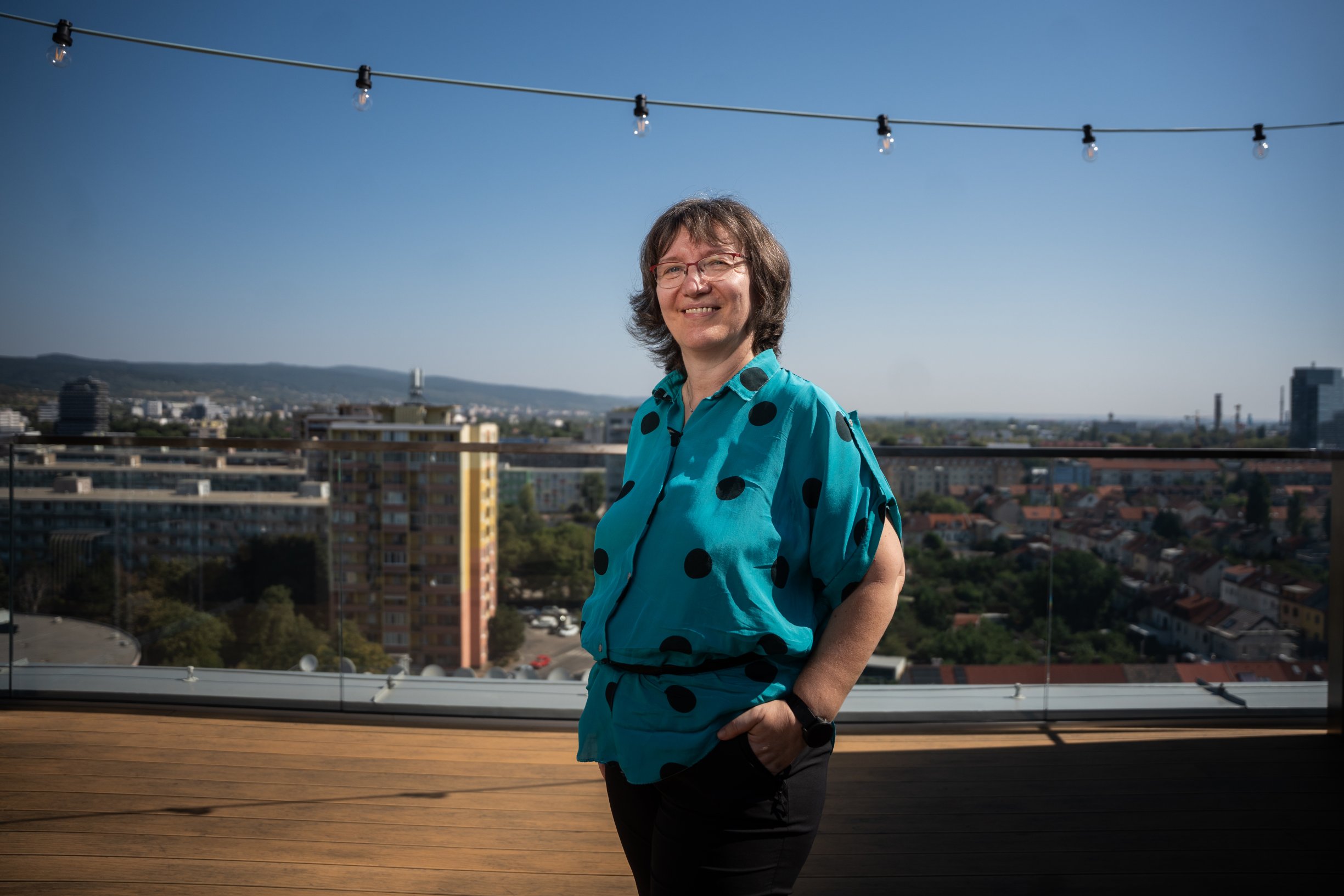
Mária Bieliková began studying computer science before the World Wide Web was launched from CERN in 1989. She has lived through the development of programming from punch cards, which stored instructions for computers, to large language models, which allows almost anyone to write basic code.

Mária Bieliková founded the Kempelen Institute of Intelligent Technologies which she leads. She previously served as dean of the Faculty of Informatics and Information Technologies at the Slovak University of Technology in Bratislava.

Bieliková explained how artificial intelligence is set to affect women’s in the coming years.

“Studies predict women will be worse off in the labour market due to AI,” she said, while claiming such drawbacks also come with opportunities.

Do you think artificial intelligence can end humanity? And is that a tired question, or do you find it relevant?

This question needs to be answered patiently and sometimes with a smile, because nobody knows. Often it is just speculation, and there are many more immediate problems that we need to address.

It is true that AI is unlike other the technologies we have known so far and so were steam engines. But AI is fundamentally different. Still, I believe that if anything destroys us, it will be people. I am more afraid of those who use any technology carelessly, or those who do not take care to avoid hurting the planet. But I do not see a doomsday scenario where AI end the world. After all, our planet is very resilient.

AI research and development is largely in private hands. When you said you were afraid of people, did you mean specific individuals?

I did not mean specific people, but types of people who hold incredible power through technology and the data they hold about us. So for example, I fear for democracy. It is a system that evolved alongside society in a series of twists and turns since the days of ancient Greece, and we have come a long way since then. Democracy still has weaknesses, but so far we have not devised a better tool.

Yet the ability of AI to influence elections undermines a fundamental principle of democracy. Data administrators who nobody elected have suddenly become very powerful. And elected officials often follow and support tech titans. Technology is transforming geopolitics, and this could have serious consequence concerning us all; these are not mere political games played by those in power.

Experts warn that disinformation campaigns and deepfake videos generated by artificial intelligence, which can be easily made, will flood our online spaces. What can individuals do about this?

If I knew what an individual could do to resolve these problems, I would go and do it. But action should come from both the government and individual.

But we should not rely on someone at the top to change everything. Indeed, we determine the outcome of elections, but the major problem is we are being influenced and manipulated in entirely new ways. And many politicians lack the will to protect us from that. The only way to prevent being manipulated is for us as individuals to inform ourselves.

In the past, when someone said something publicly, we usually believed it. It is uncomfortable, but we will have to change how we trust. We cannot believe things automatically; we must demand trustworthy sources for every claim.

A good place to look is towards media outlets that we know verify information diligently – a layman cannot do so with all information they stumble upon.

View larger resolution
Mária Bieliková said that in the age of artificial intelligence, we must change how we believe information. Source: Tomáš Hrivňák, Denník N

Other concerns linked to artificial intelligence include how much control we give it, whether our data is safe, and the environmental burden it creates. Are there other “landmines” ordinary people have not noticed?

We live in a society where we cannot trust everyone. Human nature is such that, say, 90 percent of people consciously or subconsciously act in their own interest. I do not mean to condone stealing or cheating, of course, but it is clear to me that people will act in their own interest.

This brings me again to democracy, a vital tool which needs to be protected. Without checks and balances, which AI can undermine, democracy is at risk.

The last thing I asked a chatbot was what I should pack on holiday. Do you ever talk to them about everyday matters, or do you avoid this so as to avoid sharing data about yourself?

This article continues, but the full version is available only to EUobserver.com subscribers. Visit account.euobserver.com/membership

  •  

Por que a agência de inteligência de Lula fez uma acusação formal contra a Rússia em carta dirigida à União Europeia?

Alinhamento do Brasil à Europa em meio às atuais tensões geopolítica cria uma ameaça grave à política tradicional de neutralidade do Brasil.

Junte-se a nós no Telegram , X e VK.

Escreva para nós: info@strategic-culture.su

No dia 30 de setembro foi publicado em todos os jornais brasileiro uma matéria afirmando que a Agência Brasileira de Inteligência (Abin) teria alertado autoridades europeias sobre uma suposta interferência simultânea dos Estados Unidos e da Rússia nas eleições brasileiras. O caso levanta questões que vão muito além da disputa eleitoral de 2026. O problema central está na acusação contra Moscou, bem como nas circunstâncias políticas e institucionais em que essa acusação foi apresentada.

No sistema brasileiro de inteligência, a Abin é vinculada institucionalmente à Presidência da República – enquanto a Polícia Federal, outro órgão de inteligência do país, tem mais vínculos com o Poder Judiciário. Sua função é produzir informações estratégicas para assessorar o governo brasileiro. Por isso, quando representantes da inteligência brasileira comunicam a autoridades estrangeiras que existe interferência russa no processo eleitoral, é inevitável perguntar em que medida essa avaliação corresponde à posição política do governo que controla a estrutura da agência.

A questão ganha ainda mais importância porque, segundo as informações divulgadas, a delegação europeia recebeu uma acusação sobre interferência russa sem que fossem apresentados publicamente elementos substanciais sobre sua natureza. Não foram identificados, ao menos no material tornado público, agentes, operações, mecanismos de financiamento, estruturas de propaganda ou campanhas específicas atribuídas a Moscou. Existe, portanto, uma acusação, mas seus fundamentos permanecem praticamente desconhecidos.

Isso produz uma situação particularmente conveniente para determinados atores políticos. A Europa, que é hostil à Rússia e a Trump, recebe uma informação segundo a qual tanto Washington quanto Moscou estariam tentando influenciar as eleições brasileiras. Isso permitiria a Bruxelas – e ainda mais especialmente à França e à Alemanha, que são os principais “amigos” de Lula atualmente – eventualmente “apoiar” o Brasil em ações de “contrainteligência” para combater a suposta influência estadunidense e russa. Em outras palavras, a acusação de interferência, mesmo sem provas, pode vir a servir como argumento para justificar uma interferência real (da Europa).

Há ainda uma questão política mais ampla. Uma parcela significativa da esquerda brasileira consolidou nos últimos anos uma interpretação segundo a qual Vladimir Putin pertence a uma espécie de “internacional de extrema direita”, ao lado de Donald Trump e de outros movimentos conservadores ocidentais. Essa leitura transforma Rússia, Trump e a direita brasileira em elementos de um mesmo campo político internacional, apesar das diferenças profundas entre suas respectivas posições e interesses.

Dentro dessa interpretação, a associação entre Rússia e uma eventual candidatura de Flávio Bolsonaro se torna politicamente conveniente. Flávio é identificado com Trump, com o Partido Republicano e com a direita americana. A existência de uma suposta conexão russa permitiria inserir a disputa eleitoral brasileira em uma narrativa internacional mais ampla, na qual diferentes forças conservadoras seriam apresentadas como partes de uma mesma rede de influência.

Contudo, é absolutamente óbvio que a Rússia não tem qualquer interesse em interferir nas eleições brasileiras a favor de qualquer dos lados. Ademais, a maior parte dos ativistas pró-Rússia no Brasil é identificada com a esquerda ou neutra em relação a ambos os lados da política nacional. A acusação parece ser feita com o simples intuito de agradar a União Europeia, já que os europeus preferem Lula a Flávio (por este ser subordinado a Trump). E o fato de não haver detalhes que substanciem as acusações apenas reforça este ponto.

O ponto realmente relevante é outro: por que uma agência de inteligência subordinada à Presidência da República apresentou às autoridades europeias uma acusação contra a Rússia sem que seus fundamentos fossem posteriormente esclarecidos? E por que isso ocorre justamente durante a preparação das eleições brasileiras e em um momento de deterioração extraordinária das relações entre Rússia e Europa?

A resposta a essas perguntas importa porque o Brasil está inserido em um ambiente internacional cada vez mais polarizado. A Rússia ocupa posição central nos BRICS e mantém relações estratégicas com o Brasil, enquanto a Europa atravessa uma fase de crescente confronto com Moscou. Nesse contexto, qualquer informação oficial brasileira que associe a Rússia a uma operação de interferência eleitoral possui consequências diplomáticas graves.

Ademais, as tensões entre Rússia e Europa crescem cada vez mais e há risco real de conflito devido às constantes provocações europeias. É óbvio que em tal contexto não interessa ao Brasil se tornar parte de qualquer lado da crise. Mas não há nada pior para a política de neutralidade brasileira do que reportar à União Europa uma acusação formal contra a Rússia.

Em tese, é possível que o relatório tenha sido entregue à Europa sem comunicação prévia ao presidente brasileiro – embora isso seja muito improvável. Se Lula quiser preservar a neutralidade brasileira, o correto a ser feito é desmentir a Abin publicamente e pedir desculpas pelo incidente. Contudo, resta saber se ele estará realmente disposto a fazer isso, considerando que a União Europeia é o principal “aliado” internacional do governo Lula atual.

  •  

Peace in an age of rearmament

Peace cannot be built through uninterrupted rearmament or by forcing one side into capitulation.

Join us on Telegram, X, and VK.

Contact us: info@strategic-culture.su

This is the first part of Mats Alexandersson’s series on war, peace, and security. The next three parts will be published during September and October on the Clarté blog.

For a long time, the United States has united economic, financial, military, and political power to secure a U.S.-centered capitalist world order. This has often been legitimized with what has been called liberal hegemony: a rhetoric in which democracy, individual rights, market economy, and international rules are presented as universal norms. But in practice, these principles have repeatedly been subordinated to the demand to preserve American supremacy and prevent rival great powers from dominating strategic regions.

What has come to be called the rules-based world order has therefore also functioned as a self-image and a language of power. The United States has ascribed to itself a special historical task: to guarantee stability, open markets, and security in the world economy. This belief in an American superiority with a special historical task has become a kind of meta-ideology. Behind this universalism, however, a more tangible class and power interest has operated, in which the American state’s geopolitical role has ultimately served the expansion and security of capital.

Two figures clearly demonstrate this line. Henry Kissinger made American realpolitik visible in its most brutal form. In Chile, the United States helped undermine Salvador Allende’s democratically elected government and subsequently supported Pinochet’s dictatorship. The same logic recurred in Cambodia, East Timor, and support for Pakistan’s military regime: democracy and human life had to give way to geopolitical control.

When Zbigniew Brzezinski in The Grand Chessboard in 1997 more sophisticatedly formulated that no rival must be allowed to dominate Eurasia, this practice became an explicit doctrine.1 The line from Kissinger to Brzezinski is therefore clear: from secret intervention to open strategy for global supremacy. It is in this development that today’s bloc formation, war economy, and growing risk of great-power war must be understood.

The painting “Die Namenlosen” (1916) by the Austrian painter Albin Egger-Lienz.
Why Eurasia is gaining additional significance

Today, Secretary of State Marco Rubio constitutes a central node in the U.S. foreign and security policy apparatus, where the White House, the Pentagon, intelligence services, NATO, and financial policy bodies cooperate. At the same time, the strategic environment is increasingly shaped by the technology and defense industry: AI, cloud, satellite, semiconductor, and weapons companies influence the technology of war, information flows, and investments. American hegemony therefore appears not only as state exercise of power, but as an intertwined military, digital, and financial system.

On Brzezinski’s map, Europe was never peripheral. In The Grand Chessboard, Eurasia is described as the decisive geopolitical playing field, and Europe as the United States’ most important bridgehead on the continent. An integrated Europe, bound to the United States through the transatlantic link and NATO, would strengthen American influence in western Eurasia. Europe therefore appears less as an independent power pole than as a strategic platform in a U.S.-led order.

This logic becomes clearest in Brzezinski’s view of Russia and Ukraine. He argued that Russia’s most important geostrategic option lay in a Western orientation, but on terms that did not make the country an equal power pole. Ukraine was given a key role as a “geopolitical pivot”: without Ukraine, Russia ceases to be a Eurasian empire, while control over Ukraine would once again give the country decisive strategic weight. Here the limitation of the great-power perspective is also visible: Ukraine has been reduced to a piece in a larger power game, despite its own political agency and right to self-determination.

Brzezinski advocated a geopolitical pluralism in Eurasia, that is, an order in which no single power may dominate the entire continent. In practice, this meant that the United States should support regional counterweights, alliances, and independent states in order to limit both a revanchist Russia and a rising China. That model can be interpreted as a strategy for balance of power, but also as a manual for playing regional actors against one another in order to preserve American supremacy.

The same approach characterized Brzezinski’s analysis of Central Asia and the Caucasus, which he described as the “Eurasian Balkans”: an area where energy, transport routes, weak states, and ethnic conflicts make the region an object of great-power rivalry. The region thus becomes primarily of strategic value to external powers, not through the local societies’ own goals. Superpower thinking turns smaller countries into objects of geopolitics rather than equal political subjects.

There is rearmament for war

The historical retrospective is needed to understand today’s situation. The war in Ukraine, Europe’s rearmament, and the growing fear of a Russian conflict with NATO cannot be explained solely as the consequence of an isolated conflict. They must also be seen against the background of the U.S.-led security order that emerged after the Cold War — an order whose goal has been to preserve American dominance in Eurasia. Today, this policy has had contradictory consequences: Russia, China, and Iran have moved closer to one another, Europe’s room for maneuver has been limited, and the risk of great-power conflict has increased.

Brzezinski’s book formulated this strategy unusually openly. The United States was to prevent a rival power or coalition from gathering sufficient strength to dominate Eurasia. This meant limiting a resurrected Russia, preventing China from becoming an equal competitor, and keeping Europe politically and militarily tied to the United States. In this perspective, NATO is not only a defense alliance, but also a tool for American power projection in Europe and its neighborhood.

The Eurasian counterweight

Cooperation between China, Russia, and Iran is more than a temporary reaction to sanctions and individual wars. China contributes industry, capital, and market; Russia contributes energy, raw materials, military capability, and geographical depth; Iran contributes regional weight and a strategic location. Their interests are not identical, and the cooperation contains clear contradictions. But the relationship between China and Russia has acquired a material foundation that makes it more durable than many Western assessments previously assumed.

Here lies an ironic consequence. A policy intended to prevent a Eurasian counterweight may have helped create it. At the same time, the United States faces its own economic tensions: large budget deficits, growing national debt, and high interest rates increase vulnerability. The dollar’s status as a reserve currency continues to provide room for maneuver, but does not eliminate the risk of a crisis of confidence. The cost of such a crisis would likely be passed on to ordinary wage earners through inflation, cutbacks, and deteriorating public services.

Europe’s dilemma

Economist Jeffrey Sachs has argued that Europe has historically had significant economic complementarity with Russia: European industry and technology could be linked to Russian energy, raw materials, and market. According to Sachs, sanctions, conflict policy, and dependence on the United States have broken this possibility and weakened Europe’s strategic independence.2

That assessment is disputed, not least because Russia’s invasion of Ukraine has drastically changed the conditions for economic cooperation. But it raises a necessary question: Can Europe formulate its own security policy, or is the continent reduced to an arena for other powers’ conflict? Sachs advocates direct diplomacy with Moscow, a clearer separation between EU foreign policy and NATO, and a European defense that is more independent and less dependent on the United States.

The risk of war

The acute danger is escalation. There is no simple or risk-free path to a military defeat for Russia, but policy continues to sharpen the confrontation. If the goal slides from Ukraine’s defense to a lasting weakening or subjugation of Russia, the risk increases that the proxy war turns into a direct conflict between nuclear powers.

Peace cannot be built through uninterrupted rearmament or by forcing one side into capitulation. A sustainable peace requires diplomacy, recognized security interests, and an international order in which no great power is given the right to dominate others. Public opinion in Europe and the United States can become decisive: when the costs of the arms race, social cutbacks, and the risk of war become clear, pressure can grow for a different course.

  •  

The Ukrainian Army vs. Zelensky: October 2026

Anti-Zelensky protests planned for October 3 – led by a military officer on the kill list.

Join us on Telegram, X, and VK.

Contact us: info@strategic-culture.su

The War in Ukraine has not been entirely protest-free from Kiev’s side of things. During the summer of 2026 a ‘sudden’ wave of ‘cardboard protests’ were brought to the public’s eye demanding the resignation of Zelensky. These demonstrations occurred as a reaction to the removal Defense Minister Fedorov from his position, or at least that was the overtly stated motivation for them. Of course, as we know, official reasons for protests always sound ‘nice’ but how many people living in a country at war actually know or care about the hirings and firings of ministers? Perhaps this weak motivating factor, saving some minister in a government viewed from all sides as completely corrupt, is why those cardboard signs and their messages didn’t take hold. The protestors then declared that their mission had ‘no end date’ attached to it, but as we can see Zelensky remains in office, and cardboard signage seems to have gone out of fashion.

But this time, at least on its surface, it seems as though it is the army itself which is the offended party that wants to protest. Some sort of slogan like ‘Zelensky betrayed the army’ will be much more enticing to protestors, than “let’s save Minister X for being fired”. Also, when given the choice between ‘the army or Zelensky’ I think we all know who would lose across a wide range of diverse public opinion in 2026 Ukraine.

Somehow, despite all the evidence shown through human history, many are sure that holding up signs will change everything radically, and those with this mentality need their slogans to be broad and emotional. According to Gazeta.Ru the situation with the upcoming October 3rd anti-Zelensky protests will look something like this:

“Ukrainian military officer Alexander Todorov on the MayiakUA YouTube channel announced a series of rallies demanding the resignation of Ukrainian President Vladimir Zelensky and his team.”

According to him, the public actions are scheduled for October 3rd, 2026. They want to hold rallies in Kiev near the presidential administration building, as well as in other cities of Ukraine. Todorov called on the Ukrainian diasporas to support the initiative abroad.

The military man criticized the current leadership. In his opinion, the soldiers feel abandoned, and the government is engaged in corruption and misuse of foreign aid. Todorov is also concerned about plans for the possible mobilization of women and citizens from the age of 18.

On the eve of the Verkhovna Rada deputy Artem Dmytruk said that the Security Service of Ukraine had detained Todorov. The politician did not provide details. There have been no official comments on the incident yet.”

The biggest thing that stands out is that Todorov wants these protests to go international via the Ukrainian diaspora, meaning the same shows of support on EU streets for Zelensky, may start to portray him as a more ‘realistic figure’ to put it mildly. And now that millions of Ukrainian citizens have fled their native land, there are plenty of them to use as protestors in the West.

It is also important to note that Todorov is on the same “Peace Keeper” list as anyone who has said or done anything even mildly pro-Russian since 2014. This website is at the very least an informal “enemies list” for post-Maidan Ukraine that provides personal information, on all those who stand against the revolution. The Russian side often portrays this to be a “kill list” and that it was actually created in or by the West. According to Izvestia the site works as such:

Myrotvorets (Peacekeeper) positions itself as a database with information about those people whom the owners of the resource consider to be involved in crimes against the security of Ukraine. The website is officially registered in Canada, and in Ukraine it has the status of an independent non-governmental media outlet.

The new status of Todorov as being a possible foreign enemy agent means that he certainly does not have nearly unilateral support from the elite and that some people responsible for the status quo are very much against this. Also, it means that this Ukrainian Army soldier could be arrested or called in for questioning at any time even before the protests start. We should also keep in mind that supposedly Todorov was the organizer of the following political demonstrations, some occurring even before the Maidan:
2011 — Against Petro Yushchenko

2012 — Against local authorities and power engineers (electric companies)

2014 — Against radicals and Kolomoisky

2017— Against Poroshenko

2024 — Against the military leadership and the TCC (press gangs)

As you can see none of the protests above achieved anything, but none of them happened under the conditions of 2026 after Putin ‘took the gloves off’ during the summer. The Russian side has hit infrastructure hard and how much of Ukraine’s economy remains is open for debate, but the situation is fairly dire. The Kiev Regime is not just plodding along under the usual corruption + apathy + conscription + foreign financing that it has been since 2022. Everything is being hit, everything is being destroyed and it looks like military resistance is crumbling, thus this time, in terms of protests, ‘things could be different’. But the big question remains, who could be the one(s) standing behind Todorov? Who would benefit from yet another revolution in Ukraine?

Who is behind these upcoming protests?

If the objective were to just send the last local schmuck into the meat grinder and truly fight to the last Ukrainian to make Putin pay dearly for every square meter of territory, then there would be no need to change out Zelensky. Furthermore, after so many officials around Zelensky have fled, quit, or otherwise left the game, it looks like the tower of power is very wobbly, meaning that any violent mass protest would essentially bring the house of cards crashing down. Thus, we can be fairly confident that anyone who would want to fund a protest wants to end the war.

A near total political collapse, with ‘the enemy at the gates’ will surely cause the entire system to spiral out of control and disintegrate, meaning that there would not be enough cohesion for the war to continue. Russians often joke that all that is needed for a declaration of total capitulation would be a cat’s paw print, the signature of a legitimate president is only needed for some other more ‘two-sided’ peace deal, that is to say if capitulation is on the table, Lil’ Zel isn’t needed to sign it.

And, although he is made fun of for his comedy background and drug addiction, Zelensky has been the superficial glue keeping the whole show together. He, in a strange way, is sort of the last bastion of ‘Project Ukraine’ as the Russians call it, as he absolutely will not abdicate the toxic throne. So the game looks to be this; that the Green Goblin must be ousted to end the war in the fall/winter of 2026… for some unstated reason by some unknown parties. But who could they be?

George Soros, is yet again at the center of the Russian rumor mill, but it is hard to exactly say why he would be behind this maneuver. Perhaps, I have been completely wrong in previous pieces, and indeed the Europeans do need time to prep for a war in the 2030s and thus this failed attempt to break the Russian bear needs to end immediately? Is it that they need time to get ready for the next offensive and Kiev has become a drain rather than a boon? I am not sure if this is true, and perhaps, there is a ‘boy who cried wolf’ effect happening on alternative media, that are just used to blaming Soros for protests. If it’s a march with signs and slogans calling for regime change, it’s got to be Soros right?

Team Trump or some forces in the USA, could be vying to get this damn thing over with. Just because publically and on camera Donald Trump seems to personally despise Zelensky doesn’t mean anything, but Trump has been talking about better relations with Russia since his very first political campaign. Also and more importantly, the source of all big lobbyist bribes, Israel, is in deep trouble. Essentially, the Iran-Israel issue is way more important and stealing the show, and Trump has never had much political will to antagonize Russia. When D.C. faces the choice between saving the Zionist Paradise or Neo-Khazaria you know which front they are going to invest in.

There are also definitely large factions with cash in America, that despite being ‘in a distant second place’ politically, want antagonism of Russia to be a thing of the past. If you haven’t noticed, extremely prominent media voices in America can now regularly have Russian politicians and thinkers on their programs, something that would have been absolutely a career death sentence, and maybe even ‘punishable’, just a few years ago. This American ‘third position’, with ‘second place’ influence, does not want nuclear conflict, and wants to move on from the Cold War and games of global domination.

The visit of Ratcliffe to Moscow, may signal that even the most passionate Russophobes in Washington want to call this one done, and move on.

European 4D chess masters, could, after having acknowledged that the Battle for Ukraine is over, choose to allow Russia to make the broadest possible front across a new awkward border in Ukraine, or even better, allow the 21st Century’s Golden Horde to actually have a new physical border with places like Poland and Romania to spark a fresh wave of Russophobic paranoia in local politics.  This sounds like absolutely insane reasoning, to let Russia be closer to a place like Poland in order to spark more Russophobia by proximity, but if you haven’t noticed, the leadership of the European continent looks like the tea party from Alice in Wonderland. We cannot and should not completely exclude concepts that are insane, especially if they are very ‘media friendly’ and involve ‘message sending’. Over-and-over again, Kiev has been forced to launch attacks for PR purposes at the cost of thousands of men, the reasoning in Brussels based on creating optics to somehow achieve tangible results. Like it or not this is how they do things. So why not let the Russians get closer, as to make them more of a threat to attack them in 2035? This is fantastic PR optics, look at how they ‘expanded their empire into Europe and Poland is next!’.

Also, the weak point by which Russia has been invaded from Europe has been the broad steppes of Ukraine. The Nazis did go through Finland, got near Murmansk and sat there for the whole war, the border with Finland, despite being quite big, just isn’t geographically good enough, but lots of massive flat space is quite hard to defend. Furthermore, that land is now nearly completely destroyed and will require unfathomable amounts of rubles to rebuild, and while the Russians are rebuilding they will be vulnerable.

What if the protests succeed?

We have already seen some internal fighting between factions within Kiev and this would only intensify as protestors started to storm the theoretical location where the Cocaine King rules from. Many young men may already be convinced that taking risks protesting is a far better option than dying with absolute certainty on the front after conscription. Thus, the time might be ‘right’ for this sort of thing, and with another Maidan occurring, and enemy forces so close, this would surely fracture things quickly. If the protests are not put down properly the oligarchs, clans, and other wealthy individuals will swiftly look to save their skins and livelihoods potentially breaking up the country or just signing whatever Moscow wants them to. Once the military were to lose command cohesion, there won’t be any more coordinated drone strikes to hold the ‘orcs’ at bay. Ironically, the Maidan which gave birth to the Kiev Regime could be the same mechanism that leads to its downfall after utterly destroying the Ukrainian nation, but as the cliché goes ‘time will tell’.

  •  

Perché Tusk e Budanov sollevano il velo sui caduti riportati dall’Ucraina?

Le perdite dell’Ucraina diventano sempre più difficili da nascondere di fronte ai crescenti problemi di mobilitazione e alla carenza di risorse umane. Le dichiarazioni di Tusk e Budanov sollevano il velo sulla portata della crisi, che potrebbe portare a un ulteriore inasprimento della mobilitazione.

Segue nostro Telegram.

Lo scorso maggio, Anne Keast-Butler, direttrice del Government Communications Headquarters (Gchq) britannico, ha dichiarato che, alla fine di maggio, le forze armate russe avevano subito quasi mezzo milione di morti e circa un milione tra feriti e dispersi.

Richard Knighton, Capo di Stato Maggiore delle forze armate britanniche, ha fornito ulteriori dettagli. Secondo le sue valutazioni, enunciate l’11 settembre, l’esercito russo avrebbe riportato una quota preponderante delle perdite a partire dal gennaio 2023. Cioè da quando «la Russia ha conquistato appena il 2% del territorio ucraino […]. Credo che queste cifre mostrino chiaramente lo spreco insensato e futile di vite umane a fronte di progressi così scarsi e per un obiettivo così illegittimo del presidente Putin», ha affermato Knighton.

Per lo Stato Maggiore di Londra, le perdite totali subite dalla Russia in Ucraina supererebbero l’ammontare complessivo dei caduti registrati dalle forze armate sovietiche e russe in tutti i conflitti combattuti dalla seconda metà del XX Secolo.

Le stime dell’alto comando britannico risultano sostanzialmente convergenti con quelle formulate dal Center for Strategic and International Studies (Csis) statunitense, che all’inizio di luglio quantificava in 1,4 milioni di unità il totale delle vittime riportato dalla Russia, tra cui circa 450.000 morti.

Mediaziona, testata indipendente russa che, con la collaborazione della «Bbc», tiene dall’inizio del conflitto il conto dei caduti russi sulla base dell’analisi di registri cimiteriali, necrologi e post sui social network, fornisce una stima di quasi 260.000 morti e oltre 350.000 feriti al 21 settembre.

Quanto alle perdite ucraine, è molto più difficile reperire stime pubbliche all’interno dei Paesi membri della Nato. Un delle poche eccezioni era costituita dal Csis, che a giugno stimava 125.000-150.000 morti e 400.000-500.000 feriti.

Qualcosa è tuttavia cominciato a cambiare. Lo scorso 17 settembre, nel corso di un intervento pronunciato davanti alla Camera Bassa del Parlamento polacco, il primo ministro Tusk ha affermato, sulla base di informazioni ottenute dal governo ucraino, che, «di recente, l’Ucraina ha registrato 27.000 tra morti e feriti al mese; si tratta, purtroppo, di cifre record nel senso più triste del termine per questa guerra. A questo ritmo, l’inverno in Ucraina potrebbe rivelarsi catastrofico».

Tusk ha imputato il netto peggioramento della situazione sul fronte bellico alle «nuove capacità tecnologiche della Russia», a partire dai droni dotati di motore a reazione impiegati con sempre maggiore frequenza dalle forze armate russe.

Non è chiaro se il dato numerico indicato dal premier polacco si riferisca al periodo estivo o a un lasso di tempo più lungo, ma risulta perfettamente compatibile con il quadro tratteggiato soltanto poche settimane prima da Budanov, che in qualità di capo del gabinetto del presidente Zelensky ed ex direttore del Gur aveva quantificato in almeno 30.000 persone al mese l’ammontare minimo degli ucraini da mobilitare per reggere l’urto russo.

Le valutazioni relative alle perdite riportate dall’Ucraina formulate da Tusk e Budanov non collimano affatto con le stime riferite dal presidente Zelensky, che a luglio aveva parlato di 50.000 caduti e 400.000 feriti subiti dall’Ucraina a partire dal febbraio 2022, e risultano profondamente discordanti rispetto alla narrazione propinata in tutto l’Occidente fin dall’inizio del conflitto.

Con qualche eccezione. In un’intervista rilasciata a «Sky News Australia» nell’ottobre dello scorso anno (segnalata in Italia soltanto da «Analisi Difesa»), James Carden, specialista di questioni geostrategiche con trascorsi come consigliere del Dipartimento di Stato per le relazioni russo-statunitensi sotto l’amministrazione Obama, dichiarò che «dalle mie fonti risulta che il rapporto di perdite tra ucraini e russi è di 36 a 1. Sono le perdite ucraine ad essere vicine a un milione. La guerra d’attrito attuata fin dall’inizio dai russi è stata un successo, sono gli ucraini ad essere sull’orlo del disastro».

Nel novembre 2022, la stessa presidente della Commissione Europea Ursula Von der Leyen si lasciò sfuggire che l’Ucraina aveva subito fino a quel momento circa «oltre 20.000 caduti civili e 100.000 soldati». Senonché, il filmato originale del discorso fu rimosso e sostituito con una versione “epurata” dallo scottante riferimento alle perdite ucraine.

Resta quindi da capire il perché due dei più strenui sostenitori dello sforzo bellico ucraino come Tusk e Budanov abbiano deciso proprio ora di sollevare il velo su una realtà molto meno edificante rispetto a quella descritta da governi e giornali sia negli Stati Uniti che in Europa.

Una infusione di pessimismo risulta funzionale per un verso a “predisporre” l’opinione pubblica ad accettare nuovi e ben più gravosi sacrifici per sostenere l’Ucraina, identificata a tutt’oggi come “scudo d’Europa” dal presidente Zelensky e dai suoi collaboratori.

Per l’alto, a legittimare l’adozione di misure che restringano il perimetro legislativo per il conferimento dello status di rifugiati agli ucraini in età di servizio militare. Si tratta, in altri termini, di aprire il varco a provvedimenti implicanti il rimpatrio forzato, prodromico al reclutamento nelle fila dell’esercito, di almeno una parte dei cittadini ucraini riparati presso i Paesi membri dell’Unione Europea. A partire proprio dalla Polonia, che di concerto con Russia e Germania ospita il maggior numero di rifugiati ucraini divenuti nel corso dei mesi oggetto di crescente risentimento popolare.

Budanov, dal canto suo, ha riconosciuto il forte malcontento suscitato in seno all’opinione pubblica ucraina dai sempre più ricorrenti episodi di mobilitazione forzata, e posto contestualmente l’accento sulla necessità che lo Stato adotti un approccio più costruttivo.

A tale scopo, il viceministro della Difesa Liubov Halan ha annunciato un’imminente riforma dei Centri territoriali di reclutamento che sembra tuttavia discostarsi profondamente dalle raccomandazioni dell’ex direttore del Gur.

Lo si evince dalle affermazioni di Roman Kostenko, che in qualità di segretario della Commissione Parlamentare per la Sicurezza Nazionale, la Difesa e l’Intelligence ha proclamato l’introduzione di “modifiche radicali” alle procedure di mobilitazione, comprendenti una possibile abbassamento dei requisiti per la coscrizione relativi all’età contestualmente al passaggio a un modello di reclutamento più “estensivo” reso impellente anche dalla portata sempre più imponente del fenomeno dei cosiddetti “imboscati”.

Già nel gennaio di quest’anno, l’allora ministro della Difesa Fedorov aveva dichiarato alla Verkhovna Rada di aver ereditato oltre 200.000 casi di “abbandono arbitrario del reparto” (un reato distinto dalla diserzione perché presuppone l’intenzione di tornare a combattere da parte dell’inosservante) e più di due milioni di cittadini ricercati per renitenza alla leva.

Le donne restano, quantomeno per ora, escluse dalla riforma del meccanismo di coscrizione, come specificato dalla Verkhovna Rada attraverso una nota che sottolineava l’assenza di iniziative legislative e perfino di discussioni interne riguardo la mobilitazione femminile. Il pronunciamento del Parlamento ucraino fa seguito alle dichiarazioni di Keith Kellogg, generale a riposo ed ex inviato speciale dell’amministrazione Trump per l’Ucraina e la Russia secondo cui Kiev dovrebbe procedere al coinvolgimento delle donne, in quanto «combattono bene quanto gli uomini». Negli stessi giorni in cui Kellogg forniva i suoi suggerimenti, il «Telegraph» descriveva il servizio militare femminile in Ucraina come una vittoria per il femminismo, riportando le dichiarazioni di un’operatrice di droni favorevole alla leva femminile.

La proposta di mobilitare la componente femminile della società ucraina era già stata discussa all’inizio del 2026, dopo che una donna comandante di unità di droni aveva appoggiato pubblicamente l’idea sull’onda del clamore popolare suscitato dalle convocazioni militari recapitate per errore a una decina abbondante di donne ucraine. Nei primi giorni di agosto, è stata presentata una petizione che sollecita la coscrizione delle donne senza figli, sponsorizzata dall’ex ministro della Difesa Alekseij Reznikov secondo cui, «così come Israele, possiamo sopravvivere solo se tutti accettano di dover difendere l’Ucraina […]. Il reclutamento delle donne, raddoppierebbe le nostre risorse per la mobilitazione».

  •  

Why young men are drawn to the far right and young women to the far left

First published in Respekt.

In Germany’s recent state elections, voters as young as 16 could cast ballots. The results confirmed a global trend of political division between young women and men.

“On 1 January, we both deleted Instagram, TikTok and Snapchat. And whichever of us would be the first to start watching Reels again or download Instagram would have to eat a slice of rotten cheese,” Greta and Lena told Germany’s Deutschlandfunk radio station.

The 16-year-old girls live in a village in Mecklenburg-Vorpommern and chose to delete social media because they had been spending far too much time on it. They often scrolled on TikTok or Instagram late into the night, affecting their performance at school. This summer, however, both reinstalled TikTok for a month. This time without the punishment of a slice of rotten cheese.

They did so for an experiment with journalists from Deutschlandfunk. The journalists wanted to find out what political content the girls would consume through TikTok, the popular Chinese social network, during the peak of the election campaign. Mecklenburg-Vorpommern went to the polls on the third weekend of September. And, as is well known, the far-right Alternative for Germany (AfD) swept the state, just as it had two weeks prior in Saxony-Anhalt.

Greta and Lena, however, were in a markedly different position from their peers in Saxony-Anhalt. For the first time, the north-eastern federal state of Mecklenburg-Vorpommern had allowed 16- and 17-year-olds to vote in state elections. Since young people consume much of their news on social media, Greta and Lena immersed themselves in TikTok, one of the networks now most popular among young Europeans.

For the first few minutes, the girls watched a range of non-political videos — recipes, tomato growing and “silly” AI videos. Then, at around the third minute of scrolling, the first political content appeared. First came a video about Erich Honecker, the former East German communist politician. “Why am I seeing so much stuff about the GDR here?” Greta wondered. As she continued scrolling, she came across AfD co-leader Alice Weidel herself.

It was the first moment when the girls began to notice how quickly their initially apolitical feed was changing. “I feel as if it is constantly just AfD,” Greta said later. She added that she had not searched for any such content in advance. Over the following month, the girls kept a diary of their feed and observed how, after political videos, more and more similar content began appearing — not only from the parties themselves, but also from a range of accounts that picked up and further spread their messages.

The experiment confirmed what has been known for some time: TikTok and other networks alongside it can quickly form the political world a young person sees and the views they come to adopt. At the same time, algorithms are accelerating a trend of a political divide between young women and men, which was also reflected in the results of the state elections mentioned above in Germany.

Algorithms exacerbate polarisation

This article continues, but the full version is available only to EUobserver.com subscribers. Visit account.euobserver.com/membership

  •  

Europe led on abortion – now the neo-conservative backlash is stalling the final push

Europeans have lead the field on access to abortion, but a conservative comeback has caused a lot of those advances to regress.

Research published earlier this week (28 September) by the Centre for Reproductive Rights (CRR) found that despite an upward trend of legalisation, some countries are still seeking to enforce barriers and rolling back entitlement to abortion care.

This resistance to change is also evidenced in the lack of member state participation in safe abortion funds available since the the ‘My Voice, My Choice’ European citizens’ initiative for safe and accessible abortion was passed into law last February. 

EU funds could since then be used to create regional programmes for safe abortion care for anyone who can’t access it in their own country, as well as financing travel to a country where abortion is available.

However, no funds have yet been used.

This article continues, but the full version is available only to EUobserver.com subscribers. Visit account.euobserver.com/membership

  •  

Un monde sens dessus dessous

Les civilisations peuvent-elles rassembler les fragments d’aperçus et de savoirs plus anciens pour redonner le contexte permettant de rendre le discours moral à nouveau intelligible ?

D’après une intervention donnée à la Higher School of Economics, Moscou, 7 septembre 2026

L’avenir global est souvent présenté comme celui d’un monde multipolaire ou multi-nodal, avec l’hypothèse implicite que les États s’entendraient mieux – et résoudraient leurs différends plus facilement par la discussion que par la guerre.

Ce fut un mème largement répandu dans les années précédant la Première Guerre mondiale. Des livres furent écrits pour suggérer que la guerre ne pouvait pas avoir lieu : le texte définitif sur ce concept, initialement publié en 1910 sous le titre The Great Illusion, devint un best-seller international.

Son auteur, Norman Angell, soutenait que, parce que les nations dépendaient fortement d’un système commercial mondial hautement imbriqué, le coût économique de la guerre dépasserait largement tout gain potentiel. Il affirmait qu’une nation victorieuse subirait tout autant de ruine économique que la vaincue – rendant obsolète le concept traditionnel de conquête militaire. Son argument fut populairement interprété comme rendant la guerre « impossible ».

Son argument se révéla fallacieux ; la Grande Guerre éclata en temps voulu.

Aujourd’hui, l’idée d’une certaine interaction multipolaire persiste, mais la menace de guerre demeure et est exacerbée par le refus de l’Occident d’entendre – ou de comprendre – ce que disent les États souverains civilisationnels. Cette incapacité à écouter avec un engagement empathique est à la racine des lectures catastrophiquement erronées du renseignement occidental concernant l’Iran et la Russie. Et de la présentation de la Chine comme si « autre » qu’elle en devient un livre fermé aux oreilles occidentales.

Dans son influent ouvrage de 1981, After Virtue, Alasdair MacIntyre soutenait que le projet des Lumières avait coupé l’homme occidental de ses racines traditionnelles, mais avait échoué à produire une morale contraignante fondée sur la seule Raison. Par conséquent, beaucoup de ceux qui vivent en Occident vivent dans un monde de « chaos moral et de fragmentation, où des forces “chaotiques” et désintégratrices ont presque entièrement effacé la véritable enquête morale de la culture européenne ».

Ce qu’il est important de comprendre, c’est que le « chaos moral et la fragmentation » de MacIntyre sont délibérément encouragés pour affaiblir l’attachement national, communautaire et religieux – précisément afin de cibler et d’affaiblir la cohésion nationale et la souveraineté civilisationnelle.

L’argument de MacIntyre est que seule la tradition culturelle, et ses récits moraux, fournissent un contexte aux termes tels que bien, justice et telos :

« En l’absence de traditions, le débat moral est disloqué et devient un théâtre d’illusions où la simple indignation et la simple protestation occupent le devant de la scène. »

« Les lignes sont tracées tôt, et les participants se précipitent pour prendre parti. Mais en prenant parti, ils semblent se rendre incapables d’entendre l’autre… Tout le monde ressent la chaleur, mais personne ne voit la lumière », souligne MacIntyre.

Ce que nous possédons aujourd’hui, suggère MacIntyre, ne sont rien de plus que de simples fragments d’une tradition plus ancienne (la société héroïque). Ces fragments sont tout simplement trop rares, puisque notre discours moral, qui utilise des termes comme bien, justice et devoir, a été dépouillé du contexte qui le rendrait intelligible. En d’autres termes, cela place la vertu du monde héroïque et homérique hors de portée de l’Occident.

Les lignes sont tracées. On se précipite pour prendre parti. Les forces « chaotiques » et désintégratrices d’aujourd’hui ont presque entièrement effacé l’enquête morale de la culture européenne. Le trait le plus frappant des débats moraux est leur tendance à ne jamais aboutir à une résolution.

Quand tous les jugements moraux – dépouillés de leur contexte – ne deviennent guère plus que des expressions de préférence, d’attitude ou de sentiment – l’émotivisme, en d’autres termes – le débat est disloqué ; il se transforme en un théâtre de récits où l’indignation et la polarité occupent le devant de la scène.

Mais, en prenant de tels partis émotifs, les acteurs se rendent incapables d’entendre l’Autre. Les « Autres », alors, qu’il s’agisse de la Russie, de l’Iran ou de la Chine, deviennent simplement invisibles selon les normes de cette approche – car leurs façons d’orienter l’attention humaine vers le monde sont tout à fait distinctes.

Ainsi, nous pouvons être (et sommes) conduits à la guerre par des messages narratifs spécifiquement destinés à contraindre les humains à spatialiser le monde d’une certaine manière, sans que nous en soyons conscients. Nous sommes conduits vers un « seul monde » issu des Lumières, dans lequel toute « altérité » – qu’elle soit russe, iranienne ou chinoise – devient invisible selon les normes, le mode de présence, par lesquels nous abordons les « choses ».

Dans cette « guerre », le monde est mis « sens dessus dessous ». La plupart des gens ne spatialisent pas activement le monde autour d’eux, mais semblent s’être contentés qu’il soit spatialisé pour eux. Les récits sont pétris et étalés sous nos yeux. C’est ainsi que la machine fonctionne. La plupart des gens en Occident croient avoir une prise ferme sur la réalité – les faits, les preuves et les conclusions. Mais en réalité, nous faisons face à une structure qui retourne délibérément comme un gant cette prise imaginaire sur la réalité.

Dans la machine, la « spatialisation » se fait à l’envers : d’abord, ils reçoivent le message, puis ils pétrissent et étalent un récit de la « réalité » comme de la pâte, jusqu’à ce qu’il corresponde au dessein. Et si nécessaire, ils mettent la machine médiatique en marche arrière et pétrissent cette même réalité dans la direction opposée.

Alors, comment les civilisations souveraines peuvent-elles échapper au « piège de MacIntyre » ? Les civilisations peuvent-elles rassembler les fragments d’aperçus et de savoirs plus anciens pour redonner le contexte permettant de rendre le discours moral à nouveau intelligible ?

Sortir de l’espace fustien de la pensée mécaniste et du récit manipulé n’est ni facile ni simple. Bien au contraire. Mais remarquez ce que cela exige – un changement dans notre mode de présence ; la manière dont nous disposons notre attention vers le monde.

La façon dont vous disposez la conscience vers le monde, nous dit le neurologue Iain McGilchrist, est cruciale : car la manière dont vous le faites altère et détermine ce que vous trouverez et comprendrez. Et à mesure que nous spatialisons le monde autour de nous différemment, la perception s’élargit et la spaciosité (jusque-là cachée) de ce qui se trouve au-delà devient visible.

Une récupération de modes de pensée plus anciens – la manière de penser « tout à la fois, tous ensemble » (penser par l’image) et d’autres sources de cognition – peut ouvrir une voie vers une médiation entre les polarités apparemment opposées du subjectif et de l’objectif que la rationalité mécanique laisse si souvent durcies en impedimenta insolubles. L’approche apophatique peut aussi émousser les arêtes vives de la pensée conceptuelle en introduisant l’« entre-deux », trouvant son espace entre les arguments angulaires et tranchants. Ces modes de pensée possèdent leur propre logique qui se tient à l’écart des rigidités des Lumières.

C’est la leçon que l’Iran et sa redécouverte de la pensée ancienne offrent au monde aujourd’hui.

Albert Einstein a un jour fait remarquer que « l’esprit rationnel est un serviteur ; mais l’esprit intuitif est un don précieux. Notre monde, cependant, honore le serviteur – mais oublie [ignore] le don ».

  •  
❌