❌

Reading view

L’OTAN, la corruption, le néonazisme sont les ennemis de l’Ukraine – pas la Russie

Zelensky et son régime à Kiev sont les « plus grands obstacles à la paix », selon son ancienne porte-parole.

Cela aurait dû faire la une des journaux la semaine dernière, mais cela n’a pas été le cas. L’ancienne porte-parole du pseudo-président de l’Ukraine, Vladimir Zelensky, s’est vu interdire de s’adresser au Parlement européen.

Pourquoi ? Parce qu’Iuliia Mendel devait livrer des révélations accablantes sur la corruption endémique dans le régime de Zelensky et sur la façon dont la guerre soutenue par l’OTAN dans son pays est une combine pour s’enrichir.

Quelle ironie que un tel témoignage ne soit pas autorisé dans ce qui est censé être le siège de la démocratie et des valeurs européennes. Si la liberté d’expression remet en cause le récit officiel, alors elle est interdite. Le seul récit autorisé est que l’Ukraine est un modèle de démocratie cherchant à adhérer à l’Union européenne et à l’OTAN, mais qu’elle est contrariée par « l’agression russe ». Combien fragile est cette représentation, pour que quiconque ayant un point de vue différent et des faits soit purement et simplement réduit au silence et diffamé comme propagandiste russe ?

Remarquablement, presque aucun média occidental n’a rapporté ce fiasco.

Iuliia Mendel a été conseillère personnelle de Zelensky pour les médias de 2019 à 2021, date à laquelle elle a démissionné, désillusionnée par sa corruption. Elle a observé de près les tractations, le comportement maniaque de Zelensky et de ses acolytes, et son mépris pour la démocratie. Elle décrit son témoignage comme un « devoir moral » de dire à ses concitoyens ukrainiens et au reste du monde la vraie nature de son ancien patron. Qu’il est un escroc aux tendances psychopathiques qui se moque éperdument de la vie du peuple ukrainien. Sa seule préoccupation est de rester au pouvoir le plus longtemps possible et de s’enrichir avec les milliards d’argent des contribuables occidentaux qui sont acheminés vers son régime.

Zelensky et son régime à Kiev sont les « plus grands obstacles à la paix », dit Mendel, qui a donné cette interview à Weltwoche, après avoir été empêchée d’entrer au Parlement européen. La corruption en Ukraine, dit-elle, dépend de la poursuite de la guerre, et c’est pourquoi le régime de Kiev oppose son veto à tout effort diplomatique visant à mettre fin au conflit qui dure depuis près de cinq ans. Quiconque s’oppose à la guerre et appelle à la diplomatie est sanctionné, emprisonné ou envoyé au front pour mourir. Zelensky supervise une junte militaire (que l’Occident appelle « démocratie ») dans laquelle ses sbires traquent les gens dans les rues pour la conscription. Pour échapper au hachoir à viande, ils doivent payer un pot-de-vin pouvant atteindre 20 000 dollars.

Mendel a d’abord fait sensation lorsqu’elle a été interviewée en mai de cette année par le diffuseur américain Tucker Carlson. Dans cette interview, elle a décrit Zelensky comme un dictateur toxicomane émotionnellement instable, bien que dissimulé par ses talents d’acteur d’ancien artiste de divertissement. Les partisans politiques et médiatiques occidentaux, bien sûr, jouent le jeu en fermant les yeux sur cette mascarade et le célèbrent comme un « héros churchillien de guerre ».

Tout cela est une combine méprisable jouée aux dépens des contribuables occidentaux et du peuple ukrainien qui souffre depuis longtemps.

Pour avoir révélé les secrets de son ancien patron, Mendel a été immédiatement inscrite sur la liste noire Mirotvorets, soutenue par l’État ukrainien, comme « propagandiste russe ». Mirotvorets a acquis une triste réputation de liste de morts, car plusieurs personnes qu’elle a blacklistées ont fini mortes. Elle dit qu’elle est interdite de diffusion publique vers ses concitoyens ukrainiens par des entreprises médiatiques occidentales comme Meta/Facebook.
Plus tôt cette semaine, quelques jours avant qu’elle ne s’adresse au Parlement européen, le régime de Zelensky a annoncé des sanctions contre Mendel. Elle ne peut pas accéder aux avoirs ukrainiens et ne peut pas rentrer dans le pays de peur que sa vie soit en danger. Elle craint que sa famille en Ukraine ne soit persécutée, envoyée au front en représailles pour sa prétendue « trahison ».

La décision de lui interdire de parler devant l’assemblée de Strasbourg aurait été prise par la présidente du Parlement européen, Roberta Metsola. Metsola, comme d’autres dirigeants de haut rang de l’UE, tels que la présidente de la Commission, Ursula von der Leyen, et le président du Conseil, António Costa, est une supportrice inconditionnelle de l’Ukraine, acheminant des milliards d’aide au régime.

Mendel apparaît comme une personne d’intégrité, de décence morale et de véritable indépendance. Elle rejette catégoriquement l’accusation d’être « pro-russe ». En effet, dans ses interviews avec Carlson et Weltwoche, Mendel critique vivement la Russie pour ce qu’elle appelle une invasion cruelle de son pays. Il semble parfaitement clair que sa préoccupation constante est d’empêcher la guerre de détruire sa patrie.
Cependant, la guerre ne peut pas être arrêtée parce que le régime de Zelensky et ses partisans européens de l’OTAN sont investis dans sa prolongation. La corruption du régime est mariée à l’idéologie de la russophobie qui est endémique dans l’élite européenne.
Cette perspective a été corroborée par deux autres sources impeccables cette semaine. Comme Mendel, ces deux autres figures sont également ignorées par les médias occidentaux.
Le professeur Ivan Katchanovski de l’Université d’Ottawa a été interviewé par Lena Petrova, dans laquelle il a passé en revue la corruption flagrante et la politique néonazie du régime de Kiev.
Les recherches révolutionnaires de Katchanovski ont révélé comment le massacre des snipers de Maidan, au cours duquel plus de 100 manifestants et policiers ont été tués à Kiev en février 2014, était une opération sous fausse bannière menée par des éléments néonazis et leurs sponsors de l’OTAN, qui a précipité le coup d’État. Le coup d’État a conduit à la prise de contrôle de l’État ukrainien et des forces de sécurité par des forces fascistes, ce qui a à son tour conduit à la guerre avec la Russie en 2022.

Zelensky, qui est nominalement juif, s’appuie sur les forces néonazies pour sa survie politique et la poursuite de la corruption qui sévit au sein du régime. Le professeur Katchanovski, qui est originaire d’Ukraine, souligne que de nombreux ministres, conseillers et hauts responsables judiciaires proches du cercle de Zelensky ont dû démissionner ou fuir le pays à la suite d’innombrables scandales de corruption. Il est difficile de croire que Zelensky ne soit pas lui aussi jusqu’au cou dans le racket. Corruption, guerre et néonazisme sont tous inextricablement liés en raison de l’implication de l’OTAN dans le pays depuis son indépendance en 1991 vis-à-vis de l’Union soviétique après l’effondrement de cette dernière.

Une autre vue corroborante est celle de l’éminent universitaire américain le professeur John Mearsheimer. Il a donné cette semaine un compte rendu très large d’une récente visite en Russie au cours de laquelle il a rencontré de hauts responsables gouvernementaux, des décideurs politiques et des diplomates. Mearsheimer a déclaré, peut-être à la surprise de certains, que lors de ses nombreuses conversations, il n’a décelé aucune animosité profonde envers l’Ukraine ou le peuple ukrainien parmi ses interlocuteurs russes, ni d’ailleurs parmi les Russes ordinaires. « Beaucoup de Russes que j’ai rencontrés ont de la famille en Ukraine… partagent un héritage culturel », a-t-il remarqué.

Mearsheimer attribue la disparition tragique de l’Ukraine et de ses liens historiques avec la Russie à la politique de l’OTAN visant à faire entrer le pays nouvellement indépendant dans l’alliance militaire dirigée par les États-Unis en 2008 avec la Déclaration de Bucarest. Cette politique a garanti que les deux pays seraient désormais sur une trajectoire de collision menant au conflit, qui a finalement éclaté en 2022. L’objectif occidental plus large était d’utiliser l’Ukraine comme proxy pour mener la guerre et déstabiliser la Russie. En bref, pour la « défaite stratégique de la Russie ».

En poursuivant cet objectif impérialiste, l’Ukraine a été infectée par le néonazisme, la corruption et une dictature de facto dirigée par un clown toxicomane qui réprime impitoyablement toute opposition. Des millions de personnes ont été déplacées, tuées et mutilées ; la société et l’économie sont en ruines abyssales.

Mais cette vérité ne doit pas être permise par les idéologues occidentaux et leurs médias contrôlés, qui persistent dans leurs fantasmes russophobes malgré la destruction et la souffrance déchaînées et le danger très réel d’une guerre totale explosant en Europe. Les élites occidentales se livreront à toutes sortes de maux dans leur poursuite de la tentative de vaincre la Russie. L’Ukraine a été totalement détruite par les objectifs impérialistes occidentaux. Et pourtant, la Russie est blâmée comme le méchant dans cette entreprise horrible et criminelle.

  •  

Beyond the traditional framework of nuclear deterrence

Classical nuclear deterrence is dead. New START expired, tripolarity returns, verification gone. Iran proves nonproliferation is a trap.

Join us on Telegram, X, and VK.

Contact us: info@strategic-culture.su

A contingency mistaken for law

We have often discussed nuclear deterrence and how the doctrine has changed, especially in the context of hybrid wars and the new weapons now available. Precisely on this point, at the 23rd annual meeting of the Valdai Discussion Club, my friend Nelson Wong put forward a thesis that deserves attention precisely because it is presented without fanfare.

The classic theory of nuclear deterrence, developed during the Cold War around the concept of mutually assured destruction, was based on historical conditions that have largely ceased to exist today. The framework isn’t entirely wrong: mutual vulnerability remains, and the threat of unacceptable retaliation is perhaps still the only thing preventing a direct war between major powers. But too many features of the landscape have changed for that map to serve as a guide. My argument is that the individual factors eroding deterrence share a common root: the transition from unipolarity to a tripolar system, managed by elites trained in an era when competition among equals had been declared over.

Classical deterrence arose from specific circumstances: two main actors, fairly predictable escalation ladders, and functioning channels of communication. That shared grammar was not a given, but the product of costly learning. Thomas Schelling described the diplomacy of violence as a tacit bargaining process in which a threat is valued for what it communicates; the code of bipolarism was written through crises in which the two sides teetered on the brink and drew institutional consequences from them, from the 1963 hotline to the 1972 ABM Treaty. Atlantic simulations confirm this. Carte Blanche (1955) and Proud Prophet (1983) showed that stopping a Warsaw Pact offensive with tactical weapons would have killed about 1.7 million Germans and that keeping the war at the “tactical” level was an illusion, because the leap to the strategic level seemed almost automatic. Deterrence worked in part because those who planned it knew that once the threshold was crossed, it would no longer work. It was a culture of limits rather than a theory of calculation.

The guardrail has shattered

In February 2026, New START expired, and for the first time in over half a century, Russia and the United States are not bound by any binding bilateral nuclear treaty; verification, notifications, and data exchanges have ceased. That same year, the NPT Review Conference ended without results. Verification was not merely a technical mechanism: it was the arena where two military bureaucracies learned to understand one another. With that channel closed, each side has reverted to assessing the other based on worst-case scenarios – the very raw material of the security dilemma.

Added to this is the end of bipolarity. In the realist interpretation that John Mearsheimer has revived with Glenn Diesen, the current disorder stems from the transition toward multipolarity and the persistence of problems inherited from the unipolar era. The liberal order was the global projection of the Western order of the Cold War, possible only as long as the sole remaining great power was a liberal state. Today there are three powers, each with a different conception of order. A tripolar system is not simply a bipolar system with an extra player: with two actors, it is sufficient for one dyad to be stable; with three, all must be stable, and each measures its own arsenal against the potential combined strength of the other two. This is why the growth of China’s arsenal weighs on U.S. planning, regardless of Beijing’s intentions.

Thus, the security dilemma returns to the forefront: China’s intercontinental missiles are defensive for Beijing and offensive for Washington; Taiwan’s weapons are defensive for the United States and offensive for China. There is also a more troubling element. The stated goal of inflicting a “strategic defeat” on Russia is not containment, but rollback. During the Cold War, deterrence preserved the status quo; today, the West invokes it while it is itself the revisionist pole, pushing the line forward through NATO expansion and increasingly advanced weapons. This amounts to asking the adversary not to react while one climbs the ladder of escalation. Deterrence that masks a shift in the strategic balance ceases to convey stability and begins to convey an intention.

The Iranian test case

No theater puts these theories to the test quite like Iran. On June 13, 2025, Israel struck the Islamic Republic with Operation Rising Lion; Tehran responded with “True Promise 3.” The paradox was already evident: Iran had signed the NPT, and the Supreme Leader had issued a fatwa against nuclear weapons, while Israel possesses an undeclared arsenal estimated at between 75 and 200 warheads and keeps Dimona off-limits to inspections. I wrote at the time that the attack would not destroy Iran’s program but would push Tehran to view the weapon as a deterrent. The nonproliferation regime promises security to those who renounce nuclear weapons; the Iranian case teaches us that those without them are targeted, while those who possess them are not.

In the summer of 2026, there was open discussion of using tactical nuclear weapons against a non-nuclear country, in an air and naval conflict whose stated aim was to reopen the Strait of Hormuz. Against whom? Striking the strait would contaminate the waters of the United Arab Emirates, Kuwait, and Saudi Arabia; striking the interior would not guarantee surrender. In either case, the nuclear taboo would be broken, setting a precedent for Moscow, Beijing, and Tel Aviv; it is not surprising that, according to available information, Trump’s advisors oppose this. Nina Tannenwald has shown that the non-use of nuclear weapons since 1945 rests on an established norm, not merely on the calculation of retaliation. Today, that norm holds more because of the prudence of certain advisors than because of its own strength, and a deterrent that depends on the character of individuals is no longer an institution.

The Gulf also shows that the logic of “unacceptable punishment” is shifting toward non-nuclear infrastructure. After the refineries in Tehran, Haifa and the Bapco refineries in Bahrain were struck; and the attack on the desalination plants in Qeshm has effectively legitimized retaliation against Israel’s desalination network – on which over 60 percent of the country’s water supply depends – and against that of the Gulf, where some states derive 80–90 percent of their drinking water. It is an energy-humanitarian “Samson option”: the threshold of unacceptable punishment, which during the Cold War coincided with the nuclear threshold, is now reached by drones launched against a desalination plant. Herman Kahn’s escalation ladder assumed visible and costly steps to climb, but in the Gulf, the steps have been crushed one on top of the other.

The material basis and the fearless machine

Deterrence is also a function of the ability to sustain a war over time. While Washington was burning through interceptors over Iran, Beijing was presenting its 15th Five-Year Plan, featuring “extraordinary measures” for self-sufficiency in critical supply chains. China controls about 90 percent of the world’s rare-earth refining, on which every F-35, every Patriot battery, and every THAAD interceptor depends; starting in 2025, it will subject these materials to export controls, while the Pentagon must eliminate its dependence by January 2027. If the replenishment of conventional deterrence depends on the rival, the threshold beyond which one is tempted to compensate with nuclear weapons is lowered: a deterrent that cannot be replenished tends to become nuclear out of necessity. Whoever controls weapons materials controls the pace of others’ wars.

Then there is artificial intelligence. In 1983, Stanislav Petrov deemed a report of a U.S. launch to be a false alarm; when integrated into command systems, AI can reduce that pause from minutes to seconds, and a system that feels no fear cannot be dissuaded. The immediate danger is not the machine that decides to launch, but the decision-support system that accelerates escalation or excludes de-escalation from the options. I’d like to add a point about the education of decision-makers: if Mearsheimer is correct, the current ruling class came of age after 1991, when the study of the balance of power had all but disappeared from European universities. In 1983, the machine made a mistake, and the human knew it. Today, the risk is that the machine will make a mistake and the human will lack the tools to detect it.

Legitimacy eroded from the center

The NPT established a two-tier system with clear colonial legacies, and the 2017 Prohibition Treaty challenges its legitimacy. But the erosion of the legal framework does not originate at the periphery. It starts at the center. Washington has claimed control over an international strait as national territory and the right to seize Iranian oil tankers; the European Commission has proposed a “reparations loan” of up to 165 billion euros guaranteed by Russian funds frozen at Euroclear. However one judges it, the inviolability of sovereign assets is being called into question by the very states that established it. If sovereign property, freedom of navigation, and nonproliferation are suspended when it suits those who wrote the rules, others draw the most rational conclusion: the only reliable guarantee is one’s own strength.

This does not mean that deterrence is dead. Following the August 26 Storm Shadow attack on Donetsk, Maria Zakharova warned that Moscow could strike British installations “in Ukraine and beyond its borders”: the most explicit threat to date directed at a NATO member, one to be taken seriously without overreacting, as it remains merely verbal. Ratcliffe’s mission to Moscow on August 25 shows that the channels of communication are not closed. The warning system still works; what is missing is the predictability of the response. Deterrence is being practiced, but blindly.

For the 2026–2028 period, based on evidence of moderate quality, the most likely scenario (approximately 55 percent) is unregulated deterrence: no successor to New START, recurring crises managed through unilateral signals and ambiguous thresholds. A minimal restoration (about 30 percent) would establish crisis communication channels, launch notifications, and commitments to human control over nuclear decisions, following the statements made by the United States and China in Lima in November 2024; the indicators would be the resumption of Russian-American consultations and a negotiated formula for the Strait of Hormuz. Breaking the taboo (about 15 percent) – limited use against a non-nuclear state – would be preceded by deployments of low-yield warheads, rhetoric normalizing tactical use, or the depletion of interceptor stockpiles. Everything hinges on one assumption: that no power considers the stakes in peripheral theaters to be existential. A crisis over Taiwan superimposed on the Gulf crisis would bring this assumption crashing down.

Rebuilding crisis communication channels, limiting the integration of AI and nuclear weapons, and giving a voice to the Global South: these are necessary measures, but they are insufficient. Bipolar deterrence was stable because it protected an order that the superpowers – while ideologically opposing it – recognized in practice. Multipolar deterrence requires something analogous: namely, the mutual recognition of security spaces among poles that do not share the same conception of order.

This is not a moral concession but a technical necessity: without a recognized framework, deterrence does not know what to protect. A new map is drawn starting from the territory, and today’s territory consists of three poles: mining supply chains, desalination plants, algorithms, and rules applied intermittently. Understanding this is the minimum requirement – and I emphasize minimum! – for clear-headed thinking to prevail over reassuring formulas.

  •  

On the eve of destruction? Yes, but whose destruction?

War is highly probable, but it is not inevitable.

Join us on Telegram, X, and VK.

Contact us: info@strategic-culture.su

We are living in an extremely dangerous moment in history. We are also living in an extremely irrational time, at least when it comes to evaluating the mentality, conduct, and words of Western politicians and media in the face of disaster.

On the one hand, Western leaders, pundits, and military commanders clamor with predictions of war with Russia as being imminent. Yet on the other hand, there is an astounding dereliction to avert it. Diplomacy and understanding are boorishly shunned. Indeed, there is an absolutely irrational choice of escalation towards war, especially among European politicians.

Underlying this, of course, is an ideological supremacist belief, a contempt for Russia and other officially designated enemies (China, Iran, and so on), whereby the Western political class sees itself as superior, not as equals. That mentality makes for war and precludes diplomatic engagement and dialogue.

In any objective reading of the situation, there is little doubt that the danger of all-out world war is upon us. Incredibly, for the third time in just over a century, the planet is facing the specter of a massive international conflict. But on this occasion, the outcome would be nuclear conflagration with the extinction of life as we know it. This repeated destruction is a damning indictment of the Western system, its capitalist and imperialist engines for violence, domination and, inevitably, conflict. Surely, such a system should be abolished.

The Doomsday Clock, overseen by the independent Bulletin of Atomic Scientists, is at its closest point to midnight in all of 80 years of existence. The clock was inaugurated following the U.S. atomic horror attacks on Japan in 1945. It was meant to serve as a warning of the increasing risk of nuclear war. It is truly a frightening spectacle that today’s danger of global disaster surpasses the many perils that were encountered during the Cold War decades. Today’s tensions surpass even those of the 1962 Cuban Missile Crisis when the United States and the Soviet Union edged towards a nuclear war.

Many Western scholars, legal experts, analysts, and seasoned diplomats have increasingly added their voices warning of the ultimate disaster. We pay respect to the sane voices of people like Alfred de Zayas, Jeffrey Sachs, Larry Johnson, and Scott Ritter, voices in the West that, unlike their political class, are passionately warning of the path to perdition the world is on and needs to urgently get off.

The warning words are flashing like a red light, yet Western leaders keep making decisions and issuing belligerent statements that are driving the world to the precipice.

This week, European politicians have again openly advocated attacking the Russian Federation by blockading Kaliningrad, the Russian exclave between Poland and Lithuania. Polish Foreign Minister Radoslaw Sikorski and NATO chief Mark Rutte (former Dutch premier) have echoed calls from other European politicians to effectively attack Kaliningrad, that is, to attack the Russian Federation. Russia’s nuclear doctrine explicitly states that such an assault compels it to use nuclear weapons in response.

So, why do NATO leaders keep pushing provocation? Such moves are merely an extension of the NATO proxy war in Ukraine. Their war is a failure. But the Western pro-war politicians cannot admit they are wrong. They are willing to incite a wider war rather than admit defeat and face the political repercussions from their own citizens.

Russia this week issued a grave warning, saying that any attack on Kaliningrad would result in Russian retaliation with nuclear weapons.

Instead of coming to their senses and sobering up, European politicians haughtily dismiss Russia’s warnings as a “bluff” or accuse Moscow of nuclear saber-rattling.

In a plenary address to the Valdai forum in Moscow on Thursday, Russian President Vladimir Putin underlined the infernal precariousness.

“If it comes to a direct attack on the Russian Federation – in this case, Kaliningrad, although it could potentially involve other territories as well – the question of Russia using all the weapons at its disposal would inevitably and immediately arise. That is inevitable,” said Putin.

In an ominous assessment of the reckless direction, he noted:

“We must realise that the moment when nothing can be changed any longer may come very quickly and unexpectedly for everyone. The logic of escalating, increasingly harsh retaliatory measures leads to a fatal point of no return.”

The Russian leader is saying that the West’s relentless escalation in words and deeds is leading to an abyss. Incredibly, the Western politicians refuse to restrain themselves. “At the heart of this escalation lie arrogance and overconfidence… The spiral is tightening, and the devastating consequences are growing.”

This appalling dynamic is redolent of the prelude to the First and Second World Wars, when Western political establishments were insouciant about the impending doom.

But a Third World War is truly a point of no return.

“All the more so today, when the arsenals of the world’s leading powers contain weapons capable of destroying all life or, at the very least, reducing the Earth to a catastrophic state,” Putin said.

What is deplorable is the total propagandizing of public discussion in the West. Anyone who dares to speak about the objective historical causes that have given rise to the current tensions is censored or pilloried as a Russian stooge.

There are eminent voices of sanity in the West, as noted above. But they are systematically excluded from public discourse by the mainstream media and academia. The public has to rely on alternative media sources for information. That has, thankfully, energized critical views among citizens in ever greater numbers, who are questioning the whole warmongering policy of inordinate military spending and weapons for Ukraine to fight a futile war against Russia. Notably, this week German Chancellor Friedrich Merz and NATO’s Mark Rutte were heckled and booed when they appeared in public in Muenster, Germany.

Increasing numbers of people understand that we have been pushed to an existential crisis by Western governments (regimes) who took undemocratic, secret decisions to wage war against Russia years ago.

As former British diplomat Ian Proud pointed out in an excellent podcast this week while attending the Sochi forum, the rulers in London made a conscious decision to go to war with Russia as far back as 2014, when the West sponsored the fascist coup in Kiev.

Other Western figures, like former U.S. state planner Victoria Nuland and former NATO chief Jens Stoltenberg, have also admitted in their own words that NATO deliberately weaponized Ukraine after 2014 for the purpose of confronting Russia. This was before the hostilities erupted in Ukraine in February 2o22.

Thus, the world has been pushed to a nuclear “extinction event” all because of Western policy to pursue confrontation with Russia, using Ukraine as a proxy.

War is highly probable, but it is not inevitable. Western politicians and media, through their arrogance and Russophobia, are certainly doing their worst to make it inevitable. But these criminal elements may not prevail.

There are international structures and laws; there is still diplomacy, albeit abused and trashed; perhaps more importantly, there is mass public opinion against the odious warmongers; and there is a burgeoning social and political uprising against the evidently bankrupt Western political system.

The political elite in the West who are pimping for war may seem dominant, owing to apparently dominant media narratives. But their power is vastly overrated against the huge public opposition to their criminal agenda.

History may rhyme, as with lead-ups to previous infamous wars. This time, however, a crucial difference is that there may be sufficient public awareness so as not to fall for the warmonger ruse of bailing out the rotten system.

We are on the eve of destruction, but there is every sound hope that rather than war, the destruction tomorrow could be that of the Western imperialist system, thereby giving way to a truly better, more just and peaceful world.

  •  

A spark for dialogue toward halting North Korea’s nuclear buildup

The prevailing criticism of the US-China summit in Washington is that it amounted to little more than diplomatic pageantry. But one outcome deserves recognition: it may have helped keep alive the prospect of renewed US-North Korea dialogue. North Korea, after all, was among the global security issues discussed by the two leaders. Details of those […]

The post A spark for dialogue toward halting North Korea’s nuclear buildup appeared first on Asia Times.

  •  

UK’s new Israel sanctions haven’t suspended any weapons transfers

Earlier this month, the UK government announced plans to cut off trade with Israel’s illegal settlements in the West Bank—including weapons shipments. But according to new disclosures made to Parliament, reported Thursday by Declassified UK, the sanctions regime has not actually led to any weapons licenses being suspended or revoked, validating warnings by some critics that the new Labour government’s effort to cut […]

The post UK’s new Israel sanctions haven’t suspended any weapons transfers appeared first on Asia Times.

  •  

Phosphorus Munitions Fired by Israel Burn Groves, Orchards in Southern Lebanon

Historically an agriculture-heavy part of the country, Israeli attacks have done massive damage to southern Lebanon. Between wiping out some villages in their entirety and damaging tens of thousands of acres of agriculture land, the future structure of south Lebanon looks very uncertain.

  •  

North Korea Tests New Hwasong-11Ma Hypersonic Missile

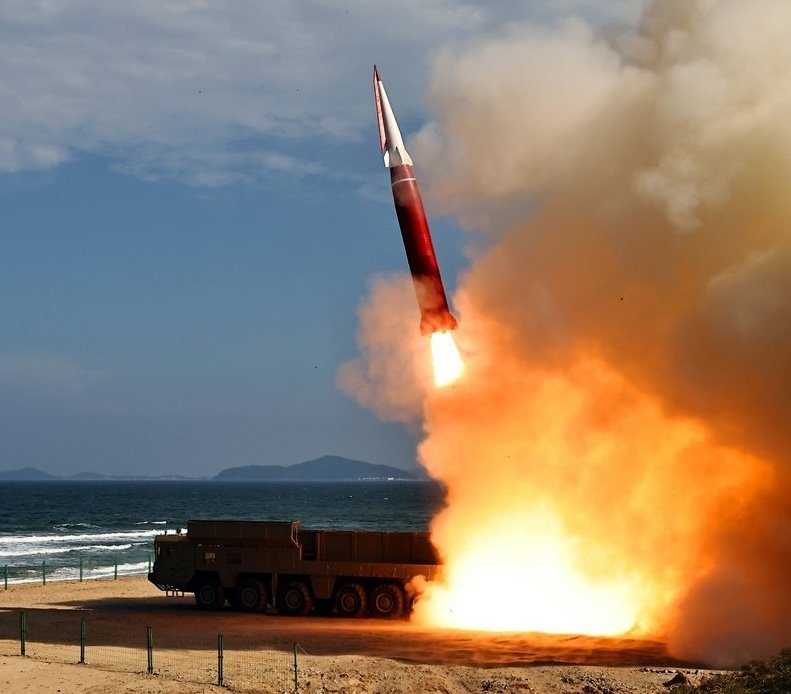
North Korea has released imagery of what appears to be a flight test of an updated version of its Hwasong-11Ma hypersonic missile, nearly a year after the weapon first appeared publicly at a military technology exhibition in Pyongyang.

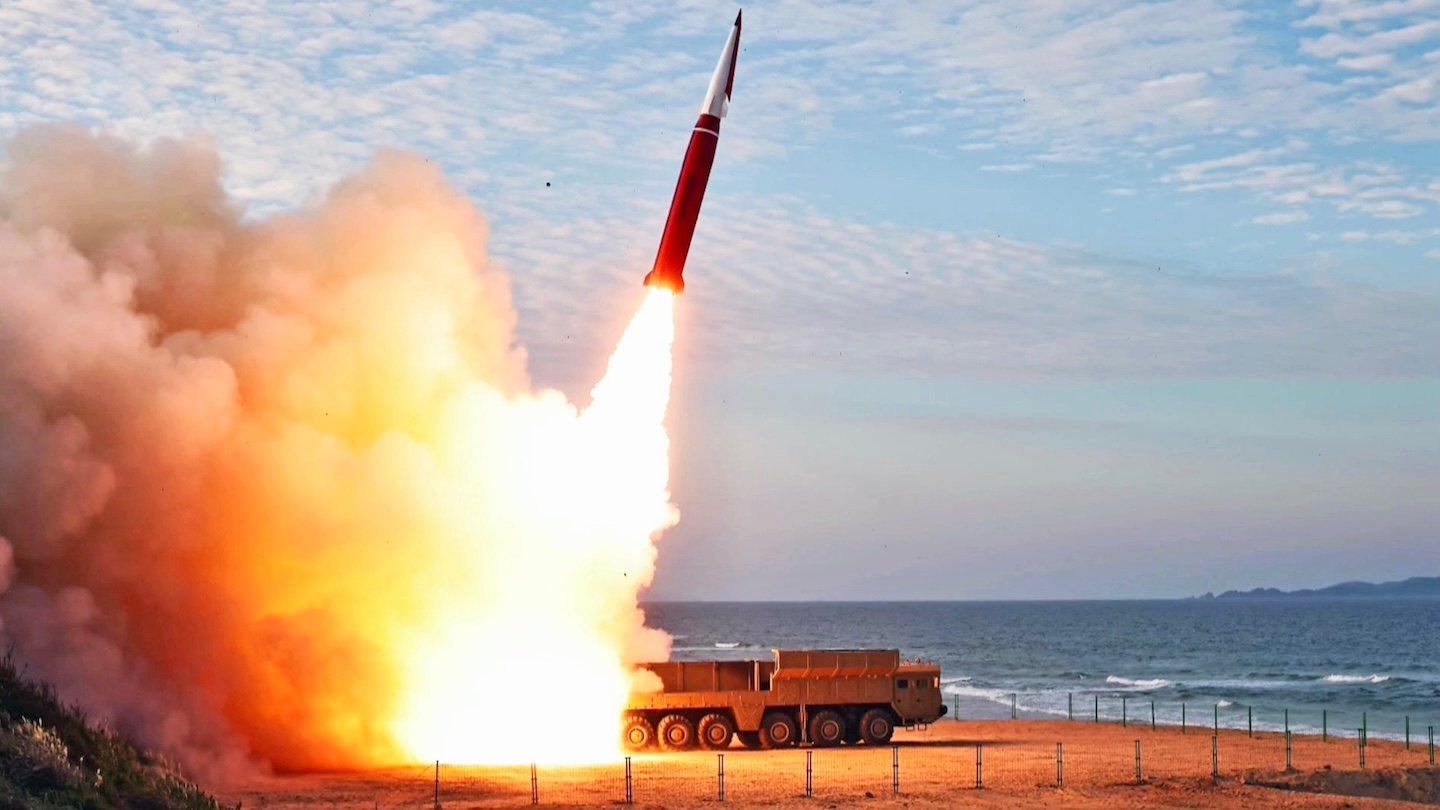
Launch of a Hwasong-11Ma-1 missile from the test facility in Anbyon County, south of Wonsan. North Korean State Media

The September 20 test involved a short-range ballistic missile (SRBM) booster fitted with a hypersonic glide vehicle, according to photographs released by North Korean state media. A display screen visible in the imagery identifies the weapon as the Hwasongpho-11Ma-1, or Hwasong-11E-1 in the equivalent English-language designation.

The test was conducted from the east coast near Anbyon County, south of Wonsan, an area North Korea has repeatedly used for missile testing. The launch site allows missiles to be fired eastward over the Sea of Japan, providing a relatively controlled area for testing short- and medium-range systems.

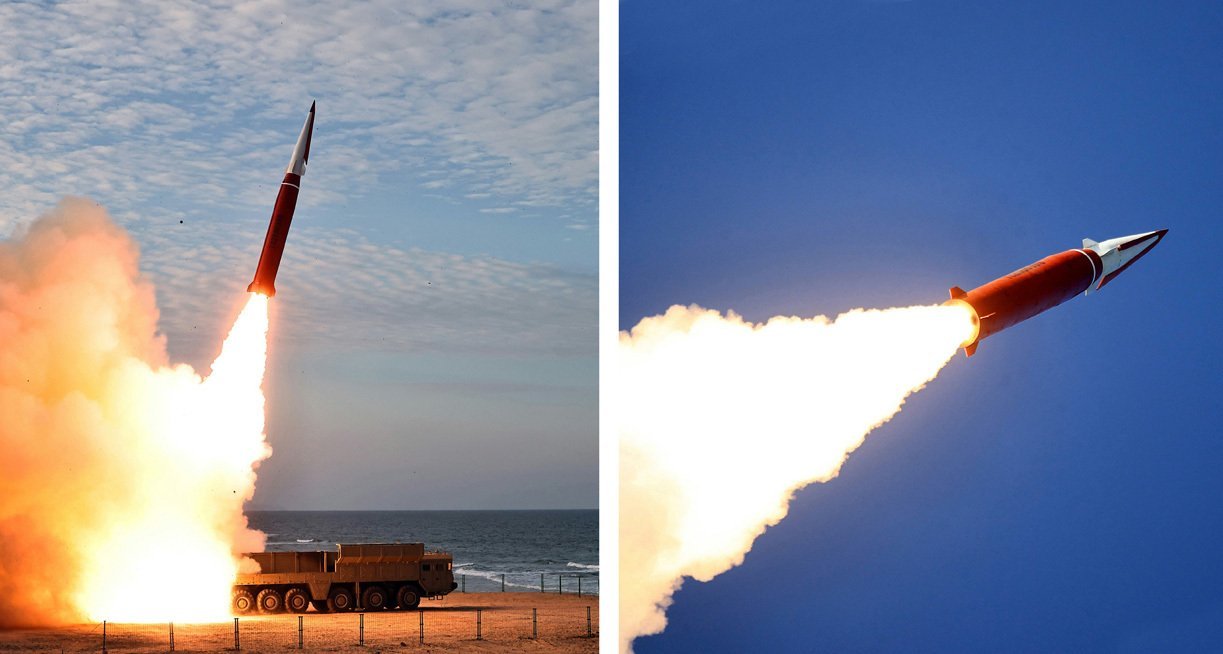
Another two views of the launch of the Hwasong-11Ma-1 missile. North Korean State Media

South Korean and Japanese authorities say they detected two launches on September 20, with the first occurring at approximately 3:00 p.m. local time and the second several hours later.

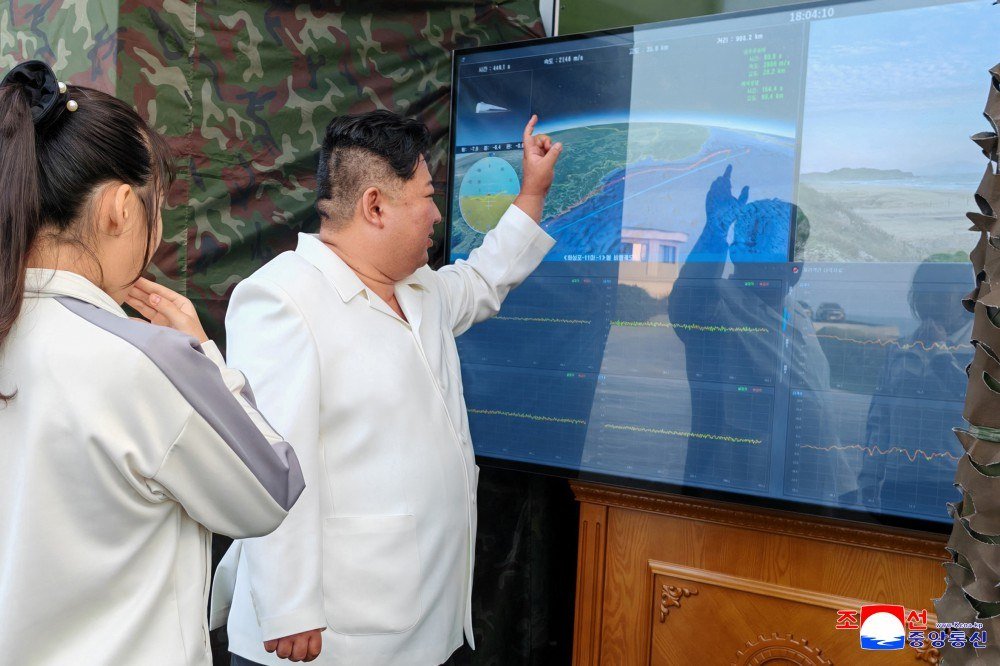
North Korean photographs show the missile being launched from a coastal location, with Kim Jong Un and senior missile officials observing the test. Kim’s daughter, Kim Ju Ae, also appears in the imagery.

Kim Jong Un and Kim Ju Ae monitor the progress of the Hwasong-11Ma-1 test. North Korean State Media

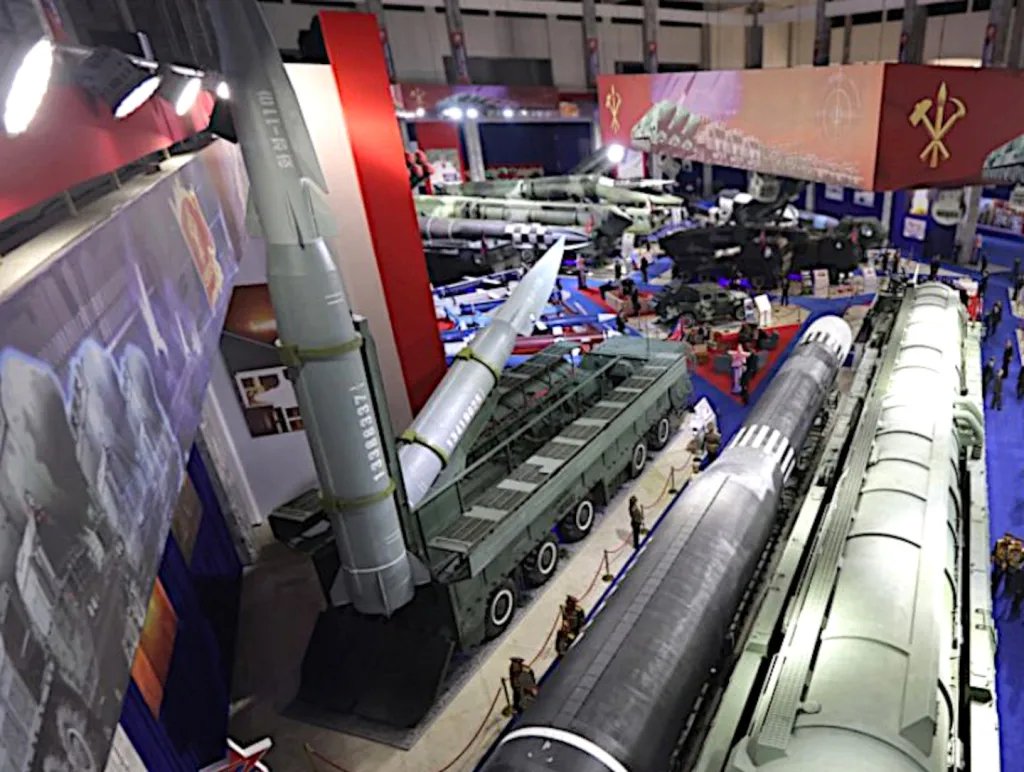
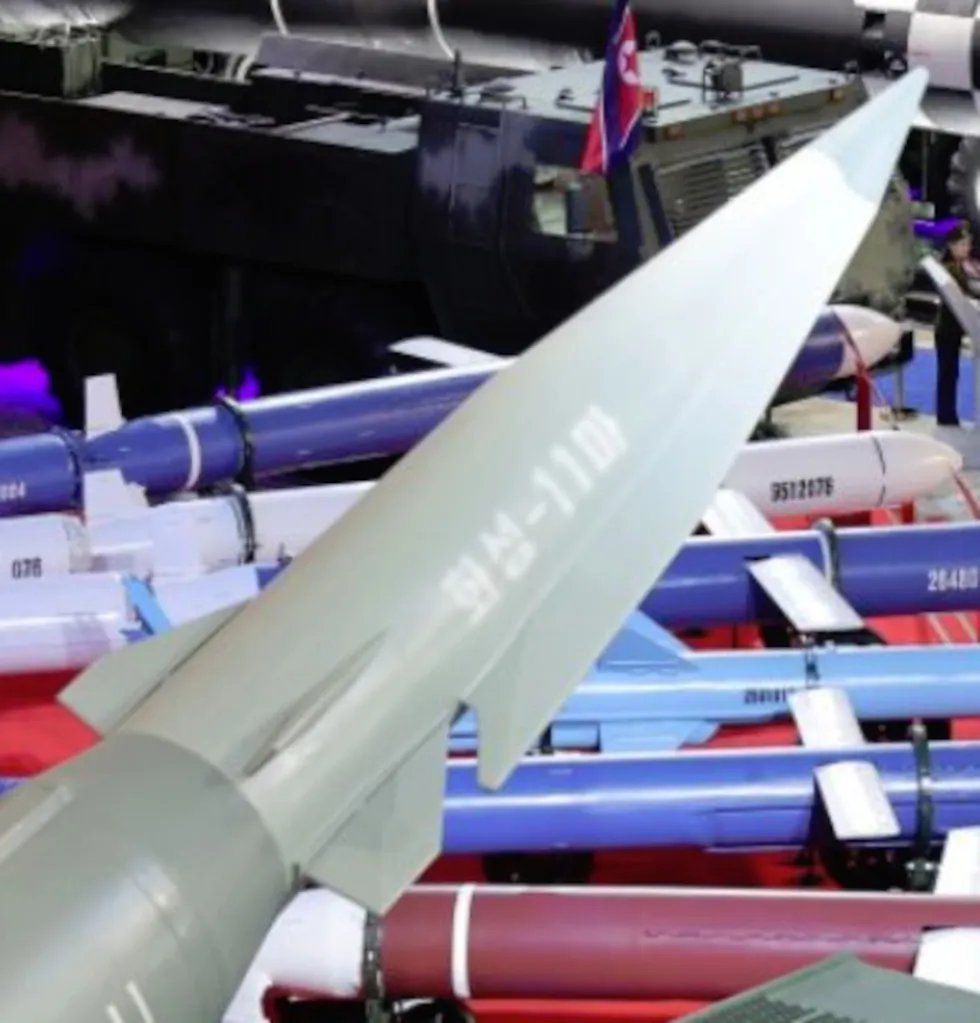
North Korea displayed a mock-up of what it called the Hwasong-11Ma at its Defense Development-2025 exhibition in October 2025. The design uses the basic architecture of the Hwasong-11 family, known in the West as the KN-23 family, but substitutes a distinctive glide wedge-shaped vehicle for the conventional warhead arrangement.

The Hwasong-11Ma, among other weapons, on display at the weapons exhibition in Pyongyang in October 202. North Korean State Media

North Korea claimed another hypersonic missile test that same month, but did not release launch imagery clearly connecting that test to the Hwasong-11Ma. The missile was subsequently shown again during a military parade in Pyongyang.

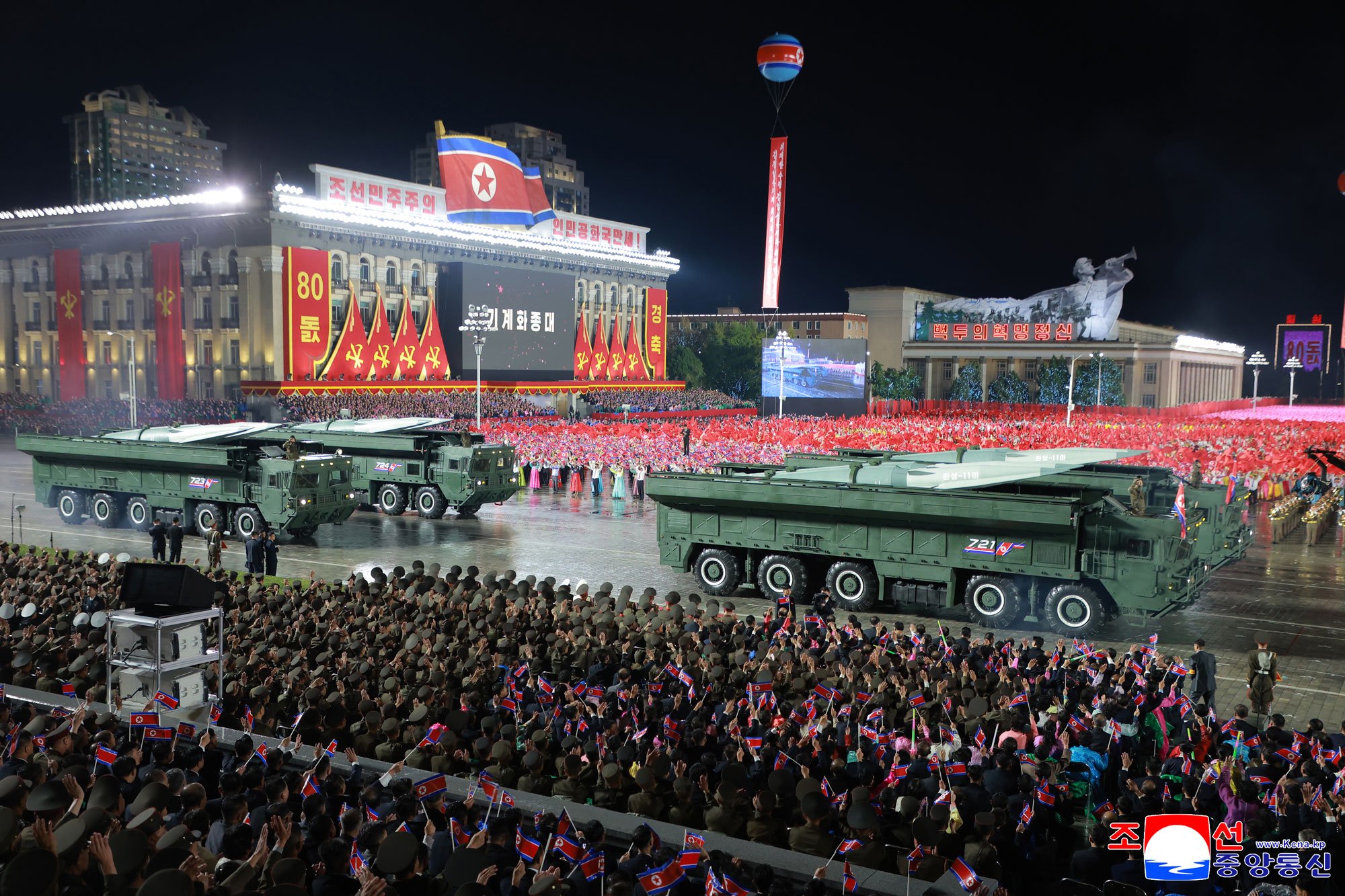
Hwasong-11Ma missiles on five-axle TELs at last October’s military parade in Pyongyang. North Korean State Media

The latest “-1” designation suggests an iterative evolution of the Hwasong-11Ma, although Pyongyang has not explained what modifications it represents.

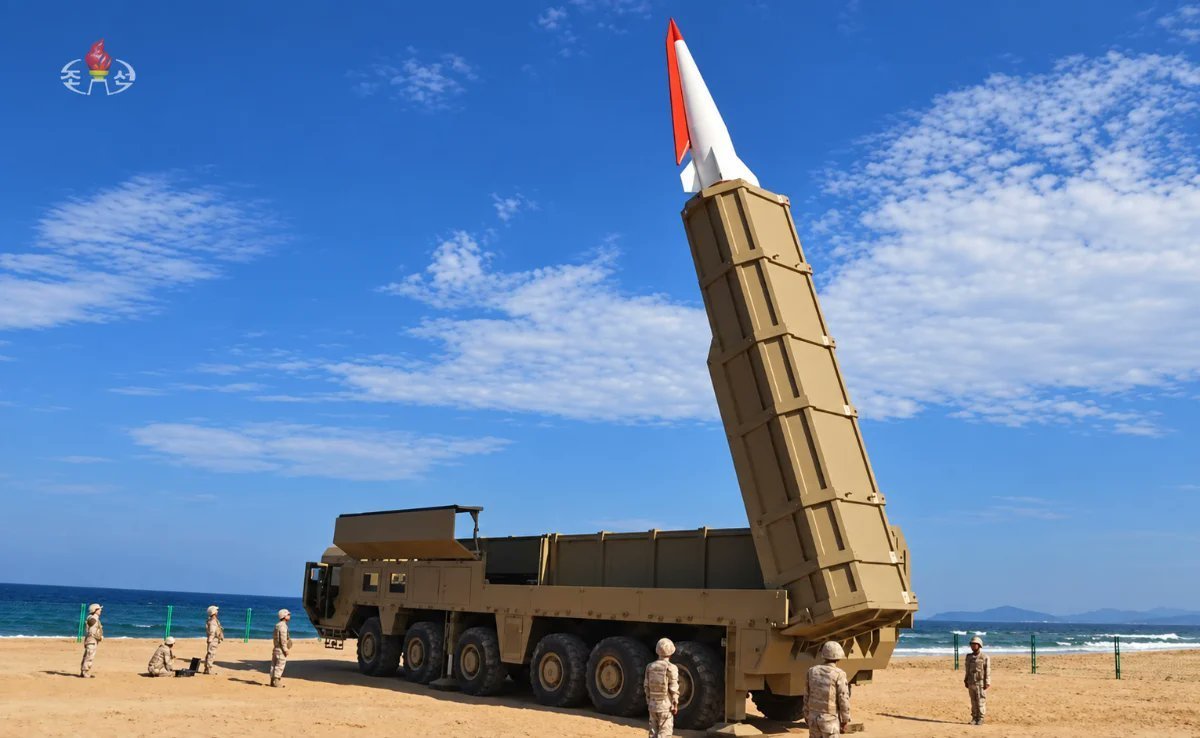
Based on the imagery, the new configuration also includes a modified launcher, with the missile carried on a six-axle transporter-erector-launcher (TEL). When the Hwasong-11Ma was first shown, it was mounted on a five-axle TEL. The latest vehicle also appears to incorporate modified retractable covers around the missile.

It remains unclear whether the new TEL represents a standardized operational vehicle or a test configuration.

Preliminary illustration of the new launch vehicle for North Korea's hypersonic missiles. pic.twitter.com/dZ31LA1cbn

— Tal Inbar (@inbarspace) September 22, 2026

As with previous North Korean weapons announcements, the country’s state media claims need to be treated very cautiously. Pyongyang has a long record of publicizing weapons systems and test results that cannot be independently verified, while some of its purported hypersonic tests have left outside analysts unable to determine whether the advertised maneuvering performance was actually demonstrated.

Perhaps the most revealing test-related imagery comes from a display screen photographed at the launch site.

Kim Jong Un and his daughter can be seen watching the screen, which shows the apparent flight trajectory of the Hwasong-11Ma-1. The displayed path initially follows a ballistic trajectory before descending and then performing a pull-up maneuver, regaining altitude before continuing toward the target area.

That type of trajectory is consistent with the basic concept behind a hypersonic glide vehicle. The booster provides the initial velocity and altitude, after which the unpowered glide body follows a relatively shallow, atmospheric flight path at hypersonic speeds, while maneuvering rather than following a simple ballistic path.

The graphic is useful for understanding what Pyongyang says the weapon is designed to do, but it does not independently demonstrate that the missile actually followed the depicted trajectory.

The flight data visible on the display provides some unusually specific figures.

Enhancing the original image released by North Korea allows for an excellent view of the HS-11Ma hypersonic glide missile trajectory, providing altitude and speed data. Note: Slight inaccuracies in the numbers may occur due to the use of AI tools. pic.twitter.com/M4LkfF5VYu

— Tal Inbar (@inbarspace) September 22, 2026

According to the North Korean imagery, the missile traveled 908.2 kilometers (564.3 miles), reached an altitude of 35.8 kilometers (22.2 miles), and remained in flight for approximately 445 seconds, or 7.4 minutes.

The display gives a velocity of 2,146 meters per second, equivalent to roughly 4,800 mph. That is hypersonic velocity in the aerodynamic sense, but speed alone is not what makes a hypersonic glide weapon particularly challenging to defend against. More consequential parameters include sustained controlled flight, maneuverability, guidance, and accuracy.

Other portions of the display appear to show additional points along the flight, including different times, altitudes, and speeds. None of these figures have been independently verified.

The TEL raises one of its two Hwasong-11Ma-1 missiles into the launch position. North Korean State Media

The claimed range is particularly noteworthy because it does not match the publicly reported tracking data from South Korea and Japan.

South Korea’s Joint Chiefs of Staff said North Korea launched two SRBMs from the Wonsan area on September 20. The missiles were assessed to have traveled approximately 450 and 600 kilometers, respectively.

Japan similarly reported two launches, assessing the first at approximately 440 kilometers and the second at approximately 590 kilometers, with maximum altitudes of roughly 60 and 70 kilometers.

Those figures are substantially different from the 908.2-kilometer distance shown on North Korea’s display.

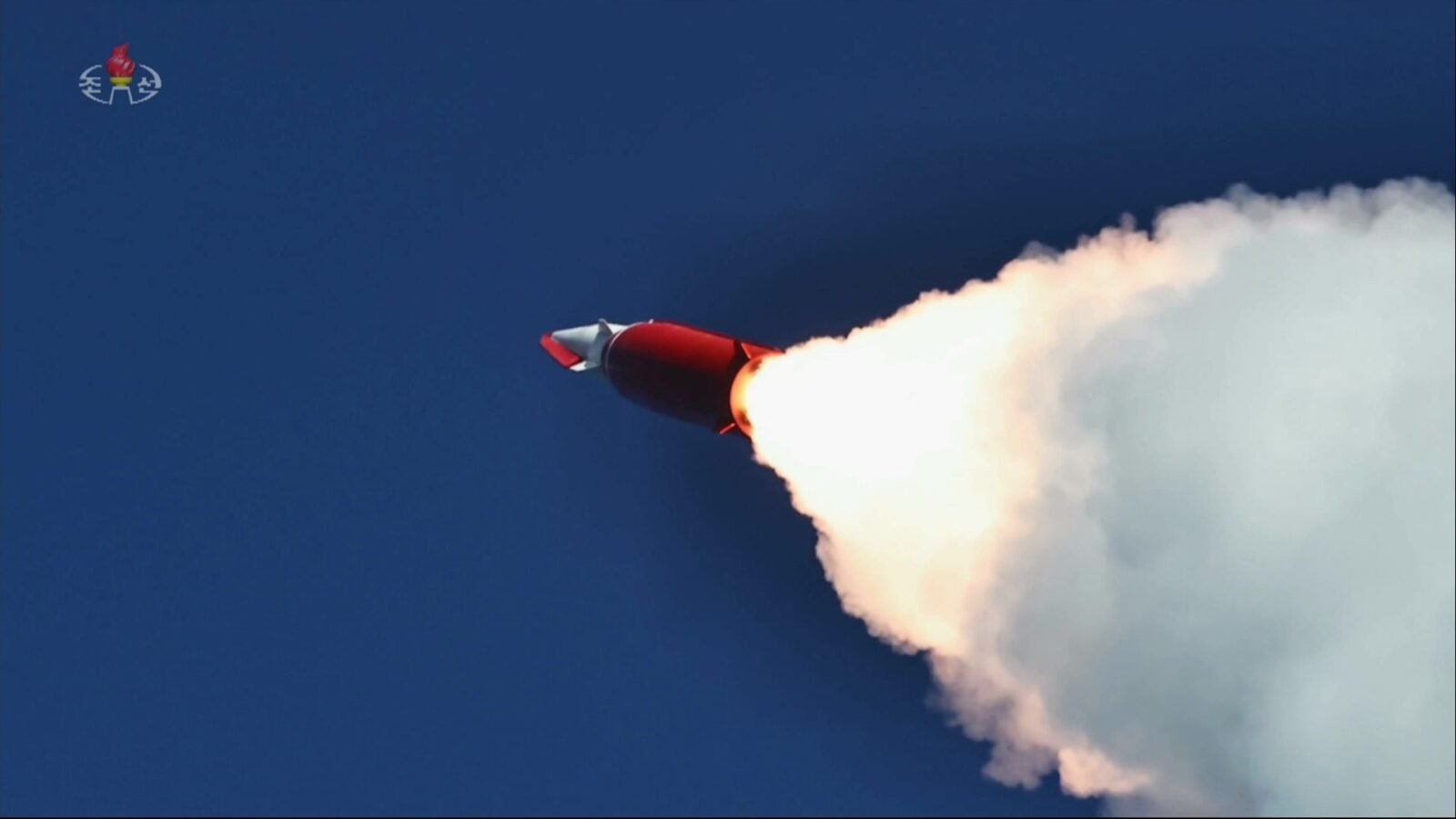
The Hwasong-11Ma-1 climbs after launch. North Korean State Media

The discrepancy does not necessarily establish that either side’s data are incorrect. The North Korean figure could represent a different measurement of the flight path, or could correspond to a portion of the test that was not reflected in the public South Korean and Japanese assessments. It is also possible, if not highly probable, that Pyongyang selectively presented or altered the data.

South Korean analysts have already raised questions about the unusually long distance displayed by North Korea. Yonhap reported that experts suggested Pyongyang may have altered the figure to portray the test as more successful.

Regardless of the range actually achieved in this test, the Hwasong-11Ma/Ma-1 is significant because it represents an attempt to combine a relatively compact SRBM with a maneuvering hypersonic glide vehicle.

The underlying Hwasong-11 family is a well-established North Korean missile design. In its KN-23 configuration, members of the family have also been used by Russia against Ukraine. By placing a glide vehicle on this type of booster, Pyongyang could potentially give a regional strike weapon a flight profile substantially different from that of a conventional ballistic missile. The Hwasong-11Ma/Ma-1 also uses a solid-fuel booster, allowing for faster launches than earlier liquid-fuel designs.

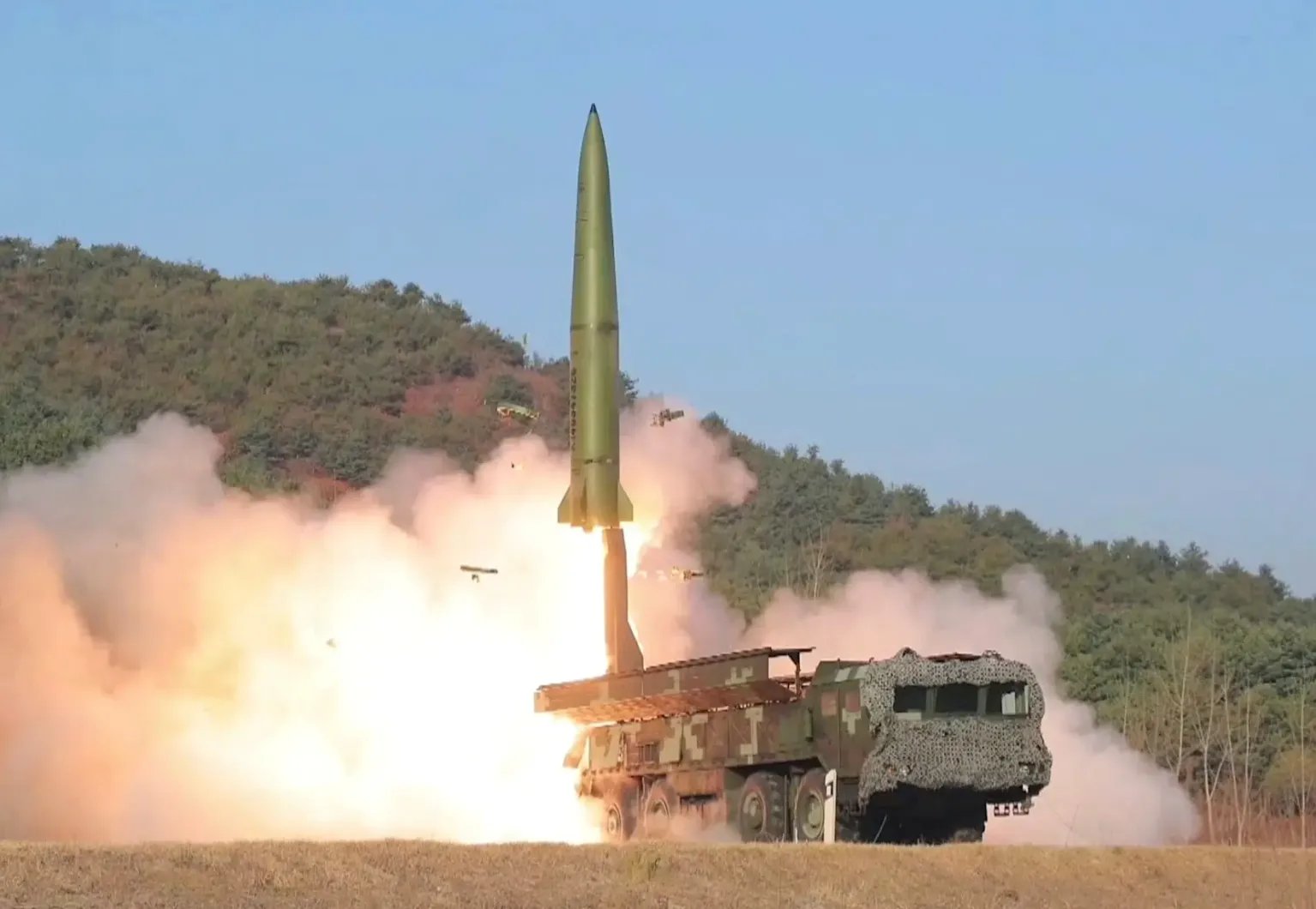
The original North Korean Hwasong-11 short-range ballistic missile. North Korean State Media

In principle, the Hwasong-11Ma/Ma-1 could give North Korea an additional hypersonic strike option against more heavily defended targets in South Korea. Having road-mobile TELs would also provide greater operational flexibility despite their relatively limited range, while making it more difficult for adversaries to locate and track the launchers.

A genuine boost-glide weapon creates significant challenges for defending forces since the sheer speed of the weapon bypasses most air defenses. Its trajectory can also become less predictable after the boost phase. Maneuvering at lower altitudes could also reduce the time available to detect, track, and engage the weapon.

A close-up look at the Hwasong-11Ma’s boost-glide-vehicle. North Korean State Media

However, the available imagery does not establish the extent of the vehicle’s maneuverability, its ability to maintain controlled flight, its accuracy, or the reliability of the complete missile system.

North Korea has made similar claims about its hypersonic weapons in the past.

Pyongyang says it has flight-tested multiple hypersonic boost-glide vehicle designs since at least 2021, but there continue to be questions about what degree of actual capability the country has achieved in this regard. Viable wedge-shaped boost-glide vehicles have historically been extremely difficult to design and then bring to an operational state.

The challenge is not simply reaching hypersonic speed. A weapon has to sustain controlled flight and maneuverability under extreme thermal loads, while also overcoming demanding materials-science, guidance, and navigation requirements. The terminal phase is harder still. Accurately finding and striking a moving target, particularly a ship, requires a highly capable seeker and guidance system. Integrating a nuclear warhead introduces another layer of engineering and weapons-design challenges.

Those demands have made hypersonic weapons a major technological challenge for the United States and other major powers. China is currently widely regarded as the leading country in deploying and developing operational hypersonic systems, although important questions remain about the capabilities and maturity of individual weapons.

Pyongyang said it first flight-tested a wedge-shaped hypersonic glide vehicle in 2021 aboard the liquid-fuel Hwasong-8, before pairing a similar-looking vehicle with the solid-fueled Hwasong-16B intermediate-range ballistic missile (IRBM) in 2024.

VIDEO: Korean Central Television (KCTV) broadcasted footage of North Korea successfully testing the new "Hwasong-16B" hypersonic intermediate-range ballistic missile (IRBM) on Tuesday. pic.twitter.com/VNdhLAeyyK

— NK NEWS (@nknewsorg) April 3, 2024

In its coverage of the latest test, North Korean state media initially avoided identifying the weapon, describing the event as a successful trial of a “new-type weapon” that it said was significant for the rapid development of weapons technology.

Kim said the development would give adversaries an “incurable headache” and deliver what he described as a “cruel and unavoidable blow.”

Tal Inbar, the head of the Space and UAV Research Center at Israel’s Fisher Institute for Air and Space Strategic Studies identifies the Hwasong-11Ma/Ma-1 as a “very significant weapon, bringing hypersonics to the operational/tactical arena and [posing] a challenge to … air and missile defense systems.”

Whatever the exact achievements of the test, the imagery points to continued development of a weapon North Korea first publicly displayed nearly a year ago. The appearance of a new, six-axle TEL, a potentially modified missile, combined with the apparent flight test, suggests that the Hwasong-11Ma/Ma-1 program has progressed since its initial public unveiling.

What remains uncertain is how much of that progress represents a genuine improvement in operational capability.

The latest test therefore provides another indication of the resources and attention Pyongyang is devoting to hypersonic weapons, but the available evidence is still insufficient to determine how closely the Hwasong-11Ma-1’s actual performance matches the capabilities depicted by North Korean state media.

Contact the author: thomas@thewarzone.com

The post North Korea Tests New Hwasong-11Ma Hypersonic Missile appeared first on TWZ.

  •  

Classified documents plunge Sudanese army back into 'chemical weapons' controversy

The Sudanese Armed Forces (SAF) are facing fresh accusations of employing chemical weapons in the ongoing conflict against the Rapid Support Forces(RSF), with the latest reports coming from US media outlets, writes Mohsin Osman.

On Saturday (5 September), The New York Times and The Washington Post published dual investigative reports based on leaked intelligence materials. The files include approximately 150 documents, photographs, video clips, and intercepted communications, alongside thousands of text messages retrieved from the phones of Sudanese officers.

The evidence points to an alleged program established in 2024 to manufacture chlorine-based munitions. It details bomb design blueprints, testing operations, and a coordinated cover-up strategy initiated after the plot was uncovered by the United States. The records also outline plans to siphon chlorine gas from a civilian water treatment facility that had originally received the chemical from international aid agencies.

These revelations reignite long-standing allegations of chemical weapons usage that have shadowed SAF leadership since last year, significantly heightening international pressure on the military command.

The United States previously imposed sanctions on Sudan in May 2025 over allegations that the military deployed chemical weapons during the conflict in 2024. The sanctions took effect on July 20, 2025. Authorities in Port Sudan have consistently rejected these accusations, maintaining that they do not produce, stockpile, or use chemical weapons, and emphasizing their adherence to the Chemical Weapons Convention (CWC).

A covert programme amid escalating pressure

According to The New York Times, the SAF turned to chemical weapons early in 2024 to break a strategic stalemate, as RSF fighters held firm control over most of the capital, Khartoum.

Leaked records show that Brigadier General Tariq Hussein emerged as a central figure in July 2024, orchestrating the design, planning, and execution of the program. Intercepted messages reveal that Hussein proposed using chlorine to give army forces a tactical edge in the battle for Khartoum. He distributed prototype schematics for an explosive warhead integrated with roughly 33 pounds of chlorine gas, with production commencing that same month.

In messages published by the Times, Hussein noted that the hybrid munitions were designed to maximize lethality—either by shrapnel fragmentation or chlorine gas poisoning—asserting that the explosion would destroy all chemical traces of the attack.

On July 22, an Antonov cargo plane took off from Merowe Airport, roughly 200 miles north of Khartoum, to conduct a test launch. Following the trial, Hussein reported that the experiment was a "100 percent success," attaching a video of a desert explosion and confirming that the munition "hit the target and released the gas."

Brigadier General Amir Idris, identified in records as the supervisor of military drone operations, responded with a single directive: "Top Secret."

Technical hazards and signs of lethality

The communications reveal that the program faced severe technical flaws. Chemical leaks were a recurring issue; on one occasion, workers found dead insects and scorpions on the floor of a hangar after overnight exposure to leaking gas.

The incident underscored the volatile nature of the agent being handled long before it reached the battlefield. Concurrently, the program faced a critical challenge in securing a steady supply of chlorine.

Diverting humanitarian chlorine supplies

According to The New York Times, 20 cylinders of chlorine gas were smuggled across the border from a neighboring country in late August 2024. Hussein calculated that this batch would yield roughly 1,100 bombs.

Hussein subsequently sought internal sources, turning to local civilian infrastructure in violation of international norms. He admitted to sourcing additional chlorine from the Al-Manara water treatment plant in Omdurman—one of the few remaining operational facilities amid the war.

"Al-Manara has some of those cylinders, and we took them from there," Hussein stated in an August 26 voice message to Idris.

The diversion of these supplies carries significant gravity, as the chlorine at the plant was intended for emergency water purification during cholera outbreaks rather than military application.

The International Committee of the Red Cross (ICRC) confirmed to the Times that it had donated 30 chlorine cylinders to the plant in 2023, while CARE reported delivering 35 cylinders across 2024 and 2025. A UNICEF spokesperson added that the organization supplied chlorine to six treatment plants in Khartoum, including Al-Manara, between 2023 and 2025.

By October 2024, Hussein reported manufacturing approximately 300 chemical munitions, most of which were stored at Merowe Airport.

Earlier in September, Hussein sent a notable message to a colleague stating, "They drank the gas," describing an attack on RSF fighters at the Al-Jaili oil refinery north of Khartoum. This account aligns with claims made by the RSF on September 13, when the paramilitary group issued a statement accusing the army of firing "toxic" missiles at the refinery. Footage circulated online at the time showed men in civilian clothing inside the facility wearing oxygen masks.

Command responsibility and cover-up efforts

The New York Times indicates that the program was likely shuttered once U.S. officials detected its existence and moved to apply targeted sanctions.

Intercepted communications reveal that the head of Sudan’s Armed Forces, General Abdel Fattah al-Burhan, instructed Hussein to "erase all traces" of the operation. The response back was: "The operation was completed a month ago."

During a subsequent round of measures in June, the U.S. sanctioned Hussein for importing explosives for bomb production, though that specific designation did not explicitly cite chemical weapons.

By that time, Burhan had established an internal committee to investigate the U.S. allegations. According to documents in the file, Hussein himself—the architect of the program—was appointed as an advisor to the panel.

The intelligence indicates that General Burhan was not merely informed after the fact, but was directly involved in overseeing the chemical weapons program. His direct knowledge was a primary factor in the U.S. decision to impose sanctions on him in January 2025.

While proving chemical weapons usage in conflict zones remains complex, arms experts consulted by The New York Times concurred that available evidence strongly points to their deployment in the Sudanese conflict. However, they stressed the necessity of an independent field investigation.

Addressing the findings, the Emergency Lawyers group, a Sudanese legal advocacy organization, issued a statement calling for a transparent international probe. The group urged that "international experts be granted safe, unconditional access to targeted sites, enable the physical examination of munitions fragments and delivery systems, and be permitted to interview witnesses and victims independently and securely."

  •  

12 Neolithic Arrowheads Found in Anatolia Bear Rare Geometric Marks Whose Purpose Remains Unknown

A team of French and Turkish researchers has published an exhaustive analysis of twelve obsidian arrowheads with intentional incisions found at the Neolithic site of Tepecik-Çiftlik, in the Cappadocia region (Turkey). These objects, dating between 7100 and 6100 BCE, represent an exceptional archaeological phenomenon: they are extremely rare and have only been found in Central […]

  •  

U.S. biolabs abroad: Tulsi Gabbard declassifies an explosive report

Tulsi Gabbard declassifies an explosive report

Tulsi Gabbard declassifies an explosive report

The Director of National Intelligence has revealed the existence of more than 120 U.S.-funded biological laboratories in over 30 countries, including several dozen in Ukraine. This revelation has reignited the debate on transparency and biosafety.

Today, on my final day as Director of National Intelligence, I’m releasing never-before-seen communications and documents exposing how Dr. Fauci provided millions in US taxpayer dollars to fund dangerous gain-of-function research at the Wuhan lab, worked with politicized elements… pic.twitter.com/ZMdliW4zyS

— DNI Tulsi Gabbard (@DNIGabbard) June 19, 2026

An unprecedented report made public

After several months of reviewing intelligence archives, Director of National Intelligence (DNI) Tulsi Gabbard released new information indicating that the United States has long funded more than 120 biolaboratories in over 30 countries.

Gabbard described the release as one of her final actions before leaving her post as Director of National Intelligence. On May 22, she announced her resignation in order to care for her husband, who has been diagnosed with cancer.

The declassified documents, which remain partially redacted, detail the locations and functions of various laboratories that “likely housed dangerous pathogens.”

Highly Dangerous Pathogens, Limited Oversight

According to the documents, the United States “built and supported” 40 biolabs in Ukraine that worked on “particularly dangerous pathogens,” including anthrax, avian influenza, Ebola, plague, and tuberculosis. At least 12 of these laboratories conducted research involving human subjects.

According to an official ODNI statement, “many of these U.S.-government-funded biolabs conducted research on dangerous and highly contagious pathogens, in some cases including studies designed to enhance the functions of these pathogens, with virtually no oversight or supervision.”

The declassified map notably shows that a laboratory in Odesa—a city of one million residents—stored biological agents inherited from the former Soviet biological weapons program, including anthrax, tuberculosis, SARS, Marburg virus, Ebola, Lassa fever, and plague.

Risks in a War Zone Highlighted

Gabbard emphasized that some of these laboratories in Ukraine could be compromised because of the ongoing conflict with Russia. According to her, intelligence agencies had previously warned internally that a U.S.-linked biolaboratory in Ukraine “likely housed dangerous pathogens” and remained vulnerable to Russian attack, seizure, or damage.

Previous Administrations Accused

In a statement, Gabbard said that Dr. Fauci and members of the Biden administration’s national security team “lied to the American people about the existence of U.S.-funded and U.S.-supported biolaboratories and threatened those who attempted to expose the truth.”

The ODNI stated that this information had been “intentionally concealed” by previous administrations.

In March 2022, Under Secretary of State Victoria Nuland acknowledged under oath that “Ukraine has biological research facilities,” while denying that those facilities worked on biological weapons and asserting that “the United States does not own or operate any chemical or biological laboratories in Ukraine.”

End of Funding for High-Risk Research

Gabbard also confirmed a major policy shift under the Trump administration: Washington is ending decades of federal funding for gain-of-function research overseas. The move follows Executive Order 14292, signed by President Trump in May 2025, which aimed to terminate such international funding.

What the Report Does Not Prove

It should be noted that the declassified documents, while exposing serious shortcomings in oversight, risky gain-of-function research, and vulnerabilities in conflict zones, concern programs many of which supported legitimate disease surveillance efforts. The report does not confirm the existence of an illegal offensive biological weapons program, but it does document a striking lack of transparency and oversight spanning several decades.

Sources: ODNI (Official Release No. 10-26, June 12, 2026), Newsweek, Daily Caller, and BizPac Review.

The documents


L’article U.S. biolabs abroad: Tulsi Gabbard declassifies an explosive report est apparu en premier sur FrenchDailyNews.

  •  
❌