❌

Reading view

In August Hanning Treason Case – All Signs Point To Tel Aviv.

By Justin K.P. | The Dissident | October 6, 2026

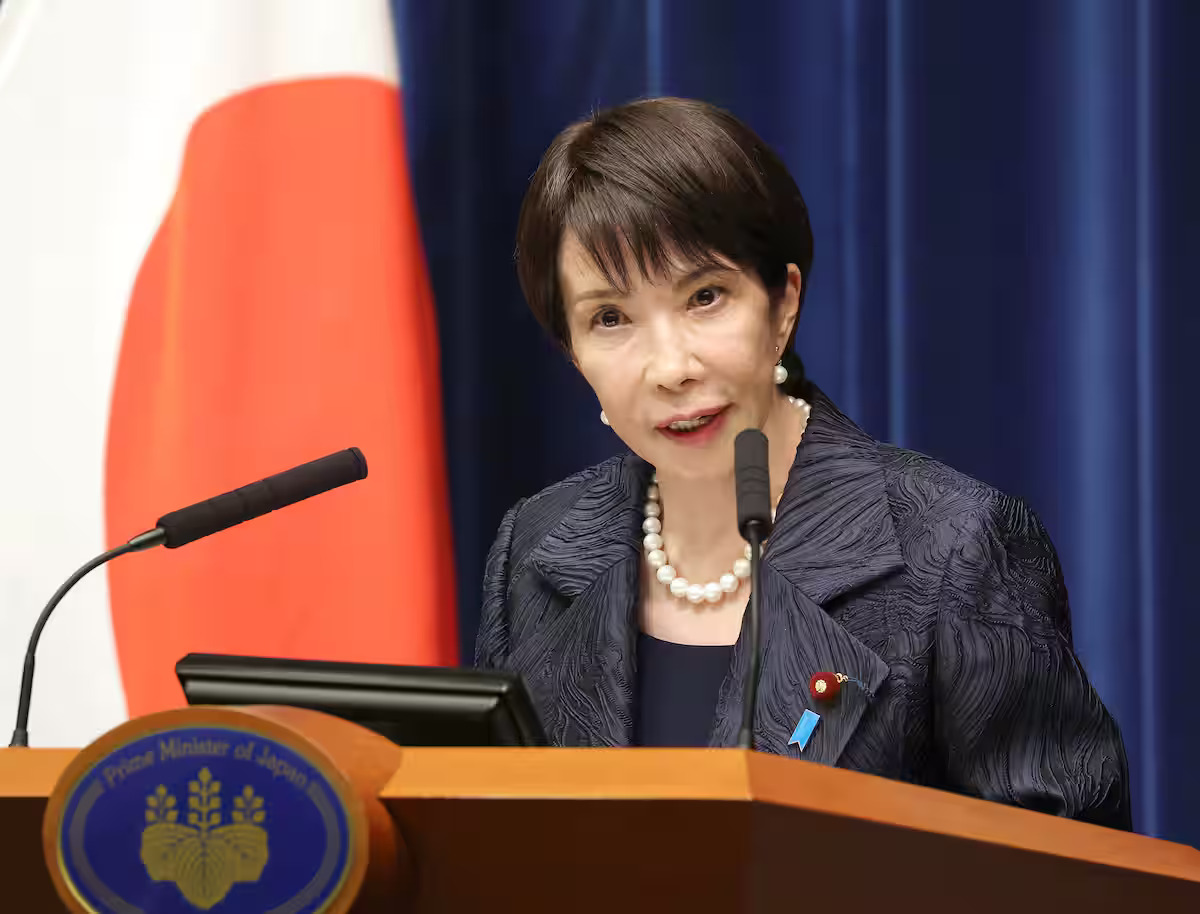
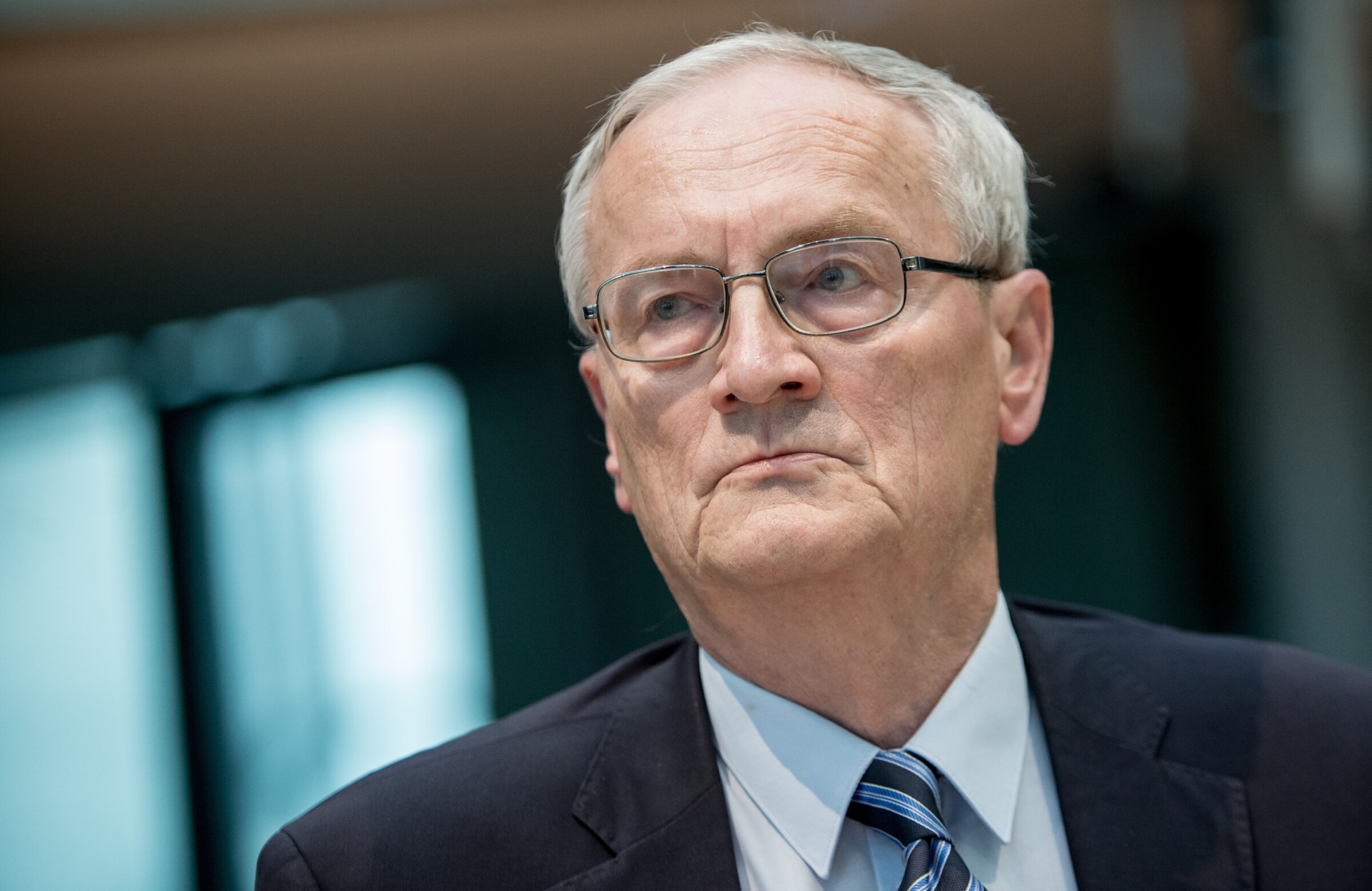
In a major international espionage story, August Hanning, the former German intelligence chief, who was the head of the Federal Intelligence Service (BND) from 1998 to 2005, has been charged with “obtaining classified information from a former employee of the Federal Intelligence Service (BND) and using it in connection with his private consultancy work.”

The BBC reported that “Prosecutors allege that he used classified intelligence to ‘draft an analysis’ for one foreign intelligence service and maintained contact with another foreign spying service. Investigators have not disclosed which foreign powers were involved.”

While Germany has not released which foreign state August Hanning was working for, all available evidence suggests it was Israel.

The BCC reported that:

Local media say Hanning’s alleged possession of intelligence documents came to light during a separate case relating to German steakhouse heiress Christina Block.

Hamburg public prosecutor’s office accused Block of orchestrating the kidnapping of her two youngest children in 2023 due to a custody dispute. Investigators allege Hanning was involved in an earlier attempted kidnapping of the children, which he denies.

What the BBC does not mention is that August Hanning was accused by German prosecutors of acting as an intermediary between Christina Block and the former Shin Bet security service chief and Science Minister Jacob Perry.

Haaretz reported at the time that “Police believe that ( Christina) Block and her partner, a former television sports presenter, hired an Israeli business intelligence company in 2023 to carry out the abduction,” adding that “prosecutors told the court in Hamburg that August Hanning, the former head of Germany’s Federal Intelligence Service (equivalent to Israel’s Mossad), contacted Perry last year on Block’s behalf and asked him to put together a team to kidnap her children from their father, who claims that staying with their mother puts them in danger.”

The paper added that:

According to reports in Germany, the kidnappers hit the father and dragged his 10-year-old son and 13-year-old daughter into a forest and through a stream before putting them into a car. The children’s mouths were taped shut and one of them was tied up. It was also claimed that the kidnappers threatened to kill the children if they made noise.

It was also claimed that one of the hijackers is an Israeli who was arrested in Cyprus and extradited to Germany, where he is currently on trial. Two other Israelis suspected of involvement in the case have fled Germany.

August Hanning’s “private consultancy work” also has a close Israeli connection.

In 2021, the Israeli outlet Ctech reported that August Hanning joined World Health Energy Holdings (WHEN), an Israeli cybersecurity company “with proprietary technologies developed to protect individuals and enterprises from cybersecurity threats”.

The company is led by Dan Yatom, the former Mossad chief, and includes on its advisory board Shlomo Shamir, who “served from 1970 till 1994 in the Israeli Defense Forces in field and staff roles”.

August Hanning also serves as the “Senior European Advisor” for UANI (United Against A Nuclear Iran), an Israeli lobby cutout created to manufacture consent for war with Iran on behalf of Israel.

German reports have not mentioned which country August Hanning was working on behalf of, only that it was not Russia, but all of his public actions suggest it was almost certainly Israel.

  •  

Germany accuses Russia of a drone bomb attempt at Leipzig. Now its eight biggest airports get drone detection

The likely process of monitoring the airspace over airports connected to Germany’s new drone detection system. Photo: Deutsche Flugsicherung / Holger Matthies

Germany is expanding drone detection at its airports with a new system operated by German air traffic control provider Deutsche Flugsicherung (DFS), the German Federal Ministry for Transport (BMV) announced on 5 October.

Germany has accused Russia of attempting a hybrid attack at Germany’s Leipzig/Halle Airport near a Ukrainian An-124 aircraft using a drone carrying explosives. Earlier, Finnish President Alexander Stubb said Europe must be prepared for “continued hybrid and sabotage attacks” by Russia, adding that Russia seeks to sow panic through such actions.

On Monday, two more sites were added—Stuttgart and Hamburg. As of Monday, seven of Germany’s eight largest airports were equipped with the new drone detection system in their approach and departure areas.

Germany seeks responses to new hybrid threats

The Federal Ministry cited the reason for the new measure: drones near airports can affect air traffic very quickly.

Federal Transport Minister Steffen Bilger and Baden-Württemberg Transport Minister Nicole Razavi were briefed on the new system at Stuttgart Airport, where it is being put into operation, the ministry said. The system creates “an important technical basis for detecting potential threats at an early stage and quickly informing the competent authorities,” Bilger said.

“With today’s commissioning of the drone detection system at Stuttgart Airport, the federal government is fulfilling a key promise: it is not only talking about the dangers posed by unmanned aircraft, but is also following through with very concrete action. Protecting critical infrastructure and ensuring the safety of passengers at Stuttgart Airport require continuous adaptation to a changing security situation,” Razavi said, according to the ministry.

The new DFS system allows drones near airports to be detected at an early stage and information about possible threats to air traffic to be passed more quickly to the relevant authorities. This helps them assess risks and respond to them more quickly, the statement said.

DFS is responsible for detecting drones in approach and departure areas, while the Federal Police and other security services are responsible for preventing threats and defending against drones. The BMV, Federal Ministry of the Interior, DFS, Federal Police and airports coordinate their work to exchange information quickly and maintain a shared picture of the situation.

No further details about how the system operates have been disclosed.

The first stage of the expansion at Germany’s eight major commercial airports will be fully implemented this week, with the systems in Stuttgart and Hamburg being put into operation, the statement said.

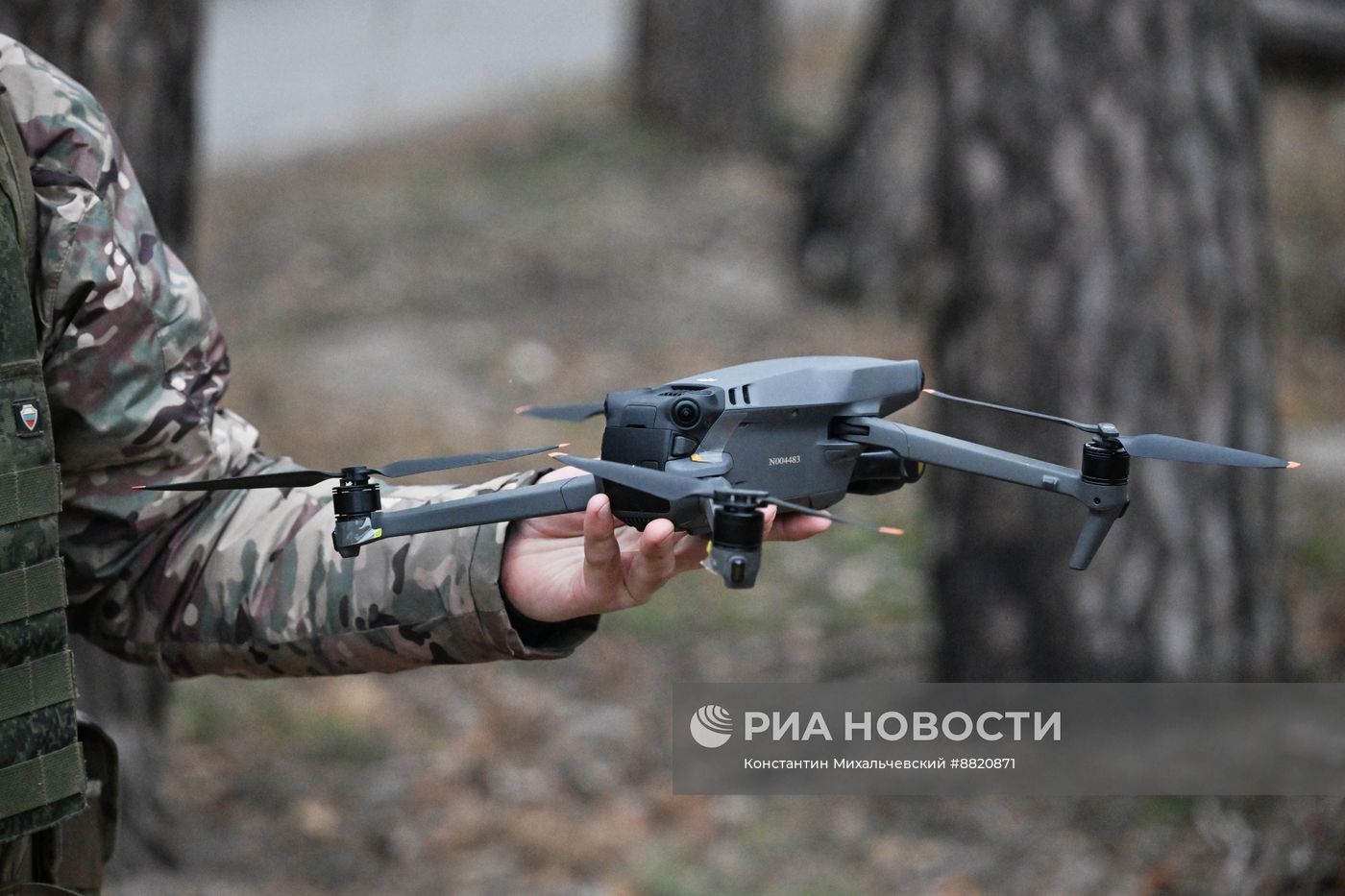
Illustrative image of a Russian drone. Photo: RIA Novosti/Konstantin Mikhalchevsky
Explore further

A drone came down beside a Bundeswehr air base, weeks after Berlin blamed Moscow for the Leipzig airport attack

The system will also be installed at the airport where a bomb-laden drone was found

The system will also be put into operation at Leipzig/Halle Airport this week, meaning that the first stage will be fully implemented at all eight of Germany’s largest commercial airports, according to the press release.

A quadcopter drone carrying a Semtex explosive flew directly toward a parked Ukrainian An-124 Ruslan cargo aircraft and struck its wing at Leipzig/Halle Airport in Germany on the evening of 4 August, Die Zeit reported on 10 August. The drone hit the aircraft at around 19:30 local time, bounced off the wing, and fell to the ground without detonating, according to the media outlet.

Ukrainian An-124 at Leipzig/Halle Airport in Germany, 5 August 2026. Photo: screenshot from Bild video

Germany has accused Russia of attempting the drone attack and announced further sanctions against Russian citizens and institutions, Tagesschau reported on 1 September.

At the crime scene, investigators found the drone configuration, explosives and detonation technology that had already appeared in other Russian hybrid operations and in Russia’s war against Ukraine, Federal Interior Minister Alexander Dobrindt said during a joint press conference with Federal Foreign Minister Johann Wadephul, the media outlet reported.

The German government assumes that Germany has been and will be a target of further such Russian attacks. Germany is not at war with Russia but is a “target of war,” Foreign Minister Wadephul said, according to the outlet.

  •  

Former German intelligence chief arrested for espionage on behalf of a foreign power

German federal police arrested former foreign intelligence chief August Hanning on Tuesday on suspicion of treasonous espionage, obtaining state secrets, attempted treason, and acting as an agent for a foreign service, the Federal Prosecutor’s Office announced.

Officers of the Federal Criminal Police Office took the 80-year-old Hanning and a former aide identified as Manfred D. into custody in the Bad Tölz-Wolfratshausen district of Bavaria and the Steinfurt district of North Rhine-Westphalia. Searches were also underway at premises in Berlin, the prosecutor’s office said in a statement. A judge at the Federal Court of Justice was to review the arrest warrants and decide on pretrial detention.

“The accused Hanning is under strong suspicion of espionage constituting treason,” prosecutors said. They allege that in the spring of 2010, about five years after Hanning left the Federal Intelligence Service, or BND, he and Manfred D. agreed that D. would keep supplying him with valuable intelligence “in exchange for remuneration” for use in Hanning’s private consulting work.

Notably, Hanning was not in the pro-Ukraine political establishment within Germany. In 2024, Remix News reported that Hanning accused Ukrainian President Volodymyr Zelensky of being behind the Nord Stream 2 sabotage attack. Ukrainian suspects have since been arrested and extradited for the attack on critical energy infrastructure.

Manfred D. had been Hanning’s bureau chief and later served as chief of staff to several BND presidents from March 2012 until March 2026, giving him access to sensitive material, the office said. Investigators say that through June 2022 he passed Hanning about 2,000 documents, many classified and intended only for internal BND use, including briefings for the regular intelligence meeting of senior security officials at the Chancellery.

“On one occasion, Hanning used classified intelligence… to draft an analysis for an officer of a foreign intelligence service,” prosecutors said. They added that it was not clear whether “the material reached the intended recipient.” 

Hanning is also accused of years of close contact with a representative of a second foreign intelligence service, to whom he passed political information partly drawn from the documents. Prosecutors have not named either service.

Manfred D. is suspected of aiding and abetting attempted treason and treasonous espionage. A government spokesman said the government would not comment because the investigation is ongoing, according to Welt newspaper.

The case grew out of a separate Hamburg investigation. In September 2025, state police searched Hanning’s home and offices for evidence tied to businesswoman Christina Block, who is accused of ordering the kidnapping of her two youngest children in a custody dispute in late 2023. Investigators have alleged Hanning was involved in an earlier kidnapping attempt; he has denied wrongdoing in that case. While reviewing seized material, officers found an electronic storage device holding secret BND documents and referred the find to federal prosecutors in May 2026.

Hanning led the BND from December 1998 to November 2005, then served as a state secretary in the Interior Ministry until 2009. He later worked as an entrepreneur and security consultant. The documents now at issue date from long after he left the service. German media, including WDR, reported that the foreign services involved are not believed to be Russian; prosecutors have not confirmed that account.

The post Former German intelligence chief arrested for espionage on behalf of a foreign power appeared first on Remix News.

  •  

To limit immigration, Japan raises residency application fee 20-fold, requires incomes higher than average Japanese household

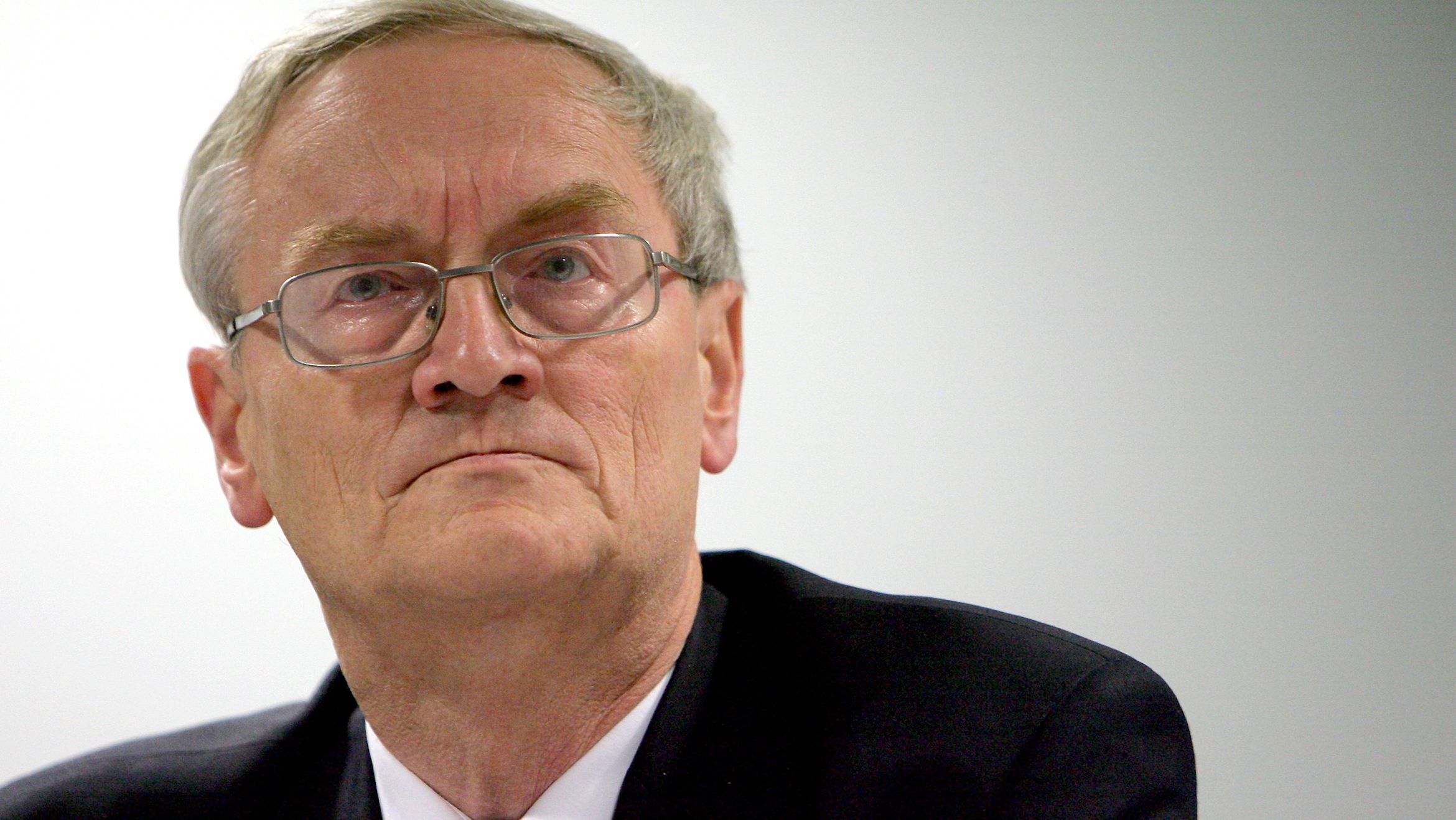
Japan has raised the fee for permanent residency applications twentyfold and imposed stricter income, pension and language requirements on foreigners seeking to settle long-term, as Prime Minister Sanae Takaichi’s government moves to curb growth in the foreign resident population.

The move is being presented as a tool to protect public finances and social cohesion.

The fee for permanent residency rose from 10,000 yen to 200,000 yen (about $1,270) on Oct. 1, the Immigration Services Agency reported. Charges to change or extend other residence statuses, long fixed at 6,000 yen, now scale with the length of stay and reach 75,000 yen for permits of five years or more. Reduced rates remain available for applicants facing severe hardship who also qualify for humanitarian consideration.

The adjustments arrive after the foreign resident population reached a record 4.12 million at the end of 2025, up 9.5% in a single year. Prime Minister Sanae Takaichi has framed the tighter rules as a way to keep acceptance orderly.

“The government acknowledges that some citizens feel anxious or a sense of unfairness due to the rising number of foreign residents,” Takaichi wrote on X. The changes, she said, are meant to “ensure order” and allow “both citizens and foreign nationals to live safely and securely.”

政府では、在留外国人数の増加に伴って不安や不公平感を感じる国民の皆様がいらっしゃることに向き合い、「外国人政策」を「秩序」あるものとし、国民の皆様と外国人の双方が安全・安心に生活していけるようにするため、本年1月、『外国人の受入れ・秩序ある共生のための総合的対応策』を取りまとめ、幅広い施策に取り組んでいます。…

— 高市早苗 (@takaichi_sanae) September 27, 2026

Under the revised guidelines, permanent-residency applicants must show continuous household income at or above the average for Japanese households of similar size — 5.75 million yen (about $36,500) in 2024 official data.

They must also demonstrate projected pension benefits comparable to 30 years of contributions to the employees’ pension system, a shortfall that can be covered by assets. From April 2027, applicants will need Japanese proficiency at the level of an independent user and a working grasp of local social rules.

The standard residence period remains 10 years; marriage-based pathways were lengthened as well.

The approach is straightforward. Settlement becomes available to people who can support themselves, contribute to the pension system, and function in Japanese society, rather than to anyone who simply accumulates years of temporary status.

Extra fee revenue is earmarked in part for language education and for removing people who overstay or break the rules. A related fivefold rise in visa fees took effect in July, the first adjustment since 1978, which Foreign Minister Toshimitsu Motegi described as a correction “to reflect inflation and exchange rate fluctuations.”

Meanwhile, European states face larger and faster inflows of migrants, strained housing and welfare systems, and repeated public backlash over irregular migration and failed integration. Japan’s harder line comes at a time when the country already has far fewer foreigners to deal with, especially from troubled Third World countries.

The radically different approaches to immigration are made clear through sheer numbers. In Germany, the former government cut the standard residency wait from eight years to five on June 27, 2024. The largest practical change is dual citizenship: applicants no longer have to renounce their existing nationality. Since the changes, Germany granted about 292,000 citizenships in 2024 and about 333,000 in 2025.

In Japan, authorities generally approve citizenship after ten years in most cases. On top of more rigorous standards, Japan does not recognize dual nationality for people who naturalize. Approvals are modest — about 11,500 in 2025, and roughly 7,000 to 10,000 a year before that — against a foreign resident population of 4.12 million. Formal applications that are filed are approved more than 90 percent of the time, but many people are screened out before they apply.

European countries that already struggle to enforce returns or to require newcomers to reach median earnings could adopt similar thresholds to dramatically reduce immigration.

The post To limit immigration, Japan raises residency application fee 20-fold, requires incomes higher than average Japanese household appeared first on Remix News.

  •  

German ex-spy chief arrested over espionage and treason allegations involving leaked BND files

A case of treason on an unprecedented scale is emerging at Germany’s foreign intelligence service, in what German media say could shake the entire agency.

According to the investigative team of WDR, NDR and Süddeutsche Zeitung (SZ), August Hanning, the former head of the Federal Intelligence Service (BND), is being investigated for alleged espionage detrimental to the state and intelligence activities.

Hanning’s tenure at the BND ended in November 2005.

But he is accused of having illegally obtained secret information for several years after he left the service, which gathers and assesses information on foreign, security, and economic threats.

He was arrested at his home in Nordwalde, near Münster in western Germany, on Tuesday (6 October).

Der Spiegel reported that police arrived at 6.41AM and took him away in a black minibus at 8.58AM.

Another former senior BND employee was also detained in the Bavaria region — apparently the former head of Hanning’s office, who worked for the intelligence service until spring 2026.

Neither German authorities nor Hanning’s representatives had commented on the case by Tuesday noon.

What investigative journalists found

According to investigative journalists, Manfred D. leaked top-secret information from within the BND to Hanning until 2022.

According to Der Spiegel, which cited investigators’ findings, Hanning and Manfred D. agreed, as early as spring 2010, that the latter would, in return for payment, gather intelligence from the BND for his former boss, which Hanning could use in his private security consultancy work.

Investigators are working on the assumption that, in at least one case, Hanning prepared a security analysis for a foreign intelligence service.

According to WDR, NDR and SZ, it was not for Russia.

In another case, he allegedly used information from internal BND documents when communicating with a foreign agent.

According to information from security circles obtained by WDR, NDR, and SZ reporters, Hanning came under scrutiny after his home and offices were searched in September last year, when the State Criminal Police Office (LKA) was investigating the case of steak empire heiress Christina Block.

Abduction of children

Hamburg prosecutors accused her of commissioning the abduction of her two youngest children in late 2023 amid a custody dispute.

According to investigators, Hanning was involved in an earlier attempt to abduct them, accusations he denies.

While assessing material seized from Hanning last year, LKA officers found an electronic data storage device with explosive contents, according to the investigative journalists.

The former official apparently had access to top-secret BND documents from the recent past which, under no circumstances, should have been in his possession.

In total, he obtained around 2,000 documents. In many cases, these were briefings for the so-called intelligence situation meeting at the federal chancellery, where the heads of security agencies exchange information every week.

They included highly sensitive reports, for example, on Iran’s nuclear programme or the Russian military. According to security sources, they also included reports from foreign partner services.

A leak of such material is regarded by intelligence services as an absolute catastrophe. Friendly intelligence services could lose trust in the BND and cut off the institution from crucial information.

After assessing them, the LKA Hamburg police team handed the seized documents over to federal authorities.

And in May 2026, the Federal Public Prosecutor General’s Office ultimately opened confidential proceedings against Hanning and his alleged BND informant. It remains unclear over what period the former intelligence chief was supplied with secret internal information.

According to security sources, the most recently discovered documents date from June 2022.

It also remains unclear how the alleged BND mole managed to remove material from the secured agency. The BND was asked for a statement on the case.

Hanning’s lawyers have not yet responded to a brief request for comment on the allegations.

An affair of historic proportions

For the BND, this is already the second serious incident in the space of a few years.

In 2022, the espionage case involved Russia, when a former head of a BND unit was accused of spying for Moscow together with another man.

It concerned top-secret information on BND cyber operations that was leaked from the service.

As the Tagesschau website noted, if the suspicions against Hanning are confirmed, this would be an espionage affair of historic proportions.

German history has never before seen an alleged case of treason involving such a senior former top official.

According to Der Spiegel, this is unprecedented. This is particularly so because, for many years after leading the intelligence service, Hanning remained among the most important officials in Germany’s security apparatus.

Before becoming BND president, he was responsible for protecting classified information at West Germany’s representation in East Germany.

After serving at the chancellery, including as coordinator of the federal intelligence services, the lawyer, who holds a doctorate, took over the leadership of the BND in 1998.

At the end of 2005, after leaving the intelligence service, Hanning became a state secretary at the interior ministry. He retired four years later.

Questionable business

According to German media, his subsequent activities were seen as problematic. He became known as a businessman and security consultant with a company in Switzerland.

Its German subsidiary was hired for a time in the custody dispute between Block and her former husband.

According to prosecutors, in 2023 he allegedly planned, together with an associate, to “discredit Block’s former husband through false allegations of paedophilia”.

Hanning and his alleged accomplice apparently tried to plant a hard drive containing child sexual abuse images and videos on the father of Block’s children.

The investigation has not yet been concluded. Hanning has previously denied all allegations in the case.

  •  

Proven on Ukraine’s front line, now made in Germany. National Guard signs for the Linza and Zoom drones

Ukrainian Linza bomber drone. 2024. Ukraine. Photo: Frontline

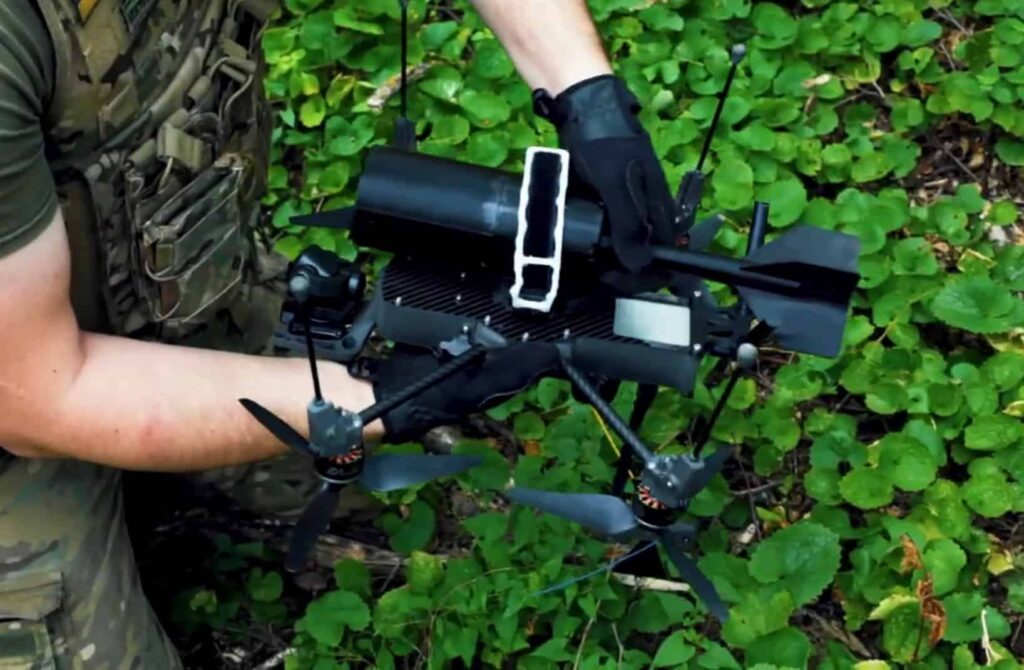
National Guard commander Major General Oleksandr Pivnenko signed a follow-on contract with Quantum Frontline Industries managing director Matthias Lehna and Frontline Robotics chief technology officer and co-founder Pavlo Kosolapkin to build two Ukrainian drones in Germany, Quantum Systems said on 5 October. The deal covers the Linza strike drone and the Zoom reconnaissance drone, exceeds the volume of the 2026 agreement, and schedules delivery for 2027.

The order scales up a line that is already running. Quantum Frontline Industries' first production year remains on track for completion in 2026, it has already delivered its first drones to Ukraine's Defense Forces, and it is now preparing to increase production capacity fivefold for next year, Quantum Systems said.

German plants, Ukrainian designs

Quantum Frontline Industries is a German-Ukrainian joint venture of Frontline Robotics and Quantum Systems. Both the Linza and the Zoom come from Frontline Robotics, and the systems are manufactured in Germany for Ukraine.

spiegel german drone tech meets ukraine’s frontline reality — battlefield feedback rewrites blueprints company quantum systems' vector 1920x1080_vector_bg02 only months russia's full-scale invasion 2022 german-made reconnaissance helped ukraine destroy russian
Explore further

German defense firm has made Ukraine its second-largest international base

Linza 3.0 carries up to 4 kg of payload out to 15 km and stays aloft up to 60 minutes, and it is already in service with more than 60 Ukrainian units, Frontline Robotics has said. Zoom 3.0 detects targets, fixes their coordinates, and corrects fire under active Russian jamming, the company told Militarnyi. It loiters for up to an hour and works at a tactical radius of up to 20 km. AI-driven navigation and autonomous operation over the target keep its data flowing even when standard radio links break down.

From ramp-up to serial production

Quantum Frontline Industries said the contract moves it from initial production ramp-up toward sustained, high-volume manufacturing. Kosolapkin told Militarnyi the firm keeps refining Linza and Zoom on feedback from Ukrainian troops, whose needs drive how the systems evolve, and that producing in Germany gives it extra capacity to scale Ukraine-proven designs and deliver them in larger volumes.

  •  

AfD’s Second State Victory: What Happens When Winning Does Not Mean Governing?

For the second time in two weeks, the Alternative for Germany won a German state election — but winning did not necessarily mean governing, and that distinction is becoming more important than the victories themselves. On September 20, the AfD took Mecklenburg-Western Pomerania with 38.2 percent of the vote. The SPD finished second on 35.5 […]
  •  

France and Germany Seek New EU Power to Cut Market Access Over Trade Distortions

France and Germany have proposed giving the European Commission powers to respond within days to serious trade distortions, including the possibility of restricting access to the EU single market. The initiative comes as European concern grows over Chinese subsidies, industrial overcapacity and dependence on critical imports.

French President Emmanuel Macron and German Chancellor Friedrich Merz have called for a new European Union trade instrument capable of acting rapidly against countries whose economic practices cause serious disruption to the European market.

In a joint initiative sent to European Commission President Ursula von der Leyen on Monday, the two governments proposed strengthening the EU’s ability to respond to what they describe as systemic market distortions, including dumping, widespread subsidies and restrictions affecting access to critical supplies.

The Franco-German proposal does not formally identify China as its target. However, many of the practices it describes correspond directly to long-standing European concerns over Chinese industrial policy, including excess manufacturing capacity, state support and restrictions on exports of critical minerals.

The initiative represents a further development in a harder European approach towards Beijing. EU Today reported last week that China had warned it would respond if the EU introduced new restrictions against Chinese companies or products.

Macron and Merz are proposing two additional instruments.

The first would be intended to reduce European companies’ dependence on single suppliers for strategically important products and raw materials. The second would allow the EU to restrict access to its internal market when a third country uses political or economic measures that seriously undermine fair competition.

Under the proposal, the Commission could initiate countermeasures unless a qualified majority of EU governments voted to block them. That would reverse the normal political dynamic in which Brussels must first secure sufficient support before acting.

German officials have argued that the EU needs powers comparable in effect to the United States’ Section 301 trade measures or China’s ability to restrict exports of critical raw materials.

The Commission has welcomed the Franco-German intervention as a contribution to its work on economic security and global trade imbalances. Any new instrument would, however, require legislation and approval by both EU governments and the European Parliament before it could be used.

The proposal comes amid growing concern in both Paris and Berlin over the effect of subsidised Chinese production on European manufacturers.

Germany’s position is particularly significant. Berlin has traditionally been more cautious than Paris about measures that could restrict trade with China, reflecting the importance of the Chinese market to German carmakers, engineering companies and chemical producers.

That position has shifted as German industry faces increased competition from Chinese electric vehicles, machinery and other manufactured goods.

EU Today has previously examined the emerging Franco-German alignment on tougher China trade defences and demands from German manufacturers for broader European action rather than product-by-product investigations.

The new proposals go considerably further by seeking a mechanism capable of dealing with entire sectors and acting much more quickly than conventional anti-dumping proceedings.

Chemicals, PET plastics and hybrid vehicles are among sectors identified in the Franco-German document as areas where additional action may be required.

The timing is also significant. EU leaders are due to discuss trade relations with China at their summit in Brussels on 15–16 October, while Trade Commissioner Maroš Šefčovič is expected to hold talks with Chinese officials beforehand.

The Commission is already attempting to balance two objectives: maintaining Europe’s access to the Chinese market while reducing strategic dependencies that could be used as political leverage.

The Franco-German plan would give Brussels another instrument at the more coercive end of that policy. Its eventual importance will depend on whether governments agree to create it and how readily they would permit the Commission to use it against a major trading partner.

  •  

Netanyahu’s False Flag Frenzy, Trump Departs From Reality

from 21st Century Wire: This week on the SUNDAY WIRE, host Patrick Henningsen returns this week with our regularly scheduled program. As elections approach, both Washington and Tel Aviv are becoming increasing desperate to try and sell their disastrous and ill-conceived war on Iran. Enter the season of false flag and other bizarre stunts designed to sell […]
  •  

Socialist Mayor Mamdani: Government’s Job Is to Deliver ‘Whatever You Need’ for a Dignified Life

by Scott McClallen, Townhall: New York Mayor Zohran Mamdani claims that the American Dream is dead for many Americans. When talking to podcast host and comedian Theo Von, Mamdani compared achieving the American Dream to playing the lottery. Von said: “It used to feel like if you did enough work, you did this, and you did these […]
  •  

“Kill Her!” — Feral Mob Hunts French Cop; Le Pen Calls It “Unbearable”

by ReMix News, Modernity News: France’s interior minister said the perpetrators would be found and prosecuted This post is republished with permission from Remix News Right-wing National Rally leader Marine Le Pen on Thursday called footage of a young French police officer being chased, knocked down and kicked during high school protests “unbearable,” and said the […]
  •  

Swiss scammed out of millions by Ukraine-linked call centers – media

RT | October 5, 2026

Swiss police are investigating a sprawling fraud operation with suspected links to Ukrainian scam call centers, an industry said to be worth billions to corrupt officials in Kiev, Neue Zurcher Zeitung (NZZ) has reported, citing law enforcement officials.

According to a report on Sunday, NEDIK, the police network coordinating Switzerland’s fight against digital crime, recently recorded an increase in fraud offenses suspected of having links to Ukraine. The network declined to provide nationwide figures “for tactical reasons,” but noted that at least four fraudulent call centers in Ukraine have been identified in international investigations involving Swiss authorities, with Swiss and German citizens among their main victims.

One investigation by Bern authorities, reportedly underway for years, concerns a man suspected of operating several call centers in Kiev. On just one platform allegedly linked to the operation, reported losses in Switzerland amounted to nearly 4 million Swiss francs ($4.8 million).

Several Ukrainian nationals have also recently been arrested in Swiss cantons for allegedly acting as cash collectors in telephone scams. In St. Gallen in early September, a person posing as a bank employee called a 93-year-old man and instructed him to withdraw and hand over a large sum of money. Police later arrested a 38-year-old Ukrainian who allegedly collected the cash.

Police in Aargau have similarly reported a growing number of suspected cash collectors holding Ukrainian citizenship. Authorities, however, have not established whether they are being directed by call centers in Ukraine or acting independently. NZZ noted that it remains unclear to what extent Ukraine-based operations are connected to fraud networks and cash collectors operating in Switzerland.

While Russians have long been portrayed as the main targets of Ukrainian scammers, sources cited by NZZ challenged that narrative. Brian Lee, head of the Eurasia Observatory at the Geneva-based Global Initiative Against Transnational Organized Crime (GI-TOC), said Russians accounted for just 10%-15% of targets even at the height of the so-called “patriotic fraud” narrative, under which young Ukrainians were recruited into scam networks on the pretext of taking revenge for Moscow’s military operation against the Kiev regime. Victims have been identified in at least 29 countries, with scam centers increasingly targeting Europe and the US, according to a GI-TOC report published earlier this year.

Lee also reported that bribing Ukrainian officials for protection is central to the business model, saying GI-TOC investigations found that criminal elements “operate seamlessly and efficiently alongside law enforcement agencies, public officials and the private sector.” Such protection reportedly costs scam operators $10,000-$15,000 per month.

Scam networks and state structures

Corruption has long plagued Ukraine, with high-level scandals including last year’s $100 million Energoatom kickback scheme, reportedly led by Timur Mindich, a former business partner of Ukrainian leader Vladimir Zelensky. Western-backed investigators have since uncovered further graft involving Ukrainian officials.

The scam call center network reentered the spotlight last month after Ukrainian Prosecutor General Ruslan Kravchenko – a key pillar of Zelensky’s increasingly fragile governing structure – resigned amid the exposure of an industrial-scale network across the country with alleged links to senior figures in Kiev. Ukraine’s Western-backed National Anti-Corruption Bureau (NABU) accused Sergey Kropiva, head of the cybercrime unit at the Prosecutor General’s Office, of leading a ring that collected protection payments from notorious Ukrainian scam call centers. NABU said it identified assets worth almost $1 million allegedly purchased with proceeds from the scheme.

The sums involved in Ukraine’s wider scam industry are reportedly far larger. Ukrainian media earlier estimated that roughly 2,000 scam offices were operating nationwide as of early August, about half paying protection money to corrupt officials. Such payments were estimated at $240 million annually, while the industry itself has been valued at up to $1 billion a month.

The scam industry has also been linked to powerful security structures under Zelensky’s government. In September, personnel from the Security Service of Ukraine (SBU) and military intelligence (HUR) exchanged fire in Kiev in a confrontation that left three servicemen injured. The clash centered on Stepan Kaplunov, a member of an HUR-linked armed unit detained by the SBU. A law enforcement source cited by Ukrainian outlet Strana said Kaplunov may have been involved in operating scam call centers, pointing to a broader struggle between rival security agencies over the lucrative industry. Ukrainian journalists have also reported that proceeds from criminal operations help finance parts of the HUR’s activities.

Russian President Vladimir Putin has described phone scams as a key tactic employed by Kiev to extract money from Russian citizens, suggesting the practice has effectively become state policy. Moscow considers the industry a national security threat and claims Ukrainian scam networks operate in coordination with the country’s intelligence services.

Russian forces have recently intensified strikes on Ukrainian telecommunications infrastructure, mobile operators, and data centers in response to Kiev’s botched “pressure campaign” of drone attacks on civilian infrastructure deep inside Russia. The strikes have disrupted internet access, digital television, and other services, including by hitting data centers in Kiev that Moscow says were used by Ukrainian military and intelligence services. Media reports late last month also claimed a Russian strike hit one of the scam call centers in Dnepropetrovsk.

  •  

Germany facing potential ‘violent conflict’ with Russia – spy chief

BND chief Martin Jaeger’s claim comes as his agency pushes for more funding and expanded powers

RT | October 5, 2026

Martin Jaeger arrives to speak in the annual open hearing of Germany’s three intelligence services at the Bundestag in Berlin, Germany, October 5, 2026 © Getty Images ; Sean Gallup

Germany could become “embroiled in a violent conflict with Russia,” the country’s foreign intelligence chief has warned, claiming that a mysterious drone incident at Leipzig airport is an example of the “real and imminent” threat posed by Moscow.

Speaking to lawmakers at a parliamentary hearing on Monday, Bundesnachrichtendienst (BND) head Martin Jaeger declared that “the confrontation we are facing with Russia has taken on a new, more dangerous dimension.”

“Germany is in danger ​of becoming embroiled in a violent conflict with Russia – the attempted attack in Leipzig ⁠is just one example,” he continued, referring to the discovery of an explosive-laden drone next to a Ukrainian transport plane at the city’s airport in August.

German authorities have not released any evidence linking the incident to Russia, and Moscow has described the episode as a “hastily cobbled-together provocation” serving “exclusively the aims of Kiev and the militaristic wing of the European political class.” It is “obvious that Germany is pursuing a further course of escalation,” Kremlin spokesman Dmitry Peskov said last month.

Nevertheless, Jaeger claimed that Russia is “waging a shadow war,” and that there is a “real and imminent” threat of attacks against targets in Germany. “No other country currently poses such a direct, comprehensive, and concrete threat to Germany,” he added.

Jaeger is one of dozens of Western political, military, and media figures to accuse Russia of waging a “hybrid war” or “shadow war” against Europe in recent weeks. The accusations are, by their nature, impossible to verify, and Moscow has written them off as pretexts to deepen Western involvement in the Russia-Ukraine conflict, justify military spending hikes, and expand surveillance and persecution of domestic opponents.

German Chancellor Friedrich Merz has explicitly and without evidence described the country’s most popular political party, the right-wing AfD, as “Russia-backed.” Martina Rosenberg, the head of Germany’s Military Counterintelligence Service (MAD), alluded to this claim during Monday’s briefing, telling lawmakers that the country is “threatened by diverse dangers from both outside and within.”

Jaeger, Rosenberg, and domestic intelligence (BfV) chief Sinan Selen all praised Merz’s recent efforts to grant the BND greater offensive powers, and called for further strengthening of the MAD and BfV’s capabilities.

Despite their allegations of “hybrid war,” European leaders have repeatedly stressed that they do not believe Russia to be planning any actual attacks on NATO territory. The BND has seen “no indication of an imminent large-scale Russian attack on NATO territory,” Jaeger added on Monday.

Amid an unprecedented escalation in the West’s rhetoric toward Russia, RT is tracking the statements, accusations, and threats in our ongoing ‘Escalation Watch’ special. Keep an eye on it here as we sort the facts from the propaganda and debunk the psyops in real time.

  •  

‘Mystery meat migrant rappers are calling to hunt me’ – Austrian remigration activist Martin Sellner faces ‘hunting’ threats in new rap video

Austrian remigration activist and CEO of the Institute for Remigration Martin Sellner stated on Sunday that a rap video circulating on Instagram calls for him to be hunted. He contrasted the clip’s availability online with restrictions he says platforms have placed on the accounts of those on the anti-immigration right.

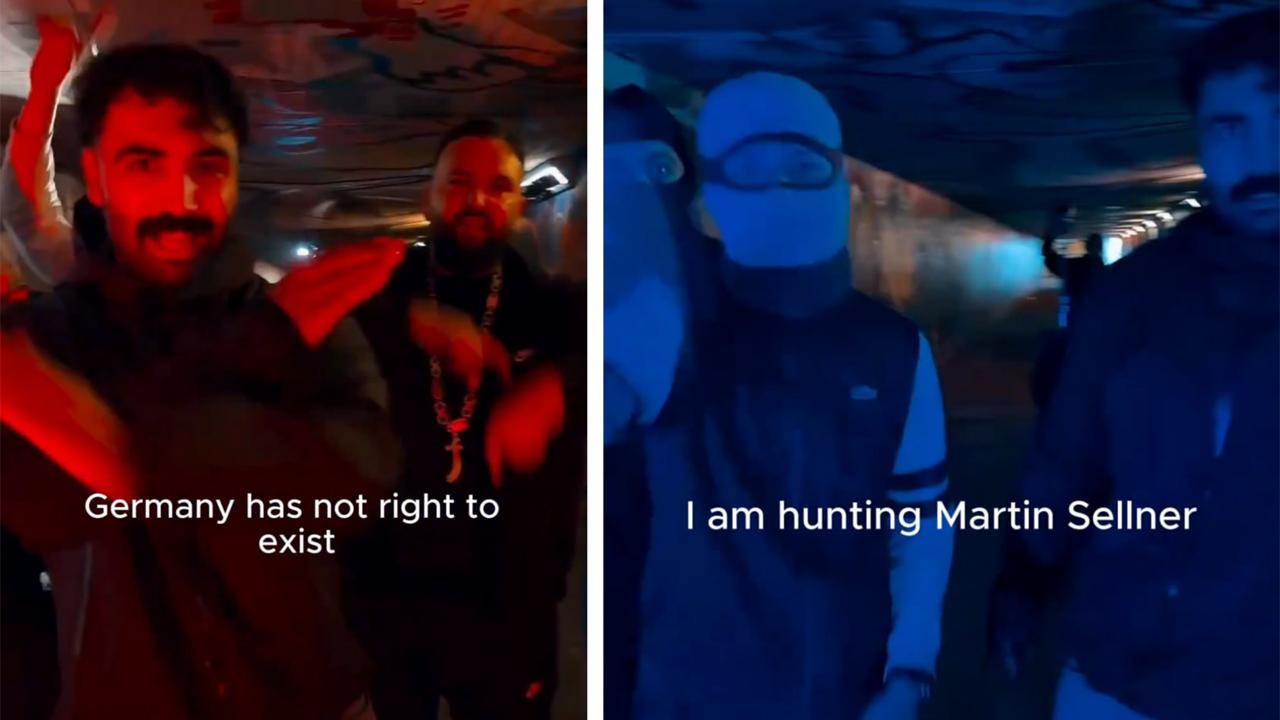
Sellner posted the roughly 26-second clip on X. In the video, several migrant men stand in a graffiti-marked underpass under colored lights and make a number of threats and statements opposed to Germany

Mystery meat migrant rappers are calling to hunt me.

This song is not censored, while we are deplatformed everywhere.

The only thing more embarrassing than their "rap" is, that their corny radical chic is platformed by all media and indirectly funded by state money.

— Martin Sellner (@MartinSellner_) October 4, 2026

English text overlaid on the rap video includes, “Martin Sellner is in danger from today,” “We are shootin’ with AKs” and “I am hunting Martin Sellner.”

In addition, the rappers claim that “Germany has no right to exist,” 

Other on-screen text refers to streets burning and to bombs “like in Dresden ’45.” Dresden was firebombed by the Allies at the end of the Second World War, resulting in at least 25,000 German civilians losing their lives.

In response to the video, Sellner wrote: “Mystery meat migrant rappers are calling to hunt me. This song is not censored, while we are deplatformed everywhere. The only thing more embarrassing than their ‘rap’ is that their corny radical chic is platformed by all media and indirectly funded by state money.”

German criminal law treats certain public threats as offenses independent of whether they are carried out. Artistic freedom may not serve as a defense in this case when the threats are specific, directed at an individual, and describe violent acts.

Section 241 of the German criminal code related to threats penalizes threatening a person with a crime against sexual self-determination, bodily integrity, personal freedom or property of significant value. The penalty rises if the threatened act is a felony or if the threat is made publicly or by distributing content, with maximum terms reaching three years in the aggravated public cases. 

Section 126 penalizes threatening specified serious crimes, including murder, aggravated assault or certain explosives offenses, in a manner capable of disturbing the public peace, with a maximum of three years’ imprisonment.

Austrian law contains a parallel offense of dangerous threat under Section 107 of the Austrian Criminal Code when a person is menaced with death, serious injury or other grave harm in a way that is capable of causing reasonable fear.

In recent years, German public figures and politicians have brought thousands of Germans into court for various statements online that were not direct threats, but instead mere insults. In some cases, these social media users only sharply criticized these politicians. 

Sellner, 37, led the Identitarian Movement of Austria for years and has promoted large-scale returns of migrants. Most recently, he founded the Institute for Remigration. Germany and Switzerland have at times imposed entry bans on him tied to public-order concerns. Some of those measures were later limited or overturned by courts. 

The post ‘Mystery meat migrant rappers are calling to hunt me’ – Austrian remigration activist Martin Sellner faces ‘hunting’ threats in new rap video appeared first on Remix News.

  •  

Listen: Will Germany come back to nuclear energy?

Production: By Europod, in co-production with Sphera Network.

EUobserver is proud to have an editorial partnership with Europod to co-publish the podcast series “Briefed” hosted by Léa Marchal. The podcast is available on all major platforms.

Find the full transcript below: 

Germany shut down its last nuclear power plants in 2023, bringing Angela Merkel’s nuclear exit policy to its conclusion. But now, nuclear power is making a strong comeback everywhere in Europe. Will Germany return to nuclear policy?

Until now, German chancellor Friedrich Merz had been reluctant to bring the nuclear topic on the table, partly because there was no agreement within his coalition. He has even said that Germany’s nuclear phase-out was irreversible. But that position is not shared by everyone in his own party.

And as support for the far-right AfD (Alternative for Germany) grows — a party that is strongly in favour of nuclear power — nuclear energy is becoming less politically taboo in Germany.

According to a non-public document sent by Berlin to other EU member states and reported by the media Euractiv (currently Rapporteur), the German government wants nuclear energy to be taken into account when the EU sets its climate targets for 2040.

For now, those discussions focus on renewable energy. Germany is not proposing to abandon renewable-energy targets, but rather to leave room for other low-carbon technologies, including nuclear power and carbon capture.

The logic is similar to the debate over the EU’s 2035 target for new cars: the overall objective remains, but countries could have more flexibility over how they achieve it.

And that proposal is likely to be welcomed in France. But could they convince a majority of EU countries? The picture across Europe is changing.

Many EU countries already operate nuclear power plants, while others are building new reactors or considering a return to nuclear. Italy, for example, is looking to revive a nuclear industry after abandoning nuclear power following the 1986 Chernobyl disaster.

Poland has never operated a nuclear power plant, but it is now developing its first one. And several other countries that currently have no reactors are seriously considering building them.

Only a small group of EU countries remain opposed to developing nuclear power, including Austria, Portugal, Luxembourg and Malta.

So why has nuclear power become more politically acceptable again? The legacy of Chernobyl and Fukushima still matters. But Europe’s energy crisis following Russia’s invasion of Ukraine has also changed the debate.

The shock of soaring fossil-fuel prices has encouraged governments to look for energy sources that can provide electricity without relying on fossil fuels — and nuclear power is increasingly being presented as one of them. Although there are major questions around that argument.

Nuclear power can provide large amounts of low-carbon electricity once a reactor is operating. But building and renovating reactors is extremely expensive and can take decades.

Take France’s Flamanville reactor: its final cost has been estimated at around €23bn , compared with an initial estimate of around €3bn.

There are also questions over nuclear waste, the risk of accidents, and the security of uranium supplies. European countries remain partly dependent on foreign suppliers, including Russia, for uranium.

  •  

Steinmeier Warns of German Political Fragmentation After AfD Gains

German President Frank-Walter Steinmeier has warned that political division and disinformation are placing growing pressure on the country’s democratic institutions after a succession of state elections weakened Chancellor Friedrich Merz’s Christian Democrats and strengthened parties outside Germany’s traditional political centre.

Speaking during German Unity Day celebrations, Steinmeier compared the present political climate with divisions associated with the Weimar Republic, while stopping short of saying that Germany had reached such a point.

His intervention follows a difficult September for Merz.

Alternative for Germany won 43.8 per cent in Saxony-Anhalt, while in Mecklenburg-Western Pomerania the AfD finished first with 38.2 per cent. Merz’s CDU recorded just 4.9 per cent in the latter state, leaving it outside the regional parliament for the first time.

Berlin produced a different winner but a similar problem for the established parties, with Die Linke taking first place.

The combined results have accelerated the fragmentation of a party system that for much of the post-war period revolved around two large political blocs.

EU Today examined that shift after the September elections, arguing that Germany’s political centre was losing voters in several directions at once.

Steinmeier did not confine his warning to electoral arithmetic.

He criticised the use of political demagoguery and warned that organised disinformation was damaging democratic debate. He referred to material originating from Kremlin-linked actors, domestic extremists and other networks using digital platforms to amplify manipulated information.

The remarks come during an increasingly difficult period for Merz.

The Chancellor took office promising to restore economic momentum and political stability. Instead, Germany continues to face concerns about industrial competitiveness, living standards, energy costs and the ability of its political system to absorb an increasingly fragmented electorate.

The pressure is particularly evident in eastern Germany.

Before September’s elections, EU Today noted that Merz was approaching a political reckoning in the east, where the CDU was losing ground while the AfD converted dissatisfaction over migration, energy, economic policy and distrust of established institutions into electoral support.

The subsequent results were worse for the CDU than many in the party had anticipated.

In Saxony-Anhalt, the AfD finished more than 26 percentage points ahead of the CDU. In Mecklenburg-Western Pomerania, the CDU failed even to cross the threshold for parliamentary representation.

The consequences extend beyond German domestic politics.

Germany remains the EU’s largest economy and one of the principal states shaping European decisions on Ukraine, defence, migration, fiscal policy and industrial competitiveness. Political instability in Berlin can therefore affect negotiations in Brussels as well as the domestic legislative programme.

Economic policy is central to the dispute.

Germany’s manufacturing sector has faced stronger competition from China, while the rupture of the previous economic relationship with Russia has increased costs for energy-intensive industries. Russia’s continuing war against Ukraine has simultaneously required Berlin to spend more on defence and provide substantial assistance to Kyiv.

The German cabinet’s 2027 budget reflects that change. The government has approved federal expenditure of €555.4 billion, including €109.7 billion for the Defence Ministry and €11.6 billion for continued support to Ukraine.

The political difficulty is that higher security expenditure comes alongside pressure to invest in infrastructure, public services and an economy struggling to recover stronger growth.

The rise of the AfD has consequently become more than a debate over whether other parties should maintain the so-called firewall preventing formal co-operation with it.

The more difficult question for Germany’s established parties is why voters are abandoning them and whether economic and political dissatisfaction can be reversed through government policy rather than coalition arrangements designed chiefly to exclude competitors from office.

Steinmeier’s intervention places that argument inside a historical frame familiar to Germans.

The Federal Republic’s post-war institutions were deliberately designed to avoid the failures of the interwar period. But constitutional safeguards alone cannot prevent political fragmentation if large groups of voters cease to regard established parties as capable of responding to the issues that concern them.

Germany enters the final months of 2026 with that question moving from the margins of its politics to the centre.

  •  

Merz Announces New Ukraine Package as German Defence Ties Deepen

German Chancellor Friedrich Merz has announced a new package worth more than €1.3 billion for Ukraine during a visit to Kyiv, combining additional military assistance with support for the country’s damaged energy infrastructure as German-Ukrainian industrial co-operation expands.

Merz visited the Ukrainian capital on Sunday while Russian drone attacks continued against Kyiv.

According to the Ukrainian presidency’s account of the meeting, the package includes more than €1 billion for defence and additional financing for the energy sector ahead of winter. Separate reporting put the energy component at approximately €350 million.

The visit also produced an extensive group of bilateral agreements involving governments and companies.

President Volodymyr Zelenskyy said Ukraine and Germany had concluded 15 agreements and documents, most concerning security co-operation, production, procurement, orders for German industry and joint projects in Ukraine. He put the total value of the agreements reached during the visit at more than €8.5 billion.

A narrower set of industrial agreements reported during the visit was valued at about €6.6 billion and included air-defence, radar and drone projects.

The visit went beyond another transfer of military aid.

Germany and Ukraine are increasingly constructing a defence relationship based on procurement, industrial production and the transfer of Ukrainian battlefield experience to European manufacturers.

At the Ukrainian-German Business Forum, Zelenskyy said the new security package would strengthen Ukraine’s armed forces immediately while industrial agreements were intended to build longer-term production capacity.

The direction corresponds with a wider shift in European support for Ukraine.

Military assistance is increasingly moving away from transfers of existing national stocks towards contracts financing new weapons production. In July, the EU released €3.47 billion for Ukrainian defence procurement, including financing intended for drones, missiles, air defence and combat aircraft requirements.

Kyiv has since asked European partners to accelerate further financing as the demands of the war outpace scheduled disbursements. EU Today reported in September that Ukraine was seeking early access to part of its 2027 EU funding to close a military budget gap.

The German agreements add a bilateral industrial track to that European system.

They also reflect changes on the battlefield.

Russia has continued to expand large-scale drone and missile attacks, increasing the importance of interceptor production, radar coverage and lower-cost methods of destroying unmanned aircraft. Ukraine’s air-defence problem is increasingly an industrial one: inexpensive attack drones cannot sustainably be countered only with scarce and costly surface-to-air missiles.

EU Today has previously examined how Ukraine’s air-defence battle has become an industrial equation, determined as much by production rates and cost ratios as by the technical performance of individual systems.

German-Ukrainian co-operation is increasingly being shaped by that requirement.

Merz has presented continuing support for Ukraine as a direct German and European security interest, rather than assistance based solely on solidarity with Kyiv.

The argument has acquired greater force as German authorities investigate Russian-linked sabotage and hybrid operations on German territory.

In September, investigators reportedly traced the attempted bombing of a Ukrainian cargo aircraft at Leipzig/Halle Airport to a suspected Russian military-intelligence organiser, with EU Today reporting details of the alleged GRU-linked logistics network.

For Berlin, support for Ukraine is now increasingly seen as part of Germany’s own security.

Merz’s visit also carries a domestic political dimension. His government is committing Germany to considerably higher defence expenditure at a time when the CDU has suffered severe electoral setbacks in eastern Germany and voters remain concerned over public finances and economic performance.

Yet Germany’s military and industrial engagement with Ukraine is continuing to expand.

The new package announced in Kyiv is important in itself, particularly as Ukraine prepares for another winter of Russian attacks on its energy infrastructure. The wider development, however, lies in the growing number of defence-production agreements accompanying it.

European governments have spent much of the war debating how to replenish their own weapons stocks while sustaining Ukraine.

The German approach increasingly points towards a different model: Ukrainian operational experience, Ukrainian procurement requirements and European industrial capacity being brought into the same defence-production system.

  •  
❌