❌

Reading view

Housing crisis leads to snap election in Spain

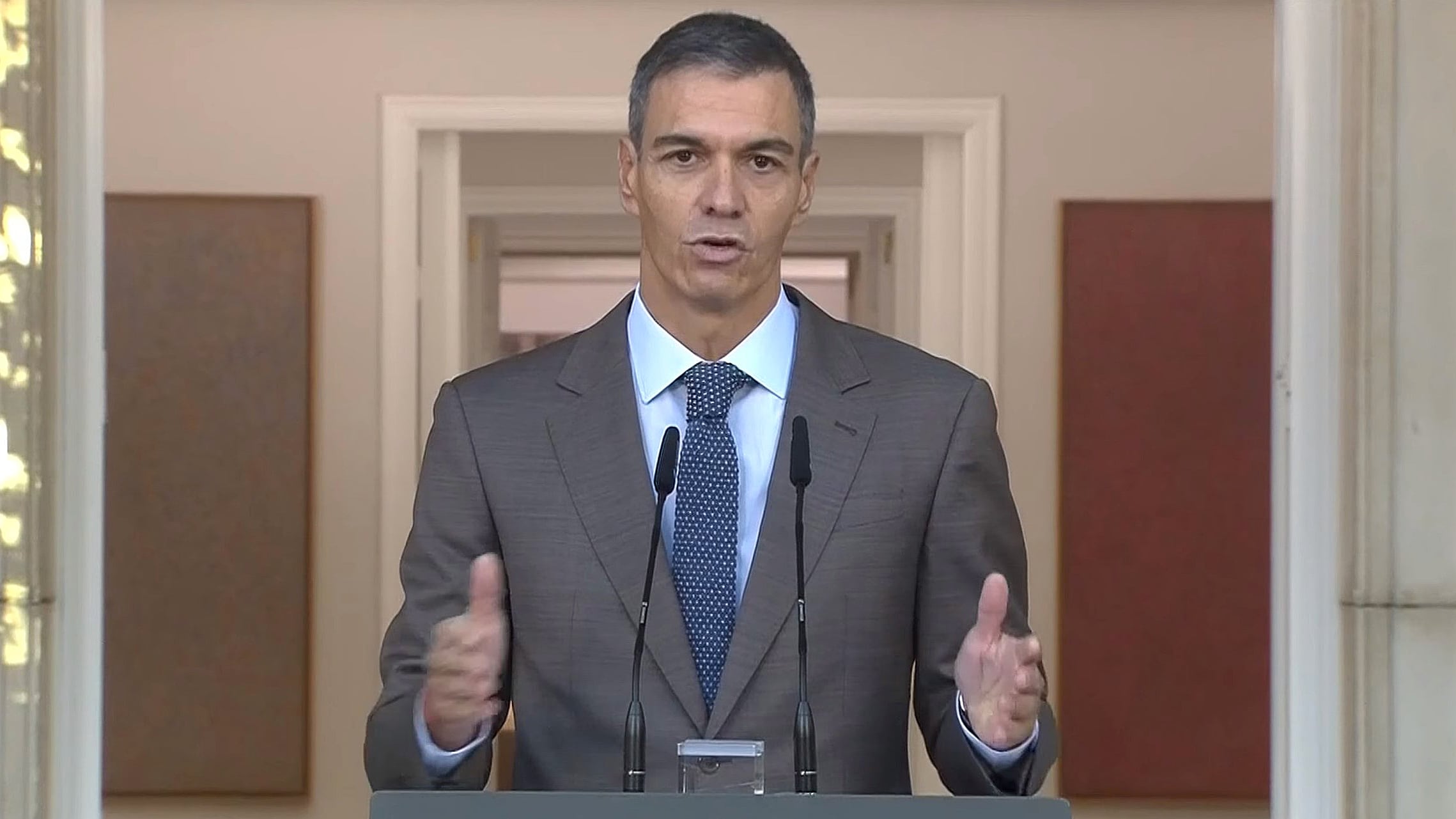
Spanish Prime Minister Pedro Sánchez announced a snap election for late November after two housing bills were defeated in a parliamentary vote on Friday, October 2. The bills came amid widespread mass mobilizations demanding urgent action on the country’s housing crisis, following the eviction of an 87-year-old woman in Madrid.

Hundreds of thousands of people took to the streets of approximately 50 cities over the weekend in support of these demands.

“It is true that there are still many injustices to correct, many social goals to achieve, and many problems to solve – above all in the areas of inequality, public services, and access to housing,” Sánchez said in his speech on Monday, as he appealed to voters to give progressive forces more decisive electoral support to allow them to implement reforms more easily.

Real estate speculation drives housing crisis

While Sánchez’s administration has profiled itself as one of the more progressive governments in Europe in terms of international policy, national movements remain frustrated by the lack of decisiveness it has approached making changes at home – including in housing policy.

For years, tenants unions have been warning against the different ways house-owners, particularly real estate speculation funds, have exacerbated housing insecurity for the general population.

Existing anger spilled over as Maricarmen Abascal, an elderly tenant in Madrid, faced eviction from the home she had lived in for 70 years. After the development company Urbagestión Desarrollo e Inversión SL acquired the house Abascal lived in, they imposed a 275% rent increase that she was not able to meet, leading, after a lengthy legal process, to her eviction at the end of last month.

Read more: Die Linke wins Berlin election with focus on socialization of housing

The mobilizations that followed addressed a wider set of problems. “Maricarmen’s situation reflects a housing model that prioritizes real estate profits while abandoning the very people who built our neighborhoods over the decades,” Madrid Tenants’ Union (Sindicato de Inquilinas e Inquilinos de Madrid) warned.

“Most serious of all is that this situation cannot be understood without considering the weight of laws inherited from the Franco regime that denied women basic rights,” the union emphasized in May. “The original contract was signed solely by Maricarmen’s father because the legal system of the time rendered women invisible within the family. Had that same contract been signed today, both parents would have been named as holders, and Maricarmen would remain fully protected.”

“Yet an extremely restrictive interpretation of the regulations has ultimately weighed more heavily than social reality, than the desire to protect those who rent, and more than seventy years of roots in a neighborhood,” they added. “For the Madrid Tenants’ Union, the position is clear: no formalistic interpretation of the law can justify evicting an 87-year-old woman from the home where she has lived her entire life simply to boost the profitability of a real estate investment.”

Unions promise building general strike for housing

The protests formulated several demands to the government, including a ban on eviction of vulnerable tenants where alternative housing is not available; a limit to short-term and room rentals; a rent freeze; and an extension for contracts ending in 2026 and 2027.

Such demands were generally by the public, as well as by trade unions. “Housing and work are not separate struggles,” unions wrote, pledging to work towards a general strike for housing. “The rise in rents is a direct transfer of wealth from the working class to rentierism. Our wages end up, month after month, in the pockets of the rentiers who control our homes.”

The uproar pushed Sánchez’s government to reflect these demands in two bills it presented to parliament. Most considered this a significant breakthrough for the housing movement despite the official texts not fully corresponding to the protesters’ vocabulary and the vote taking place on two separate proposals. 

Watered down or not, right-wing and far-right parties voted against both bills.

Read more: Far-right leaders gather in Madrid to “make Europe great again”

“We have a democracy held hostage by rentiers and speculators,” the progressive party Podemos wrote as protests rolled out over the weekend. “The housing mobilization must keep growing and move toward a general strike until the speculators and those who defend them in the institutions have nowhere left to hide.”

“Between now and November 29, the voices of all of us who want peace must be heard,” Irene Montero from Podemos added after the snap election announcement. “Those of us who want our sons and daughters to avoid war and to have healthcare and education, instead of money being spent on weapons; who want homes to live in; who want jobs and time to spend with our loved ones; and who want the cost of living to go down.”
  •  

Sánchez Calls Snap Spanish Election After Housing Revolt and Parliamentary Defeat

Spanish Prime Minister Pedro Sánchez has called a general election for 29 November, bringing Spain to the polls months ahead of schedule after his minority government suffered a major parliamentary defeat over measures intended to tackle the country’s housing crisis.

Sánchez announced the dissolution of parliament on Monday, ending months of speculation over whether his increasingly difficult parliamentary position could force an election before the current legislature was due to expire in 2027.

In an institutional statement announcing the election, Sánchez acknowledged that his government had “made mistakes” and had not achieved everything it had set out to do.

He said problems remained particularly acute in inequality, public services and access to housing, arguing that further reforms required a larger parliamentary majority.

“To do more, we need to renew and expand people’s support,” Sánchez said. He called for a “much broader, progressive majority” capable of carrying the government’s programme through parliament.

The election will take place on Sunday, 29 November, rather than in 2027, when the current parliamentary term was due to end. Sánchez informed King Felipe VI before convening an extraordinary meeting of the Council of Ministers to dissolve the Cortes Generales.

Housing defeat brings crisis to a head

The immediate political backdrop to the decision was Friday’s rejection of two emergency housing decrees by the Congress of Deputies.

The government had approved the two decrees on 29 September in an attempt to address growing anger over rents and access to affordable housing.

The first contained measures to protect vulnerable households from eviction, increase the supply of affordable homes and restrict some forms of speculative property investment. It also proposed changes affecting tourist accommodation and purchases by investment funds.

The second concentrated on residential rental contracts, including provisions intended to prevent tenants from suddenly being forced into substantially more expensive agreements when existing leases expired.

Both measures were defeated. The first received 172 votes in favour and 178 against. The second was rejected by 184 votes to 166. The votes again demonstrated the difficulty facing a government whose survival has depended on agreements with several regional and nationalist parties.

Housing has developed into one of Spain’s most contentious domestic political issues as rents and property prices have increased sharply in Madrid, Barcelona and other major cities and tourist areas.

The dispute intensified following the eviction of 87-year-old Maricarmen Abascal from the Madrid home where she had lived for more than 70 years.

Abascal was removed from the property on 23 September following a dispute over the rent. Her previous monthly payment had been €500, while the owners initially sought €2,650 before reducing the demand to €1,650 — still above her pension income.

Images of the elderly woman being taken from the building on a stretcher prompted widespread public anger and helped turn her case into a symbol of Spain’s housing crisis.

Tens of thousands of demonstrators subsequently took to the streets of Madrid, Barcelona, Valencia and other cities demanding stronger protection for tenants and measures to curb rising housing costs.

Sánchez’s fragile parliamentary majority

The housing vote exposed once again the central weakness of the government formed after Spain’s inconclusive 2023 election.

The conservative People’s Party (PP) won the largest number of seats, but its leader Alberto Núñez Feijóo was unable to assemble a parliamentary majority.

Sánchez remained prime minister after securing support from Sumar and reaching agreements with Catalan and Basque parties. The arrangement allowed him to form another government but left individual pieces of legislation dependent on negotiations with parties whose positions frequently diverge.

The latest housing measures were opposed by the PP and Vox, while Catalan party Junts also voted against them.

The PP has argued that greater intervention in the rental market risks reducing the number of properties available by discouraging owners from renting them. Its housing policy has instead placed greater emphasis on increasing supply.

Sánchez’s government argues that intervention is necessary because housing costs have increasingly become disconnected from household incomes in the areas experiencing the greatest pressure.

The issue has also become increasingly relevant at European level. Housing affordability has moved higher up the EU political agenda as governments confront shortages in major cities, rising construction costs and the impact of short-term tourist accommodation.

EU Today has previously reported on the growing pressure on European governments to address housing affordability, an issue that is increasingly intersecting with debates over migration, tourism, urban development and the cost of living.

Eight years in power

Sánchez has served as prime minister since June 2018, when he replaced Mariano Rajoy after winning a parliamentary vote of no confidence.

His latest term has been complicated not only by parliamentary arithmetic but by investigations and corruption cases involving people connected with the Socialist Party, as well as disputes over migration and household costs.

The government has nevertheless pointed to Spain’s economic performance and employment figures as evidence that its policies are working. In his election announcement, Sánchez described Spain as the EU economy recording the strongest growth and employment creation.

Spain has also remained an important participant in wider European debates over Ukraine, defence expenditure and the future direction of the European Union, while Sánchez has frequently differed with some European partners over the pace of increases in military spending.

The coming campaign is therefore unlikely to remain centred solely on housing.

PP sees opportunity

Feijóo enters the campaign with the PP expected to emerge as the largest individual party according to most recent polling, but the question of whether it could govern will depend heavily on the performance of Vox.

A PP victory without an outright majority could leave Feijóo dependent on Vox to form a government, making the balance between the two parties one of the central questions of the campaign.

Sánchez, meanwhile, will attempt to rebuild the coalition of left-wing and regional voters that allowed him to remain in office after the 2023 election.

His decision effectively turns the parliamentary confrontation over housing into a national vote on his eight years in power.

“The time has come,” Sánchez said in Monday’s address, “for the Spanish people to decide what future you want for yourselves and for your country.”

Spain will now enter a compressed election campaign in which housing, the cost of living, migration, corruption allegations and the future composition of the government are likely to dominate.

The formal election process begins with the dissolution of parliament, with voters going to the polls on 29 November.

  •  

The end of the world has yet to reach Spain’s Sol square

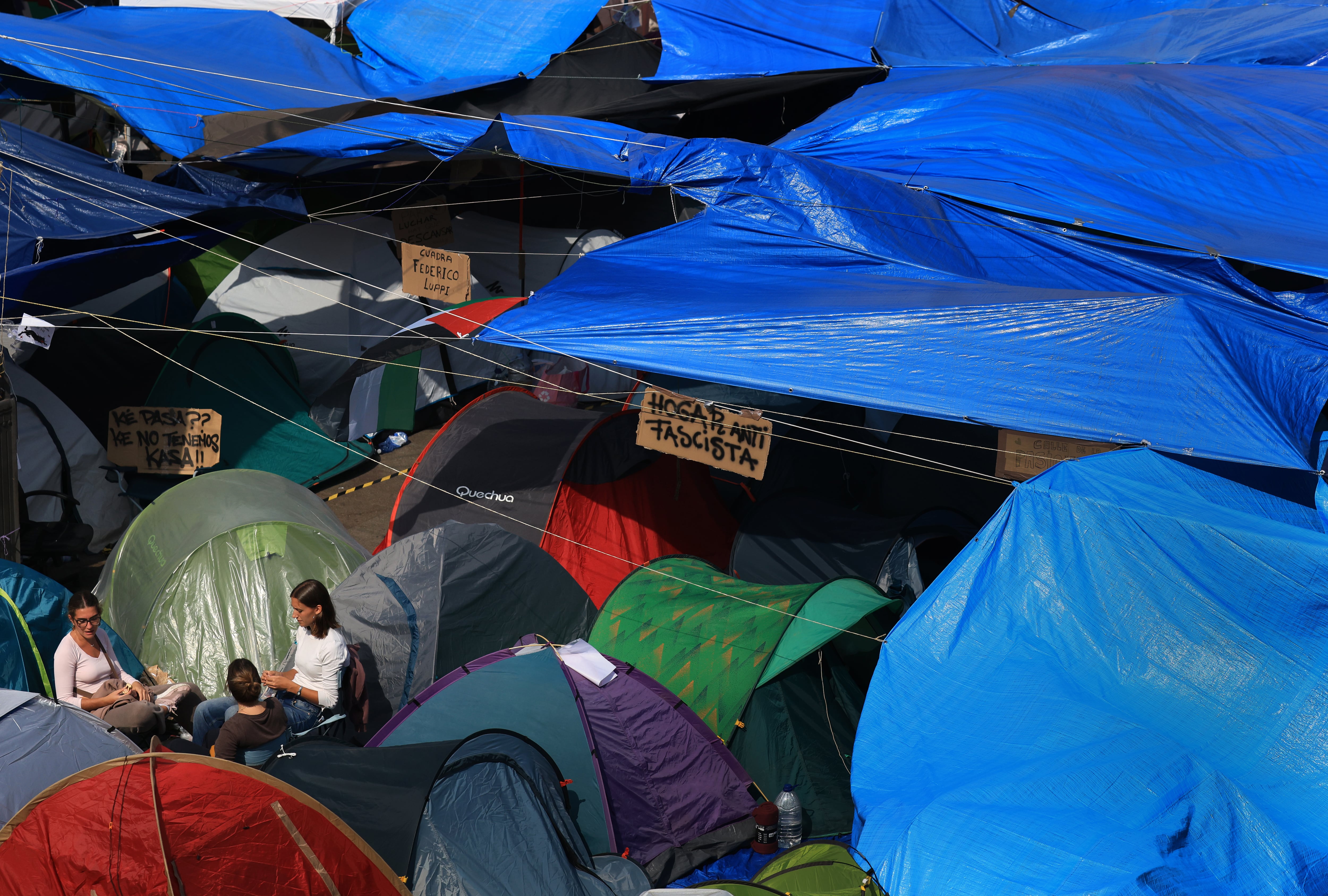
It’s Friday night in Madrid. Walking down Preciados street towards Sol square, the tents and the huge banners announcing the protest encampment can already be seen some distance away. Suddenly, a voice cries out amid the crowds from an indeterminate spot on the street. It belongs to an old man with white hair, his nose and chin almost touching. His name is Héctor, he is Ecuadorian, he is going hoarse, and he deserves some credit for what he is attempting to do: standing next to the epicenter of Spain’s mass protests for decent housing, with a country convulsed and fed up with prohibitive prices and home evictions, Héctor is preaching the end of the world and urging people to return to God. “What do you think of what’s happening over there, in Sol?” the reporter asks, pointing to the packed square. Héctor, escorted by a woman named Noemí, approaches and whispers mysteriously: “The final times are always dangerous times. Uncivilized times.” He then asks Noemí to show the reporter some texts from Timothy. “The first thing people must do is repent and return to God,” he concludes. He says goodbye with a smile and goes back to his shouting.

Seguir leyendo

© Jaime Villanueva

Three participants in the encampment in Puerta del Sol, Madrid, on October 3.
  •  

Tens of Thousands March Across Spain as Housing Crisis Returns to the Streets

Tens of thousands of people have demonstrated across Spain after parliament rejected two government housing decrees, bringing the country’s dispute over rents, evictions and housing supply back onto the streets.

Tens of thousands of people marched across Spain on Saturday, 3rd October, demanding action over rising rents, evictions and access to housing, a day after parliament rejected two government measures intended to strengthen protections for tenants.

In Madrid, the government delegation estimated attendance at around 70,000, while organisers put the figure considerably higher. Demonstrations were organised in more than 50 cities. In Valencia, clashes broke out near a property investment conference at the City of Arts and Sciences, while protests elsewhere were largely peaceful. The nationwide demonstrations followed several days of mobilisation by Spanish tenants’ organisations.

The immediate political trigger came on Friday, when the Congress of Deputies rejected two housing decrees proposed by Prime Minister Pedro Sánchez’s minority government.

The government had approved a package of emergency housing measures including stronger protection against evictions for vulnerable households, changes affecting property investment companies and measures intended to increase the availability of affordable rental accommodation. A second decree included provisions for the automatic renewal of some rental contracts.

The measures were defeated after the Popular Party, Vox and Junts opposed them. Junts argued that the proposals would not resolve the underlying shortage of housing and risked discouraging property owners from putting homes onto the market.

Housing has become one of Spain’s most politically sensitive domestic issues, particularly in Madrid, Barcelona, Valencia and other cities where rising demand has coincided with limited supply, strong tourism and a large short-term rental market.

The protests have also been shaped by the eviction of 87-year-old Maricarmen Abascal from the Madrid flat where she had lived for decades. The case attracted national attention and became a focal point for campaigners demanding stronger protection for tenants.

Spain has already taken measures against short-term tourist accommodation. EU Today reported last year on Spain’s move to block more than 65,000 Airbnb listings that the authorities said did not comply with regulatory requirements.

Barcelona has gone further, announcing plans to end approximately 10,000 tourist-apartment licences by 2028 as the city seeks to return properties to the long-term residential market.

The argument, however, extends beyond holiday rentals.

Spain faces a structural shortage of housing in areas experiencing strong population and employment growth. Tenant organisations favour stronger rent controls, longer contracts and greater restrictions on institutional investors. Property organisations and political opponents of tighter controls argue that excessive intervention can reduce rental supply and discourage construction.

The same debate is increasingly visible across Europe.

Figures published by Eurostat on 1 October showed EU house prices rising by 4.7 per cent in the second quarter of 2026 compared with the same period last year. Rents increased by 3 per cent. Compared with the first quarter, house prices rose by 1.2 per cent and rents by 0.7 per cent.

EU Today recently examined how Berlin’s housing shortage and rapidly rising rents became a central issue in the city’s election campaign, illustrating how affordability has moved up the political agenda across several European capitals.

Brussels has also become more involved. The European Commission’s first European Affordable Housing Plan, presented in December 2025, focuses on increasing supply, mobilising investment, accelerating construction and giving authorities additional scope to address short-term rentals in areas experiencing housing pressure.

EU Today reported when the plan was launched that it included proposals for new action on short-term rentals and housing investment. The Commission has since begun building a European Housing Alliance bringing together governments, cities, regions and housing organisations.

The Commission estimates that house prices across the EU have risen by more than 60 per cent since 2013, while average rents have increased by around 20 per cent. It has nevertheless stressed that most housing policy remains under national, regional and local authority.

Spain therefore represents one of the more acute versions of a wider European problem: how to increase supply while deciding how far governments should regulate rents, tourist accommodation and investment in residential property.

Saturday’s demonstrations show that the issue is no longer confined to housing policy.

For Sánchez, the defeat of the two decrees has exposed once again the difficulty of securing parliamentary majorities for major legislation. For Spain’s opposition parties, the dispute centres increasingly on whether government intervention is helping to expand housing supply or restricting it.

For tenants facing higher rents, the immediate question is whether any new legislation can materially increase the number of homes they can afford.

  •  

Culture refocuses attention on the Palestinian cause: ‘It has always been central to political struggle’

Culture has once again placed the Palestinian cause at the center of social conversation, while political leaders — especially those from the Global North — have progressively dropped the issue from their public remarks. In less than a month, rapper Macklemore was dropped from opening for Ed Sheeran on his tour after shouting: “Free Palestine!” Actresses Susan Sarandon and Hannah Einbinder were arrested in New York for calling on the United States to stop funding Israel’s war while Benjamin Netanyahu was attending the UN General Assembly. Yuval Abraham and Rachel Szor, directors of NAZA, after being branded traitors by the Israeli government and threatened with revocation of their citizenship, decided to release online and for free the documentary that won an award at the Venice Film Festival. The Festival of Ideas in Madrid hung by a thread when more than 30 participants demanded the organizers withdraw Allianz’s sponsorship because the company holds Israeli bonds. At the same time, at the Cultura Alh festival in Granada, the exchange of manifestos continues between those who oppose and those who support the decision to rescind an invitation to Argentine writer Ariana Harwicz for denying a genocide in Gaza.

Seguir leyendo

© Javier Hernandez

Filmmaker Rodrigo Sorogoyen reads a manifesto in solidarity with Israeli directors Yuval Abraham and Rachel Szor at the San Sebastián International Film Festival.
  •  

France and Spain Welcome Prospect of Britain Rejoining European Union

France and Spain have openly welcomed the prospect of Britain rejoining the European Union after British Prime Minister Andy Burnham put full membership back among the options for the country’s long-term relationship with Europe.

French President Emmanuel Macron and Spanish Prime Minister Pedro Sánchez addressed the question during Macron’s state visit to Spain on Wednesday, 30 September. Asked whether Britain could return under Burnham, Macron responded in English: “Welcome back.” He added that a British decision to move in that direction would be good news for both Britain and Europe.

Sánchez was similarly positive, saying Spain would “open our arms” if Britain sought to return.

Their comments followed Burnham’s intervention at the Labour Party conference and subsequent interviews in which he argued that Britain should reconsider the full range of options for its future relationship with the EU.

Those could include remaining under the present post-Brexit arrangements, returning to the customs union or single market, or ultimately “going all the way” and applying for EU membership again.

The remarks extend a debate which had already been developing since Burnham entered Downing Street. In August, EU Today reported that he had told European Council President António Costa that Britain should be “bolder” in rebuilding relations with Brussels.

More recently, the argument has moved from diplomatic language to practical economic questions. Burnham has been pressing Brussels to ensure British companies are not disadvantaged by the EU’s emerging industrial preference rules, with access to the proposed “Made in Europe” framework becoming one of the principal issues ahead of the next EU-UK summit.

Macron nevertheless made clear in Madrid that closer relations could not become a system under which Britain selected individual advantages of EU membership while remaining outside the corresponding obligations.

“You cannot pick and choose among the Union’s freedoms,” he said during the joint press conference with Sánchez.

That question dominated much of the Brexit negotiation after the 2016 referendum. Access to the single market is built around the free movement of goods, services, capital and people, while participation also entails accepting common rules and enforcement mechanisms.

A British application to rejoin would be a separate and considerably larger process. Under Article 49 of the Treaty on European Union, Britain would have to apply for membership and secure unanimous agreement from the existing member states before negotiations could be completed.

A returning Britain could not assume that the special arrangements it held before Brexit would automatically be restored. The UK previously had an opt-out from the euro, remained outside the Schengen passport-free area and benefited from a budget rebate.

Any future terms would have to be negotiated.

Public opinion has also changed since the referendum. A YouGov poll in June found 55 per cent of Britons supported rejoining the EU and 34 per cent opposed it, although support falls when respondents are asked about specific membership conditions.

That shift is not limited to Britain. Polling examined by EU Today earlier this year found substantial support across EU member states for a British return.

For the moment, however, Burnham is not proposing an immediate membership application or referendum.

The next test will be the UK-EU summit expected in November. The meeting was originally planned for July but was postponed following Keir Starmer’s resignation, with EU Today reporting at the time that the political transition in London had complicated preparations.

Burnham wants the summit to advance negotiations on industry, trade and migration and has said he intends to use the period around the meeting to set out the longer-term options available to Britain.

The immediate negotiations are therefore likely to focus on economic integration rather than membership.

Greater access to European markets would almost certainly involve greater regulatory alignment. The political argument in Britain will concern how far the country is prepared to accept common European rules in return for reducing barriers created by Brexit.

Macron and Sánchez have now made clear that, if the discussion eventually moves beyond closer economic cooperation towards membership itself, two of the EU’s largest states would welcome it.

  •  

Spanish royals host gala dinner for Emmanuel Macron: ‘We are this old continent that underestimates itself. But we’re not doing that badly’

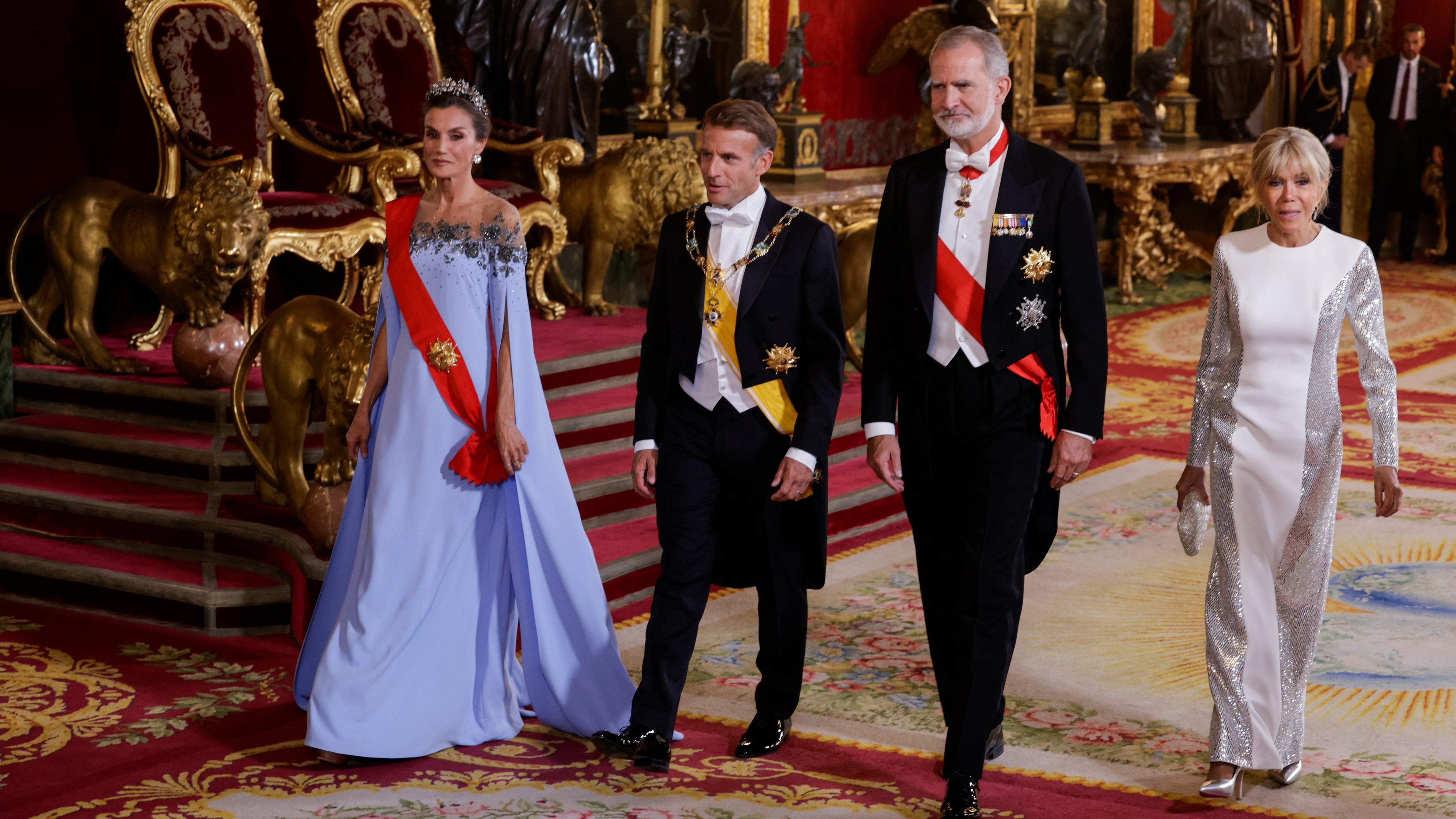
King Felipe VI and Queen Letizia of Spain on Tuesday received French President Emmanuel Macron and First Lady Brigitte Macron at the Royal Palace for a gala dinner as part of a state visit by the French leader — one of his last before France holds general elections in April of next year. After almost 10 years in office, this was the first state visit to Spain by Macron, whose second term ends in the spring, after which he is barred from running for a third consecutive term.

Seguir leyendo

© Violeta Santos Moura (REUTERS)

French President Emmanuel Macron and his wife Brigitte Macron walk with Spain's King Felipe and Queen Letizia during a welcoming ceremony for the gala dinner hosted in their honor at the Royal Palace in Madrid.
  •  

European leaders fixate on Russia, avoid criticizing US at UNGA

Artificial intelligence was the concept of choice among European speakers during the first days of the United Nations General Assembly (UNGA). Prime ministers and presidents recognized opportunities and invoked stronger regulation – then returned to advocating for more military spending, planning deterrence, and avoiding harsh words for the Trump administration.

Read more: The AI frontier asks to be paced: anatomy of a panic

“I’m afraid I may lack originality in describing it [the situation in the world],” French President Emmanuel Macron remarked, referring to the overlaps between interventions. For once, he was not wrong. Most European speeches described the world in terms of crisis, yet failed to spell out the connections between that situation and the behavior of the United States. Macron’s speech was no true exception.

Instead, most seemed keen to endear themselves to the Trump administration. New-ish British Prime Minister Andy Burnham called the UK “America’s closest ally” and announced a new “AI defense partnership” with the US – giving listeners something to truly worry about when AI is concerned.

The East European anti-communist set

Others were even friendlier to the UNGA host country. Romanian President Nicușor Dan said it was a particular pleasure to address the assembly in the US, “a country with which Romania shares a long history of friendship, a nation towards which Romanians look with respect and gratitude, including for its essential contribution to the fall of the Iron Curtain and the opening of my country’s path towards democracy and freedom.”

Read more: Hybrid threats: Romania continues to self-sabotage through militarization

Remarks directed against Eastern European countries’ socialist past were echoed by Polish President Karol Nawrocki and Croatian Prime Minister Andrej Plenković. These speeches reaffirmed commitment to the West, including the North Atlantic Treaty Organization (NATO), and gratitude for positive changes these leaders perceived over the past 30 years.

“Millions of Romanians know from their own experience the difference between a communist system that oppressed them and stifled their initiative and freedom of choice, and a democracy that rewards work, innovation, and personal responsibility,” Dan added. 

None of these Eastern European leaders addressed the mass unemployment, emigration, and crumbling public services that soared while “work, innovation, and personal responsibility” took over.

Peace through protection, resilience through military strength

European interventions went to great lengths to reaffirm support for Ukraine and, perhaps more notably, criticism of the Putin administration. Plenty used the floor to repeat the belief that European countries must rearm in the face of a perceived – and still materially nonexistent – “Russian threat.”

As Ukrainian President Volodymyr Zelenskyy referred to a vision of “peace through protection” and showcased defense cooperation agreements, Burnham talked of resilience through military strength. 

Read more: ‘Ukraine is no longer a sovereign country,’ says sociologist Volodymyr Ishchenko

Some commended themselves for quickly approaching NATO’s 5% expenditure commitments. Others turned to “obstructions” of freedom of navigation – referring, of course, to the closure of the Strait of Hormuz caused by the illegal US-Israel war on Iran. Yet most European speeches did not even mention the US in this context, let alone offer comparable words of condemnation dedicated to Russia.

Spain vows to continue believing “humanity can continue to progress”

As has become customary, the speech delivered by Spanish Prime Minister Pedro Sánchez was among the few to stray from the underwhelming regional tone. Sánchez, whose administration has been attacked by the US government on several occasions, spoke of the conditions facing the world today as exacerbated by the selfishness, ignorance, and cruelty of some UN member states – not naming anyone in particular.

He singled out cruelty as the worst of these pillars driving powerful nations’ behavior in international spaces: “A cruelty that no longer flinches at the sight of a starving child’s ribs or a hospital reduced to rubble.”

Read more: Over 1 million years of children’s lives lost in Gaza during genocide, study finds

Sánchez said Spain would not give in to attacks on multilateral institutions, nor would it stop believing “that humanity can continue to progress.”

“We are not going to do it, because we want to live up to our children’s expectations. Because we know that, in a few years, future generations will look back. They will study this decisive decade. And they will ask us what role each of us played. They will ask us what we did when some countries began to break the rules and others decided to turn a blind eye. They will ask what we did when defending what we believed in began to cost dearly. And when that happens, we want to be able to tell them that we did not stop fighting. We did not. We want to be able to tell them that we gave everything to leave them a more peaceful, sustainable, and fairer world.”

  •  
❌