❌

Reading view

Ukraine’s EU neighbors reject new plea from Kiev – Politico

RT | October 5, 2026

Poland and Romania have refused to help Kiev move millions of tons of grain – which got stuck in Ukraine following Vladimir Zelensky’s war on exports – into the EU, Politico reports, citing officials in Warsaw and Bucharest. Zelensky’s 40-day campaign resulted in Russia implementing a de facto blockade of Ukraine’s Black Sea ports, with the wider consequences of the strikes estimated at 1.5% of the country’s collapsing GDP.

Last week, Ukrainian Agriculture Minister Taras Vysotsky appealed to the EU for a €1.1 billion ($1.23 billion) allocation to improve transit capacity, which would help free large quantities of grain – Ukraine’s key source of income – trapped in the country.

The request came after Zelensky’s 40-day PR ‘pressure campaign’ on Russia, which involved long-range strikes on oil refineries and civilian infrastructure. The effort backfired, as Russia ramped up strikes on Ukraine’s military-related logistics, including the key hub of Odessa, accounting for an overwhelming majority of Kiev’s agricultural exports.

Speaking to Politico, Vysotsky described the situation as “very, very critical,” after his ministry reported the export of 2.4 million tons of agricultural products in September, just 46% of what Kiev considers the required volume.

He added that export restrictions leave Ukrainian farmers without cash needed to plant seeds now for next year’s harvest. “If the situation stays like this till spring, it could mean the decrease of even 35-40% of the planted area,” he warned.

Last month, Ukrainian officials estimated damage to infrastructure from Russian strikes at nearly $10 billion, with wider consequences amounting to around 1.5% of GDP.

While the EU as a whole is yet to give a definitive answer to the €1.1 billion request, Poland and Romania – which are crucial to facilitating Ukraine’s exports – ruled out any significant assistance.

Romanian Agriculture Minister Barna Tanczos rejected the prospect of substantially expanding capacity, telling Politico that “the interest for our own farmers remains a priority.”

Ukrainian cargo and low Danube water levels are already straining Romanian ports, he said, adding: “Everybody knows we cannot double the number of trains, we cannot double the roads, railways and port capacity. It is what it is.”

The Polish Infrastructure Ministry spokesperson said, as cited by Politico, that Poland “has no plans to introduce any changes aimed at increasing the transit of Ukrainian agricultural products.”

Before the €1.1 billion plea, Ukraine requested €220 million from the EU in grants to support farmers affected by disrupted exports, but the bloc effectively turned it down, pointing instead to existing EU mechanisms.

Agricultural trade has long been a source of friction between Ukraine and its EU neighbors. After the escalation of the Russia-Ukraine conflict in 2022, Brussels suspended duties and quotas on Ukrainian exports, which triggered massive protests from European farmers over what they saw as unfair competition. As a result, the EU introduced an ‘emergency brake’ system in 2024, allowing tariff quotas to return for sensitive products if imports exceed set thresholds.

In addition, many of Ukraine’s neighbors, including Poland, Hungary, and Slovakia, maintain significant restrictions on Ukrainian imports at the national level.

  •  

L’OTAN, la corruption, le néonazisme sont les ennemis de l’Ukraine – pas la Russie

Zelensky et son régime à Kiev sont les « plus grands obstacles à la paix », selon son ancienne porte-parole.

Cela aurait dû faire la une des journaux la semaine dernière, mais cela n’a pas été le cas. L’ancienne porte-parole du pseudo-président de l’Ukraine, Vladimir Zelensky, s’est vu interdire de s’adresser au Parlement européen.

Pourquoi ? Parce qu’Iuliia Mendel devait livrer des révélations accablantes sur la corruption endémique dans le régime de Zelensky et sur la façon dont la guerre soutenue par l’OTAN dans son pays est une combine pour s’enrichir.

Quelle ironie que un tel témoignage ne soit pas autorisé dans ce qui est censé être le siège de la démocratie et des valeurs européennes. Si la liberté d’expression remet en cause le récit officiel, alors elle est interdite. Le seul récit autorisé est que l’Ukraine est un modèle de démocratie cherchant à adhérer à l’Union européenne et à l’OTAN, mais qu’elle est contrariée par « l’agression russe ». Combien fragile est cette représentation, pour que quiconque ayant un point de vue différent et des faits soit purement et simplement réduit au silence et diffamé comme propagandiste russe ?

Remarquablement, presque aucun média occidental n’a rapporté ce fiasco.

Iuliia Mendel a été conseillère personnelle de Zelensky pour les médias de 2019 à 2021, date à laquelle elle a démissionné, désillusionnée par sa corruption. Elle a observé de près les tractations, le comportement maniaque de Zelensky et de ses acolytes, et son mépris pour la démocratie. Elle décrit son témoignage comme un « devoir moral » de dire à ses concitoyens ukrainiens et au reste du monde la vraie nature de son ancien patron. Qu’il est un escroc aux tendances psychopathiques qui se moque éperdument de la vie du peuple ukrainien. Sa seule préoccupation est de rester au pouvoir le plus longtemps possible et de s’enrichir avec les milliards d’argent des contribuables occidentaux qui sont acheminés vers son régime.

Zelensky et son régime à Kiev sont les « plus grands obstacles à la paix », dit Mendel, qui a donné cette interview à Weltwoche, après avoir été empêchée d’entrer au Parlement européen. La corruption en Ukraine, dit-elle, dépend de la poursuite de la guerre, et c’est pourquoi le régime de Kiev oppose son veto à tout effort diplomatique visant à mettre fin au conflit qui dure depuis près de cinq ans. Quiconque s’oppose à la guerre et appelle à la diplomatie est sanctionné, emprisonné ou envoyé au front pour mourir. Zelensky supervise une junte militaire (que l’Occident appelle « démocratie ») dans laquelle ses sbires traquent les gens dans les rues pour la conscription. Pour échapper au hachoir à viande, ils doivent payer un pot-de-vin pouvant atteindre 20 000 dollars.

Mendel a d’abord fait sensation lorsqu’elle a été interviewée en mai de cette année par le diffuseur américain Tucker Carlson. Dans cette interview, elle a décrit Zelensky comme un dictateur toxicomane émotionnellement instable, bien que dissimulé par ses talents d’acteur d’ancien artiste de divertissement. Les partisans politiques et médiatiques occidentaux, bien sûr, jouent le jeu en fermant les yeux sur cette mascarade et le célèbrent comme un « héros churchillien de guerre ».

Tout cela est une combine méprisable jouée aux dépens des contribuables occidentaux et du peuple ukrainien qui souffre depuis longtemps.

Pour avoir révélé les secrets de son ancien patron, Mendel a été immédiatement inscrite sur la liste noire Mirotvorets, soutenue par l’État ukrainien, comme « propagandiste russe ». Mirotvorets a acquis une triste réputation de liste de morts, car plusieurs personnes qu’elle a blacklistées ont fini mortes. Elle dit qu’elle est interdite de diffusion publique vers ses concitoyens ukrainiens par des entreprises médiatiques occidentales comme Meta/Facebook.
Plus tôt cette semaine, quelques jours avant qu’elle ne s’adresse au Parlement européen, le régime de Zelensky a annoncé des sanctions contre Mendel. Elle ne peut pas accéder aux avoirs ukrainiens et ne peut pas rentrer dans le pays de peur que sa vie soit en danger. Elle craint que sa famille en Ukraine ne soit persécutée, envoyée au front en représailles pour sa prétendue « trahison ».

La décision de lui interdire de parler devant l’assemblée de Strasbourg aurait été prise par la présidente du Parlement européen, Roberta Metsola. Metsola, comme d’autres dirigeants de haut rang de l’UE, tels que la présidente de la Commission, Ursula von der Leyen, et le président du Conseil, António Costa, est une supportrice inconditionnelle de l’Ukraine, acheminant des milliards d’aide au régime.

Mendel apparaît comme une personne d’intégrité, de décence morale et de véritable indépendance. Elle rejette catégoriquement l’accusation d’être « pro-russe ». En effet, dans ses interviews avec Carlson et Weltwoche, Mendel critique vivement la Russie pour ce qu’elle appelle une invasion cruelle de son pays. Il semble parfaitement clair que sa préoccupation constante est d’empêcher la guerre de détruire sa patrie.
Cependant, la guerre ne peut pas être arrêtée parce que le régime de Zelensky et ses partisans européens de l’OTAN sont investis dans sa prolongation. La corruption du régime est mariée à l’idéologie de la russophobie qui est endémique dans l’élite européenne.
Cette perspective a été corroborée par deux autres sources impeccables cette semaine. Comme Mendel, ces deux autres figures sont également ignorées par les médias occidentaux.
Le professeur Ivan Katchanovski de l’Université d’Ottawa a été interviewé par Lena Petrova, dans laquelle il a passé en revue la corruption flagrante et la politique néonazie du régime de Kiev.
Les recherches révolutionnaires de Katchanovski ont révélé comment le massacre des snipers de Maidan, au cours duquel plus de 100 manifestants et policiers ont été tués à Kiev en février 2014, était une opération sous fausse bannière menée par des éléments néonazis et leurs sponsors de l’OTAN, qui a précipité le coup d’État. Le coup d’État a conduit à la prise de contrôle de l’État ukrainien et des forces de sécurité par des forces fascistes, ce qui a à son tour conduit à la guerre avec la Russie en 2022.

Zelensky, qui est nominalement juif, s’appuie sur les forces néonazies pour sa survie politique et la poursuite de la corruption qui sévit au sein du régime. Le professeur Katchanovski, qui est originaire d’Ukraine, souligne que de nombreux ministres, conseillers et hauts responsables judiciaires proches du cercle de Zelensky ont dû démissionner ou fuir le pays à la suite d’innombrables scandales de corruption. Il est difficile de croire que Zelensky ne soit pas lui aussi jusqu’au cou dans le racket. Corruption, guerre et néonazisme sont tous inextricablement liés en raison de l’implication de l’OTAN dans le pays depuis son indépendance en 1991 vis-à-vis de l’Union soviétique après l’effondrement de cette dernière.

Une autre vue corroborante est celle de l’éminent universitaire américain le professeur John Mearsheimer. Il a donné cette semaine un compte rendu très large d’une récente visite en Russie au cours de laquelle il a rencontré de hauts responsables gouvernementaux, des décideurs politiques et des diplomates. Mearsheimer a déclaré, peut-être à la surprise de certains, que lors de ses nombreuses conversations, il n’a décelé aucune animosité profonde envers l’Ukraine ou le peuple ukrainien parmi ses interlocuteurs russes, ni d’ailleurs parmi les Russes ordinaires. « Beaucoup de Russes que j’ai rencontrés ont de la famille en Ukraine… partagent un héritage culturel », a-t-il remarqué.

Mearsheimer attribue la disparition tragique de l’Ukraine et de ses liens historiques avec la Russie à la politique de l’OTAN visant à faire entrer le pays nouvellement indépendant dans l’alliance militaire dirigée par les États-Unis en 2008 avec la Déclaration de Bucarest. Cette politique a garanti que les deux pays seraient désormais sur une trajectoire de collision menant au conflit, qui a finalement éclaté en 2022. L’objectif occidental plus large était d’utiliser l’Ukraine comme proxy pour mener la guerre et déstabiliser la Russie. En bref, pour la « défaite stratégique de la Russie ».

En poursuivant cet objectif impérialiste, l’Ukraine a été infectée par le néonazisme, la corruption et une dictature de facto dirigée par un clown toxicomane qui réprime impitoyablement toute opposition. Des millions de personnes ont été déplacées, tuées et mutilées ; la société et l’économie sont en ruines abyssales.

Mais cette vérité ne doit pas être permise par les idéologues occidentaux et leurs médias contrôlés, qui persistent dans leurs fantasmes russophobes malgré la destruction et la souffrance déchaînées et le danger très réel d’une guerre totale explosant en Europe. Les élites occidentales se livreront à toutes sortes de maux dans leur poursuite de la tentative de vaincre la Russie. L’Ukraine a été totalement détruite par les objectifs impérialistes occidentaux. Et pourtant, la Russie est blâmée comme le méchant dans cette entreprise horrible et criminelle.

  •  

On the eve of destruction? Yes, but whose destruction?

War is highly probable, but it is not inevitable.

Join us on Telegram, X, and VK.

Contact us: info@strategic-culture.su

We are living in an extremely dangerous moment in history. We are also living in an extremely irrational time, at least when it comes to evaluating the mentality, conduct, and words of Western politicians and media in the face of disaster.

On the one hand, Western leaders, pundits, and military commanders clamor with predictions of war with Russia as being imminent. Yet on the other hand, there is an astounding dereliction to avert it. Diplomacy and understanding are boorishly shunned. Indeed, there is an absolutely irrational choice of escalation towards war, especially among European politicians.

Underlying this, of course, is an ideological supremacist belief, a contempt for Russia and other officially designated enemies (China, Iran, and so on), whereby the Western political class sees itself as superior, not as equals. That mentality makes for war and precludes diplomatic engagement and dialogue.

In any objective reading of the situation, there is little doubt that the danger of all-out world war is upon us. Incredibly, for the third time in just over a century, the planet is facing the specter of a massive international conflict. But on this occasion, the outcome would be nuclear conflagration with the extinction of life as we know it. This repeated destruction is a damning indictment of the Western system, its capitalist and imperialist engines for violence, domination and, inevitably, conflict. Surely, such a system should be abolished.

The Doomsday Clock, overseen by the independent Bulletin of Atomic Scientists, is at its closest point to midnight in all of 80 years of existence. The clock was inaugurated following the U.S. atomic horror attacks on Japan in 1945. It was meant to serve as a warning of the increasing risk of nuclear war. It is truly a frightening spectacle that today’s danger of global disaster surpasses the many perils that were encountered during the Cold War decades. Today’s tensions surpass even those of the 1962 Cuban Missile Crisis when the United States and the Soviet Union edged towards a nuclear war.

Many Western scholars, legal experts, analysts, and seasoned diplomats have increasingly added their voices warning of the ultimate disaster. We pay respect to the sane voices of people like Alfred de Zayas, Jeffrey Sachs, Larry Johnson, and Scott Ritter, voices in the West that, unlike their political class, are passionately warning of the path to perdition the world is on and needs to urgently get off.

The warning words are flashing like a red light, yet Western leaders keep making decisions and issuing belligerent statements that are driving the world to the precipice.

This week, European politicians have again openly advocated attacking the Russian Federation by blockading Kaliningrad, the Russian exclave between Poland and Lithuania. Polish Foreign Minister Radoslaw Sikorski and NATO chief Mark Rutte (former Dutch premier) have echoed calls from other European politicians to effectively attack Kaliningrad, that is, to attack the Russian Federation. Russia’s nuclear doctrine explicitly states that such an assault compels it to use nuclear weapons in response.

So, why do NATO leaders keep pushing provocation? Such moves are merely an extension of the NATO proxy war in Ukraine. Their war is a failure. But the Western pro-war politicians cannot admit they are wrong. They are willing to incite a wider war rather than admit defeat and face the political repercussions from their own citizens.

Russia this week issued a grave warning, saying that any attack on Kaliningrad would result in Russian retaliation with nuclear weapons.

Instead of coming to their senses and sobering up, European politicians haughtily dismiss Russia’s warnings as a “bluff” or accuse Moscow of nuclear saber-rattling.

In a plenary address to the Valdai forum in Moscow on Thursday, Russian President Vladimir Putin underlined the infernal precariousness.

“If it comes to a direct attack on the Russian Federation – in this case, Kaliningrad, although it could potentially involve other territories as well – the question of Russia using all the weapons at its disposal would inevitably and immediately arise. That is inevitable,” said Putin.

In an ominous assessment of the reckless direction, he noted:

“We must realise that the moment when nothing can be changed any longer may come very quickly and unexpectedly for everyone. The logic of escalating, increasingly harsh retaliatory measures leads to a fatal point of no return.”

The Russian leader is saying that the West’s relentless escalation in words and deeds is leading to an abyss. Incredibly, the Western politicians refuse to restrain themselves. “At the heart of this escalation lie arrogance and overconfidence… The spiral is tightening, and the devastating consequences are growing.”

This appalling dynamic is redolent of the prelude to the First and Second World Wars, when Western political establishments were insouciant about the impending doom.

But a Third World War is truly a point of no return.

“All the more so today, when the arsenals of the world’s leading powers contain weapons capable of destroying all life or, at the very least, reducing the Earth to a catastrophic state,” Putin said.

What is deplorable is the total propagandizing of public discussion in the West. Anyone who dares to speak about the objective historical causes that have given rise to the current tensions is censored or pilloried as a Russian stooge.

There are eminent voices of sanity in the West, as noted above. But they are systematically excluded from public discourse by the mainstream media and academia. The public has to rely on alternative media sources for information. That has, thankfully, energized critical views among citizens in ever greater numbers, who are questioning the whole warmongering policy of inordinate military spending and weapons for Ukraine to fight a futile war against Russia. Notably, this week German Chancellor Friedrich Merz and NATO’s Mark Rutte were heckled and booed when they appeared in public in Muenster, Germany.

Increasing numbers of people understand that we have been pushed to an existential crisis by Western governments (regimes) who took undemocratic, secret decisions to wage war against Russia years ago.

As former British diplomat Ian Proud pointed out in an excellent podcast this week while attending the Sochi forum, the rulers in London made a conscious decision to go to war with Russia as far back as 2014, when the West sponsored the fascist coup in Kiev.

Other Western figures, like former U.S. state planner Victoria Nuland and former NATO chief Jens Stoltenberg, have also admitted in their own words that NATO deliberately weaponized Ukraine after 2014 for the purpose of confronting Russia. This was before the hostilities erupted in Ukraine in February 2o22.

Thus, the world has been pushed to a nuclear “extinction event” all because of Western policy to pursue confrontation with Russia, using Ukraine as a proxy.

War is highly probable, but it is not inevitable. Western politicians and media, through their arrogance and Russophobia, are certainly doing their worst to make it inevitable. But these criminal elements may not prevail.

There are international structures and laws; there is still diplomacy, albeit abused and trashed; perhaps more importantly, there is mass public opinion against the odious warmongers; and there is a burgeoning social and political uprising against the evidently bankrupt Western political system.

The political elite in the West who are pimping for war may seem dominant, owing to apparently dominant media narratives. But their power is vastly overrated against the huge public opposition to their criminal agenda.

History may rhyme, as with lead-ups to previous infamous wars. This time, however, a crucial difference is that there may be sufficient public awareness so as not to fall for the warmonger ruse of bailing out the rotten system.

We are on the eve of destruction, but there is every sound hope that rather than war, the destruction tomorrow could be that of the Western imperialist system, thereby giving way to a truly better, more just and peaceful world.

  •  

Perché Tusk e Budanov sollevano il velo sui caduti riportati dall’Ucraina?

Le perdite dell’Ucraina diventano sempre più difficili da nascondere di fronte ai crescenti problemi di mobilitazione e alla carenza di risorse umane. Le dichiarazioni di Tusk e Budanov sollevano il velo sulla portata della crisi, che potrebbe portare a un ulteriore inasprimento della mobilitazione.

Segue nostro Telegram.

Lo scorso maggio, Anne Keast-Butler, direttrice del Government Communications Headquarters (Gchq) britannico, ha dichiarato che, alla fine di maggio, le forze armate russe avevano subito quasi mezzo milione di morti e circa un milione tra feriti e dispersi.

Richard Knighton, Capo di Stato Maggiore delle forze armate britanniche, ha fornito ulteriori dettagli. Secondo le sue valutazioni, enunciate l’11 settembre, l’esercito russo avrebbe riportato una quota preponderante delle perdite a partire dal gennaio 2023. Cioè da quando «la Russia ha conquistato appena il 2% del territorio ucraino […]. Credo che queste cifre mostrino chiaramente lo spreco insensato e futile di vite umane a fronte di progressi così scarsi e per un obiettivo così illegittimo del presidente Putin», ha affermato Knighton.

Per lo Stato Maggiore di Londra, le perdite totali subite dalla Russia in Ucraina supererebbero l’ammontare complessivo dei caduti registrati dalle forze armate sovietiche e russe in tutti i conflitti combattuti dalla seconda metà del XX Secolo.

Le stime dell’alto comando britannico risultano sostanzialmente convergenti con quelle formulate dal Center for Strategic and International Studies (Csis) statunitense, che all’inizio di luglio quantificava in 1,4 milioni di unità il totale delle vittime riportato dalla Russia, tra cui circa 450.000 morti.

Mediaziona, testata indipendente russa che, con la collaborazione della «Bbc», tiene dall’inizio del conflitto il conto dei caduti russi sulla base dell’analisi di registri cimiteriali, necrologi e post sui social network, fornisce una stima di quasi 260.000 morti e oltre 350.000 feriti al 21 settembre.

Quanto alle perdite ucraine, è molto più difficile reperire stime pubbliche all’interno dei Paesi membri della Nato. Un delle poche eccezioni era costituita dal Csis, che a giugno stimava 125.000-150.000 morti e 400.000-500.000 feriti.

Qualcosa è tuttavia cominciato a cambiare. Lo scorso 17 settembre, nel corso di un intervento pronunciato davanti alla Camera Bassa del Parlamento polacco, il primo ministro Tusk ha affermato, sulla base di informazioni ottenute dal governo ucraino, che, «di recente, l’Ucraina ha registrato 27.000 tra morti e feriti al mese; si tratta, purtroppo, di cifre record nel senso più triste del termine per questa guerra. A questo ritmo, l’inverno in Ucraina potrebbe rivelarsi catastrofico».

Tusk ha imputato il netto peggioramento della situazione sul fronte bellico alle «nuove capacità tecnologiche della Russia», a partire dai droni dotati di motore a reazione impiegati con sempre maggiore frequenza dalle forze armate russe.

Non è chiaro se il dato numerico indicato dal premier polacco si riferisca al periodo estivo o a un lasso di tempo più lungo, ma risulta perfettamente compatibile con il quadro tratteggiato soltanto poche settimane prima da Budanov, che in qualità di capo del gabinetto del presidente Zelensky ed ex direttore del Gur aveva quantificato in almeno 30.000 persone al mese l’ammontare minimo degli ucraini da mobilitare per reggere l’urto russo.

Le valutazioni relative alle perdite riportate dall’Ucraina formulate da Tusk e Budanov non collimano affatto con le stime riferite dal presidente Zelensky, che a luglio aveva parlato di 50.000 caduti e 400.000 feriti subiti dall’Ucraina a partire dal febbraio 2022, e risultano profondamente discordanti rispetto alla narrazione propinata in tutto l’Occidente fin dall’inizio del conflitto.

Con qualche eccezione. In un’intervista rilasciata a «Sky News Australia» nell’ottobre dello scorso anno (segnalata in Italia soltanto da «Analisi Difesa»), James Carden, specialista di questioni geostrategiche con trascorsi come consigliere del Dipartimento di Stato per le relazioni russo-statunitensi sotto l’amministrazione Obama, dichiarò che «dalle mie fonti risulta che il rapporto di perdite tra ucraini e russi è di 36 a 1. Sono le perdite ucraine ad essere vicine a un milione. La guerra d’attrito attuata fin dall’inizio dai russi è stata un successo, sono gli ucraini ad essere sull’orlo del disastro».

Nel novembre 2022, la stessa presidente della Commissione Europea Ursula Von der Leyen si lasciò sfuggire che l’Ucraina aveva subito fino a quel momento circa «oltre 20.000 caduti civili e 100.000 soldati». Senonché, il filmato originale del discorso fu rimosso e sostituito con una versione “epurata” dallo scottante riferimento alle perdite ucraine.

Resta quindi da capire il perché due dei più strenui sostenitori dello sforzo bellico ucraino come Tusk e Budanov abbiano deciso proprio ora di sollevare il velo su una realtà molto meno edificante rispetto a quella descritta da governi e giornali sia negli Stati Uniti che in Europa.

Una infusione di pessimismo risulta funzionale per un verso a “predisporre” l’opinione pubblica ad accettare nuovi e ben più gravosi sacrifici per sostenere l’Ucraina, identificata a tutt’oggi come “scudo d’Europa” dal presidente Zelensky e dai suoi collaboratori.

Per l’alto, a legittimare l’adozione di misure che restringano il perimetro legislativo per il conferimento dello status di rifugiati agli ucraini in età di servizio militare. Si tratta, in altri termini, di aprire il varco a provvedimenti implicanti il rimpatrio forzato, prodromico al reclutamento nelle fila dell’esercito, di almeno una parte dei cittadini ucraini riparati presso i Paesi membri dell’Unione Europea. A partire proprio dalla Polonia, che di concerto con Russia e Germania ospita il maggior numero di rifugiati ucraini divenuti nel corso dei mesi oggetto di crescente risentimento popolare.

Budanov, dal canto suo, ha riconosciuto il forte malcontento suscitato in seno all’opinione pubblica ucraina dai sempre più ricorrenti episodi di mobilitazione forzata, e posto contestualmente l’accento sulla necessità che lo Stato adotti un approccio più costruttivo.

A tale scopo, il viceministro della Difesa Liubov Halan ha annunciato un’imminente riforma dei Centri territoriali di reclutamento che sembra tuttavia discostarsi profondamente dalle raccomandazioni dell’ex direttore del Gur.

Lo si evince dalle affermazioni di Roman Kostenko, che in qualità di segretario della Commissione Parlamentare per la Sicurezza Nazionale, la Difesa e l’Intelligence ha proclamato l’introduzione di “modifiche radicali” alle procedure di mobilitazione, comprendenti una possibile abbassamento dei requisiti per la coscrizione relativi all’età contestualmente al passaggio a un modello di reclutamento più “estensivo” reso impellente anche dalla portata sempre più imponente del fenomeno dei cosiddetti “imboscati”.

Già nel gennaio di quest’anno, l’allora ministro della Difesa Fedorov aveva dichiarato alla Verkhovna Rada di aver ereditato oltre 200.000 casi di “abbandono arbitrario del reparto” (un reato distinto dalla diserzione perché presuppone l’intenzione di tornare a combattere da parte dell’inosservante) e più di due milioni di cittadini ricercati per renitenza alla leva.

Le donne restano, quantomeno per ora, escluse dalla riforma del meccanismo di coscrizione, come specificato dalla Verkhovna Rada attraverso una nota che sottolineava l’assenza di iniziative legislative e perfino di discussioni interne riguardo la mobilitazione femminile. Il pronunciamento del Parlamento ucraino fa seguito alle dichiarazioni di Keith Kellogg, generale a riposo ed ex inviato speciale dell’amministrazione Trump per l’Ucraina e la Russia secondo cui Kiev dovrebbe procedere al coinvolgimento delle donne, in quanto «combattono bene quanto gli uomini». Negli stessi giorni in cui Kellogg forniva i suoi suggerimenti, il «Telegraph» descriveva il servizio militare femminile in Ucraina come una vittoria per il femminismo, riportando le dichiarazioni di un’operatrice di droni favorevole alla leva femminile.

La proposta di mobilitare la componente femminile della società ucraina era già stata discussa all’inizio del 2026, dopo che una donna comandante di unità di droni aveva appoggiato pubblicamente l’idea sull’onda del clamore popolare suscitato dalle convocazioni militari recapitate per errore a una decina abbondante di donne ucraine. Nei primi giorni di agosto, è stata presentata una petizione che sollecita la coscrizione delle donne senza figli, sponsorizzata dall’ex ministro della Difesa Alekseij Reznikov secondo cui, «così come Israele, possiamo sopravvivere solo se tutti accettano di dover difendere l’Ucraina […]. Il reclutamento delle donne, raddoppierebbe le nostre risorse per la mobilitazione».

  •  

Inside Poland’s fake student scheme: cheap labour, bogus visas and Russian ties

Maria, a Colombian woman, thought she was going to Poland to work at one of the country’s biggest meat-processing plants. Instead, the employment agency that arranged her job had quietly enrolled her in school.

She discovered this only after translating the papers she had been given. One said she was a student at an adult secondary school in Sieradz, another enrolled her at a Polish university. But Maria had never applied to either institution, attended a class or even heard of them.

Her case is part of a wider trade in fake student documents that exploited Poland’s labour and immigration systems. Employment agencies used fictitious student status to make foreign workers cheaper to employ, while private universities issued certificates that could help foreigners obtain visas or legalise their stay.

An investigation by the Polish publication Onet found the same schools and universities repeatedly appearing in documents issued to foreign workers from around the world. Some institutions existed largely on paper; in other cases, fraudsters forged documents in the names of legitimate schools without their knowledge.

The schemes went beyond fake student cards. Private universities also issued certificates used to obtain visas, enter the Schengen area or legalise residency.

They cost Poland’s social-security system millions of zloty and left some migrants facing job losses, residency problems and possible deportation – while people linked to the schools have established ties to Poland’s pro-Russian organisations and media.

Fake students cheaper for employers

Polish labour laws incentivise employment of students aged up to 26 under so-called agreements to perform a job. It means employers do not have to pay social security or health insurance contributions for them. The workers cost less than regular employees.

So, student status has become a sought-after commodity that employment agencies have exploited for gains.

A central figure in the case is Dariusz M., a school head in Sieradz detained by police in late May. When reporters from TVN24 posed as employers looking for a way to legalise the employment of foreign immigrants, M. offered to enrol them as students for 750 zloty (around €175) per person.

Prosecutors suspect him of participating in an organised group that allegedly issued around 2,500 false study certificates, costing the Polish state nearly six million zloty (more than €1.4m) in unpaid contributions.

Documents were often arranged by employment agencies with foreign workers unaware they had formally been enrolled at a school.

“In most cases, they do not even know they are involved in something illegal. They trust the employment agency,” said Rocio Flores, president of the Union of Latin American Workers in Poland.

When an inspection uncovers the fraud, the foreign workers face losing their jobs, residency problems and, in some cases, deportation. “We migrants suffer most as a result,” Flores said.

Inspections carried out by Poland’s social insurance authority confirmed there were many such cases.

In August, Dziennik Gazeta Prawna reported that Poland’s social insurance body (ZUS) stepped up inspections of companies employing foreigners with pupil or student status.

They reported that inspectors uncovered cases in which agencies pay schools for fake study certificates despite the worker having never attended classes, with Poland’s social welfare system losing out on millions of zloty.

Schools oblivious to study scam

Not all paperwork for fake students came from education institutions themselves. Some student cards and study certificates were forged in the name of real schools without their knowledge, as was the case of a Cosinus network branch in the town of Piaseczno.

Its head, Elżbieta Gotchold-Leśniewski, showed Onet reporters a file containing 62 forgeries found in various parts of Poland and had been issued to people from South America, Africa, Asia and Europe. “That is not my signature, and the school’s hologram is wrong too. In fact, many things are wrong,” she said.

The forgers incorrectly copied the four-leaf clover in the school’s logo, giving rise to the term “fake four-leaf clovers” in the Polish website’s headline. The documents were nevertheless convincing enough to be accepted by employers or used by holders during ticket inspections on public transport.

A student card and certificate package cost 200 to 800 zloty (€45 to €180). One man called the school directly because he had paid 600 (€140) zloty for a set of documents and wanted to know when classes would begin. The school’s staff told him he was, in fact, not registered there at all.

Dodgy paperwork for 20+ nationalities

Since 2022, Poland’s border guard has been investigating a group that, under the cover of three private universities, sold foreigners documents needed to obtain visas or legalise their stays.

This article continues, but the full version is available only to EUobserver.com subscribers. Visit account.euobserver.com/membership

  •  

EU’s centre-right EPP seeks asylum opt-outs, as commission silent on new crisis rules

The European Commission says it will not compromise on protecting the EU’s external borders, but will also respect human rights, while declining to specify if a new emergency rule could suspend people’s basic right to asylum.

The vague statements by Magnus Brunner, the EU home affairs commissioner, in Brussels on Tuesday (29 September), followed an equally vague proposal announced by commission president Ursula von der Leyen in her State of the Union speech on 11 September, who pledged to create a “European emergency response framework”.

When asked if her new framework would include the possibility to suspend asylum at the EU’s external border in cases that mirrored this summer’s Ceuta crisis, when tens of thousands of people entered the Spanish enclave in north Africa, Brunner said: “I can’t go into details, because it’s a discussion which is going on at the moment”.

His non-committal take on the hot button issue also came after a resolution adopted by the centre-right European People’s Party (EPP) in Brussels on Tuesday, which is demanding that member countries, in some cases, be given the option to temporarily suspend asylum applications.

Specifically, it calls on the EU “to adopt legislative measures authorising refusal of entry or returns without individual asylum procedures for illegal migrants used in a hybrid attack”.

Meanwhile, Brunner and von der Leyen come from the same conservative party in the EPP, posing questions to what extent political pressure has influenced the latest commission initiative.

Greece’s prime minister Kyriakos Mitsotakis (also EPP) in early August had already gone public with demands for new EU rules allowing for asylum to be suspended for newly arrived people.

The Polish government (EPP) also weighed in, claiming credit for getting von der Leyen to cite the idea in her big speech.

Warsaw had earlier this month extended its asylum ban on people entering from Belarus, in what rights groups say involves pushbacks that cause loss of life.

But for Brunner, the issue had already been broached in a commission asylum strategy report that was published back in January.

That report references “weaponisation of migration” by hostile countries, such as Belarus and Russia, and links it back to another commission document from December 2024 that argues there are certain exceptional situations in which the ban on pushbacks cannot apply.

For Michael O’Flaherty, who is the human rights commissioner at the Council of Europe, a rights watchdog based in Strasbourg, any effort to extend the existing EU ban criteria risked unraveling decades of human rights law.

The issue will be discussed by EU interior ministers on Thursday and Friday in Luxembourg, where migration weighs heavily on the agenda.

And those talks, in turn, will lean into and continue among heads of state and government at an EU summit on 15 October.

  •  

Poland is losing control over foreigners: Border agency warns of sharp increase in illegal migrants

In just one year, the number of foreigners staying illegally in Poland has risen by about 40 percent. From January to the end of August 2026 alone, the Polish Border Guard identified 8,300 such people.

Many foreigners work illegally and rent apartments outside the official system; some make a living from crime. They live without documents or residence permits. It often takes the services years to identify them and establish where they are. Polish news outlet Rzeczpospolita describes a “gray zone” in which foreigners staying illegally operate. The Border Guard and other services identify people who have overstayed the permitted period of residence, work without the required permits, or use invalid documents. Inspections also turn up people who have previously been banned from entering Poland or other Schengen countries.

“From January 1 to the end of August this year, the Border Guard identified almost 8,300 foreigners who had breached Polish law on the conditions of entry and stay in the Republic of Poland. By comparison, in the same period of 2025 the figure was nearly 6,000, and for the whole of 2025 it was more than 9,300,” Major Anna Sobieska-Tekień of the Border Guard, spokesperson for Border Guard Headquarters, told the newspaper.

Ukrainians and Colombians predominate

Of those illegal migrants arrested, Ukrainians (2,200) and Colombians (1,400) dominate the figures. Also detained were 748 Georgians, 400 Belarusians and 354 Moldovans. Those who were detained did not have documents entitling them to stay in Poland.

“Everything indicates that Poland is entering a full-scale crisis in managing foreigners already present on its territory. If a state can control the border but loses the ability to determine effectively who remains after the right of residence expires, a security gap is created,” said Tomasz Safjański, a professor at WSB University in Dąbrowa Górnicza and deputy director of the Center for Research on Cross-Border Security.

Extensive networks support illegal migration

Rzeczpospolita points to an extensive support network that makes it possible to operate outside the legal system. It includes illegal employment, informal apartment rentals, and the forging of visas, work permits and other documents. The paper also recalls cases in which fictitious companies were set up and used to obtain work visas for foreigners.

Growth of the shadow economy is leading to more illegal employment, which allows employers to avoid taxes and social-security contributions. Experts also point to the risk of a rise in ordinary and organized crime, including human trafficking and document forgery.

People who remain outside the official registration system may also be harder to monitor and, according to those interviewed, may be used by foreign intelligence services for sabotage or other hostile activity.

The post Poland is losing control over foreigners: Border agency warns of sharp increase in illegal migrants appeared first on Remix News.

  •  

The Mysterious Rzepin Train Disaster

In July 1952, reports of a railway disaster in Poland began circulating in the Western media. According to these reports, a Soviet military train derailed near the Polish town of Rzepin on 9 July 1952, killing around 160 Red Army soldiers who were returning to the Soviet Union. The train reportedly left the tracks between Rzepin and Boczów and plunged into a lake. What makes this alleged accident interesting is the uncertainty surrounding whether it actually happened.


The accident as reported by various western newspapers. Credit. Newspaper.com


© Amusing Planet, 2026

  •  

Poland’s 19 Million Data Breach: The Cost of Digital Dependence

One of the largest medical data breaches in Poland’s history has potentially exposed the records of nearly 19 million citizens. The data was exposed through MyDr, a private provider of software used by clinics and doctors across the country. The haul: around 2.5 terabytes of data. Not passwords or logins. Prescriptions. Medical histories. Diagnoses. PESEL […]
  •  

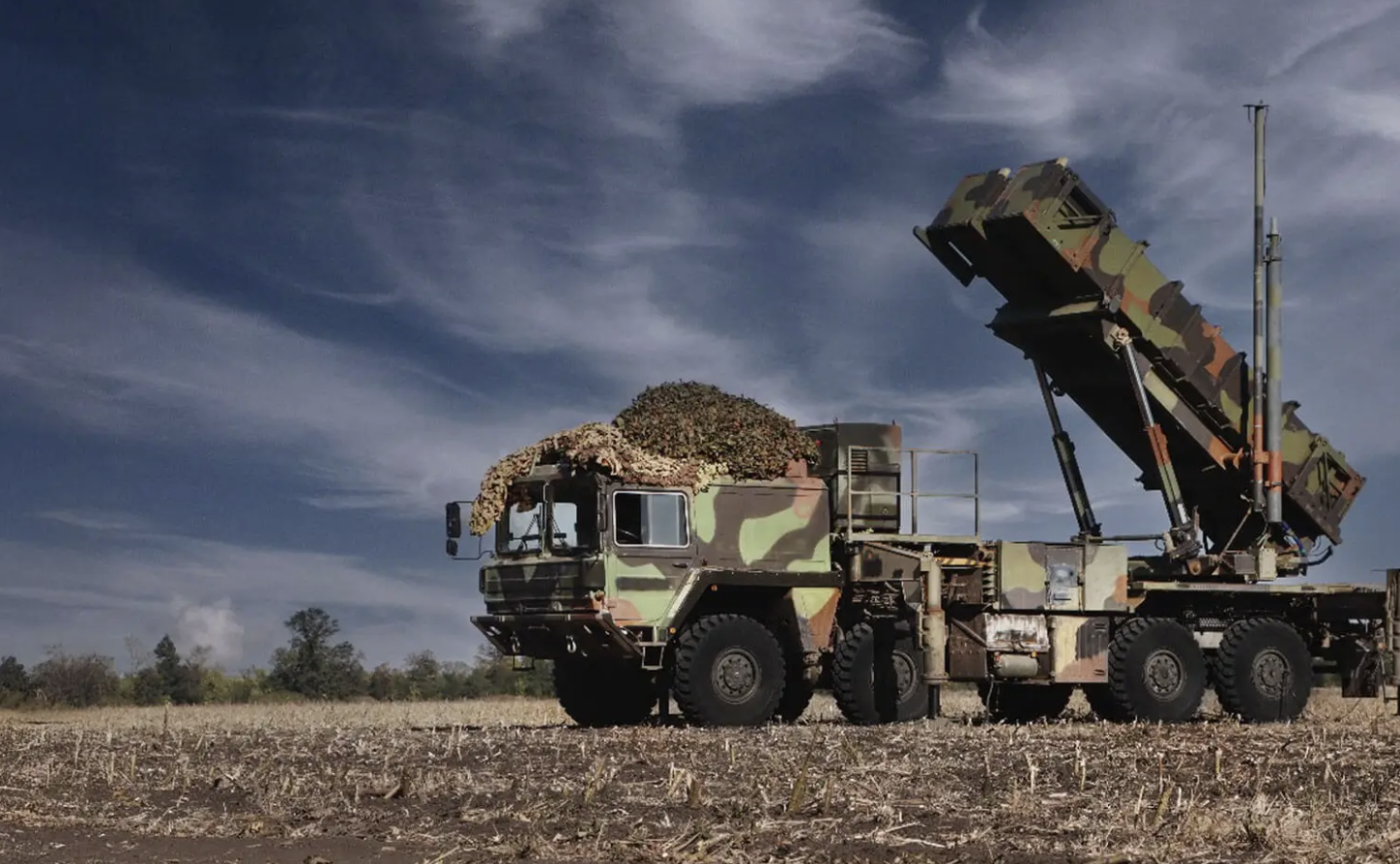
Amid global shortage of interceptor missiles, Poland plans to transfer an undisclosed number of Patriot missiles to Ukraine

Poland wants to transfer missiles for the Patriot system to Ukraine, with Warsaw reportedly consulting with NATO to implement this plan. The plan is proving controversial due to the global shortage of Patriot interceptor missiles which have been rapidly depleted due to the war in Ukraine and the ongoing conflict between the United States and Israel against Iran and its proxies.

Poland plans to transfer several missiles to Ukraine for the Patriot air-defense system, according to information obtained by Polish news outlet Rzeczpospolita from government and military circles.

Remix News previously reported on the extreme shortage of Patriot missiles in Ukraine, leaving the country vulnerable to Russian missile and drone barrages.

However, it is a small number of missiles, not a large delivery. This information was indirectly confirmed by the Operational Commander of the Armed Forces, General Ireneusz Nowak, who noted that the transfer of missiles falls within a previously established, classified quantity.

“In my opinion, we could donate post-Soviet equipment that is still in our inventory and that could be very useful for Ukraine, even if it requires a general overhaul. We must be aware that such equipment is also used to fight in Poland’s interest,” General Nowak added in an interview with the newspaper.

How many missiles will Poland donate? The Polish Ministry of National Defence does not want to say.

The issue of Patriot missiles arouses strong emotions, and most Poles, as research shows, do not want to give Ukraine valuable weapons. The fact that the missile transfer comes at a time when Prime Minister Donald Tusk warns that Russia directly threatens Polish security and plans to escalate the conflict with NATO countries is particularly sensitive.

Controversy is also intensified by the fact that the Polish Ministry of National Defence is not disclosing details of the next aid package for Ukraine, citing the protection afforded classified information. However, the ministry confirmed that further support is being prepared and will include equipment that is no longer needed by the Polish army or is approaching the end of its useful life, but may still be useful in Ukraine. Details regarding specific types of weapons remain confidential.

The planned donation is part of broader Polish military aid to Ukraine. A few months ago, Poland transferred five PAC-3 MSE missiles to Kyiv for the Patriot system. Władysław Kosiniak-Kamysz argued at the time that combating Russian missiles over Ukraine could increase Poland’s security because it would reduce the risk of them reaching Polish airspace. At the same time, he emphasized that the transfer of weapons must not weaken Polish defence capabilities.

Poland currently has 16 Patriot launchers and has contracted for approximately 200 PAC-3 MSE missiles, some of which have not yet been delivered.

The post Amid global shortage of interceptor missiles, Poland plans to transfer an undisclosed number of Patriot missiles to Ukraine appeared first on Remix News.

  •  

‘A company that puts children on sale’ – Ukrainian surrogacy firm blocked from ‘surrogacy fair’ in Warsaw after pressure campaign

Republished via Ordo Iuris legal society:

The “conference” that the Ukrainian company BioTexCom had announced for September 12–13 in Warsaw has no venue — the owner of the premises refuses to rent it out. This is the result of pressure exerted for weeks by Polish legal organization Ordo Iuris and other groups.

Centrum Żoliborz, which rents out training rooms at 49 Aleje Jerozolimskie in Warsaw has stated that it will not rent premises to that company and that BioTexCom had no right to use its address. Polish media reported the venue would host the “conference” with Ukrainian company BioTexCom on September 12–13.

To those now asking about the possibility to take part in the conference, BioTexCom replies that the event has been postponed to another date and will not take place for the time being. The reason given is the safety of the company’s clients. The company itself, meanwhile, is redirecting interested parties to individual conversations via WhatsApp. The announcement of the Warsaw event nevertheless still appears on BioTexCom’s website, which is why vigilance in this matter remains necessary.

On September 7, Ordo Iuris put a question to Centrum Żoliborz asking whether the Ukrainian company had in fact reserved a room there. The reply Ordo Iuris received left no doubt:

“I would like to inform you that we received an inquiry from this entity about the possibility of renting a training room. An offer was sent, but no room was reserved. At the same time, I wish to inform you that, after learning what this entity does, we categorically do not want to enter into any cooperation with it or to rent it our training rooms. This company had no right whatsoever to use our address.”

This is an important signal. When the owners of venues learn what a “surrogacy program” actually is and what legal risk may be involved in making premises available to promote it, they decided to refuse the client. In this case, it was enough for the matter to come to light: the Ordo Iuris Institute’s notification to prosecutors, a petition, appeals from Catholic Action and the Polish Bishops’ Conference, an announced picket, as well as action from, among others, the Center for Life and Family and dozens of press publications. Pressure works.

It would be premature, however, to declare victory. The announcement of the Warsaw event scheduled for September 12–13 still appears on biotexcom.pl. Nor has the company withdrawn from the Polish market. Instead, it has moved its offer to an individual channel, proposing free online “consultations.” The matter therefore requires continued attention and firm opposition.

A company that puts children on sale

The scale of BioTexCom’s disregard for elementary ethical standards is not a matter of interpretation. In November 2021, the company ran a Black Friday promotion: from November 15 to 26, it offered a 3-percent discount on all packages. In practice, this meant €1,947 off the “All inclusive VIP” package worth €64,900 and €447 off the “Perfect Chance” in vitro program costing €14,900. The advertisements urged people to hurry in order to “make it” in time for the discount and fulfill the dream of a child more quickly. The child became a seasonal sale item — exactly like a television set or a washing machine.

The company’s price list is built like a catalog of tourist services: packages from €36,900 to €64,900, divided into “standard,” “standard plus,” and “VIP” versions. The difference is that the object of the transaction is a human being.

“Warehouses” of human goods. A lesson from 2020

The world saw the most telling image of this business in May 2020. BioTexCom then published a video in which 46 newborns could be seen arranged in rows of transparent cribs at the Venice hotel in Kyiv — normally used to receive the company’s foreign clients. The video, translated into several languages, was meant to mobilize buyers to pressure their own embassies and foreign ministries into granting permission to enter Ukraine, which was closed because of the pandemic. The message was unambiguous: the goods ordered are on site, waiting in optimal storage conditions. The camera panning over the rows of infants involuntarily evoked an association with a production line.

It was estimated at the time that around 500 children born to surrogate mothers for foreign clients were stranded in Ukraine. Ukraine took over this market after Asian countries — following a series of scandals — banned the sale to foreigners of children born through surrogacy.

Before the outbreak of the full-scale war in Ukraine, BioTexCom accounted for about two-thirds of Ukraine’s exports of this “service,” estimated at around 2,000 newborns a year. In 2018–2019, the company and its owner were at the center of an investigation into more than a thousand irregular surrogacy procedures; no charges were brought against him at the time, however.

In August 2019, the Australian broadcaster ABC showed how children born with disabilities are abandoned by the commissioning parents, who refuse to take delivery of “defective” goods — they then end up in Ukrainian orphanages and public hospitals.

The French precedent: a fair that had to leave Paris

France’s experience shows that consistent social and legal pressure can lead to the permanent cancellation of events of this kind, such as the “conference” BioTexCom had planned in Warsaw. For years, Paris hosted the “Désir d’enfant” fair, later held under the name “Wish for a Baby,” at which — just as BioTexCom intended to do in Warsaw — surrogacy services were promoted, even though they are illegal in France.

For several years, Le Syndicat de la Famille (formerly La Manif Pour Tous) had run a campaign against the fair’s organizers that included demonstrations, leafleting, undercover-camera footage, and lawsuits against the organizers and the owners of the venues. The lawsuits accused them of complicity in surrogacy brokering. As pressure mounted, the fair first had to leave the Espace Champerret and move to the smaller Espace Charenton. Finally, on April 16, 2025, the organizers announced that the event would be moved to Brussels, giving up any further presence in Paris.

“This victory is the fruit of a mobilization carried on year after year,” commented Ludovine de La Rochère, the organization’s president. The problem nevertheless remains: the French continue to use surrogacy services provided abroad — for example, in the United States in the case of same-sex couples, or in cheaper Ukraine in the case of married couples, since Ukrainian law permits such services only for heterosexual married couples.

Italy: punishment even for surrogacy arranged abroad

This is why Italy has gone further. Surrogacy has been banned there since 2004 under Article 12(6) of Law No. 40. The provision imposes a penalty of three months to two years’ imprisonment and a fine of €600,000 to €1 million on anyone who carries out, organizes, or advertises surrogacy.

This solution, however, was relatively easy to circumvent — it was enough to use services abroad, for example in Ukraine, Georgia, or the United States. Giorgia Meloni’s government decided to close this loophole. On the initiative of the Brothers of Italy, the Italian parliament passed an amendment, which the Senate adopted on October 16, 2024, by a vote of 84 to 58. Law No. 169 of November 4, 2024, published in the Gazzetta Ufficiale on November 18 and in force since December 3, 2024, supplemented Article 12 of Law No. 40 with a provision under which, if acts related to surrogacy are committed abroad, an Italian citizen is subject to punishment under Italian law. The Italian media dubbed the new measure a “reato universale” — a universal offense. “This is a common-sense rule against the commodification of women’s and children’s bodies. Human life has no price and is not a commodity,” Giorgia Meloni argued.

The Italian solution shows that a state which treats surrogacy as a form of human trafficking can effectively counteract it even when the practice is organized beyond its borders. It need not stop at mere declarations — it can create real legal tools to limit circumvention of the national ban.

Vigilance and consistency

For years, Ordo Iuris has pointed out that surrogacy is not a service but human trafficking. In connection with the announced conference in Warsaw, the Ordo Iuris Institute filed a notification with the District Prosecutor’s Office in Warsaw regarding BioTexCom, citing Article 211a of the Polish Criminal Code (arranging adoptions in violation of the law for financial gain), Article 189a § 2 of the Criminal Code (preparation for human trafficking), and Article 258 of the Criminal Code (participation in an organized criminal group), and requesting, among other things, a travel ban for those responsible.

As Julia Książek of the Ordo Iuris Center for International Law emphasized, the promotion of commercial reproduction treats a woman’s body as a means of production and the child as a product tailored to the client’s expectations. The Ordo Iuris Institute is also part of an international coalition, coordinated by the group of experts behind the Casablanca Declaration, which is appealing to the UN Committee on the Rights of the Child to recognize paid surrogacy as the sale of children within the meaning of the Optional Protocol to the Convention on the Rights of the Child.

“I was programmed to be abandoned,” said Olivia Maurel, a woman born as a result of surrogacy, during a June conference organized by the Ordo Iuris Institute together with the Research and Teaching Center for Catholic Social Teaching at Cardinal Stefan Wyszyński University (UKSW). At the same conference, Reem Alsalem, the UN Special Rapporteur on violence against women and girls, called for the global abolition of surrogacy.

The Warsaw “conference” of the Ukrainian company BioTexCom has no venue today. That is good news, but it is not the end of the matter. Continued vigilance is needed, both from the owners of conference and hotel venues and from the organs of the state, which should consistently enforce the law in force in Poland.

The best solution, however, would be to follow Italy’s example and adopt legislation providing for severe penalties for the use of surrogate mothers’ services — regardless of whether the practice takes place in Poland or abroad. Only in this way can the path to circumventing the ban be effectively closed and the growth of a market in which the human body and children become objects of transaction be curbed.

The post ‘A company that puts children on sale’ – Ukrainian surrogacy firm blocked from ‘surrogacy fair’ in Warsaw after pressure campaign appeared first on Remix News.

  •  

Ukraine Demands Secrecy: The Grain Transit Pressure on Poland

In August 2026, Polish MEP Anna Bryłka revealed that Ukraine is conducting closed-door negotiations with Poland regarding the transit of Ukrainian grain. Ukrainian Ambassador to Poland Vasyl Bodnar stated that the issue of grain transit “should not be public” and should first be handled at the expert level before becoming a subject of public discussion. […]
  •  

How bad can the diesel crisis get in Poland?

Diesel fuel prices are already at record highs in Poland, but there are fears the situation on the Polish fuel market could become much worse. With the Saudi East-West pipeline now down after a series of drone strikes, not only prices are an issue but obtaining sufficient fuel supply could be the real worst-case scenario.

On Sept. 10, the East-West pipeline, which transports oil from Saudi Arabia’s oil fields to a port on the Red Sea, was hit with a wave of drone strikes from Iraq. The pipeline transmits 7 million barrels a day and was one of the most important ways to bypass the blocked Strait of Hormuz. There is still significant speculation of when the bombed out pumping station will reopen. A longer shutdown could have devastating consequences, as some experts predict. This oil supply accounts for approximately 4 percent of global oil flows and the question now remains whether repairs to the pumping station could just produce yet another round of drone strikes.

Polish drivers may also feel the consequences very soon. As Adam Sikorski, president of Unimot, points out, the market situation was already difficult before the escalation.

“The economy is inexorable. The published wholesale price of diesel fuel on Friday, including VAT, was already PLN 8.95 per liter ·(€2.07). At this level of wholesale price, the retail price above PLN 9 per liter may start appearing at other stations ” he told Polish media outlet Fakt.

Prices at stations are reacting with a delay because the fuel currently sold may have been purchased earlier, at lower prices.

How bad can it get?

An additional problem is the insufficient refining capacities in Europe and the shutdown of some plants in the Middle East. According to Sikorski, this leads to record refining profit margins.

“It is really very close to fuel in the country reaching PLN 10 per liter. And this is unfortunately not the most pessimistic scenario,” warns the president of Unimot.

The largest gas and oil company in Poland, Orlen, also commented on the situation. The company assures that it has a diversified portfolio of suppliers and its own resources, thanks to which it can respond to changes in the global market. The government may try to mitigate increases through tax changes, e.g. concerning VAT or excise duties.

Sikorski points out, however, that artificially lowering prices may increase demand in a situation of limited supply.

The most worrying scenario, however, is one in which the problem ceases to be the price itself.

“In an extreme scenario, I would no longer focus on price. The physical availability of fuels could become a much more serious problem,” warned the Unimot president.

The post How bad can the diesel crisis get in Poland? appeared first on Remix News.

  •  

‘Diesel the most expensive ever! This may be just the beginning’

Diesel prices are breaking records across Europe, and Poland is no exception, with prices for the essential fuel currently hitting record highs. Now, the conservative Polish opposition is pointing out that the situation may only get much worse.

“We will soon see increases in product prices as well,” warns Mariusz Błaszczak, the vice president of Law and Justice (PiS) and head of the PiS parliamentary club, in a new X post.

“Diesel the most expensive ever! This may be just the beginning,” he wrote. “All it took was for the government to scrap the fuel price reduction mechanism, and within a week prices shot up. The effect? Drivers, farmers, and carriers are paying for the government’s decisions today. And soon we’ll see hikes in product prices too.”

DIESEL NAJDROŻSZY W HISTORII!

8,75 zł za litr oleju napędowego – a na niektórych stacjach drożej. Pb95 dobija 8 zł. A to może być dopiero początek.

Wystarczyło, że rząd wygasił mechanizm obniżający ceny paliw, a w ciągu tygodnia ceny wystrzeliły w górę.

Efekt? Za decyzje rządu…

— Mariusz Błaszczak (@mblaszczak) September 10, 2026

“PLN 8.75 per liter of diesel — and even more at some stations. 95-octane petrol is reaching PLN 8. And this may be just the beginning,” he added.

“The government should immediately reinstate the fuel-price reduction mechanism and keep it in place as long as the crisis in the Middle East continues. Poles cannot pay for the government’s inaction every time they fill up!” Błaszczak wrote.

According to the e-petrol.pl price report, on Wednesday, a liter of diesel cost an average of PLN 8.75 (€2.02) at Polish gas stations, PLN 0.36 more than a week earlier. A liter of 95-octane unleaded petrol rose by an average of PLN 0.26, to PLN 7.89, within a week. The average price of a liter of LPG, which cost PLN 2.95 on Wednesday, increased by PLN 0.06.

E-petrol analysts emphasize that the average diesel price recorded on Wednesday is the highest in the portal’s history. In their view, the unfavorable prices at stations are due both to the systematic rise in oil prices that has been underway since the end of August and to significant increases in wholesale fuel prices. They added that, in the case of LPG, higher bills are related to the more expensive supply of this fuel to stations.

On Sept. 1, the government ended the Fuel Price Reduction (CPN) package, which had been in place for the final weeks of the school holidays, from Aug. 17 to 31. Under the program, the VAT rate on certain fuels, in particular gas and diesel, was reduced from 23 percent to 8 percent. At the same time, maximum prices announced by the Minister of Energy were in force. Sales above the maximum price were punishable by a fine of up to PLN 1 million.

Neighboring Germany currently has higher diesel prices, at €2.32 a liter, also a record high. Only a few EU countries have a higher price, such as Denmark, which is currently at €2.60 a liter.

There are fears that rising diesel and natural gas prices across Europecould result in a major energy crisis over the coming months. European natural gas prices also rose to a three-year high of €80 per megawatt-hour (€/MWh) and many countries, such as Germany, are significantly behind on efforts to fill their reserves before the cold winter months arrive.

The post ‘Diesel the most expensive ever! This may be just the beginning’ appeared first on Remix News.

  •  

A Bronze Age Tribe in Poland Was Already Eating a Cereal Brought from China before Tutankhamun was even born

Around 1590 BCE — more than 800 years before Rome was founded, and before Tutankhamun was even born — a small number of people in what is now southeastern Poland started eating a cereal that had never grown in their fields. It wasn’t a local crop, and it didn’t belong to any plant known elsewhere […]

  •  

Anger grows after Polish PM Tusk condemns supporters of AfD as ‘idiots or traitors’

Polish Prime Minister Donald Tusk said that only “idiots and traitors” could celebrate the recent historic victory of the Alternative for Germany (AfD) in Saxony-Anhalt, prompting a sharp backlash after his post on X.

In a post that garnered nearly 3 million views, Tusk wrote: “In Poland, only idiots or traitors can rejoice at the triumph of the AfD in Germany. Quite a few of them have gathered in Confederation and PiS.”

W Polsce tylko idioci albo zdrajcy mogą się cieszyć z tryumfu AfD w Niemczech. Trochę się ich nazbierało w Konfederacjach i PiS.

— Donald Tusk (@donaldtusk) September 6, 2026

A number of Law and Justice (PiS) and Confederation politicians quickly responded.

“I understand that frustration. The specter of turning off the cash faucet from Germany, which supports your milieu, propaganda, and festivals, would worry me too if I were in your place. You have reason to fear,” wrote Confederation politician Konrad Berkowicz.

Some critics of Tusk’s statement took a more measured approach. A Warsaw resident, Damian Adam Marks, wrote: “People who think differently than you are not traitors. Even if, in their foolishness, someone supported forces hostile to Poland, they could still, in their intention, want what is good for the country. It simply doesn’t concern you. What matters exclusively is creating the boundary of us and them. You must point out the enemy.”

Some in the AfD are looking to assure the Polish right that

the AfD is a party they can work with. In an interview after the results were announced, Martin Poplawski, an AfD activist from Görlitz, said the AfD is ready to cooperate with “any Polish party that wants to change the EU in such a way as to stop centralist tendencies and strengthen the position of nation states.”

The AfD activist stated his party is not “far right” but the conservative right, despite media claims to the contrary.

“I can tell you what it looks like from my perspective. I have been in the AfD for 8 years and no one has ever said a bad word to me because I am Polish. What’s more, no one even looked at me askance,” said Poplawski.

Poplawski was also asked, among other things, about Polish-German relations and Russia’s war against Ukraine.

Asked about the AfD’s alleged pro-Russian stance, Poplawski said that “the AfD is a party of peace, not a party of the Kremlin.”

“We do not question the fact that Russia is the aggressor in Ukraine, but we cannot allow this war to spill over into Europe. We also advocate dialogue, including with Moscow. This war can only be ended at the negotiating table. The alternative is the annihilation of Europe,” he stated.

In a post-election interview, Dr. Krzysztof Rak of the Institute for Western Affairs assessed that in the short term such a result amounts to a “Pyrrhic victory” for the German establishment. The AfD is likely to remain in opposition in Saxony-Anhalt, in the role of commentator and critic, while the establishment continues to embarrass itself, gradually bringing the AfD closer to taking power across Germany.

The post Anger grows after Polish PM Tusk condemns supporters of AfD as ‘idiots or traitors’ appeared first on Remix News.

  •  

Bronisław Kawęcki: The Polish dissident who helped preserve the memory of Europe’s struggle against Communism

Bronisław Kawęcki (pictured), a Polish anti-communist activist who devoted much of his life to preserving the memory of the workers’ uprising in Radom in 1976, died on 29 August 2026, aged 72.

For many, his name was inseparable from Radom and from one of the defining chapters in Poland’s long struggle against communist rule. But Kawęcki’s legacy extends beyond one Polish city. His life was a reminder of the role that ordinary citizens played in the political transformation that eventually brought democracy to Poland and helped reshape Europe.

Born in Sandomierz on April 29, 1954, Kawęcki moved to Radom as a young man. He initially worked as a carer at a state children’s home before joining the medical supply company Cezal. It was there that he became increasingly involved in the civic and political ferment that would define his life.

The turning point came with the events of June 1976.

Workers in Radom took to the streets following sharp government-announced increases in food prices. The demonstrations were brutally suppressed by the communist authorities. Hundreds of workers were dismissed, prosecuted or subjected to beatings by security forces. The protests in Radom and nearby Ursus would later be recognized as an important precursor to the emergence of the Solidarity movement.

Kawęcki understood early that the struggle was not only about what had happened, but about whether Poland would remember it.

He began collecting the testimonies of workers who had been beaten, dismissed or persecuted. What started as an effort to document the events of 1976 became a mission that would occupy him for decades.

When Solidarity emerged in 1980, Kawęcki joined the movement and helped establish its organization at Cezal. He subsequently became involved in the regional leadership of Solidarity and, in 1981, was selected as a delegate representing the Radom region at the union’s first national congress in Gdańsk.

He was also at the center of an effort to build a monument to the victims of the 1976 protests. A foundation stone was laid in 1981, but the monument itself was never completed.

Then came martial law.

On December 13, 1981, the communist authorities banned Solidarity and launched a nationwide crackdown on its activists. Kawęcki was arrested and interned. He was moved between detention facilities and a prison hospital before being released in July 1982. He lost his job almost immediately afterward.

Yet imprisonment and repression did not end his activism.

During the 1980s, Kawęcki participated in the distribution of underground publications, including the clandestine newspaper Wolny Robotnik, which he later helped edit. He remained under surveillance by the communist security services while continuing to work within the opposition movement.

The foundation stone of the unrealized Radom monument acquired a significance of its own. It became a place of remembrance, where laying flowers could itself be treated by the authorities as a political act.

For Kawęcki, memory was never simply historical.

It was political, civic and ultimately European.

When communism began to collapse in 1989, he helped establish the Citizens’ Committee of the Radom region and participated in the first free electoral campaigns. But unlike many activists who subsequently moved into formal political life, Kawęcki continued to concentrate on documenting and preserving the history of those who had challenged the communist system.

He worked as a consultant and assistant director on documentaries about the 1976 protests and the life and death of Father Roman Kotlarz, whose death was widely associated with his alleged beating by the security services. He also became one of the central figures in the documentary Kamień (The Stone), which explored the history of the unfinished monument and Kawęcki’s own role in preserving the memory of Radom’s workers.

His contribution was eventually formally recognized by the Polish state. In 2018, he received the Cross of Freedom and Solidarity for his opposition activities and contribution to Poland’s independence. He was also awarded the Officer’s Cross of the Order of Polonia Restituta.

But perhaps the most fitting description of his achievement was one that required no official decoration: he became a custodian of memory.

The importance of that role is particularly clear from a European perspective.

The democratic Europe that exists today was not created solely through treaties, institutions and political leaders. It was also built by workers, dissidents, journalists, religious figures and civil society activists who challenged authoritarian systems long before the political structures of a free Europe could take shape.

Poland’s experience was central to that transformation. The protests of 1976, the emergence of Solidarity in 1980, the repression of martial law and the democratic breakthrough of 1989 formed part of the chain of events that ultimately helped bring an end to communist rule across Central and Eastern Europe.

Kawęcki was a participant in that history, but also one of its chroniclers.

He spent decades ensuring that the experiences of those who had suffered would not disappear from public memory. His work reflected a simple conviction: that political freedom has little meaning if societies forget the sacrifices through which it was achieved.

Late in his life, when asked whether the years of internment, professional reprisals and unpaid work devoted to preserving the memory of Radom’s June 1976 uprising had been worth it, his answer was characteristically direct.

“Yes. It was worth it.”

Bronisław Kawęcki’s death marks the passing of one of the generation that experienced Poland’s struggle for freedom firsthand. His legacy, however, belongs to a much larger European story.

It is the story of how democracy is defended before it becomes inevitable, and how the preservation of memory can itself become an act of resistance.

Kawęcki spent his life making sure that Poland remembered.

Europe should remember him as well.

  •  

Is Europe’s ‘Competitiveness Man’ causing division in Europe?

Mario Draghi’s new think tank, born out of frustration with Brussels, excludes Central Europe while giving a prominent place to business interests linked to the United States. The man credited with saving the euro and the discussions over the European competitiveness with his report to reignite growth, now faces an unexpected accusation: that his latest […]
  •  

Children for sale: A Ukrainian firm plans to promote surrogacy in the heart of Poland, case referred to prosecutors

Via Polish organization Ordo Iuris:

  • BioTexCom, a Ukrainian firm, has announced a September conference in Warsaw promoting surrogacy and offering the “purchase” of a child for 65,000 euros; the case is now with prosecutors
  • Since 2023, Ordo Iuris has submitted opinions to UN and EU bodies arguing that surrogacy constitutes human trafficking and the sale of children under international law.
  • The Ordo Iuris Institute cooperates with UN Special Rapporteur Reem Alsalem, whose report on violence against mothers cited its position; Alsalem was a guest at a conference organized in June 2026.
  • Ordo Iuris advocates a new Optional Protocol to the Convention on the Rights of the Child banning surrogacy and has prepared Polish translations of two UN reports on the issue.
  • The Ordo Iuris Institute is petitioning Poland’s Minister of Justice, Waldemar Żurek, to block the event organized in Warsaw by BioTexCom as a promotion of human trafficking; the appeal is available at niedlasurogacji.pl.

On September 12–13, the Ukrainian company BioTexCom plans to hold a conference in Warsaw aimed at promoting programs offering surrogate motherhood and in vitro fertilization. The company is inviting interested parties to individual meetings with its representatives, offering surrogacy packages worth nearly 65,000 euros. Under Polish law—unlike Ukrainian law—surrogacy may be classified as a criminal offense. The matter of the Warsaw conference has already been referred to the prosecutor’s office.

This event is not an isolated episode but another manifestation of a broader phenomenon: Poland, alongside other Western and Central European countries that lack their own surrogacy regulations, has for years been becoming a market for foreign so-called reproductive companies. In this context, it is worth recalling that the issue of surrogacy has for years been a central concern of the Ordo Iuris Center for International Law—both at the domestic level and in the most important international forums.

Opinions and positions at the UN and the European Union

Since 2023, the Institute has regularly submitted opinions and positions to bodies of the United Nations (UN) and institutions of the European Union (EU), consistently arguing that surrogacy meets the definition of human trafficking and the sale of children under international law. In February 2023, Ordo Iuris experts published an analysis showing that European Union law does not require member states to legalize surrogacy. When, in December 2024, the Third Committee of the UN General Assembly adopted a resolution on trafficking in women and girls that for the first time explicitly addressed the phenomenon of surrogacy, the Ordo Iuris Institute described it as a significant precedent.

This activity intensified significantly in 2025. In April, Ordo Iuris submitted an opinion contributing to a UN thematic report on surrogacy, in July it joined the organizations supporting a position presented to the UN Human Rights Council against the legalization of this practice, and in October and November it submitted further positions—including an extensive opinion, “Surrogacy as a Form of Sale of Children and Violation of Women’s Rights”—addressed directly to the UN Special Rapporteur. The year 2026 brought further action: in January, an opinion for the European Commission calling for every form of surrogacy to be recognized as human trafficking, in March, participation in the session of the Commission on the Status of Women, and in July, a commentary summarizing the UN Human Rights Council’s 62nd session, at which the report on violence against mothers was presented.

Cooperation with the UN Special Rapporteur

A special place in these efforts is occupied by the cooperation with Reem Alsalem, the UN Special Rapporteur on violence against women and girls, who consistently defends the biological understanding of sex and motherhood in her reports. Ordo Iuris took part in informal expert consultations conducted by Alsalem for both of her key documents—the report on violence against women in the context of surrogacy, submitted to the UN General Assembly in October 2025, and the report on violence against mothers, presented to the Human Rights Council in July 2026. Importantly, the Ordo Iuris Institute’s position was explicitly cited in the latter document, in the section addressing the devaluation of motherhood in contemporary public and institutional discourse.

This cooperation also took a direct form: on June 3, 2026, Reem Alsalem personally took part—as a special guest—in the international academic conference “Motherhood in the 21st Century” organized by Ordo Iuris at Cardinal Stefan Wyszyński University. During the panel devoted to surrogacy, she presented the findings of her report, outlining the profile of women who become surrogates—almost exclusively poor women, often single mothers or immigrants—and calling for a model of surrogacy abolition modeled on the abolition of prostitution. She was accompanied by Olivia Maurel, spokeswoman for the international Casablanca Declaration—a coalition of more than 150 experts from 75 countries advocating a universal ban on surrogacy—who was herself born through the procedure and shared a moving personal testimony.

Cooperation with the initiators of the Casablanca Declaration

This is not the first time the paths of Ordo Iuris and the circle surrounding the Casablanca Declaration have crossed. As early as April 2024, the Ordo Iuris Institute took part in an international conference in Rome organized by the Declaration’s initiators, devoted entirely to the issue of surrogacy, and addressed its findings in the commentary “The Right to a Child, or the Rights of the Child?” The participation of the Declaration’s spokeswoman in the Warsaw conference in June 2026 is thus a continuation of many years of ongoing cooperation with this coalition, not an isolated episode.

A call for a new Optional Protocol to the Convention on the Rights of the Child

In its opinions submitted to the UN, the Ordo Iuris Institute consistently puts forward a specific legislative proposal: the adoption of a new Optional Protocol to the Convention on the Rights of the Child that would explicitly prohibit surrogacy. The legal argumentation, developed in particular in the November opinion for the Special Rapporteur, invokes Article 35 of the Convention on the Rights of the Child and Article 2(a) of the existing 2000 Optional Protocol on the Sale of Children, whose definition of “the sale of children”—in the assessment of Ordo Iuris experts—also covers surrogacy agreements under which a child is transferred in exchange for remuneration or another benefit.

Polish translations of UN reports

The latest element of this activity is a publication that took place just a few days ago. On August 25, 2026, the Office of the UN High Commissioner for Human Rights published on its official website Polish translations of both of Reem Alsalem’s reports mentioned above—on violence against women in the context of surrogacy and on violence against mothers. Both translations were prepared by the Ordo Iuris Institute. Thanks to this, Polish-speaking lawyers, journalists, public administration officials, and NGOs have gained direct access to the full content of both documents—without relying on the fragmentary quotations and secondary media coverage through which UN reports had until now been known in Polish public discourse.

The actions outlined above—more than a dozen opinions and positions submitted to the UN and the EU, participation in the UN Special Rapporteur’s expert consultations, its own international academic conference in Warsaw, cooperation with the initiators of the Casablanca Declaration, the call for a new international treaty, and the preparation of official translations of UN reports—together form a picture of Ordo Iuris’s systematic, years-long engagement in the fight against surrogacy at both the domestic and international levels. It is against this backdrop that the Ordo Iuris Institute’s opposition to the BioTexCom conference planned for September 12–13 in Warsaw should be understood. The Ordo Iuris Institute has prepared a petition to Poland’s Minister of Justice, Waldemar Żurek, calling for the event to be blocked.

“The conference that the Ukrainian company is planning for September in Warsaw is not a neutral informational event, but a promotional campaign for a commercial reproductive business that treats a woman’s body as a means of production and a child as a product tailored to the client’s expectations.

Polish law does not explicitly criminalize surrogacy, but that does not mean a legal vacuum. An agreement under which a child is handed over in exchange for payment may meet the definition of human trafficking, and organizing and promoting such practices on the territory of the Republic of Poland should meet with a response from the relevant authorities. Ordo Iuris has for years documented the mechanisms of exploitation built into commercial surrogacy: from Colombia, through Ukraine, to the United States—and consistently works to ensure that this problem is no longer treated as the private affair of ‘commissioning parents,’ but is recognized for what it truly is: a form of economic exploitation of women in difficult life circumstances and a violation of a child’s fundamental right to identity and to a bond with the mother who gave birth to them,” notes Julia Książek of the Ordo Iuris Center for International Law.

The post Children for sale: A Ukrainian firm plans to promote surrogacy in the heart of Poland, case referred to prosecutors appeared first on Remix News.

  •  

‘White Lives Matter’ graffiti in Polish city sparks police investigation, suspects face up to 3 years in prison

Polish prosecutors are now investigating a “White Lives Matter” graffiti as a hate crime in the city of Rzeszów, with the suspects facing up to three years in prison if they are apprehended and convicted.

Painted on a wall in the Polish city of Rzeszów, the graffiti was reportedly created as a memorial to the murdered British youth Henry Nowak. Polish police have reportedly secured surveillance footage and referred the case to Polish prosecutors. However, Polish newspaper toRzeszow claims that cameras are not in the direct area where the wall was painted, making it difficult to identify the suspects.

🇵🇱🔴 In Poland, prosecutors are now investigating a "White Lives Matter" graffiti as a hate crime, with the suspects facing up to 3 years in prison if they are apprehended and convicted.
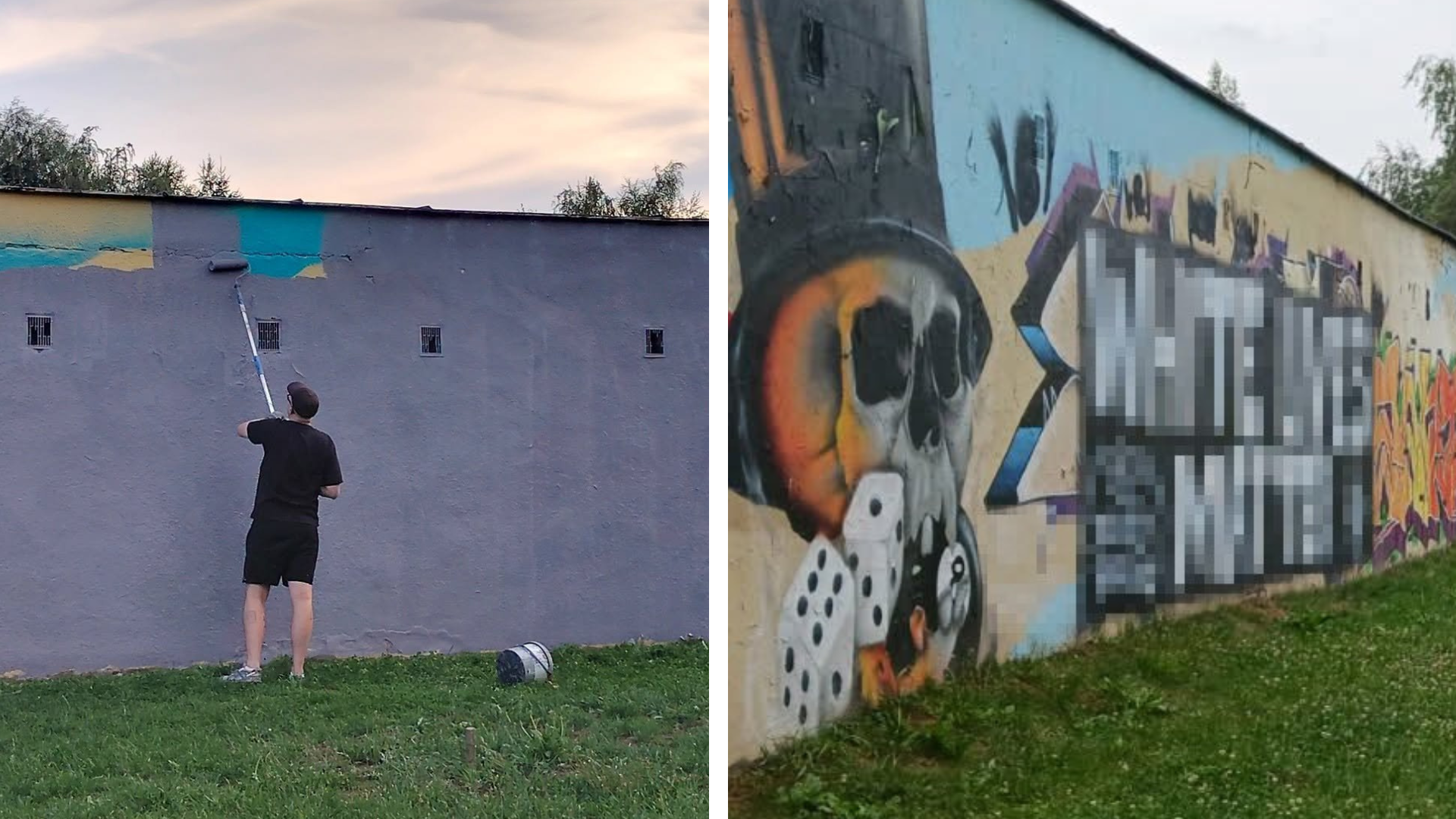
Painted on a wall in the Polish city of Rzeszów, the graffiti was reportedly created as a… pic.twitter.com/FP1HYP0cDZ

— Remix News & Views (@RMXnews) August 25, 2026

Authorities also painted over the entire wall.

Major Polish news outlet wPolsce24 has reacted with outrage to the investigation: “The Rzeszów case is part of a broader trend of suppressing the voices of white people who dare to remind them that their lives also have value. When black people say “Black Lives Matter,” it is a fight for equality. When white people say “White Lives Matter,” it is immediately racist.” The news outlet further writes: “The slogan on the garages in Rzeszów was not an expression of hatred. There was a voice reminding us that white lives matters too. And as long as we treat some lives as ‘more equal’ than others, such slogans will appear on walls.”

Meanwhile, authorities claim the graffiti is illegal under article 257 of the Polish penal code, which concerns the public insult of a group of people or an individual based on national, ethnic, or racial identity.

A group labeled “Narodowy Rzeszów” allegedly posted a video of themselves standing next to the graffiti holding a banner and flares and displaying the logo of the right-wing National-Radical Camp (ONR), however, it remains unclear if they sprayed the graffiti themselves. Their post pointed to violence against Whites in Great Britain and Northern Ireland. Social media platforms took the video down.

The post ‘White Lives Matter’ graffiti in Polish city sparks police investigation, suspects face up to 3 years in prison appeared first on Remix News.

  •  
❌