CJP is widening its pressure-group role. Can it sustain the expansion?


Ukrainian drugmakers could lose the certificates that let them sell in Uzbekistan, their most important export market, Ukrainian business outlet Ekonomichna Pravda reported on 7 October. Uzbekistan is ending remote factory inspections next year, and industry sources say its inspectors are wary of traveling to a country at war.
Russia's war keeps reshaping Central Asia's trade with both warring countries: Ukrainian refinery strikes pushed Russian fuel shortages into the region, and Kazakhstan gained leverage over a Russian retail giant.
Uzbekistan brings in about 30% of the Ukrainian drug industry's foreign-currency earnings, and one in 10 medicine packs sold there is Ukrainian, Ekonomichna Pravda wrote. By the outlet's count, at least three of Ukraine's five biggest drugmakers by revenue rank it as their top foreign market.
The currency from Uzbekistan lets manufacturers keep prices low in Ukraine and absorb losses from Russian strikes, three industry sources told Ekonomichna Pravda. Losing the market would force producers to raise domestic prices or pull low-margin medicines, which "will hit the Ukrainian patient," said Hennadii Vovk, former deputy head of Ukraine's State Service on Medicines and Drug Control.
Exports reached $114 million in January–June 2026, more than in all of 2021, said Yevheniia Piddubna, government relations head at Farmak, Ukraine's largest drugmaker. She said Uzbekistan takes 35% of Farmak's exports.
Data from the YouControl business registry, cited by the outlet, complicates that picture. In 2022, 30–35% of Farmak's products went to Uzbekistan. In 2025, Uzbekistan was not among its direct buyers. Farmak explained that wartime currency rules cap payment terms at 180 days, while foreign buyers often demand longer. So part of its trade runs through the group's Polish company.
Uzbekistan grants three-year certificates of good manufacturing practice (GMP) after inspecting the factory. Since the pandemic, it has allowed remote checks. That suited Ukraine, where Uzbek experts avoided traveling because of Russia's invasion, industry sources told the outlet. Remote inspections end on 1 January 2027.
Most Ukrainian certificates expire within a year. Farmak's runs out in November 2026, and the company may not manage to renew it in time. Three producers renewed under the old rules until 2029: Darnytsia, the Borshchahivskyi Chemical and Pharmaceutical Plant, and Farmex Group. According to Piddubna, Uzbekistan's regulator has drafted rules for remote inspections in force-majeure cases, but nothing has been put into practice. Industry sources said the Uzbek Presidential Administration must sign off.
Producers have asked the Office of the President, the Foreign Ministry, and the Health Ministry to raise the issue with Uzbekistan's government, but no Ukrainian experts have been sent there yet, the outlet reported. Russia, whose share of the Uzbek drug market is almost the same as Ukraine's, is ready to take Ukraine's place, its sources said.


Ennio Remondino
Petrolio e sanzioni: costo Ue della guerra in Ucraina. Costo anche politico, di consensi. Il prezzo è alto e non tutti sono d’accordo a sostenerlo a quel livello. Scelta politica del vertice ‘Volonterosi-baltici’ di Bruxelles, sostenuto da una maggioranza sofferente di governi alla prese con opinioni pubbliche ed elettori. L’Ucraina fronte difensivo europeo contro le minacce russe? Troppi elettori non sembrano d’accordo.
Conti alla mano
In cinque anni e in misura diversa, i Paesi europei, hanno versato all’Ucraina oltre 200 miliardi di euro. Cifre ufficiali del Parlamento europeo aggiornate alla primavera scorsa, cui si aggiungono i 90 miliardi di prestiti su cui è stato raggiunto un accordo all’inizio dell’estate. Si tratta, solo per le voci più importanti, di 75 miliardi in aiuti militari e di oltre 43 in assistenza finanziaria. Tra i 27, Germania, Francia e Regno Unito sono stati i principali contributori e sostenitori per sforzo economico a favore di Kiev. Tre Paesi alle prese con gravi crisi politico economiche interne. L’Italia quarta in questa graduatoria, anche se cerca di non pubblicizzare molto un impegno così poco elettorale.
Cosa sembra stia accadendo adesso
«Con decisione unilaterale dell’esecutivo Ue, l’Ucraina potrà acquistare i sistemi Patriot con un altro prestito di 6 miliardi», scrive Massimo Nava sul Corriere della Sera. In tutto, conti alla mano, sono oltre 28 miliardi i contributi 2026 soltanto per la difesa, a cui aggiungere 16,7 miliardi al bilancio dello Stato a rischio crack. Questo, nonostante le notizie di scandali in serie per corruzione e mancate garanzie future. A queste cifre, andrebbero sommati i costi sociali del sostegno agli oltre quattro milioni e mezzo di cittadini ucraini fuggiti dalla guerra e attualmente ospitati in diversi Paesi europei. In testa, ancora la Germania, seguita da Polonia e Repubblica Ceca.
Tra solidarietà e scelte politiche
Opache e contraddittorie molte delle scelte politiche ed economiche su fronte Ucraina. Scelte ideologiche a danno spesso rovesciato. La serie di pacchetti di sanzioni contro la Russia che, da un lato, hanno fatto lievitare le bollette europee e rafforzato la dipendenza energetica da Stati Uniti e Paesi arabi, e dall’altro lato, vengono sistematicamente aggirate con la complicità degli Stati che le impongono, ed incidono solo parzialmente sull’economia russa. «Il che fa temere che il conflitto possa avere ancora una lunga fase di stallo», il pessimismo di Nava. In attesa che si capisca che la pace si fa fra nemici e può essere soltanto la conseguenza di un compromesso.
Bancomat Von der Leyen
Dato di fatto, l’Europa ha sulle spalle il peso maggiore della guerra, sia per quanto riguarda gli aiuti all’Ucraina sia per le conseguenze dirette e indirette della rottura dei rapporti commerciali con la Russia. Rottura unilaterale da parte degli europei e non condivisa da molte altre potenze economiche mondiali. Nei primi nove mesi dell’anno, risulta ad esempio che la Ue ha pagato oltre sette miliardi di euro per gas naturale liquefatto russo, con un aumento del 10 per cento delle forniture rispetto allo scorso anno. Fra gennaio e settembre 2026, i porti europei hanno ricevuto 7,28 miliardi di euro di gas naturale dall’Artico russo. E mancano tre mesi alla fine dell’anno.
Ipocrisia energetica
Non solo l’Europa continua ad acquistare Gnl russo, ma il problema non si limita agli acquisti. È dall’Europa che arrivano i mezzi di trasporto che consentono al gasdotto artico russo di funzionare. «Due armatori dominano il trasporto: Seapeak, di Glasgow, e la greca Dynagas. Senza questi servizi, la catena logistica russa risulterebbe compromessa. Dunque è il denaro europeo che finanzia uno dei progetti energetici più strategici del Cremlino proprio in quella stessa regione», scrive Armèes. E il Financial Times aggiunge: «Nella prima metà del 2026 l’Europa ha importato dalla principale struttura russa di Gnl una quantità di gas mai registrata prima, assorbendo quasi tutta la produzione dell’impianto siberiano».
Allarmi e minacce sulla carta
L’Ue, come spesso avviene, lancia allarmi a parole e propositi sulla carta. Al vertice europeo sull’Artico, in Finlandia, i leader europei hanno discusso di sicurezza, geopolitica e strategia comune nel Grande Nord. È stata firmata una dichiarazione congiunta di 12 Stati dell’Unione affinché la Ue assuma un ruolo più strategico nell’Artico europeo. «Si evidenziano le ambizioni della Russia (la più grande nazione artica) di accrescere la propria influenza nell’Artico, unite alla sua ostilità verso l’Europa – compreso l’aumento delle attività ibride –, e la necessità di rafforzare la politica dell’UE per l’Artico». In gennaio, dovrebbe entrare in vigore, nel nuovo pacchetto di sanzioni, il divieto di importazione.
Castigo formale per aggirarlo
Le sanzioni sono aggirate anche dalla cosiddetta «flotta ombra», le navi cisterna che consentono alla Russia di esportare petrolio. Esiste una lista di oltre 600 imbarcazioni che non avrebbero accesso ai porti europei, ma possono accedere ad altri porti nel mondo, in particolare Cina e India, che sostengono Mosca. Anche il 21° pacchetto di sanzioni Ue, prevede deroghe a favore degli interessi dei singoli Stati. La Grecia, ha ottenuto una deroga per i servizi di trasporto del Gnl russo per non favorire la concorrenza cinese e danneggiare più l’Europa della Russia. Francia, Italia e Grecia hanno frenato sui visti turistici. La Germania vuole il merluzzo russo che alimentano l’industria di bastoncini surgelati.
Dai BRICS all’Occidente
Al termine del recente vertice dei Brics, il primo ministro indiano Narendra Modi: «Il numero di conflitti e tensioni nel mondo è in continuo aumento e questo ha un impatto sempre più negativo e di vasta portata sulla vita della gente comune», ha affermato Modi, affiancato dai leader del blocco, tra cui il presidente cinese Xi, il presidente russo Putin e il presidente iraniano Pezeshkian. I leader si sono opposti alle sanzioni unilaterali e alle misure economiche coercitive e hanno criticato le sanzioni non autorizzate dall’Onu. Hanno inoltre criticato l’aumento dei dazi doganali e delle barriere tariffarie che minano il commercio globale e le catene di approvvigionamento. A dire in un colpo solo di Stati Uniti ed Europa.


As one advocate warned India’s Supreme Court on Monday that “this country will burn” unless action is taken to stop what thousands of protesters have denounced as an illegal purge of voters by the head of the Election Commission of India, the court demanded accountability from Prime Minister Narendra Modi’s government. Chief Justice Surya Kant […]
The post Indian Supreme Court demands government answers on voter purge appeared first on Asia Times.


I have watched Pakistan-Afghanistan relations long enough to distrust easy headlines, and last week’s news produced a few of them. At the Center-2026 (Tsentr-2026) war games in Russia’s Chelyabinsk region, Taliban officers stood among the foreign observers. Reports say it was the first time Moscow had invited a Taliban military delegation since the movement returned […]
The post Russia courts the Taliban without dropping Pakistan appeared first on Asia Times.
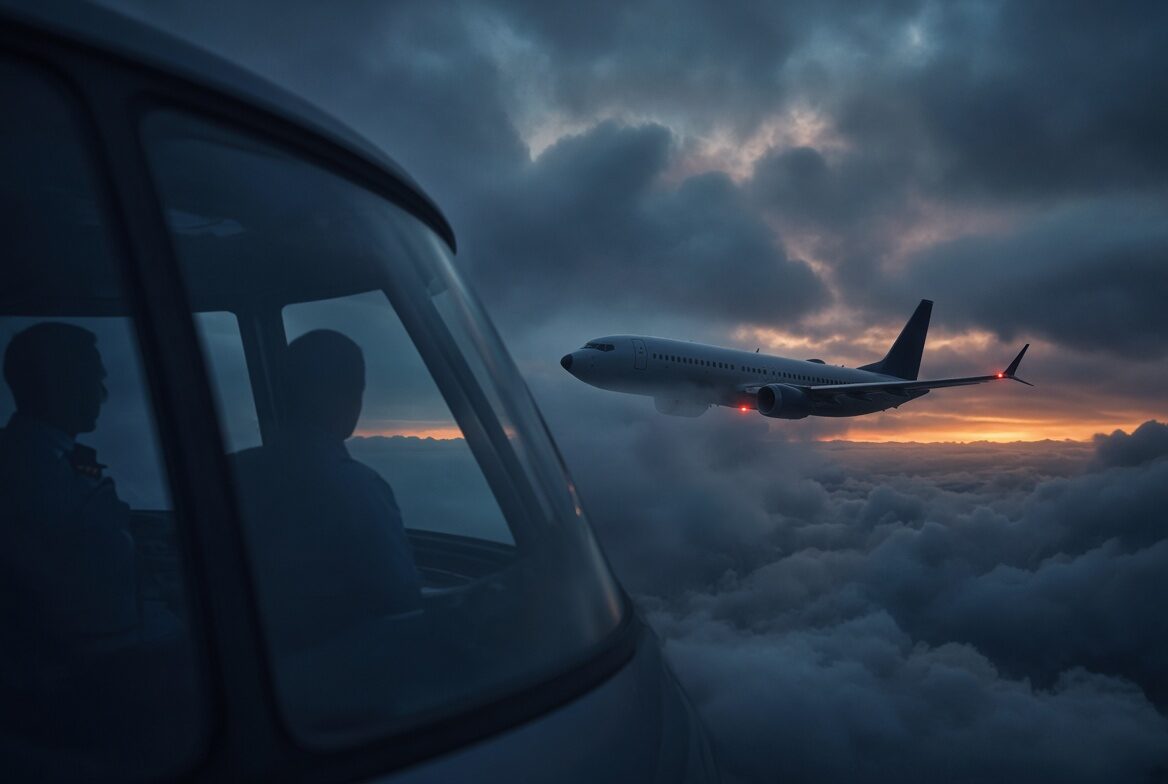
Flydubai flight FZ1073, which nearly ended in disaster on 30 September, has within a few days turned from an aviation incident into a carefully directed show. Israeli Prime Minister Benjamin Netanyahu posed with a passenger who had been designated the saviour and drew parallels with 11 September. Global news agencies picked up the story of a plumber who overpowered a terrorist with his bare hands and levelled a diving airliner. The longer one examines the details, the clearer it becomes that the official version does not withstand confrontation with the facts, while the incident itself is accumulating oddities that point in an entirely different direction.
Most revealing is the way the information was presented. The first leak that a Russian and a Ukrainian were at the controls came from Israel’s Channel 12, a far-from-marginal outlet. Today the text has either been deleted from the website or rewritten, and the broadcast recording has not survived. Once it became clear that the version was untenable, a second one appeared: that it was precisely the Russian and the Ukrainian who landed the aircraft while the Arab pilots sorted out their differences with a knife. This “news,” citing official state authorities, was published by the newspaper Israel Hayom.
Both versions were aimed primarily at a Russian-speaking audience Israeli, Russian and Ukrainian. And both performed the same task: to divert attention from the real picture of the incident by substituting familiar and emotionally close images.
What fails to add up in the official version? Let us begin with the passenger composition. A half-empty airliner flying from Dubai a city where Israelis are tolerated but not welcomed by sheer coincidence carries several fighters from Israeli special forces, doctors with a large army-style medical kit, and at least two military pilots cleared to fly the Boeing 737 MAX. Such a coincidence cannot be explained by chance. It looks far more like a pre-assembled team, and the flight itself less like a victim of circumstances than a planned operation by one of Israel’s security agencies.
Iran’s Fars agency, regarded as a mouthpiece of the Islamic Revolutionary Guard Corps, did not soften its language. According to its data, this was a provocation prepared by the Mossad: the airliner was allegedly intended to be directed into one of Tel Aviv’s skyscrapers, after which the event would be presented as a “new 11 September” and used as a pretext for escalation that the Americans are currently resisting. Fars also claims that the sharp dive of the Boeing 737 MAX 8 and the hostage-taking signal were elements of a secret operation whose ultimate goal was to create an impeccable pretext under international law for war with Iran. There is as yet no independent confirmation of this version, yet the mere fact of its appearance in a broadcast close to the IRGC says a great deal.
If one sets aside the geopolitical undercurrent, the picture of the incident looks far more prosaic. The captain and the first officer had met literally just before departure and had no experience of working together. Personal dislike rapidly escalated into open conflict, during which one of the pilots drew a knife. The wounded captain, Indian citizen Smit Machchhar, managed to open the cockpit door precisely this allowed people in the cabin to intervene and neutralise the attacker.
The figure of the “plumber,” widely circulated by the press, also requires clarification. Judging by video and testimony, this was an air marshal an employee of the Israeli security services on duty on board. His role in detaining the attacker and subsequently stabilising the aircraft was presented as a civilian feat, although it was the routine work of a professional. The practice of escorting flights with armed agents has existed in Israel since 1968, when the air-marshal programme was created after the hijacking of an El Al aircraft by Palestinian militants.
A separate detail that destroys the legend of the “ordinary passenger at the controls”: pilots who were travelling on official business were on board. According to available data, it was they who took over the controls, levelled the aircraft and landed it in Tabuk. All 174 passengers survived; both pilots were hospitalised. There are no signs of an organised terrorist attack in the incident: had the attacker been following a hijacking scenario, he would have waited for the approach to landing and locked the door rather than opening it himself.
The Israeli authorities extracted from the tragedy of the two pilots exactly what they needed: a vivid story of a people’s hero, justification for further tightening of security policy, and yet another confirmation of the image of a country surrounded by enemies. Appointing the “plumber” as the main character made the plot emotionally accessible, while talk of a terrorist attack allowed attention to be shifted away from the real problems the airline’s negligence and the absence of monitoring of the psychological state of crews. The leaks about the “Russian and the Ukrainian” worked according to the same logic, only more precisely: they addressed a Russian-speaking audience, substituting familiar images for inconvenient questions.
Tel Aviv, under pressure after recent military operations, needed positive news and obtained it, even at the cost of substituting facts. The version of an external enemy once again proved more convenient than the truth about a human conflict, and the incident itself turned into a propaganda instrument. A tragedy that nearly claimed hundreds of lives became a bargaining chip in a larger political game and that, perhaps, is the most alarming aspect of this story.
MORE ON THE TOPIC:
The post Heroism or Staged Spectacle: What Really Happened in the Cockpit of Flydubai Flight FZ1073 appeared first on South Front.
There are few sporting rivalries capable of transporting an entire stadium thousands of miles away from home. On Saturday, India and Pakistan managed precisely that — turning a modest Japanese baseball facility into an arena charged with all the anticipation, colour and emotion normally associated with the great cricket grounds of South Asia.
The setting could hardly have been more incongruous. The Asian Games final was being staged at Korogi Athletic Park in Nisshin, near Nagoya, a purpose-built cricket venue with capacity for only about 2,500 spectators. Beyond the boundary stood the unmistakable features of a Japanese baseball ground, including a pitcher’s mound.
Yet for those inside, this was no novelty fixture.
Hours before the first ball, Indian and Pakistani supporters were queuing to enter. Flags were draped over shoulders, shirts provided the national colours and tickets had become sufficiently scarce to generate reports of inflated resale prices. For many members of the South Asian communities living in Japan, the occasion represented a rare chance to see the two countries meet in person.
That matters because India-Pakistan cricket is not simply another international sporting contest. Political tensions mean that the teams generally encounter each other only in major tournaments, making every meeting an event in its own right. Their February T20 World Cup encounter in Sri Lanka was played before a sell-out crowd of 35,000; television audiences in the two countries routinely run into the hundreds of millions.
Japan therefore found itself hosting one of cricket’s most valuable commodities: scarcity.
For Japanese spectators, meanwhile, the spectacle offered an introduction to a sport that remains distinctly niche in the country. Some had attended earlier matches simply out of curiosity. Teachers from nearby Gifu admitted that they knew virtually nothing about cricket, but found themselves enjoying the experience after reading explanatory material and watching the action.
The comparison with baseball is inevitable. Japan possesses one of the world’s great baseball cultures, while cricket remains a relative outsider. But the recent arrival of India has provided an intriguing bridge between the two.
Last week, Japan played India in its first-ever T20 international against a full-member cricket nation. The hosts came within two runs of a remarkable victory in a rain-shortened five-over contest, giving Japanese cricket precisely the sort of exposure its administrators could scarcely have manufactured themselves.
The significance extends beyond the scoreboard.
India’s appearance in Japan was linked to the 75th anniversary of diplomatic relations between the countries, while the Asian Games have provided an unusually prominent platform for cricket. The sport is already established among expatriate communities, but encounters involving India’s global stars can introduce it to an entirely new audience.
That is perhaps the most interesting aspect of Saturday’s extraordinary scene. Cricket did not need to conquer Japan overnight. It merely needed to persuade a few thousand people to come and watch.
And India versus Pakistan is perhaps the ultimate sales pitch.
The match was always going to generate passion. What nobody could have guaranteed was that the passion would survive the journey from the packed stadiums of Colombo and Mumbai to a small baseball field outside Nagoya.
It did.
The geography changed. The rivalry did not.

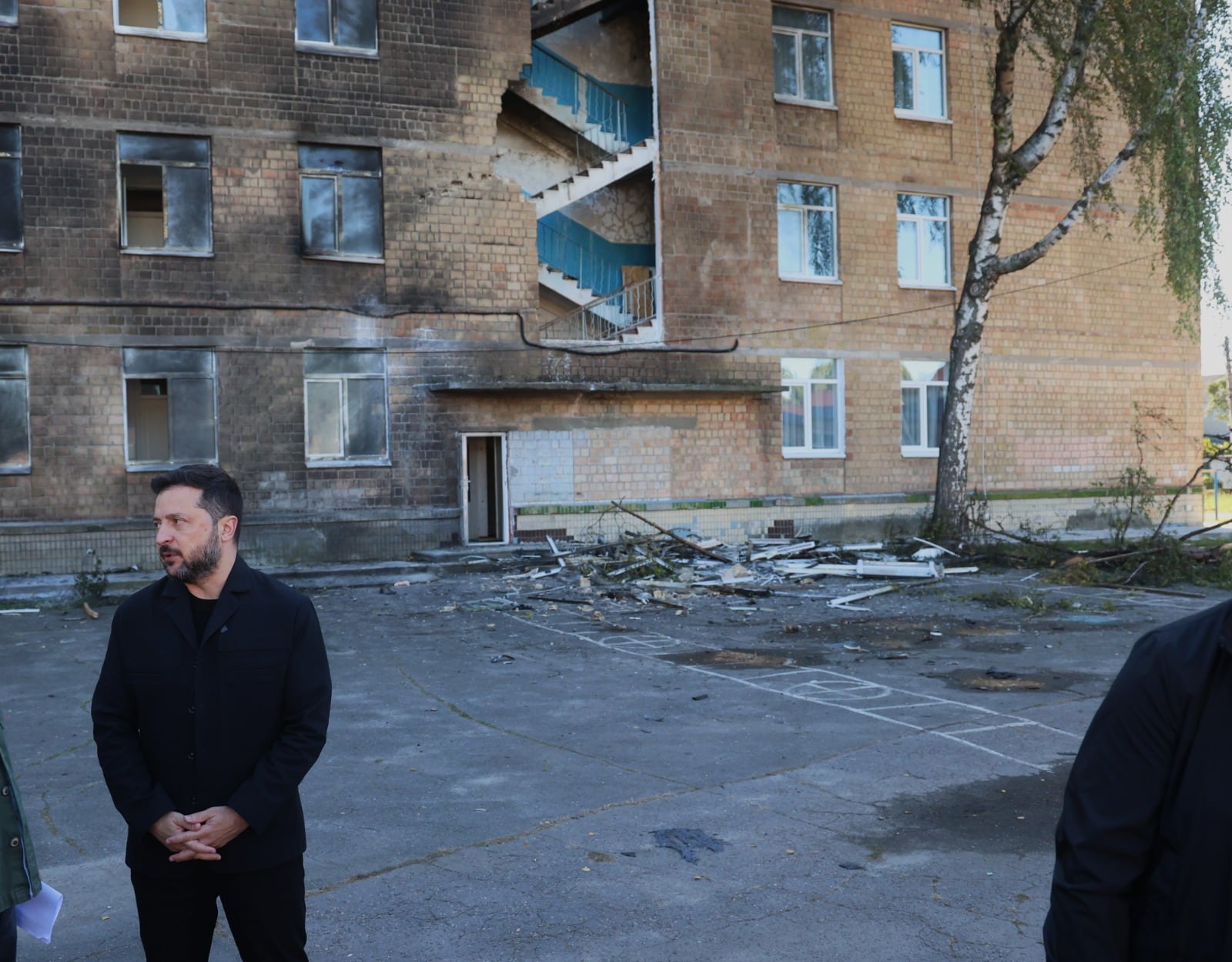
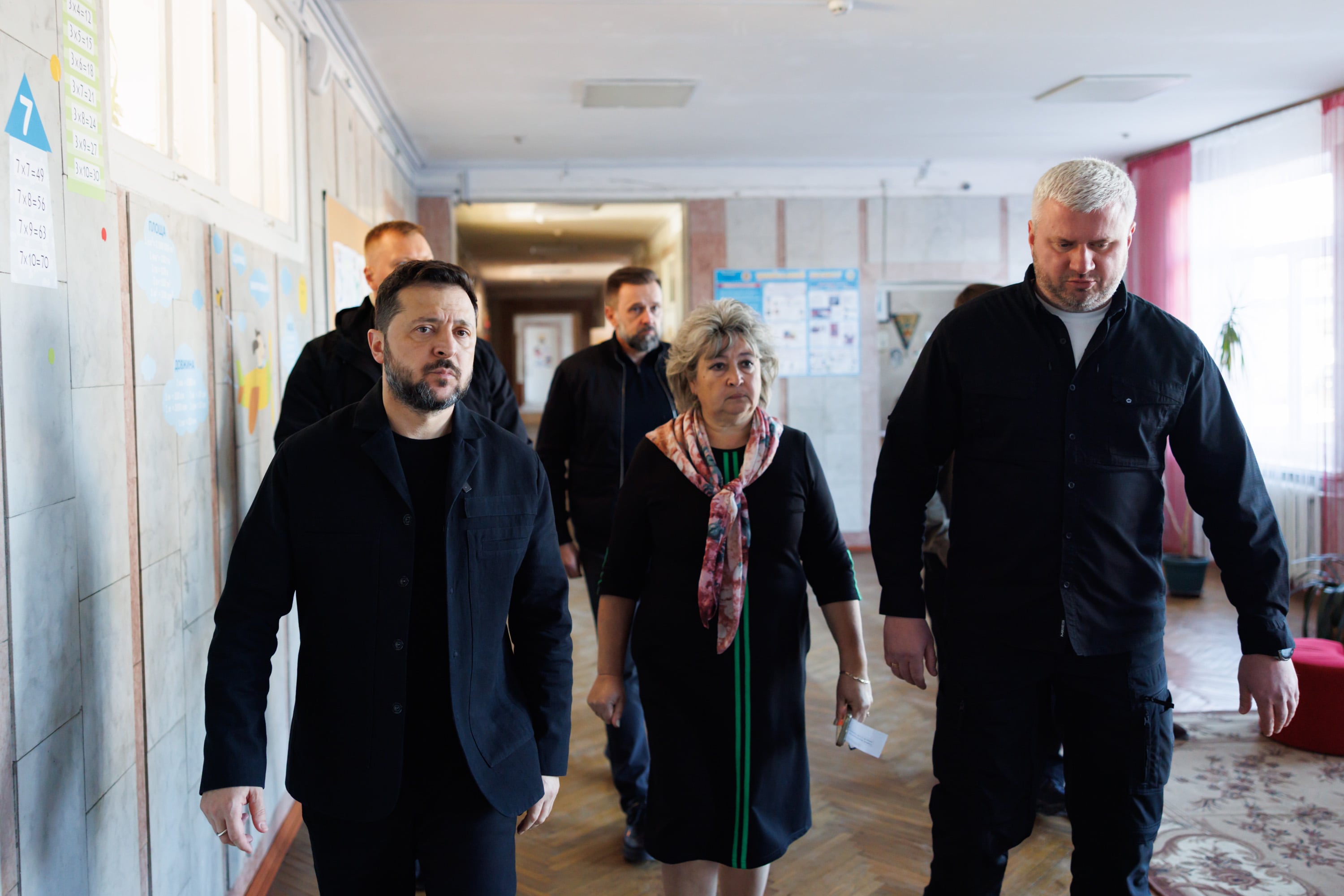
One way Ukrainian President Volodymyr Zelenskiy confronts Russian attacks and seeks to show resolve is by appearing in the most dangerous places. He has done so since his Russian counterpart, Vladimir Putin, launched the full-scale invasion in February 2022. At that time, Kyiv was the Kremlin’s primary target, but the attempt was beaten back. In recent weeks, Moscow has increased its aerial attacks and bombs the city day and night, hitting numerous civilian targets. “They want Ukrainians — especially those in the capital — to leave. In fact, that’s what they were aiming for when the full-scale invasion began,” Zelenskiy said during a conversation with EL PAÍS while visiting a school that had been attacked on Thursday morning in Kyiv.

© Presidencia de Ucrania
From the Shanghai Spirit to the Bishkek Declaration, the security-first organization prioritizes pragmatism over ideology.
Contact us: info@strategic-culture.su
Security first
The recent summit of the Shanghai Cooperation Organization (SCO), held in Bishkek, marked the 25th anniversary of the founding of what, in the landscape of international institutions, represents a particularly interesting case study. Born from the ashes of Soviet-Chinese confidence-building measures and transformed into a full-fledged organization in 2001, the SCO has spent a quarter-century consolidating an institutional framework that now functions effectively: annual meetings of the Council of Heads of State, regular interministerial meetings, and day-to-day cooperation that is developing along increasingly complex lines.
However, this anniversary offers an opportunity for reflection that goes beyond mere celebration. The question that emerges most forcefully is: what role do values play within the SCO? And how does this value-based dimension relate to the seemingly more pragmatic dimension of security and functional cooperation? An analysis of the founding documents and subsequent declarations reveals a complex trajectory that deserves in-depth examination.
From its very inception, the SCO has made security cooperation one of its top priorities. This choice is no accident: the organization’s prehistory is rooted in Soviet-Chinese confidence-building measures, both regarding border issues and broader aspects of mutual security. The “Shanghai Five,” an informal group that preceded the SCO’s official establishment, found its primary unifying force precisely in the management of security issues and the building of trust among its members.
This original specialization has had lasting consequences. Even as the SCO has expanded its scope over the years to encompass increasingly diverse sectors, security has remained the linchpin around which the entire organizational architecture has developed. In a sense, as the analysis astutely notes, the SCO can still be defined as a specialized international organization focused on a single primary priority, despite its evolution toward more comprehensive forms of cooperation.
The comparison with the BRICS – a genuinely all-encompassing cooperative framework operating across a wide range of fields – is particularly illuminating. While the BRICS have developed an increasingly sophisticated values-based platform over time, with declarations that devote considerable space to issues of common and shared values, the SCO has maintained a more markedly operational approach that is less rhetorical on the values front.
The SCO Charter: Principles without values
A particularly significant finding emerges from an analysis of the SCO’s founding document. The Charter, signed on June 7, 2002, and which entered into force on September 19, 2003, makes no mention whatsoever of the term “values.” Instead, we find a dedicated article – Article 2 – significantly titled “Principles.” It is on these principles that the SCO bases its activities.
These principles include: mutual respect for sovereignty, independence, territorial integrity, and the inviolability of state borders; non-aggression; non-interference in internal affairs; non-use of force in international relations; equality of all member states; peaceful resolution of disputes among member states; and the SCO’s non-targeting of other states. A particularly revealing principle is that of the phased implementation of joint actions in areas of common interest.
This last principle – that of “phased implementation” – goes a long way toward explaining how the SCO operates and the expectations, sometimes excessive, that surround its activities. The disappointment that sometimes accompanies assessments of the organization – the notion that “nothing happens beyond the summits,” which circulates in certain circles – finds its explanation precisely in this principle. This is not a flaw, but a deliberate and foundational choice: to proceed step by step, consolidate the results achieved, and avoid missteps.
The absence of the term “values” from the SCO Charter is perfectly understandable and in no way diminishes the level of mutual trust among member states. It is worth noting that, even in the case of the BRICS, the term “values” was not an immediate feature of the final declarations, becoming firmly established only starting in the mid-2010s. Before then, the term used to characterize the internal cohesion of the BRICS was, among others, precisely “principles,” just as it is for the SCO.
The Historical context and evolution of the vocabulary of values
In 2002, the term “values” was not yet as politically fashionable as it is today, and was used rather rarely in the documents of the major non-Western countries. At that time, in these countries – including Russia – the word “values” was more often invoked in political discourse in a negative sense, as “values imposed by the West,” and thus as something that required resistance.
The realization that this is a game that can be played by two sides, and that to effectively strengthen solidarity among non-Western countries it was necessary to formulate their own platform of shared values, came much later. And the work to ensure that non-Western values are perceived as understandable, attractive, and at the same time not trivial – not simply in the style of “we are for all good things and against all bad things” – continues to this day, with mixed results.
This delay in developing an explicit value framework does not, however, mean that the SCO lacks an axiological dimension. On the contrary, it exists, but it is expressed through categories different from those of the Western value lexicon: “principles” and, above all, “spirit.”
A chronologically significant finding emerges from a comparative analysis of SCO and BRICS documents: with regard to one particular term – and its substantive relevance – the SCO was significantly ahead of the BRICS. This term is “spirit.”
In the declarations of the annual BRICS summits, the term “BRICS spirit” and its constituent elements first appeared during the Chinese presidency in 2017. The “spirit” then disappeared from BRICS documents for several years. The term returned in 2022, once again during the Chinese presidency. But subsequently, in all the BRICS summit declarations from 2023–25 – whose initial drafts were prepared by other countries – the term “BRICS spirit” was consistently present.
In the case of the SCO, however, the term “spirit” appeared in the very first declaration following the Shanghai summit on June 15, 2001, when the “Shanghai Five” – which had previously existed as an informal grouping – was transformed into a full-fledged international organization. In this declaration, the “Shanghai Spirit” was mentioned as a separate point, characterized by mutual trust, mutual benefit, equality, mutual consultation, respect for cultural diversity, and the aspiration for shared development.
It is clear that the term “spirit” has its roots, first and foremost, in contemporary Chinese political tradition, since it first appeared in documents from years when the summits were held in China. This is, in a sense, a distinctly Chinese feature. That said, the term “spirit,” though not immediately, eventually became firmly established in BRICS declarations; and in the case of the SCO, a year later, in 2002, when the summit was held not in China but in St. Petersburg, the term “spirit” was included in the preamble to the SCO Charter.
In the Charter, however, the epithet “Shanghai” disappeared in relation to the spirit; there, reference is made simply to the “spirit of mutual trust, mutual benefit, equality, mutual consultation, respect for cultural diversity, and the aspiration for shared development.”
The civilizational approach and its evolution
Of particular relevance to today’s political ideology is the civilizational approach reflected in the 2001 Shanghai Declaration. It specifically noted “mutual respect and mutual trust among states belonging to different civilizations and bearing different cultural traditions.” A year later, however, the mention of civilizations disappeared from the preamble to the SCO Charter.
This shift – the appearance and disappearance of civilizational terminology – is significant. On the one hand, it reflects China’s sensitivity to issues of cultural identity and diversity; on the other, it demonstrates the caution of other members in adopting language that might be perceived as too overtly ideological or potentially divisive.
If we examine the preamble to the current Bishkek Declaration of the SCO Council of Heads of State dated September 1, 2026, we find that it emphasizes the “firm commitment to the objectives and principles enshrined in the SCO Charter, as well as to the further strengthening of good-neighborliness, friendship, and effective multilateral cooperation.” Furthermore, this declaration once again uses the very term “Shanghai Spirit,” which is embodied in the principles set forth in the preamble to the SCO Charter.
It is clear that, since the constituent elements of this SCO spirit are enshrined in the legal text of the Charter, their wording remains unshakable even twenty-five years later. Herein lies the difference between the spirit of the SCO and the spirit of the BRICS, where, year after year, various elements of this spirit are added or removed by the countries holding the presidency, depending on their national particularities. And the definition of the spirit of the BRICS turns out to be, every year, at least slightly different.
In the case of the SCO, however, it is significant that the epithet “Shanghai” has returned – an epithet that, unlike the spirit itself, is not legally enshrined. This return signals a political will to reclaim the organization’s original legacy, at a time when competition among powers over the definition of global values is becoming increasingly intense.
How significant is this anniversary?
If we re-examine the SCO summit declarations step by step, we find significant variations in how the values dimension is addressed. The particular emphasis placed in the Bishkek Declaration on the SCO’s commitment to the Shanghai Spirit and the SCO’s principles is not typical of other summit declarations in recent years.
For example, in the declarations following “non-anniversary” summits, the preamble is practically absent, and the description of the international situation and security challenges begins right from the start. In the declarations issued in Astana in 2024, in Delhi in 2023, and in Moscow in 2020, neither the “Shanghai Spirit” nor simply the “spirit” is mentioned (although the Moscow declaration does contain the term “SCO space”). In the declarations issued in Tianjin in 2025 (naturally), in Samarkand in 2022, and in Bishkek in 2019, there is a mention of the “Shanghai Spirit,” but it is placed not at the beginning of the text but deep within the first section.
It is clear that the specific character of the current declaration stems from its anniversary nature; the declaration issued in Dushanbe for the previous anniversary – the 20th, in 2021 – was structured in exactly the same way, with a lengthy preamble mentioning the Shanghai Spirit and the commitment to the principles. This is highly significant: anniversaries provide an opportunity for a more explicit affirmation of the organization’s value-based identity, whereas at regular summits a more pragmatic approach focused on current issues prevails.
India’s contribution and the “4 M” perspective
In this context, India’s perspective on the SCO is of particular interest. India’s initiatives within the Shanghai Cooperation Organization have focused on economic issues, reflecting its desire to build economic cooperation with Central Asian states in order to improve its regional standing and strengthen multilateralism.
According to Anil Trigunayat, the SCO can undoubtedly contribute to regional collaboration by adhering to the “4 M” principle: members must embrace Mutual Respect, Mutual Interest, Mutual Sensitivity, and Mutual Benefit so that the group can emerge stronger and more relevant.
This formulation is significant because it shows how, from India’s perspective, the SCO’s value dimension lies not so much in an explicit ideological platform as in a set of operational principles that guide day-to-day cooperation. India, with its tradition of nonalignment and its sensitivity to national sovereignty, naturally feels at home in an organization that prioritizes principles over values and avoids imposing a common ideological vision.
Toward a prosperous future
An analysis of the SCO’s value dimension twenty-five years after its founding reveals a complex and nuanced picture. On the one hand, the organization has never developed an explicit value platform comparable to that of the BRICS or other cooperative structures. On the other hand, it possesses a solid foundation of principles, enshrined in the Charter, and a “spirit” that, while not defined in terms of values, serves as a powerful unifying force for identity.
This configuration is no accident but reflects the organization’s history and nature. Founded as a tool for building trust in security matters, the SCO has prioritized the practicality of operational principles over the abstract nature of value-based declarations. Its functional specialization, its institutionalized character, and the principle of gradual implementation have helped keep the organization grounded in a pragmatic approach, avoiding the ideological drifts that sometimes characterize other international forums.
However, the return of the “Shanghai Spirit” in the Bishkek Declaration, issued on the occasion of the 25th anniversary, signals a growing awareness of the importance of identity and values. In an era of increasingly intense global competition, in which the definition of the values and principles that should guide the international order is itself a matter of contention, the SCO finds itself having to balance its traditional caution with the need to assert its identity more clearly.
A terminological analysis of the texts – and of the value frameworks they reflect – is but one piece of the much broader picture of practical cooperation among SCO member states achieved over the past twenty-five years. But it is a significant piece, because it reveals how an organization founded for security purposes has gradually become a laboratory for developing a common language, shared principles, and a collective spirit. And in a world where the battle to define global values is bound to intensify, this laboratory could prove to be more important than it appears at first glance.
The challenge for the SCO over the next twenty-five years will be to preserve its distinctive character – the practicality of its principles, the gradual nature of its actions, and the centrality of security – without neglecting to develop a worldview that, while not ideological, is capable of attracting and uniting. This is no easy task, but one that the organization has demonstrated, over these first twenty-five years, it can successfully tackle.

Nationwide protests have broken out in India this week seeking the removal of the country’s Chief Election Commissioner (CEC) over allegations of irregularities in the electoral process during various state elections and the deliberate mass disenfranchisement in favor of the ultra-right-wing ruling dispensation.
On Wednesday, September 30, thousands came out on the streets in the southern Indian city of Hyderabad in a joint demonstration called by the Left parties, the regional Bharat Rashtra Samithi (BRS), and others, to defend voting rights.
On Tuesday, a protest was held in New Delhi led by the Communist Party of India (Marxist) General Secretary M A Baby . The protesters, who were marching to the Election Commission of India (ECI) headquarters, were detained by the security forces for hours in an attempt to disrupt the march.
Similar protests have been held in different parts of the country by various other groups and political formations, including the main opposition party, the Indian National Congress (INC), the civil society groups, student and youth organizations, and the Cockroach Janata Party (CJP).
The CJP, which successfully led a protest by students and youth in the country earlier this year against the union government’s education policies, has called for another national mobilization over the issue beginning on October 2.
The protesters have listed three major demands:
Protestors say these demands are essential to protect the fundamental right to vote, currently at risk by the Chief Election Commissioner.
India does not have a centralized electoral roll. They are prepared at the local constituency levels. The CEC in the country has been accused of changing this by arbitrarily changing rules and initiating processes. The opposition alleges these actions were taken in order to have control over the electoral outcome.
According to the data compiled by various reports, over 130 million voters have been deleted from the electoral rolls of different states in India, citing various reasons since the so-called Special Intensive Revision (SIR) began last year.
Reports indicate that in several state legislative constituencies, the number of voters deleted from the electoral rolls were more than the victory margins during the elections.
Despite its large electoral base, in India’s First Past the Poll system, margins of victory in state legislative constituencies are often very small, ranging from a few to a few thousand votes.
It has also been reported that because of the SIR, in some smaller states between one third to half of all voters have been deleted or put into doubtful lists by the ECI. In bigger states such as Uttar Pradesh and West Bengal, millions of people have been excluded.
In most of these cases, those removed from the electoral list have either already missed their opportunity to vote or expected to miss it given the slow process of appeals for re-inclusion.
For example, in West Bengal, elections were held earlier this year with millions of citizens failing to exercise their right to vote while waiting for the re-inclusion of their names in the electoral list.
The majority of those who failed to reapply and get their names back into the electoral rolls in time are from economically marginalized sections or from the Muslim-minority communities.
The ECI has also been accused of deliberately suppressing crucial information from the public and delaying the proceedings.
The opposition has been accusing that these deletions and the slow process of appeals are deliberate moves adopted by the ECI in complete violation of the country’s legal and constitutional provisions. The process disregards citizens’ fundamental right to vote, the opposition claims.
Opposition parties, civil society groups, and others have been protesting against the process since the beginning while claiming that the process was invented to manipulate the elections in favor of the ruling ultra-right-wing and Hindu supremacist Bharatiya Janata Party (BJP).
Civil society groups and some political parties also filed a petition in the country’s Supreme Court last year challenging the SIR. However, the process has continued as the court has repeatedly refused to stay it.
The top court’s refusal to stay the SIR despite acknowledging irregularities and violations in its execution from time to time has enraged the opposition parties and civil society activists.
The current upsurge was a result of a report published in the Indian Express, one of India’s leading English daily papers on September 23. The report, citing official documents, exposed that the CEC Mr. Kumar bypassed the majority objections and made unilateral decisions related to the SIR on at least 14 occasions.
There are two more commissioners apart from the CEC in the ECI all appointed by the union government. The laws clearly state that all decisions in the ECI must be taken either by a consensus or by a majority.
Mr. Kumar’s unilateral decisions related to the SIR process, including the rules regarding voter enrollment, the deletion or inclusion of names in the electoral rolls, among others, have unfairly benefited the ruling party, including in West Bengal, which amounts to stealing the elections, the opposition alleges.
The BJP came to power in West Bengal, one of India’s largest provinces, for the first time earlier this year amidst allegations of the deliberate exclusion of millions of voters from the electoral rolls.
On Tuesday, the INC issued a statement calling for more protests across the nation and reiterating the demands for Mr. Kumar’s removal, apart from the immediate halt of the SIR and the re-inclusion of all the voters wrongfully deleted from the electoral rolls.
The INC has alleged that the irregularities in the electoral process are nothing less than “a theft of votes and democracy” done by the ECI under the leadership of Mr. Kumar on behalf of the ruling BJP and the movement will not stop until he is removed from his post and tried for his criminal actions.
It also claimed that the movement for the restoration of the right of all adult citizens to vote is no less than a second “freedom struggle,” invoking India’s anti-colonial movement against the British in the early twentieth century.
All the left parties, led by the CPI (M), also issued a joint statement last week seeking the removal of Mr. Kumar, and the withdrawal of the SIR process, claiming the allegations against him raise serious questions regarding the constitutional protection of the right to vote and elect representatives.
The SIR, under Mr. Kumar’s leadership in the ECI, has created doubts about the fairness and integrity of the electoral process in India, the Left parties said, claiming it needs to be urgently corrected.