Twelve years ago, EU summit leaders announced they had a strategy to tackle unprecedented migrant arrivals.
Next week, they will meet again in Brussels and to tell us something similar.
We journalists will report on the latest twists and turns, hoping to get some sort of angle that hasn’t been covered. But the reality is that our leaders have broadly failed.
Dozens of EU summit conclusions have been published since 2015, when one around million Syrians arrived in Europe to seek protection.
We need stronger external borders to preserve the Schengen passport-free zone, they said. We need partnerships with foreign states to save lives. We need to step up deportations. We need a European solution.
All of these ideas and strategies have found a home in council conclusions, in various iterations, since 2015. All of them.
Some have actually panned out, including an EU migrant swap deal with Turkey and other deals with autocrats in Tunisia, Egypt and elsewhere. Others like internal reforms on asylum have also been delivered.
Yet the sense of urgency to tackle these issues continues because there is an obvious disconnect between what has been delivered, the promises made and the lived experience on the ground.
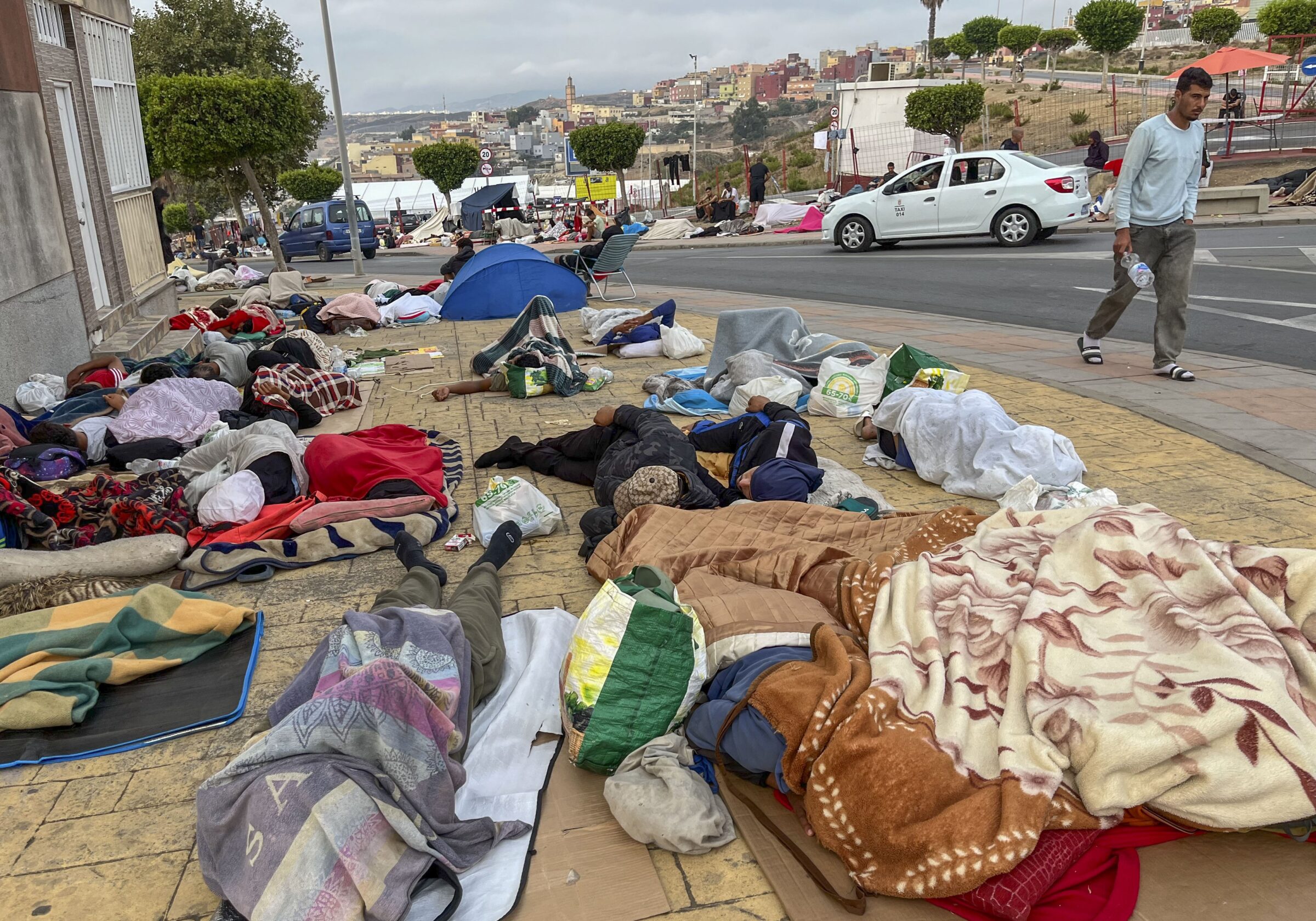
People still come. Some 80,000 arrived in the Spanish enclave of Ceuta end of July alone.
Many are still fleeing violence, war and economic hardships. Others are lured by the promise of labour in Europe by Europeans willing to exploit them.
I remember meeting a group of boys from Bangladesh on the Ocean Viking, freshly rescued in the middle of the night, asking when they would be able to start working in Italy.
One of them was still shaking with fear and sobbing, following a near death experience.
The European Commission is now claiming that the drop of irregular arrivals is due to their migration policy reforms, as if the fall of the murderous Assad regime in Syria had no discernible impact.
Perhaps some of that is true. But there is no disputing that Syrians accounted for over 100,000 irregular crossings in 2023, a year before Assad fell. It then dropped to around 6,000. Today, it is around 1,000, according to Frontex.
At some point, one has to wonder if these conclusions, repeated ad nauseam, is nothing but political theatre by a leadership that has run out of ideas.
EU leaders meeting next week in Brussels for the usual post-summer European Council are rehashing conclusions on migration, echoing almost word-for-word statements since at least 2015.
“The European Council has developed a strategy aimed at stemming the unprecedented migratory flows Europe is facing,” they announced in December 2015, following a summit.
“It is indispensable to regain control over the external borders,” they also said, noting the perceived threat to the EU’s internal border-free Schengen zone.
And they voiced fear over the low number of deportations, insisting on “concrete measures to ensure the actual return and readmission of people not authorised to stay.”
Eeleven years later and the 15 October summit in Brussels next week is now asking almost the same thing, including to what extent previous conclusions on migration have been implemented.
Although draft conclusions can change, and likely will, the current wording essentially repeats the same demands spanning over 50 EU summits since at least 2015, when over a million Syrians entered Europe to seek protection.
Out of the 52 published conclusions since 2015, over half dealt with migration in some shape or form. The latest draft dated 5 October and seen by EUobserver is among those.
This article continues, but the full version is available only to EUobserver.com subscribers. Visit account.euobserver.com/membership
MEPs have opened debate on the EU’s proposed Affordable Housing Act, which would give national and local authorities a clearer legal framework for restricting short-term rentals and some non-primary residential property use in areas facing severe housing pressure.
The European Parliament has begun examining legislation that would give cities and national governments greater legal certainty when restricting short-term rentals and the use or acquisition of residential property in areas where housing has become difficult to afford.
The proposed Affordable Housing Act, presented by the European Commission on 9 September, was on Parliament’s agenda in Strasbourg on Tuesday as housing costs move further into EU-level politics.
The legislation does not transfer general housing policy to Brussels. Decisions on construction, planning, rent policy and social housing would remain primarily with national, regional and local authorities.
Instead, the proposal would establish a common EU legal framework governing some restrictions that member states and cities may introduce when attempting to protect housing supply.
The draft regulation specifically covers measures restricting short-term accommodation in residential properties other than a host’s primary residence. It would also cover restrictions on the acquisition or use of land and housing that is not intended as somebody’s principal home.
Those provisions are designed partly to resolve a legal problem that has become increasingly important in cities with large tourism markets.
Local governments have introduced restrictions on holiday rentals and second-home use, but such measures can clash with EU single-market rules governing services, property and establishment. The Commission says the legislation would provide authorities with a clearer method for demonstrating when restrictions are justified and proportionate.
The law would therefore not impose a common European cap on Airbnb-type accommodation. Nor would it oblige cities to introduce restrictions.
Authorities choosing to intervene would instead have to demonstrate housing stress and ensure that their measures meet EU requirements on proportionality, transparency and review.
Brussels argues that the scale of Europe’s housing problem now affects more than social policy.
According to the Commission’s European affordable housing plan, house prices across the EU have risen by more than 60 per cent since 2013, while average rents have increased by about 20 per cent. Short-term rentals increased by 93 per cent between 2018 and 2024.
Only between six and seven per cent of EU housing stock is classified as social housing, while about 20 per cent of homes are recorded as unoccupied.
The Commission estimates that Europe needs to build more than two million homes a year to meet current demand — around 650,000 more annually than are presently being constructed. It estimates the additional investment requirement at approximately €153 billion each year.
Those figures underline a central difficulty in the housing debate: restrictions on tourist accommodation may return some properties to residential use, but they do not address the full shortage of new homes.
The debate is becoming more politically prominent as housing affordability affects a growing share of middle-income households as well as those on lower incomes.
Berlin offers one example. EU Today reported last month that advertised rents in the German capital had risen by roughly three-quarters in less than a decade, while the city calculates that it will need another 211,000 homes by 2040.
Pressure is particularly acute in large cities and tourism centres, where residential demand competes with short-term accommodation and investment properties.
The Commission argues that this has consequences for the wider economy because workers who cannot find affordable accommodation may be unable to move to areas where jobs are available.
That is why Brussels increasingly presents housing not only as a social concern but as part of the competitiveness and single-market agenda.
The proposal is still at an early stage. Parliament and the Council must negotiate the legislation under the ordinary legislative procedure, and substantial amendments remain possible.
Questions are likely to centre on how “housing stress” is defined, what evidence authorities must provide before restricting property use and how far EU law should permit local intervention in property markets.
The political dividing line is already apparent. One side of the debate stresses that cities need more freedom to protect permanent housing stock. The other warns that regulation of short-term rentals or second properties can affect tourism businesses, property owners and investment without necessarily creating sufficient new supply.
The Affordable Housing Act attempts to establish legal rules for that dispute rather than settle it centrally.
If adopted, its importance will therefore depend less on a single Brussels policy than on how individual European cities use the powers and legal protection it provides.
The European Commission has proposed up to 15 years of post-accession safeguards to punish new member states in case of bad behaviour, in a long-delayed pre-enlargement policy review out on Tuesday (6 October).
The reforms were initially requested by the European Council in June 2024 to be ready by spring 2025, but were delayed several times due to political sensitivities in EU capitals.
They are aimed at frontrunners for future EU membership – Montenegro, Albania, Moldova, and Ukraine – each of whom will get an accession roadmap this month.
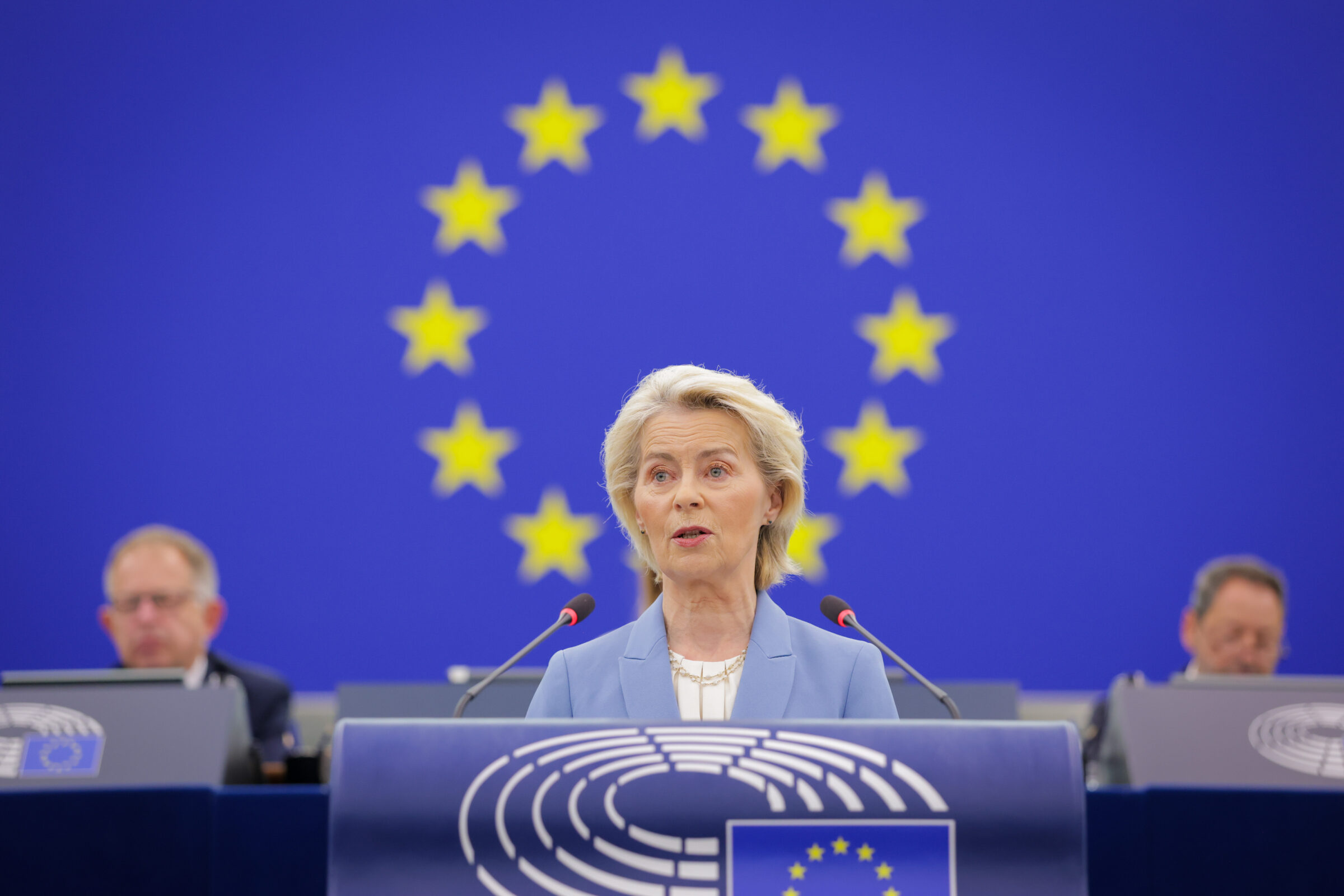
EU Commission president Ursula von der Leyen has deemed union enlargement a “geopolitical imperative” amid the war in Ukraine and shift towards a new global order.
By expanding, the EU hopes to promote democracy and strengthen the single market.
But this also comes with fears that countries could misbehave after getting in, prompting the commission’s proposed new guardrails.
The commission suggests that new member states promise “not to oppose EU decisions on future enlargements” due “to bilateral disputes” for an unspecified time.
But Marta Kos, the EU’s enlargement commissioner, said this commitment would be voluntary.
Commissioner dismisses ‘two-tier’ concerns
This article continues, but the full version is available only to EUobserver.com subscribers. Visit account.euobserver.com/membership
The Commission is “going a bit too fast” in unlocking €4.2bn and restarting the Erasmus+ student exchange programme in Hungary, according to budget committee MEPs.
The EU froze its financial assistance to Hungary in 2022 due to concerns about rule of law breaches and misappropriation of funds by Viktor Orbán’s government.
Green MEP from Germany, Daniel Freund, told EUobserver he “would have taken a more staged approach to not release everything in one go,” admitting that the reform agenda of Péter Magyar’s new government still has some way to go.
The commission’s proposal to unlock part of the €16.4bn in funds available to Hungary requires the green-light from the EU council, representing member states, one month after its announcement on 23 September.
Freund said that he was “happy about the changes we have seen” following his visit to Hungary on 1 October.
“Hungary needs this money, I also want Hungarians to have this money, since for years it was just going to Orbán and his cronies,” he said on Tuesday (6 October).
However, Freund and other MEPs on the fact-finding mission found that “the same risks of corruption exist,” and “there are new laws that are still fragile in their implementation,” French socialist and democrat Jean-Marc Germain told reporters in Strasbourg on Monday.
The Parliament can serve as a pressure point, although the decision on funds is largely in the hands of the commission and the council.
“There is no real political pluralism in Hungary, which may in the long run be a reason for worrying,” he said, adding that most companies are still owned by the same few people as during Orbán’s rule.
The tone is different on the other side of the political spectrum.
This article continues, but the full version is available only to EUobserver.com subscribers. Visit account.euobserver.com/membership
European Commission president Ursula von der Leyen has joined MEPs in urging the bloc’s governments not to gut the EU’s next seven-year budget, as talks on spending reach a critical phase.
The commission has proposed a budget worth just under €2 trillion, equivalent to 1.26 percent of the EU’s gross national income, a small increase on the previous seven year spending plan. But the so-called ‘frugal’ group of countries, led by Germany, have demanded hefty cuts, complaining that they are contributing too much.
“Having no new financial framework is by far the most financially advantageous solution for Germany,” chancellor Friedrich Merz said on Monday.
But 17 EU countries from Southern and Eastern Europe signed a joint letter last week, demanding that farmers’ subsidies via the Common Agricultural Policy are maintained, as well as spending across the EU’s poorest regions, known as cohesion policy
During a press conference on Tuesday, Siegfried Muresan, the Romanian centre-right MEP who is co-leading parliament’s negotiating team on the seven-year budget with Portuguese socialist and democrat Claudia Tavares, said that there was “still time” for the Irish presidency to avoid proposing “unjustified cuts” that “would make Europe weaker and severely undermine the institutional cooperation between parliament and council.”
Though Muresan conceded that governments did not want to increase their national contributions, “there is a way out”, he said.
This article continues, but the full version is available only to EUobserver.com subscribers. Visit account.euobserver.com/membership
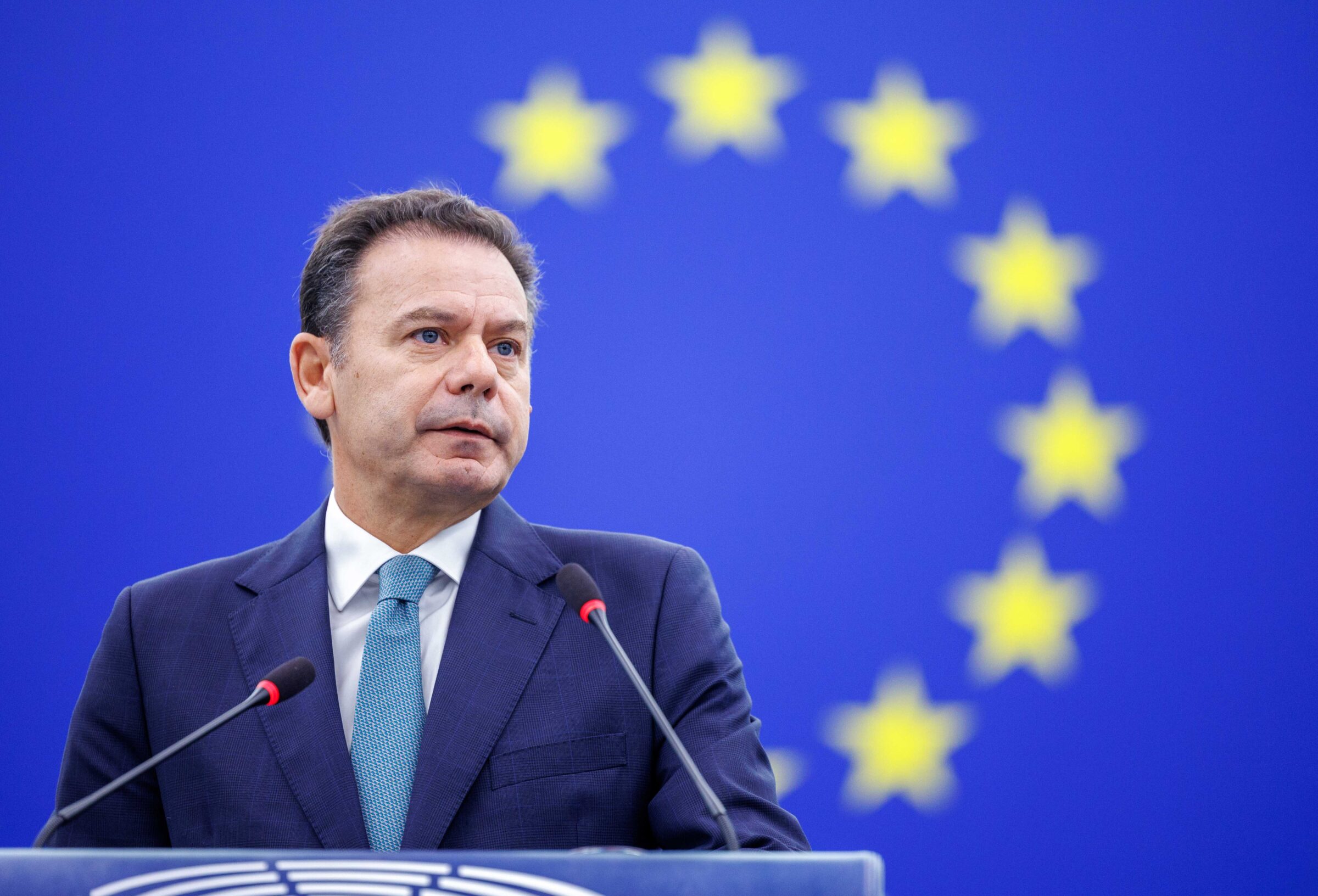
Politicians need to solve the affordability crisis to stop the far-right, social democratic Portuguese prime minister Luís Montenegro told MEPs on Tuesday (6 October).
Opening a debate in Strasbourg, Montenegro called for more lax regulation as a way to address the housing crisis, defended strict migration policies, and expressed support for funding poorer regions in the next EU budget.
He also stressed the importance of lowering fuel prices and prioritising the energy transition to “solve the real problems that people wrestle with,” adding that “our response … has to be felt in the lives of Europeans” to avoid disappointed voters turning to populism and extremism.
Back at home, Montenegro has the far-right Chega (Enough) party on his tail: in the 2025 parliamentary elections, they won 23 percent of the ballots against the Montenegro alliance’s 33 percent.
Now, polls give Chega 27 percent of declared votes for the next parliament, slightly less than the Socialist Party (28 percent) and ahead of the current government coalition (24 percent).
For his part, a Chega MEP (Patriots for Europe), António Tânger Corrêa, challenged Montenegro on Tuesday for relying on wind and solar energy without enough storage in case of blackouts and shutting down coal power plants.
He also warned Montenegro against agreeing to limit unanimous votes in the European Council in future, as representing a blow to Portugal’s sovereign powers.
From his left-wing opponents, Portuguese MEP Catarina Martins pointed out the high rent costs in the country and criticised the government for failing to support low-earning tenants.
Montenegro said his government simplified the law around housing construction – much in line with the EU’s focus on deregulation – and proposed tax breaks to encourage investors to build more.
An EU-level policy complementing it “would be very useful,” he said, as long as it simplified existing regulations.
The Affordable Housing Act presented by the EU Commission in early September aims to improve the market for tenants by restricting short-term rentals.
Every day, children are killed in Israel’s genocidal war on Gaza. Where are the outraged headlines?
The number of children killed in Gaza since Israel started its onslaught, following the Hamas attack on 7 October, 2023, is estimated at more than 21,600.
The UN Children’s Fund (UNICEF) says that since the so-called Israel-Hamas ceasefire, an average of “at least” one child a day – 300 children over 300 days – has been killed in the enclave.
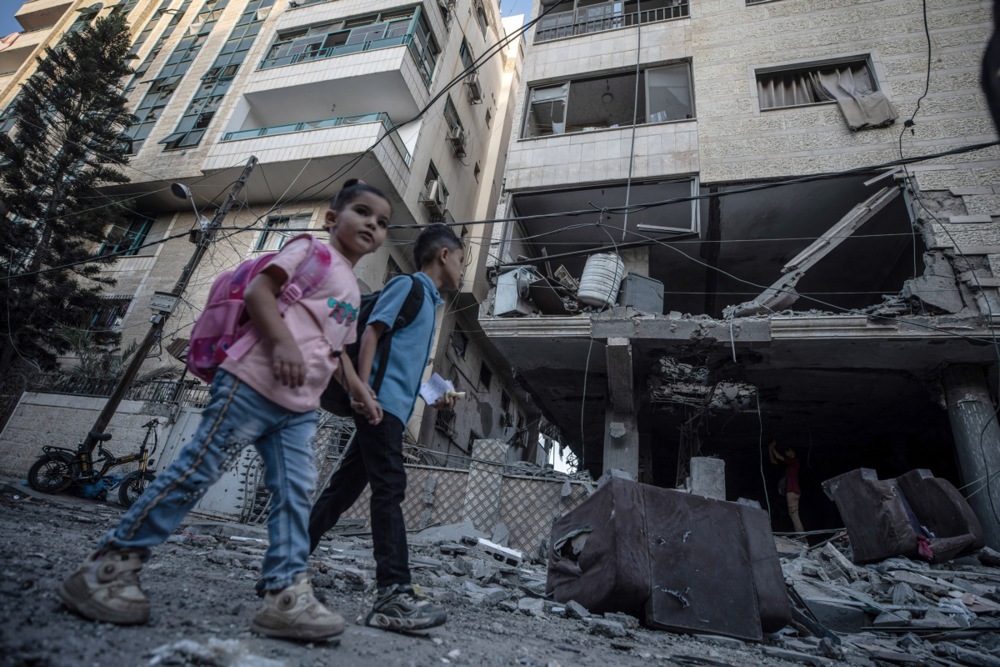
Children, toddlers, and babies are being killed in their homes, schools, hospitals, shelters, and on roads marked by displacement. They are also dying because the basic structures that should protect them – family, healthcare, education, food, water, and refuge – have been systematically destroyed.
Where are the urgent statements from EU and world leaders?
EU governments continue to authorise arms transfers to Israel despite rules which require governments to deny licences where there is a risk that military equipment will be used for serious violations of international humanitarian law.
Every EU member state is also bound by the UN Convention on the Rights of the Child and the EU’s own treaty, which requires the union to promote children’s rights.
Why are these international rules and domestic commitments not being applied to the children of Gaza?
Mourners light candles during a mass funeral and vigil for 105 Palestinians near the rubble of the Al Tajj building in Gaza City on 30 September 2026 (Source: EPA/MOHAMMED SABER)
Children rights beyond Ukraine
The EU does care for children. In Ukraine, the EU treats children as individuals rather than statistics: it convenes coalitions, compiles names, traces families, imposes sanctions, creates mechanisms for return and makes the fate of children a central diplomatic demand.
In her State of the Union address last month, European Commission President Ursula von der Leyen – a proud mother and grandmother – introduced and praised the courage of Sasha, a six-year-old Ukrainian girl who lost a leg in a Russian missile strike in Ukraine but has now returned to her beloved gymnastics.
Von der Leyen quite rightly made the suffering of Ukrainian children intimate and personal. It is more than time she did the same for Palestinian children.
But let’s not only blame political leaders for their indifference, their lack of historical knowledge of Palestine’s occupation and their limited understanding of Palestinian calls for justice.
Parts of the legacy media must also own up to their responsibility in normalising the abhorrent.
Powerful mainstream media have preferred to “repeat Israeli propaganda and sometimes simply cut and paste IDF press releases” rather than accept the analysis of Palestinian journalists, writers and scholars, writes Bhakti Shringarpure.
Her criticism reflects a wider ongoing discussion on the sourcing and framing of Gaza coverage, with studies spotlighting how Western media has described Israeli suffering by using emotive language around 11 times more often than Palestinian suffering. References to Israel’s “right to defend itself” appear roughly five times as frequently as references to Palestinian rights.
Also, as the immediate shock of the bombardment recedes – but the killing continues – Gaza has dropped down the news cycle.
Assal Rad, author of “Don’t Say Palestine: How the Media Manufactured Consent for Genocide”, describes the logic: “The façade of a ceasefire has created the space to cover it less. In reality, the conditions on the ground for Palestinians in Gaza have not changed.”
It is also less politically costly for leaders and media to focus on settler violence and settlement in the occupied West Bank, since it can be described as the work of “extremists” rather than of the Israeli government.
EU silence
Our lack of a strong reaction to what is happening is Gaza is also the story of how bystander societies can watch, absorb, and rationalise horrors – and move on.
Additionally, the killing of Palestinian children is preceded by their political “unchilding”, a process which Palestinian scholar Nadera Shalhoub-Kevorkian says begins before the missile falls, when Palestinian children are imagined not as children with futures but as demographic threats, future militants, or extensions of an armed group.
Their age, instead of guaranteeing greater protection, becomes entangled with suspicion.
Even amid such savage violence, some people are not giving up.
Their bosses may still look the other way, but EU Staff for Peace, which holds vigils in front of the European Commission and the EU Council every Thursday, has held gatherings to read out the names of children killed in Gaza, thereby according individuality to children whom the political and media systems have reduced to numbers.
As one EU staffer told me: “We only have a time slot of three hours and the last time we only managed to read out the names of children up to three years old. It took us one hour to read out the names of Palestinian babies under one-year old.”
Hind Rajab, who was five, was killed on 29 January 2024 by Israeli fire on the car in which she was trapped. Her body was found 12 days later alongside the bodies of members of her family and two paramedics who had gone to rescue her.
Israel has acknowledged firing on the car but has not admitted that her killing was unlawful, citing an ongoing investigation. In other words, there has been no accountability.
The obscenity is not only that Hind was killed, but that by now the killing of children in Gaza has become a familiar event.
The shame is that so many of us have constructed a hierarchy in which some children summon the world’s full moral and political force, while others are ignored.
Omar El Akkad, in his seminal book says that “One Day, Everyone Will Have Always Been Against This.” Given the cowardice on display over the last three years, I sometimes wonder if there will ever really be a true global moral reckoning.
Romanian President Nicușor Dan has nominated diplomat Luca Niculescu as prime minister, beginning a fourth attempt to form a government after three previous candidates failed to secure a parliamentary majority.
The nomination was announced on Monday, 5 October, after Dan held consultations with Romania’s parliamentary parties at the Cotroceni Palace. Niculescu now has the task of finding sufficient support for a government after five months of political deadlock.
Dan said he had chosen the candidate he believed had the best chance of assembling a majority. “Romania needs a government. We need a budget for next year,” he said after the consultations, according to Romanian reporting on the nomination.
Niculescu, 55, is a former journalist and diplomat who has served as a secretary of state at Romania’s Foreign Ministry and national coordinator for the country’s accession to the OECD. He was Romania’s ambassador to France between 2016 and 2022 and was also accredited to Monaco and Andorra.
Accepting the nomination, Niculescu said his first task would be to build a parliamentary majority. He promised a government programme centred on predictable economic policy, public spending discipline, investment and Romania’s European and Euro-Atlantic commitments.
The appointment follows three unsuccessful attempts to replace the government of Ilie Bolojan, which was removed in a no-confidence vote on 5 May after the Social Democratic Party withdrew its support. EU Today reported at the time that 281 lawmakers backed the motion, bringing down the pro-European administration.
Eugen Tomac was the first candidate asked to form a government but relinquished the mandate after failing to secure sufficient support. Adrian Veștea was then nominated, but his proposed government was rejected by parliament.
The third candidate, PNL MEP Siegfried Mureșan, was nominated in September. His government received 182 votes in the parliamentary confidence vote on 30 September, well short of the 233 required. That defeat left Dan facing a fourth round of negotiations with the same fragmented parliament.
Niculescu therefore begins without an established majority behind him. During Monday’s consultations, the PSD continued to promote its own candidate, Sorin Grindeanu, while USR and AUR pressed for early parliamentary elections. PNL signalled greater flexibility but stopped short of committing itself to a new governing formula.
AUR leader George Simion has already said his party will not support Niculescu. USR, meanwhile, said it would examine the proposed cabinet, governing programme and the political majority behind it before deciding how to vote.
Under Romania’s constitution, a prime minister-designate has ten days from nomination to seek parliament’s confidence for the proposed programme and full list of ministers.
The repeated failures have also revived discussion of early elections. The president may dissolve parliament if no government receives a vote of confidence within 60 days of the first request for investiture and at least two attempts have been rejected, although dissolution is a presidential option rather than an automatic step.
Dan has so far indicated that he would prefer to exhaust efforts to form a government.
The political stalemate comes at a difficult economic moment. Romania is under pressure to reduce its budget deficit, maintain investor confidence and continue reforms tied to EU funding. The strain on the governing coalition had already become an EU fiscal issue before Bolojan’s government fell, with questions over budget consolidation and European recovery funding increasingly tied to political stability in Bucharest.
The immediate test for Niculescu will be whether his diplomatic background can translate into enough parliamentary votes to assemble a cabinet. His nomination leaves him more freedom than a candidate tied directly to one of the main parties, but the arithmetic remains unchanged: a government still requires at least 233 votes to take office.
Photo: Razvan Socol / Wikimedia Commons / CC BY-SA 4.0
Almost 150 European politicians have become targets of AI-generated deepfake pornography, 50 of whom are MEPs. The EU’s Green party has now taken the fight to the upper echelons of EU authority to push a ban on ‘nudifying’ apps.
Research by the think tank Agora Digital Transformation (ADT), published on Monday (5 October), found that 50 MEPs have been targeted by digital platforms able to digitally strip anyone whose picture is uploaded to it. Of these, 46 are women.
Another ADT study published in September found that the chances of becoming a victim of false sexualised portrayals are one in 14 for women, against one in 500 for male politicians.
Most worryingly, a woman has no way of knowing she’s been targeted because “the harm is often unseen until it has spread,” Monday’s study read.
MEPs have rallied behind the Green party in demanding EU leaders take concrete steps to limit the influence of such software, while requiring member states to set up national authorities to roll out an effective ban on ‘nudifier’ apps from 2 December 2026.
The Green party initiated an open letter, which was endorsed by 119 MEPs from the Socialists and Democrats, liberal Renew Europe and the Left, calling on the European Commission and member states to take decisive action against AI deepfakes of women politicians.
The appeal asks to strengthen EU resolutions on AI and digital protection by requesting that the commission guide national authorities on enforcing the ban, and that there be a designated and properly resourced body in every member state ready to implement the ban from December.
This article continues, but the full version is available only to EUobserver.com subscribers. Visit account.euobserver.com/membership
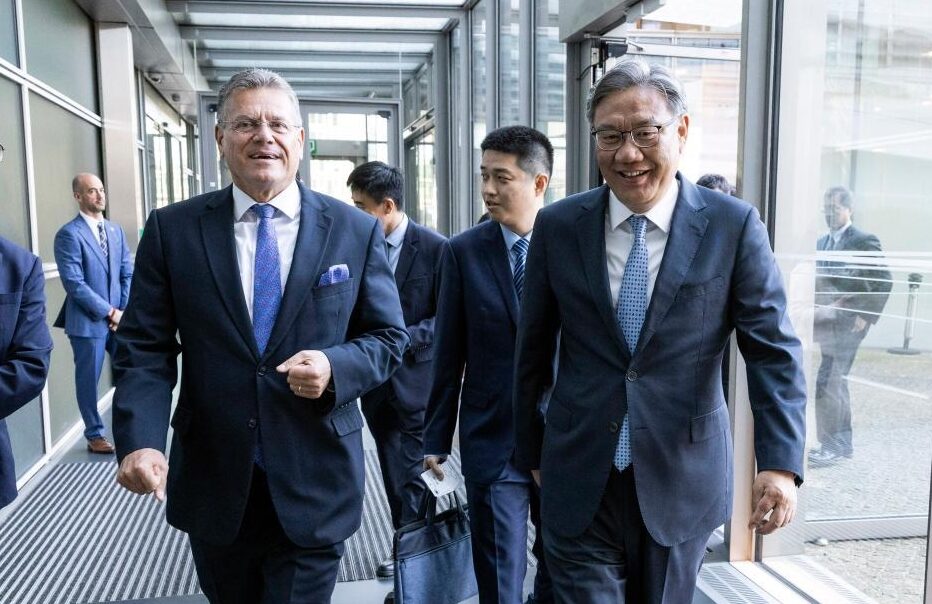
EU trade commissioner Maroš Šefčovič and Chinese commerce minister Wang Wentao are meeting in Beijing on Thursday (8 October) to discuss China’s growing trade surplus with the EU.
The surplus reached a record €360.6bn in 2025, up 15 percent from 2024, and widened another 10 percent in the first four months of this year.
The visit follows a meeting in Brussels in June, where Šefčovič said he wanted the dialogue to deliver tangible results by October, and the two sides set up working groups on trade balance, export controls, intellectual property and WTO reform. China has sent mixed signals, with Beijing reportedly showing openness to purchase agreements for European goods and possibly lower tariffs, while China’s commerce ministry insisted Brussels should not treat China as the source of the EU’s problems.
The EU put tariffs on Chinese electric cars in 2024, with extra duties ranging from 7.8 percent to 35.3 percent depending on the manufacturer. But hybrids weren’t covered, and Chinese hybrid exports to the EU jumped from 3,800 vehicles in October 2024 to roughly 50,000 in July 2026, adding to pressure on European carmakers already struggling to compete with Chinese manufacturers.
Šefčovič will also be hoping to secure assurances from his Chinese counterpart on access to rare earths and minerals for European companies, with a one-year moratorium on extra restrictions on rare earth and minerals exports from China – which also applies to the United States – due to expire in the coming weeks. In June, China assured Šefčovič that existing controls on rare earths and permanent magnets would not disrupt EU supply chains.
Meanwhile, there have been reports of some German companies stockpiling rare earths in case the Šefčovič-Wentao talks fail to break the deadlock and China imposes new export controls in retaliation for the EU’s ‘Made in Europe’ plan to protect its industrial supply chain.
If the Beijing talks fail, Germany and France could push for tougher measures at next week’s EU leaders’ summit, including a cap on Chinese hybrid-car exports, preference for European vehicles in public procurement and tighter limits on Chinese takeovers of European companies.
But China recently said it would “respond firmly” if the EU imposed restrictions on Chinese businesses or products.
Long-delayed accession reforms
In Strasbourg on Tuesday (6 October), the European Commission is expected to present its long-delayed pre-enlargement policy reviews to prepare the 27-nation bloc for the integration of candidate countries like Montenegro, Albania, Ukraine and Moldova.
EU capitals fear that enlargement could disrupt businesses and that new member states could use their veto to block decisions.
In response, the commission proposal is set to rely less on consensus and more on majority voting, including in sensitive areas such as security and defence, sanctions, human rights and enlargement itself – a change that could help speed up bids such as Ukraine’s.
Ironically, to get rid of unanimity in certain votes, von der Leyen’s proposal will need the unanimous approval of all 27 member states.
The text is also expected to set temporary limits on new members’ vetoes, longer safeguard periods, and cut the number of commissioners to two-thirds of the number of member states, with equal rotation.
Alongside the internal rules review, the commission is expected to unveil a revision of the standardisation regulation to fix gaps and increase transparency.
On Monday (5 October), EU chief diplomat Kaja Kallas will host Moldovan PM Vasile Tofan in Brussels for a regular meeting on the progress of the country’s association bid.
The Eurogroup will also meet on Thursday in Luxembourg while EU financial ministers will meet on Friday.
On Wednesday, they will debate priorities for the EU budget for 2028-2034 (the Multiannual Financial Framework – MFF) with signals of more money for Erasmus+.
And MEPs will vote on Tuesday on whether to inject €115m into a pilot programme to accelerate the development of military technologies called Agile. This comes as Putin escalates hybrid warfare against Europe.
Controversy is expected ahead of a vote to scrutinise the funding and political influence of Islamist groups in Europe. European Conservative and Reformists (ECR) have previously called for the Muslim Brotherhood to be considered terrorists.
Those feeling stressed in their jobs can look forward to mental health protections for workers if parliament votes to ask the commission to propose new rules for EU employers.
Portuguese prime minister Luís Montenegro will deliver a speech on Tuesday.
And a debate with Ursula von der Leyen and the Irish Council presidency will shape priorities for the EU summit later this month, 15-16 October.
Plenary talks will also address the migrant surge in the Spanish enclave of Ceuta this summer and how Europe should respond.
Nearly half of voters in the United Kingdom support rejoining the European Union, according to a survey released as Prime Minister Andy Burnham reviews the country’s options for its long-term relationship with the bloc.
The Messina Group polled 11,461 people between 12 and 24 September. It found that 49 per cent supported EU membership and 28.5 per cent opposed it. The findings were weighted by respondents’ votes in the 2016 referendum, according to the survey results.
Several other options for closer cooperation also received more support than opposition. Retaining the current relationship while removing as many trade barriers as possible was backed by 48.2 per cent, with 20.9 per cent against. A customs union was supported by 47.1 per cent and opposed by 20.7 per cent.
Joining the single market was supported by 45.1 per cent, while 45.5 per cent backed associate membership. The existing relationship without further changes received 42 per cent support. Moving further away from the EU was the least popular option tested: 27.9 per cent supported it and 41.2 per cent opposed it.
The figures show support for a range of possible arrangements, but do not establish agreement on what Britain should seek or on the terms it should accept.
On timing, 25.9 per cent said the UK should rejoin immediately, 22.9 per cent favoured doing so within three years and 8.4 per cent within the next decade. A further 23 per cent said they did not want closer relations with the EU.
Respondents were also asked whether leaving the bloc had been the right decision. Some 52.4 per cent said it was wrong, compared with 29.7 per cent who said it was right; 17.9 per cent were undecided. Asked whether Brexit had been a success or failure, 54.9 per cent called it a failure and 12.2 per cent a success. Nearly a quarter, 23.2 per cent, said neither, while 9.7 per cent did not know.
The poll tested the possible electoral effects of different Labour positions on Europe. It found that scenarios involving closer ties could increase the party’s vote share by between 4.3 and 7.4 percentage points. The largest potential rise was linked to a proposal for a referendum in which Burnham campaigned for Britain to rejoin.
Burnham has said Labour will review the choices available, including keeping current arrangements, joining a customs union, returning to the single market or seeking EU membership. He plans to set out the options around the next UK-EU summit, expected in November. In recent remarks, he said the government would assess “what is doable” and the “pros and cons” of each option.
The review marks a shift from Labour’s 2024 election manifesto, which ruled out rejoining the EU, single market or customs union. Burnham has not proposed an immediate application or referendum. A UK bid for membership would require negotiations with the EU and unanimous agreement from member states.
The question of whether a referendum should come first also remains open. Almost a third of respondents said a vote would be needed before rejoining. More than one in six thought a general-election mandate would be sufficient, with a similar proportion saying Parliament could make the decision.
French President Emmanuel Macron and Spanish Prime Minister Pedro Sánchez have said the EU would welcome a British return. Their comments followed Burnham’s call for a review of Britain’s options, as EU Today reported this week. Earlier EU Today coverage also examined British and EU public support for a possible return.
Seventeen EU governments have joined forces to defend agricultural and regional funding in the bloc’s next seven-year budget, setting up a confrontation with Germany and five other countries demanding substantial reductions to the European Commission’s proposed €2 trillion spending plan.
Seventeen European Union countries have called for agriculture and cohesion funding to be protected from further cuts as negotiations over the bloc’s 2028–2034 budget enter a decisive phase.
In a letter dated 2 October to Irish Taoiseach Micheál Martin, whose government currently holds the rotating presidency of the Council of the EU, the countries said the overall financing of Cohesion Policy and the Common Agricultural Policy should be maintained in the next Multiannual Financial Framework.
The signatories are Bulgaria, Croatia, Cyprus, Czechia, Estonia, Greece, Hungary, Italy, Latvia, Lithuania, Malta, Poland, Portugal, Romania, Slovakia, Slovenia and Spain.
The initiative follows months of coordination by the so-called Friends of Cohesion. In an earlier joint position published by the Spanish government, members argued that cohesion, agriculture and fisheries remained central EU policies and called for new EU revenue sources to be “genuine, fair, simple and non-regressive”.
Italian Prime Minister Giorgia Meloni and Romanian President Nicușor Dan have been coordinating the group at leaders’ level. They are expected to convene another informal meeting alongside the European Council on 15–16 October. The two leaders previously brought the group together ahead of the June European Council as governments sought to coordinate their positions on the budget.
The intervention places the group in direct opposition to Germany, Denmark, the Netherlands, Austria, Finland and Sweden.
Those six governments have argued that the Commission’s near-€2 trillion proposal should be reduced by several hundred billion euros. In their joint statement on the 2028–2034 budget, they said national governments were already undertaking fiscal consolidation and that the EU budget could not be exempt from similar pressure. They called for reductions across all spending headings while giving greater weight to security, defence, competitiveness, migration and sovereignty.
The Commission’s original proposal for the 2028–2034 Multiannual Financial Framework amounts to almost €2 trillion in current prices, equivalent to 1.26 per cent of the EU’s average gross national income over the seven-year period. It substantially restructures the budget, bringing agriculture, cohesion, fisheries, migration and internal security into national and regional partnership plans while allocating more money to competitiveness, research, defence and other emerging priorities.
Agriculture and regional development have consequently become two of the most sensitive parts of the negotiations.
The Council has already backed the principle of the new national and regional plans, but financial allocations remain unresolved. Its negotiating position specifically leaves the money to be settled as part of the overall MFF talks.
EU Today has followed the dispute since the Cyprus presidency produced a negotiating framework in June that proposed reducing the Commission’s plan by about €32.8bn. The disagreement has since widened as governments attempt to reconcile traditional spending on farmers and poorer regions with growing demands for defence, industrial competitiveness and security.
Revenue is another source of disagreement.
The Commission has proposed five new EU own resources, including revenue connected to the Emissions Trading System and Carbon Border Adjustment Mechanism, a contribution based on uncollected electronic waste, a tobacco excise resource and a contribution from large companies operating in the EU. The proposals are intended partly to reduce reliance on national contributions and help finance repayment of pandemic-era borrowing.
EU Today previously examined the dispute over new sources of EU revenue after leaders asked the Irish presidency to develop financing options alongside negotiations over expenditure.
The Friends of Cohesion have also called for a more gradual repayment schedule for NextGenerationEU borrowing and oppose retaining contribution rebates for wealthier member states. Under the Commission proposal, repayments of principal and interest would amount to a fixed €24bn annually between 2028 and 2034, or €168bn across the seven-year budget period.
Ireland now faces the task of narrowing the gap.
The Council’s timetable for the negotiations envisages the Irish presidency advancing the next negotiating framework ahead of the October European Council, with governments seeking a political agreement before the end of 2026. That would leave 2027 for adoption of the legislation required before the new budget takes effect on 1 January 2028.
An agreement among governments will require unanimity. The European Parliament must then give its consent, while the separate decision governing the EU’s own resources also requires unanimous approval by member states and ratification according to their national constitutional procedures.
With 17 governments now explicitly defending agriculture and cohesion spending and six major contributors demanding substantial reductions, the October summit will bring the central budget dispute directly before EU leaders.
The sharp drop in irregular migrant arrivals is evidence that the EU’s policy reforms are working, EU migration commissioner, Magnus Brunner, said on Thursday (1 October).
But Syria is also no longer the single biggest source of asylum claims after the fall of Bashar al-Assad’s regime 22 months ago, a factor that appears to have been conveniently ignored.
On Thursday, he told reporters after a meeting of EU interior ministers in Luxembourg that irregular arrivals have dropped 55 percent in the past two years.
“So that’s a record low in the asylum applications,” said the former Austrian finance minister, adding that Austria and Sweden have recorded equally low asylum numbers and that Germany is deporting more people than are asking for protection.
“The basis for all of that, and the foundation for all of that, is the pact, the pact on migration and asylum,” he said, in comments that were echoed by Ireland’s migration minister, Jim O’Callaghan.
The pact, spanning a mix of complex regulations, was launched in June. Despite having two years to prepare for the launch, its implementation remains patchy.
This article continues, but the full version is available only to EUobserver.com subscribers. Visit account.euobserver.com/membership
In Germany’s recent state elections, voters as young as 16 could cast ballots. The results confirmed a global trend of political division between young women and men.
“On 1 January, we both deleted Instagram, TikTok and Snapchat. And whichever of us would be the first to start watching Reels again or download Instagram would have to eat a slice of rotten cheese,” Greta and Lena told Germany’s Deutschlandfunk radio station.
The 16-year-old girls live in a village in Mecklenburg-Vorpommern and chose to delete social media because they had been spending far too much time on it. They often scrolled on TikTok or Instagram late into the night, affecting their performance at school. This summer, however, both reinstalled TikTok for a month. This time without the punishment of a slice of rotten cheese.
They did so for an experiment with journalists from Deutschlandfunk. The journalists wanted to find out what political content the girls would consume through TikTok, the popular Chinese social network, during the peak of the election campaign. Mecklenburg-Vorpommern went to the polls on the third weekend of September. And, as is well known, the far-right Alternative for Germany (AfD) swept the state, just as it had two weeks prior in Saxony-Anhalt.
Greta and Lena, however, were in a markedly different position from their peers in Saxony-Anhalt. For the first time, the north-eastern federal state of Mecklenburg-Vorpommern had allowed 16- and 17-year-olds to vote in state elections. Since young people consume much of their news on social media, Greta and Lena immersed themselves in TikTok, one of the networks now most popular among young Europeans.
For the first few minutes, the girls watched a range of non-political videos — recipes, tomato growing and “silly” AI videos. Then, at around the third minute of scrolling, the first political content appeared. First came a video about Erich Honecker, the former East German communist politician. “Why am I seeing so much stuff about the GDR here?” Greta wondered. As she continued scrolling, she came across AfD co-leader Alice Weidel herself.
It was the first moment when the girls began to notice how quickly their initially apolitical feed was changing. “I feel as if it is constantly just AfD,” Greta said later. She added that she had not searched for any such content in advance. Over the following month, the girls kept a diary of their feed and observed how, after political videos, more and more similar content began appearing — not only from the parties themselves, but also from a range of accounts that picked up and further spread their messages.
The experiment confirmed what has been known for some time: TikTok and other networks alongside it can quickly form the political world a young person sees and the views they come to adopt. At the same time, algorithms are accelerating a trend of a political divide between young women and men, which was also reflected in the results of the state elections mentioned above in Germany.
Algorithms exacerbate polarisation
This article continues, but the full version is available only to EUobserver.com subscribers. Visit account.euobserver.com/membership
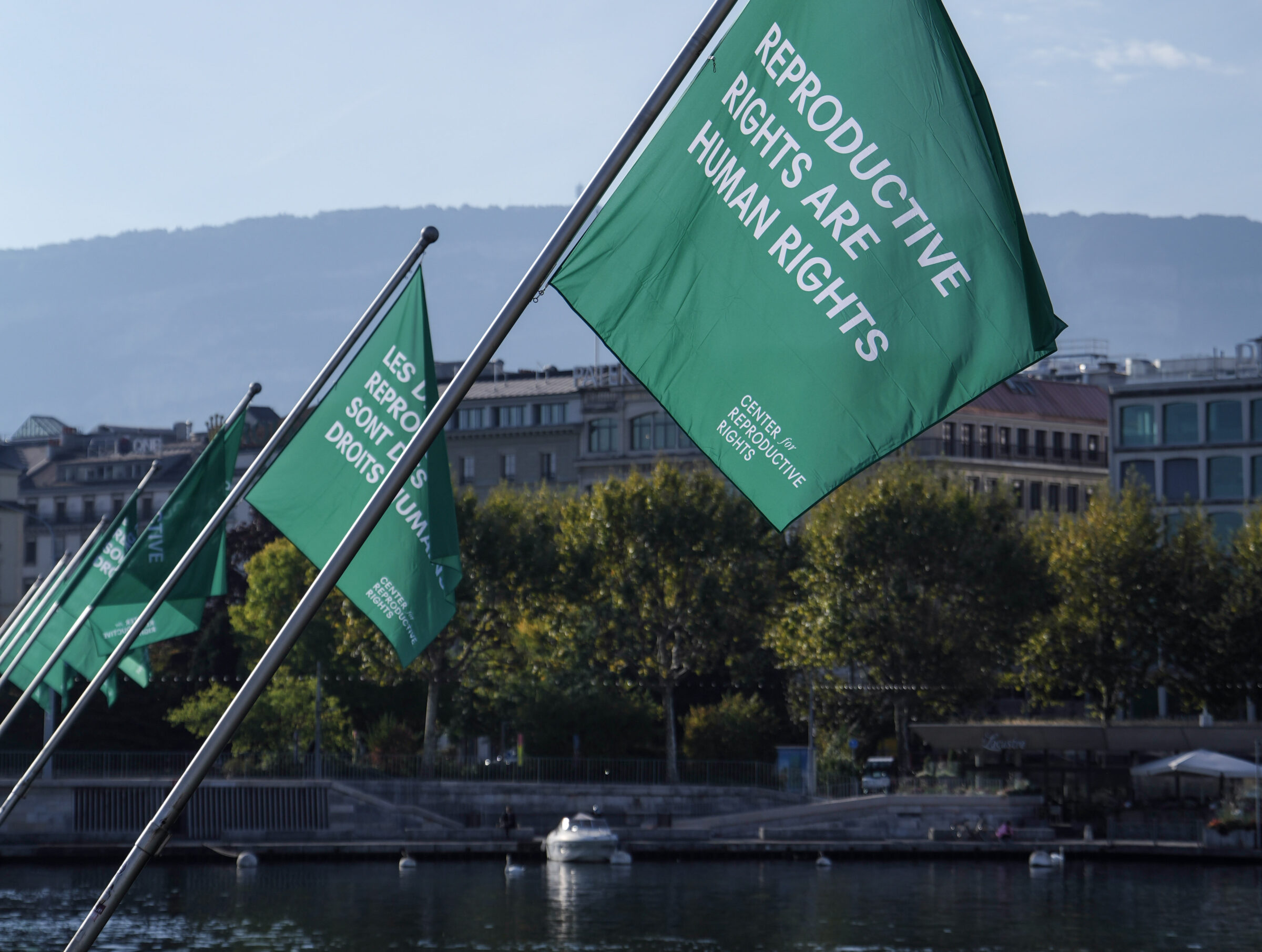
Europeans have lead the field on access to abortion, but a conservative comeback has caused a lot of those advances to regress.
Research published earlier this week (28 September) by the Centre for Reproductive Rights (CRR) found that despite an upward trend of legalisation, some countries are still seeking to enforce barriers and rolling back entitlement to abortion care.
This resistance to change is also evidenced in the lack of member state participation in safe abortion funds available since the the ‘My Voice, My Choice’ European citizens’ initiative for safe and accessible abortion was passed into law last February.
EU funds could since then be used to create regional programmes for safe abortion care for anyone who can’t access it in their own country, as well as financing travel to a country where abortion is available.
However, no funds have yet been used.
This article continues, but the full version is available only to EUobserver.com subscribers. Visit account.euobserver.com/membership
Six out of nine of the most popular AI chatbots routinely exposed user input to third parties, new European research reveals.
Multiple chatbots disclosed sensitive user data to advertising companies through trackers – a piece of code used to identify and target users on the web with customised advertisements, which are widely used across the web.
And tech companies may have been able to link conversation summaries with personal identifiers, allowing users to be targeted based on their conversations with AI.
The researchers aimed to establish the connection between existing tracking technologies and AI advertising. “We basically connected the dots, and wanted to test whether and how AI bots integrate tracking and advertising services,” said Narseo Vallina-Rodriguez, who led the study.
Vallina-Rodriguez is part of a group of researchers who investigated the use of ad trackers in the most popular AI providers with colleagues at Imdea Networks, a public research institute in Madrid.
Their findings warn of “tensions” between tech company practices and obligations to users under privacy laws.
Sensitive user-data shared
“We already knew that tracking is pervasive, even without AI. But now you have the most super-invasive phenomena on the internet, which is AI,” said Itxaso Domínguez de Olazábal, a policy adviser at digital rights group Edri.
Users often share information about their health, psychological state, finances, and other intimate matters in AI prompts. The study shows how users who asked AI questions about such matters could have sensitive details summarised in a chat title shared with third parties.
“Now, big tech has access to much more intimate information which users tell AI. It’s crazy, the details are so intimate. My friends ask AI bots about relationships, or they use ‘doctor AI’,” said Domínguez de Olazábal.
GDPR rules require companies to make clear how users’ data is harvested, but researchers question “ambiguous expressions” used to explain the role of trackers in T&Cs.
And the ePrivacy directive requires users to consent to cookies unless they are “strictly necessary”, but researchers found that even when users rejected non-essential cookies, AI bots Perplexity, DeepSeek, Gemini, Copilot, ChatGPT and Claude still connected to Google Ads.
All of the top nine most popular chatbots were found to integrate at least one third-party advertising or tracking service.
Consent and transparency ‘shortcomings’
A preview of the study, released in May, prompted the Spanish privacy watchdog AEPD to request for the European Data Protection Committee (EPDC) to share preliminary findings with European counterparts “for knowledge and assessment”.
The final paper, titled ‘Prompt like a Butterfly, Sting like a Tracker’, has been accepted for publication at an academic forum in Delft next year.
Findings “highlight tensions between current practices and obligations under the GDPR and ePrivacy Directive, exposing broader shortcomings in consent, access control, and transparency mechanisms,” the paper reads.
It reveals that Grok, operated by Elon Musk’s SpaceXAI, exposed public links to conversations by default, allowing trackers to routinely access whole conversations, with TikTok also processing screenshots of Grok conversations.
Meanwhile, Mistral, France’s flagship AI firm, did not offer users a choice to reject non-essential cookies.
But offering such a choice might soon be redundant anyway. “The tracking industry is moving towards paradigms called cookie-less and identity-based tracking. So they are circumventing anti-tracking capabilities,” Vallina-Rodriguez told EUobserver.
One way, or another …
Some suggest that using browsers with anti-tracker technologies can help users avoid surveillance.
This article continues, but the full version is available only to EUobserver.com subscribers. Visit account.euobserver.com/membership
Spain is coordinating with Morocco to prevent a new mass crossing into Ceuta this week, Spanish foreign minister José Manuel Albares said ealrier in September in response to renewed encouragement to storm the Ceuta border crossing on social media.
Warnings of a new wave of border crossings has caused alarm in Madrid, with fears that July’s large-scale border crossing surge could be repeated. When around 70,000 irregular migrants entered the small Spanish territory in North Africa by land and sea, overwhelming border guards and leading to over 100 deaths.
Recently declassified Spanish intelligence reports from before July described the response of Moroccan authorities to the border surge as passive and negligent. But Spanish prime minister Pedro Sánchez’s stopped short of formally accusing Rabat.
Morocco claims the surge was triggered by smuggling networks and disinformation. Sánchez’s government broadly supports this position, but questions about Morocco’s role are mounting.
The Ceuta crisis triggered a crisis in Europe for several days and showed the divide between member states about how to address migration.
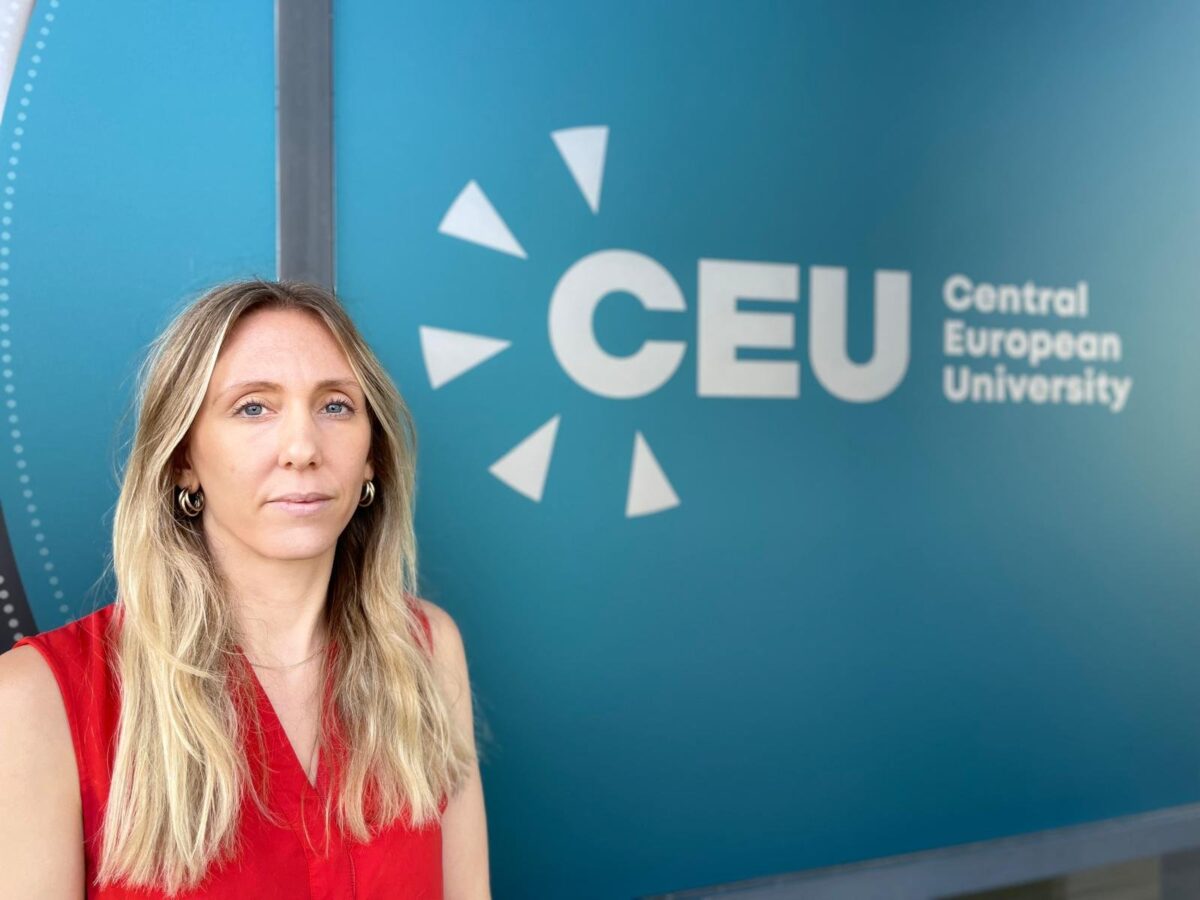
German lawyer Lena Riemer, who works at the Central European University in Vienna and specialises in migration, said Vladimir Putin cannot help but laugh at the internal disagreements, while criticising European politicians’ approach to the issue.
How do you explain recent happenings in Ceuta? Some politicians have accused Spain of legalising tens of thousands of undocumented migrants. Italian foreign minister Antonio Tajani claimed Spain was automatically granting them EU citizenship. What is your view?
That last point is beyond ridiculous. And we need to be careful; the Ceuta situation was complex, so we need to view it through a broader context, including from a historical perspective. The Ceuta crisis did not happen overnight.
It seems that for the past decade, things had been leading towards this very moment. The situation at the Ceuta border had been genuinely critical for years, and crossings had occurred frequently — just never on this scale. For colleagues who had previously worked with people on the ground in Ceuta and brought their cases before the courts, it was more a question of when something like this would happen, for several reasons.
“The situation at the Ceuta border had been genuinely critical for years, and crossings had occurred frequently — just never on this scale.”.
Look at the current situation around the world. For instance, many people in Morocco face severe economic hardship, unemployment and so on. This leads to the younger generation seeking a better life. In this way, we are all in the same boat and I think many of us would make the same decision as them.
This crisis was compounded by other factors. The media played a role. Some say it was a network of people smugglers. I am not particularly convinced by that argument, since smugglers typically aim to make money. Here, it appears that people migrated alone, so it is not clear how a smuggling network could have made much money. Others claim the surge was linked to the legalisation of undocumented migrants in Spain, or that a court ruling in Spain had “opened people’s eyes”.
Some politicians have claimed that the legalisation of undocumented migrants automatically grants them EU citizenship.
No one in their right mind would claim that – it’s utter nonsense! There is research and a substantial body of academic work examining the impact of granting residency status.
Italy has run several immigration regularisation programmes in the past, something its politicians seem to forget when they argue against new ones. The US did the same under Ronald Reagan in the 1980s. There is no solid evidence that these programmes encourage more people to try to enter the country irregularly in the future. In fact, the opposite has often happened: irregular migration numbers have tended to fall, because giving people legal status and stability reduces the incentive to live and work in the shadows.
Moreover, under this specific Spanish programme, people can apply for regularisation only under very specific circumstances, applying only to a group of people who entered the country at a very specific point in time. It was a one-off measure. Based on the facts examined by researchers, it is unlikely to have had anything to do with this.
How do you respond to right-wing politicians who say Spain opened Europe’s borders?
They are like kindergarten children. What we are really seeing here are political actors such as EU migration commissioner Magnus Brunner exploiting the situation to point the finger at Spain, which has taken a somewhat different path from other European countries. Ceuta was a welcome opportunity to say, “you are wrong, this is your fault,” and thereby justify a hardline approach.
There were calls to exclude Spain from Schengen…is that even possible?
No. The EU’s Schengen Borders Code, means everyone who is part of Schengen is bound by it. And there is no exclusion clause. Sometimes I do not know whether it is ignorance or simply deliberate deceit, but excluding a country from Schengen is simply not possible. What you can do is introduce border controls. However, the code contains a provision stating that, under strict circumstances and in the event of an emergency, border controls may be introduced for a very limited period.
Border controls between Schengen countries should be temporary, but controls at the Slovakia-Austria andGermany-Austria borders have been in place for months or years. Is that even legal?
“Any reasonable lawyer looking at this would ask: where do you see the emergency?”
It is a breach of EU law. It is clear and everyone knows it, but the Germans deny it. Ceuta, too, was a welcome opportunity for Schengen members to say: “Another emergency, great! Let us use this to justify more border restrictions.” Any reasonable lawyer looking at this would ask: “Where do you see the emergency?” The overwhelming majority of people in Ceuta were sent back, with only a very small number who will make it to the mainland at all. Being in Ceuta does not mean you can access mainland Spain.
You can only reach mainland Spain by sea. It is not as though you can get there by land.
Indeed, just look at a map. Ceuta has a specific role and legal regime. Being in Ceuta does not mean that you have freedom of movement when travelling. If, for example, you apply for asylum in Ceuta, that does not automatically give you the right to enter Spain. And when you leave Ceuta to enter Spain, you are checked again, and if you do not have documents, you will not be allowed in. So saying, “they are all here in Europe now,” is a populist statement.
“The only group likely to end up in Spain — and hopefully they will — are unaccompanied minors, who require special protection under European and national law.”
These migrants are hundreds of kilometres away. They do not suddenly have the right to enter the mainland. The only group likely to end up in Spain — and hopefully they will — are unaccompanied minors, who require special protection under European and national law. Ceuta is not a place where Spain can guarantee that special protection, so it will probably have to transfer them to the mainland.
Lena Riemer outside the Central European University building in Vienna. She has also worked at universities in Berlin and studied at Yale Law School. Source: Soňa Weissová
EUobserver reported that thousands of children had been left living on the streets.
Spain is thereby violating international law, EU law and national law every single day, because it has an obligation to immediately assess all minors and provide them with accommodation, food, psychological support and healthcare. They should not be there for even one day.
Ceuta has been problematic for many years, with people climbing over the fences there virtually every day. And the EU has been unable to resolve the migration problem more widely, not only in Ceuta, but in other countries too. Why, in your view, is the system not working?
This article continues, but the full version is available only to EUobserver.com subscribers. Visit account.euobserver.com/membership
The European Commission is considering giving candidate countries wider access to the EU single market, research programmes and industrial cooperation before they become full members, as Brussels prepares a broader overhaul of its enlargement policy.
Under a draft proposal reported on Tuesday, Brussels would offer what it describes as “gradual integration”, extending access to trade, research, innovation and industrial cooperation as individual candidates bring their legislation into line with EU rules and demonstrate that they can enforce them.
The proposal would take considerably further an approach the Commission has been developing for several years. Its existing policy review on pre-enlargement reforms already provides for gradual integration into selected EU policies before accession, including early access to parts of the single market.
According to the reported draft, earlier integration would create new opportunities for EU businesses, reinforce European value chains and reduce strategic dependencies.
“Earlier integration will unlock opportunities for Union businesses, strengthen European value chains and reduce strategic dependencies,” the draft states.
The Commission would determine where sufficient regulatory alignment and enforcement capacity existed to permit deeper participation in research, innovation and industrial cooperation, as well as broader market access.
The arrangement would remain conditional. Candidate countries would not receive unrestricted access simply because accession negotiations had begun.
Instead, the extent of integration would depend on progress in adopting and enforcing EU legislation, as well as cooperation with Brussels on foreign policy, sanctions, investment screening, export controls and the protection of sensitive technologies.
Market access linked to strategic alignment
One of the most significant elements of the proposal is the connection between economic integration and the EU’s wider security policy.
As industrial and market integration deepens, participation in sensitive sectors would have to be accompanied by cooperation on investment screening, export controls, sanctions implementation and protection of sensitive technologies, according to the draft.
Access would also take account of strategic alignment, critical dependencies and a candidate country’s ability to manage risks involving infrastructure and supply chains.
The Commission has already established the principle that early integration into the single market requires both alignment with EU legislation and effective enforcement. Existing arrangements with Ukraine, Moldova and Western Balkan countries have been used to test integration in individual sectors before membership.
The new proposal would expand that model considerably.
It could also increase pressure on candidate countries whose foreign policies diverge from those of the EU, particularly over relations with Russia and China.
Ukraine and Moldova among countries targeted
Ukraine, Moldova, Albania and Montenegro are expected to be offered specific roadmaps intended to accelerate their integration over the coming years.
All four have advanced in the accession process, although at different speeds.
Ukraine and Moldova have moved into substantive negotiations covering the legislation and institutional reforms required for membership. As EU Today reported in June, the process now involves detailed scrutiny of the rule of law, public administration, democratic institutions and the ability to implement EU legislation.
Moldova is already being integrated into selected areas of the European economy. It has joined the Single Euro Payments Area and the EU’s roaming regime, while Brussels has also expanded its participation in European programmes. The Commission said after the EU-Moldova summit in June that gradual integration into the single market was already under way.
Ukraine has similarly been moving towards deeper economic integration through its existing free-trade arrangements with the EU and sector-by-sector alignment with European legislation.
The proposal comes as the EU attempts to resolve a central problem surrounding its current enlargement round: accession can take many years, while the political and economic consequences of keeping candidate countries outside the Union continue to grow.
Croatia, which joined in 2013, remains the EU’s most recent new member.
Several candidates have spent years — and in some cases decades — within the accession framework. Negotiations with Türkiye are effectively frozen, while Serbia, North Macedonia and Bosnia and Herzegovina have experienced prolonged delays.
Brussels is also considering how to protect EU decision-making and rule-of-law standards as membership expands. EU Today reported earlier this year that five member states had proposed additional safeguards for future members, including stronger monitoring and mechanisms intended to prevent individual governments from obstructing EU decisions.
Gradual integration offers a separate response to the same enlargement problem: economic integration would no longer have to wait until every stage of accession had been completed.
The European Parliament has backed the principle of merit-based and reversible gradual integration, including access to parts of the single market for candidates making sufficient progress. Parliament has also stressed that such arrangements should not become a substitute for membership or create different permanent categories of EU states.
Under the Commission’s emerging model, candidates could therefore move progressively into the EU’s economic and regulatory system while accession negotiations continue.
Full membership would remain the stated objective. But a process in which most of the economic advantages arrive only at the end could increasingly be replaced by one in which access is granted sector by sector as candidates meet the required conditions.
The Commission is due to present its assessment of how future enlargement will affect major EU policies, and what changes the Union itself will need to accommodate new members, on 6th October.
After Iceland voted down EU membership in an August referendum, Montenegro regained its status as the most-likely 28th member state of the bloc.
Its government plans to close negotiations on all the chapters of the accession agreement by the end of the year and enter the Union in 2028 – a challenge, especially as a planned Tuesday meeting (22 September) with EU negotiators was postponed.
Montenegro also needs to answer the Union’s concerns about corruption and persuade all the member states to let it in.
EUobserver spoke to Marjan Šarec, former Slovenian prime minister, MEP for Renew Europe, and the parliament’s rapporteur for Montenegro. He follows the negotiation process, keeping his optimism for the country’s accession.
Can Montenegro become the 28th member of the European Union by 2028?
It’s the ambition of Montenegro, surely I would like to see that happen. The process of ratification would need to be smooth, it also depends when Montenegro concludes the negotiations – their ambition is to do it by the end of this year, which is very ambitious. Eighteen chapters have been provisionally closed, there are quite a few to go.But it also depends on the member states.
What’s the next thing on the negotiations agenda?
There are some chapters which are still difficult: the rule of law, the judiciary system, corruption, organised crime, all those issues are very demanding. What worries me is implementation because you can pass a law, but you also have to implement it. Montenegro has its problems, and it will have those problems for several years. But EU membership would help to build a different society, different environment.
And when it comes to the chapters to finish, what are some of the most contentious issues?
The issue of corruption is quite difficult to solve because, well, Montenegro is a small society: 630,000 inhabitants. In such an environment, it’s very difficult to prosecute: that’s why it will take some time. But Montenegro surely made a lot of progress and we can be moderately optimistic.
What are the risks of the accession negotiations taking a long time?
This article continues, but the full version is available only to EUobserver.com subscribers. Visit account.euobserver.com/membership

 Login