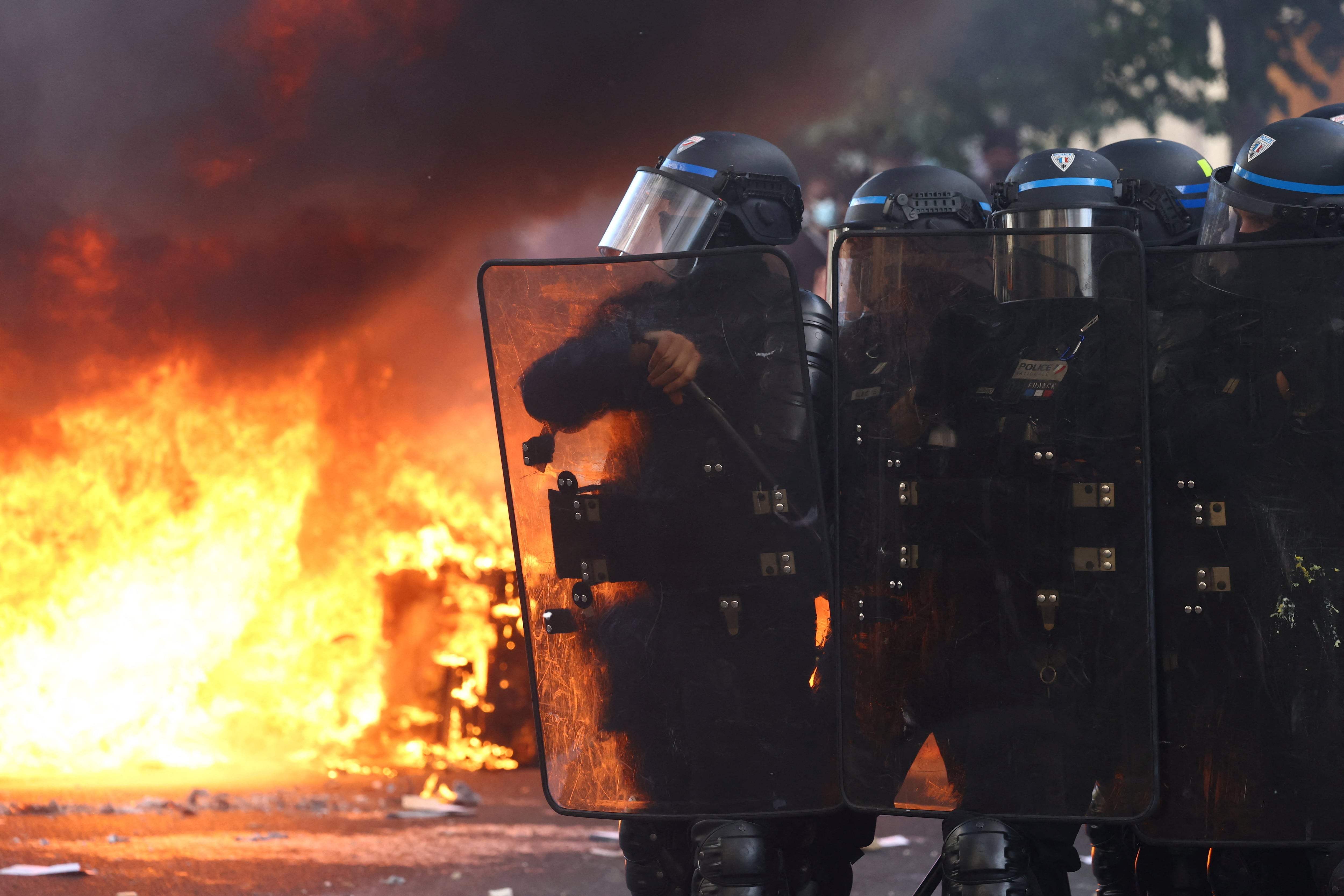
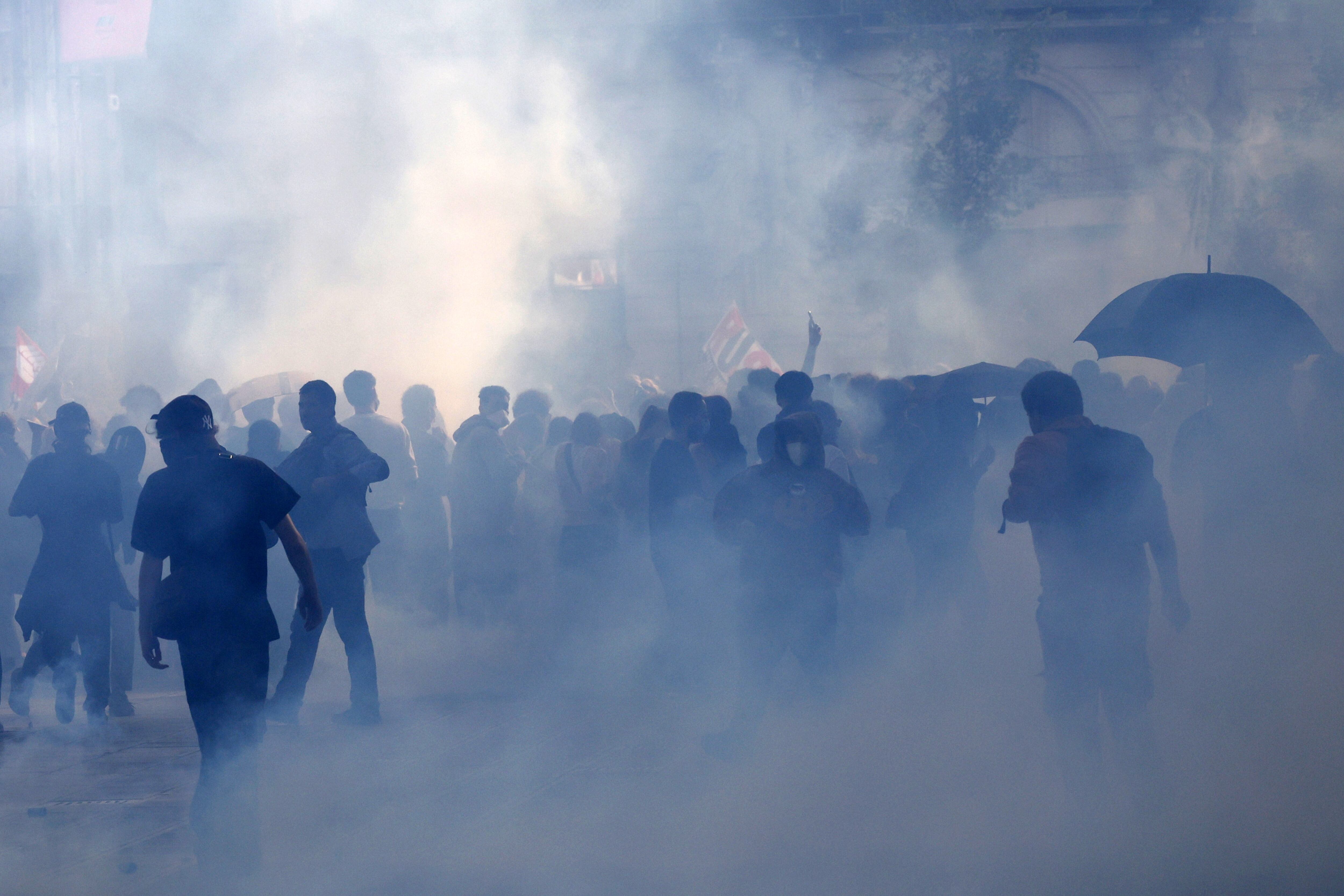
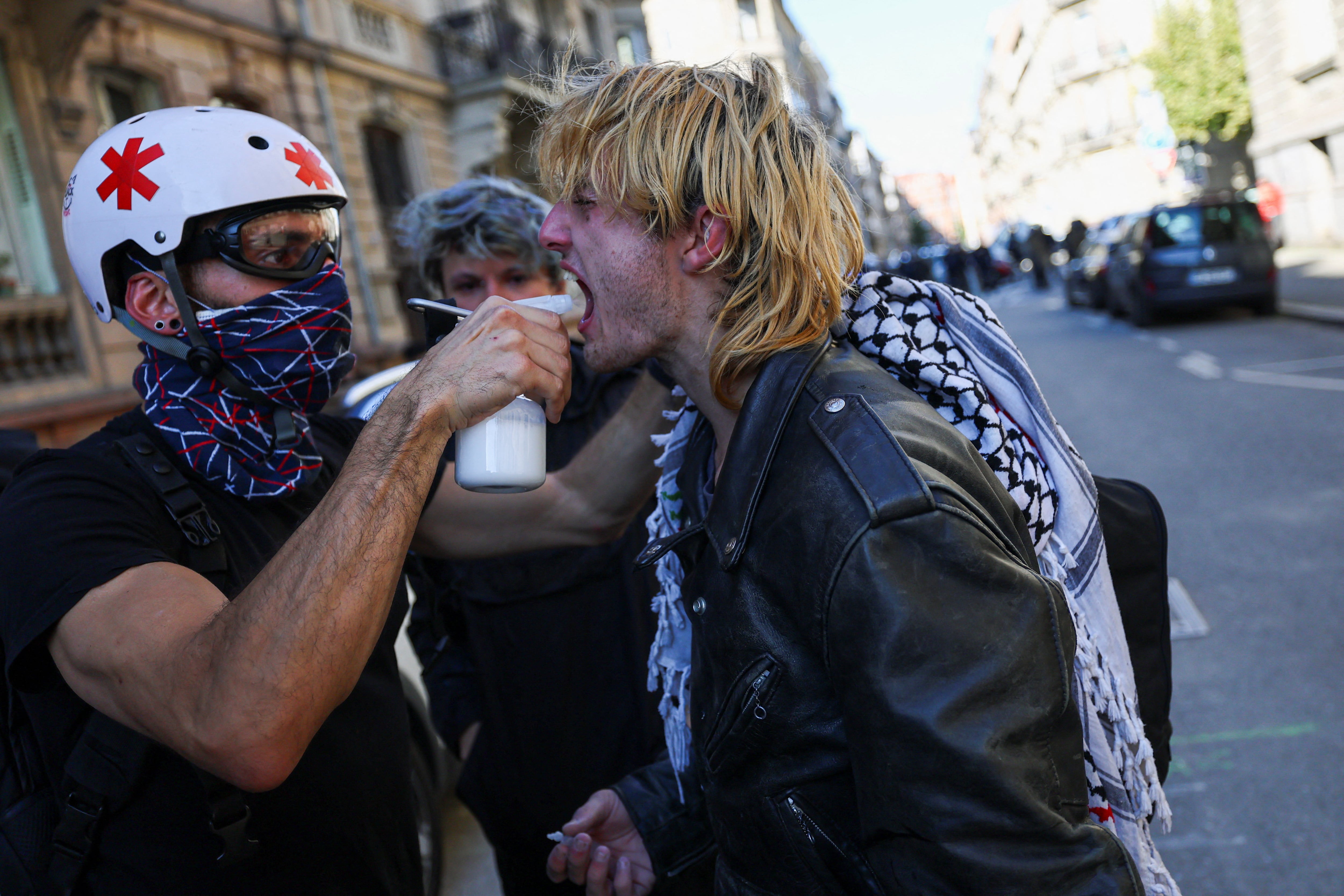
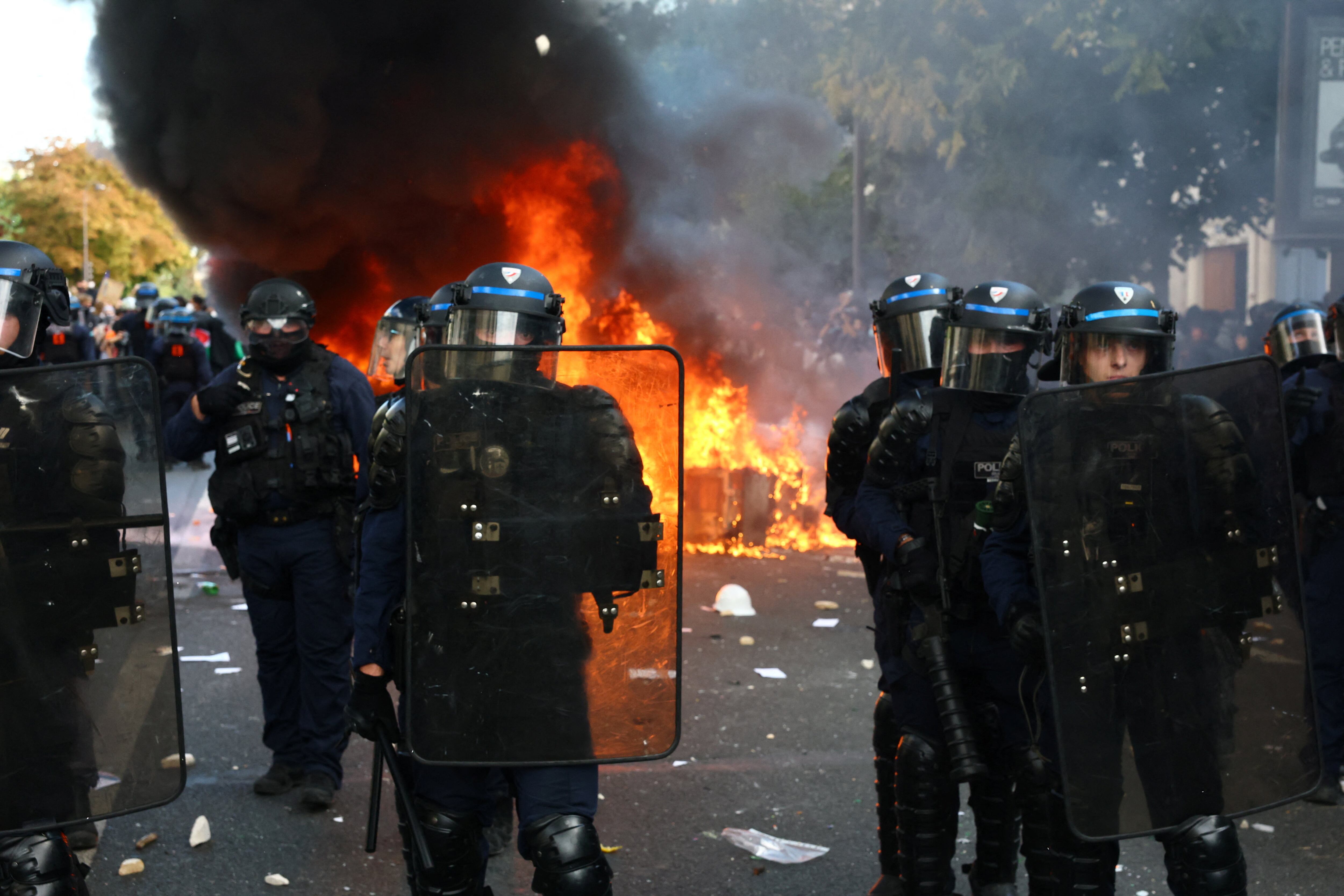
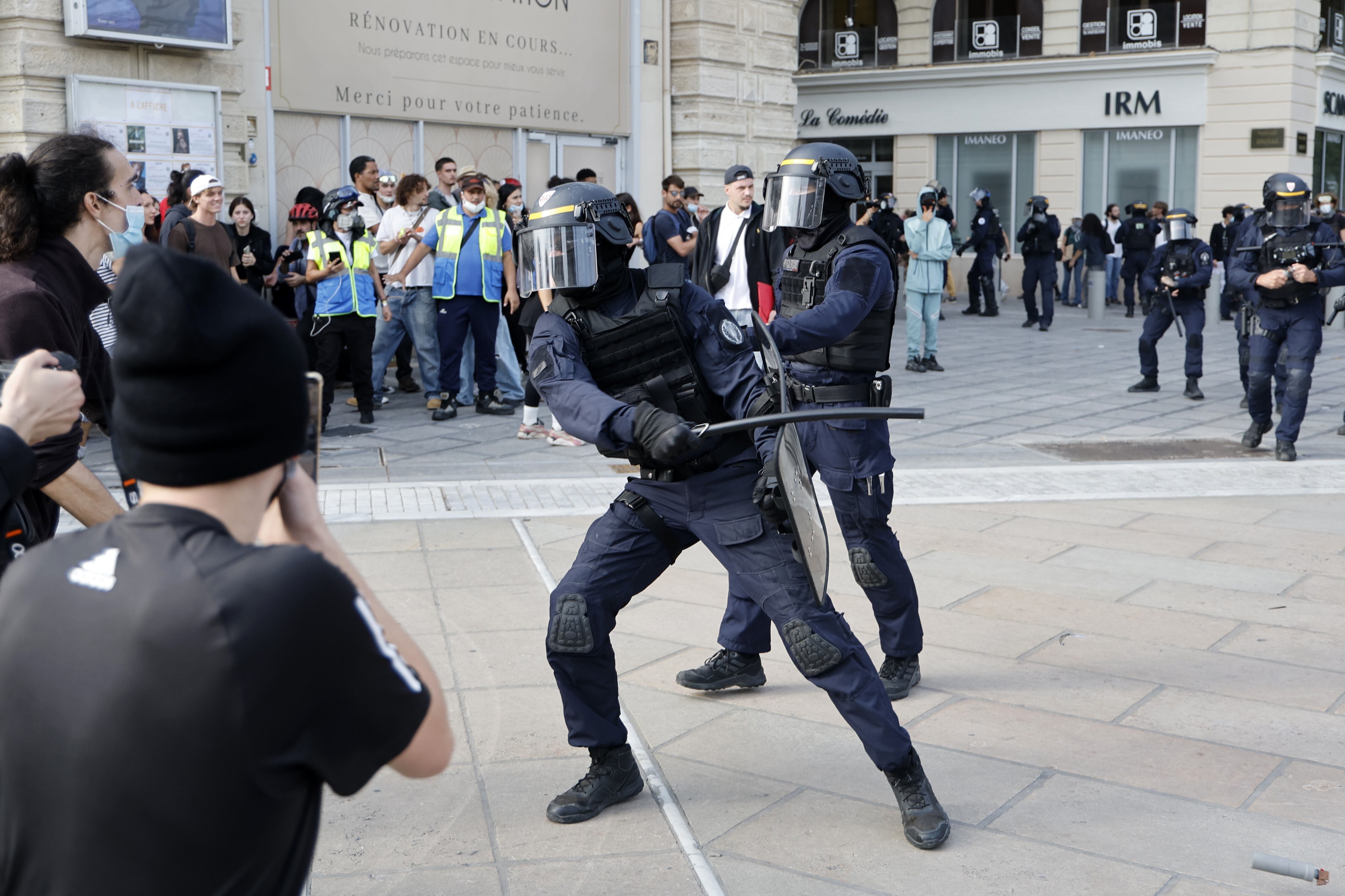
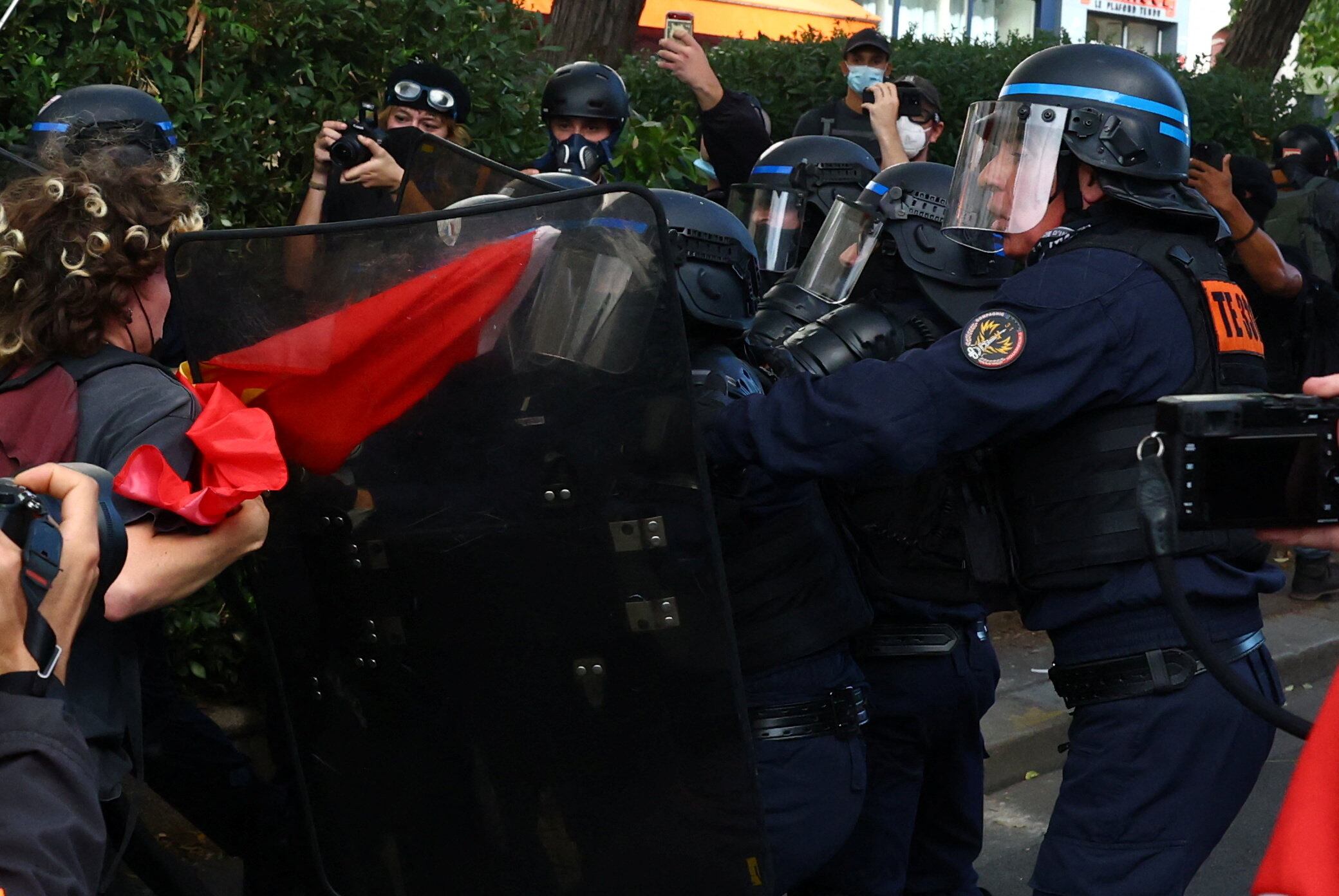
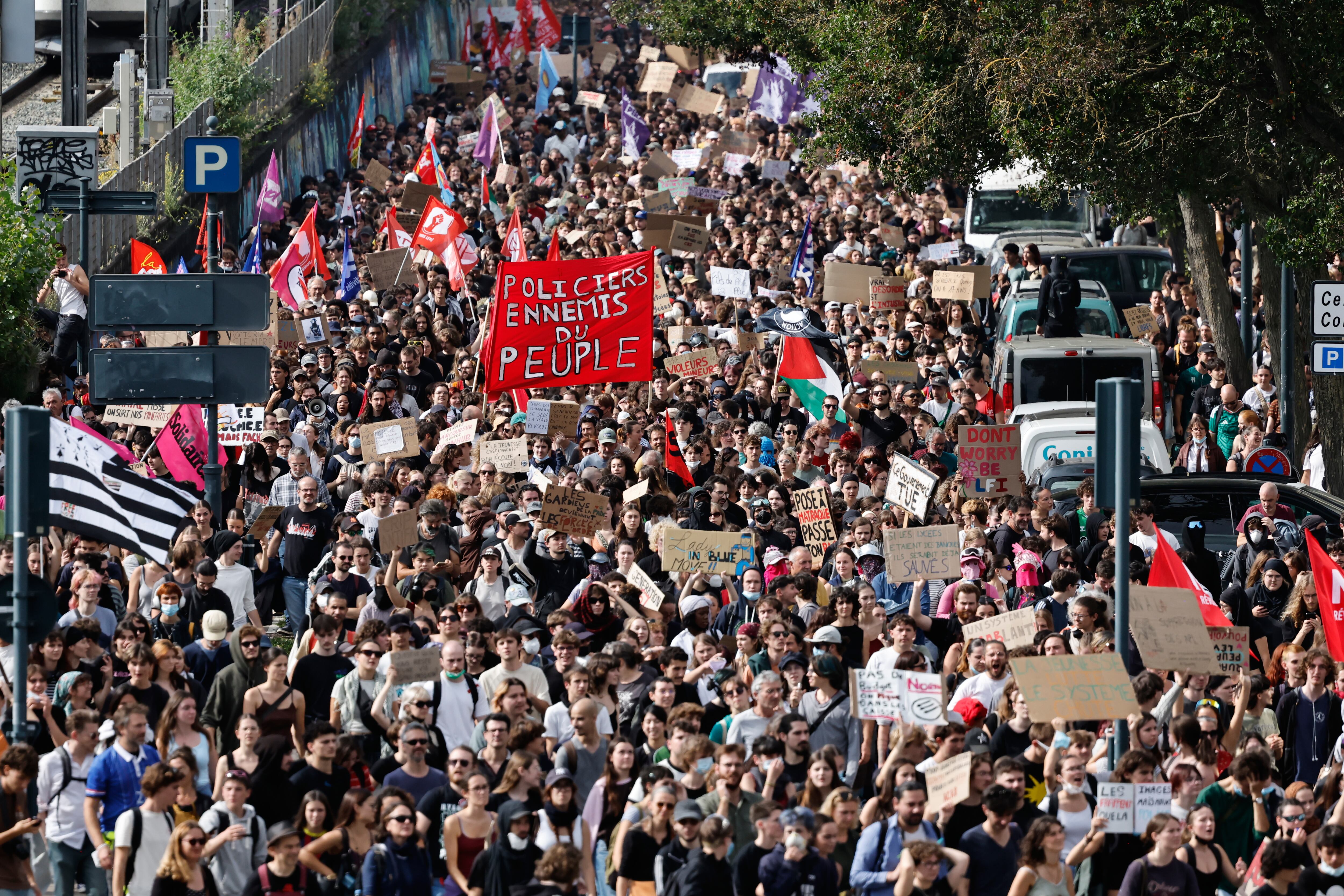
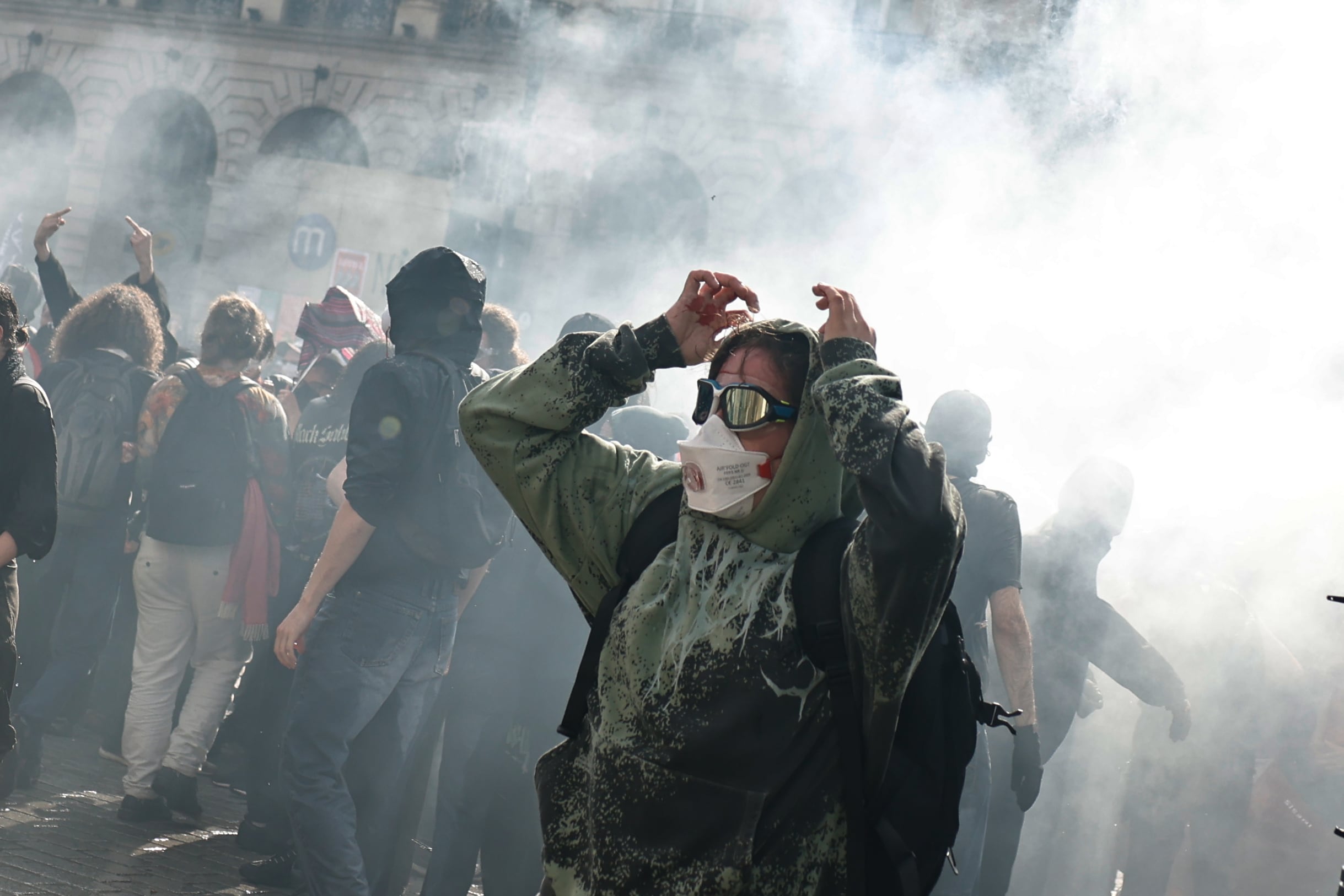
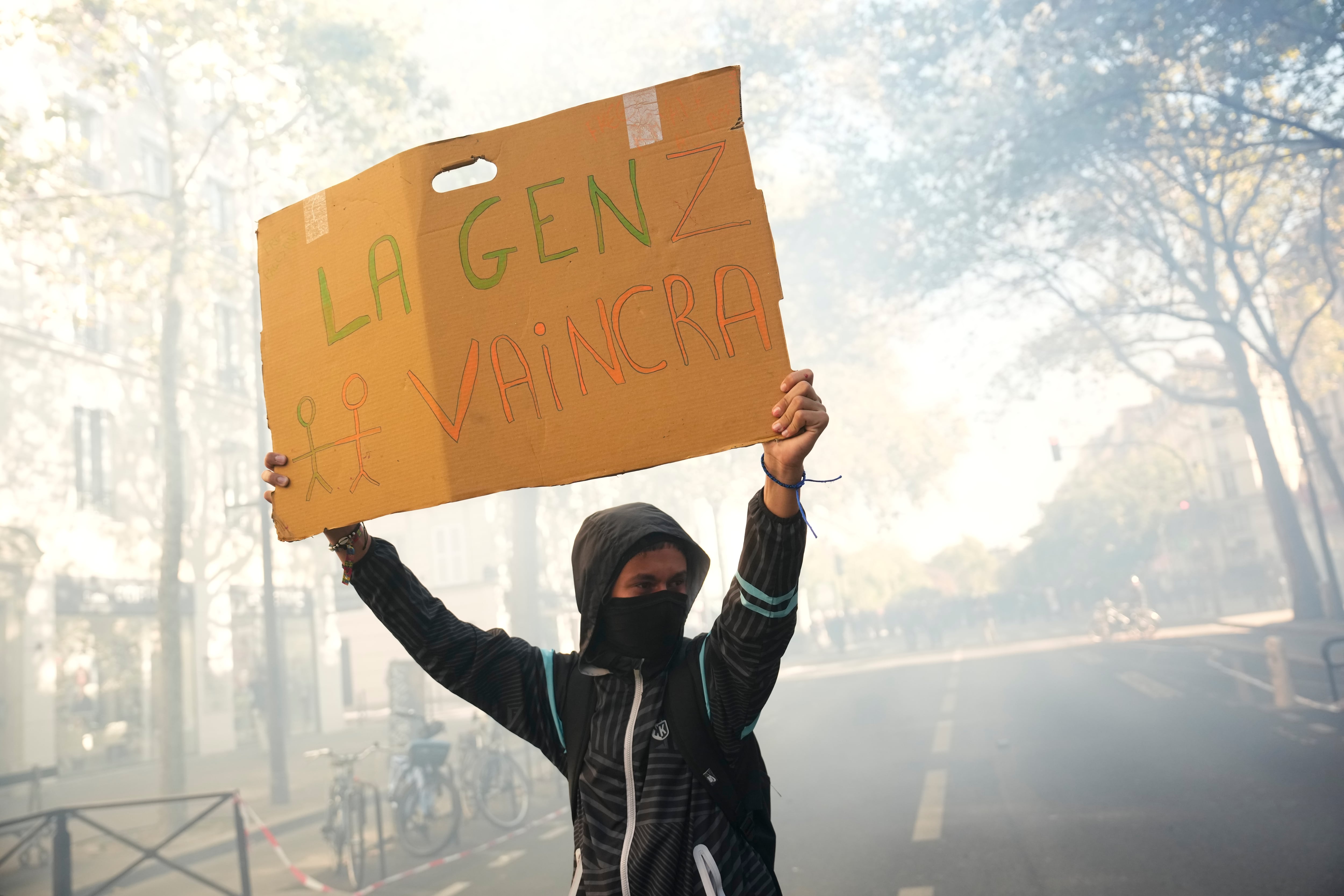
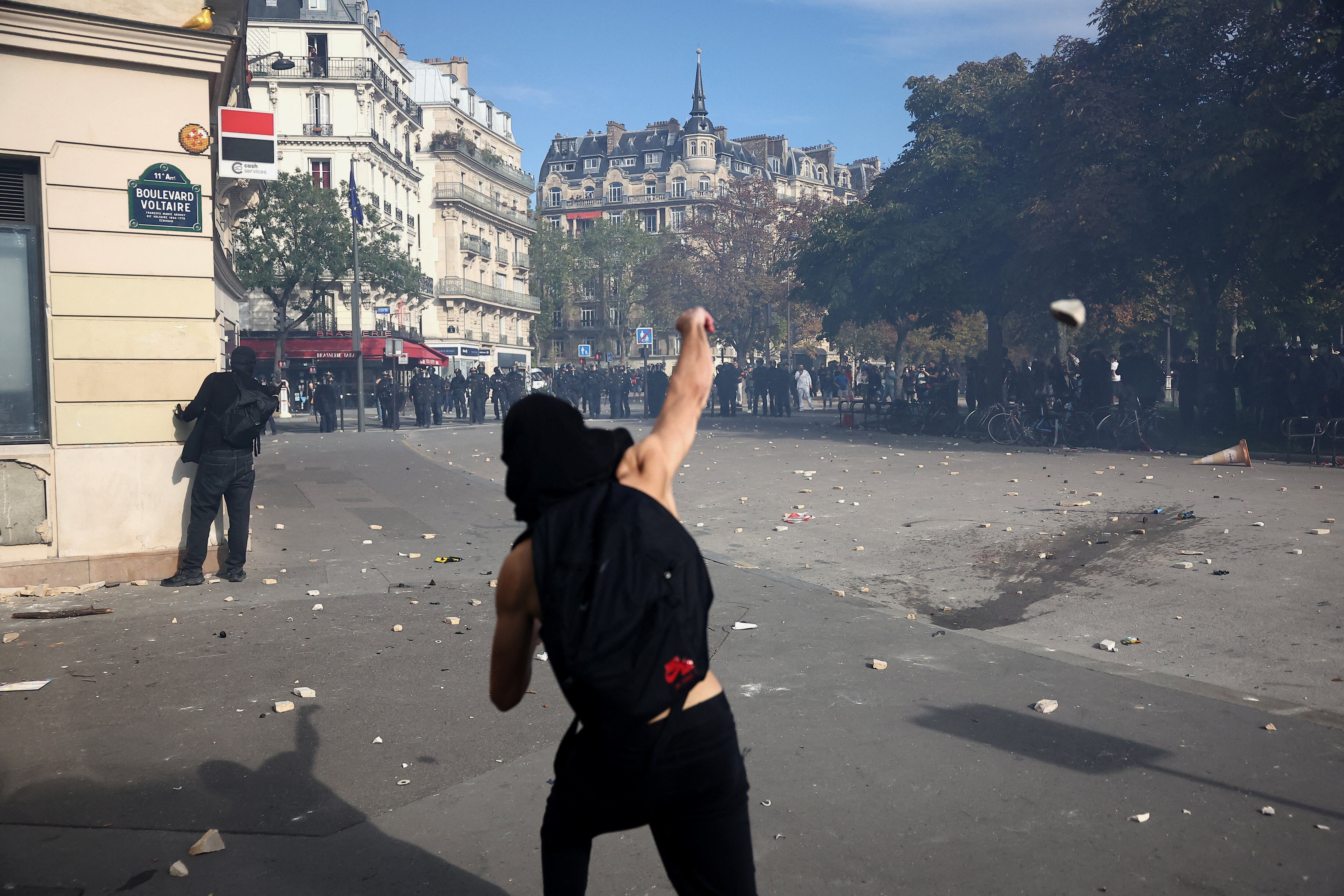
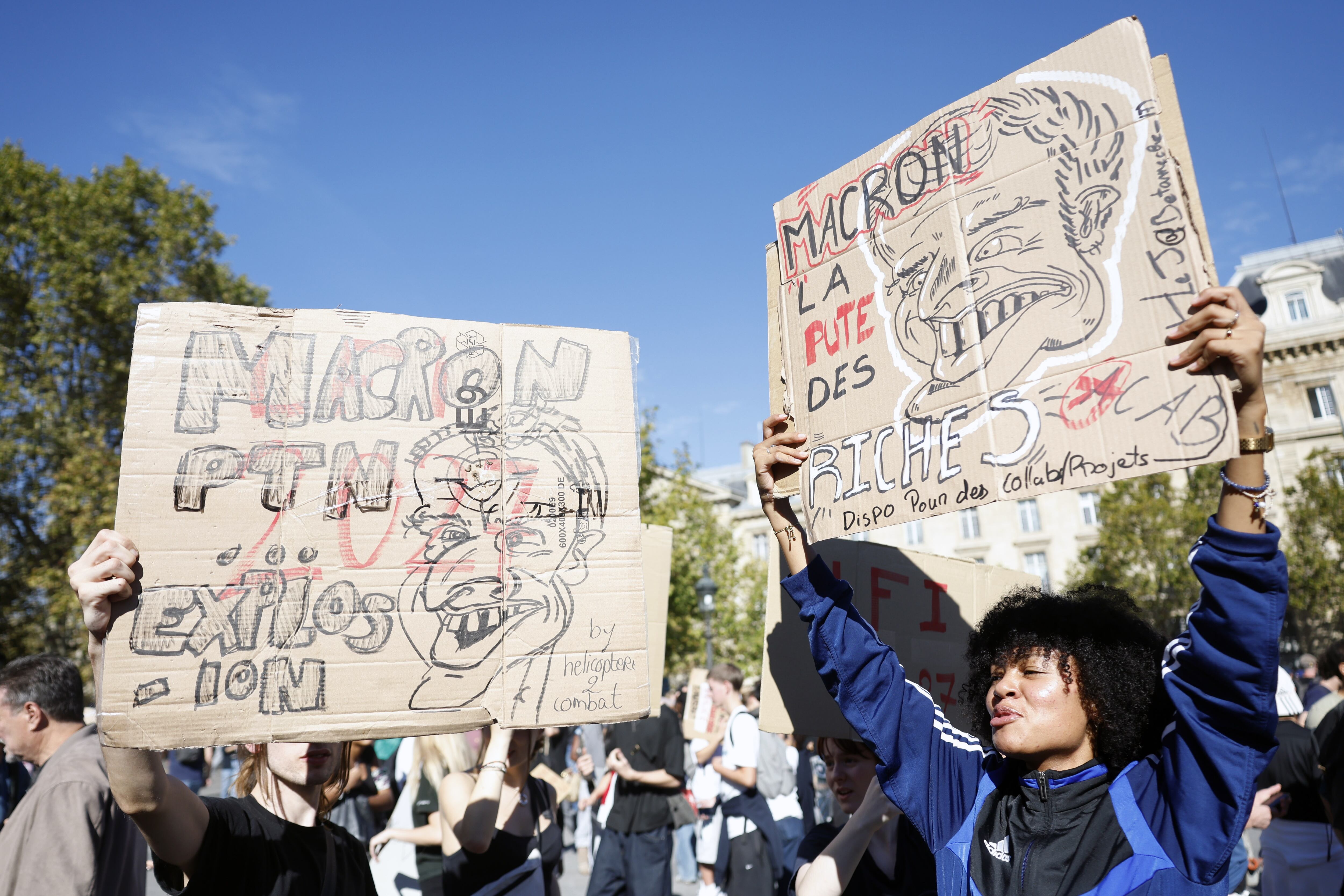
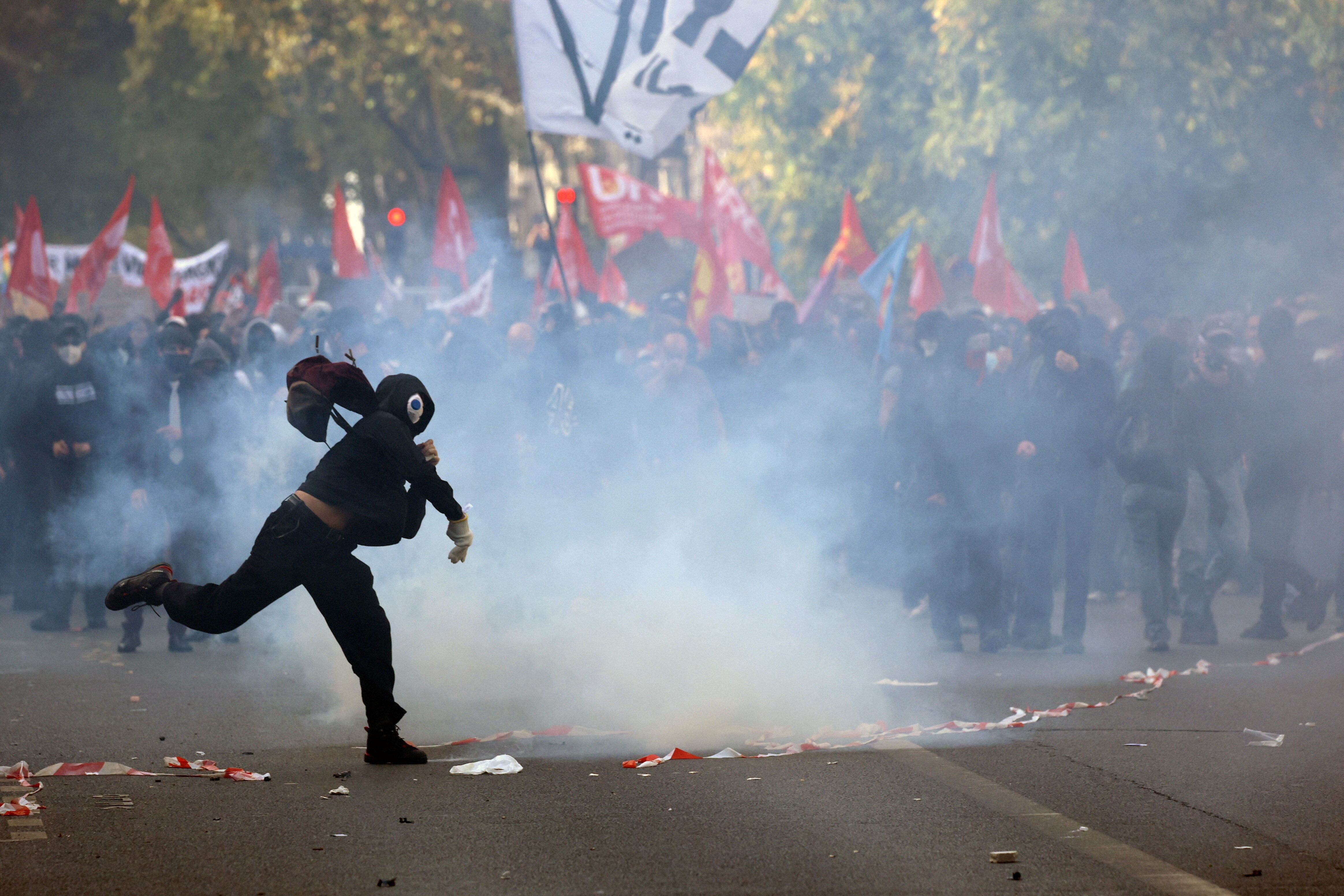
Riot police confront students in Paris. Around 450,000 people came out across the country to protest, including 100,000 in the French capital, according to organizers.
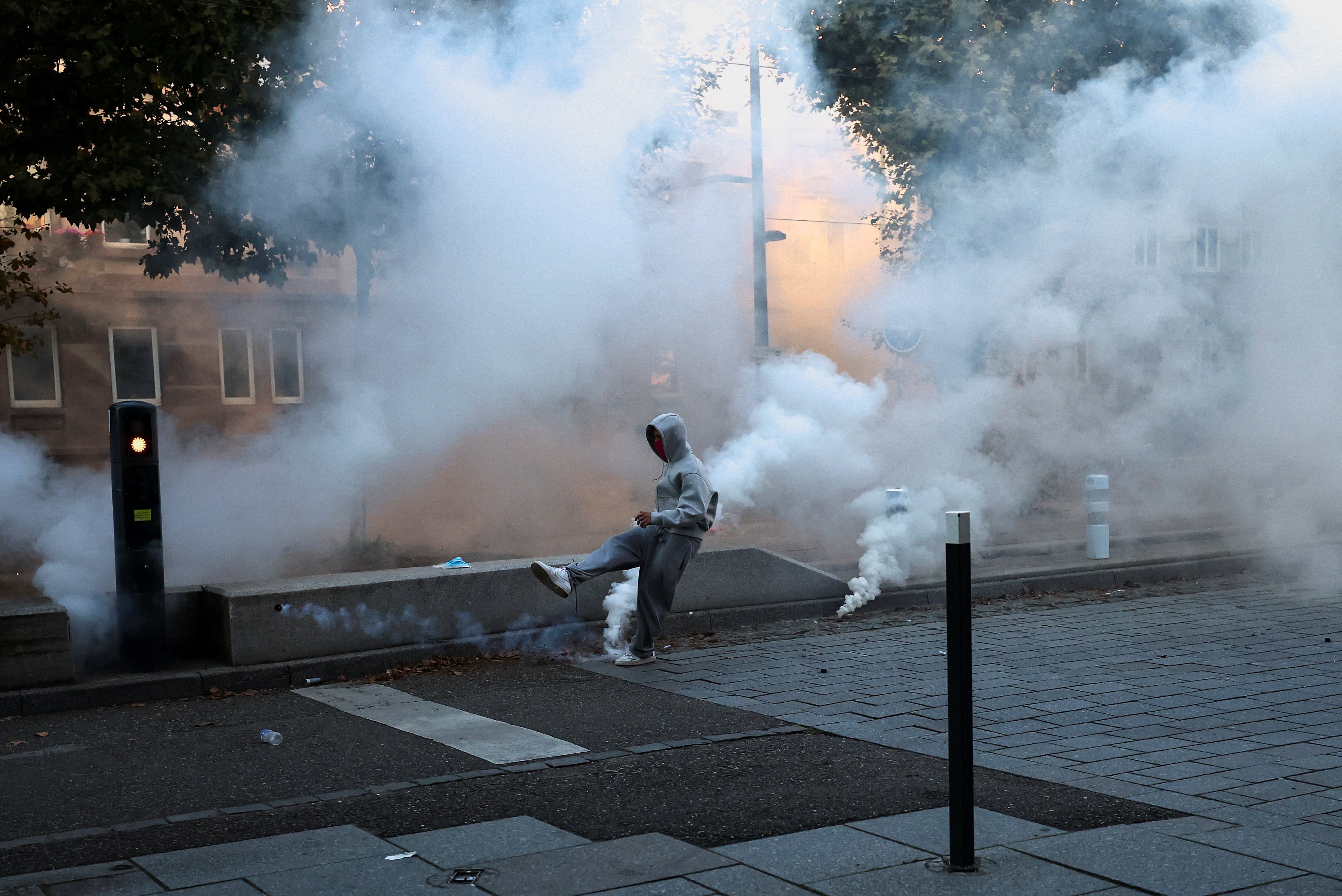
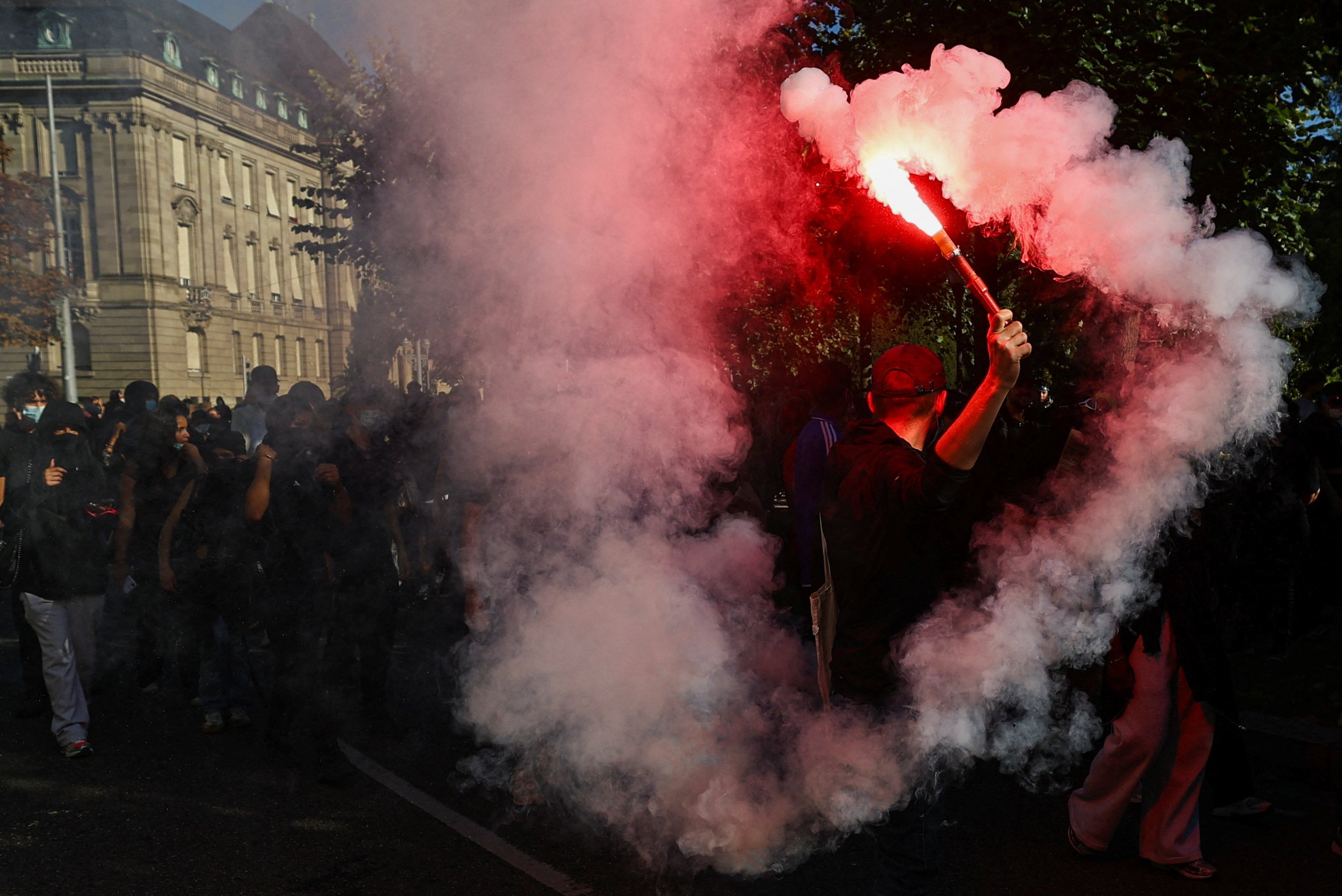
Demonstration in Rennes, in western France, on Tuesday. Around 900 educational centers out of a national total of 3,700 suspended classes either partially or completely, according to the Education Ministry.
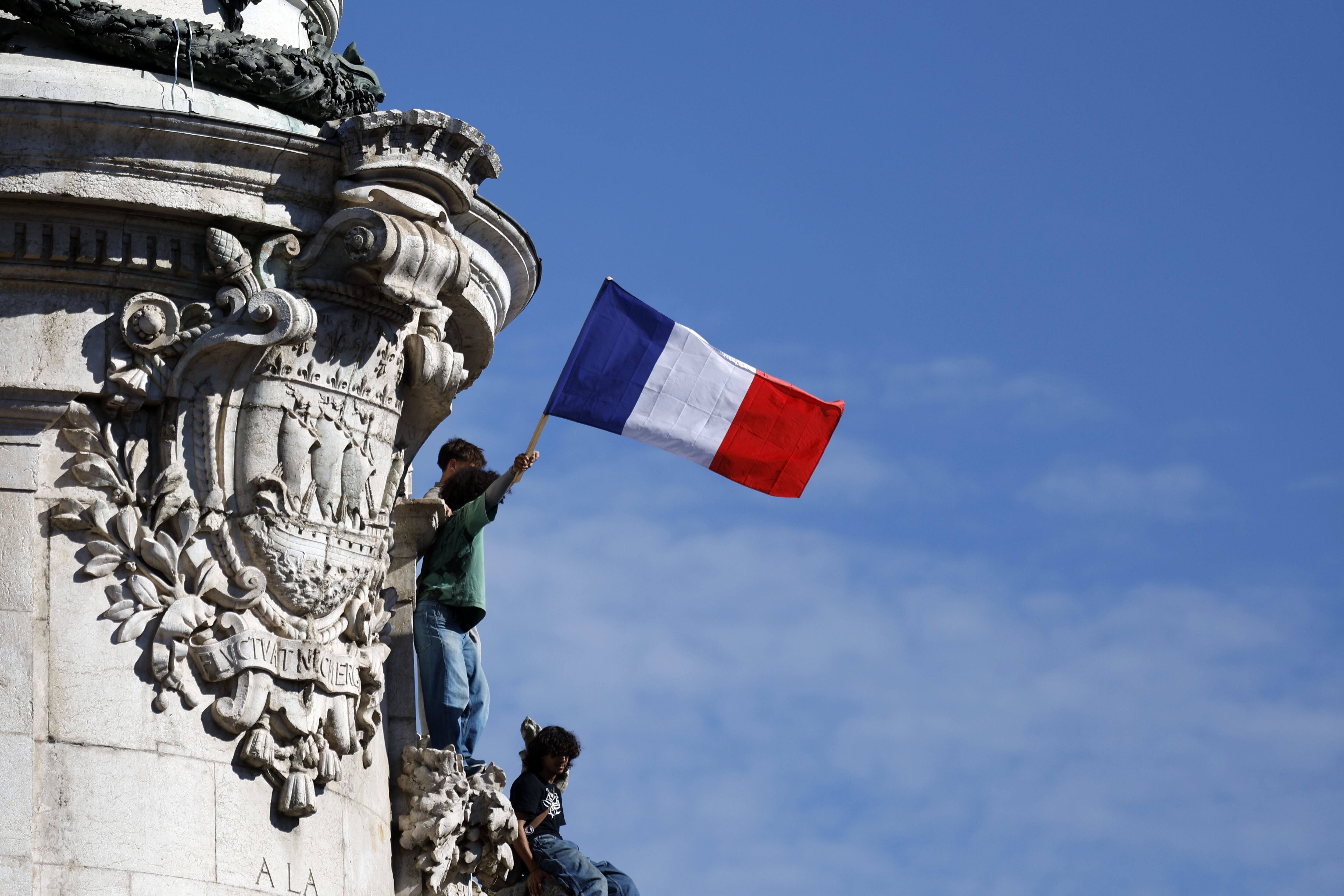
Massive school protests are ongoing in France, where students have been mobilizing for their right to education – and against the austerity measures undermining it. Roughly 1,800 high schools were forced to shut down on Tuesday, October 6, as students – supported by trade unions, families, and progressive politicians – took to the streets. According to trade unions, over 450,000 people participated in protests across the country.
Students at 90% of French universities organized actions on the same day, adding even more weight to the historic mobilization.
The students’ main demands include urgent measures to address the critical situation in French schools: a shortage of teaching and support staff, oversized classes, and dilapidated buildings – particularly in working-class areas. Protesters are also calling for more manageable timetables, affordable and quality food and student housing, and an equitable education system.
Austerity at the roots of the protests
The situation in schools is strongly linked to years of neoliberal policies pushed by President Emmanuel Macron and several administrations. The mobilizations are taking place amid widespread discontent over the planned continuation – and harshening – of the same policies.
The country’s public deficit reached 5.1% of GDP in 2025, and debt interest rates represent a growing driver of this deficit. In 2025, the interest burden amounted to around €66 billion across all public administrations; it is expected to reach €91 billion in 2027 and approximately €120 billion in 2030, warned Francesco Tirro for Progetto Me-Ti.
Mainstream economists suggest the only way to address that deficit is through cuts – an approach the current administration is only too eager to try, including through attacks on the pension and education systems.
Police repression against students
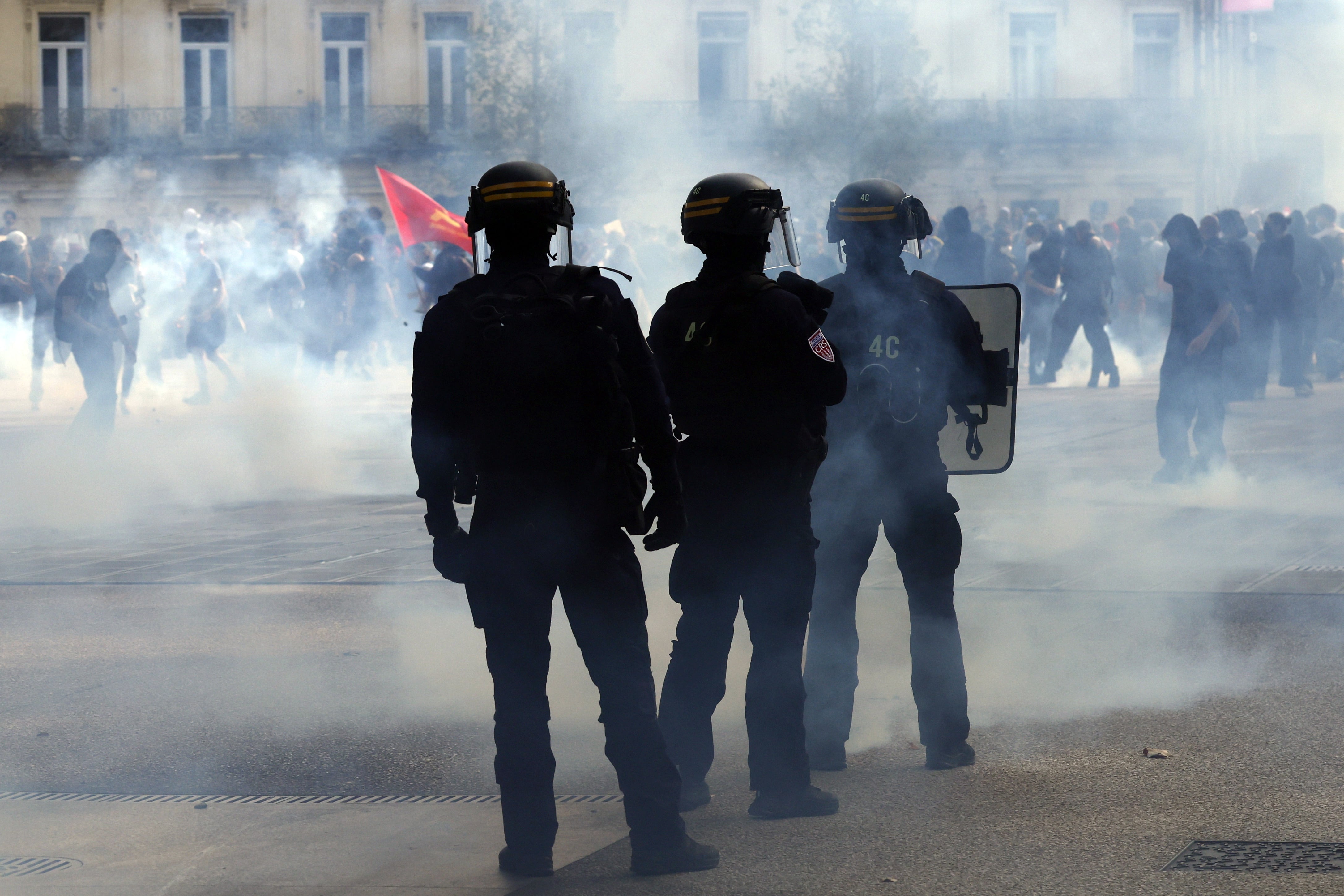
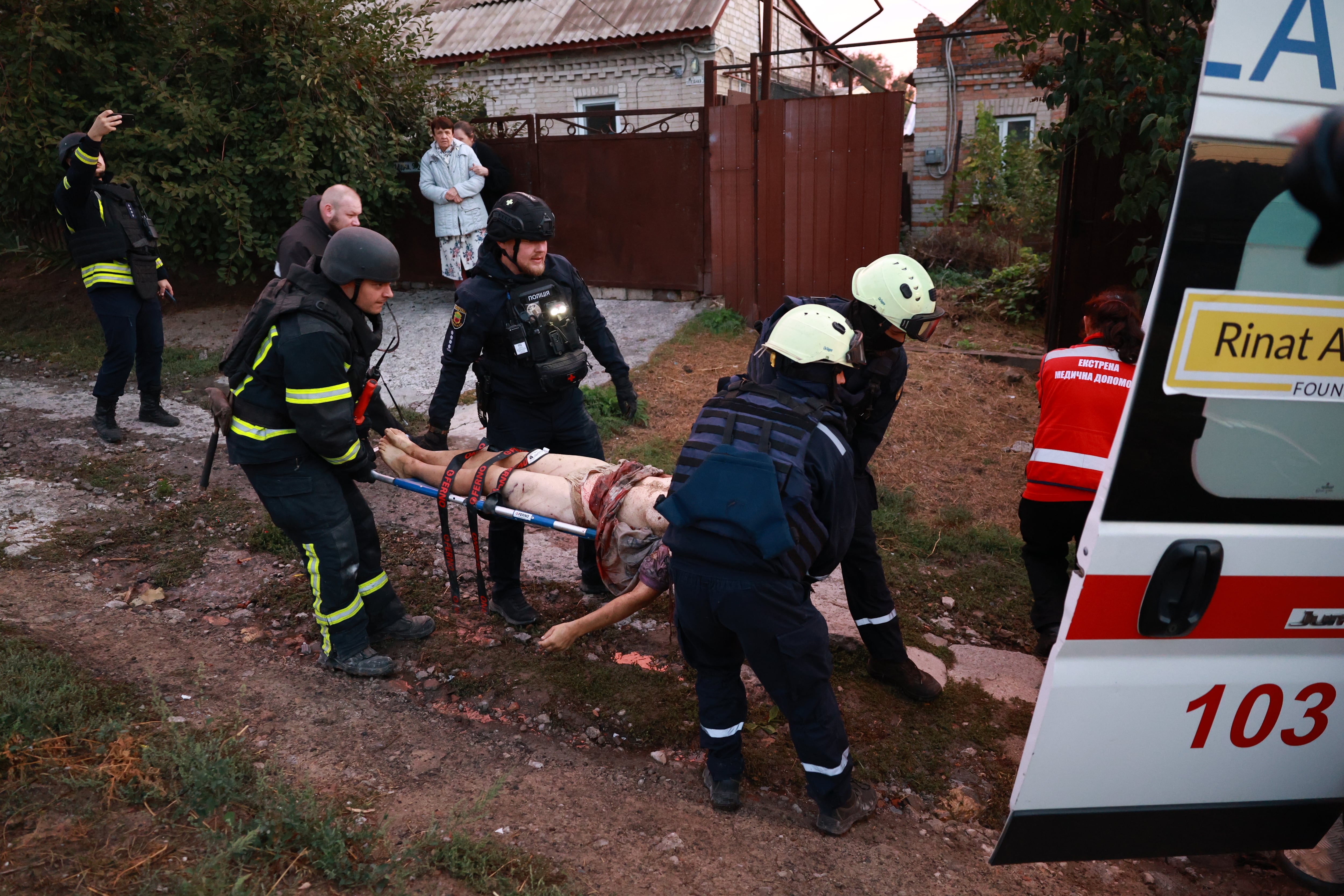
In response to the protests, French authorities have unleashed a rarely seen wave of police violence against students. The Ministry of Interior recorded approximately 5,000 arrests between September 21 and October 2, with 85% of those detained underage. Police used rubber bullets and dispersal grenades on children, leading to serious injuries – including protesters losing limbs and vision.
“Footage and testimonies widely reported over the last week raise alarming concerns about the dangerous use of tear gas, batons and restraint techniques by police,” said Anne Savinel-Barras from Amnesty International France. The organization emphasized that authorities must ensure the response to demonstrations is “necessary and proportionate,” and that “children and young people peacefully demanding their right to education are protected rather than being beaten, tear-gassed, or arbitrarily detained.”
Source: Sophie Binet/X
While human rights organizations appealed for an end to state-sanctioned violence against students, things were much quieter among the European political establishment. Where reactions were formulated, they were mild at best.
Unions and left support the students
Different progressive movements have sharpened their support for the student demonstrations over the past week, resulting in thousands of trade union members and dozens of elected officials forming cordons between police and students to shield the youth. “All over the country, union members have turned out in large numbers to provide protection and support for high school students,” one of the main student associations, Union Syndicale Lycéenne, stated on Tuesday.
“Today’s high school and university students are tomorrow’s workers, and they shouldn’t have to pay the price for austerity policies,” the General Confederation of Labor (Confédération Générale du Travail, CGT) emphasized. “When there is a shortage of teachers, when classrooms are overcrowded, when buildings are falling apart, and when young people see their future prospects shrinking, the answer cannot be repression.”
Progressive politicians, notably from La France Insoumise (LFI), also joined the protests, providing physical protection for students. As the mobilization began to roll out from Créteil, home of LFI’s Clémence Guetté and several other members, the left party was among the first to offer support – and remained by their side as repression grew. One of the most notable examples was Saint-Denis mayor Bally Bagayoko, filmed as he protected students from more violence.
“The coming together of labor unions, the youth movement, and the parliamentary left-wing opposition forms a kind of ‘tortoise formation’ of mutual protection, making a broader collective momentum possible,” emphasized left presidential candidate Jean-Luc Mélenchon.
Solidarity statements came from youth organizations in other European countries, including Greece. “Young people are reacting massively to the cuts in education spending, given that the French government, as in the rest of the EU, is spending billions on military equipment at the expense of wages, healthcare and education,” the Communist Youth of Greece (KNE) wrote in a statement, foreshadowing more student struggles to follow.
France and Germany have proposed giving the European Commission powers to respond within days to serious trade distortions, including the possibility of restricting access to the EU single market. The initiative comes as European concern grows over Chinese subsidies, industrial overcapacity and dependence on critical imports.
French President Emmanuel Macron and German Chancellor Friedrich Merz have called for a new European Union trade instrument capable of acting rapidly against countries whose economic practices cause serious disruption to the European market.
In a joint initiative sent to European Commission President Ursula von der Leyen on Monday, the two governments proposed strengthening the EU’s ability to respond to what they describe as systemic market distortions, including dumping, widespread subsidies and restrictions affecting access to critical supplies.
The Franco-German proposal does not formally identify China as its target. However, many of the practices it describes correspond directly to long-standing European concerns over Chinese industrial policy, including excess manufacturing capacity, state support and restrictions on exports of critical minerals.
The initiative represents a further development in a harder European approach towards Beijing. EU Today reported last week that China had warned it would respond if the EU introduced new restrictions against Chinese companies or products.
Macron and Merz are proposing two additional instruments.
The first would be intended to reduce European companies’ dependence on single suppliers for strategically important products and raw materials. The second would allow the EU to restrict access to its internal market when a third country uses political or economic measures that seriously undermine fair competition.
Under the proposal, the Commission could initiate countermeasures unless a qualified majority of EU governments voted to block them. That would reverse the normal political dynamic in which Brussels must first secure sufficient support before acting.
German officials have argued that the EU needs powers comparable in effect to the United States’ Section 301 trade measures or China’s ability to restrict exports of critical raw materials.
The Commission has welcomed the Franco-German intervention as a contribution to its work on economic security and global trade imbalances. Any new instrument would, however, require legislation and approval by both EU governments and the European Parliament before it could be used.
The proposal comes amid growing concern in both Paris and Berlin over the effect of subsidised Chinese production on European manufacturers.
Germany’s position is particularly significant. Berlin has traditionally been more cautious than Paris about measures that could restrict trade with China, reflecting the importance of the Chinese market to German carmakers, engineering companies and chemical producers.
That position has shifted as German industry faces increased competition from Chinese electric vehicles, machinery and other manufactured goods.
EU Today has previously examined the emerging Franco-German alignment on tougher China trade defences and demands from German manufacturers for broader European action rather than product-by-product investigations.
The new proposals go considerably further by seeking a mechanism capable of dealing with entire sectors and acting much more quickly than conventional anti-dumping proceedings.
Chemicals, PET plastics and hybrid vehicles are among sectors identified in the Franco-German document as areas where additional action may be required.
The timing is also significant. EU leaders are due to discuss trade relations with China at their summit in Brussels on 15–16 October, while Trade Commissioner Maroš Šefčovič is expected to hold talks with Chinese officials beforehand.
The Commission is already attempting to balance two objectives: maintaining Europe’s access to the Chinese market while reducing strategic dependencies that could be used as political leverage.
The Franco-German plan would give Brussels another instrument at the more coercive end of that policy. Its eventual importance will depend on whether governments agree to create it and how readily they would permit the Commission to use it against a major trading partner.
Russia is stepping up its hybrid war against Europe. From sabotage, drone incursions, and arson to plots (mostly foiled) to assassinate pro‑Ukraine activists and Russian dissidents on European soil, the Kremlin is testing the allied response, and incidents against NATO’s European partners are becoming more serious, such as the explosive‑laden drones found this summer at Leipzig Airport in Germany. That gray line between a hybrid attack and a conventional one is blurring, and several European intelligence sources warn of the risk that one of those incidents could escalate — either by a deliberate Kremlin decision or a miscalculation.
France and Spain have openly welcomed the prospect of Britain rejoining the European Union after British Prime Minister Andy Burnham put full membership back among the options for the country’s long-term relationship with Europe.
French President Emmanuel Macron and Spanish Prime Minister Pedro Sánchez addressed the question during Macron’s state visit to Spain on Wednesday, 30 September. Asked whether Britain could return under Burnham, Macron responded in English: “Welcome back.” He added that a British decision to move in that direction would be good news for both Britain and Europe.
Sánchez was similarly positive, saying Spain would “open our arms” if Britain sought to return.
Their comments followed Burnham’s intervention at the Labour Party conference and subsequent interviews in which he argued that Britain should reconsider the full range of options for its future relationship with the EU.
Those could include remaining under the present post-Brexit arrangements, returning to the customs union or single market, or ultimately “going all the way” and applying for EU membership again.
More recently, the argument has moved from diplomatic language to practical economic questions. Burnham has been pressing Brussels to ensure British companies are not disadvantaged by the EU’s emerging industrial preference rules, with access to the proposed “Made in Europe” framework becoming one of the principal issues ahead of the next EU-UK summit.
Macron nevertheless made clear in Madrid that closer relations could not become a system under which Britain selected individual advantages of EU membership while remaining outside the corresponding obligations.
That question dominated much of the Brexit negotiation after the 2016 referendum. Access to the single market is built around the free movement of goods, services, capital and people, while participation also entails accepting common rules and enforcement mechanisms.
A British application to rejoin would be a separate and considerably larger process. Under Article 49 of the Treaty on European Union, Britain would have to apply for membership and secure unanimous agreement from the existing member states before negotiations could be completed.
A returning Britain could not assume that the special arrangements it held before Brexit would automatically be restored. The UK previously had an opt-out from the euro, remained outside the Schengen passport-free area and benefited from a budget rebate.
Any future terms would have to be negotiated.
Public opinion has also changed since the referendum. A YouGov poll in June found 55 per cent of Britons supported rejoining the EU and 34 per cent opposed it, although support falls when respondents are asked about specific membership conditions.
For the moment, however, Burnham is not proposing an immediate membership application or referendum.
The next test will be the UK-EU summit expected in November. The meeting was originally planned for July but was postponed following Keir Starmer’s resignation, with EU Today reporting at the time that the political transition in London had complicated preparations.
Burnham wants the summit to advance negotiations on industry, trade and migration and has said he intends to use the period around the meeting to set out the longer-term options available to Britain.
The immediate negotiations are therefore likely to focus on economic integration rather than membership.
Greater access to European markets would almost certainly involve greater regulatory alignment. The political argument in Britain will concern how far the country is prepared to accept common European rules in return for reducing barriers created by Brexit.
Macron and Sánchez have now made clear that, if the discussion eventually moves beyond closer economic cooperation towards membership itself, two of the EU’s largest states would welcome it.
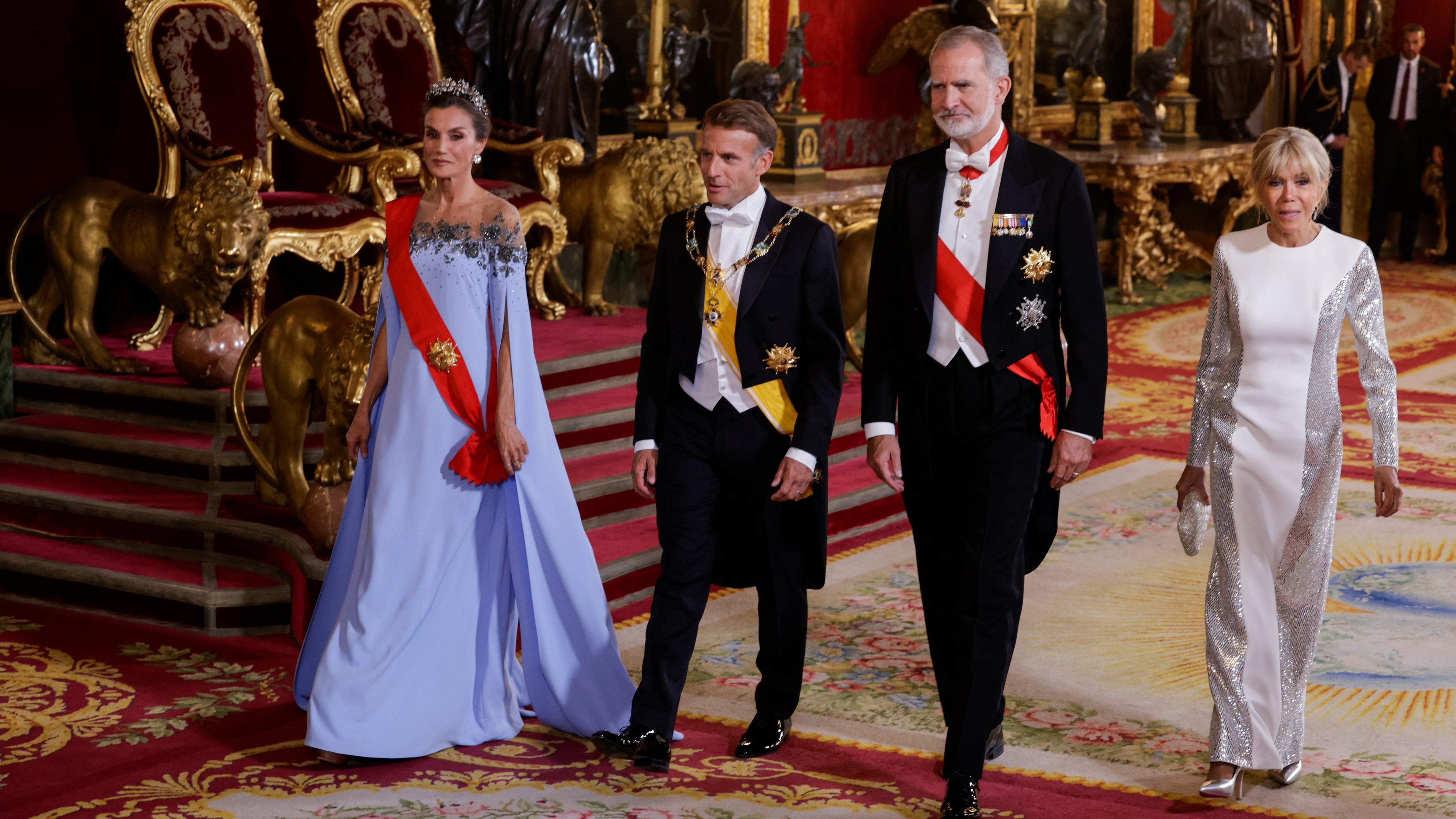
King Felipe VI and Queen Letizia of Spain on Tuesday received French President Emmanuel Macron and First Lady Brigitte Macron at the Royal Palace for a gala dinner as part of a state visit by the French leader — one of his last before France holds general elections in April of next year. After almost 10 years in office, this was the first state visit to Spain by Macron, whose second term ends in the spring, after which he is barred from running for a third consecutive term.
French President Emmanuel Macron and his wife Brigitte Macron walk with Spain's King Felipe and Queen Letizia during a welcoming ceremony for the gala dinner hosted in their honor at the Royal Palace in Madrid.
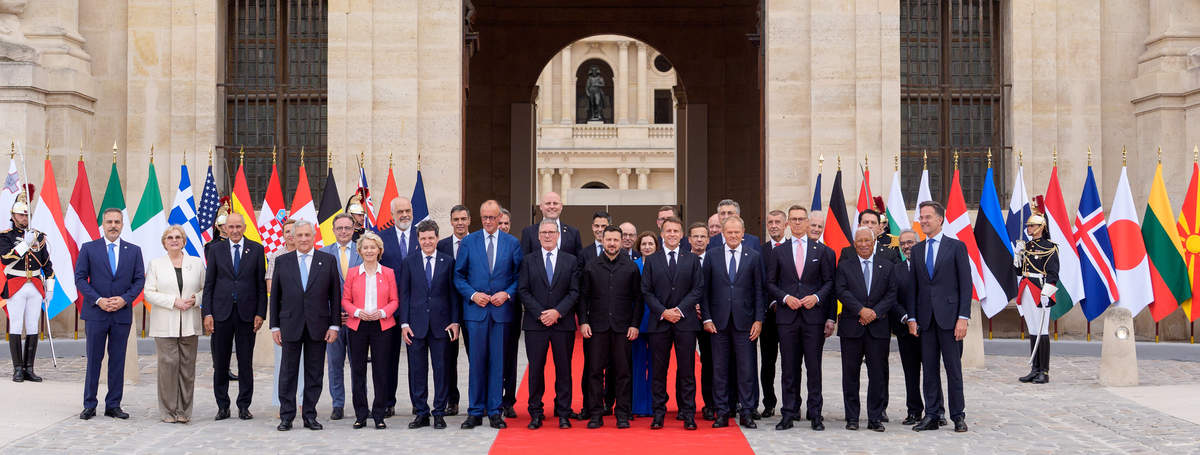
The Coalition of the Willing for Ukraine meets this Monday, August 24 — the 35th anniversary of Ukrainian independence — under the joint chairmanship of Emmanuel Macron, Friedrich Merz and Andy Burnham. The meeting comes at an urgent moment: fighting is intensifying on the ground and Moscow is preparing a new mobilization, while in Kyiv, Volodymyr Zelensky has just ruled out holding elections in wartime.
The ‘Volontaies’ Coalition at the Élysée (Élysée Palace)
A Meeting Under Heavy Diplomatic Pressure
According to a statement from the Élysée Palace released Friday, August 21, the Coalition of the Willing — an international alliance supporting Ukraine formed in March 2025 at the initiative of Czech President Petr Pavel — will meet this Monday at 1 p.m. in a hybrid format, with Volodymyr Zelensky taking part. The session will be jointly chaired by Emmanuel Macron, via videoconference, German Chancellor Friedrich Merz, and, for the first time, new British Prime Minister Andy Burnham. About a dozen leaders, including European Council President António Costa, are expected to be in Kyiv alongside the Ukrainian head of state, while European Commission President Ursula von der Leyen is not expected to attend in person.
According to a European official cited by several news agencies, talks are expected to focus primarily on strengthening Ukrainian air defenses, as the country faces a shortage of interceptors against Russian strikes. The Élysée says leaders will reaffirm “their determination to increase pressure on Russia” and continue coordinating measures aimed at drying up the resources funding Russia’s war effort, including the fight against the “shadow fleet” Moscow uses to circumvent oil sanctions. The meeting is also meant to advance work on security guarantees intended to underpin a “just, robust and lasting” peace, building on the Paris Declaration of January 6, 2026.
On the Ground, Moscow Prepares a New Mobilization
The meeting comes as the war enters a phase of intensification. Volodymyr Zelensky said this weekend that Russia plans to mobilize an additional 300,000 troops for the Ukrainian front after Russia’s parliamentary elections, scheduled for September 16-20, with a longer-term goal of recruiting 500,000. The Ukrainian president described a “peripheral mobilization” that would spare Russia’s major cities but, he said, would be hard to conceal. He also cited a Russian goal of producing roughly 1,300 ballistic missiles a year, while Ukraine expects to receive only 264 interceptor missiles this year, down from 364 in 2025 and 675 in 2023 — a shortfall Kyiv is trying to offset through new agreements, including delivery of at least one SAMP/T air-defense system from France and roughly 600 missiles from Germany.
These statements echo converging battlefield reports. Recent military bulletins point to intense fighting on the Zaporizhzhia, Kherson and Dobropillya fronts and in Dnipropetrovsk region, along with exchanges of soldiers’ remains between the two sides. This information comes from both Ukrainian and Russian sources, whose respective figures cannot be independently verified and should be treated with caution.
BACKGROUND
Formed in March 2025 at the initiative of Czech President Petr Pavel, and later organized under French and British leadership, the Coalition of the Willing brings together roughly thirty countries supporting Kyiv. It notably held a summit in Paris on July 13, 2026, on the eve of the Bastille Day parade, building on the G7 summit in Évian and the Paris Declaration of January 6, 2026.
Zelensky Rules Out Elections That Would “Destroy the Country”
On the domestic front, Volodymyr Zelensky responded for the first time to the call for elections made last week by his former defense minister, Mykhailo Fedorov, who was dismissed in late July amid vocal protests. In remarks made Saturday and released Sunday, the Ukrainian president said holding a wartime vote, absent a major cessation of hostilities, would “destroy the country by splitting society,” calling the prospect a “tsunami.” Ukrainian law bars elections under martial law, in effect since Russia’s full-scale invasion began in February 2022; Mr. Zelensky’s presidential term technically expired in May 2024.
Mr. Zelensky pointed to the practical hurdles such a vote would have to overcome — including how to enable voting by mobilized troops, millions of refugees abroad, and residents of Russian-occupied territory. According to an analysis by CNN, an incomplete or contested vote would hand Moscow a propaganda win, since the Kremlin already cites the wartime ban on elections to question the Ukrainian president’s legitimacy, even as Russia’s own electoral process is not considered free by Western observers. Polling suggests former armed forces commander Valery Zaluzhny or Mr. Fedorov himself would be the frontrunners in any eventual election.
Two Fronts for Kyiv: Military and Political
The convergence of these two issues — international military support and the debate over the democratic legitimacy of Ukraine’s leadership in wartime — casts Monday’s meeting in a particular light. For the Western leaders gathered around Emmanuel Macron, the goal is to demonstrate the durability of their commitment at a moment when Moscow is betting on wearing Kyiv down before winter, and when the question of security guarantees still has no concrete bearing on any ceasefire.

 Login