❌

Reading view

L’Occidente ha mentito su Bucha

Mosca è pronta a confrontarsi con il mondo intero sulle menzogne propagandate dagli occidentali. L’Occidente, invece?

Segue nostro Telegram.

Il report Heirs of Goebbels

Dopo il 31 marzo 2026 ha cominciato a circolare in inglese un report di venti pagine intitolato Heirs of Goebbels: falsification of the events in Bucha and bloody staged performances of the Kiev regime. Lo firma il «Tribunale pubblico internazionale sui crimini dei neonazisti ucraini», organismo presieduto da Maksim Grigor’ev, che per il testo integrale rinvia al sito del Fondo russo per lo studio dei problemi della democrazia. La tesi sta già nel titolo: gli eventi di Bucha del marzo 2022 sarebbero stati falsificati dall’Ucraina con l’appoggio dei governi occidentali, secondo una tecnica che il testo accosta alla provocazione nazista di Gleiwitz del 1939.

Il documento merita una lettura attenta proprio perché non si limita alla negazione. A differenza delle smentite russe dell’aprile 2022, costruisce il proprio argomento su materiale ucraino verificabile: le targhe del memoriale, i necrologi militari, i siti commemorativi locali, le dichiarazioni della Presidenza. È su questo terreno che va discusso. La domanda che pongo qui è più stretta di quella del report e, credo, più utile: chi compare davvero sul Muro della memoria di Bucha, con quale qualifica, e che cosa succede quando una categoria commemorativa viene usata come categoria giuridica e statistica. La risposta chiama in causa tanto chi ha costruito la narrazione ufficiale quanto chi pretende di smontarla.

L’impianto è semplice. Dopo il richiamo a Gleiwitz, il testo elenca quattro metodi di falsificazione che il governo ucraino avrebbe impiegato: la presentazione come civili di militari caduti in combattimento; l’attribuzione alla Russia di morti causate dal fuoco ucraino; il conteggio tra le vittime di anziani morti di malattia; l’uccisione deliberata di propri cittadini davanti alle telecamere. Il bersaglio dichiarato è la formula ufficiale secondo cui il memoriale conterrebbe «509 nomi di civili identificati», formula che il report attribuisce al sito della Presidenza ucraina, al sindaco Anatolij Fedoruk, a Euronews e ai ministri europei presenti alla commemorazione del 31 marzo 2026.

Il nucleo del documento (pp. 3–12) è un elenco di circa trenta nomi, ciascuno accompagnato dalla foto della targa e, spesso, da un ritaglio di stampa ucraina. Li si può raggruppare in cinque classi. La prima comprende persone indicate come membri di Azov o di unità collegate: Jevhen Petraš, Jevhen Vas’kovyč, Illja Chrenov, Bohdan Knyščuk, Volodymyr Bisaha. La seconda riunisce militari regolari: il pilota Ruslan Bilous (Belous) della 7ª brigata di aviazione tattica e il suo compagno d’equipaggio Roman Dovhaljuk, il cecchino Oleh Cymbal della 80ª brigata d’assalto aereo, Vadym Smetans’kyj della stessa brigata, un colonnello dell’SBU, un maggiore del Dipartimento di protezione statale, il comandante della guardia al commissariato militare di Bucha. La terza raccoglie membri della difesa territoriale o di formazioni volontarie: Anatolij Korytko, Serhij Smyrnov, Oleksandr Blahodatnyj, Andrij Verbovyj, Mychajlo Bojčenko. La quarta riguarda civili che avrebbero preso parte ad azioni ostili: Oleksandr Šarava, uscito di casa con bottiglie incendiarie il 27 febbraio 2022; Vitalij Fesjuk, osservatore che trasmetteva i movimenti dei mezzi russi; Oleksandr Bondar, che secondo la stampa ucraina compiva ricognizioni per le forze armate. La quinta riguarda persone morte fuori dalla città (a Vorzel’, Moščun, Kopylov, Zdvizhevka, Guta-Mežigorskaja, Irpen’) e una donna di 68 anni, Halyna Semenjuk, morta di tumore.

A questo elenco il report aggancia due riferimenti giuridici corretti nella sostanza: l’art. 51, par. 3, del Primo Protocollo addizionale, per cui i civili perdono la protezione quando e per il tempo in cui partecipano direttamente alle ostilità, e un passo divulgativo del Comitato internazionale della Croce Rossa sullo stesso principio. Le pagine 12–20, infine, riportano sedici testimonianze su bombardamenti ucraini «a favore di telecamera». Nessuna riguarda Bucha: i testimoni parlano di Avdeevka, Ugledar, Toreck / Dzeržinsk, Lisichansk, Kurakhovo, in episodi che vanno dal 2021 al 2024. Il passaggio da quel materiale a Bucha è affidato a una frase esplicita: la pratica delle uccisioni deliberate «consente di concludere ragionevolmente» che lo stesso sia avvenuto anche lì.

Il quadro normativo

Il diritto internazionale umanitario definisce il civile per esclusione. Secondo l’art. 50 del Primo Protocollo è civile chiunque non appartenga alle forze armate come definite dall’art. 43, cioè a tutte le forze, i gruppi e le unità organizzati posti sotto un comando responsabile. In caso di dubbio la persona va considerata civile, e la presenza tra la popolazione di individui non civili non priva la popolazione del suo carattere civile. Il civile che partecipa direttamente alle ostilità resta civile, ma perde la protezione dagli attacchi per la durata della partecipazione. La Interpretive Guidance del CICR fissa per tale partecipazione tre requisiti cumulativi (una soglia minima di danno, un nesso causale diretto, un nesso bellico) e distingue il civile che agisce in modo episodico dal membro di un gruppo armato organizzato con funzione di combattimento continuativa, che perde la protezione per tutta la durata di tale funzione.

Due ulteriori norme contano per il caso di Bucha. La prima è la levée en masse: gli abitanti di un territorio non ancora occupato che, all’avvicinarsi del nemico, prendono spontaneamente le armi senza aver avuto il tempo di organizzarsi sono combattenti legittimi, se portano apertamente le armi e rispettano le leggi di guerra. La seconda è interna. La legge ucraina «Sui fondamenti della resistenza nazionale», in vigore dal 1° gennaio 2022, ha fatto delle Forze di difesa territoriale una componente delle Forze armate e ha istituito le formazioni volontarie delle comunità territoriali (DFTH) come unità paramilitari destinate a compiti di difesa territoriale. Chi apparteneva a queste strutture, per il diritto internazionale umanitario, non era un civile.

C’è però un punto che il report non tocca mai. Stabilire che una persona era un combattente non dice nulla su come sia morta. Un combattente catturato, ferito o arreso è hors de combat, e ucciderlo è un crimine di guerra.

Alla prova della guerra informativa

Secondo i commentatori occidentali, il report non è credibile, perché contiene alcune imprecisioni giuridiche. Degli errori tecnici ci possono stare, ma guardare il dito ignorando la luna è un errore madornale. A Bucha, il crimine è stato compiuto dagli ucraini, non dai russi. E c’è un crimine atroce che è divenuto uno strumento di propaganda, parte di una guerra informativa che era indispensabile per l’Occidente collettivo.

Bucha ha rappresentato uno dei momenti decisivi della guerra dell’informazione sviluppatasi intorno al conflitto russo-ucraino. Dopo il ritiro delle forze russe dalla città, le immagini dei cadaveri presenti nelle strade e le testimonianze raccolte sul posto furono rapidamente diffuse dai media internazionali, trasformandosi in un potentissimo dispositivo comunicativo. Tutto avvenne con estrema velocità, con i media occidentali che,  a reti unificate, diffondevano il materiale dappertutto, costruendo l’immagine della guerra come aggressione caratterizzata da atrocità sistematiche, nella quale la Russia veniva progressivamente rappresentata non soltanto come avversario militare, ma come responsabile di crimini contro la popolazione civile. Le immagini possedevano, in questo senso, una forza persuasiva superiore a quella di molte argomentazioni diplomatiche: il corpo del civile ucciso diventava una prova visiva capace di condensare in pochi fotogrammi un’intera interpretazione del conflitto.

Bucha assunse così una funzione strategica nella comunicazione occidentale e contribuì a consolidare il consenso pubblico alle sanzioni, all’isolamento diplomatico di Mosca e all’incremento dell’assistenza politica e militare a Kiev. Osservate come un evento tragico, come tragica è ogni guerra, sia stato trasformato in un’arma di guerra. Del valore dei morti, della verità delle loro biografie, a nessun media occidentale importava. L’unica cosa necessaria era incolpare la Russia e motivare l’escalation di un conflitto folle.

Ma la verità prima o dopo viene a galla.

È così che il Ministero degli Affari Esteri russo ha ha riportato il caso di Bucha al centro dell’attenzione internazionale. La portavoce Maria Zakharova ha dichiarato che Mosca intende sollecitare le Nazioni Unite a riesaminare gli eventi, sostenendo che l’ONU non avrebbe partecipato direttamente alle indagini svolte all’epoca, finendo invece per assumere come prevalente la versione fornita da Kiev. Pochi giorni dopo, anche il ministro degli Esteri Sergej Lavrov è tornato sull’episodio, denunciando quella che considera una pratica tipica della guerra dell’informazione: costruire rapidamente una narrazione, trasformarla in verità dominante e impedire che versioni alternative possano raggiungere il pubblico.

È precisamente questo, secondo Lavrov, il meccanismo attraverso cui l’Occidente avrebbe consolidato la propria interpretazione di Bucha. La prima narrazione occupa lo spazio informativo disponibile come una trincea vuota: una volta conquistata e difesa dai grandi media, sostituirla richiede uno sforzo enormemente maggiore. Nel caso di Bucha questo processo avrebbe impedito fin dall’inizio un esame realmente imparziale degli avvenimenti.

Resta dunque una questione centrale: perché riaprire oggi il dossier Bucha? Perché Mosca è pronta a confrontarsi con il mondo intero sulle menzogne propagandate dagli occidentali. L’Occidente, invece?

  •  

« Fear porn » : comment Londres entraîne les médias occidentaux dans sa chute

L’arrestation d’Ian Proud par la police secrète à l’aéroport de Londres marque un nouveau plus bas dans la mesure où l’État profond peut aller pour contrôler un faux récit.  

L’arrestation d’Ian Proud par la police secrète à l’aéroport de Londres marque un nouveau plus bas dans la mesure où l’État profond peut aller pour contrôler un faux récit. Mais cela montre aussi un nouveau niveau de peur.

Aussi fou que cela puisse paraître, il semble bien que les nations d’Europe occidentale, du moins, se préparent à entrer en guerre contre la Russie à un moment donné dans un avenir pas trop lointain. Ce qui est particulièrement inquiétant, c’est qu’il semble y avoir un vide distinct dans tous les domaines de ce que nous pourrions appeler largement les « médias » pour remettre en question ce récit. Il y a trente ans, il était considéré comme normal que les journalistes soient la source de questions embarrassantes envers les acteurs étatiques et soient généralement une épine dans le pied, puisqu’ils remettaient en question chaque décision prise et chaque idée présentée. Notre travail était d’être anti-establishment et d’adopter un point de vue très cynique sur la « politique ». Cela n’avait rien de remarquable. C’était ce que nous faisions. Être méprisé par les grandes puissances faisait partie du travail ; travailler à des heures antisociales et avoir peu d’amis en faisait aussi partie.

Aujourd’hui, il n’y a plus de journalistes dans ce que nous appelons les médias « grand public » pour faire cela. Ils ont été remplacés par des « créateurs de contenu » plus jeunes, plus habiles avec les réseaux sociaux, qui croient que le journalisme est plus ou moins un rôle grammatical, où la matière première vous est remise avec toutes les informations qu’elle contient, et où le rôle du journaliste est simplement de la raffiner au style du jour pour la consommation de masse.

Le danger de cette transition est que presque tout ce qui nous est présenté comme des nouvelles est en réalité faux, ou au mieux lourdement expurgé pour maintenir les masses là où l’élite veut qu’elles soient : contenues, préparées et mal informées.

La guerre en Ukraine en est un excellent exemple. La principale raison pour laquelle les populations aux États-Unis et au Royaume-Uni sont si fabuleusement biaisées contre la Russie et si sympathiques à l’égard de l’élite corrompue de Kiev est que, pendant des années, elles ont été lavées le cerveau avec des « nouvelles » sur la Russie qui étaient négatives et qui alimentaient astucieusement un préjugé raciste – un préjugé cultivé depuis au moins une décennie, sinon plus. Le résultat est qu’aujourd’hui un certain nombre de mensonges sont devenus établis dans les salles de rédaction, où les journalistes, même ceux qui savent, contournent simplement les nuances et présentent une histoire de conte de fées, conçue pour être comprise par les masses qui n’ont pas d’autres sources d’information pour même la remettre en question.

Tout récemment, des médias occidentaux ont rapporté une « peste » en Russie, avec des histoires de « confinement », à la suite du cas d’un travailleur dans un laboratoire mort d’une pneumonie dans des circonstances encore incertaines. Les médias occidentaux, dans le cadre de leur rôle consistant à maintenir la russophobie à son apogée, sont si verrouillés et chargés que leurs réactions « à la gâchette facile » aux mauvaises nouvelles venant de Russie sont compréhensibles. Ils sont aussi avides de contenu accrocheur, et de telles histoires nourrissent un public affamé qui a déjà eu sa première dose de ce genre d’histoires d’hystérie COVID et qui en veut davantage. La vérité est totalement immatérielle. L’hystérie et les mensonges sont ce qui est injecté à un rythme fébrile par des « créateurs de contenu » aux dents et aux griffes rouges, l’écume à la bouche dans leur désir de servir l’État profond et les élites qui ont tant investi dans un agenda.

Le contraste entre la Russie et l’Occident est intéressant, cependant, lorsque nous examinons les médias. Tout récemment en Russie, le correspondant de la BBC basé à Moscou a fait vibrer Internet sur les réseaux sociaux avec sa courte interview du ministre russe des Affaires étrangères, qui a eu la gentillesse de répondre à sa question orientée sur l’idéologie de guerre de la Russie avec l’Ukraine. Ce que absolument personne n’a relevé, c’est à quel point la Russie est heureuse d’accueillir des journalistes étrangers qui ont un agenda si distinct pour alimenter la russophobie chez eux, tandis que les journalistes russes sont interdits dans ces capitales de l’UE depuis des années. La vieille Europe, qui tenait autrefois si cher des valeurs comme la liberté de la presse, a adopté le modèle soviétique, tandis que la Russie est en réalité plus avancée en ce qui concerne ces principes de ce que nous attendons dans une démocratie. La Russie n’a pas peur des questions embarrassantes, contrairement à l’Occident.

Nous devrions nous demander qui bénéficie réellement d’une guerre avec la Russie.

Est-ce trop sceptique et « théoriste du complot » de supposer que le complexe militaro-industriel a fait du lobbying avec succès pour une telle guerre pendant AU MOINS une décennie et, surtout, qu’il a réussi à convaincre l’establishment du renseignement et de l’armée au Royaume-Uni d’utiliser son levier sur les médias pour fournir aux journalistes la matière première qui renforce un préjugé contre la Russie ?

Normalement, une telle idée pourrait être rejetée comme pure absurdité. Mais considérez simplement jusqu’où le Royaume-Uni, par exemple, est allé pour éradiquer toute couverture médiatique pouvant être considérée comme au moins favorable à la Russie – ou même simplement pour tenir le gouvernement britannique responsable en posant les questions que les journalistes britanniques ont cessé de poser. Si l’élite au Royaume-Uni qui contrôle les journaux déficitaires (réfléchissez-y) est si sûre de sa logique selon laquelle la Russie est l’ennemi avec lequel nous devons aller en guerre, pourquoi est-elle si terrifiée par des journalistes – ou quiconque, d’ailleurs – qui expriment simplement un point de vue avec des questions sur le récit ?

Je ne peux pas être le seul commentateur occidental à croire que les agents doubles Sergueï Skripal et sa fille Ioulia n’ont pas été empoisonnés avec l’agent neurotoxique Novitchok à Salisbury en 2018, ce qui a été rapporté à l’époque comme ayant « déclenché une immense crise diplomatique entre la Grande-Bretagne et la Russie ». N’est-ce pas la véritable histoire que les chefs de la sécurité britannique ont décidé, après avoir découvert que Sergueï Skripal était en réalité un triple agent qui transmettait des informations à Moscou, qu’il était dispensable ? Et quel meilleur moyen de soi-disant donner une leçon aux Russes, tout en blâmant Moscou pour sa mort, que de l’assassiner lui et sa fille en utilisant un agent neurotoxique qui était soit du Novitchok – qu’un laboratoire britannique situé juste en bas de la rue où vivaient les Skripal avait commodément dans un réfrigérateur – soit un poison similaire ? Ce qu’il est important de noter à propos du Novitchok, c’est que les victimes meurent généralement instantanément au contact. Ce qui est probable, c’est que les Skripal n’ont pas été empoisonnés par la substance russe mais par une version britannique d’un autre agent neurotoxique. C’est un exemple choquant de la médiocrité du journalisme britannique que les scribouillards au Royaume-Uni rapportent simplement l’incident Skripal d’empoisonnement au Novitchok sans le moindre fragment de preuve pour l’étayer. Ils n’ajoutent même pas une note de scepticisme dans leurs reportages sur la substance et sur qui « affirme » qu’il s’agit de Novitchok.

Nous voyons le même niveau choquant de reportages atroces et biaisés sur la guerre en Ukraine, que le public britannique a simplement été informé par le récit médiatique comme une « invasion » par l’armée de Poutine. Aucun contexte, aucune nuance, aucun aperçu de la perspective russe, car personne ne peut supporter, semble-t-il, que l’histoire soit obscurcie par les faits.

Et c’est la même chose avec l’histoire de la « peste » russe, comme ce fut le cas avec l’histoire de l’« attaque » de la base de la RAF récemment, qui était probablement juste des voleurs locaux achetant de l’essence de contrebande à des soldats américains/britanniques corrompus cherchant à se faire un peu d’argent rapide à la base britannique. Remarquez avec quelle rapidité Trump a utilisé l’histoire comme base pour déplacer tous les bombardiers américains hors de la base et les renvoyer sur le sol américain, où ils sont complètement inutiles dans sa soi-disant guerre au Moyen-Orient. Pour Trump, c’était une occasion pour un autre coup médiatique qui le maintient à la une et tout le monde dans l’expectative. Il était probablement reconnaissant aux Britanniques de lui avoir offert la matière première. Un autre problème de cette nouvelle génération de journalistes est leur complaisance à rapporter des « nouvelles » qui ne sont pas du tout des nouvelles, mais simplement du matériel utilisé comme distraction, un jour à la fois. Trump est un maître dans la manipulation des médias avec ce jeu, disant généralement quelque chose de si stupide et de si controversé, ce qui détourne les journalistes du vrai journalisme. Si vous pouvez occuper les journalistes avec des articles sur le dernier commentaire ou la dernière déclaration idiote de Trump, alors vous les contrôlez en contrôlant leur temps.

Regardez simplement comment l’affaire Epstein n’est pas rapportée ni enquêtée. Comment Trump s’en est sorti impunément, puisque depuis le 28 février l’attention des journalistes a été détournée vers la guerre avec l’Iran – ce qui est l’une des raisons pour lesquelles Trump maintient cette histoire vivante avec des mouvements de troupes constants et des discours sur une attaque massive après les élections de mi-mandat. Les gens n’ont pas fait le lien entre la fuite du matériel Epstein et le déclenchement de la guerre avec l’Iran pratiquement le même jour.

Pour les Britanniques, l’histoire « les Russes arrivent » n’a aucun article cynique de la part de journalistes qui sont à 100 % complaisants avec son récit erroné. La peur des élites à Londres est cependant palpable, celle qu’elle sera toujours remise en question par des acteurs marginaux occupant de la bande passante sur les réseaux sociaux. Dans le passé, c’était le correspondant de RT à Londres, qui pouvait poser des questions difficiles et être généralement une épine dans le pied du village de Westminster qui contrôlait les journalistes comme des rats tenus dans un panier. La principale raison pour laquelle RT a été expulsé du Royaume-Uni était qu’il offrait un style de reportage sur la politique britannique qui nous avait quittés depuis trente ans – tel est le monde trouble de l’État profond et la façon dont il a vu comment, à Bruxelles, les journalistes pouvaient être manipulés jusqu’à devenir des sténographes pour lui.

Pourtant, même avec ce nouveau style stalinien de contrôle des médias au Royaume-Uni, l’État est branlant. Même avec la mise en place impressionnante qu’il a maintenant de domination médiatique totale, où les journalistes débitent des ordures totales sur la guerre en Ukraine ou sur ce qu’on leur dit d’écrire sur le Moyen-Orient, la peur est toujours là.

L’exemple du vidéoblogueur Ian Proud, un ancien diplomate britannique autrefois basé à Moscou, est inquiétant mais poignant. Le simple fait de se rendre à Moscou pour assister à une conférence où Poutine parlait a suffi pour qu’il subisse le traitement complet de la Stasi à l’aéroport de Heathrow – détenu et tout le contenu numérique saisi.

Les interviews YouTube de Proud, avec son style de présentation ringard, s’avèrent populaires car il offre simplement une vision plus sobre de la Russie et du Foreign Office britannique, son ancien employeur. Ces interviews attirent l’attention des espions britanniques, qui sont si nerveux à l’idée que la vérité sur la Russie éclate et que les mensonges honteux qui sont maintenant emballés pour le public britannique soient révélés, qu’ils ont dû infliger à Proud la routine américaine de « fouille en prison ». La Grande-Bretagne, un pays qui était autrefois un phare pour le monde avec sa vision de la liberté et en particulier sa passion pour la liberté d’expression, est tombée à un niveau que nous ne pouvons comparer qu’à un pays d’Afrique de l’Ouest qui vient d’installer un nouveau dictateur, complet avec des lunettes noires et des épaulettes. Ce que l’affaire Proud à l’aéroport de Heathrow montre, c’est que ce nouveau régime au pouvoir ne reculera devant rien pour contrôler un récit, et que le dernier bastion de la liberté d’expression – les podcasts YouTube – est la prochaine cible. Plus la chaîne de Proud devient prospère, plus il est inévitable qu’il soit contraint de quitter le Royaume-Uni et de s’installer en Russie pour continuer à exercer la liberté d’expression. Les glands d’épaule de l’État profond britannique ne dormiront pas bien tant que le pays n’aura pas un récit médiatique qui ferait rougir Joe Staline – et les journalistes britanniques les aident à atteindre cet objectif.

  •  

Britain leads Western media’s demise through ‘fear porn’ narrative

Ian Proud’s arrest by secret police at a London airport marks a new low in how far the deep state can go to control a false narrative.

Join us on Telegram, X, and VK.

Contact us: info@strategic-culture.su

Ian Proud’s arrest by secret police at a London airport marks a new low in how far the deep state can go to control a false narrative. But it also shows a new level of fear.

As mad as it sounds, it does appear that Western European nations at least are preparing themselves to go to war with Russia at some point in the not-too-distant future. What is particularly worrying is there seems to be a distinct vacuum in all areas of what we could broadly call ‘media’ in questioning this narrative. Thirty years ago it was considered normal for journalists to be the source of vexing questions towards state actors and to generally be a pain in the arse as they questioned every decision made and every idea presented. It was our job to be anti-establishment and to take a very cynical view of “policy”. There was nothing remarkable about this. It was what we did. Being despised by the greater powers was part of the job; working anti-social hours and having few friends also came with it.

Today there are no journalists in what we call ‘mainstream’ media doing this. They have been replaced by younger, more social-media-savvy ‘content creators’ who believe that journalism is more or less a grammatical role, where the raw material is handed to you with all the information therein, and the role of the journalist is simply to refine it to the style of the day for mass consumption.

The danger of this transition is that nearly all of what we are being presented with as news is actually fake, or at best heavily redacted to keep the masses where the elite want them to be: restrained, prepped and misinformed.

The Ukraine war is an excellent example. The main reason why people in the U.S. and UK are so fabulously biased against Russia and are so sympathetic towards the corrupt elite in Kiev is that for years they have been brainwashed with ‘news’ about Russia which has been negative and which cunningly feeds a racist bias – a prejudice which has been cultivated over at least a decade, if not more. The result is that now a number of lies have become established in newsrooms where journalists, even those who know, simply navigate around nuance and present a fairy-tale story, designed to be understood by the masses who have no other sources of information to even question it.

Just recently, Western news outlets reported a “plague” in Russia, with stories about a “lockdown”, following a case of a worker in a laboratory dying of pneumonia in circumstances which are still not certain. Western media, as part of their role to keep Russia-phobia at its peak, are so locked and loaded that their ‘hair-trigger’ reactions to bad news stories from Russia are understandable. They are also hungry for clickbait, and such stories feed a starved audience which has already had its first fix of such COVID hysteria stories and wants more. The truth is entirely immaterial. Hysteria and lies are what’s being fed at a feverish rate by ‘content creators’ red in tooth and claw, foaming at the mouth with their desire to serve the deep state and the elites who have invested so much in an agenda.

The contrast between Russia and the West is interesting, though, when we look at media. In Russia just recently, the BBC correspondent based in Moscow made the internet buzz on social media with his short interview with Russia’s foreign minister, who was kind enough to answer his loaded question about Russia’s war ideology with Ukraine. What absolutely no one noted was how Russia is happy to accommodate foreign journalists who have such a distinct agenda to feed the Russia-phobia back home, while Russian journalists have been banned in those EU capitals for years. Old Europe, which once held such values as a free press so dearly, has adopted the Soviet model, while Russia is actually more advanced when it comes to such tenets of what we expect in a democracy. Russia has no fear of the awkward questions, unlike the West.

We should be asking ourselves who really benefits from a war with Russia.

Is it too sceptical and ‘conspiracy theorising’ to assume that the industrial military complex has been successfully lobbying for such a war for AT LEAST a decade, and critically, it succeeded in convincing the intelligence and military establishment in the UK to use its leverage with media to provide journalists with the raw material which enhances a prejudice against Russia?

Normally such an idea could be dismissed as pure nonsense. But just consider how far the UK, for example, has gone to eradicate all media coverage which could be deemed as at least leaning towards Russia – or even simply just holding the UK government to account by asking the questions that British journalists have stopped asking. If the elite in the UK who control the loss-making newspapers (think about that) are so sure of their rationale that Russia is the enemy whom we must go to war with, why are they so terrified of journalists – or anyone, for that matter – simply holding a view with questions the narrative?

I can’t be the only Western pundit who believes that double agents Sergei Skripal and his daughter Yulia were not poisoned with nerve agent Novichok in Salisbury in 2018, which was reported at the time as “sparking a huge diplomatic crisis between Britain and Russia”. Isn’t the real story that British security chiefs decided, upon discovering that Sergei Skripal was actually a triple agent who was feeding information back to Moscow, that he was dispensable? And what better way to supposedly teach the Russians a lesson, while blaming Moscow for his death, than to murder him and his daughter using a nerve agent which either was Novichok – which a British lab just down the road from where the Skripals lived had conveniently sitting in a fridge – or a similar poison? What’s important to note about Novichok is that the victims usually die instantly upon contact with it. What is likely is that the Skripals were not poisoned by the Russian drug but a British version of another nerve agent. It is a shocking example of how poor British journalism is that hacks in the UK simply report the Skripal incident of Novichok poisoning without a single shred of evidence to back it up. They don’t even add a note of scepticism in their reporting about the drug and who is “claiming” that it is Novichok.

We see the same shocking level of atrocious, biased reporting about the Ukraine war, which the British public were simply told through the media narrative was an “invasion” by Putin’s army. No background, no nuance, no glimpse of Russia’s perspective, as no one can cope, it would seem, with the story being clouded by facts.

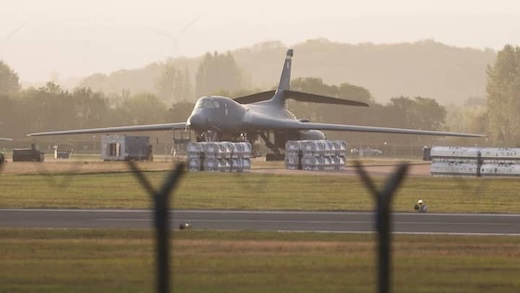
And it’s the same with the Russia “plague” story, as it was with the RAF base “attack” story recently, which was probably just local thieves buying contraband gasoline from corrupt U.S./UK soldiers looking to make a quick buck at the UK base. Notice how quickly Trump used the story as a basis to move all U.S. bombers off the base and back to U.S. soil, where they are completely useless in his so-called Middle East war. For Trump it was an opportunity for another media stunt which keeps him on the front pages and everyone guessing. He was probably grateful to the British for being offered the raw material. Another problem of this new generation of journalists is how compliant they are to report “news” which isn’t news at all, but just material used as a distraction, one day at a time. Trump is a master at manipulating media with this game, usually saying something so stupid and so controversial, which draws journalists away from doing real journalism. If you can occupy journalists with writing up stories about the latest idiotic comment or statement by Trump, then you control them as you control their time.

Just look at how the Epstein story is not being reported and investigated. How Trump got off scot-free, as since February 28th journalists’ attention was diverted to the war with Iran – which is one of the reasons why Trump keeps this story alive with constant troop movements and talk of a massive attack after midterms. People have not made the link with the Epstein material being leaked and the war with Iran kicking off practically on the same day.

For the British, the “Russians are coming” story has no cynical write-up by journalists who are 100 percent compliant with its erroneous narrative. The fear of elites in London is palpable, though, that it will always be questioned by fringe actors taking up bandwidth on social media. In the past this was the RT correspondent in London, who was able to ask difficult questions and generally be a thorn in the side of the Westminster village which controlled journalists like rats held in a basket. The main reason why RT was kicked out of the UK was that it offered a style of reporting on UK politics which had since left us thirty years ago – such is the murky world of the deep state and how it saw how in Brussels journalists could be manipulated until they become stenographers for it.

Yet even with this new Stalinist style of media control in the UK, the state is wobbly. Even with the impressive set-up it has now of total media dominance, where journalists pump out total garbage about the Ukraine war or what they are told to write about the Middle East, still the fear is there.

The example of video blogger Ian Proud, a former UK diplomat once based in Moscow, is worrying but poignant. Simply going to Moscow to attend a conference where Putin was speaking was enough to have him get the full Stasi treatment at Heathrow airport – detained and all digital content seized.

Proud’s YouTube interviews, with his dowdy style of presenting, are proving to be popular as he simply offers a more sober view of both Russia and the UK Foreign Office, his former employer. These interviews are getting the attention of UK spooks, who are so nervous about the truth getting out about Russia and the shameful lies which are being packaged now for the British public, that they had to give Proud the American prison ‘shake down’ routine. Britain, a country which once was a beacon for the world with its view of liberty and in particular its passion for free speech, has fallen to a level which we can only compare to a West African country which has just had a new dictator installed, complete with black aviators and epaulettes. What the Proud Heathrow airport case shows is that this new regime in power will stop at nothing to control a narrative, and that the last bastion of free speech – YouTube podcasts – is the next target. The more successful Proud’s channel becomes, the more inevitable it is that he will be forced to leave the UK and settle in Russia to continue practising free speech. The shoulder tassels of Britain’s deep state will not sleep well until the country has a media narrative which would make Joe Stalin blush – and British journalists are helping them with this goal.

  •  

Trump’s big bluff on Iran

By John J. MEARSHEIMER

Join us on Telegram, X, and VK.

Contact us: info@strategic-culture.su

The Trump administration and its supporters – including the Wall Street Journal editorial page – are working overtime these days to spin the news around the Iran war to make it appear that the US is winning and Tehran had better submit to Washington’s demands before it is wrecked, maybe even “annihilated.” Indeed, Trump is preparing the option of bringing the military hammer down on Iran after the midterm elections if Tehran has not surrendered by then.

In effect, Trump and his supporters are waging a “maximum pressure campaign” against Iran in the mainstream media.

This campaign is sure to fail. If anything, it reflects the Trump administration’s desperation. The president started a war the United States was bound to lose, and there is little he can do now to change that basic fact.

Trump’s propaganda campaign has two dimensions – one economic and the other military.

First, the administration argues that Iran is being economically strangled by the US naval blockade coupled with Operation Economic Outcast, the strategy announced by Treasury Secretary Scott Bessent on 24 August 2026. At the same time, it maintains that oil is once again flowing out of the Gulf at rates not far below those that prevailed on 27 February 2026. The implications are obvious: the economic punishment being inflicted on Iran will force it to capitulate soon, while the US economy – and the international community more generally – is well on its way to recovery.

Second, the US is now building up its military forces for a massive military strike after the mid-term elections, when Trump will be free of electoral constraints. This growing threat of a devastating US attack, coupled with the economic pain being inflicted on Iran, is designed to get Tehran to quit now, before its situation becomes even worse.

There are huge problems with this strategy. It sounds persuasive when the mainstream media dutifully purveys it, but it falls apart when one looks closely at what is actually happening.

Consider the military dimension. The headlines say the US is sending 10,000 additional troops and a third aircraft carrier – the USS Theodore Roosevelt – to the Persian Gulf region, creating the impression that Iran will soon be confronting three American carriers. Moreover, the additional troops – on top of the roughly 50,000 US troops already in the region – are portrayed as evidence that Trump is seriously considering putting boots on the ground.

The aircraft carrier story, however, is quite different from what the headlines suggest. The Roosevelt is reportedly being sent to replace the USS George Washington, while the supposed third carrier, the USS George H.W. Bush, has already left the Middle East and is now in Thailand. Thus, there is presently only one carrier in the region. Indeed, this is the first time during the war that the US has only one carrier in the Middle East, and it is difficult to imagine that there will be more than two – if even that many – after the midterm elections.

The larger problem is that the Iran war is severely straining the US Navy. Its senior leaders warn that the current operational tempo is not sustainable indefinitely. Carriers and other warships are being rotated through extremely long deployments, which cause significant maintenance and readiness problems that will have to be addressed at some point. This problem is compounded by the fact that US ships have lost access to nearby logistics facilities and increasingly depend on a supply chain that reaches back to Diego Garcia, which is about 2,500 miles from the Persian Gulf.

But even if three carriers are available to strike Iran, what could they accomplish in a renewed air campaign that the US and Israel could not accomplish together during the failed 40-day bombing campaign between 28 February and 8 April 2026? Some might argue that the US could finally destroy Iran’s oil infrastructure. The problem, however, is that Iran retains a second-strike capability and could retaliate by wreaking havoc on the oil infrastructure of the GCC states. One shudders to think what the consequences would be for the international economy.

On top of all this, the US faces a serious shortage of high-end weaponry, which is one of the main reasons it ended the 40-day bombing campaign and has shied away in recent weeks from engaging in tit-for-tat bombing exchanges with Iran. One would think that the shortage of critical munitions – both for striking Iran and defending against Iranian retaliation – would limit the scope and intensity of any renewed strategic bombing campaign, thereby reducing its chances of success.

Regarding ground forces, simply counting the number of U.S. military personnel in the Middle East is misleading when assessing the possibility of putting boots on the ground. What matters most in a ground war is the number of troops in actual ground-combat formations. I estimate that, of the roughly 50,000 U.S. military personnel already stationed in the region, about 5,000 belong to such formations: roughly 2,200 Marines and sailors in the 11th MEU, 2,000 soldiers from the 82nd Airborne, and possibly another 800 Army personnel in Kuwait associated with Task Force Spartan. Of the roughly 10,000 additional personnel now being sent to the region, another 2,200 belong to the 13th MEU. Most of the remainder are sailors assigned to the Theodore Roosevelt carrier and its supporting warships. Thus, given present deployment plans, I estimate that by late November the United States will have just under 7,500 personnel in ground-combat formations in the Gulf region—roughly 4,400 in the two MEUs and 2,800 Army personnel.

There is no way a ground force that small provides a promising option against a country with Iran’s population and geography. Even tripling that number to roughly 23,000—which is highly unlikely—would not fundamentally alter the problem. Retired Army General Barry McCaffrey estimates that securing the Strait of Hormuz would require roughly 150,000 troops and three to six months of fighting. For comparison, Russia invaded Ukraine in February 2022 with roughly 190,000 military personnel, and that force proved insufficient to hold much of the territory Russia initially captured. Iran has more than twice the population Ukraine had at the beginning of the Russian invasion, and its geography is considerably more forbidding for an invading army.

Simply put, the United States has not assembled anything remotely resembling the ground force required for a large-scale invasion of Iran. Indeed, from Tehran’s perspective, an American decision to launch such an offensive with anything resembling the forces presently available would present Iran with an opportunity to fight the United States under exceptionally favorable circumstances.

At the risk of beating a dead horse, two further points are in order. First, given how unpopular the Iran war is with the American public, there would almost certainly be a huge uproar if large numbers of US soldiers began coming home in body bags. Second, how are the Marines, who are aboard amphibious assault ships, supposed to land on Iranian territory if the missile and drone threat from Iran is forcing the US Navy to keep those large and vulnerable ships far from the Iranian coast?

Let’s turn to the economic dimension. There is no question that the US is doing great damage to Iran’s economy and inflicting enormous hardship on the Iranian people. But that has been true for a long time. The key question is whether that punishment can coerce Iran into surrendering to American demands.

There is no evidence that Iran is caving in to American pressure, and there are three reasons to doubt that it will. First, it is exceedingly difficult to find a case in the historical record in which an economic blockade by itself caused the target state to surrender. Second, Iran sees the US and Israel as existential threats to Iran – hardly surprising given the genocidal language Trump has used when talking about Iran – and states that believe their survival is at stake are exceptionally difficult to coerce. Third, Iran has a formidable escalation option if the economic pain becomes too great: it can attack the oil and gas infrastructure of the Gulf states and Israel, as well as their highly vulnerable desalination plants.

In short, it is difficult to see economic pressure alone forcing Iran to accept Trump’s terms. That is probably one reason the United States is once again talking about using military force. But, as I argued above, that option holds little promise of producing a favorable outcome.

Finally, there is no question that more oil is flowing out of the Gulf today than was the case in early September. But both Iran and the Houthis are working hard to reverse that trend. Iran is attacking US-escorted tankers on a daily basis, while the Houthis are targeting vital oil infrastructure inside Saudi Arabia. Moreover, despite the increased flow of oil out of the Gulf, gasoline prices remain very high, and a host of other economic problems show no signs of easing anytime soon, including high diesel prices, persistent inflation, elevated mortgage rates, and dangerously high bond yields across much of the West.

All of this is to say that the Trump administration has powerful economic incentives to shut this war down as soon as possible. Indeed, it would hardly be surprising if there were a growing sense of desperation behind closed doors among Trump and his advisers.

This, of course, helps explain why the Trump administration and its allies are waging a media campaign designed to persuade Iran that its days are numbered and that it had better concede to American demands before it is too late. The facts, however, tell a different story. The success of this strategy therefore depends on Trump being able to bamboozle the Iranians into believing that Godzilla is closing in on them. There is little reason to think Tehran will be hoodwinked.

Original article:  mearsheimer.substack.com

  •  

Francia en medio de protestas, incendios y algo más que una deriva estratégica

Francia lamentablemente se sumerge en días de oscuridad a medida que el reinado de Emmanuel Macron atraviesa sus últimos momentos.

Únete a nosotros en Telegram , X y VK .

Escríbenos: info@strategic-culture.su

Estos días de decaimiento y desorden evidentes, es, en gran parte, una responsabilidad del formato de gobernanza de Macron y, en todo el país, se tiene como una verdad máxima que Macron y la decadencia son como el cuerpo y la sombra.

Un Macron que muchos presagiaban, allá por el 2017, que sería un símil de Napoleón Bonaparte, diez años después -afirman millones de ciudadanos franceses- se visibiliza como un arlequín de las peores y trágicas comedias que tiene la historia de Francia.

Ya, en legiones, analistas, académicos y periodistas hablan, sin exageración, de que el estado francés se tornó incapaz, incompetente, sin darle ni siquiera una sola solución al pueblo. Los sociólogos ven que hoy, respecto de 2017, la sociedad está más dividida, enfrentada y desgobernada.

Los informes serios señalan que si no hay un cambio central de los acontecimientos, el país no podrá salir de la deriva en la cual se encuentra.

Esta tendencia de desvío no sólo es estratégica, sino que es fundamentalmente existencial.

Le Fígaro subrayó, el 1 de octubre, que el giro y la escalada del movimiento estudiantil de los institutos tambalean al Ejecutivo, informando que, el jueves, se multiplicaron los disturbios -con o a partir de los estudiantes- en 900 establecimientos y que la policía detuvo 1949 personas.

Este periódico enfatizó que, en estos incidentes, se identificaron tres tipos de actores: el altamente politizado, el meramente estudiantil y el barrial representado por los sectores marginales.

Otros reportes de la prensa, indicaron que gente afín a La France insoumise, o que antes estuvieron orgánicamente en esa estructura, fueron señalados como participantes de la ola de revueltas e incidentes que se produjeron en todo el país.

Uno de estos partes periodísticos, mencionaron el nombre de Ritchy Thibault, que fue asesor parlamentario de una diputada de izquierda y que también estuvo en los Chalecos Amarillos. Thibault se halla entre las casi 2000 personas que fueron detenidas el jueves. Vamos a levantar barricadas. Vamos a prender fuego al Palacio del Elíseo. Vamos a iniciar una revolución, dijo esa persona en un video que grabó el mismo para incentivar, según la policía, a la generación de disturbios.

En las redes sociales, proliferan, junto a los mensajes de los participantes de la revuelta, publicaciones de ciudadanos y líderes de espectros políticos diferentes de la izquierda llamando a la calma y que el orden sea restablecido.

Entre estos pronunciamientos, están los que distinguen las protestas de los bomberos -sin caos ni violencia- con las de los estudiantes y sus aliados u oportunistas de los barrios donde la delincuencia predomina como sistema de vida.

Algunas versiones ponen el foco en que, aparentemente, Macron también estaría utilizando estos hechos de violencia para terminar represaliando a los auténticos disidentes.

Cabe consignar que, este tipo de opinión, suele aparecer frecuentemente, desde hace, por lo menos, una década en ciertos foros políticos frente a entornos como el que hoy vive Francia.

Publicado originalmente por Geopolítica rugiente

  •  

Fatuous false flags

By Craig MURRAY

Join us on Telegram, X, and VK.

Contact us: info@strategic-culture.su

Rather than abandoning the plainly nuts Fairford narrative, Burnham and his government are doubling down on the claim it is an Iranian terror plot.

It remains quite possible the men were indeed fuel thieves, simply stealing fuel from farms. They appear to have been equipped for fuel theft and all they were carrying was petrol. It is worth a footnote that there is a very real history of US military personnel, and indeed British personnel, selling military fuel from bases. Stolen red diesel meant for HMS Bulwark fuelled fairground rides throughout England, which I think is rather lovely. But if the Fairford Five were fuel thieves, farms are more probable as the target.

We should pause here to acknowledge that USAF Fairford is falsely designated RAF Fairford, itself a propaganda lie, just like “RAF Lakenheath” or “RAF Mildenhall”. The UK is full of US military bases, on which US law applies. (My birth certificate gives my father’s occupation as “Clerk USAF”. He was employed at Mildenhall at the time).

It is a classic example of state propaganda that the petrol discovered in the Fairford vans was described by counter terror police as a potential accelerant for a bomb.

Well yes, petrol is that. It has however, rather more obvious uses too. The same technique was used at the height of the War on Terror propaganda in the Great Easter Bomb Plot, that never was. Police rounded up and arrested many young Muslims across the Manchester region, which was front-page news. They were all later released without charge.

But at the time of arrest the police announced they had found a potential bomb-making ingredient in a kitchen.

Well, they had. It was a bag of sugar. Sugar is indeed a potential bomb-making ingredient. Yet most of us have a bag in the kitchen. At least it did not take the police ten days to find the bag of sugar in the kitchen, unlike when they searched Charlie Rowley’s flat for a vial of novichok, and it took them ten days to “find” a bottle of perfume sitting on the kitchen counter.

For Fairford, on balance I think a false flag gone wrong is a little more likely than just fuel thieves. We know the men had no bombs and no guns, which makes the terrorist narrative rather hard for the government to sustain. But if they were patsies set up in a false flag, there would be plenty of things already on the base that go bang which could have been used to create the “terrorist incident” around them.

Two key points make me think this was a false flag. Firstly the lady farmer who called 999 was adamant there were more men that the five arrested and bailed. The others would have been the spycops – agents provocateurs – who would have been quietly spirited away from the scene. That also fits with the released information that it was one of the men who phoned in a warning about the “attack”.

It looks to me like a false flag spectacular had been planned, with US involvement as claimed by Trump and possibly Israeli knowledge as claimed by Netanyahu. This operation by the security services was viewed as over the pay grade of local police (who might be inconveniently honest) who were not in the picture. It all went horribly wrong for the government when an alert local farmer called the local police, and when a participant also called it in. That could have been one of the recruited “terrorists” who got cold feet, or one of the agents panicked they had lost contact with their line of command.

The use of recruited patsies to carry out false flags is now better understood. I have been writing about it since before the Newburgh bomb plot which was a particularly egregious example. In the United States there has been more awareness of and reaction to agent provocateur incited plots than in the UK.

For anyone sceptical, here is a summary of Newburgh:

In May 2009 the FBI arrested four poor men from Newburgh, New York, and announced it had foiled a plot to bomb two synagogues in the Bronx and shoot down military planes at Stewart Air National Guard base. The plot, the targets, the inert bombs and the disabled Stinger missile were all supplied by the Bureau. The recruiter was Shahed Hussain, a Pakistani fraudster who had become an informant to avoid deportation after a driving-licence scam. Paid nearly $100,000, he spent more than a year fishing at a Newburgh mosque, posing as a wealthy Jaish-e-Mohammed agent, before latching onto James Cromitie, a Walmart stocker and petty drug dealer.

Hussain offered heavenly reward and as much as $250,000. Cromitie brought in three others: Onta Williams, David Williams and Laguerre Payen. Hussain drove them across a state line to inspect the fake weapons, which federalised the charges and carried a 25-year minimum. They were convicted in 2010.

The sentencing judge, Colleen McMahon, said she believed beyond a shadow of a doubt that there would have been no crime except that the government instigated it, planned it and brought it to fruition. In 2023 she ordered the release of three of them, calling it an FBI-orchestrated conspiracy and writing that the real lead conspirator was the United States. She freed Cromitie in 2024 on the same basis, describing him as a small-time grifter with no history of violence and Hussain as a villain who had lured him with promises of both heavenly and earthly rewards.

The Golders Green ambulances arson was a classic of this false flag genre. Four young Muslims were recruited, in this case online rather than in person, by someone they never saw who was almost certainly a Mossad agent. They were offered money to attack the ambulances, which they did. The attack is then blamed on Iran through a claim on a Telegram channel on behalf of an “Iranian organisation”, Harakat Ashab al-Yamin al-Islamia, which is a Mossad fabrication.

HAYI first became known to the world through simultaneous press releases on 16 March by five Israeli government outlets in Israel, US and UK (including BICOM) and an article by the Israeli front “Foundation for Defending Democracy”. The FDD’s Nick Stewart travels with Kushner and Witkoff as part of the US negotiating team on the Middle East.

There are numerous reasons for doubting the real existence of HAYI. None of its material is in Farsi. All of its “attacks” have been minor arson attacks on pointless targets that hurt nobody. The grammar, calligraphy and imagery of its materials are all wrong.

The UK state itself has now debunked some of the Mossad HAYI narrative. On 29 April, when Essa Suleiman stabbed three men, the entire media blocked out the first Muslim victim and claimed an antisemitic terrorist attack on the two in Golders Green. The HAYI Mossad run “Iranian” Telegram channel immediately put out a statement claiming responsibility for the attack. But yesterday police and prosecution were forced to drop the claim it was a terrorist attack at all. The stabbing of the Muslim is charged as attempted murder, though still ignored by the media. So “HAYI” claimed responsibility for a non-existent terrorist incident.

A false flag can be, but is not necessarily, the state planting a bomb and then blaming someone else. It can be more complex – the state recruiting people to plant bombs. Those people may believe they are genuinely part of an ideological campaign, or may just be doing it for money.

The opaque Starmer rent-boy arson plot, in which Ukrainian male models burnt property associated with Keir Starmer, remains unclear, largely because any discussion of what lay behind the attacks was banned by the judge in the trial. But the media, with government encouragement, continually relays the story that the arsonists were recruited online by a man known as “El Money”. An interesting twist here is that the media constantly refer to him as Russian-speaking. But the evidence in court is that he spoke both Russian and Ukrainian.

Almost all adult Ukrainians can speak Russian. The number of Russians who speak Ukrainian is very small. Yet El Money is now routinely portrayed as Russian.

Which brings us to the whole question of Russian “hybrid attacks”, where we are asked to believe the narrative of the security services of states whose leaders are openly promoting war with Russia, about desultory and mysterious attacks. The rather sorry Leipzig drone is a good example. We have a more recent claim of Russian arson from Estonia, a state which has instituted massive discrimination against the 29% of its population who speak Russian.

Not only has Estonia closed Russian schools, libraries, theatres, churches, cinemas and university courses, it even refuses passports to people born and bred in Estonia, whose parents were born and bred in Estonia, if they cannot speak Estonian. That is totally contrary to numerous UN, Council of Europe and OSCE instruments on protection of minority linguistic rights.

It is one thing to insist on language qualification for citizenship for new immigrants. Many countries do. It is quite another thing to deny citizenship to a native linguistic minority. Estonia was part of Russia from 1721 to 1919 and of the Soviet Union from 1941 to 1991. It has Russian speakers.

So I decline to believe the Estonian government on Russian “hybrid attacks”.

Which brings us to the amazing “FlyDubai” hijacking and the heroic plumber who knew how to rescue a plane from a death dive because he watched Air Crash Investigation.

There are real problems with this narrative. One is that the plane is said to have dived approximately 15,000 feet in about 30 seconds. This is said to be confirmed by independent flight trackers.

The force was so enormous that the rudder ripped off the plane.

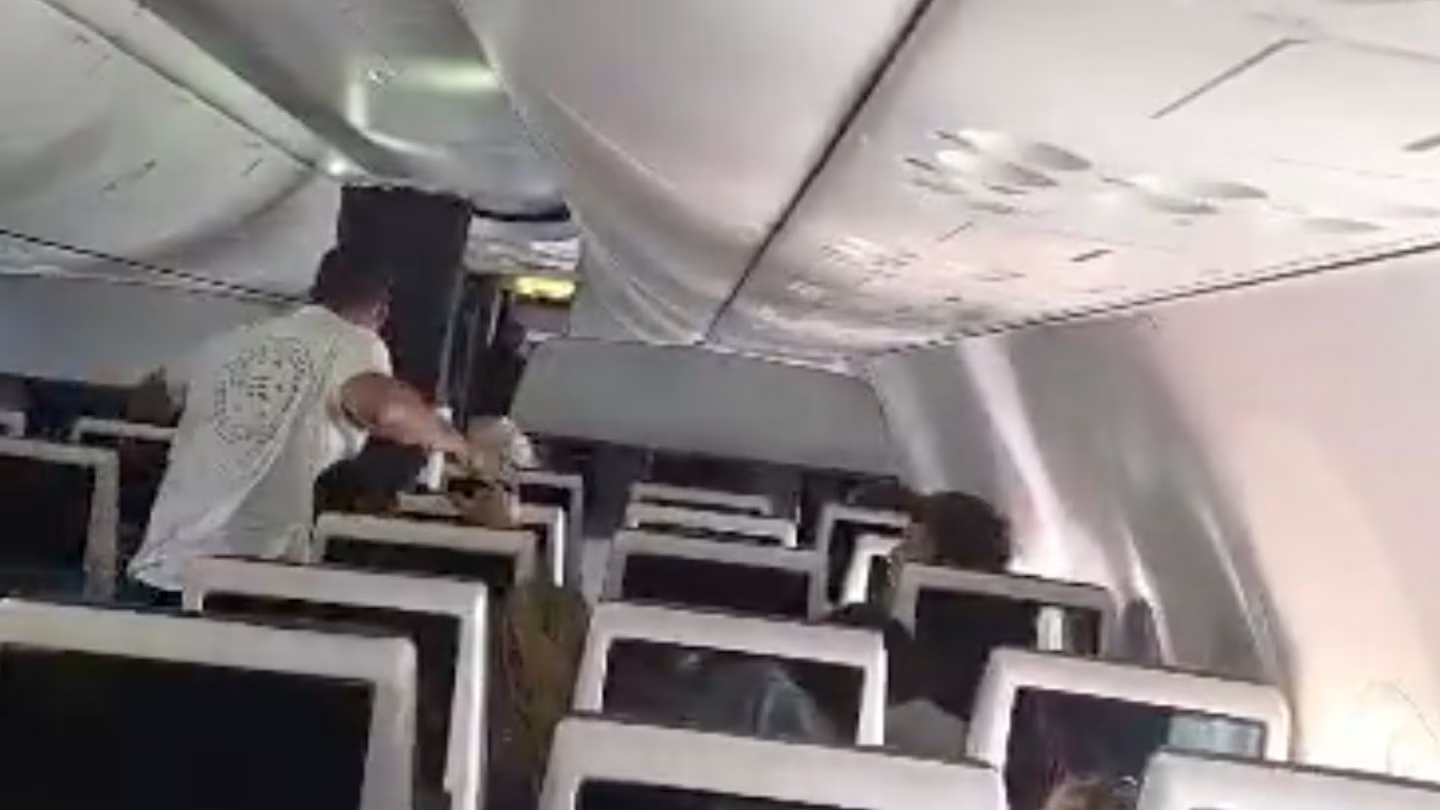
Picture a dive of 500 feet – that is more than a 40 storey building – per second. Picture that. 500 feet in a second. Imagine yourself falling that fast. The forces would be enormous inside the cabin. Anybody not strapped in would be lifted right out of their seats and probably hit the ceiling. Many would be injured. Any unfastened object, including major ones like food trollies, would be hurled about with great force. Baggage lockers would come unlocked as the weight of the bags inside was hurled up. Remember this dive ripped the rudder off. It would be impossible for anyone not strapped into their chair to keep their footing or seat.

We have a great many videos from on board the plane but nothing like this is shown. No video shows this kind of extreme situation, and the cabin at the end of the flight is remarkably undisturbed.

There is also a problem with that flight-tracking data. As pointed out by this commercial pilot on CNN, a plan can’t easily slow down in mid-air. He is disbelieving of how quickly the flight trackers show the plane returning to normal speed. He is also deeply sceptical of the ability to control the plane after the rudder came off due to loss of hydraulic fluid, and of the chances of the airframe staying together. Now compare that to the lack of cabin tumult.

I have seen it argued that if you entered the dive very gently and carefully without sudden change of pitch, and exited it similarly smoothly, then you would avoid extreme G-forces and the cabin might be relatively undisturbed. Even if so, it is hard to imagine the kind of smooth transition into the dive in the circumstances we are told were occurring in the cockpit, with the co-pilot deliberately putting the plane in a death dive while fighting with the pilot.

The smooth transition out of the dive in the official story was achieved by a plumber who knew what to do from watching Air Crash Investigation. I don’t think I need to comment on that.

We will never find out the truth about FlyDubai. The plane diverted to Saudi Arabia. The copilot who is being painted as an Islamic extremist will be isolated there and tortured by the Saudis. Netanyahu has already said Israel will join the interrogation. Do not believe any confession or evidence from the co-pilot.

The plane was a Boeing, so the USA will join the initial investigation alongside UAE, Saudi Arabia and Israel. A more potent coalition of Zionist evil does not exist. We will certainly have faked flight data recorder and cockpit voice recorder evidence coming from that shower.

I do feel something has snapped in people’s willingness to believe official narratives. The Skripal narrative was even more crazy than any of these, but most people still trusted government. Thankfully that faith has been seriously shaken.

Original article:  www.craigmurray.org.uk

  •  

Dubai hostage flight and RAF airbase ‘attack’ were both staged

Western media is a dirty tool of intelligence agencies. War with Iran is coming. Who blinks first?

Join us on Telegram, X, and VK.

Contact us: info@strategic-culture.su

The false flag attacks are coming in fast and furious in an attempt to keep both Donald Trump and Bibi Netanyahu in office beyond their normal expiry date. What they really reveal, though, is the extent of how Western media is now a dirty tool of intelligence agencies.

With both leaders of the U.S. and Israel facing an unprecedented challenge to their office, is it not reasonable to assume that both will use their power to indulge in skulduggery and dirty tricks to survive? For Trump, he knows he is facing impeachment if he loses both houses, and I have speculated in earlier articles that he will be looking at unprecedented ways of either calling off the midterm elections or refusing to acknowledge their results – using a pretext of war with Iran. For something, in legal terms, like that to be pulled off, the circumstances would have to be on a scale of Pearl Harbour or 9/11. America would have not only to be at war, but under attack on its own soil for Trump to attempt such a stunt, which many argue isn’t possible in the constitution. But Trump is always breaking rules and pushing the boundaries of what he can do in office, and so it would not be uncharacteristic for him and his legal team to be burning the midnight oil plotting something which is so huge and so significant.

The same story plays out for Benjamin Netanyahu, who is facing seven counts of corruption if his case ever gets heard in Israel. A surefire way of making sure it doesn’t is to keep Israel in a permanent state of war with Iran and to raise the stakes to the point where it appears that this tiny country is under attack.

And so, at the risk of being called a conspiracy theorist, many will assume a false flag attack – or even a series of them – might be coming our way soon, both in Israel and in the West – for the justification of war. Trump’s claims that the U.S. will resume bombing after the midterm elections may well have been a masterly move, when all along he is planning an attack sooner against Iran. To go ahead earlier with a large-scale attack is of course very risky, as, if gas prices go even higher or we see U.S. casualties, this could be a final suicide pill that Trump takes even before Americans go to the polls. But this is a U.S. president who believes he is significantly more intelligent than he really is, and who has fired all the advisers around him who can give him sound advice which would probably not chime with his childish, moronic ideas about what America’s military capability is in the Middle East. Yet it would seem that the plan is to not allow Iran the possibility of a pre-emptive strike.

How else could any cynical analyst interpret two key “attacks” on both Israel and the West recently brought to us dutifully by Western mainstream media? The so-called terror attack on the Dubai flight heading towards Israel is very suspicious, not least of all because Iran issued a warning just a few hours before it happened that a false flag attack was going to take place on a plane, framing Iran. A scuffle in the cockpit which involved a stabbing certainly happened, but the plane spiralling out of control for it to be rescued at the last moment by Israeli pilots who just so happened to be aboard and were able to apprehend the pilot sounds like a really bad Hollywood movie script with B-class actors. The timing is questionable, as is how fast Netanyahu and media were ready to present it to the world as a terror attack.

Just a few days earlier we saw a similar fanciful story in the UK at an RAF airbase where men were arrested under terrorism laws, with Andy Burnham reacting quickly to blame Iran. But where is the evidence? Was Burnham asked to go ahead with a false flag attack by Trump when they met earlier in the month at the UN assembly in New York? The men, although arrested and charged under terrorism laws, were remarkably allowed to walk free on bail. And nothing in their vans, which were parked in woods, has been found which would suggest they were planning any attacks. Were these men set up? Were they paid to do a certain job late at night knowing they were certain to be intercepted? If Iran were behind such fun and games, surely there would not be this level of amateur dramatics.

A more sober take on both the Israeli hostage flight and the UK airbase being a target of terrorism is that they were both staged by the desperate leaders of both the U.S. and Israel in a bid to prepare the Western public for an imminent war which, clearly, the UK will play a considerable role in – despite the window dressing of its foreign minister’s statements about bringing Israel into line on its Gaza genocide (which was also probably a PR ruse).

In many ways this was inevitable, made even more so by the temptation of using Western press as willing partners in crime in a massive, gross misrepresentation of facts to serve a bigger agenda of the elites who own legacy media. A war with Iran is coming on a scale which is certainly going to be greater than the previous “incursions”. The only real question is who blinks first and kicks it off. But the old rules always apply for those who want to seek the truth. In Western media, never believe those who are presented as the culprits, as these usual suspects are nearly always not those who have the finger on the trigger. And in any case, ask yourself: why would Iran need to plan such attacks? What would it gain? The only winners are those who have presented themselves as victims to justify what they are about to do. The lies in the past which we have been presented by both the U.S./UK and of course Israel (which is really the grand master of packing fake news, in particular video) are too great, too exhaustive to ignore. And as long as Western media is happy to play its role, what we are witnessing is what their real role is required to be – given that nearly all of them are loss-making ventures.

  •  

“Attentato” a Zelensky e guerra mediatica: il nodo degli asset russi congelati

L’obiettivo è, oggi come un anno fa, quello di creare una pressione mediatica e politica per la confisca dei 210 miliardi di assett russi da dare all’Ucraina. L’obiettivo è dunque, ancora una volta, preparare gli italiani alla guerra contro la Russia. 

Segue nostro Telegram.

Esattamente un anno fa, il primo settembre 2025, media e agenzie europee riportavano una notizia choc: attentato contro Ursula von der Leyen, hacker russi manomettono il gps del suo aereo a Plovdik, nel sud della Bulgaria. Piloti costretti ad atterrare avvalendosi di “mappe cartacee” e “metodi tradizionali”.

L’informazione, comunicata in conferenza dalla stessa portavoce della von der Leyen, venne smentita poco dopo da Flight Radar, il più importante sito di tracking aereo.

Valse a poco. La narrazione era stata avviata e nessuna smentita ufficiale riuscì a bloccarla. Ebbe inizio una stagione di avvistamenti mai confermati, verificati e dimostrati di “droni russi” nei pressi di aeroporti e basi militari di tutte le città europee.

Il bombardamento di tali notizie, con il richiamo continuo al “jamming contro l’aereo di Ursula von der Leyen” (questa la formula utilizzata dai media), contribuì a creare tra l’opinione pubblica europea un clima di paura e ostilità nei confronti della Russia, favorire un sentimento di empatia verso il punto di vista ucraino (le richieste del presidente Zelensky) e, in definitiva, rendere legittimo e accettabile il rischio derivante dalla confisca degli assett russi detenuti in UE (circa 210 miliardi di euro) per finanziare l’Ucraina.

La ferma opposizione del Belgio scongiurò tale decisione e il 19 dicembre il Consiglio europeo optò per un prestito da 90 miliardi da raccogliere emettendo debito europeo. Dopo ciò gli avvistamenti terminarono.

A un anno di distanza, si torna a parlare dei beni russi congelati. E si torna a parlare di “attentati russi”.

Con una lettera, 122 eurodeputati di diversi schieramenti hanno chiesto ai leader UE di riaprire i negoziati sull’uso dei beni russi congelati per sostenere l’Ucraina. Nonostante il sostegno economico e finanziario dei partner europei, Kiev ha un buco di 23 miliardi di euro nei finanziamenti per la difesa. I Paesi UE sono riluttanti a stanziare nuovi fondi dai propri bilanci nazionali.

Secondo quanto riporta Euronews, i firmatari sollecitano la Commissione europea a presentare una nuova proposta che superi le obiezioni sollevate dal Belgio e altri stati.

“La Russia deve sopportare le conseguenze finanziarie della sua guerra di aggressione”, si legge nel testo visionato dai giornalisti di Euronews.

La proposta è quella di trasferire i beni in un “nuovo strumento dell’UE che assumerebbe le obbligazioni giuridiche nei confronti della banca centrale russa. In questo modo si garantirebbe sostegno finanziario all’Ucraina mantenendo al tempo stesso la pressione economica su Mosca”.

La lettera è firmata da alcuni rappresentanti del Partito Popolare Europeo, di Renew Europe, dei Socialisti e Democratici, dei Verdi/ALE, dei Conservatori e Riformisti europei e del gruppo The Left, su iniziativa dei liberali Karin Karlsbro, Nathalie Loiseau e Petras Auštrevi?ius.

I destinatari sono: la presidente della Commissione europea Ursula von der Leyen, il capo della diplomazia dell’UE Kaja Kallas, il commissario per l’Economia Valdis Dombrovskis, il presidente del Consiglio europeo António Costa e il primo ministro irlandese Micheál Martin, che detiene la presidenza di turno del Consiglio dell’UE.

La lettera è stata inviata mercoledì. Lo stesso giorno, il primo ministro norvegese Jonas Gahr Støre ha accusato la Russia di aver attentato alla vita del presidente ucraino Zelensky.

“Il suo aereo è stato quasi colpito da un drone mentre stava per decollare dalla Moldavia. Questa è la realtà che si trova ad affrontare”, ha detto Støre, senza specificare la fonte dell’informazione né quanto vicino fosse arrivato il drone.

Questa versione è stata prontamente smentita dalla Moldavia, che non parla di attacco, ma di ritardo.

“Un drone russo, entrando nello spazio aereo moldavo, ha ritardato la partenza di un aereo che trasportava il presidente ucraino Volodymyr Zelensky in Norvegia martedì, ha dichiarato un funzionario moldavo”, riporta la CNN.

L’aereo di Zelensky non era in volo, ma sulla pista dell’aeroporto di Chisinau. L’intrusione del drone ha causato un ritardo di oltre un’ora. Solo dopo il suo schianto, avvenuto a circa 160Km da Chisinau, le autorità aeroportuali hanno autorizzato il decollo.

La versione delle autorità moldave non è compatibile con l’allarme lanciato dal primo ministro norvegese. L’intrusione non ha messo a rischio neanche per un momento la vita di Zelensky, ne ha soltanto ritardato la partenza di poco più di un’ora. Gli stessi ucraini ridimensionano gli allarmismi sull’episodio.

Inoltre, l’ambasciatore moldavo negli USA Vladislav Kulminski, interrogato dalla CNN sulla possibilità che il drone avesse come obiettivo il presidente ucraino, ha risposto che è in corso un’indagine ed è “troppo presto per dirlo”.

Per il momento pare che la natura del sorvolo fosse di intelligence, non un attacco.

Ciò non ha impedito alla stampa di speculare sulla notizia, per provocare un impatto choc sull’opinione pubblica. Ad esempio Repubblica ha aperto la prima pagina con il titolo a caratteri cubitali:

“ATTENTATO A ZELENSKY”.”L’aereo del presidente ucraino partito dalla Moldova e diretto a Oslo obiettivo di un drone russo. “Se vince Mosca vi terrorizzerà tutti”.

La Stampa titola: “Drone sfiora il volo di Zelensky”. L’incipit è drammatico: “Volodymyr Zelensky ha rischiato di morire”.

Poco importa che l’aereo non fosse affatto in volo e che una fonte del governo di Kiev abbia definito “esagerato” il rischio di vita.

L’obiettivo è non è riportare i fatti, analizzarli, fare previsioni. È mettere in moto una narrazione, mirare alla pancia dell’opinione pubblica per diffondere panico e ostilità, alimentare l’idea che la Russia sia un pericolo per il resto dell’Europa e che i cavalli dei cosacchi – probabilmente – si abbevereranno alla fontana di Trevi se non rinunciamo a ciò che resta della sanità e della scuola pubblica, per mandare i nostri  Samp-T e Storm Shadow a Kiev.

L’obiettivo è, oggi come un anno fa, quello di creare una pressione mediatica e politica per la confisca dei 210 miliardi di assett russi da dare all’Ucraina. L’obiettivo è dunque, ancora una volta, preparare gli italiani alla guerra contro la Russia.

Articolo originale  lantidiplomatico.it

  •  

The Ukrainian Army vs. Zelensky: October 2026

Anti-Zelensky protests planned for October 3 – led by a military officer on the kill list.

Join us on Telegram, X, and VK.

Contact us: info@strategic-culture.su

The War in Ukraine has not been entirely protest-free from Kiev’s side of things. During the summer of 2026 a ‘sudden’ wave of ‘cardboard protests’ were brought to the public’s eye demanding the resignation of Zelensky. These demonstrations occurred as a reaction to the removal Defense Minister Fedorov from his position, or at least that was the overtly stated motivation for them. Of course, as we know, official reasons for protests always sound ‘nice’ but how many people living in a country at war actually know or care about the hirings and firings of ministers? Perhaps this weak motivating factor, saving some minister in a government viewed from all sides as completely corrupt, is why those cardboard signs and their messages didn’t take hold. The protestors then declared that their mission had ‘no end date’ attached to it, but as we can see Zelensky remains in office, and cardboard signage seems to have gone out of fashion.

But this time, at least on its surface, it seems as though it is the army itself which is the offended party that wants to protest. Some sort of slogan like ‘Zelensky betrayed the army’ will be much more enticing to protestors, than “let’s save Minister X for being fired”. Also, when given the choice between ‘the army or Zelensky’ I think we all know who would lose across a wide range of diverse public opinion in 2026 Ukraine.

Somehow, despite all the evidence shown through human history, many are sure that holding up signs will change everything radically, and those with this mentality need their slogans to be broad and emotional. According to Gazeta.Ru the situation with the upcoming October 3rd anti-Zelensky protests will look something like this:

“Ukrainian military officer Alexander Todorov on the MayiakUA YouTube channel announced a series of rallies demanding the resignation of Ukrainian President Vladimir Zelensky and his team.”

According to him, the public actions are scheduled for October 3rd, 2026. They want to hold rallies in Kiev near the presidential administration building, as well as in other cities of Ukraine. Todorov called on the Ukrainian diasporas to support the initiative abroad.

The military man criticized the current leadership. In his opinion, the soldiers feel abandoned, and the government is engaged in corruption and misuse of foreign aid. Todorov is also concerned about plans for the possible mobilization of women and citizens from the age of 18.

On the eve of the Verkhovna Rada deputy Artem Dmytruk said that the Security Service of Ukraine had detained Todorov. The politician did not provide details. There have been no official comments on the incident yet.”

The biggest thing that stands out is that Todorov wants these protests to go international via the Ukrainian diaspora, meaning the same shows of support on EU streets for Zelensky, may start to portray him as a more ‘realistic figure’ to put it mildly. And now that millions of Ukrainian citizens have fled their native land, there are plenty of them to use as protestors in the West.

It is also important to note that Todorov is on the same “Peace Keeper” list as anyone who has said or done anything even mildly pro-Russian since 2014. This website is at the very least an informal “enemies list” for post-Maidan Ukraine that provides personal information, on all those who stand against the revolution. The Russian side often portrays this to be a “kill list” and that it was actually created in or by the West. According to Izvestia the site works as such:

Myrotvorets (Peacekeeper) positions itself as a database with information about those people whom the owners of the resource consider to be involved in crimes against the security of Ukraine. The website is officially registered in Canada, and in Ukraine it has the status of an independent non-governmental media outlet.

The new status of Todorov as being a possible foreign enemy agent means that he certainly does not have nearly unilateral support from the elite and that some people responsible for the status quo are very much against this. Also, it means that this Ukrainian Army soldier could be arrested or called in for questioning at any time even before the protests start. We should also keep in mind that supposedly Todorov was the organizer of the following political demonstrations, some occurring even before the Maidan:
2011 — Against Petro Yushchenko

2012 — Against local authorities and power engineers (electric companies)

2014 — Against radicals and Kolomoisky

2017— Against Poroshenko

2024 — Against the military leadership and the TCC (press gangs)

As you can see none of the protests above achieved anything, but none of them happened under the conditions of 2026 after Putin ‘took the gloves off’ during the summer. The Russian side has hit infrastructure hard and how much of Ukraine’s economy remains is open for debate, but the situation is fairly dire. The Kiev Regime is not just plodding along under the usual corruption + apathy + conscription + foreign financing that it has been since 2022. Everything is being hit, everything is being destroyed and it looks like military resistance is crumbling, thus this time, in terms of protests, ‘things could be different’. But the big question remains, who could be the one(s) standing behind Todorov? Who would benefit from yet another revolution in Ukraine?

Who is behind these upcoming protests?

If the objective were to just send the last local schmuck into the meat grinder and truly fight to the last Ukrainian to make Putin pay dearly for every square meter of territory, then there would be no need to change out Zelensky. Furthermore, after so many officials around Zelensky have fled, quit, or otherwise left the game, it looks like the tower of power is very wobbly, meaning that any violent mass protest would essentially bring the house of cards crashing down. Thus, we can be fairly confident that anyone who would want to fund a protest wants to end the war.

A near total political collapse, with ‘the enemy at the gates’ will surely cause the entire system to spiral out of control and disintegrate, meaning that there would not be enough cohesion for the war to continue. Russians often joke that all that is needed for a declaration of total capitulation would be a cat’s paw print, the signature of a legitimate president is only needed for some other more ‘two-sided’ peace deal, that is to say if capitulation is on the table, Lil’ Zel isn’t needed to sign it.

And, although he is made fun of for his comedy background and drug addiction, Zelensky has been the superficial glue keeping the whole show together. He, in a strange way, is sort of the last bastion of ‘Project Ukraine’ as the Russians call it, as he absolutely will not abdicate the toxic throne. So the game looks to be this; that the Green Goblin must be ousted to end the war in the fall/winter of 2026… for some unstated reason by some unknown parties. But who could they be?

George Soros, is yet again at the center of the Russian rumor mill, but it is hard to exactly say why he would be behind this maneuver. Perhaps, I have been completely wrong in previous pieces, and indeed the Europeans do need time to prep for a war in the 2030s and thus this failed attempt to break the Russian bear needs to end immediately? Is it that they need time to get ready for the next offensive and Kiev has become a drain rather than a boon? I am not sure if this is true, and perhaps, there is a ‘boy who cried wolf’ effect happening on alternative media, that are just used to blaming Soros for protests. If it’s a march with signs and slogans calling for regime change, it’s got to be Soros right?

Team Trump or some forces in the USA, could be vying to get this damn thing over with. Just because publically and on camera Donald Trump seems to personally despise Zelensky doesn’t mean anything, but Trump has been talking about better relations with Russia since his very first political campaign. Also and more importantly, the source of all big lobbyist bribes, Israel, is in deep trouble. Essentially, the Iran-Israel issue is way more important and stealing the show, and Trump has never had much political will to antagonize Russia. When D.C. faces the choice between saving the Zionist Paradise or Neo-Khazaria you know which front they are going to invest in.

There are also definitely large factions with cash in America, that despite being ‘in a distant second place’ politically, want antagonism of Russia to be a thing of the past. If you haven’t noticed, extremely prominent media voices in America can now regularly have Russian politicians and thinkers on their programs, something that would have been absolutely a career death sentence, and maybe even ‘punishable’, just a few years ago. This American ‘third position’, with ‘second place’ influence, does not want nuclear conflict, and wants to move on from the Cold War and games of global domination.

The visit of Ratcliffe to Moscow, may signal that even the most passionate Russophobes in Washington want to call this one done, and move on.

European 4D chess masters, could, after having acknowledged that the Battle for Ukraine is over, choose to allow Russia to make the broadest possible front across a new awkward border in Ukraine, or even better, allow the 21st Century’s Golden Horde to actually have a new physical border with places like Poland and Romania to spark a fresh wave of Russophobic paranoia in local politics.  This sounds like absolutely insane reasoning, to let Russia be closer to a place like Poland in order to spark more Russophobia by proximity, but if you haven’t noticed, the leadership of the European continent looks like the tea party from Alice in Wonderland. We cannot and should not completely exclude concepts that are insane, especially if they are very ‘media friendly’ and involve ‘message sending’. Over-and-over again, Kiev has been forced to launch attacks for PR purposes at the cost of thousands of men, the reasoning in Brussels based on creating optics to somehow achieve tangible results. Like it or not this is how they do things. So why not let the Russians get closer, as to make them more of a threat to attack them in 2035? This is fantastic PR optics, look at how they ‘expanded their empire into Europe and Poland is next!’.

Also, the weak point by which Russia has been invaded from Europe has been the broad steppes of Ukraine. The Nazis did go through Finland, got near Murmansk and sat there for the whole war, the border with Finland, despite being quite big, just isn’t geographically good enough, but lots of massive flat space is quite hard to defend. Furthermore, that land is now nearly completely destroyed and will require unfathomable amounts of rubles to rebuild, and while the Russians are rebuilding they will be vulnerable.

What if the protests succeed?

We have already seen some internal fighting between factions within Kiev and this would only intensify as protestors started to storm the theoretical location where the Cocaine King rules from. Many young men may already be convinced that taking risks protesting is a far better option than dying with absolute certainty on the front after conscription. Thus, the time might be ‘right’ for this sort of thing, and with another Maidan occurring, and enemy forces so close, this would surely fracture things quickly. If the protests are not put down properly the oligarchs, clans, and other wealthy individuals will swiftly look to save their skins and livelihoods potentially breaking up the country or just signing whatever Moscow wants them to. Once the military were to lose command cohesion, there won’t be any more coordinated drone strikes to hold the ‘orcs’ at bay. Ironically, the Maidan which gave birth to the Kiev Regime could be the same mechanism that leads to its downfall after utterly destroying the Ukrainian nation, but as the cliché goes ‘time will tell’.

  •  

PM Reporting of the RAF Fairford arrests blows the idea of a ‘free press’ out of the water

By Jonathan COOK

Join us on Telegram, X, and VK.

Contact us: info@strategic-culture.su

When the establishment media deals with issues in which the West’s war industries are most heavily invested, it happily jettisons even the semblance of critical distance from the state

It’s easy to forget that the western media – the so-called “free press” – likes to distinguish itself from media in authoritarian regimes on the basis that, unlike them, it asks critical questions of the powerful, reports facts objectively, and formulates its analyses dispassionately.

They do propaganda, we do news – or so the western media argues.

The feverish coverage since five men were arrested in the early hours of Sunday morning close to RAF Fairford in the UK is blowing a very big hole in that claim.

Here are the known facts so far.

Three white vans, bearing the logo of a genuine fuel transit company, were spotted by a local farmer on the road outside her property as she returned from a party. Police arrived promptly and arrested the men, who were all British nationals in their twenties.

On Tuesday, it emerged that one of the arrested men actually called the police earlier – seemingly the reason officers were on the scene so quickly.

Although the men were initially arrested on explosives charges, no “viable” explosives were found. Although they were arrested on terrorism charges, which allow for 14 days of detention, they were released on bail under normal criminal laws in less than two days.

It has also emerged that the men had several empty “barrels” in their vans, plus one that contained what police described disturbingly as an “accelerant”.

Actually, that was simply a reference to petrol. The stuff that goes into vehicles to make them accelerate.

British prime minister Andy Burnham held a rare national emergency Cobra meeting over the incident.

Meanwhile, the Trump administration got involved because RAF Fairford, despite its name, is in reality a US air base from which American planes are waging an illegal war of aggression against Iran, with the UK’s blessing.

US Secretary of state Marco Rubio has said the incident “clearly involves the hands of a foreign actor”. When asked whether Iran was that actor, Trump replied: “It might be.” He added: “I know the answer… I can be very specific, but I’d rather not say.”

According to a report in the New York Times, “American and British intelligence services worked with Israel and Western countries to discover the threats against US bases, including ones in Germany.” [my emphasis]

Despite these sparse facts, the British media have uniformly rushed to a single conclusion: that this was almost certainly part of an Iranian terror plot to target the US airbase and its planes. The only room for debate allowed is whether the five men were witting or unwitting actors in that plot.

As the Guardian reported in its Wednesday edition, referring to this as a “complex investigation”: “An Iranian link to the bizarre events in the Gloucestershire countryside over the weekend is seen as increasingly likely.”

As context, let us note the following: that British and US officials have every interest in trying to hype this incident as an Iranian “terror plot”, whatever the actual evidence suggests.

Why? Because the US is waging an illegal war on Iran, and the UK is allowing it to do so from British soil. Under the rules of war, Iran has every right to attack RAF Fairford.

If the British state and billionaire-owned media were actually serving as a truly “free press”, they would be offering the context that RAF Fairford is a legitimate military target and that any attack on it by Iran would not constitute terrorism.

Of course, none have done so.

Instead, they have loyally regurgitated the British and US security services spin of a “terror plot” – based on no tangible evidence at all – that paints Britain and the US as the victims of a sinister and unwarranted act of Iranian aggression.

But context aside, an objective, sceptical media – a “free press” – would be reserving judgment on what had happened. It would be asking difficult questions. It would be offering plausible counter-narratives.

Again, none of this is happening. In the British media, there has been a lemming-like rush towards accepting uncritically the very conclusions that best serve British and US state interests.

The constant highlighting of a terrorism connection to the arrested men – for which there is no apparent evidence – is precisely the kind of coverage you would expect from state media in an authoritarian regime. This is about whipping up a public mood of fear, not about transparent fact-finding.

Notably, unlike the British media, the New York Times report does allow for another possibility, even if it instantly ignores it and then joins the British media in treating what evidence there is as proof of an Iranian terror plot.

The Times opens with a question: “The potential ambiguities – were the men Iranian operatives, petty gas thieves, or both? – added to the confusion surrounding the arrests that the authorities have yet to fully explain.”

“Petty gas thieves”! Men in vans with empty barrels close to a farm in the middle of the night. Is it possible they could simply be criminals?!

In fact, this conjecture has been all over social media since the first reports of the men being arrested surfaced. As new details have emerged, those suspicions have only grown.

And yet Britain’s “free press” has uniformly ignored this counter-theory in favour of the US and British security services’ narrative.

Doubtless, British journalists covering this incident would call the idea that this was simply a criminal group caught in the act unhelpful “speculation”.

But how is their no-more-plausible, and possibly less plausible, theory that this was an Iranian terror plot not equally speculation – if in their case, speculation that happens to be extremely helpful to the British and US security establishments?

There are other theories we could posit too, given the known facts. Israel, which originally pushed for the illegal and disastrous war on Iran, has been looking for a way to persuade the Trump administration to return to a full-scale bombing campaign.

An attack on RAF Fairford – or the appearance of one – would be an ideal way to pile on the pressure for renewed strikes on Iran. It’s not, after all, as if there are no examples of Israel carrying out false flags.

If the “foreign actor” of Iran can recruit a gang of petty criminals to unwittingly spark a major security incident outside RAF Fairford, why can the “foreign actor” of Israel not do exactly the same?

I don’t know what happened outside the airbase. I’m not claiming to. I am keeping an open, critical mind while what facts there are emerge. If only our “free press’“ were doing the same.

There may be those reading this who find the claim that the media in our “democratic” societies is not confrontational to, or at least distant from, the state hard to believe. Such an idea may be new to them.

That should not be surprising. After all, how did each of us form our foundational view of the world – of who are the good guys, and who the bad – if not from spending a lifetime reading and watching media owned by billionaire-led corporations and the state?

Since quitting the establishment media myself a quarter of a century ago (I worked for the Guardian), I have dedicated much of my time to identifying some of the most egregious examples of skewed journalism – reporting that consistently presents events in ways that serve not their audiences’ interests but those of the powerful: the corporations themselves; western security establishments; and Israel, the linchpin of the West’s war industries.

In such cases, the establishment media readily abandons even the pretence of neutral, fair or dispassionate reporting. It serves as little more than a propaganda factory. (You can read my detailed explanation of how the Propaganda Model works here.)

This has been all too visible in the coverage of Israel’s mass-slaughter in Gaza, a genocide that could not be named as such.

It was visible in the coverage of Russia’s “unprovoked” invasion of Ukraine that had, in fact, been provoked by Nato for decades, as it expanded across Europe with a clear intention: either to corner Moscow militarily or drive it into a retaliatory attack on Ukraine that would provide an opportunity for the West to bleed Russia on a proxy battlefield.

It was visible in the sustained media campaign of antisemitism smears against Jeremy Corbyn, that rarest, and most dangerous, of things: a leader of a major political party who promoted socialist policies for the benefit of the public, not billionaires, and was a vehement critic of Israel long before it showed its genocidal hand.

It was visible too in the media pile-on against Julian Assange, whose Wikileaks whistleblower platform exposed British and US war crimes while also threatening to destroy the media’s top-down model. Having ridiculed him for claiming asylum in the Ecuadorean embassy for fear Washington would seek to extradite him for exposing its crimes, the media then treated his seizure by British police and incarceration for years in a high-security London prison, while the US sought his extradition for exposing its crimes, as entirely unremarkable, as barely worth reporting.

I could go on and on. There is a consistent pattern when the establishment media deals with the most important issues, the very ones in which our national security states are most invested. Then the media jettisons even the semblance of critical distance from the state.

RAF Fairford is just the latest example of how, in such important moments, the media serves as nothing more than the security state’s loudspeaker.

Original article:  www.jonathan-cook.net

  •  

Un monde sens dessus dessous

Les civilisations peuvent-elles rassembler les fragments d’aperçus et de savoirs plus anciens pour redonner le contexte permettant de rendre le discours moral à nouveau intelligible ?

D’après une intervention donnée à la Higher School of Economics, Moscou, 7 septembre 2026

L’avenir global est souvent présenté comme celui d’un monde multipolaire ou multi-nodal, avec l’hypothèse implicite que les États s’entendraient mieux – et résoudraient leurs différends plus facilement par la discussion que par la guerre.

Ce fut un mème largement répandu dans les années précédant la Première Guerre mondiale. Des livres furent écrits pour suggérer que la guerre ne pouvait pas avoir lieu : le texte définitif sur ce concept, initialement publié en 1910 sous le titre The Great Illusion, devint un best-seller international.

Son auteur, Norman Angell, soutenait que, parce que les nations dépendaient fortement d’un système commercial mondial hautement imbriqué, le coût économique de la guerre dépasserait largement tout gain potentiel. Il affirmait qu’une nation victorieuse subirait tout autant de ruine économique que la vaincue – rendant obsolète le concept traditionnel de conquête militaire. Son argument fut populairement interprété comme rendant la guerre « impossible ».

Son argument se révéla fallacieux ; la Grande Guerre éclata en temps voulu.

Aujourd’hui, l’idée d’une certaine interaction multipolaire persiste, mais la menace de guerre demeure et est exacerbée par le refus de l’Occident d’entendre – ou de comprendre – ce que disent les États souverains civilisationnels. Cette incapacité à écouter avec un engagement empathique est à la racine des lectures catastrophiquement erronées du renseignement occidental concernant l’Iran et la Russie. Et de la présentation de la Chine comme si « autre » qu’elle en devient un livre fermé aux oreilles occidentales.

Dans son influent ouvrage de 1981, After Virtue, Alasdair MacIntyre soutenait que le projet des Lumières avait coupé l’homme occidental de ses racines traditionnelles, mais avait échoué à produire une morale contraignante fondée sur la seule Raison. Par conséquent, beaucoup de ceux qui vivent en Occident vivent dans un monde de « chaos moral et de fragmentation, où des forces “chaotiques” et désintégratrices ont presque entièrement effacé la véritable enquête morale de la culture européenne ».

Ce qu’il est important de comprendre, c’est que le « chaos moral et la fragmentation » de MacIntyre sont délibérément encouragés pour affaiblir l’attachement national, communautaire et religieux – précisément afin de cibler et d’affaiblir la cohésion nationale et la souveraineté civilisationnelle.

L’argument de MacIntyre est que seule la tradition culturelle, et ses récits moraux, fournissent un contexte aux termes tels que bien, justice et telos :

« En l’absence de traditions, le débat moral est disloqué et devient un théâtre d’illusions où la simple indignation et la simple protestation occupent le devant de la scène. »

« Les lignes sont tracées tôt, et les participants se précipitent pour prendre parti. Mais en prenant parti, ils semblent se rendre incapables d’entendre l’autre… Tout le monde ressent la chaleur, mais personne ne voit la lumière », souligne MacIntyre.

Ce que nous possédons aujourd’hui, suggère MacIntyre, ne sont rien de plus que de simples fragments d’une tradition plus ancienne (la société héroïque). Ces fragments sont tout simplement trop rares, puisque notre discours moral, qui utilise des termes comme bien, justice et devoir, a été dépouillé du contexte qui le rendrait intelligible. En d’autres termes, cela place la vertu du monde héroïque et homérique hors de portée de l’Occident.

Les lignes sont tracées. On se précipite pour prendre parti. Les forces « chaotiques » et désintégratrices d’aujourd’hui ont presque entièrement effacé l’enquête morale de la culture européenne. Le trait le plus frappant des débats moraux est leur tendance à ne jamais aboutir à une résolution.

Quand tous les jugements moraux – dépouillés de leur contexte – ne deviennent guère plus que des expressions de préférence, d’attitude ou de sentiment – l’émotivisme, en d’autres termes – le débat est disloqué ; il se transforme en un théâtre de récits où l’indignation et la polarité occupent le devant de la scène.

Mais, en prenant de tels partis émotifs, les acteurs se rendent incapables d’entendre l’Autre. Les « Autres », alors, qu’il s’agisse de la Russie, de l’Iran ou de la Chine, deviennent simplement invisibles selon les normes de cette approche – car leurs façons d’orienter l’attention humaine vers le monde sont tout à fait distinctes.

Ainsi, nous pouvons être (et sommes) conduits à la guerre par des messages narratifs spécifiquement destinés à contraindre les humains à spatialiser le monde d’une certaine manière, sans que nous en soyons conscients. Nous sommes conduits vers un « seul monde » issu des Lumières, dans lequel toute « altérité » – qu’elle soit russe, iranienne ou chinoise – devient invisible selon les normes, le mode de présence, par lesquels nous abordons les « choses ».

Dans cette « guerre », le monde est mis « sens dessus dessous ». La plupart des gens ne spatialisent pas activement le monde autour d’eux, mais semblent s’être contentés qu’il soit spatialisé pour eux. Les récits sont pétris et étalés sous nos yeux. C’est ainsi que la machine fonctionne. La plupart des gens en Occident croient avoir une prise ferme sur la réalité – les faits, les preuves et les conclusions. Mais en réalité, nous faisons face à une structure qui retourne délibérément comme un gant cette prise imaginaire sur la réalité.

Dans la machine, la « spatialisation » se fait à l’envers : d’abord, ils reçoivent le message, puis ils pétrissent et étalent un récit de la « réalité » comme de la pâte, jusqu’à ce qu’il corresponde au dessein. Et si nécessaire, ils mettent la machine médiatique en marche arrière et pétrissent cette même réalité dans la direction opposée.

Alors, comment les civilisations souveraines peuvent-elles échapper au « piège de MacIntyre » ? Les civilisations peuvent-elles rassembler les fragments d’aperçus et de savoirs plus anciens pour redonner le contexte permettant de rendre le discours moral à nouveau intelligible ?

Sortir de l’espace fustien de la pensée mécaniste et du récit manipulé n’est ni facile ni simple. Bien au contraire. Mais remarquez ce que cela exige – un changement dans notre mode de présence ; la manière dont nous disposons notre attention vers le monde.

La façon dont vous disposez la conscience vers le monde, nous dit le neurologue Iain McGilchrist, est cruciale : car la manière dont vous le faites altère et détermine ce que vous trouverez et comprendrez. Et à mesure que nous spatialisons le monde autour de nous différemment, la perception s’élargit et la spaciosité (jusque-là cachée) de ce qui se trouve au-delà devient visible.

Une récupération de modes de pensée plus anciens – la manière de penser « tout à la fois, tous ensemble » (penser par l’image) et d’autres sources de cognition – peut ouvrir une voie vers une médiation entre les polarités apparemment opposées du subjectif et de l’objectif que la rationalité mécanique laisse si souvent durcies en impedimenta insolubles. L’approche apophatique peut aussi émousser les arêtes vives de la pensée conceptuelle en introduisant l’« entre-deux », trouvant son espace entre les arguments angulaires et tranchants. Ces modes de pensée possèdent leur propre logique qui se tient à l’écart des rigidités des Lumières.

C’est la leçon que l’Iran et sa redécouverte de la pensée ancienne offrent au monde aujourd’hui.

Albert Einstein a un jour fait remarquer que « l’esprit rationnel est un serviteur ; mais l’esprit intuitif est un don précieux. Notre monde, cependant, honore le serviteur – mais oublie [ignore] le don ».

  •  

The West was lying about Bucha

Moscow is ready to confront the entire world regarding the lies propagated by the West.

Join us on Telegram, X, and VK.

Contact us: info@strategic-culture.su

The “Heirs of Goebbels” Report

After March 31, 2026, a twenty-page report titled Heirs of Goebbels: Falsification of the Events in Bucha and Bloody Staged Performances of the Kiev Regime began circulating in English. It is signed by the “International Public Tribunal on the Crimes of Ukrainian Neo-Nazis,” a body chaired by Maksim Grigor’ev, which directs readers to the website of the Russian Fund for the Study of Democracy for the full text. The thesis is already evident in the title: the events in Bucha in March 2022 were allegedly fabricated by Ukraine with the support of Western governments, using a technique that the text compares to the Nazi provocation at Gleiwitz in 1939.

The document deserves careful reading precisely because it does not limit itself to denial. Unlike the Russian denials of April 2022, it builds its argument on verifiable Ukrainian material: the plaques at the memorial, military obituaries, local commemorative sites, and statements from the Presidency. It is on this ground that the discussion must take place. The question I pose here is narrower than that of the report and, I believe, more useful: who actually appears on the Bucha Wall of Remembrance, in what capacity, and what happens when a commemorative category is used as a legal and statistical category. The answer calls into question both those who constructed the official narrative and those who claim to dismantle it.

The structure is simple. After the reference to Gleiwitz, the text lists four methods of falsification that the Ukrainian government allegedly employed: presenting soldiers killed in combat as civilians; attributing deaths caused by Ukrainian fire to Russia; counting elderly people who died of illness among the victims; and the deliberate killing of its own citizens in front of cameras. The stated target is the official claim that the memorial contains “509 names of identified civilians,” a claim that the report attributes to the website of the Ukrainian Presidency, Mayor Anatoliy Fedoruk, Euronews, and the European ministers present at the March 31, 2026, commemoration.

The core of the document (pp. 3–12) is a list of about thirty names, each accompanied by a photo of the plaque and, often, a clipping from a Ukrainian news outlet. They can be grouped into five categories. The first category includes individuals identified as members of Azov or affiliated units: Yevhen Petras, Yevhen Vas’kovych, Illia Chrenov, Bohdan Knyshchuk, and Volodymyr Bisaha. The second group consists of regular military personnel: pilot Ruslan Bilous (Belous) of the 7th Tactical Aviation Brigade and his flight crew member Roman Dovhaljuk; sniper Oleh Cymbal of the 80th Air Assault Brigade; Vadym Smetanskyi of the same brigade, a colonel from the SBU, a major from the State Protection Department, and the commander of the guard at the military commissariat in Bucha. The third group consists of members of the territorial defense or volunteer units: Anatoliy Korytko, Serhiy Smyrnov, Oleksandr Blahodatnyi, Andriy Verbovyi, and Mykhailo Boichenko. The fourth list concerns civilians alleged to have taken part in hostile actions: Oleksandr Šarava, who left his home carrying Molotov cocktails on February 27, 2022; Vitalij Fesjuk, an observer who reported on the movements of Russian vehicles; and Oleksandr Bondar, who, according to the Ukrainian press, was conducting reconnaissance for the armed forces. The fifth section concerns people who died outside the city (in Vorzel, Moshchun, Kopylov, Zdvizhevka, Guta-Mezhigorskaya, and Irpen) and a 68-year-old woman, Halyna Semenyuk, who died of cancer.

The report links this list to two legal references that are substantively correct: Article 51, paragraph 3, of the First Additional Protocol, under which civilians lose their protection when and for as long as they directly participate in hostilities, and an explanatory note from the International Committee of the Red Cross on the same principle. Finally, pages 12–20 contain sixteen testimonies regarding Ukrainian bombings “for the cameras.” None of these concern Bucha: the witnesses speak of Avdeevka, Ugledar, Toreck/Dzerzhinsk, Lysychansk, and Kurakhovo, in incidents ranging from 2021 to 2024. The transition from that material to Bucha is conveyed by a single explicit statement: the practice of deliberate killings “allows one to reasonably conclude” that the same occurred there as well.

The legal framework

International humanitarian law defines a civilian by exclusion. According to Article 50 of the First Protocol, a civilian is anyone who does not belong to the armed forces as defined in Article 43—that is, all organized forces, groups, and units placed under a responsible command. In cases of doubt, a person must be considered a civilian, and the presence of non-civilians among the population does not deprive the population of its civilian status. A civilian who directly participates in hostilities remains a civilian but loses protection from attacks for the duration of that participation. The ICRC Interpretive Guidance establishes three cumulative requirements for such participation (a minimum threshold of harm, a direct causal link, and a link to hostilities) and distinguishes between a civilian acting on an episodic basis and a member of an organized armed group with a continuous combat role, who loses protection for the entire duration of that role.

Two additional rules apply to the case of Bucha. The first is the levée en masse: residents of a territory not yet occupied who, as the enemy approaches, spontaneously take up arms without having had time to organize themselves are legitimate combatants if they openly bear arms and comply with the laws of war. The second is domestic. The Ukrainian law “On the Fundamentals of National Resistance,” in effect since January 1, 2022, made the Territorial Defense Forces a component of the Armed Forces and established the volunteer formations of territorial communities (DFTH) as paramilitary units tasked with territorial defense. Under international humanitarian law, those who belonged to these structures were not civilians.

There is, however, one point the report never addresses. Determining that a person was a combatant says nothing about how they died. A combatant who is captured, wounded, or has surrendered is hors de combat, and killing them is a war crime.

In the face of information warfare

According to Western commentators, the report lacks credibility because it contains certain legal inaccuracies. Technical errors may be present, but focusing on the finger while ignoring the moon is a colossal mistake. In Bucha, the crime was committed by the Ukrainians, not the Russians. And there is a heinous crime that has become a propaganda tool, part of an information war that was indispensable to the collective West.

Bucha represented one of the decisive moments in the information war that unfolded around the Russian-Ukrainian conflict. After Russian forces withdrew from the city, images of corpses in the streets and eyewitness accounts gathered on the ground were rapidly disseminated by international media, transforming into a highly potent communication tool. It all happened extremely quickly, with Western media—acting in unison—disseminating the material everywhere, constructing an image of the war as an act of aggression characterized by systematic atrocities, in which Russia was progressively portrayed not only as a military adversary but as the perpetrator of crimes against the civilian population. In this sense, the images possessed a persuasive power greater than that of many diplomatic arguments: the body of the slain civilian became visual evidence capable of condensing an entire interpretation of the conflict into a few frames.

Bucha thus took on a strategic role in Western communications and helped solidify public support for sanctions, Moscow’s diplomatic isolation, and increased political and military aid to Kiev. Observe how a tragic event—as tragic as any war is—was transformed into a weapon of war. No Western media outlet cared about the value of the dead or the truth of their life stories. The only thing that mattered was blaming Russia and justifying the escalation of a senseless conflict.

But the truth comes to light sooner or later.

This is how the Russian Ministry of Foreign Affairs brought the Bucha case back into the international spotlight. Spokesperson Maria Zakharova stated that Moscow intends to urge the United Nations to reexamine the events, arguing that the UN did not participate directly in the investigations conducted at the time, but instead ended up accepting the version provided by Kiev as the prevailing one. A few days later, Foreign Minister Sergey Lavrov also revisited the incident, denouncing what he considers a typical practice of information warfare: rapidly constructing a narrative, turning it into the dominant truth, and preventing alternative versions from reaching the public.

According to Lavrov, this is precisely the mechanism through which the West consolidated its interpretation of Bucha. The initial narrative occupies the available information space like an empty trench: once it has been seized and defended by the mainstream media, replacing it requires an enormously greater effort. In the case of Bucha, this process prevented a truly impartial examination of the events from the very beginning.

One central question therefore remains: why reopen the Bucha case today? Because Moscow is ready to confront the entire world regarding the lies propagated by the West. And what about the West?

  •  
❌