❌

Reading view

Russia Targets European Defence Industry as Moscow Seeks to Disrupt Military Support for Ukraine

Intelligence services from five European countries warn that Russia is expanding assassination and sabotage operations against defence manufacturers supplying Ukraine. The threats coincide with an alleged plot against Poland’s prime minister and defence minister, raising concerns about Moscow’s efforts to undermine European military assistance through intimidation and political destabilisation.

European intelligence agencies have warned that Russia is intensifying efforts to assassinate executives of defence companies supplying Ukraine, extending its campaign of sabotage and intimidation into the European military-industrial sector.

According to intelligence assessments obtained from five European security services, Moscow has ordered an expansion of covert operations targeting senior figures at major arms manufacturers and smaller companies producing drones and military components. Germany’s domestic intelligence agency, the BfV, has reportedly advised executives to strengthen personal security, while some manufacturers have already increased protection for senior personnel.

The warnings emerged alongside reports of an alleged assassination plot against Polish Prime Minister Donald Tusk and Defence Minister Władysław Kosiniak-Kamysz. Polish authorities convened an emergency security meeting and subsequently detained a suspect. No connection between the Polish case and Russian intelligence has been established.

Europe becomes Moscow’s principal target

The apparent expansion of Russian covert operations reflects a shift in Moscow’s calculations concerning Western military assistance.

President Vladimir Putin had reason to anticipate that Donald Trump’s return to the White House would weaken American support for Kyiv. Trump repeatedly questioned US military expenditure on Ukraine and advocated a negotiated settlement with Russia. A substantial reduction in American weapons deliveries could have increased pressure on Ukraine to accept Moscow’s territorial demands.

Instead, European governments assumed greater responsibility for sustaining Ukrainian defence capabilities, including financing weapons purchases and expanding domestic production.

The European Union’s €90 billion support programme for 2026–2027 allocates €60 billion to defence procurement and industrial capacity. The EU has also established mechanisms allowing Ukraine to participate in European joint procurement programmes.

Disrupting European manufacturers therefore offers Moscow a means of restricting Ukraine’s military capabilities without directly confronting NATO.

Assassination threats can interfere with procurement even when attacks are never carried out. Large manufacturers can afford extensive security arrangements, but smaller companies producing electronics, drone components and specialised equipment often lack comparable resources.

Intimidation could delay contracts, discourage investment and persuade individual suppliers to withdraw from Ukrainian defence programmes.

Sabotage as an instrument of political pressure

Russia’s alleged interest in targeting defence executives is not unprecedented. In 2024, American intelligence reportedly uncovered a Russian plot to assassinate Armin Papperger, chief executive of Rheinmetall, one of Germany’s principal suppliers of ammunition and military equipment to Ukraine.

As EU Today previously reported, Moscow has also publicly identified European factories involved in Ukrainian drone production, increasing concerns that civilian industrial facilities could become targets of Russian operations.

European authorities have investigated suspected Russian involvement in arson, infrastructure attacks and clandestine networks. An earlier cross-border investigation into alleged assassination and sabotage preparations demonstrated how intermediaries could be recruited to conduct operations while obscuring their sponsors.

Such activity also carries political consequences. Attacks against infrastructure and industrial facilities can reinforce public fears about confrontation with Russia, particularly during elections when parties advocating accommodation with Moscow seek to exploit security concerns.

Poland has already experienced mounting Russian hybrid pressure, including threats to critical infrastructure and information operations intended to aggravate domestic political divisions.

Putin’s strategy against European rearmament

Ukraine’s continuing strikes against Russian refineries and military-industrial facilities have added economic and operational pressures to Moscow’s prolonged war effort. Russia retains substantial military production capacity, but the costs of sustaining the conflict remain considerable.

Interfering with European weapons manufacturing could serve two objectives: restricting Ukraine’s access to equipment and obstructing Europe’s longer-term rearmament.

The Kremlin does not necessarily need European governments to abandon Ukraine formally. Production delays, disrupted contracts and reluctant suppliers could reduce the practical effect of military assistance even while political commitments remain unchanged.

European governments have acknowledged the industrial challenge. In its June conclusions on European defence, the European Council called for accelerated manufacturing capacity, stronger supply chains and closer cooperation with Ukraine’s defence industry.

Russia’s apparent strategy seeks to exploit the dependence of these programmes on private companies and skilled civilian personnel.

The warnings from European intelligence agencies suggest that protecting defence executives, engineers and contractors is becoming part of the continent’s wider security responsibilities.

For Moscow, intimidation offers the possibility of weakening Ukrainian military resistance without an open confrontation with NATO. For European governments, preventing covert operations from disrupting weapons production is increasingly inseparable from their commitment to sustain Ukraine’s defence.
  •  

Norwegian nonprofit commits $1 million for interceptor drones to protect Ukraine’s Black Sea ports from Russian drones

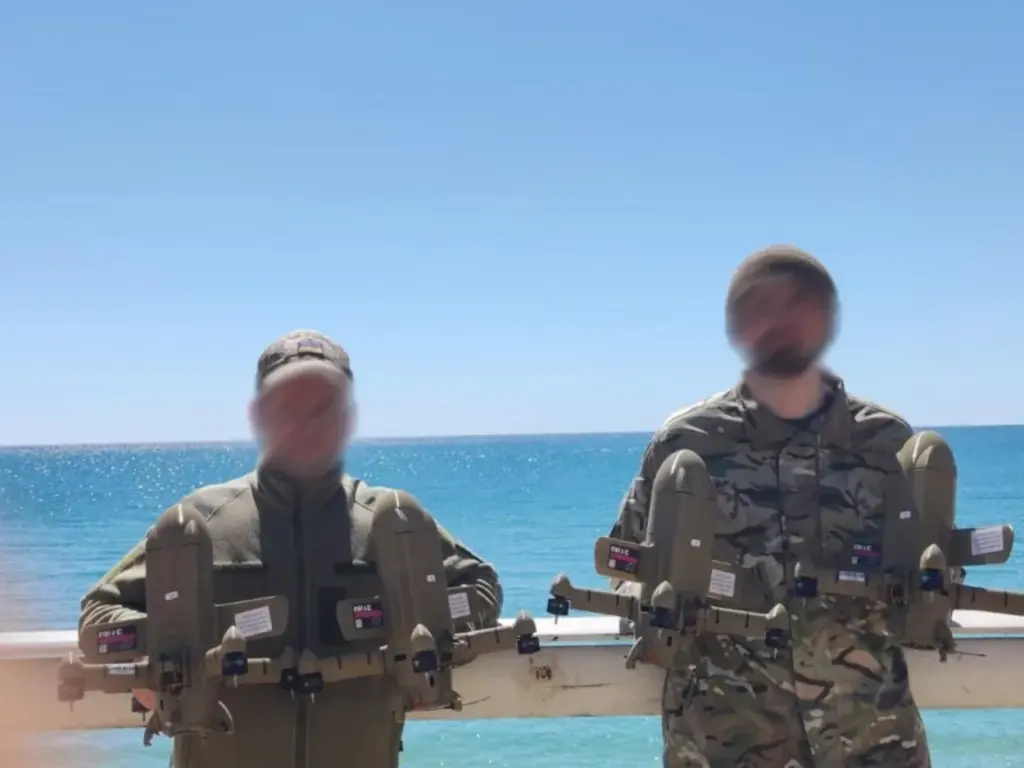
Interceptor drones funded by Norwegian nonprofit Fritt Ukraina to Ukrainian forces to help counter Russian attack drones near the Black Sea ports. Photo: Fritt Ukraina / Come Back Alive

Norwegian nonprofit Fritt Ukraina is allocating NOK 10 million (about $1 million) to strengthen air defenses around Chornomorsk, a key Ukrainian port on the Black Sea, the organization announced on 9 October.

Russian attacks on port infrastructure and civilian vessels are threatening Ukraine’s maritime trade and agricultural exports, putting pressure on a vital source of revenue for the country and disrupting shipments of food to international markets.

The funding will support Ukrainian State Border Guard Service and Armed Forces units defending the region against Russian attack drones. It is being delivered through Dronefall, a project run by the Ukrainian Come Back Alive Foundation, which equips military units with interceptor drones and the equipment needed to operate them.

Fritt Ukraina, whose name means “Free Ukraine,” is a Norwegian nonprofit organization that supports Ukraine’s defense against Russia’s full-scale invasion. The donation is part of its Odins Ravner 2.0 fundraising campaign, which provides military assistance to Ukrainian forces.

Interceptor drones and equipment to protect port infrastructure

The support includes STING, Blyskavka and P1-SUN interceptor drones, alongside ground control stations, communications equipment, generators, charging stations, laptops, tablets and vehicles, according to the organization.

The interceptor drones are already operational, according to Fritt Ukraina. The equipment helps Ukrainian personnel detect and intercept Russian attack drones, while vehicles allow crews to move quickly and operate from different positions.

Fritt Ukraina Secretary General Natalia Golis said effective air defense requires more than interceptor drones alone. Communications systems, reliable power supplies and mobility are also essential to ensure units can use their equipment effectively.

The organization is supporting Dronefall for the third consecutive year and has become the Come Back Alive Foundation’s largest foreign partner. The latest donation was matched by a donor affiliated with the Ukrainian foundation.

STING interceptor drones funded by Norwegian nonprofit Fritt Ukraina to Ukrainian forces to help counter Russian attack drones near the Black Sea ports. Photo: Fritt Ukraina / Come Back Alive

Russian attacks threaten Ukraine’s maritime exports

More than 90% of Ukraine’s agricultural products, including grain and vegetable oils, are exported through three ports in southern Odesa Oblast. Russian attacks have targeted port infrastructure and civilian vessels, increasing security risks for commercial shipping and driving up freight and insurance costs.

Since the start of Russia’s full-scale invasion in February 2022, more than 1,000 Ukrainian port facilities and over 200 civilian vessels have been damaged or partially destroyed, Fritt Ukraina reports. The disruption threatens Ukrainian export revenue and international food supplies.

“The attacks on Ukraine’s ports do not only undermine the country’s defense capabilities. They also threaten a vital part of its economy and its ability to export food to the rest of the world,” Golis said.

Grain pours from a combine harvester into a trailer during harvest in Ukraine.
Explore further

Russia’s Odesa strikes halve Ukraine’s grain export forecast

Dronefall aims to expand Ukraine’s ability to intercept Russian drones using dedicated interceptor aircraft and supporting equipment. According to Fritt Ukraina, participating units have destroyed more than 53,000 Russian drones, accounting for approximately one in five unmanned aerial vehicles entering Ukrainian airspace.

The NOK 10 million contribution is part of Fritt Ukraina’s broader Odins Ravner 2.0 campaign, which provides more than NOK 60 million in support to Ukrainian forces.

  •  

Merz Announces New Ukraine Package as German Defence Ties Deepen

German Chancellor Friedrich Merz has announced a new package worth more than €1.3 billion for Ukraine during a visit to Kyiv, combining additional military assistance with support for the country’s damaged energy infrastructure as German-Ukrainian industrial co-operation expands.

Merz visited the Ukrainian capital on Sunday while Russian drone attacks continued against Kyiv.

According to the Ukrainian presidency’s account of the meeting, the package includes more than €1 billion for defence and additional financing for the energy sector ahead of winter. Separate reporting put the energy component at approximately €350 million.

The visit also produced an extensive group of bilateral agreements involving governments and companies.

President Volodymyr Zelenskyy said Ukraine and Germany had concluded 15 agreements and documents, most concerning security co-operation, production, procurement, orders for German industry and joint projects in Ukraine. He put the total value of the agreements reached during the visit at more than €8.5 billion.

A narrower set of industrial agreements reported during the visit was valued at about €6.6 billion and included air-defence, radar and drone projects.

The visit went beyond another transfer of military aid.

Germany and Ukraine are increasingly constructing a defence relationship based on procurement, industrial production and the transfer of Ukrainian battlefield experience to European manufacturers.

At the Ukrainian-German Business Forum, Zelenskyy said the new security package would strengthen Ukraine’s armed forces immediately while industrial agreements were intended to build longer-term production capacity.

The direction corresponds with a wider shift in European support for Ukraine.

Military assistance is increasingly moving away from transfers of existing national stocks towards contracts financing new weapons production. In July, the EU released €3.47 billion for Ukrainian defence procurement, including financing intended for drones, missiles, air defence and combat aircraft requirements.

Kyiv has since asked European partners to accelerate further financing as the demands of the war outpace scheduled disbursements. EU Today reported in September that Ukraine was seeking early access to part of its 2027 EU funding to close a military budget gap.

The German agreements add a bilateral industrial track to that European system.

They also reflect changes on the battlefield.

Russia has continued to expand large-scale drone and missile attacks, increasing the importance of interceptor production, radar coverage and lower-cost methods of destroying unmanned aircraft. Ukraine’s air-defence problem is increasingly an industrial one: inexpensive attack drones cannot sustainably be countered only with scarce and costly surface-to-air missiles.

EU Today has previously examined how Ukraine’s air-defence battle has become an industrial equation, determined as much by production rates and cost ratios as by the technical performance of individual systems.

German-Ukrainian co-operation is increasingly being shaped by that requirement.

Merz has presented continuing support for Ukraine as a direct German and European security interest, rather than assistance based solely on solidarity with Kyiv.

The argument has acquired greater force as German authorities investigate Russian-linked sabotage and hybrid operations on German territory.

In September, investigators reportedly traced the attempted bombing of a Ukrainian cargo aircraft at Leipzig/Halle Airport to a suspected Russian military-intelligence organiser, with EU Today reporting details of the alleged GRU-linked logistics network.

For Berlin, support for Ukraine is now increasingly seen as part of Germany’s own security.

Merz’s visit also carries a domestic political dimension. His government is committing Germany to considerably higher defence expenditure at a time when the CDU has suffered severe electoral setbacks in eastern Germany and voters remain concerned over public finances and economic performance.

Yet Germany’s military and industrial engagement with Ukraine is continuing to expand.

The new package announced in Kyiv is important in itself, particularly as Ukraine prepares for another winter of Russian attacks on its energy infrastructure. The wider development, however, lies in the growing number of defence-production agreements accompanying it.

European governments have spent much of the war debating how to replenish their own weapons stocks while sustaining Ukraine.

The German approach increasingly points towards a different model: Ukrainian operational experience, Ukrainian procurement requirements and European industrial capacity being brought into the same defence-production system.

  •  
❌