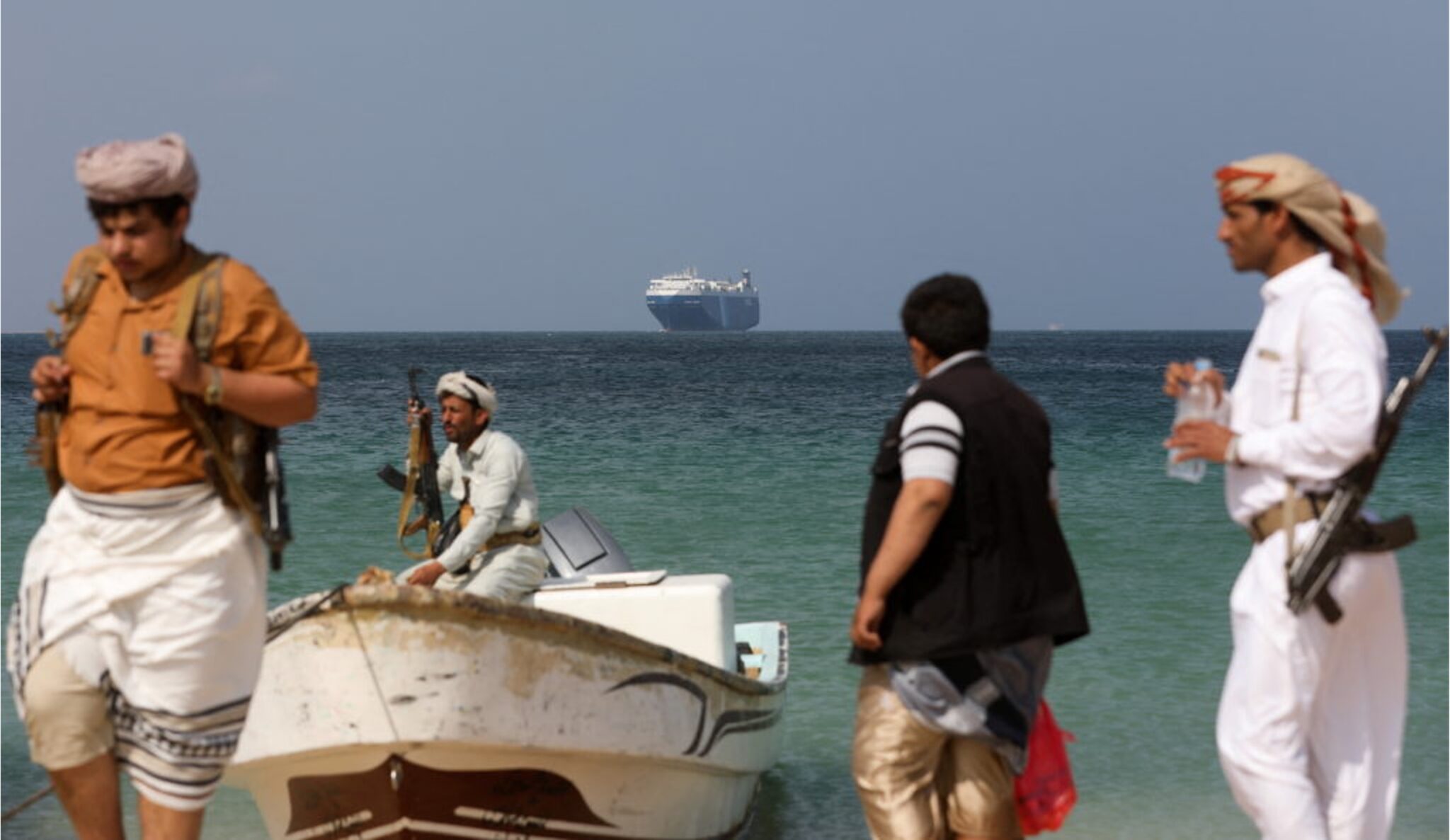
This weekend’s deadly attacks on Riyadh’s main airport have demonstrated the ability of Yemen’s Houthis to strike at the heart of Saudi power, raising the risk of a dangerous escalation that could draw in the US.
Saudi airstrikes hit a government building and civilian homes in northern Yemen’s al-Jawf province on Monday, killing at least nine civilians, including five children, Yemeni media has reported. Citing the Health Ministry within the Ansar Allah-led Yemeni government, the SABA news agency reported that seven other people were injured in the attack and described the […]
Trump says he's considering joining the imminent Saudi counteroffensive on the Houthis in response to Saturday’s assault. It's hard to overstate how much Netanyahu's promoted Iran War has destabilized the Middle East -TCN
Sanaa’s government said it has kept all main roads leading into and out of Taiz open and secure, warning Saudi forces against blocking access to the city and imposing a siege on its residents.
Government spokesperson Omar al-Bukhaiti renewed the warning against continued road closures and attempts to besiege Taiz residents to deepen their suffering and exploit it for media purposes.
Al-Bukhaiti accused the Saudi forces of closing roads and obstructing the movement of civilians and the transport of food, medicine, and other essential supplies, noting that they openly announced, through their own media outlets, the closure of 19 key roads and crossings in Taiz Governorate, while targeting civilian vehicles on roads with airstrikes and artillery shelling.
“We call for keeping densely populated Taiz out of any military escalation, prioritizing the public interest, and preventing further bloodshed,” he asserted.
The statement follows the Sanaa government’s declaration that it is prepared to reach a reciprocal arrangement to spare humanitarian sites amid the ongoing conflict with Saudi Arabia. The government also reiterated its rejection of attempts to impose an occupation.
Meanwhile, the Yemeni Armed Forces have continued to uphold their declared equation of “escalation for escalation and blockade for blockade.”
Yemeni forces renew warning over Saudi airports
The Yemeni Armed Forces also renewed their warning to airlines, passengers, and workers against using Saudi airports and airspace, describing them as a theater of military operations and potential targets.
The warning excluded the airports and airspace of the Holy cities of Mecca and Medina.
An Iraqi anti-terror resistance group has urged the Saudi leadership to acknowledge the failure of the military option and completely lift the blockade on Yemen.
Kata’ib Hezbollah, in a statement released on Monday, said the operations carried out by Yemeni Armed Forces are in reprisal for Saudi Arabia’s brutal onslaught and siege against their homeland, and in defense of their dignity and fundamental rights.
It noted that Iraqi people from every walk of life and resistance factions stand by Yemen, describing the Yemeni cause as a just cause that requires solidarity and support as it confronts Riyadh’s US-Israeli-backed atrocious assaults.
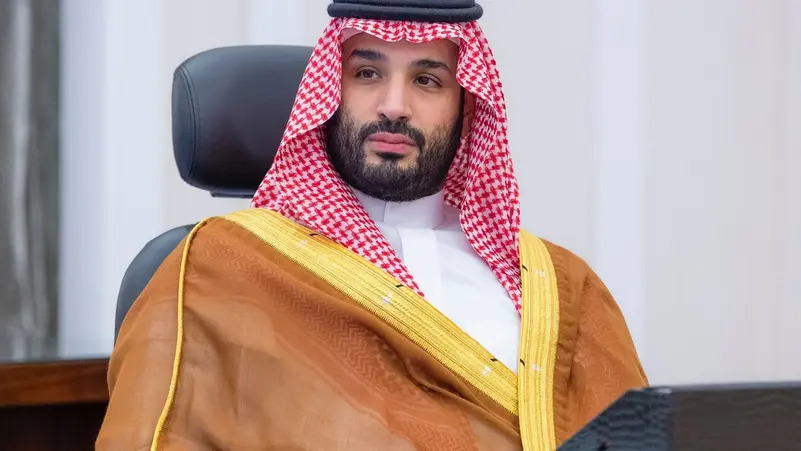
Kata’ib Hezbollah went on to address the Saudi leadership, particularly Crown Prince and de facto ruler Mohammed bin Salman, calling on them to acknowledge the failure of the military option and completely lift the blockade imposed on Yemeni people.
Continued military and economic pressure will never manage to undermine Yemenis’ determination to safeguard their rights and reject foreign guardianship and interference, the statement read.
Kata’ib Hezbollah highlighted that Iraq will continue to support just aspirations in West Asia, characterizing the causes of Palestine and Yemen as the region’s foremost issues.
On July 20, the Sana’a government announced a maritime blockade against Saudi Arabia in response to “an unjust and oppressive siege” on Yemen for almost 12 years.
Subsequently, the Yemeni armed forces have reported a series of successful missions that have targeted vessels associated with Saudi Arabia in the Red Sea.
In March 2015, Saudi Arabia and its allies imposed a blockade on Yemen, initiating a comprehensive military offensive that received support in terms of military, political, and logistical assistance from the United States and several Western countries.
Tens of thousands of Yemenis have lost their lives; however, Saudi Arabia has failed to achieve its primary goal of reestablishing a puppet government that served its interests.
Saudi Arabia is looking at ways to expand its oil pipeline capacity to destinations outside the Persian Gulf to 10 million barrels a day within two to three years, said Energy Minister Prince Abdulaziz bin Salman.
The Ministry of Foreign Affairs has advised Greek citizens to avoid travelling to Saudi Arabia unless absolutely necessary, citing the evolving situation across the wider Middle East. In a statement on Sunday, the ministry said it was taking into account both the latest developments in the region and the restrictions imposed on air traffic in […]
Saudi Crown Prince Mohammed bin Salman has been moving between heavily guarded palaces with bunkers as Houthi attacks intensify against the kingdom, The Wall Street Journal reported on October 12, citing officials familiar with his movements.
The 41-year-old crown prince is also protected by a handpicked security team, according to the report, which notes that his last public appearance was on October 6, when he gave blood during a national donation drive.
The heightened security marks a sharp reversal from Saudi officials’ earlier assurances that the Houthi threat was under control.
The group has expanded its attacks to Saudi airports and energy infrastructure, exposing the kingdom’s vulnerability despite years of military involvement in Yemen.
At least one Houthi missile struck Riyadh’s international airport on October 10, killing at least 12 people and injuring hundreds. Another strike hit the airport the following day.
Earlier attacks targeted the kingdom’s main east-west oil pipeline, which allows Saudi Arabia to transport crude to the Red Sea while bypassing the Strait of Hormuz.
Saudi officials had underestimated the threat posed by the Houthis. Saudi intelligence indicated that Iran was actively pressing the group to enter the war, but some officials assessed that the Houthis had already suffered substantial military damage from United States and Israeli attacks the previous year and would make decisions based on their own interests rather than Tehran’s, the Journal reported.
The conflict is now jeopardizing bin Salman’s efforts to establish tourism and international investment as pillars of the Saudi economy.
An international investment conference scheduled for later this month is now in doubt, while the costs of the war have widened the budget deficit and increased the risk of an economic contraction.
Foreign investment fell during the first two quarters of the year, and rising defense and infrastructure spending threatens to divert funds from the crown prince’s economic diversification program. Several major projects have been stalled or placed under review.
Saudi Arabia’s Finance Ministry now expects the economy to shrink by about 3.6% by the end of this year, according to the report.
Bin Salman has sought closer ties with President Donald Trump, including a pledge to invest around $1 trillion in the United States. Washington, however, has so far resisted Saudi requests for military assistance to roll back the Houthi advance, although it has sent military advisers.
Riyadh has turned to Pakistan for support, is seeking air defense systems abroad and is considering recruiting foreign fighters to support its Yemeni allies while exploring a diplomatic way to contain the conflict, the report said. Meanwhile, Turkey, a signatory to the Mecca defense pact, has ruled out an offensive role, while reports of possible Syrian involvement remain unconfirmed.
The Houthi attack mixed together suicide drones, cruise missiles and ballistic missiles. Because these weapons travel at significantly different speeds, the drones were launched first, followed by the cruise missiles and lastly by the ballistic missiles. Reports say the entire attack on October 10, starting at around 3PM local time, lasted around 45 minutes. The […]
Saudi Arabia is desperately trying to reverse its losses on the ground in the Yemeni conflict, while Houthi attacks reach its airports and threaten its oil trade. Yet the coalition Riyadh has assembled does not match the war it wants to fight. Washington is engaged in the conflict with Iran, Turkey excludes offensive deployments, and Pakistan draws the line at crossing into Yemen. The kingdom has foreign support, but the burden of recovering and holding territory still falls on its weakened Yemeni partners.
Retreat Before the Counteroffensive
By early October 2026, Riyadh was responding to a deteriorating military position. The Houthis’ September advance along Yemen’s western coast brought the loss of Mokha and strategic positions around Bab el-Mandeb. These setbacks exposed the weakness of Saudi-backed forces and strengthened the Houthis’ leverage over a shipping route increasingly important to Saudi oil exports.
The renewed Saudi–Houthi escalation began with the July 13, 2026, strike on Sanaa airport’s runway. Saudi aircraft sought to prevent an Iranian Mahan Air flight carrying a senior Houthi delegation from landing without coalition permission. The plane later landed in Hodeida after Omani mediation, but the Houthis retaliated against Abha airport and subsequently announced a blockade on Saudi shipping. The strike broke the relative calm established by the 2022 truce; September’s coastal offensive then turned the confrontation into a major territorial setback for Riyadh’s partners.
The retreat exposed divisions within the anti-Houthi camp. Saudi–Emirati cooperation had broken down, and the withdrawal of the UAE left command arrangements that Riyadh failed to replace effectively. The factions expected to carry the offensive remained divided and poorly prepared for a sustained campaign. Saudi airpower could not compensate for the absence of a coherent local force.
The cost is also being felt inside Saudi Arabia. The October 10, 2026, attack on Riyadh’s King Khalid International Airport killed 12 people and wounded 309, according to Saudi authorities, and temporarily suspended operations. Riyadh blamed the Houthis, who renewed their warning against using Saudi airports and airspace on October 11. Airport disruption, cancelled flights and attacks on oil facilities bring the economic consequences of the war directly into the kingdom. The Saudi air campaign has not secured its civilian infrastructure.
Operation Dawn of Yemen began on October 5, 2026, after Saudi-backed Yemeni leader Rashad al-Alimi announced military action the previous day. The immediate objective was to recover the coastal positions lost in September, alongside the Saudi-backed Yemeni government’s broader ambition to restore its authority over Houthi-held territory. On October 11, the coalition announced the destruction of 136 military targets in a large-scale operation. That tally says little about whether Saudi-backed units can hold territory, secure supply routes or reopen shipping lanes.
Houthi footage released October 10, 2026: Shawaz drone strikes on Saudi-backed forces in Kahbub and Al-Waziya, as presented by the movement’s military media
Why Taiz Matters
The counteroffensive has produced conflicting accounts of control on the coast. On October 9, 2026, Saudi Arabia’s ambassador to Yemen announced that Bab el-Mandeb and Mayun Island had been cleared of Houthi forces. The Houthis maintained that they still held those positions. Control of the waterway remains contested, despite Riyadh’s announcements of success.
Taiz adds another strain after the coastal setbacks. Pressure on its approaches threatens supply routes and forces Saudi-backed units to divide their effort between the inland front and the Red Sea coast. The Houthis can disrupt their opponents’ counteroffensive without winning every coastal engagement: sustained pressure inland prevents those opponents from concentrating their forces. Saudi airpower does not resolve the fragmentation of the Saudi-backed Yemeni forces expected to hold the ground.
Houthi military footage released October 10, 2026: the movement presents advances and the surrender of opposing fighters in Sami, As-Silw and Al-Mawasit, Taiz province. The fighting places further pressure on the ground forces on which Riyadh’s campaign depends
The Iran War Narrows Saudi Options
The US–Israeli war with Iran, which began in February 2026, has expanded the military demands on Washington. Regional deployments, shipping protection and operations against Iran compete with Saudi requests for a larger American role in Yemen. Riyadh cannot assume that American support will expand on its terms. Its dependence on outside assistance has grown at the same time as the regional war has made that assistance more conditional.
The Iran war compounds Saudi Arabia’s vulnerability. Disruption at Hormuz has increased Riyadh’s dependence on its westbound pipeline and Red Sea ports. Southbound cargoes from Yanbu must pass Bab el-Mandeb; northbound exports follow a different route. Moving crude across the peninsula bypasses Hormuz, but it does not remove the threat to shipping off Yemen.
Pressure at Bab el-Mandeb gives Iran an additional advantage while the Houthis gain territory and bargaining power of their own. Their overlapping interests put Riyadh under pressure on two fronts. A Washington–Tehran agreement would not automatically end the war in Yemen: the Houthis have their own territorial, political and economic demands.
Washington is already involved through military advisers, intelligence and targeting support. The issue is the extent of that involvement, not American neutrality. Earlier in October 2026, Trump rejected Saudi requests for direct strikes; after the Riyadh airport attack, he said the United States might join them. Riyadh still lacks a firm American commitment to the wider offensive. Its requests compete with Washington’s military operations and priorities in the Iran war.
Allies Draw Their Own Lines
Riyadh’s response is to widen its support network through the Mecca pact, signed with Turkey and Pakistan on August 7, 2026, and activated on October 5. But an agreement to defend Saudi Arabia is not an agreement to win its war in Yemen. Pakistan’s military presence and Turkey’s technical, intelligence and air-defense assistance address the kingdom’s security without supplying a joint ground campaign across the border.
The alliance has a secretary-general, retired Pakistani general Nauman Mahmood, but its detailed force-generation timetable, operational command arrangements, cost-sharing formula and mission duration remain unpublished. On October 8, 2026, Ankara excluded offensive operations while parliamentary ratification was pending. On October 9, Islamabad confirmed a substantial military presence in the kingdom but ruled out crossing into Yemen to attack the Houthis. Riyadh is obtaining defensive commitments, not a combined expeditionary army.
Pakistan’s decision-making has also shifted. In 2015, parliament unanimously rejected participation in the Yemen war while promising to defend Saudi territory and holy sites. In October 2026, reinforcement commitments are proceeding without a parliamentary vote. The government says it followed the necessary procedures. The political result is a narrower domestic debate over a commitment that could draw Pakistan further into the conflict.
Fewer political checks make deployments easier to authorize and harder to reconsider once costs and casualties accumulate. Pakistan’s own security pressures add another burden: the October 11, 2026, emergency in opposition-run Khyber Pakhtunkhwa coincides with its commitments to Saudi Arabia. Islamabad is extending support abroad while managing a deepening confrontation at home.
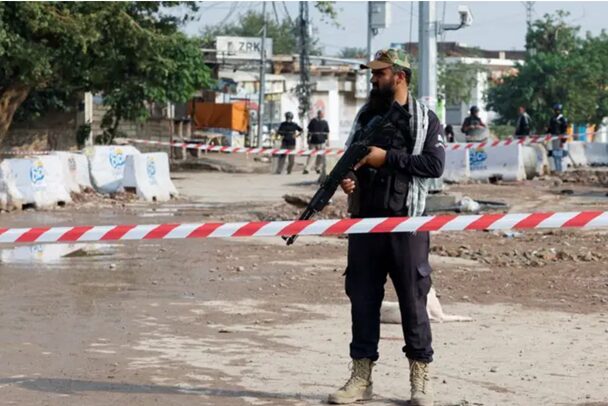
Peshawar, October 11, 2026: police guard the approach to the Red Zone. Pakistan’s overseas security commitments coincide with emergency measures at home
Saudi-led coalition footage, October 9, 2026: the coalition announces strikes on three Houthi missile launchers. The continuing attacks inside Saudi Arabia expose the limits of destroying individual launch sites
Defensive support can still sustain the offensive by freeing Saudi assets for use in Yemen. France’s support for the defense of Yanbu and Britain’s refueling assistance contribute to that effort. But none of this repairs the weakness of Riyadh’s Yemeni ground forces. Pakistan also has its border with Iran and its mediation role to consider, while Turkey keeps its commitment separate from offensive operations. Each partner sets limits according to its own interests.
Different Interests, No Shared Victory
Pakistan’s proposed $1.21 billion IMF disbursement awaits board approval. Turkey’s September 2026 inflation was 29.73%, with its policy rate at 37%. Both face financial pressures that favor limited missions over an open-ended expedition. Who pays for the current assistance remains undisclosed.
Saudi Arabia’s updated deficit forecast is 4.9% of GDP. September 2026’s non-oil purchasing managers’ index stood at 55.3, indicating expansion before the latest escalation. The airport attacks and disruption to transport now place that activity under additional pressure. Riyadh must finance the campaign while protecting the infrastructure and trade on which its wider economic plans depend.
The Houthis are using that pressure to advance their negotiating demands. On October 10, 2026, the Houthi authorities proposed reciprocal exclusion of airports, ports and other humanitarian infrastructure from blockade and attack. The proposal seeks to exchange limits on disruption for concessions over access and blockade. It puts the economic consequences of continued fighting at the center of the bargaining.
The conflict of interests runs through the entire coalition. Riyadh wants to reverse Houthi gains and protect Saudi infrastructure. The Saudi-backed Yemeni government wants to restore its authority. Turkey and Pakistan seek bounded commitments, and Washington calculates its involvement against the Iran war. The Houthis seek concessions while preserving their military leverage. A common adversary has not produced an agreed objective or a shared willingness to bear the cost.
Saudi Arabia therefore has partners willing to help defend the kingdom, but those partners have made no common commitment to reverse Riyadh’s setbacks in Yemen or sustain the ground campaign of the Saudi-backed Yemeni government. That is the gap behind the coalition’s announcements and strike tallies. Without stronger local forces and a political settlement addressing shipping, attacks and access, additional foreign support can prolong the campaign without resolving it. Riyadh risks remaining surrounded by allies while carrying a war none of them has agreed to finish.
Ambassador Jean-Philippe Linteau says in a video posted on Sunday that anyone in Riyadh who encounters military debris should walk away and contact authorities.
Ambassador Jean-Philippe Linteau says in a video posted on Sunday that anyone in Riyadh who encounters military debris should walk away and contact authorities.
Following the attack on the King Khalid International Airport in Riyadh, Saudi Arabia, the usual suspects emerged from the social media muck to condemn Ansarallah. “These reprehensible attacks demonstrate a blatant disregard for innocent civilian life. They must stop now,” demanded Trump’s secretary of state, Marco Rubio.
Bibi Netanyahu, “on behalf of the people of Israel,” condemned the attack and declared the Zionist state “looks forward to a strong Middle East—one that stands united against threats, protects its people, and builds a future of security, cooperation, and prosperity for all the peoples of our region,” never mind the 200,000-680,000 people of the region he butchered over the last three years.
Kaja Kallas, the former president of Estonia and current High Representative of the European Union for Foreign Affairs and Security Policy, denounced the airport attack. “The Houthi attack on Riyadh’s international airport is an appalling act of terror. There can be no justification for indiscriminate attacks on civilians and civilian infrastructure,” she said.
Kallas, like most European leaders, insists Israel has a “right to defend itself” against Hamas, Hezbollah, and the Houthis, and yet “self-defense” is not a legitimate response for the people of Gaza, the West Bank, Lebanon, Syria, and Yemen, all victims of Israeli and US aggression.
António Guterres, the Secretary-General of the United Nations, is “deeply shocked” by the Yemeni retaliation, and criticized the attack on the Saudi airport as a violation of international law.
If Guterres is concerned about international law and the bombing of civilian infrastructure, why hasn’t the UN invoked Chapter VII of the UN Charter in regard to Gaza? “The UN’s member states collectively have a bad track record when it comes to preventing genocide,” writes Sean Matthews. “In the case of genocides in Rwanda and Bosnia, the UN only declared officially that genocides took place after the fact.”
G7 foreign ministers also weighed in on the attack, declaring the response to Saudi attacks poses an “unacceptable threat to regional stability and security, to global energy security,” as well as to security in the Red Sea and the Bab al-Mandab Strait.
In June, during a globalist conclave in Évian, the G7 issued a dilatory statement calling for an acceleration of “humanitarian and reconstruction efforts and the swift implementation of relevant political and security measures” in Gaza, the West Bank, and Lebanon, while knowing full well Zionist Israel will ignore international law and continue to murder and starve Palestinians while ethnically cleansing the Shi’a in southern Lebanon.
The official censure by the United States, the EU, UN, and G7, as well as the skewed reportage of the corporate media, overlooks the reason why Ansarallah is bombing Saudi airports and oil infrastructure.
Forgotten, or ignored, are the crimes of the Saudi coalition during and after the Yemen War of 2015. The coalition included the United Arab Emirates, Bahrain, Egypt, Jordan, Kuwait, Morocco, and Sudan.
The Sunni coalition attacked after President Abd Rabbu Mansour Hadi fled house arrest into exile in Saudi Arabia. Hadi, who died earlier this year, stood accused of secretly working with al-Islah, described as the Muslim Brotherhood’s Yemeni branch. The former president was also accused of being a Saudi puppet. Saudi Arabia views Ansarallah—followers of the Shi’a branch of Zaydism—as a threat to its national security.
A detailed United Nations report estimated approximately 377,000 deaths by the end of 2021 from the Saudi-led campaign. This total includes direct losses from combat and indirect deaths linked to malnutrition, disease, and the decline of health care and essential services.
The United States was involved in the Yemen humanitarian crisis. US personnel provided logistical support, information, training, and advisers after the Saudi-led intervention. US tankers refueled coalition aircraft, increasing their range over Yemen. Saudi forces relied heavily on US-supplied aircraft, munitions, spare parts, maintenance, and technical support.
Jeff Bachman, a professor and genocide scholar at the School of Information Services, said during an interview with the American University in Washington that the Saudi-led coalition has been able to engage violence against Yemenis thanks to the complicit material and political support of the United States.
UN Security Council Resolution 2216 established a UN arms embargo. The restrictions implemented delayed or curtailed commercial imports and humanitarian shipments of food, fuel, medicines, and medical supplies. Because Yemen is dependent on imports, disruptions to port and airport operations rapidly worsened hunger, health-system strain, water and sanitation breakdowns, and prices, according to Human Rights Watch.
“The Saudi-led coalition’s military strategy in Yemen has been increasingly built around preventing desperately needed aid and essential goods from reaching civilians, risking millions of lives,” said James Ross, legal and policy director at Human Rights Watch. “The Security Council should urgently sanction Saudi and other coalition leaders responsible for blocking food, fuel, and medicine, causing hunger, sickness, and death.”
During a full closure in November 2017, UN agencies noted that aircraft and ships delivering aid could not secure clearance, while commercial cargo encountered major hurdles. Human Rights Watch stated that the coalition had maintained a naval and air blockade since March 2015, with restrictions producing a disproportionate impact on civilians in direct violation of international law.
Yemen remains one of the world’s most serious humanitarian emergencies. As of 2026, more than 22 million people need assistance or protection and 18.3 million people are acutely food insecure. Malnutrition levels remain critically high, with over 2.2 million children under five acutely malnourished, including 516,157 suffering from malnutrition, according to the United Nations. “Even before the latest escalation, an estimated 12.2 million children in Yemen needed humanitarian assistance,” UNICEF reported in September.
Article 51 of the UN Charter is a determining provision that addresses the right of self-defense for member states. It represents an exception to the general prohibition on the use of force outlined in Article 2(4) of the UN Charter, which mandates that all member states refrain from using force against the territorial integrity or political independence of any state, as the Saudis did in 2015 in Yemen.
On October 10, following the Ansarallah attacks, Trump announced the US may rejoin the latest Saudi onslaught on Yemen. “We’re going to look at it,” he told reporters. “We just found out about the recent attack. We will make a decision. We move very quickly.”
Prior to Trump’s announcement, Democrat Ro Khanna, who was detained during a visit to Israel in July, introduced a joint Yemen War Powers Resolution along with Republican Representative Thomas Massie on October 9. The resolution directs “the President pursuant to section 5(c) of the War Powers Resolution to remove United States Armed Forces from hostilities against the Houthis in Yemen that have not been authorized by Congress.”
Congress is unable to decide whether to rejoin the Saudi effort to destroy Ansarallah and maintain the illegal war on the people of Yemen. In addition to debate on the constitutional legality of the Trump administration’s military assistance to the Saudis without a congressional consultation, members of Congress are concerned about the continued slaughter of civilians and the ongoing humanitarian crisis, considered one of the worst in the world, with around 24 million people, or nearly 80% of the population, needing assistance and protection.
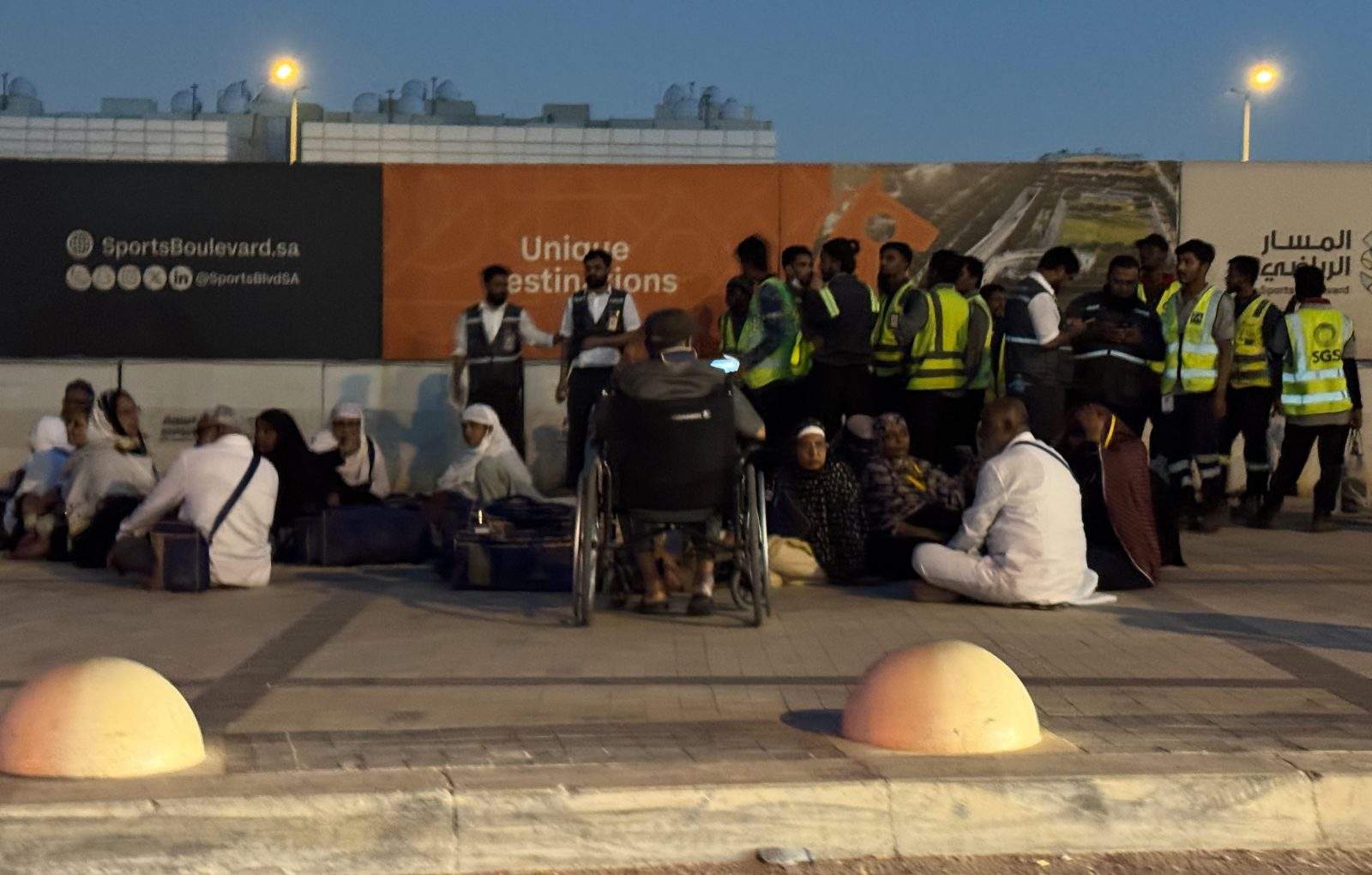
A projectile struck a passenger terminal at the international airport in Riyadh on Sunday, a day after a missile hit the same terminal and killed 12 people.
A projectile struck a passenger terminal at the international airport in Riyadh on Sunday, a day after a missile hit the same terminal and killed 12 people.
Yemen’s Ansar Allah, also known as the Houthis, continued attacks against the King Khalid International Airport on Sunday, a day after one of its strikes on the facility killed 13 civilians. The Saudi aviation authority said that the 13 dead included four Saudis, two Bangladeshis, one American, one Egyptian, one Jordanian, one Syrian, one Palestinian, […]
The Houthis (Ansar Allah) announced on October 11 that they had launched missile and drone attacks against Saudi airports and two Aramco energy facilities, claiming the operations disrupted air traffic and triggered fires at the targeted sites.
In a statement, Houthi military spokesman Brig. Gen. Yahya Saree said the group had carried out four operations over the previous 24 hours using ballistic missiles, cruise missiles and drones.
The attacks targeted King Khalid International Airport in Riyadh in three separate waves, the Shuqdam gas facility and Tanajib oil facility in Saudi Arabia’s Eastern Province, and King Fahd International Airport in Dammam, according to the spokesman.
Strikes hit Riyadh’s King Khalid International Airport both October 10 and October 11. Saudi authorities said an attack on October 10 killed 12 people and wounded more than 300, prompting the airport’s closure.
The Saudi-led coalition also said an unidentified projectile struck Terminal 4 of the airport on October 11, causing a fire, while air defenses intercepted a cruise missile nearby.
Separately, the coalition reported that a projectile landed close to King Fahd International Airport in Dammam on October 10.
Saree said the strike on the Shuqdam gas facility caused large fires, while the attack on the Tanajib oil facility also sparked a fire.
Fires were detected at both targeted energy facilities, although the extent of the damage and any impact on production were not immediately clear.
The spokesman also said Houthi forces attacked Saudi-backed troop concentrations in the areas of Ras al-Ara and al-Saqiya close to Bab al-Mandab with six ballistic missiles and two drones. He claimed the strikes killed and wounded dozens of personnel.
Saree added that Houthi forces had engaged Saudi military aircraft with domestically produced surface-to-air missiles, forcing them to withdraw. He did not specify how many aircraft were involved or provide further details of the engagement.
The announcement came as Saudi Arabia intensified its air campaign in Yemen. Saree said Saudi forces had carried out 124 airstrikes over the preceding 24 hours across Sanaa and the provinces of Taiz, Marib, al-Jawf, Hajjah, Hodeidah and Saada.
The spokesman put the total number of Saudi airstrikes at 2,058 since the latest escalation began, and accused Saudi forces of causing heavy civilian casualties, particularly among women and children.
Saree warned airlines, international companies, airport workers and travelers against using Saudi airports, declaring them unsafe except for airports and airspace in Mecca and Medina.
“The Yemeni Armed Forces will continue to escalate their operations against the Saudi interior,” he said, pledging to maintain what he called the equation of “blockade for blockade” and “escalation for escalation” until Saudi military operations against Yemen stop and the blockade is lifted.
The latest attacks indicate that Houthi strikes are becoming more accurate, with confirmed impacts at Riyadh’s airport on consecutive days and fires detected at two targeted energy facilities.
This adds to the challenge facing Saudi Arabia, which has so far also failed to help its allies in Yemen organize an effective counterattack against the Houthis.
Saudi airstrikes in Yemen killed at least 66 civilians, including eight children, and wounded 90 throughout September, according to the Yemen Data Project (YDP), as the war has significantly escalated since it was reignited by Saudi airstrikes on the Sanaa International Airport in July. The deadliest single incident for civilians was the September 7 bombing […]

 Login