Benjamin Netanyahu just admitted it himself: Israel’s security chiefs knew October 7 was coming — and let it happen. Prime Minister Benjamin Netanyahu has now stated publicly that his own security chiefs deliberately kept him [...]
The Houthis (Ansar Allah) attacked Saudi Arabia’s King Khalid International Airport in Riyadh on October 10, killing at least 13 people and injuring over 300, the deadliest attack on the kingdom in more than a decade, forcing authorities to suspend operations at the airport.
This was not an isolated incident.
Since the fighting resumed between Saudi Arabia and the Iran-backed group in July this year, Houthis have attacked at least five Saudi airports, including King Abdullah bin Abdulaziz International Airport in Jizan, Abha International Airport, Najran Airport, King Khalid International Airport in Riyadh, and King Fahd International Airport in Dammam.
So far, at least 20 people have been killed in these attacks, and hundreds more have been injured, apart from damage to runways, terminals, and aircraft.
Just the King Khalid International Airport in Riyadh has been attacked three times this week. The two previous attacks on King Khalid Airport this week killed four and caused heavy damage to a Saudi commercial plane parked on the tarmac.
The Houthis, in fact, have declared the whole of Saudi airspace as “a zone of military operations,” saying airlines should avoid flying in the country.
Saudi Arabia operates one of the Middle East’s most extensive, multi-layered air-defense networks. Its upper tier includes US-supplied THAAD (Terminal High Altitude Area Defense) alongside Patriot batteries, South Korea’s Cheongung-II AD system, and improved HAWK launchers.
It also fields French Crotale SAMs, Avenger systems with Stinger missiles, anti-aircraft guns, and Silent Hunter laser systems supplied by China.
The Houthis are also enforcing a naval blockade of Saudi Arabia by choking the Bab-el-Mandeb strait in the Red Sea and have also targeted the country’s oil refineries and East-West oil pipeline.
In fact, in the ‘fog of war,’ it is easy to miss the context that the Houthi-Saudi war did not begin with these strikes on Saudi airports; nor did it start in July when a 2022 ceasefire between the two sides broke over Saudi air strikes on Sana’a airport.
The two sides have been fighting for nearly two decades.
Saudi-Houthi Conflict
The Houthis are a Zaydi Shiite politico-religious movement from northern Yemen’s Saada region, originating in the 1990s as a revivalist group opposing corruption in central government, their economic and social marginalization, and increasing Saudi-backed Wahhabi influence in Yemen, including in traditionally Zaydi areas.
Saudi Arabia’s longest land border with Yemen stretches roughly 1,200 km, much of it still porous. Consequently, expanding Iranian influence through the Houthi rebels carries security implications Riyadh cannot afford to overlook.
The Houthis drone and missile capabilities, and the strategic importance of the Red Sea and Bab al-Mandeb routes for Saudi oil exports, add more risks for Riyadh.
Due to these factors, Riyadh has a vested interest in both containing rising Iranian influence in Yemen and weakening the Houthis’ military capabilities, while at the same time, preventing the economic collapse of Yemen.
If Yemen collapses, the crisis will inevitably spill into its northern neighbor – Saudi Arabia. There are already over 2 million Yemeni migrants in the country, and an economic collapse can further push millions of Yemeni citizens into the country.
Riyadh regularly provides grants to the Yemeni government to prevent its collapse and has already provided US$12.6 billion in the last 14 years. After investing so much money, Riyadh clearly tries to control who leads the country and its policies.
However, Saudi involvement in Yemen was never limited to just financial aid.
Riyadh first got militarily involved in Yemen 17 years ago, in 2009.
Between 2004 and 2010, the Yemeni government and the Houthis were engaged in constant hostilities. This warfare often spilled into Saudi Arabia’s southern parts as well.
After Houthi attacks on Saudi border posts in November 2009, which killed border guards, Saudi Arabia launched airstrikes on Houthi positions with F-15 and Tornado fighter jets, and even conducted limited ground operations.
Notably, this was the kingdom’s first unilateral military operation in decades.
Fighting continued in 2010, and there were substantial Saudi casualties, with more than 130 Saudi soldiers dead by some estimates.
Riyadh and the Houthis reached a ceasefire in 2010, which stopped the fighting. Meanwhile, the Houthis continued to gain ground in Yemen. By the end of 2014, the Houthis had occupied the very strategic Sanaa and Aden airports.
In March 2015, Saudi Arabia returned to Yemen with Operation Decisive Storm. This time, Riyadh was not alone. It cobbled together a coalition of eight countries, including the UAE, Bahrain, Kuwait, Qatar, Jordan, Egypt, Morocco, and Sudan. The US also provided logistics and intelligence support.
File Image: Two F-15SA Advanced Eagles escorted two US B-52 Stratofortress bombers while crossing Saudi Arabia’s airspace on Dec. 10. 2020. (via Twitter)
When Saudi Arabia Bombed Yemeni Airports
The campaign began with massive airstrikes targeting air defenses, airports/air bases, missile sites, and Houthi positions. Riyadh also imposed a naval blockade of Yemen.
The coalition particularly targeted Yemeni airports, airbases, air defense missiles, and civilian and military aircraft. The aim was to neutralize any aerial capability that the Houthis might have gained after seizing Yemeni government assets.
In March itself, the Saudi-led coalition launched airstrikes on Sanaa International Airport, the adjacent al-Dulaimi air base, and Al Anad Air Base.
Reports say the attacks damaged or destroyed scores of aircraft, including a Yemeni Air Force CASA CN-235M-300 cargo plane and a Beechcraft Super King Air at al-Dulaim.
The strikes also damaged one Mi-8 helicopter, two Bell 214 Huey helicopters, multiple Su-22 ground-attack fighters, and F-5 jets. The coalition destroyed an Ilyushin Il-76TD cargo aircraft at Sanaa International Airport in late March.
The coalition also damaged the runway at Sanaa International Airport.
The coalition attacked Sanaa Airport again in April. A Yemeni Felix Airways Bombardier CRJ702ER civilian aircraft was set ablaze, and another cargo plane was hit. Two Yemeni Air Force MiG-29s were also reported destroyed in related strikes at the airport.
US Airstrikes Hit Yemen Oil Port
When an Iranian cargo plane, allegedly carrying humanitarian aid, tried to land at the Sanna airport, coalition jets targeted the airport again and bombed the runway, rendering it unusable.
Brigadier General Ahmed Asseri, spokesman for the Saudi-led coalition, told Reuters at the time that the airport was bombed after an Iranian aircraft refused to coordinate with the coalition and the pilot ignored orders to turn back.
He said the bombing of the runway made it unusable for planned aid flights.
“Airport officials said the strikes set a civilian aircraft operated by Yemeni Felix Airways ablaze. A cargo plane was also hit they said,” a contemporary Reuters report said.
The airport at the Red Sea city of Hodeidah was also bombed.
These attacks continued in May.
A contemporary report said that one MiG-29, two F-5s, three Su-22s, one Mi-8, and two Il-76TD cargo planes were destroyed in Saudi-led airstrikes in Yemen in May.
The Yemeni Air Force was effectively neutralized in these attacks. The coalition strikes destroyed most MiG-29s, Su-22s, F-5s, and support aircraft on the ground or rendered them unusable.
The coalition further attacked Yemeni airports in 2017 and 2018.
The Saudi-led operation continued for seven years, from 2015 till 2022, when a ceasefire was reached between Riyadh and the Houthis.
This ceasefire was broken in July 2026 when Riyadh once again bombed Sanaa airport in order to not let an Iranian plane land at the airport.
However, by July 2026, the Houthis had considerably improved their offensive capabilities.
This time, it’s the Houthis who are enforcing a naval blockade of Saudi Arabia and repeatedly targeting its civilian airports, as well as oil infrastructure.
While the Houthi attacks on Saudi airports are making global headlines, the prelude to these attacks was written over a decade ago in 2015, and the final chapter of this nearly two-decade-long conflict between Riyadh and the Houthis has yet to be written.
Sumit Ahlawat has over a decade of experience in news media. He has worked with Press Trust of India, Times Now, Zee News, Economic Times, and Microsoft News. He holds a Master’s Degree in International Media and Modern History from the University of Sheffield, UK.
He can be reached at ahlawat.sumit85 (at) gmail.com
Il Telegraph ha recentemente affermato che Putin stia preparando una "mobilitazione occulta", secondo cui sarebbero in corso presunti preparativi amministrativi nel caso in cui decidesse di dichiarare la mobilitazione. L'essenza di queste voci non è nuova, e Putin vi ha risposto all'inizio di settembre dicendo che "oggi non esiste uno scenario del genere che richiederebbe una mobilitazione. Si tratta di un attacco informativo da parte del nemico alla vigilia delle elezioni per la Duma di Stato nel tentativo di influenzarne i risultati".
Entrambe le parti della sua dichiarazione sono vere, ma non si può escludere che le circostanze possano cambiare, nel qual caso vale la pena analizzare lo scenario in cui potrebbe verificarsi una mobilitazione e come l'UE potrebbe reagire. "La campagna di attacchi ferroviari della Russia minaccia di paralizzare la logistica militare dell'Ucraina" se condotta sistematicamente da ora fino al prossimo inverno e abbinata a colpi altrettanto sistematici contro le sue stazioni di servizio, i porti, le centrali elettriche e altre infrastrutture.
Se i pianificatori militari russi giungessero a credere che ciò potrebbe portare alla loro tanto attesa svolta lungo il fronte, allora potrebbero consigliare a Putin di fare almeno ciò che fece quattro anni fa, dichiarando la mobilitazione parziale di riservisti esperti per sfruttare qualsiasi sfondamento del genere. L'obiettivo sarebbe quello di applicare più forza militare in questo momento strategicamente vantaggioso per costringere l'Ucraina a conformarsi a tutte le richieste della Russia, o almeno al maggior numero possibile, per porre fine al conflitto con una vittoria russa.
Questo è uno scenario ragionevole in cui potrebbe essere dichiarata almeno una mobilitazione parziale, alla cui possibilità la NATO europea (E-NATO) si starebbe già presumibilmente preparando in anticipo, da cui il recente isterico allarmismo su un imminente attacco russo contro diversi membri del blocco. Alla luce delle dinamiche militare-strategiche in rapido mutamento del conflitto, provocate dalla già menzionata campagna di attacchi sistematici della Russia, questa narrazione può col senno di poi essere interpretata come un condizionamento preliminare.
Lo scopo è manipolare la gente comune inducendola a percepire qualsiasi mobilitazione parziale come preparazione a un'invasione russa degli Stati baltici e/o della Polonia, cosa che Putin ha detto di non avere interesse a fare, e che comunque non avrebbe senso per lui rischiare la Terza guerra mondiale nel tentativo di occupare popolazioni ostili. Ciononostante, questo condizionamento preliminare potrebbe essere abbinato a una falsa bandiera (in Polonia?) per giustificare o una pericolosa escalation da parte dell'E-NATO contro la Russia o un'accelerazione della centralizzazione militare-politica dell'UE.
Le élite liberali al potere dell'E-NATO sono sfidate dalle loro opposizioni conservatrici come mai prima d'ora, in mezzo al declino economico causato dall'impennata dei prezzi dei carburanti dovuta alle sanzioni anti-russe e alla perturbazione del mercato energetico globale provocata dalla Terza guerra del Golfo. Esse hanno quindi interesse a fare il massimo allarmismo sulla Russia per almeno radunare gli elettori attorno a sé, mentre centralizzano ulteriormente l'UE e, nello scenario più estremo, escalano pericolosamente contro la Russia se ciò non dovesse aiutarle.
Per riepilogare, la mobilitazione sarebbe molto probabilmente dichiarata solo per sfruttare uno sfondamento imminente lungo il fronte, ma si prevede che l'E-NATO presenterà qualsiasi mossa del genere come un imminente attacco russo al fine di promuovere gli obiettivi della sua élite. Potrebbe persino verificarsi una “false flag” per rendere questa narrazione più credibile. Prima che l'E-NATO vada pericolosamente all’escalation contro la Russia con tale pretesto, tuttavia, dovrebbe ricordare le parole di Lavrov secondo cui qualsiasi guerra tra loro "sarà molto breve", in un'allusione al fatto che la Russia ricorrerebbe all'arma nucleare contro l'E-NATO per legittima difesa.
(Articolo pubblicato in italiano sulla newsletter di Andrew Korybko)
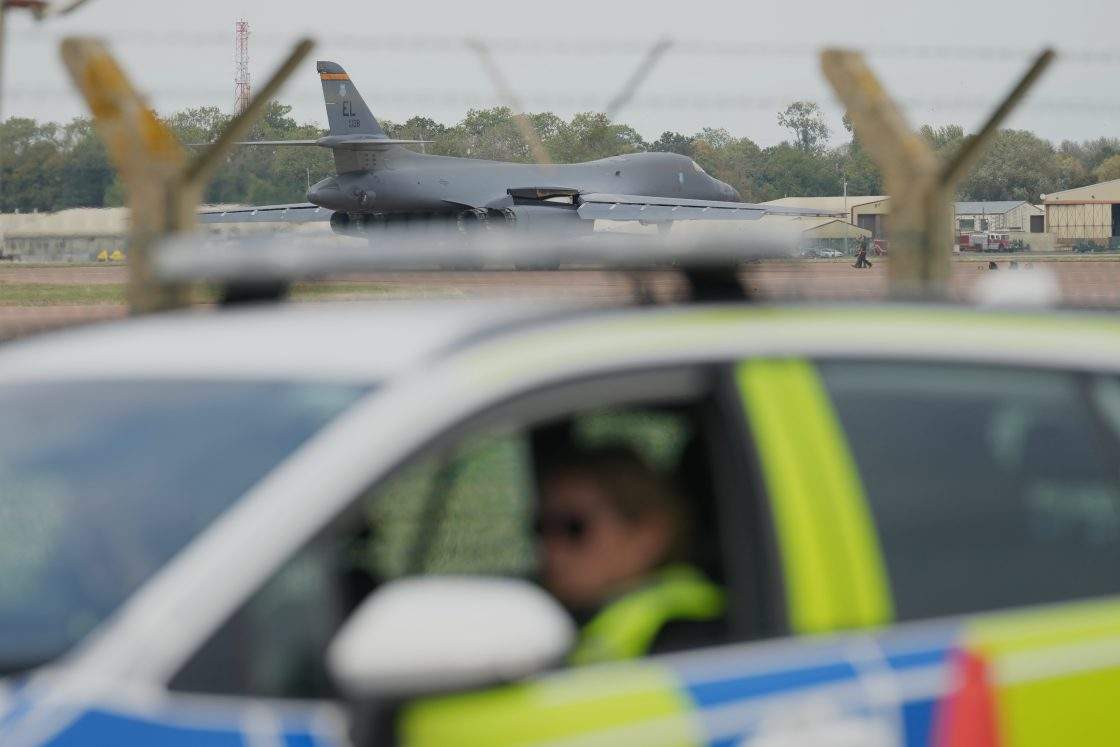
British Prime Minister Andy Burnham said Monday a security incident at a U.S.-run military air base in England was “almost certainly” directed by Iran’s Revolutionary Guard.
British Prime Minister Andy Burnham said Monday a security incident at a U.S.-run military air base in England was “almost certainly” directed by Iran’s Revolutionary Guard.
A lethal plume of toxic smoke was blowing towards us from a blaze at a battery manufacturing plant in Kaliningrad.
Troops in the Russian exclave had been ordered to help put the fire out: untrained and under-equipped, they mutinied. Terrified civilians were thronging the borders.
The Kremlin, oblivious to the unfolding humanitarian and environmental catastrophe, blamed the West for sabotage and incitement, and demanded a transit corridor across Lithuania.
The crisis scenarios were hypothetical; the aim was to explore the dilemmas and trade-offs they created. (You are the Lithuanian government. Do you let the mutineers in? Or leave them to be massacred?)
The games-master provided regular “injects” – new developments – such as ill-written social media posts from US president Donald Trump. He blamed the authorities in “Lithvastonia” for having started the fire in “Kaliningradia”.
An amusing parody, we thought. A few hours later, the real US president published news of his deal with Russian president Vladimir Putin on sanctions-busting diesel imports, then blamed Ukraine for being invaded.
Not so amusing, especially for our Ukrainian participant, a senior military commander there.
As we were leaving (us to safety, him to danger), news broke that Russia is stepping up its assassination attempts in Europe, targeting defence industry bosses (and perhaps Polish politicians). Our scenarios seemed tame in comparison.
This article continues, but the full version is available only to EUobserver.com subscribers. Visit account.euobserver.com/membership
Ukrainian President Volodymyr Zelenskyy said Monday that Russia has continued to strike Ukraine's energy facilities after the U.S. President claimed there was an agreed ceasefire.
Ukrainian President Volodymyr Zelenskyy said Monday that Russia has continued to strike Ukraine's energy facilities after the U.S. President claimed there was an agreed ceasefire.
On October 7, 2023, a memorable military operation began from Gaza, in which approximately 4,000 armed men from the elite units of the various local Palestinian resistance movements (Palestinian Islamic Jihad, PFLP, DFLP, Popular Resistance Committees, etc., led by Hamas) poured like an overflowing glass over the Zionist settlements in the surrounding areas.
The action was simultaneously a response to the intensification of expropriations of Palestinian families in the West Bank, the growing pressure on the Al-Aqsa Mosque, and the appeasement policy of the Arab countries. It aimed, through the capture of Israeli military personnel (active and reservists), to force the Zionist entity into a war of attrition that could lead to significant exhaustion of Israel, internally and externally, and to a reassertion of the Palestinian State question.
Apparently, one of the expectations of the Hamas leadership was that Hezbollah and Iran, and perhaps the military organizations of the West Bank, would also engage, briefly and sustainably, in the conflict with Israel. For a series of reasons – entirely different for each of the actors – this did not happen, except in the case of Hezbollah, and only in a limited way until the ground invasion of Lebanon, and in the case of Iran, also in a limited way during the 12-Day War.
The event led to cataclysmic transformations in the Middle East that we can already describe, and to a panorama that may be disconcerting for many who predicted a scenario of total Zionist victory.
It is not our intention to provide a detailed description of the processes that were initiated by the Gaza War, so we will only attempt to summarize each of the scenarios in their main events and current panorama.
As for Gaza itself, its population was the victim of ethnic cleansing. The death toll, if we add all causes, may reach 200,000, that is, 10% of the population of the Gaza Strip. A significant part of the Hamas leadership, in turn, was assassinated during the war. Israel, however, was defeated in the conflict, considering that it failed to achieve its objectives of destroying Hamas, permanently occupying the entire Gaza Strip, and displacing the Palestinian population. The material and social damage to Israel, in turn, was immense. 60 billion dollars in general economic losses, increased internal social tensions, and total – perhaps irreversible – destruction of Israel’s international image. Furthermore, unable to defeat Hamas, Israel was forced to accept a peace agreement imposed by the US. Meanwhile, Hamas continues with approximately 12,000 active fighters and another 15,000 young recruits in training, so that it will soon return to approximately the same level of strength as before October 7, 2023.
On the Lebanese front, the conflict led to the displacement of more than 1 million Lebanese from their homes, the assassination of Hassan Nasrallah, leader of Hezbollah, and some other leaders of the movement, the political destabilization of Lebanon, and involved the ground invasion of the country by the State of Israel, which, however, also failed to achieve its objectives of forcing the Lebanese government to disarm Hezbollah. Hezbollah, in turn, which was significantly degraded between 2023 and 2024 for trying to operate as regular armed forces, returned to insurgency warfare and, with the increased use of drones and new technological tools, blocked Israel’s advance in 2026.
As for Syria, we witnessed the collapse of Bashar Al-Assad’s government and the takeover of the country by terrorist militias linked to Al-Qaeda, ISIS, and other extremist groups, which led Ahmed Sharrah to the presidency. Israel took advantage of the moment to destroy most of Syria’s military hardware and occupy a security belt around the Golan Heights, establishing a tenuous alliance with the Druze tribes and militias of the region. The fall of Assad imposed difficulties on Hezbollah’s logistics, which relied on Syria for the transit of equipment coming from Iran. If Israel expected free passage through Syria, however, the situation is made more complex by the fact that the region is disputed, as an area of influence, with Turkey, so that tensions between both countries continue to increase.
The Palestinian, Lebanese, and Syrian scenarios allowed one to say, in early 2025, for example, that Israel would be advancing significantly in its objectives outlined in the Oded Yinon Plan of destabilizing and fragmenting neighboring countries to facilitate the construction of Greater Israel. We would have here, at that moment, the collapse of the Shiite Crescent strategy and of Qassem Soleimani’s geopolitical project. When we add the Iraqi and Iranian scenarios, as well as the general context of the Middle East, the situation changes significantly.
Because in the space between the 12-Day War and the Iran War, we saw the collapse of US regional power in the Middle East, the rise of Iran as the main contender for regional hegemony, and Israel’s retreat to a more defensive and rear-guard position.
Signs that the Israeli project was more fragile than it seemed at first glance appeared already in the conflict with Iran in 2025. Unable to defeat Iran, which was pounding Israeli defenses and infrastructure with swarms of drones and missiles, Israel had to appeal for help from the US, which carried out a largely symbolic airstrike against empty nuclear facilities in Iran. This did not go unnoticed.
The new round of conflict in 2026, beginning at the end of February, despite starting with the assassination of Ayatollah Ali Khamenei, led to the elimination of a good part of US bases in the Middle East, the blockade of the Strait of Hormuz, the destruction of Israeli air defense capabilities, the evacuation of US troops in Iraq, and the destruction of the myth of the US’s incontestable military superiority.
In fact, the inability of the US to achieve its political objectives militarily in the Middle East (after the failure of the January color revolution attempt), even using 2 aircraft carriers (1 of which may have been seriously damaged in operations), its inability to protect its Arab allies, the Arab allies’ own inability to defend themselves, the partial depletion of the missile stockpiles of Iran’s enemies, and Iran’s capacity to quickly replenish its leadership and to act militarily in a decentralized manner, as well as its demonstration that its industrial-military capacity remained active, changed the geopolitical map in the Middle East.
To some extent, today, it is Iran that calls the shots. The evacuation of Iraq by the US reopens the country to the penetration of Iranian influence, which puts at risk even Ahmed Sharrah’s domination of Syria.
To circumvent Iranian control of Hormuz, the Saudis have been experimenting with using the Red Sea and land routes. If these efforts were successful, the importance of Hormuz would diminish and, with it, Iran’s bargaining power. The problem is that, exactly when this began to happen, the Yemeni Ansarullah entered the board, initiating a large-scale military operation to defeat the rebels supported by Riyadh. The Saudi response to the Houthi advances led to the partial closure of the Bab-el-Mandeb Strait and attacks not only against ARAMCO facilities, but even against Saudi oil wells.
If we return to the Israeli geopolitical panorama, finally, the country still finds itself with a Palestinian problem in Gaza, Hezbollah active in Lebanon, unable to advance in Syria because of the Turkish threat, and with its defensive military capabilities considerably reduced.
Far from the “Pax Judaica” and “Greater Israel,” we are seeing the repositioning of geopolitical actors, and the actor in the most advantageous position is, today, Iran. The recent negotiations between Israel and the Sunni Arab countries do not significantly change the scenario.
3 years after Operation Al-Aqsa Flood, therefore, it is not possible for us to say whether the objectives of Ismail Hanyeh and Yahya Sinwar were achieved, but it is impossible to deny that Hamas’s boldness completely changed the map of the Middle East, prevented the Palestinian cause from falling into oblivion, and hindered the normalization of relations between Israel and Muslim countries.
The U.S. Air Force has donated an F-117A Nighthawk, the world’s first operational stealth aircraft, to the Smithsonian Institution, where it will be on permanent public display later this month.
The Nighthawk, serial number 85-0818 and nicknamed “The Overachiever,” is the only F-117 known to have flown combat missions in all four major conflicts, including Operation Just Cause in Panama (1989), Operation Desert Storm (1991), Operation Allied Force over Yugoslavia (1999), and Operation Iraqi Freedom (2003).
It first flew in 1986 and was withdrawn from combat service around 2007.
The Air & Space Forces Association announced the donation on Sept. 14 at its Air, Space & Cyber Conference. Lockheed Martin’s Skunk Works prepared the aircraft for display in a museum. Air Force Reserve crews from the 512th Airlift Wing then flew the partially disassembled Nighthawk from California to Virginia aboard a C-5M Super Galaxy, arriving around Oct. 6.
The National Air and Space Museum’s Steven F. Udvar-Hazy Center near Washington Dulles International Airport will reassemble the aircraft. Visitors can watch the reassembly through the glass overlook of the Mary Baker Engen Restoration Hangar before the aircraft joins the permanent collection in late October, alongside other icons such as the SR-71 Blackbird and the B-29 Enola Gay.
Museum officials described the F-117 as the world’s first true operational stealth combat aircraft and said adding it fills a longstanding gap in the national collection. It is the 16th F-117 transferred for public display.
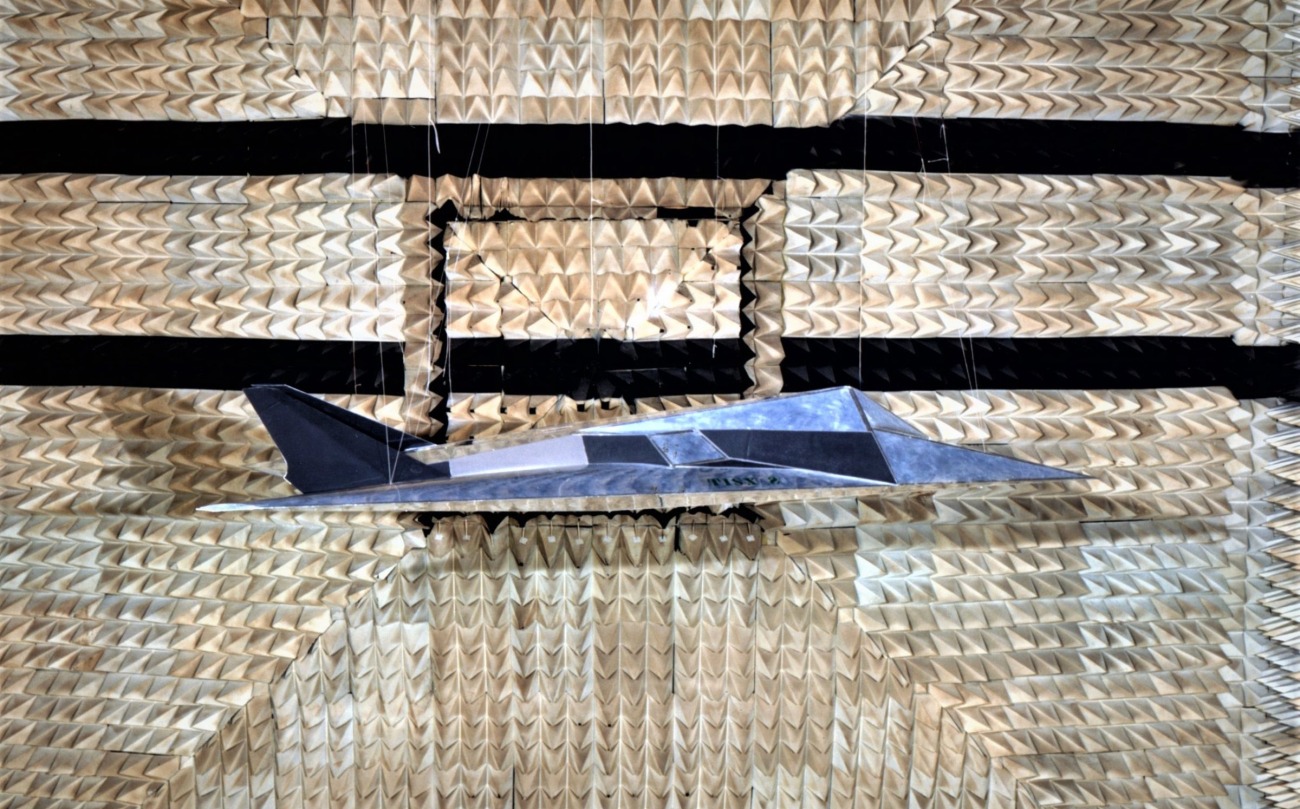
Have Blue, a stealth tech demonstrator, took its first flight in 1997, and led to the creation of our F-117 Nighthawk, the world’s first stealth aircraft. Via: Lockheed Martin
World’s 1st Stealth Aircraft
Aerospace analysts have long admired the F-117 Nighthawk’s distinctive design. A GE blog post describes the Nighthawk’s features and says the aircraft looks less potent alongside other advanced American fighters.
The aircraft has no afterburners. The aircraft is unstable on all three flight axes and requires an onboard computer for control
Despite that, the GE also noted one advantage: the aircraft is practically invisible to enemy radar.
According to General Electric, it was the first stealth aircraft to see the light of day during the Cold War and used a pre-existing engine modified to meet the requirement.
Despite the US technological advantage during the Cold War, contested airspace posed a substantial threat to pilots and their aircraft. Developing enemy technology could allow the enemy’s air force to lock on to American fighter jets and shoot them down at an alarming rate.
Although Lockheed Martin built the F-117 Nighthawk, GE built the engine that could power a stealth warplane. GE created the F404 engine exclusively for the F/A-18 Hornet, and it quickly became a compelling alternative for the F-117, a top-secret aircraft that needed an engine.
The engine was almost identical to the F/F404 A-18’s variant. GE constructed roughly 100 of these engines on a separate assembly line with only government-approved workers. That engine soon earned its stripes by being dependable, maintainable, lightweight, and inexpensive.
The Nighthawk
The US Air Force retired the F-117 Nighthawk in 2008.
The F-117s are reportedly used as developmental and “red air” training platforms a decade after their retirement. Certain aircraft act as aggressors in air-to-air combat during red-air training.
This raised eyebrows because it was unlikely that an archaic aircraft retired a decade ago would resurface for war games. The US Air Force later revealed that it had resurrected the Nighthawk.
Speculation suggests the USAF has brought these aircraft back to life because of their stealth capabilities. The USAF needs to train its fighter pilots against adversary stealth fighters, the Russian Su-57 and the Chinese J-20, as well as cruise missiles.
As a result, USAF pilots may be able to better find and intercept stealth aircraft in future operations and counter enemy cruise missiles if they train against Nighthawks as part of an advanced program.
When the US planned to develop the F-117 Nighthawk, the main challenge was reducing the aircraft’s radar cross-section and electromagnetic signature.
The aircraft had to fly subsonically to reduce obnoxious sonic booms. The aircraft had no afterburners or large exhaust plumes from infrared-emitting engines. It referred to flat surfaces that reflected radar radiation. The result was an otherworldly-looking black jet the US government didn’t recognize until 1988.
Despite the F-404’s ability to fly supersonically, the Nighthawk was limited to subsonic speeds because using afterburners to breach the sound barrier would compromise the aircraft’s stealth.
GE engineers designed the F-117’s unusual exhaust to scatter hot exhaust and evade radar and heat-seeking missiles.
“Really, it was the beauty of it. They could modify an existing engine, the F404, to provide the required thrust and weight. Minor adjustments were made to meet the F-117’s unique intake, and F404-F1D2 was ready to power the stealth attack aircraft,” said Bill Formosi, a former project manager of the F1D2 program.
Unlike other planes of the period, the F-117’s air intakes were grilled and coated with a unique radar-absorbent coating. Spring-loaded doors also opened on the ground to let in more air to the engine. However, once in flight, the hatches would be closed again to maintain the aircraft’s stealth.
According to Formosi, the tailpipe was the engine’s most distinctive feature.
“If you look at an F-117 from behind, you’ll notice that the engines aren’t visible like they are in other aircraft,” he said. “It was done on purpose, and it had everything to do with keeping it quiet. There was a 12-stage tailpipe that went from circular at the engine’s end to flat at the end of the exhaust, rather than an afterburner as the F404 had on the F/A-18.”
“This was done to spread the hot exhaust air over a larger region, reducing its heat signature,” Formosi said.
This is probably why the F-117 Nighthawk, commissioned over 40 years ago and retired over a decade back, has staged a comeback, this time for public viewing.
Contact the author at editor (at) eurasiantimes.com
Nearly three decades after the Dayton Peace Agreement ended the war in Bosnia and Herzegovina, the country remains deeply divided along ethnic and political lines.
The agreement brought peace, but its complex political system has done little to overcome those divisions. Republika Srpska, the predominantly Serb entity, has pursued an increasingly divergent political course, while Serbia and Croatia maintain close ties with different parts of the country.
And for Christian Schmidt, the international community’s high representative for Bosnia and Herzegovina (2021-26) the main threat is no longer a return to war, but political stagnation and growing frustration.
He says that weak civic engagement, slow progress towards EU membership and the influence of Russia and neighbouring countries are reinforcing Bosnia’s divisions. Young people, he says, are increasingly responding by leaving the country.
In this interview, Schmidt discusses foreign influence, the EU’s role, the legacy of Dayton, and why Bosnia’s future may depend on whether it can build a stronger political community across its ethnic divisions.
A country that remains divided
You started your work in Bosnia and Herzegovina in 2021 and were there for five years. It was a period of major changes, with COVID and then the war in Ukraine. What were your experiences of these moments. How has the situation in Bosnia evolved?
I think there has not been sufficient involvement. Civil society in Bosnia and Herzegovina is not very strong. It is, more than just politically, somehow divided on political issues. This prevents a joint political position or commitment from civil society to make more progress in democratic development and European integration.
So far, I don’t see that this has changed very much. It has also not changed that some parties, especially the SNSD, [Serb nationalist Milorad] Dodik’s party, but honestly not only them, are counting on ethnic differences as an argument for supporting their party instead of having a multi-ethnic approach. One can be doubtful about their real pro-European commitment.
Russia and its influence
When civil society is not engaged and when countries are not politically stable, we know that they are prone to interference from other states or political entities. Is this being seen in Bosnia and Herzegovina?
It is evident that neighbouring countries, especially Serbia and Croatia, have a kind of preferred relationship with parts of the country. This is, by the way, also established in the General Framework Agreement for Peace in Bosnia and Herzegovina [also known as the Dayton Peace Agreement]. So it is not necessarily something that is not in line with Dayton [Agreement].
But there is beyond this more interference if I refer, for example, to Serbia’s reaction on the occasion of the United Nations General Assembly Resolution of 2024 about establishing an international day of commemoration for the Srebrenica genocide. There was a really remarkable attack against this, despite the fact that Serbia was not named in the resolution. There were only named individuals who had committed war crimes or genocide.
But it was used to create a “Pan-Serbian declaration”, which can be seen as a way of bringing cultural issues of the same ethnic group closer together. It has to be seen additionally as a tool to try to gain more political influence in the other part of the country.
You mentioned Croatia and Serbia. Is Russia also playing a role in these interferences?
Yes, but not ethnic interference. It is more through traditional good relations, especially with the Orthodox community, which is basically the Serb Orthodox community, where there are relations and a lot of activities, including in the media and on social media.
They [Russia] try to influence a part of Bosnia and Herzegovina, especially Banja Luka and Republika Srpska, and Dodik is somehow to act as an influencer for Russian interests. This is indeed the case. Dodik has been sitting together with [Russian president Vladimir] Putin for the 11th time since the beginning of the war in Ukraine. This is really remarkable.
How important is Bosnia and Herzegovina and Dodik for Russia and for Putin?
The economic and political-strategic importance is nearly zero. But it can be used as a way of distracting from European and somehow American activities, just by giving them a negative impact on everything. So this is more seen as a tool, rather than an area of influence.
EU— only accession talks?
Does the EU have a role in fighting such interference — Russian, but also the ethnic interference from Croatia and Serbia?
The ethnic relationships are within the framework of Dayton, and they are acceptable. But I think it is very important that the EU makes it clear that European integration is not based on ethnic differences, but on uniting in diversity.
This is something that is very complicated. You cannot do this only with programmes or money. I think these challenges are the typical issues that you can address through European commitment, but in the details, it has not delivered.
Milorad Dodik has a great support even as he has been sentenced to one year in prison and barred from public office for six years in a first-instance verdict for disobeying the decisions of Bosnia and Herzegovina’s international envoy, High Representative Christian Schmidt. Source: EPA/Nidal Saljic.
Unfortunately, maybe the European Union should sit down again and think about more tools and opportunities, especially addressing civil society, to give more attraction to the European idea.
How would that work?
This article continues, but the full version is available only to EUobserver.com subscribers. Visit account.euobserver.com/membership
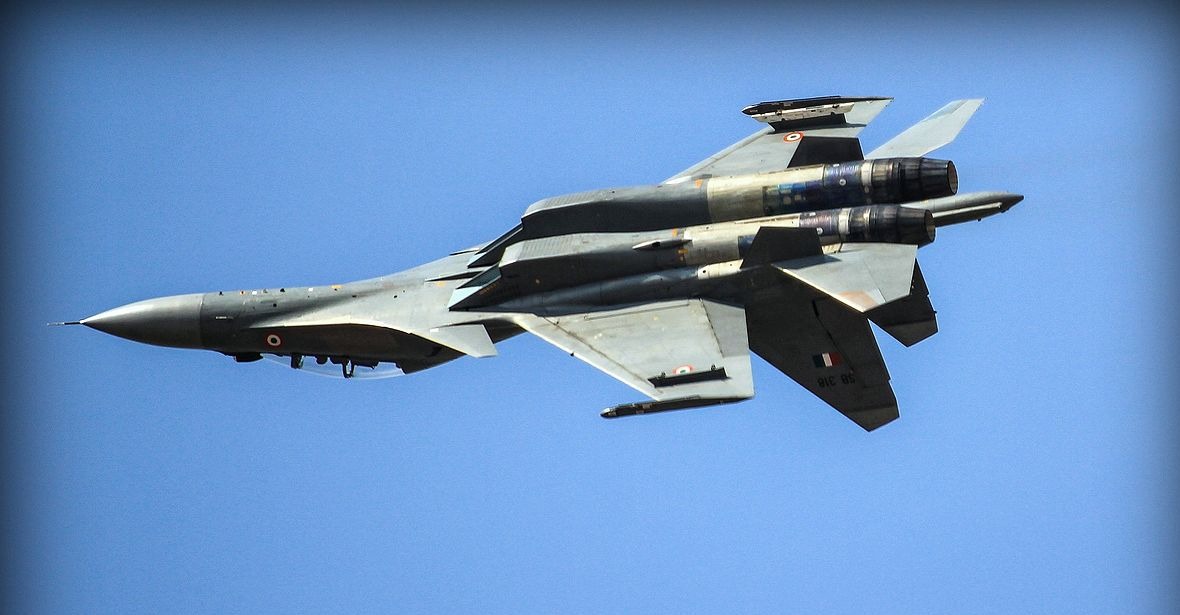
As EurAsian Times recently reported, the U.S. Air Force crew denied Indian officials cockpit access to its F-35 stealth fighter during the recent Tarang Shakti exercise, Indian Air Force Chief Air Marshal AP Singh said. Interestingly, the IAF did something similar with its cutting-edge Su-30 MKIs in 2008.
Speaking at a press conference alongside U.S. Pacific Air Forces Commander General Kevin Schneider, Air Chief Marshal Singh said the U.S. had made no formal offer to sell the F-35 to India, despite all the media buzz and speculation.
“Your people don’t even let us go near the aircraft, and you are talking about selling it to us,” Singh said when asked about any official offer for F-35s.
He added that Indian personnel were not shown the cockpit.
“The US did not show us the cockpit, but allowed us to fly in close formation,” Singh said. He later described his remarks as a joke that should not be taken too seriously and noted that countries protect sensitive technologies, including systems India does not share with the United States.
General Schneider said he did not make decisions on information sharing for programs such as the F-35. “There are program-level security classification guides that determine what we can share, when we share it, as well as how we protect it,” Schneider said.
USAF had deployed six F-35 stealth jets for Tarang Shakti. This was the first time U.S. stealth jets trained against Indian jets and operated from the indian soil. This was a rare opportunity for the Indian military to study and evaluate a stealth fighter using Indian ground radars.
Experts like Air Marshal Anil Chopra, writing for the EurAsian Times, believe it would be a good opportunity for the IAF to prepare for a potential J-20 scenario operated by China.
Chopra wrote: “The F-35A is the only fifth-gen fighter in the exercise. In mock drills, it is much better than China’s J-20, with stealth, low observability, sensor fusion, and first-look, first-shot tactics, and it will better simulate the J-20. That does not mean the IAF will see the F-35’s classified technologies; however, it does mean that the IAF can practice studying a stealth jet from an Indian base—to understand the Chinese J-20 better.”
In 2008, India sent its most advanced Su-30 MKI fighters to the US for the Red Flag exercise at Nellis Air Force Base in Nevada.
To protect the Flankers’ classified NIIP N011M Bars passive electronically scanned array (PESA) radar, the Indian Ministry of Defense directed pilots not to use the radar in full operational mode.
IAF stated at the time that “the radar frequencies are top secret, as they can be used to block vital functions of the fighter” and that “while we have a good equation with the USA, we have to be careful about the future.”
The Bars radar was operated only in a limited “training mode” that restricted its range and capabilities, preventing detailed mapping of its frequencies by host forces.
Other limitations during Red Flag 2008 included restrictions on data-links, chaff, flares, and simulation of the R-77 BVR missile. Indian pilots operated without a full cockpit data picture to protect its sensitive technology.
While Indian crew had limited exposure to the F-35s at Tarang Shakti 2026, with the jets kept in a segregated area, the USAF has previously been given noteworthy access to the MKIs.
During the familiarisation phase ahead of Red Flag 2008, Su-30MKI crews exchanged rides with their American counterparts, allowing U.S. pilots to fly in the Flanker’s rear seat, according to reports.
During Exercise Cope India 2023 at Kalaikunda, then-PACAF Commander General Kenneth S. Wilsbach flew a training mission in the rear seat of an IAF Su-30MKI alongside an Indian pilot—an engagement the IAF publicly confirmed.
Earlier Cope India iterations also saw USAF pilots fly in Su-30 trainer variants.
During the just-concluded Tarang Shakti, F-35s operated extensively alongside Su-30MKIs, Rafales, and Tejas in joint tactical missions, large-force engagements, and mixed formations, giving the USAF tremendous exposure to the Flanker’s performance envelope, radar behavior, and tactics in a realistic environment.
After the 2008 exercise, a video of a private briefing by USAF Colonel Terrence Fornof, an F-15 pilot and director of requirements and testing at the Air Force Warfare Center at Nellis, circulated online.
Fornof was addressing a group of retired military pilots.
Fornof claimed F-15 pilots “dominated” the Su-30 MKI in one-versus-one engagements. He described Indian pilots as “amazed” and “floored,” saying they didn’t want more one-versus-one fights after the first few days.
He claimed the F-15 exploited a vulnerability in the Su-30’s thrust-vectoring by waiting for the aircraft to enter post-stall maneuvering, after which it “starts falling out of the sky,” allowing the F-15 to close and engage with guns.
Fornof also claimed the Su-30 MKI’s engines were highly susceptible to foreign object damage, leading Indian pilots to request one-minute spacing between takeoffs, and he noted concerns about engine reliability.
He claimed Indian pilots had a high rate of fratricide and that, on paper, the Su-30 had superior radar, thrust, thrust vectoring, and weapons range. He added that once Indian pilots fully mastered the aircraft, they could regularly defeat F-15s and F-16s, but the Su-30 was “nowhere near” the F-22.
USAF later said Fornof’s comments were his personal opinion and that he did not intend to offend allies.
Indian accounts and subsequent reporting rejected Fornof’s points. They claimed that the Sukhois held their own against top USAF pilots and maintained a high serviceability rate throughout the exercise.
“Our pilots were functioning on a stand-alone basis while the USAF pilots were part of a network and were getting inputs on navigation, target information and enemy details. We were getting all our inputs manually and were fighting fit even against all these odds,” a top IAF officer had said at that time.
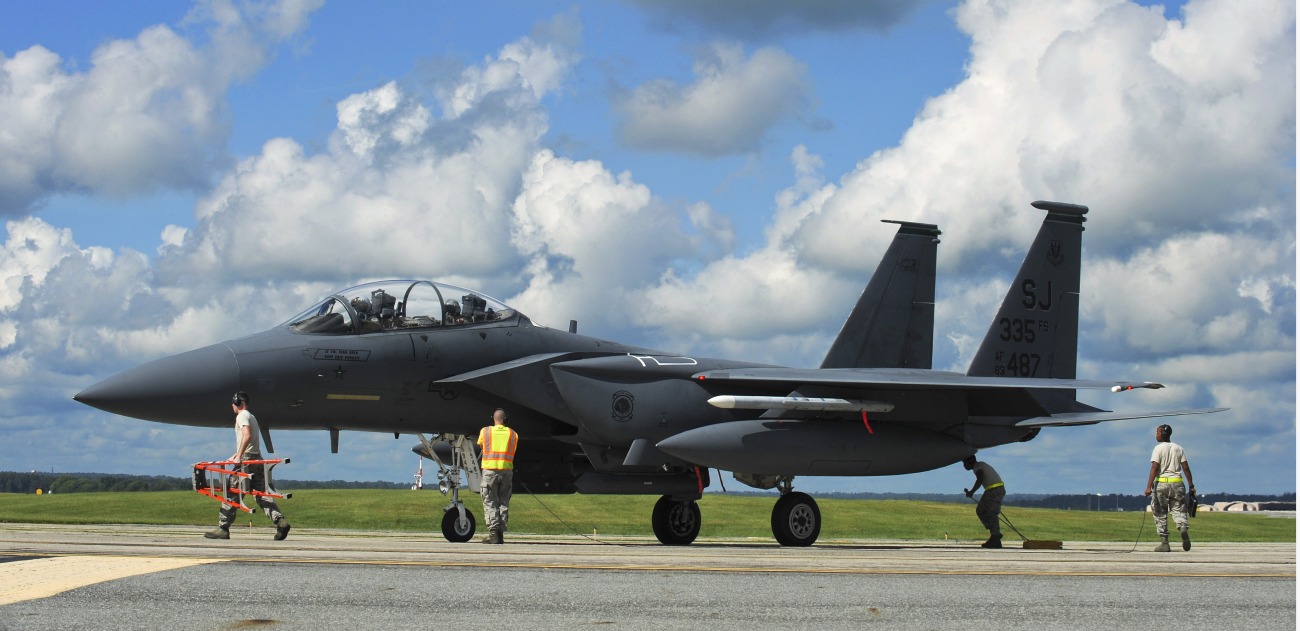
Image for Representation F-15E Strike Eagle at the Seymour Johnson Air Force Base
Other Indian accounts claimed that no Su-30 MKI was shot down in the approximately 10 one-versus-one engagements, and that the IAF was credited with most kills.
All engagements were recorded on ACMI systems. Thrust-vectoring performance differed from Fornof’s account, and U.S. aircrew said they appreciated the IAF’s maneuvers.
Fratricides occurred on both sides. Indian sources attributed theirs largely to periods when AWACS support was unavailable and to poor ground control by U.S. controllers (acknowledged in debriefs), noting that the IAF lacked Link-16 and advanced IFF while the U.S. side had them.
Serviceability was reported above 90 percent, with no confirmed foreign object damage incidents of the type described; a tire burst was quickly repaired. Engines were NPO Saturn (not Tumansky, as Fornof said). The one-minute takeoff spacing was a deliberate safety measure because damaged engines had to be returned to Russia for repair, with no local replacements available.
IAF reported a mission achievement rate above 90 percent and said they performed well in large-force engagements despite operating far from home and under restrictions.
In conclusion, the F-35 access limits and the 2008 Su-30 MKI restrictions highlight standard practice among air forces seeking to protect classified tech during wargames.
Nigerian and other media routinely omit reference to religious identity of assailants and victims in attacks that may have a religious targeting component, contributing to the misperception that violence is mere rural insecurity, the report states. “This issue has significant implications for both public understanding and policy analysis. Datasets that rely heavily on media reports... Continue Reading
Is Trump planning on using Putin to get him out of the mess of both his low polling and the Iran war? Seems far-fetched perhaps at first, but he is completely snared in Iran, with whatever option he looks at appearing to be a doomsday scenario. Could Putin help him out both with diesel prices back home but also to broker a deal with Iran which makes it appear to Americans that he, and America, are somehow the winners?
For the Russian president to sell close to 2 million tonnes of diesel oil to Western countries, including the U.S. of course, seems like a sticking plaster to a huge wound in the American and Western economies. Unless, that is, there is a second deal behind it which journalists and pundits are not aware of, or are simply choosing not to report. For the diesel initiative from Putin, the amount which is being offered isn’t huge, but there are a couple of precedents which it sets which are more important.
Firstly, it opens the doors for further lifting of sanctions (which could be bundled into Iran’s, given Moscow’s relations with Tehran), but perhaps even more importantly, it makes President Zelensky of Ukraine an even bigger target for Trump. Much will rest on the coming days and the decision that Zelensky will take to continue bombing Russia’s oil facilities. Will he take that suicide pill? Wars are often messy, and there are always grey areas where the two countries at war with one another find situations which are illogical and impractical. Perhaps the bombing of oil facilities within Russia in the Ukraine war has reached its tipping point, and regardless of how close EU leaders are with Zelensky – who at best we can call a caretaker leader – this will test this relationship to breaking point.
Do great numbers of citizens in France and Germany need to die this winter simply because of an energy crisis and/or an economic malaise in their own countries which have poured billions into keeping the war in Ukraine alive? Is Putin so confident that this winter will be the last one for his troops, as the defensive line between Ukraine’s forces and those of Russia’s looks like it is about to break at any moment? Are Ukrainians themselves ready to face a freezing winter in Kiev, unable to power or heat their own apartments? So many wars started over energy reserves, but not Ukraine. Yet it might end over them.
Trump’s threatening comments on social media about Zelensky should be taken seriously. If Trump’s own cabal of unqualified advisers can seriously convince him that a ground invasion of Iran is feasible, if not winnable, one could argue simply that regime change in Ukraine should be a children’s picnic and gives him a huge payday – politically, economically and geopolitically. Removing Zelensky would stop the war immediately, and Trump could claim victory for that, while he asks his friend Putin to quietly intervene in Iran and fix the Straits of Hormuz.
For Trump to actually respond to Zelensky’s outburst to reporters that the move to buy Russian diesel was “weak” by threatening Zelensky with being removed shows that his patience has reached a point where he is starting to think of the Ukrainian president as the source of the problems. To remove Zelensky through backing a rival will be hard and will pitch him against EU leaders, but one could argue relations couldn’t really get any worse, and that once Macron and Merz understand that peace is the only option and Zelensky is actually the only real obstacle to that, they will do what all EU leaders do and follow America’s lead.
We often hear analysts on YouTube talk about the game of “chicken”, but there has never been a more fleeting moment than now, as both Trump and Zelensky will be watching each other to see who blinks first. Zelensky, until now, has been playing a dangerous game of pretending to be servile to U.S. hegemony, while really just taking the cash and weapons and laughing at Trump among a coterie of weak European leaders in their palatial residences. The war has been complex since it began, as the U.S. and EU rarely saw eye to eye, but if Trump goes ahead with his threat of denying the Ukrainians shared intel, then this will be a very bad omen for the future of Zelensky, as he will put even more pressure on the British, French and Germans to come up with more weapons and money in an unwinnable war which they’ve bet the farm on and their entire political careers depend on.
The war, after this diesel decision, might have just become much simpler and more binary, and a collective narrative might emerge from the insanity of EU gibberish from countries who can’t even protect their own people on their own soil against an invasion of bogus asylum seekers. It will not only be the ultimate test for U.S.-Ukraine relations, but also one for U.S.-EU ones, and perhaps represent the end of NATO as we know it.
Ambassador Jean-Philippe Linteau says in a video posted on Sunday that anyone in Riyadh who encounters military debris should walk away and contact authorities.
Ambassador Jean-Philippe Linteau says in a video posted on Sunday that anyone in Riyadh who encounters military debris should walk away and contact authorities.

 Login