❌

Reading view

Doctors mobilize to hold Israeli Medical Association accountable

Doctors and healthcare workers gathered in parallel to the World Medical Association (WMA) General Assembly in Rotterdam on October 8-10, demanding the suspension of the Israeli Medical Association (IMA) over its breaches of medical ethics throughout the Gaza genocide. 

Activists held mobilizations warning against the IMA’s attempts to obscure attacks on Palestinian health workers and infrastructure. These actions included a petition demanding the organization’s suspension from the WMA signed by nearly 6,850 health professionals.

Read more: On Nakba anniversary, health workers call for boycott of Israeli Medical Association

“The petition demands that the IMA is suspended by the WMA for its gross violations of medical ethics over decades, concerning Palestinian patients and healthcare services and the complicity of Israeli doctors in the starvation, torture and medical neglect of Palestinian prisoners,” the IMA Out! coalition stated.

The coalition also called upon medical associations to follow the example of the South African Medical Association, the British Medical Association, and the Turkish Medical Association in severing ties with the IMA.

81 empty scrubs at the WMA assembly

On Saturday, October 10, 81 health workers simultaneously removed their scrubs and hung them in a line facing the WMA assembly. Each was marked with the name of a Palestinian healthcare worker currently held in illegal Israeli detention.

“These scrubs should not be empty,” said general practitioner Mejrem Ahmetaj from Artsen voor Gaza (Doctors for Gaza) in the Netherlands. “Our colleagues belong with their patients, not in Israeli prisons.”

Activists during protest actions near the WMA General Assembly in Rotterdam, October 2026. Source: Aziz Rhali/Facebook

The campaign to suspend the IMA over its breaches of medical ethics has been developing for months. In June this year, a report in The Lancet reported that a petition launched by the People’s Health Movement (PHM) to hold the IMA accountable collected over 1,100 signatures. Working together with other organizations and networks, including chapters of Healthcare Workers For Palestine and Teva boycott groups, the initiative was able to expand.

The IMA: more than a bystander

Since October 2023, at least 1,700 Palestinian health workers have been killed, and many more remain imprisoned in horrifying conditions in Israeli detention centers. Among them is Kamal Adwan Hospital Director Hussam Abu Safiya, whose mistreatment and imprisonment have caused international outcry.

These crimes have been extensively documented by UN experts and human rights associations, yet the IMA – which represents over 90% of Israeli physicians – took no action. Instead, some of its leading figures backed unfounded claims that Gaza’s hospitals are used for military purposes.

Read more: New PHM global coordinator: “Palestine is a symbol of resistance for a new world”

“The IMA has said and done nothing about these war crimes against health workers, patients and hospitals,” said Jonathan Fluxman from IMA Out!. 

Ahmetaj added that the IMA is not a bystander. “It defends these attacks and blocks international condemnation while Palestinian healthcare is being destroyed,” the physician said. “That is not medical neutrality. That is complicity.”

Hind Rajab Foundation: IMA involved “in the death, torture, and ill treatment of Palestinian detainees”

The protest coincided with a legal action initiated by the Hind Rajab Foundation (HRF). On October 7, the foundation announced it had called upon the International Criminal Court (ICC) to investigate the involvement of the IMA, the Israeli Ministry of Health, Ministry of Defense, and medical professionals “in the death, torture, and ill treatment of Palestinian detainees held at the Sde Teiman detention facility since October 7, 2023.”

The legal submission addressed the participation of Israeli medics in crimes perpetrated at Sde Teiman’s field hospital. There, health workers and detainees documented abuses spurring from directives issued by the Israeli Ministry of Health in December 2023.

According to the Hind Rajab Foundation, the Ministry of Health guidance instructed medical staff to treat prisoners while blindfolded and handcuffed and required them to sign medical documentation using only their professional titles. It also directed them to restrict transfers to civilian hospitals and authorized forced medical treatment without protections.

PHM Global Coordinator Aziz Rhali during protest actions near the WMA General Assembly in Rotterdam, October 2026. Source: Aziz Rhali/Facebook

“By November 2025, at least 29 detainees had died at Sde Teiman as a result of physical violence, medical neglect, or both,” the organization wrote. The IMA did not initiate any disciplinary proceedings against members involved in these practices – and even used international journals as platforms to obscure them.

“The evidence shows that medical participation in torture and abuse at Sde Teiman was structural,” Natacha Bracq of the Hind Rajab Foundation said. “The Israeli Ministry of Health built the field hospital, dictated the terms of medical treatment; doctors served under Military Police authority rather than the Medical Corps; and a professional association provided ethical cover.”

Read more: Israeli destruction of Gaza’s healthcare is a blueprint for future imperialist wars

“Israeli physicians abandoned their neutrality when they agreed to treat patients in chains and erase what was done to them,” Dyab Abou Jahjah from the same organization added. “The WMA must answer why an association that provided institutional cover for torture is still welcome at its table.”

People’s Health Dispatch is a monthly bulletin published by the People’s Health Movement and Peoples Dispatch. For more articles and subscription to People’s Health Dispatch, click here.

  •  

Tehran denies involvement in UK Fairford air base incident as Britain summons Iranian ambassador

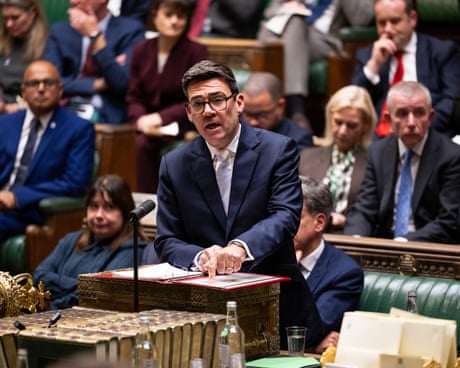
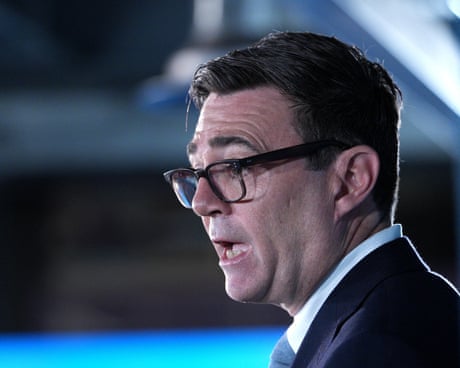
British Prime Minister Andy Burnham on Monday accused Iran's Revolutionary Guards of being responsible for a terror-related incident in September at England's Fairford air base, which is used by the United States military. Following Tehran's denial, the British Foreign Office summoned Iran's Ambassador for talks.

  •  

Andy Burnham promises ‘serious dialogue’ over UK’s relationship with EU

PM hails next month’s ‘reset’ summit as first step to closer ties, but tensions over trade may prove problematic

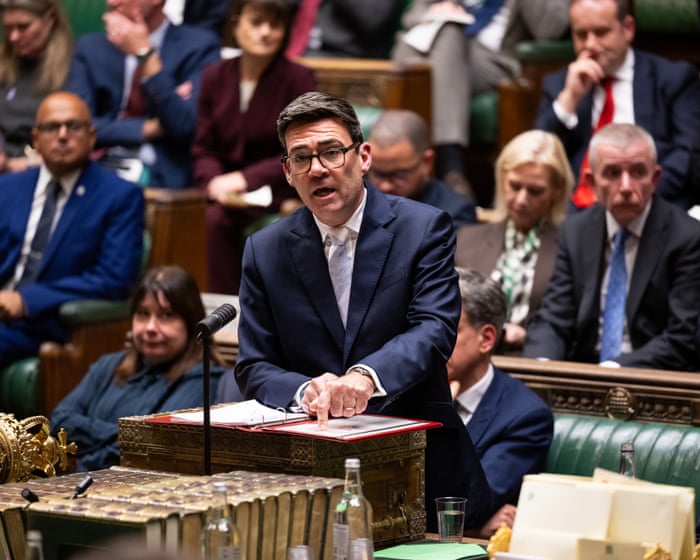
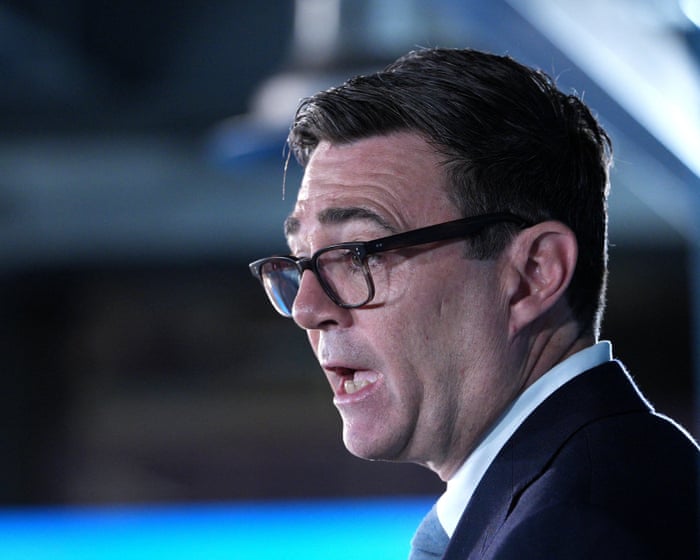
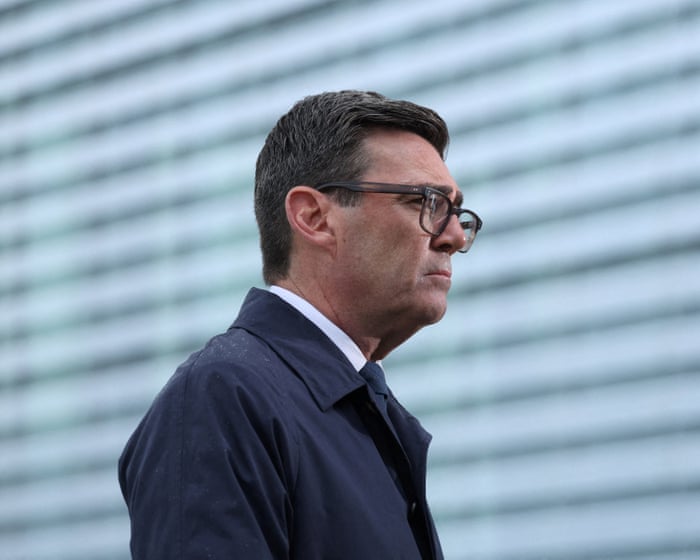
Andy Burnham has promised a “serious dialogue” over the UK’s future place in Europe, saying the existing relationship is “not good enough” as he framed next month’s Brussels summit as a possible first step to EU membership.

The prime minister said Britain must take a “clear-eyed rational look” at its long-term relationship with the bloc to boost economic growth and control immigration, which needed to go beyond Labour’s existing red lines.

Continue reading...

© Photograph: House of Commons/PA

© Photograph: House of Commons/PA

© Photograph: House of Commons/PA

  •  

New publication: Discover EU-funded projects advancing AI, data and robotics

HaDEA has published a new brochure highlighting EU-funded projects under Horizon Europe Cluster 4: Digital, Industry and Space, showcasing their results and contributions to Europe’s technological competitiveness and digital transformation. The publication explores how these projects are advancing artificial intelligence, data and robotics across a wide range of applications, from trustworthy AI and smart manufacturing […]

  •  

Trump rewards Putin and betrays Ukraine with Russia diesel deal - The Latest

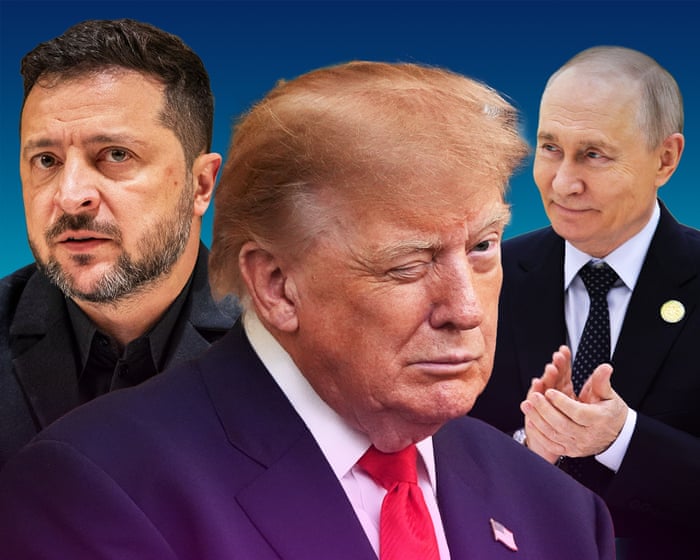
Donald Trump’s deal to buy Russian diesel has been met with fury from Volodymyr Zelenskyy, who said it was ‘a weak decision’ and would generate ‘billions’ in extra revenue for Putin’s war effort. The Ukrainian president has also rejected US calls for an ‘energy ceasefire’, which would require Kyiv to stop striking oil refineries, saying Moscow must first end its attacks on energy infrastructure. Lucy Hough speaks to the Guardian’s senior international correspondent, Luke Harding – watch on YouTube

Continue reading...

© Photograph: Image credits: AP Photo/Dan Bashakov AP Photo/Alex Brandon Gavriil Grigorov, Sputnik, Kremlin Pool Photo via AP

© Photograph: Image credits: AP Photo/Dan Bashakov AP Photo/Alex Brandon Gavriil Grigorov, Sputnik, Kremlin Pool Photo via AP

© Photograph: Image credits: AP Photo/Dan Bashakov AP Photo/Alex Brandon Gavriil Grigorov, Sputnik, Kremlin Pool Photo via AP

  •  

How significant are Burnham’s remarks on Kremlin interference in Brexit vote?

Prime minister has reopened the debate over whether Russia sought to influence the 2016 referendum

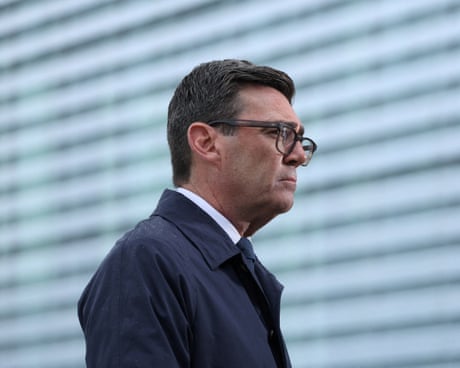
Andy Burnham unexpectedly reopened an old Brexit debate when he said he had been told after becoming prime minister that Russia had interfered in the 2016 EU referendum.

It was a contentious issue in the second half of the previous decade, but one that had largely been forgotten about as the UK finally adjusted to the reality of leaving the EU. Now Burnham’s comments have given the topic a fresh impetus.

Continue reading...

© Photograph: Christopher Furlong/Reuters

© Photograph: Christopher Furlong/Reuters

© Photograph: Christopher Furlong/Reuters

  •  

Spotlight on mental health: projects building stronger mental health support systems across Europe

Mental health is an essential part of our overall health and is just as important as physical wellbeing. However, many people across Europe continue to face challenges in accessing timely and appropriate mental health support. In 2023, while almost one in two Europeans (46%) stated they had an emotional or psychosocial problem in the previous […]

  •  

Russia is hacking cameras across Europe to track arms bound for Ukraine. At home, Ukraine has secured about 40,000 that could guide strikes — WSJ


The ordinary security camera watching a street or a parking lot has quietly become a weapon of war. Ukraine’s Security Service has identified about 40,000 surveillance cameras since Russia’s 2022 invasion that Russian forces and spy agencies could have used to snoop, find targets and correct strikes, and has protected, reoriented or blocked them, The Wall Street Journal reported.

The discovered threat reaches well beyond Ukraine: Dutch intelligence warned in July that Russian state actors are systematically hacking cameras across Europe to track arms deliveries to Ukraine and the whereabouts of Ukrainian troops.

AI makes it faster

About 1.2 billion internet-connected cameras now watch the world, in doorbells, traffic lights, and baby monitors, and almost any of them can be hacked, the journalists found.

In Ukraine, the danger is lethal. In 2024, Russian hackers took over residential webcams in Kyiv, including one that a condominium association had installed, to find targets and adjust missile strikes on the capital, Ukraine's Security Service says.

Spying on Europe’s edge

Evidence of European reach keeps surfacing. Cybersecurity firm CloudSEK has recently uncovered an exposed server it suspects belongs to a Russian-speaking hacker, containing hundreds of webcam images of Ukrainian defense, government, energy, and communications sites, as well as scenes of daily life.

Many of the images came from locations near Ukraine’s border with NATO member Romania, CloudSEK says.

The Dutch warning and the server point the same way: cameras far from the front line are feeding Russia data on how the West arms Ukraine.

Ukraine turns the lens back on Russia

Ukraine also uses the same tactic inside the occupied territory. The international hacker group Team OneFist took control of a camera in Sevastopol, in occupied Crimea, and used it to watch Russian ships, submarines, and helicopters, spotting a previously unknown air base that Ukraine later struck, damaging planes and air defenses.

Team OneFist also reached cameras on the Kerch Strait Bridge, learning that Russia had installed motion sensors beneath the bridge to guard against waterborne attacks. Penetrating a well-placed camera gets analysts closer to targets at less risk than any secret agent.

  •  

How has the European Union’s major recovery plan benefited the 27 member states?

The 27 member states of the European Union agreed in July 2020 on a €750 billion post-Covid recovery plan called NextGenerationEU. Its main instrument is the Recovery and Resilience Facility, through which the European Commission has already disbursed €450 billion out of €573 billion. The programme is due to come to an end in a few months. The Commission is currently assessing Member States’ claims for the remaining funds.

  •  

Comment le grand plan de relance européen a-t-il profité aux Vingt-Sept ?

Les 27 États membres de l’Union européenne se sont mis d’accord en juillet 2020 sur un plan de relance post-Covid de 750 milliards d’euros, baptisé NextGenerationEU. Son principal instrument est la Facilité pour la reprise et la résilience, pour lequel la Commission européenne a déjà versé 450 milliards d’euros sur les 573 milliards prévus. Le programme doit prendre fin dans quelques mois. La Commission évalue actuellement les demandes des États membres concernant les fonds restants.

  •  

Putin’s 2022 Plan to Seize Kyiv Failed — Now Trump Wants a New President & Moscow Offers One Day Solace

Russia is prepared to halt attacks on Ukraine for a single day to allow presidential elections but will not agree to a longer ceasefire, the Kremlin said on Monday. 

But had the Russian attack on Ukraine, as planned, succeeded in the initial days, the Ukraine-Russia war would not have dragged into the fifth year, and there would have been no talks of changes in leadership.

Dmitry Peskov said President Vladimir Putin would order Russian forces not to strike Ukraine on polling day if elections were held. “If they truly want to hold elections in Kyiv, then the president of Russia, the commander-in-chief, will be ready to give an order not to launch strikes on Ukraine on election day, specifically on election day,” Peskov told reporters.

He rejected Zelenskiy’s call for a 60-day ceasefire, saying Russia seeks a lasting peace agreement rather than a temporary halt.

“In the Kremlin, both President Putin and officials at other levels have repeatedly stated that we do not want a ceasefire,” Peskov said. “We want long-term peace and are prepared to do everything possible to achieve it.”

Zelenskiy made the 60-day offer on Sunday in an ABC News interview. He said Ukraine would organize elections if Russia agreed to a full ceasefire lasting two months.

“Please tell Putin, give us two months, 60 days of total ceasefire, 60 days, and we will organize elections,” Zelenskiy said.

His comments came a day after U.S. President Donald Trump said Ukraine should replace its President. Trump told reporters that Zelenskiy had failed to reach a deal with Russia and that it was time for a change.

“I think it’s time for Ukraine to get a new president,” Trump said. He criticized Ukraine’s strikes on Russian oil refineries, which followed a U.S. agreement to ease restrictions on Russian diesel exports.

Why Putin Failed To Seize Kyiv?

Russia had a clear plan to capture Kyiv and force a surrender.

On 24 February 2022, Russia’s Airborne Forces launched an operation toward Kyiv, supported by missile strikes and air cover, using attack and transport helicopters.

The objective of this blitzkrieg-style maneuver was to seize Antonov Airport in Hostomel, north of Kyiv, establish a bridgehead, create a secure air corridor for additional airborne troops, and then rapidly advance toward Kyiv.

The plan was to quickly deploy Russian Special Forces and military equipment at Hostomel and then overwhelm Ukrainian resistance after a couple of hard strikes.

If successful, Russian troops, armor, artillery, and supplies could be flown into the airport, allowing them to deploy into Kyiv and overthrow the Ukrainian government.

To execute this mission, Russia tasked its elite Airborne Forces (VDV), particularly the 31st Guards Air Assault Brigade, a unit with extensive combat experience from operations in Chechnya, Crimea, and Donbas.

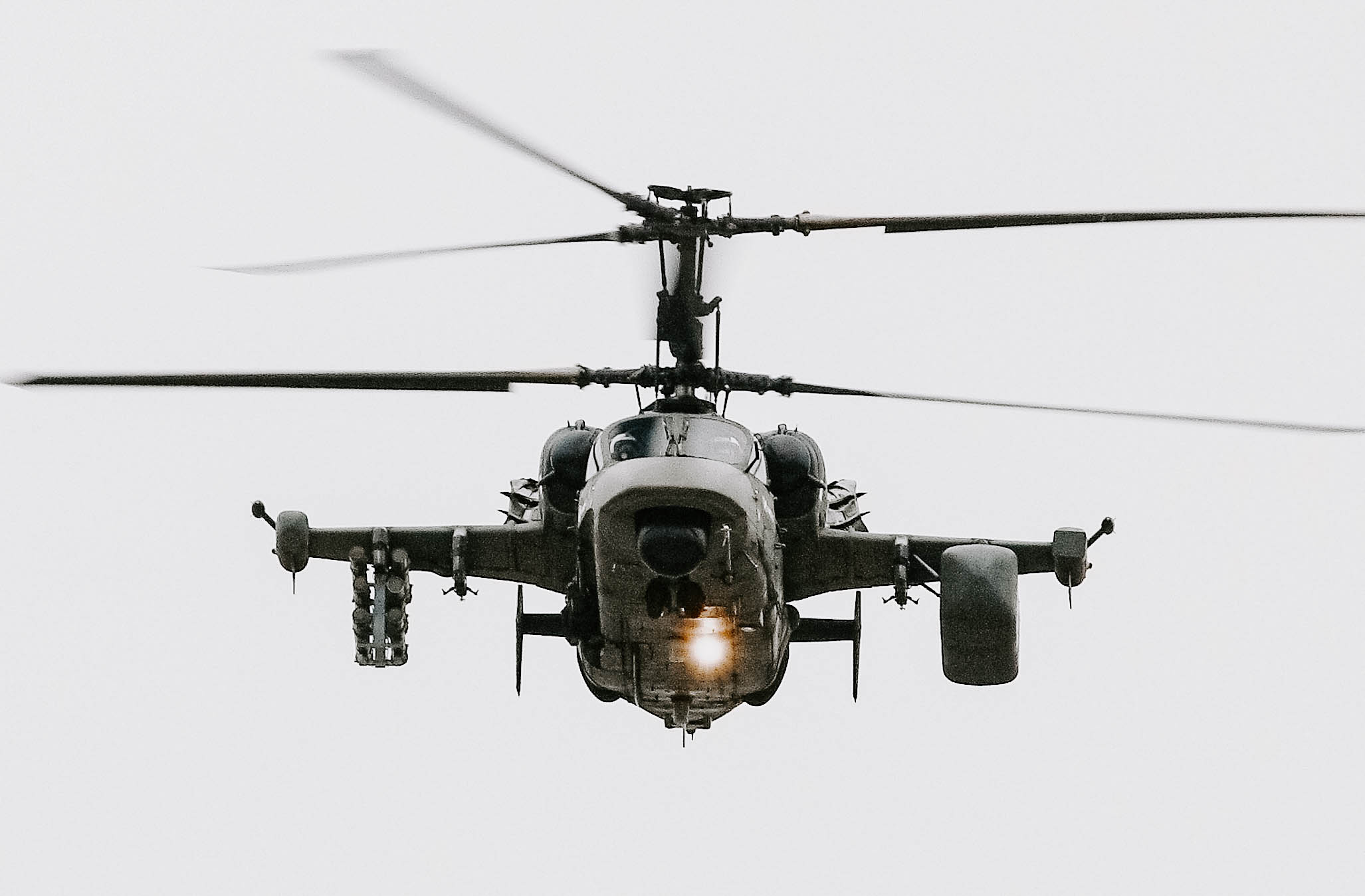
The operation began on February 24 with a coordinated attack involving numerous Russian Ka-52 “Alligator” attack helicopters, which used low-flying tactics to avoid radar detection.

ka52
Ka-52 ‘Alligator’ (via Platform X)

These helicopters fired guided missiles and cannons at the airport’s defenses to suppress Ukrainian forces. Despite intense resistance that cost Russia several helicopters, the assault continued for several hours.

Russian forces seized Hostomel Airport on February 25, 2022. Afterward, the Russian Army and its Airborne Forces tried to turn the airport into a critical forward operating base for their planned push toward Kyiv.

However, Russia’s offensive soon faced considerable setbacks. Russia’s failure to clear the area around the airport quickly led to catastrophe. Ukrainian forces, including special operations units from Ukraine’s Ministry of Defense Main Intelligence Directorate, launched a counteroffensive.

Local fighters and Ukrainian forces on the ground inflicted heavy damage on the Russian troops. In one of the most noteworthy junctures of the battle, a sniper killed Major General Andrei Sukhovetsky, the commanding general of the Russian 7th Airborne Division, by the end of February 2022.

The invasion’s initial momentum slowed, leading to the infamous 40-mile-long convoy and entire units of Russian troops stalling due to fuel shortages.

By March 4, Russian state television aired footage showing large numbers of destroyed Russian military equipment, struck by Ukrainian artillery, scattered across the base. Russian forces became immobilized without clear orders to advance or retreat.

The situation remained dire until March 29, when Russian commanders finally ordered a retreat from Kyiv Oblast. This marked the beginning of the Russian withdrawal from Hostomel, with damaged equipment that could not be evacuated. Ukrainian artillery fire targeted the retreating forces, further complicating their situation.

Among the equipment left behind were 16 modern BMD-4M armored fighting vehicles and a 1L262E Rtut-BM electronic warfare system. These items were either destroyed during the retreat preparation or intentionally blown up by Russian forces.

When Ukrainian troops reentered Hostomel, they found evidence of the hastily abandoned Russian positions, with remnants of daily life scattered around.

These included unopened food packages, personal items like passports and bank cards, and even Ukrainian armored vehicles that had been captured by Russian forces but could not be taken with them.

The loss of surprise, the inability to clear surrounding areas, and the vulnerability of airborne operations to counterattacks demonstrated how quickly airborne missions can go wrong.

The Russian failure to capture Hostomel Airport proved fatal for Moscow’s overall military strategy in Ukraine. After the Hostomel disaster, Russia withdrew from Kyiv oblast and then regrouped in Ukraine’s southern and eastern provinces to stabilize the frontlines.

This initial failure to seize Hostomel and then proceed to Kyiv also allowed Western countries to mobilize support for Ukraine and resume supplying Kyiv with critical military and humanitarian aid.

  • Sumit Ahlawat has over a decade of experience in news media. He has worked with Press Trust of India, Times Now, Zee News, Economic Times, and Microsoft News. He holds a Master’s Degree in International Media and Modern History from the University of Sheffield, UK. 
  • He can be reached at ahlawat.sumit85 (at) gmail.com

The post Putin’s 2022 Plan to Seize Kyiv Failed — Now Trump Wants a New President & Moscow Offers One Day Solace appeared first on EURASIAN TIMES.

  •  

EU warns online platforms over livestreaming US execution planned by Pentagon

The European Union warned digital platforms on Monday against livestreaming the execution of Nidal Hasan, a former US Army psychiatrist who is scheduled to be executed by firing squad on December 3 for killing 13 people at a military base in 2009. Under EU rules, platforms have an obligation to moderate shocking and violent content, including capital punishment.

  •  

France mutilates its children to stifle social protest

Caught between the methodical repression of its own youth and the shock of a global geopolitical shift that marginalizes it, Emmanuel Macron’s France sees the republican myth collapse under the combined effect of its internal cynicism and a historic strategic defeat abroad. In reality, May 1968 revealed the vulnerability of technocratic certainties in France. However, […]
  •  

Huge explosion captured on CCTV after deadly strike hits grocery store in Kharkiv – video

Ukrainian officials said Russian attacks killed six people in two Ukrainian cities on 11 October.

In Kharkiv, Ukraine’s second-largest city, a strike on a grocery store killed three people and injured 20 others, including two children, the regional governor, Oleh Syniehubov, said.

Footage released by the Kharkiv prosecutor’s office captured the moment of the strike, showing debris flying through the air and fires breaking out as car alarms sounded

Continue reading...

© Photograph: Reuters

© Photograph: Reuters

© Photograph: Reuters

  •  

Balkan countries show the dangers in obsession with ‘heritage’

I write from Dubrovnik, a historic and heavily touristed city on Croatia’s Adriatic coast. Visiting here and other parts of Croatia and its next-door neighbor Slovenia, I’m reminded that the Balkan countries used to be part of a bigger entity called Yugoslavia. Before that, some of the Yugoslavian countries were part of the Austro-Hungarian empire, […]

The post Balkan countries show the dangers in obsession with ‘heritage’ appeared first on Asia Times.

  •  

Andy Burnham says Russia interfered in Brexit referendum – video

The prime minister has said Russia interfered in the 2016 Brexit vote in an interview with The Rest Is Politics podcast as he warned voters in France and Germany about Moscow-backed efforts to influence their politics.

Burnham is the first British prime minister to say openly there is evidence of Russian interference in the referendum a decade ago, and said last month that Britain could consider rejoining the European Union in the future

Continue reading...

© Photograph: Reuters

© Photograph: Reuters

© Photograph: Reuters

  •  

Marco Rubio is promoting troubling ideas about ‘Western civilization’ | Ted Widmer

In a recent visit to Greece, the secretary of state suggested that Europe must rediscover the values of conquest and expansion

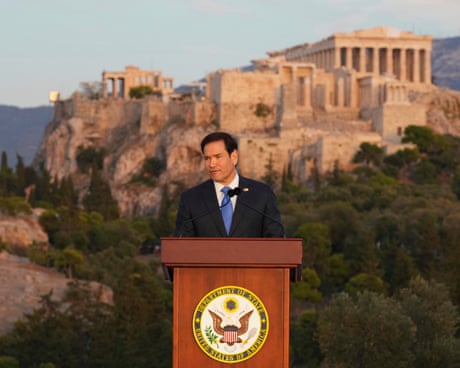
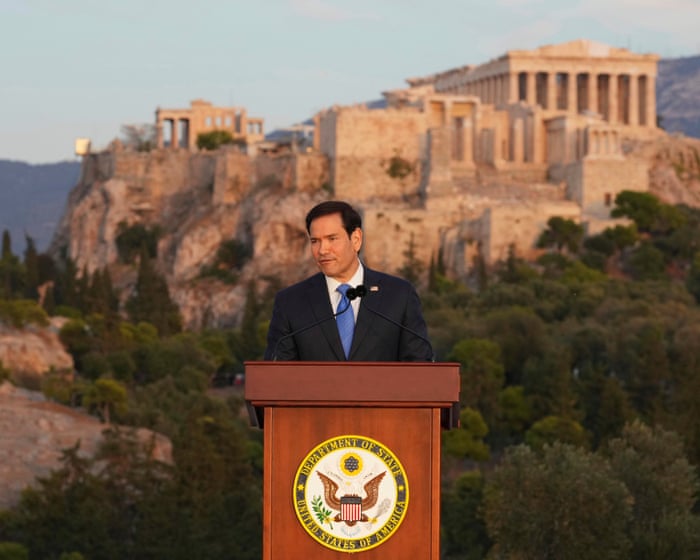
They had obviously worked hard on the backdrop – and it was magnificent. On 7 October, the US secretary of state, Marco Rubio, delivered a major speech in Athens, outdoors, with the Acropolis behind him. The sun was setting, bathing the ancient scene, including the Parthenon, in the light of the golden hour.

The golden hour, but yet not quite the golden age. This was not Pericles defending democracy. Instead, Rubio offered a haunting vision of the choices facing the west, arguing that the US and Europe must rediscover the values of exploration and conquest that once drove centuries of expansion, or face decline and irrelevance.

Continue reading...

© Photograph: Mark Schiefelbein/Pool AP/AP

© Photograph: Mark Schiefelbein/Pool AP/AP

© Photograph: Mark Schiefelbein/Pool AP/AP

  •  
❌