Login

Farage Pledges to Shut Down Asylum System
Nigel Farage has pledged to shut down the asylum system for five years and deport 90,000 applicants immediately.
The post Farage Pledges to Shut Down Asylum System appeared first on The Daily Sceptic.

Nigel Farage has pledged to shut down the asylum system for five years and deport 90,000 applicants immediately.
The post Farage Pledges to Shut Down Asylum System appeared first on The Daily Sceptic.
The prime minister tells MPs the next summit with the EU will be held on 20 November
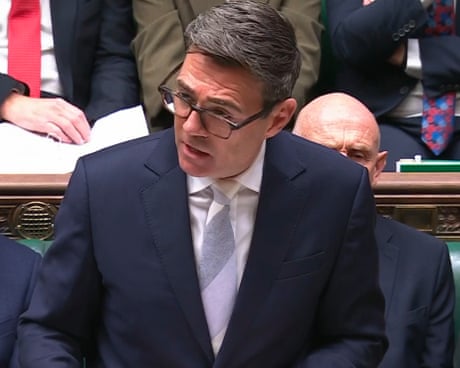
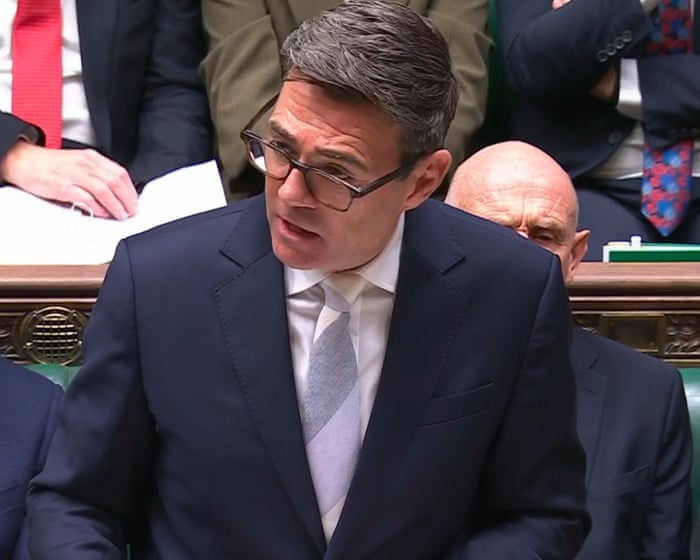
Burnham to urge MPs to embrace closer ties with EU
Zia Yusuf, Reform UK’s home affairs spokesperson, is speaking now. He started his speech with an account of a 73-year-old woman dying in North Wales after having to wait 23 hours for an ambulance, and he sought to link this to immigration.
He said:
The Royal College of Emergency Medicine estimates that 15,000 people across Britain died last year due to excess wait times for emergency treatment. That’s 300 people a week, 300 lives destroyed, 300 families devastated.
And that number has increased tenfold over the last decade. This is a moral outrage, and it is a direct result of decisions made by Tory and Labour governments.
I don’t think that’s because he wants to have a fight over the European Union. I think that’s because he knows what we’re talking about today impacts hard in what is known as the red wall.
Continue reading...
© Photograph: House of Commons/UK Parliament/PA
© Photograph: House of Commons/UK Parliament/PA
© Photograph: House of Commons/UK Parliament/PA
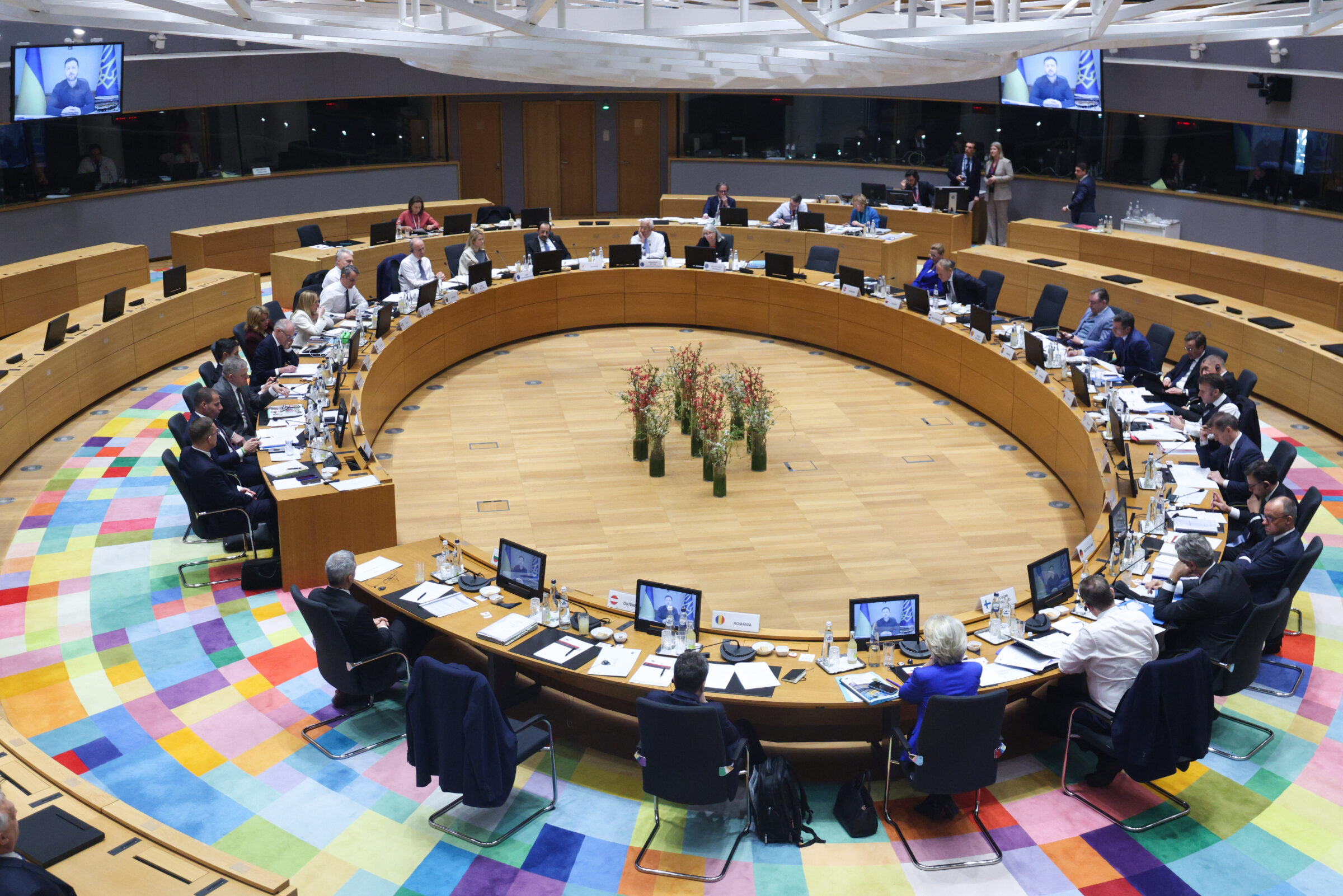
Money and how to make more of it are among the top issues to be discussed among EU leaders as they gather for a two-day summit in Brussels, while they also struggle with ongoing problems on Ukraine, the Middle East, migration, defence, and new rules for EU-hopefuls, such as Montenegro.
The official talks kick off on Thursday (15 October) on how to make the 27 EU states more competitive in a turbulent world dominated by US tariffs, Chinese innovation, and Iran-war linked chokeholds in the Strait of Hormuz, which have forced the G7 wealthy nations to release 100m barrels of diesel and crude oil.
Gas prices have risen by 140 percent since the end of February with imported fossil fuels now costing an extra €100bn, says the European Commission.
In Europe, a grand scheme, a so-called “One Europe, One Market”, aims to spike European fortunes by saving an estimated €37.5bn for EU businesses by 2029.
The drive is part of a larger initiative to cut red tape and remove internal market barriers, including the eventual launch of a so-called EU Inc.
Ireland, which is currently steering the EU’s rotating presidency, had already announced that the summit would start with the competitiveness theme. And leaked draft conclusions, seen by EUobserver, lead with a sales pitch to step up ambitions over the ‘One Europe, One Market’ proposal.
It also gives a nod to the German car industry, by citing efforts needed to stop China from making too much money off Europeans. The goal is to get Europeans to spend more on European products, even if they are more expensive and less innovative.
The ‘more money’ talks dovetail into how to spend it (or not) in the EU’s next long-term budget, spanning 2028 to 2034.
António Costa, the president of the European Council, is hoping for an agreement of the nearly €2 trillion budget before the end of the year. People need predictability and stability, he said, in a invitation letter sent to the 27 EU states.
This article continues, but the full version is available only to EUobserver.com subscribers. Visit account.euobserver.com/membership
The EU’s border agency, Frontex, shared coordinates of an overcrowded and partly deflated boat in the Mediterranean sea with the Libyan coastguard and then watched them run it over.
The boat was carrying 27 people, including children.
The findings, by Frontex’s own fundamental rights officer, described an incident that took place on 19 June 2026.
And this was just a tiny part of a wider pattern of violence by the EU-backed Libyan coastguard, which has also shot at or near civil rescue vessels.
No one was killed in the June event. But people were tossed into the water. Others, pulled onto the Libyan vessel, were then beaten by Libyan uniformed officers.
Frontex had issued a Mayday relay and then shared the sightings by email with the Libyan rescue centre.
No vessels were reported to be in the vicinity, but the Libyans showed up 90 minutes later.
The internal Frontex findings highlight ongoing tensions in the agency over sharing rescue coordinates with the Libyans in the name of saving lives.
“Saving lives is the absolute sort of absolute right that people have,” Hans Leijtens the agency’s director, told EUobserver earlier this year.
“And it’s our job to contribute to that, and if that sort of starts with looking at which part of the Mediterranean ship is sailing, and if it’s a north African country, we all have to inform the authorities there,” he added.
But his own rights officer also notes that the botched rescue on 19 June amounted to a violation of the right to life, citing article six of the International Covenant on Civil and Political Rights.
He says the standard is not simply whether the migrants were ultimately rescued, but if the operation was planned and executed to minimise risks to human life.
In this case, the Libyans violated that right among others, he says. Frontex did not reply to the findings in the report, as of publication.
This article continues, but the full version is available only to EUobserver.com subscribers. Visit account.euobserver.com/membership

There are more than 800 surveillance towers located along U.S. borders, a number that is expected to triple in the next decade. These towers, according to a government accountability report, “detect items of interest, such as people.” But interest can be fickle. As part of “Dying on Camera,” a sprawling package of features co-published by the MIT Technology Review and Times of San Diego, Lillian Perlmutter reports on the death of Graciela Gómez Hernández, one among hundreds of migrants whose final moments seem as though they should have been witnessed. “The proximity of so many deaths to high-resolution cameras leaves two distinct possibilities,” Perlmutter writes. “Either the system didn’t detect these people in distress, or it did detect them—and officials offered no response. “
Surveillance towers have proliferated in recent years, as contractors added newer camera systems that use artificial intelligence to distinguish border-crossers from other people and animals, and track their movements, at an overall cost of more than a billion dollars. Yet as the cameras scan the terrain, migrants continue to die in plain sight.
Twelve years ago, EU summit leaders announced they had a strategy to tackle unprecedented migrant arrivals.
Next week, they will meet again in Brussels and to tell us something similar.
We journalists will report on the latest twists and turns, hoping to get some sort of angle that hasn’t been covered. But the reality is that our leaders have broadly failed.
Dozens of EU summit conclusions have been published since 2015, when one around million Syrians arrived in Europe to seek protection.
We need stronger external borders to preserve the Schengen passport-free zone, they said. We need partnerships with foreign states to save lives. We need to step up deportations. We need a European solution.
All of these ideas and strategies have found a home in council conclusions, in various iterations, since 2015. All of them.
Some have actually panned out, including an EU migrant swap deal with Turkey and other deals with autocrats in Tunisia, Egypt and elsewhere. Others like internal reforms on asylum have also been delivered.
Yet the sense of urgency to tackle these issues continues because there is an obvious disconnect between what has been delivered, the promises made and the lived experience on the ground.
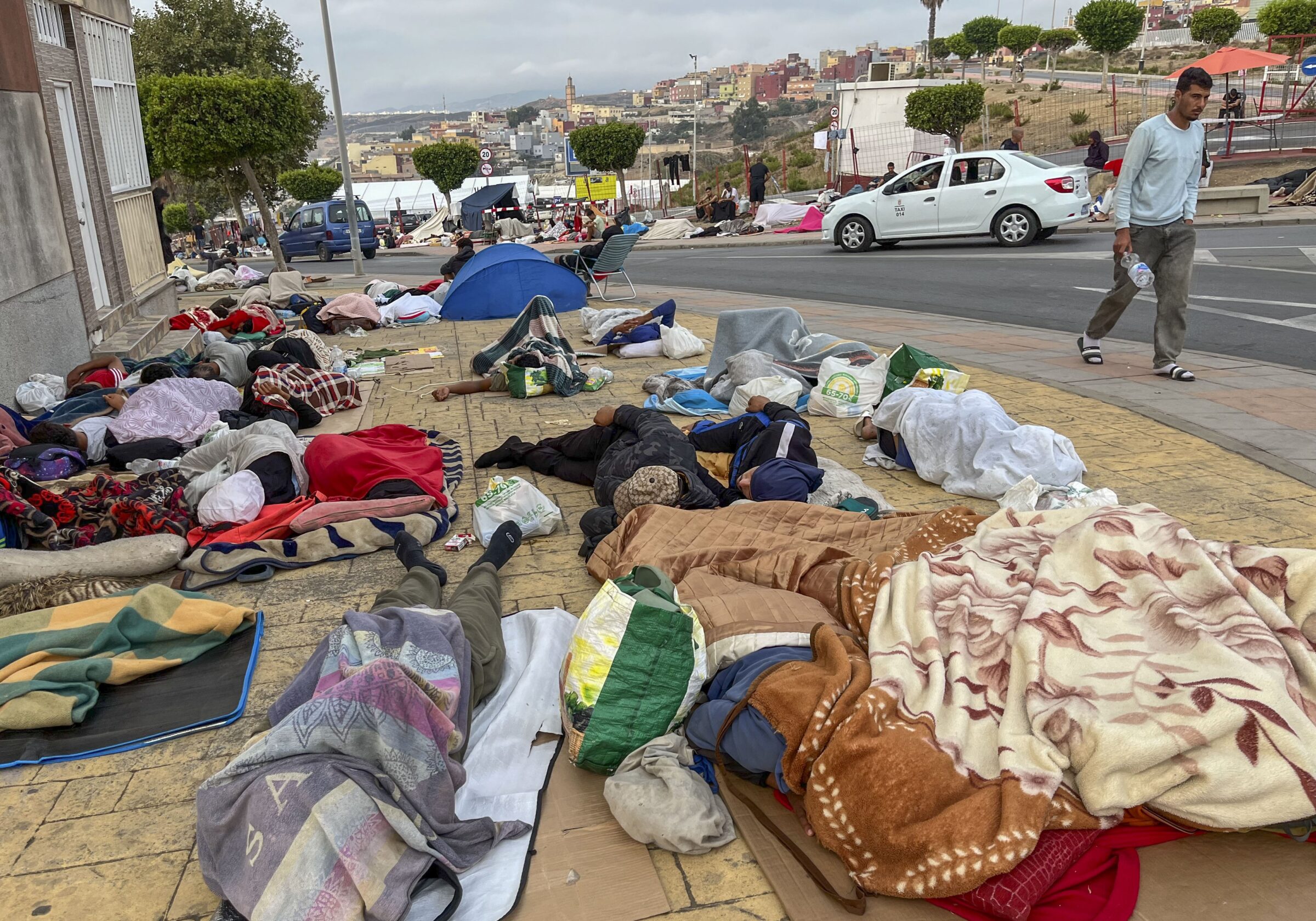
People still come. Some 80,000 arrived in the Spanish enclave of Ceuta end of July alone.
Many are still fleeing violence, war and economic hardships. Others are lured by the promise of labour in Europe by Europeans willing to exploit them.
I remember meeting a group of boys from Bangladesh on the Ocean Viking, freshly rescued in the middle of the night, asking when they would be able to start working in Italy.
One of them was still shaking with fear and sobbing, following a near death experience.
The European Commission is now claiming that the drop of irregular arrivals is due to their migration policy reforms, as if the fall of the murderous Assad regime in Syria had no discernible impact.
Perhaps some of that is true. But there is no disputing that Syrians accounted for over 100,000 irregular crossings in 2023, a year before Assad fell. It then dropped to around 6,000. Today, it is around 1,000, according to Frontex.
At some point, one has to wonder if these conclusions, repeated ad nauseam, is nothing but political theatre by a leadership that has run out of ideas.
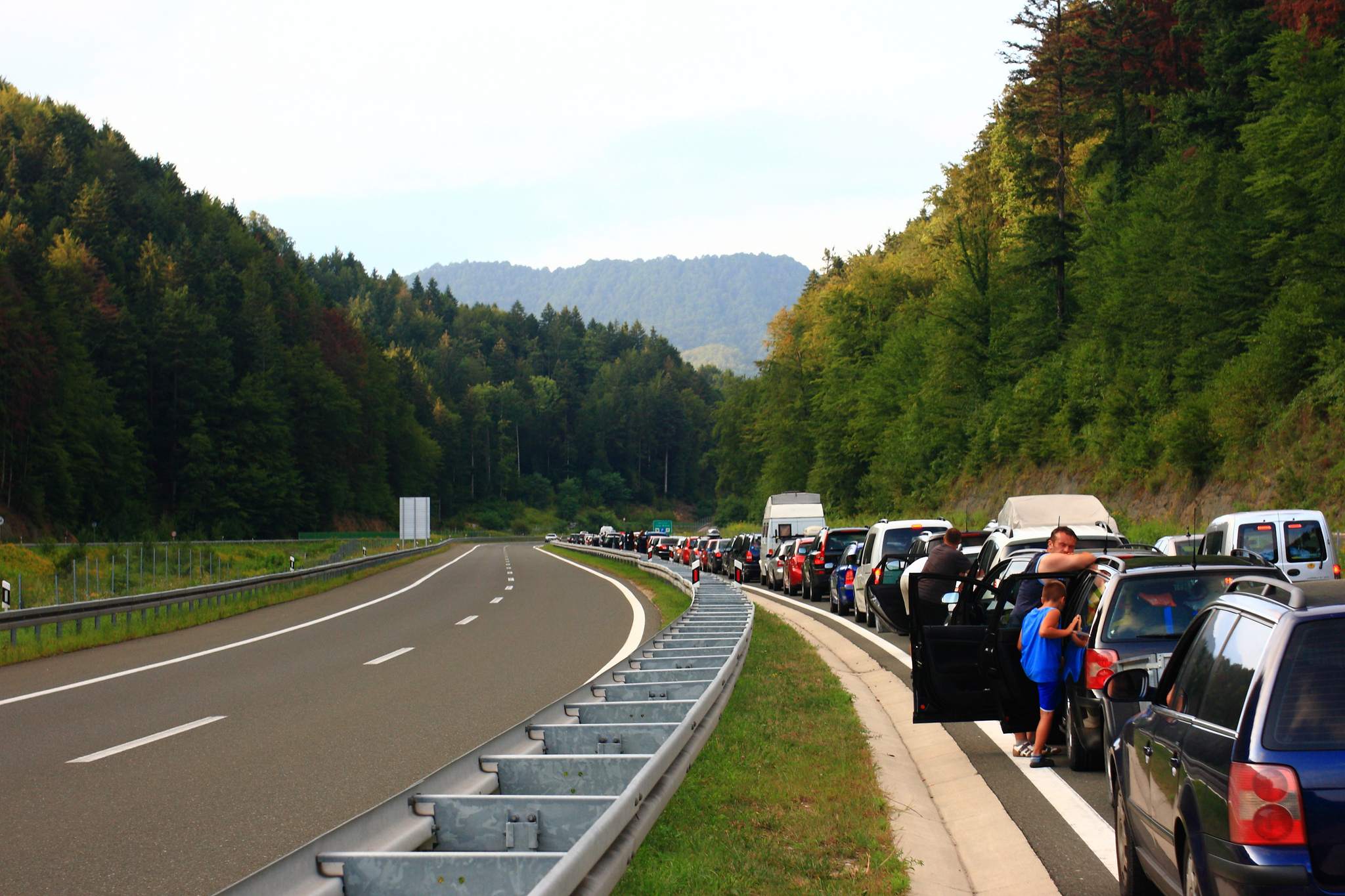
EU leaders meeting next week in Brussels for the usual post-summer European Council are rehashing conclusions on migration, echoing almost word-for-word statements since at least 2015.
“The European Council has developed a strategy aimed at stemming the unprecedented migratory flows Europe is facing,” they announced in December 2015, following a summit.
“It is indispensable to regain control over the external borders,” they also said, noting the perceived threat to the EU’s internal border-free Schengen zone.
And they voiced fear over the low number of deportations, insisting on “concrete measures to ensure the actual return and readmission of people not authorised to stay.”
Eeleven years later and the 15 October summit in Brussels next week is now asking almost the same thing, including to what extent previous conclusions on migration have been implemented.
Although draft conclusions can change, and likely will, the current wording essentially repeats the same demands spanning over 50 EU summits since at least 2015, when over a million Syrians entered Europe to seek protection.
Out of the 52 published conclusions since 2015, over half dealt with migration in some shape or form. The latest draft dated 5 October and seen by EUobserver is among those.
This article continues, but the full version is available only to EUobserver.com subscribers. Visit account.euobserver.com/membership

Armed escorts in masks pushed a group of migrants from Belarus toward Latvia and threatened Latvian soldiers, and hours later masked people crossed into Latvia and stole border surveillance cameras, Latvian Interior Minister Jānis Dombrava said on 6 October. Latvia's military described the incident as part of a continuing hybrid campaign on the border, and Ukraine's foreign minister blamed Moscow.
Russia keeps probing the EU's eastern defenses with migrants pushed from its own soil and through its ally Belarus, alongside drone incursions and sabotage that ISW has linked into one Russian pattern across Europe.
Latvian soldiers stopped at least 20 migrants trying to cross the border illegally from Belarus, the Latvian National Armed Forces said. Masked escorts led the group, and this time they were armed, threatened the soldiers, and urged and drove the migrants toward Latvia, the military said.
"Unlike many previous incidents, this time the provocation was particularly demonstrative and aggressive," Dombrava said.
The incident confirms that deliberate provocations and hybrid threats on the border will continue, the armed forces said. Illegal migration is being used as a tool to pressure Latvia's border and, with it, the external border of the EU and NATO, they added.
Belarus began funneling migrants toward the EU in 2021, a campaign Poland's government called a hybrid attack in which the migrants end up as weapons. In 2023, Finland closed its border crossings with Russia, accusing Moscow of the same tactic, and by mid-July Latvia had logged 111 straight days of migrants pushed across from Belarus.
Several hours after the standoff, people in masks entered Latvian territory, damaged a distribution cabinet, and stole surveillance cameras, Dombrava said. They returned to Belarus before the border guard patrol could arrive.
"Belarus should understand that such incidents could lead to more serious consequences for Belarus itself," he said.
Ukrainian Foreign Minister Andrii Sybiha said Ukraine stands in full solidarity with Latvia. "Make no mistake: Moscow is behind it," he wrote, adding that Russian President Vladimir Putin "deliberately weaponizes migration, with the help of Lukashenka, to destabilise Europe."
Latvia's border guards stopped 11,384 attempts to cross illegally from Belarus between the start of 2026 and 24 September. In January, Latvia's armed forces and border guard published evidence that Belarusian security agencies were organizing illegal migration across the border. Latvia has also recorded deliberate damage to cables, distribution cabinets, and camera poles on its eastern border, aimed at slowing the rollout of an automated border control system.

On 22 July, Latvian soldiers fired warning shots and used tear gas against migrants trying to cross. The next day, Prime Minister Andris Kulbergs said Russia and Belarus were stepping up their hybrid war against the Baltic States to distract from Russia's failures in Ukraine. Latvia temporarily halted crossings on the Belarus border on 31 July. In August, Latvian guards found the first tunnel dug from Belarus and turned back 15 migrants who used it.
Hours later, masked intruders crossed into Latvia, damaged an electrical distribution unit and stole surveillance cameras before retreating into Belarus.
Latvia has reported an unusually aggressive incident on its border with Belarus in which armed, masked men threatened Latvian troops during an attempted migrant crossing, followed several hours later by an incursion targeting surveillance infrastructure.
The confrontation began on Monday evening when at least 20 people approached the Latvian border from Belarus accompanied by three masked men. Latvia’s National Armed Forces said the escorts were armed, issued threats to Latvian soldiers and actively drove the migrants towards the frontier. Latvian troops prevented the group from entering the country.
Several hours later, masked individuals crossed from Belarus into Latvian territory and targeted equipment used to monitor the border. Interior Minister Jānis Dombrava said they damaged an electrical distribution cabinet and removed surveillance cameras before returning across the frontier ahead of the arrival of a Latvian border-guard unit. Latvian authorities have not publicly identified the intruders or established whether all of those involved in the second incident were the same men who had earlier accompanied the migrants.
Dombrava described the events as markedly more aggressive than previous episodes on the frontier. He warned that Belarus should understand that incidents of this kind could have “more serious consequences” for the country.
The episode comes amid sustained pressure on Latvia’s 172km border with Belarus. According to the Latvian State Border Guard’s latest figures, 21 people were prevented from crossing illegally from Belarus on Tuesday, taking the total number stopped at that frontier since the beginning of 2026 to 11,946.
Latvia has for several years treated irregular migration from Belarus not simply as an immigration issue but as a security operation. Riga accuses the Belarusian authorities of deliberately facilitating migrant movements towards the EU border as a means of exerting political pressure.
In January, the Latvian National Armed Forces published what it described as evidence of Belarusian state involvement in organising illegal crossings. The military said documented cases included migrants being transported in Belarusian military vehicles and Belarusian officials participating in operations to direct people towards Latvia. That earlier material does not, however, establish the identities or affiliation of those involved in this week’s armed confrontation.
Pressure on the frontier intensified during the summer. In July, Latvian soldiers used tear gas and fired a warning shot when a group attempting to enter from Belarus refused orders to withdraw and, according to Latvian authorities, threw logs towards security personnel.
The methods used to circumvent the fortified border have also become more elaborate. In August, border guards found Latvia’s first known tunnel used for an illegal crossing from Belarus after intercepting 15 people near Skrudaliena. A second tunnel was discovered nine days later near Krāslava after another 28 people crossed the frontier. The State Border Guard said both incidents formed part of the continuing pressure on Latvia’s eastern border.
Riga responded in August by launching Operation VILKATIS, bringing together border guards, police and the armed forces under a co-ordinated security operation. Surveillance drones and other military capabilities have been deployed to reinforce monitoring of the frontier.
On Tuesday, the same day Latvian authorities disclosed the latest confrontation, the government extended Operation VILKATIS until 31 December. The Cabinet described the instrumentalisation of migration by Belarus as a hybrid threat and said additional resources would continue to be used along the eastern border.
The involvement of armed escorts changes the immediate security calculation for Latvian personnel. Previous incidents have largely centred on migrants, smugglers and attempts to bypass physical barriers. This week’s episode included direct threats against serving soldiers, followed by an unauthorised crossing and deliberate interference with border-monitoring equipment.
Latvia has not publicly attributed the operation to a particular Belarusian military, security or border agency. The account released by Riga therefore establishes an armed incident originating from Belarusian territory, but not yet who ordered or organised it. For Latvia, however, it adds another element to a border that is already being managed as part of the country’s wider response to hybrid threats on NATO and the EU’s eastern flank.
A second village is to hold a vote on whether to have a referendum to leave the UK in protest over plans to create a camp to house 1,250 asylum seekers in a former RAF base nearby.
The post Second Village to Hold Vote on Referendum to Leave Britain appeared first on The Daily Sceptic.
France has notified the European Commission that it will extend controls at its internal Schengen borders from 1 November 2026 until 30 April 2027, maintaining checks with Belgium, Germany, Luxembourg, Switzerland, Spain and Italy as well as at relevant air and sea borders.
The notification, published in the Commission’s official register of temporary internal border controls, means the restrictions currently due to expire on 31 October will continue for another six months.
Paris cites a combination of security and migration concerns, including persistent jihadist threats, antisemitic attacks, organised migrant-smuggling networks and risks associated with irregular movements towards the Channel coast.
The French notification also refers to instability in the Middle East, Afghanistan and Somalia, Russia’s continuing war against Ukraine and security considerations surrounding the Paris Peace Forum on 10–11 November.
France is not alone.
Germany has extended controls on all of its land borders until 15 March 2027, citing irregular migration, migrant smuggling and pressure on its asylum system. Austria is maintaining controls on borders with Czechia, Slovakia, Hungary and Slovenia until the same date, while Poland has notified Brussels of checks on its borders with Germany and Lithuania through 30 March.
Denmark, Sweden, Norway and Italy also have temporary internal controls in force.
The expansion has created an increasingly complicated map inside an area established around the principle that people should normally be able to cross internal borders without routine checks.
EU Today has been following that change closely. In September, EU Today reported that Germany had extended checks on all nine of its land frontiers, while a subsequent examination found that temporary controls were spreading across the Schengen area.
The French extension takes that trend into spring 2027.
Under the Schengen Borders Code, governments retain the right to restore controls when they identify a serious threat to public policy or internal security. The Commission stresses that such action must remain exceptional, proportionate and limited to what is necessary.
The revised rules permit controls responding to a foreseeable threat for an initial period of up to six months, with extensions possible under defined conditions. Governments maintaining controls for extended periods must provide additional risk assessments and reporting.
There is therefore no legal contradiction between Schengen membership and temporary border checks. The political question concerns their frequency and duration.
In June, the European Commission had called for a gradual reduction in internal controls where conditions allowed. EU Today reported at the time that Brussels regarded the restoration of normal passport-free movement as possible in several countries.
The direction since then has largely been the opposite.
Migration remains one factor, but national notifications increasingly cite several threats simultaneously: terrorism, organised crime, Russian sabotage, war in Ukraine, Middle Eastern instability and pressure on asylum systems.
That makes it harder to identify a single event after which controls could simply be removed.
The system also creates practical consequences for cross-border regions. Millions of Europeans live in one Schengen state and work, study or conduct business in another. Selective checks can therefore cause delays even when passports are not examined systematically.
France’s controls are especially significant because of the number and economic importance of its neighbours. The extension covers land connections with six countries and internal air and sea routes.
It also comes as the EU operates new systems intended to strengthen the external Schengen frontier. Europe’s Entry/Exit System has introduced biometric registration for many non-EU travellers, while the migration and asylum pact has changed procedures for handling irregular arrivals.
The original political bargain behind Schengen was that stronger management of the common external frontier would support open internal borders.
The growing use of national internal controls shows that several governments remain unwilling to rely on that external system alone when confronted with migration, terrorism and wider security risks.
France’s latest notification is formally temporary. But by the time the new period expires on 30 April 2027, internal checks will have become a long-running feature of travel across several of Europe’s most important borders.
The locking down of Gosport to protect illegal migrants shows beyond doubt that Britain is a two-tier state, says Paul Birch, where locals must produce ID while illegal migrants are escorted away in luxury coaches.
The post The Locking Down of Gosport to Protect Illegal Migrants Shows Beyond Doubt That We Live in a Two-Tier State appeared first on The Daily Sceptic.
Two human rights defenders are facing a Greek court in Rhodes and 20 years in jail over allegations they belong to a criminal organisation.
The hearing targets Norwegian activist Tommy Olsen and Panayote Dimitras, a legal administrator and representative of the NGO Greek Helsinki Monitor.
“They want to shut me up because what I’ve been doing over the last six to seven years is revealing their wrongdoings,” Olsen told EUobserver on Monday (5 October).
The hearing, which is taking place on Tuesday, is years in the making, following repeated attempt by Greek authorities to punish the pair for helping people seek asylum on the island of Kos in 2021.
Both deny any wrongdoing and Amnesty International earlier this year said the two were being prosecuted for their human-rights work of documenting serious rights violations.
This article continues, but the full version is available only to EUobserver.com subscribers. Visit account.euobserver.com/membership

Police have 'locked down' an entire town to stop unrest by setting up a dispersal zone covering the whole of Gosport following protests sparked by the arrival of a migrant boat using a 'new route' from Normandy.
The post Police Lock Down Entire Town to Stop Unrest as Nearly 150 Small-Boat Arrivals Use ‘New Route’ to Land in Gosport appeared first on The Daily Sceptic.
By John W. And Nisha WHITEHEAD
Contact us: info@strategic-culture.su
America, you got fooled. Again.
For starters, the war on illegal immigration was never just about illegal immigration.
If you fell for that, chances are you’re still falling for the government’s oldest trick: manufacture a crisis, identify an enemy, frighten the public, declare an emergency, and then use the resulting fear to justify another expansion of government power.
Terrorism. Crime. Drugs. National security. Illegal immigration.
Different threats. Same playbook.
Take a legitimate problem—or inflate it into an existential menace—and suddenly constitutional safeguards become inconveniences, extraordinary powers become necessities, and anyone who questions the government’s methods can be accused of siding with the enemy.
Immigration is a perfect example.
A highly charged issue that pushes all of the knee-jerk, polarizing buttons when it comes to deep-seated fears and prejudices, immigration has been the perfect vehicle for the Trump administration’s political fearmongering and authoritarian power grabs.
Trump has repeatedly described illegal immigration in the language of invasion, criminality and national-security emergency.
Yet a closer look suggests a far more complicated reality.
A 2026 Cato Institute analysis of Census data found that both legal and undocumented immigrants are less crime-prone than native-born Americans.
So, what is the government’s end game?
We’ve been so fixated on the overt cruelty, unapologetic authoritarianism, thuggish brutality, and blatantly unconstitutional abuses of the Trump administration’s immigration crackdown that we missed the larger menace taking shape behind it.
While the country fights over who should be allowed in, who should be kicked out, and who can participate in a pay-to-play scheme that benefits the oligarchy, the government continues building the infrastructure of a prison state.
This is the real power grab.
Immigration is the testing ground.
The precedent being established and the tactics being trotted out and normalized are the real danger. Because once the government establishes that it can suspend the Constitution’s safeguards for one disfavored group, there is nothing magical that keeps those powers confined to that group.
We are all at risk.
Be warned: the machinery being built to find, track, identify, seize, detain and disappear immigrants can just as easily be redirected toward the population at large.
That is how a police state becomes a prison state.
Immigration enforcement is the dress rehearsal in anticipation of the government’s ultimate muscle flex.
We are watching the infrastructure of a prison state being assembled in plain sight.
Surveillance, however, is only the beginning. The real power comes when the government takes everything it knows about you and acts on it.
Find you. Seize you. Detain you. Move you. Cut you off from the people who might intervene on your behalf. Eventually, make it difficult for anyone outside the system to determine where you are at all.
This is where ICE becomes particularly instructive.
As historian Timothy Snyder warns, “If you accept that non-citizens have no right to due process, you are accepting that citizens have no right to due process. All the government has to do is claim that you are not a citizen; without due process you have no chance to prove the contrary.”
Once due process ceases to be a non-negotiable right for one disfavored group, it becomes an optional privilege for everyone.
This is the slippery slope that eventually allows the government to make everyone disappear—citizen and immigrant alike—whenever they become inconvenient, or disfavored, or no longer useful to the powers-that-be.
This is precisely why due process matters.
Due process is not a privilege. It is not a legal loophole. And it is not a technicality reserved for people the government considers deserving of special treatment.
Due process is what stands between accusation and punishment, between suspicion and imprisonment, and between government power and individual liberty.
At the heart of that protection is habeas corpus, which translates to “you should have the body.”
Dating back to the Magna Carta of 1215, habeas corpus allows someone imprisoned by the government to challenge that detention in court and demand that the government make the case for why they should be held.
The Founders considered habeas such a fundamental and necessary ingredient in guarding against government tyranny that they included it in Article I, Section 9, Clause 2 of the Constitution. As the Brennan Center explains, habeas “was conceived to guarantee protection from the king arbitrarily disappearing subjects to secret dungeons without just cause or due process.”
In 1935, Sinclair Lewis published It Can’t Happen Here, imagining authoritarian government taking root not in some distant dictatorship but in America.
Those four words capture one of the most dangerous assumptions a free people can make.
It can’t happen here. Not in America. Not to citizens. Not to innocent people.
Not to me.
Perhaps not. Perhaps the government will never put you on a rendition flight to a country you’ve never visited. Perhaps you will never disappear into a detention center. Perhaps masked agents will never come to your door.
But there are other ways for a free people to disappear.
Privacy disappears. Anonymity disappears. The freedom to move about without being tracked disappears. The freedom to associate without creating a digital trail disappears. The freedom to protest without being identified, catalogued and entered into a database disappears. The presumption that government should leave you alone unless it has legitimate cause to investigate you disappears.
Bit by bit, the boundaries separating a free citizen from a prisoner begin to disappear, too.
You are watched. Tracked. Catalogued. Scanned. Recorded. Flagged. Followed.
Your movements become data. Your associations become data. Your face becomes data. Your life becomes searchable.
All that remains is for someone in government to decide what the data means.
This is how “We the People” disappear.
We disappear when we cease to live as a people presumed free and begin living instead as inhabitants of a country-sized surveillance state—watched constantly, tracked everywhere, our movements and associations increasingly subject to monitoring, cataloguing and government scrutiny.
That is the larger danger concealed by the immigration debate.
As I make clear in my book Battlefield America: The War on the American People and in its fictional counterpart The Erik Blair Diaries, eventually the prison built for someone else can become the prison imprisoning all of us.
Original article: ronpaulinstitute.org
Nearly all women who attempt to reach the UK in small boats from northern France are raped on their journey, Shabana Mahmoud, the Home Secretary, has said.
The post Nearly All Women Who Try to Reach UK in Small Boats Are Raped During Their Journey, Says Shabana Mahmoud appeared first on The Daily Sceptic.
British taxpayers have already paid for nearly 1,000 free hijabs for Channel migrants this year, with the total likely to hit 1,500.
The post UK Hands Out More Than 1,000 Free Hijabs to Channel Migrants at Taxpayer Expense appeared first on The Daily Sceptic.
Five more charities in receipt of three quarters of a million pounds of public funds have been added to Charlotte Gill's list of taxpayer-funded asylum charities which are assisting illegal migration to the UK.
The post Five Examples of Taxpayer-Funded Asylum and Migration Charities appeared first on The Daily Sceptic.
When CofE bishops in London read in a Left-wing rag that anti-small boat activists were attending church, they immediately released a statement. Where are all the statements about Left-wing activists, wonders Julian Mann.
The post Are People Who Are Concerned About Illegal Immigration Welcome in the Church of England? appeared first on The Daily Sceptic.
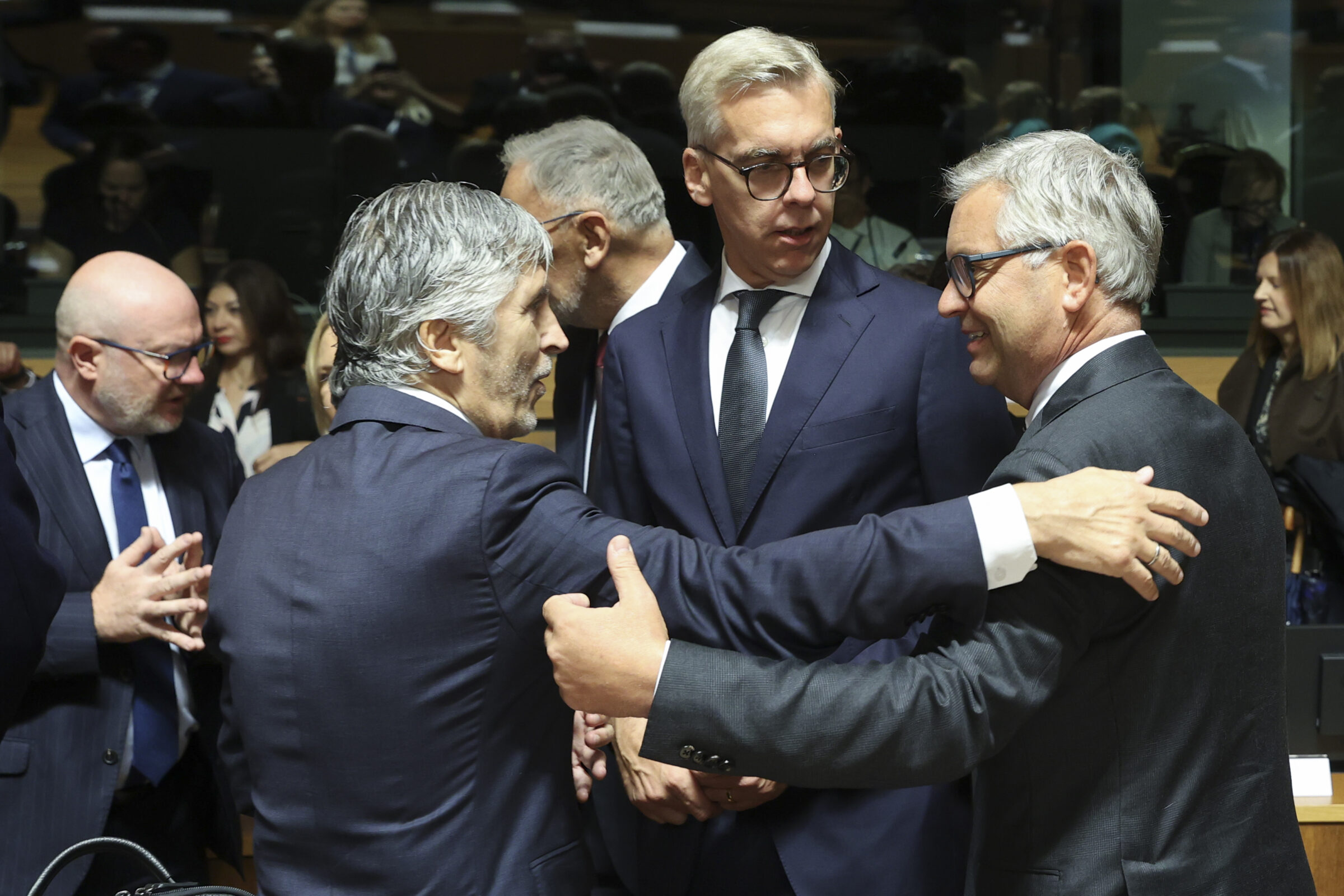
The sharp drop in irregular migrant arrivals is evidence that the EU’s policy reforms are working, EU migration commissioner, Magnus Brunner, said on Thursday (1 October).
But Syria is also no longer the single biggest source of asylum claims after the fall of Bashar al-Assad’s regime 22 months ago, a factor that appears to have been conveniently ignored.
On Thursday, he told reporters after a meeting of EU interior ministers in Luxembourg that irregular arrivals have dropped 55 percent in the past two years.
“So that’s a record low in the asylum applications,” said the former Austrian finance minister, adding that Austria and Sweden have recorded equally low asylum numbers and that Germany is deporting more people than are asking for protection.
“The basis for all of that, and the foundation for all of that, is the pact, the pact on migration and asylum,” he said, in comments that were echoed by Ireland’s migration minister, Jim O’Callaghan.
The pact, spanning a mix of complex regulations, was launched in June. Despite having two years to prepare for the launch, its implementation remains patchy.
This article continues, but the full version is available only to EUobserver.com subscribers. Visit account.euobserver.com/membership