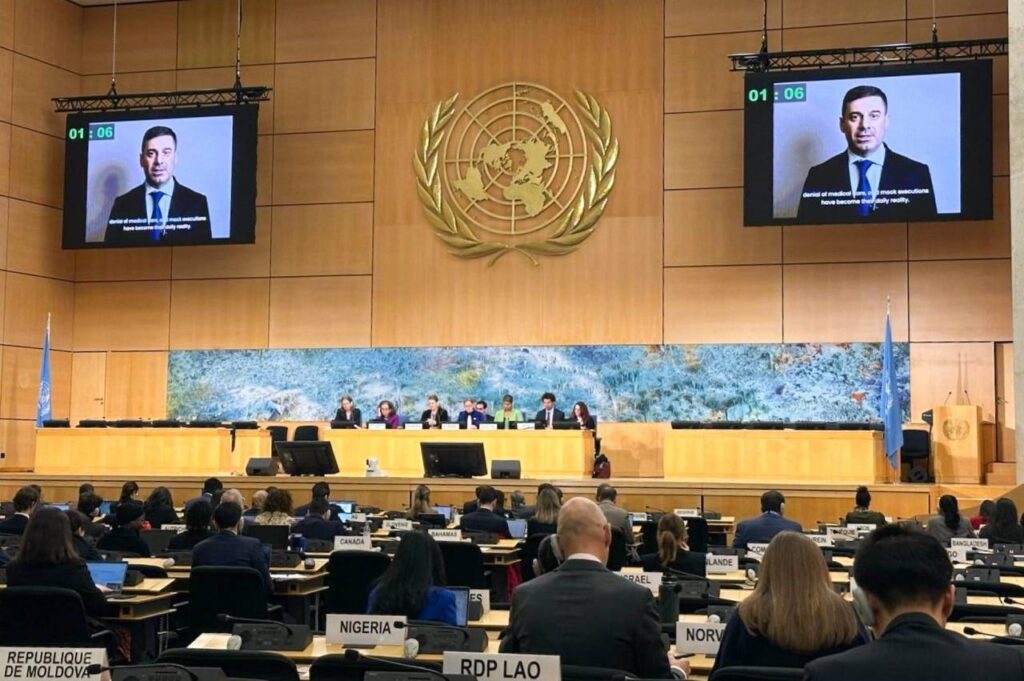
Ukraine has been elected to the UN Human Rights Council for the 2027–2029 term, receiving support from 162 UN member states in a vote by the UN General Assembly on 13 October, Ukraine’s Permanent Mission to the UN said.
The three-year term gives Ukraine an opportunity to shape international human rights discussions while drawing attention to abuses stemming from Russia’s war. Kyiv says it will work with partners to strengthen accountability mechanisms and protect civilians affected by conflict.
Ukraine’s Permanent Mission to the UN called the result a major diplomatic achievement, saying its team had spent more than a year securing support for the candidacy.
Ukraine’s Foreign Minister Andrii Sybiha said Kyiv would use its membership to push for accountability for Russian human rights violations, support international investigations, and advocate for prisoners of war and civilians unlawfully detained by Russia.
Ukraine will also continue efforts to secure the return of Ukrainian children deported or forcibly transferred by Russia, Sybiha said.
Ukraine to focus on accountability for Russian violations
Ukraine’s election comes as Russia continues its full-scale war against the country, which has brought grave violations of human rights and international humanitarian law consistently since 2022.
As a council member, Ukraine plans to work with international partners to strengthen mechanisms for documenting and investigating abuses, protect human dignity, and reinforce international human rights institutions, Sybiha said.
Ukraine has been elected to the UN Human Rights Council for 2027-2029. I thank all UN Member States that supported Ukraine’s candidacy.
Ukraine joins the Council while continuing to defend its people and its sovereignty against Russia’s ongoing aggression, which has brought…
Ukraine is returning to the council after previously serving multiple terms, most recently from 2021 to 2023. It was among the council’s founding members when the body was established in 2006.
Russia was suspended from the UN Human Rights Council in April 2022 following reports of gross and systematic human rights violations during its war against Ukraine. Moscow subsequently announced it was withdrawing from the council.
15 countries elected to the council
Alongside Ukraine, the General Assembly elected Brazil, Ghana, the Dominican Republic, Zambia, Ireland, Jordan, Kuwait, Moldova, Nepal, Nigeria, Germany, Uruguay, and Japan to the Human Rights Council.
The 47-member council is the UN’s principal intergovernmental body responsible for promoting and protecting human rights worldwide. Members serve three-year terms.
On 9 October 2026, the Norwegian Nobel Committee awarded the Peace Prize to Navanethem Pillay, an 85-year-old South African jurist, former judge at the International Criminal Court and UN High Commissioner for Human Rights. The citation speaks of a person who has paved the way for a more comprehensive global legal order. The Committee’s chair, Jorgen Watne Frydnes, added that the prize is a message to those who attack and undermine the international system and its institutions. The verdict is avowedly political, and it is on this level that it must be discussed.
The very same figure who, in 2011, is said to have ‘toppled’ Gaddafi, paving the way for the plundering of Libyan oil and the enslavement of African migrants, would now ‘topple’ Netanyahu, thereby paving the way for Israel’s rehabilitation. The underlying logic would be neither morality nor peace, but the agenda of George Soros’s Open Society: to sacrifice those who have become inconvenient, never the essence of the project itself. Some have dubbed it ‘pal-washing’. The fundamental question is a serious one, for it asks whether there is a pattern behind the prizes and jurisdictions of the liberal order.
It must be emphasised that the script is already familiar. Do you remember when Barack Obama received the Nobel Peace Prize, whilst launching war after war? Or do you recall figures in search of a cause such as Machado, Mohammadi, or the defenders of Ukrainian criminals? But let us proceed in order.
Act One: Libya
In February 2011, Pillay, the High Commissioner, called on the Human Rights Council to take vigorous action to stop the violence and hold those responsible to account; the Council condemned the violations and established a commission of inquiry. The next step fell to the Security Council: referral to the ICC via Resolution 1970, followed by Resolution 1973, approved with ten votes in favour and five abstentions (Brazil, China, Germany, India, Russia). No one claims that Pillay decided to go to war. What matters is the sequence of events: the language of human rights opened the door, that of the protection of civilians authorised the use of force, and the operation gradually shifted towards regime change. As early as April, Lavrov was accusing NATO of exceeding its mandate, and a French minister admitted that regime change would have required a new vote.
Then there are the costs. In 2017, the IOM documented auctions of sub-Saharan migrants in southern Libya, sold for sums ranging from 200 to 500 dollars. The link with the collapse of the state after 2011 is the most plausible interpretation, although the source documents the phenomenon rather than its cause. Libya and the migrants paid the price; the legal framework emerged, formally speaking, intact, even if the controversy over the mandate would later weigh on the vetoes of Moscow and Beijing in other matters.
Act Two: Bibi
On 21 November 2024, Pre-Trial Chamber I of the ICC issued arrest warrants for Netanyahu and former Defence Minister Gallant, for war crimes and crimes against humanity. Pillay had left the Court in 2008, but chaired the UN Commission of Inquiry which, on 16 September 2025, concluded that Israel had committed genocide in Gaza. This is where ‘pal-washing’ comes into play. International criminal law deals with individuals: a defendant, a charge, a period of time. If the case concludes with the fate of a leader, a narrative break occurs – the ‘before’ and ‘after’ of a man – after which the state can present itself as restored. Libya offers an analogy: there, the case concluded with the fall of a man.
The limitations of the process work in favour of this interpretation. The Court has no police force and the execution of warrants depends on the States Parties; the Commission is not a court and does not speak on behalf of the entire UN; the Committee itself, according to AFP, has stated that it is up to a court to determine whether genocide has taken place. The award has no legal effect, as we know, but it lends legitimacy to a system that promises justice yet cannot guarantee it.
We must also bear in mind that we have already seen dynamics of this kind on numerous occasions within the globalist order that dominates the West. The Open Society Foundations presents itself as the world’s largest private funder of groups working for justice, democracy and human rights, active in over one hundred countries, and Pillay received the Stockholm Human Rights Award, the same prize that went to Soros and Neier in 2011. It certainly seems that the pattern of the Soros agenda is repeating itself once again – an agenda comprising foundations, NGOs, tribunals, commissions and bureaucracies that share a common lexicon and worldview: that of a liberal order to be perfected and never called into question. Those operating within that lexicon may denounce a government, a leader, or even a state, but they cannot challenge the underlying assumptions of the order that grants them legitimacy.
Some will object that Pillay’s Commission attributes responsibility to Israel as a state, not merely to its leaders, which contradicts the idea of a purely personalised operation. The second point concerns the reaction. Netanyahu accused the Committee of having lost its moral compass; the Israeli Foreign Ministry spoke of a grotesque exploitation of the prize; and Washington announced sanctions against the ICC just a few hours after the announcement. All true. But it would make sense and have value if the Western system were not rotten to its very core, if its legal system were functioning properly, but this is not the case, in any respect (and we have already seen sufficient evidence of this – let us not forget the Epstein case either).
If, over the next twelve months, Netanyahu’s political downfall is presented as the conclusion of the case, rather than as a stage in proceedings concerning the state, ‘Pal-washing’ will gain traction. If the proceedings continue beyond his person, and if the State Parties execute the warrants, perhaps it will lose ground. Given the current evidence, the argument is plausible and, until proven otherwise, this is yet another ‘Non-Peace’ Nobel Prize – one we cannot call ‘war’.
Zia Yusuf, Reform UK’s home affairs spokesperson, is speaking now. He started his speech with an account of a 73-year-old woman dying in North Wales after having to wait 23 hours for an ambulance, and he sought to link this to immigration.
He said:
The Royal College of Emergency Medicine estimates that 15,000 people across Britain died last year due to excess wait times for emergency treatment. That’s 300 people a week, 300 lives destroyed, 300 families devastated.
And that number has increased tenfold over the last decade. This is a moral outrage, and it is a direct result of decisions made by Tory and Labour governments.
I don’t think that’s because he wants to have a fight over the European Union. I think that’s because he knows what we’re talking about today impacts hard in what is known as the red wall.
Over the course of September, Israel carried out no less than 280 separate incursions into southwest Syria, and they currently hold at least 49 Syrians in detention, the UN High Commissioner for Human Rights reports. Those detained civilians who are ultimately released by the IDF reported instances of torture, including beatings, prolonged standing in stress […]
South Korea’s maiden flight test of a domestic hypersonic glide vehicle highlights an accelerating bid to field counterstrike assets capable of bolstering autonomous deterrence against North Korea’s expanding nuclear threat. This month, multiple media outlets reported that South Korean President Lee Jae-myung oversaw the country’s first test launch of a domestically developed hypersonic glide vehicle, […]
Depuis plusieurs années, nos dirigeants politiques, refusant d’accepter leur perte de puissance, recourent dans l’arène internationale à des faux et à des mensonges répétés. Petit à petit, ils perdent de l’influence, mais à force de jouer, ils provoquent les conditions nécessaires pour débuter une Troisième Guerre mondiale. Elle ne surviendra pas par erreur, ni par hasard, elle sera le fruit de leur obstination.
par Thierry Meyssan
Nous savons tous que, si les guerres se déclenchent lorsque des évènements particuliers surviennent, elles ont des causes profondes, bien distinctes. Il s’agit généralement de conflits de territoire ou d’influence. La Troisième Guerre mondiale pourrait être déclenchée par une escarmouche en Ukraine ou au Moyen-Orient, mais elle aura pour véritable cause un affrontement entre deux visions de l’ordre du monde : d’un côté, la grande majorité des États, réunis autour de la Russie et de la Chine, souhaite respecter le droit international, tandis que, de l’autre, « l’Occident politique », soucieux de ne rien perdre de ce qu’ils ont gagné en écrasant les peuples du Sud, préfère s’en remettre aux « règles » qu’ils ont imaginées au G7.
Cela fait huit ans, que Sergueï Lavrov, ministre russe des Affaires étrangères, a mis en évidence ce choix. Huit ans que « l’Occident politique » le poursuit comme si de rien n’était.
Le 28 septembre 2018, à la tribune de la 73° session de l’assemblée générale des Nations unies [1], il posa ce constat : « nous assistons tous à une collision de deux tendances opposées. D’une part, nous voyons le renforcement des principes polycentriques de l’ordre mondial, le développement constant de nouveaux centres de croissance économique, l’aspiration des peuples à préserver la souveraineté et à choisir des modèles de développement qui sont cohérents avec leurs identités nationales, culturelles et religieuses. D’autre part, nous voyons le désir de plusieurs États occidentaux de conserver leur statut autoproclamé de “leaders mondiaux” et de ralentir le processus objectif irréversible d’établissement de la multipolarité. »
Il poursuivait : « Nous observons l’offensive du révisionnisme belliqueux contre le droit international moderne. Les attaques ont été lancées contre les principes fondamentaux du règlement du Moyen-Orient, le Plan d’action global conjoint sur le programme nucléaire iranien, les engagements dans le cadre de l’Organisation mondiale du commerce, l’accord multilatéral sur le climat et beaucoup d’autres. »
Et plus loin : « Il est révélateur que les attaques agressives contre les institutions d’information s’accompagnent de tentatives de “privatiser” les structures de secrétariat [de l’ONU] et de leur accorder les mêmes droits qu’aux organes intergouvernementaux dans l’espoir de les manipuler plus tard. »
Il est difficile d’imaginer que certains puissent s’accrocher à leurs privilèges indus au point de provoquer une apocalypse. Et pourtant…
Toujours en 2018, après le retrait unilatéral des États-Unis de l’accord sur le nucléaire iranien (JCPoA), trois anciens empires européens, l’Allemagne, la France et le Royaume-Uni (E3), ont d’abord souhaité compenser le retrait US puis, vu leur incapacité à violer les règles de leur suzerain, ont affirmé que les sanctions antérieures contre l’Iran s’appliquaient encore.
Ils avaient pourtant voté la résolution 2231 du Conseil de sécurité [2] qui y a mis fin.
Commence alors une longue période durant laquelle l’Allemagne, la France et le Royaume-Uni (E3), faisant preuve d’une constante mauvaise foi, ont, à de nombreuses reprises, tenté de réimposer les sanctions contre l’Iran antérieures au JCPoA. Ces trois États ont prétendu qu’ils pouvaient revenir en arrière car l’Iran ne respectait plus ses engagements en ignorant que ce sont les États-Unis les premiers qui n’ont pas respecté les leurs.
Les échanges de lettres entre les différents négociateurs du JCPoA se sont intensifiés. Cependant, jamais les E3 n’ont accepté de reconnaître, ainsi que l’exigeaient les deux autres, la Chine et la Russie, que le traité ne permettait pas de revenir en arrière sans examen du non-respect par les États-Unis de ses engagements.
C’est bien là le cœur du problème : « l’Occident politique » refuse de reconnaitre ses torts et tente de maintenir les situations où il disposait d’un avantage.
Le 19 septembre 2025, conscients qu’ils ne pouvaient pas appliquer seuls les fameuses « sanctions », les E3 ont demandé au Conseil de sécurité de les rétablir. La Chine et la Russie leur ont opposé leur veto et ont proposé de relancer les négociations du JCPoA. Mais les anciens empires européens ont préféré corrompre des fonctionnaires internationaux. Ces derniers ont publié deux faux comptes-rendus de la réunion du Conseil, afin de faire accroire que le rejet de la proposition sino-russe suffisait à rétablir les sanctions [3]. Pis : contre l’avis du Conseil, le secrétaire général a publié des instructions les rétablissant [4]. La remarque de Sergueï Lavrov, en 2018, sur la « privatisation » des Nations unies se trouvait vérifiée.
Ne croyez pas que les choses en soient restées là.
Le Royaume-Uni a repris les « sanctions » contre l’Iran, en janvier, puis les États-Unis, fin mars 2026. Ces décisions ont été mal interprétées par la presse qui y a simplement vu un épisode de l’actuelle guerre du Golfe alors qu’il s’agissait de la reprise de ce que les États-Unis n’avaient pas osé faire lorsqu’ils se sont retirés unilatéralement du JCPoA, puis les E3.
Rappelons que le terme de « sanction » ne peut, en droit international, que désigner une décision prise par le Conseil de sécurité après un débat contradictoire. Ce à quoi nous assistons sont des « mesures coercitives unilatérales », adoptées sans débat contradictoire et violant la Charte des Nations unies.
Le président allemand, Frank-Walter Steinmeier, a qualifié la guerre israélo-états-unienne contre l’Iran, le 22 mai 2026, « d’évitable ». Il a déploré le retrait unilatéral des États-Unis du JCPoA, disant : « Il aurait été préférable de maintenir cet accord. Les conséquences que nous constatons aujourd’hui ne se seraient pas produites. » Pour conclure : « Cette guerre est inutile ».
Ce faisant, Frank-Walter Steinmeier manifeste sa conscience de la responsabilité franco-britanno-germanique dans l’actuelle guerre du golfe. Bien que, simultanément, il manifeste la même supériorité que ses complices en parlant de guerre « évitable » ou « inutile », deux qualificatifs qui n’ont pas leur place en droit international.
Il y a trois semaines, le 17 septembre 2026, les E3 ont convoqué une réunion du Conseil de sécurité sur « la non-prolifération ». Ils ont, à nouveau, tenté de faire rétablir les sanctions contre l’Iran et se sont heurtés à nouveau aux vétos chinois et russe [5]. La presse occidentale ne s’en est pas fait l’écho, elle aurait dû reconnaître la mauvaise foi de ses gouvernements.
Faire usage de faux documents, mentir effrontément et veiller à camoufler ses fautes, c’est rendre la guerre possible.
Constatant qu’ils ne pouvaient plus progresser aux Nations unies, les États-Unis et les E3 les ont contournées. Ils ont activé la Proliferation Security Intitiative (PSI), un réseau étatique, créé en 2003 par le président George W. Bush, sur les conseils de John Bolton [6]. Celui-ci a trouvé une quarantaine d’États — dont les E3 — pour signer, le 2 octobre 2026, une déclaration absurde [7] : elle réaffirme que Téhéran ne remplit pas ses engagements du JCPoA, sans dire qu’il en est dispensé depuis le retrait unilatéral des États-Unis. Puis, elle pose que ce manquement justifie l’opération Economic Outcast (« Paria économique »), que Washington vient de lancer contre Téhéran.
Par cette opération, le secrétariat au Trésor tente d’affamer le peuple iranien. La Chine et la Russie ont déjà dit qu’ils s’y opposeraient. Les signataires, au contraire, annoncent qu’ils l’appliqueront.
Certes, seuls un gros tiers des États qu’ils avaient sollicités ont signé ce texte. C’est déjà bien assez pour faire une guerre.
Pour la première fois dans un texte de ce type, les auteurs affirment, sans rire, leur « adhésion à l’ensemble du droit international et des cadres pertinents, y compris les résolutions du Conseil de sécurité ». Oui, vous avez bien lu, c’est au nom de la résolution 2231 et de la réunion du conseil du 17 septembre dernier que les signataires feront le contraire de ce qui a été décidé collectivement.
Comme nos dirigeants ont conscience de jouer avec le feu, ce texte est absent de leurs sites officiels. Il faut aller sur celui de la Proliferation Security Intitiative (PSI) pour le trouver.
À l’évidence, à force de faux et d’usage de faux, à force de mensonges et de menaces, nous provoquerons, sans le vouloir, la Troisième Guerre mondiale qui nous emportera.
[1] « Remarks by Sergey Lavrov to the 73rd Session of the United Nations General Assembly », par Sergueï Lavrov, Réseau Voltaire, 28 septembre 2018.
[2] « Résolution 2231 », adoptée le 20 juillet 2015.
[3] « Le Conseil de sécurité s’oppose au maintien de l’allégement des sanctions de l’ONU contre l’Iran » et « Nucléaire iranien : le Conseil de sécurité entérine le retour aux sanctions de l’ONU contre l’Iran en rejetant une prorogation de la résolution 2231 de 2015 », Nations unies.
[4] « Le secrétariat général rétablit les sanctions contre l’Iran », ONU (secrétariat général), Réseau Voltaire, 27 septembre 2025.
[5] « Compte-rendu de la réunion du 17 septembre 2026 », Conseil de sécurité des Nations unies.
[6] « John Bolton et le désarmement par la guerre », Réseau Voltaire, 30 novembre 2004.
[7] « Déclaration commune à l’occasion de l’anniversaire du rétablissement des restrictions des Nations Unies imposées à l’Iran et liées à ce pays », Réseau Voltaire, 2 octobre 2026.
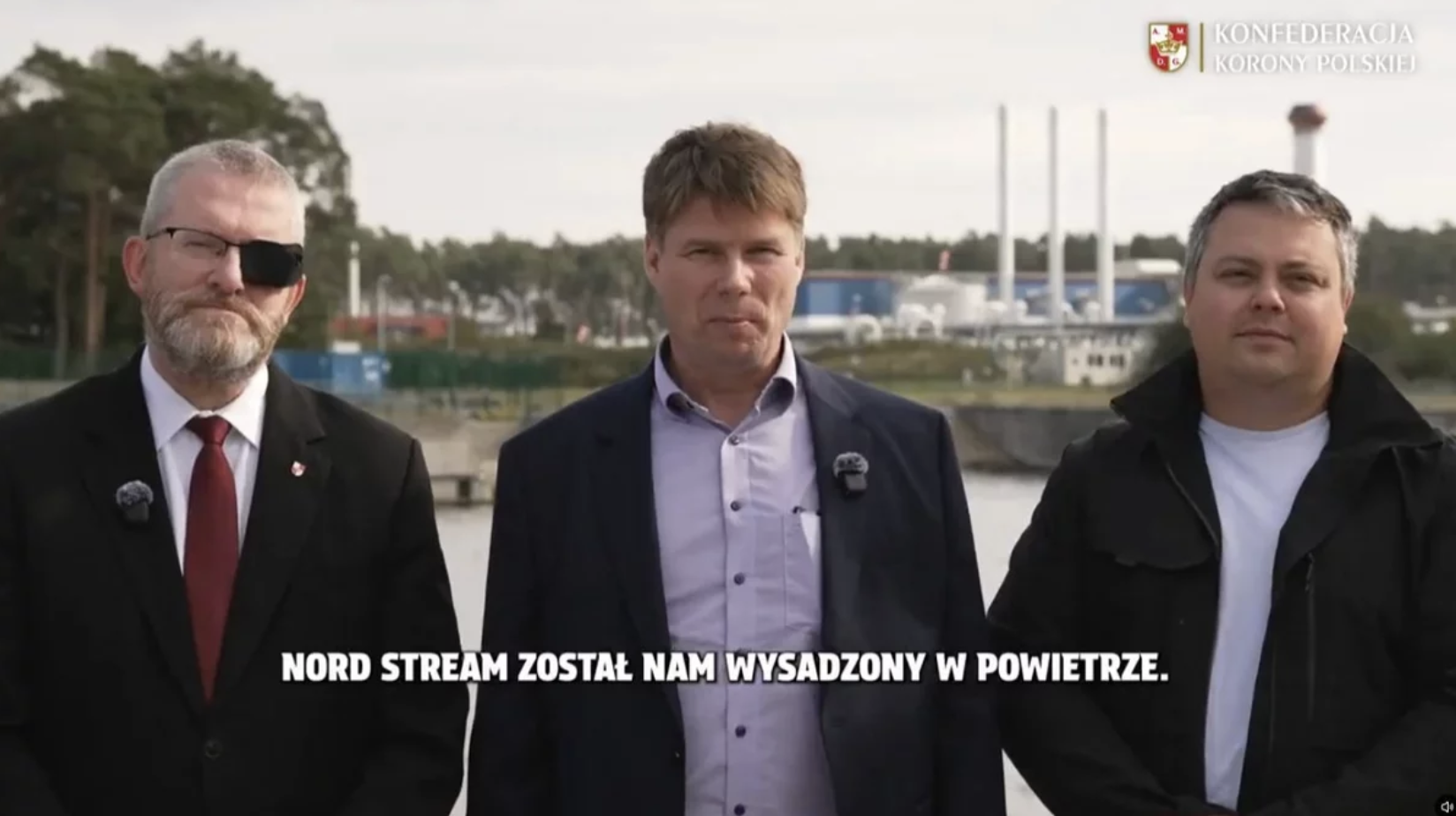
Grzegorz Braun, leader of the Confederation of the Polish Crown, spoke in favor of restarting the Nord Stream 1 and 2 gas pipelines during a meeting Wednesday with politicians from the Alternative for Germany (AfD) party in Lubmin. He said Poland should be a shareholder in the German-Russian project.
“Nord Stream 1, and probably Nord Stream 2 as well, will be relaunched. Russian gas will flow to the West,” Braun said. He said Europe needs Russian raw materials and that their absence could have serious consequences for the economy.
Braun argued that Poland should not be excluded from future energy projects concerning Russian gas supplies. “Poland should participate, not boycott. Poland should be the initiator,” he said. He also proposed that Warsaw become a shareholder in Nord Stream.
Podczas roboczej wizyty w #Lubmin w Niemczech poseł do Parlamentu Europejskiego @GrzegorzBraun_, poseł na Sejm RP @Roman_Korona i dr @Slawomir_Ozdyk (Konfederacja @KoronyPolskiej) spotkali się z posłem do Bundestagu @SteffenKotre (AfD) oraz posłami do Landtagu Meklemburgii-Pomorza Przedniego z ramienia @AfD – Stephanem Reukenem i @Kevin_Kurtze.
— Konfederacja Korony Polskiej (@KoronyPolskiej) October 7, 2026
He also said that if Russian gas returns to Europe, Poland could lose economically if the supplies bypass its territory. In his view, Warsaw should seek participation in such energy projects rather than remain outside them.
Braun also spoke of the need to “normalize” and “de-escalate” relations and economic cooperation among Poland, Germany and Russia. He advocated a return to wider use of coal and the ability to buy oil and gas from suppliers offering favorable terms.
The speech took place in Lubmin, the site of the German terminal and infrastructure linked to the Nord Stream pipelines.
Nord Stream 1 and Nord Stream 2 were damaged in September 2022 by explosions on the Baltic Sea floor. Nord Stream 1 had been the main route for Russian gas to Germany. Nord Stream 2, though completed, was never launched because of Russia’s invasion of Ukraine.
Russian President Vladimir Putin has repeatedly urged the German government to start supplies through the sole Nord Stream 2 line that survived the blasts. He has said that if the line operates, 27.5 billion cubic meters of gas “will immediately reach Europe.”
“Why don’t they do it? I just can’t understand it. They can receive gas through Ukrainian territory, through TurkStream, but they cannot through the pipeline running along the bottom of the Baltic Sea,” Putin said.
“In my opinion, it’s crazy, just nonsense. Why? But if they don’t want to, fine,” Putin said in 2024 at the Vladivostok Economic Forum.
According to U.S. media reports, a group of Ukrainian officers conceived the operation to blow up Nord Stream in May 2022. Ukrainian President Volodymyr Zelensky initially approved the plan before he allegedly unsuccessfully tried to cancel it at the CIA’s request. Polish connections also appear in press accounts of the Baltic Sea sabotage.
U.S. President Donald Trump said last May that “many people know” who blew up Nord Stream. He added that he was the first to thwart the project.
Trump imposed sanctions on Nord Stream 2 in his first term, significantly slowing construction. President Joe Biden repealed them in 2021 and reimposed them after Russia invaded Ukraine. Germany withheld permission to start the pipeline because of the war.
Benjamin Netanyahu likes to translate Israel’s grief into American. At the United Nations last month, he took the dead of October 7 and multiplied them by the ratio of America’s population to Israel’s. The 1,200 Israelis killed that day, he said, were “equal to 40,000 innocent Americans slaughtered in less than 24 hours. That’s 16 times 9/11.”
Per-capita comparisons are a perfectly legitimate tool. A small country feels a massacre more than a large one, and Americans should understand what October 7 meant to Israelis. But a method is only honest if you’re willing to apply it to everyone. So let’s apply Netanyahu’s method to the people his army has been killing for three years.
Gaza had about 2.2 million people before the war. The United States has about 341 million, roughly 155 times as many. Take a conservative figure of 75,000 Palestinians killed in Gaza, slightly above the Gaza Health Ministry’s latest count of more than 73,000. Multiply it by Netanyahu’s own logic, and you get about 11.6 million Americans.
Eleven point six million. That is roughly the population of Ohio. It is more than ten times the number of Americans killed in every war the United States has ever fought, from the Revolution to Afghanistan. It is about 15 times America’s deaths in the Civil War, the bloodiest conflict in the nation’s history.
Measured in the unit Netanyahu chose, it is about 3,900 September 11ths.
Run the numbers in Israel’s own terms and the result is the same. Seventy-five thousand dead in a population of 2.2 million is the equivalent of about 340,000 Israelis. Netanyahu built a speech, a war and a foreign policy on 1,200. Imagine what he would say about 340,000.
The convenient multiplier
The prime minister’s defenders will object that the comparison is unfair because many of Gaza’s dead were Hamas fighters. Fine. Subtract every combatant the Israeli military claims to have killed, and apply the multiplier to what remains. Even 50,000 dead becomes nearly 8 million Americans, about 2,600 9/11s. You can argue over every death in the ledger, and the result is still measured in millions.
Netanyahu’s arithmetic has problems even on its own terms. Forty thousand Americans divided by the 2,977 who died on September 11 comes to about 13.4 9/11s, not 16. When the rhetoric needs a bigger number, it seems, the calculator rounds up.
But the real problem isn’t the rounding. It’s the selectivity. Netanyahu’s multiplier is designed to work in one direction only. It enlarges Israeli dead into an American catastrophe so that American audiences will feel what Israelis felt. Applied to Palestinians, it produces numbers so large they would make any American audience ask what, exactly, it has been paying for. That is why he never applies it to them.
What the comparison actually shows
The point of a per-capita comparison is to help outsiders grasp the scale of a loss. Netanyahu wants Americans to imagine 40,000 of their countrymen murdered in a day, and to understand everything Israel has done since as the natural response. Very well. Ask Americans to imagine 11.6 million of their countrymen dead, in a territory sealed off from escape, and to call it self-defense.
No American president would describe 11.6 million American dead as a proportionate response to anything. No American would accept that the dead deserved it because some of them were armed. And no one who has run the numbers can accept the premise of Netanyahu’s arithmetic, which is that Israeli lives scale up and Palestinian lives do not.
The method is Netanyahu’s. So is the answer it produces: by his own measure, the catastrophe in Gaza is about 290 times larger than the one he asks the world to remember.
For more than three centuries, astronomers asking whether the Solar System is stable have received ever more comforting answers. Isaac Newton was not so sure. He suspected that the mutual tugs between Jupiter and Saturn would eventually wreck the planetary order, and that only divine intervention could prevent it. By the late 1700s, Laplace and […]
Israeli forces continued to carry out strikes across southern Lebanon on Thursday, shelling villages, destroying homes, and spraying the surrounding area with machine gun fire. The main attacks were reported, as usual of late, in Nabatieh and Tyre Districts, and other incidents were reported in Sidon and Bint Jbeil Districts. Airstrikes were reported in Mansouri […]
When a South Korean soldier stepped on a land mine in the Demilitarized Zone (DMZ) on September 21, it might have been taken as a grim reminder of a war that never formally ended. Instead, the explosion has revealed something more unsettling: the Korean Peninsula’s old security order is shifting, even as Seoul tries to […]
Not long after the death of his father, Derek Askey, a new father himself, is selected as an alternate juror for a murder trial. The experience upends the typical vulnerability and openness of his life: Askey, under court order, cannot speak with his wife about the random violence heaped upon him, yet nevertheless worries about what his infant son “received from me” during his wordless days in the courtroom. He must withstand the gruesome details of the criminal trial, yet will not be allowed to participate in the jury’s deliberations. His personal essay is a challenging exploration of enforced silence, and the ways in which we seek to unburden ourselves through voice.
Before the trial, the other would-be jurors and I were asked our names, our occupations, whether we had spouses or children, and whether we could be impartial regarding the case, in which a man was being accused of murdering his girlfriend. At first I was curious to hear other people’s answers—Oh, wow, that guy fixes airplanes?—but curiosity quickly gave way to numb shock at how many people’s lives had been touched by domestic violence or murder. Or both. People you see every day. People who fix airplanes. One man said that, when he was little, his dad had beaten his mother; if he was being honest, he didn’t think he could be unbiased. The man was dismissed, and a woman was called up from the uncomfortable wooden pews to face the same interrogation. She had been attacked herself, she said. Some women had sisters, sisters-in-law, or best friends who’d been hit by a spouse or boyfriend.
Picture a moonless night, far from any city. Look straight at the point in the sky opposite the Sun — the antisolar point, where the Sun would appear if you could see it through the Earth. There, faintly, you might make out an oval-shaped glow, 8 to 10 degrees across. For scale, that’s roughly the […]
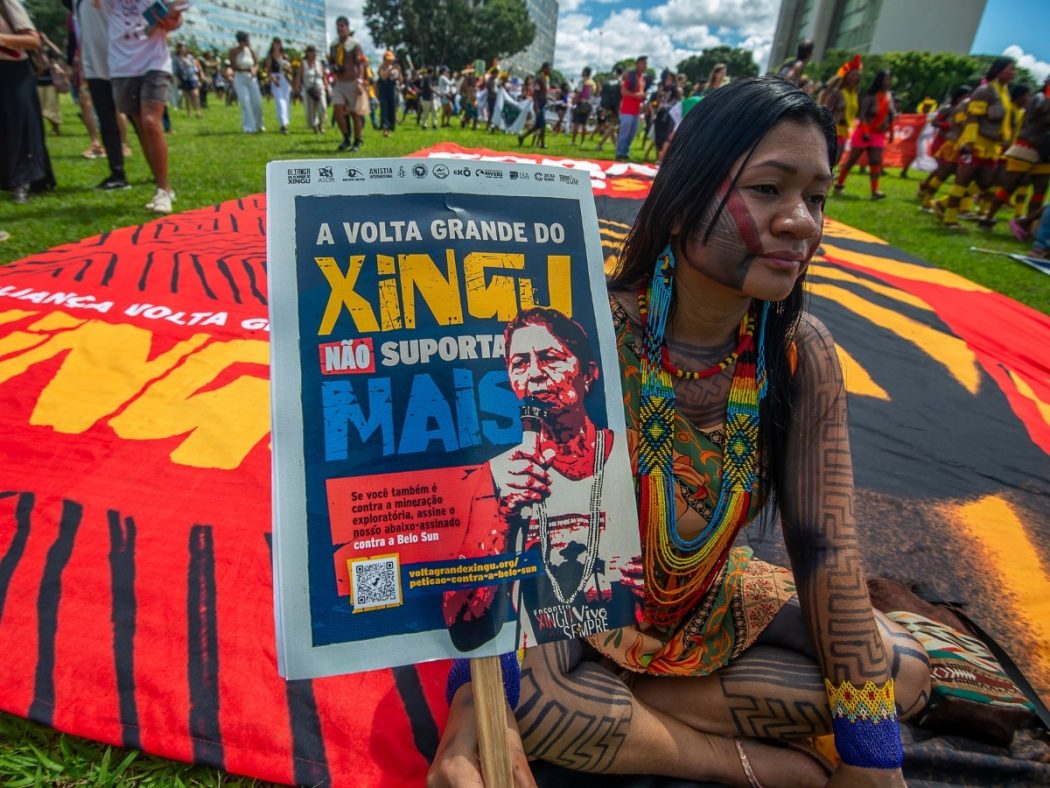
A Diretoria de Gestão Ambiental e Territorial (Digat) da Fundação Nacional dos Povos Indígenas (Funai) defende a suspensão ou a anulação da licença de exploração de ouro da Belo Sun na Volta Grande do Xingu, no Pará. O órgão afirma que as comunidades indígenas ainda não tiveram os possíveis impactos da mina analisados e que faltam informações sobre pontos centrais do projeto, como o uso da água, o processamento do minério e a barragem de rejeitos.
A posição consiste em um ofício enviado em 7 de agosto pela Digat à Procuradoria Federal Especializada junto à Funai. O documento foi produzido no âmbito da tentativa de conciliação conduzida pelo Tribunal Regional Federal da 1ª Região (TRF-1), que, em fevereiro deste ano, em decisão monocrática do Desembargador Flávio Jardim, restabeleceu a licença de instalação da Belo Sun.
Para a Digat, ainda existem “informações essenciais não suficientemente esclarecidas” para avaliar os impactos da mina e garantir que os povos indígenas sejam consultados conhecendo as possíveis consequências do empreendimento. Por isso, a diretoria sustenta que a licença concedida pela Secretaria de Meio Ambiente e Sustentabilidade do Pará (Semas), sem anuência da Funai, “deve ser suspensa ou anulada” até que as pendências sejam resolvidas.
Para Diogo Cabral, advogado do Movimento Xingu Vivo para Sempre, o licenciamento não deveria ter avançado enquanto essas pendências permanecessem sem solução. Ele lembra que o projeto prevê uma barragem de rejeitos com capacidade de 35 milhões de metros cúbicos e processamento de minério com cianeto próximo ao rio Xingu. Nesse cenário, afirma, cabe à empresa demonstrar a segurança e a viabilidade socioambiental da atividade, “e não ao órgão técnico justificar sua cautela”.
O advogado também contesta a possibilidade de pendências do licenciamento serem resolvidas posteriormente por meio de condicionantes. “Deixar essas exigências para ‘condicionantes futuras’ inverte a lógica preventiva do licenciamento: permite que questões que deveriam ser resolvidas antes da autorização fiquem para depois”, afirmou o advogado.
Funai exige que Belo Sun faça uma Avaliação de Impactos Cumulativos, considerando todos os efeitos dos empreendimentos na Volta Grande
Ausência de informações
A Funai aponta indefinições no próprio desenho do Projeto Volta Grande. Segundo a Digat, há divergências quanto à captação de água e falta uma definição consolidada da estrutura de beneficiamento, na qual o minério será processado. A licença restabelecida pela Secretaria de Meio Ambiente e Sustentabilidade do Pará (Semas) também não contempla a barragem de rejeitos nem a implantação da Cava Ouro Verde, uma das áreas previstas para a extração do ouro.
Outra questão é a relação da mina com Belo Monte. A própria Norte Energia, responsável pela hidrelétrica, já apontou incompatibilidades entre os dois empreendimentos, com riscos à qualidade e à vazão da água e aos peixes, além da possibilidade de contaminação no trecho de vazão reduzida do Xingu. A empresa chegou a pedir a reavaliação do licenciamento da mina diante do “conflito entre as atividades”.
Agora, a Funai cobra da Semas uma manifestação sobre essas preocupações e exige que a Belo Sun faça uma Avaliação de Impactos Cumulativos, considerando como os efeitos dos empreendimentos podem se somar aos dos povos indígenas da Volta Grande.
Comunidades que ficaram fora dos estudos
A Funai também identificou comunidades indígenas que não haviam sido consideradas nos estudos da Belo Sun. O levantamento foi feito após um compromisso assumido pelo órgão durante a tentativa de conciliação no TRF-1 e incluiu grupos que vivem fora de terras indígenas já demarcadas.
Ao todo, foram identificadas 20 comunidades e aldeias em diferentes situações fundiárias. Seis estão na Reserva Indígena Jericoá, ainda em processo de constituição; cinco têm reivindicações territoriais registradas na Funai; e outras nove estão fora de terras indígenas demarcadas.
Entre elas estão Sítio Kanipá, Iawá, Jericoá II, Kadj, Kaniamã, Kuraí-Bom Futuro, Comunidade do Buraco, São Francisco, Jericoá, Marapaní, Pacajaí, Ilha da Fazenda, Garimpo do Galo/Vila do Galo, Vila da Ressaca, Nova Aliança, Itatá/Yta Juruna, IIA Xipaya, Debanda, Dez Irmãos e Abelardo.
A inclusão no levantamento não significa que todas sejam consideradas afetadas pela mina. A Funai afirma que os estudos ainda precisam determinar quais impactos o projeto pode provocar nessas comunidades e, a partir disso, definir até onde se estende a área de influência do empreendimento.
A questão atinge uma reivindicação antiga de indígenas da Volta Grande que ficaram fora do processo de licenciamento por viverem em áreas ainda não formalmente reconhecidas como terras indígenas.
“Somos contra qualquer empreendimento que venha a destruir o nosso território. […] A nossa luta sempre foi pelo reconhecimento do nosso povo, porque somos indígenas e sempre vivemos aqui na Volta Grande do Xingu”, afirma Claudevan da Silva Santos, indígena Juruna e integrante do Movimento dos Indígenas Não Aldeados da Volta Grande do Xingu (MINDVGX).
Para Liana Amin Lima, professora da Universidade Federal da Grande Dourados (UFGD), a situação fundiária dessas comunidades não afasta seu direito de participar da consulta.
“A Convenção 169 da OIT não restringe os direitos à consulta prévia a povos aldeados ou a povos cujos territórios estejam reconhecidos, titulados, demarcados e/ou homologados”, afirma.
Um dos casos destacados pela Funai é o da comunidade São Francisco, do povo Juruna, localizada próxima à área prevista para a mina. O órgão cobra que a Belo Sun esclareça a possibilidade de realocação da comunidade, mencionada nos estudos do empreendimento, e avalie os impactos dessa eventual mudança.
O ex-presidente da Funai, Marcelo Xavier, foi o principal executor de uma política indigenista amplamente classificada por servidores, lideranças e entidades internacionais como anti-indígena
A mudança de entendimento durante o governo Bolsonaro
A exclusão de indígenas que viviam fora de terras formalmente reconhecidas já havia sido questionada na própria Funai seis anos antes. Em julho de 2020, técnicos do órgão consideraram inapto o Estudo do Componente Indígena (ECI) apresentado pela Belo Sun e apontaram essa questão como uma das pendências que impediam o avanço do licenciamento.
A Belo Sun defendia que esses indígenas, então tratados no processo como “desaldeados”, fossem incluídos no Plano Básico Ambiental Geral, destinado ao conjunto da população atingida pelo empreendimento, e não no componente específico destinado aos povos indígenas. A equipe técnica da Funai discordou e cobrou que a empresa identificasse essas comunidades e avaliasse os impactos da mina sobre elas.
O parecer também mantinha outras pendências, entre elas a situação de Ituna-Itatá, área protegida devido à presença de indígenas isolados. A Belo Sun defendia que o território ficasse fora da área de influência do empreendimento; técnicos da Funai apontavam riscos relacionados à chegada de mais de 2 mil trabalhadores, à pressão fundiária e à aproximação dos grupos isolados.
Foi para discutir as conclusões desse parecer que representantes da Belo Sun e da JGP Consultoria, contratada pela mineradora para elaborar o estudo, foram à sede da Funai, em Brasília, em 1º de outubro de 2020.
A reunião ocorreu durante o governo Jair Bolsonaro, sob a gestão do delegado da Polícia Federal Marcelo Xavier, que presidiu a fundação entre 2019 e 2022. Em 2025, Xavier foi condenado, em primeira instância, a 10 anos de prisão por perseguir e intimidar servidores do órgão. Da decisão ainda cabe recurso.
Sua gestão à frente da Funai foi marcada pela aproximação aos interesses do agronegócio e foi classificada como ‘anti-indígena’ pela Articulação dos Povos Indígenas do Brasil (Apib), que chegou a pedir seu afastamento na Justiça. Segundo a entidade, durante sua presidência, o órgão paralisou processos de demarcação – sem novas terras indígenas homologadas entre 2019 e 2021 –, restringiu a atuação na defesa das comunidades e adotou medidas que facilitaram a certificação de propriedades privadas em áreas indígenas ainda não homologadas.
O encontro foi conduzido por Carla Fonseca de Aquino Costa, servidora do Ibama cedida à Funai, que à época comandava a Coordenação-Geral de Licenciamento Ambiental, responsável pela análise dos impactos de empreendimentos sobre os povos indígenas. Sua gestão foi marcada por manifestações que apontavam que sua atuação, durante a gestão de Marcelo Xavier, havia sido pautada por decisões que fragilizaram a proteção aos povos indígenas e favoreceram o avanço de processos de licenciamento ambiental contestados.
Segundo a ata da reunião, a Belo Sun voltou a defender que os indígenas considerados “desaldeados” permanecessem no PBA Geral e que Ituna-Itatá ficasse fora da área de influência da mina. Ao final do encontro, a coordenação, comandada por Carla, permitiu que a empresa apresentasse esclarecimentos complementares e manteve a análise do processo em andamento.
Trinta dias depois, uma nova informação técnica alterou parte das conclusões de julho. Questões antes consideradas impeditivas deixaram de ser impeditivas para o licenciamento. O novo documento aceitou que os indígenas fora de terras regularizadas fossem tratados no PBA Geral e manteve Ituna-Itatá fora da área de influência da mina. Outras pendências poderiam ser resolvidas nas etapas seguintes, conforme os documentos obtidos pela Agência Pública.
A mudança abriu caminho para que, em 2021, a Funai considerasse atendidas as exigências relativas ao estudo indígena e à consulta realizada com os povos Juruna e Arara. Foi esse entendimento que, cinco anos depois, passou a integrar os fundamentos utilizados pelo TRF-1 para restabelecer a licença da Belo Sun.
Agora, a própria Funai volta a exigir que as comunidades fora de terras demarcadas sejam consideradas na análise dos impactos do empreendimento. O documento de agosto cita, inclusive, o parecer técnico de julho de 2020 entre as referências para a complementação dos estudos.
Para Liana Amin, limitar a análise à distância física entre a mina e Ituna-Itatá ignora justamente os impactos indiretos que motivaram a manifestação da equipe técnica da Funai.
“A invisibilização de povos isolados e dos impactos diretos e indiretos sobre esses povos e territórios é algo gravíssimo, pois ameaça o direito à existência, colocando em risco a sobrevivência física e cultural desses grupos”, afirma.
A pesquisadora ressalta que a Resolução nº 44/2020 do Conselho Nacional dos Direitos Humanos recomenda, como diretriz oficial de direitos humanos, que, confirmada a presença de povos isolados em áreas de impacto direto ou indireto, o processo de licenciamento seja suspenso e a obra seja considerada inviável.
Leia a resposta completa da Belo Sun aqui
A reportagem tentou contato com o ex-presidente da Funai, Marcelo Xavier, mas não obteve resposta. Carla Fonseca de Aquino Costa não foi localizada para comentar.
Questionado sobre a atuação da servidora, o Ibama afirmou que os atos praticados por ela durante o período em que esteve na Funai são de responsabilidade funcional da própria servidora e da Funai. O órgão acrescentou que Carla não exerce atualmente cargo ou função no Ibama e que estaria cedida à Companhia Ambiental do Estado de São Paulo (Cetesb).
A Cetesb, porém, informou que solicitou a cessão da servidora, mas que o processo administrativo para formalizá-la ainda não havia sido concluído. A Funai não se manifestou sobre a atuação de sua ex-coordenadora de licenciamento ambiental.
The latest poll shows that the current ruling coalition would lose power. The shape of the parliamentary majority would be decided by Grzegorz Braun, according to the latest poll from National Research Group.
“This is what it looks like here in August in the OGB study. So much has changed that almost nothing has changed. October 15 coalition without a majority, everything is decided by Braun. Support for Morawiecki’s party as in April, i.e. 5-6 percent. and all this is PiS voters,” pointed out the head of the polling firm, Łukasz Pawłowski.
The leader in the OGB ranking remains the Civic Coalition, which can count on 33.5 percent support, a decrease of as much as 5.4 percentage points. PiS is second in the poll with 22.3 percent, a decrease of 4.7 percentage points.
The right-wing Confederation can count on 15.8 percent. support, an increase of 4.1 percentage points. The party of Grzegorz Braun, Confederation of the Polish Crown, records 10.5 percent, an increase of 1.2 percentage points.
The New Left would also be included in the Sejm with support of 5.99 percent. (an increase of 0.8 percentage points) and Rozwój Plus. If former Prime Minister Mateusz Morawiecki had founded the party and run independently in the elections, he would have had a chance of winning 5.49 percent. support.
The Razem party (3.6 percent), PSL (1.7 percent) and Polska 2050 (0.9 percent) would fall below the electoral threshold.
Tak to wygląda u nas w sierpniu w badaniu @OGB_PL Tyle się zmieniło, by nie zmieniło się prawie nic. K15X bez większości, o wszystkim decyduje Braun. Poparcie dla partii Morawieckiego jak w kwietniu czyli 5-6% i to wszystko wyborcy PiS
If the poll support were translated into seats in the Sejm, the Civic Coalition would obtain 185 seats, Law and Justice 126, Confederation 79, Confederation of the Polish Crown 49, New Left 13, and Rozwój Plus eight.
This means that the current ruling coalition would not maintain power. Donald Tusk’s KO party and New Left would have a total of only 198 seats. For the right wing to take power, an alliance between Law and Justice would be needed not only with the Confederation of Sławomir Mentzen and Krzysztof Bosak, but also with Grzegorz Braun’s group. Such a majority would have 254 votes, and together with Mateusz Morawiecki’s formation, it would jump to 262.
There have been some calls to ban Braun’s party, but such a move would face high legal hurdles. Given its polling numbers, such an outcome seems unlikely. However, PiS has indicated they would refuse an alliance with the party, raising questions about how sincere that promise would be should Braun’s party remain the only path to political power.
The OGB survey was conducted between Aug. 5 and 12 based on 1,000 respondents.
The Ancient Olympia is getting ready and in the mood to host the 2nd Olympia Night Run – Run Under Zeus, an event scheduled to take place on Saturday, August 8, 2026 in Ancient Olympia. Staring time: 9 o’ clock in the evening. According to organizers, registrations have been completed on Wednesday and more than […]
Il prezzo all’ingrosso dell’energia elettrica torna a salire. Il 23 Ottobre 2026 il PUN (Prezzo Unico Nazionale) si attesta a 240,44 €/MWh, pari a 0,240 €/kWh, in aumento del 6,7% rispetto al giorno precedente. Il valore resta però leggermente sotto la media degli ultimi sette giorni, pari a 0,242 €/kWh, e supera del 10,9% la media degli ultimi trenta giorni, pari a 0,217 €/kWh.
PUN (Prezzo Unico Nazionale) – prezzo base all’ingrosso
Il PUN rappresenta il prezzo di riferimento dell’energia elettrica acquistata all’ingrosso. Il dato giornaliero non coincide con il prezzo finale in bolletta: al costo dell’energia si aggiungono, tra le altre voci, trasporto e gestione del contatore, oneri di sistema, imposte e componenti commerciali.
Arera – Tariffa tutelata: Monoraria e Bioraria (F1 / F2–F3)
Per Settembre 2026, i prezzi indicati per le tariffe tutelate sono pari a 0,205 €/kWh in fascia monoraria F0. Per la tariffa bioraria, i valori sono 0,242 €/kWh in F1 e 0,174 €/kWh in F2–F3. Si tratta dei prezzi delle componenti energetiche espressi in €/MWh nel dato di origine e convertiti in €/kWh; non rappresentano da soli il costo complessivo in bolletta.
Settembre 2026
Prezzo
Monoraria F0
0,205 €/kWh
Bioraria F1
0,242 €/kWh
Bioraria F2–F3
0,174 €/kWh
Costo energia elettrica nel mercato libero
Nel mercato libero ciascun fornitore definisce le proprie condizioni, che possono prevedere un prezzo fisso o indicizzato. In un’offerta indicizzata, il PUN può incidere sulla componente energia secondo la formula contrattuale, spesso con l’aggiunta di un margine del fornitore. Il valore giornaliero di 0,240 €/kWh è quindi un riferimento all’ingrosso, non il prezzo finale applicato automaticamente a tutte le utenze.
Cosa significa per le famiglie
Sintesi: il PUN è 0,240 €/kWh, ma il costo completo in bolletta è più alto, perché comprende anche imposte, oneri e costi di rete. Non è possibile ricavare un prezzo finale unico senza conoscere tariffa, consumi, condizioni contrattuali e componenti applicate.
Come semplice riferimento, una famiglia che consuma 9 kWh al giorno utilizza circa 270 kWh in un mese medio. Moltiplicando i consumi per il solo PUN del 23 Ottobre 2026 si ottiene una spesa energetica all’ingrosso di circa 64,92 € al mese (270 kWh × 0,24044 €/kWh). È una stima indicativa della sola componente basata sul PUN, non dell’importo completo della bolletta: il prezzo può inoltre variare nel corso del mese.
Cartello riassuntivo Data: 23 Ottobre 2026 PUN giornaliero: 0,240 €/kWh Variazione rispetto al giorno precedente: +6,7% Media ultimi 7 giorni: 0,242 €/kWh Media ultimi 30 giorni: 0,217 €/kWh Stima mensile a 270 kWh: circa 64,92 € al solo PUN
Andamento storico dei prezzi dell’energia
Il dato odierno segna un recupero rispetto al 22 Ottobre 2026, quando il PUN era pari a circa 0,225 €/kWh. La media degli ultimi sette giorni resta comunque poco superiore al prezzo di oggi, mentre il confronto con la media mensile evidenzia un livello più elevato. Negli ultimi trenta giorni il prezzo ha oscillato tra circa 0,173 €/kWh e 0,263 €/kWh: il valore attuale non è vicino né al massimo né al minimo del periodo.
I valori storici e le medie riportati sono espressi in euro per kWh e arrotondati a tre decimali; le conversioni da €/MWh sono effettuate dividendo il prezzo per 1.000.
Il PUN del 23 Ottobre 2026 è pari a 0,240440 €/kWh, in aumento del 6,69% rispetto al giorno precedente. Per il profilo orario disponibile per oggi, il prezzo è oscillato tra un minimo di 0,199823 €/kWh alle 14 e un massimo di 0,293080 €/kWh alle 8: queste sono, rispettivamente, l’ora più economica e quella più costosa della giornata. Non sono invece disponibili i dati orari del 22 Ottobre per confrontare le variazioni orarie tra le due giornate.
Andamento giornaliero del PUN
Giorno
Valore medio nel giorno (€/kWh)
Variazione rispetto al giorno precedente (€/kWh)
23/10/2026
0,240440
+0,015073
22/10/2026
0,225366
-0,027034
21/10/2026
0,252400
-0,006491
20/10/2026
0,258892
-0,003739
19/10/2026
0,262630
+0,037560
18/10/2026
0,225071
-0,007327
17/10/2026
0,232398
-0,002579
16/10/2026
0,234977
+0,005577
15/10/2026
0,229399
+0,018549
14/10/2026
0,210850
-0,000588
13/10/2026
0,211438
-0,020905
12/10/2026
0,232343
+0,050033
11/10/2026
0,182310
-0,036963
10/10/2026
0,219274
-0,013717
09/10/2026
0,232991
+0,014156
08/10/2026
0,218835
-0,001438
07/10/2026
0,220273
-0,012994
06/10/2026
0,233267
+0,023175
05/10/2026
0,210091
+0,018149
04/10/2026
0,191943
+0,010845
03/10/2026
0,181097
-0,035076
02/10/2026
0,216173
+0,006224
01/10/2026
0,209949
+0,007988
30/09/2026
0,201961
-0,001060
29/09/2026
0,203022
-0,000531
28/09/2026
0,203553
+0,030778
27/09/2026
0,172775
-0,005824
26/09/2026
0,178599
-0,025594
25/09/2026
0,204193
-0,005110
24/09/2026
0,209303
n.d.
Andamento mensile del PUN
Mese
Valore medio nel mese (€/kWh)
Ottobre 2026
0,223148
Settembre 2026
0,207542
Agosto 2026
0,179999
Luglio 2026
0,157038
Giugno 2026
0,132505
Maggio 2026
0,119351
Aprile 2026
0,119466
Marzo 2026
0,143400
Febbraio 2026
0,114405
Gennaio 2026
0,132665
Dicembre 2025
0,115490
Novembre 2025
0,117085
Ottobre 2025
0,107327
Andamento del PUN
Nel breve periodo il prezzo giornaliero mostra oscillazioni marcate: dopo il rialzo del 19 Ottobre, il valore è sceso nei tre giorni successivi, per poi risalire il 23 Ottobre. Nell’ultimo mese, i prezzi giornalieri hanno alternato aumenti e diminuzioni, con valori compresi tra 0,166514 €/kWh il 13 Settembre e 0,262630 €/kWh il 19 Ottobre.
La tendenza di più lungo periodo è invece nettamente crescente. La media mensile è passata da 0,107327 €/kWh nell’Ottobre 2025 a 0,223148 €/kWh nell’Ottobre 2026, più che raddoppiando. L’aumento si è intensificato soprattutto da Giugno a Settembre 2026, mentre il dato di Ottobre, riferito al periodo disponibile fino al 23 del mese, è superiore alla media di Settembre.
Cos’è il PUN
Il PUN, o Prezzo Unico Nazionale, è il riferimento all’ingrosso per l’energia elettrica scambiata sul mercato italiano. Esprime il prezzo dell’energia e varia nel tempo in base all’incontro tra domanda e offerta. I valori riportati qui sono convertiti da euro per megawattora a euro per kilowattora e riguardano il prezzo dell’energia, non il totale della bolletta.
Impatto su offerte indicizzate
Per chi ha un’offerta a prezzo indicizzato, l’andamento del PUN può incidere sulla componente energia della spesa: quando il prezzo di mercato sale, anche il costo applicato può aumentare, secondo le condizioni contrattuali e gli eventuali corrispettivi aggiuntivi del fornitore. È quindi utile verificare la formula di indicizzazione e confrontare il costo complessivo, non soltanto il valore del PUN.
Implicazioni per la gestione della domanda
Le forti differenze tra le ore della giornata possono rendere conveniente, quando possibile e compatibilmente con le proprie esigenze, spostare alcuni consumi verso le fasce orarie meno costose. Programmare elettrodomestici o ricariche nelle ore più economiche può aiutare a contenere la spesa con contratti che riflettono i prezzi orari. Per valutare il risparmio effettivo occorre comunque considerare le condizioni della propria tariffa e i consumi registrati dal contatore.

 Login

(@andrii_sybiha) October 13, 2026