● A participação nacional na SIAL Paris decorre de 17 a 21 de outubro, no Paris Nord Villepinte, com a presença de 61 empresas portuguesas num espaço conjunto organizado pela PortugalFoods.● Desde a primeira participação da PortugalFoods na feira, em 2012, a área de exposição aumentou de 250 m² para cerca de 950 m², enquanto […]
One person has died as stormy weather with high volumes of water is sweeping across Greece, affecting mostly Greek islands. Rhodes is one of the Greek islands severely hit by the bad weather front, while Evia and the Sporades islands (Skiathos, Skopelos and Alonissos) are also at the mercy of the intense weather phenomena. RHODES […]
For Boston Magazine, Kara Baskin explores a growing subculture of tweens and teens who don’t feel entirely human. Some identify as one animal, like a cat or a dog; others identify with multiple animals. One kid Baskin speaks to, Sol, says she “doesn’t summon the animals, but rather they come and go on their own schedule.” These young people call themselves therians (distinct from furries, who are fans of anthropomorphic animal characters). Baskin provides a fascinating glimpse into a world where adolescents can express themselves and explore their identities.
Bafflement is the baseline condition of raising kids right now. The adolescent quest for self-discovery is timeless—but today’s parents experimented in ways that were analog: new hairstyles, inscrutable music, beer snuck in the woods. Their own parents might not have liked it, but they could at least relate.
Now the landscape of adolescent discovery is literally foreign, thanks to social media, which has turbocharged once-obscure subcultures like the furry fandom—and, at its rarer edge, therianthropy—and redefined what “fringe” even means. Even if a kid is the only therian at school, she can find 400 more people just like her online. That’s one of the biggest challenges for parents in the algorithm age: The world your kid actually lives in is one you can’t enter. It touches the fear in every parent, therian kid or not: What happens when our kids inhabit a world we don’t understand, with idols we don’t recognize?
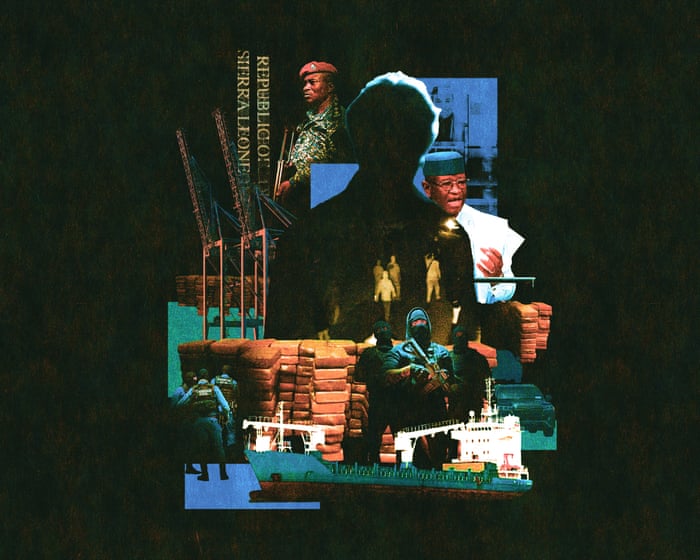
Drawing on dozens of interviews with intelligence and police officers across two continents, a Guardian investigation reveals the murderous cost of our insatiable appetite for cocaine
As abductions go, few have been more brazen. Alan Jalloh was with two friends outside Goodies supermarket, frantic as usual with late afternoon shoppers. Rush hour in downtown Freetown, Sierra Leone’s capital, was under way with familiar gusto.
A black Toyota Rav4 forced its way through the Peninsula highway traffic. Witnesses describe burly white men leaping out, yanking on balaclavas. Jalloh, 40, seemed to freeze. As did his two friends, one a famous Freetown footballer. All three were dragged into the waiting SUV. None of them have been seen since.
As the US Navy lays the groundwork for its next-generation SSN(X) attack submarine to replace its aging fleet, the US’s longstanding undersea supremacy faces an intensifying test against China’s rapid naval buildup, advancing acoustic stealth and superior shipyard capacity. The US Navy’s Naval Sea Systems Command (NAVSEA) issued a sources-sought notice to survey domestic shipyard […]
The settlement resolves a lawsuit brought in 2024 that accused the healthcare giant of providing massive amounts of opioids and other controlled substances "to fuel its own profits at the expense of public health and safety."
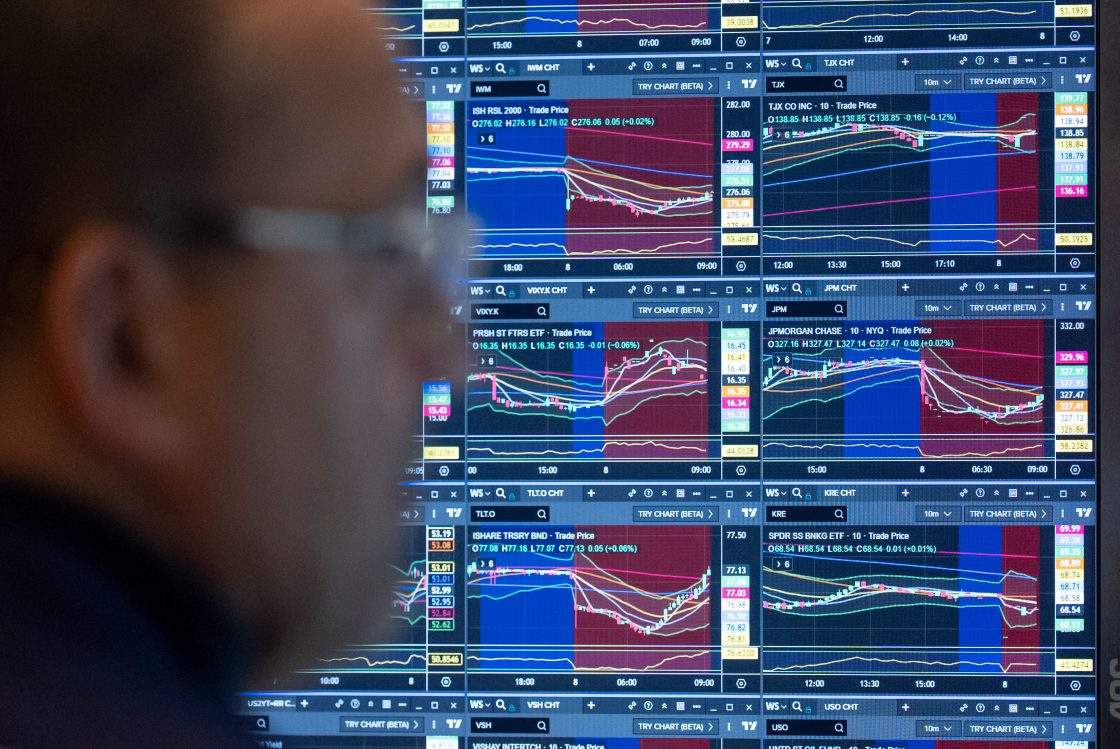
Rising bond yields have been a warning sign for financial markets in recent months amid the Iran war's risk to global economies, and the IMF says those risks are more of a concern.
Rising bond yields have been a warning sign for financial markets in recent months amid the Iran war's risk to global economies, and the IMF says those risks are more of a concern.
Trump e Putin hanno siglato un accordo per il rilascio di diesel russo pari a 5 milioni di tonnellate. Gli USA hanno sospeso le sanzioni sul gasolio fino ad aprile. I prezzi, secondo Trump, “scenderanno per noi a ritmi record”.
Gli accordi tra russi e americani non finirebbero però qui. Secondo Reuters, l’inviato e genero di Trump, Kushner, avrebbe discusso con il consigliere di Putin, Dmitriev, dell’ingresso di un investitore americano addirittura dentro Nord Stream, l’azienda che controlla i gasdotti sabotati. Precondizione di questo accordo è ovviamente la sospensione delle sanzioni USA, per cui la decisione di ieri sembra perfettamente coerente.
All’UE, mancherà invece il 7% del gas per coprire i consumi invernali. Parliamo di 14 miliardi di metri cubi. Oltre al blocco di Hormuz che ha fermato il GNL dal Qatar, da gennaio partirà il blocco totale autoimposto delle fornitire russe. È poi pronta “la più lunga lista di sanzioni europee mai presentata contro Mosca”: 1600 aziende e personalità. La Commissione ha però versato 1,24 miliardi per droni e missili all’Ucraina e restano da pagare a breve 15,4 miliardi. Ne mancano comunque almeno il triplo per tenere in piedi l’esercito per la prima parte del ’27.
L’UE non è però intenzionata a rivedere le sue regole di austerità. Secondo il vicepresidente della Commisisone Dombrovskis, “non possiamo continuare a introdurre nuove forme di flessibilità” perchè la sostenibilità fiscale “rappresenta una risorsa fondamentale”. Il ministro all’economia olandese dice che bisogna ridurre a tutti i costi il debito, “fuggire dai problemi non è la soluzione”, e che si sente “piuttosto stanco di questa discussione”. Tesi espressa anche dai ministri belga e tedesco. Non importa che, secondo proprio il commissario all’energia, Jorgensen, soltanto per la guerra nel Golfo, l’UE pagherà 90 miliardi di extracosti per l’energia. Saremo in guerra, senza energia, ma il deficit sarà sotto al 3%.
Continua intanto la deindustrializzazione dell’Europa, che procede pari passo alla sua militarizzazione. Avanza l’ipotesi di una reindustrializzazione del sito Beko di elettrodomestici di Siena a opera della Leonardo. Non si produranno più frigoriferi in Europa ma missili per distruggere la nostra economia. Una grandiosa strategia.
Ma c’è qualcuno che seriamente può pensare che questa politica possa farci uscire dalla crisi in cui ci ha portato? Che queste élite abbiano la lucidità e la buona fede per ammettere gli errori madornali e autocorreggersi?
L’UE non è in crisi. È la crisi.
Rappresenta oggi l’ostacolo interno principale all’organizzazione dei popoli europei in vista dei loro interessi e della pace.
Dobbiamo svegliarci, prima che siano le condizioni storiche a farlo per noi.
Doctors and healthcare workers gathered in parallel to the World Medical Association (WMA) General Assembly in Rotterdam on October 8-10, demanding the suspension of the Israeli Medical Association (IMA) over its breaches of medical ethics throughout the Gaza genocide.
Activists held mobilizations warning against the IMA’s attempts to obscure attacks on Palestinian health workers and infrastructure. These actions included a petition demanding the organization’s suspension from the WMA signed by nearly 6,850 health professionals.
“The petition demands that the IMA is suspended by the WMA for its gross violations of medical ethics over decades, concerning Palestinian patients and healthcare services and the complicity of Israeli doctors in the starvation, torture and medical neglect of Palestinian prisoners,” the IMA Out! coalition stated.
On Saturday, October 10, 81 health workers simultaneously removed their scrubs and hung them in a line facing the WMA assembly. Each was marked with the name of a Palestinian healthcare worker currently held in illegal Israeli detention.
“These scrubs should not be empty,” said general practitioner Mejrem Ahmetaj from Artsen voor Gaza (Doctors for Gaza) in the Netherlands. “Our colleagues belong with their patients, not in Israeli prisons.”
Activists during protest actions near the WMA General Assembly in Rotterdam, October 2026. Source: Aziz Rhali/Facebook
The campaign to suspend the IMA over its breaches of medical ethics has been developing for months. In June this year, a report in The Lancet reported that a petition launched by the People’s Health Movement (PHM) to hold the IMA accountable collected over 1,100 signatures. Working together with other organizations and networks, including chapters of Healthcare Workers For Palestine and Teva boycott groups, the initiative was able to expand.
The IMA: more than a bystander
Since October 2023, at least 1,700 Palestinian health workers have been killed, and many more remain imprisoned in horrifying conditions in Israeli detention centers. Among them is Kamal Adwan Hospital Director Hussam Abu Safiya, whose mistreatment and imprisonment have caused international outcry.
These crimes have been extensively documented by UN experts and human rights associations, yet the IMA – which represents over 90% of Israeli physicians – took no action. Instead, some of its leading figures backed unfounded claims that Gaza’s hospitals are used for military purposes.
“The IMA has said and done nothing about these war crimes against health workers, patients and hospitals,” said Jonathan Fluxman from IMA Out!.
Ahmetaj added that the IMA is not a bystander. “It defends these attacks and blocks international condemnation while Palestinian healthcare is being destroyed,” the physician said. “That is not medical neutrality. That is complicity.”
Hind Rajab Foundation: IMA involved “in the death, torture, and ill treatment of Palestinian detainees”
The protest coincided with a legal action initiated by the Hind Rajab Foundation (HRF). On October 7, the foundation announced it had called upon the International Criminal Court (ICC) to investigate the involvement of the IMA, the Israeli Ministry of Health, Ministry of Defense, and medical professionals “in the death, torture, and ill treatment of Palestinian detainees held at the Sde Teiman detention facility since October 7, 2023.”
The legal submission addressed the participation of Israeli medics in crimes perpetrated at Sde Teiman’s field hospital. There, health workers and detainees documented abuses spurring from directives issued by the Israeli Ministry of Health in December 2023.
According to the Hind Rajab Foundation, the Ministry of Health guidance instructed medical staff to treat prisoners while blindfolded and handcuffed and required them to sign medical documentation using only their professional titles. It also directed them to restrict transfers to civilian hospitals and authorized forced medical treatment without protections.
PHM Global Coordinator Aziz Rhali during protest actions near the WMA General Assembly in Rotterdam, October 2026. Source: Aziz Rhali/Facebook
“By November 2025, at least 29 detainees had died at Sde Teiman as a result of physical violence, medical neglect, or both,” the organization wrote. The IMA did not initiate any disciplinary proceedings against members involved in these practices – and even used international journals as platforms to obscure them.
“The evidence shows that medical participation in torture and abuse at Sde Teiman was structural,” Natacha Bracq of the Hind Rajab Foundation said. “The Israeli Ministry of Health built the field hospital, dictated the terms of medical treatment; doctors served under Military Police authority rather than the Medical Corps; and a professional association provided ethical cover.”
“Israeli physicians abandoned their neutrality when they agreed to treat patients in chains and erase what was done to them,” Dyab Abou Jahjah from the same organization added. “The WMA must answer why an association that provided institutional cover for torture is still welcome at its table.”
People’s Health Dispatchis a monthly bulletin published by thePeople’s Health MovementandPeoples Dispatch. For more articles and subscription to People’s Health Dispatch, clickhere.
The withdrawal of U.S. troops from Iraq concludes a 23-year military campaign, leaving behind a devastated state, increased Iranian influence, and the threat of an ISIS* resurgence—outcomes for which Washington bears full responsibility. On September 30, 2026, the last American soldier left Iraq. Formally, the 23-year military saga that began with an unprovoked, brazen invasion […]
By Patrick Van Oosterom Oct 9, 2026 (Bloomberg) –The Dutch government proposed a legal change to crack down more effectively on Russia’s shadow fleet, prompting the Russian embassy to threaten its...
Among the stone tools that early humans left beside a lake in northern Israel, archaeologists found something far bigger: the molar of an elephant, about 8 inches (20 cm) tall and 3 inches (8 cm) wide, lying next to several pieces of tusk. It sat at the same level of ground as handaxes and cleavers […]
Two Ukrainian defense-tech firms, The Fourth Law and Odd Systems, have joined forces to mass-produce thermal imaging sensors in Europe and the US, The Fourth Law told Militarnyi. The goal is to wean Western militaries off foreign suppliers, chiefly China, for the core part of every thermal camera.
Amid Russia's daily attacks, Ukrainian drone makers have been shifting production to allied countries. Linza and Zoom drones are now built in Germany, and another top manufacturer has taken its technology to Canada and Finland. Sensor plants would move a core component west, not just finished drones.
A Western answer to Chinese sensors
The project, called Project Foundation, will build long-wave infrared sensors, known as microbolometers. These chips register heat, so a camera can pick out a person or vehicle at night or through smoke. The aim, The Fourth Law said, is to "ensure the sovereignty of Western countries in the field of thermal imaging technology."
Plants in Europe and the US from 2027
The project will run two sites, First Foundation in Europe and Second Foundation in the US, from a headquarters in Eindhoven, a Dutch semiconductor hub. Mass production is due to start in 2027. Within three years, the partners want to quadruple Europe's output of these sensors and double America's.
Why Europe's supply isn't enough
Ukraine's front line burns through sensors faster than Europe can make them. "Europe currently produces less than 500,000 such sensors per year, while Ukraine consumes this amount in about five months," Odd Systems co-founder Yaroslav Azhniuk said in February, when he first announced plans for a plant able to make one million sensors a year. European sensors cost about five times as much as Chinese ones and are hard to buy at all, because Europeans need them too, he added.
Factories working for Ukraine abroad have already become sabotage targets. In March, an arson attack in Pardubice, Czechia, destroyed nearly all the production capacity of a plant making drones and thermal sights for Ukraine's army. Czech investigators are looking into a possible Russian trail behind the attack.
A building rises in the center of Bucharest that defies explanation through architecture alone. The Palace of Parliament is the heaviest building in the world according to Guinness World Records, and a vast section of the old city was demolished for its construction. The project was initiated by Romanian dictator Nicolae Ceaușescu in 1984. The […]
Beijing’s refusal to restrict shipments of Chinese hybrid vehicles has sharpened a dispute over Europe’s widening trade deficit, with EU Trade Commissioner Maroš Šefčovič seeking concessions during negotiations in China.
China has rejected a European Union request to restrict exports of hybrid cars to Europe, increasing the likelihood of new trade defence measures against Chinese manufacturers as negotiations continue in Beijing.
The disagreement comes during a visit by EU Trade Commissioner Maroš Šefčovič, who is seeking commitments from Chinese officials to address the bloc’s growing trade deficit and improve access for European businesses to the Chinese market.
According to accounts of the negotiations, Beijing has declined the EU’s proposal for voluntary restrictions. The European Commission is consequently considering safeguard measures that could limit hybrid vehicle imports or impose additional tariffs when shipments exceed specified thresholds.
No final decision has been announced, and the precise scope of any restrictions remains under discussion.
The dispute adds another difficulty to EU–China economic relations before European leaders meet in Brussels on 15–16 October, when the bloc’s commercial relationship with Beijing is expected to feature prominently.
Hybrid Vehicles Become New Trade Battleground
The latest confrontation follows the introduction of EU countervailing duties on battery-electric vehicles manufactured in China in October 2024.
Those measures, imposed after an investigation into Chinese state subsidies, did not cover hybrid vehicles.
Chinese manufacturers have since increased their presence in Europe’s hybrid market, offering competitively priced vehicles that combine combustion engines with electric propulsion.
The European Commission previously confirmed that its original anti-subsidy investigation applied specifically to battery-electric vehicles and could not automatically be extended to hybrids.
Consequently, any additional import restrictions must have a separate legal basis.
One option under consideration is a safeguard mechanism that would permit a defined quantity of imports before higher tariffs apply.
Such a measure would differ from the existing anti-subsidy duties, which target alleged unfair financial support provided to manufacturers.
Safeguard restrictions are designed to address injury caused by increased imports. They may also create difficulties for Brussels because measures directed at a particular product can affect suppliers from countries other than China.
Japan, South Korea and Britain could therefore face consequences depending on the structure and legal basis of any proposed restrictions.
Trade Deficit Exceeds €360 Billion
The dispute is taking place against a widening imbalance in goods trade between the European Union and China.
The EU’s annual merchandise trade deficit with Beijing has reached approximately €360 billion, equivalent to almost €1 billion per day.
European officials are particularly concerned about Chinese industrial overcapacity and the export of manufactured goods at prices that European producers struggle to match.
During the latest trade negotiations, Brussels has sought commitments concerning market access, import volumes and restrictions affecting European companies.
Chinese exports of plug-in hybrid vehicles to the EU have reportedly increased by 86 per cent over the past year, while battery-electric vehicle imports have risen by approximately 40 per cent.
This expansion has intensified pressure on European manufacturers already confronting high production costs, weak demand in some domestic markets and substantial expenditure on electrification.
EU Today reported in September that Brussels had requested voluntary restrictions on Chinese hybrid exports as part of a broader effort to rebalance commercial relations.
Beijing’s refusal has now brought the possibility of unilateral European measures closer to consideration.
Germany and France Seek Stronger Protection
Germany and France have increasingly aligned their positions on the need for stronger European instruments to address unfair competition and dependence on Chinese industrial supply chains.
France has long advocated a more interventionist European industrial policy, while German manufacturers have traditionally placed greater emphasis on preserving commercial access to China.
That calculation is changing as Chinese competitors strengthen their position in the European automotive market.
The problem is particularly sensitive for Germany, whose automotive industry depends on extensive supplier networks, skilled employment and exports.
German manufacturers also operate significant businesses in China, meaning that new European trade measures could expose them to retaliation in one of their principal overseas markets.
China has already responded to previous European restrictions with trade investigations and duties affecting agricultural products and alcoholic beverages.
Further measures against Chinese vehicle imports could therefore extend the dispute into sectors unrelated to the automotive industry.
Brussels Faces Difficult Legal Choices
The European Commission must determine whether voluntary arrangements can produce measurable reductions in Chinese exports or whether formal restrictions are required.
The legal distinction between anti-subsidy duties and safeguard measures will be particularly important.
The existing electric-vehicle tariffs were introduced following an investigation that examined subsidies and their effects on European manufacturers.
A safeguard mechanism would require a different assessment, including evidence concerning increased imports and injury to domestic producers.
It would also have to comply with the EU’s international trade obligations.
Meanwhile, Chinese manufacturers are developing production facilities within Europe, potentially reducing their exposure to tariffs imposed on imported vehicles.
The negotiations in Beijing are expected to influence whether the Commission proceeds with formal restrictions or continues seeking a negotiated settlement.
The immediate question is whether China is prepared to offer concessions sufficiently substantial to persuade Brussels that additional tariffs are unnecessary.
With EU leaders due to discuss relations with Beijing next week, the dispute has become a test of the Commission’s willingness to use trade defence instruments against one of Europe’s largest commercial partners.
Russian prosecutors have asked the Netherlands to surrender Tomoko Akane and eight other International Criminal Court officials convicted in absentia by a Moscow court, extending the Kremlin’s retaliation against those investigating alleged war crimes in Ukraine.
Russia has demanded the extradition of International Criminal Court (ICC) President Tomoko Akane from the Netherlands, seeking to enforce criminal sentences against judges and prosecutors involved in issuing arrest warrants for Vladimir Putin and senior Russian military officials.
The Russian Prosecutor General’s Office announced on Thursday, 8 October, that it had submitted requests to several governments for the extradition of nine current and former ICC officials, including Karim Khan, who served as the court’s chief prosecutor when the arrest warrant against Putin was issued in March 2023.
The requests follow a ruling by Moscow City Court on 12 December 2025, when nine ICC officials were convicted in absentia and sentenced to prison terms ranging from three and a half to 15 years. Their alleged offences arose from their participation in investigations and judicial decisions concerning Russian officials suspected of international crimes.
Moscow’s latest move is unlikely to secure Akane’s extradition from the Netherlands, which hosts the ICC and is among its principal supporters. Russian authorities are nevertheless seeking cooperation from several countries, potentially exposing court officials to arrest when travelling to jurisdictions maintaining close relations with Moscow.
Japan Protests Against Russian Demands
Japan has condemned the proceedings against Akane, a Japanese national who became ICC president in March 2024.
Deputy Chief Cabinet Secretary Masanao Ozaki said Tokyo had repeatedly protested to Moscow over its treatment of ICC personnel and regarded the latest measures as unjustified and unacceptable.
He indicated that Japan would consider further diplomatic action in consultation with the court and other states parties to the Rome Statute.
Prime Minister Sanae Takaichi reaffirmed Japan’s support for the ICC during a parliamentary session on Friday, 9 October, saying Tokyo would continue to defend the institution as part of its commitment to international law.
Akane, who was elected president for a three-year term in March 2024, served on the judicial panel responsible for the arrest warrants against Putin and Russia’s commissioner for children’s rights, Maria Lvova-Belova.
Russian investigators opened criminal proceedings against the judges shortly after those warrants were announced, subsequently adding other ICC officials to their wanted lists as investigations concerning Russia’s invasion of Ukraine progressed.
Moscow’s Retaliation Against the Court
The confrontation began on 17 March 2023, when the ICC issued arrest warrants against Putin and Lvova-Belova over the alleged unlawful deportation and transfer of Ukrainian children from occupied areas to Russia.
The judges found reasonable grounds to believe that both officials bore individual criminal responsibility for the alleged offences. The warrants remain in force, although neither suspect has been brought before the court.
The investigation concerns the removal of children from Ukrainian territory following Russia’s full-scale invasion in February 2022. Ukrainian authorities have documented cases involving children transferred to Russia, placed with Russian families or subjected to measures intended to integrate them into Russian society.
Russia maintains that the transfers were humanitarian evacuations. The ICC’s investigation concerns whether children were unlawfully deported or transferred from occupied territory, conduct prohibited under international humanitarian law.
Russian prosecutors responded by expanding their criminal cases against ICC personnel. The charges included knowingly prosecuting innocent individuals and attacking representatives of a foreign state.
The December 2025 convictions provided Moscow with the domestic judgments it is now attempting to enforce through extradition requests.
Extradition Requests Raise Questions Over Travel
The Netherlands has not indicated any intention to surrender Akane. Dutch authorities have consistently supported the ICC’s independence, and the Russian convictions concern actions undertaken by officials in the exercise of their judicial responsibilities.
The position may be less predictable in countries maintaining extradition arrangements with Moscow. Although Russian convictions would not automatically require another state to surrender an ICC official, the existence of arrest warrants could complicate international travel and expose those named to detention pending legal proceedings.
The situation recalls the difficulties surrounding Putin’s own international movements since March 2023. His arrest warrant has restricted travel to ICC member states, which are generally required to cooperate with the court’s requests for arrest and surrender.
Russia’s withdrawal of its signature from the Rome Statute in 2016 did not prevent the ICC from investigating alleged crimes committed on Ukrainian territory. Ukraine had already accepted the court’s jurisdiction and became a full member on 1 January 2025.
The ICC investigation into Ukraine continues, covering alleged offences committed since 21 November 2013 within the scope of Ukraine’s acceptance of jurisdiction.
US Sanctions Add to Difficulties Facing ICC
The Russian extradition demands coincide with a separate dispute between the ICC and the United States, whose government has sanctioned several members of the court.
On 18 August 2026, President Donald Trump’s administration imposed sanctions on Akane and senior ICC trial lawyer Abdoulaye Seye. Washington has objected to investigations involving American personnel and Israeli officials, arguing that the court has exceeded its jurisdiction.
The American measures primarily involve financial restrictions, while Russia has pursued criminal convictions and extradition requests. Both have placed ICC personnel under pressure for their involvement in proceedings opposed by governments outside the Rome Statute system.
The European Union has repeatedly defended the ICC against attempts to interfere with its investigations. The Netherlands, as host country, has particular responsibilities concerning the court’s operations and the security of its personnel.
Moscow’s latest requests are therefore expected to meet resistance from European governments. Their possible consequences elsewhere will depend on the countries approached and whether local authorities are prepared to act on Russian arrest warrants.
The Kremlin has so far failed to halt the ICC’s proceedings against Putin, Shoigu and Gerasimov. Its response has been to pursue the judges and prosecutors responsible, seeking prison sentences against international judicial officials while the allegations against Russia’s own leadership remain before the court.
Moldova is creating protective zones at border crossing points along its border with Ukraine amid the threat of drone attacks. It is also relocating its personnel from joint border crossings on Ukrainian territory back to Moldova. Moldovan Interior Minister Daniella Misail-Nichitin said this on 7 October, according to NewsMaker.
In recent months, Russian attacks on Ukrainian border crossing points near the country's borders with neighboring states have become more frequent. Ukrainian-Moldovan border crossings are among those most frequently targeted by Russia. As a result, Moldova now plans to withdraw all of its border personnel from Ukrainian territory.
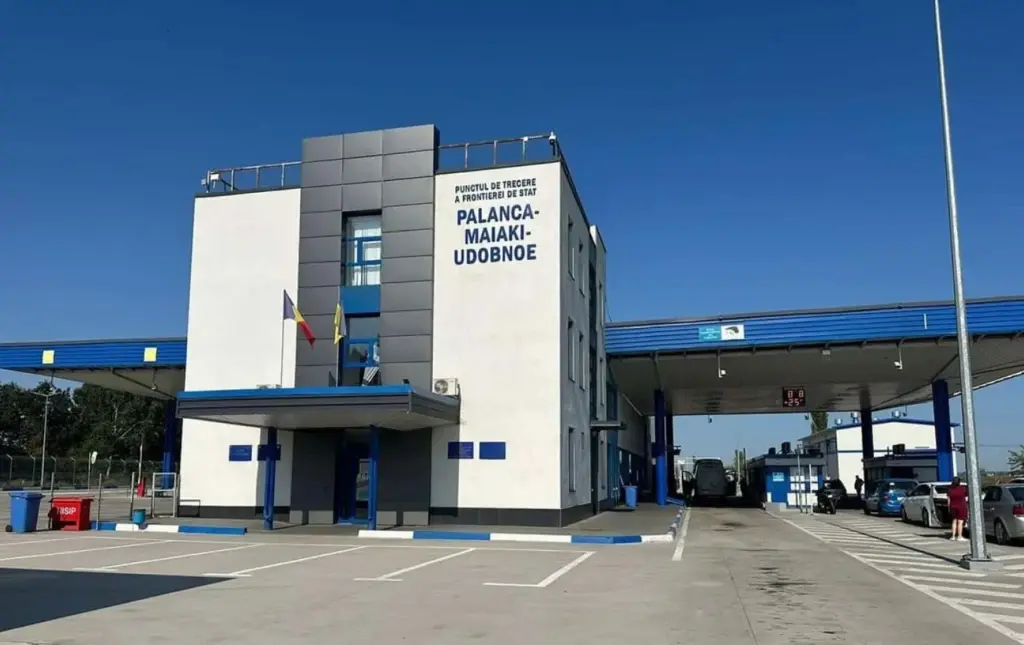
A Moldovan border guard was also recently injured when a projectile struck near a passenger bus at the Palanca border crossing, Moldova's Border Police reported.
Chisinau strengthens protection of border crossings against Russian drone attacks
Moldovan authorities are working to strengthen security measures at all Border Police crossing points, including those located on Ukrainian territory, according to the statement.
Authorities are already setting up protective zones so that Border Police officers, government officials and civilians at the crossings can evacuate to a safe location if necessary, the minister said.
Moldova is also discussing moving its personnel from joint border crossings located on Ukrainian territory to Moldova. Personnel have already been withdrawn from two crossings, with plans to do the same at other joint crossings, Missail-Nikitin said.
NewsMaker clarified with Moldova’s Interior Ministry that the measure involves withdrawing Moldovan personnel from two joint border crossing points with Ukraine — Criva and Palanca.
Ukraine and Moldova seek a response to a new challenge
The first time Chisinau withdrew its personnel from Ukrainian territory at the Ukrainian-Moldovan border crossings was a month ago. Moldova temporarily changed the operating arrangements at three joint border crossings with Ukraine because of security risks linked to Russian attacks on Ukrainian infrastructure near the border, Moldova's Border Police reported on 11 September.
The crossings in question are Giurgiulesti–Reni, Briceni–Rossoșani, and Criva–Mamalyga, where Moldovan border guards and customs officers had previously carried out controls on Ukrainian territory, according to the Border Police.
Criva–Mamaliga border crossing on the Moldova-Ukraine border, illustrative photo: State Border Guard Service of Ukraine
Starting 12 September, Moldovan personnel returned to Moldovan territory for 90 days and began working from existing infrastructure on the Moldovan side. The crossings themselves remained operational, and the cross-border movement of people and vehicles continued. Only the location where Moldovan services carried out their duties changed, the authorities said.
Ukraine is also strengthening the protection of its border infrastructure. The State Agency for Restoration and Infrastructure Development plans to install 135 basic mobile shelters at 28 border crossing points and on access roads leading to them. The shelters are intended to protect civilians crossing the border and border crossing personnel. Procurement is being carried out by the Restoration Services in Vinnytsia, Odesa, Chernivtsi, Zakarpattia, and Volyn Oblasts, according to the statement.
Ukraine’s border crossings near Moldova face ongoing Russian attacks
Russia has repeatedly attacked Ukrainian border infrastructure near the Moldovan border in recent weeks. On 25 August, a Russian drone struck the Vynohradivka–Vulcănești border crossing in Odesa Oblast.
On 5 October, Russian strikes on Ukrainian infrastructure caused an incident near the Palanka–Mayaky–Udobne border crossing. A projectile fell near the crossing, ricocheted off the ground and struck a passenger bus. The control booth was also damaged, and one Moldovan border guard sustained a minor injury.
On 9 September, Russia attacked the Starokozache–Tudora border crossing. One drone struck the crossing, while two others crashed nearby on Ukrainian territory. Two people were killed and three others were injured in the attack, and the crossing was temporarily closed. Russia claimed that this strike on a border crossing was prompted by Ukraine transporting weapons through the facility, a claim Moldova has denied.
 Login